Portugal in brief
- Short, direct flights from the UK to Lisbon, Porto and Faro, or a cruise from Southampton.
- See Lisbon, Porto and the Douro Valley, then relax in the Algarve.
- July and August are the hottest months; May, June and September are best for touring.
- Combine Spain and Portugal easily via Seville and the Algarve.

Portugal is one of the easiest holidays from the UK: a short flight, no time difference, and a country that packs hilltop cities, port-wine valleys, golden cliffs and green Atlantic islands into a small space. Ride the trams of Lisbon, cross the river in Porto, stay at a wine estate in the Douro Valley, explore the walled towns of the Alentejo and finish on an Algarve beach, or fly out to Madeira and the Azores. This guide covers travel to Portugal from the UK, where to go, the Douro Valley, when Portugal is hottest, combining Spain and Portugal, and the best routes.
Travel to Portugal from the UK
- By air: there are direct flights from London and most UK regional airports to Lisbon, Porto and Faro, in about two and a half hours. Madeira is about four hours, and the Azores are reached direct or via Lisbon.
- By sea from Southampton: many cruises from Southampton call at Portugal, usually at Lisbon, Porto (Leixões) and Funchal on Madeira, often combined with Spain, the Canaries or the Azores. It’s a relaxed way to see several places without flying.
- Entry: Portugal is in the Schengen area, so British visitors can stay up to 90 days in any 180 without a visa. Your passport must be less than 10 years old on arrival and valid for 3 months after you leave. Under the EU’s new Entry/Exit System, your fingerprints and photo may be taken at the border.
- Time and money: mainland Portugal and Madeira are on the same time as the UK all year, and the currency is the euro.
What is Portugal known for?

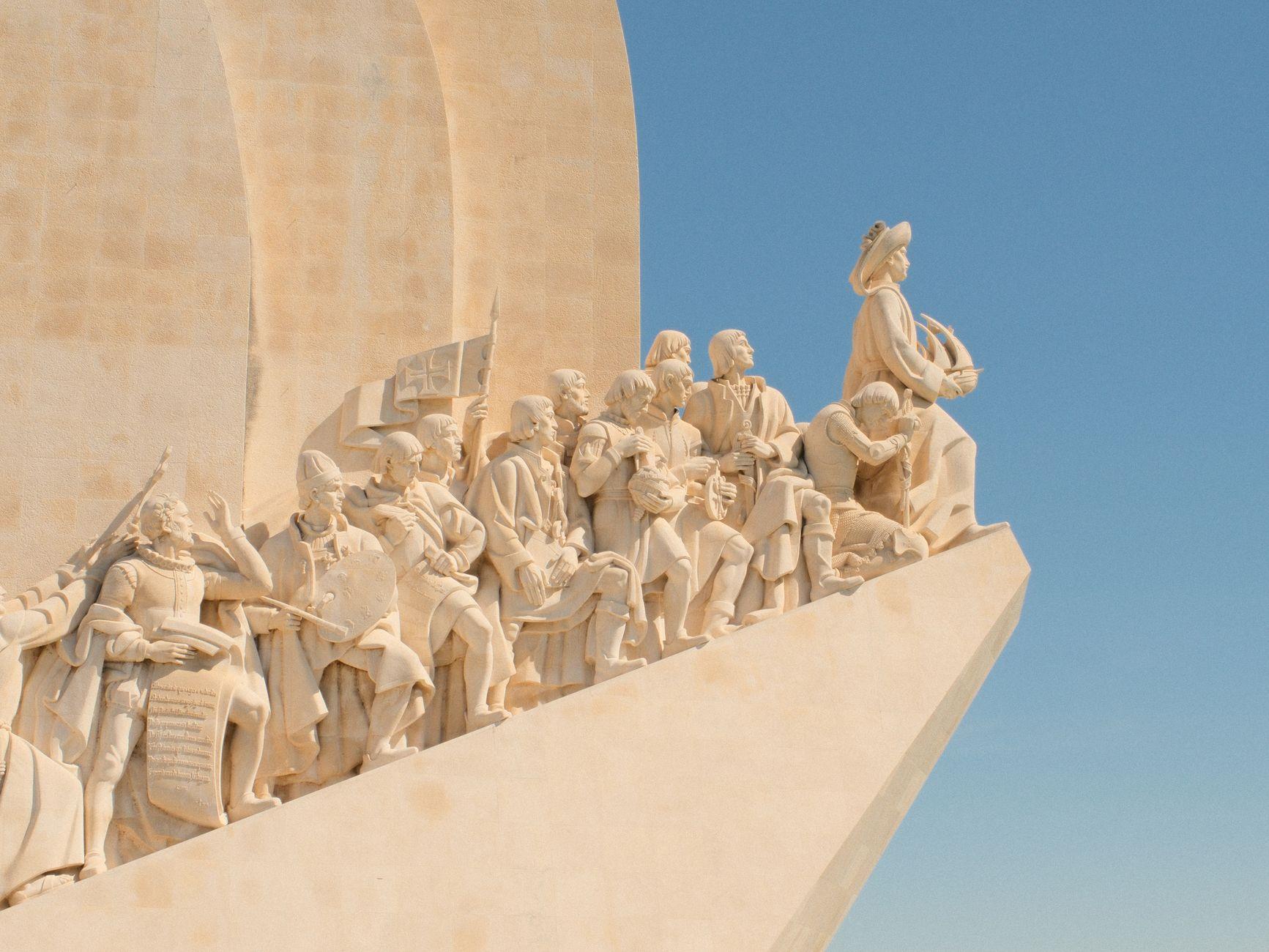


Portugal is famous for port wine and the Douro, pastéis de nata (custard tarts), fado music, painted azulejo tiles, salt cod and grilled sardines, cork forests, Atlantic surf and the explorers of the Age of Discovery. It’s also England’s oldest ally: the treaty between the two countries dates from 1386.
Where to go in Portugal
A first trip usually links Lisbon and Porto by train, with the Douro Valley or the Algarve added. For more time, add the Alentejo, the old university city of Coimbra, or the islands.

Lisbon
Portugal’s hilly capital is made for wandering. Ride tram 28 through Alfama, climb to the castle and the viewpoints, and hear fado in a small bar at night.
In Belém, see the Jerónimos Monastery and the Belém Tower, and eat a custard tart warm from the oven.

Sintra and Cascais
Forty minutes from Lisbon, Sintra is a UNESCO-listed hill town of fairy-tale palaces, including the bright Pena Palace and the gardens of Quinta da Regaleira.
Carry on to Cabo da Roca, mainland Europe’s most westerly point, and the seaside town of Cascais.
Porto
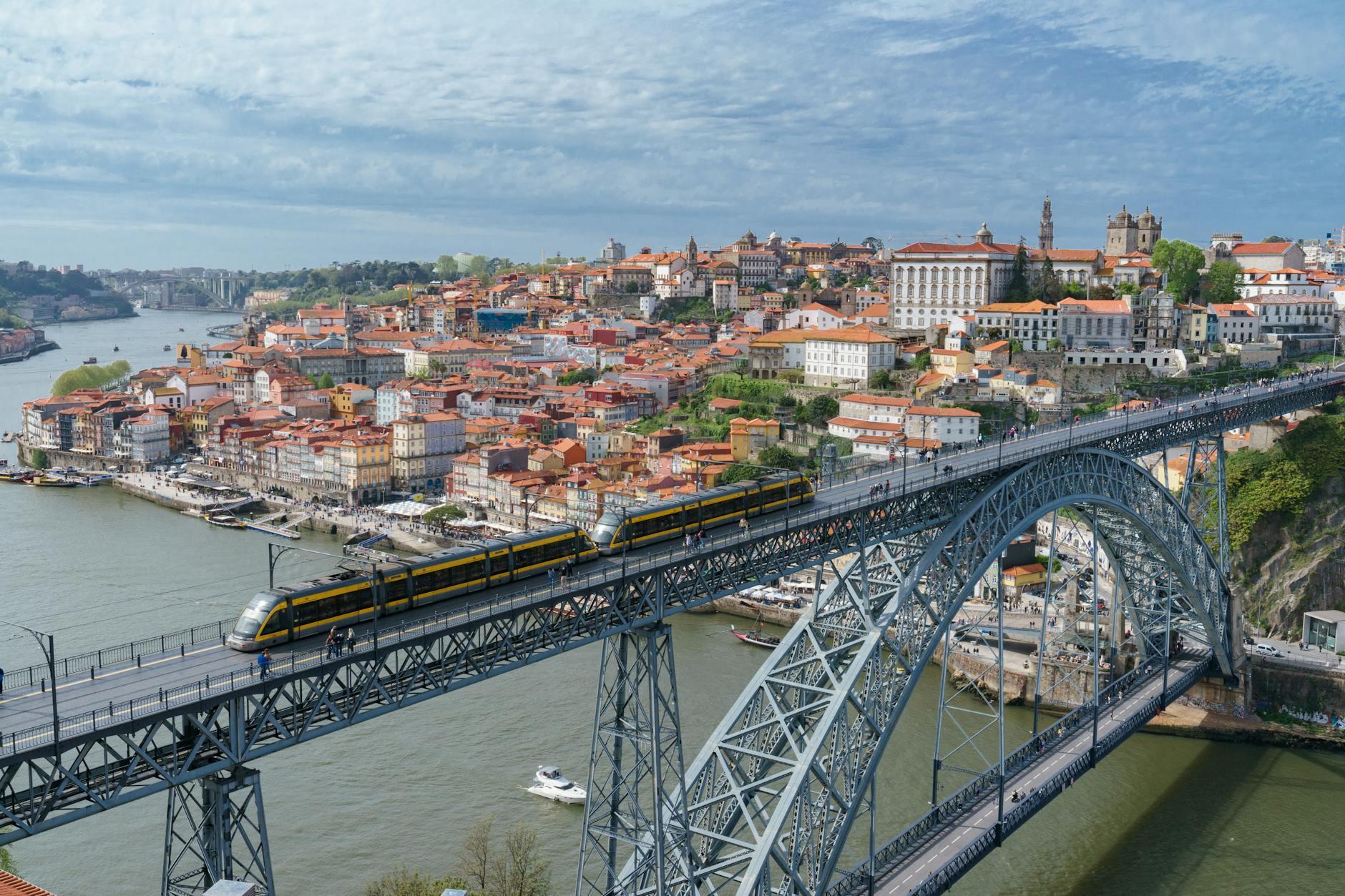
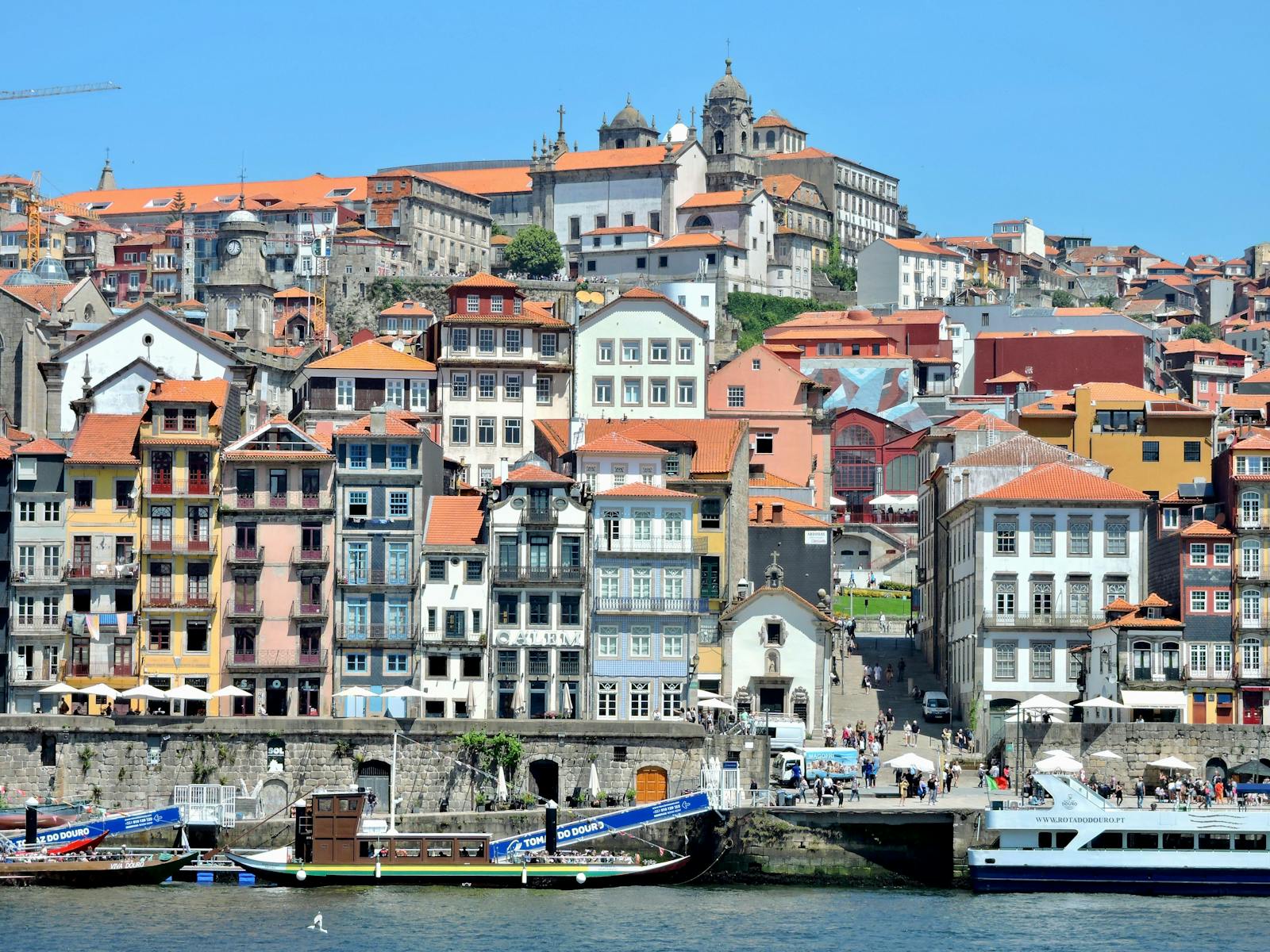
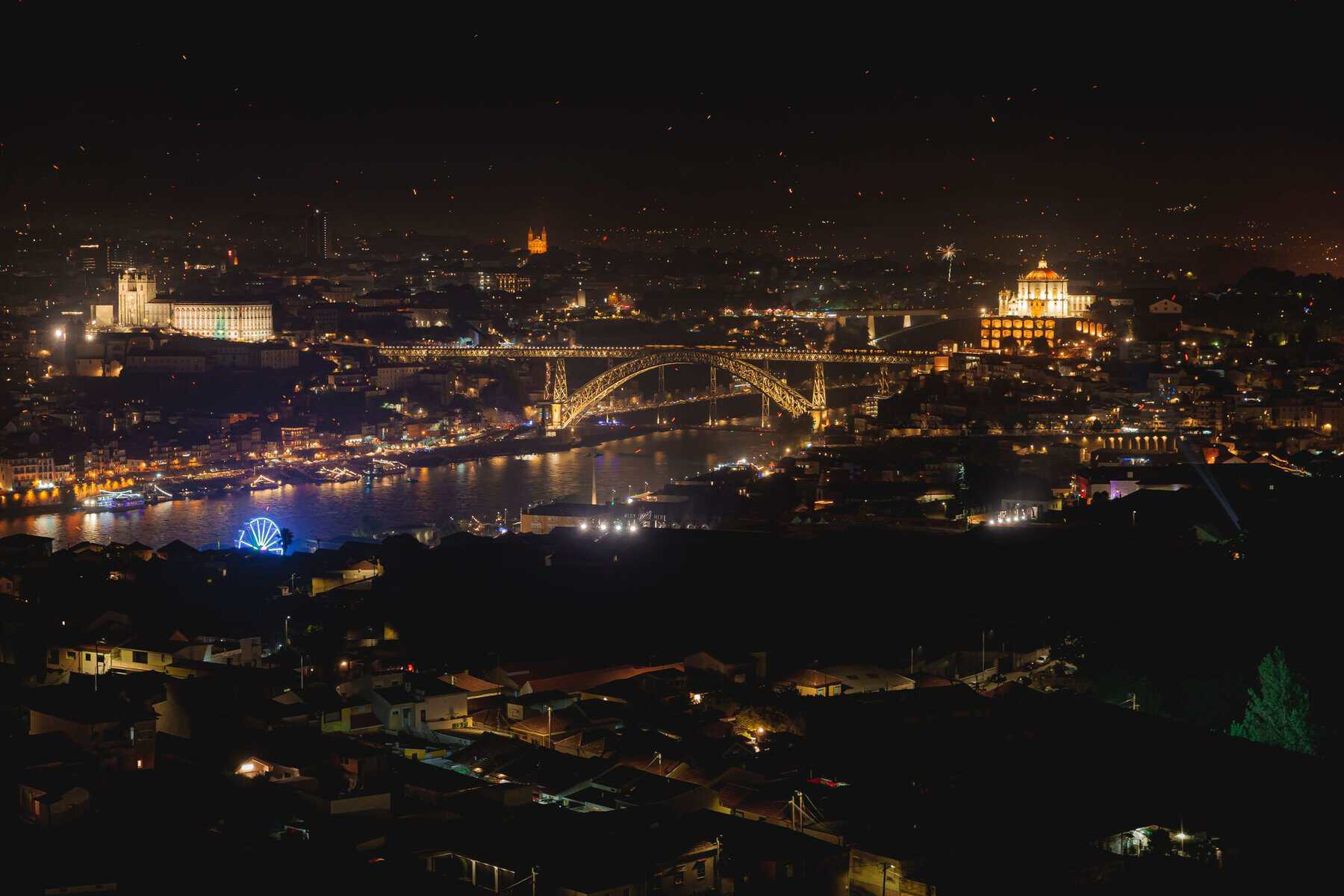
Porto tumbles down to the Douro river in a jumble of tiled houses and churches. Walk the Ribeira waterfront, cross the Dom Luís I bridge and tour the port lodges in Vila Nova de Gaia.
See the São Bento station’s tiled hall and the Livraria Lello bookshop, and try a francesinha sandwich.
The Douro Valley
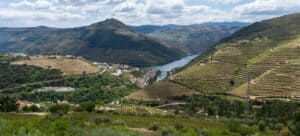
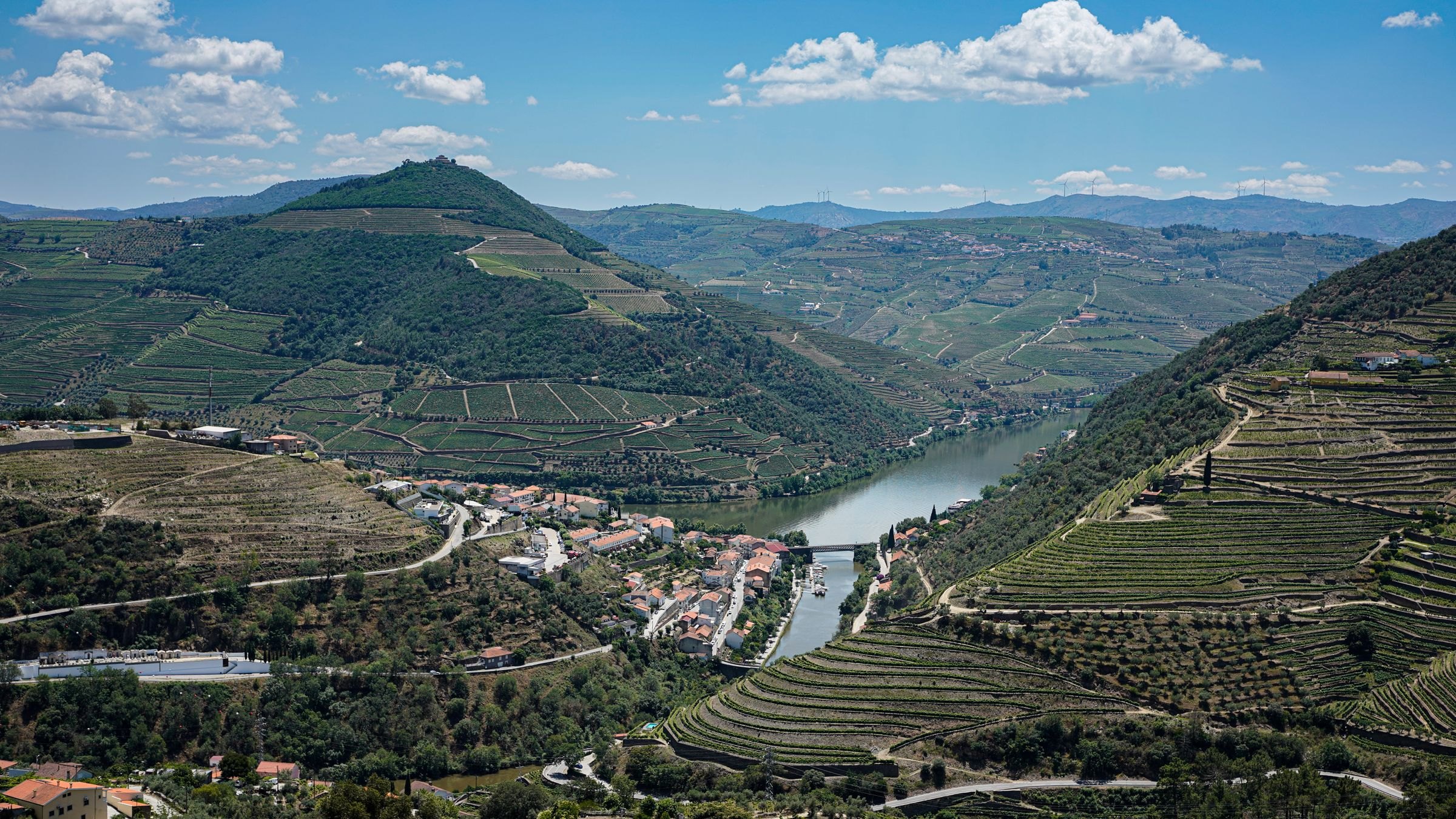
Terraced vineyards climb steep slopes above the river in the world’s oldest demarcated wine region, the home of port.
Stay at a quinta (wine estate), take a boat trip from Pinhão and ride the scenic railway from Porto. See below for more.

Coimbra and Óbidos
Between Lisbon and Porto, Coimbra has one of Europe’s oldest universities and a baroque library. Óbidos is a walled medieval town where you can walk the ramparts.
Nearby are the monasteries of Alcobaça and Batalha, and the surf town of Nazaré, famous for giant winter waves.

Évora and the Alentejo
Portugal’s big, rolling south-centre is a land of cork oaks, olive groves and vineyards. Évora has a Roman temple and the bone chapel, and hilltop Monsaraz looks over a huge lake.
It’s the place to slow down, with long lunches and empty roads. It gets very hot in summer.
The Algarve
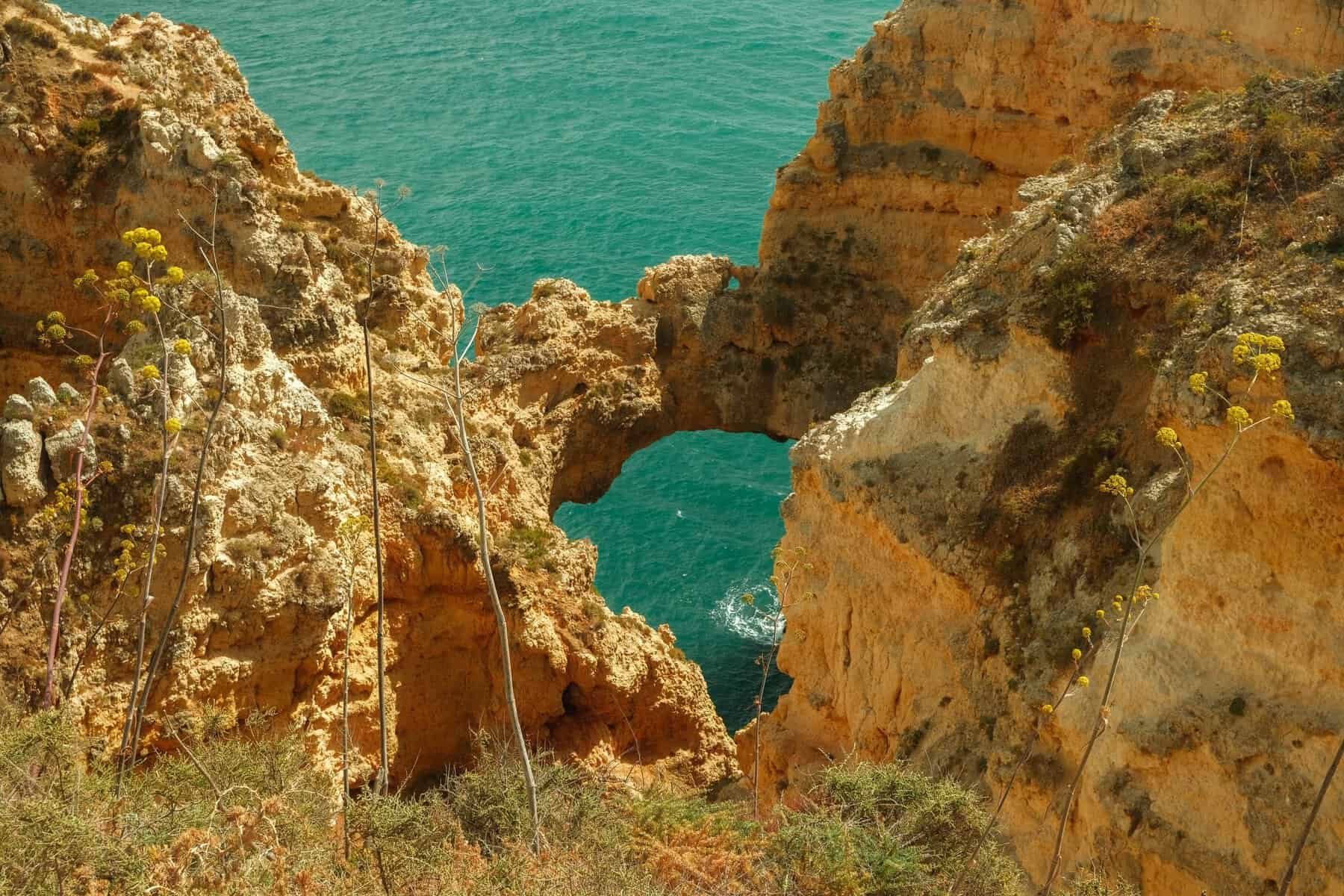
Portugal’s sunny south coast has golden cliffs, sea caves such as Benagil, and beaches for every taste. The west, around Lagos and Sagres, is wilder; the east, around Tavira, has calmer, warmer water and long sandy islands.
See where to stay in the Algarve to choose your base.
Madeira
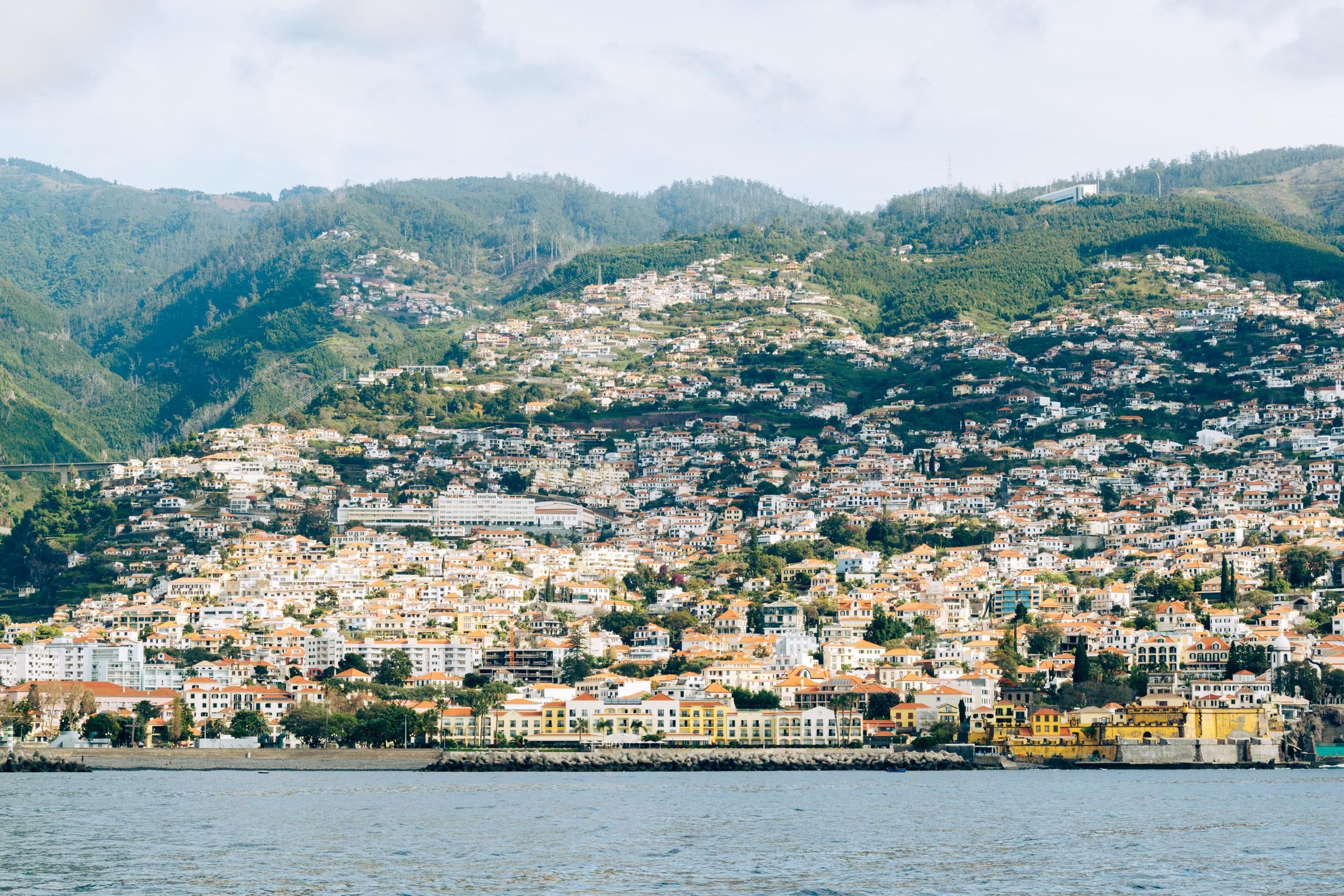
A green, mountainous island off Africa, warm all year. Walk the levadas, old irrigation channels through laurel forest, visit the gardens of Funchal and toboggan down from Monte.

The Azores
Nine volcanic islands in the mid-Atlantic, with crater lakes, hot springs, tea plantations and some of Europe’s best whale watching.
São Miguel is the easiest start; Pico, Faial and São Jorge are great for walkers.
The Douro Valley, Portugal
For the full picture, with getting there from Porto, the best places, port tasting and the harvest, see our Douro Valley guide.

The Alto Douro Wine Region was marked out in 1756, making it the world’s oldest demarcated wine region, and it’s a UNESCO World Heritage Site. Port has been shipped downriver to Porto for centuries, once in flat-bottomed rabelo boats like this one.
Getting there: the scenic train from Porto to Pinhão follows the river for much of the way, in about two and a half hours. A car or driver gives you more freedom between estates.
What to do: stay at a quinta, taste ports and Douro reds, take a boat trip, and visit the viewpoints at São Leonardo de Galafura and Casal de Loivos.
When: spring and autumn are best; the grape harvest is from about mid-September to early October. The valley is very hot in July and August.
A Douro river cruise is another lovely way to see the valley, usually a week from Porto to the Spanish border and back. Compare them in our Douro river cruises compared guide.
When is Portugal hottest?
July and August are the hottest months. On the coast, the Atlantic keeps things pleasant, with average highs of about 27 to 29°C in Lisbon and the Algarve. Inland it’s much hotter: the Alentejo and the Douro Valley average 32 to 33°C, and heatwaves can push past 40°C. The sea is cool on the west coast all summer, and warmest in the eastern Algarve. For warm, comfortable sightseeing choose May, June, September or early October; for winter sun, Madeira stays mild all year.
| Month | Lisbon | Porto | Douro | Évora | Algarve | Madeira |
|---|---|---|---|---|---|---|
| Jan | 14°C | 13°C | 12°C | 14°C | 16°C | 18°C |
| Apr | 19°C | 18°C | 20°C | 20°C | 20°C | 20°C |
| Jun | 25°C | 22°C | 27°C | 28°C | 25°C | 24°C |
| Jul | 27°C | 25°C | 32°C | 32°C | 29°C | 26°C |
| Aug | 28°C | 25°C | 32°C | 33°C | 29°C | 27°C |
| Sep | 26°C | 24°C | 28°C | 28°C | 26°C | 26°C |
| Oct | 23°C | 21°C | 23°C | 24°C | 23°C | 24°C |
Average daily high, 10-year ERA5 data. The Algarve figures are for Faro and Madeira’s for Funchal.

Spain and Portugal together
Spain and Portugal combine easily. The most popular link is Seville and the Algarve, about two and a half hours apart by road. Other good pairings are Madrid and Lisbon by a short flight, and Porto with Santiago de Compostela in Galicia, which you can even reach on foot along the Portuguese Coastal Camino. Our escorted tours of Spain and Portugal handle all the connections; compare them, and the trips that add Morocco, in Spain, Portugal and Morocco tours.
Classic routes
Lisbon and Porto
- Lisbon (3 nights)
- Sintra (day trip)
- Coimbra (1)
- Porto (3)
The two cities by train, with Coimbra on the way.
Cities, wine and beach
- Porto (3 nights)
- Douro Valley (2)
- Lisbon (3)
- Algarve (4)
Port, palaces and the beach.
Spain and Portugal
- Madrid (3 nights)
- Seville (3)
- Algarve (3)
- Lisbon (3)
- Porto (2)
Two countries, one easy loop.
Slow Portugal
- Lisbon (3 nights)
- Évora (2)
- Monsaraz (2)
- Algarve (3)
The quiet Alentejo, then the coast.
Ways to see Portugal with us


Practical tips
- Entry: Schengen rules apply: up to 90 days in any 180 without a visa. Check the FCDO Portugal advice before you book.
- Wildfires: the risk is high from April to October. Follow local advice, and roads can close at short notice.
- Beaches: some Atlantic beaches have strong currents and rip tides. Swim where there are lifeguards and obey the flags.
- Getting around: fast trains link Lisbon, Coimbra and Porto. Hire a car for the Douro, the Alentejo and the Algarve; many motorways have electronic tolls, so ask your car hire company for a toll device.
- Eating: lunch is the main meal; look for the good-value “prato do dia” (dish of the day). Bread and olives put on the table are usually charged if you eat them.
Frequently asked questions
How long is the flight to Portugal from the UK?
About two and a half hours from London to Lisbon, Porto or Faro, with direct flights from most UK airports. Madeira is about four hours.
When is Portugal hottest?
July and August. Lisbon and the Algarve average 27 to 29°C, while the inland Alentejo and Douro Valley average 32 to 33°C and can pass 40°C in a heatwave.
Is the Douro Valley worth visiting?
Yes. Its terraced vineyards are some of the most beautiful in Europe, and you can stay at a wine estate, taste port and take a boat trip. Visit in spring or autumn; it's very hot in high summer.
How do I get from Porto to the Douro Valley?
The scenic train from Porto to Pinhão takes about two and a half hours and follows the river. You can also drive, take a guided day trip or join a river cruise.
Can you combine Spain and Portugal?
Yes, easily. Seville and the Algarve are about two and a half hours apart by road, Madrid and Lisbon are a short flight apart, and many escorted tours cover both.
Can you cruise to Portugal from Southampton?
Yes. Many cruises from Southampton call at Lisbon, Porto (Leixões) and Madeira, often with Spain, the Canary Islands or the Azores.
Do UK citizens need a visa for Portugal?
No. Schengen rules allow up to 90 days in any 180. Your passport must be less than 10 years old and valid for 3 months after you leave.
What is the best time to visit Portugal?
May to June and September to October for touring, July and August for the beach, and any time of year for Madeira.
Keep planning
- Portugal holidays
- Escorted tours of Portugal
- Douro river cruises compared
- Where to stay in the Algarve
- Where to stay in Madeira
- Spain, Portugal and Morocco tours
- Spain holidays
- Tailor-made holidays
Plan your Portugal holiday with a Travel Designer
Tell us your dates and we’ll plan the flights, trains, a Douro wine estate and the beach, and arrange everything in one ATOL-protected booking.
Make an enquiry Portugal holidays