California in brief
- San Francisco, Yosemite and the Big Sur coast on Highway 1 are the classic first trip.
- Best from April to June and September to October; winter is best for the deserts and Southern California.
- Direct flights of about 11 hours from London to San Francisco, Los Angeles and San Diego.
- Allow 10 to 16 nights for a road trip, flying into one city and home from another.
California has more variety than most countries. In one trip you can ride a cable car in San Francisco, drive the cliffs of Big Sur on Highway 1, walk beneath granite walls and waterfalls in Yosemite, taste wine in the Napa Valley, see the stars in the desert at Joshua Tree and end on the beach in Los Angeles or San Diego. It is the classic American road trip, and the easiest one to plan from the UK. This guide covers the regions, the best things to do in California, the Pacific Coast drive, Yosemite, the best time to visit California month by month, flights from the UK, getting around, where to stay and sample routes.
Where is California?
California runs for about 1,300 km (800 miles) down the Pacific coast, from the redwood forests on the Oregon border to San Diego on the Mexican border. The granite peaks of the Sierra Nevada, with Yosemite and Lake Tahoe, run down its eastern side, with deserts beyond. It is roughly 1.7 times the size of the UK, so plan around driving times, not distances on the map.
California’s regions at a glance
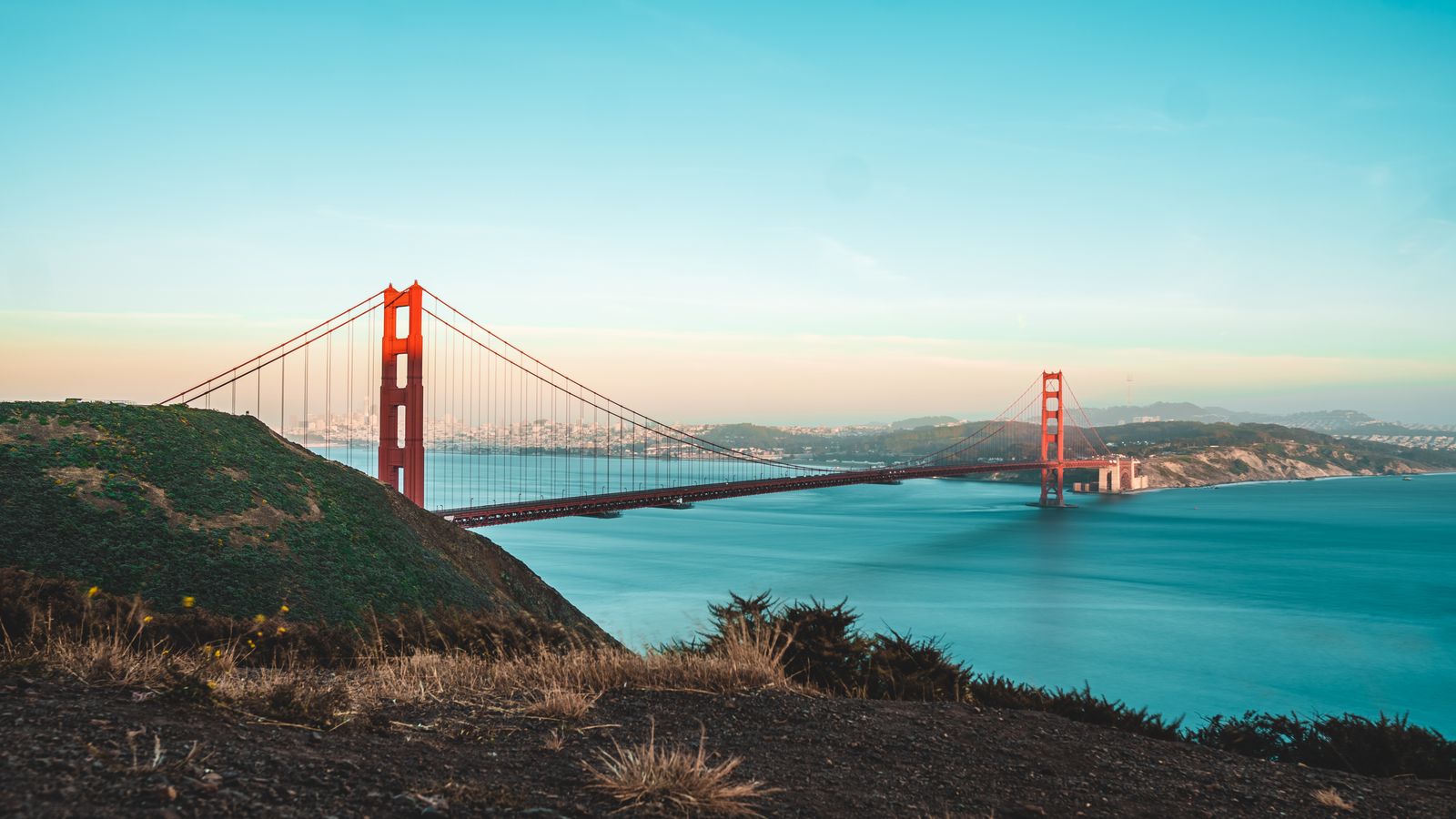
San Francisco and the Bay Area
Hills, cable cars, Victorian houses and the Golden Gate, with redwood forest and wine country within an hour or so.
San Francisco →
Napa and Sonoma
Two valleys of vineyards, tasting rooms and some of the best restaurants in the country.
Wine country →
Yosemite and the Sierra Nevada
The most famous national park in California: sheer granite walls, waterfalls and giant sequoias.
Yosemite →
Big Sur and the Central Coast
The most dramatic stretch of the Pacific coast, between Monterey and San Simeon, then on to Santa Barbara.
Highway 1 →
Los Angeles and Southern California
Hollywood, Malibu and Santa Monica, theme parks, museums, and San Diego’s easy-going beaches further south.
Los Angeles →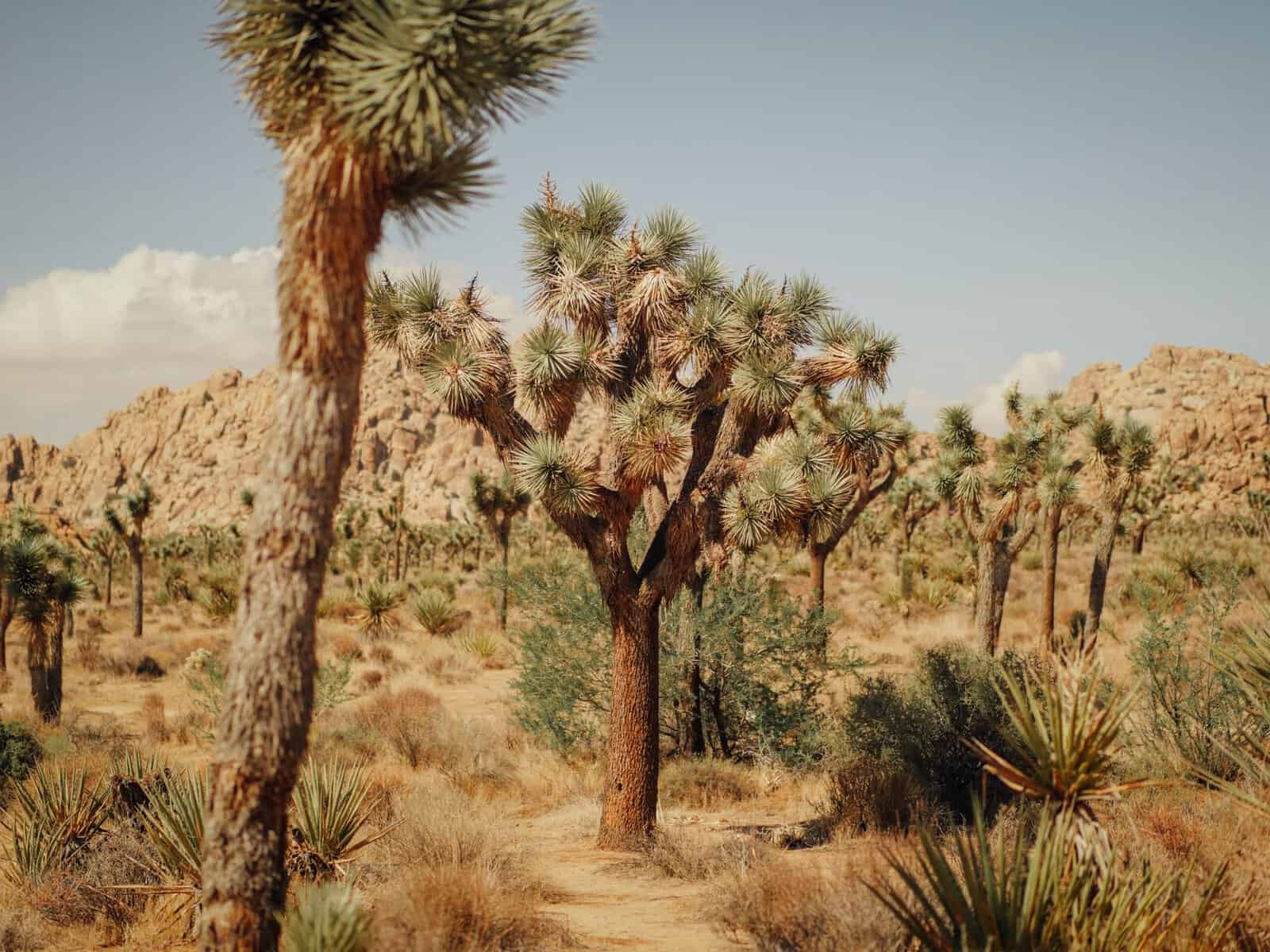
The deserts
Palm Springs, the boulders of Joshua Tree and the salt flats of Death Valley.
The deserts →San Francisco

San Francisco is small, hilly and walkable, and most trips to California start or end here. Ride a cable car over Nob Hill to the waterfront, walk or cycle across the Golden Gate Bridge to the viewpoints on the Marin side, and explore its neighbourhoods: Chinatown, the oldest in North America; Italian North Beach; the painted Victorian houses around Alamo Square; and the Mission District, with its murals and taquerias.
The Ferry Building on the Embarcadero is a food hall with a farmers’ market several times a week. Golden Gate Park has a Japanese tea garden and two major museums. Allow three nights; four with day trips.
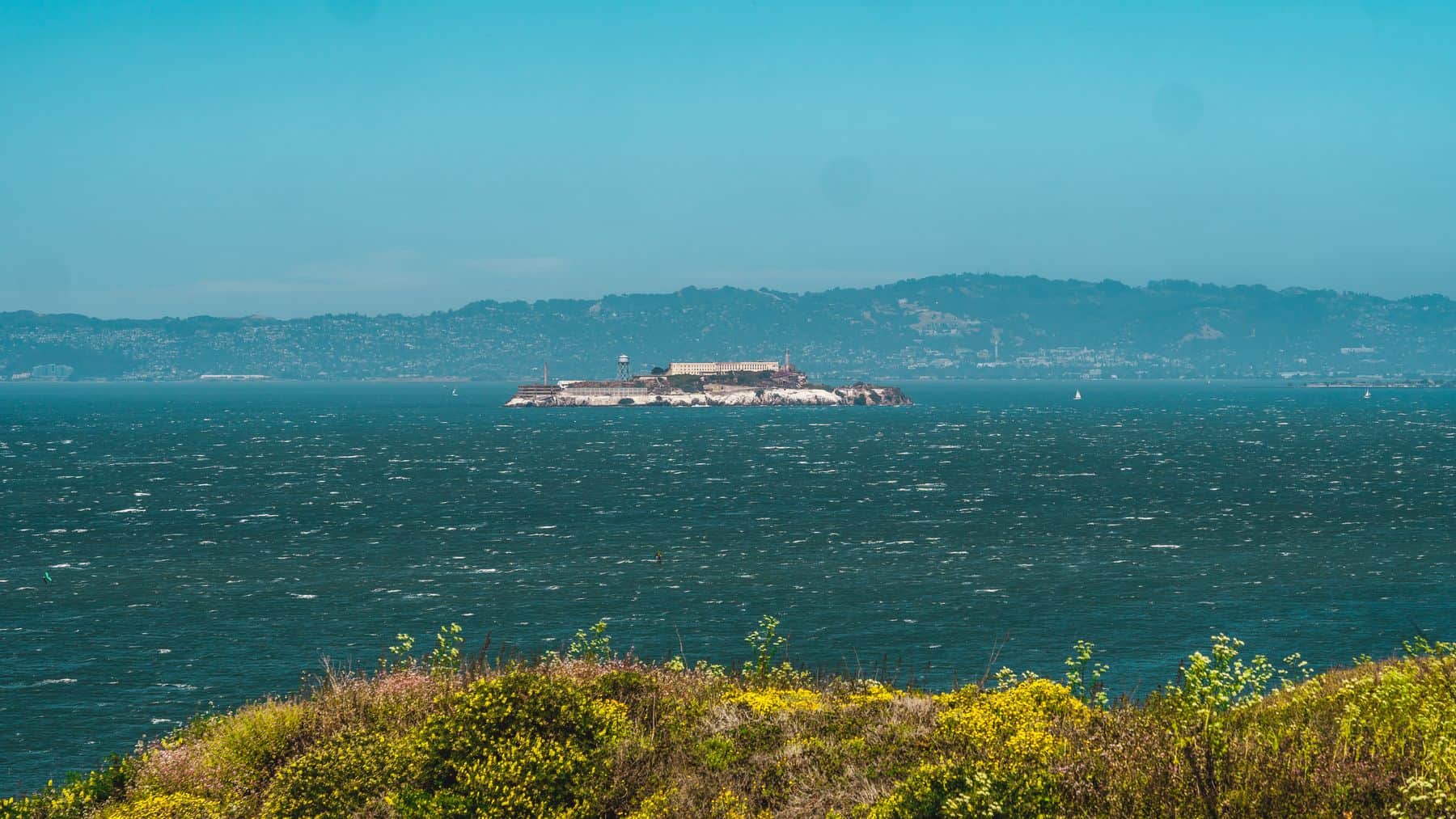
Alcatraz, the former federal prison on an island in the bay, is the city’s most popular sight. Ferries leave from Pier 33 and tickets sell out weeks ahead in summer.
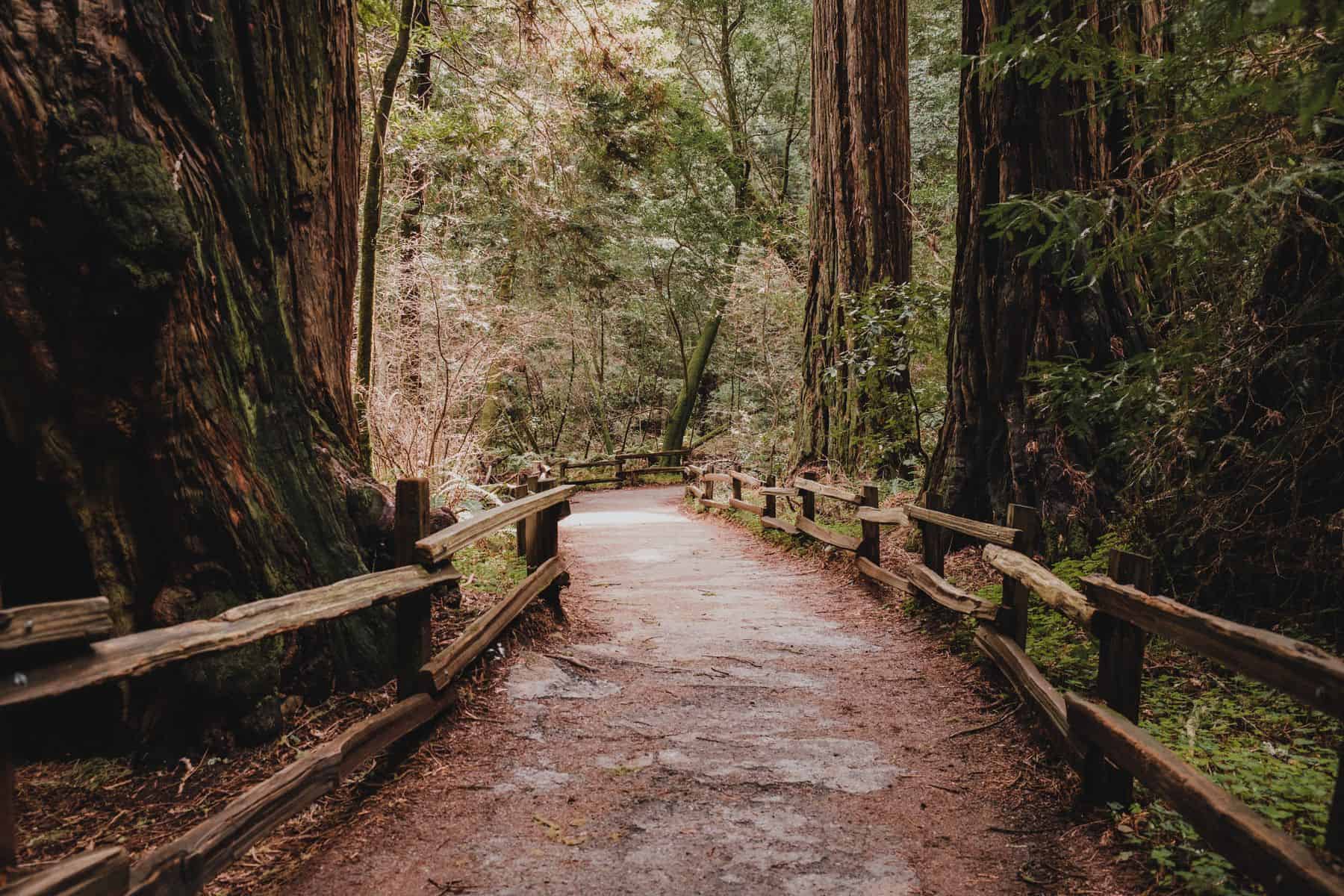
Day trips: Sausalito by ferry; the redwoods of Muir Woods, under an hour north (book parking or the shuttle ahead); and Napa and Sonoma.
Napa Valley and Sonoma
The Napa Valley is a single long valley about an hour north of San Francisco, lined with hundreds of wineries, from grand estates to small family cellars; most tastings need booking ahead. Sonoma, next door, is larger and more relaxed, with wineries scattered across rolling hills, redwood groves and the coast. Don’t drive between tastings: use a driver or guided tour, cycle, or take the wine train up the Napa Valley with lunch on board. Harvest, from late August to October, is the liveliest time.
Yosemite National Park
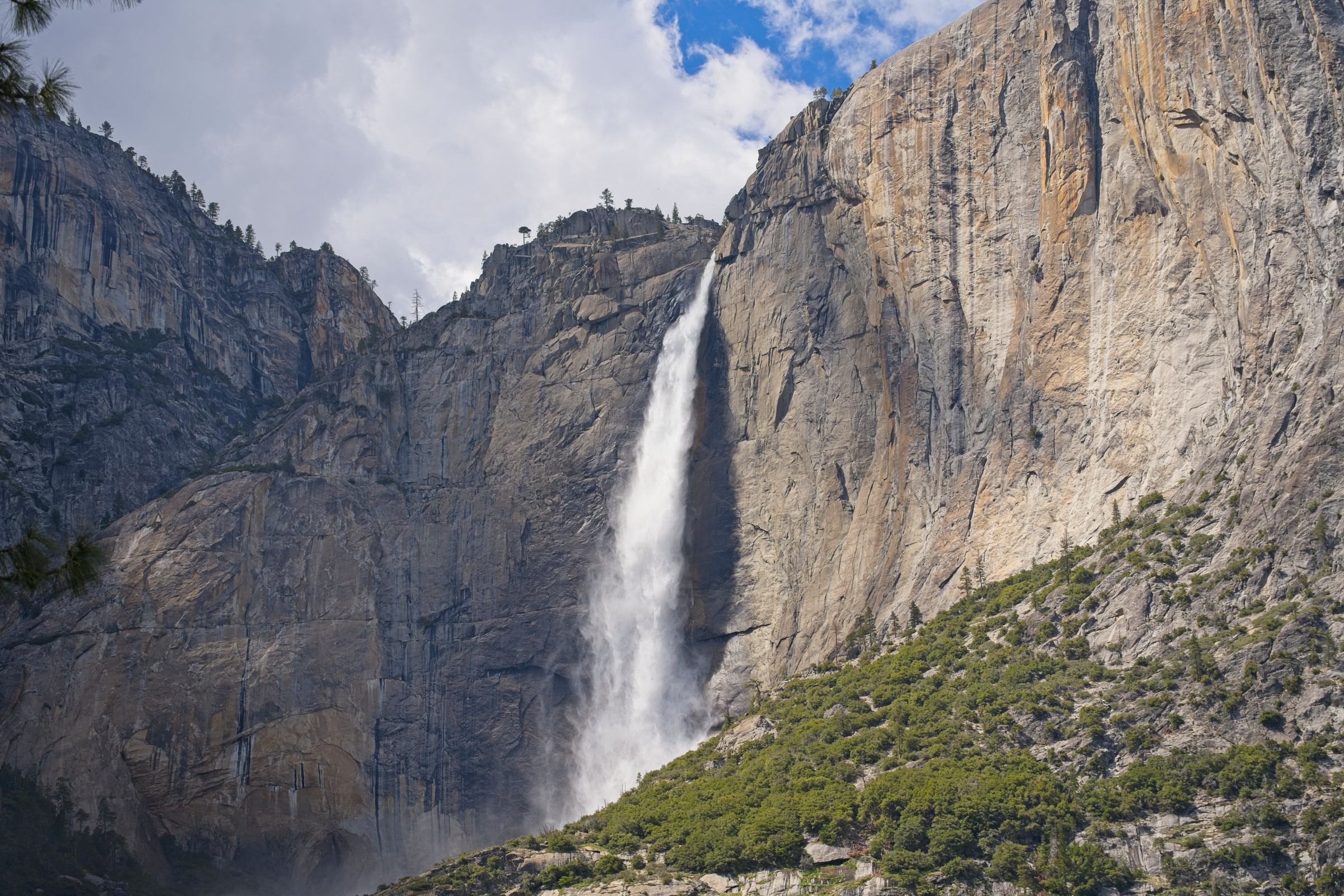
Yosemite Valley is one of the great sights of America: a flat, green valley floor beneath granite walls nearly a kilometre high, with El Capitan at one end, Half Dome at the other and waterfalls dropping from the rim. Yosemite Falls is among the tallest in North America. The falls are fullest from April to June, as the snow melts, and many dwindle to a trickle by late summer.
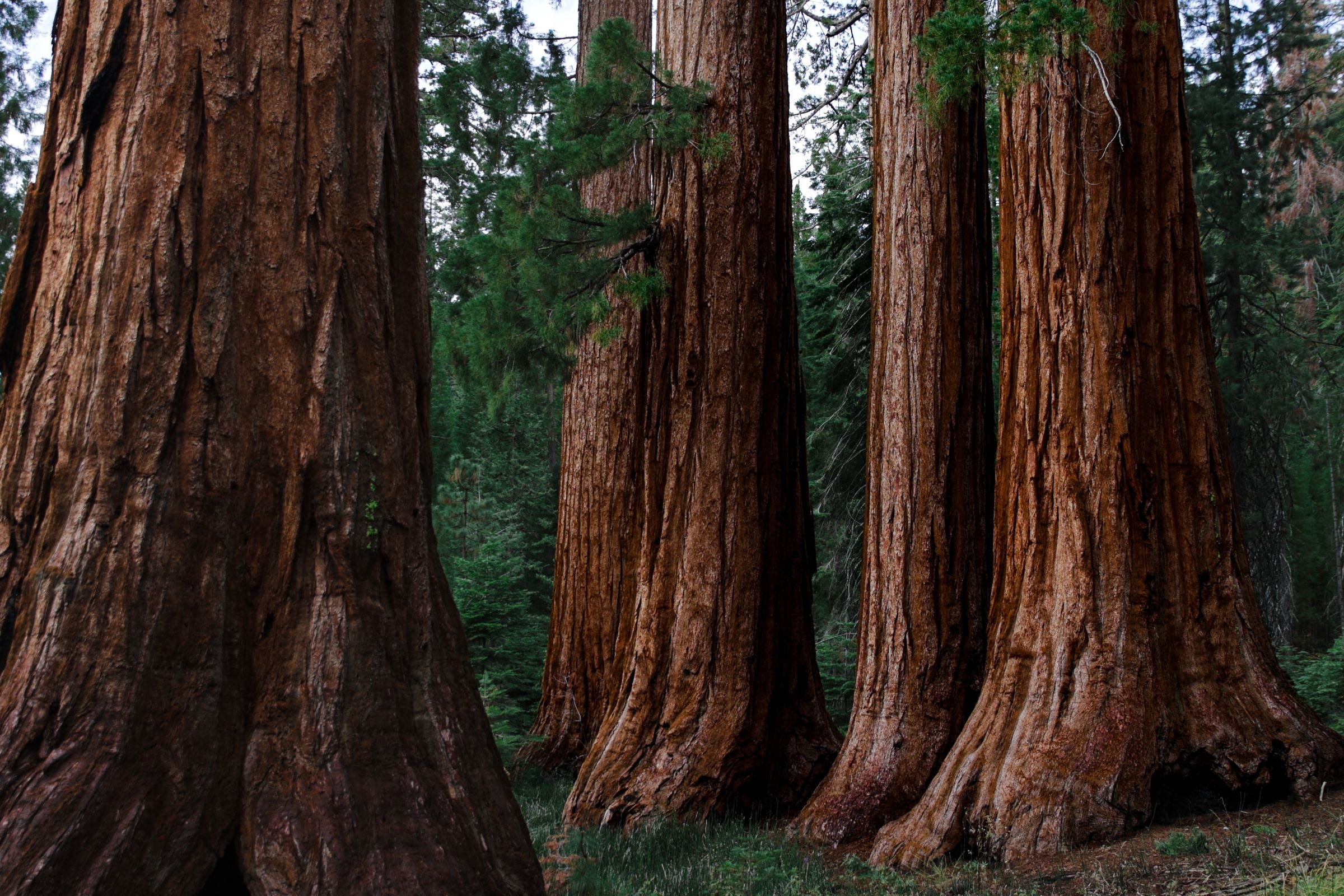
Things to do: walk the easy valley-floor paths to the base of Yosemite Falls and Mirror Lake; climb the Mist Trail beside Vernal and Nevada Falls; drive up to Glacier Point (from late spring to autumn) for the view across the valley to Half Dome; and walk among the giant sequoias of the Mariposa Grove in the south of the park. The high Tioga Road across the park to Mono Lake usually opens in late May or June and closes with the first heavy snow.
Half Dome’s cables need a permit, allocated by lottery. Park entry rules change from year to year (some recent summers have needed a reservation at peak times), so we check the current rules when we book. Allow at least two nights.
Highway 1 and the Pacific Coast drive
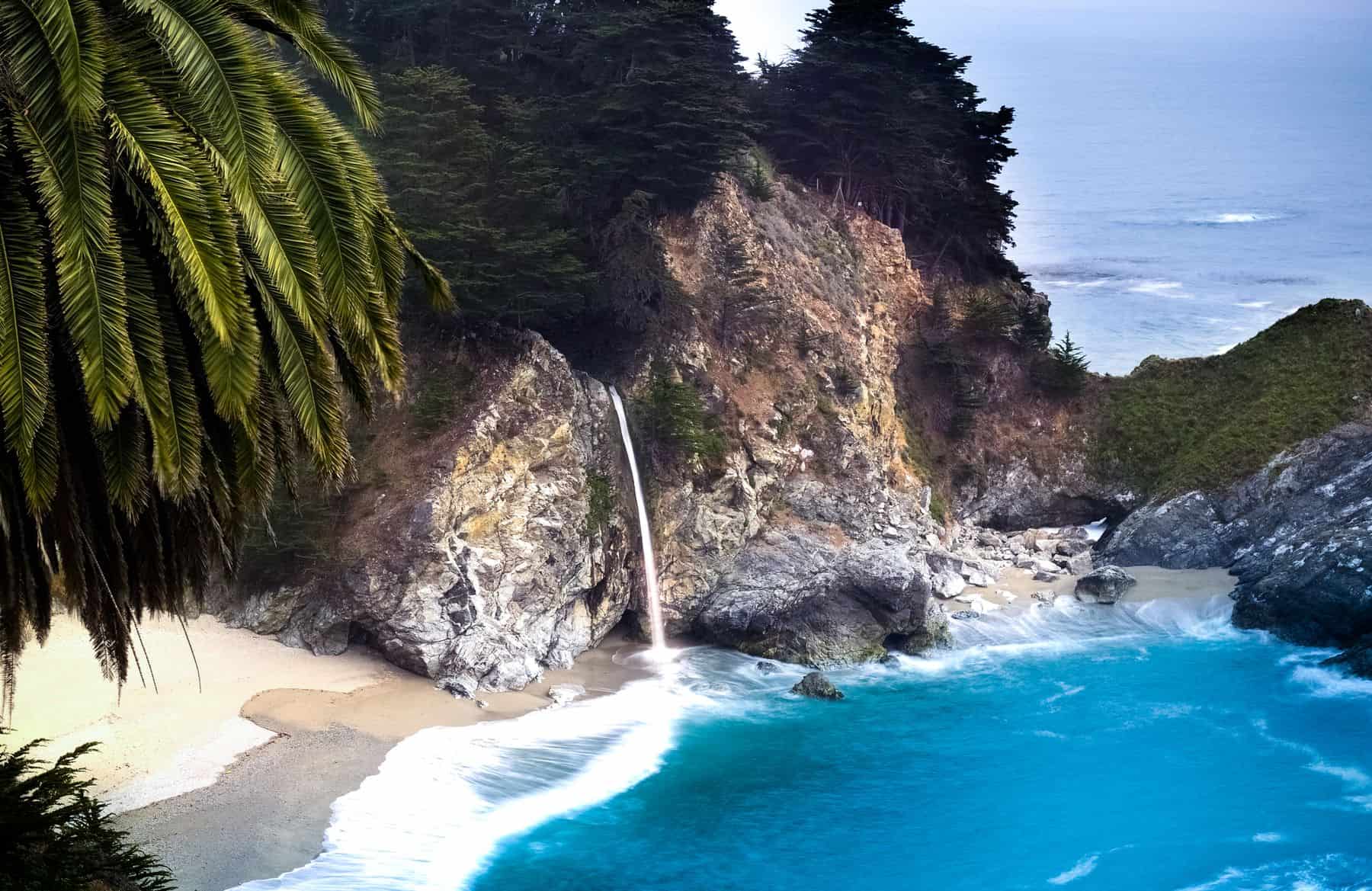
Highway 1, called the Pacific Coast Highway in the south, is the drive everyone wants to do. Between San Francisco and Los Angeles it takes in:
Santa Cruz, a surf town with a seaside boardwalk; Monterey, with Cannery Row, a famous aquarium and sea otters in the bay; Carmel-by-the-Sea, a village of cottages and galleries above a white beach; and the 17-Mile Drive round the Pebble Beach headland.
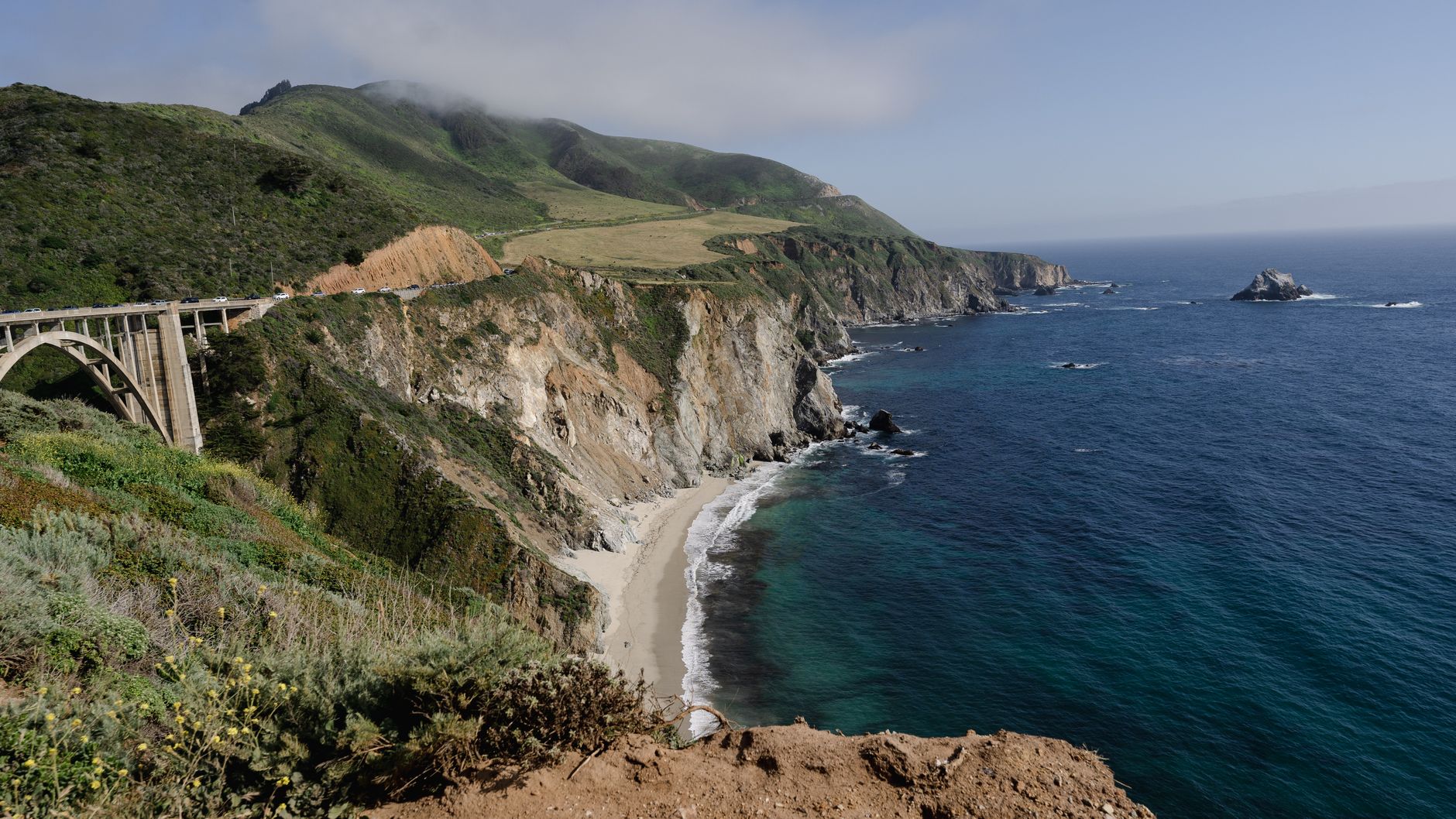
Big Sur, about 145 km (90 miles) of road cut into the cliffs, with no towns to speak of: Bixby Creek Bridge, the redwood canyons of Pfeiffer Big Sur State Park and McWay Falls, which drops straight onto a beach. Then on past the elephant seals near San Simeon to Morro Bay, San Luis Obispo and Santa Barbara.
How long? San Francisco to Los Angeles is about 750 km (470 miles) on the coast road. Allow four or five nights, and drive north to south so you are on the ocean side of the road, closer to the pull-outs. Big Sur has little mobile signal and few petrol stations. Landslides close parts of the road from time to time: the long closure at Regent’s Slide reopened in January 2026, and we check the latest road status before you travel.
Santa Barbara, two hours north of Los Angeles, is the prettiest town on the southern coast: white Spanish Revival buildings with red-tile roofs, a palm-lined beach, the old Spanish mission and wineries in the hills behind.
Los Angeles and San Diego
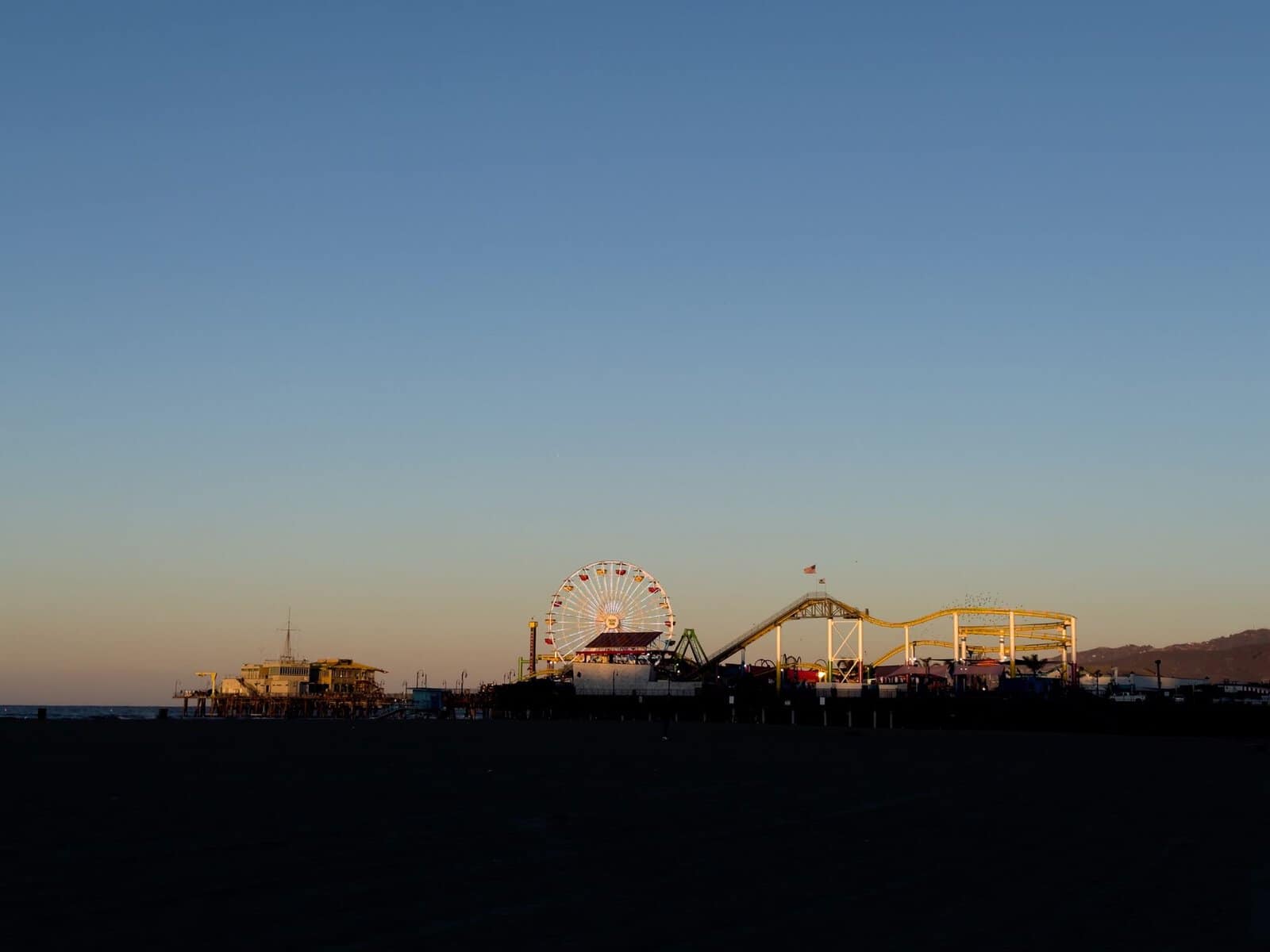
Los Angeles is less a city than a collection of neighbourhoods linked by freeways, so pick a base by what you want to do. Santa Monica and Venice have the beach and boardwalk, Beverly Hills and West Hollywood the shops and restaurants, and Malibu long beaches. Highlights include the Getty Center’s art and gardens, the Griffith Observatory at sunset, the studio tours and the theme parks, including Disneyland in Anaheim. Allow three or four nights. Early-summer mornings are often grey on the coast (“June Gloom”).
San Diego, two to three hours south, is more relaxed, with the best weather in the state: Balboa Park’s museums and gardens, the harbour and beach towns such as La Jolla, where sea lions bask on the rocks. It has direct flights home to London.
Palm Springs, Joshua Tree and Death Valley

Palm Springs, two hours east of Los Angeles, is a desert resort town of mid-century modern houses and pools below the San Jacinto mountains, best from October to April.
Joshua Tree National Park, an hour from Palm Springs, is a landscape of piled granite boulders and spiky Joshua trees where the Mojave and Colorado deserts meet. Walk the short trails at Hidden Valley and stay for the stars.
Death Valley is the hottest, driest and lowest place in North America: salt flats at Badwater Basin, 86 m below sea level, the sand dunes at Mesquite Flat and the golden badlands at Zabriskie Point. Visit between November and March.
Lake Tahoe
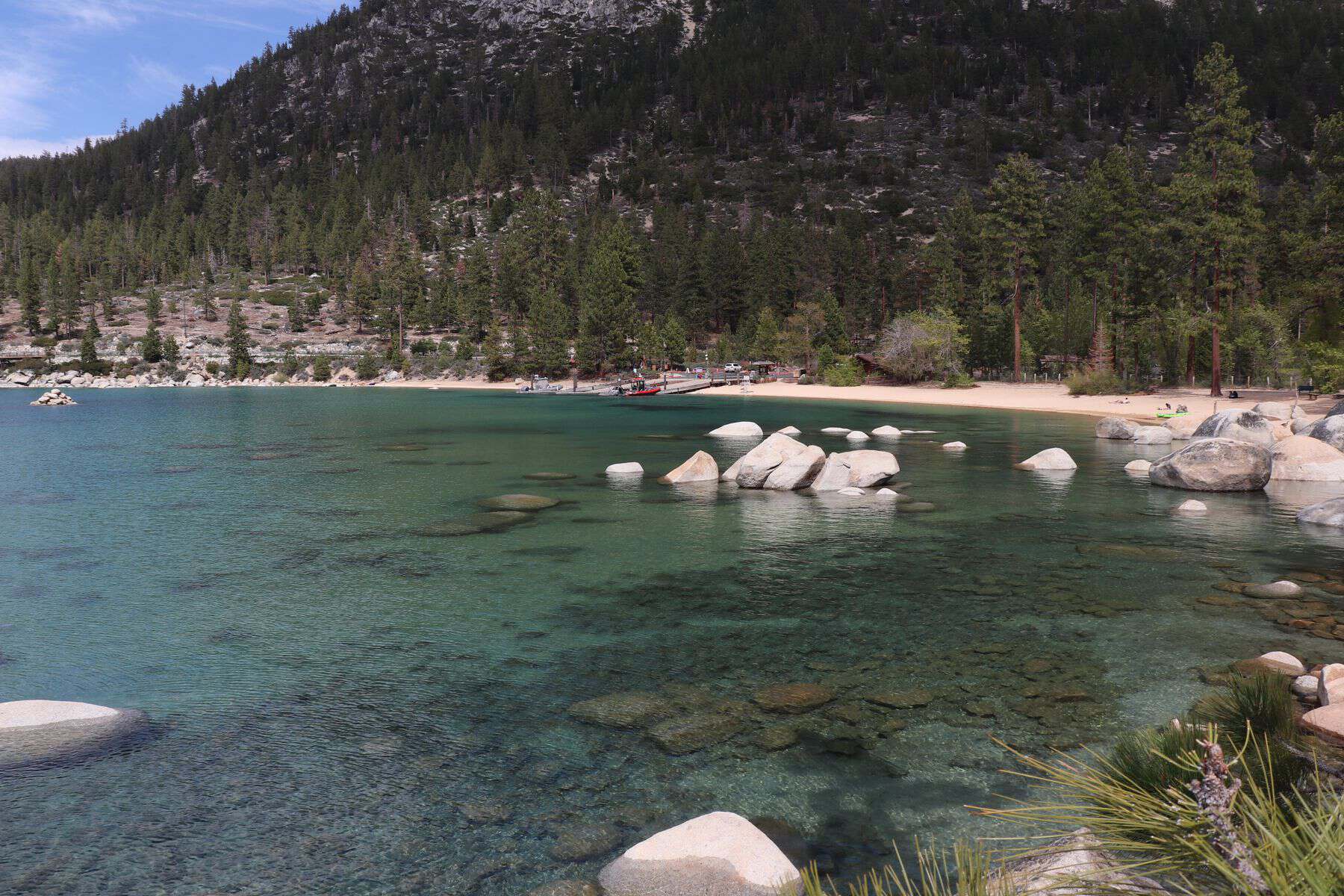
Lake Tahoe, high in the Sierra Nevada on the Nevada border, is a deep, clear lake ringed by pine forest: hiking, kayaking and beaches in summer, skiing in winter. Emerald Bay is the classic view. It is about three and a half hours from San Francisco.
Food and drink
California eats very well: seasonal produce from the Central Valley, excellent Mexican food (fish tacos in San Diego, burritos in San Francisco’s Mission District), Dungeness crab and sourdough on the San Francisco waterfront, clam chowder in Monterey and superb Japanese and Korean food in Los Angeles. Tip around 18 to 20% in restaurants. The drinking age is 21.
Best time to visit California
California is a year-round destination, but the best time to visit depends on where you are going. For a classic road trip that combines the coast, San Francisco and Yosemite, May to June and September to October are ideal: warm, dry and less busy than high summer, and Yosemite’s waterfalls are full in late spring. July and August are hot inland and busy, while San Francisco is often cool and foggy; its warmest days come in September and October, with the wine harvest. November to March is the rainy season in the north and snow closes the high Sierra roads, but this is the best time for the deserts, whale watching along the coast and skiing at Lake Tahoe, and Southern California stays mild.
| Month | San Francisco | Los Angeles | Yosemite Valley |
|---|---|---|---|
| Jan | 14°C / 8°C · 110 mm | 20°C / 8°C · 85 mm | 11°C / 0°C · 205 mm |
| Feb | 15°C / 8°C · 85 mm | 21°C / 8°C · 45 mm | 11°C / -1°C · 170 mm |
| Mar | 16°C / 9°C · 90 mm | 22°C / 10°C · 70 mm | 12°C / 1°C · 200 mm |
| Apr | 17°C / 10°C · 35 mm | 25°C / 11°C · 15 mm | 16°C / 2°C · 95 mm |
| May | 18°C / 11°C · 15 mm | 25°C / 13°C · 10 mm | 20°C / 6°C · 65 mm |
| Jun | 20°C / 13°C · 0 mm | 29°C / 16°C · 5 mm | 27°C / 11°C · 20 mm |
| Jul | 20°C / 13°C · 0 mm | 31°C / 18°C · 5 mm | 31°C / 16°C · 5 mm |
| Aug | 21°C / 14°C · 0 mm | 32°C / 18°C · 10 mm | 30°C / 15°C · 10 mm |
| Sep | 22°C / 14°C · 5 mm | 31°C / 18°C · 10 mm | 27°C / 12°C · 20 mm |
| Oct | 21°C / 13°C · 30 mm | 29°C / 15°C · 10 mm | 22°C / 7°C · 45 mm |
| Nov | 17°C / 10°C · 50 mm | 24°C / 11°C · 20 mm | 15°C / 2°C · 90 mm |
| Dec | 14°C / 8°C · 135 mm | 20°C / 8°C · 85 mm | 11°C / -1°C · 170 mm |
Average daily high / low and monthly rain (or snow, as water), 10-year ERA5 data. Yosemite Valley is at about 1,200 m; winter snow there is common. The Pacific is cool all year: around 12 to 15°C off San Francisco and up to about 20°C off Southern California in late summer.
Getting to California from the UK
There are direct flights from London to San Francisco and Los Angeles, taking about 11 hours, and to San Diego (about 11.5 hours); coming home is around an hour quicker. Most road trips fly into one city and home from another, for example into San Francisco and out of Los Angeles; any one-way hire fee is included in our quote.
Getting around California
- Hire car: the best way to see California. Roads are good, most cars are automatic and you drive on the right; you can turn right at a red light after stopping unless a sign says otherwise.
- Distances: San Francisco to Yosemite Valley is about 4 hours; Yosemite to Los Angeles 5 to 6 hours; Los Angeles to San Diego 2 to 3 hours, depending on traffic; LA to Las Vegas about 4.5 hours.
- Flights: short internal flights link San Francisco, Los Angeles, San Diego, Palm Springs and Las Vegas, and save a long day’s drive.
- Trains: a scenic coastal line links Los Angeles, Santa Barbara and San Luis Obispo; good for a day, not a whole trip.
- In the cities: San Francisco is best on foot and by cable car; pick up the hire car as you leave. In Los Angeles you’ll want a car.
Where to stay in California
- San Francisco: Union Square and Nob Hill for first visits; the Embarcadero for bay views; Sausalito for somewhere quieter.
- Wine country: inns and spa hotels in Yountville, St Helena and Calistoga in Napa, or Healdsburg and Sonoma town.
- Yosemite: lodges and cabins in the valley (book many months ahead), or hotels near the south and west entrances.
- The coast: Carmel and Monterey for the start of Big Sur; a cliff-top lodge or cabin in Big Sur itself; Santa Barbara or the wine country around it.
- Los Angeles: Santa Monica for the beach, Beverly Hills or West Hollywood for a central base, Malibu for peace.
- San Diego and the deserts: La Jolla or Coronado for beach stays; a mid-century hotel or villa with a pool in Palm Springs.
Tell us your style and budget and we’ll match the right hotels along your route, from boutique city stays to national park lodges and cliff-top hideaways.
California road trips: sample routes
Two weeks lets you see the big three: San Francisco, Yosemite and the coast. Add a third week for the deserts, wine country or Hawaii.
The California classic
- San Francisco (3 nights)
- Yosemite (2)
- Monterey or Carmel (1)
- Big Sur (1)
- Santa Barbara (1)
- Los Angeles (2)
The essentials, flying into San Francisco and home from Los Angeles. Best April to October.
Coast, mountains and wine
- San Francisco (3 nights)
- Napa or Sonoma (2)
- Yosemite (2)
- Carmel (2)
- Big Sur (1)
- Santa Barbara (1)
- Los Angeles (3)
A slower version with time to taste, walk and stop along Highway 1.
The great western loop
- Los Angeles (3 nights)
- Palm Springs or Joshua Tree (2)
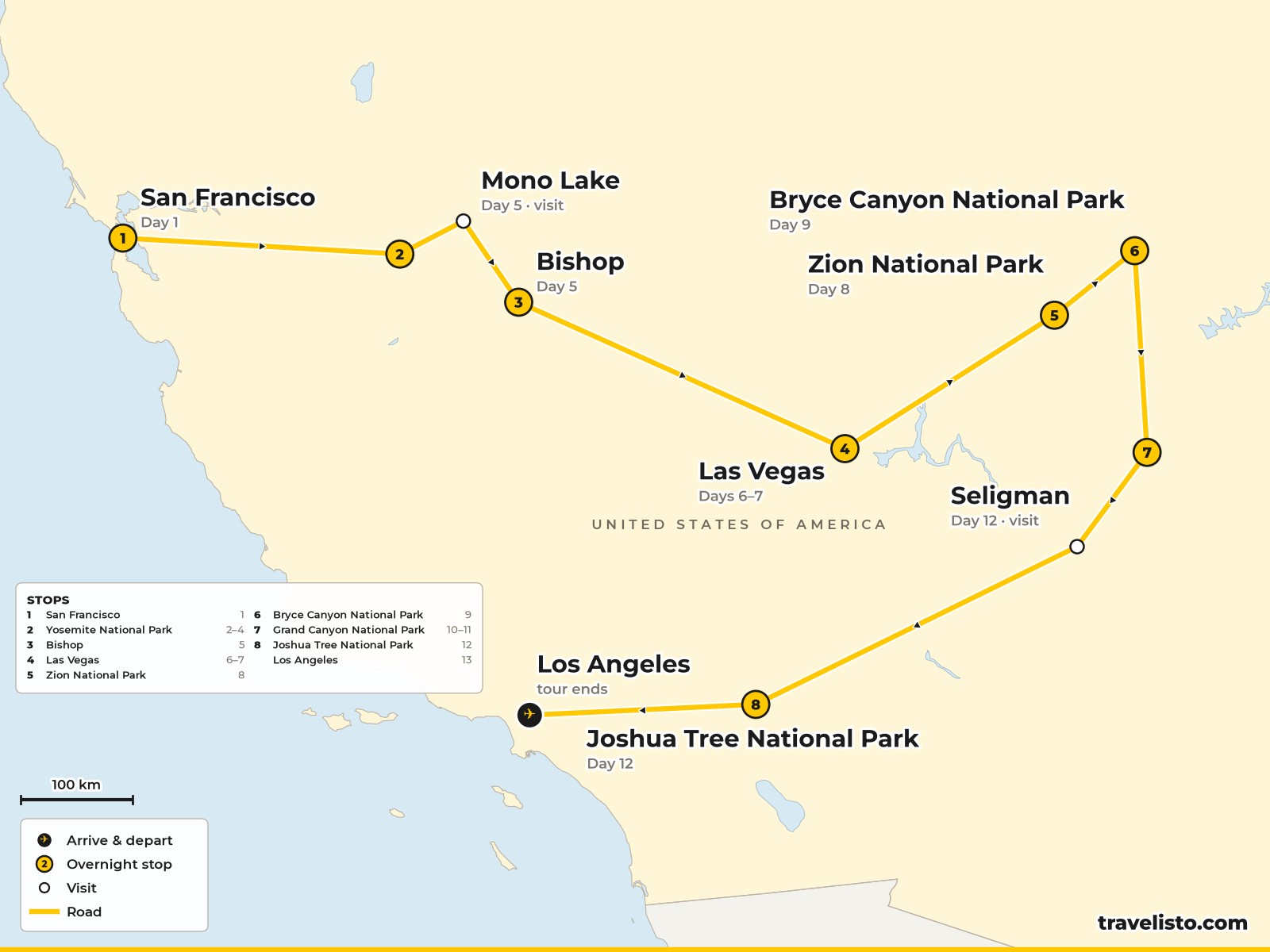
- Las Vegas (2)
- Death Valley (1)
- Yosemite via the Tioga Road (2)
- San Francisco (3)
- Highway 1 to LA (3)
Desert, mountains and coast in one loop. Summer and early autumn, when the Tioga Road is open.
Prefer cities to driving? Our San Francisco, Las Vegas and Los Angeles multi-centre holiday links three cities with short flights. California is also the natural stopover on the way to the Pacific: see our Hawaii holiday guide.
California tours and holidays with us
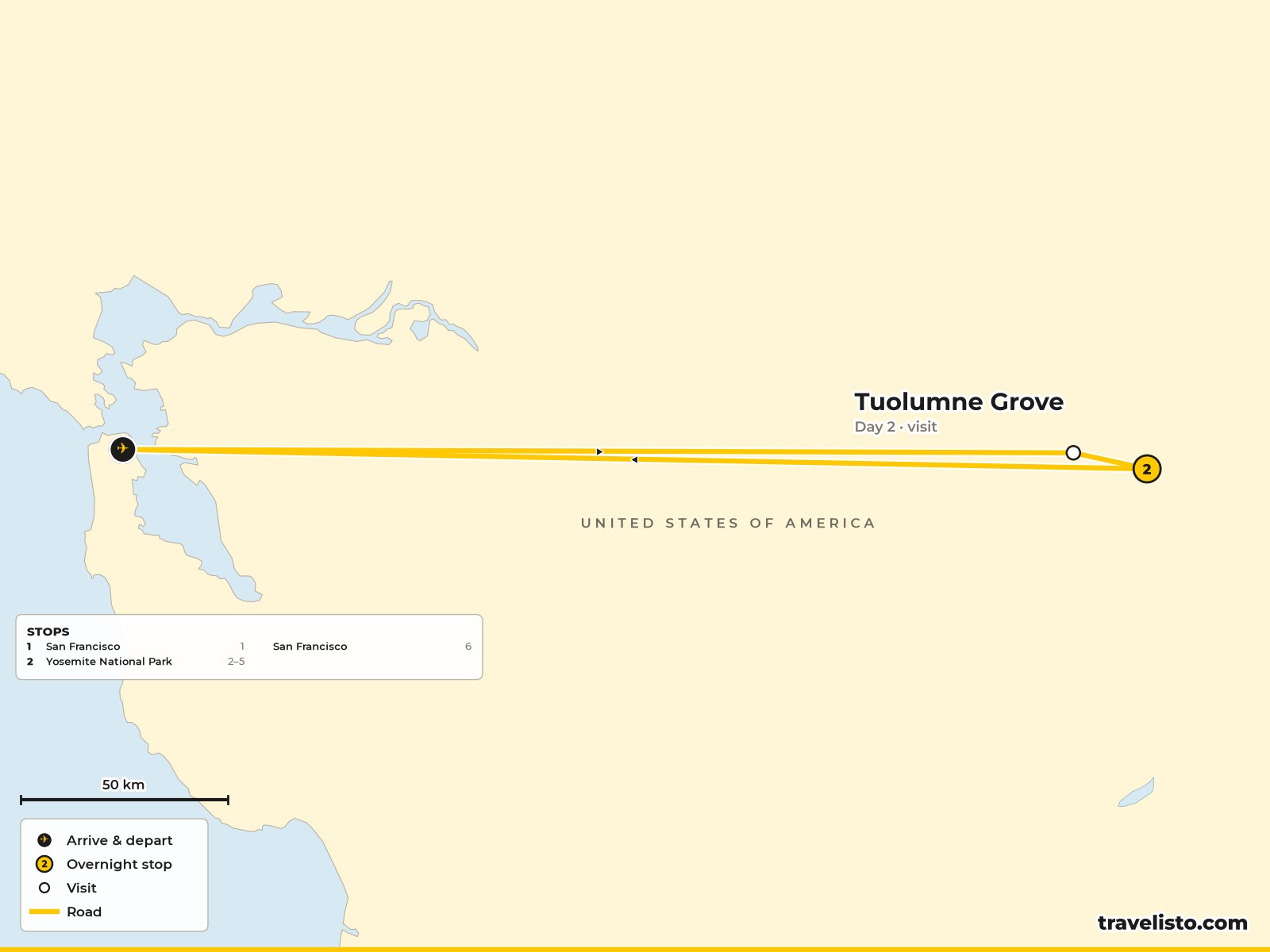

Prefer your own route? A tailor-made California holiday can combine any of these with flights, hire car and hotels in one booking. See all our escorted tours of the USA.
Practical tips
- Entry: British visitors travelling under the Visa Waiver Program need an approved ESTA before they travel; if you are not eligible, you need a visa. Check the FCDO USA travel advice and its entry requirements before you go. The FCDO does not advise against travel to any part of the USA.
- Book early: Yosemite lodging and Big Sur rooms sell out months ahead for summer.
- Wildfires: mainly late summer and autumn; they can close roads and parks at short notice, and we adjust routes if needed.
- Layers: a day can run from foggy 15°C in San Francisco to 35°C inland.
- Insurance: medical care is very expensive in the US, so make sure your travel insurance has generous medical cover.
Frequently asked questions
What is the best time to visit California?
May to June and September to October suit a classic road trip: warm, dry and less busy than high summer. September and October bring San Francisco's warmest weather; November to April is best for the deserts.
How many days do you need in California?
Ten nights covers San Francisco, Yosemite, the Big Sur coast and Los Angeles. Two weeks adds wine country and slower days on the coast; three weeks adds the deserts or Las Vegas.
How long is the drive from San Francisco to Los Angeles on Highway 1?
About 750 km (470 miles). You could do it in two long days, but four or five nights lets you stop at Monterey, Carmel, Big Sur and Santa Barbara.
Is Highway 1 through Big Sur open?
The long closure at Regent's Slide reopened in January 2026, so the full coast road is driveable. Landslides close sections from time to time, especially after winter storms, so we check the road status before you travel.
How far is Yosemite from San Francisco?
About four hours' drive to Yosemite Valley. Stay at least two nights in or near the park rather than visiting on a day trip.
How long is the flight from the UK to California?
Direct flights from London take about 11 hours to San Francisco or Los Angeles and about 11.5 hours to San Diego, with the return around an hour shorter.
Do I need an ESTA to visit California?
British visitors travelling under the Visa Waiver Program need an approved ESTA before they travel; if you are not eligible you need a US visa. Check the FCDO USA entry requirements before booking.
Keep planning
- USA holidays
- Escorted tours of the USA
- San Francisco, Las Vegas and Los Angeles
- Hawaii holiday guide
- Canada holiday guide
- Mexico holiday guide
- New York and Las Vegas
- Tailor-made holidays
- Alaska holiday guide
Plan your California holiday with a Travel Designer
Tell us when you’d like to go and we’ll plan your route, flights, hire car and hotels, from San Francisco and Yosemite to Big Sur and Los Angeles, in one ATOL-protected booking.
Make an enquiry USA holidays