Uruguay in brief
- Montevideo for the old town, the Rambla and the Mercado del Puerto; Colonia del Sacramento for cobbled streets and River Plate sunsets.
- Punta del Este, José Ignacio and Cabo Polonio for beaches, sea lions and whales.
- Tannat wineries and estancia stays in the countryside, two nights each.
- Best from November to April; beach season December to March. An hour by ferry from Buenos Aires.
Uruguay is South America’s easy-going secret: a small, safe-feeling, unhurried country of long Atlantic beaches, old colonial streets, rolling cattle country and very good wine, squeezed between Argentina and Brazil. Spend a few days in the capital, Montevideo, wander the cobbled lanes of Colonia del Sacramento, an hour by ferry from Buenos Aires, then head for the coast: glamorous Punta del Este, chic José Ignacio and the wild, car-free dunes of Cabo Polonio. Inland, stay on a working estancia and ride out with the gauchos, or tour the family wineries that make Uruguay’s signature red, Tannat. This guide covers where to go, things to do in Uruguay, the best time to visit, getting there from the UK, where to stay and how to combine Uruguay with Argentina and Brazil.
Where is Uruguay?
Uruguay sits on the south-east coast of South America, with Argentina across the wide brown estuary of the Río de la Plata (the River Plate) to the west and Brazil to the north. It’s about the size of England and Wales put together, with around 3.5 million people, nearly half of them in Montevideo.
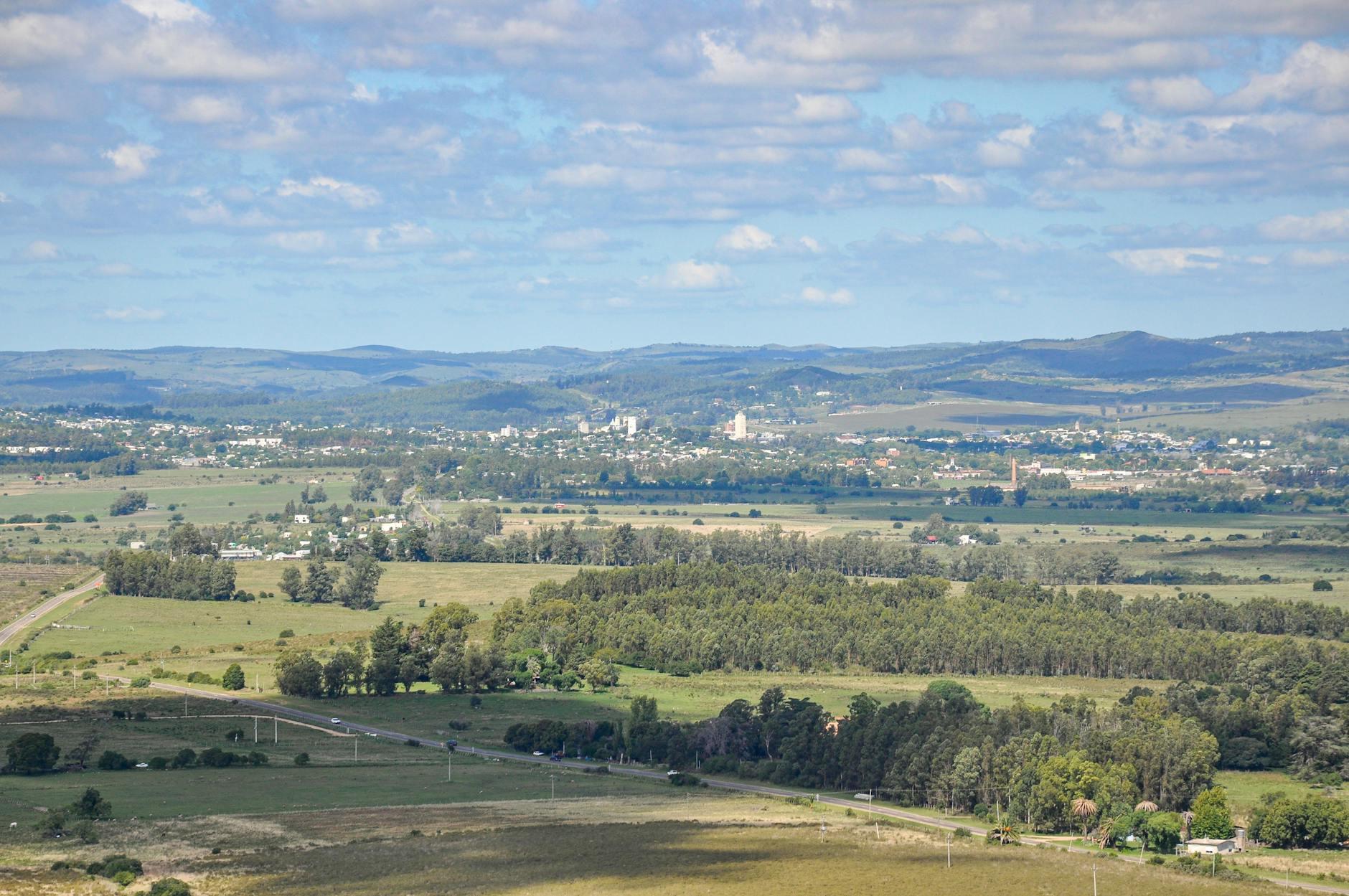
The country is low and green: grassland, cattle and sheep, with gentle ranges of hills (the sierras) in Lavalleja and Maldonado rarely above 500 m. The coast runs for hundreds of kilometres, first along the calm River Plate past Colonia and Montevideo, then out onto the Atlantic beyond Punta del Este, where the beaches get wilder towards Brazil.
Places to visit in Uruguay

Montevideo
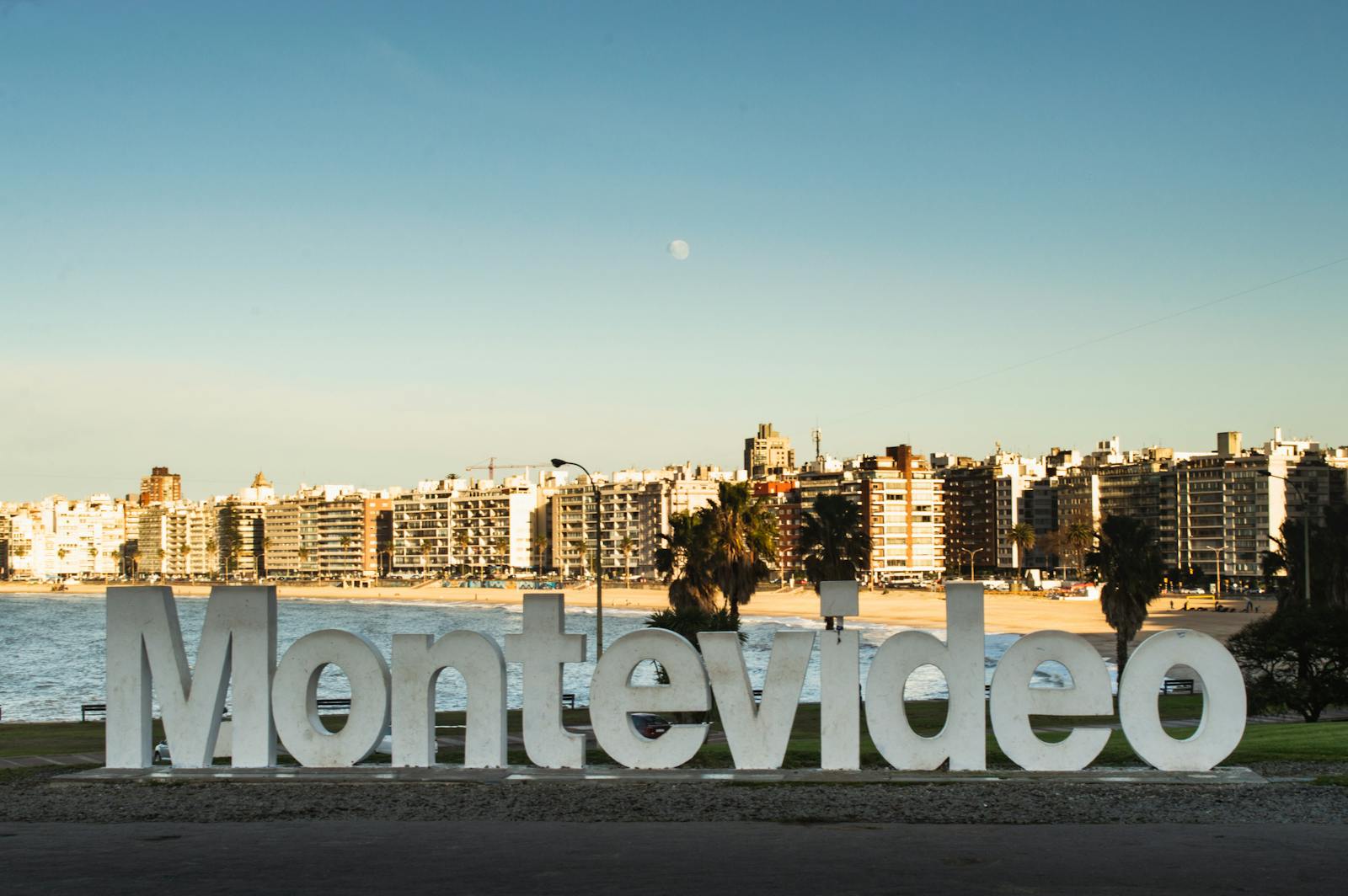
A relaxed, walkable capital on the river, with an old town, a long seafront promenade and the best food in the country.
Things to do in Montevideo →
Colonia del Sacramento
Uruguay’s oldest town, founded by the Portuguese in 1680, and an hour by ferry from Buenos Aires.
Colonia and the ferry →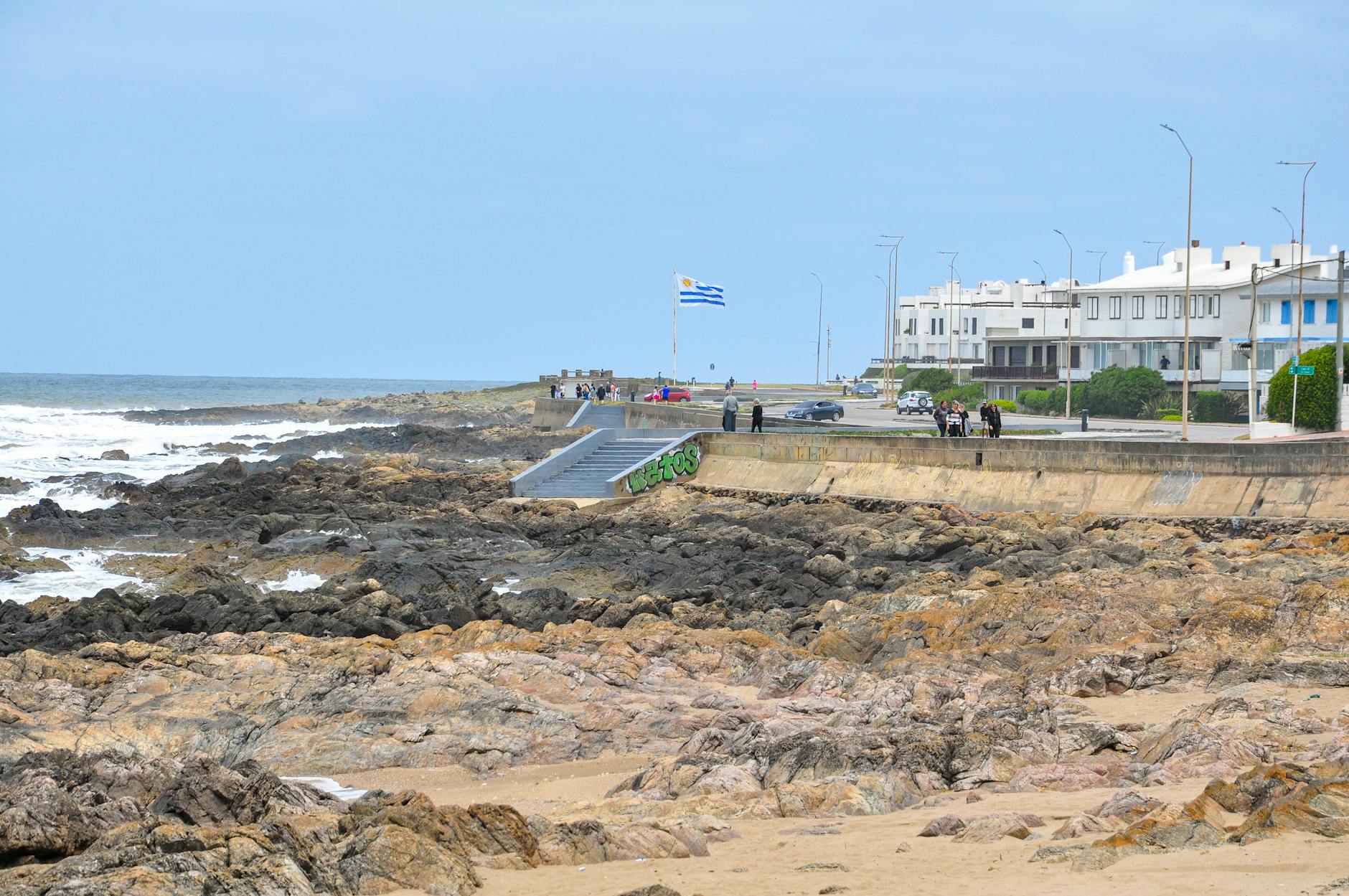
Punta del Este
South America’s most glamorous summer resort, on a peninsula with a calm river-side beach on one side and Atlantic surf on the other.
Punta del Este →
José Ignacio and the Rocha coast
East of Punta del Este the coast turns wild: stylish José Ignacio, surf villages and the car-free dunes of Cabo Polonio.
José Ignacio and Rocha →
Wine country
Most wineries are small family estates in Canelones, just outside Montevideo, with more around Carmelo and Garzón.
Wine country →
The countryside and estancias
Cattle country covers most of Uruguay. Stay on a working ranch for a couple of nights to ride with the gauchos, eat asado and see a side of the country most visitors miss.
Estancia stays →Things to do in Montevideo
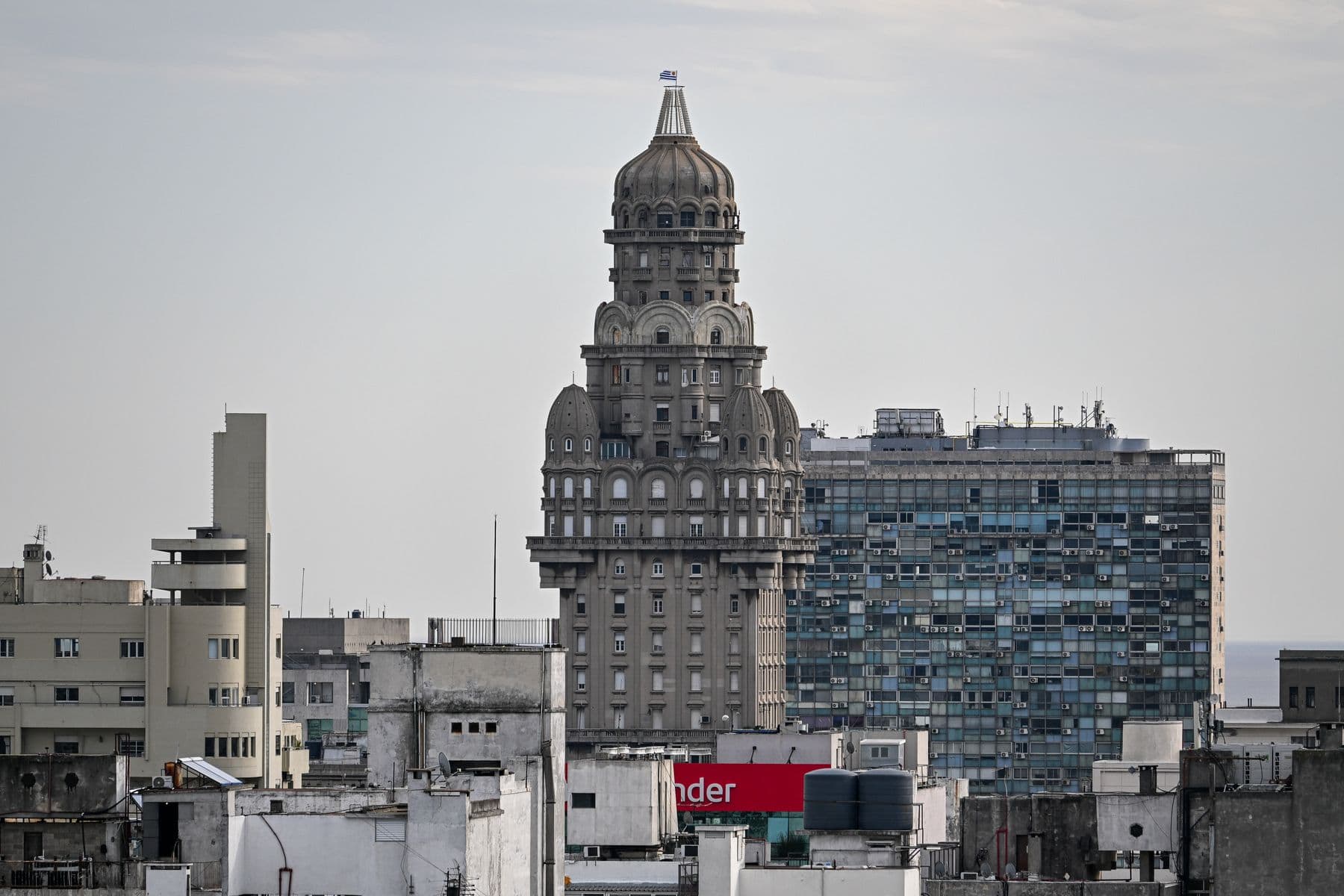
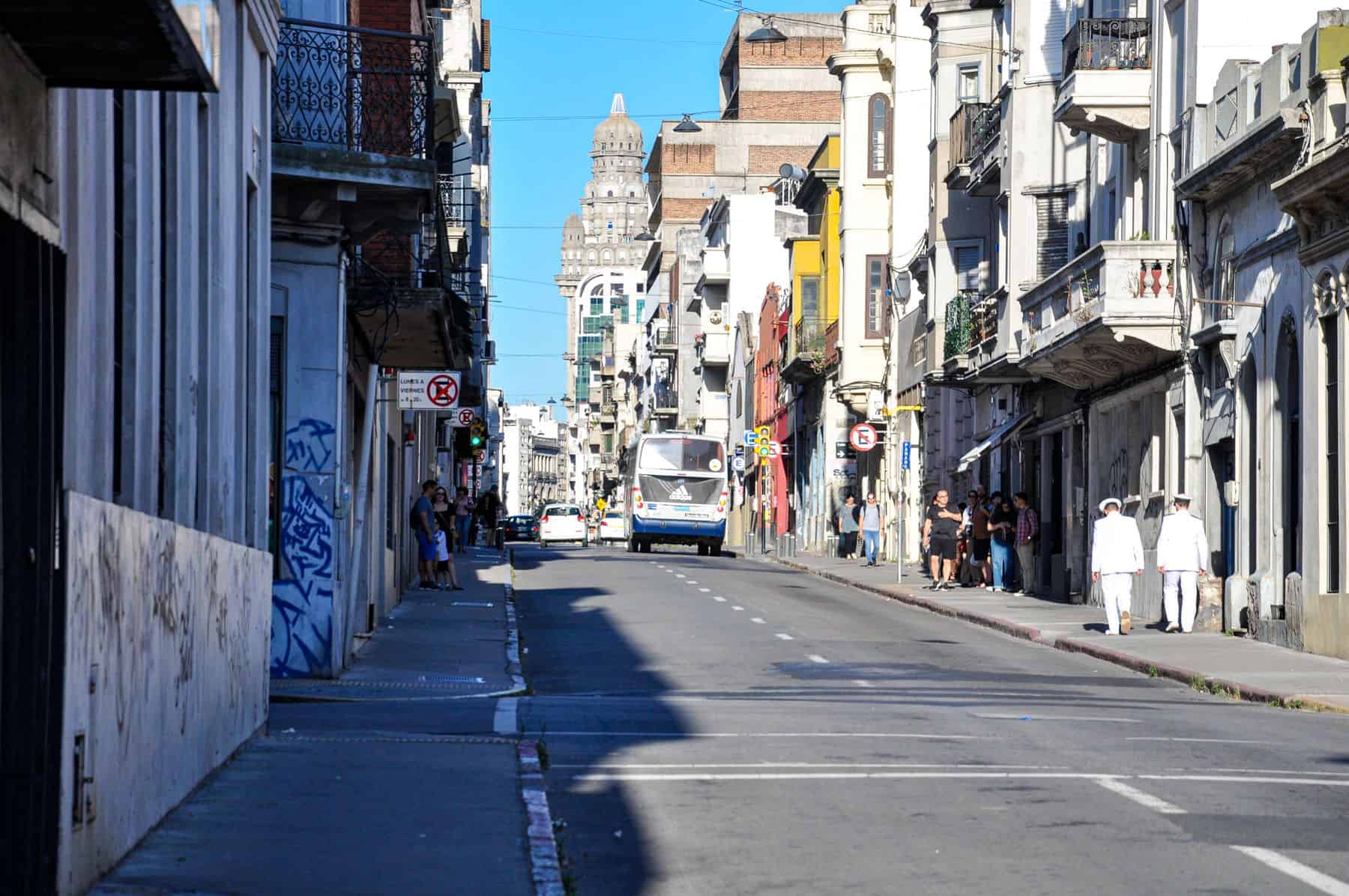
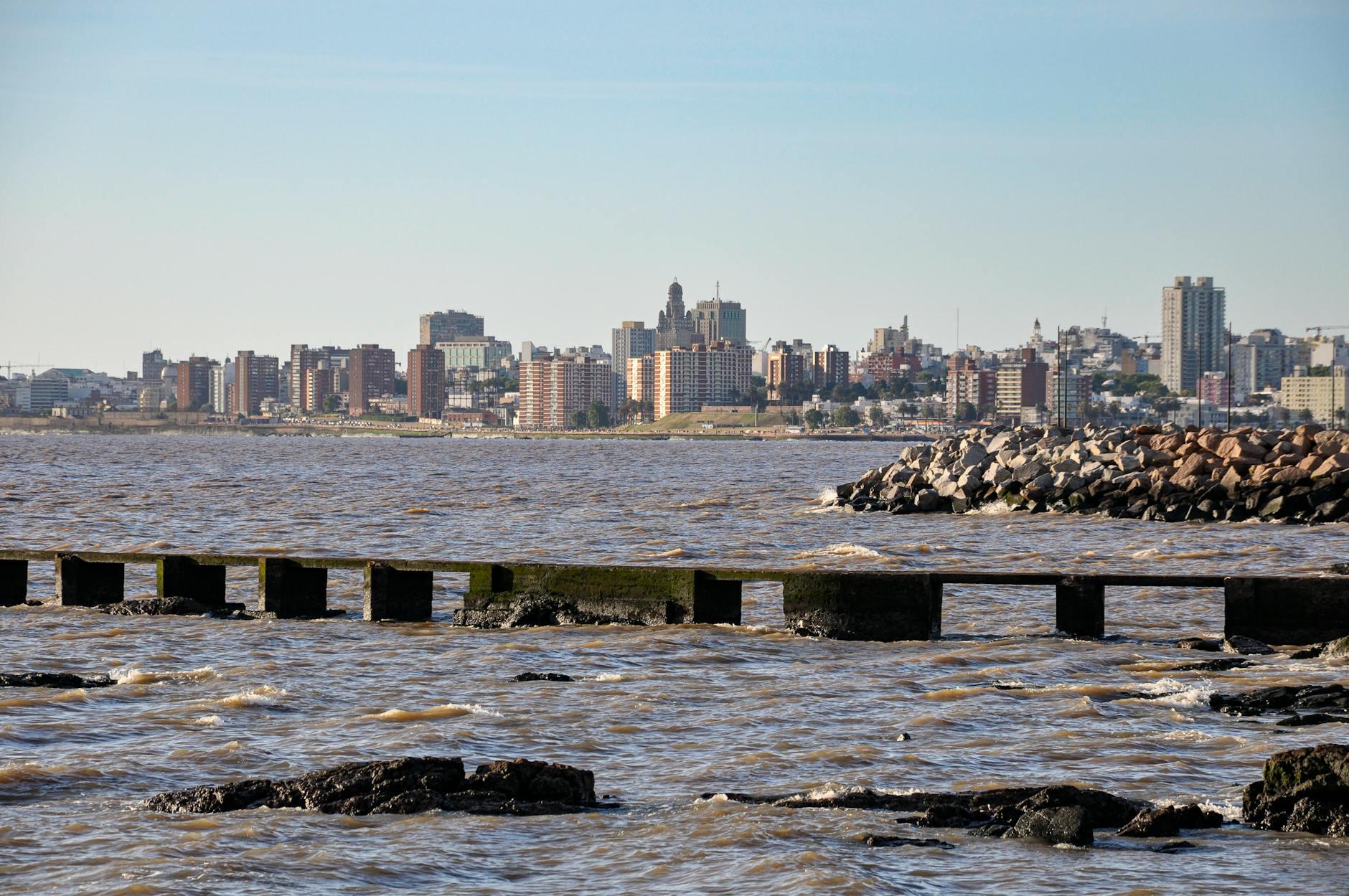
Plaza Independencia and the Ciudad Vieja. Montevideo’s main square is overlooked by the Palacio Salvo, a 1920s tower that was once the tallest building in South America. Walk through the old city gate into the Ciudad Vieja (old town), with its pedestrian street, Art Deco and colonial buildings, galleries and cafés.
Teatro Solís. The grand 19th-century opera house just off the square, with guided tours by day and concerts, opera and ballet at night.
The Mercado del Puerto. An old iron market hall near the port, now packed with parrillas (grill restaurants) cooking beef, sausages and vegetables over wood embers.
The Rambla. The seafront promenade runs for more than 20 km along the river and the city beaches. In the late afternoon half the city seems to be out on it, walking, cycling, fishing and drinking mate. Pocitos is the best stretch for an evening walk.
Carnival and candombe. Montevideo’s carnival is said to be the longest in the world, running for about 40 days from late January. Its soundtrack is candombe, the Afro-Uruguayan drumming recognised by UNESCO; on many Sunday evenings you’ll hear drum groups practising in the Barrio Sur and Palermo districts.
Safety: relaxed by day, but take taxis after dark and avoid the port area and downtown alone at night.
Colonia del Sacramento and the Buenos Aires ferry

Colonia del Sacramento was founded by the Portuguese in 1680 and fought over by Portugal and Spain for a century, which is why its streets mix both styles. Its Barrio Histórico has been a UNESCO World Heritage Site since 1995.
Walk the sloping Calle de los Suspiros, one of the oldest streets, climb the lighthouse beside the ruins of a convent, look into the small museums, and find a table on the waterfront for the sunset over the River Plate.
Most visitors arrive from Buenos Aires for the day, so Colonia is busiest from late morning to late afternoon. Stay a night to enjoy it quietly, with dinner in the old town.
The ferry from Buenos Aires: fast ferries cross the River Plate from the port in central Buenos Aires to Colonia in about 1 hour 15 minutes, several times a day, with Argentine and Uruguayan passport checks done together before boarding. From Colonia it’s about two and a half hours by road to Montevideo,. This makes Uruguay one of the easiest add-ons to an Argentina holiday: a day trip to Colonia, or better, ferry across, spend a night in Colonia and carry on to Montevideo and the coast.
Punta del Este

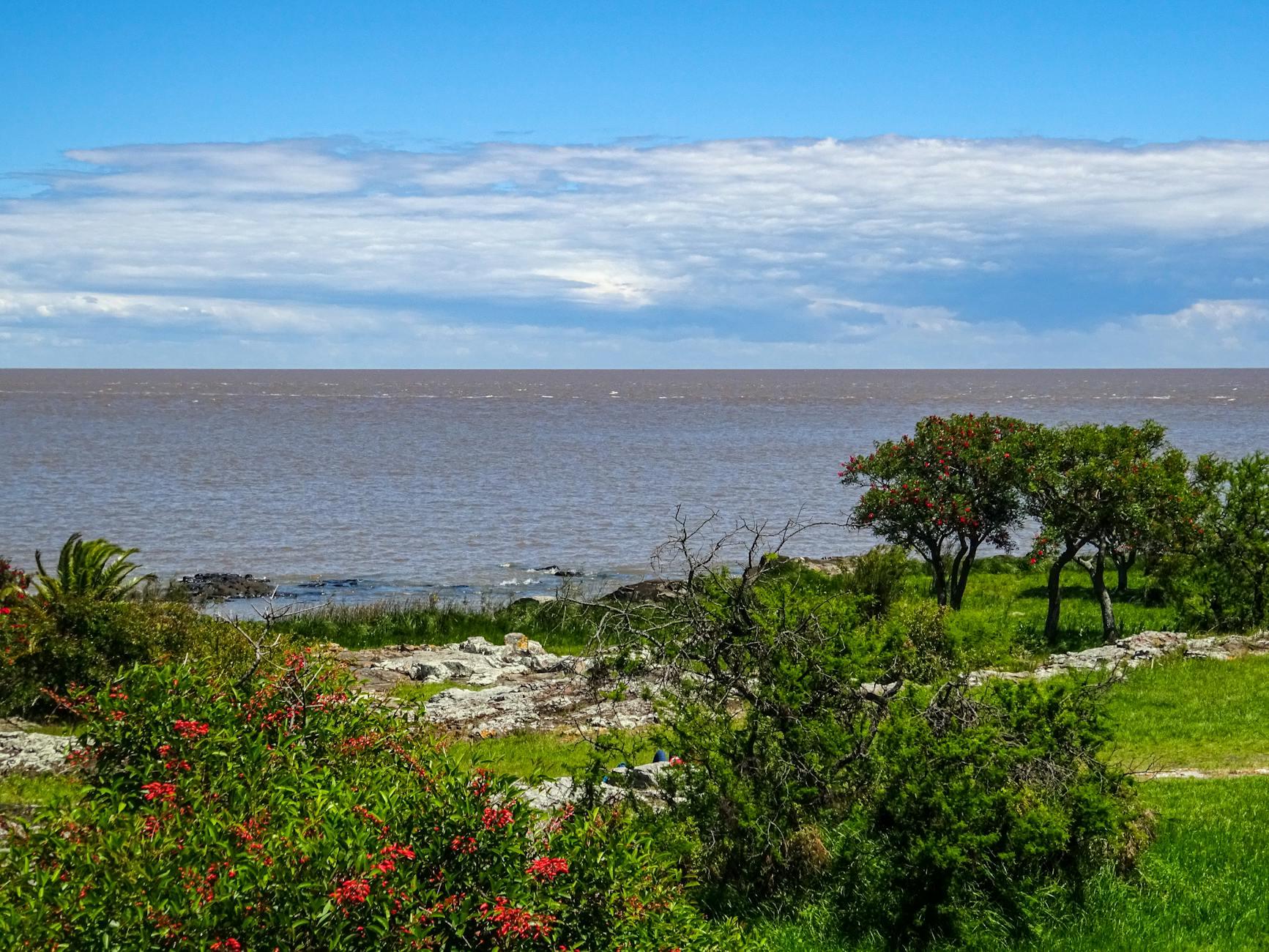
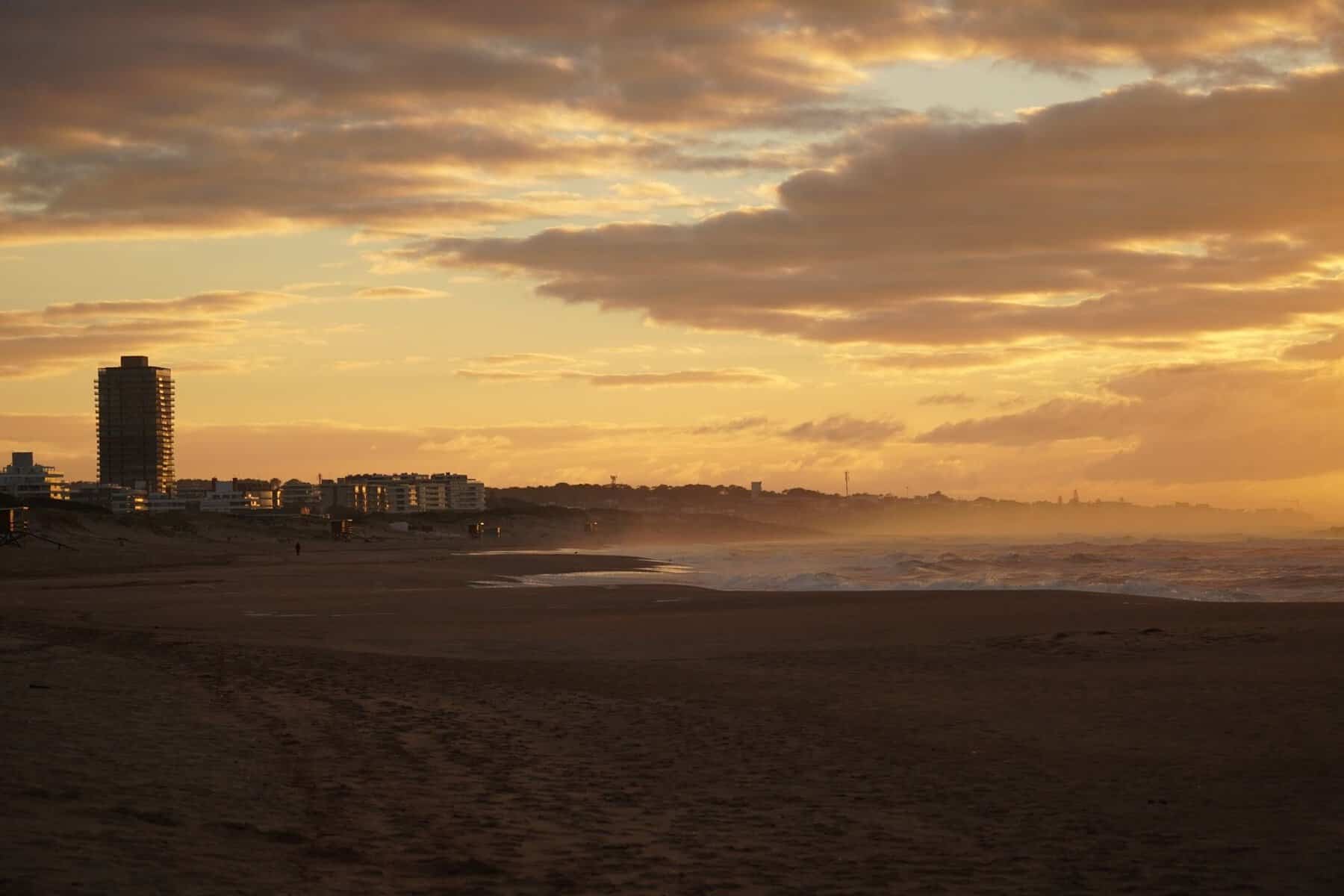
Punta del Este sits on a narrow peninsula where the River Plate meets the Atlantic. On the west side, Playa Mansa has calm water for swimming; on the east, Playa Brava faces the ocean surf, with the famous giant fingers sculpture (La Mano) rising from the sand.
In January it’s the summer playground of Buenos Aires and São Paulo: beach clubs, yachts in the harbour, late dinners and later nights.
Things to do: take a boat to Isla de Lobos, home to one of South America’s largest sea lion colonies; visit Casapueblo, the white, sculpted home and studio of the artist Carlos Páez Vilaró on the cliffs of Punta Ballena, at sunset; cross the wavy bridge to La Barra for its galleries and beaches; and watch for southern right whales from the shore between July and October.
José Ignacio, Cabo Polonio and the Rocha coast

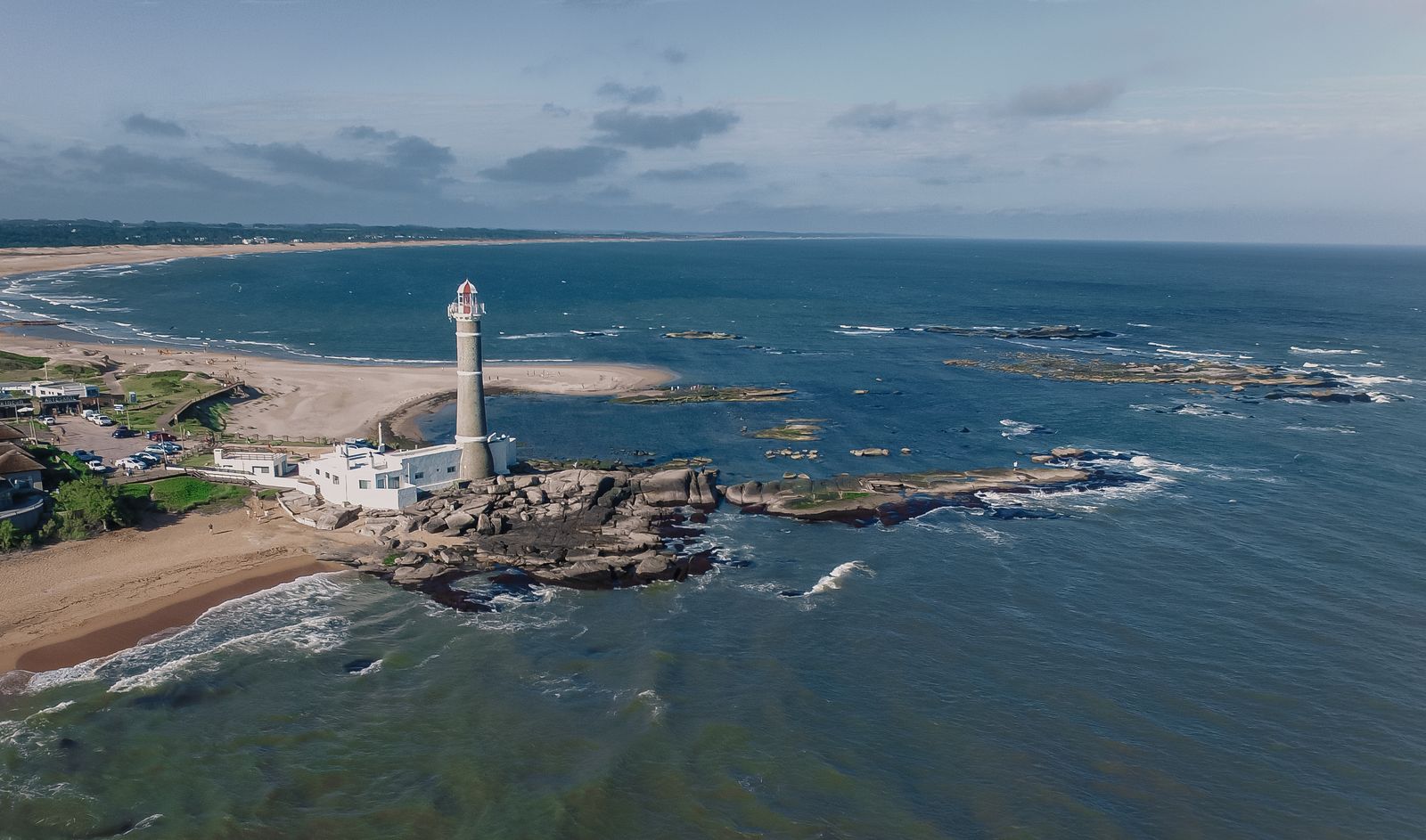
José Ignacio, about 40 km east of Punta del Este, began as a fishing village around a lighthouse on a rocky point. It’s now the smartest address on the coast, but still tiny: sandy lanes, low houses, a beach on each side of the point and barefoot restaurants famous for wood-fired cooking.
Just beyond, Laguna Garzón is crossed by an unusual circular bridge, and the countryside behind the coast is dotted with vineyards and olive groves.
Further east, in the department of Rocha, the coast becomes wilder and more bohemian. La Paloma and La Pedrera are laid-back surf towns, and Punta del Diablo is a fishing village of colourful cabins on the rocks.
Cabo Polonio is a scattering of shacks and cabins around a lighthouse on a sandy headland, inside a protected area. No private cars are allowed: you leave yours at the entrance on the main coast road and ride in open-topped 4×4 trucks across the dunes (or walk, about 7 km).
Most houses have no mains electricity, so evenings are lit by candles, solar lamps and the stars. By day, climb the lighthouse, watch the sea lions and fur seals on the rocks below it, walk the empty beaches and, from July to October, look for whales offshore.
It’s simple rather than luxurious: visit for the day from José Ignacio or La Pedrera, or stay a night in one of the rustic guesthouses if you’re happy without home comforts.
Wine country and estancias
Uruguayan wine is one of South America’s best-kept secrets. The signature grape is Tannat, brought by Basque settlers in the 19th century, which makes deep, structured reds that suit Uruguayan beef perfectly.
Most of the wineries are in Canelones, on the edge of Montevideo: family estates, many run by the descendants of Italian and Basque immigrants, where you can taste in the cellar and stay for a long lunch. Around Carmelo, an hour west of Colonia on the river, vineyards mix with orchards and quiet country roads ideal for cycling between tastings, and there are wine estates with rooms. Near the coast, the hills inland from José Ignacio and Garzón are home to newer, design-led wineries.
Estancias. Much of Uruguay is still cattle and sheep country, and staying on an estancia (a ranch) is one of the best things you can do here. A typical day starts with riding out across the pastures with the gauchos, the Uruguayan cowboys, to move cattle or check fences. Two nights is ideal. Good areas are the hills of Lavalleja and Maldonado (within reach of the coast), the countryside around Colonia and Carmelo, and the deep interior towards Tacuarembó, heartland of gaucho culture.
Food and drink

- Asado. Beef is the centre of Uruguayan life, cooked slowly over wood embers on a parrilla. Order a mixed grill (parrillada) with short ribs (asado de tira), sausages, sweetbreads and grilled provolone cheese.
- Chivito. The national sandwich: steak with ham, cheese, egg, lettuce and tomato, usually with chips. Huge.
- Dulce de leche in everything, from pancakes to alfajores (biscuits sandwiched with caramel).
- Mate. Uruguayans drink more of this bitter herbal tea than anyone, carrying a gourd and a flask of hot water everywhere. Try it if you’re offered.
Dinner is late, rarely before 9pm and often later in summer.
Best time to visit Uruguay
Uruguay has four seasons, the reverse of ours, and a mild, fairly wet climate with rain spread through the year. December to March is summer and beach season, with highs of about 25 to 27°C on the coast. January is the peak: Punta del Este and José Ignacio are at their busiest and liveliest, and prices and crowds peak with them. Late February and March are perhaps the best months of all, still warm with the sea at its warmest, but calmer after the Argentine holidays; carnival in Montevideo runs from late January through February. April and May and October and November are lovely for Montevideo, Colonia, the wineries (the harvest is February to April) and estancias, with comfortable temperatures and quiet roads, though many beach businesses close. June to September is winter: cool, damp and windy, around 14 to 16°C by day, but it’s whale-watching season on the coast from July to October.
| Month | Montevideo | Punta del Este |
|---|---|---|
| Jan | 27°C / 20°C · 80 mm | 26°C / 19°C · 120 mm |
| Feb | 26°C / 20°C · 105 mm | 25°C / 19°C · 100 mm |
| Mar | 24°C / 18°C · 80 mm | 24°C / 18°C · 90 mm |
| Apr | 21°C / 16°C · 105 mm | 21°C / 16°C · 110 mm |
| May | 17°C / 12°C · 80 mm | 18°C / 13°C · 80 mm |
| Jun | 15°C / 10°C · 65 mm | 15°C / 10°C · 80 mm |
| Jul | 14°C / 9°C · 110 mm | 15°C / 9°C · 120 mm |
| Aug | 16°C / 10°C · 90 mm | 16°C / 9°C · 105 mm |
| Sep | 17°C / 11°C · 75 mm | 16°C / 10°C · 80 mm |
| Oct | 19°C / 13°C · 90 mm | 18°C / 12°C · 90 mm |
| Nov | 22°C / 16°C · 80 mm | 22°C / 15°C · 80 mm |
| Dec | 25°C / 18°C · 70 mm | 24°C / 17°C · 85 mm |
Average daily high / low and monthly rainfall, 10-year ERA5 data.
How to get to Uruguay from the UK
Flights: there are no direct flights from the UK. The simplest routes are via Madrid, which has direct flights to Montevideo (about 12 to 13 hours), or via São Paulo or Buenos Aires. Allow around 16 to 18 hours door to door from London.
Via Buenos Aires: many travellers fly into Buenos Aires, spend a few days there, then take the ferry across the River Plate to Colonia or Montevideo, flying home from Montevideo (or the other way round).
Entry: British visitors don’t need a visa for stays of up to 90 days; your passport must be valid for the whole stay. Check the latest FCDO Uruguay advice before you travel.
Getting around
- By car: roads are good and quiet, and driving is the best way to explore the coast, the wineries and the estancias. The main coast road (Route 10 and the Interbalnearia) links Montevideo, Punta del Este, José Ignacio and Rocha.
- With a driver: for most of our clients, a private driver or driver-guide for transfers and days out is the easiest option, especially between Colonia, Montevideo and the coast.
- By coach: comfortable long-distance coaches run from Montevideo’s Tres Cruces terminal to Colonia, Punta del Este and the Rocha coast, often hourly.
Where to stay in Uruguay
- Montevideo: stay in Pocitos or Punta Carretas, residential seafront neighbourhoods with the Rambla on your doorstep and good restaurants, or in a restored building near the Ciudad Vieja for the sights (take taxis at night).
- Colonia: a small boutique hotel or restored colonial house in or next to the Barrio Histórico, so you can walk out for sunset and dinner.
- Punta del Este: on the peninsula for walking to the harbour and restaurants; in La Barra or Manantiales for a younger beach scene; or near Punta Ballena for sunset views.
- José Ignacio: small design-led boutique hotels and beach houses in the village, or a lodge in the countryside behind it among vineyards and lagoons.
- The countryside: an estancia for two nights, or a wine estate with rooms near Carmelo or Garzón.
In January, rooms on the coast book up months ahead and many places ask for minimum stays. Tell us your style and dates and we’ll match the right places; see Uruguay holidays for ideas.
Combining Uruguay with Argentina and Brazil
Uruguay fits neatly into a wider South America trip. The classic pairing is Buenos Aires and Uruguay: a few days of tango, steak and museums in Buenos Aires, the ferry to Colonia, then Montevideo and the coast. From there it’s a short flight to Iguazú Falls, on the border of Argentina and Brazil, and on to Rio de Janeiro. See our Argentina holiday guide, Brazil holiday guide and South America holiday guide for more.
How many days in Uruguay? Sample routes
A week is enough to see Colonia, Montevideo and the coast at an easy pace. Add three or four days for an estancia and the wineries, or add three nights of Uruguay to an Argentina holiday.
Uruguay from Buenos Aires
- Ferry to Colonia (1 night)
- Montevideo (2)
- Canelones winery day
- Punta del Este or José Ignacio (1)
Fly home from Montevideo, or take the ferry back to Buenos Aires.
The best of Uruguay
- Colonia (1 night)
- Carmelo wine estate (1)
- Montevideo (2)
- Estancia (2)
- José Ignacio (2)
Old town, wine, the capital, ranch life and the beach. Best from October to April.
Argentina, Uruguay and Brazil
- Buenos Aires (3 nights)
- Colonia (1)
- Montevideo (2)
- José Ignacio (3)
- Iguazú Falls (2)
- Rio de Janeiro (4)
Three countries, with a ferry across the River Plate and flights for the longer hops.
Ways to see Uruguay with us
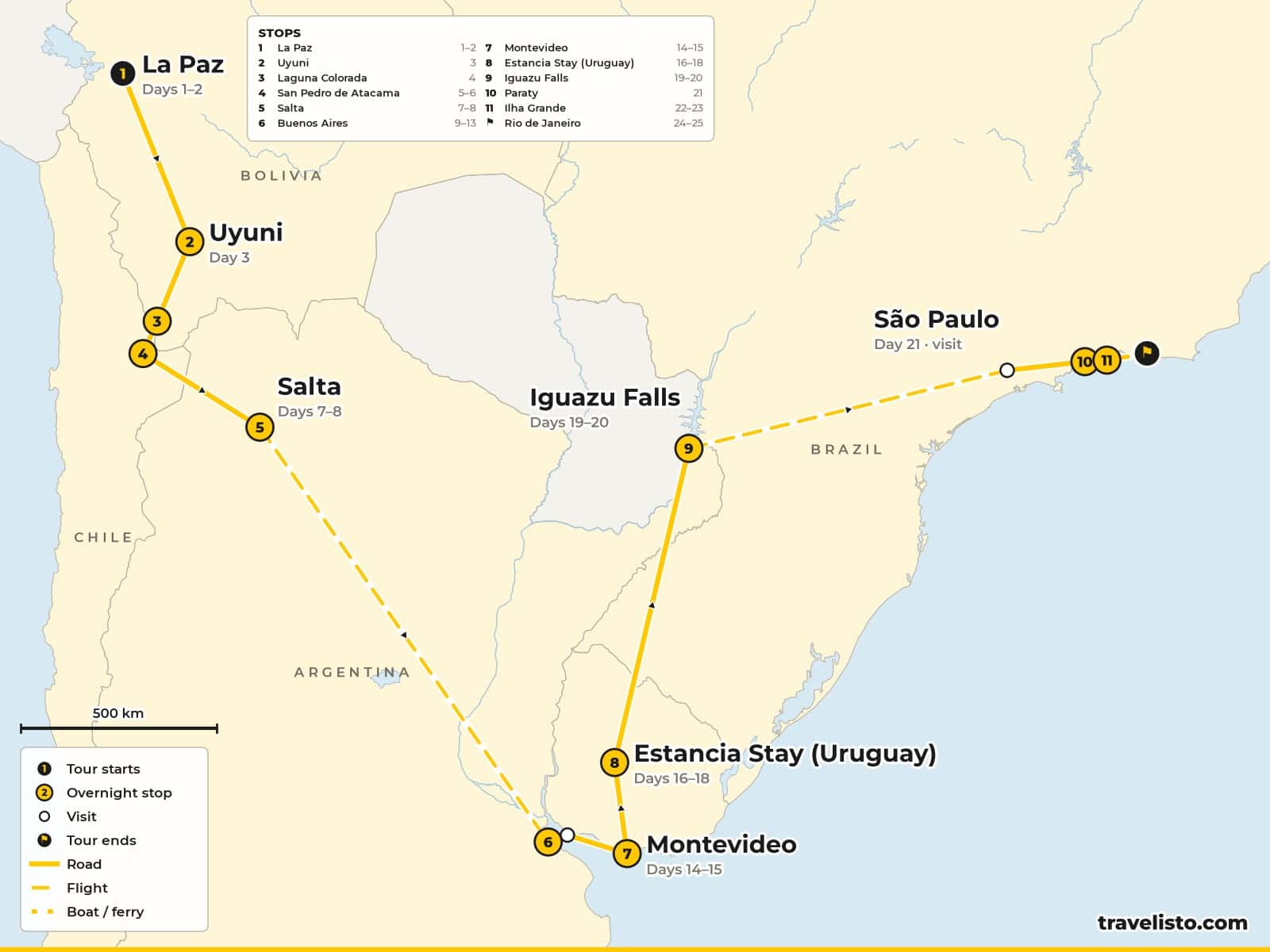
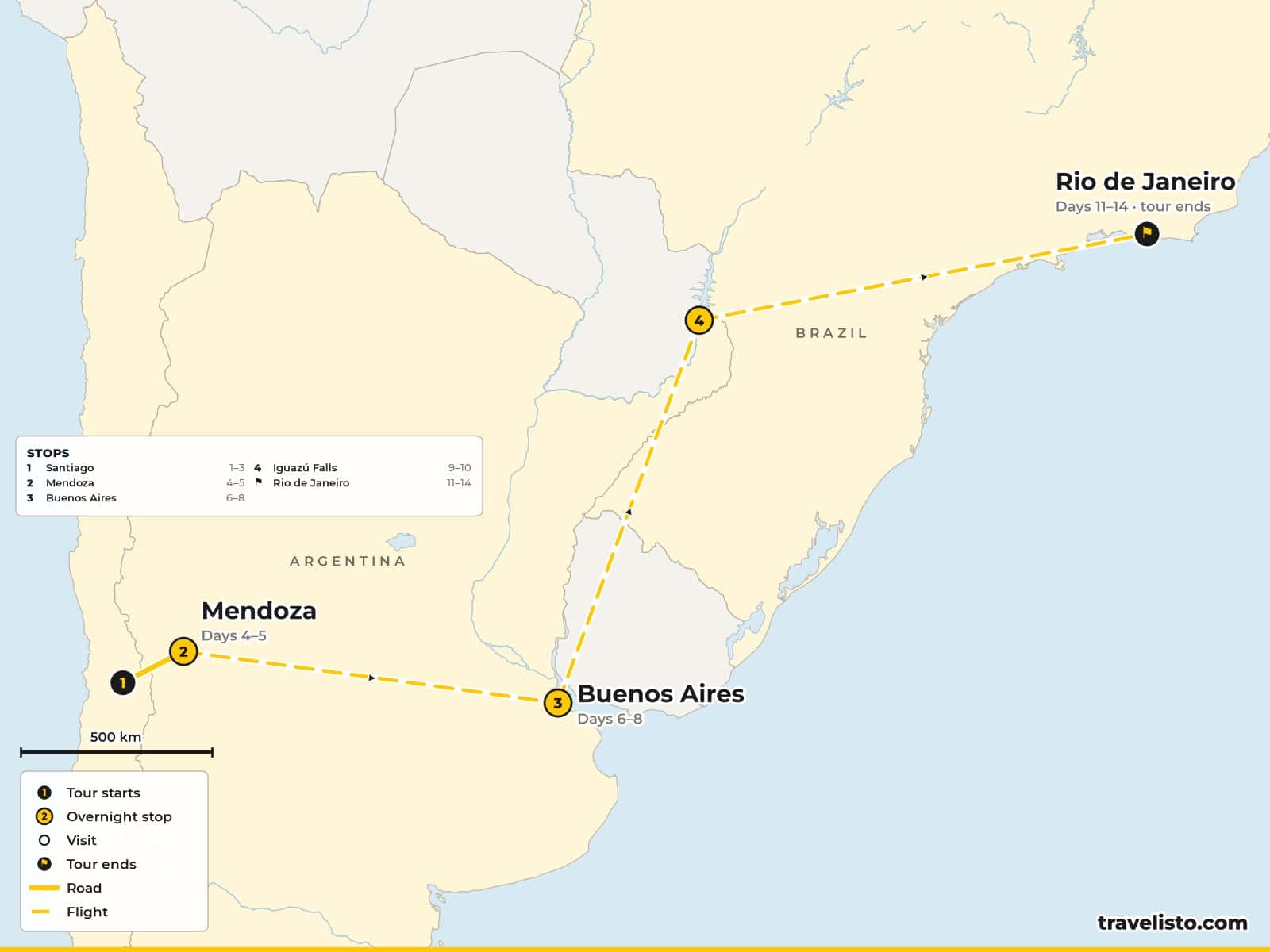
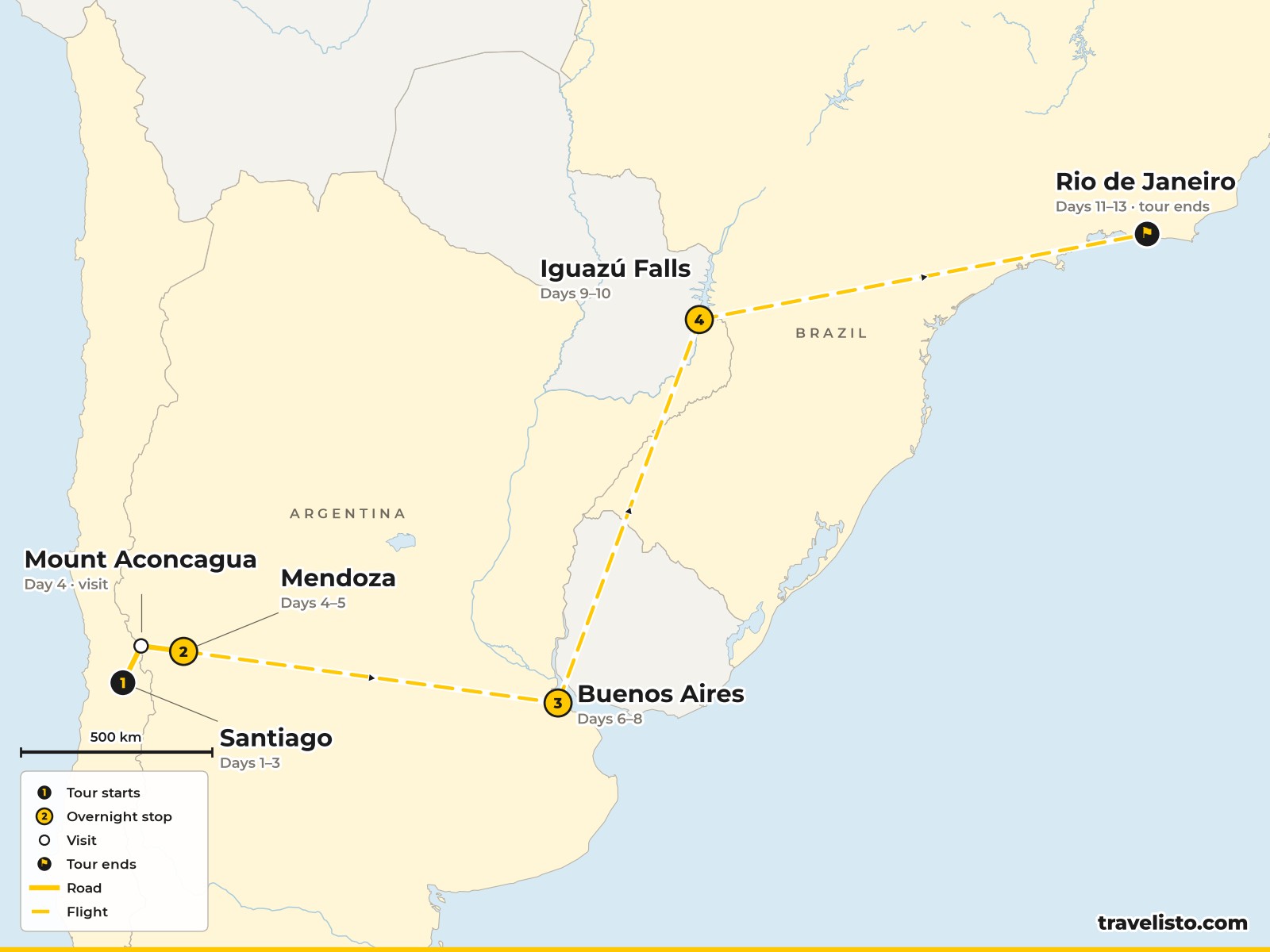
Our Bolivia to Brazil trip for 18 to 35s crosses the River Plate by ferry to Colonia, spends two days in Montevideo and two nights on an estancia with the family who run it. On both Chile, Argentina and Brazil tours, a free day in Buenos Aires gives you the option of a day trip across the river to Colonia. For a trip centred on Uruguay, a tailor-made holiday can combine Colonia, Montevideo, a winery, an estancia and the coast at your own pace, with a private driver and the ferry from Buenos Aires arranged.
Practical tips
- Money: the currency is the Uruguayan peso; US dollars are widely accepted in the resorts. Cards are taken almost everywhere. Use cash machines inside banks or shopping centres, as the FCDO advises.
- Safety: generally relaxed, but take normal city care in Montevideo, avoid isolated or poorly lit areas at night and don’t leave valuables in parked cars.
- Beaches: lifeguards work on many beaches from December to March. Follow the flags: red means danger from rocks or currents, and black means thunderstorms, so leave the beach.
Frequently asked questions
Is Uruguay worth visiting?
Yes. It's relaxed, easy to travel and very varied for its size: the colonial old town of Colonia, the capital Montevideo, the beaches of Punta del Este and José Ignacio, wild Cabo Polonio, Tannat wineries and estancia stays, all within a few hours of each other.
How do you get to Uruguay from the UK?
There are no direct flights. Fly via Madrid, which has direct flights to Montevideo, or via São Paulo or Buenos Aires; allow 16 to 18 hours in total. Many people fly into Buenos Aires and cross to Uruguay by ferry.
How long is the ferry from Buenos Aires to Colonia?
Fast ferries take about 1 hour 15 minutes, several times a day, with passport checks for both countries done before boarding. Colonia is then about two and a half hours by road from Montevideo.
What is the best time to visit Uruguay?
November to April. December to March is beach season, with January the busiest month; late February and March are warm and quieter. Spring and autumn suit Montevideo, Colonia, the wineries and estancias. July to October is whale season on the coast.
How many days do you need in Uruguay?
A week covers Colonia, Montevideo and the coast. Allow 10 days to add an estancia and the wineries, or 3 to 5 days if you're adding Uruguay to a trip to Argentina.
Is Punta del Este or José Ignacio better?
Punta del Este is a lively resort with high-rises, a harbour, nightlife and many beaches. José Ignacio is a small, low-key village with stylish boutique hotels and restaurants. Both are busiest from Christmas to mid-January.
Do British citizens need a visa for Uruguay?
No. British visitors can stay for up to 90 days without a visa. Your passport must be valid for the whole stay. Check the FCDO Uruguay page before you travel.
Keep planning
- Uruguay holidays
- Argentina holiday guide
- Brazil holiday guide
- Chile holiday guide
- South America holiday guide
- South America tours
- Rio Carnival 2027
- Argentina holidays
- Tailor-made holidays
- Escorted tours
Plan your Uruguay holiday with a Travel Designer
Tell us when you’d like to go and we’ll plan Colonia, Montevideo, the coast, a winery and an estancia, with flights, the ferry from Buenos Aires and a private driver, in one ATOL-protected booking.
Make an enquiry Uruguay holidays