Egypt in brief
- Cairo and Giza, Luxor, Aswan and Abu Simbel, then the Red Sea for reefs and beaches.
- A Nile cruise of 3 to 4 nights between Luxor and Aswan is the classic way to see Upper Egypt.
- Best from October to April; May to September is very hot in Luxor and Aswan.
- Read the current FCDO Egypt travel advice before you book and again before you travel.
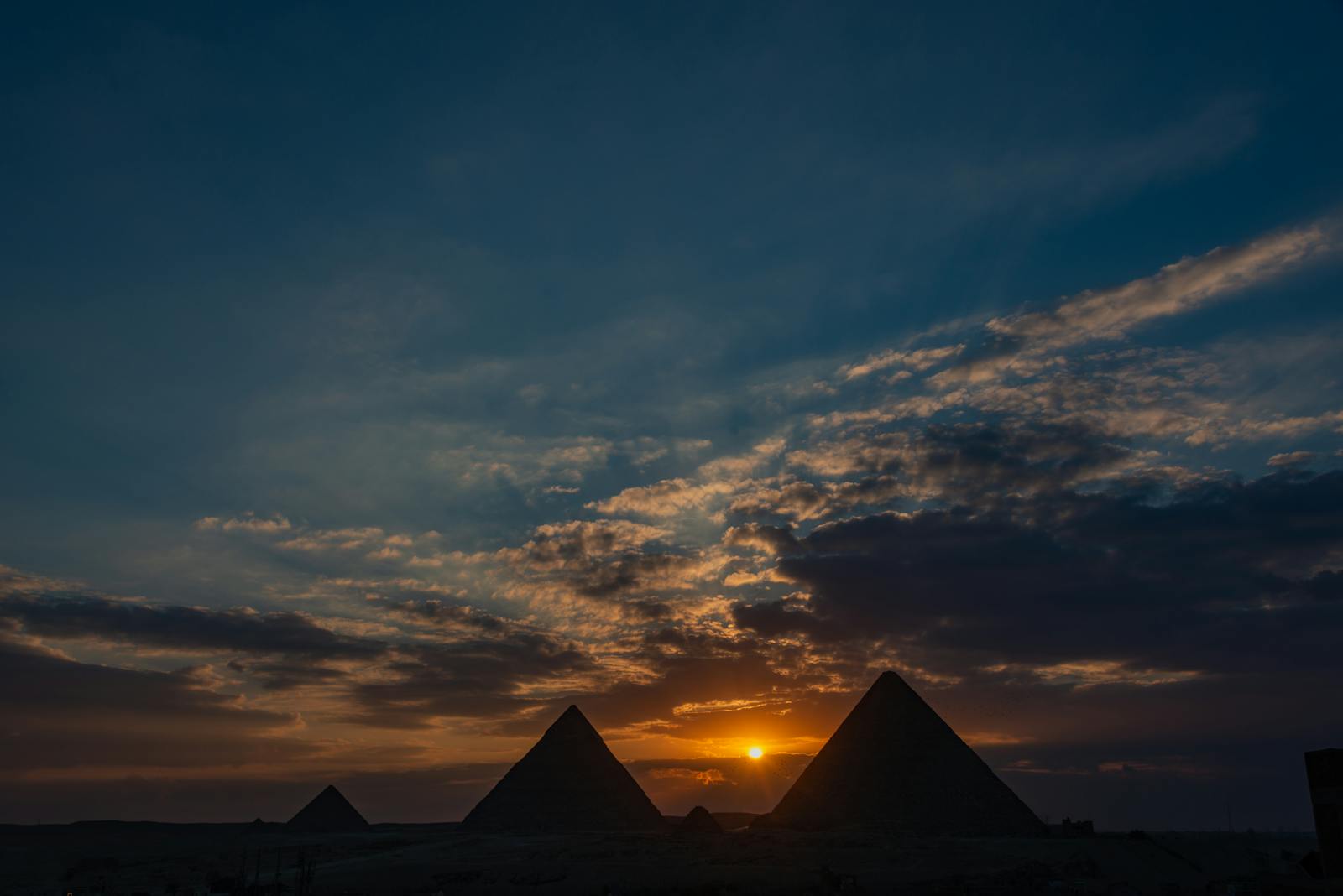
In Egypt, the Pyramids of Giza stand at the edge of Cairo; upriver, the temples and tombs of Luxor and Aswan line the banks of the Nile; and the Red Sea has warm water and some of the best coral reefs within five hours of the UK. This guide covers where to go, the best things to do, how a Nile cruise works, the best time to visit Egypt month by month, getting there from the UK, where to stay by area, sample routes and the current FCDO travel advice.
Where is Egypt?

Egypt sits in the north-east corner of Africa, with the Mediterranean to the north and the Red Sea to the east. Almost all of its people live along a thin green strip beside the Nile, which flows north from Lake Nasser through Aswan and Luxor to Cairo and the Delta. Either side of the river is desert.
You’ll hear two confusing names: Upper Egypt is the south (Luxor, Aswan, Abu Simbel), because it is upstream; Lower Egypt is the north, around Cairo and the Delta.
For a first trip, the classic shape is simple: a few days in Cairo for the pyramids and museums, a fly south to Luxor or Aswan, a Nile cruise between the two, and, if you like, a few days on the Red Sea at the end.
Where to go in Egypt
Cairo and Giza
Africa’s largest city. The Pyramids of Giza and the Sphinx, the new Grand Egyptian Museum next to them, the medieval mosques and bazaars of Islamic Cairo, and Saqqara’s Step Pyramid to the south.

Luxor
Ancient Thebes, often called the world’s greatest open-air museum. Karnak and Luxor Temple on the east bank; the Valley of the Kings, the Temple of Hatshepsut and the tombs of the nobles on the west bank.
Aswan and Abu Simbel
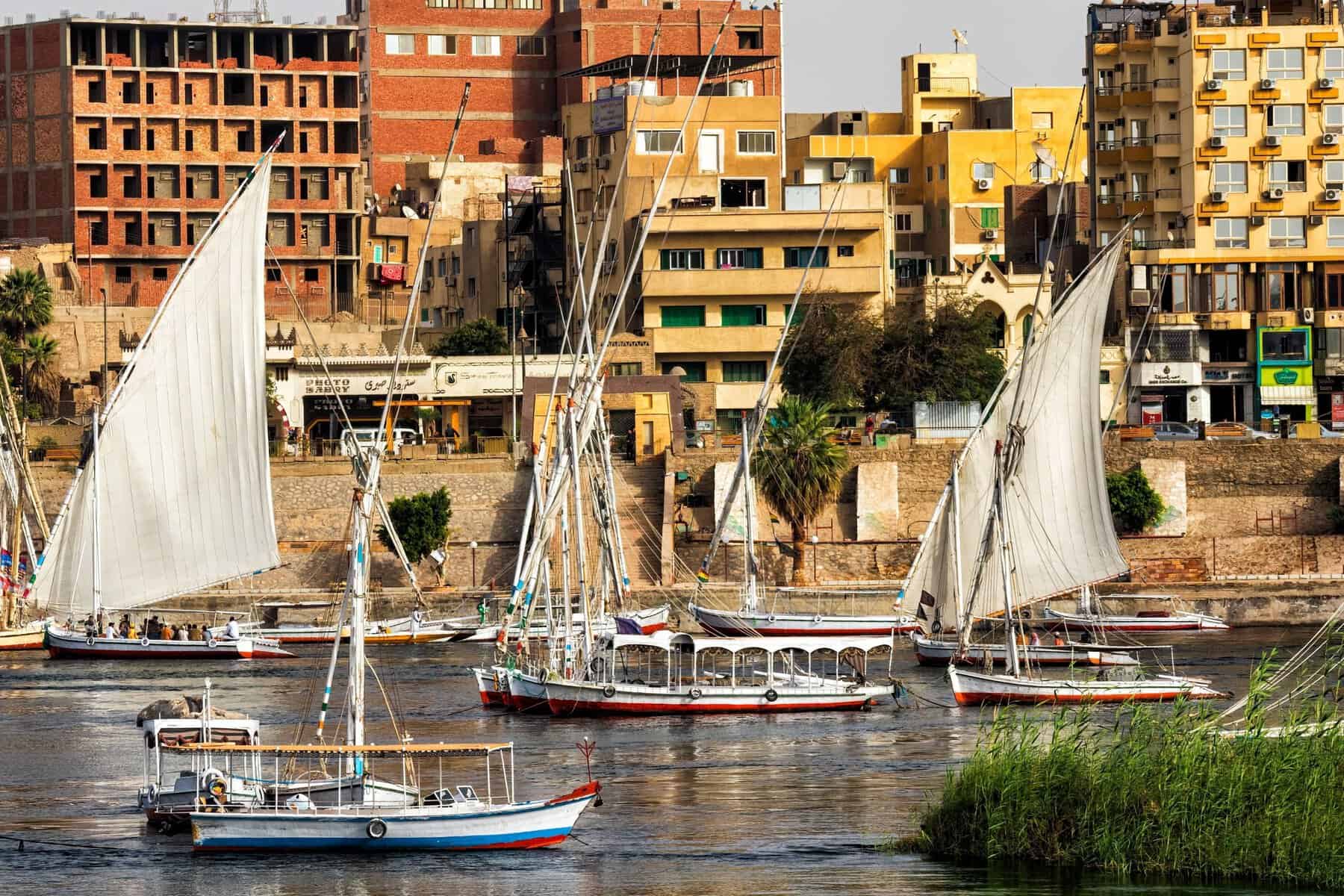
The most relaxed place on the river, where the Nile runs between granite islands and golden dunes. Philae Temple, Nubian villages, felucca sails at sunset, and the great temples of Abu Simbel, about three and a half hours south by road or a short flight.

The Red Sea coast
Hurghada, the marina town of El Gouna, the quieter bays of Soma Bay and Sahl Hasheesh, and Marsa Alam further south for the best reefs, dolphins and turtles. Warm enough to swim all year.

Alexandria
Founded by Alexander the Great, on the Mediterranean about three hours’ drive from Cairo. The modern Library of Alexandria, Roman catacombs, the Qaitbay fort on the site of the ancient lighthouse and a long seafront Corniche.

The Nile between Luxor and Aswan
The 200 km stretch most cruises sail, with stops at the temples of Edfu and Kom Ombo and the lock at Esna. See Nile cruises below.
Things to do in Egypt
Cairo and the pyramids

The Pyramids of Giza. The Great Pyramid of Khufu is the last of the Seven Wonders of the Ancient World still standing, built about 4,500 years ago. Go at opening time, before the heat and the coaches, and walk round to the panoramic viewpoint for the classic view of all three pyramids together. Going inside the Great Pyramid needs a separate ticket.
The Grand Egyptian Museum. Next to the pyramids, and fully open since November 2025. It holds the complete treasures of Tutankhamun, shown together for the first time, a colossal statue of Ramesses II in the atrium and a grand staircase lined with kings. Allow at least half a day.
Saqqara and Memphis. The Step Pyramid of Djoser, the oldest of all, and beautifully decorated tombs, about 40 minutes south. Often combined with the quieter pyramids of Dahshur.
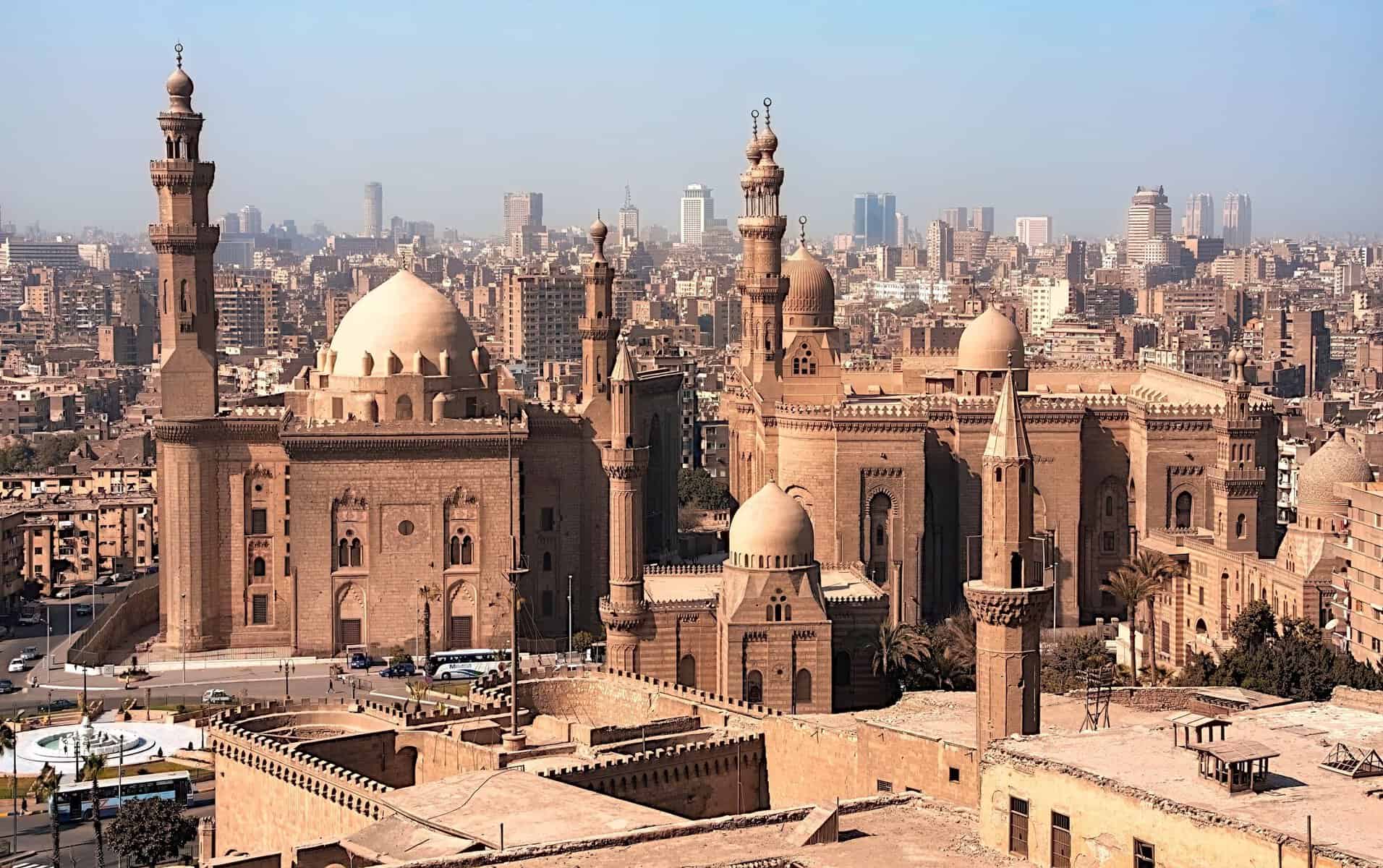
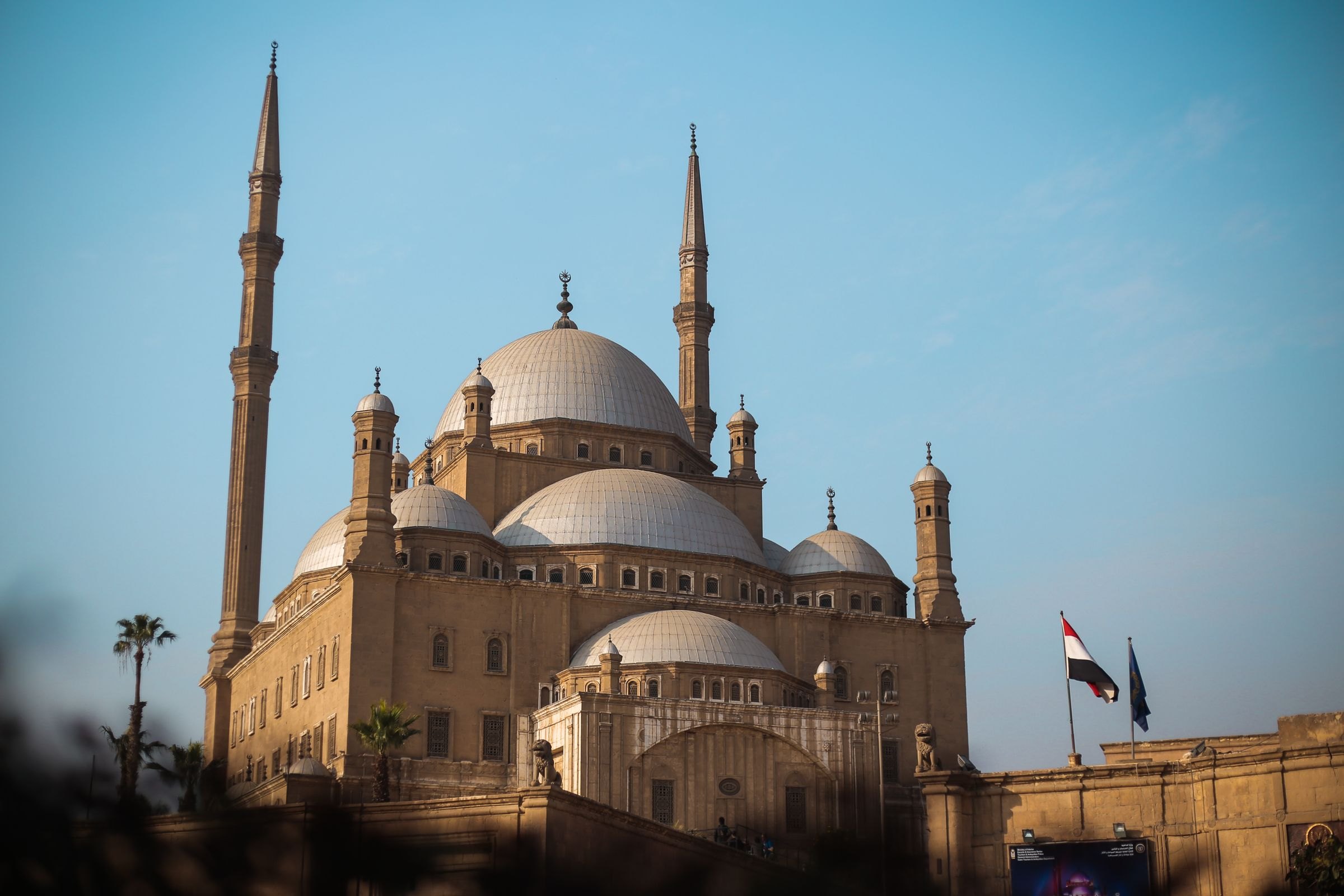
Islamic Cairo. The medieval city of minarets, madrasas and gates, best on foot along Al-Muizz Street, and the Citadel with the Mosque of Muhammad Ali high above the city.
Khan el-Khalili. The great bazaar, for lanterns, spices, brass and textiles, and a mint tea at one of the old coffee houses in the lanes.
The Egyptian Museum on Tahrir Square still has a superb collection of mummies, statues and jewellery.
Luxor

The Valley of the Kings. More than 60 royal tombs cut into the hills of the west bank, their walls still bright with paint. A standard ticket covers three tombs; Tutankhamun’s and Seti I’s need extra tickets.
The Temple of Hatshepsut at Deir el-Bahari, built in three great terraces against the cliffs for Egypt’s most powerful female pharaoh, and the Colossi of Memnon, two huge seated statues by the road.
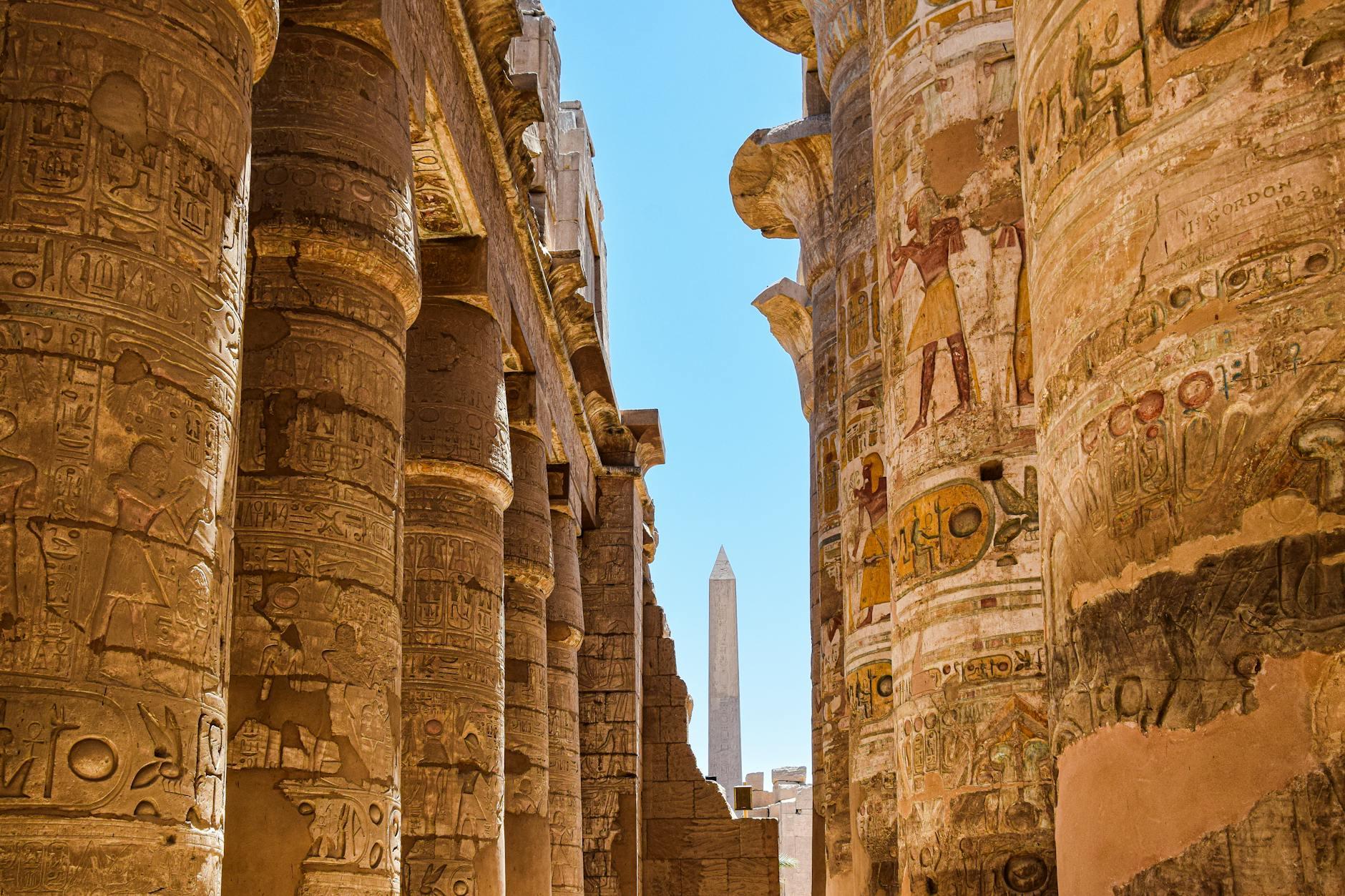
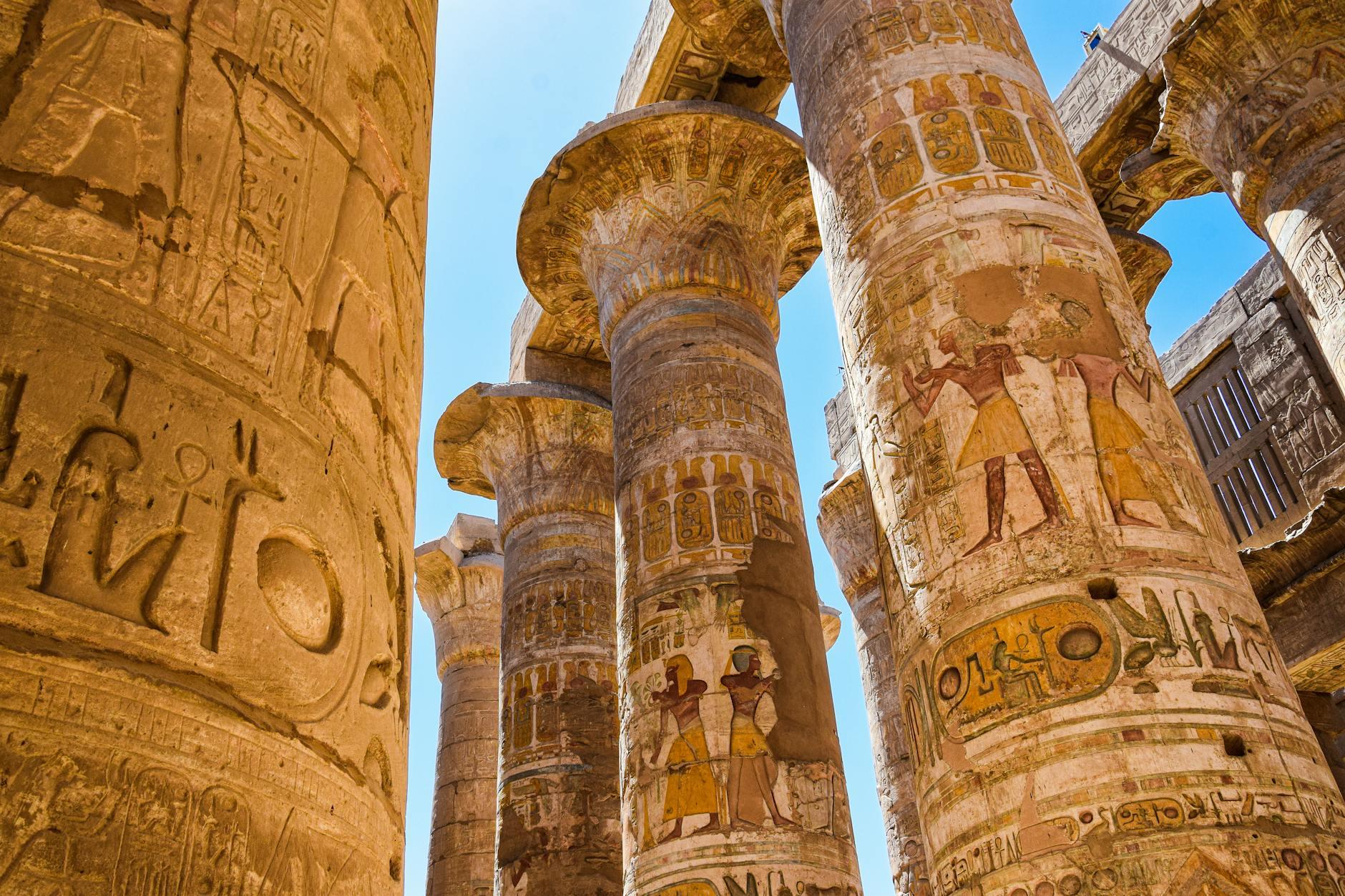
Karnak. The largest temple complex of the ancient world, with the hall of 134 giant columns. Luxor Temple, joined to Karnak by an avenue of sphinxes, is best after dark when it is floodlit.


For the best view of the west bank, take a hot-air balloon flight at sunrise, drifting over the temples, villages and sugar cane fields. Flights are weather-dependent and are sometimes cancelled for wind.
Aswan and Abu Simbel

Philae Temple. The temple of Isis, moved stone by stone to Agilkia Island when the Aswan dams were built, and reached by a short boat ride.
A felucca at sunset. Sail round Elephantine and Kitchener’s Island (the botanical garden) in a traditional wooden sailing boat, as the light turns the dunes on the west bank gold.
Nubian villages. Brightly painted houses on the west bank, with Nubian food and music.
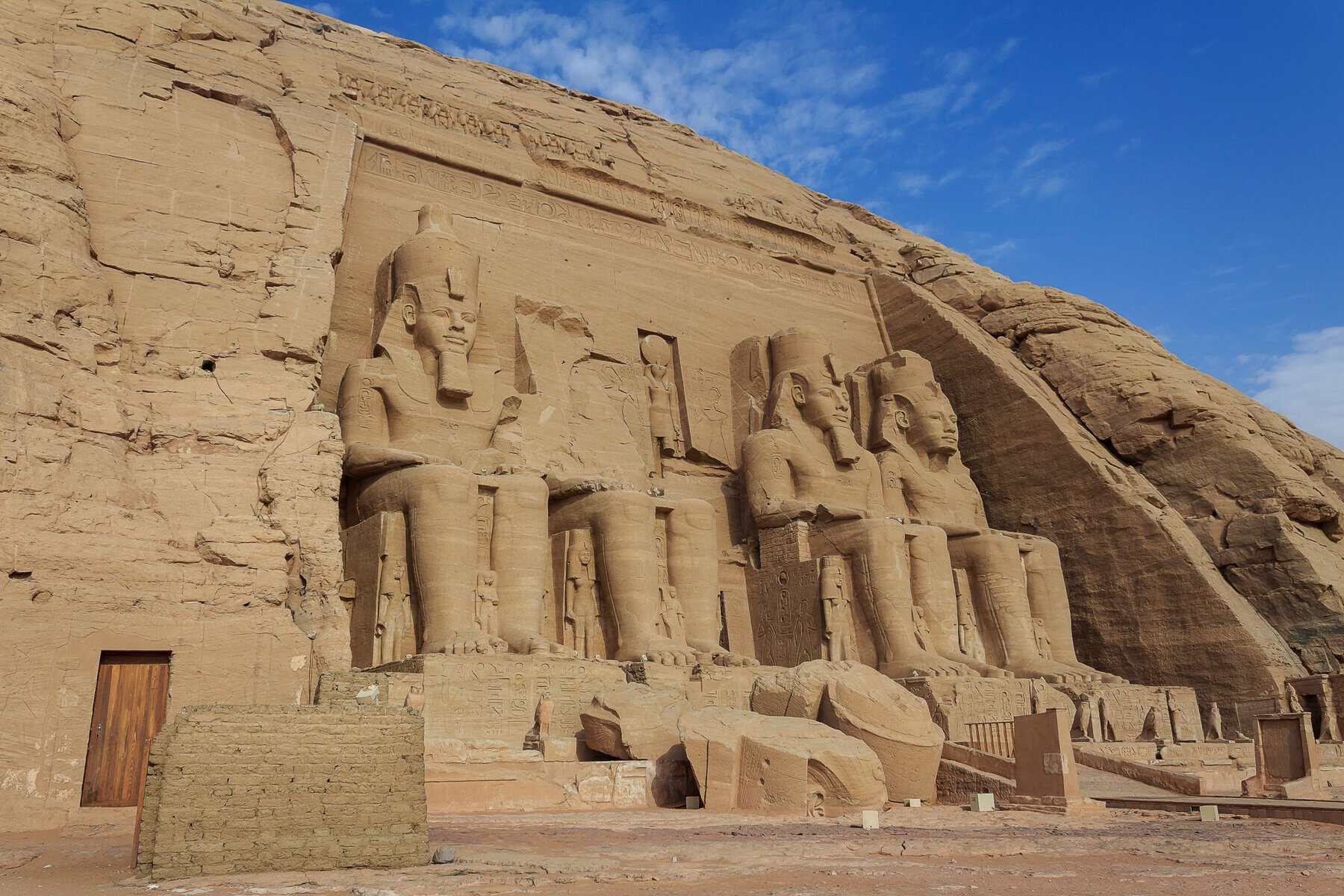
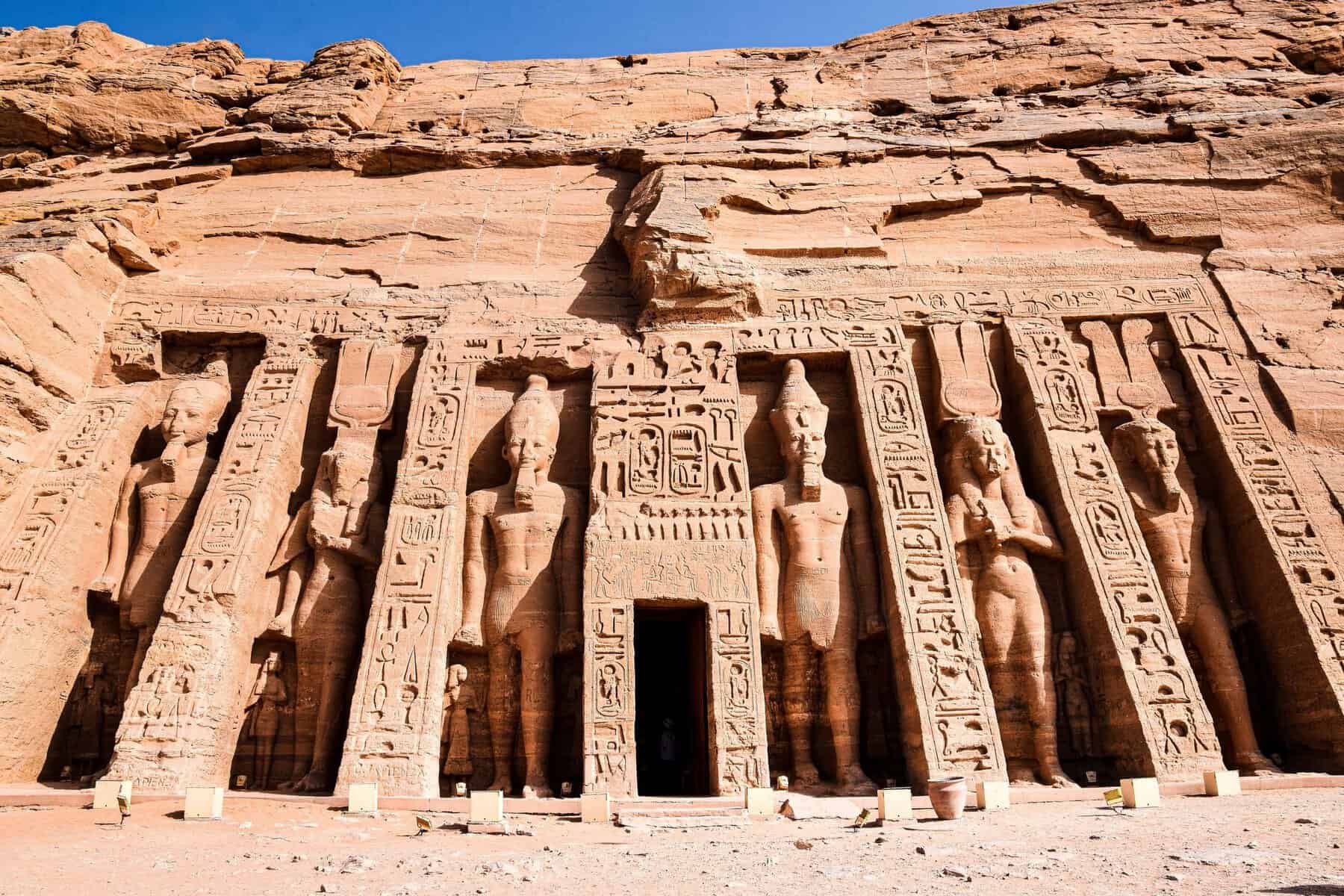
Abu Simbel. Ramesses II’s two temples, with four 20 m statues of the king carved from the cliff, were cut into blocks and moved up the hill in the 1960s to save them from Lake Nasser. Most people visit on a day trip from Aswan, leaving very early by road (about 3.5 hours each way) or by a short flight. Better still, stay a night and see the temples quietly at sunrise.
The sun festival: on about 22 February and 22 October each year the rising sun shines down the length of the Great Temple to light the statues in the inner sanctuary. It is busy, and worth planning around.
Nile cruises
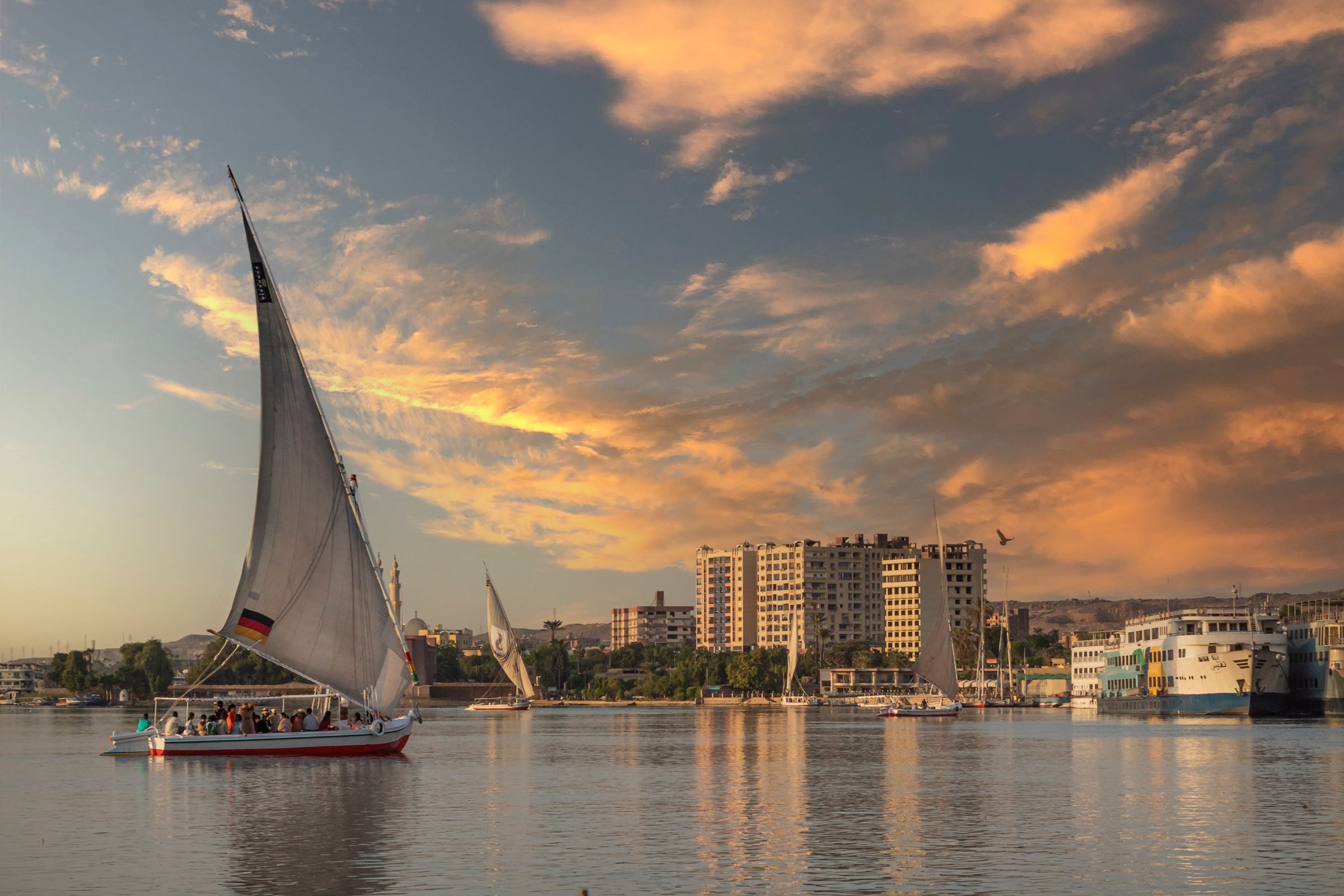
A Nile cruise is the easiest and most beautiful way to see Upper Egypt. You unpack once, the boat moors right by the temples, and in between you sit on deck watching palm groves, villages and desert slide past.
Luxor to Aswan (or the reverse): the classic route, usually 3 or 4 nights, with stops at Esna, Edfu (the best-preserved temple in Egypt) and Kom Ombo, the double temple to the crocodile god Sobek and the falcon god Horus. Most itineraries add extra nights at the start or end for Luxor’s west bank.
Longer cruises of 7 nights or more go up and back, giving more time at each site, and a few river cruises link Cairo with Upper Egypt. On Lake Nasser, small ships sail between Aswan and Abu Simbel, visiting temples you can only reach by water.
Dahabiyas are traditional sailing boats with a handful of cabins. They sail more slowly and moor at quiet islands, a lovely option for couples, families or small groups who want space.
Boats range from simple to very grand. Tell us how you like to travel and we’ll suggest the right size and style of boat; see our river cruises and our guide to Amazon, Mekong and Nile river cruises.
The Red Sea

Hurghada is the biggest resort, with a long string of beach hotels and boat trips to the offshore reefs and islands. Just to the north, El Gouna is a relaxed marina town built around lagoons and bridges, popular for kitesurfing. South of Hurghada, Soma Bay and Sahl Hasheesh are quieter, with resort-style hotels on their own bays.
Marsa Alam, about three hours further south, is the place for snorkellers and divers: fringing reefs straight off the beach, spinner dolphins, sea turtles and, with luck, dugongs in the seagrass bays. It has its own airport.
The water stays warm enough to swim all year (around 22°C at its coolest in February, up to about 28°C in summer), and the coast is a short flight from Luxor, so it is easy to end a Nile trip with a week on the beach.
Food in Egypt
Egyptian food is hearty, cheap to eat and mostly vegetarian-friendly. Try koshari, Cairo’s favourite street food of rice, lentils and pasta with spicy tomato sauce and crispy onions; ful medames, slow-cooked fava beans, at breakfast; ta’ameya, Egyptian falafel made with fava beans; molokhia, a green soup; and fiteer, flaky layered pastry. On the Red Sea and in Alexandria, grilled fish and seafood are the thing.
Best time to visit Egypt
The best time to visit Egypt is October to April, when days in Luxor and Aswan are warm and dry, around 22°C to 30°C, and nights are cool. December to February is peak season: perfect sightseeing weather, busy sites and the best time to book early. Cairo evenings can be cool in winter. March, April, October and November are the sweet spots, warm everywhere and good for combining the Nile with the beach. May to September is very hot in Upper Egypt, often over 40°C: sightseeing is limited to early mornings and evenings, though it is a fine time for the Red Sea. It almost never rains anywhere except a few winter showers on the Mediterranean coast.
In 2027, Ramadan is expected to fall from about 8 February to 9 March. Sites stay open, though some opening hours are shorter and restaurants outside hotels may close during the day; the evenings are lively.
| Month | Cairo | Luxor | Aswan | Hurghada |
|---|---|---|---|---|
| Jan | 19°C / 8°C | 22°C / 9°C | 23°C / 9°C | 21°C / 13°C |
| Feb | 21°C / 9°C | 25°C / 10°C | 25°C / 11°C | 22°C / 14°C |
| Mar | 25°C / 12°C | 29°C / 14°C | 30°C / 15°C | 24°C / 17°C |
| Apr | 30°C / 14°C | 35°C / 18°C | 35°C / 19°C | 27°C / 20°C |
| May | 34°C / 18°C | 39°C / 23°C | 39°C / 24°C | 31°C / 23°C |
| Jun | 37°C / 21°C | 41°C / 26°C | 41°C / 27°C | 33°C / 26°C |
| Jul | 38°C / 23°C | 41°C / 26°C | 41°C / 27°C | 35°C / 28°C |
| Aug | 38°C / 23°C | 42°C / 27°C | 42°C / 28°C | 35°C / 28°C |
| Sep | 36°C / 22°C | 40°C / 24°C | 40°C / 26°C | 33°C / 26°C |
| Oct | 31°C / 19°C | 35°C / 21°C | 36°C / 22°C | 30°C / 23°C |
| Nov | 26°C / 15°C | 29°C / 15°C | 29°C / 16°C | 26°C / 20°C |
| Dec | 22°C / 11°C | 24°C / 11°C | 25°C / 11°C | 23°C / 16°C |
Average daily high / low, 10-year ERA5 data. Rainfall is close to zero all year in all four places.
Getting to Egypt from the UK
Direct flights from London to Cairo take about 5 hours. In the season there are also direct flights from London and some regional airports to Luxor, Hurghada and Marsa Alam, about 5 to 5.5 hours, which makes it easy to fly into Cairo and home from the south. The new Sphinx International Airport, west of Giza, is close to the pyramids and the Grand Egyptian Museum.
Getting around
- Domestic flights link Cairo with Luxor, Aswan, Abu Simbel and Hurghada in about an hour, and are the quickest way to cover the long distances.
- Private car and driver is how we arrange transfers and sightseeing, with an Egyptologist guide at the sites. Luxor to Hurghada is about four hours by road.
- On the river, a cruise or dahabiya takes care of the Luxor to Aswan stretch, and local ferries and motorboats cross the Nile in town.
Where to stay in Egypt
- Cairo: the Nile-side hotels in the city centre and on Zamalek island for restaurants and the old city; or Giza, by the pyramids and the Grand Egyptian Museum, for views of the pyramids from your room and early starts.
- Luxor: the grand old hotels and modern resorts along the east bank Corniche, close to the temples; or a quiet guesthouse or boutique hotel among the fields on the west bank, near the tombs.
- Aswan: hotels on the river with views of the islands and dunes, and island hotels reached by boat. Nubian guesthouses on the west bank for something simpler and more local.
- Abu Simbel: a small lodge or hotel by Lake Nasser if you stay over for sunrise.
- Red Sea: beach resorts in Hurghada and Sahl Hasheesh, lagoon hotels in El Gouna, and reef-side eco-lodges and resorts around Marsa Alam.
Tell us your style and budget and we’ll match the right hotel or boat at every stage.
How many days in Egypt? Sample routes
A week covers Cairo and a short cruise; ten days to two weeks lets you add Abu Simbel, Alexandria or the Red Sea without rushing.
Pyramids and the Nile
- Cairo (3 nights)
- Fly to Luxor
- Nile cruise to Aswan (4)
The essentials: Giza, the Grand Egyptian Museum, Luxor and a classic cruise.
Classic Egypt
- Cairo (3 nights)
- Luxor west bank (2)
- Nile cruise (3)
- Aswan (2)
- Abu Simbel (1)
More time on the west bank, a sunrise at Abu Simbel and a felucca in Aswan.
Nile and Red Sea
- Cairo (3 nights)
- Nile cruise Aswan to Luxor (4)
- Luxor (1)
- Red Sea, Hurghada or Marsa Alam (6)
Sightseeing first, then a week of reefs and beach. Best from October to April.
Ways to see Egypt with us


Prefer your own pace? A tailor-made Egypt holiday can add a private Egyptologist, a dahabiya, a night at Abu Simbel or a week on the Red Sea. Adding Petra? See our Egypt and Jordan tours compared and Petra tours. All our escorted tours of Egypt.
Is Egypt safe to visit? FCDO advice
Egypt is one of the most visited destinations for British travellers. Before you travel, read the current FCDO Egypt travel advice.
Our trips in this guide stay within Cairo and Giza, Alexandria, Luxor, Aswan, Abu Simbel, the Nile and the Red Sea resorts. We don’t include the desert oases; ask us if you’re interested and we’ll check the latest advice for your exact route.
The FCDO also warns about wider regional tensions, which can cause flight changes at short notice. Check the advice before you book and again before you travel, and make sure your travel insurance covers your trip.
Practical tips
- Visa: British passport holders need a visa. Get an e-visa online before you travel, or buy a visa on arrival at the airport. Your passport must be valid for at least six months from arrival, with a blank page. Short stays only in Sharm el-Sheikh, Dahab, Nuweiba or Taba get a free entry stamp instead.
- Dress: lightweight clothes that cover shoulders and knees for mosques, churches and towns; women will need a scarf for some mosques. Beachwear is fine at resorts.
- Tipping (baksheesh) is part of daily life, for guides, drivers, boat crews and site guardians. Carry small notes in Egyptian pounds.
- Sun and heat: start sightseeing early, wear a hat and drink plenty of water, even in winter.
- Health: drink bottled water and check vaccinations with your GP or a travel clinic about eight weeks before you go.
- Tickets: some sites, including the Valley of the Kings’ special tombs and the Great Pyramid’s interior, need separate tickets with limited numbers. We arrange these in advance.
Frequently asked questions
What is the best time to visit Egypt?
October to April, when it is warm and dry in Luxor and Aswan and comfortable for sightseeing. December to February is peak season; March, April, October and November are ideal for combining the Nile with the Red Sea. May to September is very hot inland.
How many days do you need in Egypt?
A week covers Cairo, the pyramids and a 3 or 4-night Nile cruise. Ten days to two weeks lets you add Abu Simbel, more time in Luxor or Aswan, Alexandria or a beach stay on the Red Sea.
How long is a Nile cruise?
The classic cruise between Luxor and Aswan is 3 or 4 nights, stopping at Edfu and Kom Ombo. Longer cruises of 7 nights or more sail up and back, and some link Cairo with Upper Egypt. Lake Nasser cruises sail between Aswan and Abu Simbel.
Is Egypt safe to visit?
Egypt is one of the most visited destinations for British travellers. Check the current FCDO Egypt travel advice before you book and again before you travel.
Do I need a visa for Egypt?
Yes, British passport holders need a visa: an e-visa bought online before you go, or a visa on arrival at the airport. Short stays only in Sharm el-Sheikh, Dahab, Nuweiba or Taba get a free Sinai entry stamp instead. Your passport must be valid for six months from arrival.
How long is the flight to Egypt from the UK?
About 5 hours from London to Cairo, and about 5 to 5.5 hours to Luxor, Hurghada and Marsa Alam, with direct flights in the season.
When is the Abu Simbel sun festival?
On about 22 February and 22 October each year, when the rising sun shines along the Great Temple to light the statues in its inner sanctuary.
Keep planning
- Egypt holidays
- Escorted tours of Egypt
- Egypt and Jordan tours compared
- Petra tours
- River cruises
- Amazon, Mekong and Nile river cruises
- Jordan holidays
- Morocco holiday guide
- Oman holiday guide
- Tailor-made holidays
- Tunisia holiday guide
Plan your Egypt holiday with a Travel Designer
Tell us when you’d like to go and we’ll plan Cairo, the Nile and the Red Sea, with Egyptologist guides, the right boat and flights, in one ATOL-protected booking.
Make an enquiry Egypt holidays