Morocco in brief
- About 3.5 hours from London, and no visa for up to 90 days.
- Combine Marrakech, the Atlas, the Sahara and Fes, or explore north Morocco.
- See the gardens of Marrakech and relax by the lagoon at Oualidia.
- Spring, including Easter, and autumn are the best times to go.

Morocco is the most exotic place you can reach in about three and a half hours from London. Wander the souks of Marrakech and the medieval lanes of Fes, cross the High Atlas to the kasbahs and gorges of the south, sleep in a camp in the Sahara dunes, and finish on the Atlantic at Essaouira or the lagoon of Oualidia. In the north, the blue town of Chefchaouen, Tangier and the Roman ruins of Volubilis make a different trip altogether. This guide covers travel to Morocco from the UK, the best things to do, north Morocco, the gardens of Marrakech, the coast, Morocco at Easter and the seasons, and how to plan it with a UK travel agency.
Travel to Morocco from the UK
- Flights: there are direct flights from London and many regional UK airports to Marrakech, and from London to Fes, Tangier, Agadir, Rabat and Casablanca. Flying into one city and home from another saves a long drive back.
- Visa: British citizens can visit without a visa for up to 90 days. Your passport must be valid for the length of your stay.
- Time: Morocco is an hour ahead of the UK in winter and on the same time in summer. During Ramadan the clocks go back an hour.
- Money: the dirham is a closed currency, so you can’t buy it before you go. Change money or use a cash machine on arrival, and change any left over before you fly home.
- Getting around: most trips use a private driver, as distances are long and mountain roads are slow. Fast trains link Tangier, Rabat and Casablanca, and ordinary trains run to Fes and Marrakech.
The best things to do in Morocco
Morocco rewards slow travel: two or three nights in each place is about right. These are the experiences most people remember:
- Get lost in a medina: the walled old towns of Marrakech and Fes, with their souks, craftsmen’s workshops and hidden courtyards.
- Stay in a riad: a traditional townhouse built around a courtyard garden, often with a roof terrace for breakfast.
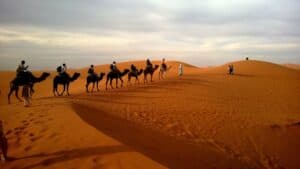
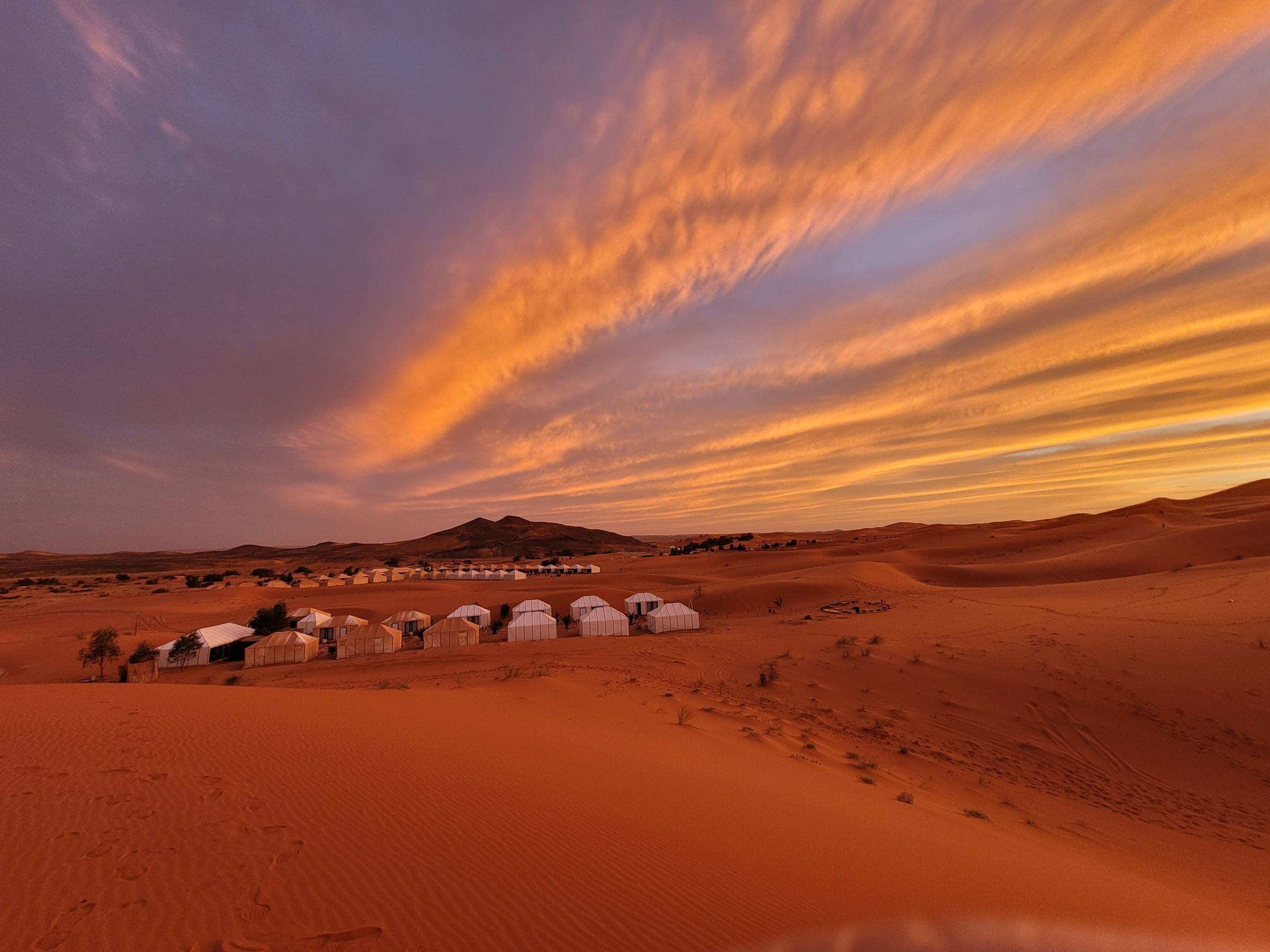
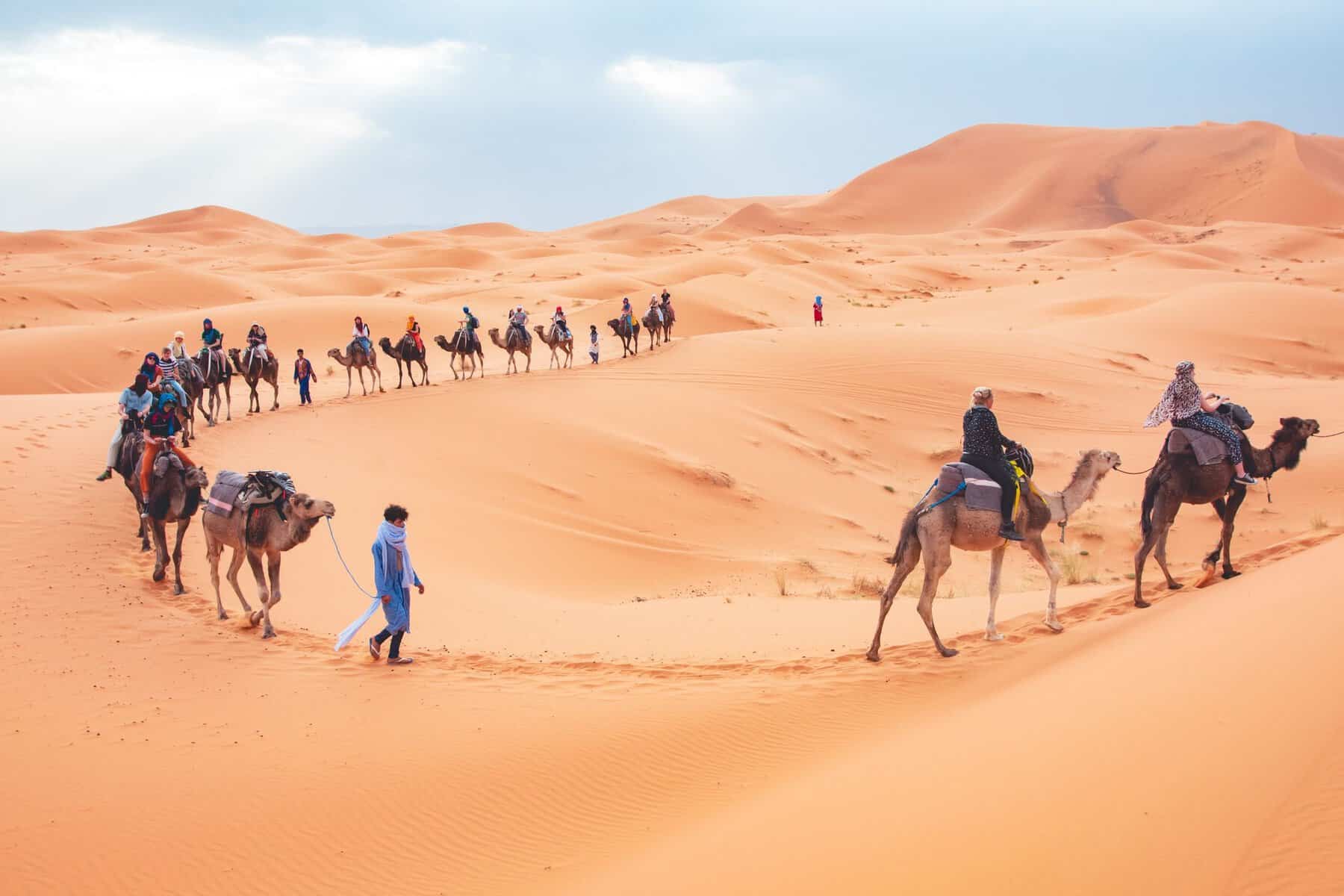
- Sleep in the Sahara: ride a camel into the dunes of Erg Chebbi and spend a night under the stars.
- Walk in the Atlas: from easy day walks between Berber villages to the climb of Toubkal, North Africa’s highest peak.
- Drive the road of a thousand kasbahs: Aït Benhaddou, the Dades Valley and the Todra Gorge.
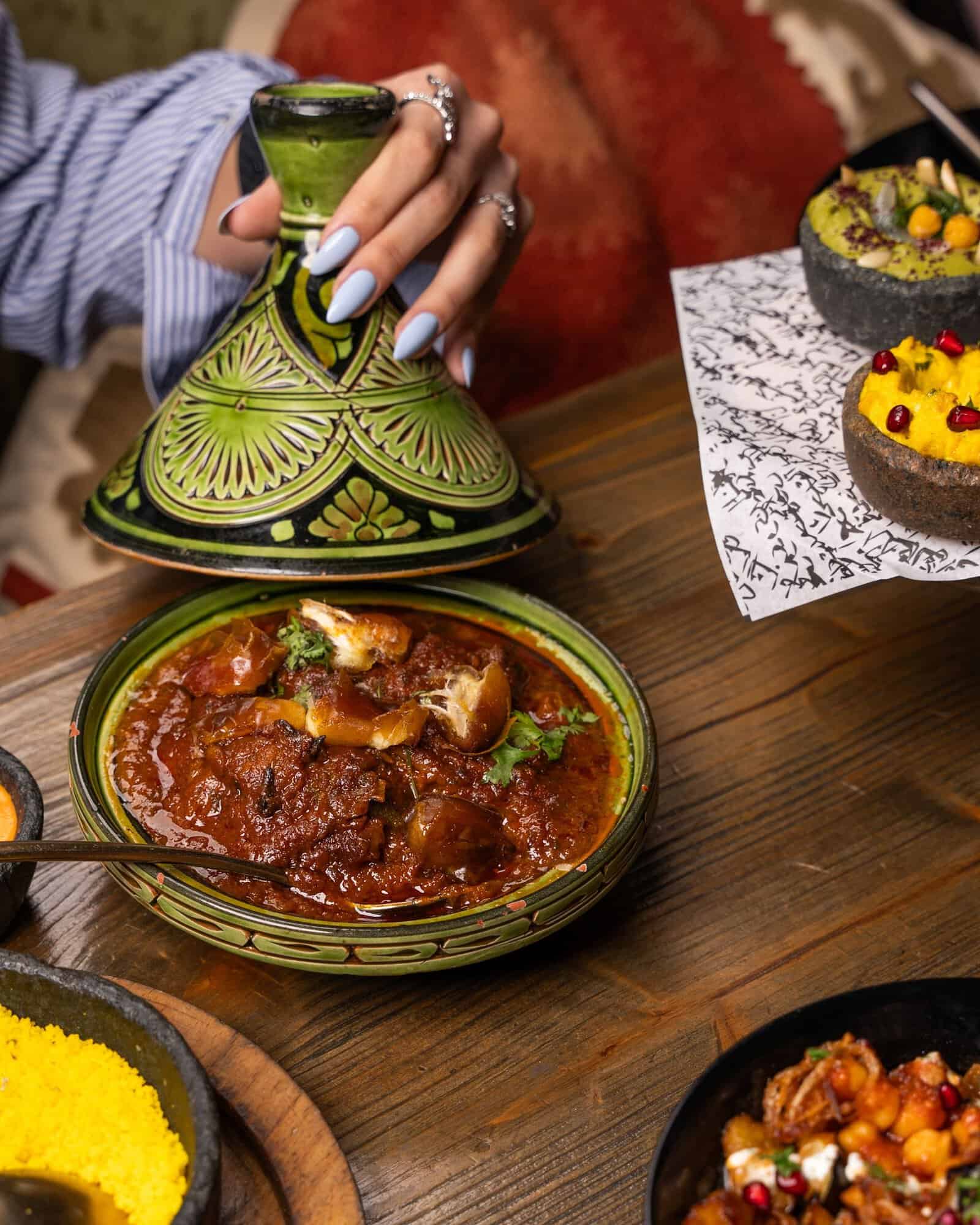
- Eat: tagine, couscous on Fridays, grilled fish on the coast and endless glasses of mint tea. Take a cookery class.
- See the gardens of Marrakech and the blue streets of Chefchaouen.
- Relax on the Atlantic: Essaouira for its ramparts and sea air, Oualidia for its lagoon and oysters.



Where to go in Morocco
A first trip usually links Marrakech with the Atlas, the Sahara and the coast, or the imperial cities of the north. To compare our escorted trips, see Morocco tours compared.

Marrakech
The Red City is Morocco’s most popular base. Explore the souks, the Bahia Palace, the Saadian Tombs and the Ben Youssef Madrasa, and watch the storytellers, musicians and food stalls fill Jemaa el-Fna at dusk.
Day trips go to the Atlas, the Agafay desert and the Ouzoud waterfalls.
Morocco holidays →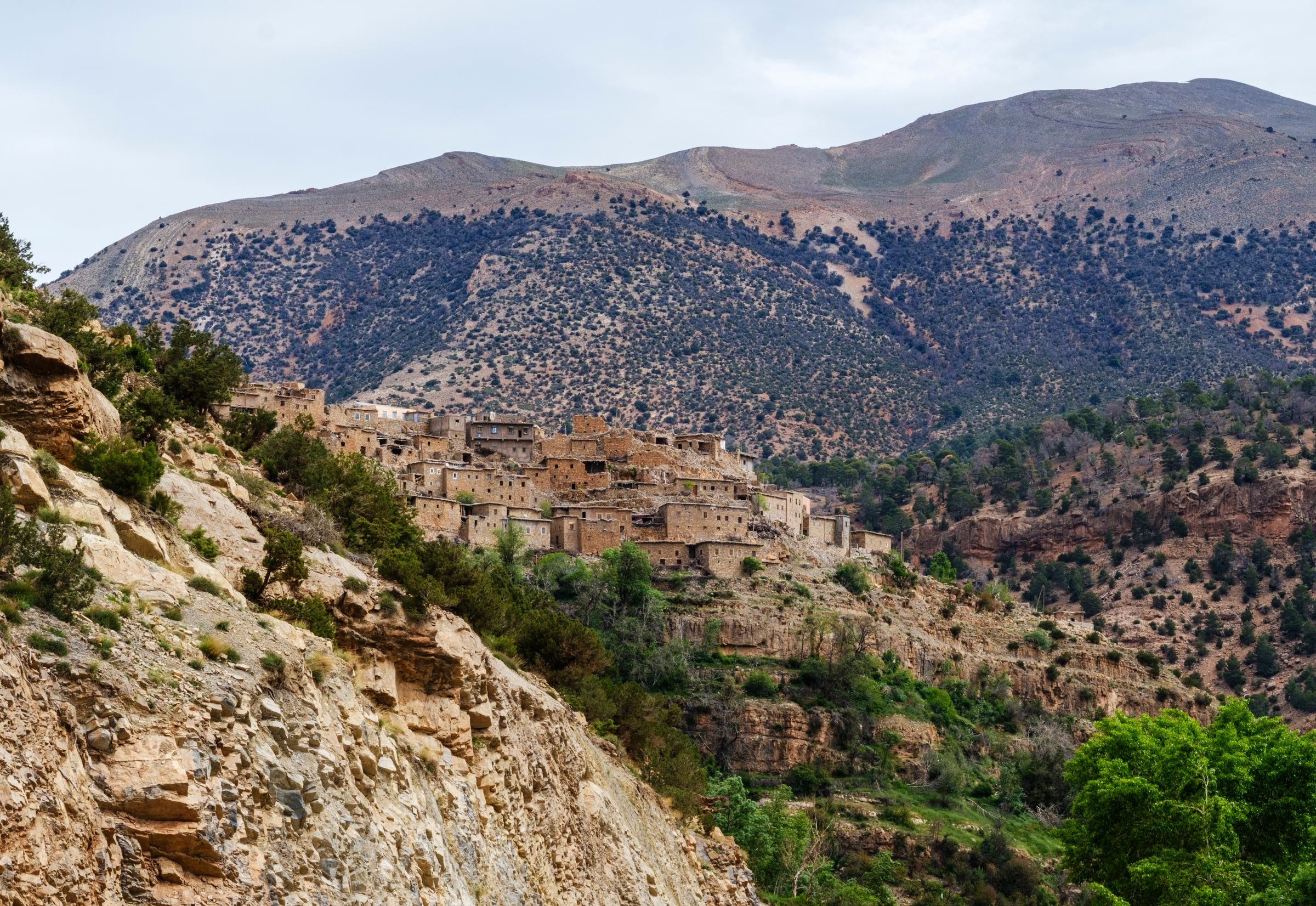
The High Atlas
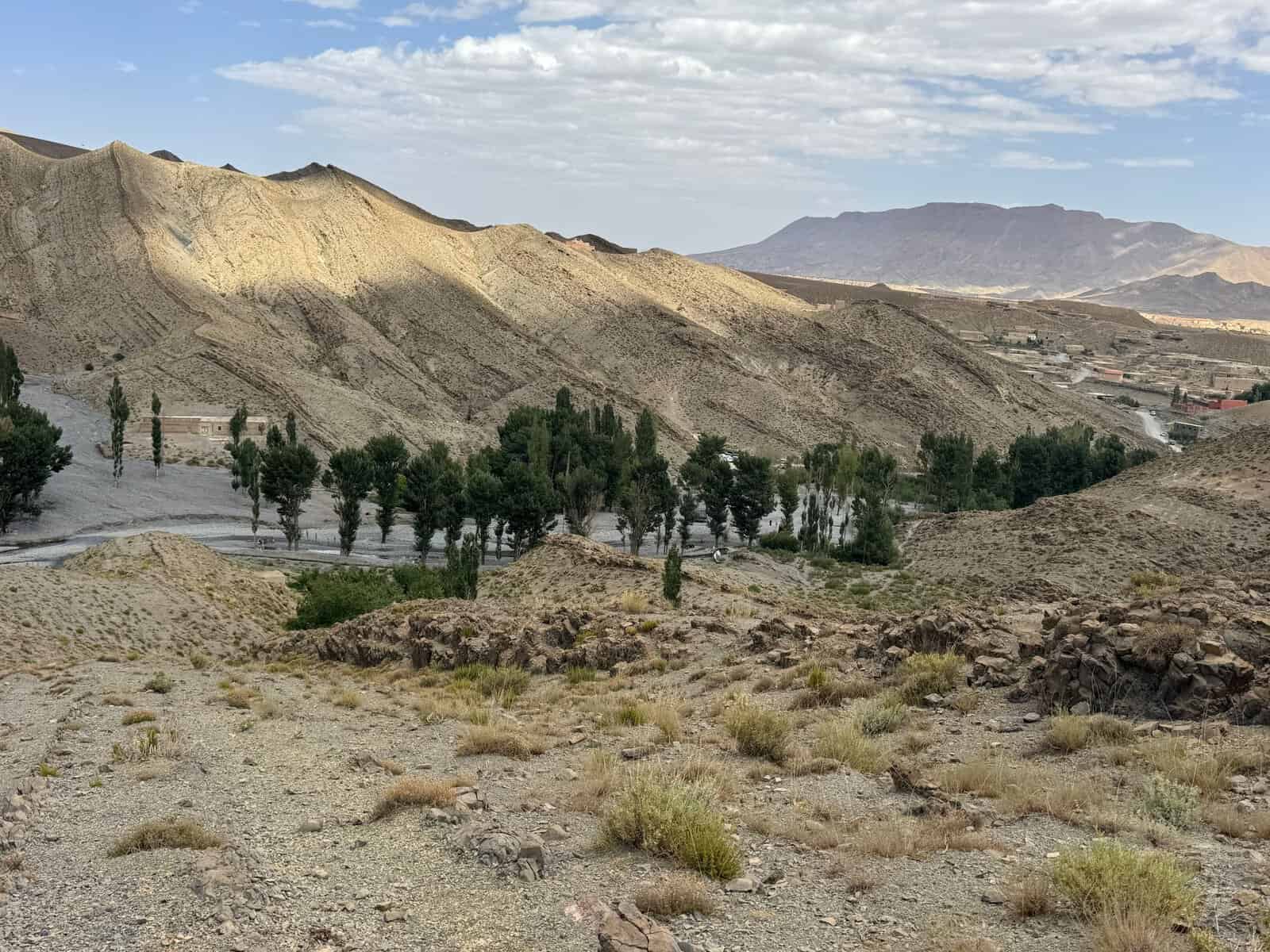
About an hour and a half from Marrakech, the valleys around Imlil are perfect for walking between Berber villages, with mule support and lunch in a village house. Fit walkers can climb Toubkal (4,167 m) in two or three days.
The 2023 earthquake hit this area hard. Villages are rebuilding, and visitors help them to recover.
The Sahara: Merzouga and Erg Chebbi
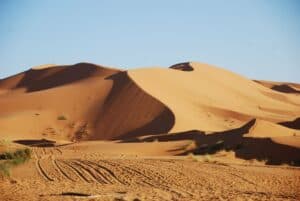
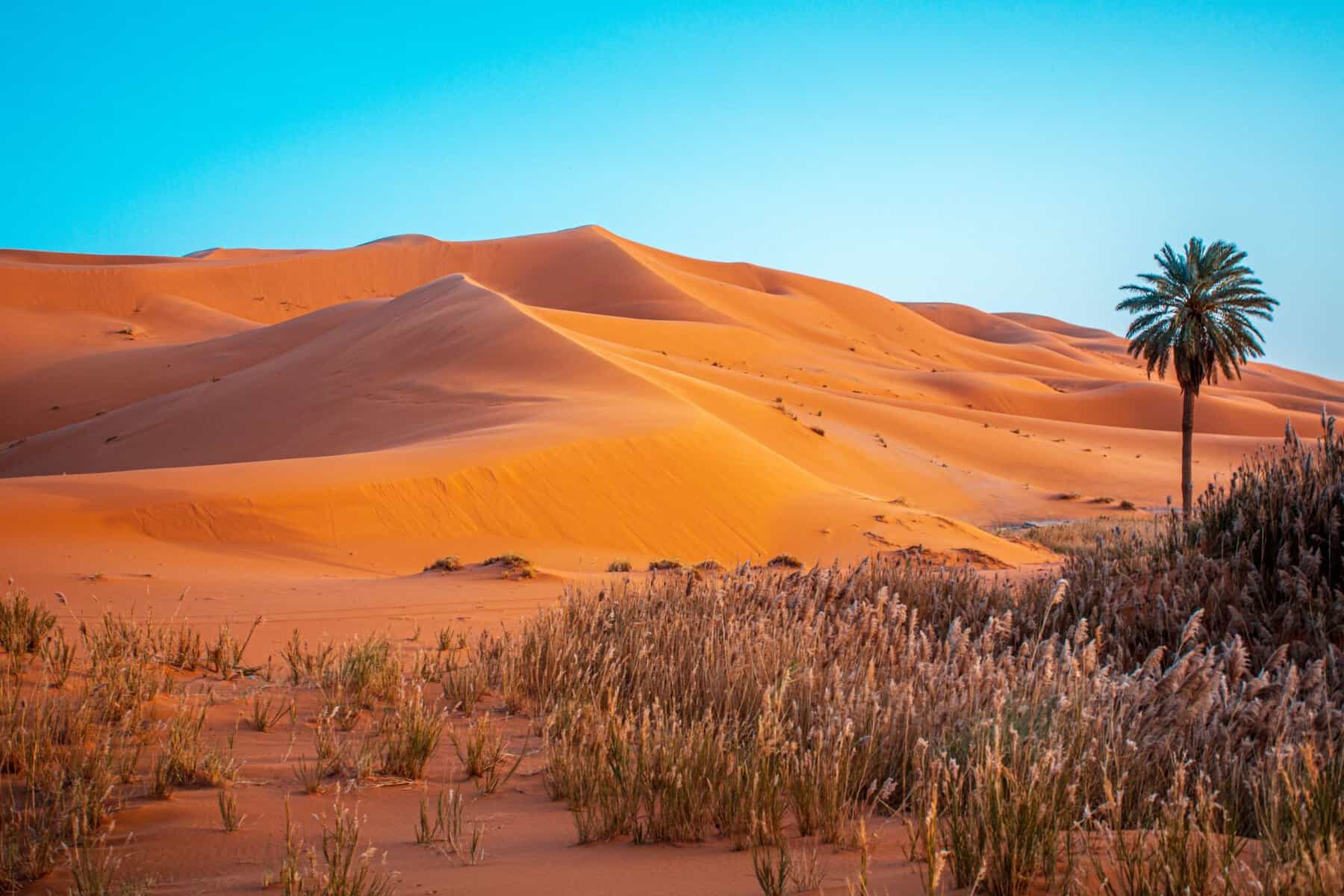
The great dunes of Erg Chebbi, near Merzouga, rise up to 150 m. Ride a camel to a desert camp for sunset, dinner and a sky full of stars, and wake early for sunrise.
It’s a long drive from Marrakech, so allow at least three days for the round trip, or go one way and continue to Fes.
Aït Benhaddou, the Dades Valley and the Todra Gorge
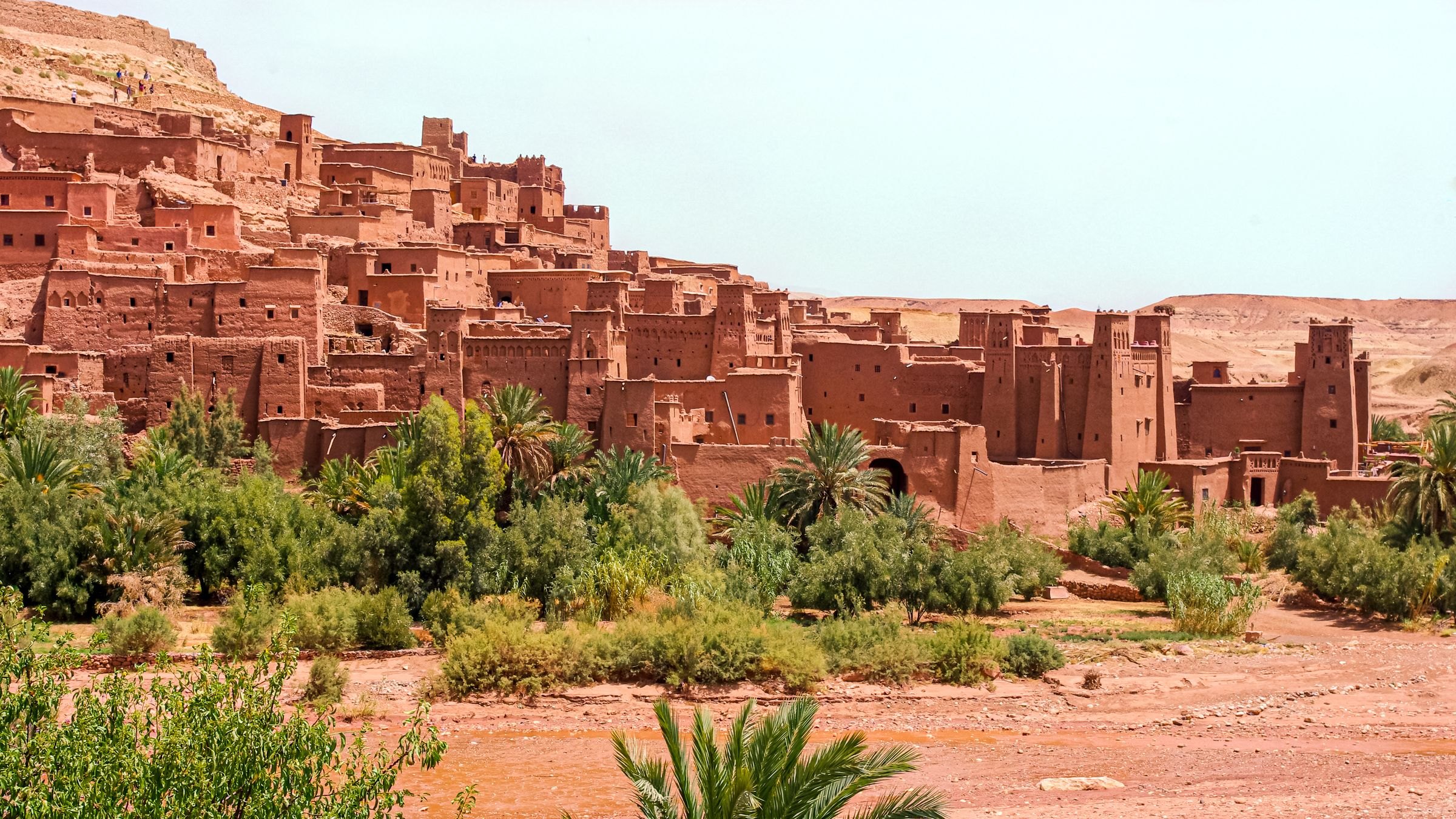
Over the Tizi n’Tichka pass, the earthen village of Aït Benhaddou is a UNESCO World Heritage Site and a star of many films. Nearby Ouarzazate has film studios and a fine kasbah.
East of there, the roses and rock formations of the Dades Valley lead to the towering walls of the Todra Gorge.

Fes
Fes el-Bali is one of the largest car-free urban areas in the world, with more than 9,000 lanes. Enter through the blue gate of Bab Bou Jeloud, see the leather tanneries, and visit the madrasas and the Al Quaraouiyine mosque and university, founded in 859.
Explore with an official guide; the lanes are a maze.

Essaouira
About two and a half to three hours west of Marrakech, the walled port of Essaouira is relaxed, breezy and a UNESCO World Heritage Site. Walk the ramparts, eat grilled fish by the harbour and shop for thuya-wood crafts.
The wind makes it a centre for kitesurfing; the Gnaoua music festival is held in June.
North Morocco
The north is greener, cooler and less visited than the south, and it’s close to Spain: the ferry from Tarifa to Tangier takes about an hour. A week here can link Tangier, the Atlantic towns, the Rif mountains and the imperial cities.

Chefchaouen
The blue-washed town in the Rif mountains is one of the most photographed places in Morocco. Stay overnight to see it quiet in the early morning, and walk up to the Spanish Mosque for the sunset.
It’s about three and a half to four hours from Fes or two and a half from Tangier.
Our Chefchaouen guide →
Tangier and Asilah
Tangier, facing Spain across the Strait of Gibraltar, has a hilltop kasbah, old cafés and a long history of writers and artists. Cape Spartel and the Caves of Hercules are nearby.
Forty-five minutes south, little Asilah has white houses, murals and ramparts above the Atlantic.
Rabat
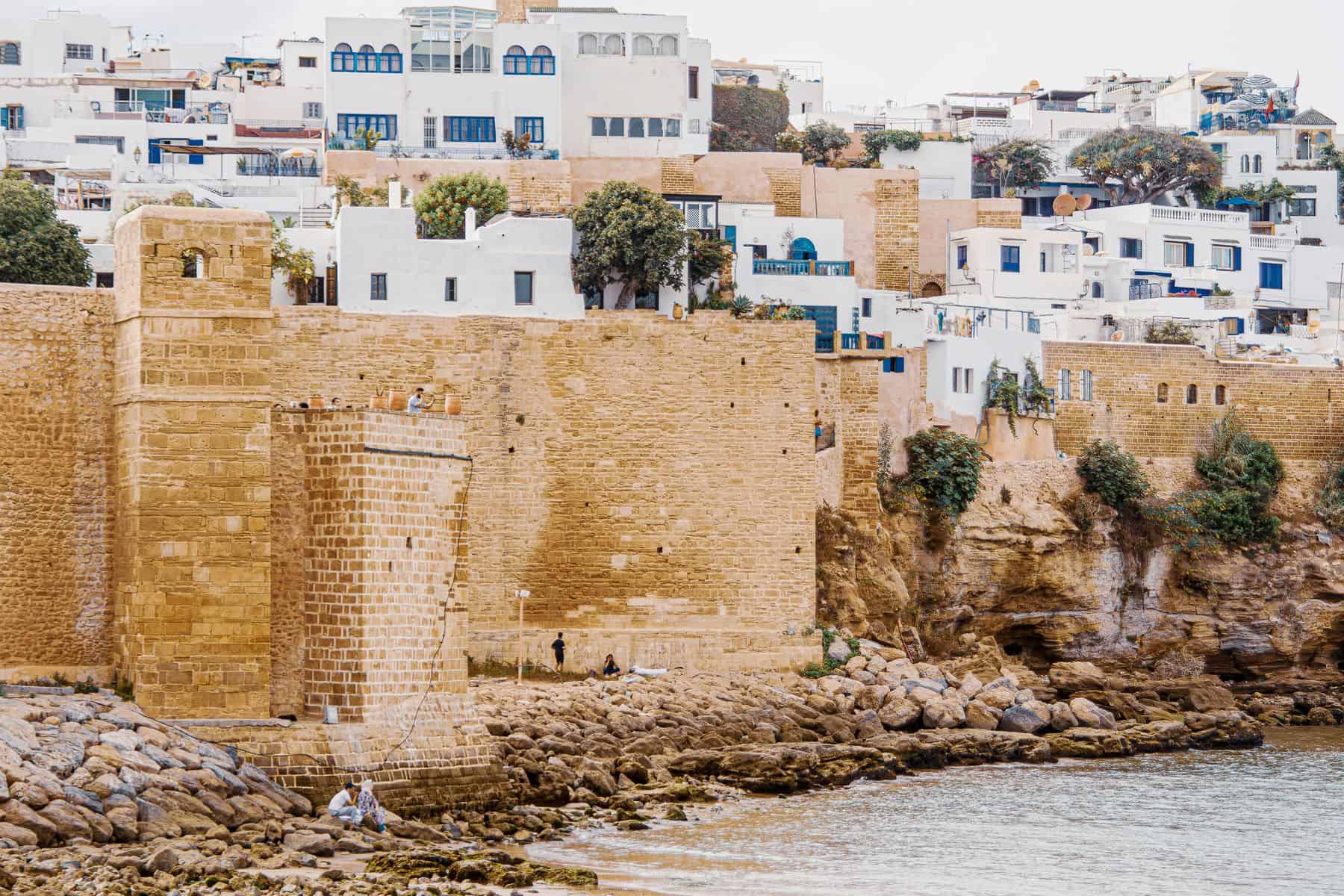
Morocco’s calm, green capital has the blue and white lanes and Andalusian garden of the Kasbah of the Udayas, the Hassan Tower and the royal mausoleum. It’s an easy stop between Tangier and Fes or Casablanca by fast train.

Meknes and Volubilis
Volubilis has the best Roman ruins in Morocco, with fine mosaics and a triumphal arch in open countryside. Combine it with the holy town of Moulay Idriss and the imperial city of Meknes, with its huge gates and royal granaries.

The gardens of Morocco
Gardens are part of Moroccan life, from the courtyards of riads to royal parks and olive groves. Marrakech has the best of them, and they make a peaceful break from the souks:

Jardin Majorelle: the painter Jacques Majorelle’s garden of cacti, bamboo and palms around a cobalt-blue villa, later saved by Yves Saint Laurent. The Yves Saint Laurent museum is next door. Go early to beat the crowds.
Le Jardin Secret: a restored riad garden in the heart of the medina, with an Islamic garden and an exotic garden.
The Menara and Agdal gardens: centuries-old olive groves and orchards around great pools, with the Atlas behind.
Anima: an artist’s garden of sculptures and tropical plants on the road to the Atlas.
Beyond Marrakech: the Andalusian Gardens in the Kasbah of the Udayas in Rabat, and Jnan Sbil in Fes.
Oualidia and the Atlantic coast
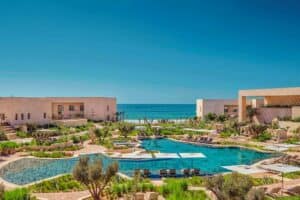
Oualidia is a quiet seaside village on a calm lagoon, protected from the Atlantic waves, between El Jadida and Safi. It’s famous for its oysters, grown in the lagoon and eaten at simple seafood stalls, and for birdwatching, with flamingos at some times of year. The lagoon is good for swimming, paddling and kayaking, and it’s a lovely place to finish a trip. It’s about three hours from Marrakech or two hours from Casablanca.
Along the rest of the coast, Essaouira is the best-known town, Taghazout, north of Agadir, is the centre for surfing, and Agadir is Morocco’s main beach resort, with sun all year round.
Morocco at Easter, and the seasons
Easter is one of the best times to visit. In late March and April Marrakech and Fes are warm and sunny, with highs of about 23 to 26°C, the countryside is green, and the Atlas still has snow on the peaks. It’s a busy time, though, as it’s also a school holiday in the UK, so book flights and riads early. The desert is warm by day and cool at night.
- Spring (March to May): the best all-round season, with wild flowers and comfortable temperatures everywhere.
- Summer (June to September): very hot in Marrakech, Fes and the desert, often above 38°C. The coast stays cool, as Essaouira and Oualidia rarely pass 26°C, and the Atlas is pleasant.
- Autumn (October and November): warm and sunny again, and good for the desert.
- Winter (December to February): sunny days, with highs of about 19°C in Marrakech, but cold nights, especially in the desert and the mountains. There may be snow in the Atlas.
- Ramadan: the dates move about 11 days earlier each year; the next one starts in February 2027. Sights stay open, but restaurants may close by day and many people eat after sunset.
| Month | Marrakech | Fes | Chefchaouen | Atlas (Imlil) | Sahara (Merzouga) | Essaouira |
|---|---|---|---|---|---|---|
| Jan | 19°C | 16°C | 14°C | 12°C | 18°C | 19°C |
| Mar | 23°C | 20°C | 17°C | 15°C | 24°C | 20°C |
| Apr | 26°C | 23°C | 20°C | 18°C | 29°C | 21°C |
| May | 30°C | 28°C | 24°C | 22°C | 33°C | 23°C |
| Jul | 38°C | 37°C | 33°C | 30°C | 42°C | 26°C |
| Aug | 38°C | 37°C | 33°C | 30°C | 40°C | 26°C |
| Oct | 30°C | 28°C | 25°C | 21°C | 29°C | 25°C |
| Nov | 23°C | 21°C | 18°C | 16°C | 23°C | 22°C |
Average daily high, 10-year ERA5 data. Nights are much colder than these figures, especially in the desert and the mountains in winter.
Classic routes
Marrakech, the Atlas and Essaouira
- Marrakech (3 nights)
- High Atlas (2)
- Essaouira (2)
Souks, mountain walks and the sea, with short drives.
Marrakech to Fes via the Sahara
- Marrakech (3 nights)
- Aït Benhaddou (1)
- Dades Valley (1)
- Merzouga desert camp (1)
- Fes (3)
The classic journey across the Atlas and the desert.
North Morocco
- Tangier (2 nights)
- Chefchaouen (2)
- Fes (3)
- Rabat (1)
Easy to start by ferry or a flight to Tangier; add Volubilis from Fes.
Morocco in depth
- Fes (3 nights)
- Merzouga (1)
- Todra Gorge (1)
- Aït Benhaddou (1)
- Marrakech (3)
- Essaouira (2)
- Oualidia (2)
Imperial cities, desert, kasbahs and two days by the lagoon.
Planning Morocco with a UK travel agency
Morocco is easy to love but harder to plan well: the drives are long, the best riads are small and fill up quickly, and the timing of the desert and the mountains matters. Booking with a UK travel agency like us means a Travel Designer plans the route with you, books your flights, riads, private driver and guides, and puts it all into one ATOL-protected booking, with help on the ground if anything changes. Prefer a group? We also have escorted tours of Morocco, or you can combine Morocco with Spain and Portugal; see Spain, Portugal and Morocco tours.
Ways to see Morocco with us


Practical tips
- Entry: no visa for up to 90 days for British citizens. Check the FCDO Morocco advice before you book. Western Sahara, a disputed territory in the far south, has its own advice, and the land border with Algeria is closed.
- Guides: people posing as guides approach visitors in the medinas. Use an official guide with a badge; we can arrange one.
- Dress: dress modestly, covering shoulders and knees, especially outside the resorts and during Ramadan.
- Mosques: most are closed to non-Muslims; the Hassan II Mosque in Casablanca is the main exception.
- Bargaining: expected in the souks. Smile, take your time and only start if you want to buy.
- Photos: ask before taking pictures of people.
- Alcohol: served in many riads, hotels and restaurants, but not everywhere.
Frequently asked questions
Is Easter a good time to visit Morocco?
Yes. Late March and April are warm and sunny in Marrakech and Fes, with highs of about 23 to 26°C, and the countryside is green. It's a busy time, so book early.
What is there to see in north Morocco?
The blue town of Chefchaouen, Tangier and the Atlantic town of Asilah, the capital Rabat, the medieval medina of Fes, the imperial city of Meknes and the Roman ruins of Volubilis.
Where is Oualidia?
On Morocco's Atlantic coast between El Jadida and Safi, about three hours from Marrakech or two hours from Casablanca. It's known for its calm lagoon, oysters and birdlife.
What are the best gardens in Morocco?
The Jardin Majorelle in Marrakech is the most famous. Also see Le Jardin Secret, the Menara and Agdal gardens and Anima near Marrakech, the Andalusian Gardens in Rabat and Jnan Sbil in Fes.
What are the best things to do in Morocco?
Explore the medinas of Marrakech and Fes, stay in a riad, spend a night in a Sahara desert camp, walk in the Atlas, see Aït Benhaddou and the Todra Gorge, and relax in Essaouira.
Do UK citizens need a visa for Morocco?
No. British citizens can visit for up to 90 days without a visa.
How long do you need in Morocco?
A week is enough for Marrakech, the Atlas and Essaouira. Allow ten days to two weeks to add the Sahara and Fes.
Why book Morocco with a UK travel agency?
A travel agency plans the route and the timing, books riads, a private driver and guides, and puts flights and everything else into one ATOL-protected booking, with help if anything changes.
Keep planning
- Morocco holidays
- Escorted tours of Morocco
- Morocco tours compared
- Chefchaouen: the blue city
- Spain, Portugal and Morocco tours
- Portugal holiday guide
- Where is hot at Easter
- Tailor-made holidays
Plan your Morocco holiday with a Travel Designer
Tell us your dates and we’ll plan a route through the medinas, mountains and desert, with riads, a private driver and flights, in one ATOL-protected booking.
Make an enquiry Morocco holidays