Tunisia in brief
- Carthage, Sidi Bou Said, the medina of Tunis, El Jem’s amphitheatre and holy Kairouan.
- The Sahara around Tozeur, Chott el Jerid and Douz, and beaches and Djerba.
- Total solar eclipse on 2 August 2027: about 5 minutes 40 seconds of totality at Sfax.
- Best from March to May and September to November; about three hours from the UK.

Tunisia is North Africa’s most compact and approachable country, about three hours’ flight from the UK. In a week you can walk the ruins of Carthage, drink mint tea in the blue-and-white lanes of Sidi Bou Said, stand inside one of the best-preserved Roman amphitheatres in the world, visit the holy city of Kairouan and sleep under the stars at the edge of the Sahara. Add long sandy beaches on the Mediterranean and the island of Djerba, and it works equally well as a cultural tour or a winter-sun holiday. This guide covers the regions, things to do, food, the best time to visit, the 2027 total solar eclipse, getting there and around, where to stay by area, sample routes and our tours.
Where is Tunisia?

Tunisia is the northernmost country in Africa, between Algeria to the west and Libya to the south-east, with more than 1,100 km of Mediterranean coast. Sicily is only about 150 km away, which explains why Phoenicians, Romans, Arabs, Ottomans and the French all left their mark here.
The north is green, with wheat fields, olive groves and the capital, Tunis. The east coast (the Sahel) is lined with beaches and old walled towns: Hammamet, Sousse, Monastir, Mahdia and Sfax. The south turns to salt lakes, palm oases and the dunes of the Grand Erg Oriental, part of the Sahara, with the island of Djerba off the south-east coast.
Arabic is the official language, and French is widely spoken; English is common in hotels and tourist areas.
Regions and highlights
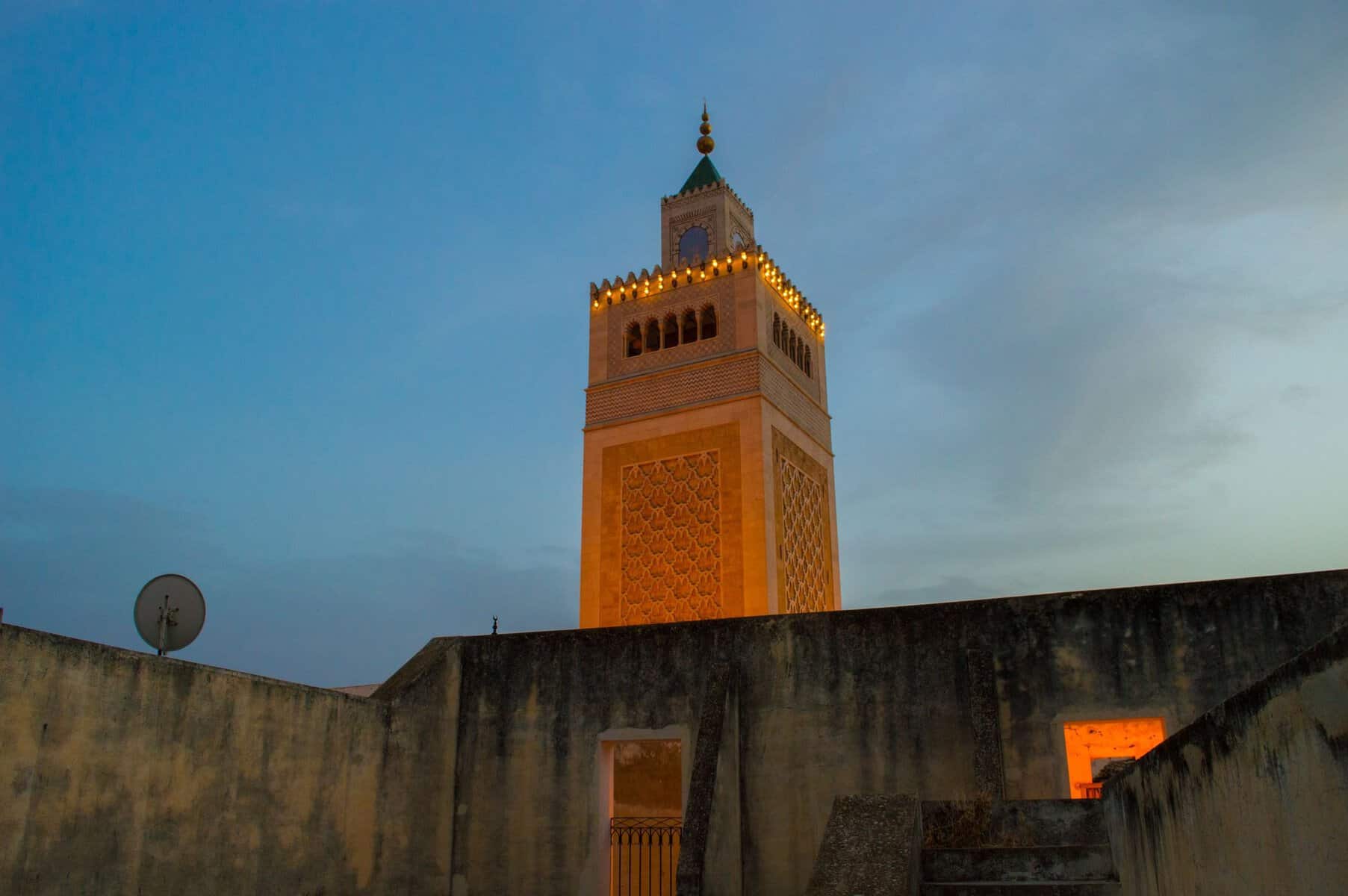
Tunis, Carthage and Sidi Bou Said
The UNESCO-listed medina of Tunis is a maze of covered souks around the Zaytuna Mosque. The Bardo National Museum holds one of the world’s finest collections of Roman mosaics. A short train ride away are the ruins of Carthage and the clifftop village of Sidi Bou Said.
Dougga and the north
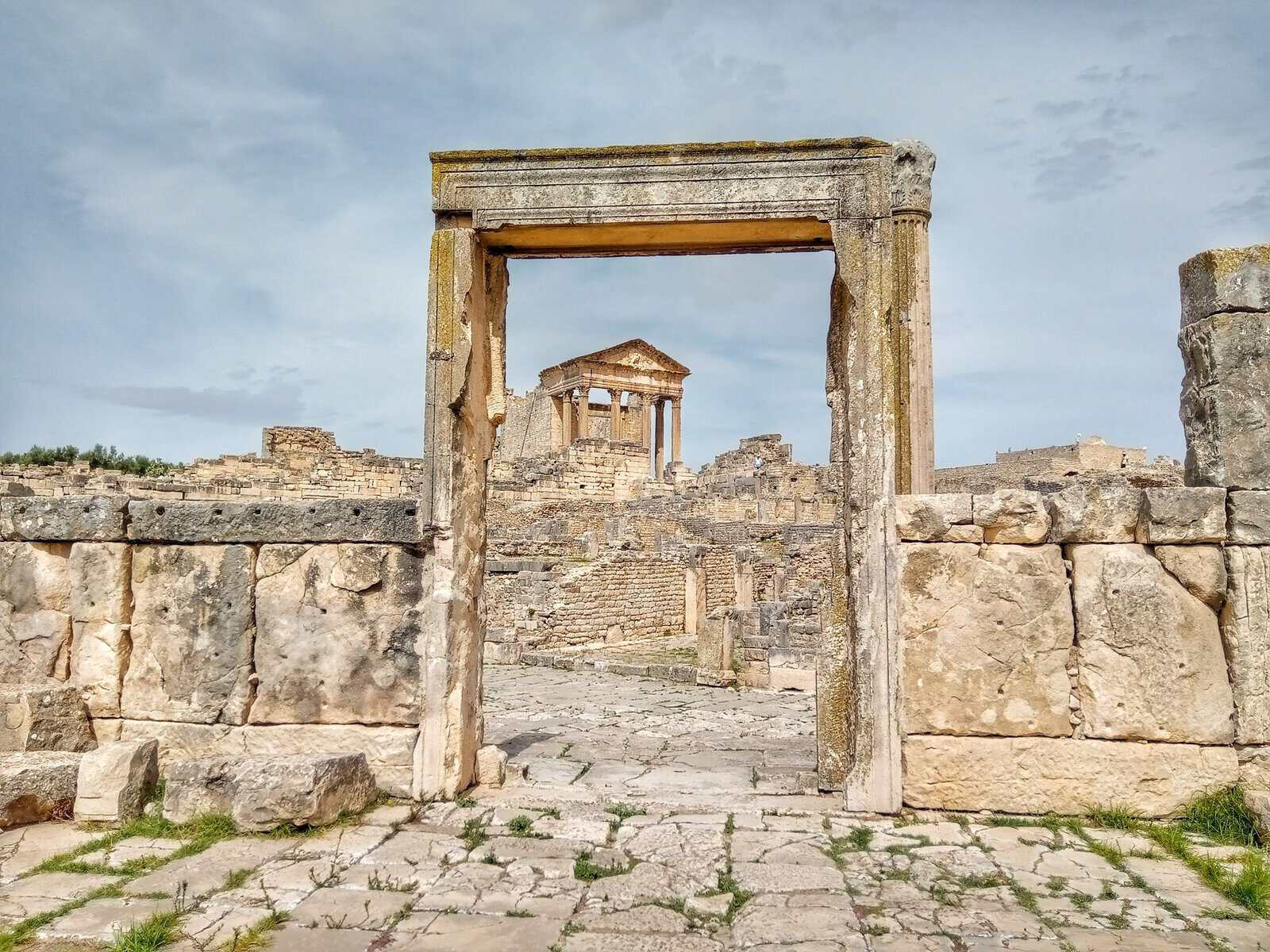
Dougga is the best-preserved Roman town in North Africa, with a theatre, a temple-crowned capitol and streets of houses on a hillside among olive groves. Stop at Testour, a town founded by Moors expelled from Spain, on the way.

The coast: Hammamet to Mahdia
Hammamet and Sousse are the main beach resorts, each with a walled medina; Sousse’s is UNESCO-listed. Monastir has a seafront ribat (fortress), and Mahdia is a quieter old town on a headland with fine white-sand beaches.
Kairouan and El Jem
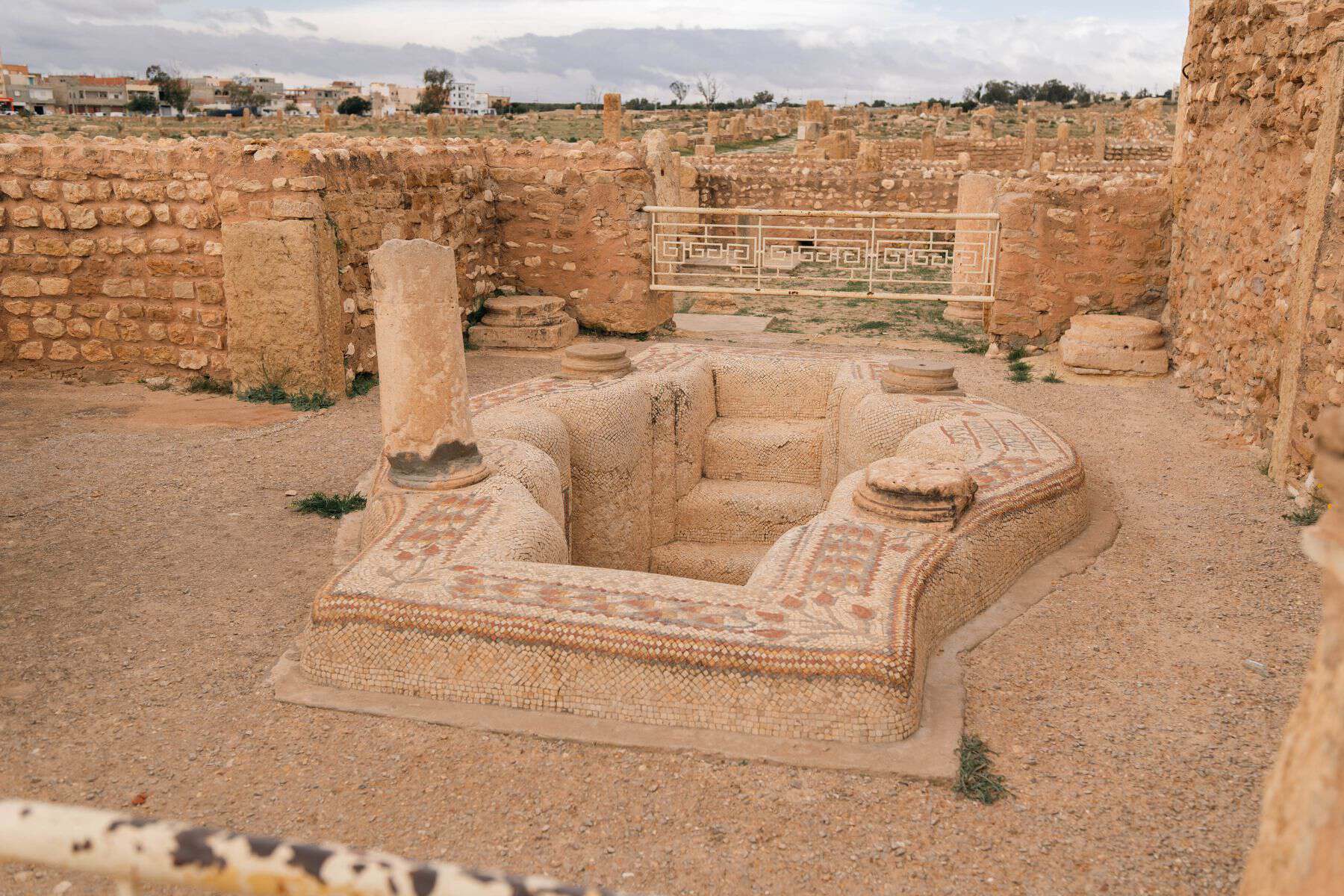
Kairouan, founded in the 7th century, is one of the holiest cities in Islam, with the Great Mosque, a whitewashed medina and a carpet-making tradition. El Jem’s Roman amphitheatre, about an hour south-east, rises over the modern town.
Tozeur, Douz and the Sahara
Tozeur is a palm-grove oasis town with patterned brick architecture, across the salt flats of Chott el Jerid from Douz, the gateway to the dunes. Matmata is known for its underground troglodyte homes.
Djerba
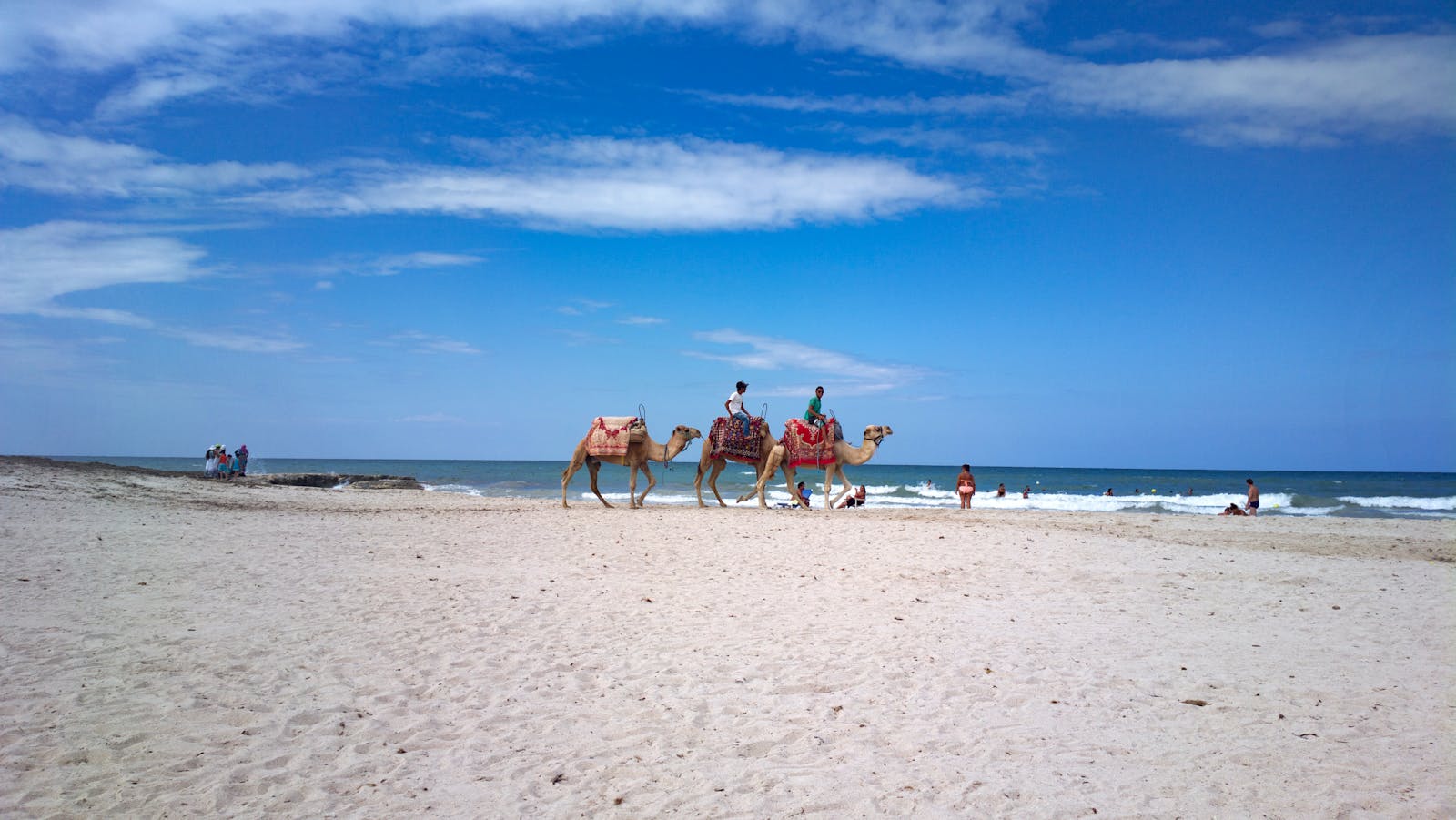
A flat island of sandy beaches, olive trees and whitewashed mosques, linked to the mainland by a causeway and a short ferry. It’s UNESCO-listed for its traditional settlement pattern. Houmt Souk is the main town; the village of Erriadh is covered in street art.
Things to do in Tunisia
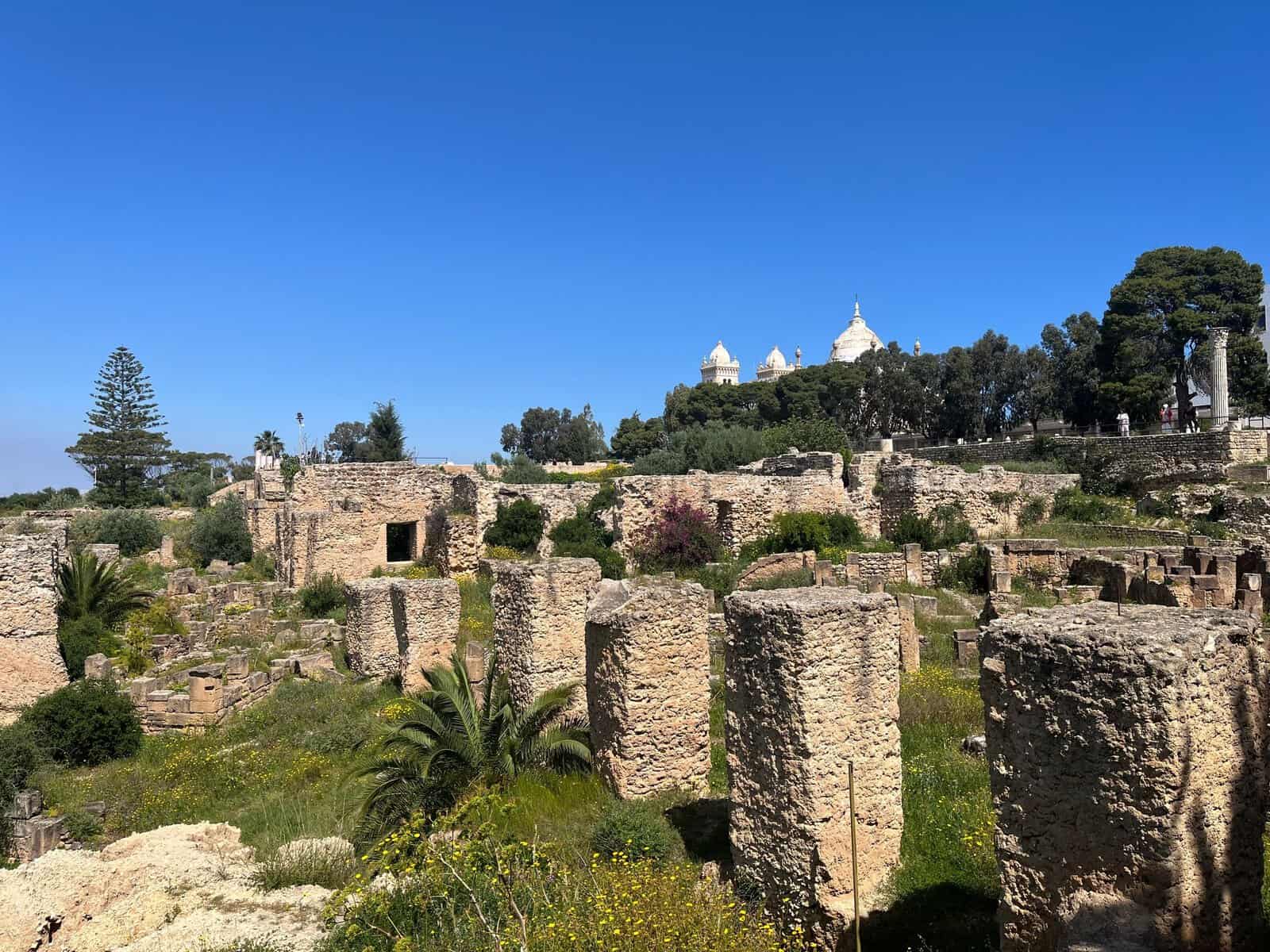
Carthage. The Phoenician city that fought Rome for the Mediterranean was destroyed in 146 BC and rebuilt by the Romans. Its scattered sites are now in the leafy suburbs of Tunis: the Antonine Baths by the sea, the Punic ports, the Roman villas and the hill of Byrsa with its museum and views across the gulf.
Sidi Bou Said. A village of white walls, blue doors and studded wooden gates on a cliff above the sea, with cafés serving mint tea with pine nuts. Go in the late afternoon and stay for sunset, when the day trippers have left.
The medina of Tunis. Walk from the Bab el Bhar gate through the souks of perfumers, tailors and chechia (felt hat) makers to the Zaytuna Mosque, and look for a rooftop terrace for the view.


El Jem. Built in the 3rd century AD to seat around 35,000 spectators, El Jem’s amphitheatre is one of the largest and best-preserved in the Roman world. You can climb to the upper tiers and walk the tunnels beneath the arena. The small museum nearby has superb mosaics from the villas of the Roman town of Thysdrus.
Kairouan. The Great Mosque (Mosque of Uqba), with its forest of ancient columns and square minaret, is one of the oldest in North Africa; non-Muslims can visit the courtyard but not the prayer hall. Walk the medina, see the Aghlabid water basins and the Mausoleum of the Barber, and watch carpets being woven.
Roman mosaics. Tunisia has some of the richest Roman mosaics anywhere, in the Bardo in Tunis, at El Jem and Sousse museums and on site at Dougga and other ruins.
The Sahara in Tunisia
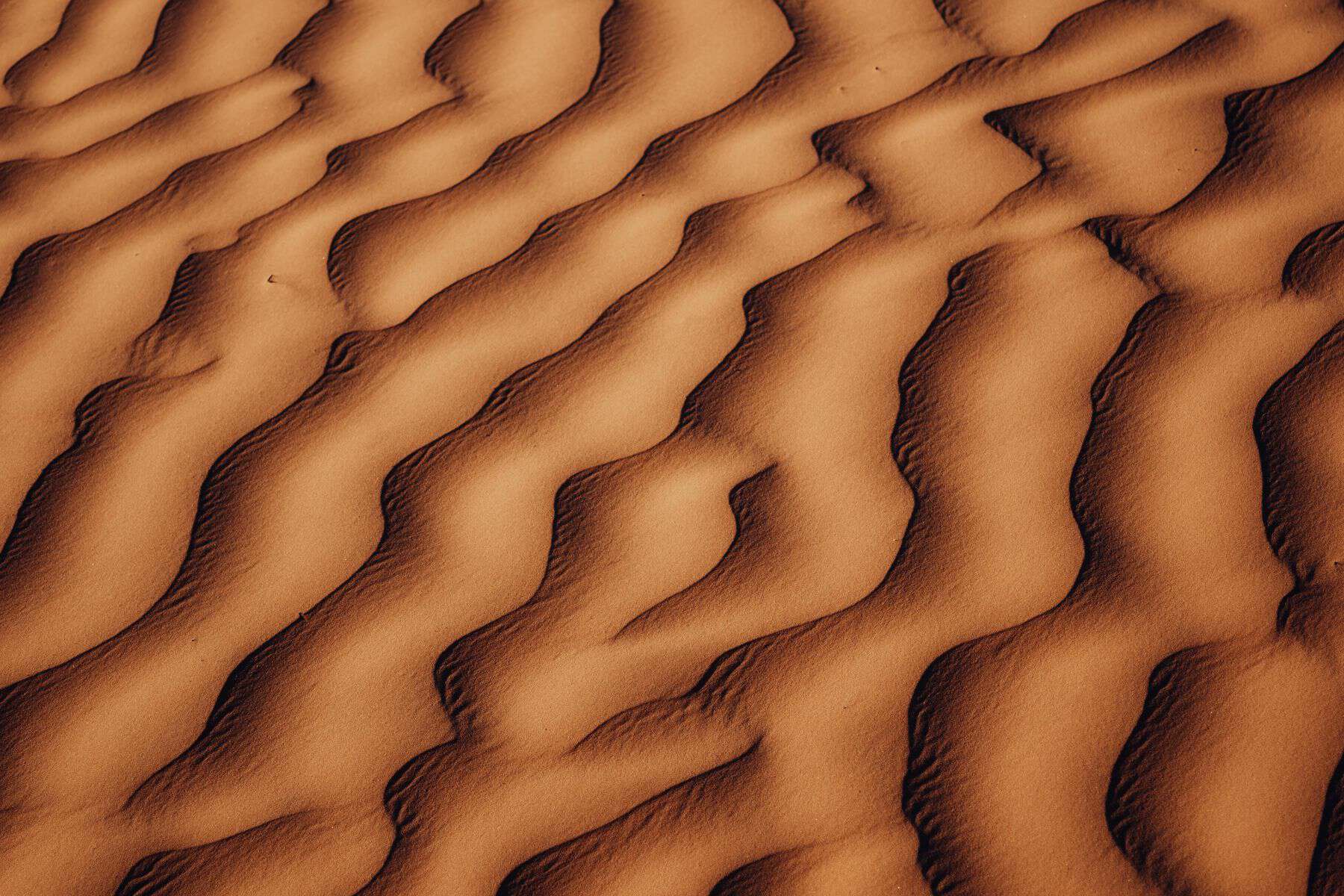
The Tunisian Sahara is the easiest part of the great desert to reach from Europe: a flight to Tozeur or Djerba, or a day’s drive from the coast. The classic route links three very different places.
Tozeur and the oases. Tozeur’s palm grove, with hundreds of thousands of date palms watered by springs, produces the prized deglet nour dates. The old quarter of Ouled el Hadef is built of patterned yellow brick. Nearby are film sets from Star Wars, left standing in the desert.
Chott el Jerid. A vast salt lake, crossed by a causeway between Tozeur and Kebili. It shimmers with mirages by day and turns pink and white at sunrise.
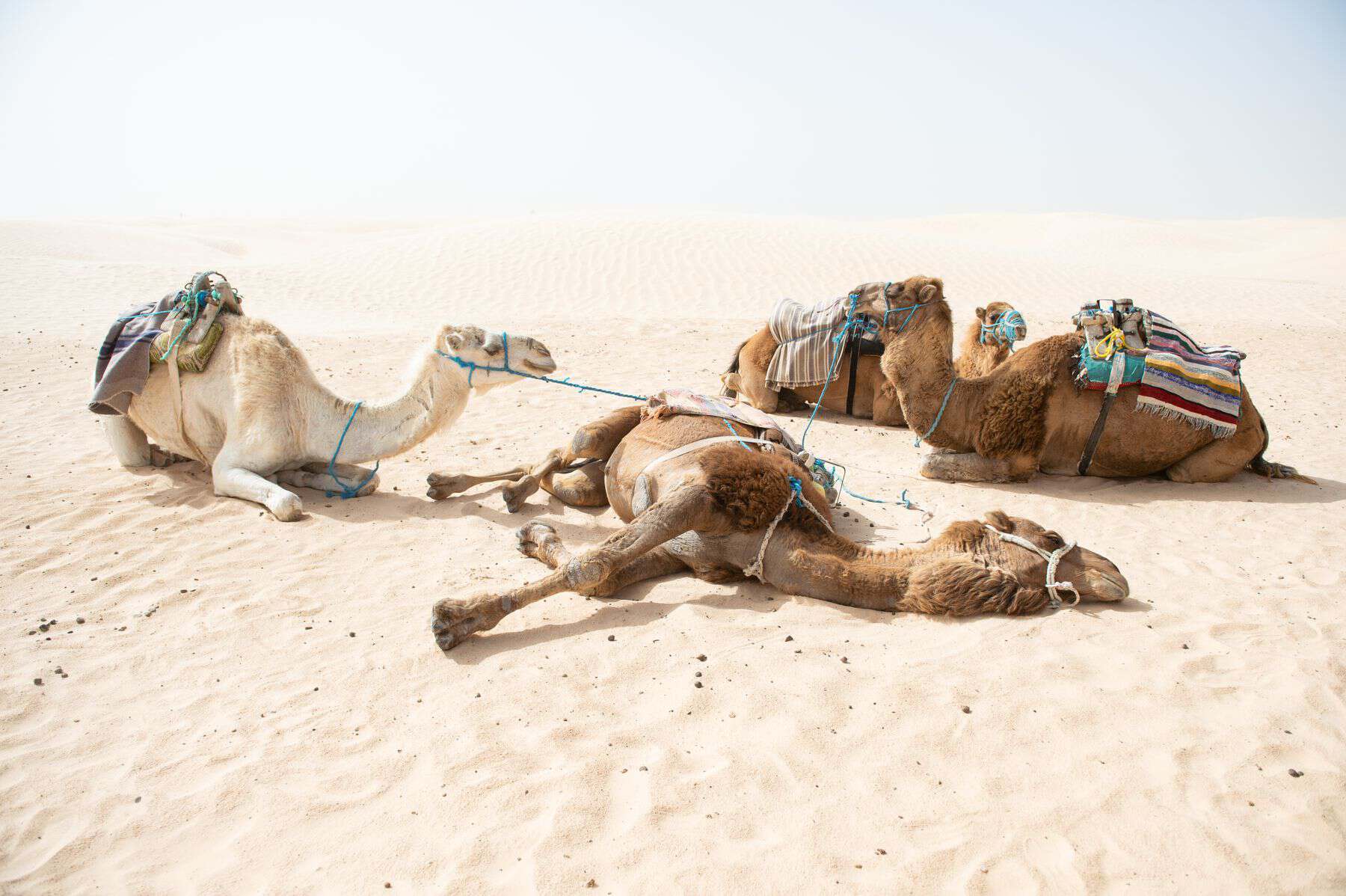
Douz and the dunes. Douz is the “gateway to the Sahara”, with camel rides and 4×4 trips into the dunes and an overnight stay in a desert camp. Further on, Ksar Ghilane is an oasis on the edge of the Grand Erg with a warm spring and a Roman fort. Matmata, in the hills to the east, has troglodyte houses dug into the ground around courtyards.

Desert trips with us stay within the Tozeur, Douz, Ksar Ghilane and Matmata area. Always check the current FCDO Tunisia travel advice before you travel.
The total solar eclipse of 2 August 2027
On 2 August 2027 a total solar eclipse will cross southern Spain and North Africa, including Morocco, Algeria, Tunisia, Libya and Egypt, then Saudi Arabia and Yemen (NASA). Its path crosses central Tunisia, and the east coast around Sfax is one of the best places to see it: totality there begins at about 10:09 local time and lasts about 5 minutes 40 seconds, with the sun high in the sky. Djerba (Houmt Souk) gets about 4 minutes 40 seconds, Gabès about 4 minutes, and Kairouan and Mahdia, near the edge of the path, under 3 minutes. Tunis is just outside the path and sees only a deep partial eclipse. August skies on this coast are usually clear, but it will be hot, so pack sun protection as well as eclipse glasses, and book early: hotels along the path will fill up.
Our Tunisia Total Solar Eclipse 2027 tour combines the eclipse with Carthage and the coast. See also our guide to 2027 solar eclipse tours.
Beaches and Djerba

Tunisia’s long sandy beaches are why most British visitors first came. Hammamet has the gentlest feel, with gardens and a small medina by the sea; Sousse and Port El Kantaoui are livelier; Monastir and Mahdia are quieter, and Mahdia’s beaches are some of the finest on the coast. From Hammamet, the hilltop Berber village of Takrouna makes a good half-day out.
Djerba has the warmest, driest weather and the best winter sun. Beyond the beaches of the east coast, explore Houmt Souk’s market and old fort, the potters of Guellala, the old mosques scattered across the island and the street art of Djerbahood in Erriadh.
The sea is warm enough for most people from about June to October. Outside summer, a week by the sea combines well with a few days of sightseeing.
What to eat in Tunisia
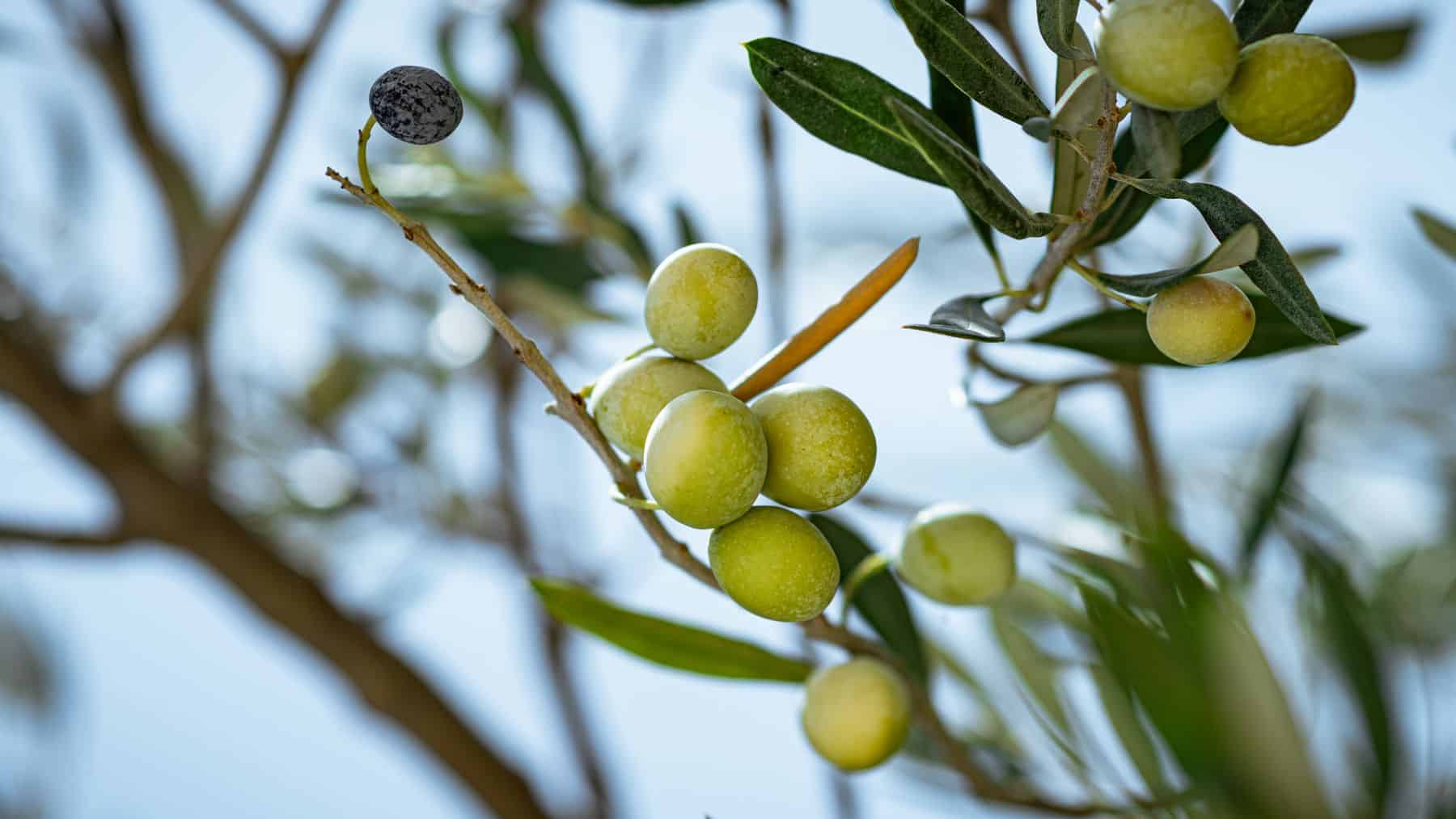
Tunisian food is Mediterranean with a kick. Couscous is the national dish, often with fish on the coast or lamb inland. Brik is a crisp fried pastry with a runny egg inside, and harissa, the chilli paste, comes with almost everything, along with bread and olive oil.
Try lablabi (chickpea soup with bread, egg and harissa) for breakfast, ojja (eggs cooked in a spicy tomato sauce), mechouia (grilled pepper salad) and grilled fish by the harbour in Sfax, Mahdia or Djerba.
Tunisia is one of the world’s biggest producers of olive oil, and Tozeur’s dates are famous. Finish with mint tea with pine nuts, or a thick coffee, in a café. Alcohol is available in hotels and many restaurants.
Best time to visit Tunisia
Spring (March to May) and autumn (September to November) are the best times for touring, with warm days for the ruins and comfortable nights in the desert. June to August is beach season: hot on the coast, and very hot inland (Tozeur often tops 38°C), so sightseeing is best early in the day. Winter (December to February) is mild and sunny in the south, with Djerba and Tozeur around 17 to 18°C, and good for the desert, though cooler and wetter in Tunis. Ramadan moves about 11 days earlier each year; some cafés and restaurants close during the day, but tourist areas keep working.
| Month | Tunis | Djerba | Tozeur |
|---|---|---|---|
| Jan | 16°C / 8°C · 30 mm | 17°C / 10°C · 10 mm | 17°C / 6°C · 5 mm |
| Feb | 17°C / 8°C · 35 mm | 18°C / 11°C · 20 mm | 19°C / 8°C · 10 mm |
| Mar | 19°C / 9°C · 60 mm | 21°C / 12°C · 15 mm | 23°C / 11°C · 10 mm |
| Apr | 22°C / 12°C · 40 mm | 23°C / 15°C · 10 mm | 28°C / 15°C · 10 mm |
| May | 26°C / 15°C · 40 mm | 27°C / 18°C · 10 mm | 32°C / 19°C · 5 mm |
| Jun | 31°C / 19°C · 20 mm | 31°C / 22°C · 0 mm | 38°C / 24°C · 0 mm |
| Jul | 35°C / 22°C · 0 mm | 33°C / 24°C · 0 mm | 40°C / 26°C · 0 mm |
| Aug | 34°C / 22°C · 15 mm | 33°C / 25°C · 0 mm | 39°C / 27°C · 0 mm |
| Sep | 31°C / 21°C · 35 mm | 31°C / 24°C · 10 mm | 36°C / 24°C · 5 mm |
| Oct | 26°C / 17°C · 45 mm | 27°C / 20°C · 15 mm | 29°C / 18°C · 5 mm |
| Nov | 21°C / 13°C · 45 mm | 22°C / 16°C · 30 mm | 22°C / 12°C · 15 mm |
| Dec | 18°C / 10°C · 45 mm | 18°C / 12°C · 20 mm | 18°C / 7°C · 10 mm |
Average daily high / low and monthly rainfall, 10-year ERA5 data. Desert nights can be much colder than the averages suggest in winter.
Getting to Tunisia from the UK
Flights take about three hours. There are direct flights from London to Tunis, and seasonal direct flights from London and several regional UK airports to Enfidha-Hammamet (for Hammamet and Sousse), Monastir and Djerba. For the south, fly into Djerba, or into Tunis and drive or take a domestic flight to Tozeur. British citizens can visit for up to 90 days without a visa, and your passport should be valid for the whole stay.
Getting around
- Private driver or guided tour: the easiest way to link Carthage, Dougga, Kairouan, El Jem and the desert, which are spread out and poorly connected by public transport.
- Trains: run from Tunis down the coast to Sousse, Monastir (on a local line), El Jem and Sfax; slow but cheap. The TGM light railway links Tunis with Carthage and Sidi Bou Said.
- Louages: shared minibus taxis that leave when full, the local way to travel between towns.
- Desert trips: go into the dunes with a licensed guide and a 4×4, never alone.
Where to stay in Tunisia
- Tunis, Carthage and Sidi Bou Said: boutique guesthouses in restored medina houses (dars), or sea-view hotels in Sidi Bou Said and Gammarth for a calmer base.
- Hammamet and Yasmine Hammamet: beach resorts, spa hotels (Tunisia is known for thalassotherapy) and golf.
- Sousse, Port El Kantaoui and Monastir: larger, lively beach hotels close to the medinas and El Jem.
- Mahdia: quieter beach hotels near a lovely old town.
- Tozeur and Douz: palm-grove hotels and, for a night, a desert camp under the stars.
- Djerba: beach resorts on the east coast and small guesthouses in traditional houses (houch) inland.
Tell us your style and budget and we’ll match the right hotel or guesthouse; see Tunisia holidays for ideas.
How many days in Tunisia? Sample routes
Tunis and the coast
- Sidi Bou Said or Tunis (3 nights)
- Dougga day trip
- Hammamet or Mahdia (4)
- Day trips to Kairouan and El Jem
Culture and the beach without long drives.
Classic Tunisia
- Tunis (2 nights)
- Kairouan (1)
- Tozeur (2)
- Douz desert camp (1)
- Matmata or Djerba (2)
- El Jem and Sousse (2)
Carthage, the holy city, the oases, the dunes and the Roman amphitheatre.
Tunisia and Djerba
- Tunis and Sidi Bou Said (3 nights)
- Kairouan and El Jem (2)
- Tozeur and Douz (3)
- Djerba (4)
A full tour ending with beach time on Djerba. Best from October to May.
Our Tunisia tours
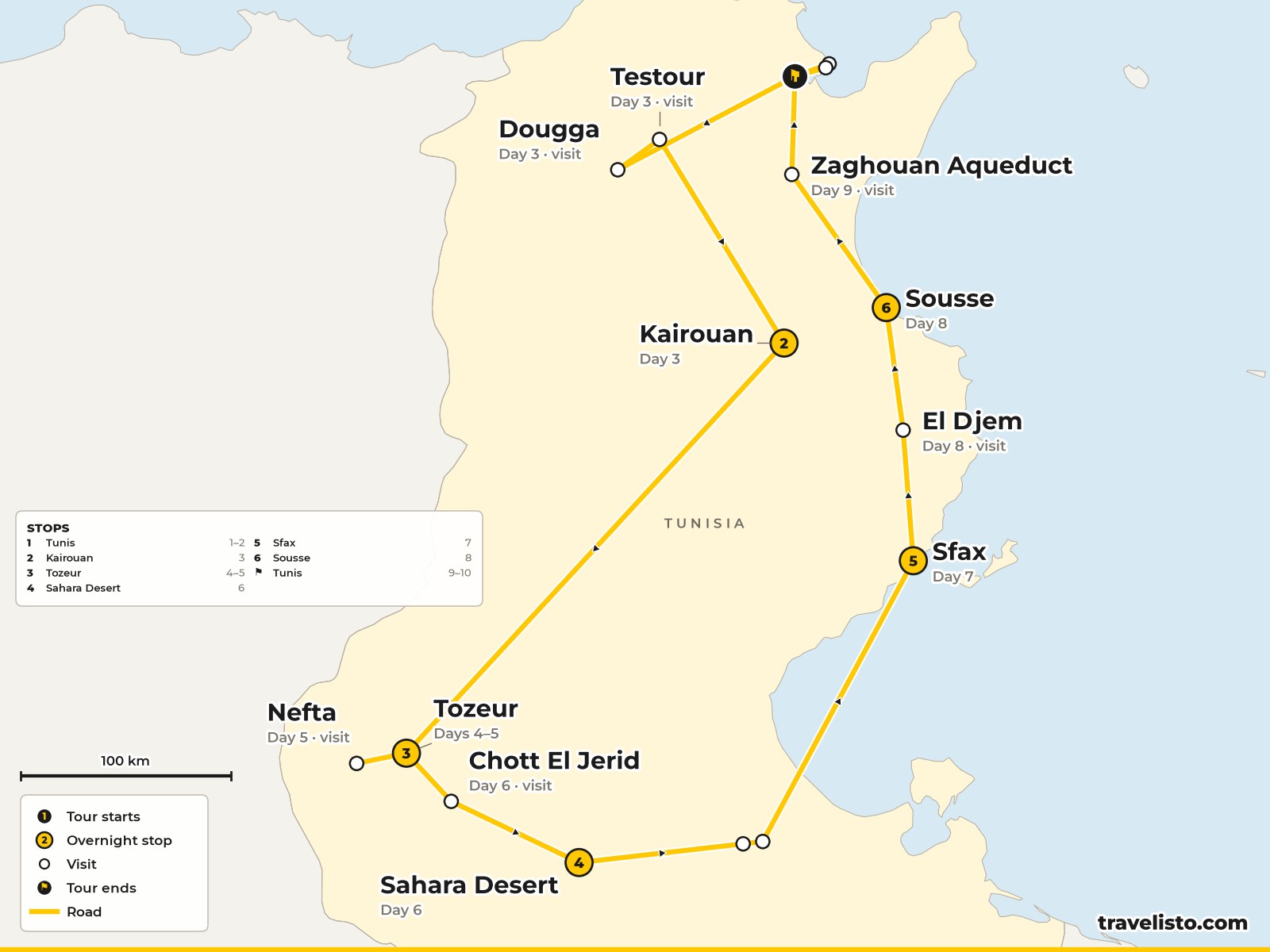
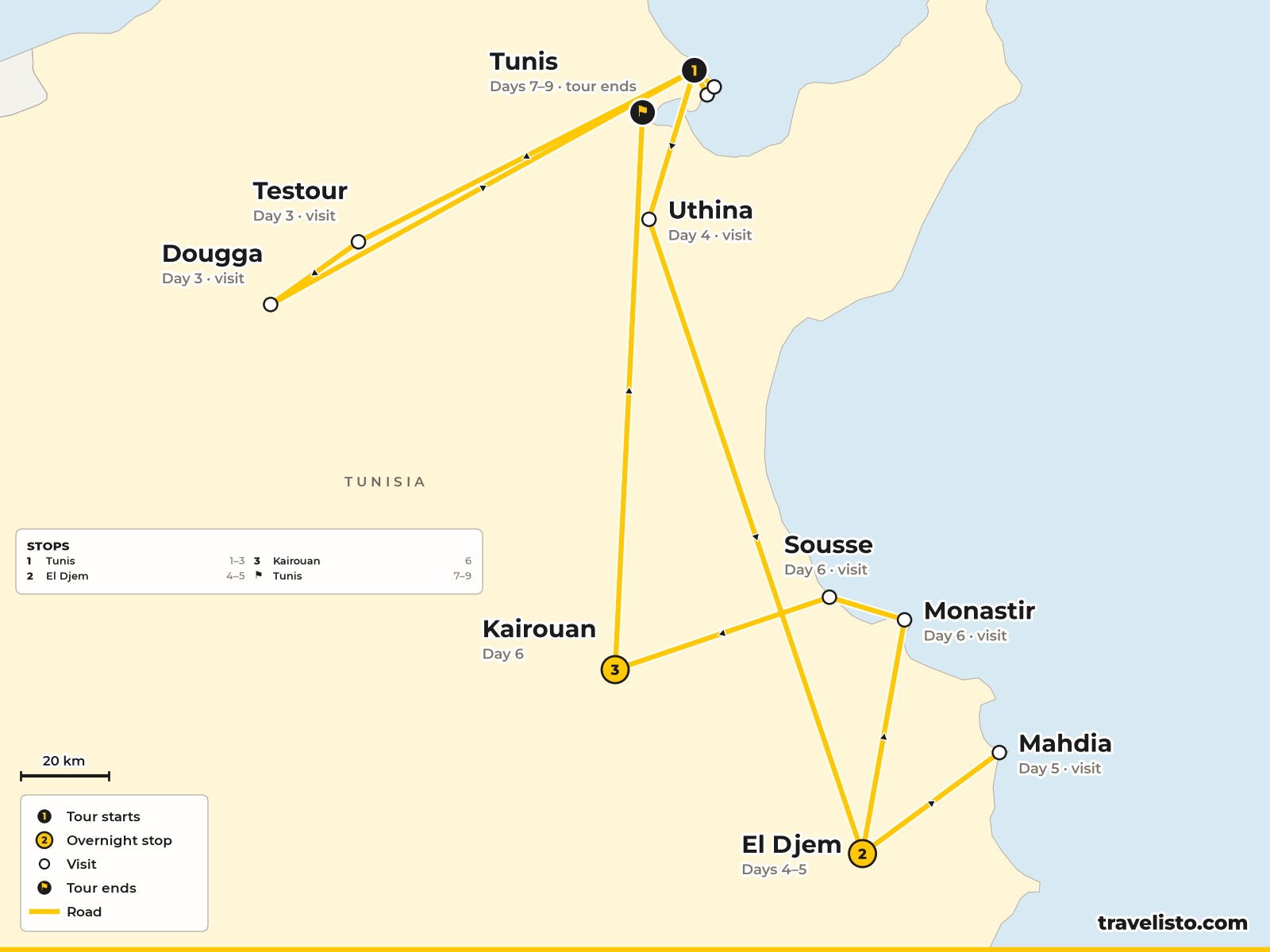
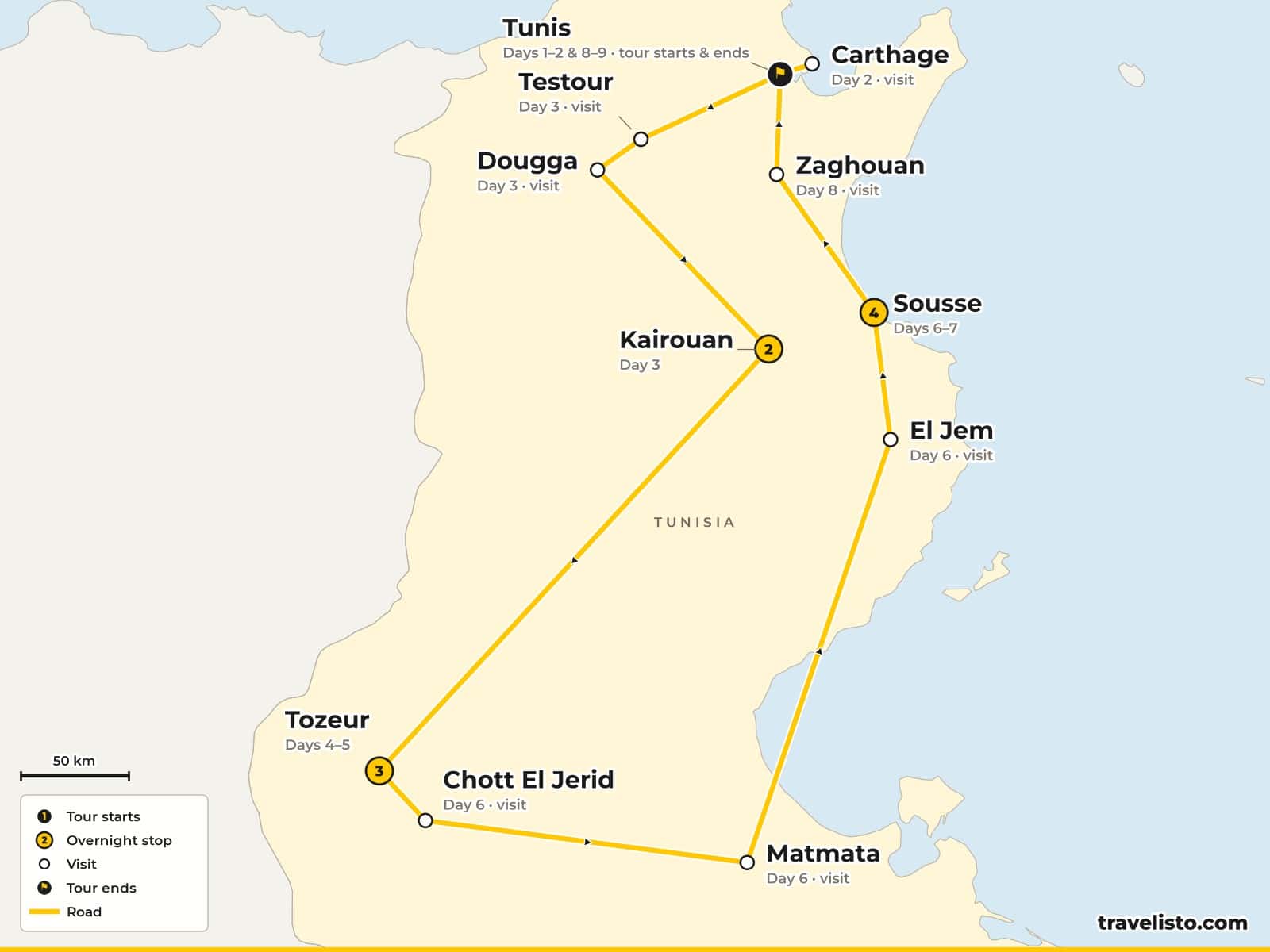
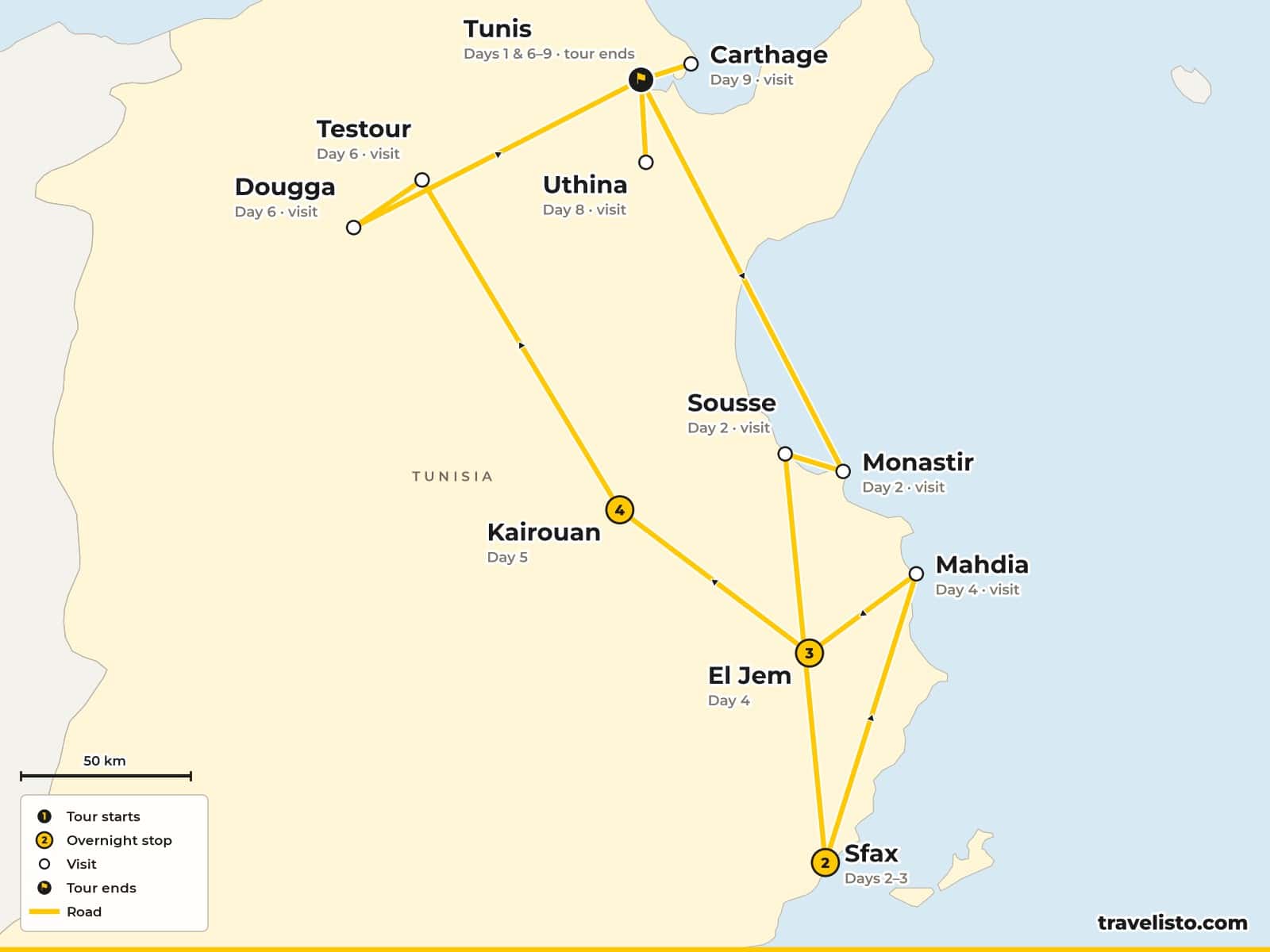
Prefer your own pace? A tailor-made Tunisia holiday can combine a private driver-guide, boutique stays and a few days on the beach. Compare with our Morocco holiday guide if you’re choosing between the two.
Practical tips
- Travel advice: read the FCDO Tunisia travel advice before you book and check it again before you travel.
- Money: the dinar is a closed currency, so you can’t buy it in the UK. Change money or use cashpoints on arrival, keep your exchange receipts and check the FCDO’s current rules on taking money in and out.
- Dress: beachwear is fine at resorts; cover shoulders and knees in medinas, mosques and rural areas.
- Bargaining: expected in the souks; prices in shops with fixed tags are usually fixed.
- Heat: in summer, visit sites early, carry water and wear a hat, especially at El Jem and in the south.
- Plugs: European two-pin plugs (type C and E); bring an adaptor.
Frequently asked questions
Is Tunisia safe to visit?
Tunis, Carthage, the coastal resorts, Djerba, Tozeur and Douz are the main tourist areas, and they are where our tours go. Read the FCDO Tunisia travel advice on gov.uk before you book and again before you travel.
What is the best time to visit Tunisia?
March to May and September to November for touring, when it is warm but not too hot. June to August is the beach season. Winter is mild and sunny in the south and on Djerba.
Do British citizens need a visa for Tunisia?
No. British citizens can visit Tunisia for up to 90 days without a visa. Your passport should be valid for the whole of your stay.
How long is the flight to Tunisia from the UK?
About three hours. There are direct flights from London to Tunis, and seasonal direct flights to Enfidha-Hammamet, Monastir and Djerba.
Can you see the 2027 solar eclipse in Tunisia?
Yes. On 2 August 2027 the path of totality crosses central Tunisia. Sfax, on the east coast, gets about 5 minutes 40 seconds of totality at around 10:09 local time; Djerba about 4 minutes 40 seconds. Tunis sees only a partial eclipse.
Can you visit the Sahara in Tunisia?
Yes. Tozeur, Chott el Jerid, Douz and Ksar Ghilane are the main areas, with camel rides, 4×4 trips and nights in desert camps. Go with a licensed guide and check the FCDO Tunisia travel advice before you go.
How many days do you need in Tunisia?
A week covers Tunis, Carthage, Sidi Bou Said and the coast with day trips to Kairouan and El Jem. Allow ten to twelve days to add the Sahara and Djerba.
Is Djerba good for a holiday?
Yes, especially for winter sun and beaches. It is the warmest, driest part of the coast, with sandy beaches, old villages and street art, and it combines well with a desert trip.
Keep planning
- Tunisia holidays
- Escorted tours of Tunisia
- Solar eclipse 2027 tours
- Morocco holiday guide
- Egypt holidays
- Malta holidays
- Tailor-made holidays
- Escorted tours
Plan your Tunisia holiday with a Travel Designer
Tell us when you’d like to go and we’ll plan Carthage, Kairouan, the Sahara and the beach, with the right hotels, a driver-guide and flights, in one ATOL-protected booking.
Make an enquiry Tunisia holidays