Albania in brief
- The Albanian Riviera: Ksamil, Saranda, Himarë and Dhërmi, with clear Ionian water and mountain backdrops.
- Berat, Gjirokastër and Butrint: three UNESCO sites, all in the south and centre.
- Safe for most visitors: the main risk is the roads. Check the FCDO advice before you book and again before you travel.
- Best in May, June and September; about 3 hours’ flight from the UK to Tirana, or via Corfu.

Albania is the surprise of the Mediterranean: a small country between Montenegro and Greece with an empty-feeling coastline, Ottoman towns on UNESCO’s list, Greek and Roman ruins, high limestone mountains and food that is fresh, simple and generous. It was closed to the world for almost half a century until 1991, which is why so much of it still feels unhurried. It’s only about three hours’ flight from the UK. This guide covers where to go, from the Albanian Riviera, Ksamil and Saranda to Berat, Gjirokastër, Butrint, Tirana and the Albanian Alps, plus whether Albania is safe, the best time to visit, how to get there and around, where to stay and sample routes.
Where is Albania?

Albania sits on the western side of the Balkans, facing Italy across the Adriatic and Ionian seas. Montenegro and Kosovo lie to the north, North Macedonia to the east and Greece to the south; the Greek island of Corfu is just a few kilometres off the southern coast.
It’s a compact country, roughly the size of Wales, but most of it is mountains, so journeys take longer than the map suggests. The north is the high, wild Albanian Alps; the centre holds Tirana, the coast at Durrës and the Ottoman town of Berat; the south has the Riviera beaches, Gjirokastër and Butrint.
Albania isn’t in the EU or the Schengen area. The currency is the lek; euros are often accepted on the coast, but you’ll usually get a better deal paying in lek.
Is Albania safe to travel to?
Yes, for most visitors. Albania is generally a friendly, relaxed and hospitable country. As anywhere, there are things to know. The FCDO asks visitors to stay away from demonstrations and political rallies, mostly in central Tirana. Driving is the biggest everyday risk: roads can be poor, driving is often aggressive and rural roads are unlit at night, which is why we arrange private drivers rather than hire cars. In the far north, some remote areas near the border with Kosovo still have unexploded landmines, so hikers should stay on marked paths. Wildfires are a risk from April to October, and on the coast you should hire boats and jet skis only from licensed operators. Check the FCDO Albania advice before you travel.
The Albanian Riviera
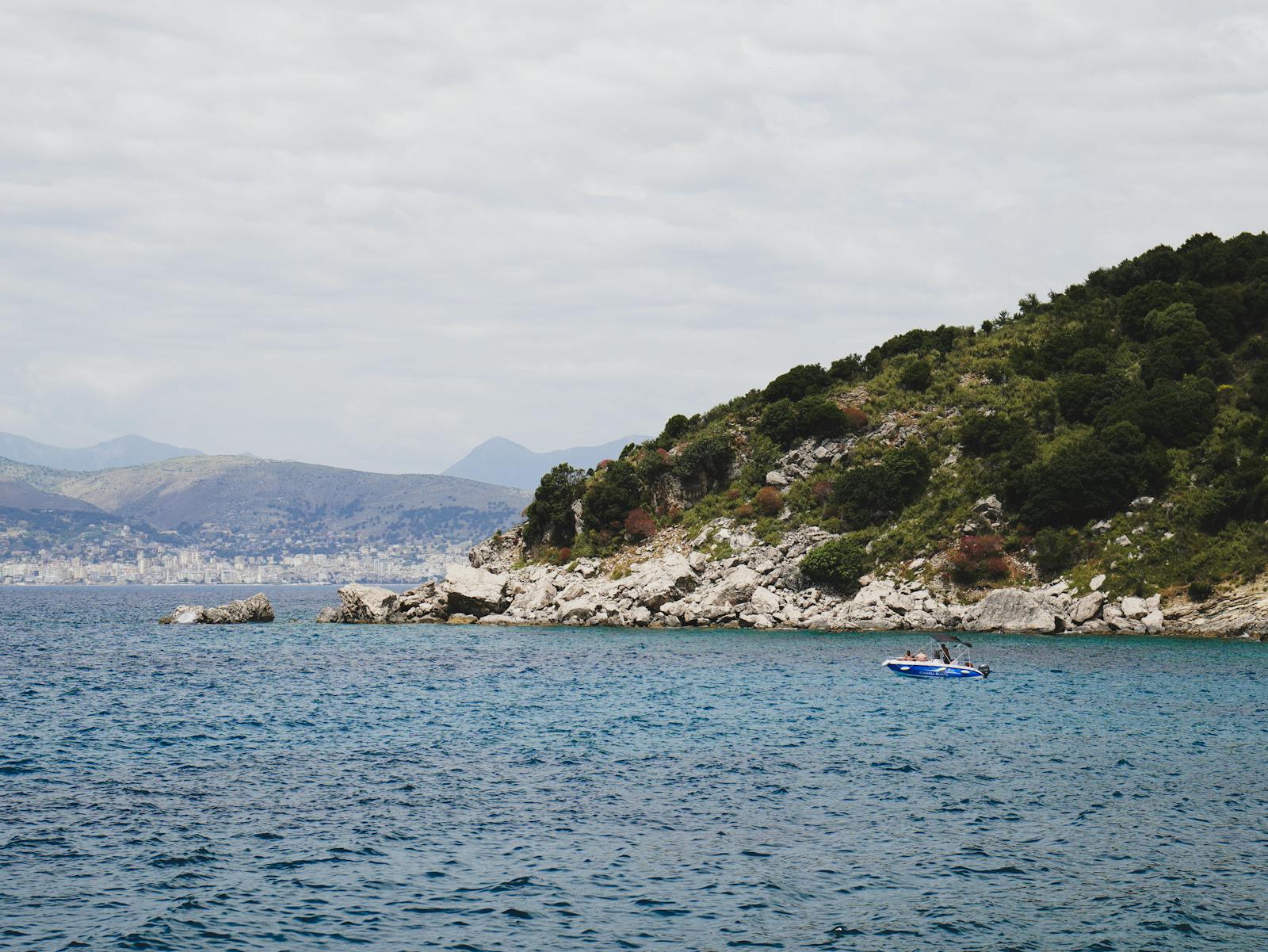
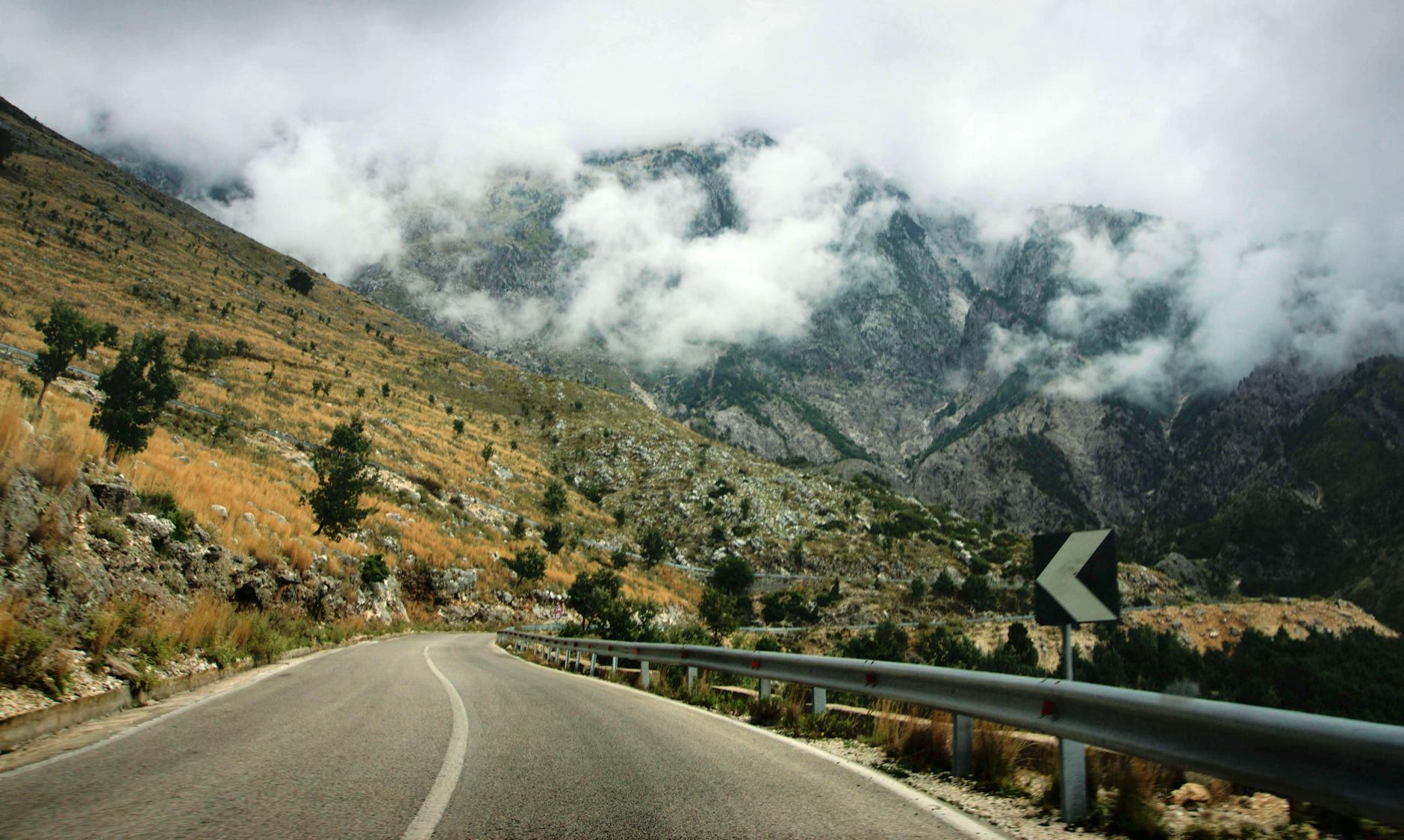
The Albanian Riviera runs south from the Llogara Pass, a hairpin road over a pine-covered ridge at about 1,000 m, down the Ionian coast to Ksamil and the Greek border. The mountains drop straight into clear blue water, with pebble coves, olive terraces and hill villages above.
Dhërmi, Jale and Gjipe are the prettiest beaches in the north of the Riviera: Gjipe sits at the mouth of a canyon and is reached on foot or by boat. Himarë is a relaxed town with a long beach and an old hilltop quarter, and Borsh has one of the longest beaches on the coast, backed by olive groves. Between them, the little Porto Palermo castle sits on a spit in a quiet bay.
July and August are busy and hot. In June and September the sea is warm, the beaches are quieter and the light is softer.

Saranda is the Riviera’s main town: a curving bay of promenade, cafés and fish restaurants, with views across to Corfu. It’s the easiest base for the south, with a ferry to Corfu and Butrint, Ksamil and the Blue Eye all within an hour. Above the town, the ruined Lëkurësi castle is the place for sunset.
Ksamil, 20 minutes south, is the postcard: white-sand coves and turquoise water, with small wooded islets you can swim or paddle out to. It’s busy in high summer, when the beaches are lined with sunbeds, but early mornings and the shoulder months are lovely.
The Blue Eye (Syri i Kaltër), about 40 minutes inland from Saranda, is a natural spring that wells up from a deep pool of startling blue in the woods. Go early, before the coaches.
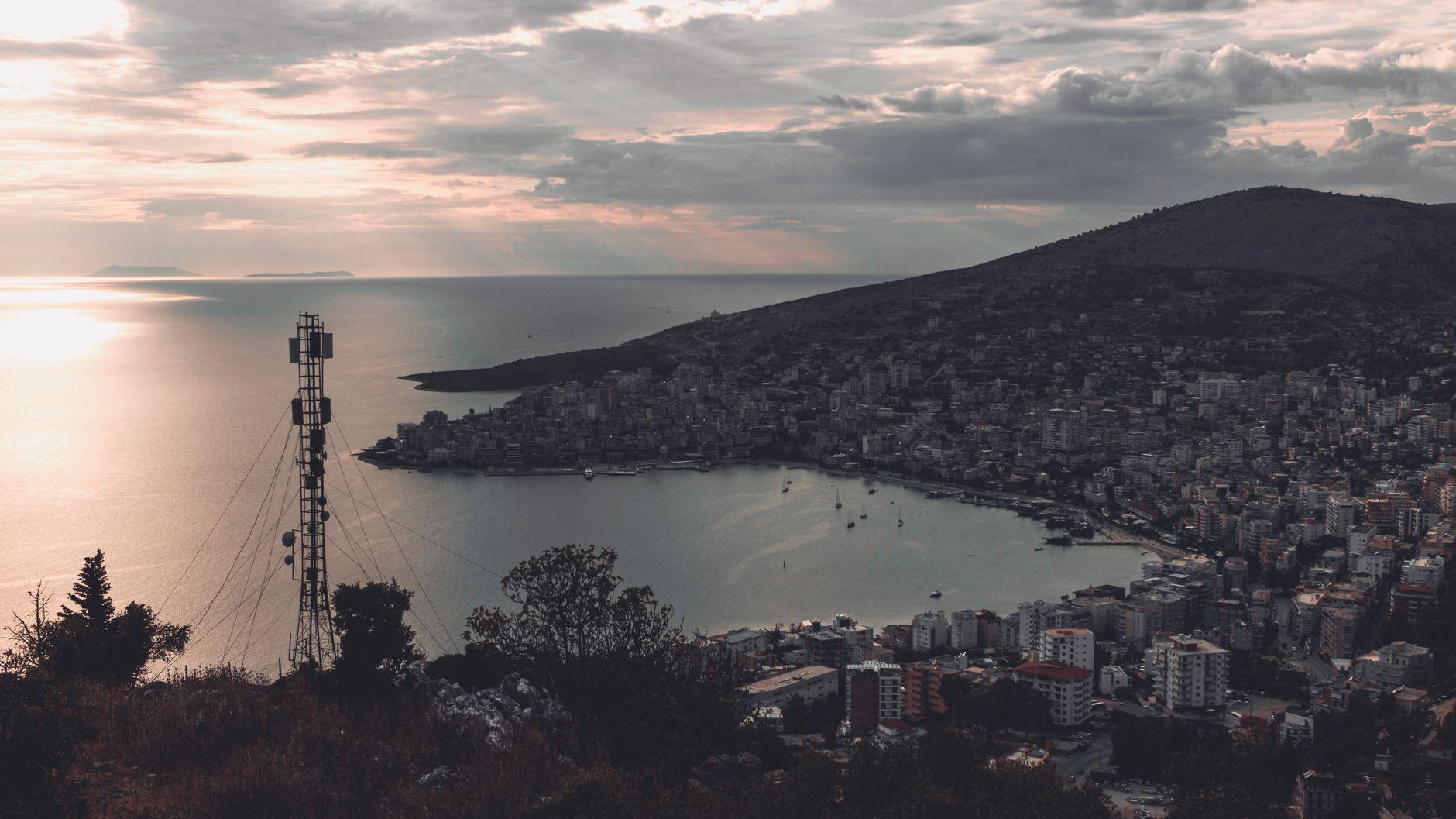
Butrint
Butrint is Albania’s great archaeological site and a UNESCO World Heritage Site, about 30 minutes south of Saranda. It sits on a wooded peninsula in a lagoon, and its ruins span 2,500 years: a Greek theatre, Roman baths and houses, an early Christian baptistery and basilica, a Venetian tower and city walls with a Lion Gate. Paths wind between them under eucalyptus and laurel, with the lagoon glittering through the trees, and frogs and tortoises in the old water channels. Allow two to three hours, go early or late in summer, and take a guide if you can: the layers of history make much more sense with one. The national park around it is good for birdwatching, and you can combine Butrint with lunch in Ksamil.
Berat
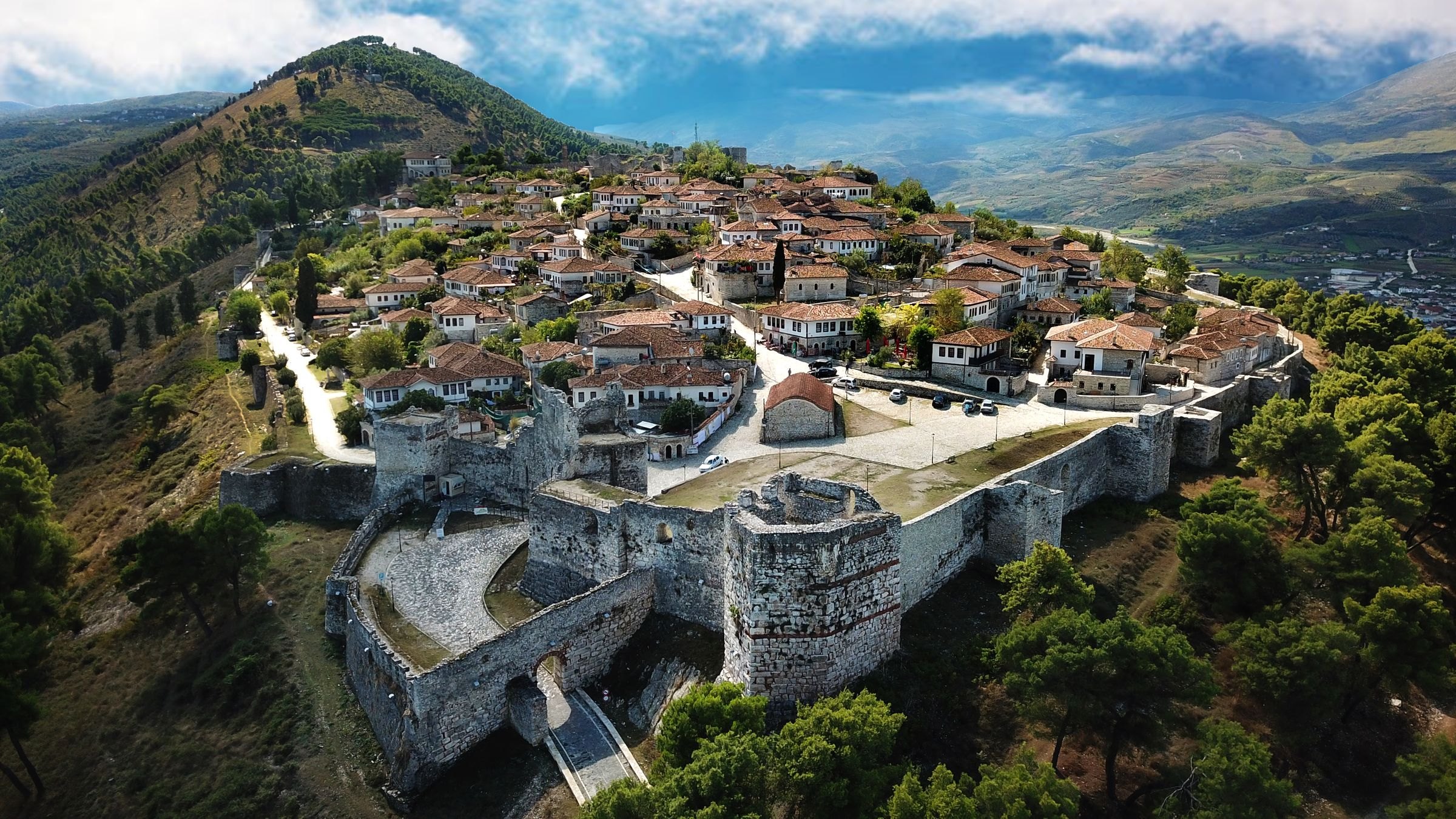
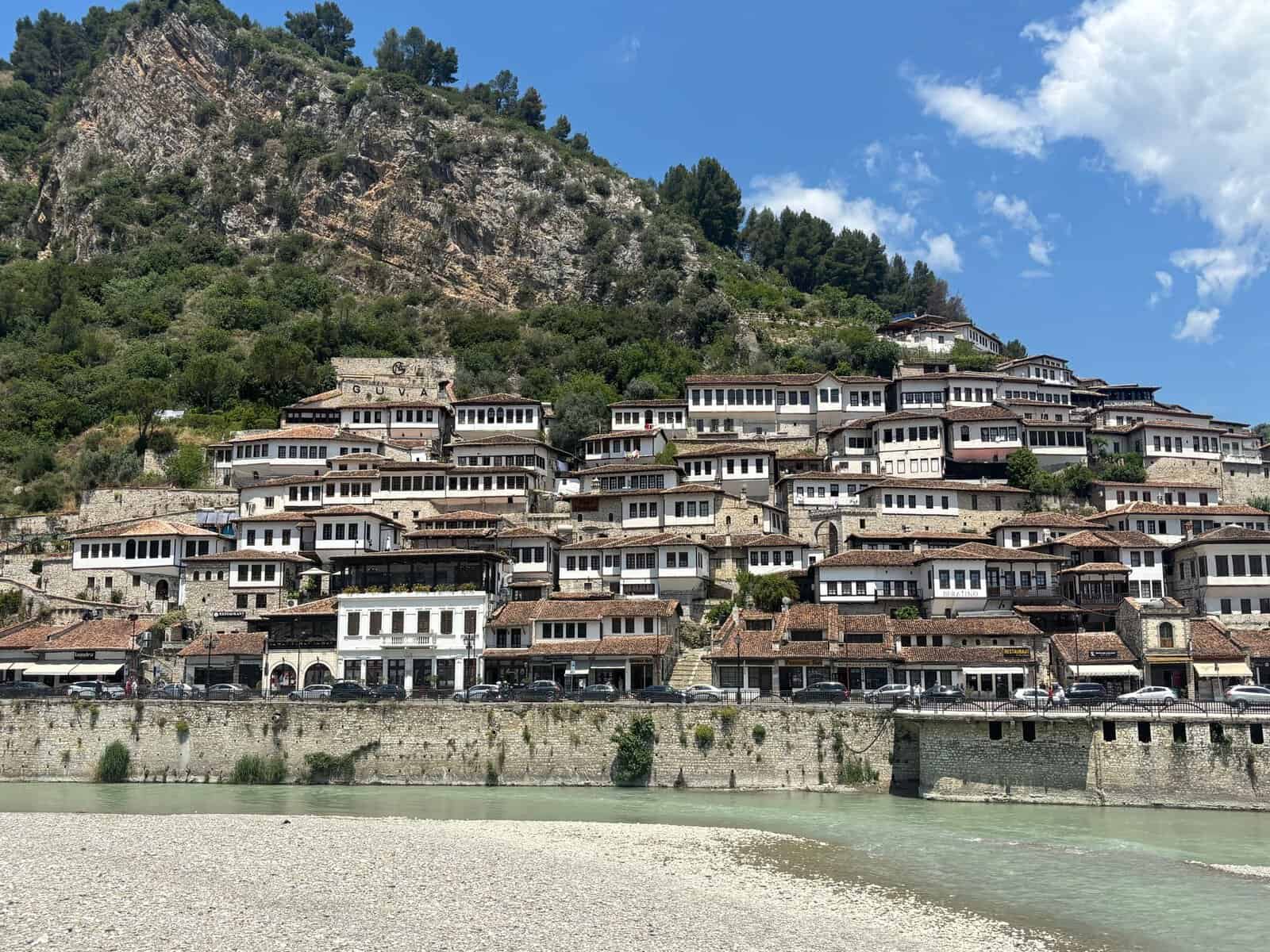
Berat, about two hours south of Tirana, is the “town of a thousand windows”. Its white Ottoman houses climb the hillside above the Osum river in tiers, their many windows facing out over the valley. With Gjirokastër, it is a UNESCO World Heritage Site.
Walk through the Mangalem quarter and over the old stone bridge to Gorica on the other bank, then climb to the castle (Kalaja). Unusually, people still live inside its walls, among Byzantine churches and the ruins of mosques. The Onufri Museum, in the Cathedral of St Mary, has superb 16th-century icons by Albania’s most celebrated painter.
Berat is also the heart of a wine region. Stay at least one night, as the town is at its best in the evening when the houses light up and families come out to walk along the river.
Gjirokastër
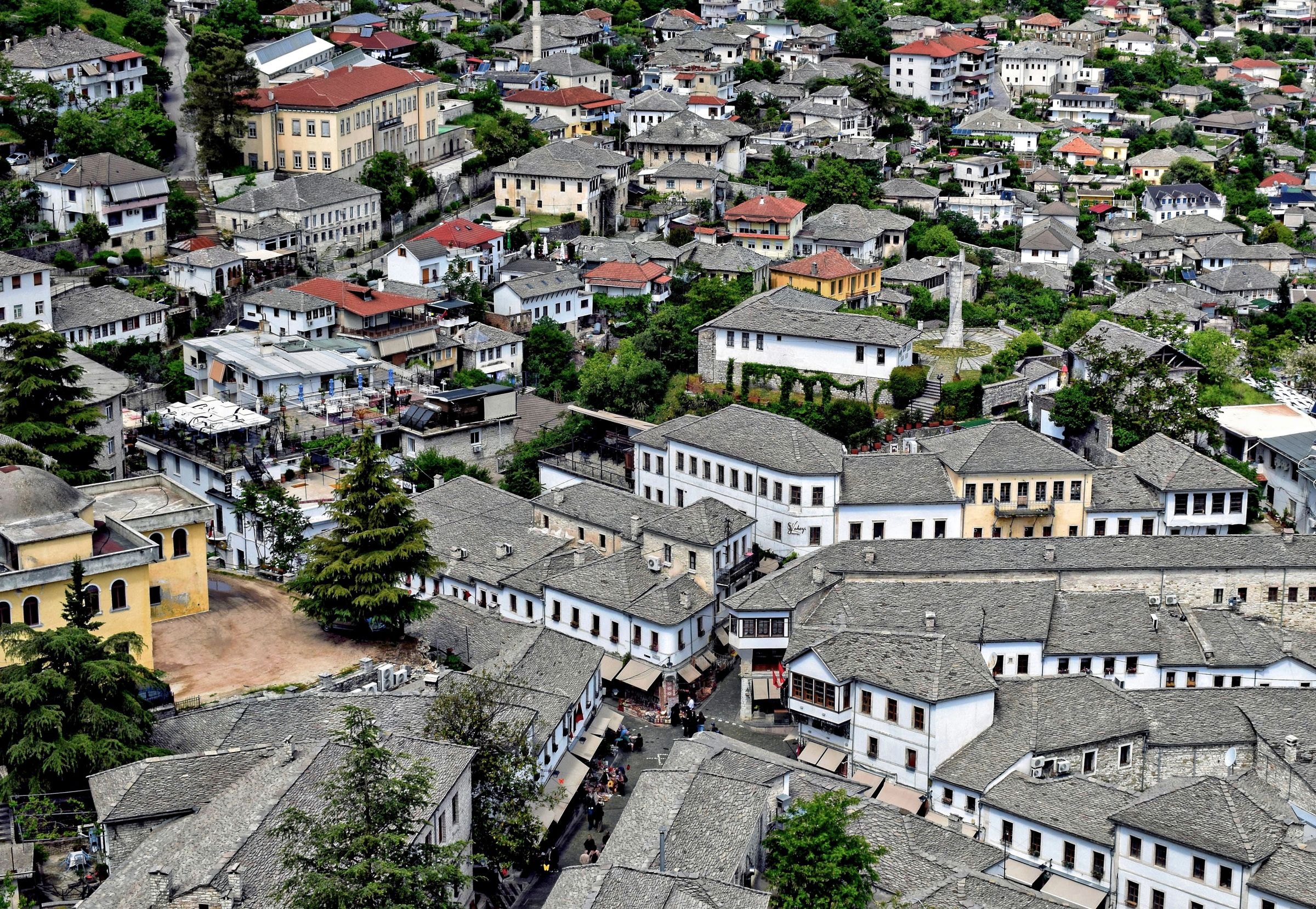
Gjirokastër, the “city of stone”, is built of grey stone on a steep hillside in the Drino valley, its tower houses roofed with heavy stone slabs. It’s about an hour and a quarter inland from Saranda, so it’s easy to combine with the coast.
The vast fortress above town holds a museum of arms and a clock tower with sweeping views, and in summer it hosts a national folk festival. Below it, the old bazaar is full of craft shops. Visit one of the restored Ottoman tower houses, with their painted rooms and cisterns, and the Cold War tunnel, a huge bunker built under the town in the communist era.
This is also the birthplace of the novelist Ismail Kadare, whose childhood home is now a museum.

Tirana

Albania’s capital is lively, colourful and changing fast, with painted apartment blocks, café-lined streets and new towers. Spend a day or two here at the start or end of your trip.
Start at Skanderbeg Square, with the statue of the national hero, the National History Museum and the Et’hem Bey Mosque. Bunk’Art (two museums in former nuclear bunkers) and the House of Leaves, the old secret police headquarters, tell the story of the communist years. The Blloku district, once reserved for the party elite, is now full of bars and restaurants.
For the view, take the Dajti cable car up Mount Dajti on the edge of the city. Krujë, about 45 minutes away, has Skanderbeg’s castle and museum and an old bazaar, and is often visited on the way to or from the airport.

Theth, Valbona and the Albanian Alps
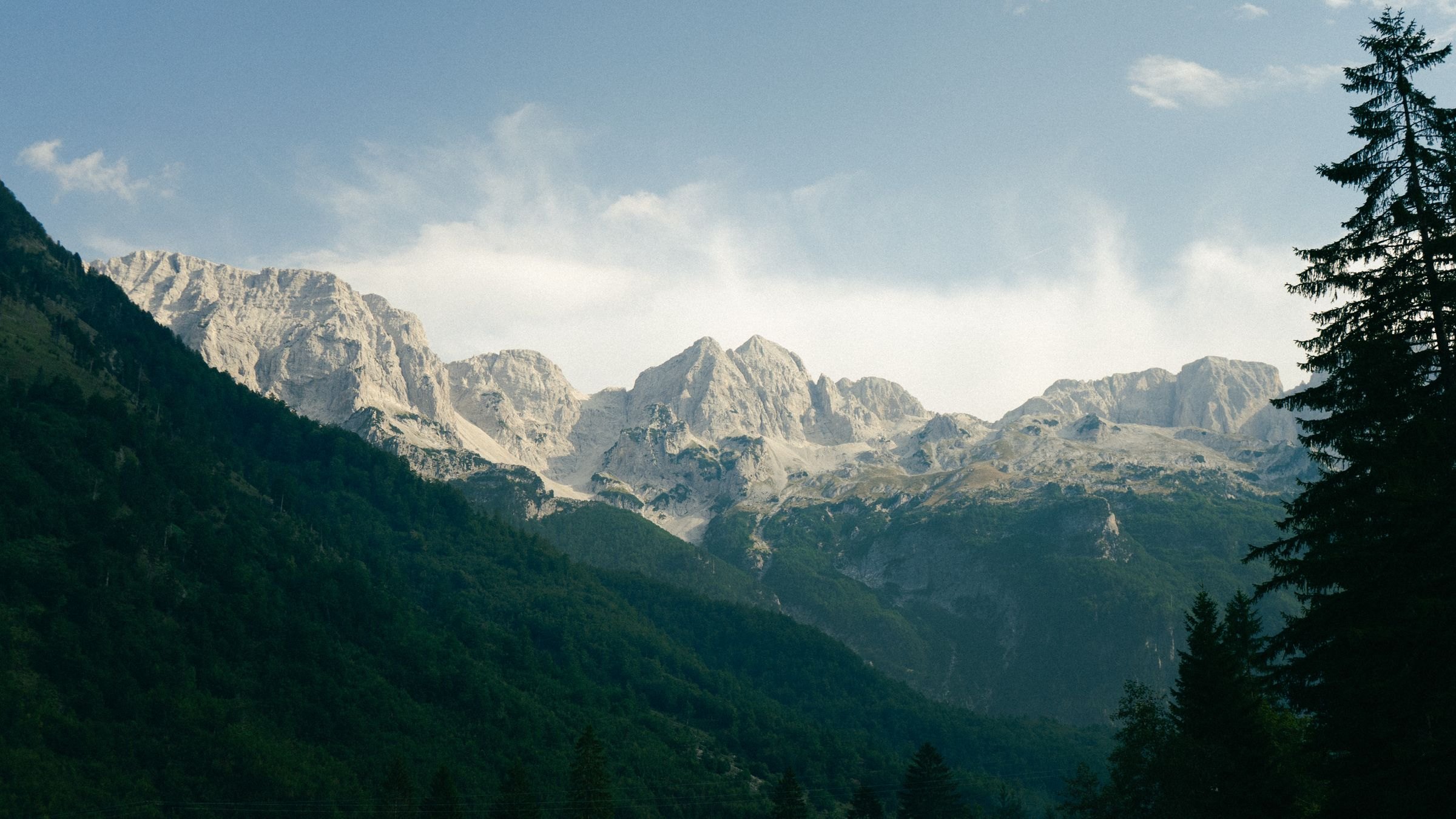
The Albanian Alps, also known as the Accursed Mountains (Bjeshkët e Nemuna), fill the far north: jagged limestone peaks, beech forests and remote stone villages. It’s some of the most dramatic walking in Europe.
Theth is a scattered village in a high valley, with a stone church, an old lock-in tower (a refuge in the days of blood feuds) and a walk to the Blue Eye of Theth, a cold pool below a waterfall. The road from Shkodër, once a rough track, is now paved, taking roughly two and a half to three hours. Valbona sits in the next valley east.
The classic hike crosses the Valbona Pass between the two, about six to eight hours on foot, best from about June to September. Pair it with the Lake Koman ferry, which runs through a deep, fjord-like gorge between steep cliffs, usually from late spring to autumn. Stay on marked paths and go with a local guide.

More places to see
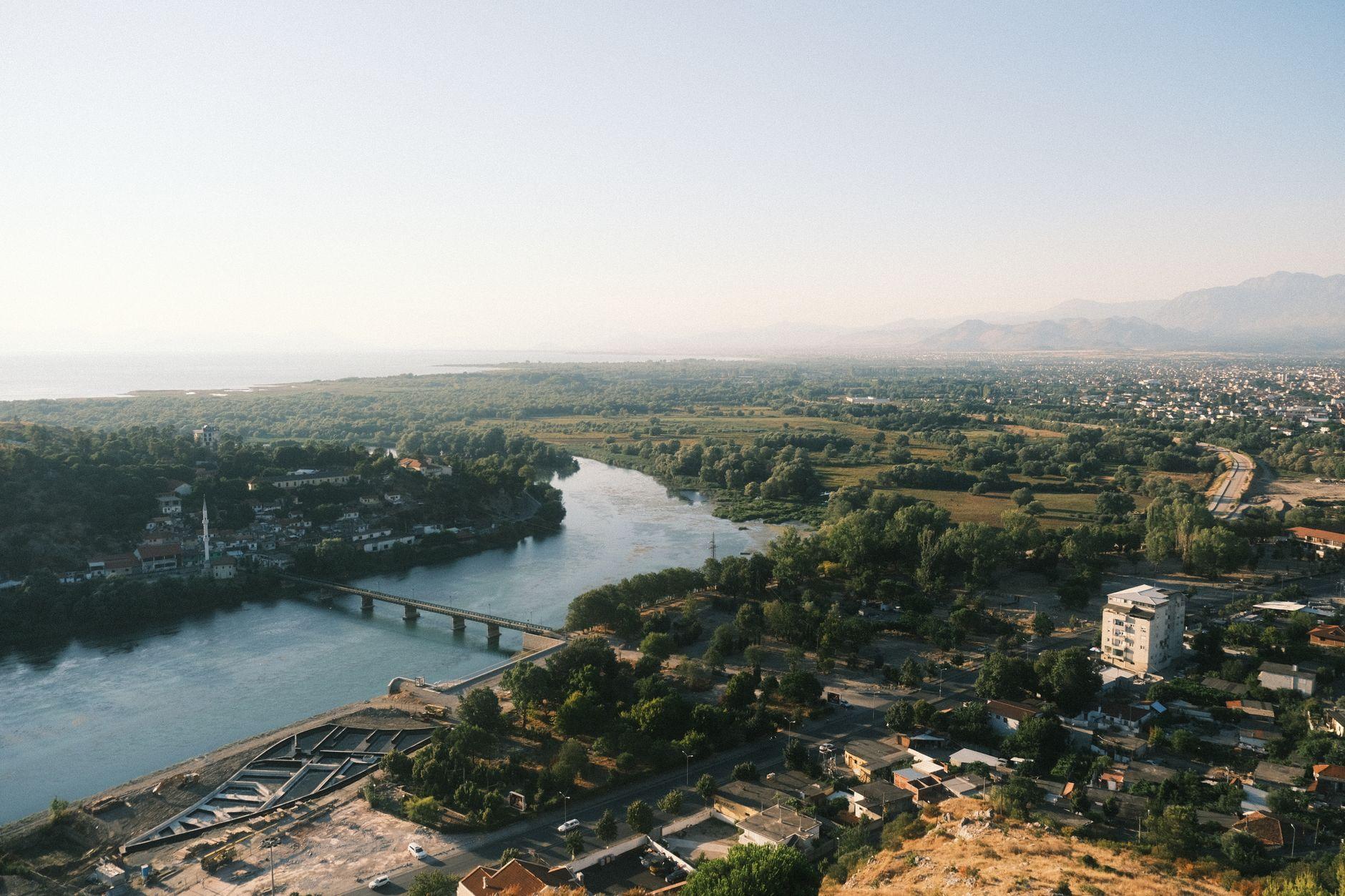
Shkodër
A relaxed cycling town on the edge of Lake Shkodër, below the ruined Rozafa castle. The starting point for Theth and the Lake Koman ferry.

Lake Ohrid and Pogradec
One of Europe’s oldest and deepest lakes, shared with North Macedonia. Pogradec on the Albanian shore is a quiet base; Ohrid town is across the border. See our North Macedonia guide.
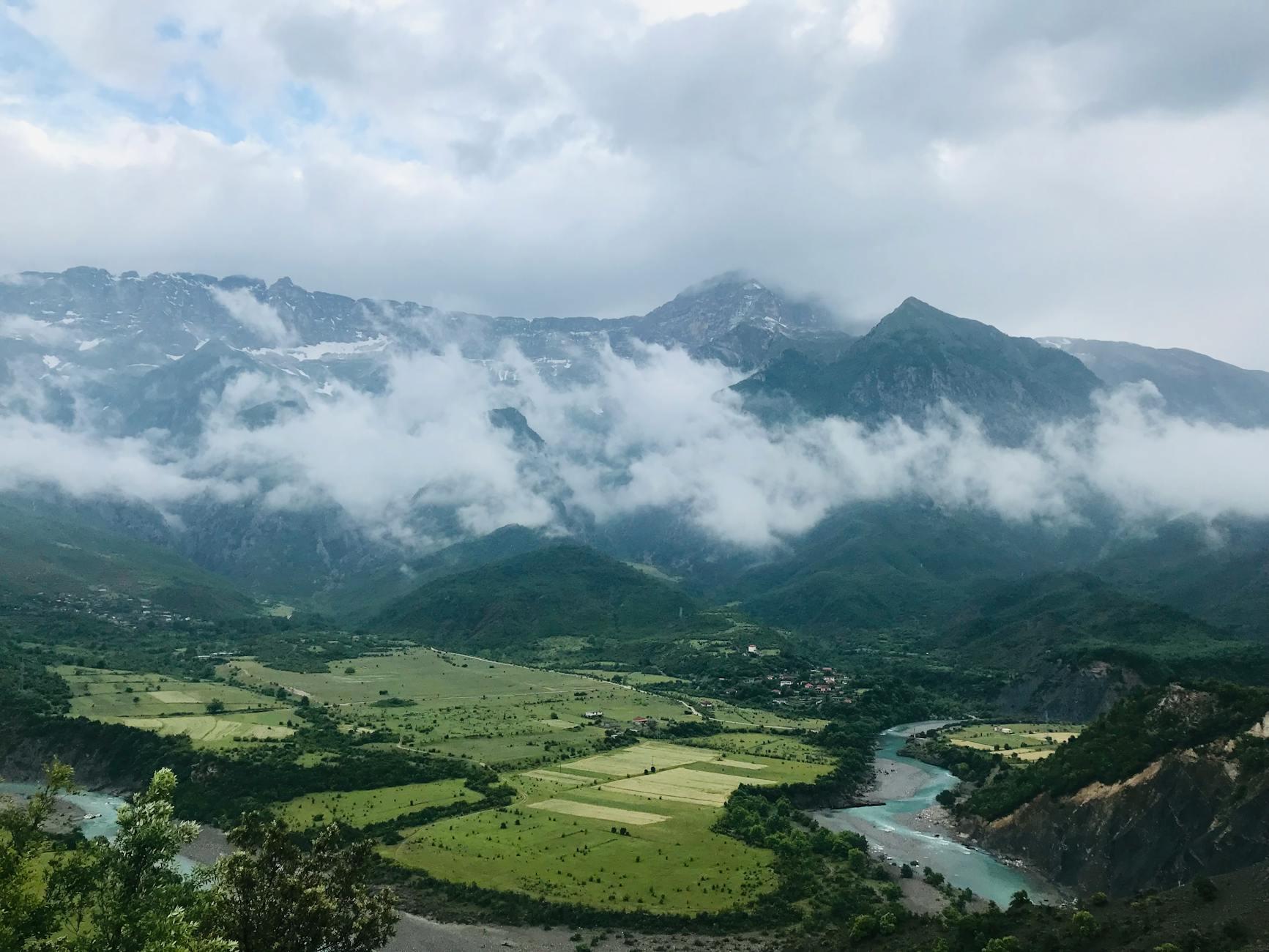
Përmet and the Vjosa
A small town on the Vjosa, one of Europe’s last wild rivers and now a national park. Rafting, the Benja thermal springs and the Langarica canyon are close by.
Food and drink in Albania
Albanian food is Mediterranean with Ottoman and Italian accents, built on what’s local and in season. Try byrek (flaky filo pies with cheese, spinach or meat) for breakfast, tavë kosi (lamb baked with rice and yoghurt, from Elbasan) and fërgesë (peppers, tomatoes and soft cheese). On the coast it’s grilled fish, mussels from the Butrint lagoon and salads drenched in local olive oil. In the mountains, expect slow-cooked lamb, cornbread and homemade cheese in family guesthouses. Gjirokastër has qifqi, rice balls with herbs, and Përmet is known for gliko, fruit preserved in syrup. Drink local wine, strong Turkish-style coffee, and raki, the grape or mulberry spirit you’ll be offered as a welcome.
Best time to visit Albania
The best time to visit Albania for most people is May, June and September: warm, sunny and green, good for both sightseeing and the beach, with fewer visitors than high summer. July and August are hot (31°C on the coast and in Tirana, often more inland) and the Riviera is at its busiest, but the sea is warmest. April and October are good for walking and the towns, though too cool for most to swim. November to March is the rainy season: wet on the coast, with snow in the mountains, when the Theth road and the Valbona Pass can close. Walking in the Alps is best from June to September.
| Month | Tirana | Saranda (Riviera) | Theth (Alps) |
|---|---|---|---|
| Jan | 11°C / 2°C · 165 mm | 12°C / 5°C · 185 mm | 4°C / -3°C · 300 mm |
| Feb | 13°C / 4°C · 115 mm | 14°C / 6°C · 130 mm | 7°C / -1°C · 225 mm |
| Mar | 16°C / 6°C · 130 mm | 16°C / 7°C · 125 mm | 9°C / 1°C · 220 mm |
| Apr | 19°C / 9°C · 120 mm | 19°C / 10°C · 80 mm | 13°C / 4°C · 155 mm |
| May | 23°C / 13°C · 120 mm | 23°C / 14°C · 70 mm | 18°C / 9°C · 155 mm |
| Jun | 28°C / 17°C · 70 mm | 28°C / 19°C · 35 mm | 23°C / 13°C · 105 mm |
| Jul | 31°C / 20°C · 35 mm | 31°C / 21°C · 10 mm | 26°C / 16°C · 75 mm |
| Aug | 31°C / 20°C · 30 mm | 31°C / 22°C · 20 mm | 26°C / 16°C · 55 mm |
| Sep | 27°C / 17°C · 110 mm | 27°C / 18°C · 100 mm | 21°C / 12°C · 150 mm |
| Oct | 22°C / 13°C · 125 mm | 23°C / 14°C · 160 mm | 17°C / 8°C · 185 mm |
| Nov | 18°C / 9°C · 190 mm | 18°C / 11°C · 250 mm | 12°C / 5°C · 370 mm |
| Dec | 13°C / 4°C · 135 mm | 14°C / 6°C · 195 mm | 7°C / 0°C · 330 mm |
Average daily high / low and monthly rain (or snow, as water), 10-year ERA5 data. Theth sits at about 800 m, so it is much cooler and wetter than the coast.
How to get to Albania from the UK
By air to Tirana: direct flights from London and several other UK airports take about three hours to Tirana International Airport, around 25 minutes’ drive from the city centre. It’s the best gateway for Tirana, Berat and the north.
Via Corfu: for the south coast, fly to Corfu (around three hours from the UK, more flights in summer) and take the ferry across to Saranda, roughly 30 minutes to an hour and a quarter depending on the boat. It’s an easy way to reach Ksamil and Butrint, and to add a few days in Corfu: see where to stay in Corfu.
Overland: Albania combines well with Montenegro and Dubrovnik to the north, and North Macedonia and Lake Ohrid to the east. Several of our tours start in Dubrovnik and finish in Tirana.
Getting around Albania
Distances are short but roads are slow, mountainous and, in places, hazardous, so the most comfortable way to travel is with a private driver or on a guided tour; we don’t recommend self-drive for a first visit. Rough driving times: Tirana to Berat about 2 hours, Berat to Gjirokastër about 3 hours, Gjirokastër to Saranda about 1¼ hours, Saranda to Ksamil 20 minutes, and Tirana to Saranda about 5 hours via the Llogara Pass. Shkodër to Theth takes about 2½ to 3 hours. Public transport is mostly minibuses (furgons) with no fixed timetable, and the railway is barely used. Taxis are cheap in Tirana; agree the fare first if there’s no meter.
Where to stay in Albania
- Tirana: a boutique or design hotel in the centre or Blloku, walkable to the sights, for the first and last nights.
- Berat: a guesthouse or small hotel in a restored Ottoman house in the Mangalem or Gorica quarters, or inside the castle walls.
- Gjirokastër: a stone tower house in the old bazaar area, with views over the valley.
- The Riviera: Saranda for restaurants and the Corfu ferry; Ksamil for beaches; Himarë and Dhërmi for a quieter seaside stay; boutique hotels and villas in the hills for views.
- The Alps: family-run guesthouses in Theth and Valbona: simple and welcoming, with home-cooked dinners.
Tell us your style and we’ll match the right stays; we book hotels and guesthouses across Albania, from Tirana to the Riviera and the mountains.
How many days in Albania? Sample routes
Eight nights covers the highlights at a comfortable pace; with ten to twelve you can add the Alps or a week on the beach. Here are three ways to do it:
Albania highlights
- Tirana (2 nights)
- Berat (2)
- Gjirokastër (1)
- Saranda or Ksamil (3)
Capital, two UNESCO towns, Butrint and the beaches. Fly into Tirana, home from Corfu or Tirana.
Mountains to the Riviera
- Tirana (1 night)
- Shkodër (1)
- Theth (2)
- Valbona (1)
- Berat (2)
- Gjirokastër (1)
- Himarë or Ksamil (3)
Lake Koman, the Valbona Pass hike, then south to the coast. June to September.
Albania and Corfu
- Corfu (3 nights)
- Saranda or Ksamil (3)
- Gjirokastër (1)
- Berat (2)
- Tirana (1)
Fly to Corfu, cross by ferry and work north, flying home from Tirana.
Combining countries? Albania pairs naturally with Montenegro’s Bay of Kotor and with Lake Ohrid in North Macedonia. Compare our options in Albania tours compared and Balkans tours compared.
Ways to see Albania with us
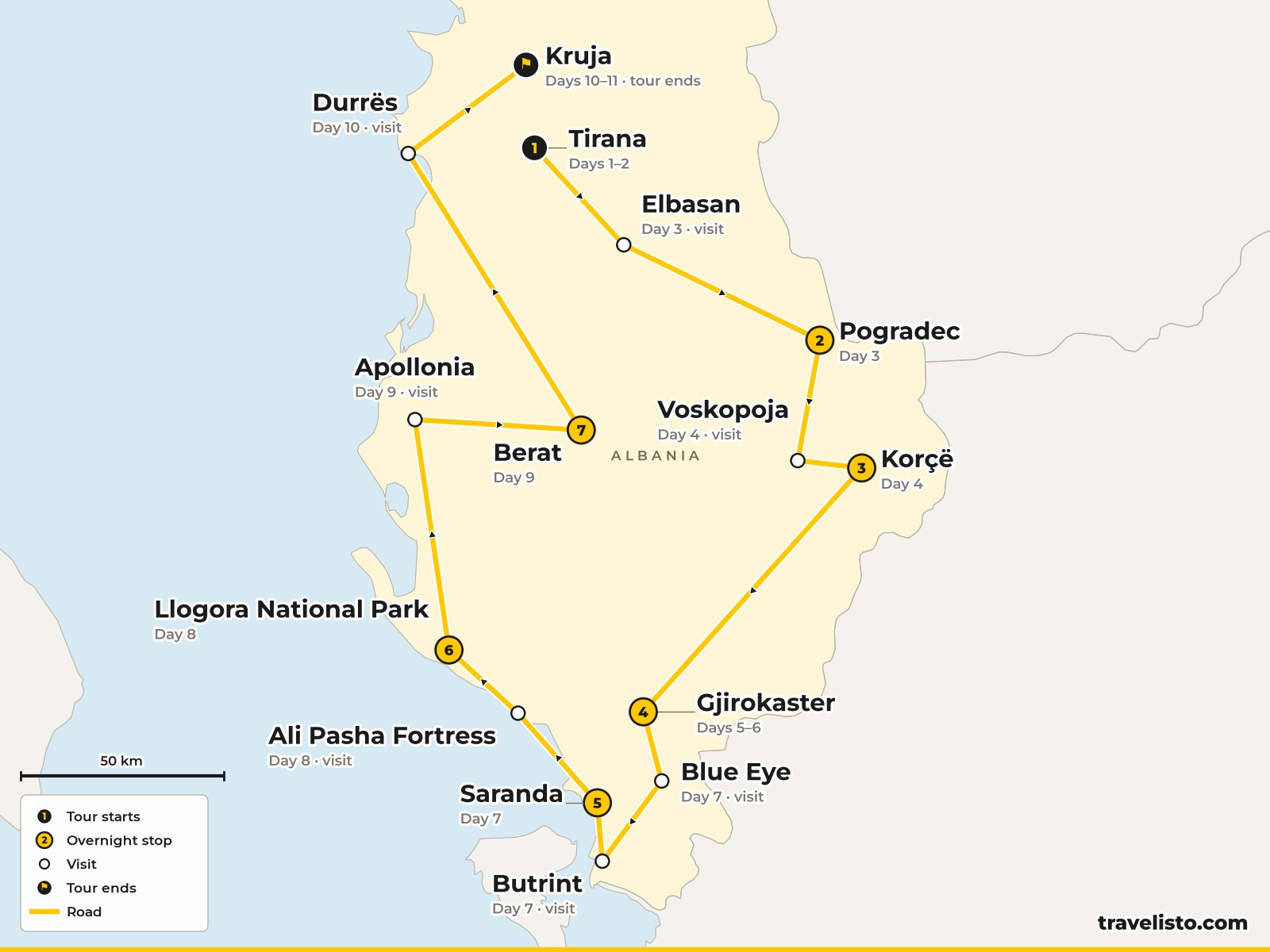
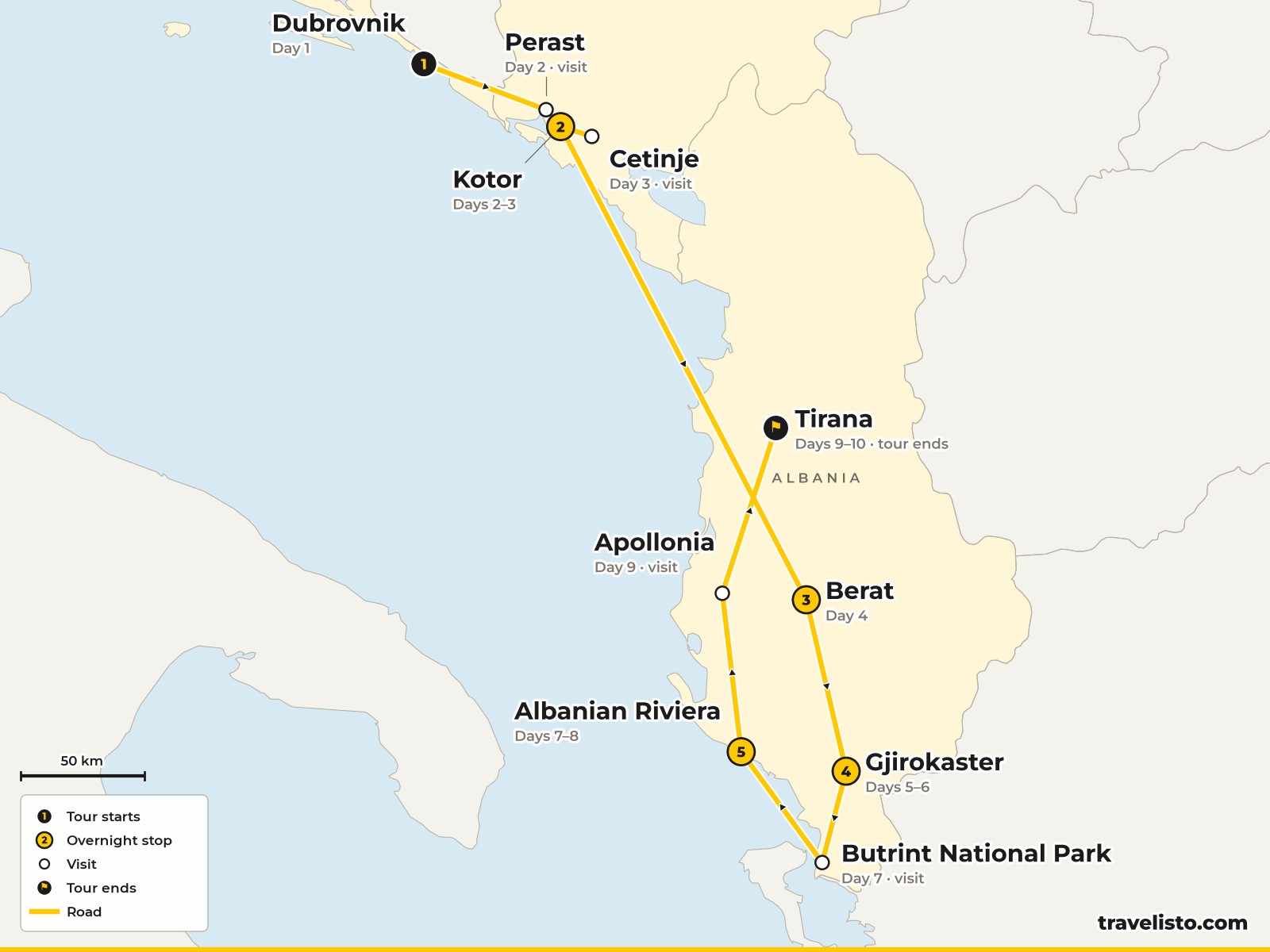
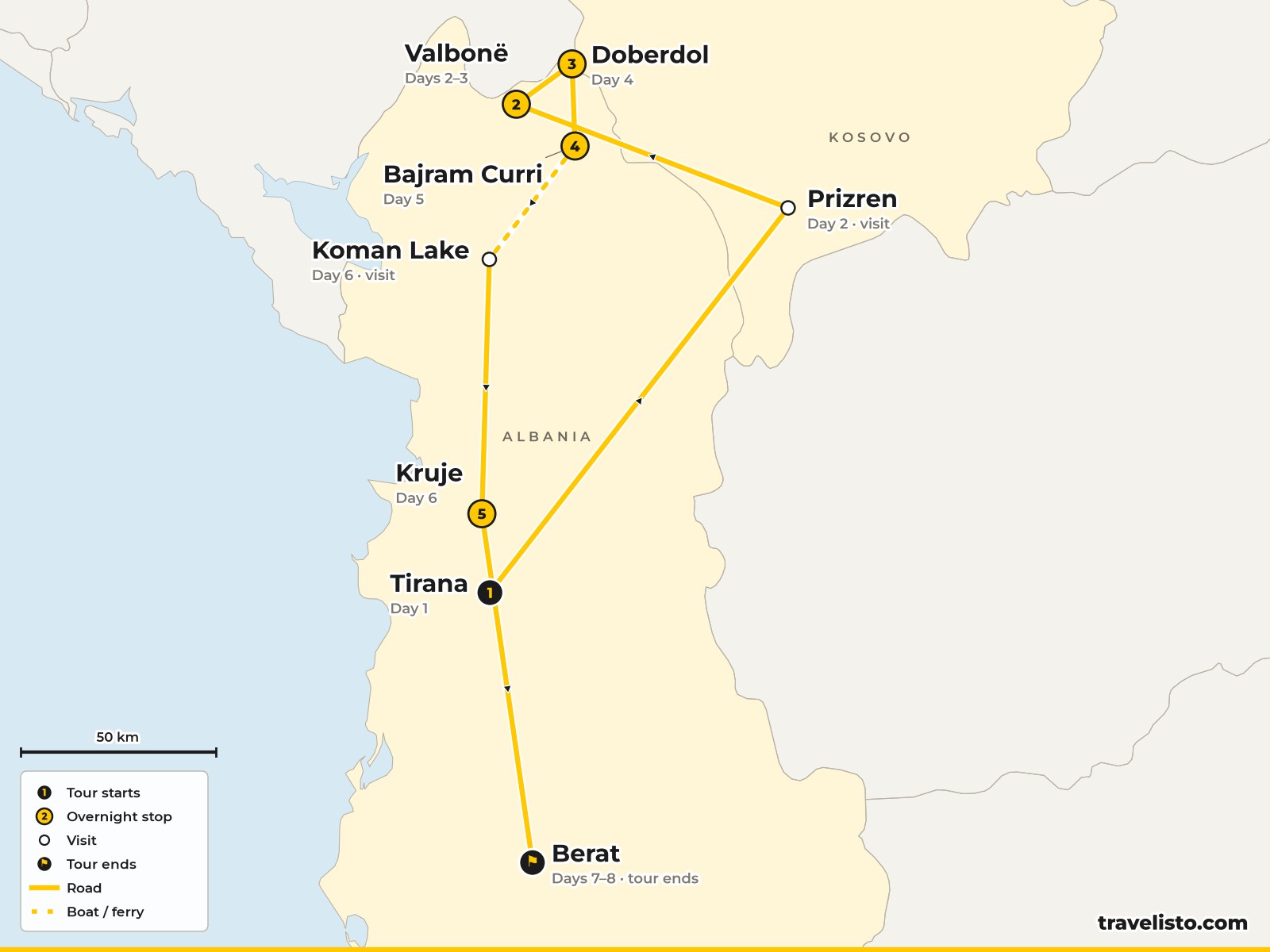
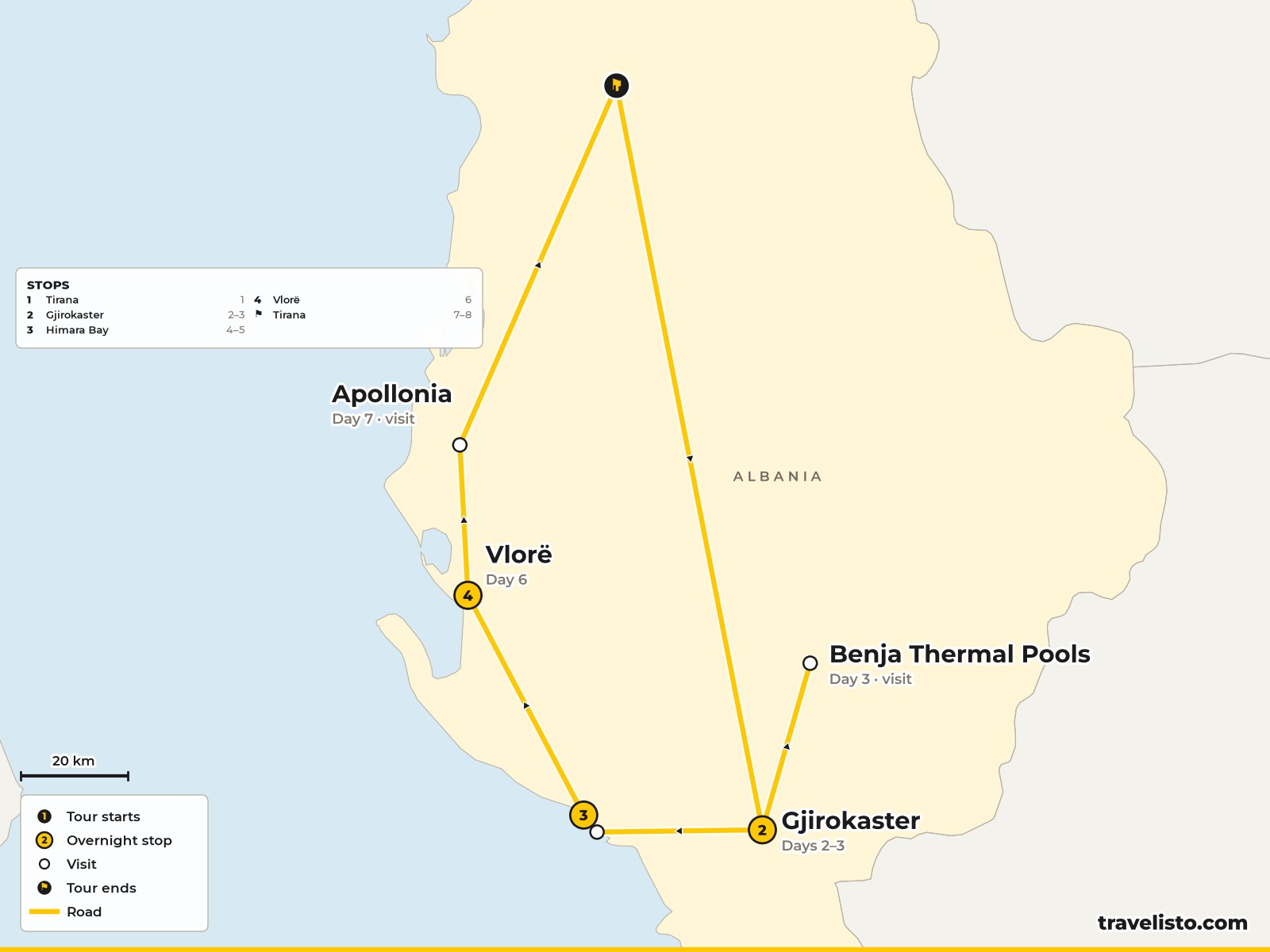
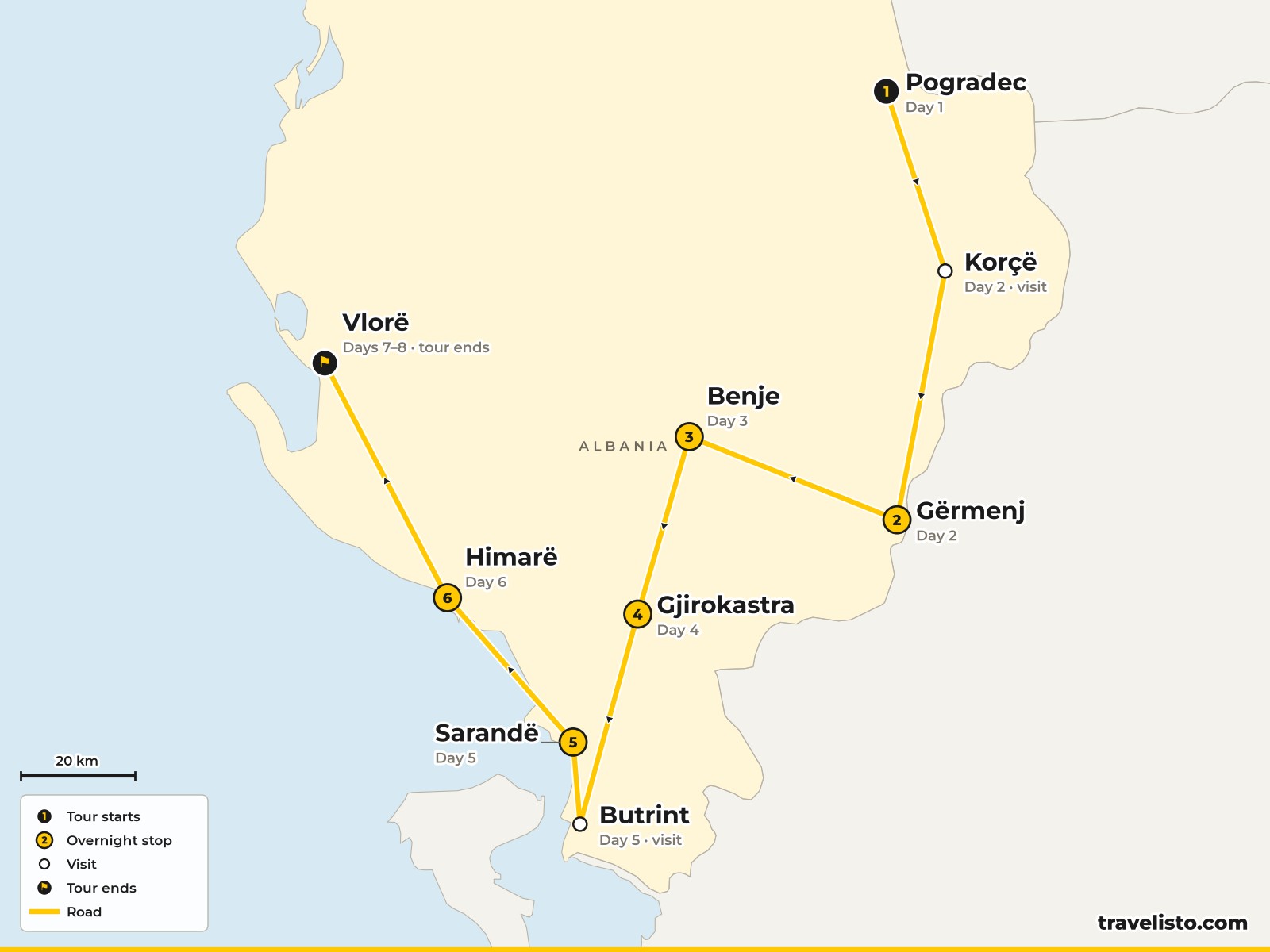
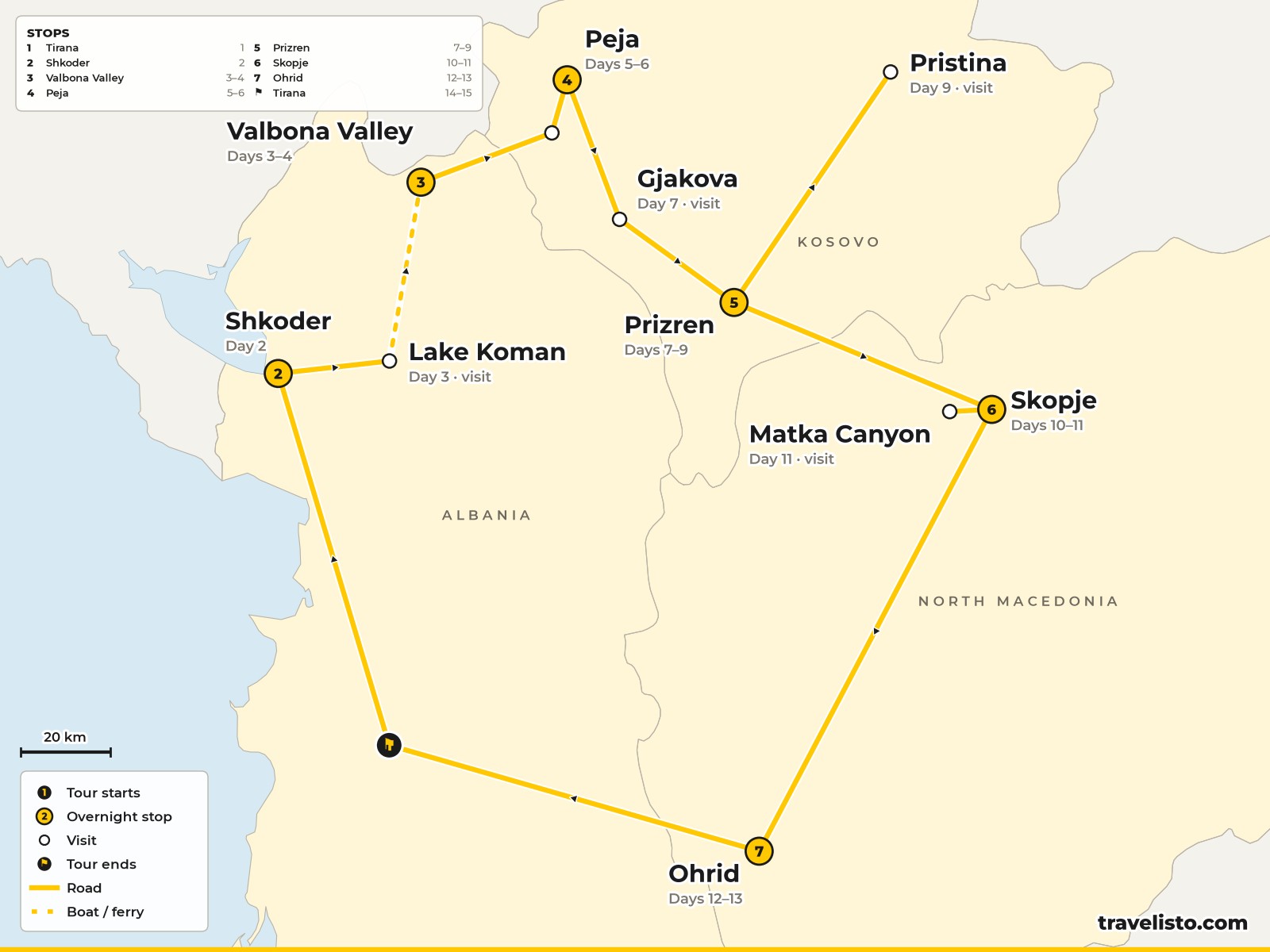
Prefer your own pace? A tailor-made Albania holiday gives you a private driver-guide, stays in restored Ottoman houses and as many beach days as you like.
Practical tips
- Entry: British visitors can stay up to 90 days in any 180 without a visa. Your passport must be valid for at least 3 months after the day you leave Albania. Check the FCDO entry requirements before you go.
- Money: carry lek for guesthouses, markets, taxis and small cafés; cards are taken in most hotels and city restaurants. ATMs are easy to find in towns.
- Driving: use a private driver; if you do drive, you must carry a green card, and avoid driving at night outside towns.
- Language: Albanian is the main language. English is widely spoken by younger people and in tourism, and Italian and Greek are common in the south.
- Nods: some older Albanians nod to mean no and shake their heads to mean yes. If in doubt, ask again.
- Mosques and churches: cover shoulders and knees, and take shoes off in mosques.
- Hiking: stay on marked paths in the north, take a local guide over the passes and carry cash: there are no ATMs in Theth or Valbona.
Frequently asked questions
Is Albania safe to travel to?
Yes, for most visitors. Avoid political demonstrations in central Tirana, use a private driver rather than driving yourself, and stay on marked paths in the remote far north near Kosovo. Check the current FCDO Albania travel advice before you book and again before you travel.
What is the best time to visit Albania?
May, June and September are best: warm and sunny, with a warm sea from June and fewer visitors than July and August. Walking in the Albanian Alps is best from June to September; winter is rainy, with snow in the mountains.
Do I need a visa for Albania from the UK?
No. British visitors can stay up to 90 days in any 180-day period without a visa. Your passport must be valid for at least 3 months after the day you leave Albania.
How long is the flight to Albania?
About three hours from London to Tirana. For the south coast you can also fly to Corfu and take the ferry to Saranda.
Where are the best beaches in Albania?
On the Albanian Riviera in the south: Ksamil for white sand and islets, Gjipe, Dhërmi and Jale for coves below the mountains, and Himarë and Borsh for long, quieter beaches.
How many days do you need in Albania?
Eight nights covers Tirana, Berat, Gjirokastër, Butrint and a few days on the Riviera. Allow ten to twelve to add Theth, Valbona and Lake Koman in the north.
Can you get from Corfu to Albania?
Yes. Ferries cross from Corfu town to Saranda in roughly 30 minutes to an hour and a quarter, depending on the boat, with more sailings in summer.
What currency does Albania use?
The Albanian lek. Euros are often accepted on the coast, but paying in lek is usually cheaper; cards are taken in most hotels and city restaurants.
Keep planning
- Albania holidays
- Escorted tours of Albania
- Albania tours compared
- Balkans tours compared
- North Macedonia holiday guide
- Croatia holiday guide
- Where to stay in Corfu
- Tailor-made holidays
Plan your Albania holiday with a Travel Designer
Tell us when you’d like to go and we’ll plan the Riviera, Berat, Gjirokastër and the mountains, with flights, a private driver and handpicked stays, in one ATOL-protected booking.
Make an enquiry Albania holidays