Jordan in brief
- Petra deserves two days; stay in Wadi Musa and be at the gate early.
- Wadi Rum is best with a night in a desert camp, then the Dead Sea or Aqaba to finish.
- Best in March to May and September to November; hot in summer, cold in Petra in winter.
- About 5 hours direct from London to Amman; buy the Jordan Pass before you go.
Jordan packs an extraordinary amount into a small country. In a week you can walk through the rose-red city of Petra, sleep under the stars in the desert of Wadi Rum, float in the Dead Sea at the lowest point on earth and snorkel the coral reefs of the Red Sea at Aqaba. Add the Roman city of Jerash, the Byzantine mosaics of Madaba, Crusader castles, hiking in the Dana and Mujib nature reserves and a famously warm welcome, and it’s one of the most rewarding holidays in the Middle East. This guide covers where to go, Petra and Wadi Rum in detail, the best time to visit, getting there from the UK, getting around, where to stay, sample routes and what to know before you go.
Where is Jordan?
Jordan sits at the heart of the Middle East, bordered by Israel and the Palestinian West Bank to the west, Syria to the north, Iraq to the north-east and Saudi Arabia to the east and south.
The country is about the size of Portugal, and the main sights line up along a north-south spine. Amman, the capital, is in the north-west highlands; Jerash is under an hour north of it; the Dead Sea is about an hour south-west; Petra is about three hours south by the Desert Highway; and Wadi Rum and Aqaba are an hour or so beyond Petra.
Where is Petra? In the mountains of southern Jordan, beside the town of Wadi Musa, roughly halfway between Amman and Aqaba.
Petra
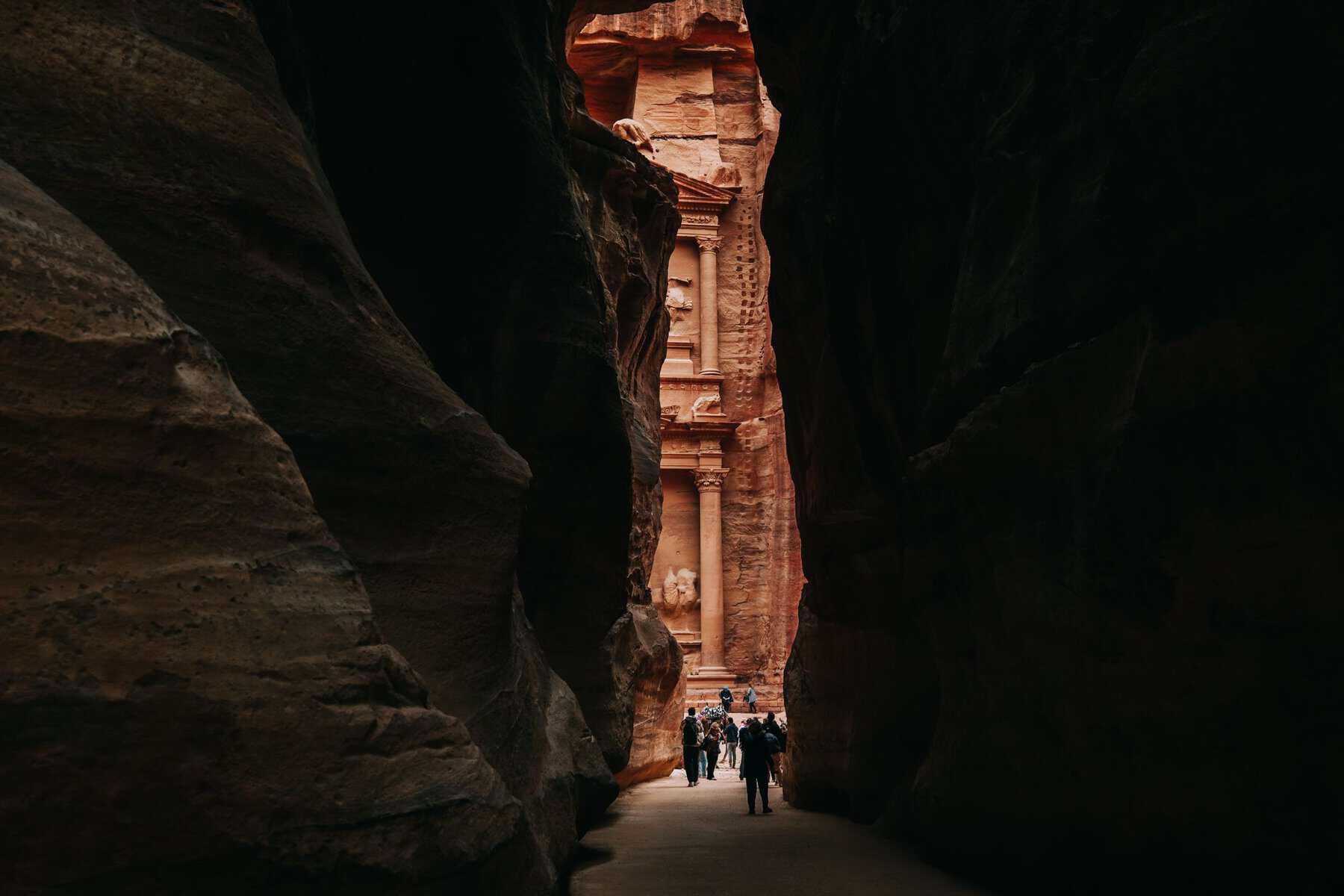
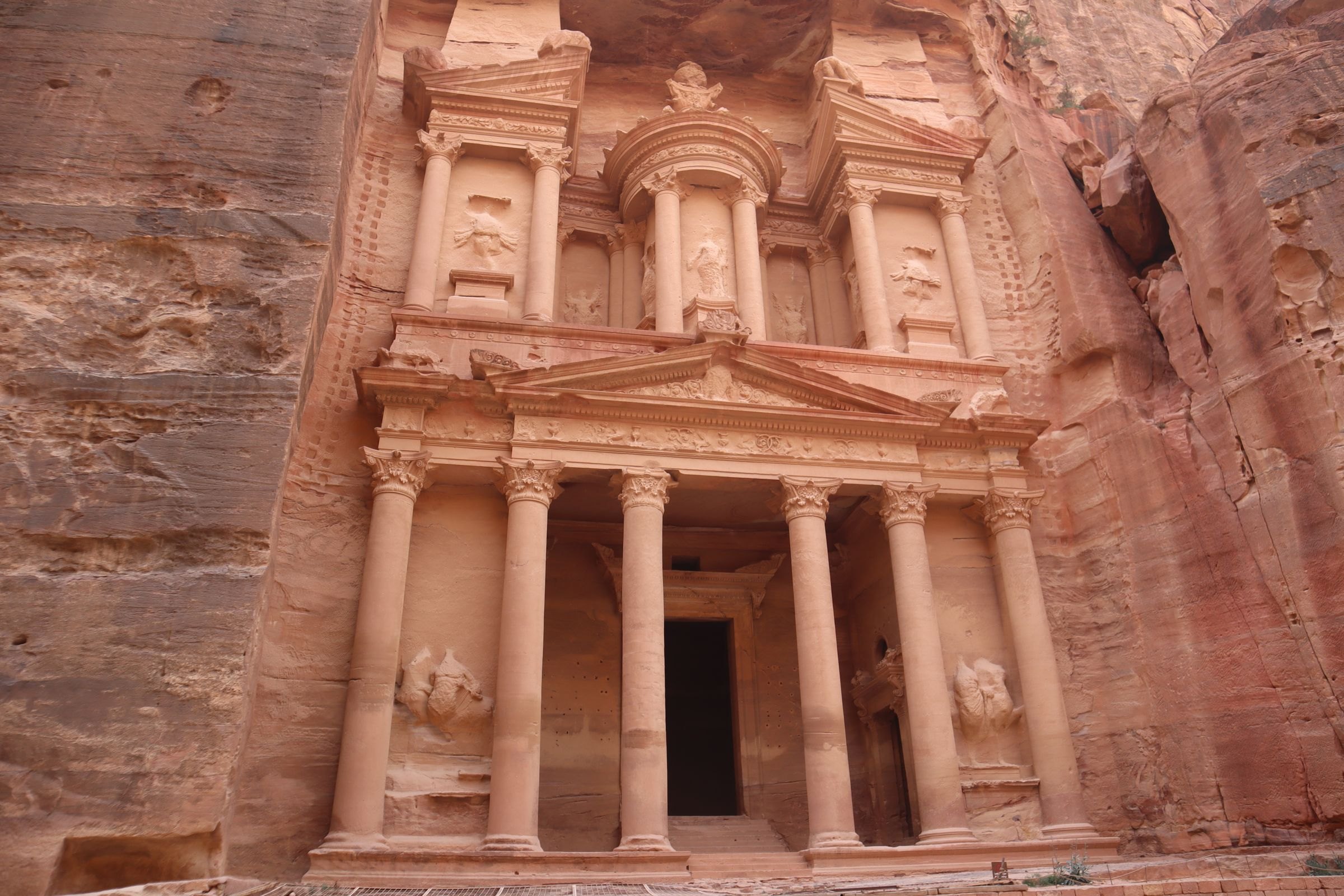
Petra was the capital of the Nabataeans, Arab traders who grew rich on the incense and spice caravans more than 2,000 years ago and carved their city’s tombs and temples straight into the rose-coloured sandstone. It faded from the outside world’s view until the Swiss explorer Johann Ludwig Burckhardt reached it in 1812. It has been a UNESCO World Heritage Site since 1985 and was voted one of the New Seven Wonders of the World in 2007.
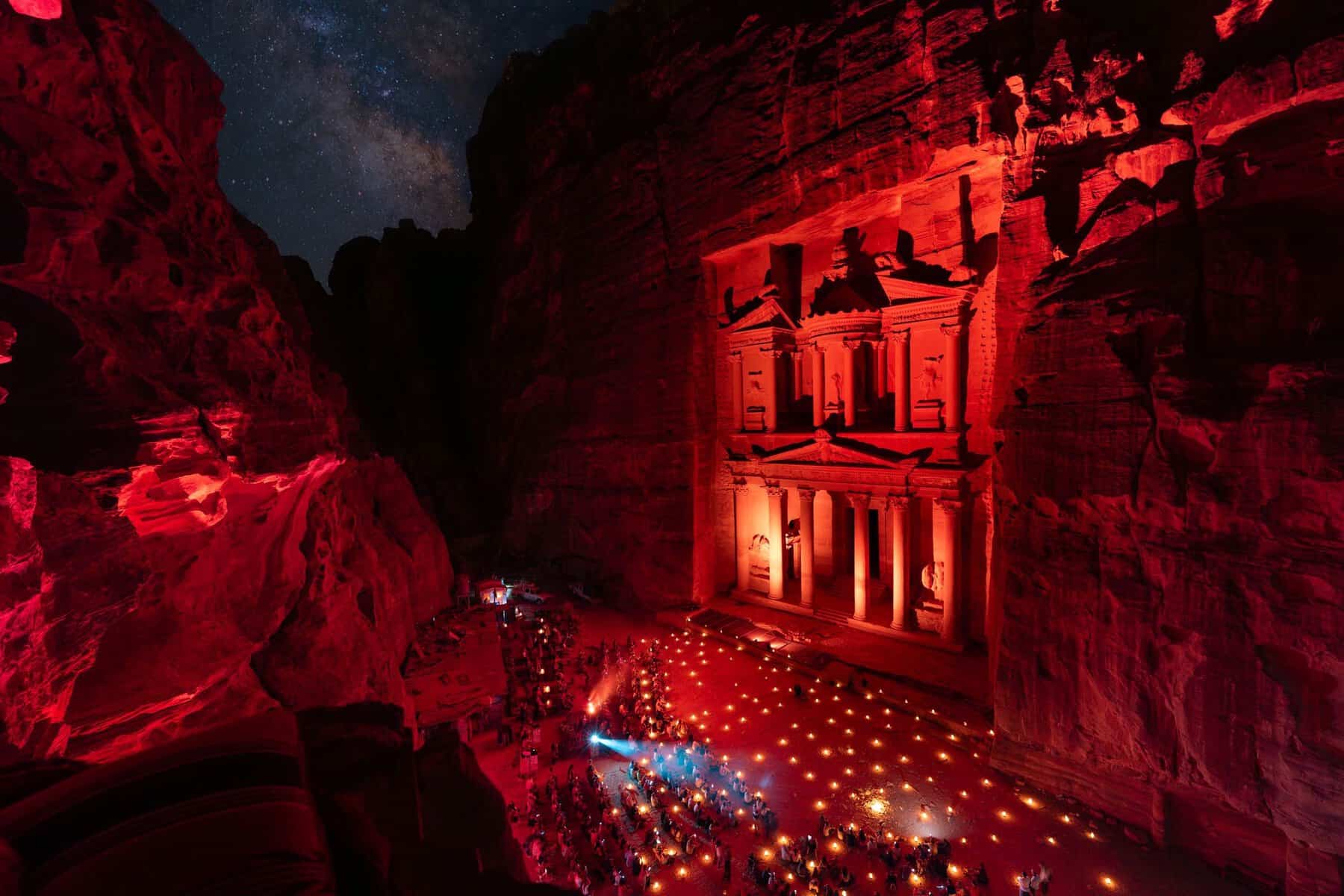
The Siq is the way in: a narrow, winding gorge about 1.2 km long, with walls up to 80 m high. It ends at the most famous view in Jordan, the first glimpse of the Treasury (Al-Khazneh) through the gap in the rock. Go when the gates open to see it with few people around.
Beyond, the valley opens out past the Street of Facades, the Roman-era theatre and the Royal Tombs, to the colonnaded street and the Great Temple. From there it’s a climb of about 800 rock-cut steps to the Monastery (Ad-Deir), even bigger than the Treasury, with views across the mountains towards Wadi Araba. The High Place of Sacrifice is another fine climb, with a quieter path back down.


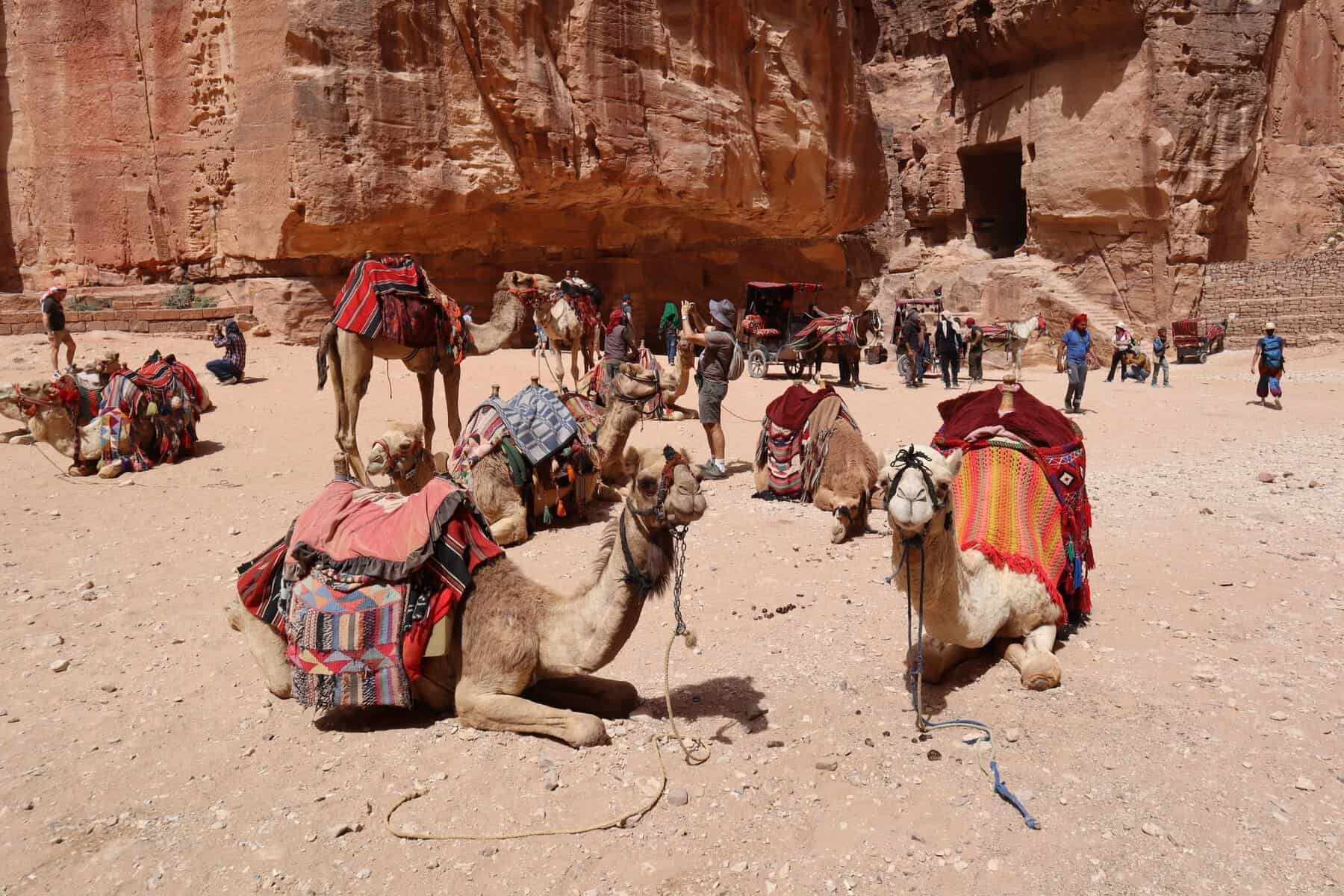
How long do you need? One full day shows you the highlights, but two days is far better: the site is big, a full day can mean 15 km or more on foot, and the second day lets you climb to the Monastery and the High Place of Sacrifice without rushing. Stay in Wadi Musa so you can be at the gate early. On several evenings a week, Petra by Night lights the Siq and the Treasury square with candles for music and storytelling. Little Petra (Siq al-Barid), a short drive north, is a smaller Nabataean site that is lovely in the late afternoon. Our guide to Petra tours compared sets out the different ways to see it.
Wadi Rum
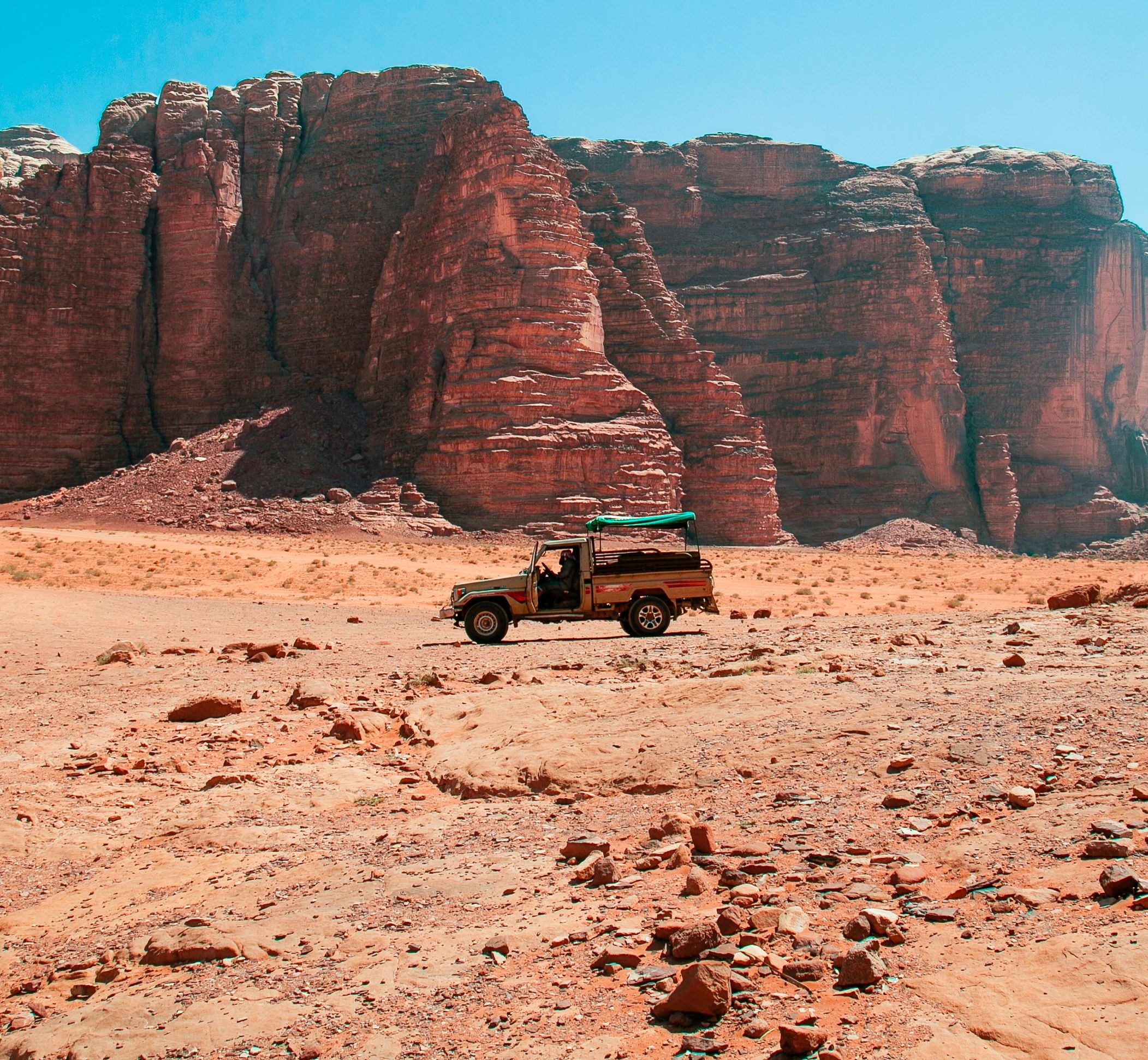
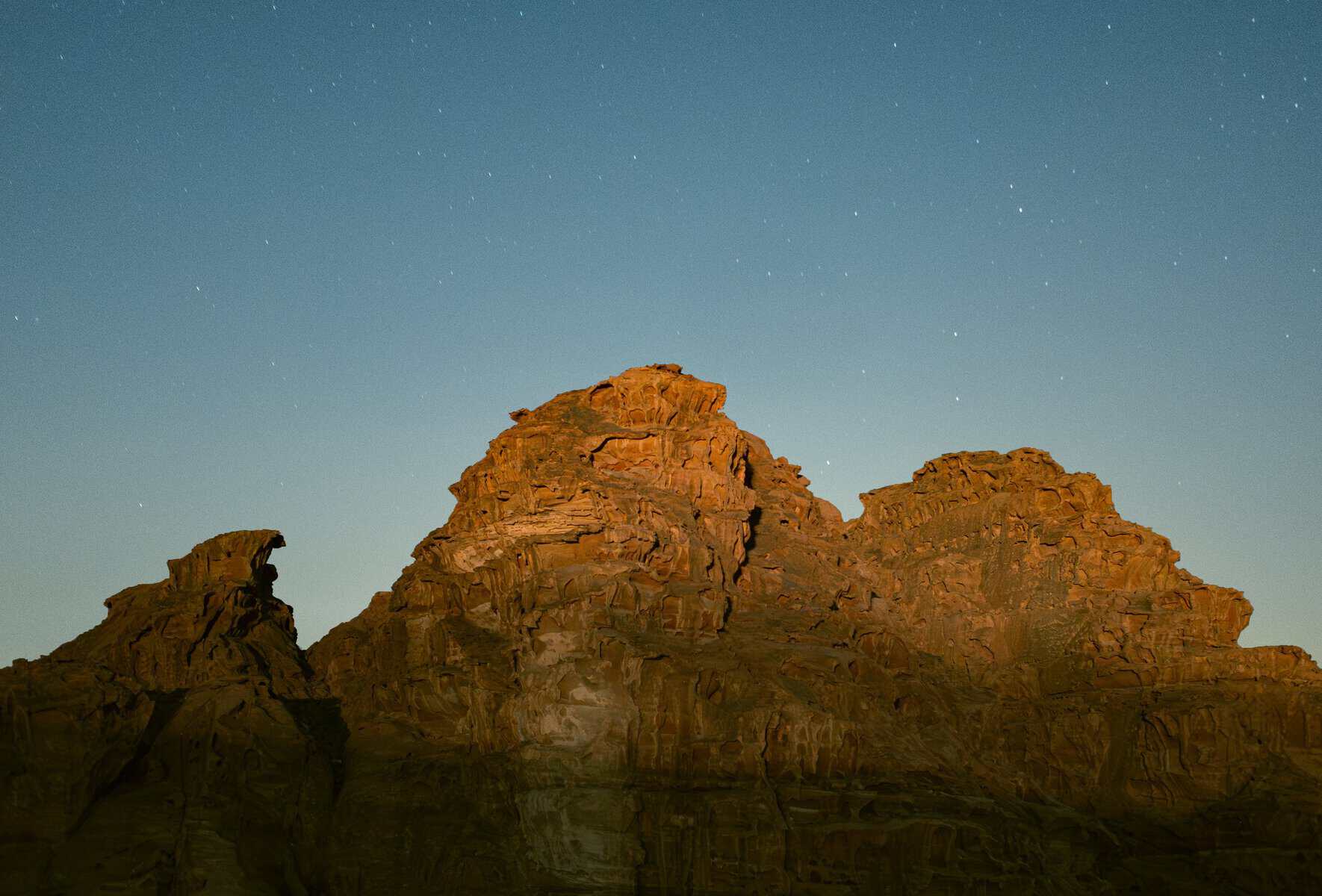
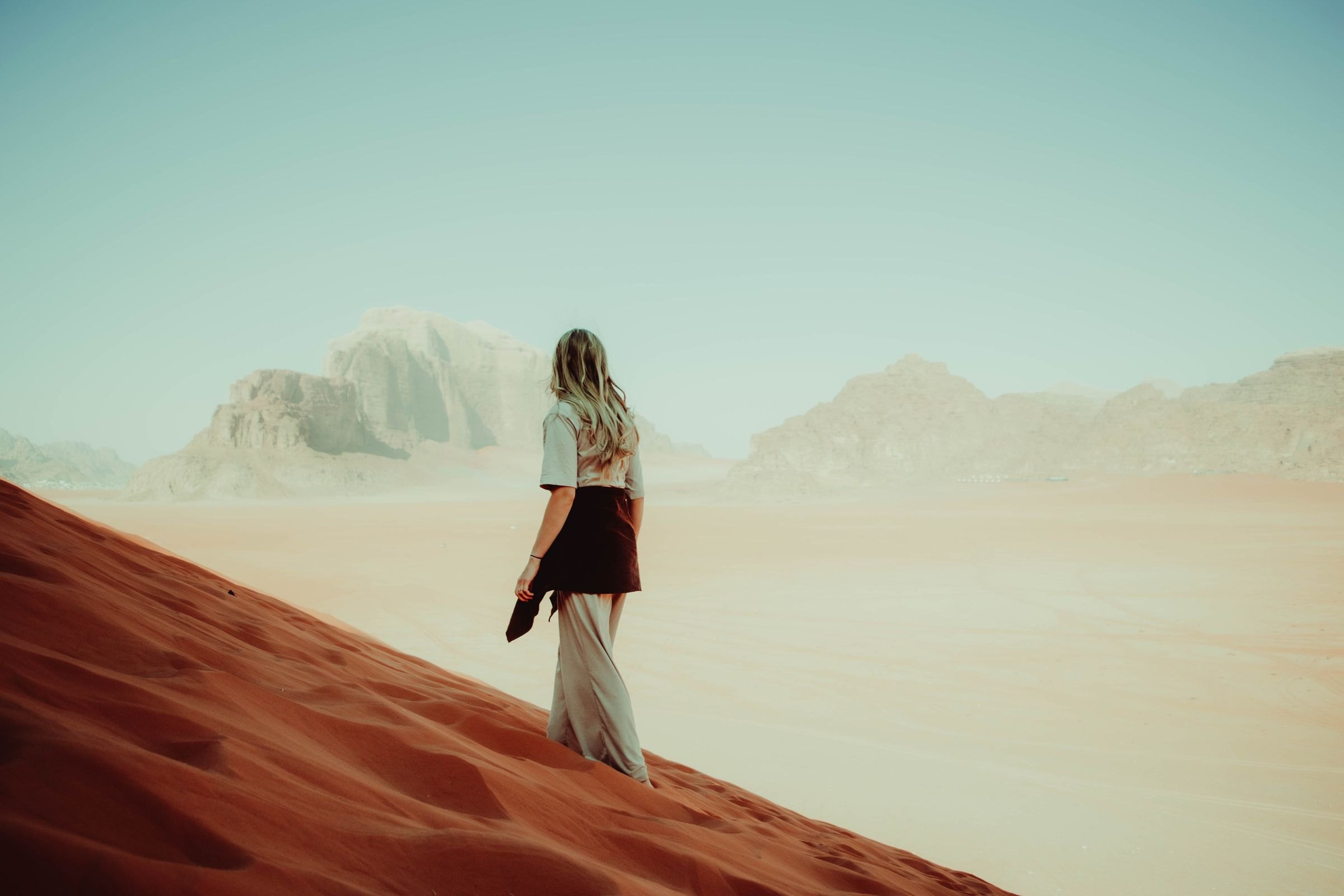
Wadi Rum, the “Valley of the Moon”, is a protected desert of red and orange sand, sandstone and granite mountains, natural arches and narrow canyons in the far south of Jordan. It is a UNESCO World Heritage Site for both its landscape and its rock art, and its scenery has stood in for Mars in several films. The Bedouin still live and work here.
What to do: explore by 4×4 with a Bedouin driver to the rock bridges, the dunes and the canyon carvings; ride a camel; scramble up a rock arch; or walk and climb with a guide. Sunset from a high ridge is the highlight of most days.
Stay the night. A day trip misses the best of it. Desert camps range from simple Bedouin tents to comfortable tented rooms and domes with private bathrooms and glass roofs for stargazing. The skies are dark and very clear, and dinner is often zarb, meat and vegetables slow-cooked in a pit under the sand.

The Dead Sea

The shore of the Dead Sea is more than 400 m below sea level, the lowest land on earth. The water is around ten times saltier than the ocean, so you float without trying: lie back and read a newspaper if you like. Don’t shave beforehand, and keep the water out of your eyes.
The resort hotels on the Jordanian shore are about an hour from Amman and make a relaxing end to a trip. Nearby are Bethany Beyond the Jordan, the UNESCO-listed site where John the Baptist is believed to have baptised Jesus, and Mount Nebo, where Moses is said to have seen the Promised Land.
Where else to go in Jordan
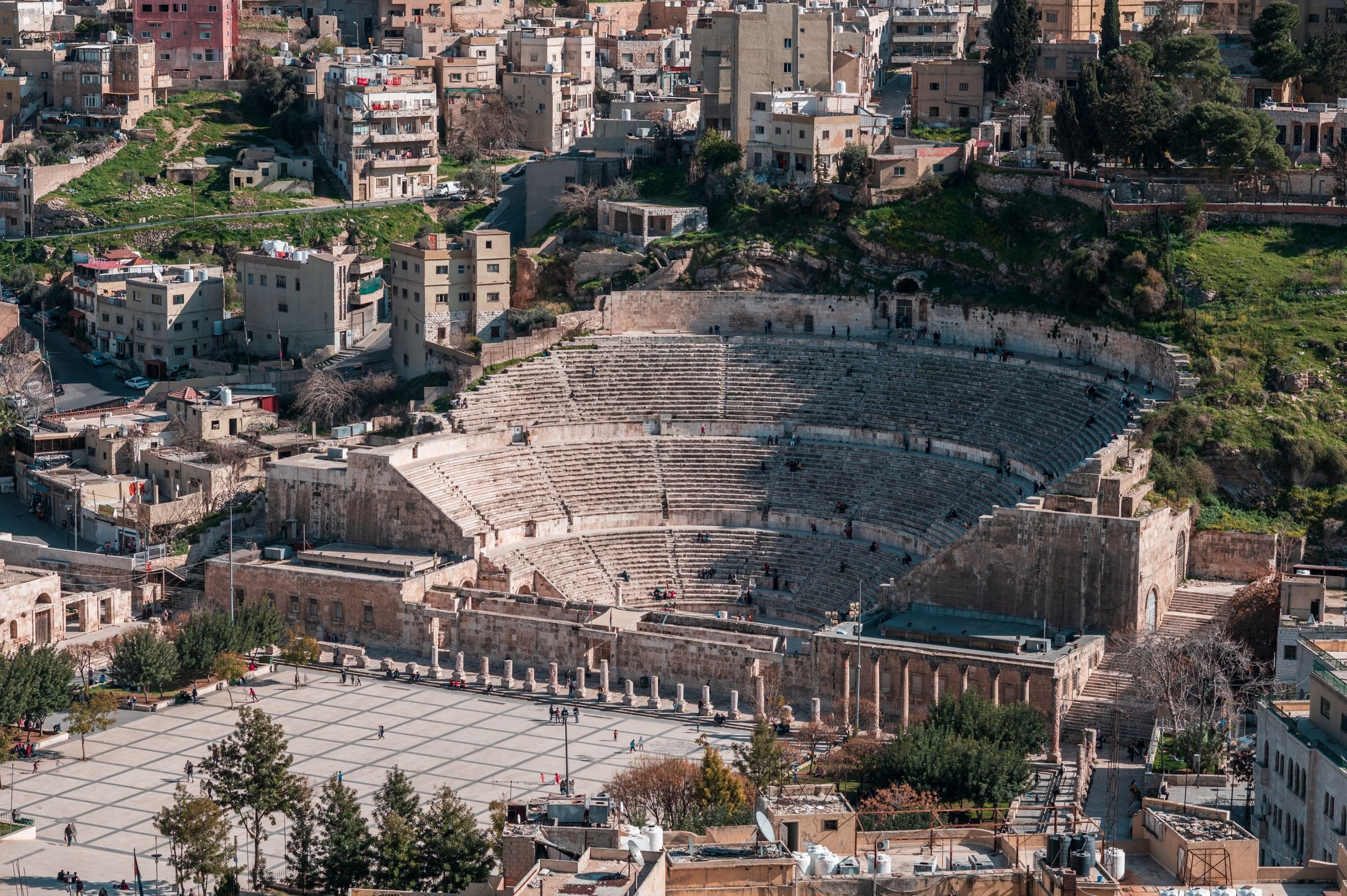
Amman
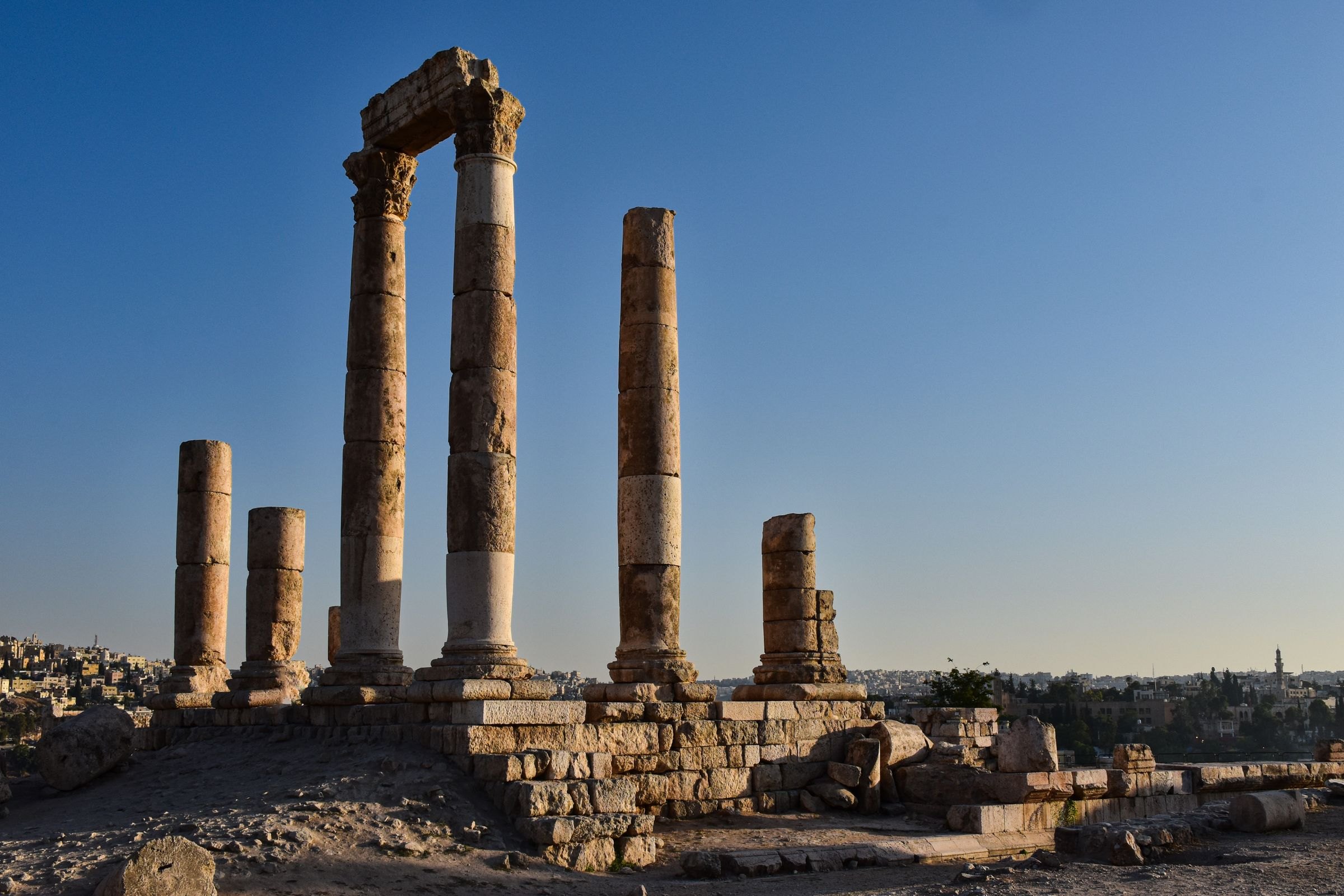
The capital spreads across a series of hills. Climb to the Citadel for the Temple of Hercules, the Umayyad Palace and views over the city; walk down to the 6,000-seat Roman Theatre; then explore the downtown souks and the cafés of Rainbow Street.

Jerash
Ancient Gerasa is one of the best-preserved Roman provincial cities anywhere: Hadrian’s Arch, an oval forum ringed by columns, a long colonnaded street still rutted by chariot wheels, temples and two theatres. Combine it with Ajloun Castle, a 12th-century Arab fortress in the wooded hills nearby.
Madaba and the King's Highway
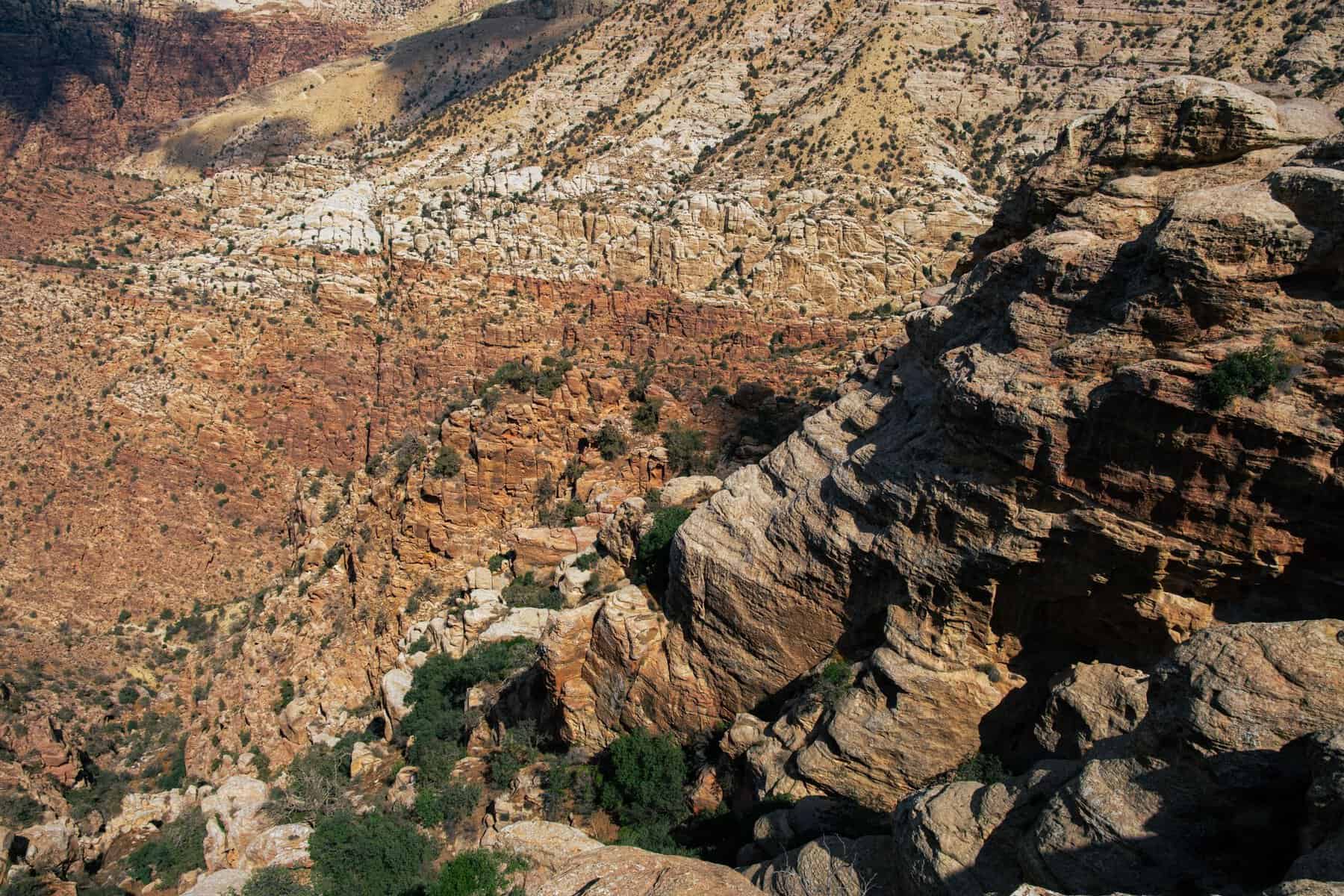
Madaba is known for its Byzantine mosaics, above all the 6th-century map of the Holy Land on the floor of St George’s Church. From there the ancient King’s Highway winds south across deep canyons past the Crusader castles of Kerak and Shobak: a slower, far more scenic way to Petra than the Desert Highway.

Dana Biosphere Reserve
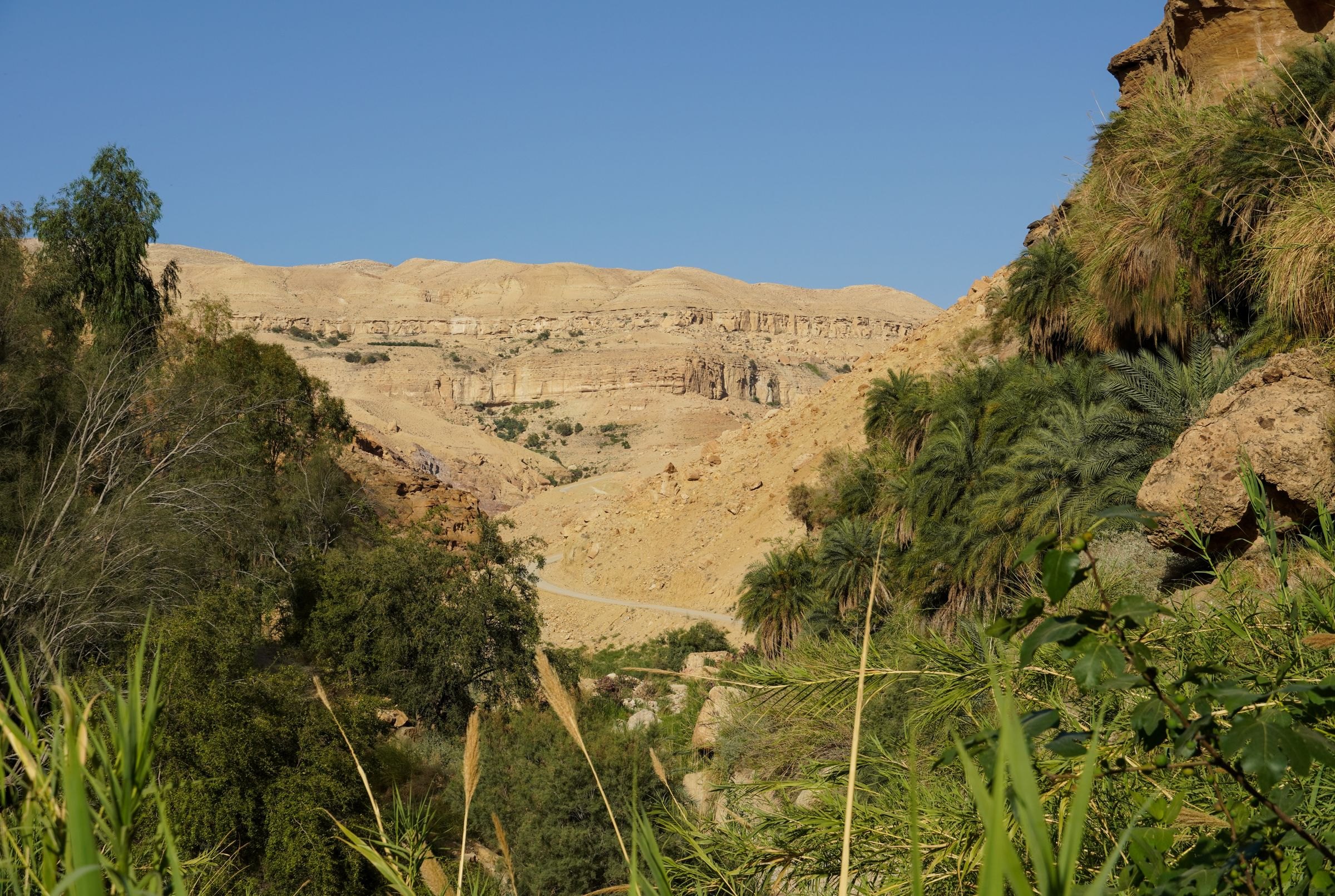
Jordan’s largest nature reserve drops from the stone village of Dana on the highland rim to the sandstone and desert of Wadi Araba, more than 1,000 m below. Guided walks follow the valleys, from a few hours to a full day.
Wadi Mujib
A deep gorge running down to the Dead Sea, where you wade and scramble up a river between towering rock walls, sometimes waist-deep, to a waterfall. The water trails usually open from about April to October and close after rain because of flash floods.
Aqaba and the Red Sea
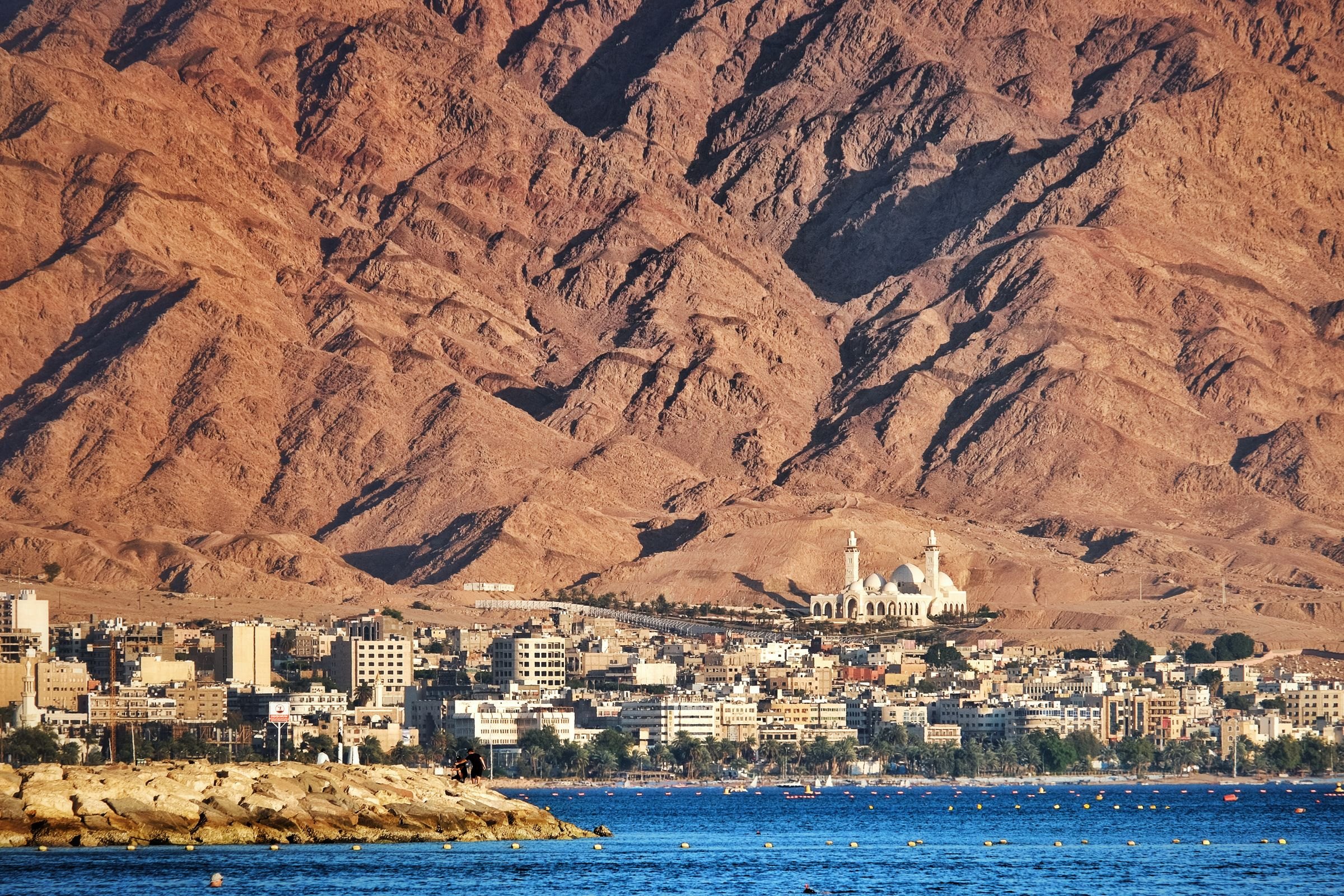
Jordan’s only port and beach resort, an hour from Wadi Rum. The coral reefs south of town start just off the shore, so they’re easy to snorkel, and there are wreck dives too. It’s warm in winter and very hot in summer: a good way to finish a trip, or a winter-sun break with a day trip to Petra.
Also worth seeing: the desert castles east of Amman, among them the UNESCO-listed Qusayr Amra with its frescoes; and the Jordan Trail, a long-distance footpath of more than 675 km from the north of the country to the Red Sea. Most people walk a section, such as Dana to Petra.
Food in Jordan

Jordanian food is made for sharing. Meals start with mezze: hummus, moutabal (smoky aubergine), tabbouleh, falafel, olives and warm flatbread.
The national dish is mansaf: lamb cooked in a sauce of fermented dried yoghurt (jameed), served on a great platter of rice and bread and scattered with nuts, traditionally for celebrations and guests. Try maqluba, “upside-down” rice with chicken or lamb and vegetables, turned out of the pot at the table, and zarb in Wadi Rum.
For something sweet, look for knafeh, warm cheese pastry soaked in syrup, eaten at any hour. Alcohol is available in hotels and licensed restaurants, and Jordan makes its own wine.
Best time to visit Jordan
The best time to visit Jordan is spring (March to May) or autumn (September to November), with April and October the pick. Days are warm rather than hot in Petra, walking is comfortable and nights in Wadi Rum are mild. Summer (June to August) is hot and dry everywhere, around 31°C in Petra and about 40°C at Aqaba and the Dead Sea, so start early and rest at midday. Winter (December to February) is cold and sometimes wet in Amman and Petra, with the odd snowfall and desert nights near freezing, but it’s quiet, and Aqaba and the Dead Sea stay warm. Almost all the rain falls between November and March; heavy storms can close the Siq at Petra for safety. Ramadan in 2027 is expected from about 8 February to 9 March: the sites stay open, but some restaurants close by day.
| Month | Amman | Petra | Wadi Rum | Aqaba |
|---|---|---|---|---|
| Jan | 12°C / 4°C · 65 mm | 11°C / 4°C · 40 mm | 14°C / 3°C · 5 mm | 20°C / 10°C · 5 mm |
| Feb | 14°C / 5°C · 65 mm | 13°C / 5°C · 40 mm | 17°C / 4°C · 5 mm | 22°C / 11°C · 10 mm |
| Mar | 17°C / 8°C · 55 mm | 17°C / 7°C · 30 mm | 20°C / 8°C · 10 mm | 26°C / 14°C · 10 mm |
| Apr | 23°C / 11°C · 20 mm | 22°C / 11°C · 10 mm | 26°C / 11°C · 5 mm | 31°C / 18°C · 5 mm |
| May | 28°C / 15°C · 10 mm | 27°C / 15°C · 10 mm | 30°C / 16°C · 5 mm | 35°C / 22°C · 5 mm |
| Jun | 30°C / 18°C · 0 mm | 29°C / 18°C · 0 mm | 33°C / 19°C · 0 mm | 38°C / 24°C · 0 mm |
| Jul | 33°C / 20°C · 0 mm | 31°C / 20°C · 0 mm | 35°C / 21°C · 0 mm | 40°C / 26°C · 0 mm |
| Aug | 33°C / 21°C · 0 mm | 31°C / 20°C · 0 mm | 35°C / 21°C · 0 mm | 40°C / 26°C · 0 mm |
| Sep | 31°C / 19°C · 0 mm | 29°C / 19°C · 0 mm | 33°C / 19°C · 0 mm | 37°C / 24°C · 0 mm |
| Oct | 26°C / 16°C · 15 mm | 24°C / 15°C · 10 mm | 28°C / 15°C · 5 mm | 33°C / 21°C · 0 mm |
| Nov | 20°C / 11°C · 30 mm | 19°C / 10°C · 15 mm | 21°C / 10°C · 5 mm | 27°C / 17°C · 0 mm |
| Dec | 14°C / 7°C · 45 mm | 14°C / 6°C · 20 mm | 16°C / 5°C · 5 mm | 23°C / 12°C · 5 mm |
Average daily high / low and monthly rain, 10-year ERA5 data (2014 to 2023). The Dead Sea runs warmer than Amman all year: about 20°C by day in January and 39°C in July.

Getting to Jordan from the UK
Direct flights from London to Amman (Queen Alia International) take about 5 hours, and there are good one-stop connections from regional UK airports. Aqaba has its own airport, with fewer flights from Europe; flying into Amman and out of Aqaba (or the other way) saves a long drive back. With the current regional tensions, the FCDO warns that flights can be cancelled and airspace closed at short notice, so book with full financial protection and keep an eye on your airline’s updates.
Visa: British visitors need a visa, which you can buy on arrival at the airport. Most holidaymakers buy the Jordan Pass online before they travel instead: it includes the tourist visa fee if you stay at least three nights, and entry to Petra, Wadi Rum, Jerash and many other sites. Buy it only from the official website. Your passport must be valid for at least six months from the day you arrive.
Getting around
- Private driver-guide: the easiest and most popular way to travel. Roads are good, distances are short, and a guide brings Petra, Jerash and the mosaics to life.
- Self-drive: possible on the main highways, which are well signposted in English, though city driving in Amman is hectic. You can’t drive into Wadi Rum’s protected area: you leave the car at the visitor centre or village and go on with a Bedouin driver.
- Typical driving times: Amman to the Dead Sea about 1 hour; Amman to Petra about 3 hours on the Desert Highway (allow a full day on the King’s Highway); Petra to Wadi Rum about 1.5 hours; Wadi Rum to Aqaba about 1 hour.
Where to stay in Jordan
- Amman: international hotels in the smarter western districts, or smaller boutique stays near downtown and Rainbow Street for walking to the sights.
- Petra (Wadi Musa): stay as close to the gate as you can for early starts, or in the hills above town for the views. Two nights is ideal.
- Wadi Rum: a desert camp, from traditional Bedouin tents to tented suites and domes with glass roofs for stargazing.
- The Dead Sea: resort hotels with spas, pools and private beaches along the northern shore.
- Aqaba: beach hotels along the town front and in the resort developments to the south, near the reefs.
Tell us how you like to travel and we’ll match the right places to stay.
Jordan itineraries
Petra and the Dead Sea
- Amman (1 night)
- Petra (2)
- Dead Sea (1)
A short break for the essentials, with a full day and a morning at Petra.
Classic Jordan
- Amman and Jerash (2 nights)
- King's Highway to Petra (2)
- Wadi Rum camp (1)
- Dead Sea (2)
The best of Jordan in a week: Roman Jerash, Madaba and Kerak, Petra, a night in the desert and time to rest at the end.
Jordan from north to south
- Amman (2 nights)
- Dana (1)
- Petra (2)
- Wadi Rum (1)
- Aqaba (2)
- Dead Sea (2)
Adds hiking in Dana, snorkelling in the Red Sea and a slower pace.
Jordan also combines well with Egypt: see Egypt and Jordan tours for routes that pair Petra with the pyramids and a Nile cruise.
Jordan tours with us
See all our Jordan escorted tours, including a three-day Petra and Dead Sea short break and solo departures with flights. Or ask us about a tailor-made Jordan holiday with a private driver-guide.
Practical tips
- Is Jordan safe? Jordan is a stable country that welcomes large numbers of British visitors, and the main sights are well away from the borders. The FCDO warns that the wider region is unpredictable, so check the FCDO Jordan advice before you book and again before you travel, and make sure your insurance covers your trip.
- Dress: modest clothing is respected, especially outside Amman and at religious sites: cover shoulders and knees. Swimwear is fine at the Dead Sea and Aqaba resorts.
- Petra on foot: wear broken-in walking shoes, carry water, a hat and sun cream, and start early. Donkeys and carriages are offered inside; please think about the animals’ welfare before you hire one.
- Money: cards are widely accepted in hotels and larger restaurants, but carry dinars for small shops, tips and the desert.
- Tipping is customary for guides, drivers and hotel staff.
Frequently asked questions
Where is Petra?
Petra is in the mountains of southern Jordan, beside the town of Wadi Musa, about three hours' drive south of Amman and two hours north of Aqaba.
What is the best time to visit Jordan?
Spring (March to May) and autumn (September to November), with April and October the best months. Summer is very hot, and winter is cold and sometimes wet in Amman and Petra, though Aqaba and the Dead Sea stay warm.
How many days do you need in Jordan?
A week covers Amman, Jerash, Petra, a night in Wadi Rum and the Dead Sea. With ten days you can add the King's Highway, Dana and a few days on the Red Sea at Aqaba.
How long do you need at Petra?
Two days is ideal. One full day covers the Siq, the Treasury and the Royal Tombs; the second lets you climb to the Monastery and the High Place of Sacrifice.
Is Jordan safe to visit?
Jordan is a stable country that welcomes many British visitors. The FCDO warns of wider regional tensions. Check the latest FCDO advice before you book and before you travel.
Do UK citizens need a visa for Jordan?
Yes. You can buy a visa on arrival at the airport, or buy the Jordan Pass online before you travel, which includes the visa fee for tourists staying at least three nights and entry to Petra and other sites. Your passport needs six months' validity.
What is the main religion in Jordan?
Most Jordanians are Sunni Muslims, and there is a long-established Christian community. Visitors are welcome at many religious sites; dress modestly, covering shoulders and knees.
Keep planning
- Jordan holidays
- Jordan escorted tours
- Petra tours compared
- Egypt and Jordan tours
- Egypt holidays
- Oman holiday guide
- Tailor-made holidays
- Escorted tours
Plan your Jordan holiday with a Travel Designer
Tell us when you’d like to go and we’ll plan Petra, Wadi Rum, the Dead Sea and the rest of Jordan, with a private driver-guide and the right camp and hotels, in one ATOL-protected booking.
Make an enquiry Jordan holidays