

French Polynesia in brief
- Tahiti, Moorea and Bora Bora are the classic trio; add Huahine, Taha’a or an atoll like Rangiroa for something different.
- Best from May to October, the dry season, with whales from August to October and the Heiva festival in July.
- One stop from the UK, usually via Los Angeles or Paris; allow 10 to 14 nights.
- Cruise or island-hop: small ships sail the Society Islands and the Marquesas from Papeete.

French Polynesia is 118 islands and atolls scattered across an area of the South Pacific roughly the size of western Europe, halfway between Australia and South America. Most people know it as Tahiti or Bora Bora, but those are just two islands in five very different archipelagos: green volcanic peaks wrapped in turquoise lagoons, flat coral atolls with some of the best diving on earth, and the remote, mountainous Marquesas. It’s one of the world’s great honeymoon destinations, and also a place of deep Polynesian culture, dance and tattoo. This guide explains which islands to choose, how to island-hop, the best time to go, how to get there from the UK and how many nights you need.
Where is French Polynesia?

French Polynesia is an overseas collectivity of France in the eastern South Pacific. Tahiti, the largest island, is about 8 hours’ flight from Los Angeles and around 5.5 hours from Auckland. The capital, Papeete, is on Tahiti, and almost every international flight lands at its airport, Faa’a.
The islands fall into five groups. The Society Islands (Tahiti, Moorea, Bora Bora, Huahine, Raiatea, Taha’a and Maupiti) are where most visitors go: high, green volcanic islands with lagoons. The Tuamotus are a long chain of low coral atolls, including Rangiroa, Fakarava and Tikehau. The Marquesas lie about 1,400 km north-east of Tahiti, rugged and without lagoons. The Austral Islands and the Gambier Islands to the south are the most remote of all.
Which islands to choose
A first trip usually combines Tahiti (one night, on arrival or before you fly home), Moorea and Bora Bora. To add something different, swap one for a quieter Society island or add an atoll in the Tuamotus for the diving and the sense of space.

Tahiti
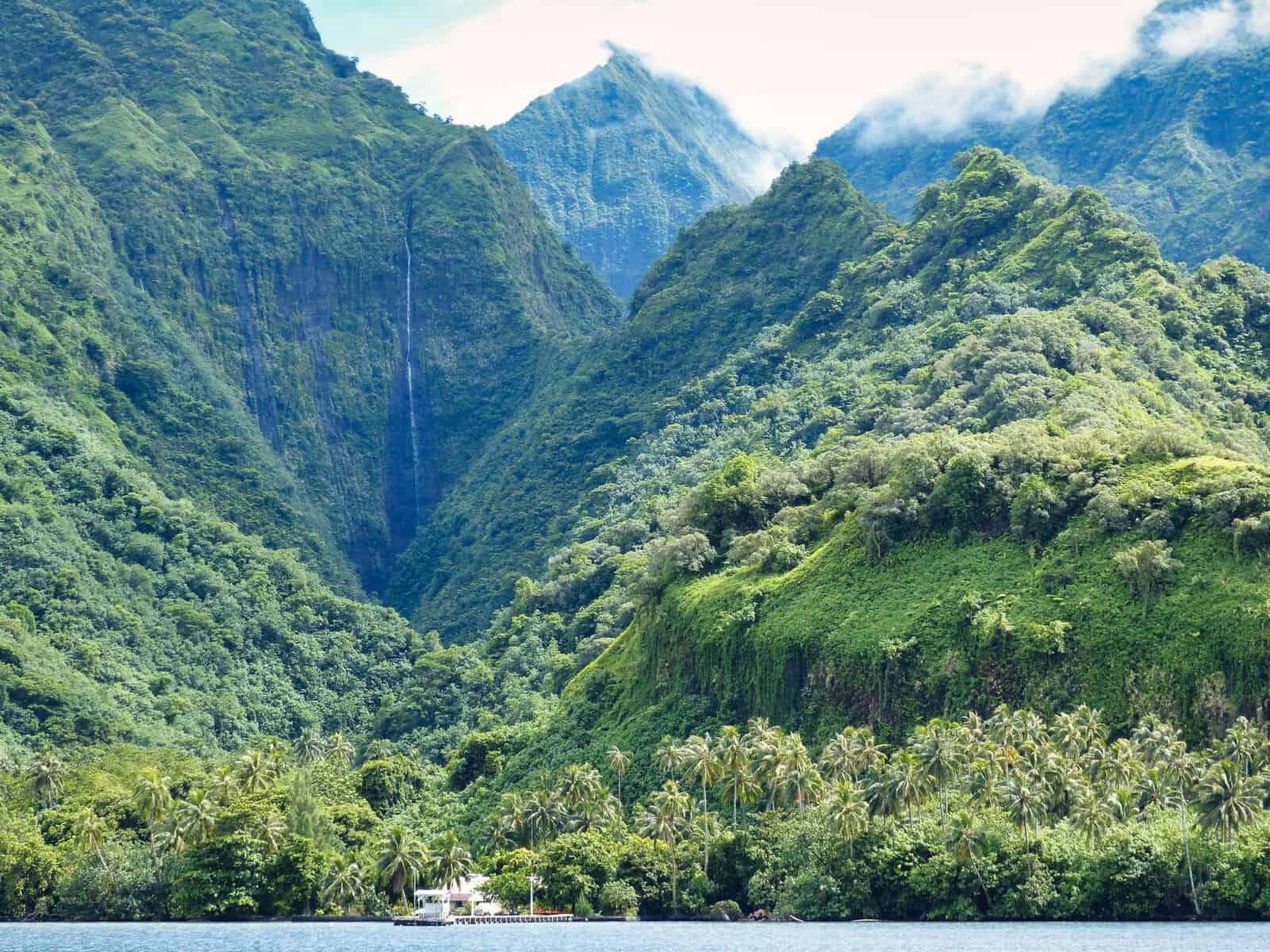
The biggest and busiest island, with Papeete’s covered market and waterfront food trucks, black-sand beaches, waterfall valleys inland and the famous surf break at Teahupo’o on the peninsula of Tahiti Iti. Most people spend a night here between flights; stay longer to explore the interior by 4×4.
More about Tahiti →
Moorea
Tahiti’s sister island, just across the channel, with jagged green peaks above Cook’s Bay and Opunohu Bay. Drive up to the Belvedere lookout, walk among pineapple plantations, snorkel with stingrays and blacktip reef sharks in the lagoon, and, from August to October, look for humpback whales offshore.
More about Moorea →
Bora Bora
The island everyone pictures: a volcanic peak, Mount Otemanu, in the middle of one of the most beautiful lagoons in the world, ringed by flat islets (motu) where most of the overwater bungalows stand. Days are for lagoon tours, snorkelling, paddleboarding and doing very little. The airport is on a motu, so you arrive by boat.
More about Bora Bora →
Huahine
Two islands joined by a bridge, with small villages, vanilla farms, empty beaches and one of the largest groups of ancient marae (stone temple platforms) in Polynesia, at Maeva. Often called the island that time forgot, and a good antidote to the resorts.
More about Huahine →
Raiatea and Taha'a
Raiatea is the sacred island of the Polynesians, with the UNESCO-listed Taputapuatea marae, from where voyagers are said to have set out across the Pacific. Taha’a shares its lagoon: the “vanilla island”, with drift snorkelling through a coral garden between two motu. Both are popular starting points for sailing charters.
More about Taha'a →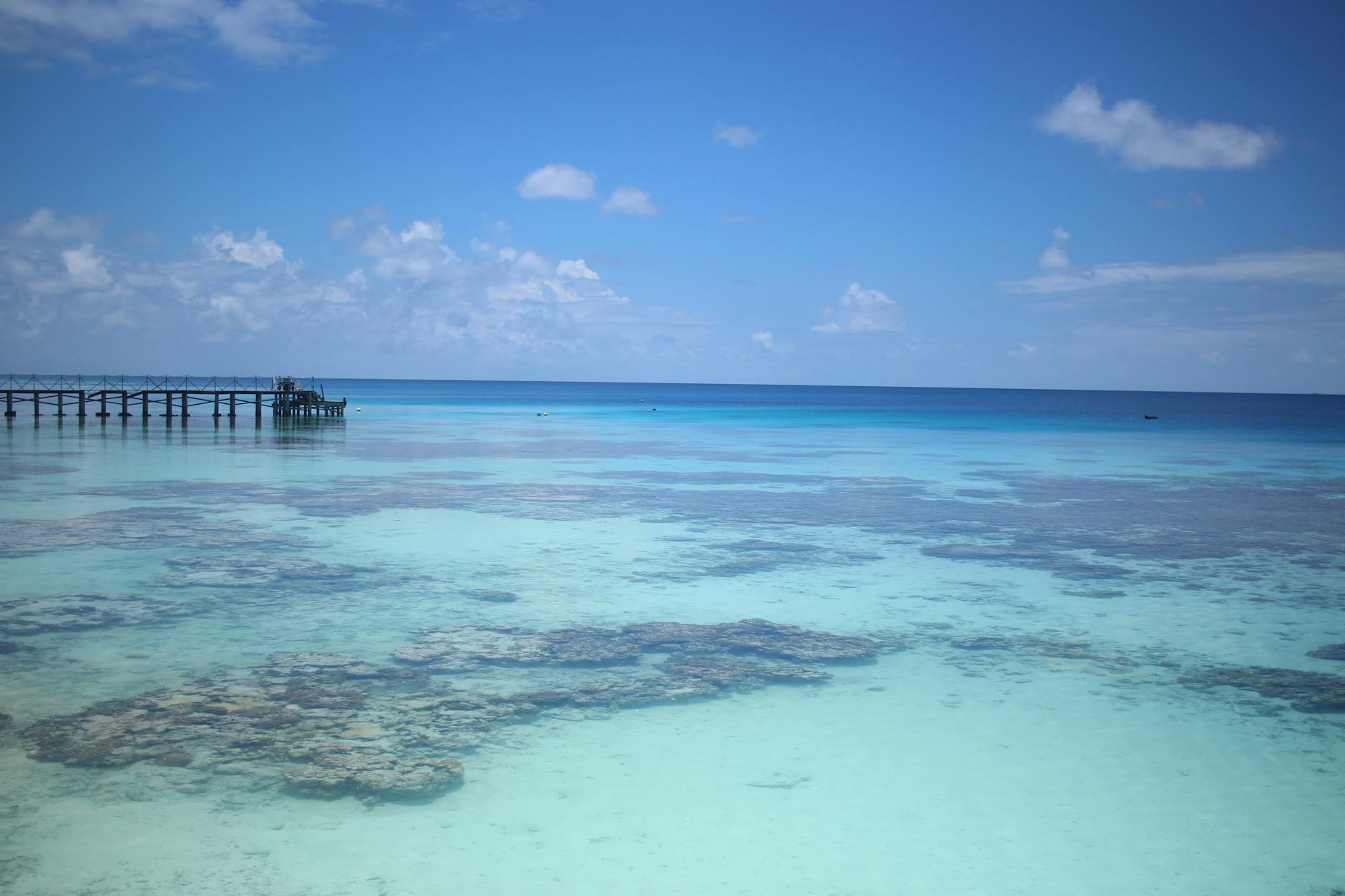
Rangiroa, Fakarava and Tikehau
Low rings of coral and palm around vast lagoons. Rangiroa is one of the largest atolls in the world, with dolphins, sharks and manta rays in the Tiputa Pass. Fakarava is a UNESCO biosphere reserve, famous for hundreds of grey reef sharks in its south pass. Tikehau has pink-sand beaches and a calm, fish-filled lagoon. Simple and very peaceful.

The Marquesas Islands
Towering basalt cliffs, deep valleys, wild horses and stone tiki, with almost no beaches or lagoons. Nuku Hiva and Hiva Oa are the main islands; the painter Paul Gauguin and the singer Jacques Brel are buried at Atuona on Hiva Oa. The classic way to see the Marquesas is on a working passenger-cargo ship (see cruises below).

Maupiti
A miniature Bora Bora without the resorts, reached by a short flight. Family guesthouses, a single road round the island and a lagoon where manta rays come to be cleaned. Best for a few simple, barefoot nights.
More about Maupiti →Thinking about a private island? Tetiaroa, a protected atoll 20 minutes’ flight north of Tahiti, has a single exclusive retreat and a wildlife research station; read more about Tetiaroa.
Things to do in French Polynesia
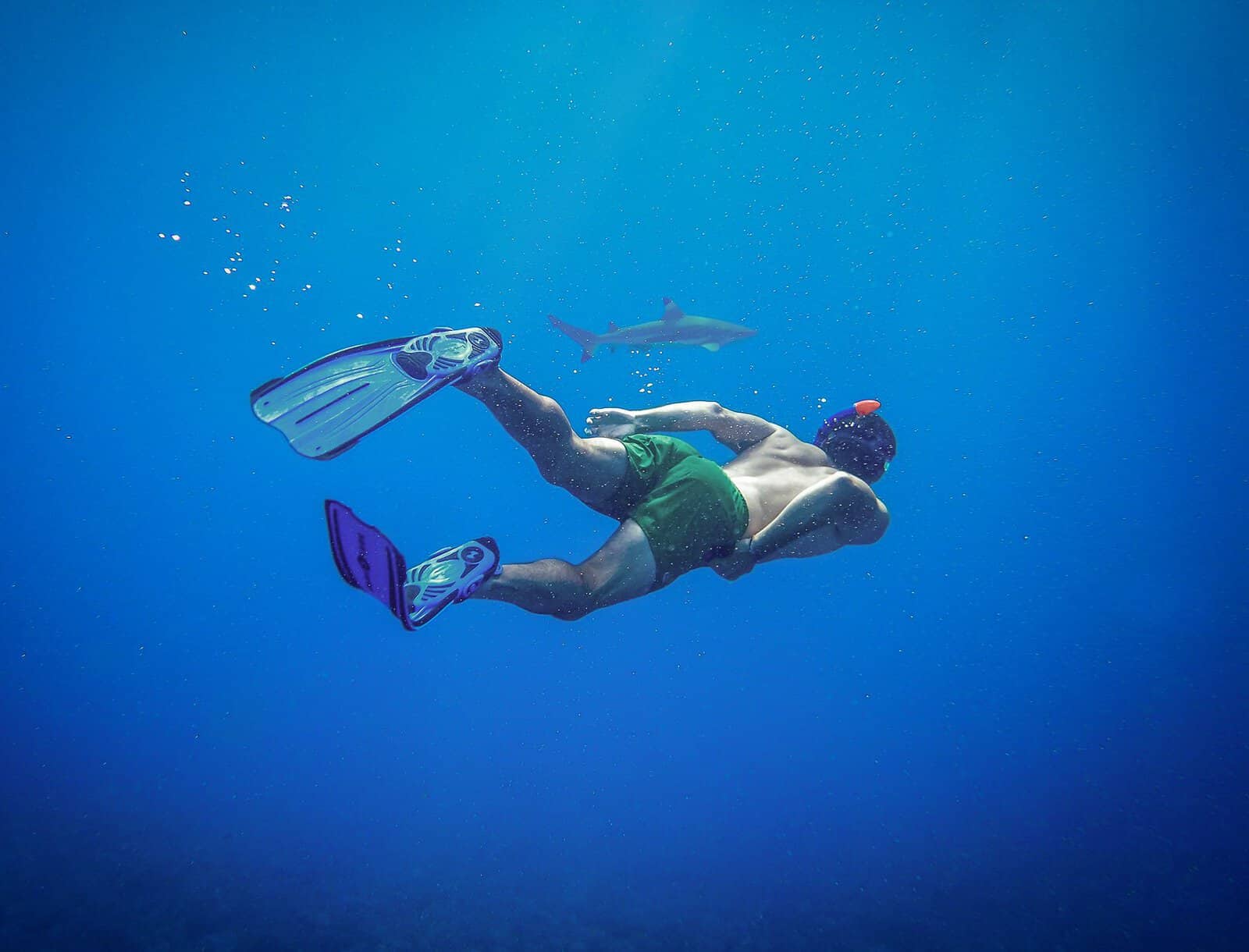
Snorkel and dive. The lagoons are warm (about 26 to 29°C all year) and clear. Even on a half-day lagoon tour you’ll swim with stingrays and small blacktip reef sharks, which are harmless. For serious diving, head to the passes of Rangiroa and Fakarava.
Whales. Humpback whales come to the islands to breed from about July to November, with the peak from August to October. Moorea, Tahiti and Rurutu in the Austral Islands are the best places to see them, on licensed trips with strict rules.
Take a lagoon picnic. A day by outrigger or boat around Bora Bora, Taha’a or Moorea, with snorkelling stops and lunch on a motu, is the essential day out.
Explore inland. Hike or take a 4×4 into the valleys of Tahiti and Moorea, to waterfalls, old marae and lookouts. Bora Bora’s inland trails are steep and best with a guide.
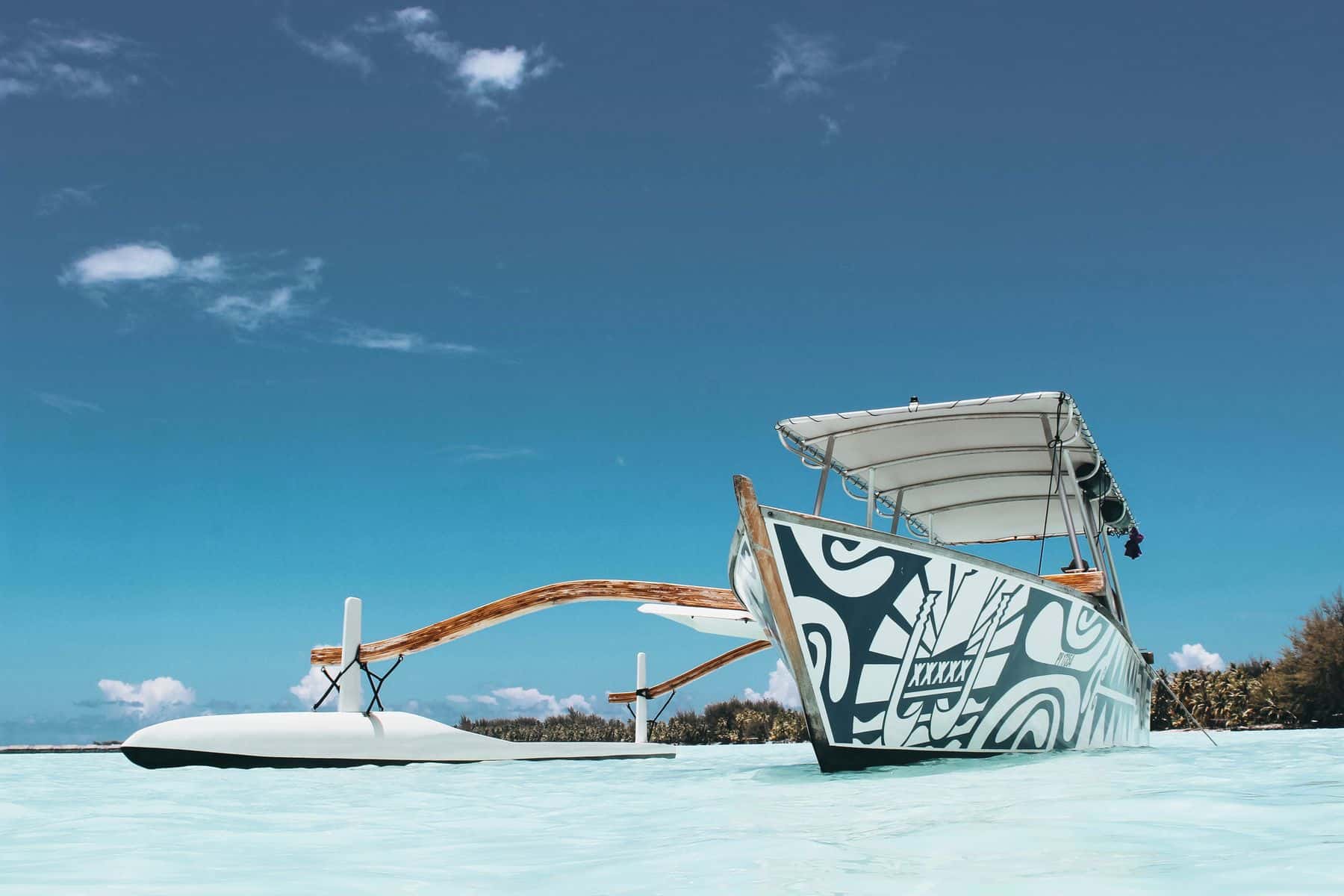
Polynesian culture. Dance (‘ori Tahiti), drumming, outrigger canoe racing and tattoo are all part of everyday life, not just shows for visitors. Visit the marae at Taputapuatea on Raiatea or Maeva on Huahine, and the museum of Tahiti and her islands near Papeete.
Heiva i Tahiti. Every July, Papeete hosts the Heiva, a month of dance, music and traditional sports competitions, the biggest cultural festival in the islands.
Pearls and vanilla. Tahitian black pearls are farmed in the lagoons of the Tuamotus and the Society Islands; visit a farm to see how they’re grown. Taha’a and Huahine grow most of the islands’ vanilla.
Sail. A crewed catamaran or small-ship cruise is one of the best ways to see the Leeward Islands, anchoring in lagoons the resorts never see.


Food in French Polynesia
The signature dish is poisson cru (i’a ota): raw tuna marinated in lime and mixed with coconut milk and vegetables. You’ll also find fresh mahi-mahi, parrotfish and lobster, breadfruit, taro and plenty of tropical fruit. On Sundays and special occasions, food is slow-cooked in an ahima’a, an earth oven of hot stones. French influence means good bread, pastries and wine. On Bora Bora, with fewer independent restaurants, a half-board plan makes sense. In Papeete, the evening roulottes (food trucks) on the waterfront are a lively, informal place to eat.
Best time to visit French Polynesia
It’s warm all year, around 26 to 30°C. The dry season, May to October, is the best time to visit: less rain, lower humidity and steady trade winds, and it brings the Heiva festival in July and the whale season from August. April and November are good shoulder months. December to March is the wet season: hotter and more humid, with heavy but often short downpours, and tropical storms or cyclones are possible from November to April (they’re much rarer here than in the western Pacific). The Marquesas, close to the equator, have rain spread more evenly through the year. School holidays in July and August, plus Christmas and Easter, are the busiest times.
| Month | Tahiti | Bora Bora | Rangiroa | Nuku Hiva |
|---|---|---|---|---|
| Jan | 29°C / 25°C · 395 mm | 28°C / 26°C · 310 mm | 28°C / 26°C · 220 mm | 28°C / 25°C · 120 mm |
| Feb | 29°C / 25°C · 395 mm | 28°C / 26°C · 275 mm | 28°C / 26°C · 210 mm | 28°C / 25°C · 105 mm |
| Mar | 29°C / 25°C · 270 mm | 28°C / 26°C · 170 mm | 28°C / 26°C · 165 mm | 29°C / 25°C · 125 mm |
| Apr | 29°C / 25°C · 250 mm | 28°C / 26°C · 160 mm | 28°C / 26°C · 95 mm | 29°C / 26°C · 125 mm |
| May | 28°C / 24°C · 135 mm | 28°C / 26°C · 115 mm | 28°C / 26°C · 75 mm | 28°C / 25°C · 105 mm |
| Jun | 27°C / 24°C · 150 mm | 27°C / 26°C · 100 mm | 27°C / 26°C · 100 mm | 28°C / 25°C · 105 mm |
| Jul | 27°C / 23°C · 120 mm | 27°C / 25°C · 70 mm | 27°C / 25°C · 60 mm | 27°C / 25°C · 115 mm |
| Aug | 27°C / 22°C · 130 mm | 26°C / 25°C · 70 mm | 26°C / 25°C · 50 mm | 27°C / 24°C · 110 mm |
| Sep | 27°C / 23°C · 150 mm | 26°C / 25°C · 75 mm | 26°C / 25°C · 70 mm | 27°C / 24°C · 95 mm |
| Oct | 28°C / 23°C · 230 mm | 26°C / 25°C · 145 mm | 27°C / 25°C · 65 mm | 27°C / 24°C · 100 mm |
| Nov | 28°C / 24°C · 290 mm | 27°C / 25°C · 215 mm | 27°C / 26°C · 175 mm | 28°C / 25°C · 90 mm |
| Dec | 29°C / 25°C · 360 mm | 28°C / 26°C · 250 mm | 28°C / 26°C · 235 mm | 28°C / 25°C · 100 mm |
Average daily high / low and monthly rainfall, 10-year ERA5 data at sea level. Afternoons on land are often a degree or two warmer.

How to get to French Polynesia from the UK

There are no direct flights from the UK. The usual routes are via Los Angeles (London to LA about 11 hours, then about 8 hours to Papeete) or via Paris on flights that continue through North America. You can also fly via Auckland or Tokyo as part of a longer trip. Allow around 22 to 24 hours’ travelling, and plan a night in Tahiti on arrival.
Most flights reach Papeete in the evening or overnight, and onward domestic flights leave from the same airport. Coming home, many flights leave late at night, so a day room or a final night is worth it.
Combining it: French Polynesia pairs well with a stopover in California on the way out, with New Zealand or the Cook Islands, or as the end of a round-the-world trip.
Getting around and island hopping
Between islands you’ll fly with the domestic airline: Tahiti to Bora Bora is about 50 minutes, Tahiti to Rangiroa about an hour and Tahiti to the Marquesas about 3.5 hours. Air passes covering several islands can work out well. Moorea is the exception, 30 to 45 minutes from Papeete by fast ferry. Luggage limits on domestic flights are lower than on long-haul, so pack light. On the islands, resorts arrange boat and road transfers; you can hire a car or scooter on Tahiti, Moorea, Huahine and Raiatea, and bikes are perfect on the atolls and on Maupiti.
| Route | How | Roughly |
|---|---|---|
| Tahiti to Moorea | Fast ferry or short flight | 30 to 45 minutes by ferry |
| Tahiti to Bora Bora | Flight, then boat from the airport motu | 50 minutes |
| Tahiti to Huahine / Raiatea | Flight | 35 to 45 minutes |
| Raiatea to Taha’a | Boat shuttle | About 20 to 30 minutes |
| Tahiti to Rangiroa / Fakarava | Flight | About 1 hour |
| Tahiti to Nuku Hiva | Flight | About 3.5 hours |
Where to stay
- Overwater bungalows on Bora Bora’s motu: the classic, with steps straight into the lagoon and views of Mount Otemanu. Ask for an Otemanu-facing bungalow for the famous view.
- Beach and lagoon resorts on Moorea, on the north coast near the bays or the west coast for sunsets; many also have overwater rooms.
- A hotel near Papeete or on Tahiti’s west coast for the first or last night, close to the airport.
- Small lodges and family guesthouses (pensions) on Huahine, Maupiti and the atolls: simple, friendly and usually half-board.
- Atoll resorts and dive lodges on Rangiroa, Tikehau and Fakarava, a short walk from the lagoon.
- A crewed yacht or small ship to wake up in a different lagoon every day.
Tell us your style and budget and we’ll match the right island and room; we book resorts, guesthouses and charters right across the islands.
A honeymoon in Bora Bora and Tahiti

For many couples, French Polynesia is the honeymoon. A typical honeymoon is a night on Tahiti, three or four on Moorea and four or five on Bora Bora in an overwater bungalow, with a private lagoon picnic, a sunset sail and a couples’ spa treatment. If you’d like more privacy, add Taha’a, Tikehau or a private island at the end. Let us know you’re on honeymoon when you book: many resorts add a welcome touch. See our honeymoon ideas for more.
Cruising French Polynesia

A small-ship cruise is one of the easiest ways to see several islands without the domestic flights. Week-long voyages from Papeete typically take in Moorea, Huahine, Raiatea, Taha’a and Bora Bora, with longer sailings reaching the Tuamotus, the Marquesas or the Cook Islands.
Paul Gauguin Cruises sails a small luxury ship year-round in the Society Islands and beyond. Aranui Cruises runs a passenger-cargo ship to the Marquesas, delivering supplies to the islands and taking passengers ashore with guides. Compare the options in French Polynesia cruises compared.
How many days? Sample routes
With the long journey, 10 nights is the minimum we’d suggest, and 12 to 14 is better. Two or three islands is plenty; more than that and you spend too long in airports.
Moorea and Bora Bora
- Tahiti (1 night)
- Moorea (4)
- Bora Bora (5)
The classic first trip and honeymoon, with an easy ferry and one short flight.
Society Islands hopping
- Tahiti (1 night)
- Moorea (3)
- Huahine (3)
- Taha'a (3)
- Bora Bora (4)
Lagoons, culture and quieter islands, ending in an overwater bungalow.
Islands and atolls
- Tahiti (1 night)
- Moorea (3)
- Rangiroa or Fakarava (4)
- Bora Bora (5)
- Tahiti (1)
Add the Tuamotus for diving, dolphins and pink-sand beaches.
Practical tips
- Entry: British visitors don’t need a visa for stays of up to 90 days, and your passport must be valid for at least 3 months after you leave. If you’re travelling through the United States, you’ll need an ESTA. Check the FCDO French Polynesia advice before you go.
- Money: the currency is the Pacific franc (XPF), pegged to the euro. Cards are accepted in resorts and towns; carry cash for guesthouses, markets and the smaller islands. Tipping isn’t expected.
- Pack light: domestic flights have lower baggage allowances, so soft bags and a carry-on mindset help.
- Reef-safe: bring reef-safe sun cream and a rash vest, and don’t touch or stand on coral.
- Mosquitoes: dengue is present, so use repellent, especially in the wet season. Check vaccinations with your GP or a travel clinic.
- Diving: choose reputable dive centres and check your insurance covers it; the only decompression chamber is in Papeete.
- Sundays: many shops and some restaurants close on the smaller islands.
- Culture: marae are sacred sites; don’t climb on the stones. Ask before photographing people.
Frequently asked questions
Is Tahiti the same as French Polynesia?
Not quite. Tahiti is the largest island of French Polynesia and home to the capital, Papeete. The name is often used for the whole country, which has 118 islands including Moorea and Bora Bora.
Where is Bora Bora?
Bora Bora is in the Society Islands of French Polynesia, in the South Pacific, about 50 minutes' flight north-west of Tahiti.
What is the best time to visit French Polynesia?
May to October, the dry season, is best, with less rain and lower humidity. April and November are good shoulder months. December to March is hotter and wetter, with a risk of tropical storms.
How do you get to Bora Bora from the UK?
Fly to Papeete on Tahiti, usually via Los Angeles or Paris, then take a 50-minute domestic flight to Bora Bora. The airport is on an islet, so you finish by boat. Allow around 24 hours.
How many days do you need in French Polynesia?
At least 10 nights because of the long journey, and ideally 12 to 14. Two or three islands is plenty, for example Moorea and Bora Bora, with a night on Tahiti.
Do UK citizens need a visa for French Polynesia?
No. British passport holders can visit for up to 90 days without a visa. Your passport must be valid for 3 months after you leave. If you travel via the US you'll need an ESTA.
Which is better, Moorea or Bora Bora?
Most people see both. Bora Bora has the most famous lagoon and the classic overwater bungalows; Moorea is greener and more relaxed, with hiking, whale watching and easy access from Tahiti.
Can you visit the Marquesas Islands?
Yes, by a 3.5-hour flight from Tahiti to Nuku Hiva or Hiva Oa, or on a passenger-cargo ship voyage from Papeete that calls at several islands.
Keep planning
- Cook Islands holiday guide
- French Polynesia holidays
- French Polynesia island hopping
- Bora Bora
- Moorea
- French Polynesia cruises compared
- Paul Gauguin Cruises
- Aranui Cruises
- Honeymoons
- Fiji holidays
- Tailor-made holidays
Plan your French Polynesia holiday with a Travel Designer
Tell us when you’d like to go and we’ll plan your islands, flights, transfers and overwater bungalow, or a small-ship cruise, in one ATOL-protected booking.
Make an enquiry French Polynesia holidays

