Curaçao in brief
- Willemstad, the colourful UNESCO-listed capital, with the Handelskade and the Queen Emma Bridge.
- Small, beautiful coves on the west coast, led by Playa Kenepa, with superb snorkelling.
- No direct UK flights: usually via Amsterdam. Complete the digital immigration card before you arrive.
- Dry and sunny all year, outside the main hurricane belt; peak season January to April.

Curaçao is the largest of the Dutch Caribbean’s ABC islands, just off the coast of Venezuela, and one of the most interesting islands in the region. Its capital, Willemstad, is a UNESCO World Heritage Site of pastel-painted Dutch colonial buildings around a deep natural harbour; its west coast is lined with small, beautiful coves of white sand and clear water beneath limestone cliffs; and its reefs are some of the healthiest in the Caribbean. It is dry, sunny and breezy all year and sits outside the main hurricane belt. This guide covers where Curaçao is, Willemstad, the best beaches from Playa Kenepa to Klein Curaçao, things to do, food, the best time to visit, how to get there from the UK, where to stay by area and how to combine it with Aruba.
Where is Curaçao?

Curaçao lies in the far south of the Caribbean, about 65 km north of the Venezuelan coast, between Aruba to the west and Bonaire to the east. Together they are the ABC islands. It is around 60 km long and up to about 14 km wide, with a narrow, hilly west end and a flatter, broader east.
Like its neighbours, Curaçao is dry: scrub, tall cactus and limestone, with salt pans and hidden bays rather than rainforest. The sheltered south-west coast has the beaches and calm, clear water; the north coast faces the trade winds and is wild, with crashing waves, blowholes and cliffs.
Curaçao is a constituent country of the Kingdom of the Netherlands, with its own government. People speak Papiamentu, Dutch, English and Spanish, often switching between all four in one conversation.
Outside the hurricane belt: Curaçao lies south of the usual track of Atlantic hurricanes. The season officially runs from June to November and the FCDO notes that occasional tropical storms do affect the island, but most hurricanes pass well to the north, and there is no record of a recent major hurricane. Combined with its dry climate, that makes Curaçao a good choice for the late summer and autumn, when much of the Caribbean is at its riskiest.
Willemstad

Willemstad has been a UNESCO World Heritage Site since 1997 and is one of the most photogenic towns in the Caribbean. It is split in two by the narrow channel of Sint Anna Bay, which leads to the huge natural harbour of the Schottegat: Punda on the east side and Otrobanda (“the other side”) on the west.
The Handelskade, Punda’s waterfront, is the famous row of gabled merchant houses painted in pinks, yellows, blues and greens. The two sides are linked by the Queen Emma Bridge, a pontoon bridge first opened in 1888 that swings aside to let ships through; when it is open, small free ferries carry you across. High above, the Queen Juliana Bridge carries the traffic.
In Punda, see the Mikvé Israel-Emanuel Synagogue, consecrated in 1732, the oldest synagogue in continuous use in the Americas, with a floor of sand; and Fort Amsterdam, the 17th-century fort that is still the seat of government. Browse the shopping streets, and have lunch with locals at the old market hall, Plasa Bieuw.
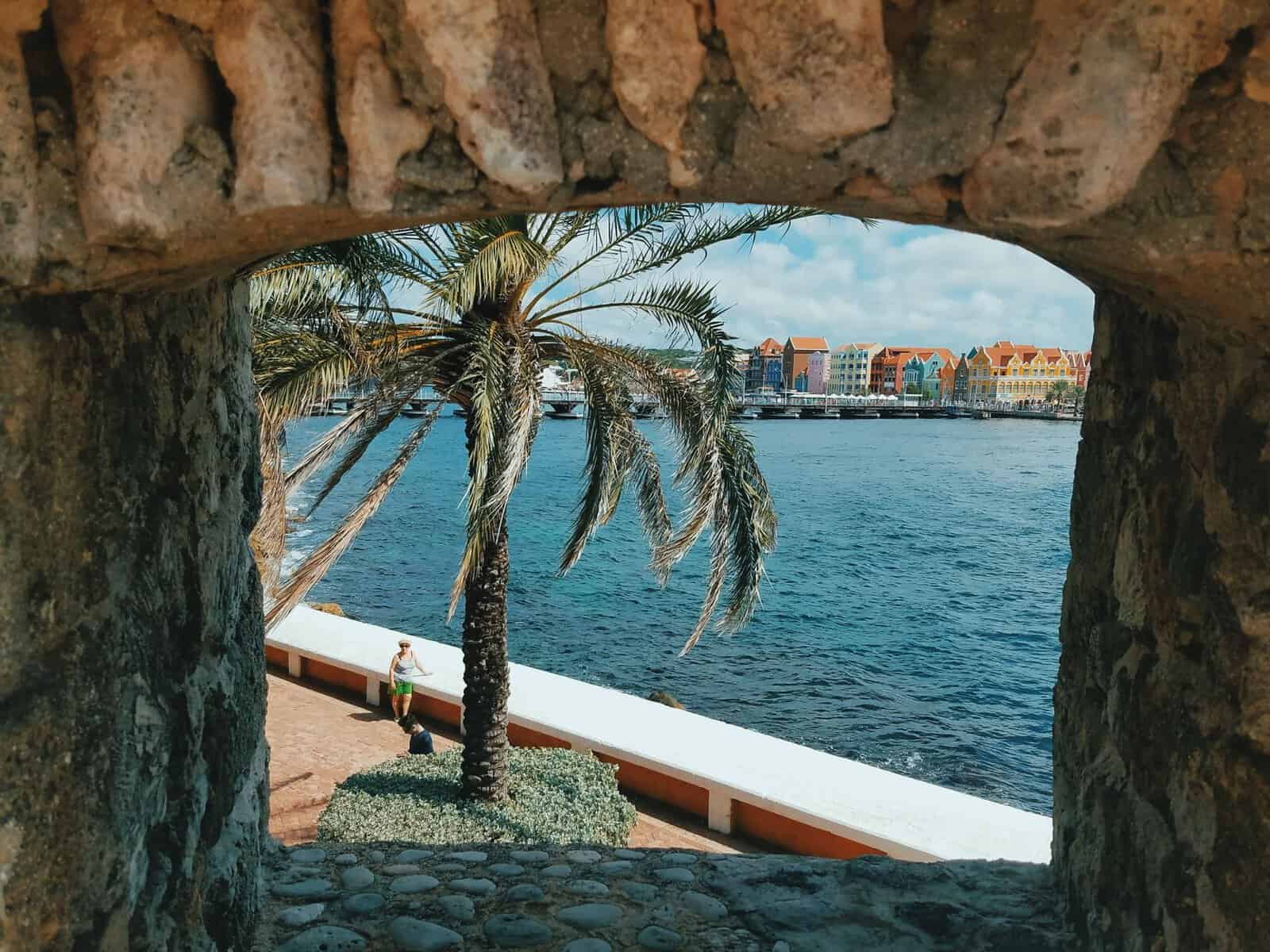


Beyond the waterfront: Otrobanda has narrow lanes, colourful murals and the Kura Hulanda museum, which tells the story of the transatlantic slave trade and Curaçao’s African heritage. Pietermaai, east of Punda, is a district of restored 18th- and 19th-century mansions that is now the place for an evening drink and dinner, and Scharloo, across the Waaigat inlet, has grand merchant houses from the 19th century. Allow at least a full day for Willemstad, and come back in the evening.
The best beaches in Curaçao
Curaçao doesn’t have the long sweeping beaches of Aruba. Instead it has more than 35 smaller beaches and coves, most on the sheltered south-west coast, many tucked between cliffs with brilliantly clear water and reefs a few strokes from the sand. The west end, around Westpunt, has the most beautiful; the south-east, near Willemstad, has the livelier beach clubs.

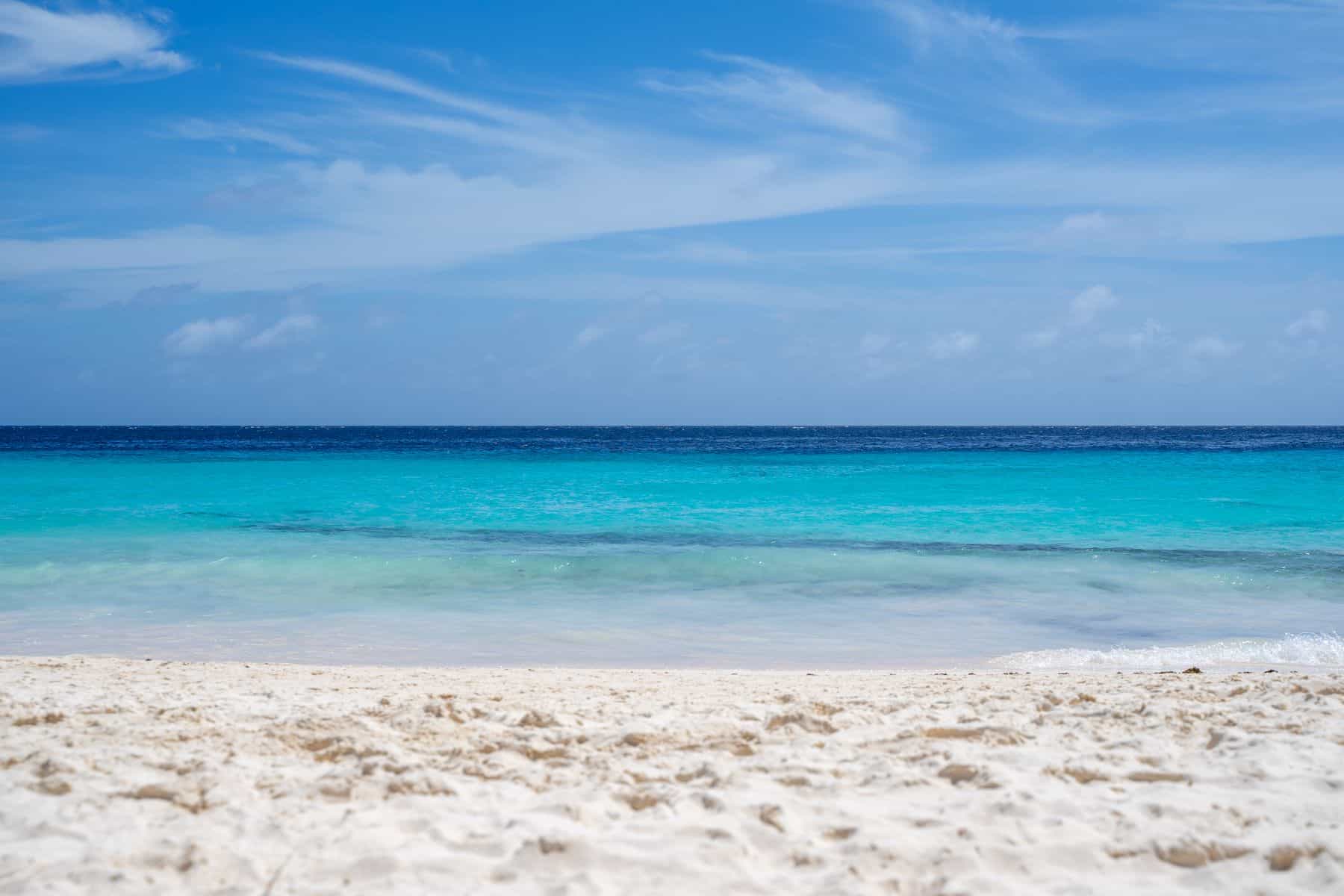
Playa Kenepa Grandi (also called Grote Knip) is the island’s postcard beach: a perfect crescent of white sand in a bay of startling blue, with a viewpoint on the cliff above. Its little neighbour Kenepa Chiki (Kleine Knip) is just around the corner. Both get busy at weekends, when local families come out.
Playa Lagun is a narrow cove between cliffs with a small fishing fleet and superb snorkelling, often with turtles. Playa Piskado (Grote Berg), near Westpunt, is where fishermen clean their catch and sea turtles come in to feed, so you can swim with them in shallow water.
Cas Abao and Porto Mari, in the middle of the west coast, are wide, well-kept beaches with facilities, loungers and reefs for snorkelling and diving; Daaibooi is a small, local favourite.
| Beach | Where | Best for |
|---|---|---|
| Playa Kenepa Grandi | West end | The classic view; swimming |
| Kenepa Chiki | West end | A smaller, quieter cove |
| Playa Lagun | West end | Snorkelling, turtles, fishing boats |
| Playa Piskado | Westpunt | Swimming with turtles |
| Cas Abao | West coast | Facilities, families, snorkelling |
| Porto Mari | West coast | Double reef for diving and snorkelling |
| Jan Thiel and Mambo Beach | South-east, near Willemstad | Beach clubs, bars and restaurants |


Things to do in Curaçao
Snorkelling and diving
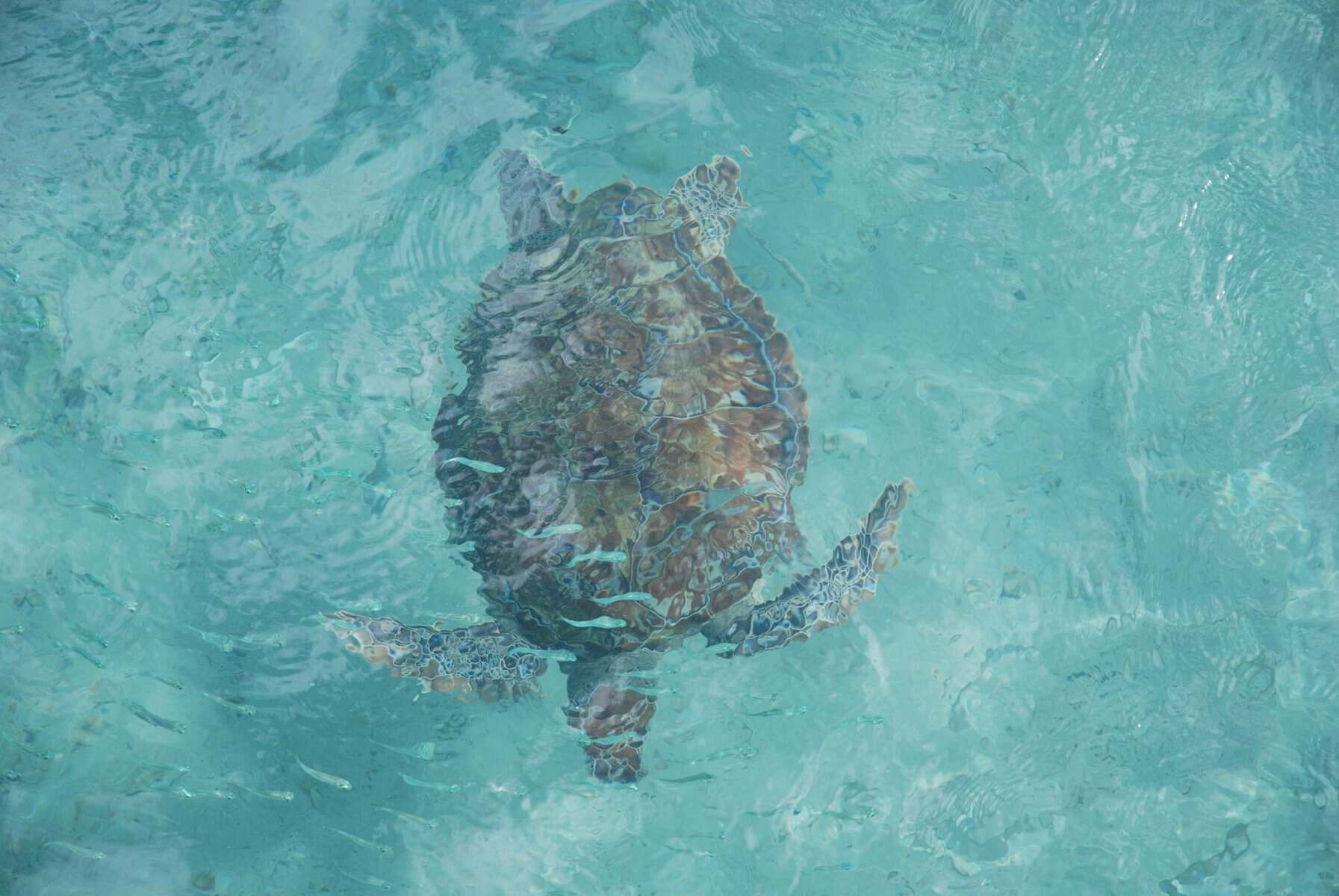
Curaçao is one of the best places in the Caribbean to snorkel and dive, with reefs close to the shore all along the west coast. Turtles are common at Playa Lagun and Playa Piskado. Divers can explore the Tugboat, a small wreck in shallow water at Caracas Bay, and the protected reefs of the underwater park on the south-east coast.

Klein Curaçao
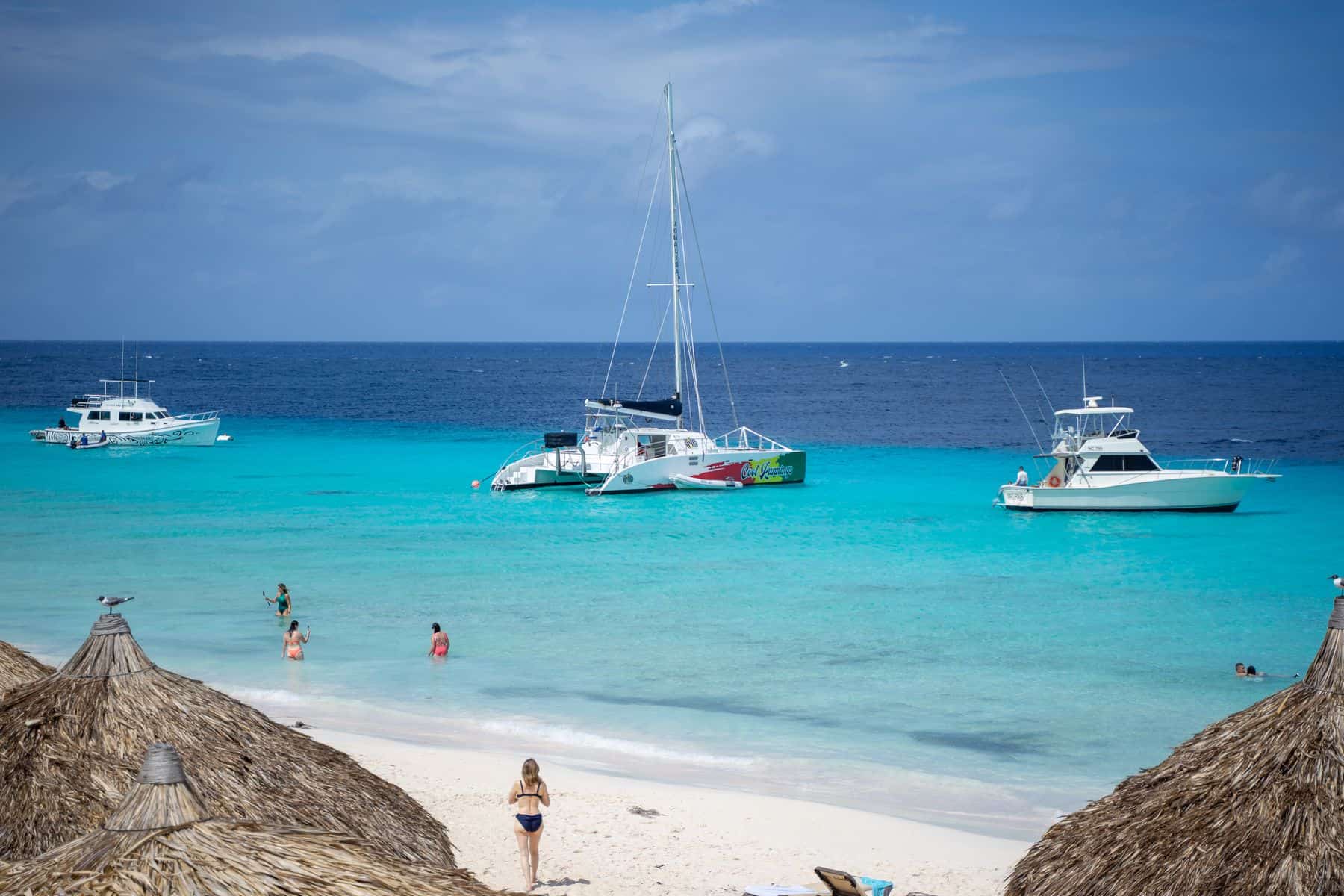
A tiny, flat, uninhabited island about 1.5 to 2 hours by boat off the south-east coast, with a long white beach, an old pink lighthouse and turtles in the shallows. Day trips by catamaran or motor boat include lunch and snorkelling. The crossing can be rough, so take seasickness tablets if you need them.

Christoffel and Shete Boka
Christoffel National Park covers the island’s wild north-west, with trails, old plantation land, cactus forest and Mount Christoffel (372 m), Curaçao’s highest point: start early, before the heat. Next door, Shete Boka National Park protects a stretch of the north coast where waves boom into caves and inlets (bokas), such as Boka Tabla, and sea turtles nest.
Flamingos and the salt pans
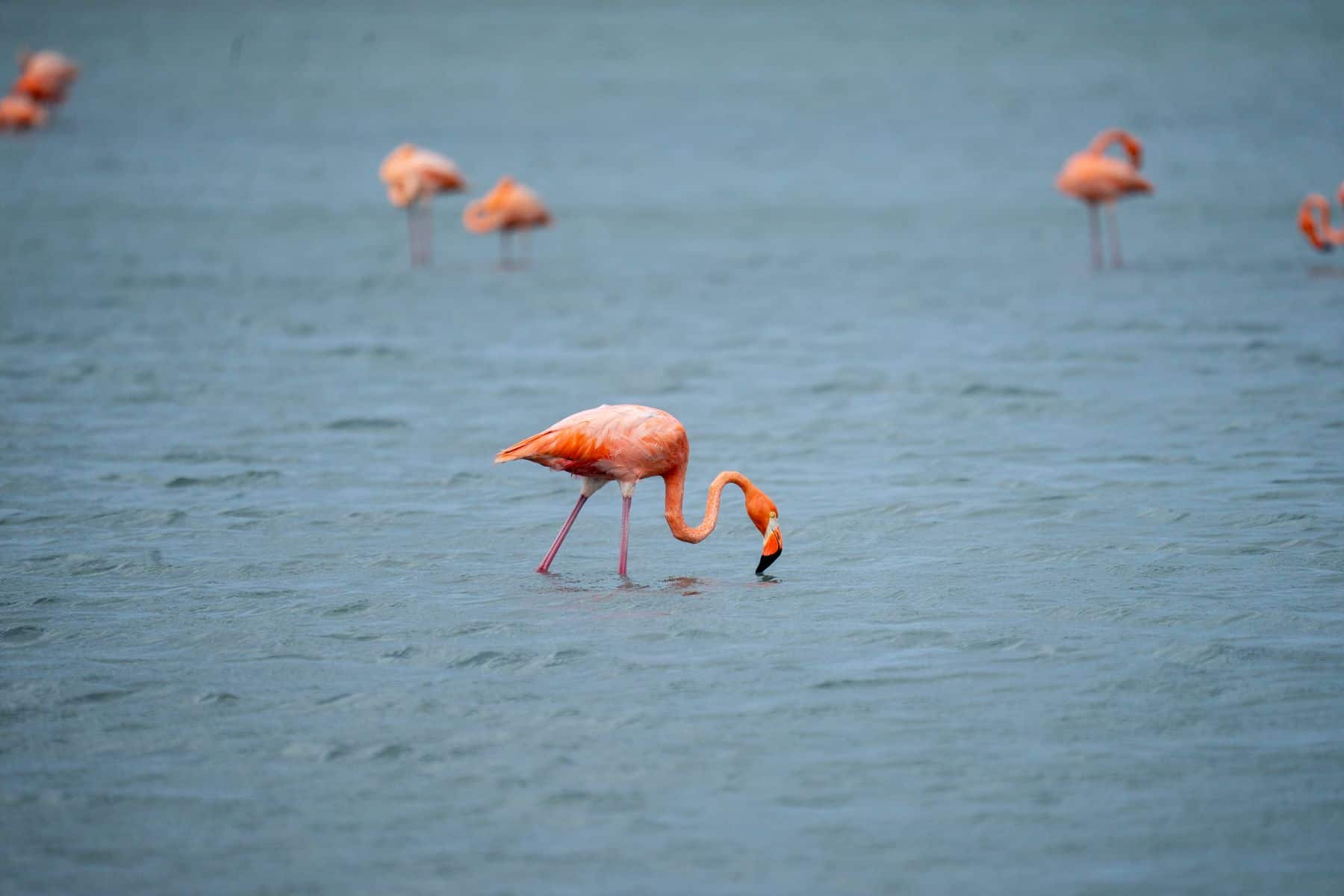
Wild flamingos feed in the salt pans at Jan Kok and around Sint Willibrordus, on the way to the west-end beaches. Early morning and late afternoon are best; keep your distance and stay quiet.
- Plantation houses. Dozens of landhuizen, old plantation houses, survive across the island. Landhuis Knip, near Playa Kenepa, is where the great slave revolt of 1795 led by Tula began, and houses a small museum about it.
- Hato Caves. Limestone caves near the airport with stalactites, an underground pool and ancient Amerindian drawings, seen on guided tours.
- Curaçao liqueur. The famous blue (and orange and clear) liqueur is made from the dried peel of the bitter laraha orange, which grows on the island; you can visit the distillery, in a 19th-century plantation house outside Willemstad.
- Spanish Water. A large, sheltered lagoon on the south-east coast for sailing, kayaking and paddleboarding.
- Carnival. Curaçao’s Carnival fills January and February with parades, music and parties, ending before Lent.
Food and drink in Curaçao
Curaçao’s cooking is a rich mix of African, Dutch, Latin American and Caribbean influences. Try keshi yena, a round of cheese stuffed with spiced meat and baked; stoba, slow-cooked stew of goat (kabritu) or beef; funchi, a firm cornmeal side like polenta; pastechi, savoury filled pastries eaten for breakfast; and fresh fish, often with pan bati pancakes and fried plantain. The adventurous can try sopi di yuana, iguana soup. Lunch at the counters of Plasa Bieuw in Punda is the most authentic (and fun) way to eat, and Pietermaai is the place for dinner. The tap water is desalinated and safe to drink.
Best time to visit Curaçao
Curaçao is warm, dry and breezy all year, with daytime highs of about 28 to 31°C and the sea at around 26 to 29°C. January to April is the peak season, with sunshine, cooling trade winds and very little rain, when the UK is cold and grey; it is also busiest and most expensive around Christmas, February half-term and Easter. May to September is hotter, still mostly dry and quieter, and the sea is at its calmest from about late summer, which is good for diving. October to December is the rainy season, with short tropical showers, mostly in November, rather than whole wet days. Because Curaçao is outside the main hurricane belt, it’s one of the safer Caribbean choices from August to October.
| Month | Curaçao | Aruba |
|---|---|---|
| Jan | 28°C / 25°C · 35 mm | 28°C / 25°C · 35 mm |
| Feb | 28°C / 25°C · 30 mm | 28°C / 25°C · 25 mm |
| Mar | 29°C / 25°C · 30 mm | 28°C / 25°C · 25 mm |
| Apr | 29°C / 26°C · 15 mm | 29°C / 26°C · 15 mm |
| May | 30°C / 26°C · 25 mm | 30°C / 26°C · 15 mm |
| Jun | 30°C / 26°C · 35 mm | 30°C / 26°C · 25 mm |
| Jul | 30°C / 26°C · 40 mm | 30°C / 26°C · 30 mm |
| Aug | 31°C / 27°C · 35 mm | 30°C / 27°C · 30 mm |
| Sep | 31°C / 27°C · 45 mm | 31°C / 27°C · 40 mm |
| Oct | 30°C / 27°C · 65 mm | 30°C / 27°C · 65 mm |
| Nov | 29°C / 26°C · 115 mm | 29°C / 26°C · 110 mm |
| Dec | 29°C / 26°C · 60 mm | 29°C / 26°C · 55 mm |
Average daily high / low and monthly rainfall, 10-year ERA5 data for grid points by Willemstad and Oranjestad. The data smooths out the heat of the day, so beaches feel a degree or two warmer.
How to get to Curaçao from the UK

There are no direct flights from the UK to Curaçao. The usual route is via Amsterdam: a short flight from London or a regional UK airport, then a direct flight of about 10 hours to Curaçao International Airport, about 20 minutes’ drive from Willemstad. Allow around 14 to 16 hours door to door. You can also connect via the United States (which needs an ESTA, even in transit).
Island-hopping: Aruba and Bonaire are each about 30 minutes away by air, so it is easy to combine two or three of the ABC islands. There is no regular passenger ferry between them. Willemstad is also a popular stop on southern Caribbean cruises: see our guide to Caribbean cruises from the UK.
The digital immigration card: all visitors must complete Curaçao’s online digital immigration card within 48 hours before arrival, and also if you are only travelling through Curaçao.
Getting around
To see the west-end beaches, the national parks and the flamingos, you really need a hire car, at least for a few days. You drive on the right, and the FCDO confirms you can use a UK photocard driving licence. Roads are generally good, but signs can be sparse once you leave Willemstad. Buses exist but are infrequent and not practical for the beaches. Use registered taxis, which have number plates starting with TX; most have no meter, so agree the fare first. Willemstad itself is best explored on foot. The drive from Willemstad to Westpunt takes about 45 minutes.
Where to stay in Curaçao
- Willemstad (Punda, Otrobanda and Pietermaai) for boutique hotels in restored colonial buildings, with the waterfront, museums and the best restaurants on your doorstep. Pietermaai is the liveliest in the evening.
- The coast just outside Willemstad, around Piscadera Bay and the city beaches, for larger resort hotels with pools and beaches, a short taxi ride from town.
- Jan Thiel and Mambo Beach (south-east) for beach clubs, restaurants and apartments, popular with families and Dutch visitors.
- The west end (Westpunt and around) for small, peaceful hotels, villas and dive lodges near the best coves, turtles and Christoffel National Park. Quiet in the evening, and you will need a car.
- A villa: Curaçao has many, often with pools and sea views, which suit families and groups.
All-inclusive in Curaçao: there are a few all-inclusive resorts, mostly on the coast near Willemstad, but Curaçao rewards exploring: most people get more from a boutique hotel or villa with a hire car. Tell us your style and budget and we’ll match the right area and hotel.
Curaçao or Aruba?
| Curaçao | Aruba | |
|---|---|---|
| Feel | Colourful capital, varied, more local | Polished beach resort island |
| Beaches | Many small coves between cliffs | Long, wide white-sand beaches |
| Best for | Culture, food, snorkelling and diving, exploring | Pure beach holidays, families, couples |
| Hotels | Boutique hotels, resorts near Willemstad, villas | Large resorts and boutique hotels on the beach |
| Getting around | Hire car essential | Easy by car, bus or taxi |
They are about 30 minutes apart by air, so many people do both. Read our Aruba holiday guide for the beaches, Arikok National Park and the north coast.
Sample trips
Curaçao in a week
- Willemstad (2 nights)
- West-end coves (5)
- Day trip to Klein Curaçao
Town first, then beaches, turtles and Christoffel from a peaceful west-end base.
Curaçao and Aruba
- Curaçao (5 nights)
- Short flight to Aruba
- Aruba (5)
Colour, culture and coves, then Aruba’s great white beaches.
Curaçao and Bonaire
- Curaçao (6 nights)
- Short flight to Bonaire
- Bonaire (5)
For divers and snorkellers: two of the healthiest reef systems in the Caribbean.
Weighing up other islands? See our Caribbean islands guide, or compare Curaçao with the Cayman Islands, Barbados and Anguilla.
Practical tips
- Entry: British visitors can stay up to 90 days in a calendar year without a visa; your passport must be valid for your whole stay. Complete the digital immigration card within 48 hours of arrival. Check the FCDO Curaçao advice before you go.
- Safety: the main tourist areas are generally safe, but petty theft and street crime happen. Keep valuables out of sight in the car and on the beach, and avoid isolated areas, including beaches, after dark.
- Money: the currency is the Caribbean guilder, which replaced the Netherlands Antillean guilder in 2025. US dollars are widely accepted and cards are taken in most places.
- Electricity: 110 to 127 volts with US-style plugs, so bring an adapter.
- Reefs: wear water shoes for rocky entries, use reef-safe sun cream, and never touch or stand on coral or chase turtles.
- Sun: the breeze hides how strong the sun is; take hats and high-factor sun cream, and plenty of water on hikes.
Frequently asked questions
Where is Curaçao?
In the southern Caribbean, about 65 km north of Venezuela, between Aruba and Bonaire. It is the largest of the ABC islands and a constituent country of the Kingdom of the Netherlands.
Can you fly direct from the UK to Curaçao?
No. There are no direct flights from the UK. Most people fly via Amsterdam, with a direct flight of about 10 hours from there to Curaçao. You can also connect via the United States, which needs an ESTA.
Do I need a visa for Curaçao?
No. British visitors can stay up to 90 days in a calendar year without a visa. You must complete Curaçao's online digital immigration card within 48 hours before you arrive.
Is Curaçao in the hurricane belt?
No. Curaçao is south of the main hurricane belt. Hurricane season runs from June to November and occasional tropical storms affect the island, but most hurricanes pass well to the north.
What is the best time to visit Curaçao?
Curaçao is warm, dry and breezy all year. January to April is peak season. October to December is the rainy season, with short showers rather than days of rain, and summer is hot and quieter.
What is the best beach in Curaçao?
Playa Kenepa Grandi (Grote Knip) on the west end is the most famous. Playa Lagun and Playa Piskado are best for snorkelling with turtles, and Cas Abao is good for families.
What currency is used in Curaçao?
The Caribbean guilder, which replaced the Netherlands Antillean guilder in 2025. US dollars are widely accepted, and cards are taken in most hotels, restaurants and shops.
Curaçao or Aruba: which is better?
Curaçao has more culture, a colourful capital, great food and small coves with excellent snorkelling. Aruba has bigger beaches and more polished resorts. They are about 30 minutes apart by air, so you can combine them.
Keep planning
- Aruba holiday guide
- Caribbean islands guide
- Cayman Islands holiday guide
- Barbados holiday guide
- Anguilla holiday guide
- Best Caribbean cruises from the UK
- Caribbean holiday offers
- Tailor-made holidays
Plan your Curaçao holiday with a Travel Designer
Tell us when you’d like to go and we’ll match the right area and hotel, arrange flights via Amsterdam, a hire car and boat trips, and add Aruba or Bonaire if you like, in one ATOL-protected booking.
Make an enquiry Tailor-made holidays