Anguilla in brief
- A small British Overseas Territory just north of St Martin, in the north-eastern Caribbean.
- More than 30 beaches, led by Shoal Bay East, Meads Bay and Rendezvous Bay.
- No direct flights from the UK: fly to Antigua or St Maarten, then hop across by plane or boat.
- Best from December to April, in the dry season; hurricane season is June to November.
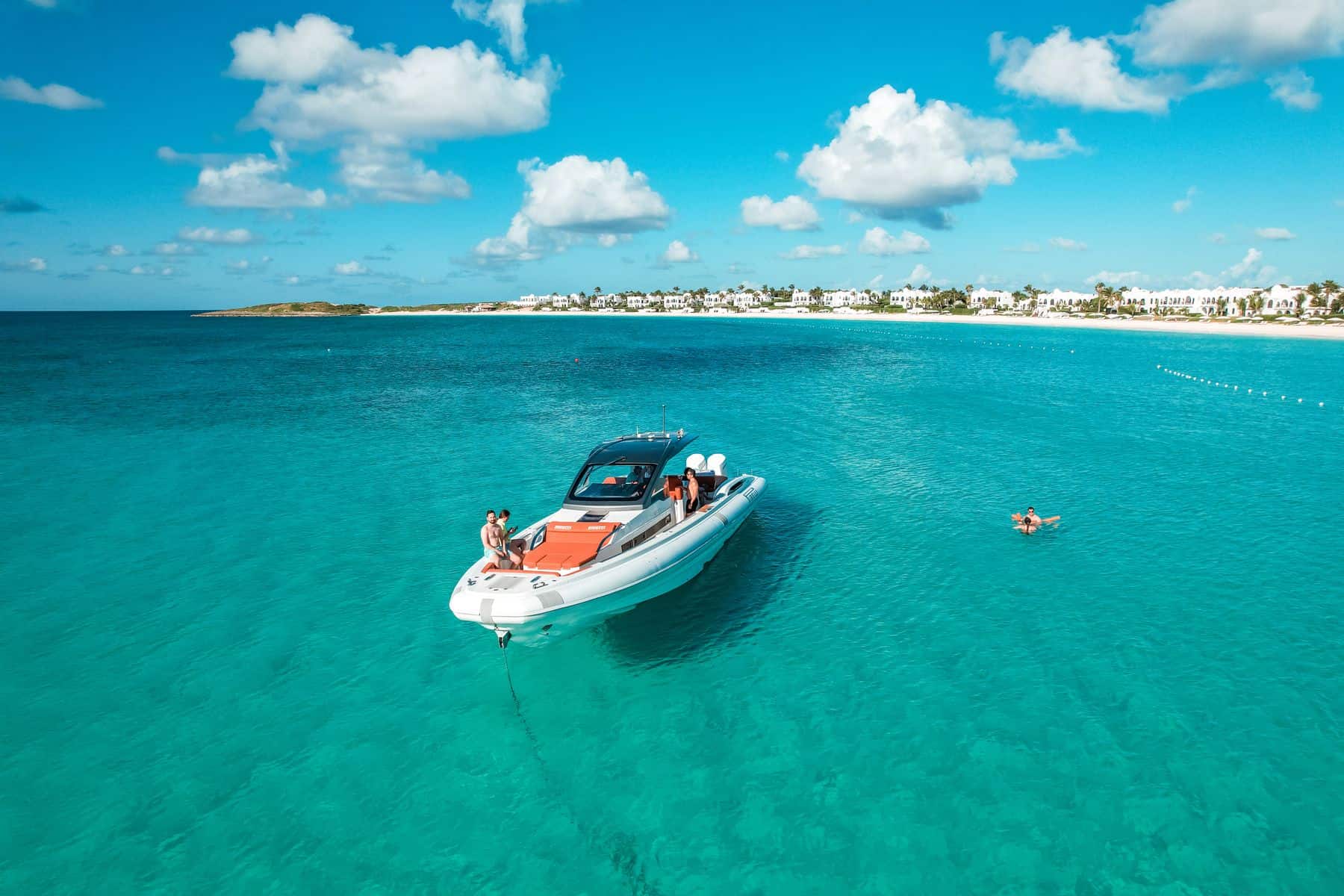
Anguilla is a small, flat, coral island in the north-eastern Caribbean with some of the finest beaches in the region: more than 30 of them, mostly of soft white sand on clear, calm, turquoise water. There are no cruise ships, no high-rise blocks and no casinos, and the island has a reputation for quiet luxury, excellent food and a relaxed, friendly pace. It’s a British Overseas Territory, a short boat ride from St Martin. This guide covers where Anguilla is, the best beaches from Shoal Bay to Meads Bay and Rendezvous Bay, Sandy Ground and the offshore cays, what to eat, how to get there from the UK, where to stay and the best time to go.
Where is Anguilla?

Anguilla is the most northerly of the Leeward Islands, in the north-eastern Caribbean where the Caribbean Sea meets the Atlantic. It lies about 8 km north of St Martin / Sint Maarten, whose hills you can see across the channel, and about 180 km north-west of Antigua. Puerto Rico and the Virgin Islands are to the west.
The island is long and thin, about 26 km from end to end and no more than 5 km wide, and it is low and dry, with scrub, salt ponds and limestone cliffs rather than mountains and rainforest. That is why its water is so clear: there are no rivers to cloud it. The capital, The Valley, is in the middle of the island; about 16,000 people live here.
Anguilla is a British Overseas Territory, English-speaking, with the King as head of state. Its name comes from the Spanish or French for eel, after its shape.
The best beaches in Anguilla
Every beach in Anguilla is public, right up to the vegetation line, even in front of the smartest resorts. The north coast faces the Atlantic and is generally livelier; the south and west coasts face the Caribbean and St Martin and are usually calmer. These are the best known:
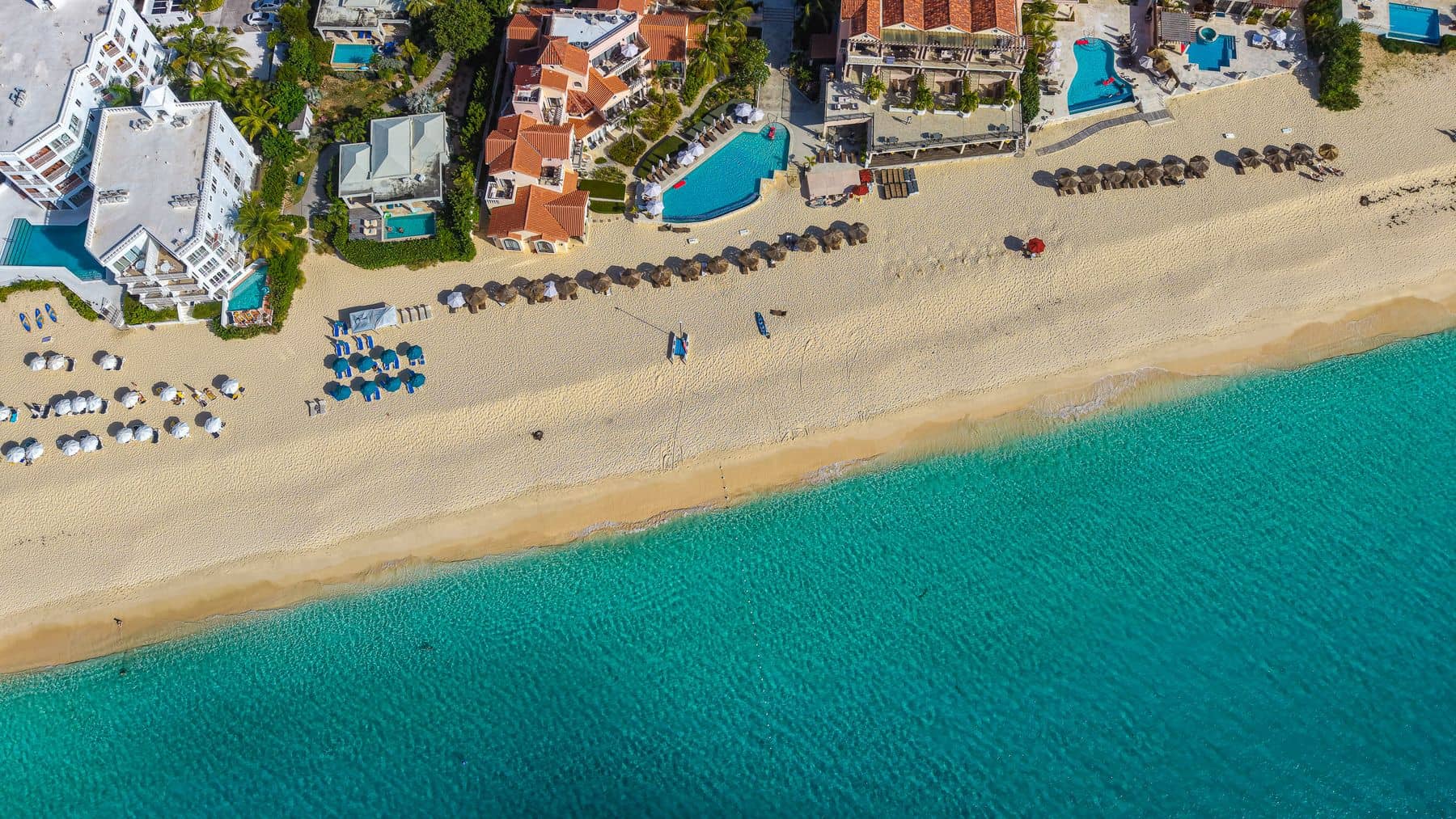
Shoal Bay East is Anguilla’s most famous beach and regularly named among the best in the Caribbean: a long curve of powder-soft sand on the north-east coast with a reef close to shore for snorkelling. Beach bars hire loungers and umbrellas, and the eastern end is quieter. Don’t confuse it with Shoal Bay West, a smaller, peaceful beach at the other end of the island.
Meads Bay is a wide, gently curving bay on the north-west coast, lined with some of the island’s best hotels and restaurants, with deep sand and water usually calm enough for swimming. Come in the late afternoon for the sunset.
Rendezvous Bay is about 2.5 km of pale sand on the south coast, looking across to the hills of St Martin: long, open and peaceful, ideal for walking, with a beach bar famous for weekend live music. Maundays Bay, a sheltered crescent at the south-western tip, is one of the prettiest on the island, and neighbouring Cove Bay is quieter still.
| Beach | Where | Best for |
|---|---|---|
| Shoal Bay East | North-east coast | Powder sand, snorkelling, beach bars |
| Meads Bay | North-west coast | Swimming, sunsets, restaurants |
| Rendezvous Bay | South coast | Long walks, views of St Martin, live music |
| Maundays Bay and Cove Bay | South-west tip | Calm water, quiet |
| Little Bay | North-west cliffs | Snorkelling and cliff jumping, by boat |
| Sandy Ground (Road Bay) | North-west coast | Boats, bars and evening life |
| Captain’s Bay | North-east tip | Wild and empty; walks, not swimming |
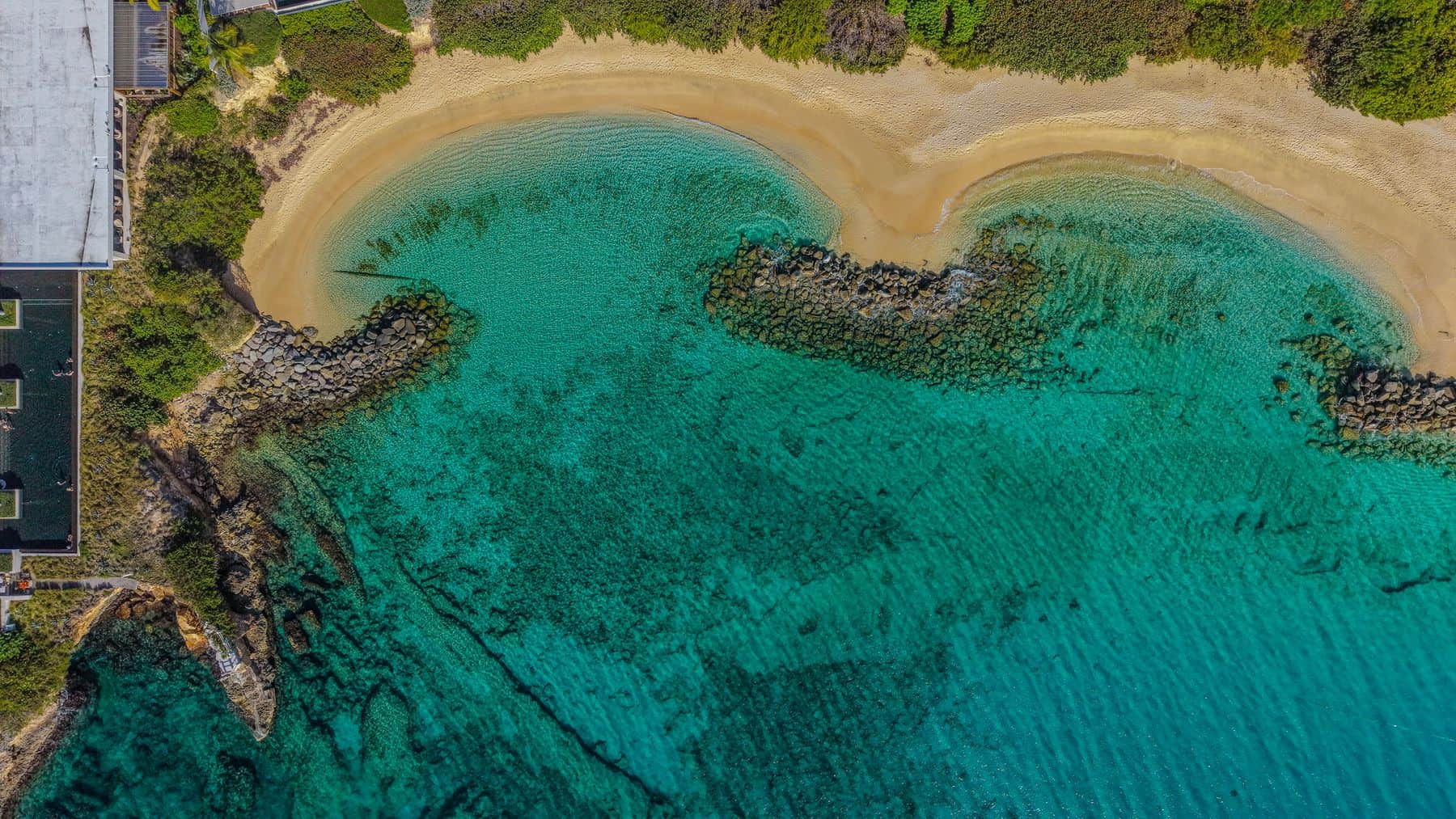
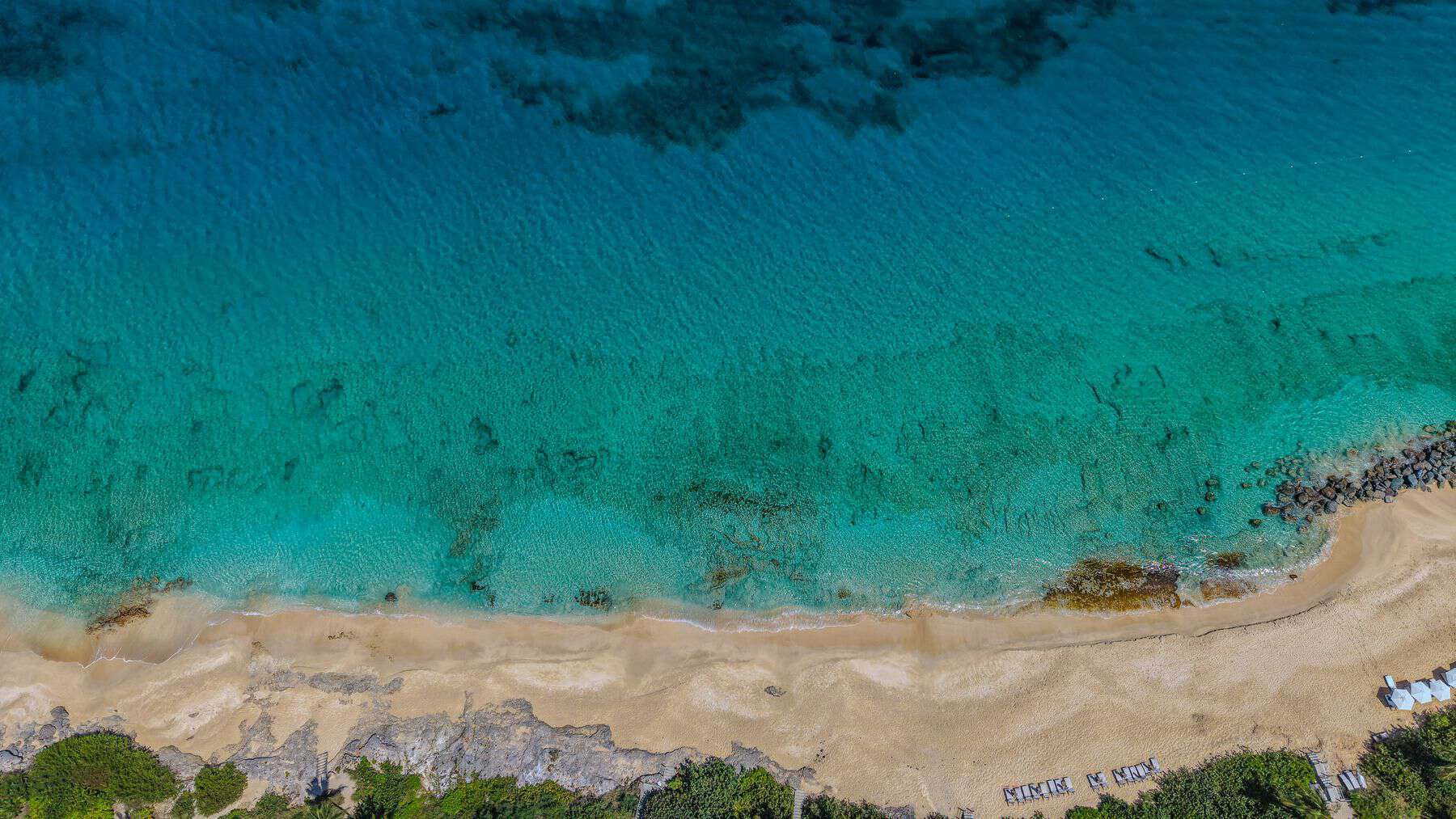
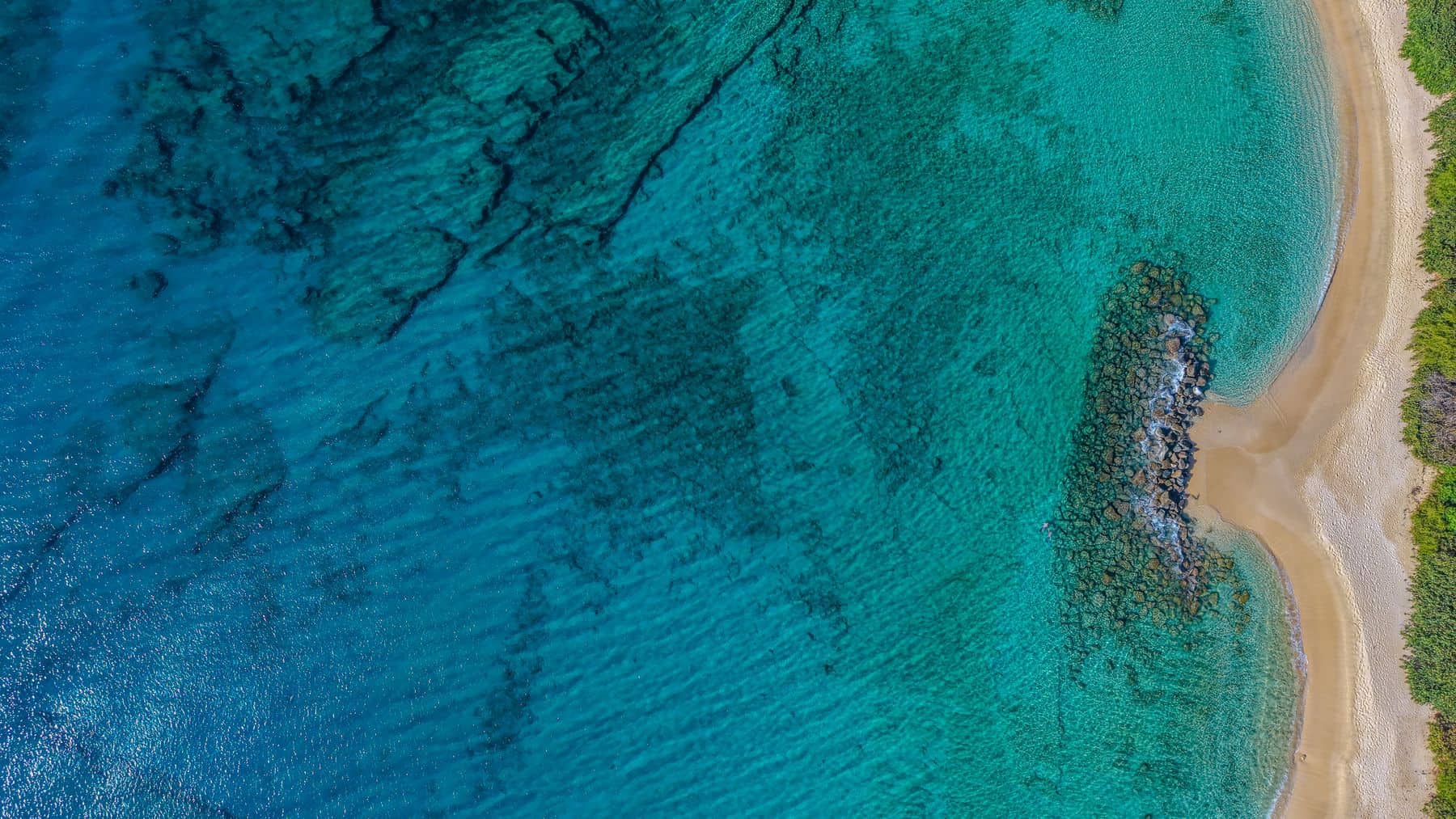
More to find: Little Bay, a tiny cove under cliffs on the north-west coast, reached by boat or a steep scramble, with excellent snorkelling and cliff jumping; Shoal Bay West and Barnes Bay at the west end; Crocus Bay below The Valley; and Captain’s Bay, wild and empty on the north-east coast, too rough for swimming but lovely for a walk.
Sandy Ground and the offshore cays
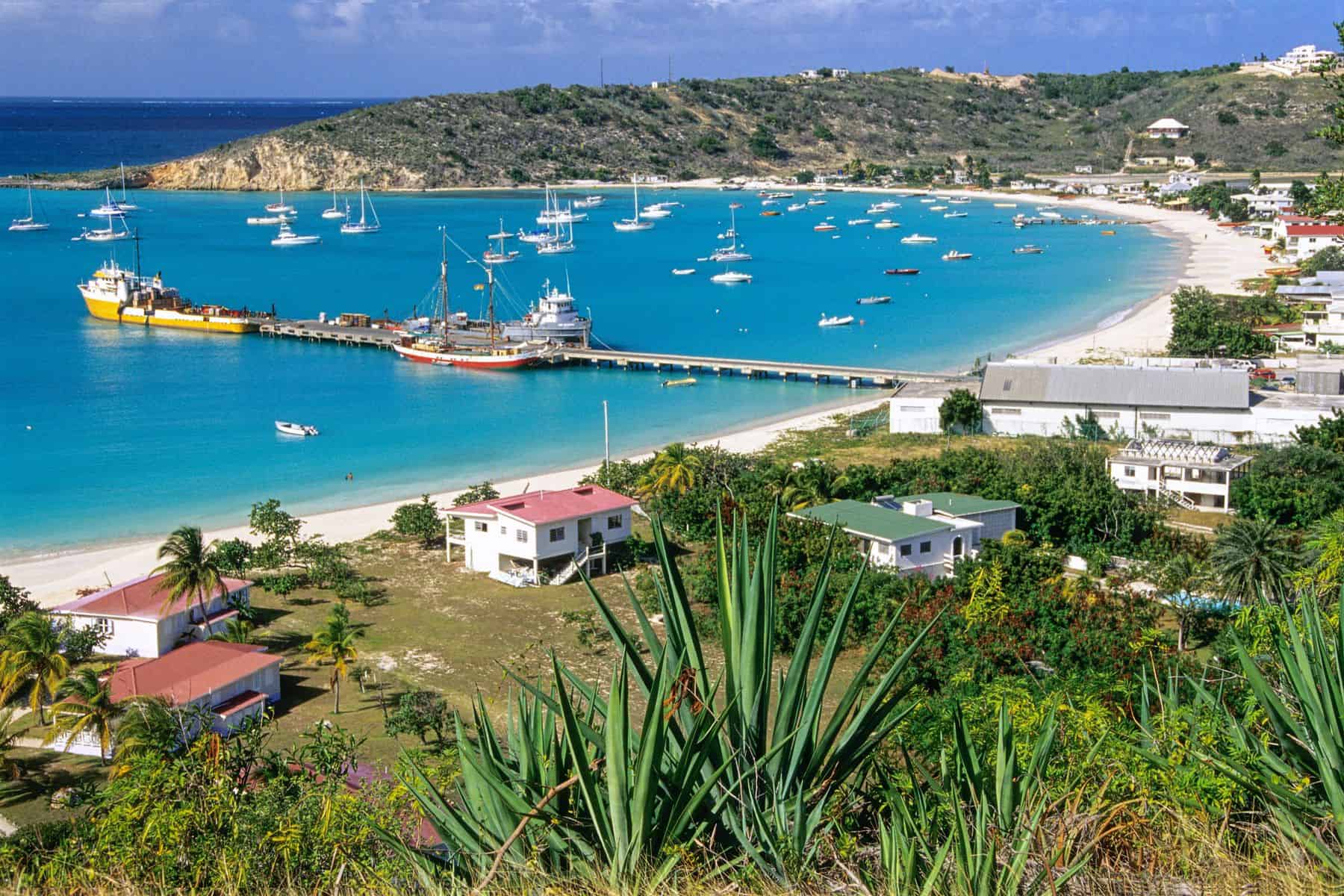
Sandy Ground, on Road Bay, is the closest thing Anguilla has to a resort village: a strip of sand with yachts at anchor in the bay, a salt pond behind it and a row of beach bars and restaurants. It’s the island’s main harbour for visiting yachts and the liveliest spot in the evening, with live music most nights in season.
Sandy Island is a tiny sandbar with a few palms and a beach bar, a short boat ride out of Road Bay, with snorkelling on the surrounding reef. Further out, the Prickly Pear Cays are two uninhabited islets with white beaches and clear water, a classic day trip by catamaran or sailing boat.
Boats from Sandy Ground and Crocus Bay also take you to Little Bay. Further offshore, uninhabited Dog Island and remote Sombrero, with its lighthouse, are for special trips only.
Things to do in Anguilla
Anguilla is mostly about the beach, the sea and long lunches, but there is more to do than you might think:
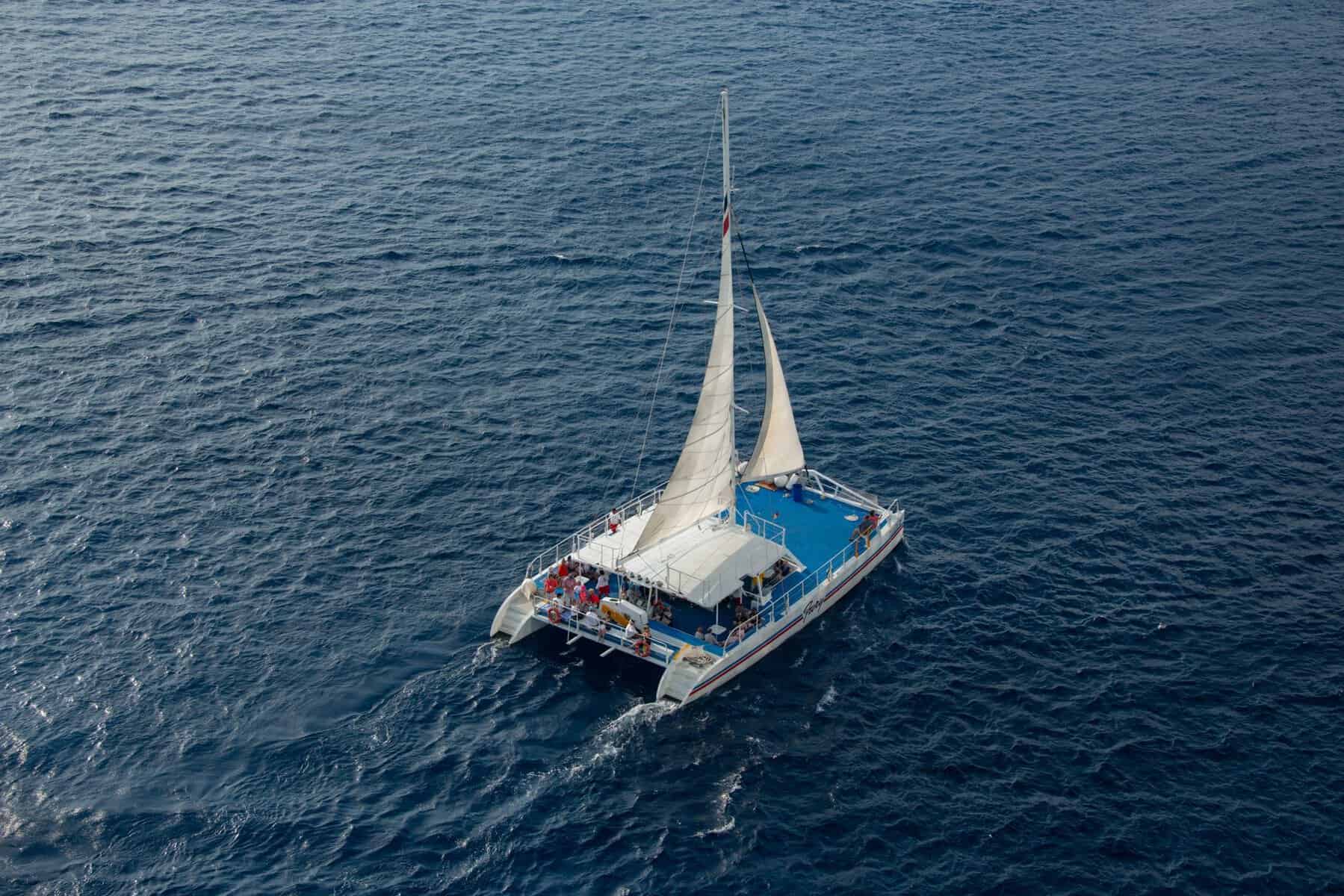
- Sail and snorkel. Catamaran and sailing day trips visit the cays and the reefs; snorkelling is good straight off the beach at Shoal Bay, Little Bay and the west end.
- Dive. Anguilla has reefs and a series of wrecks deliberately sunk as dive sites. There is no decompression chamber on the island, so dive conservatively and check your operator and insurance.
- Watch the boat racing. Racing locally built sailing boats is the national sport. The biggest races are during the Summer Festival at the start of August, Anguilla’s carnival, and on Anguilla Day (30 May) and other public holidays.
- Island heritage. The Heritage Collection Museum at East End tells the island’s story from the Amerindians to the 1967 Anguilla Revolution; Wallblake House in The Valley is a plantation house from the late 18th century.
- Island Harbour. A working fishing village on the north-east coast with brightly painted boats pulled up on the beach and a tiny cay just offshore.
- Day trip to St Martin or St Barths. The ferry to St Martin takes about 20 to 25 minutes; from there you can go on to St Barths by boat or plane.
- Walk, cycle and paddle. The island is flat, so it’s easy to explore by bike, and calm bays like Rendezvous and Meads are good for kayaks and paddleboards.
Food in Anguilla
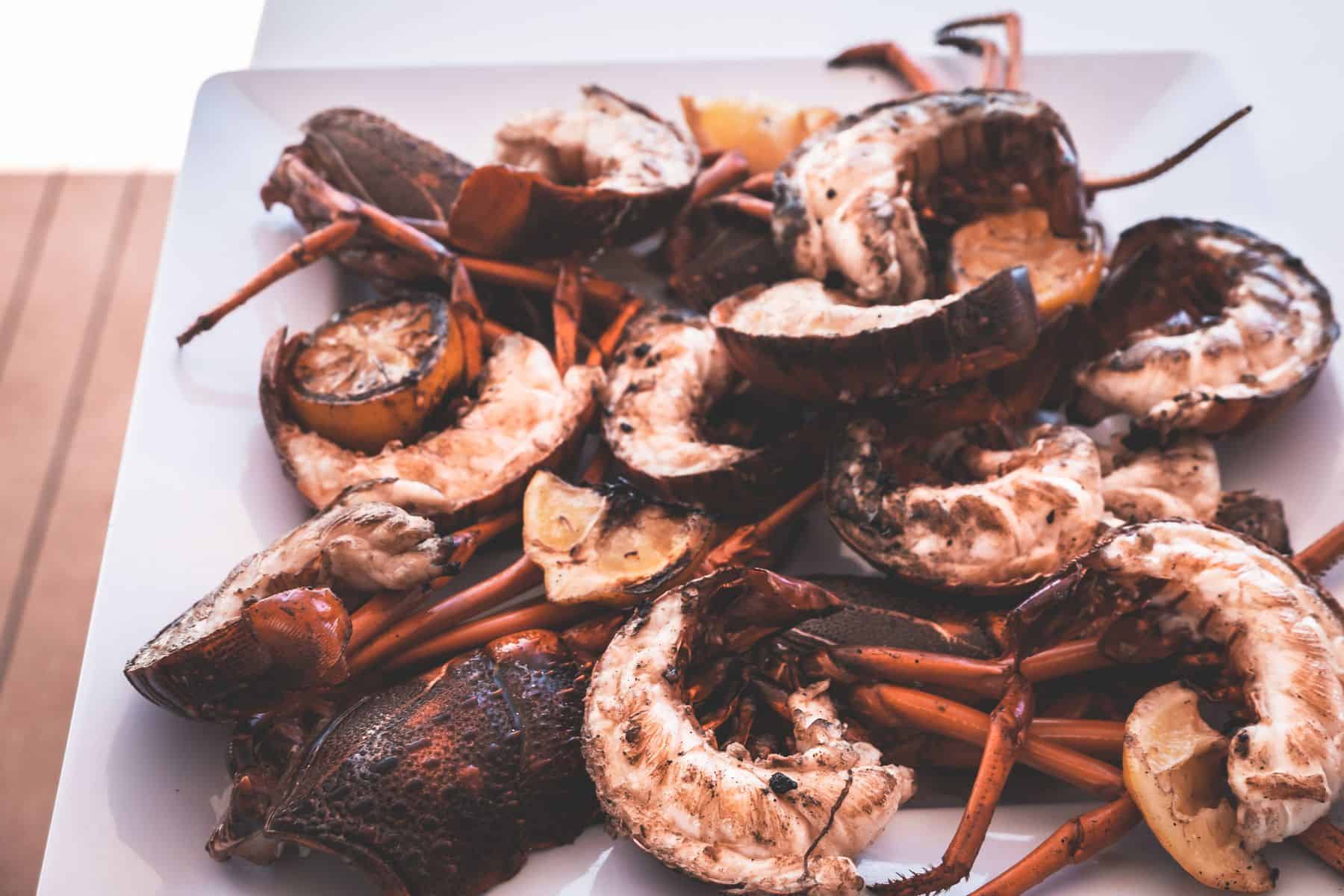
For such a small island, Anguilla has an outstanding food scene: dozens of restaurants, from smart beachfront dining rooms to roadside barbecue shacks, many run by Anguillian chefs. It is one of the best places in the Caribbean to simply eat well.
Look for local lobster and crayfish (a spiny lobster without the big claws), grilled snapper and mahi-mahi, johnny cakes, pigeon peas and rice and goat stew. Saturday and Sunday barbecues, with ribs and chicken from oil-drum grills, are part of island life.
Rum punch is the default drink, and beach bars on Sandy Ground, Shoal Bay and Rendezvous Bay have live music, especially at weekends. Many restaurants are small and popular in the winter season, so book dinner a day or two ahead.
Best time to visit Anguilla
Anguilla is warm all year, with daytime highs of about 27 to 31°C and the sea around 26 to 29°C. It is also one of the driest islands in the Caribbean. The best time to visit is December to April: sunny, breezy and dry, but also the busiest and most expensive season, especially at Christmas, New Year and Easter. May and June are hotter and quieter, and still mostly dry. July to November is the wetter, more humid half of the year and the hurricane season (officially 1 June to 30 November, with the highest risk from August to October); some hotels and restaurants close for part of September and October. The Summer Festival in early August is the island’s big party.
| Month | High / low | Rain |
|---|---|---|
| Jan | 26°C / 24°C | 35 mm |
| Feb | 25°C / 24°C | 30 mm |
| Mar | 25°C / 24°C | 20 mm |
| Apr | 26°C / 24°C | 35 mm |
| May | 27°C / 25°C | 45 mm |
| Jun | 27°C / 26°C | 40 mm |
| Jul | 28°C / 26°C | 55 mm |
| Aug | 28°C / 27°C | 85 mm |
| Sep | 28°C / 27°C | 120 mm |
| Oct | 28°C / 26°C | 125 mm |
| Nov | 27°C / 26°C | 115 mm |
| Dec | 27°C / 25°C | 40 mm |
Average daily high and low and monthly rainfall, 10-year ERA5 data for a grid point over central Anguilla; it smooths out the heat of the day, so expect beaches to feel a couple of degrees warmer.
How to get to Anguilla from the UK

There are no direct flights from the UK to Anguilla, but it’s easy to reach in a day with one connection. The two usual routes are:
Via Antigua: fly from London to Antigua (about 8.5 to 9 hours), then take a short connecting flight of about an hour to Anguilla’s Clayton J Lloyd International Airport. Handy if you want everything on one ticket and no boat transfer.
Via St Maarten: fly to Princess Juliana International Airport on St Maarten, usually with a connection in Paris, Amsterdam or the US, then cross to Anguilla by boat. The public ferry runs from Marigot on the French side to Blowing Point in about 20 to 25 minutes, and private boat transfers go direct from near the airport. Many hotels arrange the boat for you.
There is a departure tax when you leave Anguilla by air or by ferry. Allow time for the boat transfer when you plan connecting flights on the way home.
Getting around
The easiest way to explore is to hire a car for a few days: you need a temporary local driving permit, which the car hire company arranges, and you drive on the left. Roads are quiet but watch for goats, speed bumps and potholes. Taxis are easy to find at the airport and ferry terminal and can be called by your hotel; fares are fixed by route, so check before you set off. There are no regular public buses. Nothing on the island is more than about half an hour’s drive away.
Where to stay in Anguilla
- Meads Bay and Barnes Bay (west end, north side) for a choice of luxury hotels and restaurants on a swimmable beach, with sunsets over the sea.
- Maundays Bay, Cove Bay and Rendezvous Bay (south-west) for long, calm beaches with views of St Martin and some of the island’s most celebrated resorts.
- Shoal Bay East for the famous beach on your doorstep, beach bars and snorkelling, with smaller hotels and villas.
- Sandy Ground for evening life, boat trips and good value, in small inns and apartments.
- A private villa: Anguilla has many, from cottages to large houses with staff, and they suit families and groups.

Tell us how you like to holiday and we’ll match the right beach and the right hotel or villa, and arrange the flights and the boat or plane hop.
Sample trips
Anguilla beach week
- Fly to Antigua or St Maarten
- Anguilla (7 nights)
- Boat day to Prickly Pear Cays
A simple, restful week on one of the best beaches in the Caribbean.
Anguilla and St Barths
- St Maarten arrival
- Anguilla (7 nights)
- St Barths (3)
Add a few nights on chic, French St Barths, a short hop by boat or plane from St Martin.
Antigua and Anguilla
- Antigua (5 nights)
- Short flight to Anguilla
- Anguilla (7)
Two contrasting islands: historic, sailing-mad Antigua, then the quiet beaches of Anguilla.
Combining islands? See our Antigua and Barbuda, St Kitts and Nevis and Turks and Caicos guides, or browse Caribbean holiday offers.
Practical tips
- Entry: British citizens don’t need a visa for stays of up to 90 days; your passport must be valid for your whole stay. Check the FCDO Anguilla advice before you go. There is no British Embassy, as Anguilla is a British Overseas Territory.
- Safety: crime is low and tourist areas are generally safe, but the FCDO notes a recent rise in serious crime: avoid deserted places, including beaches, at night, and use the hotel safe.
- Money: the currency is the East Caribbean dollar, but prices are often quoted in US dollars and cards are widely accepted. Anguilla is an expensive island: budget for meals out.
- Electricity: 110 volts with US-style plugs, so bring an adapter.
- Sun and sea: the sun is strong even on breezy days. Use reef-safe sun cream and don’t touch or stand on coral.
- Book ahead: for Christmas, New Year and February half-term, the best rooms and villas go a year ahead.
Frequently asked questions
Where is Anguilla?
In the north-eastern Caribbean, about 8 km north of St Martin / Sint Maarten and about 180 km north-west of Antigua. It is the most northerly of the Leeward Islands and a British Overseas Territory.
How do you get to Anguilla from the UK?
There are no direct flights. Fly to Antigua and take a short connecting flight, or fly to St Maarten and cross by ferry or private boat in about 20 to 25 minutes.
What is the best beach in Anguilla?
Shoal Bay East is the most famous, with soft white sand and snorkelling close to shore. Meads Bay is best for sunsets and restaurants, and Rendezvous Bay for long, quiet walks.
What is the best time to visit Anguilla?
December to April, the dry season, is the best weather and the busiest time. May and June are quieter and still mostly dry. July to November is the hurricane season.
Is Anguilla expensive?
Yes. Anguilla is known for luxury hotels and villas and eating out costs more than on many islands. Smaller inns and apartments around Sandy Ground and Shoal Bay are better value.
Do I need a visa for Anguilla?
No. British citizens can visit for up to 90 days without a visa. Your passport must be valid for the whole of your stay, and there is a departure tax when you leave.
Is Anguilla British?
Yes. Anguilla is a British Overseas Territory with its own government. English is the language and driving is on the left.
How many days do you need in Anguilla?
A week is ideal for the beaches, a boat trip to the cays and a good choice of restaurants. Add a few nights on St Barths or Antigua for a two-island trip.
Keep planning
- Antigua and Barbuda holiday guide
- St Kitts and Nevis holiday guide
- Turks and Caicos holiday guide
- Barbados holiday guide
- St Lucia holiday guide
- Caribbean holiday offers
- Honeymoons
- Tailor-made holidays
- Aruba holiday guide
- Curaçao holiday guide
Plan your Anguilla holiday with a Travel Designer
Tell us when you’d like to go and we’ll match the right beach and hotel or villa, arrange flights via Antigua or St Maarten and the hop across, and add a second island, in one ATOL-protected booking.
Make an enquiry Tailor-made holidays