Tobago in brief
- The quieter island of Trinidad and Tobago, in the far south of the Caribbean.
- Pigeon Point, Buccoo Reef and the Nylon Pool, the Main Ridge rainforest and Castara and Speyside.
- About 10 to 11 hours from London with one stop.
- Best from January to May, in the dry season; south of the main hurricane belt.

Tobago is the smaller, quieter half of Trinidad and Tobago, at the southern end of the Caribbean: an island of palm-fringed bays, coral reefs, fishing villages and a rainforest that has been protected since 1776. It’s unhurried, friendly and far less developed than many Caribbean islands, with no big resort strips and plenty of empty beaches. It’s also one of the best islands in the region for nature: birdwatching, diving with manta rays and turtles nesting on the beaches. This guide covers where Tobago is, Pigeon Point and the best beaches, Buccoo Reef, the Main Ridge rainforest, Castara and Speyside, food, flights from the UK, where to stay and when to go.
Where is Tobago?

Tobago lies in the far south of the Caribbean, about 35 km north-east of Trinidad, which lies just off the coast of Venezuela. Grenada is to the north-west and Barbados to the north-east. Together the two islands make up the Republic of Trinidad and Tobago, independent since 1962 and a member of the Commonwealth.
The island is about 40 km long and 10 km wide. A forested spine, the Main Ridge, runs along the north-east, and the land falls away to the flat coral lowlands of the south-west around Crown Point, where the airport and most hotels are. The capital is Scarborough, on the south coast.
Trinidad, the bigger island, is the country’s busy, multicultural heart, famous for Carnival, steelpan and its food. Tobago, home to about 60,000 people, is where Trinidadians themselves go for a beach break.
Pigeon Point and Tobago’s best beaches

Pigeon Point, on the south-west tip near Crown Point, is Tobago’s postcard beach: white sand, palms, calm turquoise water and a thatched jetty that appears on almost every picture of the island. It is part of a heritage park with a small entrance fee, changing rooms, beach bars and kitesurfing at the windy end. Boats to Buccoo Reef leave from here.
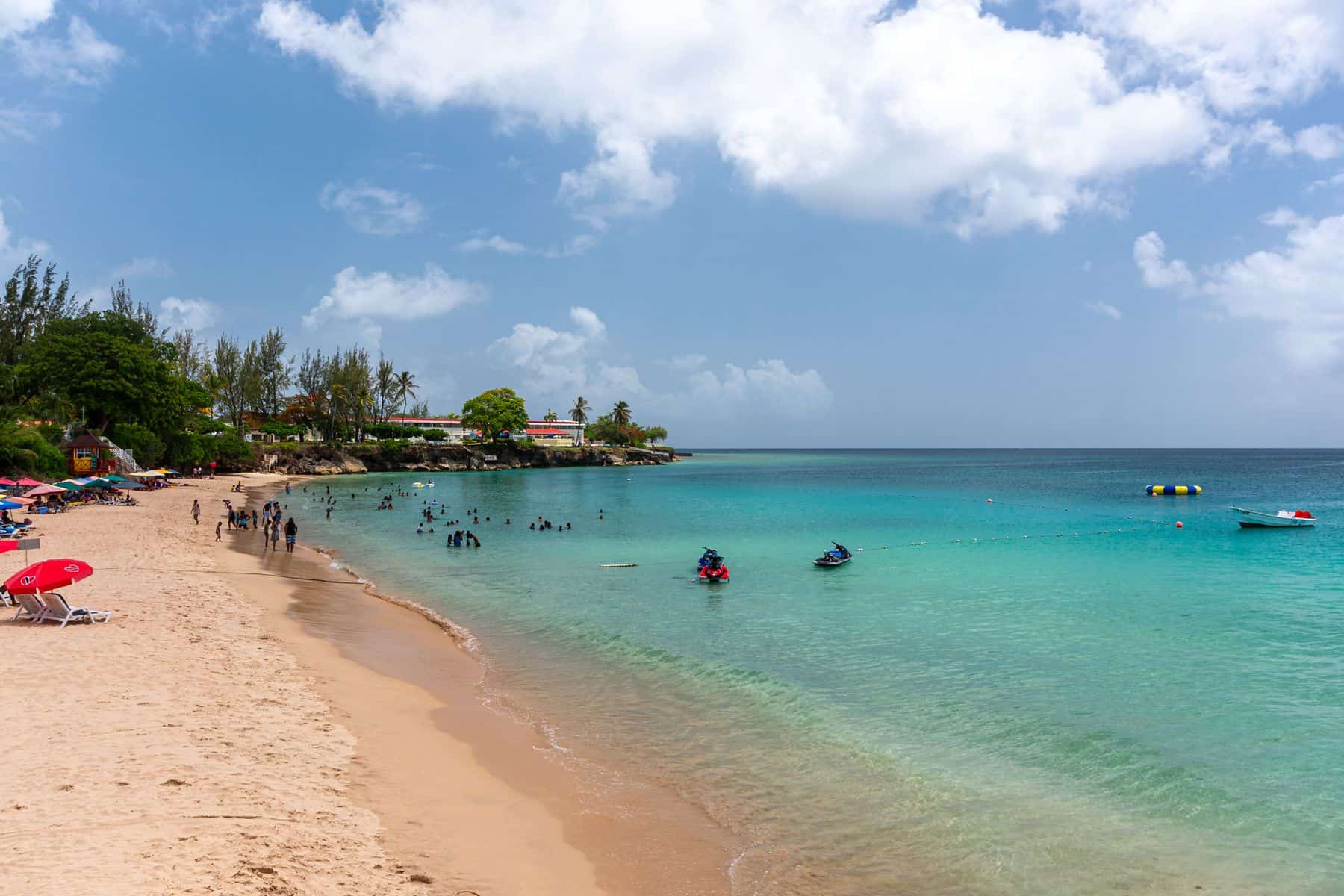
Store Bay, a short walk from the airport, is a small, lively beach with glass-bottom boats and a row of food huts famous for curry crab and dumpling. Mount Irvine Bay has a good reef for snorkelling and a surf break in winter, and Grange Bay next to it is quiet and pretty.
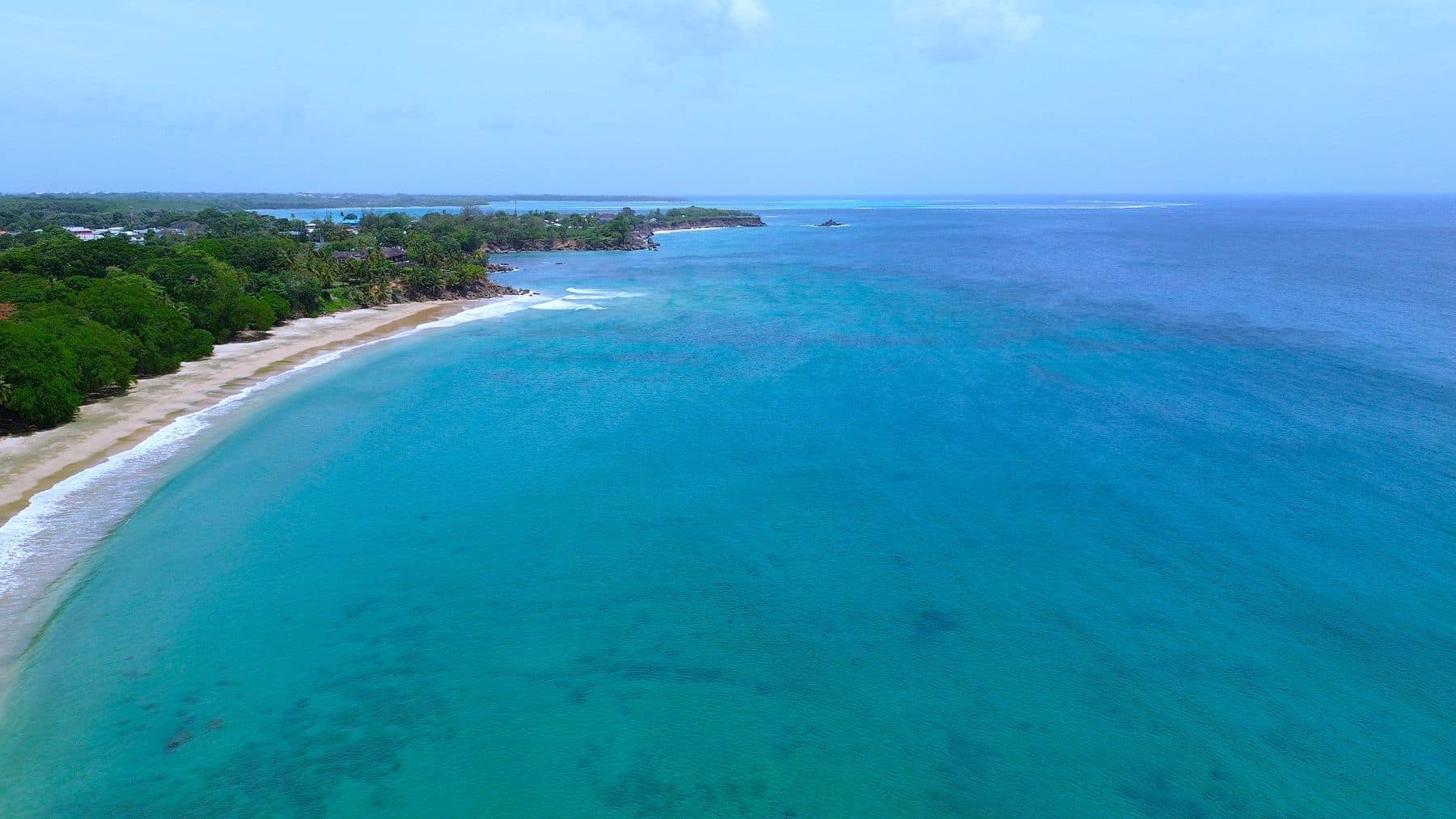
Drive up the Caribbean coast and the beaches get wilder and emptier. Englishman’s Bay is a deep crescent of golden sand backed by rainforest, often empty except for a small café, and many people’s favourite on the island. Castara has two village beaches where fishermen still pull in their seine nets by hand. Parlatuvier is a small, round bay with a fishing jetty and colourful boats, one of the classic views from the north coast road. At the north-eastern tip, Pirate’s Bay, reached by a steep path or by boat from Charlotteville, has clear water and reef snorkelling right off the sand.
| Beach | Where | Best for |
|---|---|---|
| Pigeon Point | South-west tip | The postcard view, calm swimming, boat trips |
| Store Bay | Crown Point | Food huts, glass-bottom boats, lively |
| Mount Irvine and Grange Bay | West coast | Snorkelling, sunsets, winter surf |
| Castara | North coast | Village life, fishing boats |
| Englishman’s Bay | North coast | Wild, quiet, rainforest backdrop |
| Parlatuvier | North coast | A small, round fishing bay |
| Pirate’s Bay | Charlotteville | Snorkelling, few people |

Buccoo Reef and the Nylon Pool
Buccoo Reef, off the south-west coast between Pigeon Point and Buccoo village, is Tobago’s largest fringing reef and a protected marine park. The classic trip is by glass-bottom boat from Pigeon Point, Store Bay or Buccoo: you see the coral and fish through the hull, stop to snorkel on the reef, and then wade in the Nylon Pool, a shallow, waist-deep lagoon of clear water over white sand in the middle of the sea. Local legend says a dip makes you look younger. Some trips also stop at No Man’s Land, a sandspit with a beach barbecue. Please don’t stand on or touch the coral.

In Buccoo village, Sunday School is a long-running Sunday-night street party with steel bands, food stalls and dancing until late, and at Easter the village hosts its famous goat and crab races.
The Main Ridge rainforest
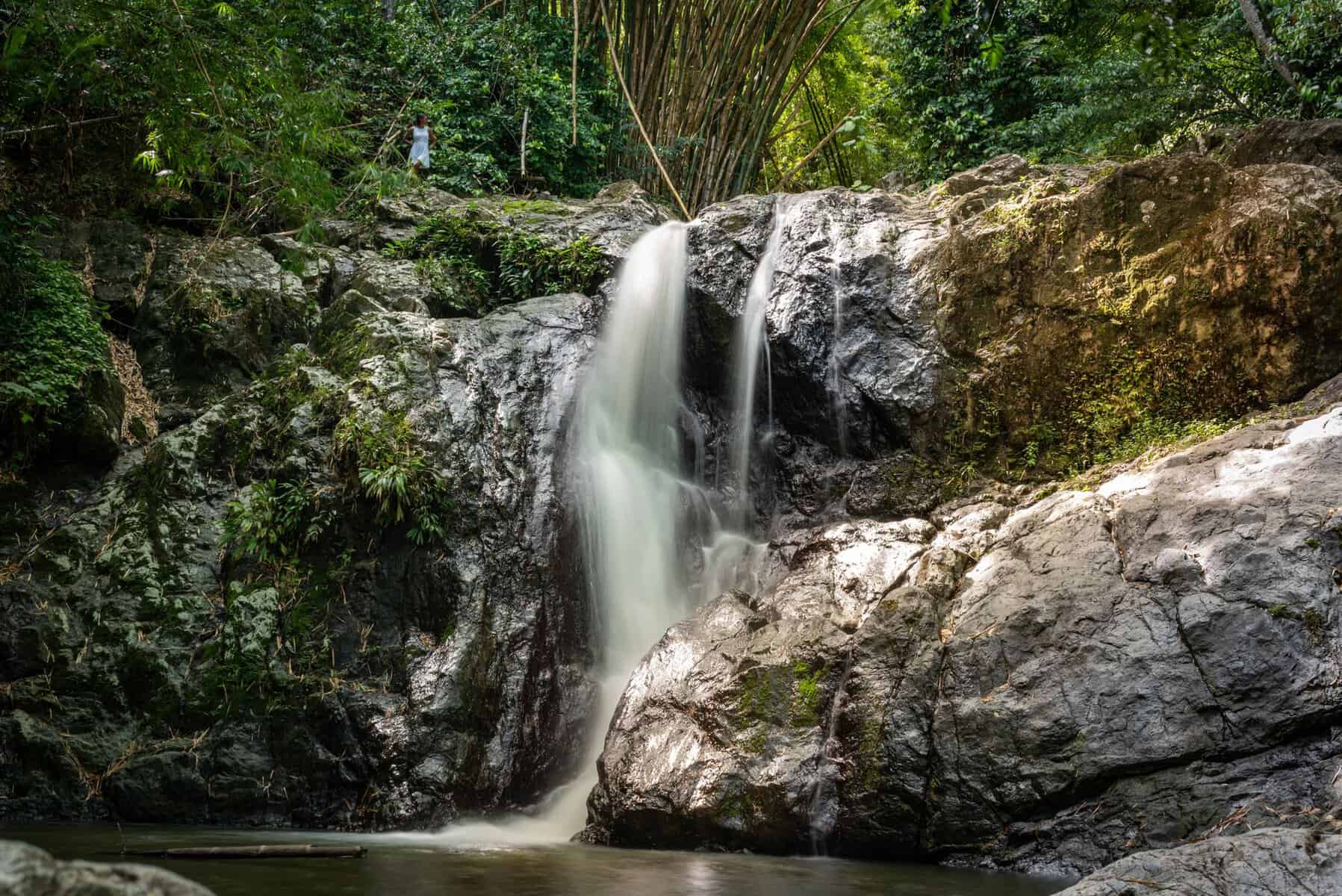
The Main Ridge Forest Reserve covers the mountains in the north-east of the island. It was declared a protected reserve in 1776, to safeguard the rain that fed the island’s plantations, and is often described as the oldest legally protected forest in the Western Hemisphere. With the reefs and islands around it, it is now part of the North-East Tobago UNESCO biosphere reserve.
The forest is superb for birdwatching: more than 200 species have been recorded on Tobago, including motmots, trogons, jacamars and many hummingbirds. Walk the Gilpin Trace trail from the Roxborough to Parlatuvier road with a local guide, who will find birds you would never spot yourself; go early in the morning.
Nearby, the Argyle Waterfall near Roxborough drops in tiers into pools you can swim in, a short guided walk from the road. There are smaller falls near Castara and Speyside.

Castara, Speyside and the north-east

Speyside, on the Atlantic side about an hour and a half from Crown Point, is the island’s diving centre. The warm Guiana Current, fed in part by the Orinoco, brings rich sea life: big brain corals, turtles, reef sharks and, at times, manta rays.
Offshore, Little Tobago is a bird sanctuary where red-billed tropicbirds and frigatebirds nest; glass-bottom boats take you across for a guided walk.
Charlotteville, at the end of the road on Man O’ War Bay, is a quiet fishing village with Pirate’s Bay over the hill and Flagstaff Hill above for the view.
Castara and the Caribbean coast: about 45 minutes from Crown Point, the winding road along the north-west coast passes Plymouth, with Fort James, then a string of bays and villages: Castara, Englishman’s Bay and Parlatuvier. Castara is the place to slow right down, with simple, characterful guesthouses, fish straight from the boats and evenings on the beach with the locals.
Scarborough and Fort King George: the capital is a small, busy port with a market and botanic gardens. Climb to Fort King George, built by the British in the 18th century, for cannons, a small museum and wide views along the coast.
More things to do in Tobago
- Turtle watching. Leatherback turtles, the largest in the world, nest on Tobago’s beaches at night, mainly from March to August, with hatchlings later in the season. Go with a local conservation group or licensed guide, keep your distance and never use a torch or flash.
- Diving and snorkelling. As well as Speyside, there are dives along the Caribbean coast and around Crown Point, and good snorkelling at Pirate’s Bay, Englishman’s Bay and on Buccoo Reef.
- Sail, fish and paddle. Catamaran trips along the coast, deep-sea fishing, kayaks and stand-up paddleboards in the calm western bays, and kitesurfing off Pigeon Point.
- Festivals. The Tobago Heritage Festival (July into August) celebrates the island’s folk traditions, music and food village by village, and Trinidad Carnival, in the days before Lent, is a short flight away.
- Day trip to Trinidad. Flights take about 25 minutes and the fast ferry from Scarborough to Port of Spain about 2.5 to 3 hours, for the Asa Wright nature area, the Caroni Swamp’s scarlet ibis or simply the food.

Food in Tobago
Food in Trinidad and Tobago mixes African, Indian, Chinese, Creole and European cooking, and it’s one of the best things about a holiday here. Tobago’s signature dish is curry crab and dumpling, best eaten with your fingers at the food huts at Store Bay. Try roti (a flatbread wrapped around curried chicken, goat or chickpeas), doubles (curried chickpeas between two soft fried breads, a breakfast favourite), bake and shark, callaloo soup and pelau, a one-pot rice dish. Fresh fish, lobster and tropical fruit are everywhere, and to drink there is local rum, Carib beer and sorrel at Christmas. Hot pepper sauce is on every table: go carefully.
Best time to visit Tobago
Tobago is hot all year, with highs of about 29 to 31°C, and it lies south of the main hurricane belt: storms are rare, though not impossible. The dry season, from January to May, is the best time to go, with sunshine, lower humidity and the best diving visibility; it’s also the busiest season. The wet season runs from June to December, with short, heavy downpours, usually in the afternoon, rather than days of rain, and a short drier spell often comes in September. The north-east around Speyside is wetter than Crown Point all year. Turtles nest from March to August, and the Heritage Festival is in July and August.
| Month | Crown Point | Speyside |
|---|---|---|
| Jan | 28°C / 24°C · 40 mm | 26°C / 23°C · 75 mm |
| Feb | 28°C / 24°C · 30 mm | 26°C / 23°C · 60 mm |
| Mar | 28°C / 25°C · 35 mm | 26°C / 24°C · 65 mm |
| Apr | 29°C / 25°C · 35 mm | 27°C / 24°C · 60 mm |
| May | 29°C / 25°C · 50 mm | 27°C / 25°C · 90 mm |
| Jun | 29°C / 25°C · 110 mm | 27°C / 24°C · 165 mm |
| Jul | 29°C / 25°C · 130 mm | 27°C / 24°C · 200 mm |
| Aug | 29°C / 26°C · 135 mm | 28°C / 25°C · 185 mm |
| Sep | 30°C / 26°C · 125 mm | 28°C / 25°C · 160 mm |
| Oct | 29°C / 26°C · 140 mm | 28°C / 25°C · 235 mm |
| Nov | 29°C / 25°C · 150 mm | 27°C / 24°C · 220 mm |
| Dec | 28°C / 25°C · 75 mm | 27°C / 24°C · 125 mm |
Average daily high / low and monthly rainfall, 10-year ERA5 data. Grid data smooths out the heat of the day, so beaches feel a degree or two warmer.
Getting to Tobago from the UK
By air: there are flights from London Gatwick to Tobago’s A.N.R. Robinson International Airport at Crown Point, with a stop on the way (currently in Barbados), taking about 10 to 11 hours. You can also fly to Trinidad’s Piarco airport and take the short connecting flight, about 25 minutes, or connect via other Caribbean islands. The airport is at the south-western tip of the island, a few minutes from Crown Point, Store Bay and Pigeon Point, so most transfers are short.
Arrival card: everyone entering or leaving Trinidad and Tobago must complete an online Arrival/Departure card on the government’s official immigration portal, available from 72 hours before you travel.
Getting around Tobago
A hire car is the best way to explore beyond Crown Point: you can drive on a UK licence for a short visit (check the current rules), and you drive on the left. The coast roads are narrow and winding, with steep hills and blind bends, so take it slowly; allow about an hour and a half from Crown Point to Speyside. Many people prefer a driver-guide for a round-the-island day. Official taxis have number plates starting with H; agree the fare first. Shared route taxis and buses are cheap but slow.
Where to stay in Tobago
- Crown Point and Store Bay for convenience: near the airport, beaches, restaurants and boat trips. The widest choice of hotels and apartments.
- Mount Irvine, Buccoo and Grafton (the west coast) for larger resort hotels on quieter bays, with golf, reefs and sunsets.
- Castara and the north coast for small, characterful guesthouses and eco-lodges in fishing villages.
- Speyside and Charlotteville for divers and birdwatchers: simple, peaceful and remote.
- Split your stay: a week near Crown Point for the beaches, then a few nights on the north coast or at Speyside.
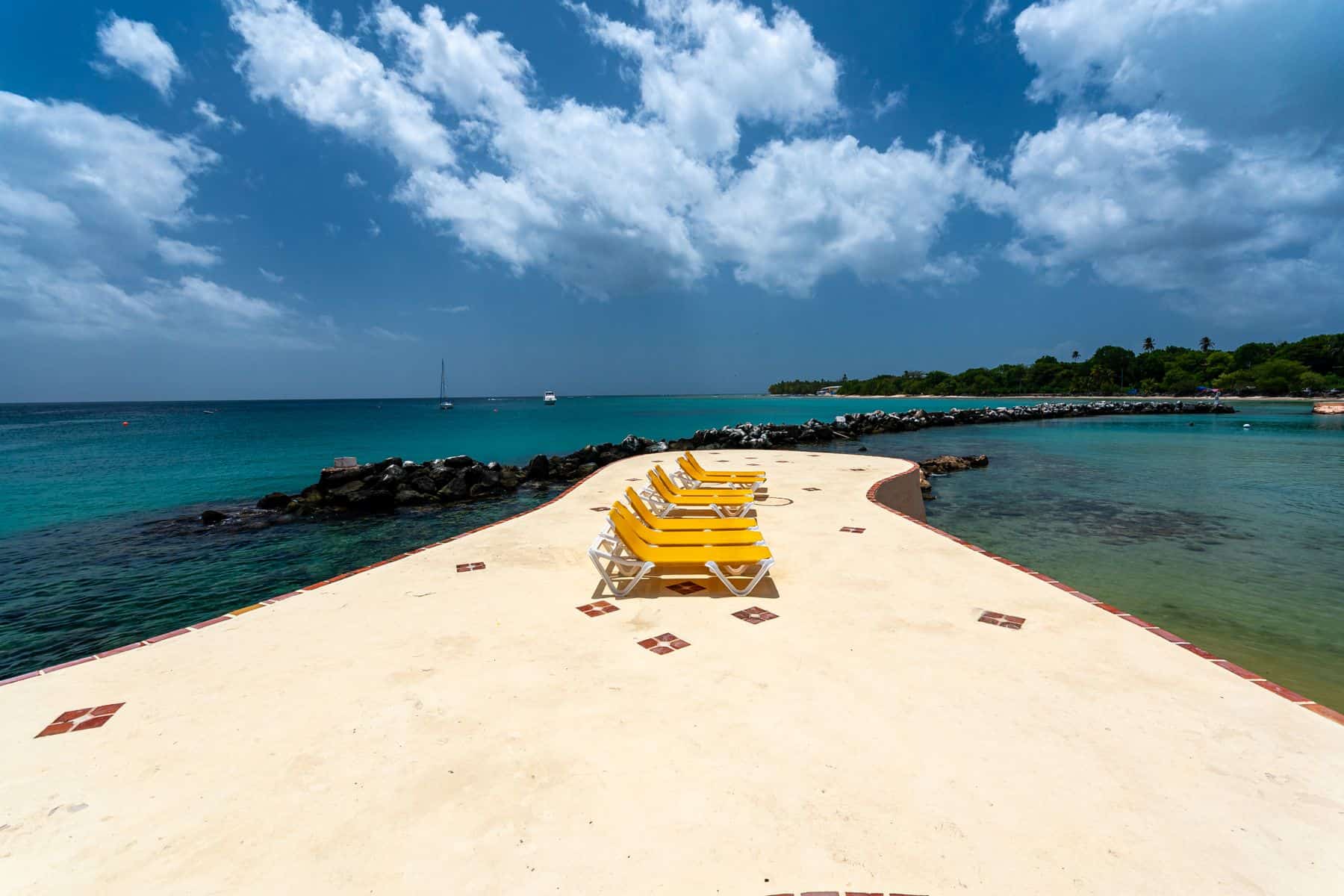
Tell us what you’re after, all-inclusive and easy, or small and local, and we’ll match the right part of the island and the right hotel.
Sample trips
Tobago beach week
- Crown Point (7 nights)
- Buccoo Reef boat trip
- Round-the-island day
Easy beaches, the reef and a day exploring the rainforest and north coast.
Beach and rainforest
- Crown Point or west coast (6 nights)
- Castara or Speyside (4)
Add village life, birdwatching and diving on the quieter north-east side.
Tobago and Grenada or Barbados
- Tobago (8 nights)
- Short flight
- Grenada or Barbados (6)
Combine with a neighbouring island for a two-centre Caribbean holiday.
Two-centre ideas: see our Grenada, Barbados and St Lucia guides, or browse Caribbean holiday offers.
Practical tips
- Entry: British citizens don’t need a visa for visits of up to 90 days. Your passport must be valid for at least 6 months after you arrive, and you need a return or onward ticket and the online Arrival/Departure card. Check the FCDO Trinidad and Tobago advice before you go.
- Safety: Tobago is generally relaxed, but the FCDO warns of serious crime across Trinidad and Tobago. Avoid deserted beaches and isolated areas, don’t walk alone at night, keep valuables in the hotel safe and never leave drinks unattended.
- Money: the currency is the Trinidad and Tobago dollar; cards are accepted in hotels and larger restaurants, but carry cash for food huts, taxis and villages.
- Insects: use repellent, especially at dusk and in the rainforest.
- Sea: the Atlantic side can have strong currents. Swim where locals swim and ask before going in.
- Dress: beachwear is for the beach; cover up in villages and in Scarborough.
Frequently asked questions
Where is Tobago?
In the far south of the Caribbean, about 35 km north-east of Trinidad, with Grenada to the north-west and Barbados to the north-east. Tobago and Trinidad together form the Republic of Trinidad and Tobago.
What is Tobago known for?
Quiet, unspoilt beaches such as Pigeon Point and Englishman's Bay, Buccoo Reef and the Nylon Pool, the Main Ridge rainforest, protected since 1776, birdwatching, diving at Speyside and curry crab and dumpling.
What is the best time to visit Tobago?
January to May, the dry season, has the most sunshine and the best diving visibility. June to December is wetter, with short tropical showers. Tobago is south of the main hurricane belt.
How long is the flight to Tobago from the UK?
About 10 to 11 hours from London Gatwick with a stop on the way. You can also fly to Trinidad and take a 25-minute connecting flight.
Where is the best place to stay in Tobago?
Crown Point and Store Bay for convenience and beaches, the west coast around Mount Irvine for resort hotels, Castara for village guesthouses, and Speyside for diving and birdwatching.
Do you need a visa for Tobago?
No. British citizens can visit for up to 90 days without a visa. You need a passport valid for 6 months after arrival, a return ticket and the online Arrival/Departure card.
Is Tobago safe?
Tobago is generally relaxed and most visits are trouble-free, but the FCDO warns of serious crime across Trinidad and Tobago. Avoid isolated places and deserted beaches, especially after dark.
What is the Nylon Pool?
A shallow, waist-deep lagoon of clear water over white sand in the middle of Buccoo Reef, visited on glass-bottom boat trips from Pigeon Point, Store Bay and Buccoo.
Keep planning
- St Vincent and the Grenadines guide
- Grenada holiday guide
- Barbados holiday guide
- St Lucia holiday guide
- Antigua and Barbuda holiday guide
- Caribbean holiday offers
- Caribbean cruises
- Tailor-made holidays
- Make an enquiry
- Aruba holiday guide
- Curaçao holiday guide
Plan your Tobago holiday with a Travel Designer
Tell us when you’d like to go and we’ll match the right beach and hotel, add the rainforest, Buccoo Reef and a second island, and arrange flights and transfers, in one ATOL-protected booking.
Make an enquiry Tailor-made holidays