Kyrgyzstan in brief
- Issyk-Kul, Karakol and Song-Kul make the classic first loop from Bishkek.
- Yurt stays, horse riding, hiking and nomadic culture, including eagle hunters and felt-makers.
- Best from mid-June to mid-September; September is quieter, with dry, sunny days.
- Fly via Istanbul; UK passports need no visa for up to 30 days. Easy to combine with Kazakhstan or Uzbekistan.

Kyrgyzstan is Central Asia’s mountain country: a land of snowy peaks, high summer pastures and turquoise lakes, where many families still move up to the hills each summer with their horses, sheep and yurts. More than 90% of the country is mountainous, most of it in the Tien Shan range. Visitors come for the vast alpine lake of Issyk-Kul, a night in a yurt on the shores of Song-Kul, horse riding and hiking from Karakol, eagle hunters, felt-makers and the old Silk Road. This guide covers where to go, things to do, the food, the best time to visit Kyrgyzstan month by month (including Kyrgyzstan in September), getting there from the UK, getting around and sample routes.
Where is Kyrgyzstan?
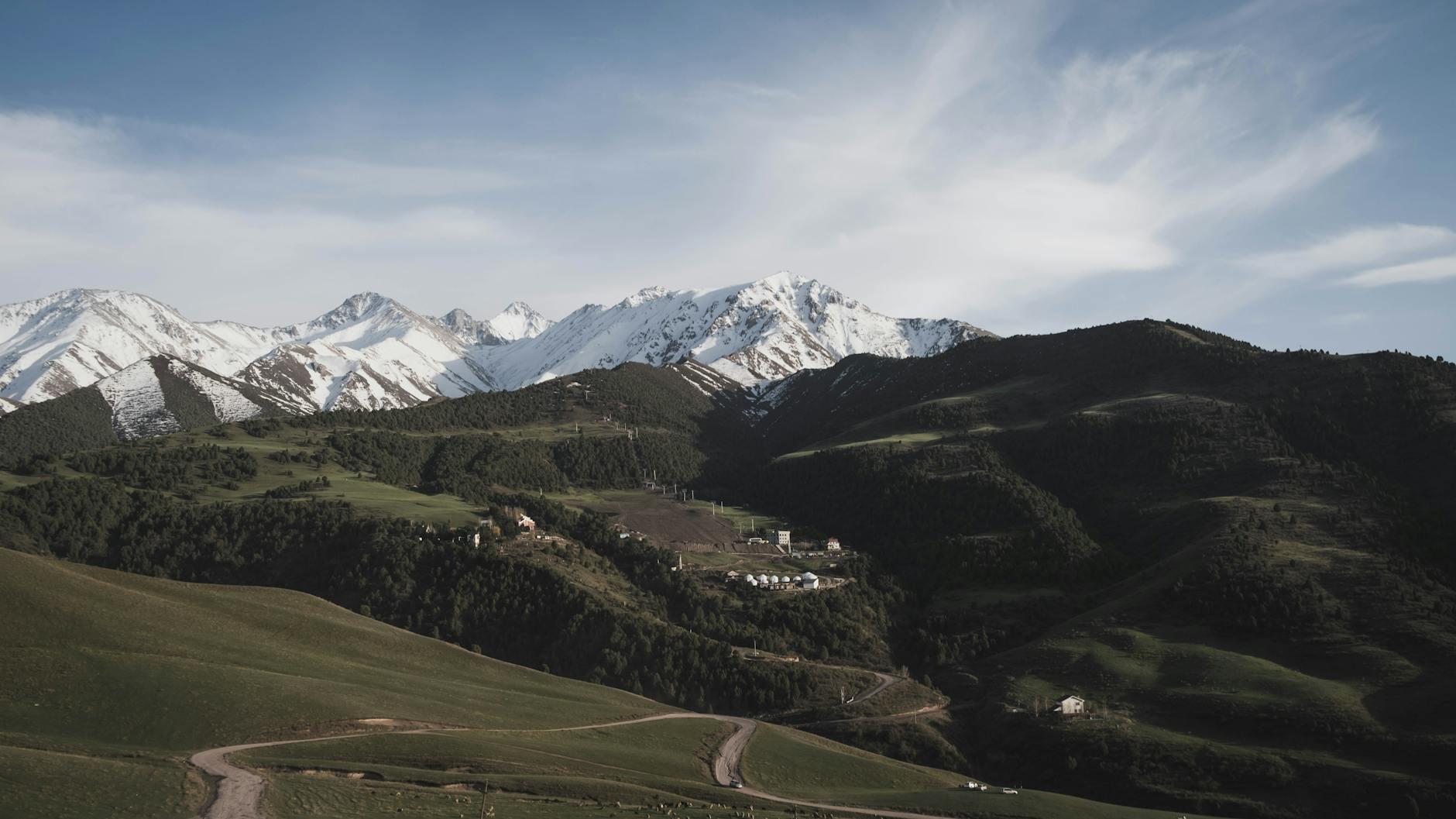
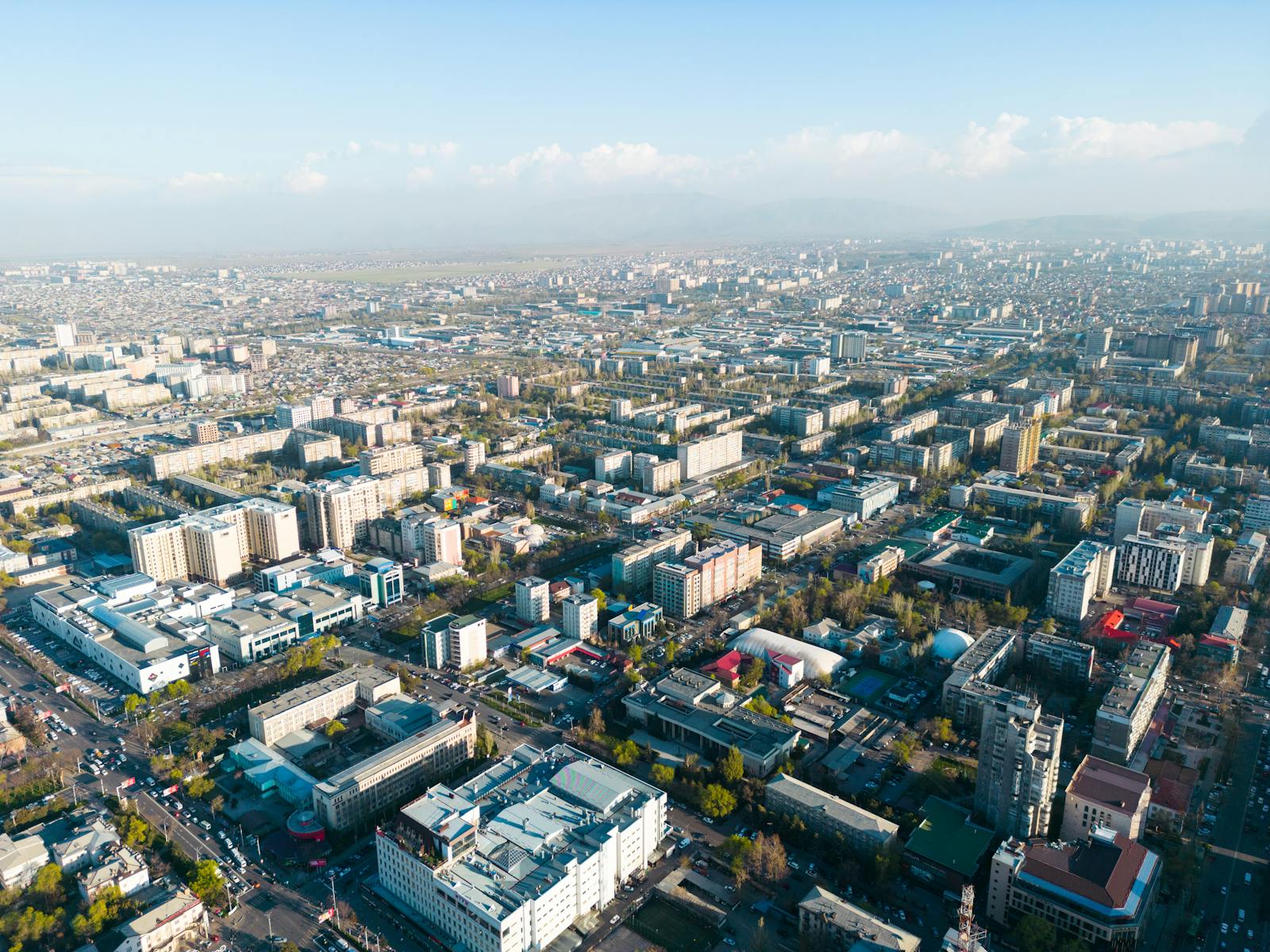
Kyrgyzstan is a landlocked country in the heart of Central Asia, bordered by Kazakhstan to the north, China to the east, Tajikistan to the south and Uzbekistan to the west. It’s a little smaller than Great Britain, with about seven million people.
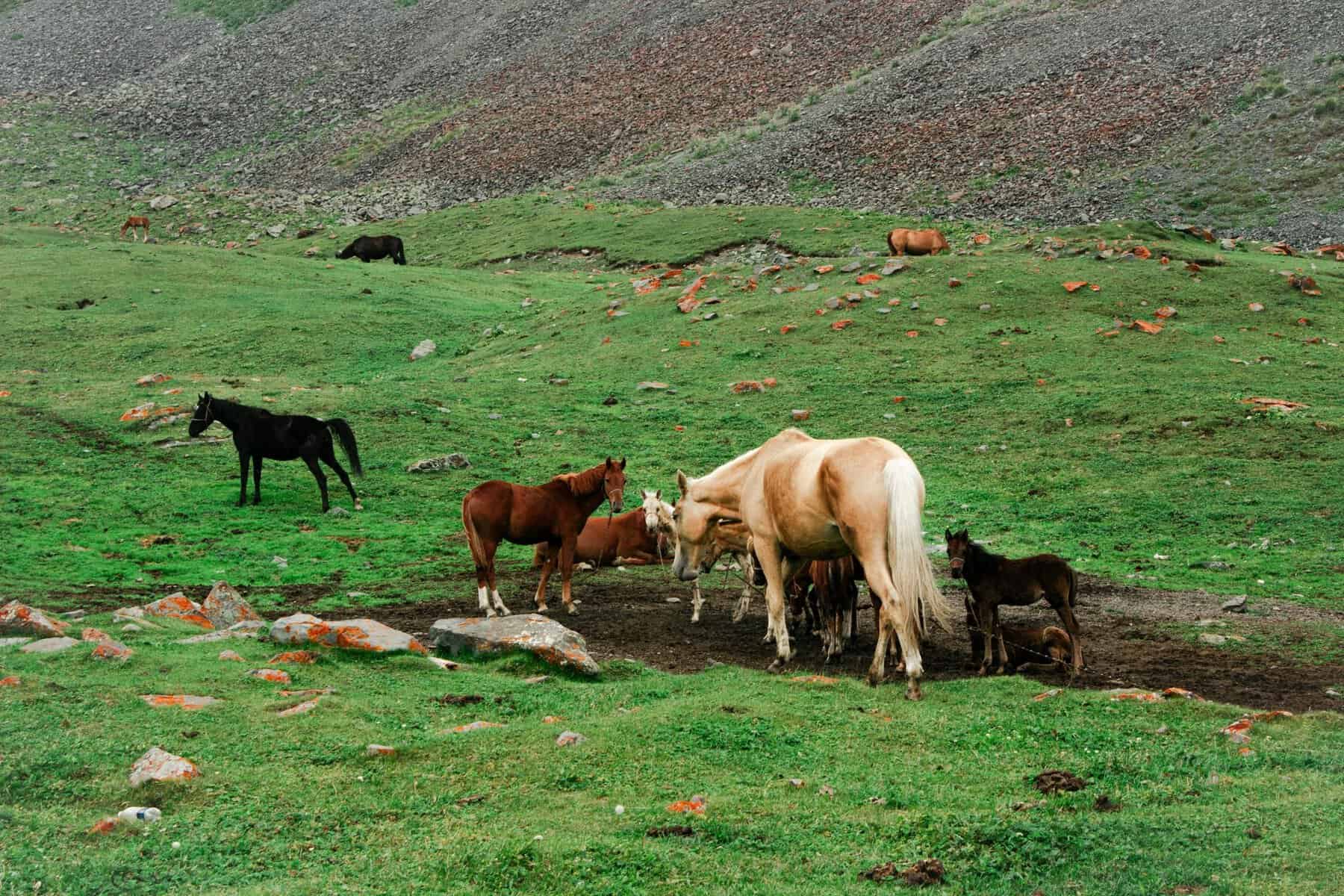
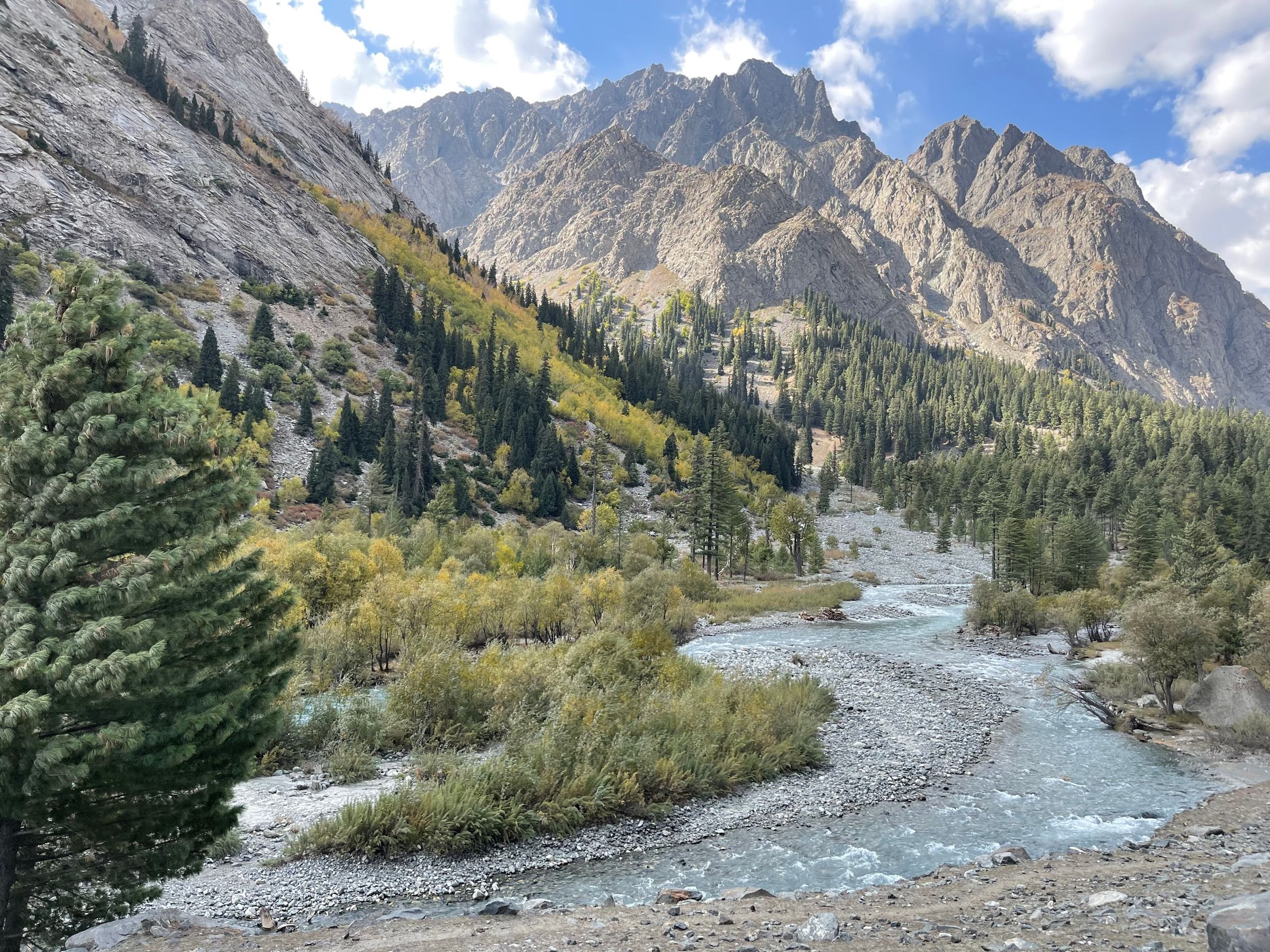
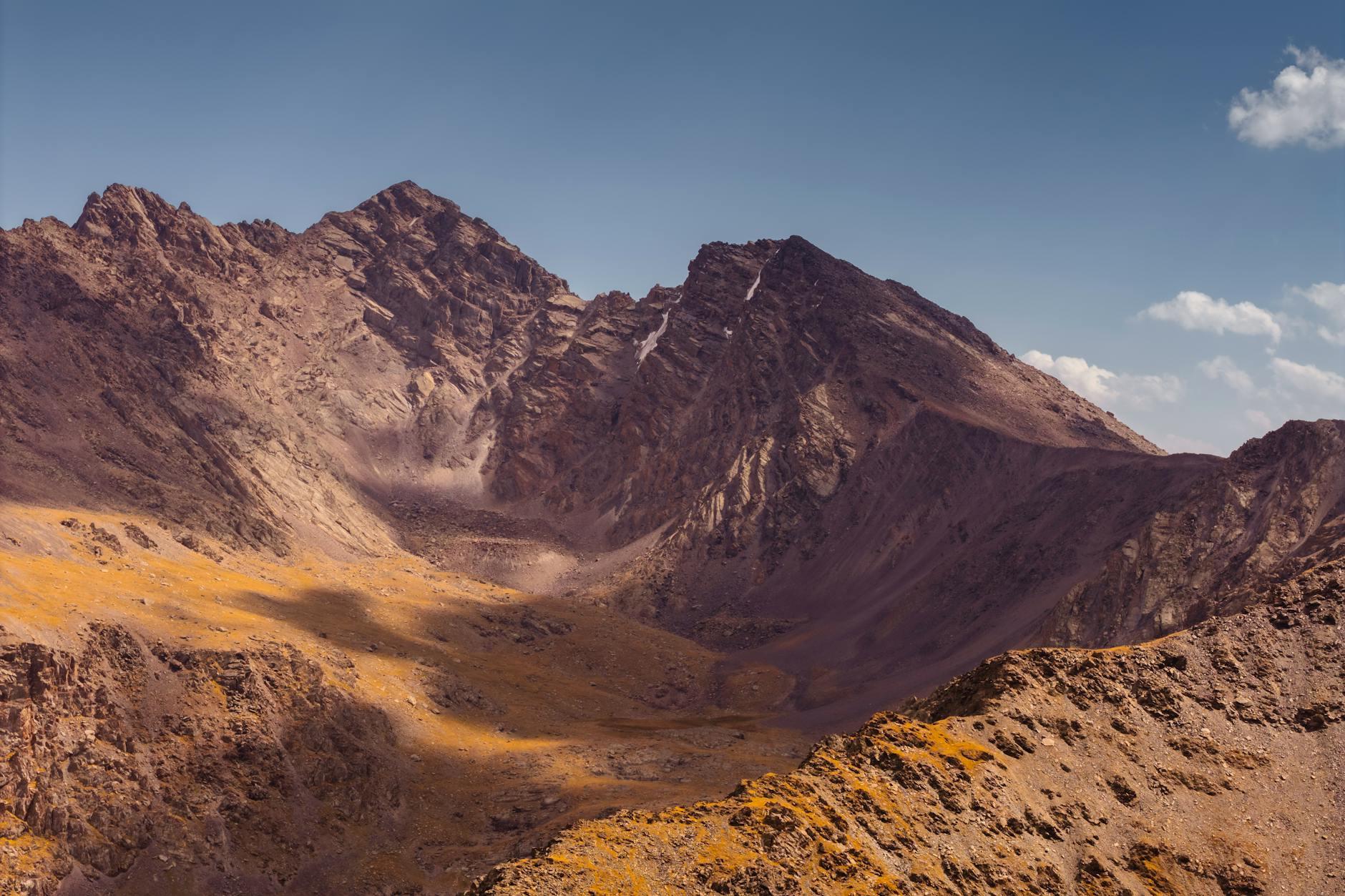
The Tien Shan (“Heavenly Mountains”) fill most of the country, rising to more than 7,000 m on the Chinese border. Between the ranges lie wide valleys and high summer pastures called jailoo, where herders live in yurts from about June to September.
The capital, Bishkek, is in the north, close to the Kazakh border and about four hours by road from Almaty. Kyrgyzstan was part of the Soviet Union until 1991, and its culture mixes nomadic Kyrgyz traditions, Russian influence and the legacy of the Silk Road, which crossed these mountains.
Places to visit in Kyrgyzstan
A first trip usually loops east from Bishkek around Issyk-Kul to Karakol, then west through the mountains to Song-Kul. With more time, add Naryn and the Silk Road caravanserai of Tash Rabat, or continue south to Osh and into Uzbekistan.
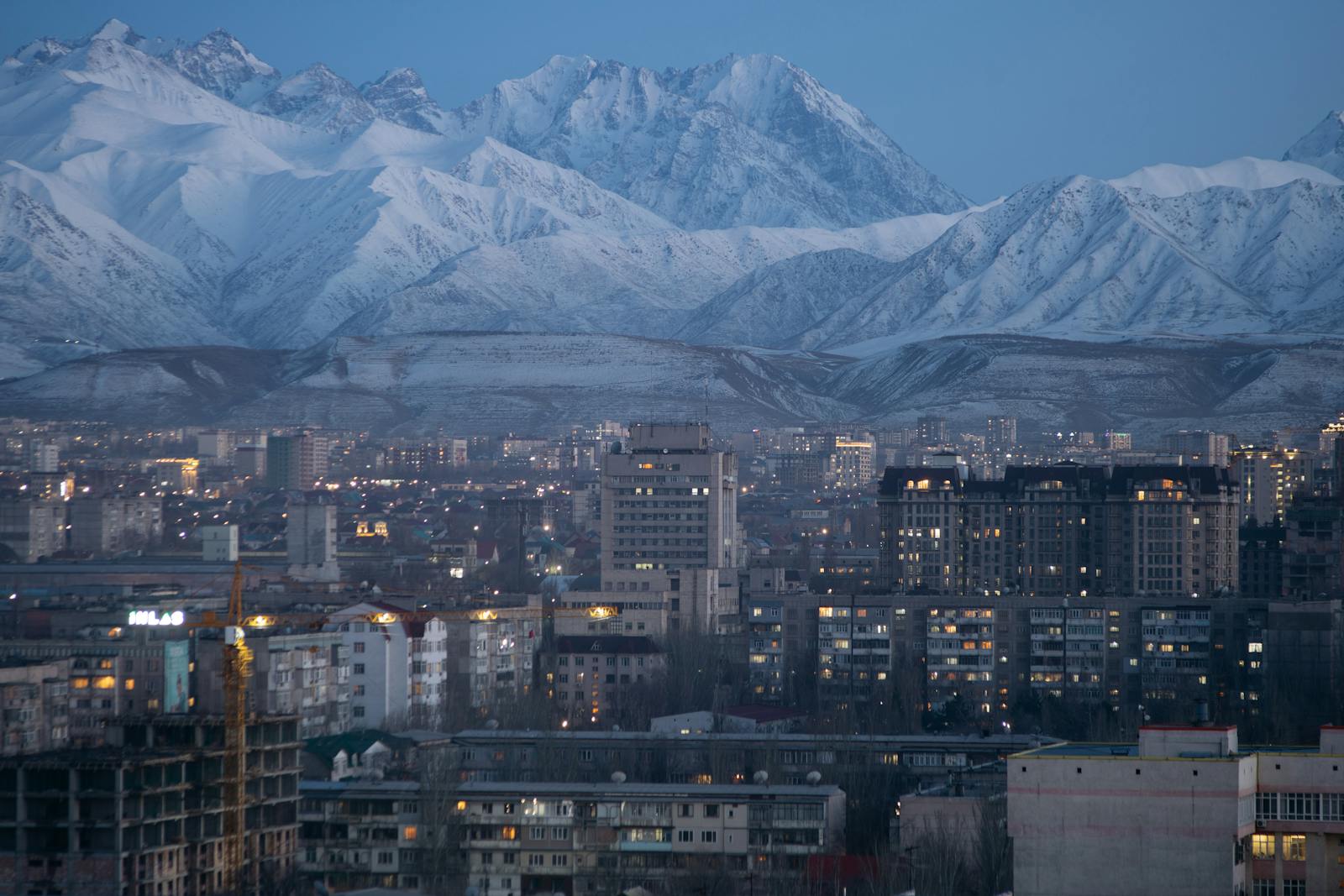
Bishkek and Ala-Archa
A green, relaxed capital of wide Soviet-era avenues, parks and monuments, with the snowy Kyrgyz Ala-Too range on the horizon. See Ala-Too Square and the changing of the guard, the State History Museum and Osh Bazaar.
Ala-Archa National Park, about 40 km south, is the easiest mountain escape: a forested gorge with hiking trails up towards glaciers. To the east, the 11th-century Burana Tower and its stone grave markers (balbals) are all that remain of the Silk Road city of Balasagun.
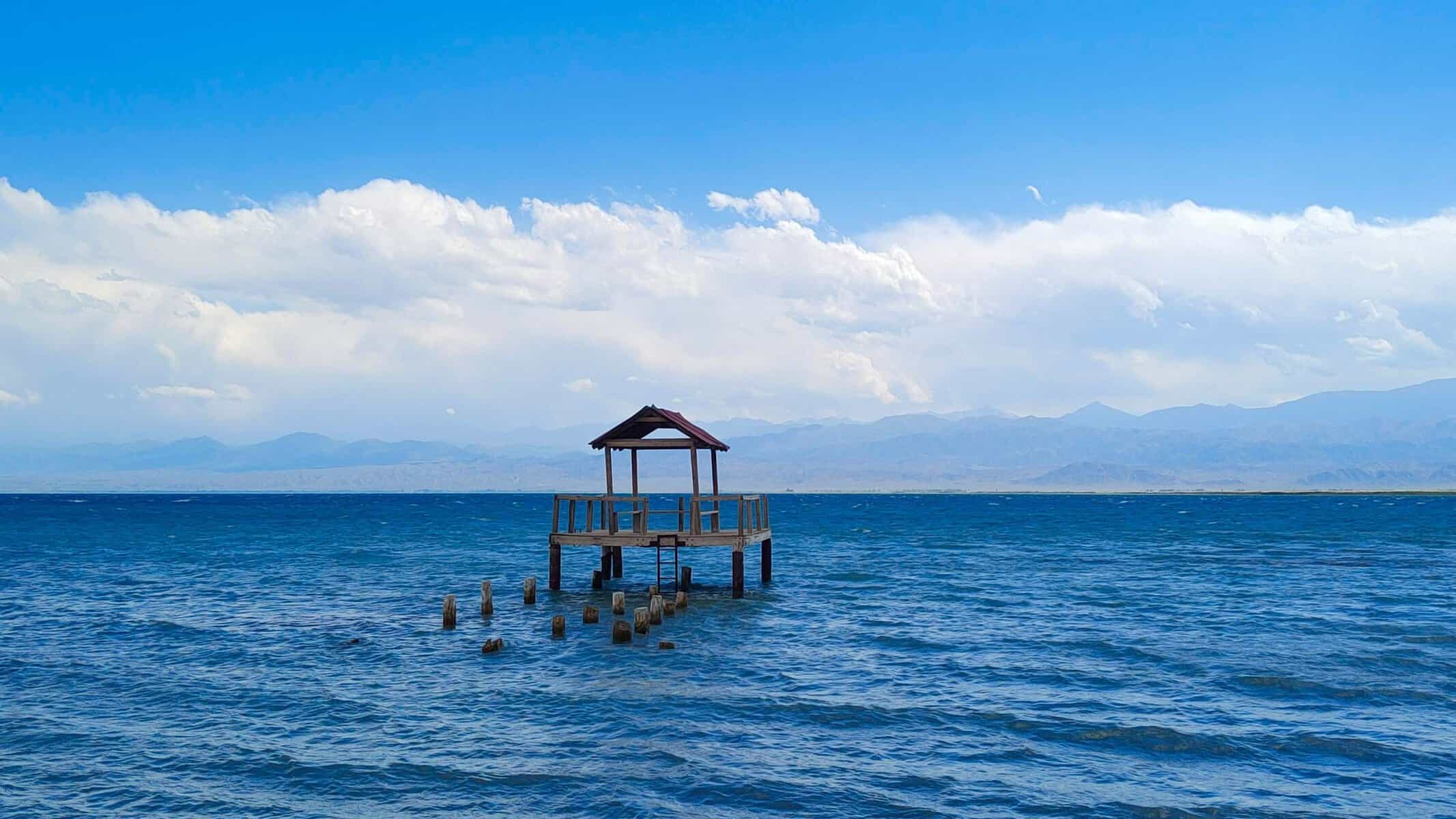
Issyk-Kul
One of the largest mountain lakes in the world, about 180 km long at around 1,600 m, ringed by snowy ranges. It is slightly salty and never freezes, which gives it its name, “warm lake”.
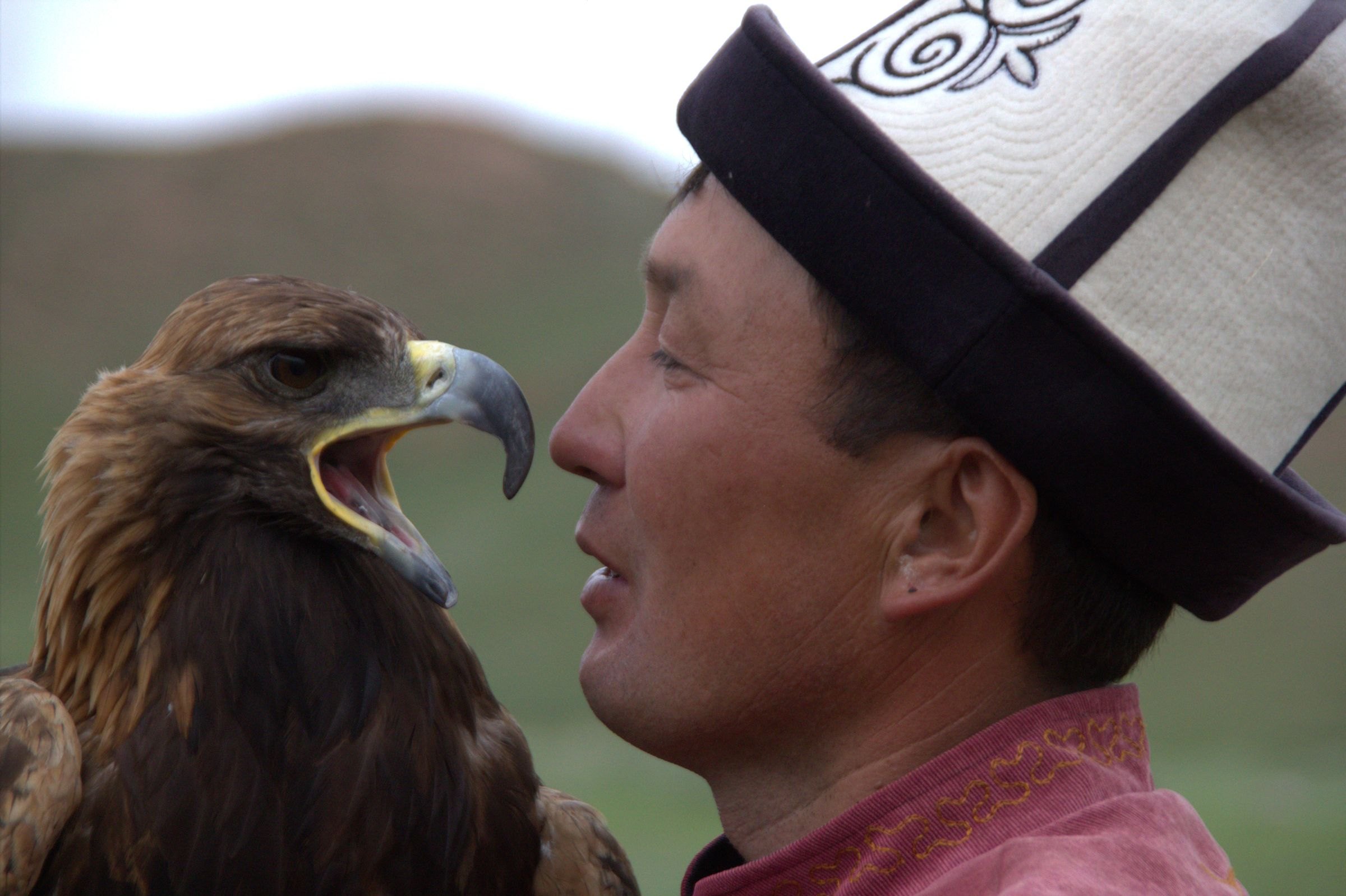
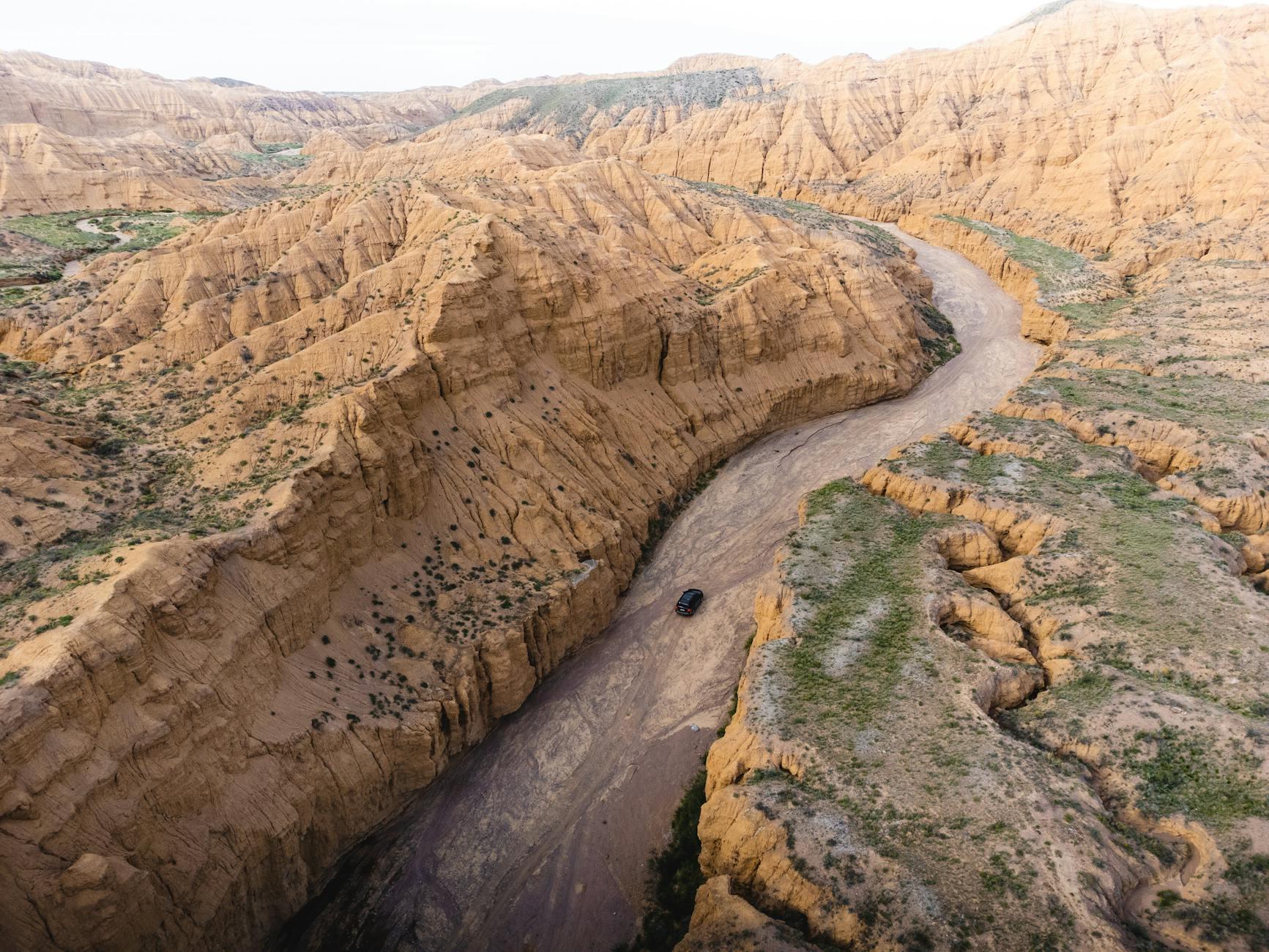
The north shore around Cholpon-Ata has beaches, lakeside resorts and an open-air field of ancient petroglyphs. The quieter south shore has Skazka (“Fairytale”) canyon, eroded red and yellow rock formations, and villages where you can watch an eagle hunter fly his bird or see felt being made.

Karakol
A small town at the eastern end of Issyk-Kul and the country’s main base for trekking. See the wooden Holy Trinity Cathedral and the Chinese-style Dungan Mosque, built by Dungan (Chinese Muslim) settlers, and try Dungan food.
Nearby, the red cliffs of Jeti-Oguz (“Seven Bulls”), the hot springs of Altyn-Arashan and valleys of spruce forest are reached on foot, on horseback or by 4×4. In winter, Karakol has the country’s main ski area.
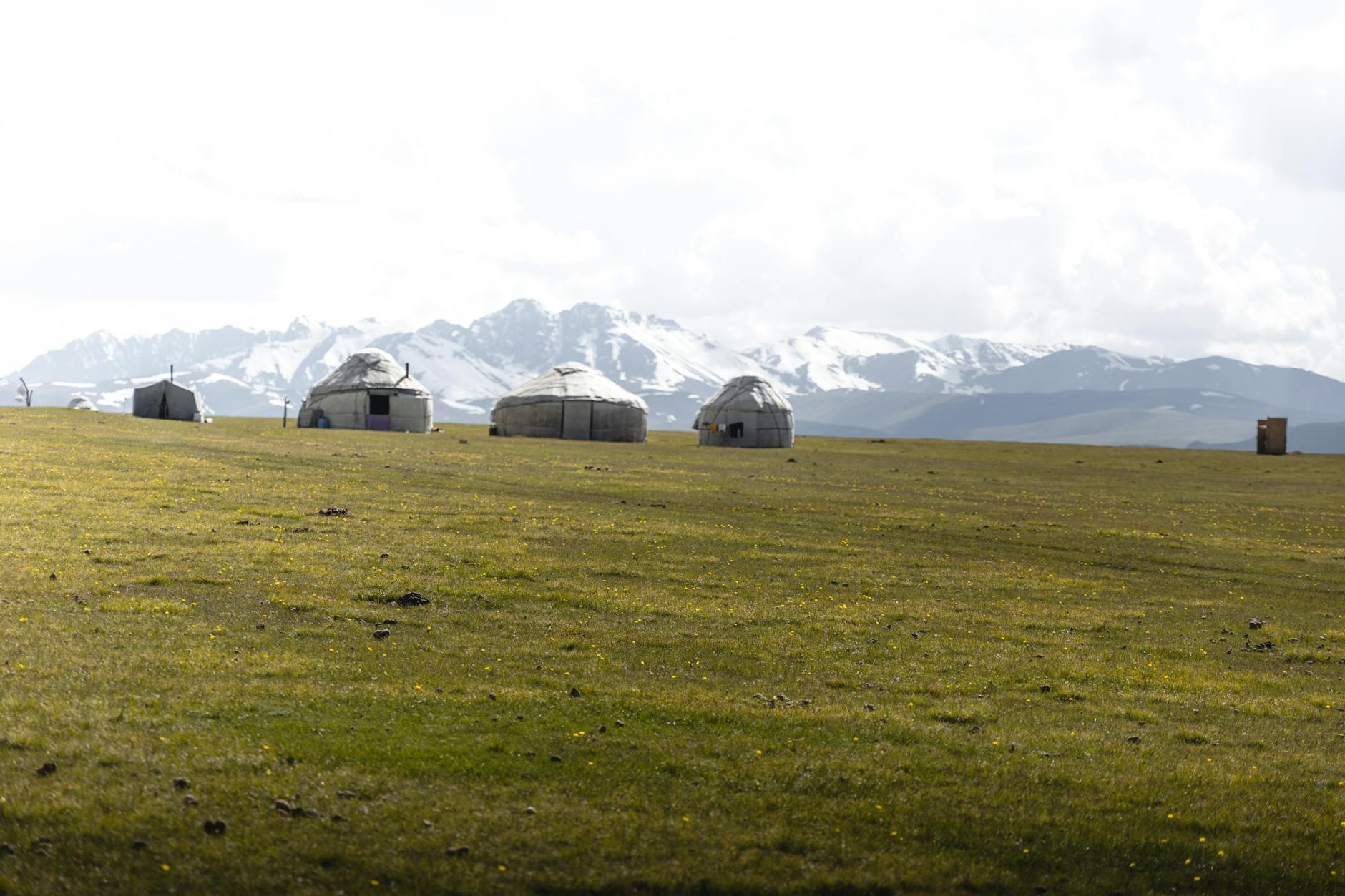
Song-Kul
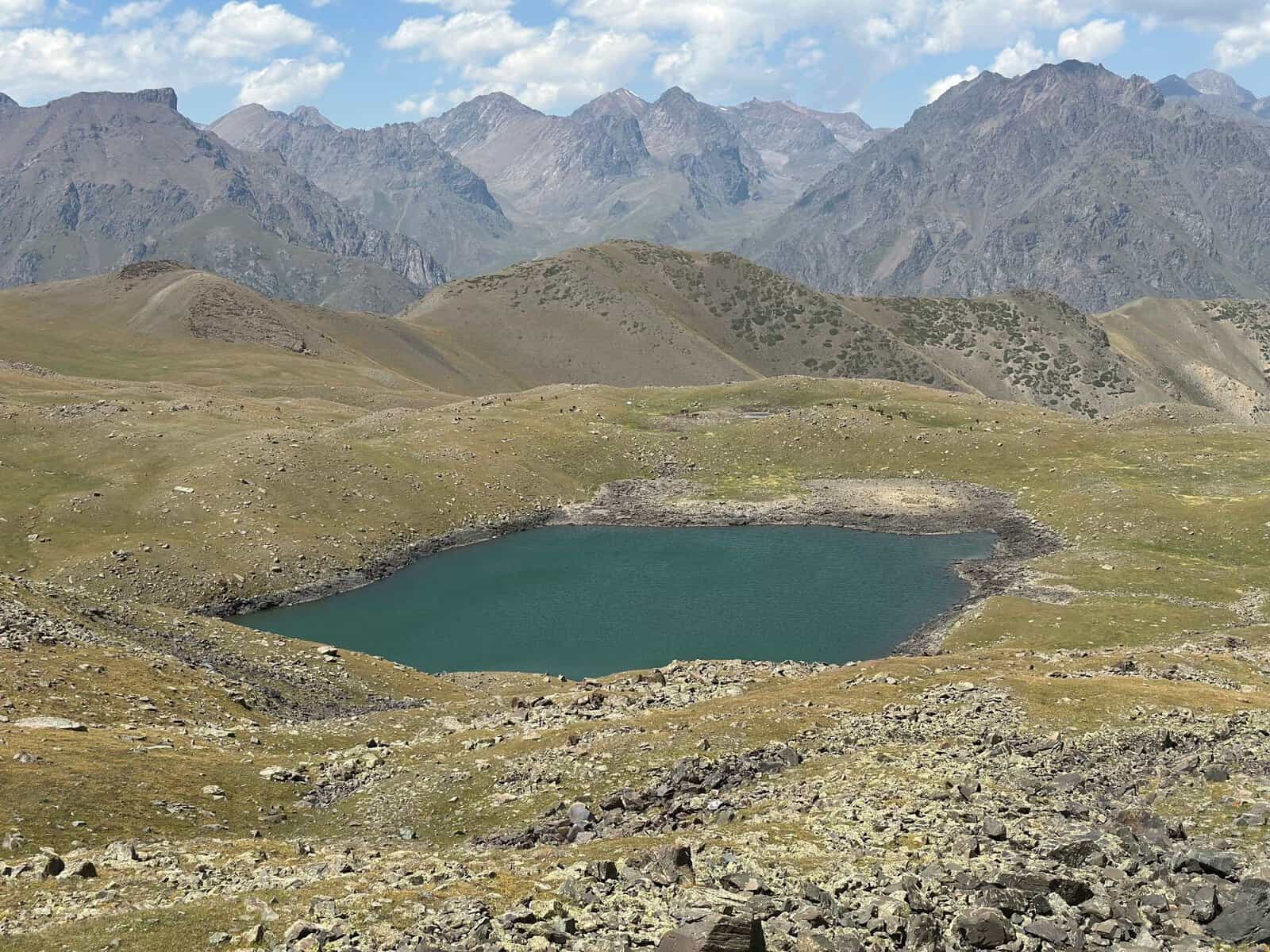
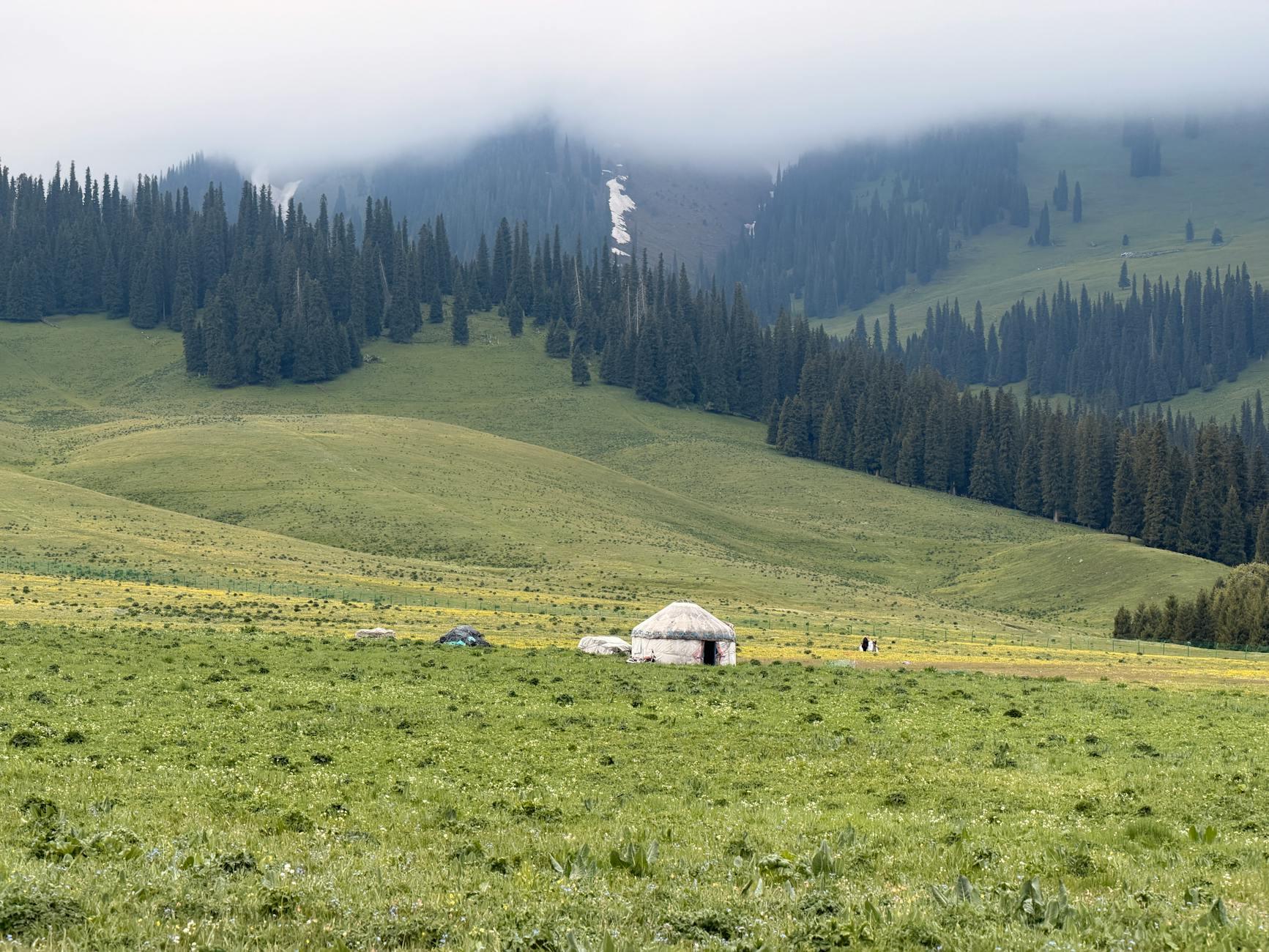
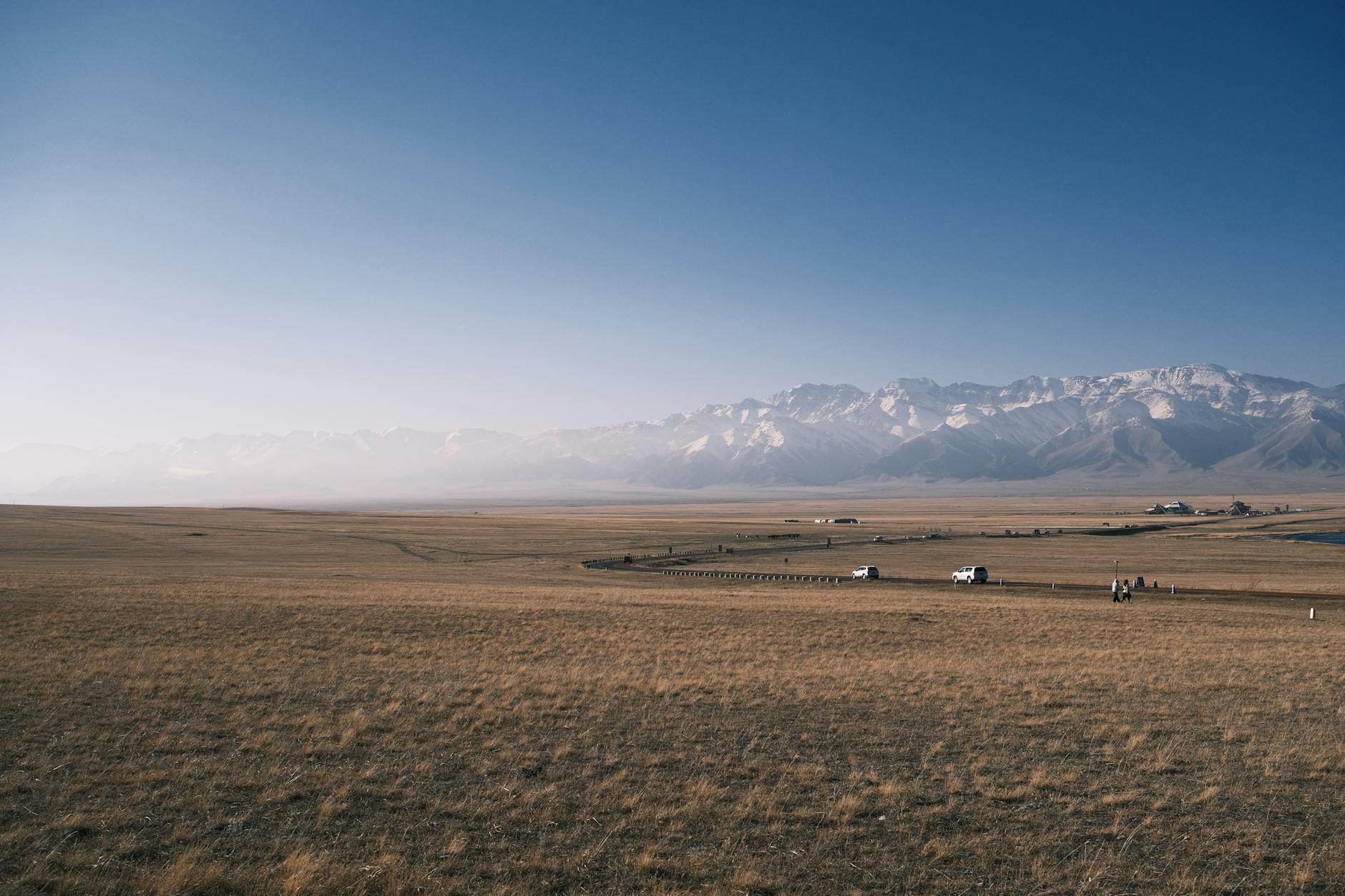
A high alpine lake surrounded by summer pastures, where herders graze horses, sheep and yaks. There are no buildings, just yurt camps, so a night here is the classic Kyrgyz experience: horse riding along the shore, dinner in a yurt, a sky full of stars and a very cold night.
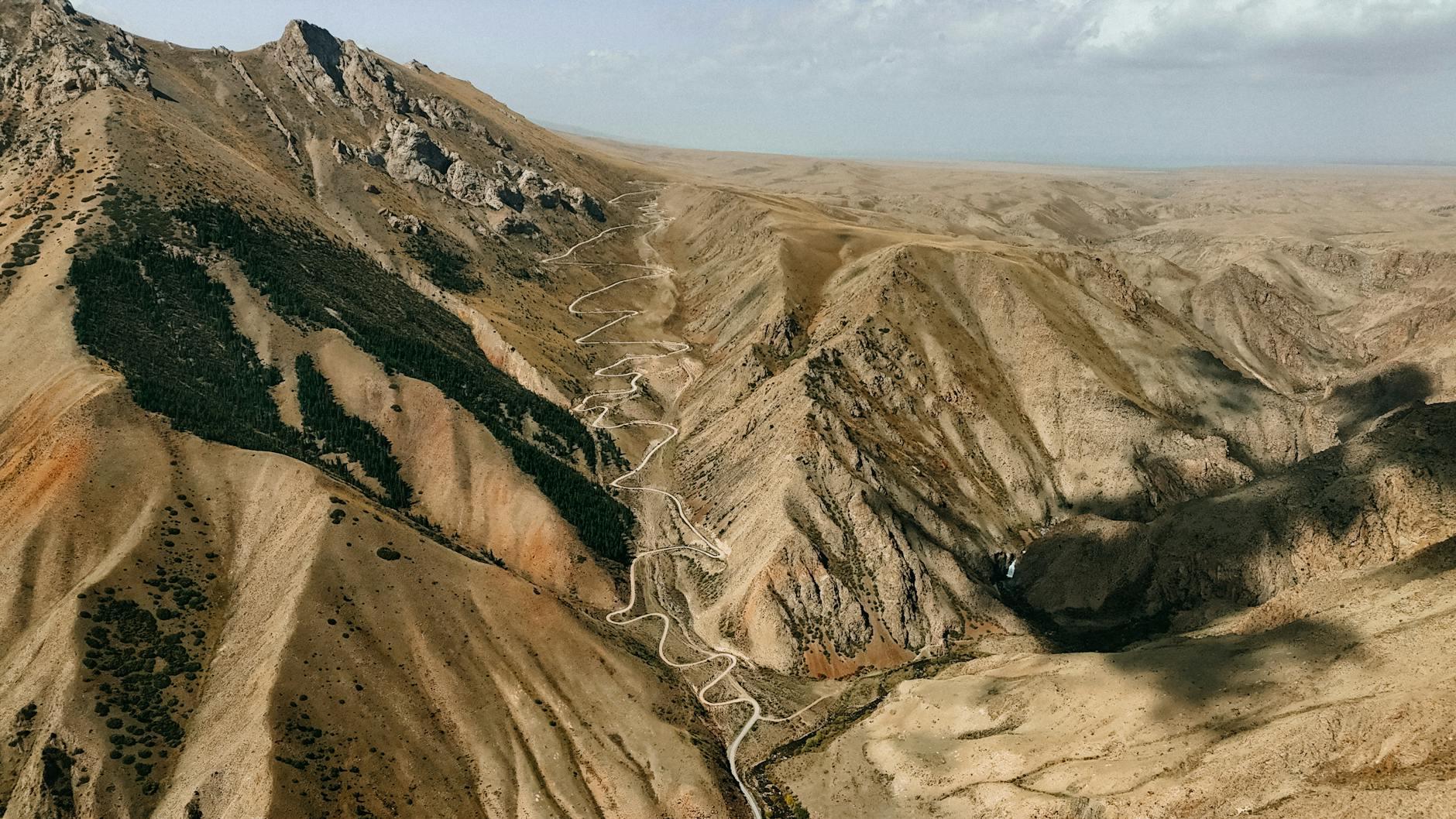
Reached by 4×4 over high passes via Kochkor, a felt-making village where you can see shyrdak carpets being made, or on a two or three-day horse trek. Camps open only in summer.
Naryn and Tash Rabat
The remote central highlands. Tash Rabat is a 15th-century stone caravanserai at about 3,200 m in a valley towards the Torugart Pass into China, where Silk Road traders once sheltered; you can stay nearby in a yurt camp. Some areas closer to the Chinese border need a border-zone permit, which we arrange in advance where needed.

Osh and the south
One of the oldest cities in Central Asia, with the sacred Sulaiman-Too mountain (a UNESCO World Heritage Site) and one of the region’s great bazaars. The road from Bishkek crosses high passes past the walnut forests of Arslanbob; Osh is also a route into Uzbekistan’s Fergana Valley. Kyrgyzstan’s south-west borders Tajikistan, and the FCDO advises caution near that border, especially in the Batken region; our routes don’t go there.
Things to do in Kyrgyzstan
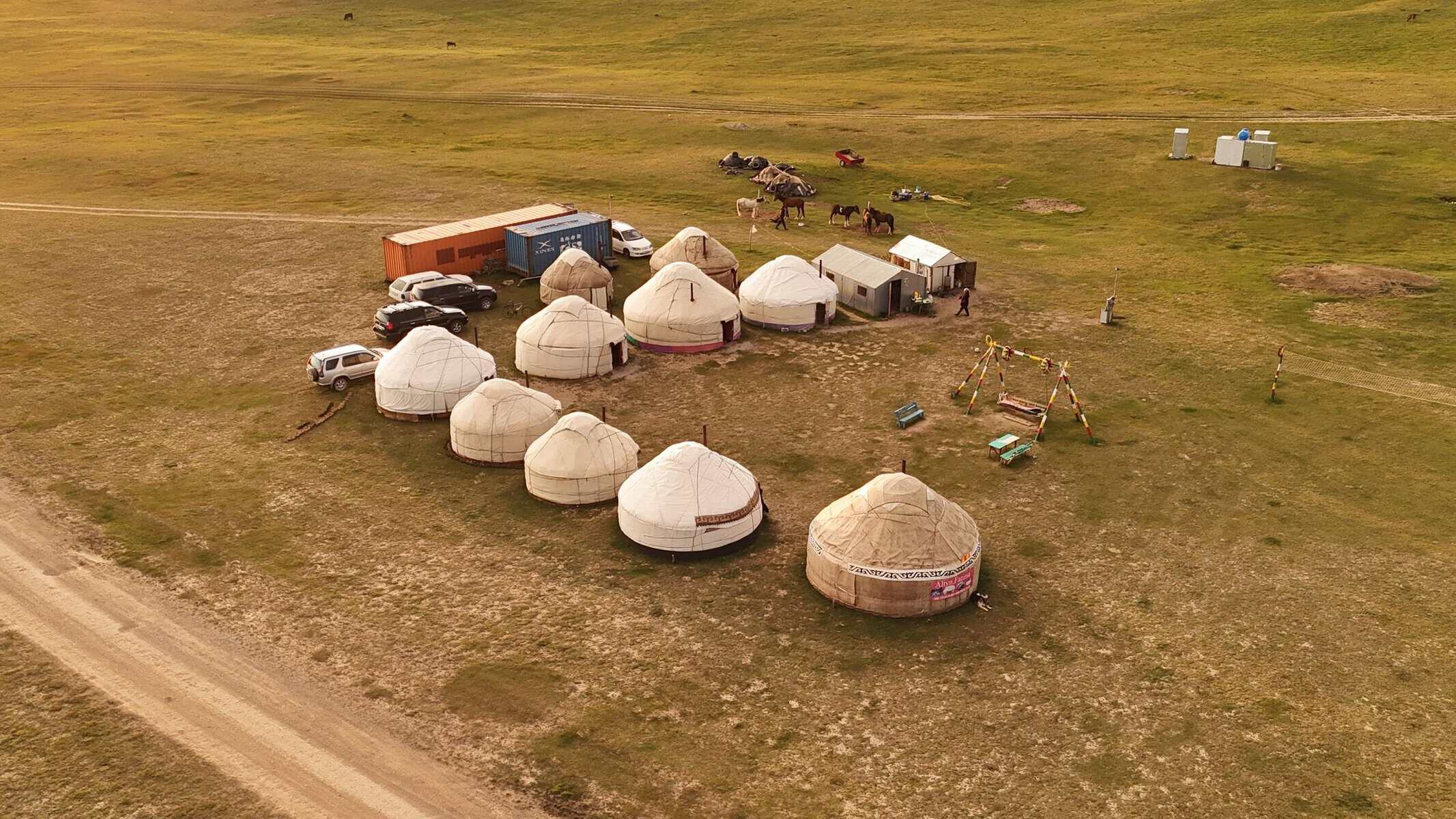
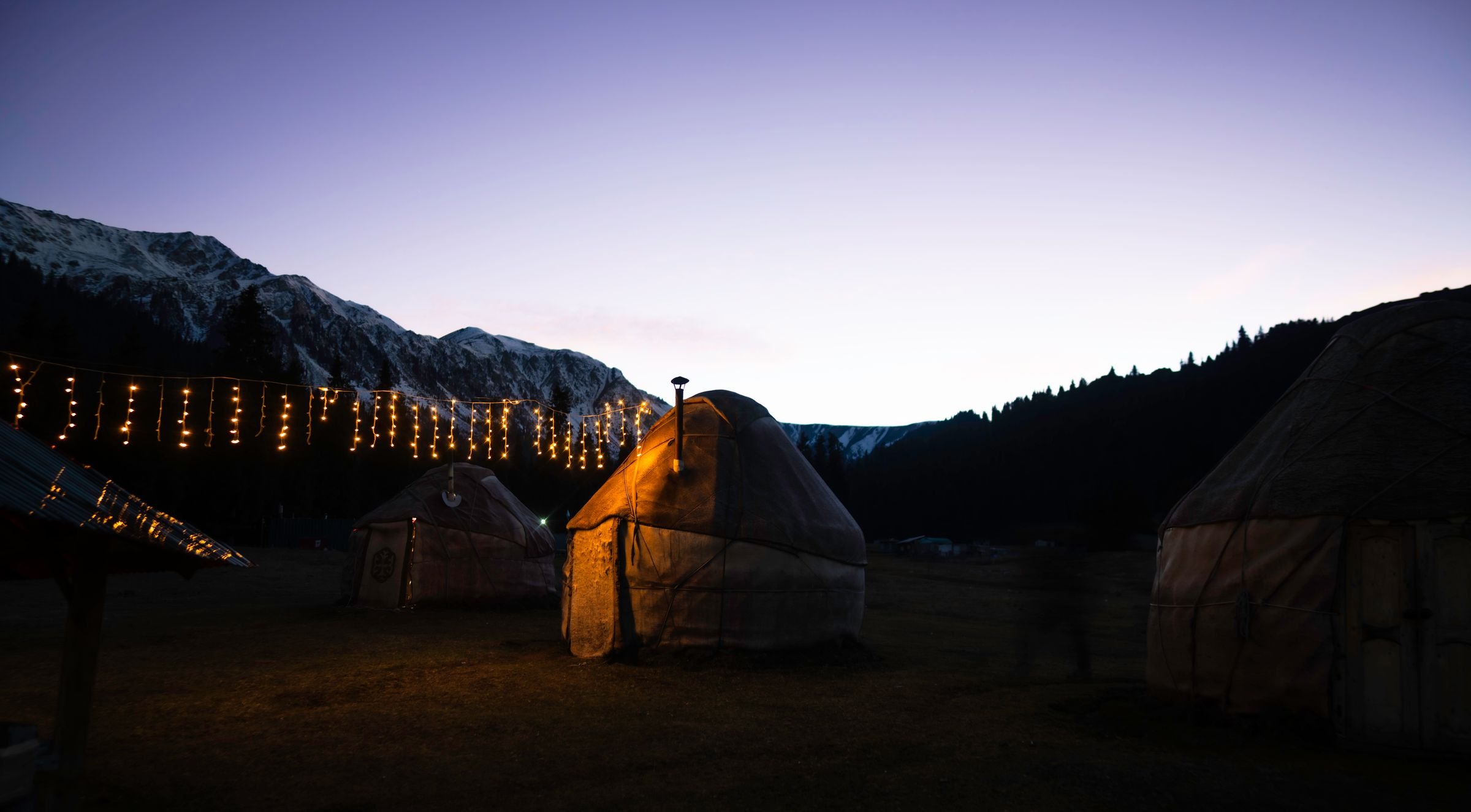
Stay in a yurt. Yurt camps on the high pastures and lakeshores have felt-lined yurts with beds and warm blankets, shared bathrooms and meals in a dining yurt. It’s simple, but unforgettable.
Ride a horse. Horses are part of everyday life, and riding is the best way to reach the high pastures, from a gentle hour along Song-Kul to multi-day treks between valleys. Most rides are at walking pace, so beginners can join.
Hike. From easy day walks in Ala-Archa and around Karakol to multi-day treks across passes to alpine lakes, with pack horses carrying the gear. Many treks reach 3,000 to 4,000 m.
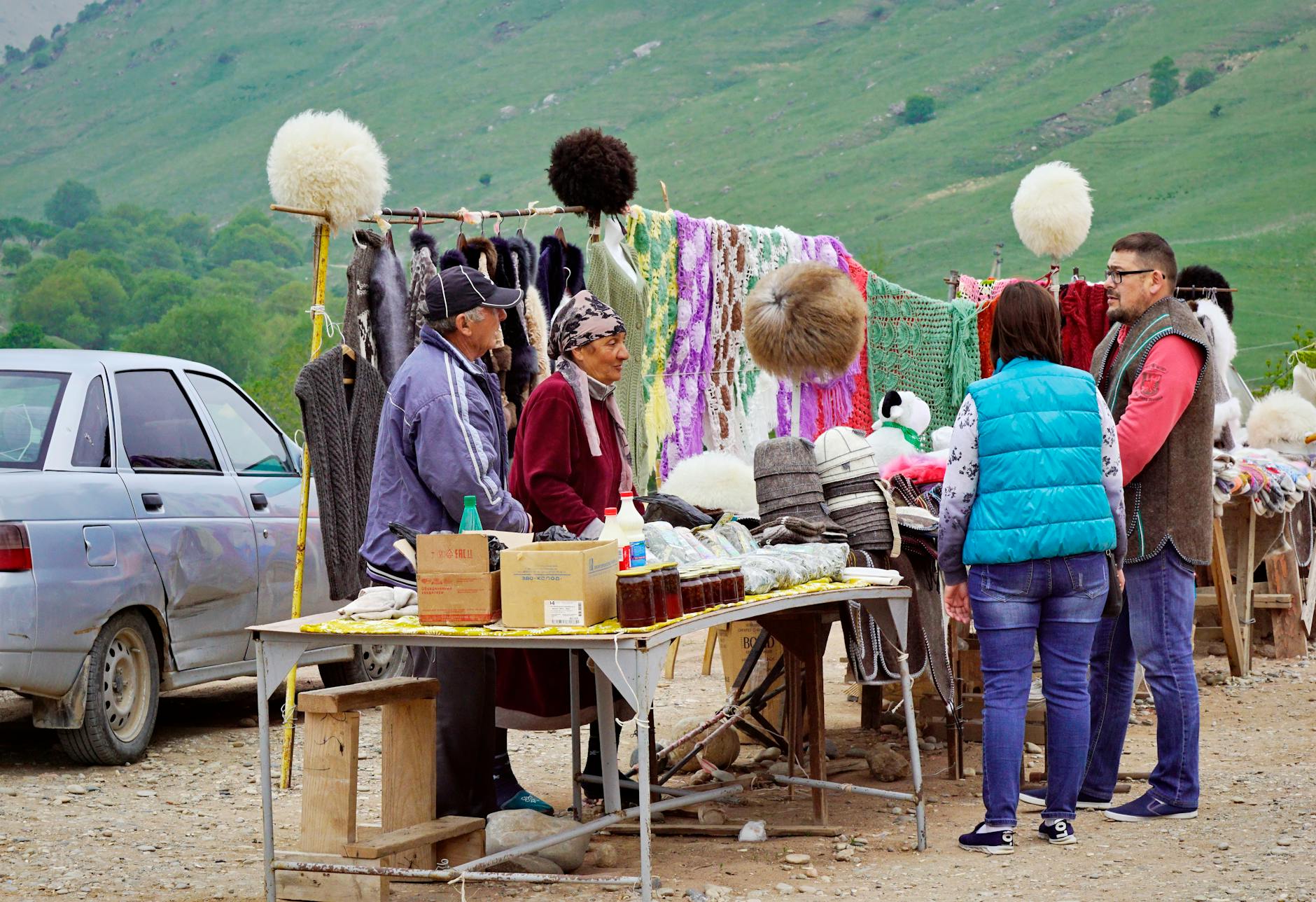
Meet nomadic culture. Watch an eagle hunter work with his golden eagle, see felt carpets being made, try horse games and visit a family on the jailoo for tea, bread and fresh dairy.
Soak in hot springs at Altyn-Arashan, swim in Issyk-Kul in July and August, or ski at Karakol in winter.
Kyrgyz food and drink
Kyrgyz food is hearty mountain cooking built around meat, bread and dairy. Try beshbarmak, the national dish of boiled meat over flat noodles; lagman, hand-pulled noodles with meat and vegetables; plov, rice cooked with carrots and lamb; manti dumplings; and samsa, pastries baked in a clay oven. Bread (nan) and fried dough (boorsok) come with every meal, along with plenty of tea. On the jailoo you may be offered kymyz, fermented mare’s milk, slightly sour and fizzy: a polite sip is fine. In Karakol, try the Dungan dish ashlan-fu, cold noodles in a spicy, vinegary broth. Vegetarians can be catered for, but tell us early.
Best time to visit Kyrgyzstan
Mid-June to mid-September is the main season. The passes are open, the herders are on the high pastures, yurt camps at Song-Kul are running and the weather in the mountains is at its most settled. July and August are the warmest months: hot in Bishkek (around 30°C), pleasant at Issyk-Kul, where the water is warm enough to swim, and mild by day at altitude, with cold nights. Afternoon showers are common in the mountains in early summer. May and early June are green and full of wild flowers in the lower valleys, though high passes may still have snow. October brings autumn colours and crisp days in the valleys, but the yurt camps have closed. Winter (November to March) is cold and snowy: good for skiing at Karakol and a quiet Issyk-Kul, but many mountain roads close.
Kyrgyzstan in September
September is one of the best months to visit. The summer crowds have gone, days are mostly dry and sunny (around 24°C in Bishkek and 18°C in Karakol), and the light is beautiful, with the first golden colours in the valleys by the end of the month. Song-Kul is cold at night, often dropping close to freezing, and the yurt camps close around the middle of the month, so go early in September if a lakeside yurt night is on your list. Markets are full of fruit, melons and nuts from the harvest.
| Month | Bishkek | Karakol | Song-Kul |
|---|---|---|---|
| Jan | 2°C / -7°C · 30 mm | -3°C / -11°C · 25 mm | -10°C / -18°C · 20 mm |
| Feb | 4°C / -5°C · 45 mm | -1°C / -9°C · 25 mm | -8°C / -16°C · 35 mm |
| Mar | 11°C / 1°C · 90 mm | 5°C / -4°C · 40 mm | -2°C / -10°C · 55 mm |
| Apr | 17°C / 6°C · 115 mm | 11°C / 0°C · 85 mm | 3°C / -5°C · 70 mm |
| May | 23°C / 10°C · 90 mm | 16°C / 4°C · 100 mm | 8°C / -1°C · 100 mm |
| Jun | 28°C / 15°C · 35 mm | 19°C / 8°C · 100 mm | 12°C / 4°C · 140 mm |
| Jul | 31°C / 18°C · 15 mm | 22°C / 11°C · 110 mm | 16°C / 7°C · 110 mm |
| Aug | 29°C / 16°C · 25 mm | 21°C / 10°C · 80 mm | 14°C / 6°C · 100 mm |
| Sep | 24°C / 12°C · 25 mm | 18°C / 7°C · 70 mm | 11°C / 2°C · 75 mm |
| Oct | 15°C / 5°C · 65 mm | 10°C / 0°C · 65 mm | 3°C / -6°C · 60 mm |
| Nov | 7°C / -2°C · 60 mm | 3°C / -6°C · 45 mm | -4°C / -12°C · 35 mm |
| Dec | 3°C / -5°C · 35 mm | -1°C / -10°C · 20 mm | -8°C / -16°C · 30 mm |
Average daily high / low and monthly rain or snow (as water), 10-year ERA5 data. Bishkek is at about 800 m, Karakol about 1,750 m and Song-Kul about 3,000 m.

How to get to Kyrgyzstan from the UK
There are no direct flights from the UK. Most travellers fly to Bishkek (Manas airport) with one connection, most often via Istanbul, which takes about 10 to 12 hours in total. Flights usually arrive in the early morning.
Kyrgyzstan combines easily with its neighbours. Almaty in Kazakhstan is about four hours from Bishkek by road, with a simple land border, and has more international flights. Tashkent in Uzbekistan is a short flight from Bishkek, or you can travel overland via Osh and the Fergana Valley.
Entry: British passport holders can visit without a visa for up to 30 days in any 60-day period. Your passport must be valid for at least six months after you arrive. If you stay longer than 30 days, you must register online within five days of entry.
Getting around
Distances are long and roads in the mountains can be rough, so most visitors travel with a private driver and guide, which is how we plan Kyrgyzstan. Allow about six to seven hours from Bishkek to Karakol along the north shore of Issyk-Kul, and five to six hours from Bishkek to Song-Kul, with the last stretch on gravel tracks by 4×4. The road from Bishkek to Osh crosses two high passes and takes a full day, so many people fly (about an hour). Shared minibuses (marshrutkas) link towns cheaply but are slow and crowded, and self-driving isn’t recommended.
Where to stay in Kyrgyzstan
- Bishkek: international-style and boutique hotels in the centre, near the parks and restaurants.
- Issyk-Kul: lakeside resorts and hotels on the north shore around Cholpon-Ata; smaller guesthouses and yurt camps on the quieter south shore.
- Karakol: friendly family guesthouses and small hotels, ideal before and after hikes.
- Song-Kul and the jailoo: yurt camps only, from simple to more comfortable, open about mid-June to mid-September.
- Homestays in villages such as Kochkor, for home cooking and a glimpse of rural life.
Outside Bishkek, accommodation is simple and comfortable rather than luxurious; we pick the best available at each stop and tell you honestly what to expect.
Sample Kyrgyzstan itineraries
Kyrgyzstan highlights
- Bishkek (1 night)
- Issyk-Kul north shore (1)
- Karakol (2)
- Issyk-Kul south shore (1)
- Song-Kul yurt (1)
- Bishkek (1)
The classic loop, June to mid-September.
Mountains and Silk Road
- Bishkek (2 nights)
- Karakol (3)
- Issyk-Kul south shore (1)
- Song-Kul yurt (2)
- Naryn and Tash Rabat (2)
- Bishkek (1)
Adds hiking from Karakol and the caravanserai.
Kyrgyzstan and Uzbekistan
- Bishkek (2 nights)
- Issyk-Kul and Karakol (4)
- Song-Kul (1)
- Fly to Tashkent
- Samarkand (2)
- Bukhara (3)
- Khiva (2)
Mountains and yurts, then the blue-tiled Silk Road cities.
Going on to Uzbekistan? See our Uzbekistan holidays and Uzbekistan tours compared. For a similar nomadic landscape further east, read our Mongolia holiday guide.
Ways to see Kyrgyzstan with us

Compare all our group trips in Kyrgyzstan tours, or ask for a tailor-made Kyrgyzstan holiday with your own driver-guide, built around your dates, pace and how much time you want on horseback.
Practical tips
- Safety: check the FCDO Kyrgyzstan advice before you go. It advises caution near the Tajikistan border, where there may be mines in the Batken border areas and crossings can close at short notice. Avoid demonstrations in Bishkek.
- Altitude: Song-Kul is at about 3,000 m and treks go higher. Build in time to acclimatise, drink plenty of water and take out insurance that covers trekking and high-altitude activities.
- Cash: carry Kyrgyz som. Cards are taken in Bishkek and larger hotels, and there are cash machines in towns, but yurt camps and villages are cash only.
- Layers: even in July, nights at altitude can drop close to freezing. Bring a warm jacket, hat, sun protection and good walking shoes.
- Photography: it’s illegal to photograph or fly drones near military sites and border checkpoints. Ask before photographing people.
- Connectivity: mobile coverage is good in towns and along Issyk-Kul, but patchy or absent in the mountains and at Song-Kul.
- Customs: remove shoes when entering a yurt or home, accept tea with your right hand and try a little of what you’re offered.
Frequently asked questions
Is Kyrgyzstan worth visiting?
Yes, especially if you love mountains and the outdoors. It has some of the most beautiful and least crowded scenery in Asia, with alpine lakes, high pastures and yurt stays, plus a warm nomadic culture and Silk Road history.
What is the best time to visit Kyrgyzstan?
Mid-June to mid-September, when the mountain passes are open, herders are on the summer pastures and the Song-Kul yurt camps are running. July and August are warmest; September is quieter and still mostly dry.
Is September a good time to visit Kyrgyzstan?
Yes. Days are mostly sunny and dry, the summer crowds have gone and the valleys start to turn golden. Nights are cold at altitude, and Song-Kul's yurt camps close around mid-September, so go early in the month for a lakeside yurt night.
Do UK citizens need a visa for Kyrgyzstan?
No, not for visits of up to 30 days in any 60-day period. Your passport must be valid for six months after arrival. Check the FCDO entry requirements before you travel, as rules can change.
Is Kyrgyzstan safe to visit?
The FCDO advises caution near the Tajikistan border, especially in the Batken region, and avoiding demonstrations. In the mountains, the main risks are remoteness, weather and altitude, so travel with a reputable guide.
How many days do you need in Kyrgyzstan?
Eight days covers Bishkek, Issyk-Kul, Karakol and a night at Song-Kul. Twelve to fourteen days lets you add hiking, Naryn and Tash Rabat, or combine Kyrgyzstan with Uzbekistan.
Can you swim in Issyk-Kul?
Yes, in July and August the water is warm enough for swimming, and the north shore has beaches. The lake never freezes, but it is cold outside high summer.
How do you get to Song-Kul?
By 4×4 from Kochkor over high passes, about five to six hours from Bishkek in total, or on a two or three-day horse trek. The lake is at about 3,016 m and the yurt camps open only from about mid-June to mid-September.
Keep planning
- Kyrgyzstan holidays
- Kyrgyzstan tours
- Escorted tours of Kyrgyzstan
- Uzbekistan holidays
- Uzbekistan tours compared
- Kazakhstan holidays
- Mongolia holiday guide
- Georgia holiday guide
Plan your Kyrgyzstan holiday with a Travel Designer
Tell us when you’d like to go and how active you want to be, and we’ll plan Issyk-Kul, Karakol, a night in a yurt at Song-Kul and the rest, with your own driver-guide, in one ATOL-protected booking.
Make an enquiry Kyrgyzstan holidays