Kanazawa in brief
- Kenroku-en, one of Japan’s three great gardens, the castle, the Higashi Chaya geisha district and the samurai quarter.
- Omicho market and the Sea of Japan seafood, gold leaf and modern art.
- About 2.5 hours from Tokyo by shinkansen, 2 from Kyoto; covered by the JR Pass.
- Day trips to Shirakawa-go, Takayama and the hot springs; the Noto peninsula is reopening after the 2024 earthquake.

Kanazawa is the city to add when you want more of old Japan without the crowds of Kyoto. It was the seat of the Maeda clan, the richest feudal lords in Japan after the shogun, and they spent their fortune on gardens, tea, theatre and crafts rather than war. That legacy is still everywhere: Kenroku-en, one of the three great gardens of Japan; the castle beside it; lantern-lit geisha teahouse districts; a samurai quarter of earthen walls and canals; the Omicho seafood market; and almost all of Japan’s gold leaf. Since the bullet train arrived it is only about two and a half hours from Tokyo. This guide covers things to do, food, day trips, the Noto peninsula, getting there, where to stay and the weather.
Where is Kanazawa?
Kanazawa is on the Sea of Japan coast of central Honshu, in the region called Hokuriku, with the Japanese Alps between it and Tokyo. It is the capital of Ishikawa Prefecture and the gateway to the Noto peninsula to the north.
Never bombed in the Second World War, its old districts survived intact. The castle and Kenroku-en sit on a low hill in the middle, with Higashi Chaya to the north-east and Nagamachi to the west.
You arrive at Kanazawa Station under the huge wooden Tsuzumi Gate. The main sights are 2 to 3 km from the station: a pleasant walk, or a few minutes on the loop buses.
Things to do in Kanazawa
Kenroku-en garden
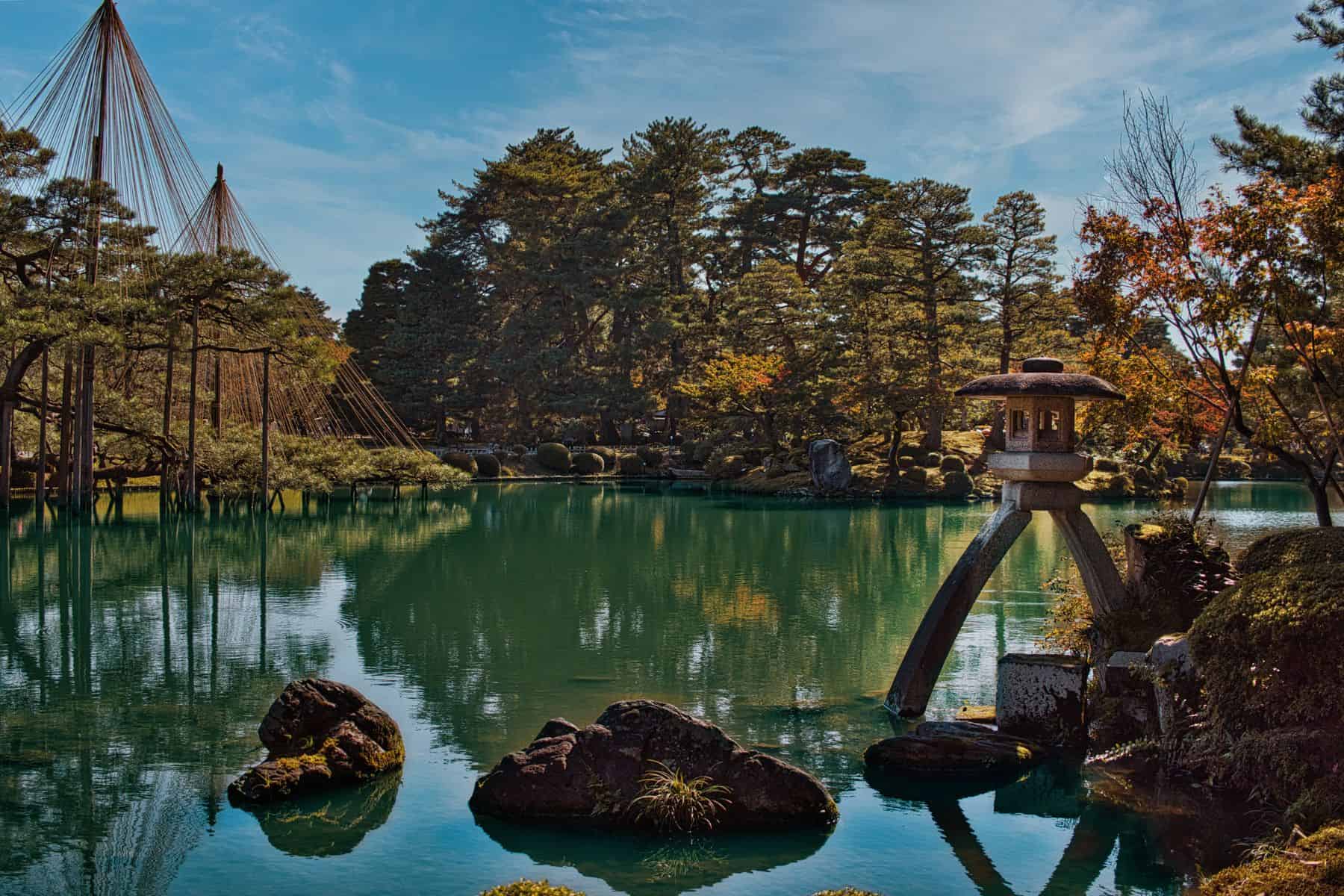
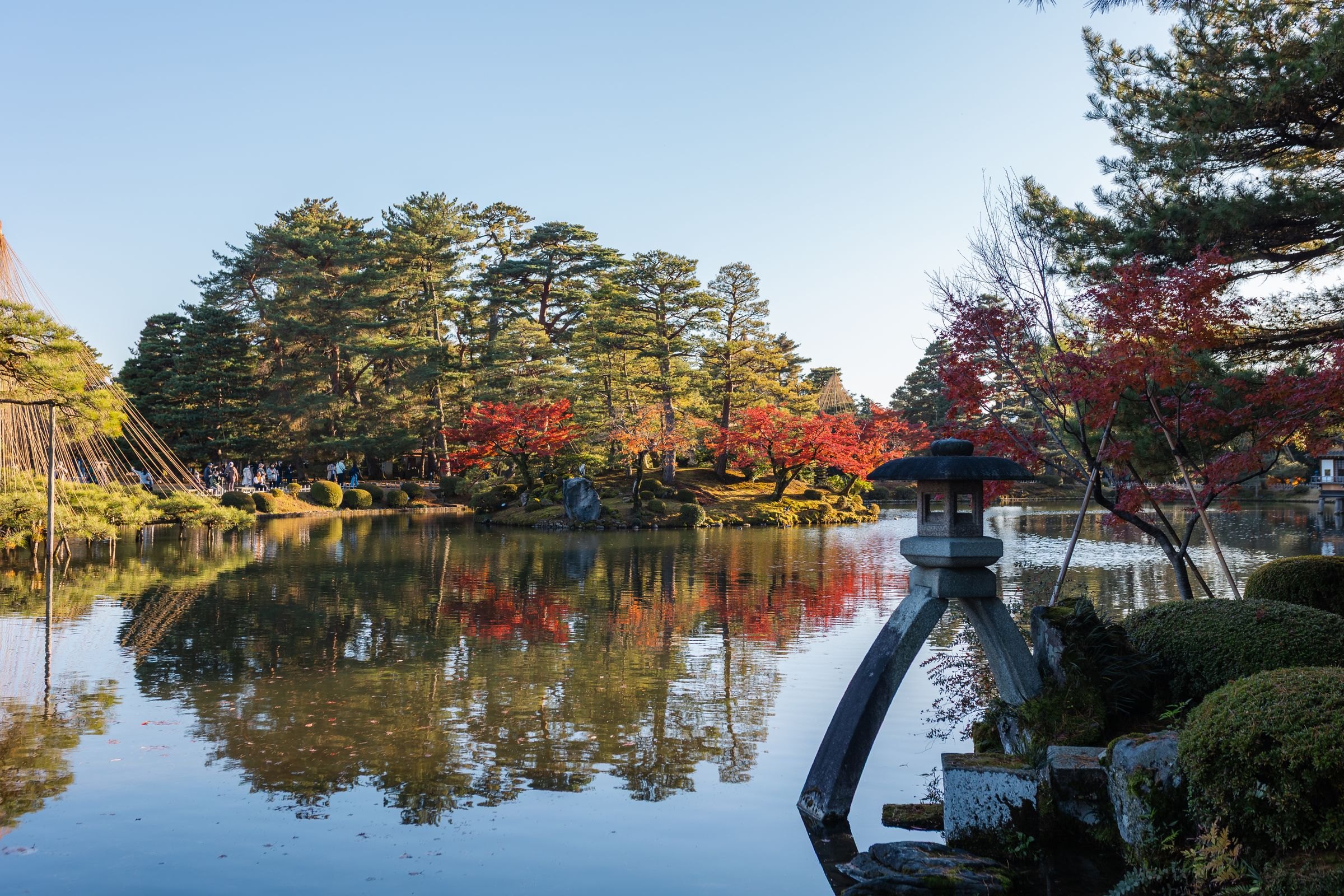
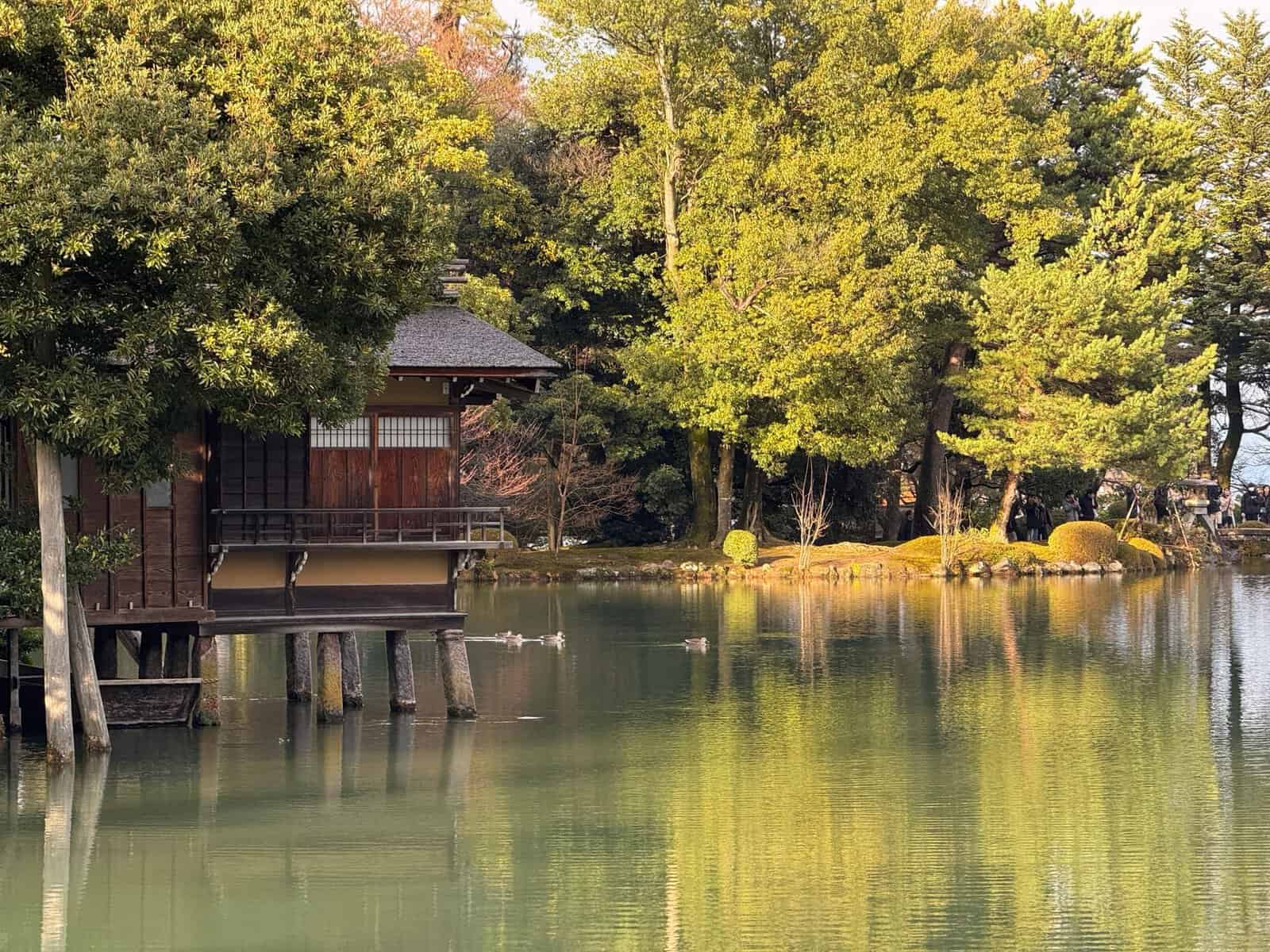
Kenroku-en is ranked with Kairaku-en in Mito and Koraku-en in Okayama as one of the three great gardens of Japan, and many people think it is the finest. Its name means “garden of six attributes”: spaciousness and seclusion, artifice and antiquity, water and broad views, qualities that are hard to combine.
Look for the two-legged Kotoji lantern on the edge of Kasumiga-ike pond, the symbol of Kanazawa; Japan’s oldest fountain, fed by gravity; and the old teahouses. In winter the pines are protected by yukitsuri, ropes fanned out from a central pole like a tent, put up from early November to save the branches from heavy snow.
Tip: the garden opens early (7am from March to mid-October, 8am in winter), and the first hour is the best time to see it quietly, before the tour groups arrive.
Kanazawa Castle

Across a bridge from Kenroku-en, Kanazawa Castle Park is the old seat of the Maeda clan. Fire destroyed most of it, but the Ishikawa-mon gate is original, and the long white turrets and storehouses of the Hishi-yagura and Gojukken Nagaya have been rebuilt using traditional joinery, without nails.
Don’t miss Gyokusen-inmaru, a beautiful stroll garden on the castle’s south-west side, lit up on Saturday evenings and some other nights.
Higashi Chaya, the geisha district
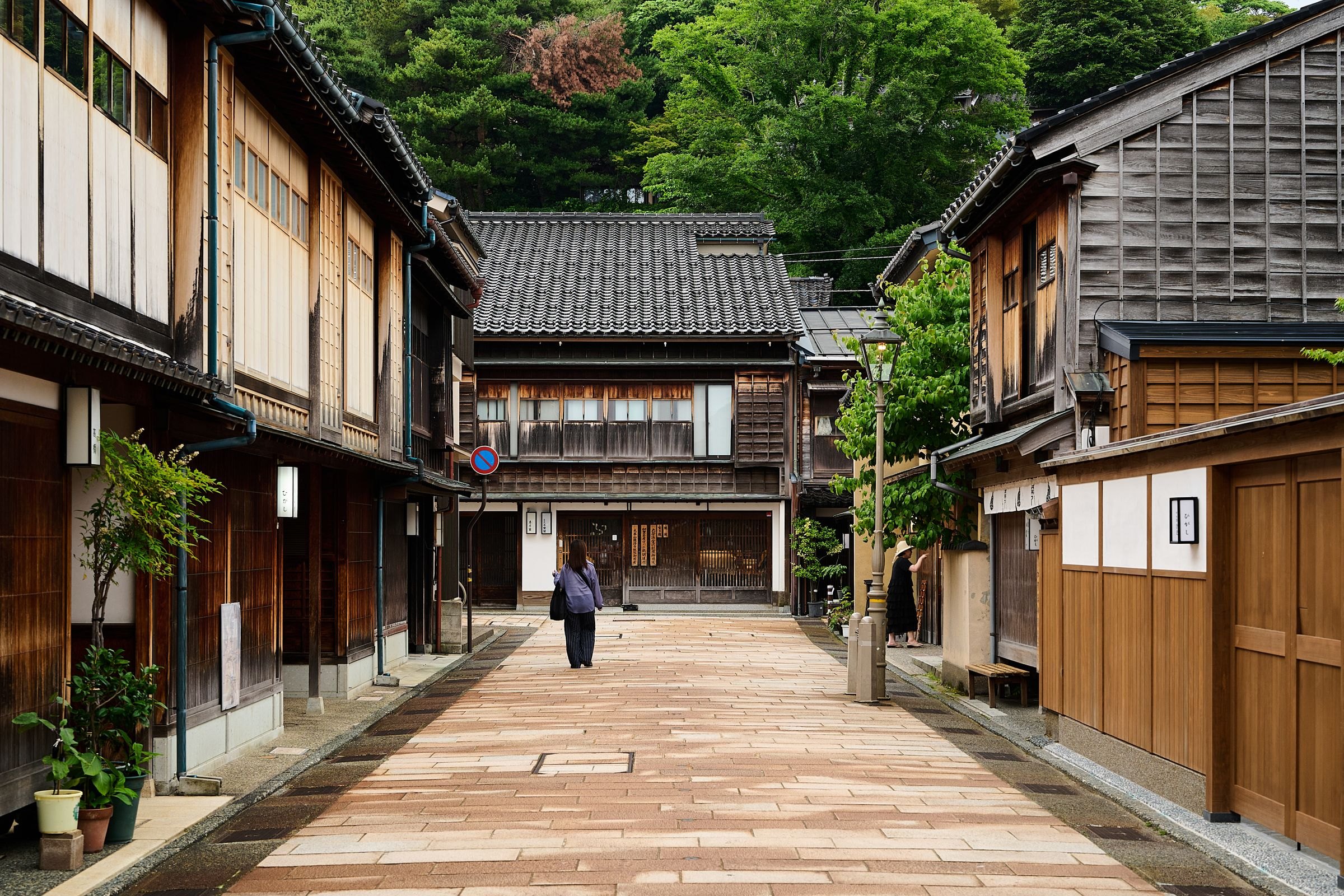
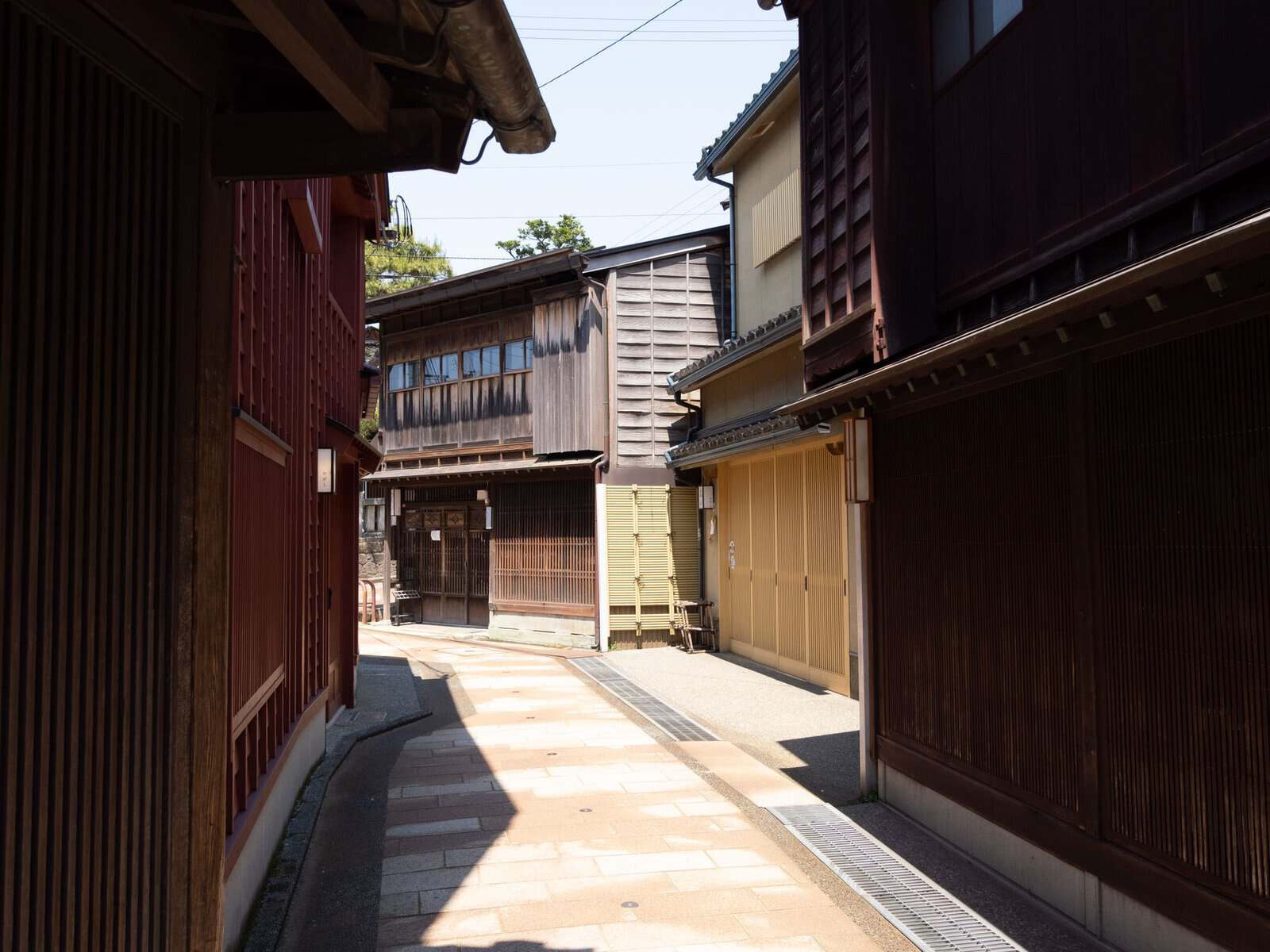
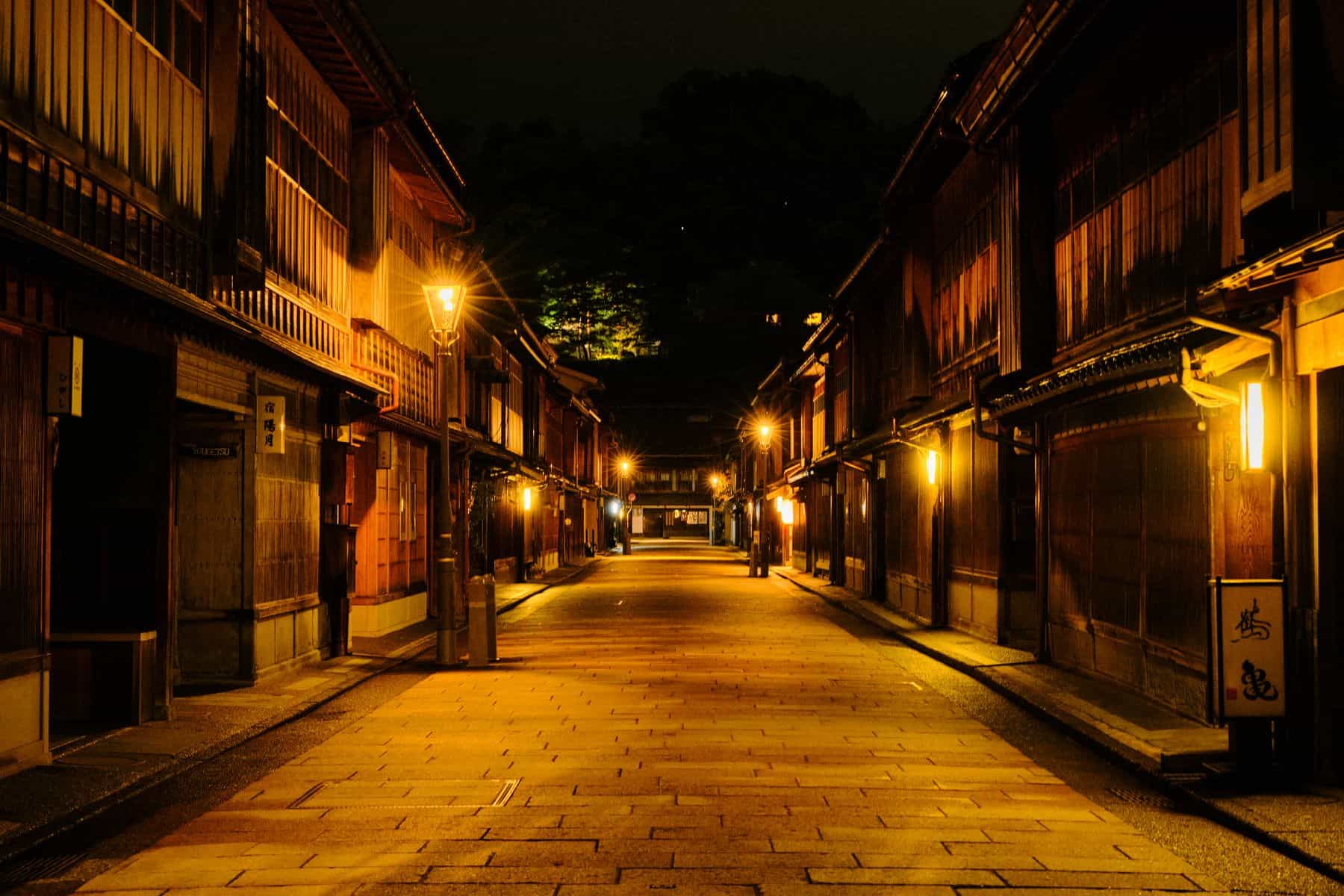
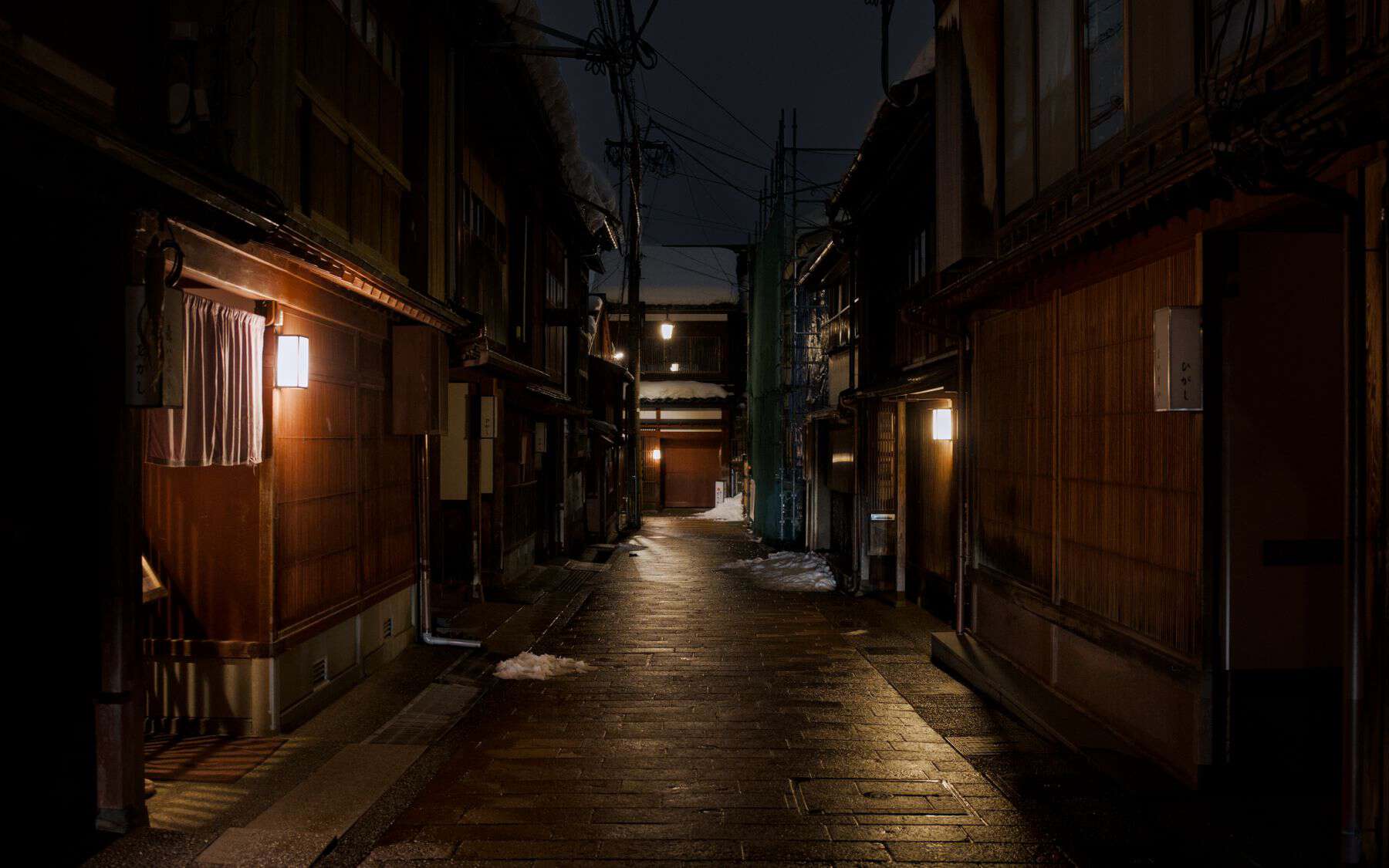
Higashi Chaya (“eastern teahouse district”) is a few streets of two-storey wooden teahouses with fine latticed fronts, laid out in 1820 as an entertainment quarter for wealthy merchants. It is the best-preserved geisha district in Japan outside Kyoto, and geisha still perform here at private evening engagements.
You can visit one of the old teahouses, now open as a museum, to see the guest rooms, the lacquered stairs and the space where the geisha danced.
Two smaller teahouse districts are worth a wander: Kazuemachi, a lantern-lit row along the Asano River a few minutes away, and Nishi Chaya south of the Sai River.
Gold leaf
Kanazawa makes almost all of Japan’s gold leaf (kinpaku): well over 90 per cent of it. The gold is beaten into sheets a ten-thousandth of a millimetre thick.
In Higashi Chaya you’ll see a soft ice cream wrapped in a whole sheet of gold, the city’s favourite photograph. Better still, join a gold-leaf workshop, where you apply the leaf to chopsticks, a small box or a plate in about an hour.
Omicho market
Omicho has been the city’s kitchen for about 300 years: some 170 stalls under a covered arcade, selling fish, crabs, oysters, sea urchin, local vegetables and pickles.
Go in the morning and eat a kaisen-don, a bowl of rice heaped with raw seafood, at one of the small counters. Many stalls close by mid-afternoon, and some on Wednesdays.
Nagamachi, the samurai district
Nagamachi is where the Maeda clan’s samurai lived, below the castle: narrow lanes lined with yellow earthen walls and tiled caps, gateways and little canals.
Go inside the Nomura family samurai house, with painted screens and a small, exquisite garden of moss, stone and water that is regularly listed among the best in Japan. In winter the walls are wrapped in straw matting (komo-kake) to protect them from snow, from early December to March.
The 21st Century Museum of Contemporary Art
A ten-minute walk from Kenroku-en, the 21st Century Museum of Contemporary Art is a low, round glass building designed by the Japanese architects SANAA and opened in 2004. Its free public areas and lawns are open to everyone.
Its best-known work is Leandro Erlich’s Swimming Pool: from above you see people apparently standing under water, then you go downstairs and stand under it yourself. Entry to the pool is timed and it gets busy, so book or arrive early. The exhibition zone closed for repairs after the 2024 earthquake and reopened in June 2024.
More to see: the Teramachi temple district south of the river, including Myoryu-ji, the so-called “ninja temple”, full of trick staircases, hidden rooms and trapdoors (visits are by guided tour, booked ahead); Oyama shrine with its stained-glass gate tower; the calm D.T. Suzuki Museum, dedicated to the writer who brought Zen to the West; and a tea ceremony or Noh theatre performance, both arts the Maeda lords encouraged.

What to eat in Kanazawa
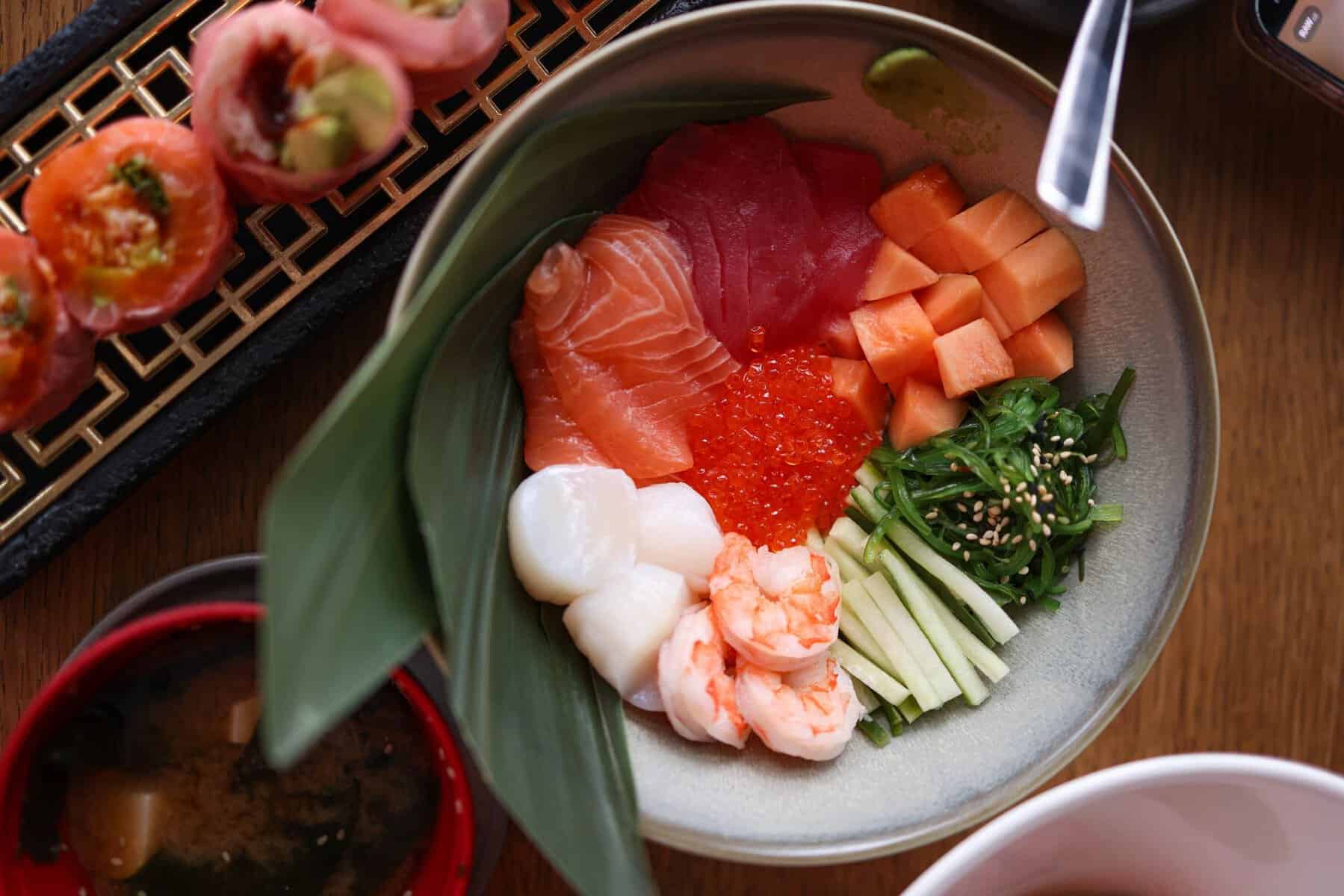
Sushi here is outstanding, and often much better value than in Tokyo. Look for nodoguro (blackthroat sea perch), rich and buttery, grilled or as sushi; sweet shrimp (amaebi); and yellowtail in winter.
Crab season opens on 6 November. Snow crab is the winter feast, and the small female kobako crabs, full of roe, are a local favourite, in season only until the end of December.
Other local dishes: jibuni, a duck stew thickened with flour and served with wheat gluten and vegetables; Kanazawa oden, a comforting hot pot served all year; and Kanazawa curry, thick and dark, served on a steel plate with a cutlet. The city is also one of Japan’s three great centres of wagashi, the delicate sweets served with matcha.
Day trips from Kanazawa

Shirakawa-go and Gokayama
The steep thatched farmhouses of Shirakawa-go are a UNESCO World Heritage Site, in a valley in the mountains south of Kanazawa. Buses run several times a day (reserve in busy seasons). Better still, stay a night in a farmhouse inn on the way to Takayama. The smaller Gokayama villages of Ainokura and Suganuma are closer to Kanazawa and far quieter.
Shirakawa-go in our Takayama guide →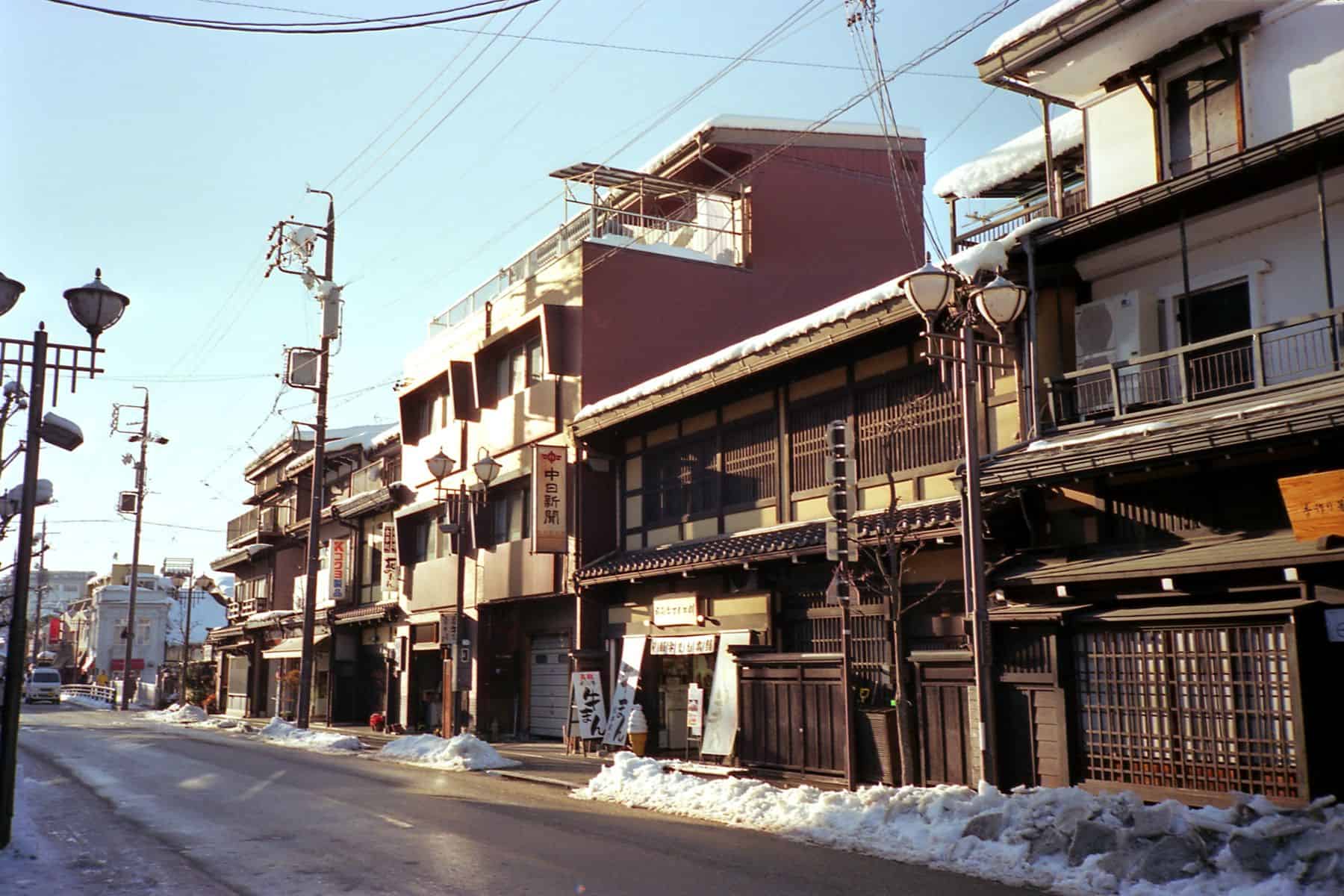
Takayama
A small mountain town of dark wooden merchant houses, sake breweries and morning markets, with Hida beef and one of Japan’s finest festivals. Better as an onward stop than a day trip.
Read our Takayama guide →
Toyama and the Alpine Route
Toyama is the start of the Tateyama Kurobe Alpine Route, a chain of cable cars, buses and ropeways across the Northern Alps to Nagano, past the huge Kurobe dam. In April and May the road at the top runs between walls of snow up to about 20 m high. Most people cross it on the way to Nagano or Tokyo.
Kaga hot springs: 30 to 60 minutes south-west of the city, the onsen towns of Yamanaka, Yamashiro and Awazu are known for their ryokan, Kutani porcelain and Yamanaka lacquerware; Yamanaka’s riverside path through the Kakusenkei gorge is lovely in autumn. Fukui, about 25 minutes by shinkansen, has Eihei-ji, one of the two head temples of Soto Zen, in a cedar forest.
The Noto peninsula: what’s open now
The Noto peninsula reaches 100 km into the Sea of Japan north of Kanazawa: a coast of cliffs and fishing villages, terraced rice fields such as Shiroyone Senmaida, lacquer workshops in Wajima and the onsen town of Wakura. On 1 January 2024 it was struck by a magnitude 7.5 earthquake, and in September 2024 by severe floods. Kanazawa itself was only lightly affected and is fully open.
Where things stand (autumn 2026): the Noto Railway is running its full line, and the main toll-free road up the peninsula is open, but several stretches of the outer coast road are not due to reopen until 2029. Wajima’s famous morning market is trading again from a temporary building while its old street is rebuilt. In Wakura Onsen about a dozen inns have reopened, some only in part, and many rooms across the peninsula are still reserved for recovery workers.
Our advice: visiting is welcome and helps the recovery, but go with a driver-guide, on a day trip or with one night on the Wakura and Nanao side, and expect some sights to be closed. We check roads and opening days before every trip.
Kanazawa or Takayama?
They are about two hours apart by bus, with Shirakawa-go between them, so most people see both. If you must choose:
| Kanazawa | Takayama | |
|---|---|---|
| Feel | Elegant castle city near the sea | Small, rustic mountain town |
| Highlights | Kenroku-en, geisha district, castle, modern art, Omicho | Old town, morning markets, festival, sake |
| Best for | Gardens, crafts, seafood | Old Japan, mountains and onsen |
| Day trips | Shirakawa-go, Kaga onsen, Fukui, Noto | Shirakawa-go, Okuhida, Kamikochi |
| Getting there | Shinkansen from Tokyo, about 2.5 hours | Limited express via Nagoya or Toyama |
| Stay | 2 to 3 nights | 2 nights |
How to get to Kanazawa
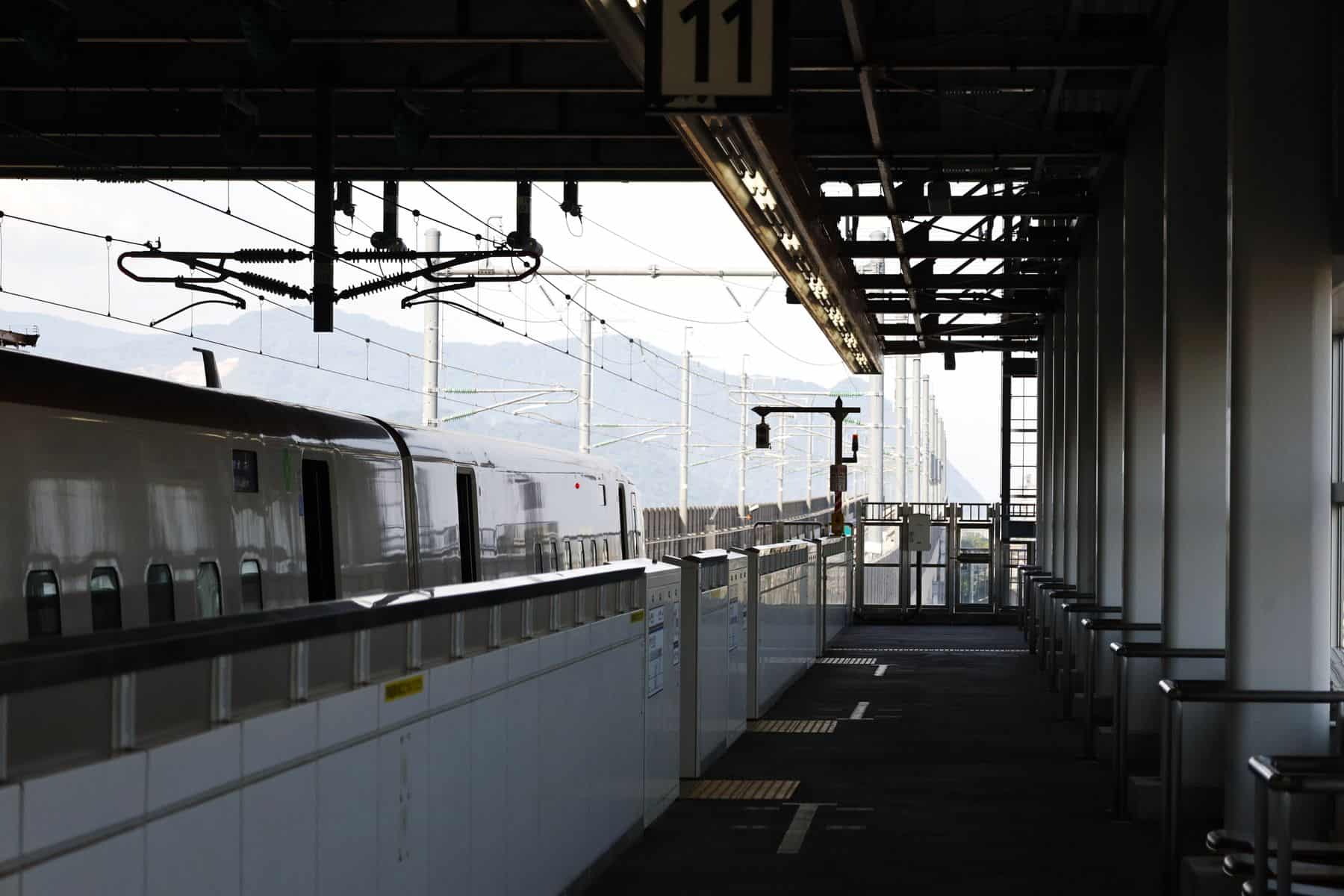
From Tokyo: the Hokuriku Shinkansen runs from Tokyo and Ueno stations via Nagano to Kanazawa. The fastest Kagayaki trains take about 2 hours 30 minutes; the stopping Hakutaka takes about 3 hours. The Kagayaki is all-reserved.
From Kyoto or Osaka: take the Thunderbird limited express to Tsuruga and change across the platform to the shinkansen, about 2 hours 10 minutes from Kyoto and 2.5 hours from Osaka. Since the line reached Tsuruga in March 2024 there is no longer a direct train.
From Takayama: highway buses take 2 to 2.5 hours, most stopping at Shirakawa-go. All these trains are covered by the Japan Rail Pass; the buses are not.
Flying: there are no direct flights from the UK. Fly to Tokyo and take the train, or connect to Komatsu airport, about 40 minutes by bus from Kanazawa.
Getting around Kanazawa
The old districts are close together, and Higashi Chaya to Kenroku-en is about 15 minutes’ walk, Kenroku-en to Nagamachi about 20. The Kanazawa Loop Bus circles the main sights from the station in both directions every 15 minutes or so, and taxis are plentiful for short hops.
Where to stay in Kanazawa
- Near the station: the most practical choice, with the widest range of modern hotels, easy for the shinkansen and buses to Shirakawa-go, and 10 minutes by bus from the sights.
- Korinbo and Katamachi: the city centre between the castle and Nagamachi, with department stores and the best evening dining; walkable to Kenroku-en, Omicho and the samurai district.
- Higashi Chaya and the Asano River: small ryokan and restored townhouses in or near the teahouse district, for quiet mornings and lantern-lit evenings.
- Kaga onsen towns: a ryokan with hot-spring baths and a kaiseki dinner, 30 to 60 minutes away, for a night or two of pure rest.
Best time to visit Kanazawa
Kanazawa is famously wet: locals say “even if you forget your lunch, don’t forget your umbrella”. Early April brings cherry blossom to Kenroku-en and the castle park. May is fresh and fairly dry, the best time for walking. June and July are the rainy season, and August is hot and humid, around 30°C. Early June brings the Hyakumangoku Matsuri, the city’s main festival. From late October to November the gardens turn red and gold and the yukitsuri ropes go up, with crab season from 6 November. December to February is cold and often grey, with snow on the gardens on some days: beautiful, quiet and the best time for seafood.
| Month | Kanazawa | Wajima (Noto) |
|---|---|---|
| Jan | 6°C / 0°C · 190 mm | 6°C / 2°C · 160 mm |
| Feb | 7°C / 0°C · 140 mm | 7°C / 2°C · 120 mm |
| Mar | 12°C / 3°C · 150 mm | 11°C / 5°C · 130 mm |
| Apr | 17°C / 8°C · 155 mm | 15°C / 9°C · 130 mm |
| May | 22°C / 13°C · 125 mm | 21°C / 14°C · 105 mm |
| Jun | 25°C / 17°C · 160 mm | 24°C / 18°C · 145 mm |
| Jul | 29°C / 22°C · 245 mm | 28°C / 23°C · 195 mm |
| Aug | 30°C / 23°C · 245 mm | 29°C / 24°C · 240 mm |
| Sep | 26°C / 19°C · 230 mm | 26°C / 21°C · 225 mm |
| Oct | 20°C / 13°C · 170 mm | 20°C / 15°C · 150 mm |
| Nov | 15°C / 8°C · 165 mm | 15°C / 10°C · 150 mm |
| Dec | 9°C / 3°C · 230 mm | 9°C / 4°C · 210 mm |
Average daily high / low and monthly rain or snow (as water), 10-year ERA5 data. Kanazawa gets rain or snow on roughly half the days of the year; winter is the wettest season.
How many days in Kanazawa? Sample routes
Two nights covers Kenroku-en, the castle, Higashi Chaya, Omicho and Nagamachi at an easy pace. Three lets you add the museum, a crafts workshop and a day trip.
Kanazawa, Shirakawa-go and Takayama
- Kanazawa (2 nights)
- Shirakawa-go farmhouse (1)
- Takayama (2)
The classic Hokuriku loop, by shinkansen and bus.
Kanazawa and the Alps
- Tokyo (2 nights)
- Kanazawa (2)
- Kaga onsen ryokan (1)
- Shirakawa-go (1)
- Takayama (2)
Gardens, crafts, a hot-spring night and the mountains.
Tokyo to Kyoto the slow way
- Tokyo (3 nights)
- Hakone (1)
- Kanazawa (3)
- Takayama (2)
- Kyoto (4)
A first trip to Japan that takes in the Sea of Japan coast and the Alps.
Planning the rest of the trip? See our Japan holiday guide for Tokyo, Kyoto, Hiroshima and Hokkaido, and our Takayama guide for Shirakawa-go and the Japanese Alps.
Ways to see Kanazawa with us

Prefer your own pace? A tailor-made Japan holiday can add Kanazawa, a crafts workshop, a farmhouse night in Shirakawa-go and an onsen ryokan to any route, with rail passes and bags sent ahead. Comparing tours? See Japan tours compared.
Practical tips
- Entry: British visitors don’t need a visa for stays of up to 90 days. Check the FCDO Japan advice before you go.
- Umbrella: bring one, or buy one: rain or snow is likely at any time of year, and especially in winter.
- Early starts: Kenroku-en opens early and Omicho is best in the morning; Higashi Chaya is busiest from 10am to 4pm.
- Book ahead: shinkansen seats, buses to Shirakawa-go, the Swimming Pool at the museum, Myoryu-ji tours and, for November to December, crab dinners.
- Luggage: send big cases ahead by courier (takkyubin) when you move on by bus to Shirakawa-go and Takayama.
- Cash: cards are widely taken in the city, but carry yen for market stalls, small shops and buses.
Frequently asked questions
Is Kanazawa worth visiting?
Yes. It has one of Japan's three great gardens, a castle, the best-preserved geisha and samurai districts outside Kyoto, an excellent seafood market and fine modern art, with fewer crowds than Kyoto. It is about 2.5 hours from Tokyo by shinkansen.
How many days do you need in Kanazawa?
Two nights covers Kenroku-en, the castle, Higashi Chaya, Omicho market and Nagamachi. Three nights lets you add the 21st Century Museum, a gold-leaf workshop and a day trip to Shirakawa-go or the Kaga hot springs.
How do you get from Tokyo to Kanazawa?
Take the Hokuriku Shinkansen from Tokyo or Ueno. The fastest Kagayaki trains take about 2 hours 30 minutes and are covered by the Japan Rail Pass.
How do you get from Kyoto to Kanazawa?
Take the Thunderbird limited express to Tsuruga and change to the Hokuriku Shinkansen, about 2 hours 10 minutes in total. There has been no direct train since March 2024.
Can you visit Shirakawa-go from Kanazawa?
Yes. Buses take about 1 hour 15 minutes to 1.5 hours, several times a day, and many continue to Takayama. Reserve seats in busy seasons, or stay a night in a farmhouse inn on the way to Takayama.
Is it safe to visit the Noto peninsula after the earthquake?
Parts of Noto are open and visitors help the recovery: the Noto Railway runs its full line and some Wakura Onsen inns have reopened. But some coastal roads stay closed until 2029 and beds are scarce, so go with a driver-guide and check before you travel. Kanazawa itself is fully open.
What is the best time to visit Kanazawa?
Early April for cherry blossom, May for dry walking weather, and late October to November for autumn colours, the yukitsuri ropes and the start of crab season. Winter is cold and snowy but quiet; June and July are rainy.
What is Kanazawa famous for?
Kenroku-en garden, its geisha and samurai districts, gold leaf (it makes almost all of Japan's), seafood and winter crab, Kutani porcelain, Kaga Yuzen silk and the 21st Century Museum of Contemporary Art.
Keep planning
- Japan holiday guide
- Takayama and Shirakawa-go guide
- Japan holidays
- Escorted tours of Japan
- Japan tours compared
- Japan cherry blossom tours
- South Korea vs Japan
- Tailor-made holidays
Plan your Japan holiday with a Travel Designer
Tell us when you’d like to go and we’ll plan Kanazawa, Shirakawa-go, Takayama and the rest of Japan, with ryokan stays, rail passes and bags sent ahead, in one ATOL-protected booking.
Make an enquiry Japan holidays