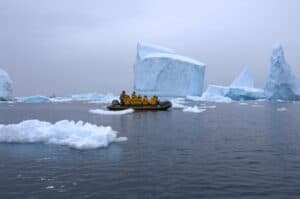
Small cruise ships are the fastest-growing part of luxury cruising, and it is easy to see why. With a few hundred guests or fewer, you skip the queues, get to know the crew by name and sail into harbours, coves and polar inlets that big ships simply cannot reach. For many of our clients, a small ship is the difference between a cruise and a voyage.
But “small ship” covers very different experiences, from a 112-guest yacht in the Caribbean to an ice-class expedition ship in Antarctica or a square-rigged tall ship under full sail. This guide explains what counts as small, the honest pros and cons, and how the leading small-ship lines compare.
The quick answer
- Small usually means under about 300 guests. Some luxury lines with around 600 guests are still small by modern standards.
- For a private-yacht feel: SeaDream Yacht Club and Emerald Yacht Cruises carry around 100 to 112 guests.
- For luxury with more space: the Ritz-Carlton Yacht Collection and Seabourn offer more restaurants and bigger suites.
- For wildlife and wilderness: expedition lines such as Lindblad, Aurora Expeditions, Ponant and Scenic use small ships with Zodiacs and expert guides.
- For romance under sail: Star Clippers and Windstar sail real tall ships and sailing yachts.
- River cruises are small by nature, usually well under 200 guests.
What counts as a small cruise ship?
There is no official definition. The largest cruise ships now carry several thousand guests, so anything under about 1,000 can look small by comparison. In practice, we think about small ships in three bands:
- Yacht-sized, under about 150 guests. Intimate, informal and able to tie up in small harbours. Think SeaDream, Emerald Yacht Cruises and the smaller Windstar sailing yachts.
- Small ships, about 150 to 300 guests. The sweet spot for expedition cruising and for luxury yachts with more facilities: most expedition ships, Star Clippers’ tall ships and the Ritz-Carlton yacht Evrima.
- Small luxury ships, about 300 to 700 guests. Still far smaller than mainstream ships, with several restaurants, a proper spa and all-suite accommodation, such as Seabourn’s ocean ships.
River ships are a separate category: they are limited by the size of locks and bridges, so they are small by design.
The pros and cons of small-ship cruising
| Consideration | Why small ships win | What to bear in mind |
|---|---|---|
| Ports | Access to small harbours, islands and coves big ships cannot use | Some itineraries use tenders rather than docking |
| Atmosphere | Relaxed, social, with high crew-to-guest ratios and personal service | Fewer places to be anonymous if you prefer your own company |
| Facilities | Less time queuing, easier embarkation and disembarkation | Fewer restaurants, bars and entertainment venues |
| Motion | Modern stabilisers make many very comfortable | Smaller ships can feel more movement in open sea |
| Families | Expedition ships suit curious older children | Few have kids’ clubs; most suit adults best |
| Value | Fares often include drinks, gratuities and excursions | Fares are usually higher per night than big ships |
Small-ship cruise lines compared
Here is how the leading small-ship lines compare. Guest numbers are taken from the lines’ own published figures where available and refer to maximum capacity; some expedition lines carry fewer guests in polar regions.
| Line | Style | Typical guest numbers | Regions | Best for |
|---|---|---|---|---|
| SeaDream Yacht Club | Relaxed luxury mega-yachts | Up to 112 per yacht | Mediterranean, Caribbean | A private-yacht feel and watersports from the marina |
| Emerald Yacht Cruises | Contemporary small yachts | 100 per yacht | Mediterranean, Red Sea, Indian Ocean and more | Stylish, good-value yacht cruising |
| Ritz-Carlton Yacht Collection | Luxury hotel at sea, yacht-style | 298 on Evrima; around 450 on Ilma and Luminara | Mediterranean, Northern Europe, Caribbean and beyond | Spacious suites and fine dining |
| Seabourn | Ultra-luxury ocean and expedition ships | 264 on expedition ships; around 600 on ocean ships | Worldwide, including Antarctica and the Arctic | All-inclusive luxury, with or without expedition |
| Ponant | French luxury expedition | Up to 184 on Explorer ships; around 245 on Le Commandant Charcot | Worldwide, including the polar regions | Expedition with French style and cuisine |
| Scenic (Scenic Eclipse) | Luxury “discovery yachts” | Up to 228 | Polar regions, Mediterranean and beyond | All-inclusive luxury with helicopters on board |
| Lindblad Expeditions | Expedition, in partnership with National Geographic | 138 on National Geographic Endurance | Antarctica, Arctic, Galápagos and more | Naturalist-led wildlife and photography |
| Aurora Expeditions | Small-ship polar expedition | No more than 130 on polar voyages | Antarctica, Arctic and more | Active, hands-on expedition travellers |
| Star Clippers | Square-rigged tall ships under sail | 166 on Star Clipper and Star Flyer; 227 on Royal Clipper | Mediterranean, Caribbean | Real sailing in a relaxed, informal style |
| Windstar Cruises | Sailing yachts and small all-suite yachts | From 148 to 342 | Mediterranean, Caribbean, Tahiti and more | Casual, sociable small-ship cruising |
Luxury small ships and yachts
These are for travellers who want the ease of a cruise with the atmosphere of a private yacht: open bridges, watersports platforms at the stern, and dinners where the chef knows how you like your fish.
SeaDream Yacht Club
SeaDream’s twin yachts, SeaDream I and SeaDream II, carry a maximum of 112 guests each, with 95 crew. The mood is relaxed and sociable: no formal nights, a marina platform for kayaks and paddleboards, and the famous Balinese sun beds on deck where you can sleep under the stars. They spend summers in the Mediterranean and winters in the Caribbean, often calling at smaller islands and harbours.
Emerald Yacht Cruises
Emerald Azzurra and her sister Emerald Sakara each carry 100 guests, with most cabins opening onto a balcony. They are modern and stylish, with a marina platform at the stern, and they sail itineraries in the Mediterranean and further afield. A good choice if you want a yacht experience with a contemporary feel.
The Ritz-Carlton Yacht Collection
The Ritz-Carlton brings its hotel service to the sea. Evrima carries up to 298 guests, and the larger Ilma and Luminara around 450, all in suites with private terraces. Expect several restaurants, a spa and a marina terrace, with relaxed rather than formal evenings. It suits travellers who want space and polish without the scale of a big ship.
Seabourn
Seabourn’s ocean ships, such as Seabourn Encore and Seabourn Ovation, carry around 600 guests in all-suite, veranda accommodation. That is larger than the yachts, but still intimate by modern standards, with a near all-inclusive fare and a calm, grown-up atmosphere. It is a natural step up for clients moving from larger premium lines. Our guide to the best luxury cruise lines compares Seabourn with its rivals.
Expedition ships
Expedition cruising is where small ships really come into their own. In Antarctica, rules under the Antarctic Treaty system and industry guidelines limit how many people can be ashore at one landing site at a time, so smaller ships mean more time on land and more flexibility. Expedition ships carry fleets of Zodiacs, an expedition team of naturalists and scientists, and often kayaks.
Lindblad Expeditions
Lindblad works in partnership with National Geographic, and its photographers and naturalists are a big part of the experience. National Geographic Endurance, built for polar waters, carries 138 guests. Lindblad also has a long history in the Galápagos and other wildlife destinations, with smaller ships for those regions.
Aurora Expeditions
An Australian line with a hands-on, adventurous spirit. Aurora’s ships, including Greg Mortimer, Sylvia Earle and Douglas Mawson, carry no more than 130 guests on polar voyages. Activities such as kayaking, camping on the ice and snowshoeing are at the heart of the trip.
Ponant
Ponant combines expedition cruising with French style, fine food and wine. Its Explorer-class ships carry up to 184 guests, and Le Commandant Charcot, an icebreaking ship that can reach the Geographic North Pole, carries around 245. A good option for travellers who want luxury in remote places.
Scenic Eclipse
Scenic calls its two ocean ships “discovery yachts”. Scenic Eclipse and Scenic Eclipse II carry up to 228 guests, with fewer in polar waters, and both have helicopters on board for scenic flights, weather permitting. Fares are largely all-inclusive.
For a deeper look at the polar options, see our guides to Antarctica cruise lines compared and Greenland and Svalbard expedition cruises.
Sailing ships
There is nothing quite like the moment the sails are raised and the engines go quiet. Sailing cruises are relaxed and informal, and most guests spend a lot of time on deck.
Star Clippers
Star Clippers sails genuine square-rigged tall ships. Star Clipper and Star Flyer carry 166 guests each, and the five-masted Royal Clipper 227. You can help with the sails if you wish, climb the mast (in a harness) on some sailings, or simply lie in the bowsprit net and watch the sea. Itineraries focus on the Mediterranean and the Caribbean.
Windstar Cruises
Windstar’s fleet mixes sailing yachts with small all-suite motor yachts, carrying from 148 guests on its smallest sailing yachts to 342 on Wind Surf. The style is casual and social, with a watersports platform at the stern. Windstar is one of the few lines to sail in Tahiti, as well as the Mediterranean and the Caribbean.
River cruises
River ships are small by necessity, since they have to pass under low bridges and through locks. Most carry well under 200 guests, and you dock right in the centre of towns and cities, often within walking distance of the sights. They are a gentle introduction to small-ship travel, and unpack-once touring at its easiest.
Europe’s great rivers, the Rhine and the Danube, are the classic routes, with the Douro, the Rhône and the Seine close behind. Our guide to the best luxury river cruise lines compares the leading companies, and you can browse river cruises here.
Where small ships shine
Some regions are simply better on a small ship. These are the ones we recommend most often:
- The Greek islands and the Adriatic. A small ship can call at harbours such as those on the smaller Cyclades or along the Dalmatian coast, often staying late into the evening when the day-trippers have gone.
- The Caribbean. Yachts and sailing ships reach the quieter islands of the Grenadines and the British Virgin Islands, anchoring off beaches rather than docking at busy cruise piers.
- Norway and the British Isles. Narrow fjords, small island harbours and remote Scottish anchorages suit ships that can tender guests ashore in minutes. Our guide to Norwegian fjords cruise lines covers the options.
- Antarctica, the Arctic and Greenland. Here small ships are the only sensible way to travel, with more landings, more Zodiac time and closer encounters with wildlife.
- Europe’s rivers. River ships moor in the heart of cities such as Vienna, Budapest and Amsterdam, so you can step ashore and explore on foot.
How to choose the right small ship
- Start with the destination. Polar regions mean an expedition ship; Greek islands or the Caribbean suit yachts and sailing ships; Europe’s cities suit river cruises.
- Decide how social you want to be. On the smallest yachts you will get to know your fellow guests well. Larger small ships offer more privacy.
- Check what is included. Many small-ship fares include drinks, gratuities and some excursions, which changes the real comparison.
- Think about the sea. If you are a nervous sailor, choose sheltered waters such as the Adriatic or the Caribbean, or a river cruise.
- Book early for the best suites. With so few cabins on board, the top categories and the most popular dates fill quickly.
Search small-ship cruises
Fares change daily, so the live search below shows today’s prices and availability across our cruise partners.
Frequently asked questions
What is considered a small cruise ship?
There is no official definition, but small ships generally carry under about 300 guests. Yacht-style ships carry around 100 to 150, while some small luxury lines carry up to around 600, which is still far fewer than mainstream cruise ships.
Which cruise lines have the smallest ships?
Among ocean cruise lines, SeaDream Yacht Club carries a maximum of 112 guests per yacht and Emerald Yacht Cruises 100. For expedition cruising, Aurora Expeditions carries no more than 130 guests on polar voyages.
Are small cruise ships good for people who get seasick?
Small ships can feel more motion in open sea, although modern stabilisers help. If you are concerned, choose sheltered itineraries such as the Adriatic or the Caribbean, or a river cruise.
Are small-ship cruises all-inclusive?
Many are. Lines such as Seabourn, Scenic and SeaDream include most drinks and gratuities in their fares, and expedition lines usually include landings and Zodiac excursions. Inclusions vary, so it is worth comparing carefully.
What is the best small ship for Antarctica?
It depends on your style. Lindblad, Aurora Expeditions, Ponant, Seabourn and Scenic all operate small ships in Antarctica, ranging from hands-on expedition ships to luxury vessels with helicopters. Smaller ships usually give more time ashore.
Can you go on a sailing cruise on a real tall ship?
Yes. Star Clippers sails square-rigged tall ships carrying 166 to 227 guests, and Windstar operates sailing yachts carrying from 148 guests, mainly in the Mediterranean and the Caribbean.
Plan your trip with us
Our Travel Designers know the small-ship lines inside out, from the best suites on a Mediterranean yacht to the right expedition ship for Antarctica. Tell us where you would like to go and how you like to travel, and we will match you to the right ship.
Keep planning
- Best luxury cruise lines
- Antarctica cruise lines compared
- Best luxury river cruise lines
- Greenland and Svalbard expedition cruises
- Rhine river cruise lines compared
- Search all cruises
Updated 31 October 2026. Guest numbers are maximum capacities based on the cruise lines’ published figures and may vary by ship and itinerary. Fleets and deployments change, so your Travel Designer will confirm the details for your voyage.