The Dominican Republic is the Caribbean’s all-inclusive heavyweight — long palm-backed beaches, warm calm water and resorts for every kind of trip — but it is a far more interesting country than the brochures suggest. There is a colonial capital with the oldest cathedral in the Americas, a whale-watching bay, a mountain range with the Caribbean’s highest peak and a north coast where kitesurfers outnumber sunbeds.
This guide covers where to stay, when to go and what to do, so you can pick the right coast before you pick the hotel. For the full picture, see our Dominican Republic holidays page.
The quick answer
- For classic beaches and the widest resort choice, stay in Punta Cana or Bávaro.
- For peace, newer resorts and wilder sand, choose Uvero Alto.
- For calm water and Saona Island trips, pick La Romana and Bayahibe.
- For character, surf and whales, head to Puerto Plata, Cabarete or Samaná.
- Go between December and April for the driest, sunniest weather.

Where to stay
| Area | Best for | What it feels like |
|---|---|---|
| Punta Cana & Bávaro | First-timers, families, all-inclusive | Long white beaches, big resorts, 20–40 minutes from the airport |
| Uvero Alto & Macao | Couples, adults-only, peace | Wilder beaches, bigger waves, newer suite-led hotels |
| La Romana & Bayahibe | Calm swimming, golf, island trips | Sheltered Caribbean water, Casa de Campo, boats to Saona |
| Puerto Plata, Sosúa & Cabarete | Independent travellers, watersports | Atlantic coast, long-established resorts, kitesurfing |
| Samaná Peninsula | Nature lovers, whale season | Wild coves, waterfalls, humpbacks from mid-January |
Most UK visitors fly direct to Punta Cana, so the east coast has the most choice. If you want a quieter Dominican Republic, Uvero Alto is only a little further north, while La Romana suits travellers who want calmer water and day trips by boat. The north coast and Samaná are best for a second centre or a more independent trip.

Things to do
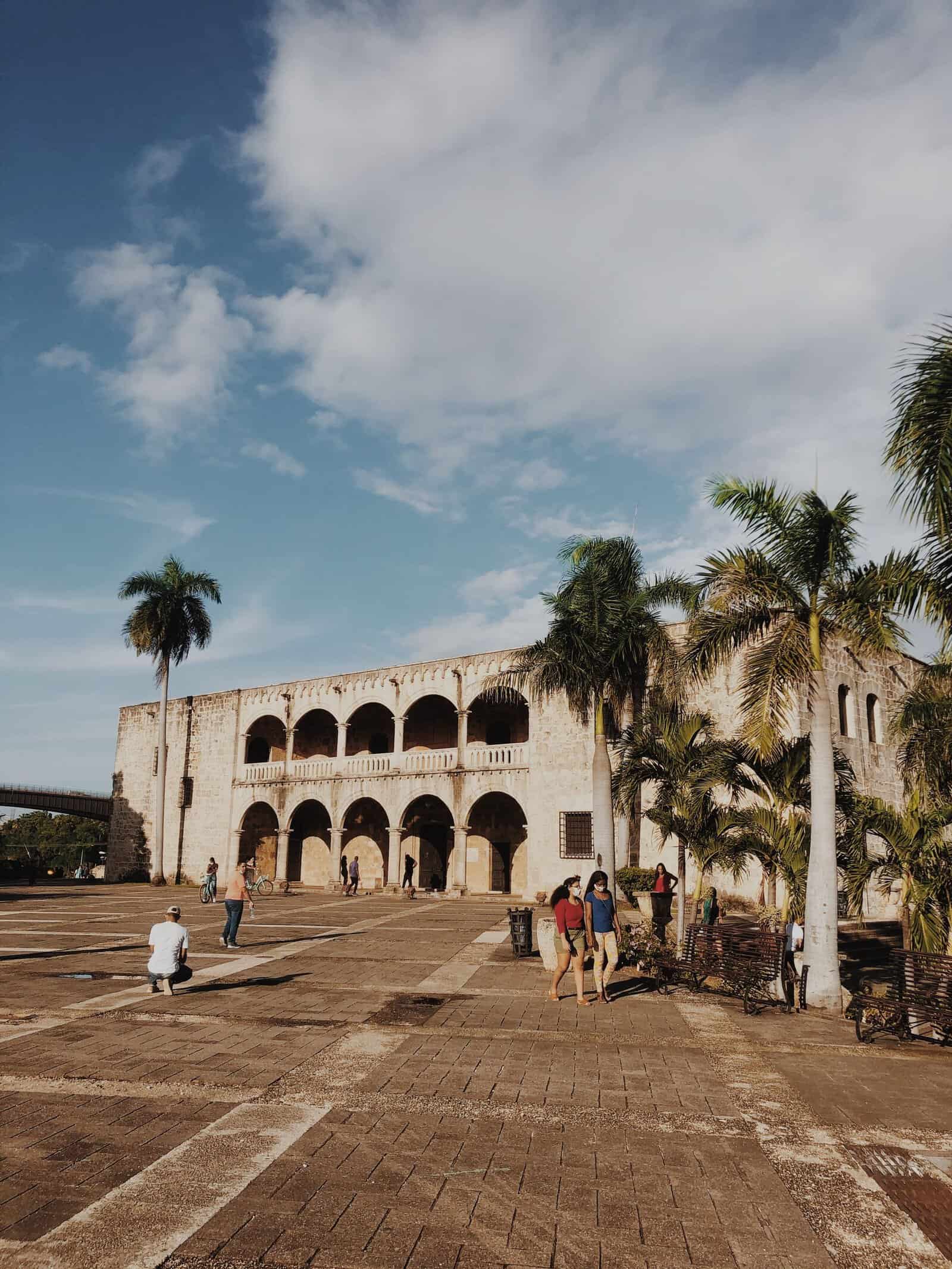
- Santo Domingo’s Zona Colonial — a UNESCO-listed old town with the 16th-century cathedral, the Alcázar de Colón and Calle Las Damas.
- Saona Island — a catamaran day to a protected island of palm-fringed sand and natural pools.
- Whale watching in Samaná Bay — thousands of humpbacks gather from mid-January to March.
- El Limón waterfall and Los Haitises — rainforest, mangroves and limestone islets on the Samaná side.
- Golf — Punta Cana and Casa de Campo have some of the Caribbean’s best-known courses.
- Kitesurfing in Cabarete — one of the world’s classic kite beaches, with schools for beginners.
When to go
The dry season, December to April, is the best time: sunny days around 29–30°C and lower humidity, which also makes it peak season. May to July is hotter, with short tropical showers and better value. The Atlantic hurricane season runs from June to November, with the highest risk from August to October — travel insurance with good cover is essential then.
Getting there and entry
Direct flights from London Gatwick and Manchester to Punta Cana take about 9–10 hours, with seasonal direct flights to Puerto Plata. UK passport holders don’t need a visa for a holiday, but every traveller must complete the free online E-Ticket form for entry and exit; the tourist card fee is usually included in your air fare. Check the FCDO travel advice for the Dominican Republic before you go.
Money and local costs
The local currency is the Dominican peso, but US dollars are accepted almost everywhere in the resort areas, and cards work in hotels and larger restaurants. Keep small notes for tips, markets and taxis. Drink bottled water and pack insect repellent and high-factor sun cream.
Food and drink
Look beyond the buffet: try la bandera — rice, beans and stewed meat, the national lunch — sancocho stew, fried plantain tostones, and fresh fish in Bayahibe and Samaná. Dominican rum and a game of dominoes with a merengue soundtrack complete the picture.
Ask us which coast suits you →
Frequently asked questions
What is the best part of the Dominican Republic for a beach holiday?
Punta Cana and Bávaro have the classic long beaches and the most resorts. Uvero Alto is quieter, and La Romana and Bayahibe have the calmest water.
When is the best time to visit the Dominican Republic?
December to April, the dry season. Whale season in Samaná Bay is mid-January to March. June to November is hurricane season.
How long is the flight from the UK?
About 9–10 hours direct from London Gatwick or Manchester to Punta Cana.
Do UK visitors need a visa?
No, but you must complete the free online E-Ticket form, and the tourist card fee is usually included in the air fare. Check the FCDO advice before you travel.
Is the Dominican Republic good for families?
Yes. Large all-inclusive resorts with kids’ clubs, water parks and family suites make it one of the Caribbean’s best family destinations.
Planning a Dominican Republic holiday?
Tell us who is travelling and what you want from the trip, and a Travel Designer will match the coast and resort to you.