Where is warm in Europe, in brief
- November to March: only the Canary Islands are reliably beach-warm (about 20–22°C); Madeira is mild, and Cyprus, Malta and Andalucía are pleasant but not hot.
- April and May: Seville, Cyprus, Antalya and Crete reach the mid-20s; the sea is still cool.
- June to August: hot everywhere, 35°C+ in Seville and Antalya; the Canaries and Madeira are warm, not hot.
- September and October: the warmest sea of the year in the eastern Mediterranean, and the Canaries’ winter season begins.

Where is warm in Europe? It depends on the month. From November to March the honest answer is short: the Canary Islands are the only place reliably warm enough for the beach, with Madeira a mild second. Cyprus, Malta, the Algarve and Andalucía are mild, not hot. By May southern Spain, Cyprus, Crete and the Turkish coast are properly warm, and in July and August almost all of southern Europe is hot. Below: month by month, with average temperatures from ten years of weather data, flight times from the UK and our pick for each month.
Where is warm in Europe? The quick answer, month by month
The warmest realistic places for a holiday from the UK each month, with average daytime highs.
| Month | Warmest realistic picks (average high) | What to expect |
|---|---|---|
| January | Gran Canaria 21°C, Tenerife (south) 20°C, Lanzarote 20°C, Madeira 18°C | Canaries only for the beach |
| February | Gran Canaria 21°C, Tenerife (south) 20°C, Lanzarote 20°C, Madeira 18°C | Canaries only for the beach |
| March | Gran Canaria 22°C, Tenerife (south) 21°C, Seville 21°C, Cyprus (Limassol) 19°C | Canaries for the beach; Seville and Cyprus warming up |
| April | Seville 23°C, Gran Canaria 22°C, Antalya 22°C, Cyprus (Limassol) 22°C | Warm for sightseeing everywhere; beach in the Canaries |
| May | Seville 29°C, Antalya 26°C, Cyprus (Limassol) 26°C, Crete 25°C | Warm across the eastern Med; sea still cool |
| June | Seville 33°C, Antalya 30°C, Cyprus (Limassol) 29°C, Crete 29°C | Hot and sunny almost everywhere |
| July | Seville 37°C, Antalya 36°C, Cyprus (Limassol) 33°C, Rhodes 32°C | Very hot; choose a breezy coast |
| August | Seville 37°C, Antalya 35°C, Cyprus (Limassol) 32°C, Rhodes 32°C | Very hot; warmest sea of the year |
| September | Antalya 32°C, Seville 31°C, Cyprus (Limassol) 31°C, Crete 29°C | Still hot, with a warm sea and fewer crowds |
| October | Gran Canaria 27°C, Antalya 27°C, Cyprus (Limassol) 27°C, Crete 24°C | Warm sea; Canaries and eastern Med best |
| November | Gran Canaria 24°C, Tenerife (south) 23°C, Cyprus (Limassol) 23°C, Madeira 21°C | Canaries reliable; Cyprus warm early in the month |
| December | Gran Canaria 22°C, Tenerife (south) 22°C, Lanzarote 21°C, Madeira 20°C | Canaries only for the beach |
Average daily highs, 10-year ERA5 reanalysis data (2014–2023) for each resort area. Seville is inland; on the coast nearby, expect a few degrees less.
Are the Canary Islands in Europe?
Politically, yes: they are part of Spain and the EU, use the euro and keep UK time. Geographically, they sit on the African plate in the Atlantic, about 100 km off Morocco at the closest point, which is why they are so warm in winter. So if someone says the warmest place in Europe in January is “really Africa”, they have a point. Madeira (Portugal) is in the same position, further north. We include both because for UK travellers they are the practical answer. Cyprus is similar: in the EU, but geographically in western Asia, as is Antalya.
November to March: winter sun in Europe
In winter there are two kinds of warm. Beach-warm (low 20s, sea around 18 to 19°C) is the Canaries only, with Madeira close behind but short of sandy beaches. Pleasantly mild (mid-teens, chilly evenings, some rain) covers Cyprus, Malta, the Algarve, the Costa del Sol and Seville: ideal for walking and cities, but don’t expect to swim. Our best winter sun hotels under five hours covers where to stay in each.
Where is warm in Europe in November?
The Canaries are at their most dependable in November, with highs of 24°C in Gran Canaria and 23°C in southern Tenerife. Cyprus is the best of the Mediterranean at around 23°C, often beach-warm in the first half of the month. Madeira manages 21°C, Malta and Crete about 21°C, and the Algarve (19°C) and Málaga (20°C) are pleasant but increasingly showery.

Pick: Gran Canaria. The south of the island, around Maspalomas, Playa del Inglés and Puerto de Mogán, is the sunniest and warmest part of the Canaries in winter.
In the Mediterranean, Cyprus stays warm longest. See our where to stay in Gran Canaria and the Cyprus holiday guide.
Where is warm in Europe in December?
In December, Gran Canaria and southern Tenerife average about 22°C, Lanzarote 21°C and Madeira 20°C. Everywhere else is in the mid- to high teens at best: Cyprus 18°C, Malta 17°C, the Algarve 17°C and Crete 17°C, with nights of about 8 to 14°C. Christmas or New Year in Madeira, with Funchal’s lights and fireworks, is a lovely mild option. For long-haul ideas too, see where to go in December.

Madeira is about 20°C in December and January, cooler and greener than the Canaries, with levada walks and gardens rather than big beaches. Winter rain falls mostly in the north and mountains; Funchal is the sunniest base.
Our where to stay in Madeira guide compares Funchal, Caniço and the quieter west.
Where is warm in Europe in January?
The warmest place in Europe in January is the Canary Islands: Gran Canaria averages 21°C, southern Tenerife 20°C and Lanzarote 20°C, with nights around 15°C, the only beach-warm figures in Europe. Madeira is next at 18°C. Then comes a clear drop: Cyprus 16°C, the Algarve and Málaga 16°C, Seville 16°C, Malta 15°C and Crete 15°C. Lovely for sightseeing in sunshine, but with cold evenings, some wet days and a sea of only about 15 to 17°C.

Pick: Tenerife or Gran Canaria. Stay in the south of either island for the most sun; the north is greener and cloudier. Mount Teide, Spain’s highest peak at 3,715 m, can be snow-capped while you sit on the beach.
Lanzarote and Fuerteventura are a degree cooler and windier. Read which Canary Island is best and where to stay in Tenerife.
Where is warm in Europe in February?
February is much like January, with the Canaries again the warmest: Gran Canaria 21°C, Tenerife 20°C, Lanzarote 20°C. Half-term is one of their busiest weeks, so book early. Almond blossom appears in the Algarve and Andalucía, and Seville (18°C) and Cyprus (17°C) have the first warm days. It’s also carnival season, with huge street carnivals in Santa Cruz de Tenerife and Las Palmas, and smaller ones in Malta and Madeira.

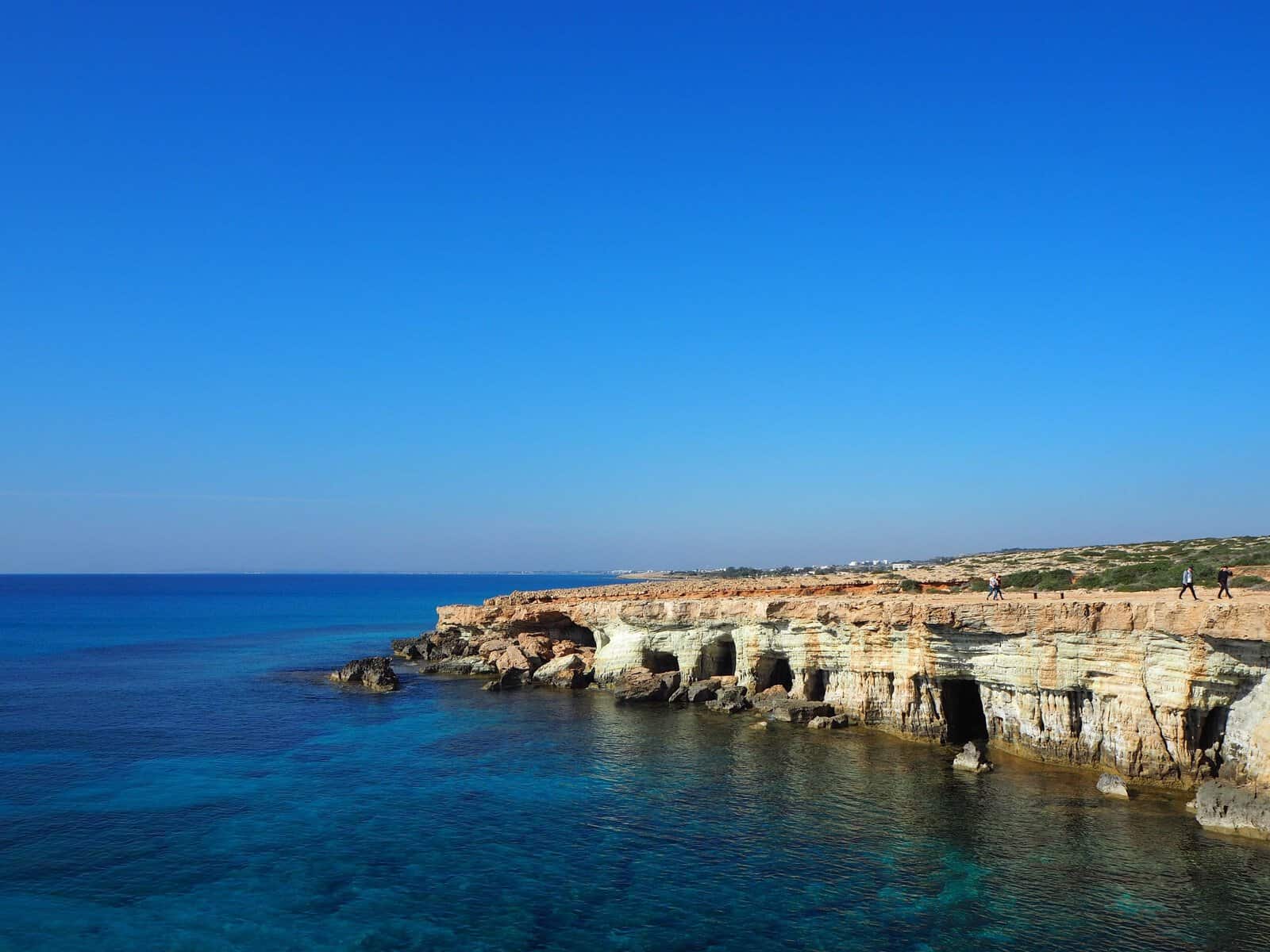

Malta or Cyprus? Cyprus is a degree or two warmer; Malta is a shorter flight and more compact. See Malta vs Cyprus for winter sun, and there’s more in our Malta holiday guide.
Where is warm in Europe in March?
The Canaries are still the warmest for the beach in March (Gran Canaria 22°C, Tenerife 21°C), but Seville reaches 21°C, with orange blossom, and Cyprus about 19°C. The Algarve (18°C) and Málaga (19°C) are bright and fresh, good for coastal walks and cities. The Mediterranean is at its coldest.
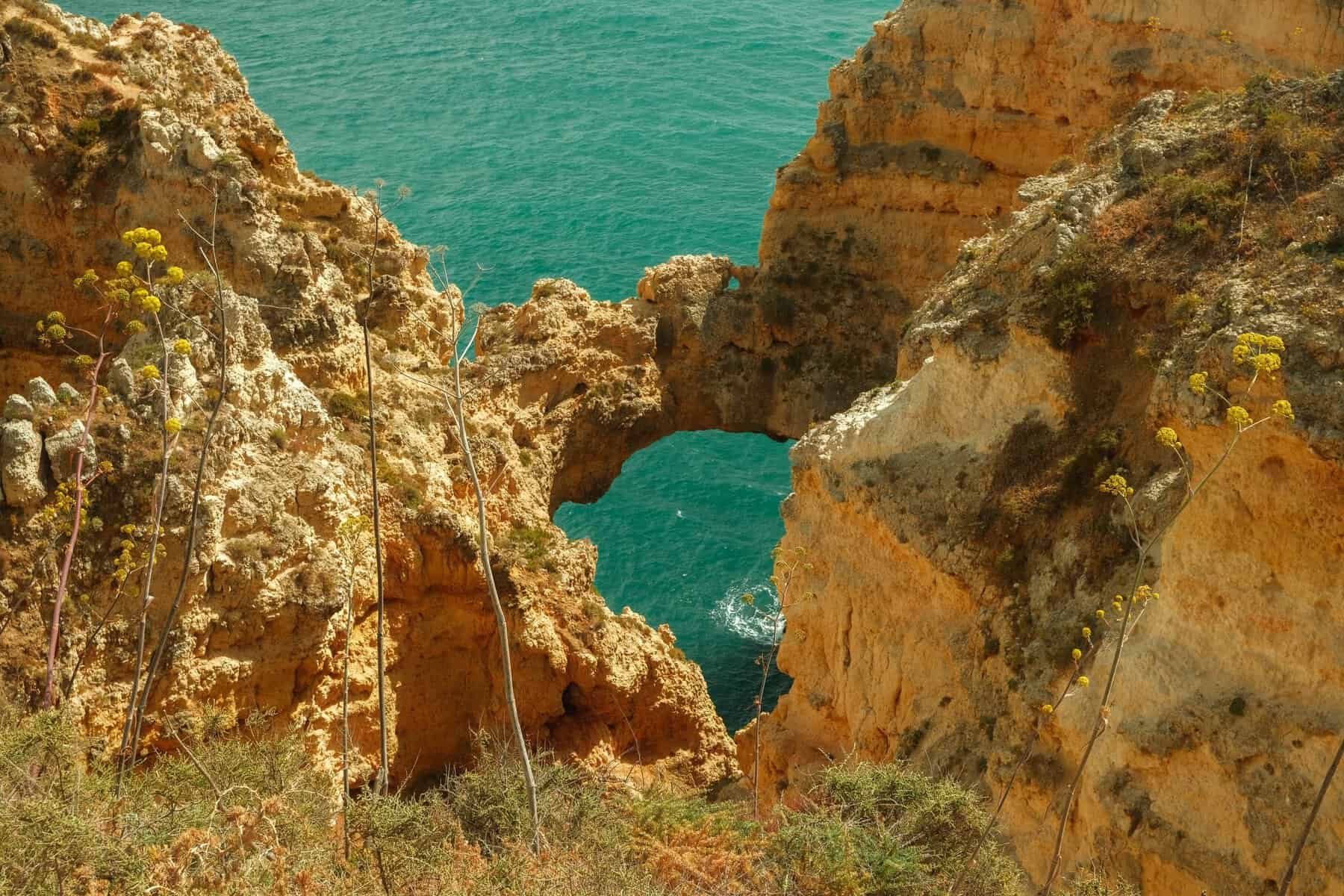
The Algarve is around 18°C in March, under three hours away, and its clifftop walks are at their best, with wildflowers.
It pairs well with Seville, two hours away. See where to stay in the Algarve and our Portugal holiday guide.
April and May: spring warmth in the Mediterranean
Spring brings long days, wild flowers and warmth without the summer crowds. The catch is the sea: still cool in April (around 16 to 18°C) and only warming in May, so if swimming matters, look east.
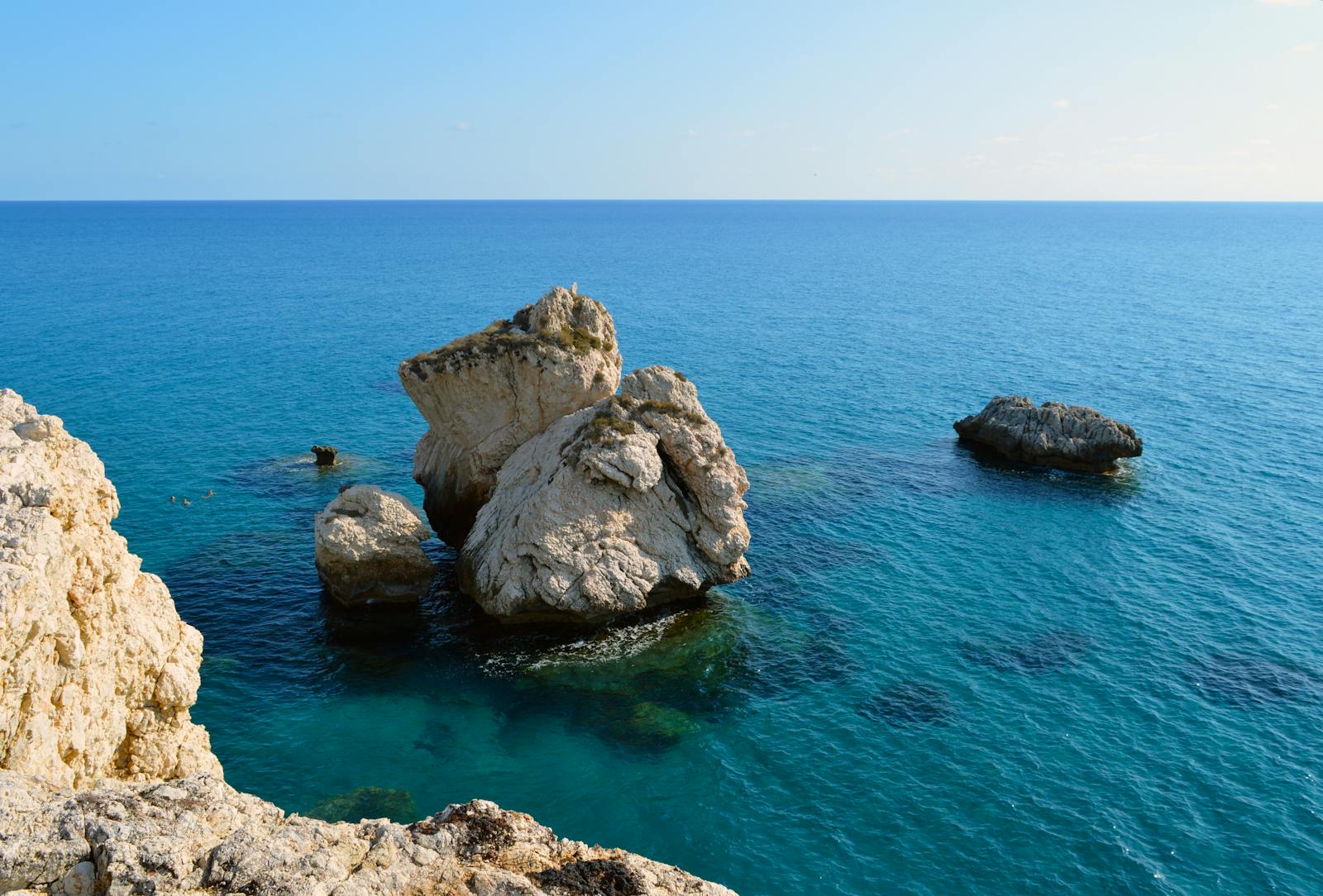
Where is warm in Europe in April?
In April, Seville (23°C) and the Canaries (Gran Canaria 22°C) lead, with Antalya and Cyprus both around 22°C and Crete about 21°C. Malta is a pleasant 18°C and the Algarve 20°C. It’s ideal for sightseeing, and Seville’s April Fair, usually two weeks after Easter, fills the city with flamenco and horses.

Pick: Seville and Andalucía. April and May are the best months for Seville, Córdoba and Granada, before the fierce summer heat.
Read our guide to things to do in Seville, and the best time to visit Spain for the rest of the country.
Where is warm in Europe in May?
The warmest place in Europe in May is usually Seville, averaging 29°C, though it’s inland. For warmth by the sea, the hottest places in May are Antalya (26°C), Cyprus (26°C in Limassol, 25°C in Paphos), Crete (25°C) and Rhodes (24°C). Málaga and the Costa del Sol reach 24°C, the Algarve 23°C and Malta 22°C, while the Canaries hold steady at about 24°C. The sea is still fresh, about 19 to 21°C in the east.

Pick: Antalya or Cyprus. Both are reliably warm and dry in May, with long beaches and ancient sites: Antalya has Kaleiçi, the Düden waterfalls and Aspendos nearby.
See the Antalya guide and our Turkey holiday guide.
June to August: peak summer
In summer the question becomes “where is not too hot?”. Inland Andalucía and Antalya regularly pass 35°C, and 40°C heatwaves are more frequent. Breezy islands are more comfortable than cities, and the Atlantic keeps the Canaries and Madeira warm rather than hot.
Where is warm in Europe in June?
June is perhaps the best summer month, before the school holidays. Seville averages 33°C, Antalya 30°C, Cyprus 29°C and Crete 29°C, with Rhodes 28°C, Sicily 27°C and Malta 26°C. The sea in the eastern Mediterranean reaches about 23 to 25°C by the end of the month.

Pick: Crete. Greece’s largest island is hot but rarely oppressive in June, with a meltemi breeze on the north coast and beaches like Balos and Elafonisi in the west.
Our where to stay in Crete guide covers Chania, Rethymno, Elounda and the quieter south coast.
Where is hot in Europe in July?
July and August are the hottest months. The hottest places are inland: Seville averages 37°C, and Córdoba is similar. On the coast, Antalya reaches 36°C, Cyprus 33°C, Rhodes 32°C, Crete 31°C and Malta 30°C. For warm but comfortable, try the Canaries (Gran Canaria 29°C), Madeira (26°C) or the Algarve (29°C).
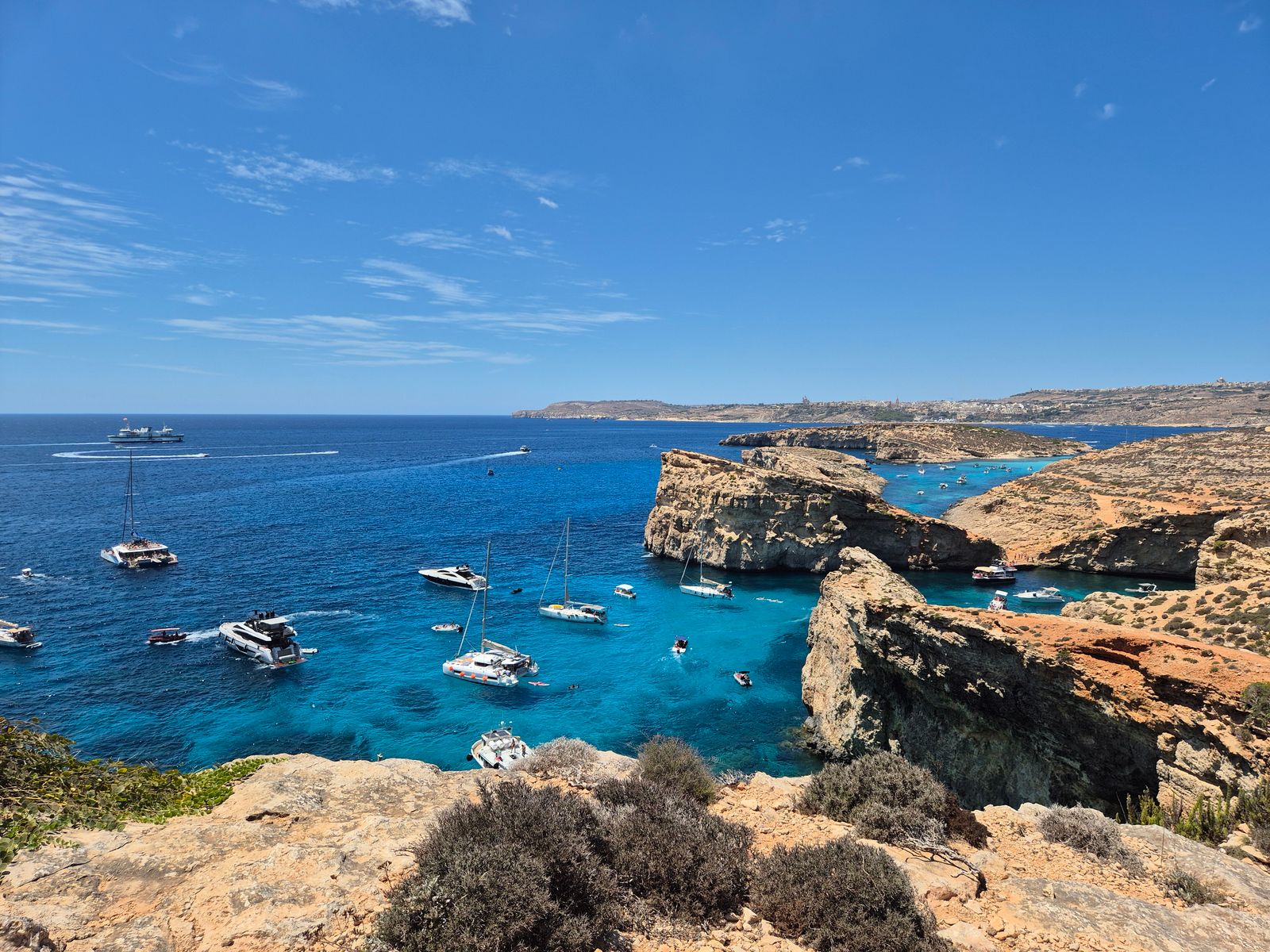
Where is hot in Europe in August?
August is as hot as July (Seville 37°C, Antalya 35°C, Cyprus 32°C, Rhodes 32°C) and the sea is at its warmest, around 26 to 28°C in the eastern Mediterranean. It is also the busiest month, so book early.

Rhodes averages 32°C in August, but the steady summer wind on its west coast keeps it bearable. Lindos, with its acropolis above a white village and two bays, is the classic sight.
Like Crete, it stays warm well into October.
September and October: autumn warmth
Autumn is the best-kept secret: the sea is at its warmest, the crowds thin out and the heat eases.
Where is hot in Europe in September?
In September, Antalya (32°C), Seville (31°C) and Cyprus (31°C) are still hot, and Crete and Rhodes are around 29°C. Sicily and Malta reach 27°C, Málaga 28°C and the Algarve 26°C. With the sea at about 25 to 27°C, it’s one of the best beach months of the year.

Pick: Sicily or Cyprus. Taormina, Syracuse and the Baroque towns of the south-east are far more enjoyable once the August heat has passed, and the sea is still warm.
Read our Sicily guide for where to go, from Palermo to Etna and the Aeolian Islands.
Where is warm in Europe in October?
The hottest European countries in October are Cyprus, Turkey and Spain (thanks to the Canaries). Gran Canaria, Antalya and Cyprus all average about 27°C, with Seville 27°C, Rhodes 25°C, Crete 24°C and Malta 24°C. The sea is still around 23 to 25°C in the east. The Algarve (23°C) and Mallorca are pleasant but less reliable.
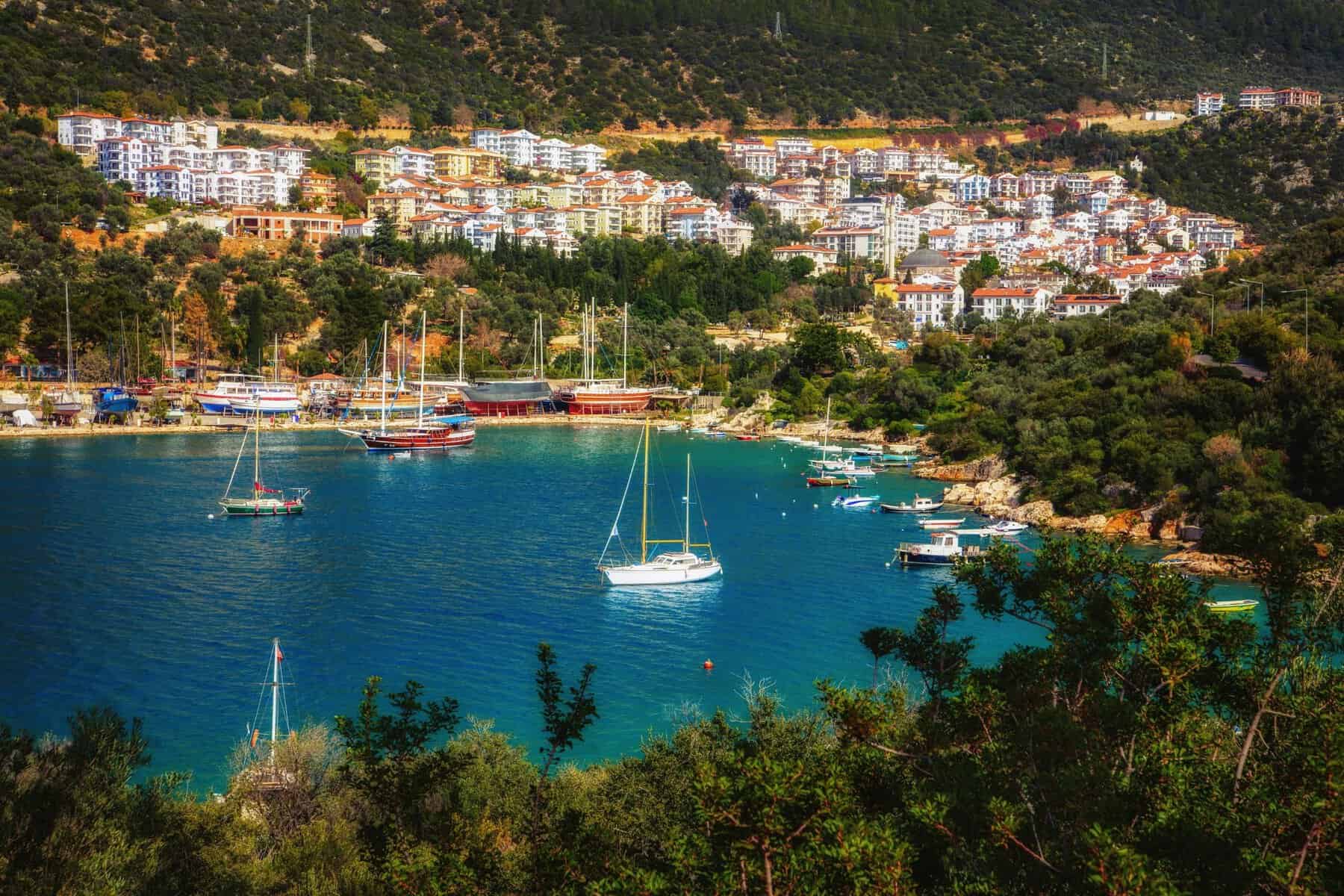
Pick: Turkey’s Turquoise Coast or Cyprus. Kaş, Kalkan and Kekova are lovely in October, with warm water and cooler walking.
From November, the Canaries are the answer again.
Europe temperatures by month
Average daytime highs, to compare any month at a glance.
| Month | Canaries | Madeira | Cyprus | Malta | Algarve | Seville | Crete | Antalya |
|---|---|---|---|---|---|---|---|---|
| Jan | 21°C | 18°C | 16°C | 15°C | 16°C | 16°C | 15°C | 14°C |
| Feb | 21°C | 18°C | 17°C | 15°C | 16°C | 18°C | 16°C | 16°C |
| Mar | 22°C | 19°C | 19°C | 16°C | 18°C | 21°C | 17°C | 18°C |
| Apr | 22°C | 20°C | 22°C | 18°C | 20°C | 23°C | 21°C | 22°C |
| May | 24°C | 22°C | 26°C | 22°C | 23°C | 29°C | 25°C | 26°C |
| Jun | 26°C | 24°C | 29°C | 26°C | 25°C | 33°C | 29°C | 30°C |
| Jul | 29°C | 26°C | 33°C | 30°C | 29°C | 37°C | 31°C | 36°C |
| Aug | 30°C | 27°C | 32°C | 30°C | 29°C | 37°C | 31°C | 35°C |
| Sep | 28°C | 26°C | 31°C | 27°C | 26°C | 31°C | 29°C | 32°C |
| Oct | 27°C | 24°C | 27°C | 24°C | 23°C | 27°C | 24°C | 27°C |
| Nov | 24°C | 21°C | 23°C | 21°C | 19°C | 20°C | 21°C | 21°C |
| Dec | 22°C | 20°C | 18°C | 17°C | 17°C | 17°C | 17°C | 16°C |
Average daily high, 10-year ERA5 data. Canaries: Gran Canaria (south); Cyprus: Limassol; Algarve: Faro. Nights are typically 6 to 10°C cooler; inland Seville has the widest range.
Flight times from the UK
| Destination | Flight from London | Warmest for |
|---|---|---|
| Algarve (Faro) | About 2 h 45 | Spring and autumn; mild winter |
| Seville / Málaga | About 2 h 40 | Spring and autumn |
| Malta | About 3 h 15 | June to October; mild winter |
| Sicily (Catania, Palermo) | About 3 h | June to October |
| Madeira | About 3 h 45 | All year, mild |
| Crete / Rhodes | About 3 h 45 to 4 h | May to October |
| Canary Islands | About 4 h to 4 h 30 | All year; best November to April |
| Antalya | About 4 h 15 | May to October |
| Cyprus (Paphos, Larnaca) | About 4 h 30 | April to November |
Times are typical direct flights from London; regional airports are similar or a little longer. The Canaries and Madeira are on UK time; Malta, Sicily and Spain are one hour ahead, and Cyprus, Greece and Turkey two hours ahead in winter (Turkey is three hours ahead in the UK summer).
Ways to go with us
Winter and spring suit walking and sightseeing holidays:
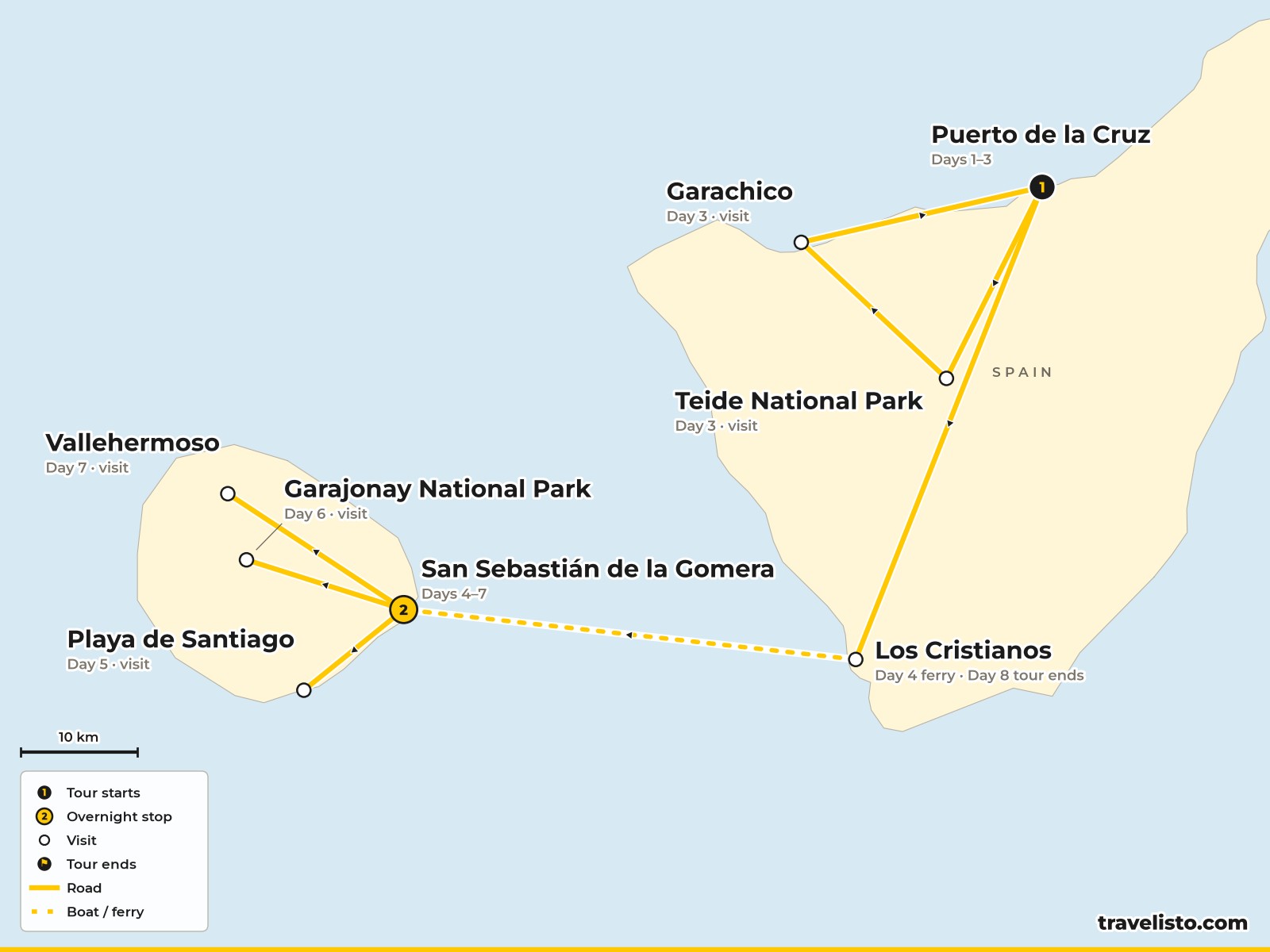
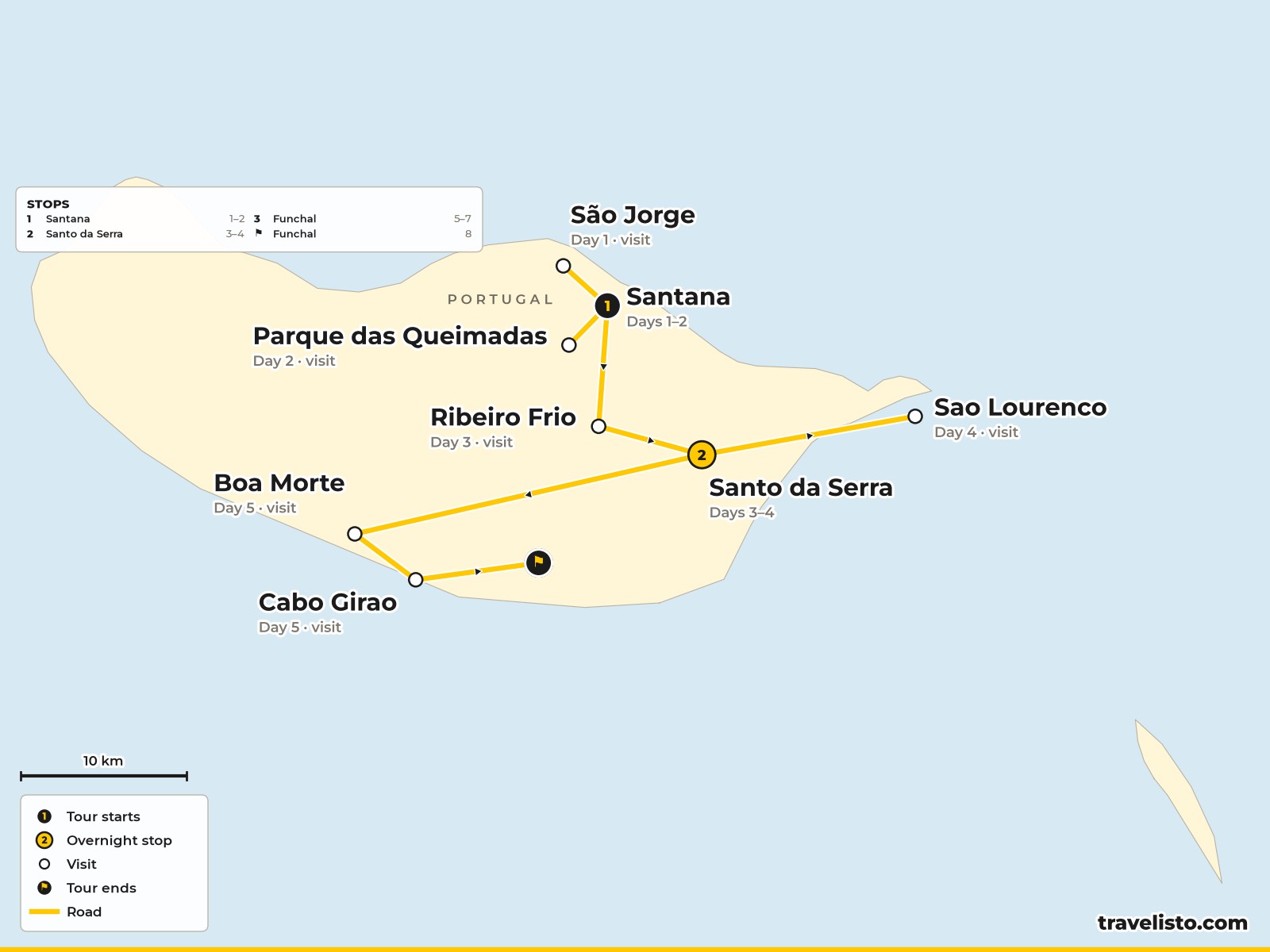
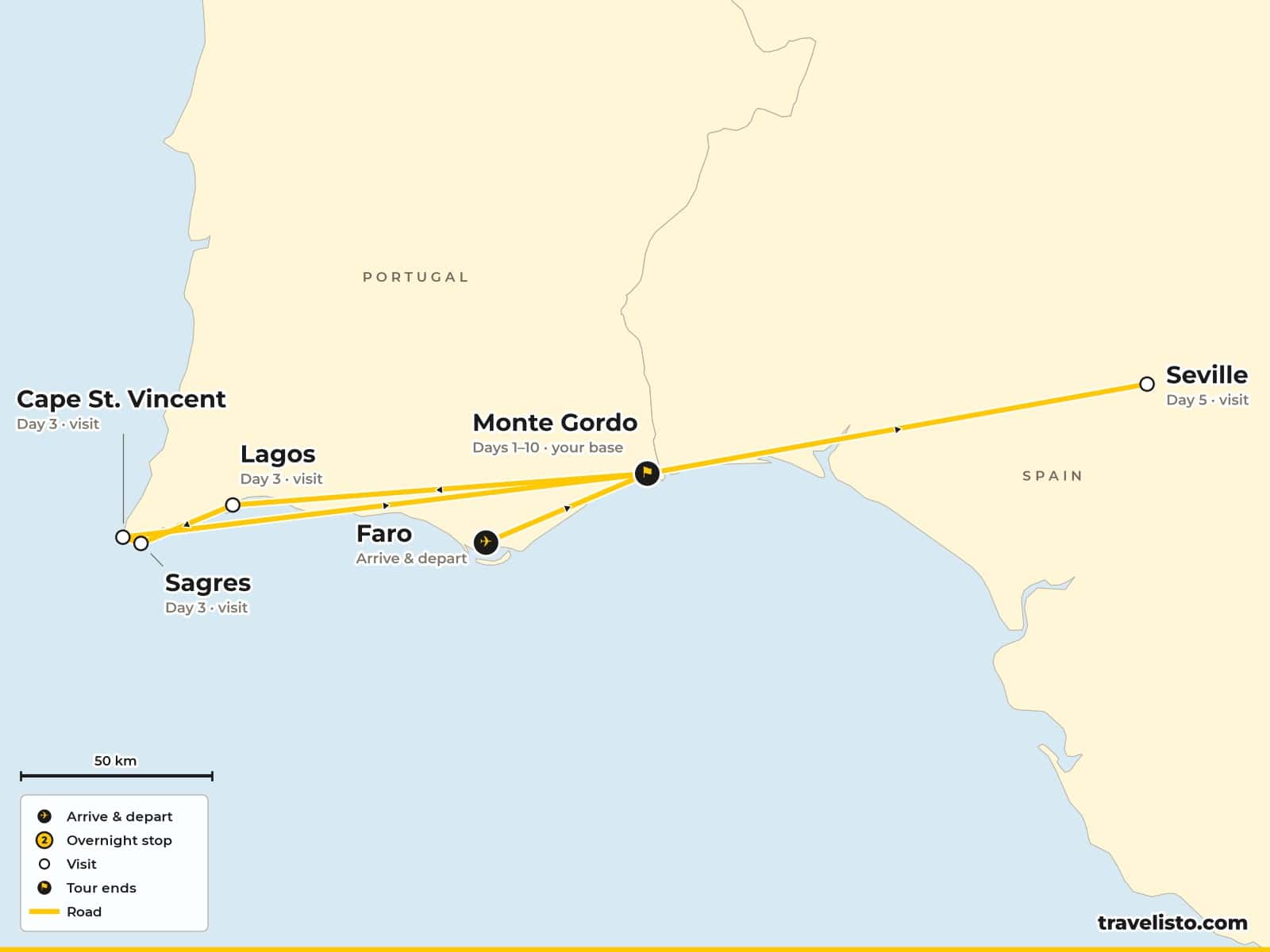
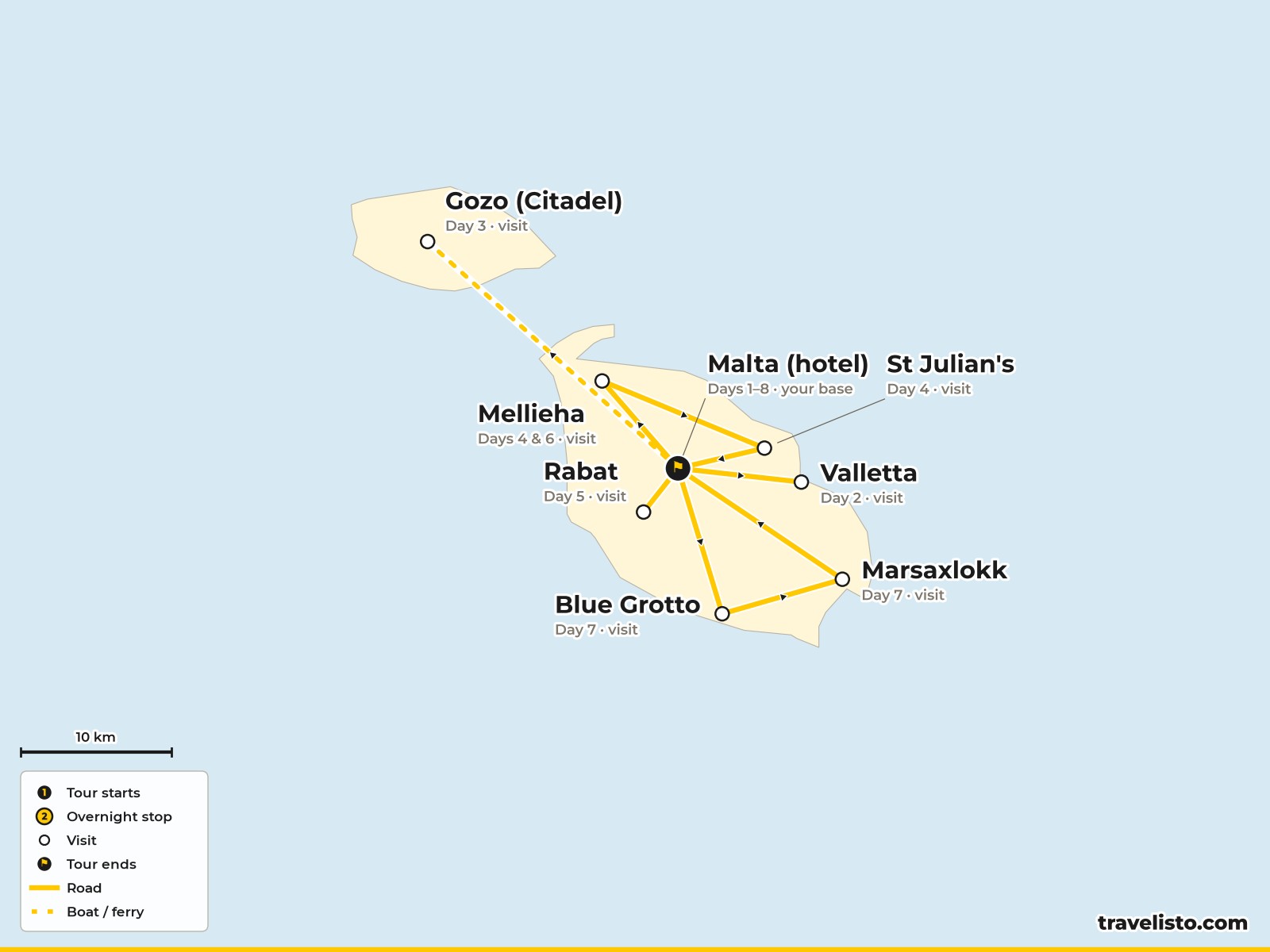
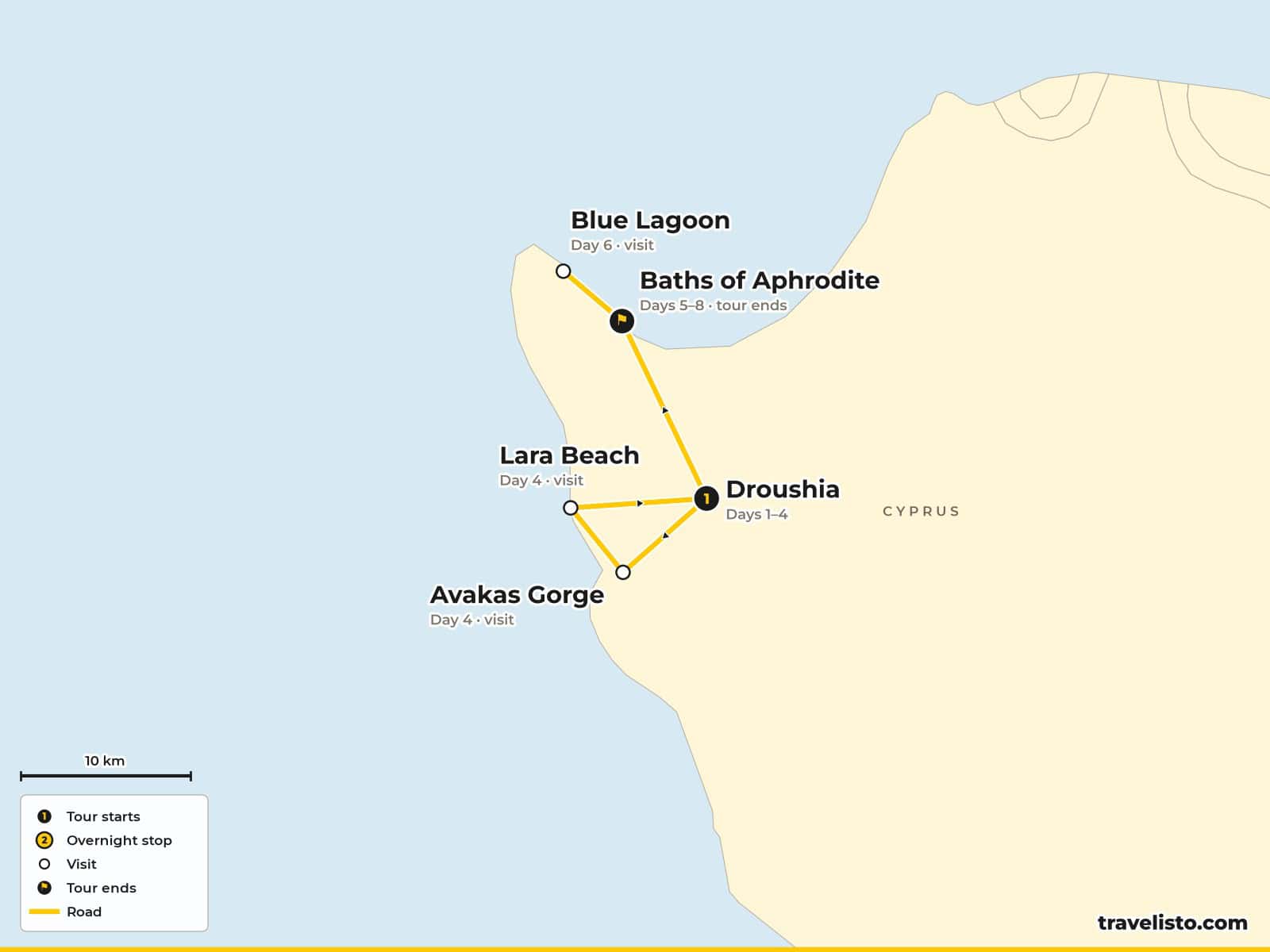
Prefer a beach and a good hotel? Browse our Canary Islands holidays, including Tenerife, Gran Canaria, Lanzarote and Fuerteventura, or Madeira, Cyprus and Malta. A tailor-made holiday can combine, say, Seville with the Algarve, or Malta with Sicily.
Tips for finding warm weather in Europe
- Look at the sea, not just the air. The Mediterranean is coldest in February and March (about 15 to 17°C) and warmest in August and September. A 25°C day in May feels different on the beach from a 25°C day in October.
- South and east are warmer. In winter the Canaries win; in spring and autumn, Cyprus, Antalya and Crete are warmer than Spain, Portugal or Italy.
- Choose the right side of the island. In Tenerife and Gran Canaria, stay in the south for sun; in Madeira, the south coast around Funchal.
- Inland is hotter in summer, colder in winter. Seville can be 37°C in July but close to freezing on the coldest January nights.
- Averages are averages. Any of these places can have a cool, wet week in winter, and heatwaves are now common in summer. Pack a layer whatever the month.
- Check before you go. Read the FCDO travel advice for your destination, and remember the EU’s Entry/Exit System now registers UK passport holders at the border.
Frequently asked questions
Where is warm in Europe in January?
The Canary Islands are the warmest place in Europe in January, averaging about 20 to 21°C in the south of Gran Canaria and Tenerife. Madeira is next at about 18°C. Cyprus, Malta, the Algarve and Andalucía are mild, around 15 to 16°C, good for sightseeing but not for the beach.
What is the warmest place in Europe in winter?
The Canary Islands, especially the south of Gran Canaria and Tenerife. They are Spanish and in the EU, but sit off the coast of Africa in the Atlantic, which is why they stay warm all winter.
Are the Canary Islands in Europe or Africa?
Both, in a way. Politically they are part of Spain and the EU and on UK time; geographically they are on the African plate, about 100 km off Morocco at the closest point.
Where is hot in Europe in May?
Seville is usually the hottest, at about 29°C, but it is inland. On the coast, Antalya and Cyprus average about 26°C, and Crete and Rhodes about 24 to 25°C. The sea is still fresh, around 19 to 21°C.
Is Cyprus or Malta warmer in winter?
Cyprus is usually a degree or two warmer and a little sunnier: about 16 to 17°C in the day in January and February, against about 15°C in Malta. Neither is beach-warm in winter.
Which European countries are hottest in October?
Cyprus and Turkey's Mediterranean coast are the hottest, at about 27°C, together with the Canary Islands. Southern Spain, Crete and Rhodes are around 24 to 27°C, and the sea is still warm.
Where is hot in Europe in September?
Antalya, Seville and Cyprus are still hot in September, at about 31 to 32°C, and Crete and Rhodes about 29°C. With the sea at its warmest and fewer crowds, it is one of the best months for a beach holiday.
Keep planning
- Where to go in December
- Best winter sun hotels under 5 hours
- Malta vs Cyprus for winter sun
- Which Canary Island is best?
- Where to stay in Tenerife
- Where to stay in Madeira
- Malta holiday guide
- Cyprus holiday guide
- Sicily guide
- Antalya guide
- Turkey holiday guide
- Best time to visit Spain
- Canary Islands holidays
- Where to go in January
Find your warm weather with a Travel Designer
Tell us when you can travel and how warm you want it, and we’ll match the right island, coast or city, with flights and hotels in one ATOL-protected booking.
Make an enquiry Canary Islands holidays