Barcelona packs Gaudí's buildings, a medieval Gothic Quarter, city beaches and Montjuïc's museums into a city you can cross on foot or by metro in half an hour. This guide has four self-guided walking routes, the places worth your time with links to book, the best free things to do, and where to eat, drink and stay at every budget, with each venue's website and Instagram so you can see it first.


Barcelona map: sights, restaurants, bars and walks
Turn the layers on and off, or pick a walk to draw its route with numbered stops. Tap any pin for links.
Four Barcelona walking routes
Central Barcelona is flat from the sea up to the Eixample, then climbs towards Gràcia and Park Güell; Montjuïc is a hill, so use the funicular or cable car one way. Keep phones and wallets zipped away on La Rambla, the metro and the beach. Distances are approximate and the times include short stops; add more if you go inside the sights.
Gothic Quarter and El Born
About 1.7 km · 1 hour walking, half a day with visits
From the cathedral through the lanes of the old Jewish quarter to Plaça de Sant Jaume and the Roman remains under Plaça del Rei, then across Via Laietana to Santa Maria del Mar, the Picasso Museum and the old Born market.
- Barcelona Cathedral
- Pont del Bisbe
- Plaça de Sant Felip Neri
- Plaça de Sant Jaume
- Plaça del Rei (MUHBA)
- Santa Maria del Mar
- Museu Picasso
- El Born Centre de Cultura i Memòria
Modernisme from Passeig de Gràcia to Sant Pau
About 5 km · 1.5-2 hours walking, a full day with visits
Up Barcelona's grandest avenue past Casa Amatller, Casa Batlló and Casa Milà, then across the Eixample to the Sagrada Família and along Avinguda de Gaudí to the Sant Pau pavilions.
- Plaça de Catalunya
- Casa Amatller
- Casa Batlló
- Casa Milà (La Pedrera)
- Sagrada Família
- Avinguda de Gaudí
- Sant Pau Recinte Modernista
Montjuïc: museums, gardens and views
About 4.4 km · 2 hours walking with climbs, a full day with visits
From Plaça d'Espanya up past the Magic Fountain to the Poble Espanyol and the MNAC, then along the hillside to the Fundació Joan Miró, the Mirador de l'Alcalde and Montjuïc Castle.
- Plaça d'Espanya
- Magic Fountain of Montjuïc
- Poble Espanyol
- Museu Nacional d'Art de Catalunya (MNAC)
- Fundació Joan Miró
- Mirador de l'Alcalde
- Montjuïc Castle
La Rambla to the sea
About 3.5 km · 1 hour walking, half a day with stops
Down La Rambla from Plaça de Catalunya, with stops at the Boqueria market, the Liceu opera house and the arcaded Plaça Reial, to the Columbus monument, the Rambla de Mar boardwalk and Barceloneta Beach.
- Plaça de Catalunya
- La Boqueria
- Gran Teatre del Liceu
- Plaça Reial
- Monument a Colom
- Rambla de Mar
- Barceloneta Beach
Places to visit in Barcelona
The 22 sights we would plan a first trip around, with the official site for opening times and tickets.

Sagrada Família
Gaudí's unfinished basilica, under construction since 1882, with forest-like stone columns and stained glass that floods the nave with colour. Its central Tower of Jesus Christ was topped out in 2026, the centenary of Gaudí's death.
Tip: Book a named, timed ticket on the official website well ahead and bring matching photo ID. Choose a late-morning slot on a sunny day, when the light through the west-facing windows turns the nave orange and red.
Time needed: 1.5-2 hours

Park Güell
Gaudí's hillside garden city, with the mosaic-covered serpentine bench, the dragon staircase and gingerbread-style gatehouses looking out over the city to the sea.
Tip: The monumental zone needs a timed ticket booked online. Take the metro to Vallcarca rather than Lesseps: the escalators up the hill save a steep climb.
Time needed: 1.5-2 hours

Casa Batlló
Gaudí's remodelled town house with a bone-like balcony front, shimmering mosaic facade and a roof shaped like a dragon's back, with a lively multimedia tour inside.
Tip: Go first thing or for a late visit to avoid the tour groups, and look across the road from the Passeig de Gràcia side first to see the whole facade.
Time needed: 1-1.5 hours
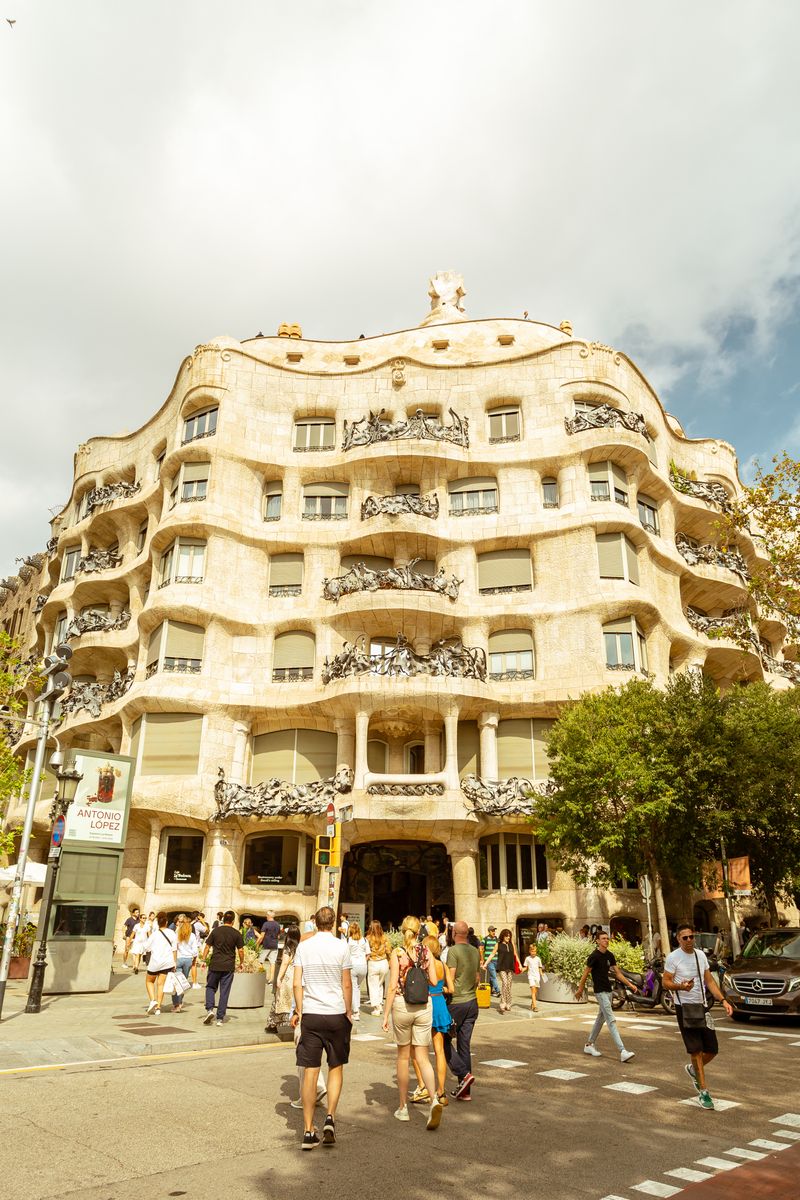
Casa Milà (La Pedrera)
Gaudí's wave-fronted apartment block, nicknamed 'the stone quarry', with a rooftop of warrior-like chimneys, an attic of brick arches and a period flat furnished as it was in the 1910s.
Tip: Save the rooftop for late afternoon, when the light softens over the chimneys and you can see the Sagrada Família in the distance.
Time needed: 1-1.5 hours

Sant Pau Recinte Modernista
A former hospital designed by Lluís Domènech i Montaner as a garden city of tiled pavilions linked by underground tunnels, now restored and one of the city's most beautiful and least crowded sights.
Tip: Walk up Avinguda de Gaudí from the Sagrada Família to get here; it takes ten minutes and the pavilions are calmer than any Gaudí building.
Time needed: 1-1.5 hours

Palau de la Música Catalana
A Modernista concert hall bursting with mosaics, sculpted muses and an inverted stained-glass skylight, still used for concerts most nights.
Tip: Rather than a daytime guided tour, book a concert: you see the hall at its best and the programme ranges from guitar recitals to the Orfeó Català choir.
Time needed: 1 hour (tour) or an evening

Gothic Quarter
The oldest part of the city, where lanes built over the Roman town lead to Plaça de Sant Jaume, the shady Plaça de Sant Felip Neri and the much-photographed bridge on Carrer del Bisbe.
Tip: Explore early in the morning or after dark, when the day-trippers have gone and the stone streets are at their most atmospheric.
Time needed: 2-3 hours

Barcelona Cathedral
The Gothic cathedral of the Holy Cross and Saint Eulàlia, with a cloister where 13 white geese are kept in memory of the young martyr, and a lift up to the roof terraces.
Tip: Take the lift to the roof for close-up views of the spires and the Old Town rooftops, then sit in the cloister by the geese.
Time needed: 1 hour
Santa Maria del Mar
A soaring Catalan Gothic basilica built in just 54 years by the dockers and merchants of the Ribera, famous for its plain, wide nave and slender columns.
Tip: Come at the end of the day, when the setting sun comes through the rose window; paid guided visits include the rooftop.
Time needed: 45 minutes
Museu Picasso
The largest collection of Picasso's early work, set in five linked medieval palaces, with his teenage academic paintings and his 1957 series of variations on Velázquez's Las Meninas.
Tip: Book online for a timed slot, or reserve one of the free Thursday-afternoon or first-Sunday slots four days ahead.
Time needed: 1.5-2 hours

La Boqueria
The city's famous covered food market off La Rambla, with stalls of jamón, seafood, fruit and sweets, plus counter bars cooking market produce to order.
Tip: Head to the back of the market, away from the juice stalls by the entrance, where locals shop and the counter bars are. It's closed on Sundays.
Time needed: 1 hour
Palau Güell
Gaudí's early town palace, built for his patron Eusebi Güell, with a dramatic domed central hall and a rooftop forest of colourful mosaic chimneys.
Tip: Often overlooked and rarely crowded; it's the best place to see Gaudí's interiors without queues. The audio guide is included.
Time needed: 1-1.5 hours
MUHBA Plaça del Rei
The city history museum, where a lift takes you down to walk on raised paths over the excavated streets, workshops and wine vats of Roman Barcino.
Tip: The underground Roman remains are the highlight; allow time for them before the medieval royal palace rooms upstairs.
Time needed: 1-1.5 hours
Museu Nacional d'Art de Catalunya (MNAC)
Catalonia's national art museum in the domed Palau Nacional, with one of the world's best collections of Romanesque church murals as well as Gothic, Renaissance and Modernista art.
Tip: Don't miss the rooftop terraces for a sweeping view down the avenue to Plaça d'Espanya and across the city.
Time needed: 2-3 hours
Fundació Joan Miró
A bright white gallery designed by Josep Lluís Sert for his friend Joan Miró, holding thousands of the artist's paintings, sculptures and tapestries, with roof terraces among the sculptures.
Tip: Combine it with the MNAC and Montjuïc Castle; walk between them along the hillside paths rather than queueing for buses.
Time needed: 1.5-2 hours
Montjuïc Castle
An 18th-century star-shaped fortress on top of Montjuïc, with ramparts looking over the port, the sea and the whole city.
Tip: Ride the Montjuïc cable car up from the Parc de Montjuïc station for the views, then walk back down through the gardens.
Time needed: 1-1.5 hours

Magic Fountain of Montjuïc
A huge fountain built for the 1929 International Exhibition that puts on free evening shows of water, light and music.
Tip: Shows run on set evenings only and are paused for maintenance some weeks, so check the city's timetable on the day. Stand on the steps above for the best view.
Time needed: 30-45 minutes

Barceloneta Beach
The city's best-known beach, a long stretch of sand within walking distance of the Old Town, lined with beach bars and with the sail-shaped W hotel at its southern end.
Tip: Keep your bag in sight at all times. For more space, walk north past the Olympic Port to Nova Icària or Bogatell.
Time needed: Half a day
Parc de la Ciutadella
The city's central park, laid out on the site of a hated Bourbon fortress, with a monumental waterfall fountain, a boating lake, palm-house greenhouses and the Catalan Parliament.
Tip: Walk in under the red-brick Arc de Triomf along Passeig de Lluís Companys, and look out for the giant mammoth statue by the lake.
Time needed: 1 hour
Bunkers del Carmel (Turó de la Rovira)
The remains of a Civil War anti-aircraft battery on a hilltop, now a free viewpoint with arguably the best 360-degree panorama of the city.
Tip: Go in the morning or mid-afternoon, wear decent shoes for the final climb, and be respectful: this is a residential area and the site is fenced off in the evening.
Time needed: 1-1.5 hours including the climb
Casa Vicens
Gaudí's first house, a summer villa covered in green and white tiles and Moorish-style details, which shows where his ideas began.
Tip: Pair it with an afternoon in Gràcia's squares; it's a short walk from Fontana metro and much less busy than his later buildings.
Time needed: 1 hour
Spotify Camp Nou and Barça Immersive Tour
FC Barcelona's home, reopened for matches in late 2025 during a major rebuild, with the club museum and an immersive tour for fans.
Tip: Check exactly what your tour includes before booking, as parts of the stadium are still being rebuilt. Match tickets go on sale through the club's website.
Time needed: 1.5-2 hours
Free things to do in Barcelona
Many of Barcelona’s museums are free on Sunday afternoons and the first Sunday of the month, and the beaches, parks, markets and Montjuïc’s fountain show cost nothing. Several free slots must be booked online in advance, so check each one before you go.
Museu Picasso
El BornFree: Free every Thursday 16:00-19:00 and on the first Sunday of every month, plus open days on 12 February, 17 May and 24 September. Open Tuesday to Sunday 10:00-19:00; closed Mondays.
Picasso's early years, from teenage academic studies to his Las Meninas series, in five medieval palaces.
Tip: Set an alarm for 10:00 four days ahead; the Thursday slots are easier to get than first Sundays.
Museu Nacional d'Art de Catalunya (MNAC)
MontjuïcFree: Free on Saturdays from 15:00 and on the first Sunday of every month (Sundays 10:00-15:00), plus open days. Closed Mondays except public holidays.
Romanesque murals, Gothic altarpieces and Catalan Modernisme in the domed Palau Nacional.
Tip: Saturday afternoon is the easiest free slot; head straight for the Romanesque rooms, then the rooftop terrace.
MACBA (Museum of Contemporary Art)
El RavalFree: Free on Thursday, Friday and Saturday from 18:00 until closing, and on the first Sunday of every month. Closed Tuesdays.
Contemporary art in Richard Meier's white building, whose forecourt is the city's favourite skateboarding spot.
Tip: Combine a free evening visit with a drink in the Raval; the square outside is great for people-watching.
MUHBA Plaça del Rei (Barcelona History Museum)
Barri GòticFree: Free on Sundays from 15:00 and all day on the first Sunday of every month. Open Tuesday to Saturday 10:00-19:00 and Sunday 10:00-20:00; closed Mondays.
Walk above the excavated streets, laundries and wine-making vats of Roman Barcino under the Gothic Quarter.
Tip: Arrive soon after 15:00 on a Sunday to have time for the underground Roman remains.
Montjuïc Castle
MontjuïcFree: Free every Sunday from 15:00 and on the first Sunday of every month (10:00-18:00 in winter). Open daily 10:00-18:00 from November to February and 10:00-20:00 from March to October.
The hilltop fortress with ramparts overlooking the port and the city.
Tip: In winter the castle closes at 18:00, so on Sundays go up straight after 15:00 to catch the sunset from the walls.
CCCB (Centre de Cultura Contemporània)
El RavalFree: Free every Sunday 15:00-20:00.
A lively arts centre with big themed exhibitions on cities, science and society, in a former workhouse.
Tip: Take the lift to the top floor of the glass wing for a reflected view over the Raval rooftops.
Museu del Disseny (Design Museum)
GlòriesFree: The permanent exhibitions are free on Sunday afternoons 15:00-20:00 and on the first Sunday of every month, plus 12 February and 24 September. Exhibitions open Tuesday to Sunday 10:00-20:00.
Fashion, furniture, ceramics and graphic design in a striking building nicknamed 'the stapler'.
Tip: Pair it with a look at the Torre Glòries next door and the Els Encants flea market.
Museu Marítim (Maritime Museum)
Drassanes, bottom of La RamblaFree: Free every Sunday from 15:00. The entrance-hall displays and the Espai Mirador are free at all times. Open daily 10:00-20:00 (last entry 19:00).
Ships and seafaring in the vast Gothic royal shipyards, with a full-size replica of a royal galley.
Tip: Even if you don't go in, step inside to see the huge Gothic arches of the shipyards.
Palau Güell
El RavalFree: Free on the first Sunday of every month and on open days (12 February, 23 April, the Night of Museums, 11 September and 24 September). Winter opening (1 November to 31 March) 10:00-17:30; closed Mondays.
Gaudí's early town palace with its domed hall and mosaic chimneys.
Tip: Book the moment first-Sunday tickets are released on Thursday morning; they can sell out within days.
El Born Centre de Cultura i Memòria
El BornFree: The main hall of the old Born market, with views over the excavated streets of 1714 Barcelona, is free Tuesday to Sunday. Exhibitions and the archaeological site visits are charged, except on Sundays from 15:00 and the first Sunday of the month. Open 10:00-19:00 from November to February and 10:00-20:00 from March to October; closed Mondays.
A restored iron market hall built over the streets demolished after the 1714 siege.
Tip: Look down from the walkways to trace the old street plan, then walk across to Santa Maria del Mar.
Bunkers del Carmel (Turó de la Rovira)
El CarmelFree: The hilltop viewpoint is free. The area is fenced off at night. MUHBA's small exhibition space there opens Wednesday, Friday, Saturday and Sunday 10:00-14:00 from October to May.
A Civil War anti-aircraft battery with one of the best panoramic views of the city.
Tip: Come in daylight, bring water and respect the neighbours; the V17 bus gets you close to the top.
Parc de la Ciutadella
Ciutat VellaFree: Always free; open daily from early morning until late evening.
The central park with the monumental waterfall fountain, a boating lake and the Catalan Parliament.
Tip: Bring a picnic from the Santa Caterina market, ten minutes' walk away.
Barceloneta Beach
BarcelonetaFree: Always free. Lifeguards and full beach services run in the summer season.
The city's best-known beach, an easy walk from the Old Town.
Tip: Keep valuables at your hotel; walk north to Bogatell for a calmer spot.
La Boqueria
La RamblaFree: Free to wander; open Monday to Saturday, closed Sundays and public holidays.
The city's great food market, off La Rambla.
Tip: Go in the morning when the stalls are at their best, and buy fruit to eat in Plaça Reial nearby.
Magic Fountain of Montjuïc
MontjuïcFree: Free shows from November to March on Thursday, Friday and Saturday evenings, starting at 20:00 and 20:30. There is an annual maintenance break in the first half of November, when there are no shows.
Water, light and music shows below the Palau Nacional.
Tip: Check the city's timetable on the day, as shows can be cancelled for maintenance, weather or events.
Free times checked on the official sites on 6 November 2026. They change, so check the link before you go.
Where to stay in Barcelona
For a first visit, stay in the Eixample near Passeig de Gràcia or on the edge of the Gothic Quarter: the walks above all start within a short walk or metro ride. Barceloneta and the Port Olímpic suit beach breaks; Gràcia is quieter and more local.
Barri Gòtic (Gothic Quarter)
The medieval heart of the city, a maze of narrow lanes and quiet squares around the cathedral, with Roman wall fragments, the old Jewish quarter and the seat of the Catalan government on Plaça de Sant Jaume.
Best for: First-timers, history on foot and late-night wandering
El Born and La Ribera
The old merchants' quarter east of Via Laietana, built around Santa Maria del Mar and Carrer de Montcada, now full of small bars, independent shops and the Picasso Museum.
Best for: Tapas, cocktail bars and boutique shopping
El Raval
A gritty, multicultural district west of La Rambla with the MACBA and CCCB arts centres, Gaudí's Palau Güell, the Boqueria market and some of the city's oldest bars.
Best for: Art, street life and cheap eats
Eixample
The 19th-century grid of wide avenues and chamfered street corners, home to Passeig de Gràcia, Gaudí's Casa Batlló and Casa Milà, the Sagrada Família and the LGBTQ+ bars of the 'Gaixample'.
Best for: Modernista architecture, shopping, smart restaurants and nightlife
Gràcia
A former village swallowed by the city, with a relaxed, local feel, leafy squares lined with terrace bars, independent shops and Gaudí's first house, Casa Vicens. Park Güell sits on the hill above.
Best for: Neighbourhood bars, a slower pace and Park Güell
Barceloneta and the waterfront
The old fishermen's quarter on a triangle of land between the port and the sea, with narrow streets of seafood restaurants and the city's best-known beach, which runs north towards the Olympic Port.
Best for: Beach days, seafood and sunset walks
Hotels for every budget. Each button opens our live search with that hotel at the top, so you can change the dates and nights.
Luxury hotels
Five-star hotels with rooftop pools and terraces, from the Eixample to the seafront.
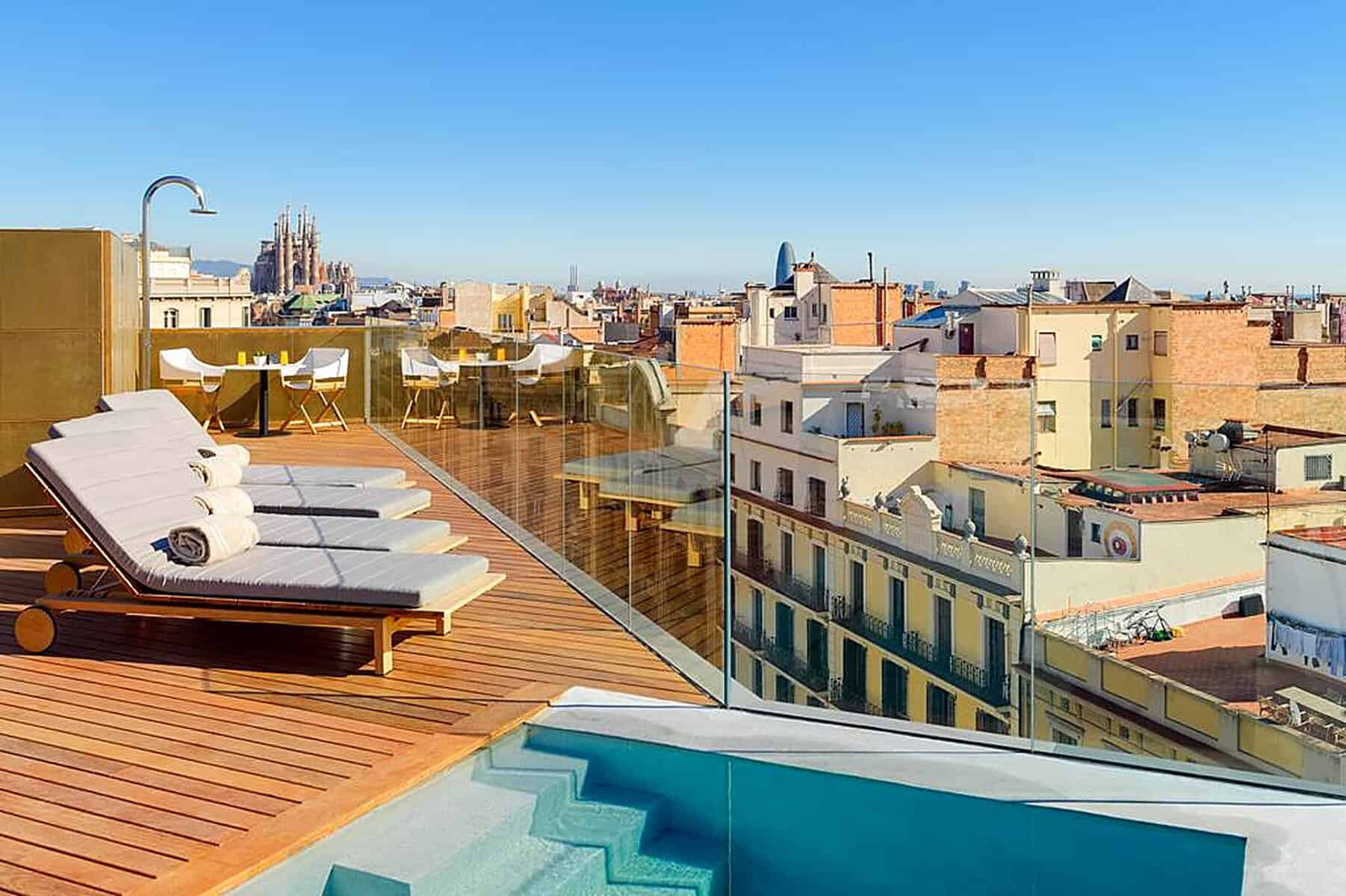
The One Barcelona
A grand-luxury five-star a block from Casa Milà, with a rooftop terrace bar above the Eixample.
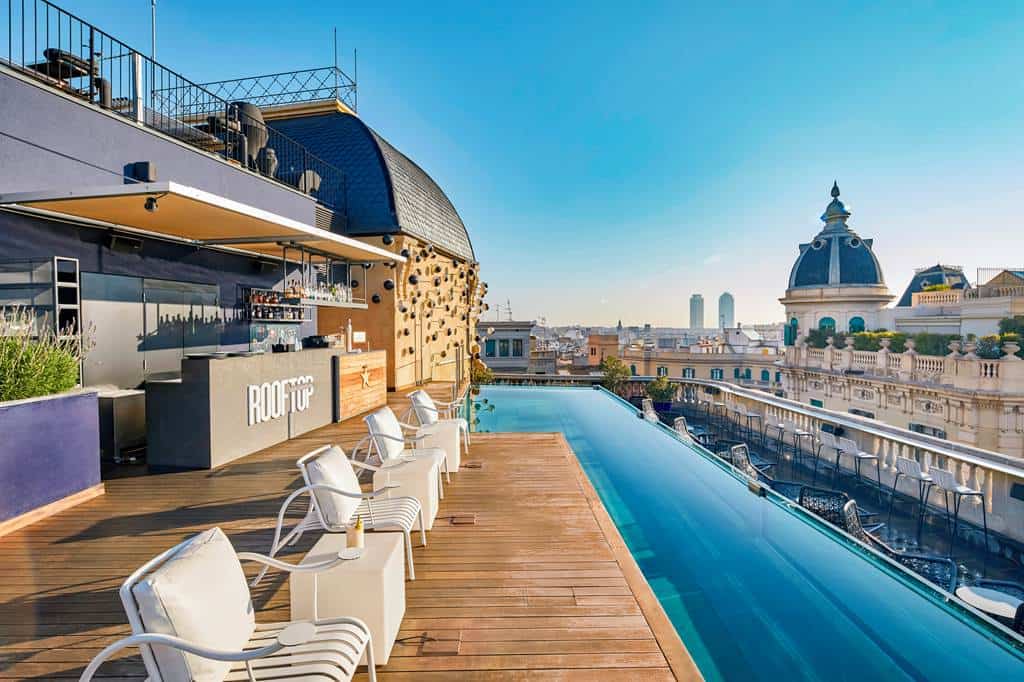
Ohla Barcelona
A five-star boutique hotel in a neoclassical building on the edge of the Gothic Quarter, with a glass-sided rooftop pool and bar.

Grand Hyatt Barcelona
A large five-star at the top of Avinguda Diagonal, near the Camp Nou and the shops of L'Illa, with a spa.

Meliá Barcelona Sarrià
A polished five-star in the smart uptown business district, a short taxi ride from Passeig de Gràcia and popular with business and leisure guests alike.

SLS Barcelona
A big, design-led waterfront resort hotel on the marina at Port Fòrum, with pools and sea views, for a beach-and-city stay away from the centre.
Boutique and mid-range hotels
Four-star and design hotels close to the sights, several with rooftop pools.

Axel Hotel Barcelona & Urban Spa
Barcelona's best-known LGBTQ+ hotel ('heterofriendly', in its own words), in the heart of the Gaixample, with a rooftop pool, Sky Bar and spa.

Pestana Arena Barcelona
A modern four-star on Consell de Cent, a short walk from Plaça d'Espanya, Montjuïc and the Las Arenas centre.

H10 Marina Barcelona
A four-star near the Olympic Port and the beaches, with a garden pool and spa, for a stay that mixes city and seaside.

Hotel Balmes
A four-star in the Eixample, a few minutes from Passeig de Gràcia and the Gaixample, with a garden courtyard and outdoor pool.

Catalonia Barcelona Plaza
A large four-star on Plaça d'Espanya, at the foot of Montjuïc and next to the airport bus and metro, with a rooftop pool.
Good-value hotels
Comfortable, well-placed hotels for when the room is just a base.
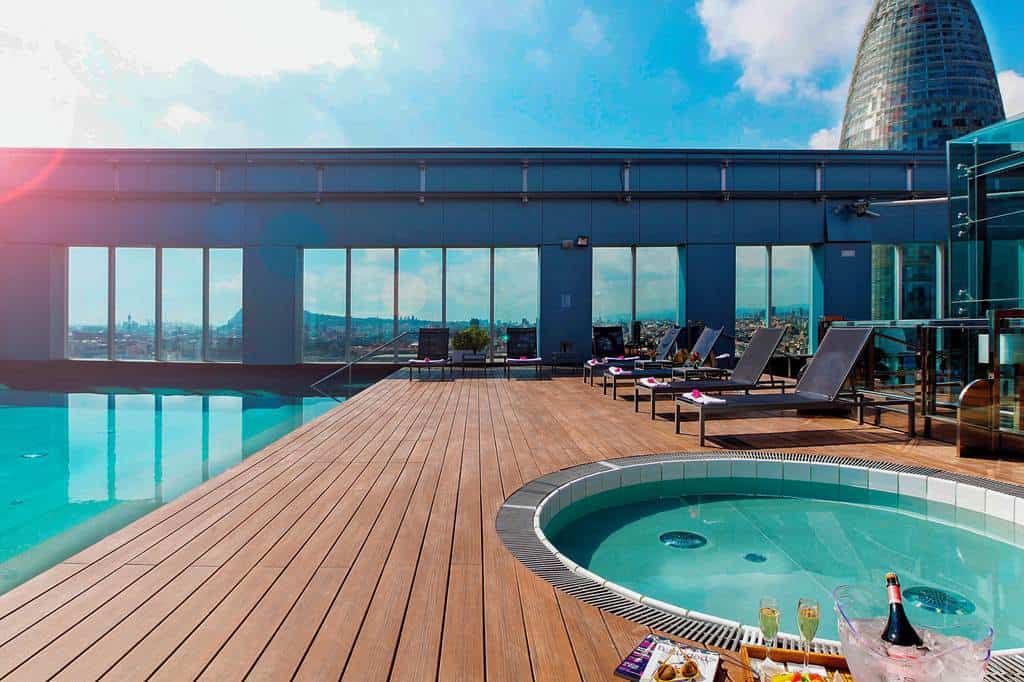
Novotel Barcelona City
A modern, reliable hotel near Glòries and the Poblenou beaches, with a rooftop pool and quick metro links to the centre.

Eurostars Barcelona Central
A comfortable four-star on Carrer de Mallorca, a few blocks from the Sagrada Família, handy for an early basilica slot.

Catalonia Barcelona 505
A quiet, good-value four-star in the uptown Sant Gervasi district, near the shops and restaurants of upper Diagonal.

Vincci Gala
A good-value four-star near the Arc de Triomf, within walking distance of El Born, the Palau de la Música and Plaça de Catalunya.

INNSiDE Barcelona Apolo
A relaxed, design-led hotel on Paral·lel, close to the tapas bars of Poble-sec and Montjuïc and a short walk from La Rambla.
Search every hotel in Barcelona
Live prices for hundreds of Barcelona hotels. Pick your dates and nights, or switch to Holidays to add flights from the UK.
Best restaurants in Barcelona
From three-Michelin-star tasting menus to standing-room tapas counters and Boqueria market stalls. Barcelona eats late: lunch from 1.30pm and dinner from 9pm, so book the famous places ahead.
Disfrutar
Creative tasting menuEixample (Carrer de Villarroel)
Three-Michelin-starred restaurant run by three former elBulli chefs, serving a long, playful tasting menu full of tricks and surprises. Book months ahead.
Cinc Sentits
Modern Catalan tasting menuSant Antoni (Carrer d'Entença)
Two-Michelin-starred restaurant from the Catalan-Canadian Artal family, building its tasting menus around small Catalan producers. Dinner Tuesday to Saturday, plus Saturday lunch.
Cal Pep
Seafood tapas barEl Born (Plaça de les Olles)
A much-loved counter bar where the staff choose a run of seafood plates for you, from clams and tortilla to the 'trifàsic' of mixed fried fish. Arrive before opening to get a stool at the bar.
El Xampanyet
Traditional tapas and cava barEl Born (Carrer de Montcada)
A tiled, family-run bar near the Picasso Museum, open since 1929, pouring its own pink house fizz with anchovies, tinned seafood and cured meats. It's standing room only most evenings.
Bar Cañete
Andalusian-Catalan tapasEl Raval (Carrer de la Unió)
A buzzing, polished tapas bar just off La Rambla by the Liceu, with a long counter where you can watch the chefs cook seafood, croquetas and grilled meats.
Quimet & Quimet
Vermouth bar and montaditosPoble-sec (Carrer del Poeta Cabanyes)
A tiny, bottle-lined family bar dating back to 1914, the place for a pre-lunch vermouth with little open sandwiches topped with tinned seafood, cheese and preserves. Standing only, and very busy.
Can Solé
Seafood and rice dishesBarceloneta (Carrer de Sant Carles)
An old-school Barceloneta restaurant, going since 1903, serving paella, black rice and fish stews in a dining room hung with photos of past regulars.
7 Portes
Classic Catalan and rice dishesEl Born (Passeig d'Isabel II)
A grand 19th-century dining room near the port with waiters in white jackets, best known for its paellas and rice dishes. A safe, characterful choice for a celebration meal.
El Nacional
Food hall with several restaurants and barsPasseig de Gràcia
A converted 19th-century warehouse off Passeig de Gràcia with separate areas for tapas, grilled meat and seafood, plus several bars. Good for groups with different tastes.
Bar del Pla
Modern Catalan tapas and natural wineEl Born (Carrer de Montcada)
A lively neighbourhood bar serving updated Catalan tapas with a good list of natural and local wines.
El Quim de la Boqueria
Market counter barLa Boqueria market
A counter bar inside the Boqueria cooking market produce to order. Its fried eggs with baby squid are the dish everyone comes for.
Els Quatre Gats
Traditional Catalan café-restaurantBarri Gòtic (Carrer de Montsió)
The Modernista café where a young Picasso held his first exhibition in 1900, with a beautiful wood-panelled dining room serving Catalan classics.
Paco Meralgo
Tapas barEixample (Carrer de Muntaner)
A smart but relaxed Eixample tapas bar with a long marble counter, known for top-quality seafood, croquetas and pan con tomate. Popular with locals, so book ahead.
Best bars in Barcelona
Cocktail bars ranked among the best in the world, historic Modernista bars and rooftop terraces over the old town.
Sips
Cocktail barEixample (Carrer de Muntaner)
Simone Caporale and Marc Álvarez's cocktail bar, named the World's Best Bar in 2023 and still near the top of the World's 50 Best Bars list, with drinks made at a central island bar.
Paradiso
Speakeasy cocktail barEl Born (Carrer de Rera Palau)
Hidden behind the fridge door of a small pastrami bar, this wood-curved speakeasy topped the World's 50 Best Bars list in 2022 and is known for theatrical cocktails.
Dr Stravinsky
Cocktail barEl Born (Carrer dels Mirallers)
An apothecary-style bar that distils and ferments many of its own ingredients, a regular on the World's 50 Best Bars extended list.
Boadas Cocktails
Classic cocktail barTop of La Rambla (Carrer dels Tallers)
Barcelona's oldest cocktail bar, opened in 1933, a tiny triangular room where bartenders in white jackets throw daiquiris and martinis between shakers.
Dry Martini
Classic cocktail barEixample (Carrer d'Aribau)
A wood-panelled, old-school bar with white-jacketed bartenders that keeps a running count of the martinis it has served. Perfect for a pre-dinner classic.
Bobby Gin
Gin and tonic barGràcia (Carrer de Francisco Giner)
A friendly Gràcia bar specialising in gin, with dozens of gins and carefully garnished G&Ts.
Les Gens Que J'aime
Classic basement barEixample (Carrer de València)
A dimly lit basement bar open since 1967, with red velvet sofas, vintage lamps and a mellow soundtrack, a short walk from Passeig de Gràcia.
Café de l'Òpera
Historic café-barLa Rambla
A café-bar facing the Liceu opera house, open in its present form since 1929, with mirrored walls and old-fashioned waiters. Good for a drink or hot chocolate on La Rambla.
La Terraza del Central
Rooftop barVia Laietana (Grand Hotel Central)
The rooftop of the Grand Hotel Central, with an infinity pool and cocktail bar looking over the Gothic Quarter rooftops to the cathedral.
NOXE
Sky-high cocktail bar, restaurant and clubBarceloneta (W Barcelona, 26th floor)
On the 26th floor of the sail-shaped W hotel at the end of the beach, with views along the coast and over the city. Smart dress required.
Gay bars in Barcelona
Arena
LGBTQ+ nightclubRonda de Sant Pere (near Plaça de Catalunya)
The city's best-known gay club brand, now at a single venue on Ronda de Sant Pere, open every night from after midnight with pop, drag shows and themed parties.
Boys Bar BCN
Gay barGaixample (Carrer de la Diputació)
A busy, friendly bar in the heart of the Gaixample with cheerful staff, pop music and a crowd that spills out on to the street.
Moeem
Gay barGaixample edge (Carrer de Muntaner)
A sociable cocktail bar near Universitat with pop and reggaeton, drink offers early in the evening and a mainly young crowd. Open Friday to Monday.
Plata Bar
Gay-friendly cocktail barGaixample (Carrer del Consell de Cent)
A stylish corner cocktail bar on the Gaixample's main street, with a terrace and a largely LGBTQ+ crowd. Good for a first drink before the clubs.
Sky Bar at Axel Hotel Barcelona
Rooftop bar in an LGBTQ+ hotelGaixample (Carrer d'Aribau)
The rooftop bar and pool terrace of the Axel, Barcelona's best-known gay hotel, with DJ sessions and a mixed, welcoming crowd.
All venues checked as trading on 6 November 2026. Opening hours change, so check Instagram before you go.
Barcelona FAQ
When is the best time to visit Barcelona?
May, June, September and October are ideal, with warm, sunny days, a sea that's warm enough for swimming from June to early October and fewer crowds than in high summer. July and August are hot, humid and very busy. Winters are mild and bright, often around 15°C by day, which makes November to March a good time for museums and architecture. The city's biggest street festival, La Mercè, takes place around 24 September.
How many days do you need in Barcelona?
Three full days covers the essentials: one for the Gothic Quarter, El Born and La Rambla, one for Gaudí (the Sagrada Família, Casa Batlló or Casa Milà and Park Güell) and one for Montjuïc or the beach. With four or five days you can add Gràcia, the Bunkers del Carmel viewpoint, a concert at the Palau de la Música or a day trip to Montserrat or Sitges.
How do I get from Barcelona airport to the city centre?
The Aerobús express bus runs from both terminals to Plaça d'Espanya and Plaça de Catalunya every few minutes and takes about 35 minutes. Metro line L9 Sud links both terminals with the city, but you need a special airport ticket because standard metro tickets are not valid at the airport stations. From Terminal 2, the R2 Nord train runs to Sants and Passeig de Gràcia. Official black-and-yellow taxis wait outside both terminals; allow 25-35 minutes to the centre.
Do I need to book Sagrada Família tickets in advance?
Yes. Book on the official website (sagradafamilia.org) as early as you can, especially for tower visits and in spring, summer and school holidays, when slots sell out days or weeks ahead. Tickets are for a set time and are issued in your name, so bring matching photo ID. Ignore lookalike resale sites, and remember the basilica can close at short notice for religious services.
Is Barcelona safe? What about pickpockets?
Barcelona is generally safe, but pickpocketing is a real problem. Take care on La Rambla, in the metro (especially lines L1 and L3), around the Sagrada Família and on the beach. Keep phones off café tables, wear bags across your body and zipped, and never leave anything unattended on the sand. Be wary of strangers who distract you by pointing out a 'stain' on your clothes or asking you to sign a petition.
Which are the best beaches in Barcelona?
Barceloneta is the closest and liveliest beach, but also the most crowded. Walk or cycle north past the Olympic Port for Nova Icària, Bogatell and Mar Bella, which are wider, cleaner and calmer. Lifeguards and beach services run mainly from June to September. For a day out, take the train south to Castelldefels or Sitges for longer, quieter sands.
What can you do for free in Barcelona?
Lots. The Picasso Museum is free on Thursday afternoons (16:00-19:00) and the first Sunday of the month, but you must reserve online four days ahead. The MNAC is free on Saturdays from 15:00 and the first Sunday (book online), and many city museums, including the city history museum (MUHBA), Montjuïc Castle, the Maritime Museum and the Design Museum, are free on Sunday afternoons from 15:00. Outdoors, the Bunkers del Carmel viewpoint, Parc de la Ciutadella, the beaches, the Boqueria market and the Magic Fountain shows cost nothing.
Is Barcelona LGBTQ+ friendly?
Very. Spain legalised same-sex marriage in 2005 and Barcelona is one of Europe's most relaxed, welcoming cities. The main scene is the 'Gaixample', a few blocks of the Eixample around Carrer del Consell de Cent, Muntaner and Casanova, with bars, clubs and gay-friendly hotels. Pride Barcelona takes place in early summer, the Circuit Festival draws huge crowds in August, and the beach town of Sitges, about 40 minutes away by train, has a long-established gay scene.