Seville packs a Moorish palace, the largest Gothic cathedral in the world, orange-tree squares and the flamenco quarter of Triana into an old town you can cross on foot in half an hour. This guide has four self-guided walking routes, the places worth your time with links to book, the best free things to do, and where to eat, drink and stay at every budget, with each venue's website and Instagram so you can see it first.


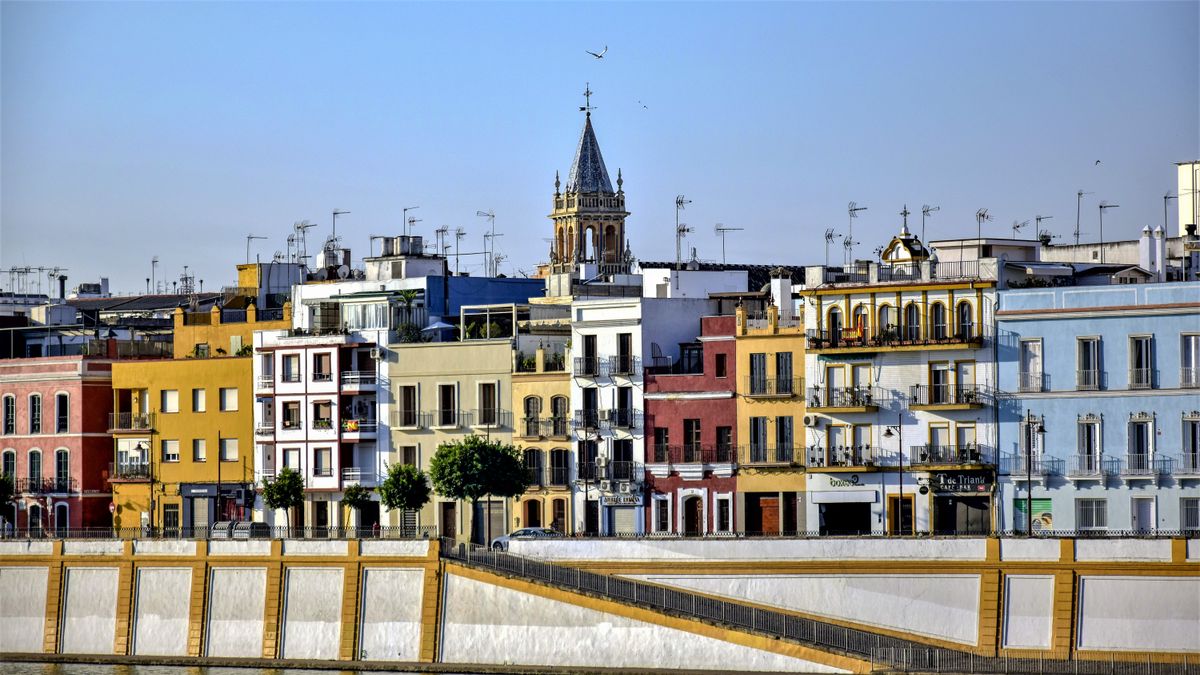

Seville map: sights, restaurants, bars and walks
Turn the layers on and off, or pick a walk to draw its route with numbered stops. Tap any pin for links.
Four Seville walking routes
The old town is flat and its lanes are narrow and shady, but summer afternoons are fierce: walk in the morning or after 7pm from June to September, carry water and plan indoor visits for the middle of the day. Distances are approximate and the times include short stops; add more if you go inside the sights.
Cathedral, Alcázar and Santa Cruz
About 0.9 km · 1 hour walking, a full day with the cathedral and Alcázar
From the cathedral past the Archivo de Indias and through the Alcázar's Patio de Banderas into the lanes of Santa Cruz, ending along the Callejón del Agua by the Murillo gardens.
- Seville Cathedral and the Giralda
- Archivo General de Indias
- Plaza del Triunfo
- Patio de Banderas
- Plaza de Doña Elvira
- Plaza de Santa Cruz
- Callejón del Agua
The river and Triana
About 1.8 km · 1.5 hours walking, half a day with the market and ceramics
Along the Arenal riverbank from the Torre del Oro and the Maestranza, over the Isabel II bridge to Triana's market, the sailors' chapel and Santa Ana, back along Calle Betis.
- Torre del Oro
- Plaza de Toros de la Real Maestranza
- Puente de Isabel II (Triana bridge)
- Mercado de Triana
- Capilla de los Marineros
- Iglesia de Santa Ana
- Calle Betis
Setas, palaces and La Macarena
About 2.6 km · 1.5 hours walking, half a day with visits
North from the Setas past the Palacio de las Dueñas and the Baroque San Luis de los Franceses to the Almohad walls and the Macarena basilica, then down Calle Feria to the Alameda de Hércules.
- Setas de Sevilla (Metropol Parasol)
- Palacio de las Dueñas
- Iglesia de San Luis de los Franceses
- Murallas de la Macarena
- Basílica de la Macarena
- Mercado de Feria
- Alameda de Hércules
Plaza de España and Parque de María Luisa
About 1.9 km · 1 hour walking, half a day with stops
From the old Royal Tobacco Factory, now the university, to Plaza de España, then through the shady paths of María Luisa park to the Glorieta de Bécquer and the museums on Plaza de América.
- Universidad de Sevilla (Real Fábrica de Tabacos)
- Plaza de España
- Glorieta de Bécquer
- Parque de María Luisa
- Plaza de América
Places to visit in Seville
The 20 sights we would plan a first trip around, with the official site for opening times and tickets.

Real Alcázar
Europe's oldest royal palace still in use, a layered complex of Mudéjar halls, Gothic rooms and tiled courtyards such as the Patio de las Doncellas, set in huge walled gardens.
Tip: Book a timed slot on the official ticket site well ahead; you need a passport number when buying and the passport itself at the gate. Open daily 09:30-17:00 from October to March and 09:30-19:00 from April to September. Take the first slot of the day and do the palaces before the gardens. The general ticket also gets you into the Antiquarium under the Setas and the Centro Cerámica Triana.
Time needed: 2-3 hours

Seville Cathedral and the Giralda
The largest Gothic cathedral in the world, with Columbus's tomb, a vast gilded altarpiece and the Giralda, the former minaret you climb by 35 ramps rather than stairs.
Tip: Tourist visits run Monday to Saturday 10:45-18:00 and Sunday 14:30-19:00, with the Giralda first on a timed entry. Buy online and enter by the Puerta del Lagarto; the box office is at the Puerta del Príncipe. Restorers are working on the top of the Giralda this autumn, but the climb stays open.
Time needed: 1.5-2 hours
Iglesia Colegial del Divino Salvador
Seville's second-largest church, built on the site of the old main mosque, with a dazzling run of gilded Baroque altarpieces.
Tip: Entry is included in the cathedral ticket, so keep it for the same day. Open Monday to Thursday 10:15-18:00, Friday and Saturday 10:15-17:00, Sunday 14:30-19:30. The bars on the square outside are an after-work institution.
Time needed: 45 minutes

Plaza de España
A huge semicircular brick and ceramic showpiece built for the 1929 exposition, with a canal crossed by tiled bridges and an alcove for every Spanish province.
Tip: Free and open all day. Come early in the morning or in the hour before sunset when the brick glows; find your favourite province among the tiled benches and watch for street flamenco under the arcades.
Time needed: 1 hour

Parque de María Luisa
Seville's main park, laid out with fountains, pavilions, pools and tiled glorietas, running from Plaza de España to the Plaza de América and its museum buildings.
Tip: Free, open daily 08:00 to midnight. On a hot afternoon it is several degrees cooler under the trees; the Glorieta de Bécquer and the duck pond on Isleta de los Patos are the prettiest corners.
Time needed: 1-2 hours

Setas de Sevilla (Metropol Parasol)
A giant waffle-like wooden canopy over Plaza de la Encarnación, with a winding rooftop walkway and Roman remains in the Antiquarium in the basement.
Tip: Open daily 09:30 to 01:00 (last entry 00:15). Go up around sunset for the best light over the rooftops; from April to October the 'Aurora' light show runs after dark. The Antiquarium is covered by the Alcázar general ticket.
Time needed: 1-1.5 hours

Casa de Pilatos
A 16th-century palace that mixes Mudéjar plasterwork, Renaissance arches and Roman statues around a superb tiled courtyard, still owned by the Medinaceli family.
Tip: Open daily 09:00-18:00. The ground floor and garden are the highlight; the upper floor is a separate ticket. The individual ticket includes a guide or audioguide, and early afternoon is usually quiet.
Time needed: 1-1.5 hours
Palacio de las Dueñas
The Seville home of the Dukes of Alba, a Renaissance palace with lemon-tree patios, gardens and rooms full of family art, bullfighting posters and flamenco memorabilia.
Tip: Open daily 10:00-18:00 from October to March and 10:00-19:00 from April to September, with last entry 45 minutes before closing. Non-holiday Monday afternoons from 16:00 are free, but only with a ticket booked online.
Time needed: 1 hour
Palacio de la Condesa de Lebrija
A noble townhouse known as the best-paved palace in Europe, its floors covered in Roman mosaics brought from Itálica.
Tip: Open daily 10:00-18:00 from September to June and 10:00-15:00 in July and August, last entry 45 minutes before closing. It pairs well with a flamenco show at Casa de la Memoria next door.
Time needed: 45 minutes

Torre del Oro
A 13th-century Almohad watchtower on the riverbank that once guarded the port, now home to a small maritime museum and a rooftop lookout.
Tip: Open Monday to Friday 09:30-19:00 and weekends 10:30-19:00 (last entry 18:30). Entry is by voluntary donation. The river cruises leave from just beside it.
Time needed: 30-45 minutes
Archivo General de Indias
The Renaissance merchants' exchange between the cathedral and the Alcázar, now holding the archive of Spain's American empire, with maps and documents on show upstairs.
Tip: Always free with no booking. Open Tuesday to Saturday 09:30-17:00 and Sundays and holidays 10:00-14:00; closed Mondays. A good cool stop between the two big queues.
Time needed: 45 minutes
Museo de Bellas Artes de Sevilla
One of Spain's finest art museums, in a former convent, with the great Seville painters Murillo, Zurbarán and Valdés Leal.
Tip: Open Tuesday to Saturday 09:00-21:00 and Sundays and holidays 09:00-15:00, closed Mondays (shorter summer hours in August). Room 5, the old convent church, closed on 15 October 2026 for a Juan de Mesa exhibition, so check what is on. The Sunday art market fills the square outside.
Time needed: 1.5-2 hours

Mercado de Triana
Triana's covered food market, built over the ruins of the Castillo de San Jorge, with fish, ham and spice stalls plus tapas counters.
Tip: Stalls trade Monday to Saturday 09:00-14:30, so go in the morning; the bars inside stay open into the evening. Eat at the counters rather than buying to take away.
Time needed: 45 minutes
Centro Cerámica Triana
A museum in a restored tile factory, complete with old kilns, that tells the story of Triana's potters, whose tiles cover Plaza de España.
Tip: Open Tuesday to Sunday 10:00-19:00 and included in the Alcázar general ticket. Afterwards browse the working ceramics shops on Calle Alfarería and Calle Antillano Campos.
Time needed: 1 hour
Casa de la Memoria
An intimate flamenco cultural centre in an old courtyard house, with a nightly hour-long show of dance, song and guitar.
Tip: Shows run at 18:00 and 19:30, with extra performances at busy times of year. Book online, arrive early for a front seat, and note that the show is not suitable for children under six.
Time needed: 1 hour
Museo del Baile Flamenco
A flamenco museum founded by the dancer Cristina Hoyos, with costumes, film and interactive rooms, plus its own stage for evening shows.
Tip: The museum is open 10:00-18:45 (last entry 18:00), opening at 14:30 on the first Monday of each month. Shows are at 17:00, 19:00 and 20:45; the early one suits families.
Time needed: 1-2 hours with a show

Plaza de Toros de la Real Maestranza
One of Spain's oldest bullrings, built from the 18th century, whose guided tour covers the arena, the chapel and a museum of costumes and paintings. Bullfighting is controversial and some visitors prefer to skip it.
Tip: Tours run daily, 09:00-19:30 from 1 November, with the ticket office closing 30 minutes earlier; on event days visits finish at 15:00. You can admire the white and ochre facade from the riverside for free.
Time needed: 45 minutes
Basílica de la Macarena
The modern basilica that houses the Esperanza Macarena, Seville's best-loved Virgin, with a treasury museum of processional floats and robes.
Tip: The church is free and open Monday to Saturday 08:00-14:00 and 17:00-21:00 (Sundays from 09:30). The treasury museum keeps similar hours and charges entry. Combine it with the old city walls across the road.
Time needed: 45 minutes
Hospital de la Caridad
A 17th-century almshouse still run by its charitable brotherhood, whose church holds Valdés Leal's chilling 'Hieroglyphs of Death' and fine works by Murillo.
Tip: Open daily 10:10-17:00 and until 20:30 on Fridays (last entry 15 minutes before closing). Allow time to look at the Valdés Leal paintings by the entrance.
Time needed: 45 minutes

Guadalquivir river cruise
A sightseeing boat trip on the Guadalquivir past the Torre del Oro, Triana and the bridges and pavilions of Expo 92.
Tip: Boats leave from the quay next to the Torre del Oro between 11:00 and 19:00. Pick a late-afternoon departure for the softest light, and sit on the side facing Triana.
Time needed: 1 hour
Free things to do in Seville
Seville’s squares, parks, riverbanks and Plaza de España are free every day, and several of its big sights have free slots for residents or on set days, some for everyone. Free slots are limited and often need booking online, so check each entry before you go.
Real Alcázar
Santa CruzFree: Free general visit on Mondays, in a limited number of late-afternoon slots (usually the last hour of the day).
The royal palace and gardens, with their Mudéjar courtyards and fountains, open free to everyone on Monday afternoons.
Tip: Check the official ticket site a week or two ahead and book the moment slots appear; bring the passport you booked with.
Seville Cathedral and the Giralda
Santa CruzFree: Free for worship only: the cathedral opens for prayer and Mass early each morning (from 08:00), and the Capilla Real and Parroquia del Sagrario also open for worship at set times. There is also a free cultural visit on some Sundays, subject to the church calendar.
Attending Mass is a free way to see the vast Gothic interior; Sunday 13:00 Mass at the high altar is sung with organ, and there is a Mass in English on Saturdays at 17:00.
Tip: Behave as a worshipper, not a tourist: no photos or wandering. For the Giralda and the full visit, you need a ticket.
Archivo General de Indias
Santa CruzFree: Always free. Tuesday to Saturday 09:30-17:00 (last entry 16:30), Sundays and holidays 10:00-14:00; closed Mondays.
The Renaissance exchange building holding the archive of Spain's American empire, with exhibitions upstairs.
Tip: Look up at the marble staircase and the long galleries of mahogany shelves.
Plaza de España
Parque de María LuisaFree: Always free, open daily 08:00 to midnight.
Seville's showpiece square, with tiled province alcoves, bridges and a canal.
Tip: Rowing boats can usually be hired on the canal for a different angle; or come at night, when it is lit up and quiet.
Parque de María Luisa
South of the centreFree: Always free, open daily 08:00 to midnight.
The city's great park of fountains, tiled benches, pools and pavilions.
Tip: Bring a picnic and look for the Glorieta de Bécquer, with its statues around a cypress tree.
Basílica de la Macarena
La MacarenaFree: The church is free: Monday to Saturday 08:00-14:00 and 17:00-21:00; Sundays and holidays 09:30-14:00 and 17:00-21:00. The treasury museum charges.
Home of the Esperanza Macarena, the Virgin carried through the streets in the early hours of Good Friday.
Tip: Visit around the 19:40 rosary to see how much she means to locals, then walk along the Almohad walls opposite.
Palacio de las Dueñas
CentroFree: Free on non-holiday Monday afternoons, from 16:00 until last entry (17:15 October to March, 18:15 April to September).
The Duke of Alba family's Renaissance palace, with lemon-tree patios and family art.
Tip: Book as soon as you know your dates, and go straight to the main patio before it fills.
Palacio de la Condesa de Lebrija
CentroFree: Free ground-floor visit on Fridays at 10:00.
A palace famous for its Roman mosaic floors brought from Itálica.
Tip: Get there before 10:00 on a Friday; the ground floor holds the best mosaics.
Museo de Bellas Artes de Sevilla
CentroFree: Free for EU citizens with ID, and for everyone on 28 February, 18 May, 27 September, 4 December and European Heritage Days. UK passport holders do not qualify for the EU-citizen rule and pay a small entry fee on other days.
Seville's fine art museum, with Murillo, Zurbarán and Valdés Leal in a former convent.
Tip: If you are in town on 18 May (International Museum Day) or 4 December, go early as it gets busy.
Torre del Oro
El ArenalFree: Entry by voluntary donation. Monday to Friday 09:30-19:00, weekends 10:30-19:00 (last entry 18:30).
The 13th-century riverside watchtower, with a small maritime museum and a lookout.
Tip: Climb to the top terrace for the view along the river to Triana and the Maestranza.
Mercado de Triana
TrianaFree: Free to browse. Stalls Monday to Saturday 09:00-14:30; bars Monday to Saturday 09:00-17:00 and 18:00-midnight, Sundays 10:00-17:00.
Triana's food market, with remains of the Castillo de San Jorge visible beneath it.
Tip: Go mid-morning on a weekday to see the fish stalls in full swing.
Callejón del Agua and the Jardines de Murillo
Santa CruzFree: Always free and open.
A whitewashed lane running along the Alcázar's outer wall, opening onto the shady Murillo gardens.
Tip: Walk it first thing in the morning, before the tour groups, and finish with coffee on Paseo de Catalina de Ribera.
Alameda de Hércules
AlamedaFree: Always free and open.
A long boulevard laid out in 1574, flanked by Roman columns topped by Hercules and Julius Caesar, now lined with bars and terraces.
Tip: Come in the early evening when families, dog walkers and the first drinkers share the benches.
Free times checked on the official sites on 6 November 2026. They change, so check the link before you go.
Where to stay in Seville
For a first visit, stay in Santa Cruz, El Arenal or the Centro: the walks above all start within a short walk. Triana suits evenings out across the river, the Alameda is younger and livelier, and Nervión, near the station, gives the best value.
Barrio de Santa Cruz
The old Jewish quarter beside the cathedral and the Alcázar: a maze of whitewashed lanes, orange-tree squares and tiled patios that empties out pleasantly once the day-trippers leave.
Best for: First-timers who want the cathedral and Alcázar on the doorstep, and evening strolls
El Arenal
The old river-port district between the cathedral and the Guadalquivir, home to the Maestranza bullring, the Torre del Oro, classic tapas bars and the Teatro de la Maestranza.
Best for: Walking to the river and the main sights, and traditional bars
Triana
The working-class, seafaring barrio across the Isabel II bridge, famous for its ceramics workshops, flamenco families, food market and the riverside bars along Calle Betis.
Best for: Ceramics, flamenco, the market and views back across the river to the old town
Alameda de Hércules
A long, tree-lined boulevard in the north of the old town, framed by Roman columns at one end, that has become Seville's most relaxed nightlife hub and the centre of its LGBTQ+ scene.
Best for: Bars and terraces, younger travellers and LGBTQ+ nightlife
La Macarena
The north of the old town, a residential barrio of churches and markets around the surviving Almohad walls and the basilica of the Virgen de la Macarena.
Best for: Everyday local life, Calle Feria's market and Semana Santa traditions
Plaza de España and Parque de María Luisa
The south side of the centre, where the grand 1929 Ibero-American Exposition pavilions sit in Seville's biggest park, with tiled benches, ponds and shady avenues.
Best for: Families, photographers and a green escape from the heat
Hotels for every budget. Each button opens our live search with that hotel at the top, so you can change the dates and nights.
Luxury hotels
Grand hotels beside the Alcázar and the cathedral, several with rooftop pools.
Hotel Alfonso XIII, a Luxury Collection Hotel
Seville's grandest hotel, a neo-Mudéjar palace built for the 1929 exposition, with tiled courtyards, a pool garden and the Bar Americano.

Gran Meliá Colón
A five-star classic near the Maestranza, decorated with Spanish art, with a spa and a rooftop terrace.
EME Catedral Mercer Hotel
A design hotel made from a row of old houses facing the cathedral, with several restaurants, a spa and the Terraza del EME rooftop.
Boutique and mid-range hotels
Boutique hotels in old palaces and townhouses, walkable to the sights.

Hospes Las Casas del Rey de Baeza
A former corral house built around galleried white-and-ochre patios, with a rooftop pool and a quiet spot near Casa de Pilatos.
Hotel Inglaterra
A long-established four-star on Plaza Nueva, one of the city's oldest hotels, ideally placed between the cathedral and the shopping streets.
Casa Romana Hotel Boutique
A boutique hotel in a classic Seville townhouse near the Alameda, with a panoramic roof terrace.
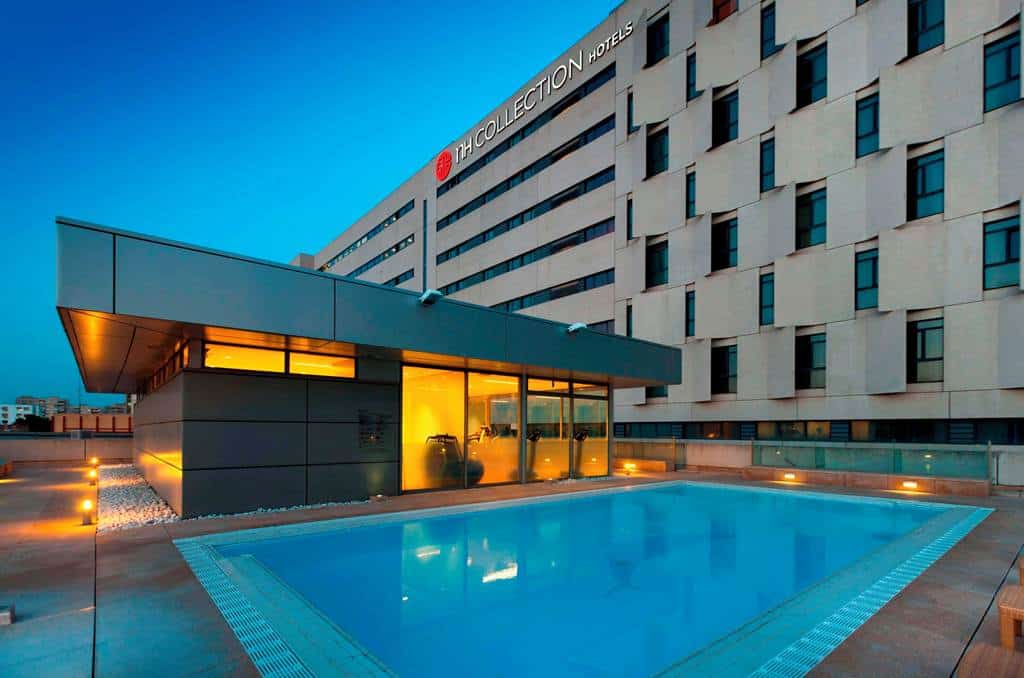
NH Collection Sevilla
A modern four-star south-east of the old town, near the Nervión shopping district, with an outdoor pool.

Meliá Sevilla
A sleek, contemporary four-star beside María Luisa park, about 600m from Plaza de España, with a large outdoor pool and a terrace bar.
Good-value hotels
Comfortable, well-placed hotels in the old town and near Santa Justa station, for when the room is just a base.

Petit Palace Santa Cruz
A modern hotel in a restored historic building in the old town, close to Casa de Pilatos and a short walk from the cathedral.

Catalonia Santa Justa
A practical four-star near Santa Justa station, handy for the airport bus and for train day trips to Córdoba.

Hesperia Sevilla
A bright, design-led four-star a little outside the old town, with good transport links and roomier bedrooms than most old-town hotels.
Hotel Simón
A simple, friendly hotel in an 18th-century house with a tiled patio, a few minutes' walk from the cathedral.
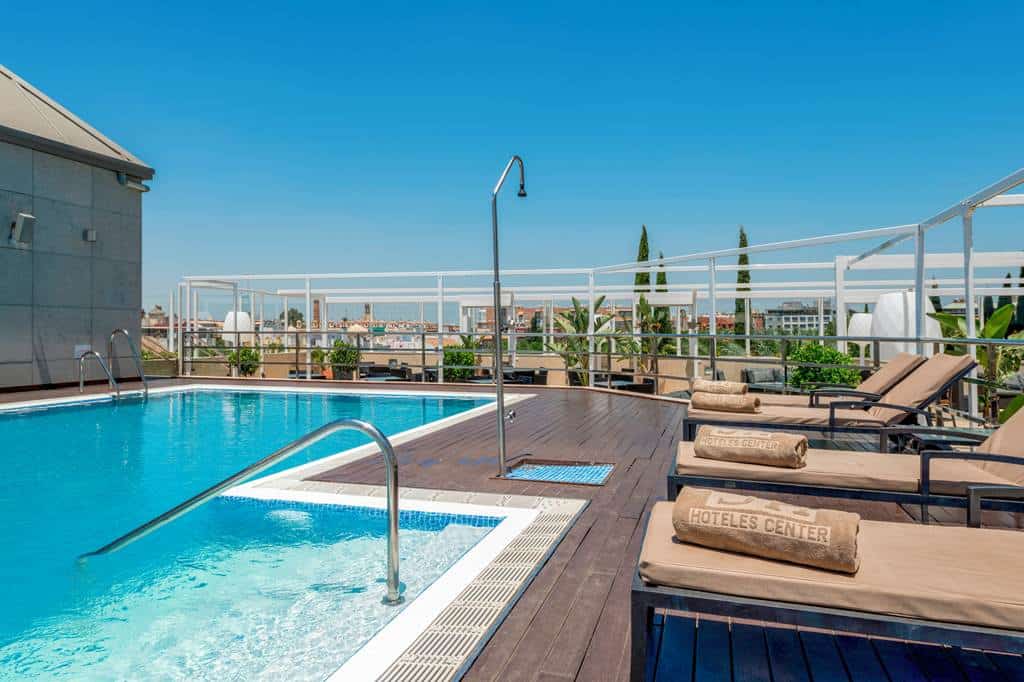
Hotel Sevilla Center
A modern, design-led four-star about a kilometre from the Alcázar, with a rooftop terrace, a seasonal pool and wide views over the city.
Search every hotel in Seville
Live prices for hundreds of Seville hotels. Pick your dates and nights, or switch to Holidays to add flights from the UK.
Best restaurants in Seville
From Michelin-starred tasting menus to standing-room tapas bars that have served the same dishes for a century. Seville eats late: lunch from 2pm and dinner from 9pm, so book the popular places ahead.
Cañabota
Fish and seafood tasting menuCentro (Calle Orfila)
A one-Michelin-star fish restaurant where the day's catch is displayed like a fishmonger's counter and cooked over the grill in front of you; its sister counter La Barra is next door.
Abantal
Creative Andalusian tasting menuNervión (Calle Alcalde José de la Bandera)
Julio Fernández's long-standing one-Michelin-star restaurant, reworking Seville recipes and local produce into seasonal tasting menus.
Az-Zait
Contemporary AndalusianSan Lorenzo (Plaza de San Lorenzo)
A smart, friendly Bib Gourmand dining room on a quiet square near the Gran Poder basilica, known for careful cooking of fish, rice and game.
Balbuena y Huertas
Contemporary tapas and grillsTriana (Calle San Jacinto)
A Bib Gourmand bar-restaurant in Triana serving modern takes on Andalusian dishes from breakfast through to late dinner, every day.
Lalola de Javi Abascal
Traditional AndalusianFeria (Calle Conde de Torrejón)
Chef Javi Abascal's Bib Gourmand bistro near the Alameda, built around slow-cooked stews, game and market vegetables.
El Rinconcillo
Classic tapas barCentro (Calle Gerona)
Seville's oldest tavern, trading since 1670, where the bill is still chalked on the wooden bar; order the spinach with chickpeas and a glass of sherry.
Bar Las Teresas
Classic tapas barSanta Cruz (Calle Santa Teresa)
A tiny, hams-from-the-ceiling bar in the heart of Santa Cruz that started as a grocery in 1870, good for jamón, tortilla and a cold beer standing up.
Espacio Eslava
Modern tapasSan Lorenzo (Calle Eslava)
A much-loved neighbourhood bar and restaurant near San Lorenzo whose inventive tapas, such as its slow-cooked egg on a mushroom cake, have won national awards.
La Brunilda
Modern tapasEl Arenal (Calle Galera)
A small, busy Arenal bar serving creative tapas and plates with Mediterranean flavours; arrive when it opens or expect to wait.
El Pintón
Modern AndalusianCentro (Calle Francos)
A stylish restaurant in a restored historic building near the cathedral, serving updated Andalusian cooking; the Aníbal Club cocktail bar is hidden in the same building.
Casa Robles
Traditional AndalusianCentro (Calle Álvarez Quintero)
A family-run Seville classic a few steps from the cathedral, serving classic Andalusian dishes in a formal dining room or as tapas at the bar.
Mercado Lonja del Barranco
Food marketEl Arenal (Calle Arjona)
A gourmet food hall in a 19th-century iron market building by the Isabel II bridge, with stalls for seafood, ham, rice, tapas and drinks, and a riverside terrace.
Best bars in Seville
Rooftop terraces facing the Giralda, old bodegas with sherry from the barrel, cocktail bars and a flamenco show.
La Terraza del EME
Rooftop cocktail barSanta Cruz (EME Catedral Mercer Hotel)
A rooftop terrace almost close enough to touch the Giralda, serving cocktails into the night; arrive before sunset to get a table on the cathedral side.
Pura Vida Terraza
Rooftop cocktail barCentro (Hotel Fontecruz Sevilla Seises)
A relaxed rooftop on top of a hotel beside the cathedral, with views of the Giralda, cocktails and live flamenco on some evenings.
Terraza Hotel Doña María
Rooftop barSanta Cruz (Hotel Doña María)
An old-fashioned hotel roof terrace beside a small pool, looking straight across at the Giralda; quieter and more traditional than the trendier rooftops.
Terraza Casa Romana
Rooftop barAlameda (Casa Romana Hotel Boutique)
A panoramic hotel roof terrace near the Alameda, a good place to start a night in the north of the old town.
Aníbal Club
Speakeasy cocktail barCentro (inside El Pintón, Calle Francos)
A hidden cocktail bar tucked inside the El Pintón building, known for inventive twists on the classics; book ahead.
Bar Americano at Hotel Alfonso XIII
Classic hotel cocktail barCentro (Calle San Fernando)
The grand hotel bar of Seville's 1929 palace hotel, all dark wood and tiles, for a properly made martini before dinner.
Maquiavelo
Garden cocktail barMuelle de las Delicias (riverside)
A riverside garden venue by the port, with a restaurant by day and cocktails in the evening; drinks tables can be reserved by WhatsApp.
Bodeguita Romero
Sherry and tapas barEl Arenal (Calle Harinas)
A family-run Arenal bodega since 1939, good for manzanilla from the barrel and its famous pringá montadito.
Vinería San Telmo
Wine and sherry barSanta Cruz (Paseo de Catalina de Ribera)
A lively wine bar facing the Murillo gardens, with a long list of sherries and Spanish wines by the glass and inventive tapas.
La Casa del Flamenco
Flamenco venueSanta Cruz (Calle Ximénez de Enciso)
A small flamenco stage in a historic Santa Cruz courtyard house, with nightly shows close enough to hear the footwork.
Gay bars in Seville
Ítaca
Gay clubAlameda (Calle Amor de Dios)
Seville's long-running gay nightclub, with a dance floor of pop and Latin hits, drag nights and monthly parties; it gets going after 1am.
Dilema
LGBTQ+ café-bar and terraceAlameda de Hércules
A friendly queer café-bar with a terrace on the Alameda, open from lunchtime into the night.
1987 Bar
LGBTQ+ music barAlameda de Hércules
An Eighties-themed music bar on the Alameda, busy late every night with a mixed, gay-friendly crowd.
Pride B4R
Gay disco barAlameda (Calle Trajano)
A late-night gay disco bar near the Alameda, formerly Men to Men, with drag shows from Thursday to Saturday.
All venues checked as trading on 6 November 2026. Opening hours change, so check Instagram before you go.
Seville FAQ
When is the best time to visit Seville?
Spring (March to May) and autumn (late September to November) are ideal, with warm days for walking and orange blossom in March and April. July and August are fiercely hot, often above 40°C in the afternoon, so plan sightseeing early and late. Winters are mild and sunny, with short queues and Christmas markets in December.
How hot does Seville get in summer?
Very. Afternoon highs regularly pass 40°C in July and August, and nights stay warm. Locals sightsee before about 13:00, retreat indoors through the afternoon and come out again after 20:00. Book a hotel with air-conditioning and ideally a pool, carry water, and save covered sights such as the cathedral, the Archivo de Indias and the Centro Cerámica Triana for the hottest hours.
How many days do you need in Seville?
Three days covers the Alcázar, the cathedral and Giralda, Santa Cruz, Plaza de España, Triana and a flamenco show at an unhurried pace. Add a fourth or fifth day for the palaces of Pilatos and Las Dueñas, the Museo de Bellas Artes, or a day trip to Córdoba.
How do I get from Seville airport to the city centre?
The airport bus (line EA) runs roughly every 20-30 minutes and takes about 35 minutes to the centre, stopping at Santa Justa station, Prado de San Sebastián and Plaza de Armas. Taxis wait outside arrivals and charge a fixed fare to the centre, which is quicker if you have heavy bags. There is no train or metro to the airport.
Do I need to book Real Alcázar tickets in advance?
Yes, especially from March to October and at weekends. Entry is by 30-minute time slot, tickets are sold on the Alcázar's official site, and you need your passport number when buying. The box office in the Patio de Banderas only sells same-day tickets and they often sell out. The free Monday slots must also be booked online and go quickly.
When are Semana Santa and the April Fair, and how do they affect a visit?
Semana Santa (Holy Week) brings religious processions through the old town every day from Palm Sunday to Easter Sunday; in 2027 that is 21 to 28 March. The Feria de Abril follows about two weeks later, usually in April or early May, with a week of casetas, horses and sevillanas south of the river in Los Remedios. Both are unforgettable, but hotels fill up and prices rise, many streets close and some sights change their hours, so book months ahead.
Can I do day trips to Córdoba and Granada from Seville?
Córdoba is an easy day trip: high-speed trains take about 45 minutes, leaving time for the Mezquita, the Jewish quarter and the Alcázar. Granada is about two and a half hours each way by train or bus, so it is better as an overnight stop; Alhambra tickets sell out weeks ahead. Our multi-centre trip links Seville, Córdoba and Granada in one holiday.
Is Seville LGBTQ+ friendly?
Yes. Spain has had same-sex marriage since 2005 and Seville is relaxed and welcoming, with its LGBTQ+ bars and terraces centred on the Alameda de Hércules. The city hosts Pride of Andalucía at the end of June. Normal big-city awareness applies late at night, as anywhere.