Antalya and the Turquoise Coast in brief
- Kaleiçi old town, Hadrian’s Gate, the Düden waterfalls and the Roman sites of Perge and Aspendos.
- Side, Olympos, Kaş and Kalkan, with Kekova’s sunken city and the Lycian Way.
- About 4 hours’ flight from the UK to Antalya; Dalaman is closer for Kalkan and Kaş.
- Best in May, June, September and October; hottest in July and August, rainy in winter.
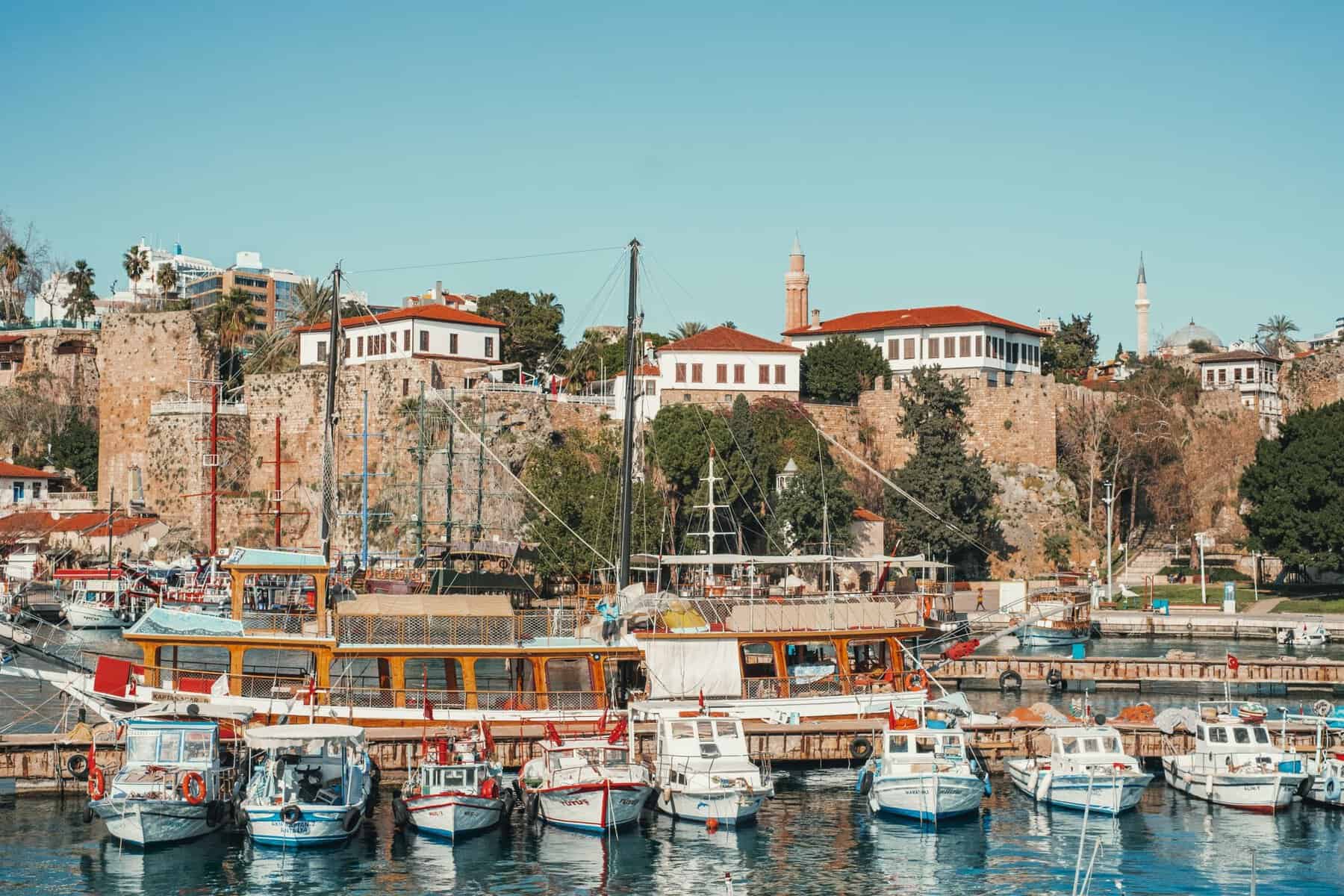
Antalya is the capital of Turkey’s Mediterranean coast and the gateway to the Turquoise Coast: hundreds of kilometres of clear sea, pine-covered mountains, long beaches and some of the finest Greek and Roman ruins anywhere. The city itself has a lovely walled old town, Kaleiçi, above a little Roman harbour. East are the great theatre at Aspendos and the temples of Side; west, the coast road winds past Olympos and its eternal flames to the harbour towns of Kaş and Kalkan, with the Lycian Way footpath running along the cliffs above. This guide covers the best things to do in Antalya and along the coast, where each resort town suits, the weather month by month, how to get there from the UK and how to put a trip together.
Where is Antalya?
Antalya is on the Mediterranean in south-west Turkey, about 480 km south of Istanbul, at the head of a wide gulf with the Taurus Mountains rising steeply behind. It’s a big, modern city of well over a million people, with its old town at the centre on the cliffs above the sea. The coast either side falls into two very different halves:
- East of Antalya (Lara, Belek, Side and Alanya): a broad plain with long sandy beaches, golf courses and big resorts, plus the ancient sites of Perge and Aspendos. In ancient times this was Pamphylia.
- West and south-west (Kemer, Olympos, Kaş and Kalkan): the mountains drop straight into the sea, with coves, small harbour towns and pine forest. This was ancient Lycia, and it’s the coast people usually mean by the Turquoise Coast.
Things to do in Antalya

Kaleiçi, the old town. Antalya’s historic heart, inside its old walls: a maze of lanes lined with restored Ottoman houses with wooden bay windows, now small hotels, cafés and craft shops, sloping down to the harbour. Look for the fluted Yivli Minaret, built by the Seljuk Turks in the 13th century and the symbol of the city, and the Hıdırlık Tower, a round Roman tower on the clifftop, best at sunset.
Hadrian’s Gate. A triple-arched marble gateway built for the visit of the Roman emperor Hadrian in AD 130, now the grand entrance to the old town from the modern city.
The old harbour. Wooden boats leave from here for trips along the cliffs to the Lower Düden waterfall and the coves to the west.
Antalya Museum. One of the best archaeological museums in Turkey, with superb Roman statues and sarcophagi from nearby Perge. Give it a couple of hours.

The Düden waterfalls. The Düden river reaches the sea in two sets of falls. The Upper Düden falls are in a shady park on the north edge of the city, with a path that runs behind the water. The Lower Düden falls at Lara drop about 40 m off the cliffs straight into the Mediterranean, best seen from the clifftop park or from a boat.
Beaches. Konyaaltı, west of the centre, is a long pebble beach with the mountains as a backdrop; Lara, to the east, is sandy. Both are a short taxi ride from Kaleiçi.
Termessos. An ancient city high in the mountains about 35 km inland, so well defended that Alexander the Great gave up trying to take it. The ruins are wild and overgrown, with a theatre set against the peaks. Go early and wear good shoes.
Perge and Aspendos
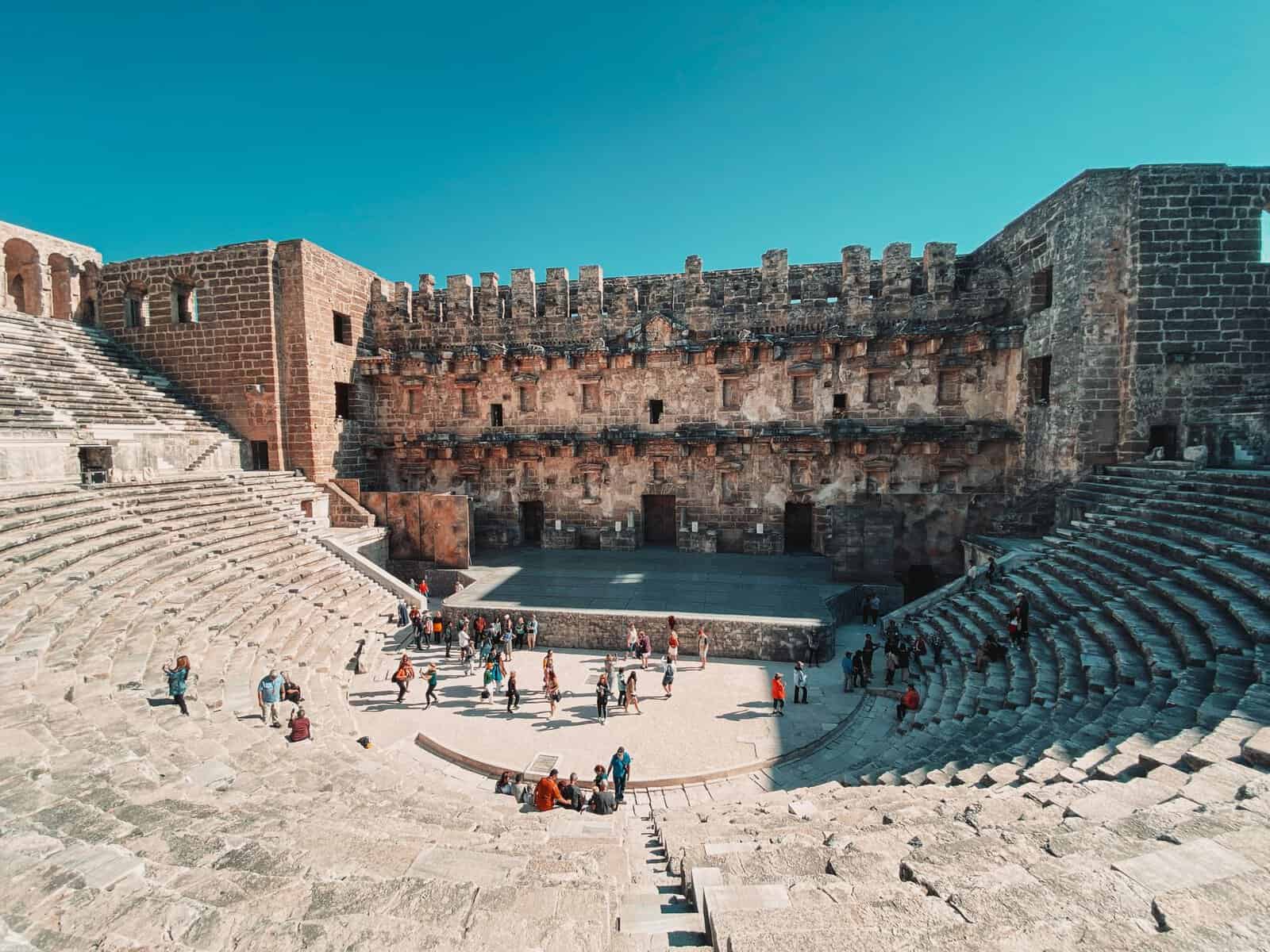
East of Antalya, two of the great Roman sites of Turkey make an easy half-day trip. Perge, about 20 minutes from the airport, has a long colonnaded street with stone ruts worn by carts, a stadium, baths and towering Hellenistic gates.
Aspendos has one of the best-preserved Roman theatres in the world, built in the 2nd century AD, with its stage building still standing to its full height. It’s still used for performances, including an opera and ballet festival, usually in late summer. Combine the two with a stop at the Köprülü Canyon, inland, for rafting or a riverside lunch.
The Turquoise Coast: where to go
Side
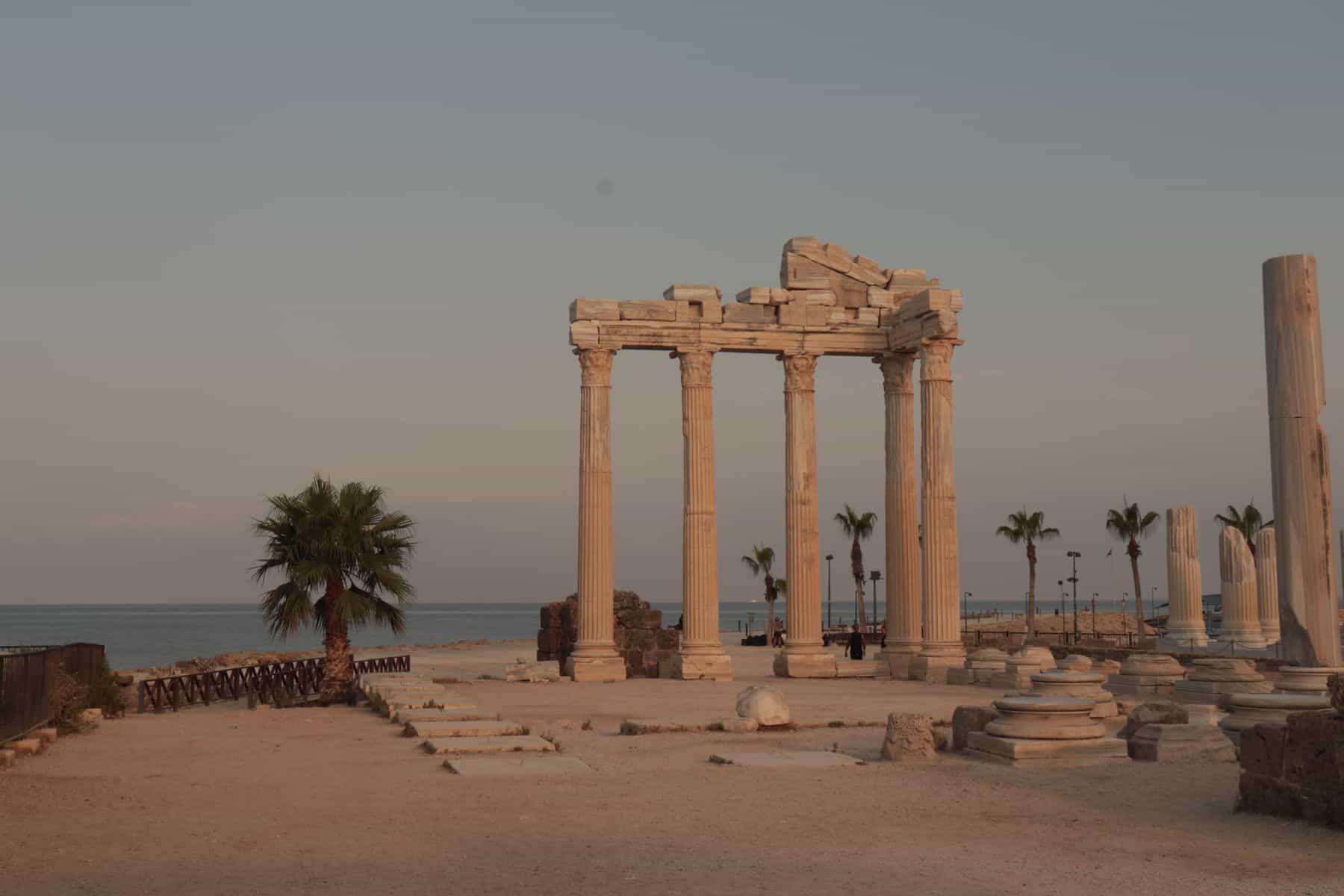
An ancient port on a small peninsula, where the columns of the Temple of Apollo stand right by the sea and a large Roman theatre rises above the old town. Long sandy beaches stretch away either side. Evening is the best time to see the temple, after the day visitors leave. The Manavgat waterfall and river boat trips are nearby.
Alanya
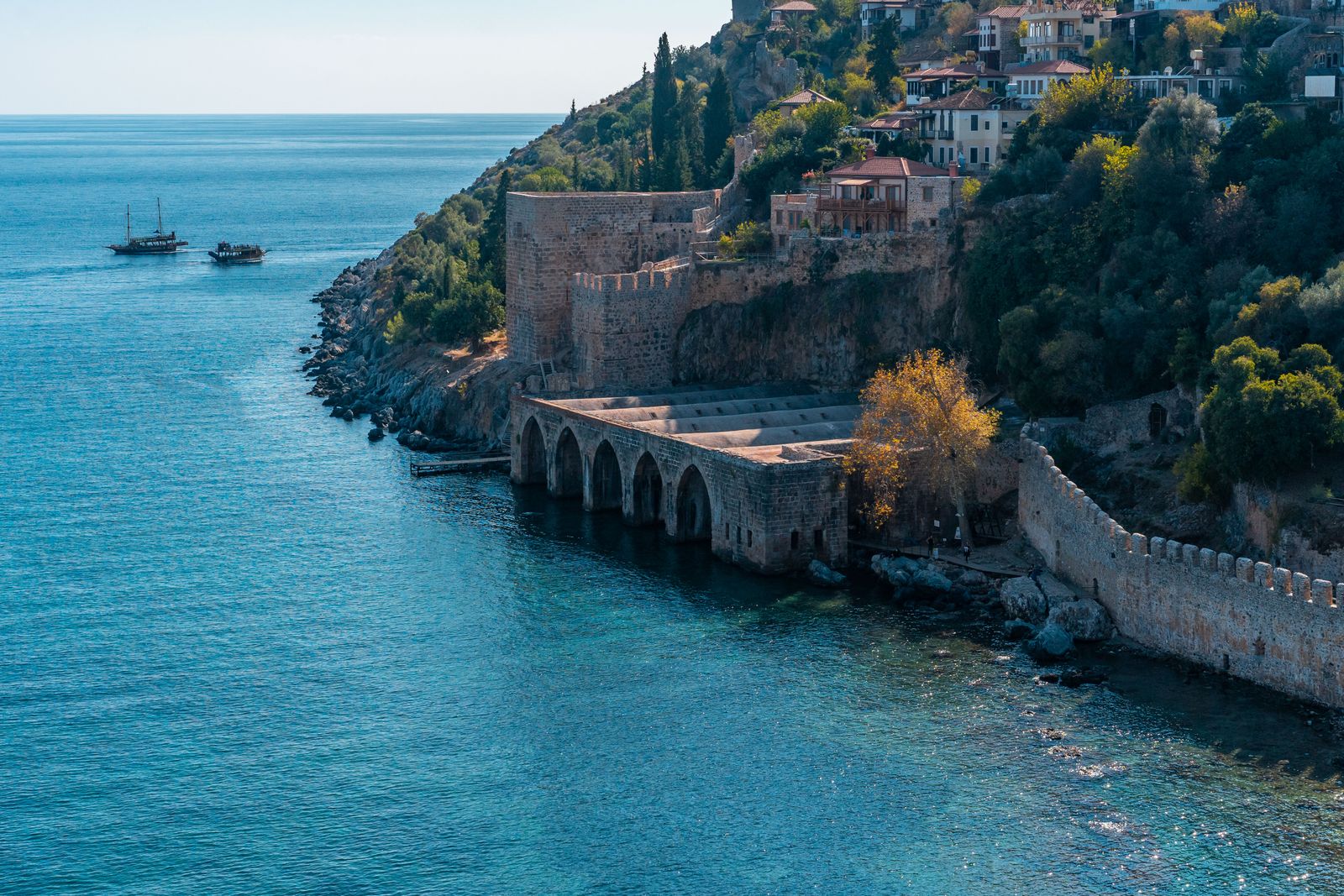
A big, lively resort below a rocky headland crowned by a Seljuk castle. Go for the castle walls, the octagonal Red Tower and the medieval shipyard cut into the rock at the water’s edge, all best seen on a boat trip around the headland.

Kemer and Phaselis
Resorts backed by pine-covered mountains. Nearby, Phaselis is a Roman port city in the woods with three little harbours to swim from. The Tahtalı cable car climbs to about 2,365 m for views along the whole coast, often with snow on top until late spring.
Olympos and Çıralı
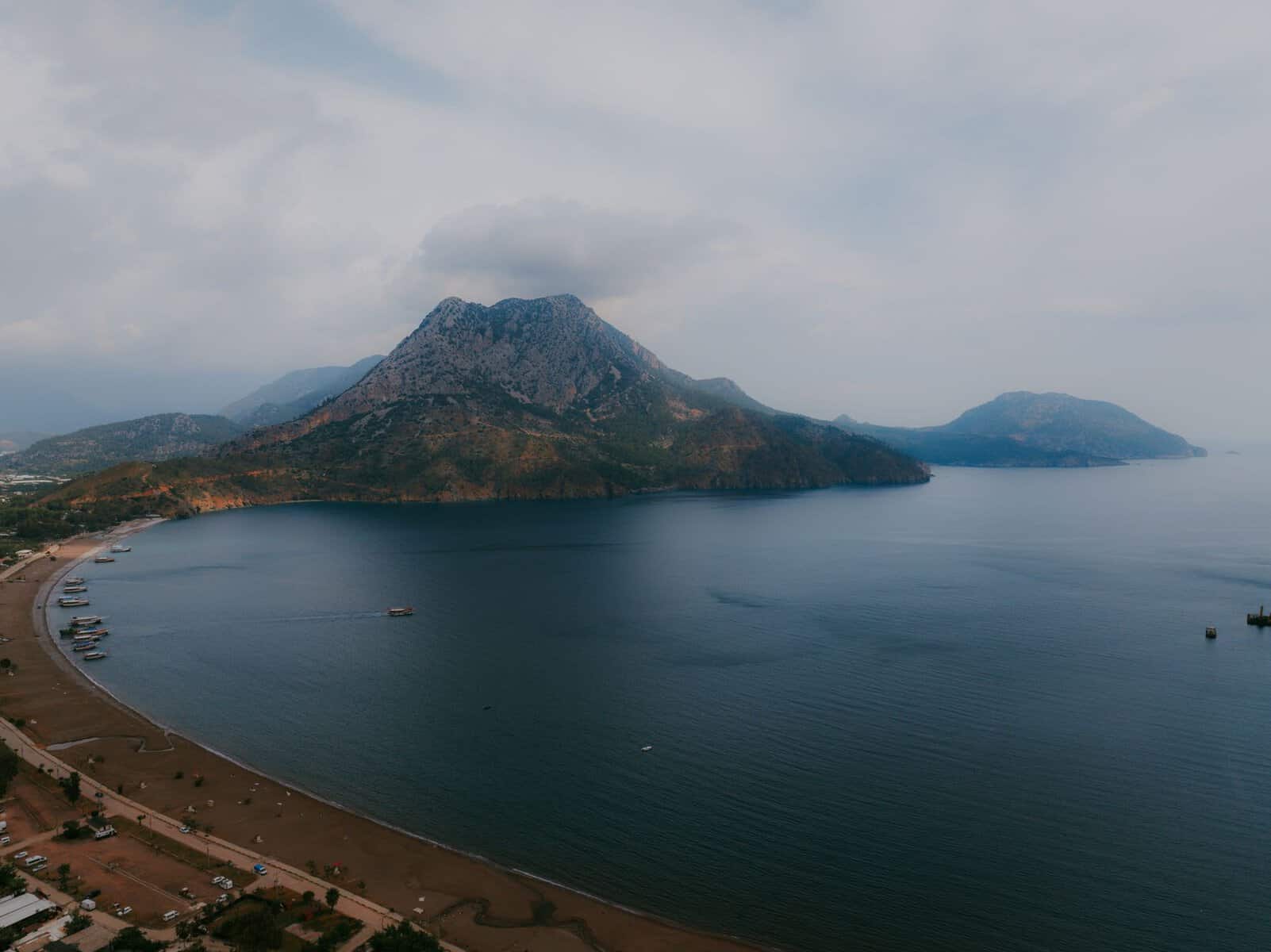
The ruins of ancient Olympos lie scattered through a wooded river valley that runs down to a beach. Next door, Çıralı is a low-key village of small guesthouses behind a long beach where loggerhead turtles nest. Above it, the Chimaera (Yanartaş) is a hillside where flames of natural gas have burned from the rocks for thousands of years: walk up at dusk.
Kaş
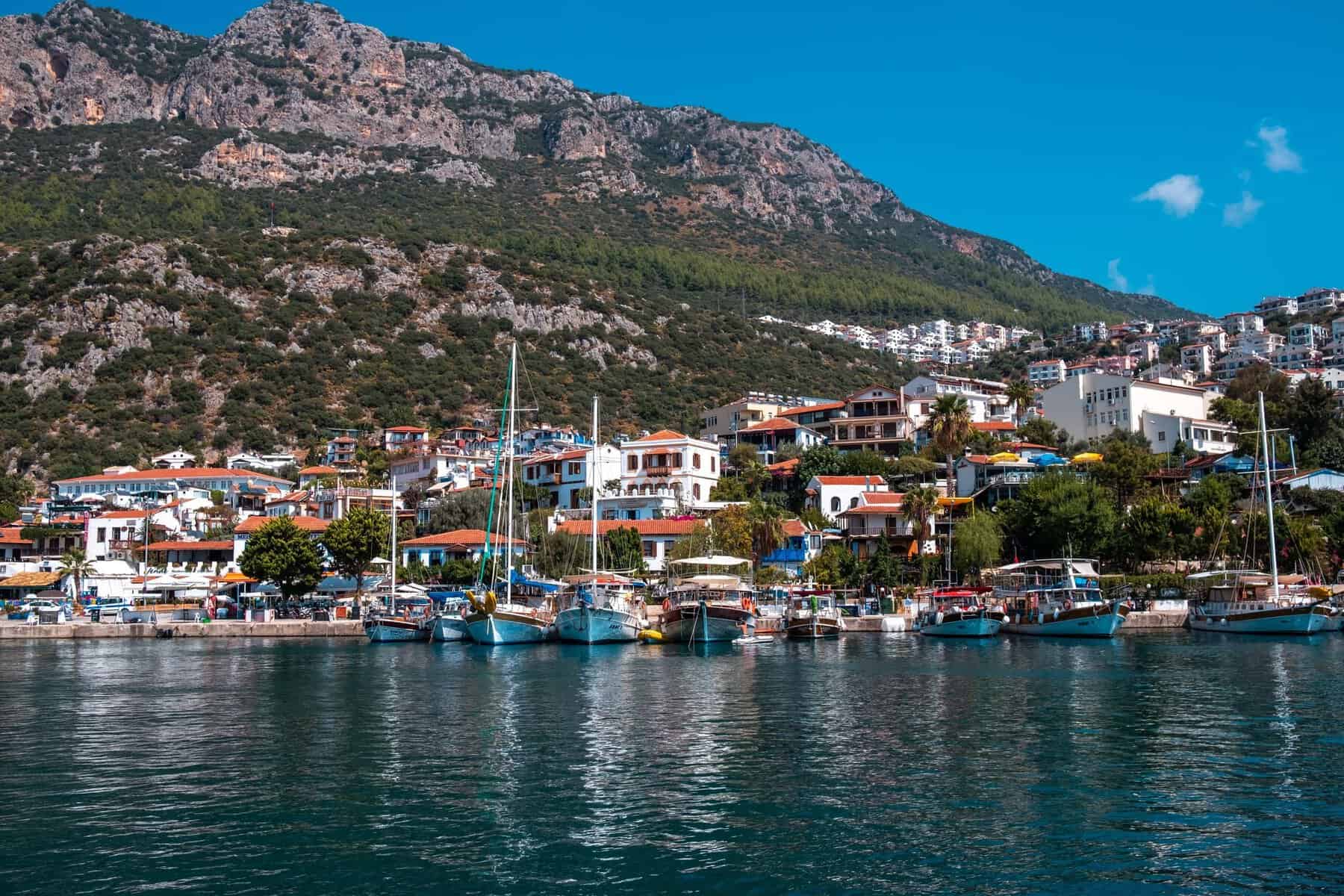
Our favourite town on the coast: a small, relaxed harbour with bougainvillea-draped lanes, good restaurants, a Hellenistic theatre facing the sea and the Greek island of Kastellorizo just offshore (a short ferry ride away). It’s one of Turkey’s best places for diving and sea kayaking, and a base for boat trips to Kekova and walks on the Lycian Way.
Kalkan
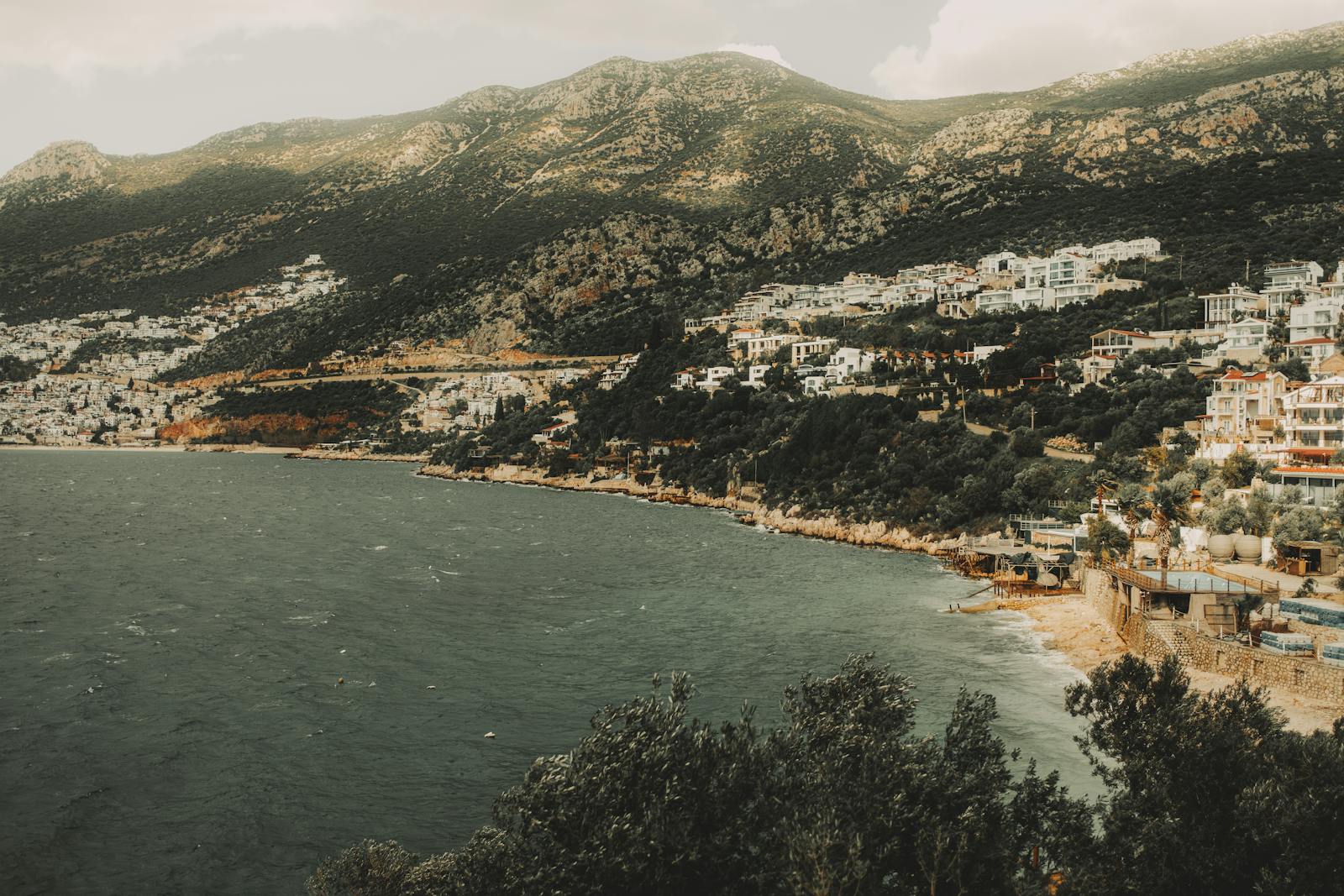
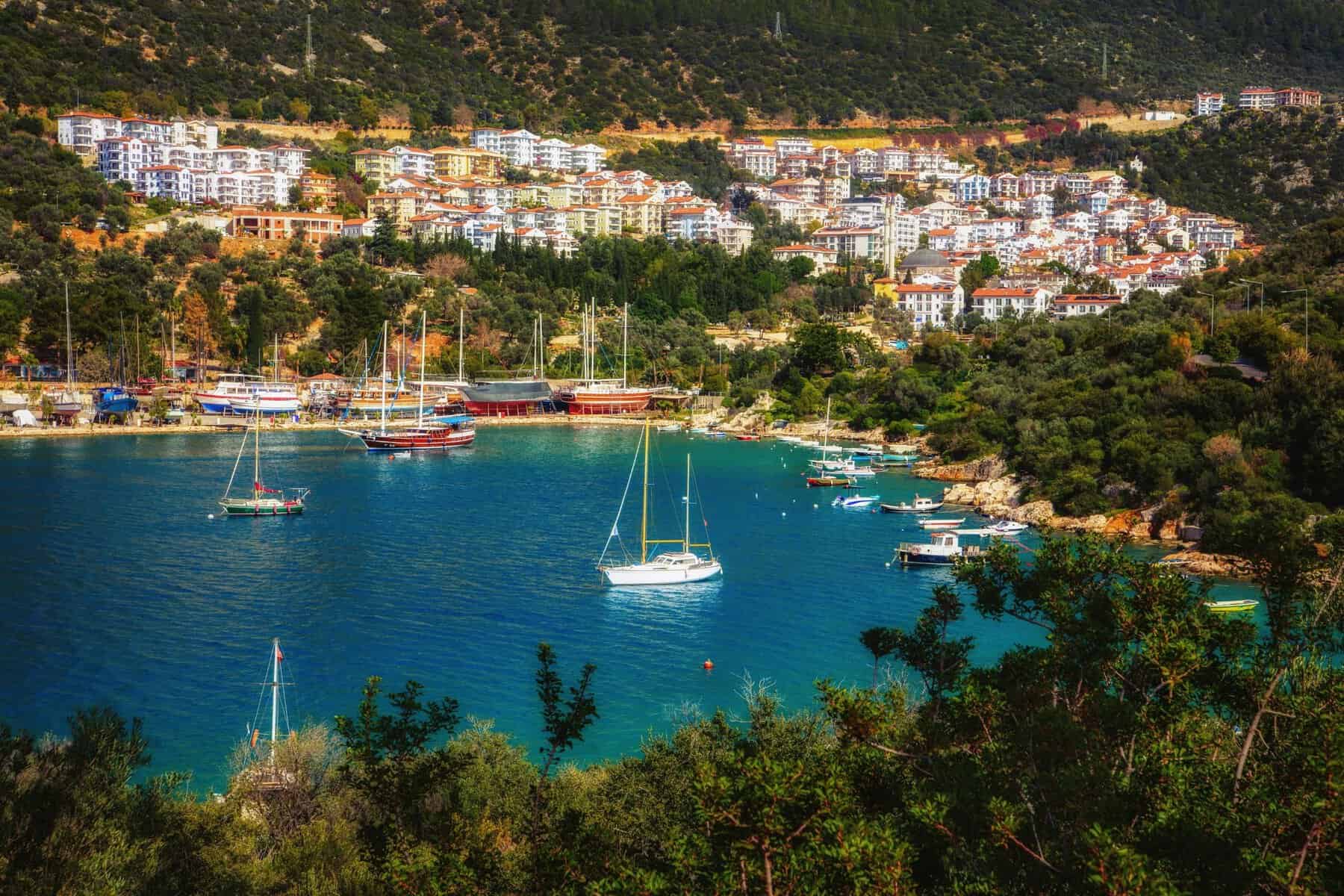
A former fishing village of white houses tumbling down to a little harbour, now one of the most upmarket spots on the coast, with villas with pools on the hills and rooftop restaurants in the old village. Closer to Dalaman airport (about 1 hour 45 minutes) than to Antalya.
Around Kaş and Kalkan: Kekova, Kaputaş and Patara

Kekova. A boat trip from Kaş or nearby Üçağız glides over the sunken city: the remains of houses, stairways and quays of an ancient town that slipped into the sea in earthquakes, visible through the clear water. (Swimming over the ruins isn’t allowed.) Stop at Kaleköy (ancient Simena), a car-free village below a small castle with Lycian tombs half in the water. A sea-kayak trip is the quietest way to see it.
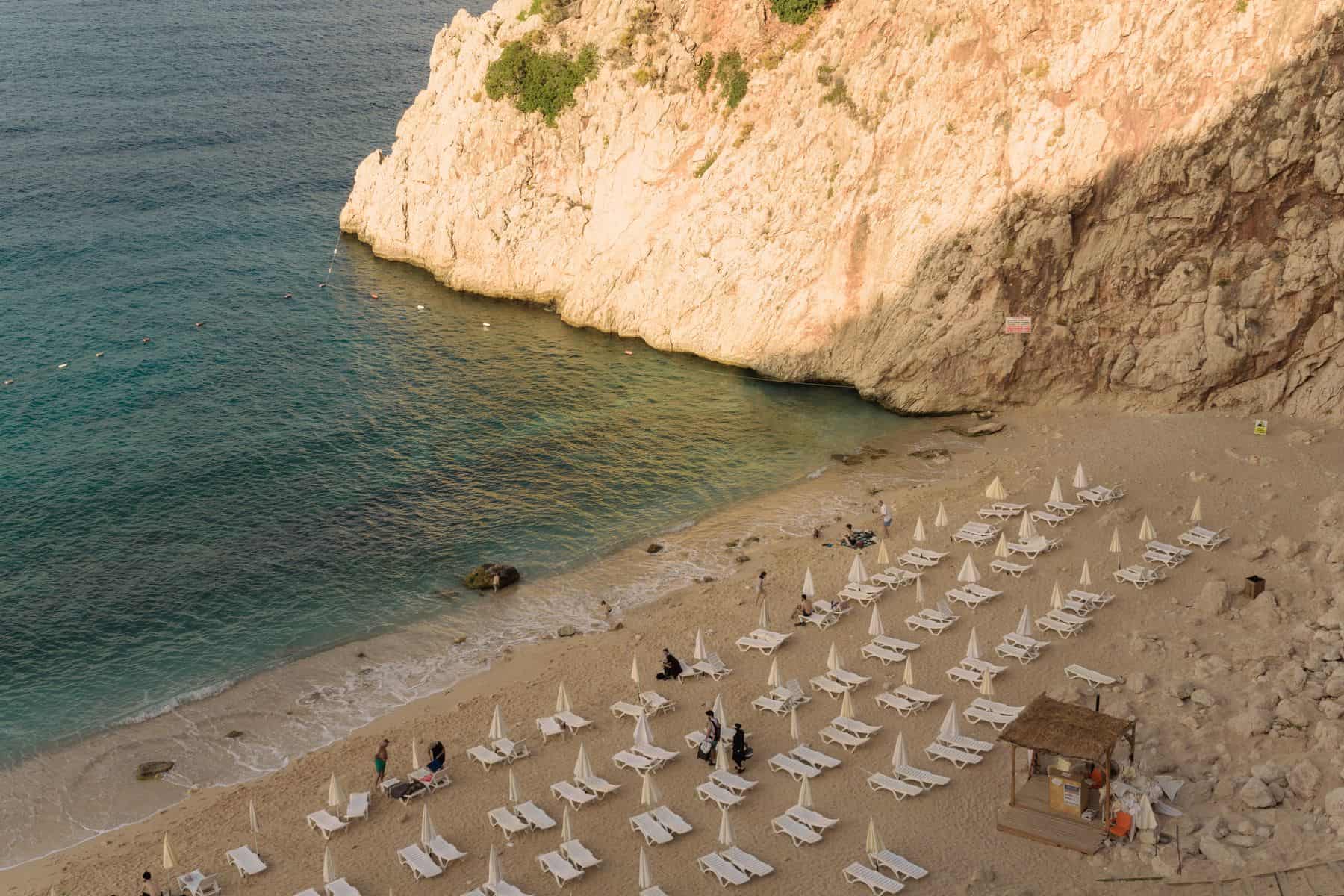
Kaputaş beach. A small, startlingly blue cove at the mouth of a gorge between Kaş and Kalkan, reached by steps down from the road. Go early or late in summer.
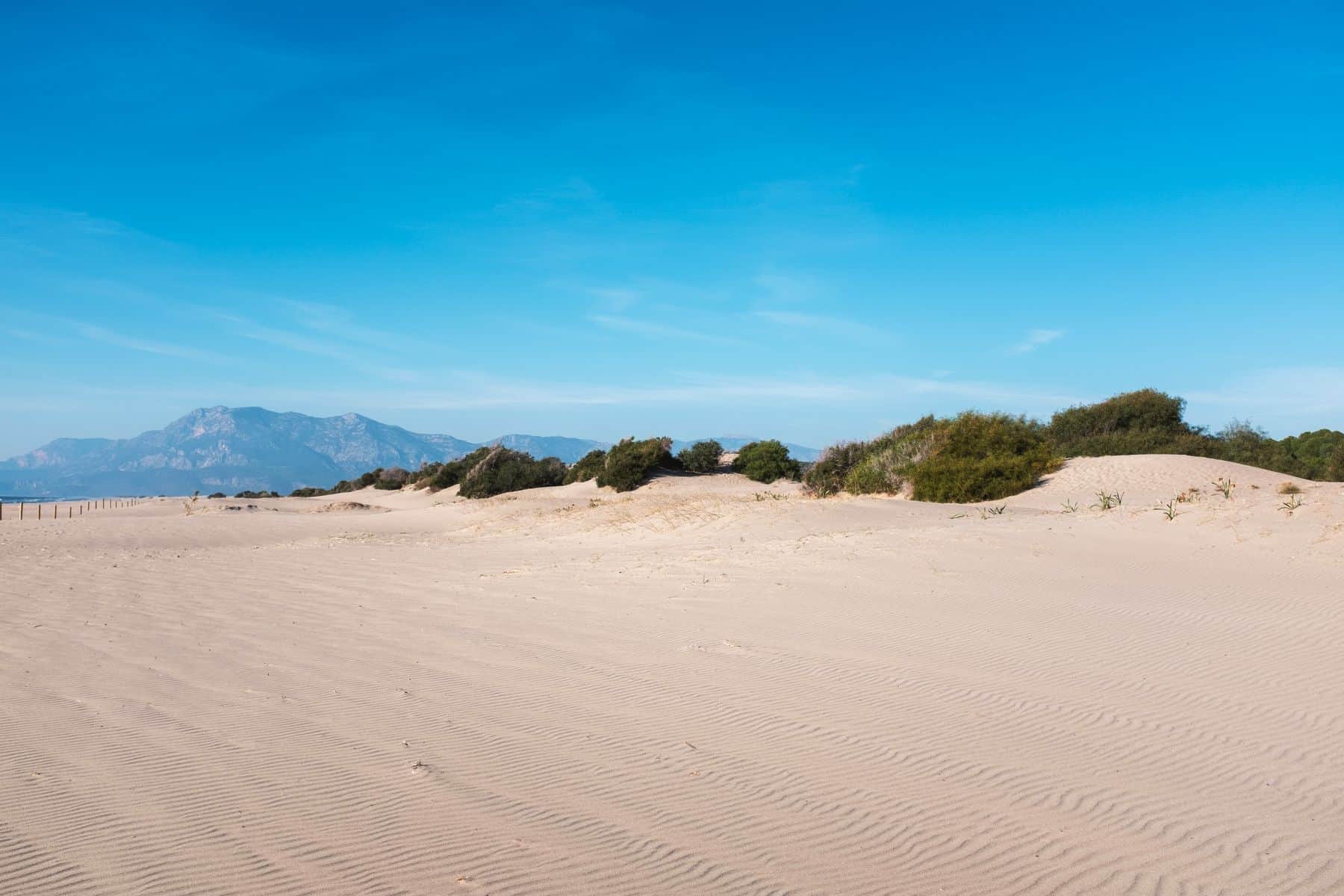
Patara. One of Turkey’s longest sandy beaches, backed by dunes and protected for its nesting turtles, with the ruins of the ancient Lycian capital, including a restored assembly hall, behind it. Nearby, Xanthos and the Letoon are a UNESCO World Heritage Site.
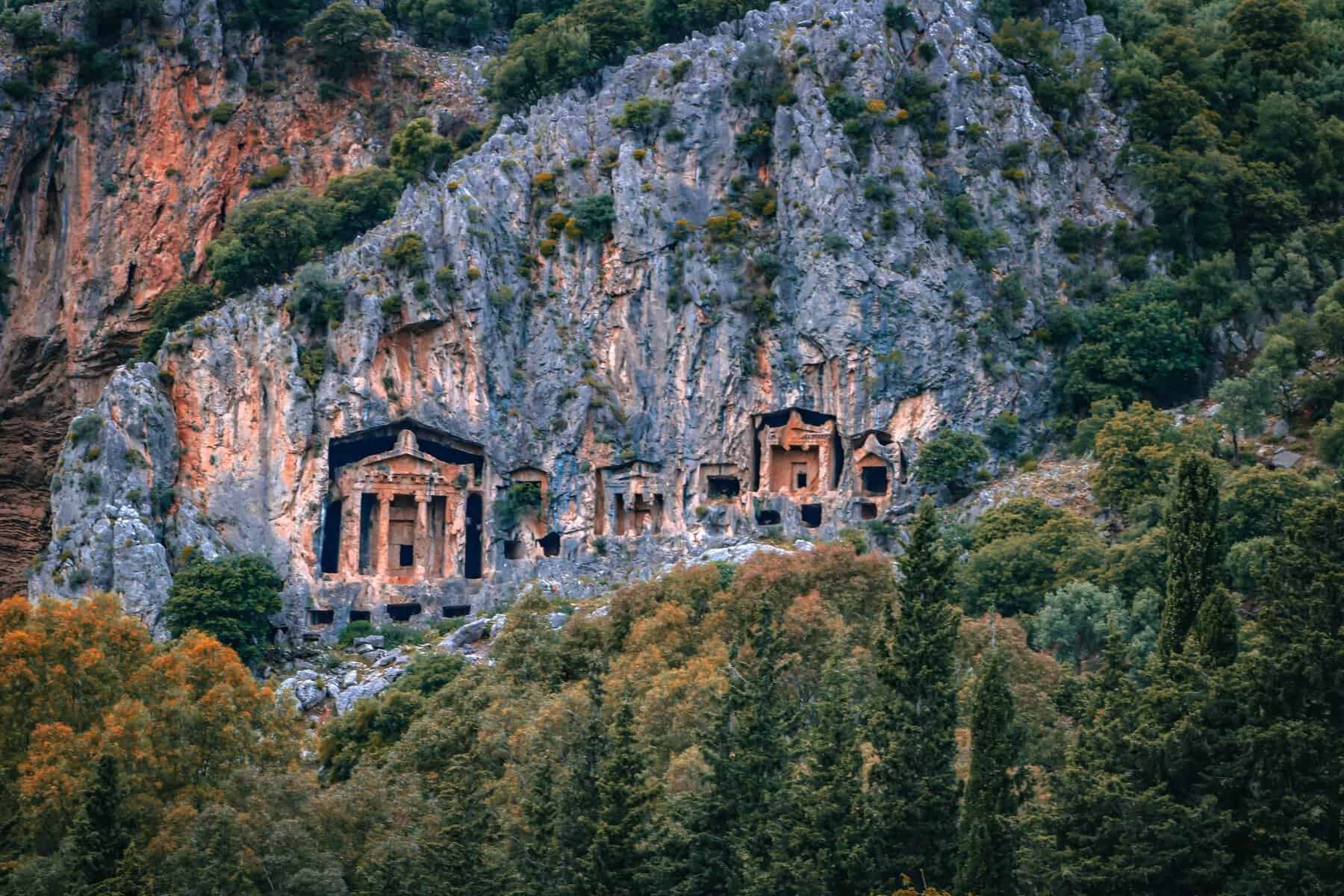
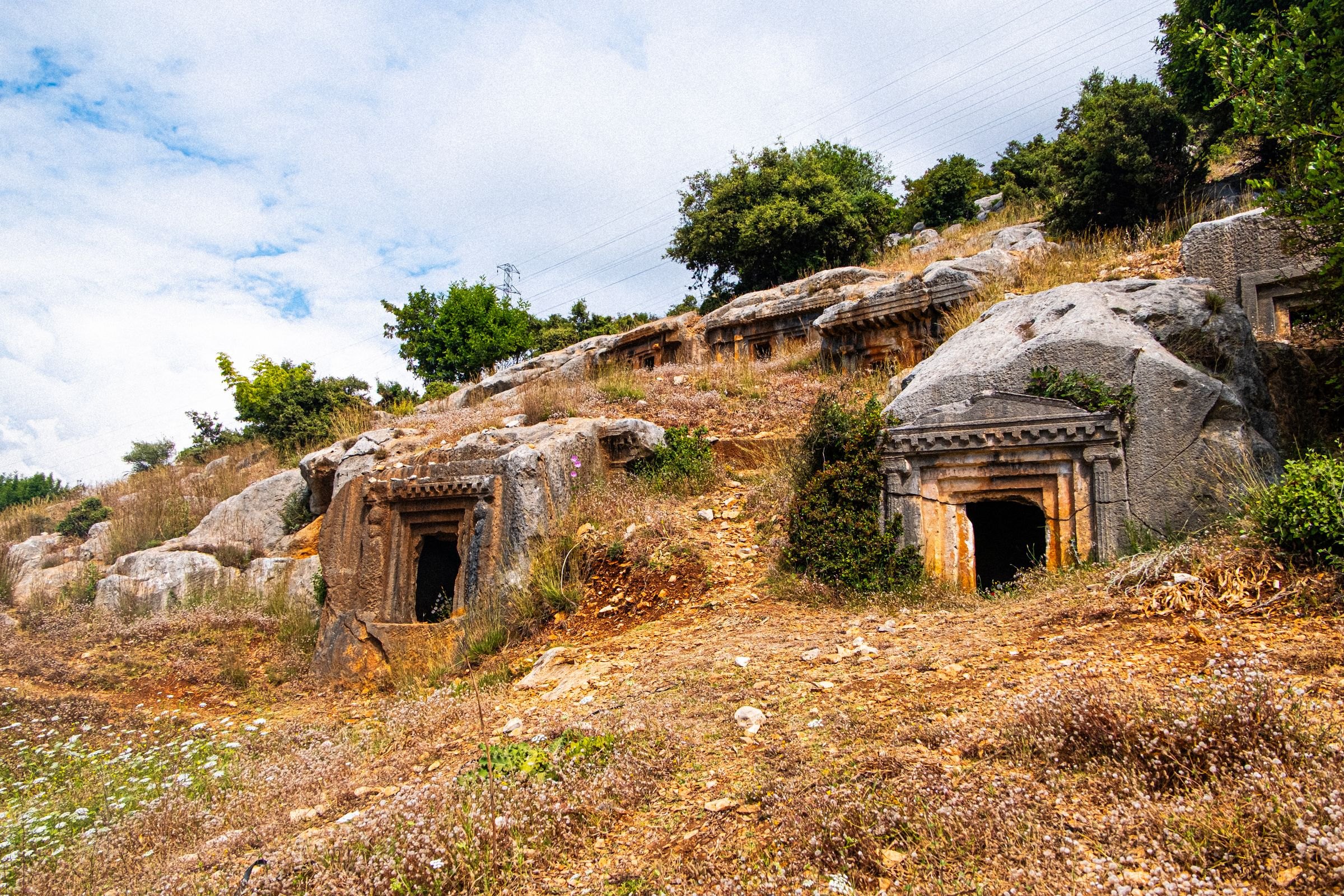
Myra and Demre. East of Kaş, the cliff at Myra is honeycombed with Lycian rock tombs carved like house fronts, above a Roman theatre. In Demre is the church of St Nicholas, the bishop of Myra who became Father Christmas.
Walking the Lycian Way
The Lycian Way is a waymarked long-distance footpath of around 500 km between Fethiye and Antalya, following old mule tracks and Roman roads along the coast and over the mountains, past ruined cities, rock tombs and remote villages. It’s marked with red and white stripes, and was first waymarked in the late 1990s.
Very few people walk all of it. Most walk a section for a week, staying in village guesthouses and small hotels with their bags moved on by car. The most popular stretches are around Kaş and Kalkan, with sea views most of the way, and around Olympos and Çıralı.
Walk in spring (March to May) or autumn (late September to November). In July and August it’s far too hot on the exposed paths. The trail is rocky and often steep, so you’ll need good boots and a fair level of fitness.
What to eat
The coast eats from the sea and the garden: grilled fish and octopus, mezze of herbs, beans and aubergine dressed in olive oil, and huge Turkish breakfasts. Antalya’s own dish is piyaz, a white bean salad dressed with tahini, served alongside grilled şiş köfte. In the mountain villages, look for gözleme cooked on a griddle and trout from the streams. Antalya is famous for its oranges, so drink the fresh juice, and finish with a Turkish coffee.
Best time to visit Antalya: weather by month
May, June, September and October are the best months: hot, sunny days, a sea warm enough to swim in and fewer crowds than midsummer. July and August are hot, with highs around 33°C and very little rain, and the resorts are at their busiest; it’s great for beaches and boat trips, but too hot for ruins in the middle of the day. November to March is mild, with highs of 14 to 21°C and many sunny days, but this is when nearly all the rain falls, in short heavy bursts, and many resort hotels close. Spring and autumn are best for walking the Lycian Way and for sightseeing.
| Month | Antalya | Side | Kaş |
|---|---|---|---|
| Jan | 14°C / 6°C · 235 mm | 14°C / 8°C · 255 mm | 15°C / 9°C · 230 mm |
| Feb | 16°C / 6°C · 105 mm | 16°C / 8°C · 120 mm | 16°C / 9°C · 90 mm |
| Mar | 18°C / 8°C · 115 mm | 18°C / 9°C · 115 mm | 17°C / 10°C · 90 mm |
| Apr | 22°C / 10°C · 55 mm | 21°C / 12°C · 55 mm | 21°C / 13°C · 25 mm |
| May | 26°C / 15°C · 65 mm | 25°C / 16°C · 45 mm | 25°C / 17°C · 25 mm |
| Jun | 30°C / 19°C · 25 mm | 29°C / 20°C · 15 mm | 29°C / 21°C · 10 mm |
| Jul | 36°C / 24°C · 5 mm | 33°C / 24°C · 5 mm | 33°C / 25°C · 5 mm |
| Aug | 35°C / 24°C · 10 mm | 33°C / 24°C · 5 mm | 33°C / 25°C · 5 mm |
| Sep | 32°C / 20°C · 25 mm | 31°C / 22°C · 25 mm | 30°C / 22°C · 15 mm |
| Oct | 27°C / 16°C · 100 mm | 27°C / 18°C · 90 mm | 26°C / 18°C · 50 mm |
| Nov | 21°C / 11°C · 105 mm | 21°C / 13°C · 140 mm | 21°C / 14°C · 85 mm |
| Dec | 16°C / 8°C · 200 mm | 17°C / 10°C · 200 mm | 17°C / 11°C · 155 mm |
Average daily high / low and monthly rainfall, 10-year ERA5 data.
Getting there from the UK

Flights: direct flights to Antalya from London and many UK regional airports take about 4 hours, with the most choice from April to October and fewer in winter. For Kalkan and Kaş, flying to Dalaman is usually quicker: about 1 hour 45 minutes to Kalkan by road, against around 3.5 to 4 hours from Antalya.
Transfers: Antalya airport is about 15 minutes from Lara, 20 to 30 minutes from Kaleiçi, 45 minutes from Belek and about an hour from Side. We arrange private transfers to meet you.
From Istanbul or Cappadocia: domestic flights to Antalya take about 1 hour 20 minutes, so it’s easy to add the coast to a trip around Turkey.
Getting around
The D400 coast road runs the whole way from Alanya past Antalya to Kaş and Kalkan, and it’s one of the most beautiful drives in Turkey west of Kemer. A hire car gives you the most freedom, especially for the ruins and quiet coves. If you’d rather not drive, we’ll arrange private transfers between bases and day trips with a driver-guide. Inter-town buses are cheap and frequent but slow. In Kaş and Kalkan, local boat trips are the best way to reach the islands and coves.
Where to stay on the Turquoise Coast
Kaleiçi for a city stay: small boutique hotels in restored Ottoman houses, some with sea views, all walking distance from the harbour and restaurants. Two or three nights is ideal.
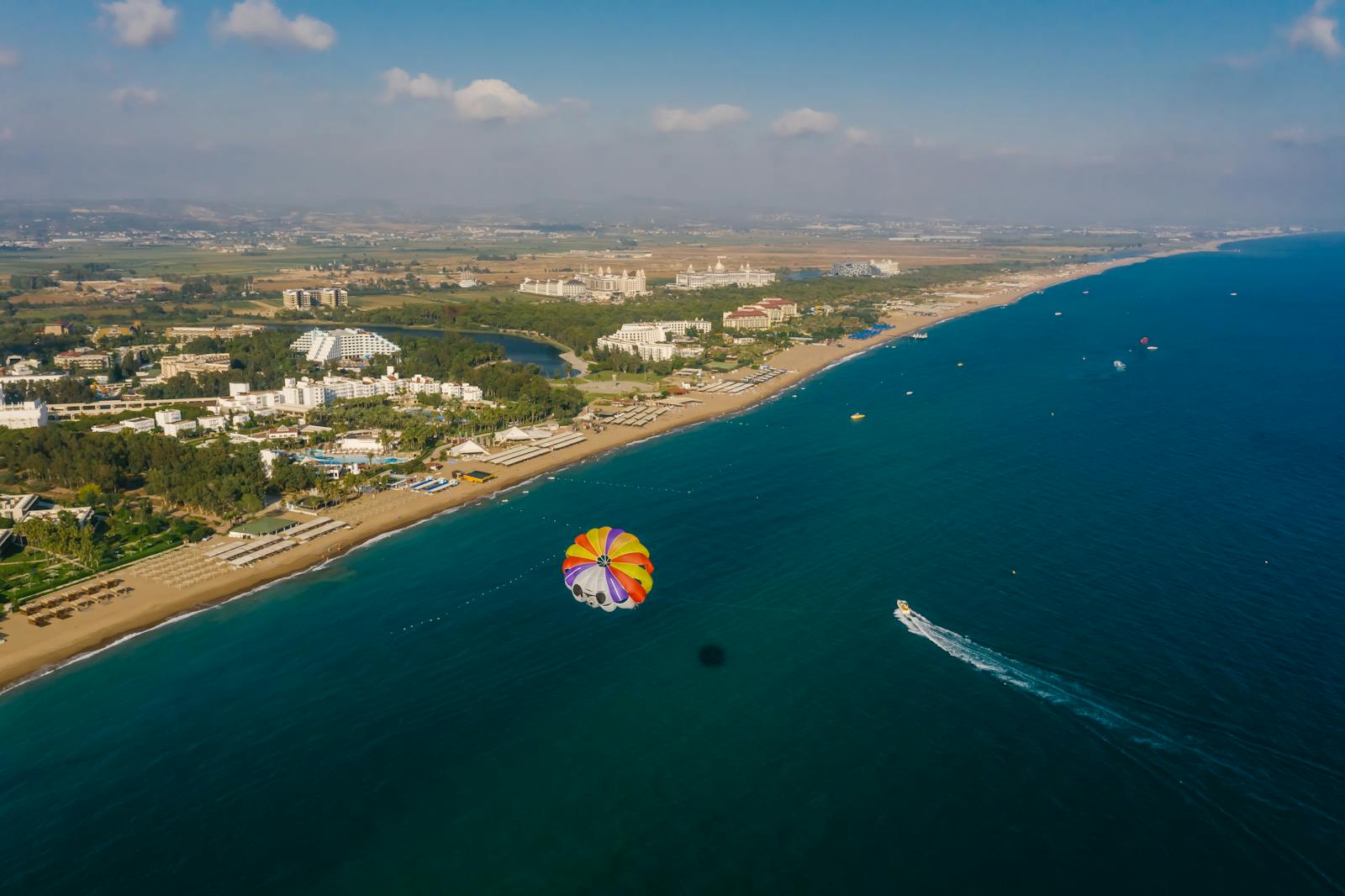
Lara and Belek, east of the city, for large beach resorts and golf, close to the airport. See our picks of the best luxury all-inclusive resorts in Antalya and family all-inclusive hotels in Antalya.
Side for sandy beaches and ruins on the doorstep; Kemer and Tekirova for resorts backed by pine forest and mountains.
Çıralı for small, low-key guesthouses; Kaş for boutique hotels and a lively harbour; and Kalkan for villas with private pools and sea views. See our best hotels in Kalkan, Kaş and Dalyan, or browse Antalya holidays.
How many days? Sample routes
A week in one base works well for a beach holiday with a few day trips, but the coast is long, so if you want to see both the ruins east of Antalya and the Lycian coast, split your stay in two.
Antalya and Kaş
- Antalya, Kaleiçi (3 nights)
- Kaş (4)
Old town, Perge and Aspendos, then the coast road west via Olympos to Kaş for Kekova and the coves.
The Turquoise Coast
- Kaleiçi (2 nights)
- Çıralı (2)
- Kaş (3)
- Kalkan (3)
Fly into Antalya and out of Dalaman, working west along the coast with a different side of Lycia in each base.
Istanbul, Cappadocia and the coast
- Istanbul (3 nights)
- Cappadocia (3)
- Kaleiçi (2)
- Kaş or Side (4)
Fly from Cappadocia to Antalya for the beach at the end.
Adding Cappadocia? See our Cappadocia guide for the balloons, valleys and underground cities.
Ways to see the coast with us
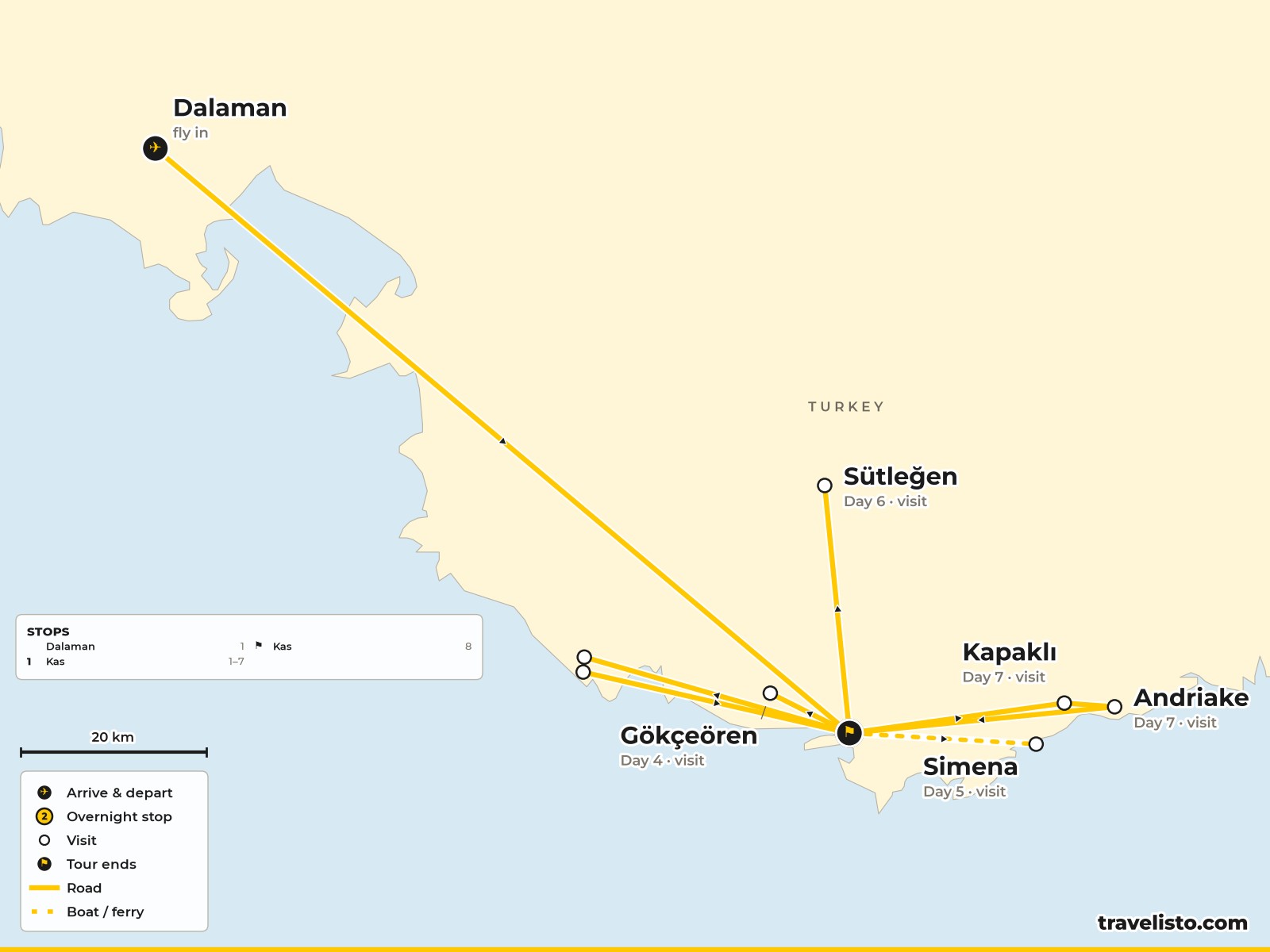
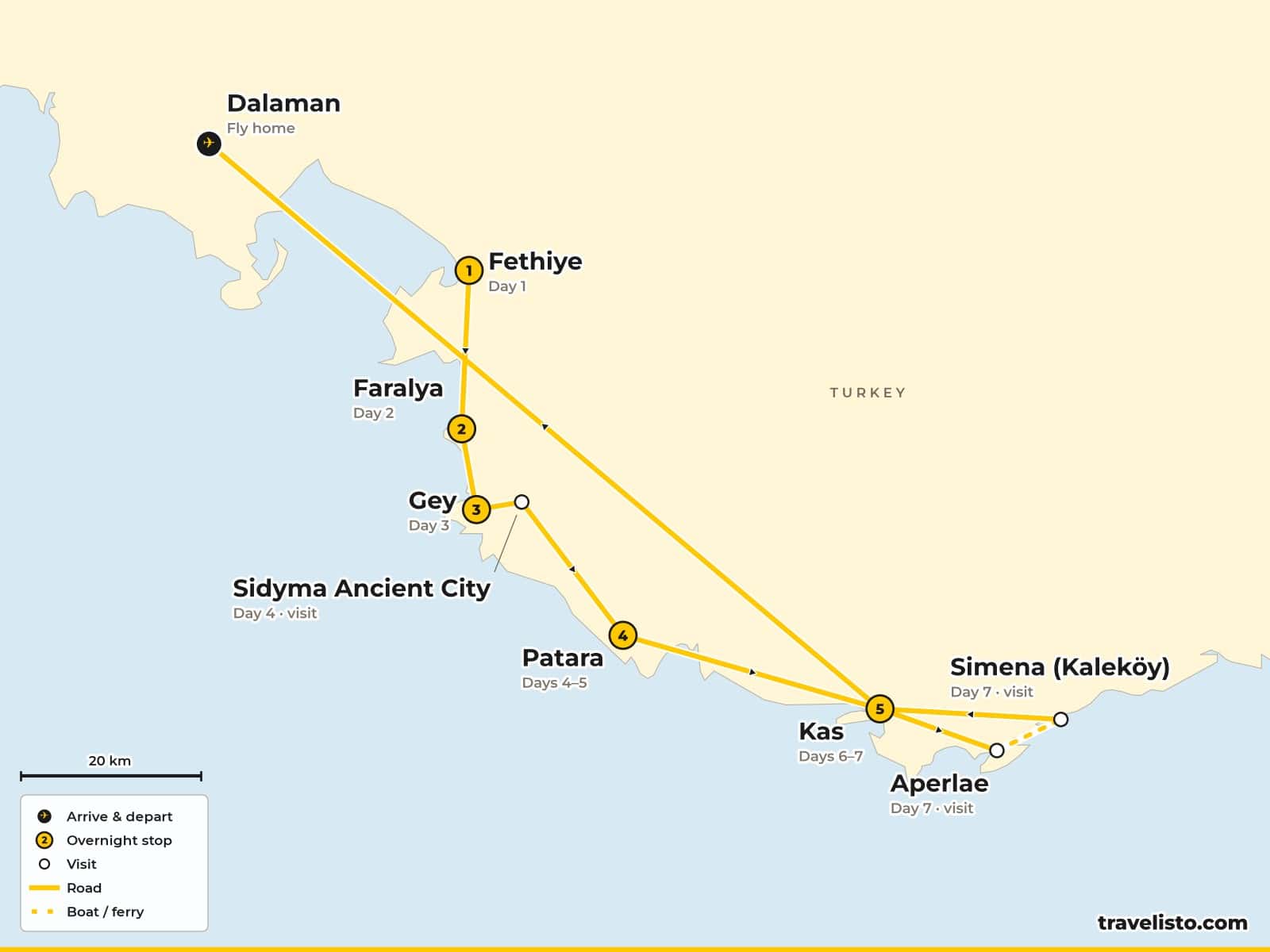
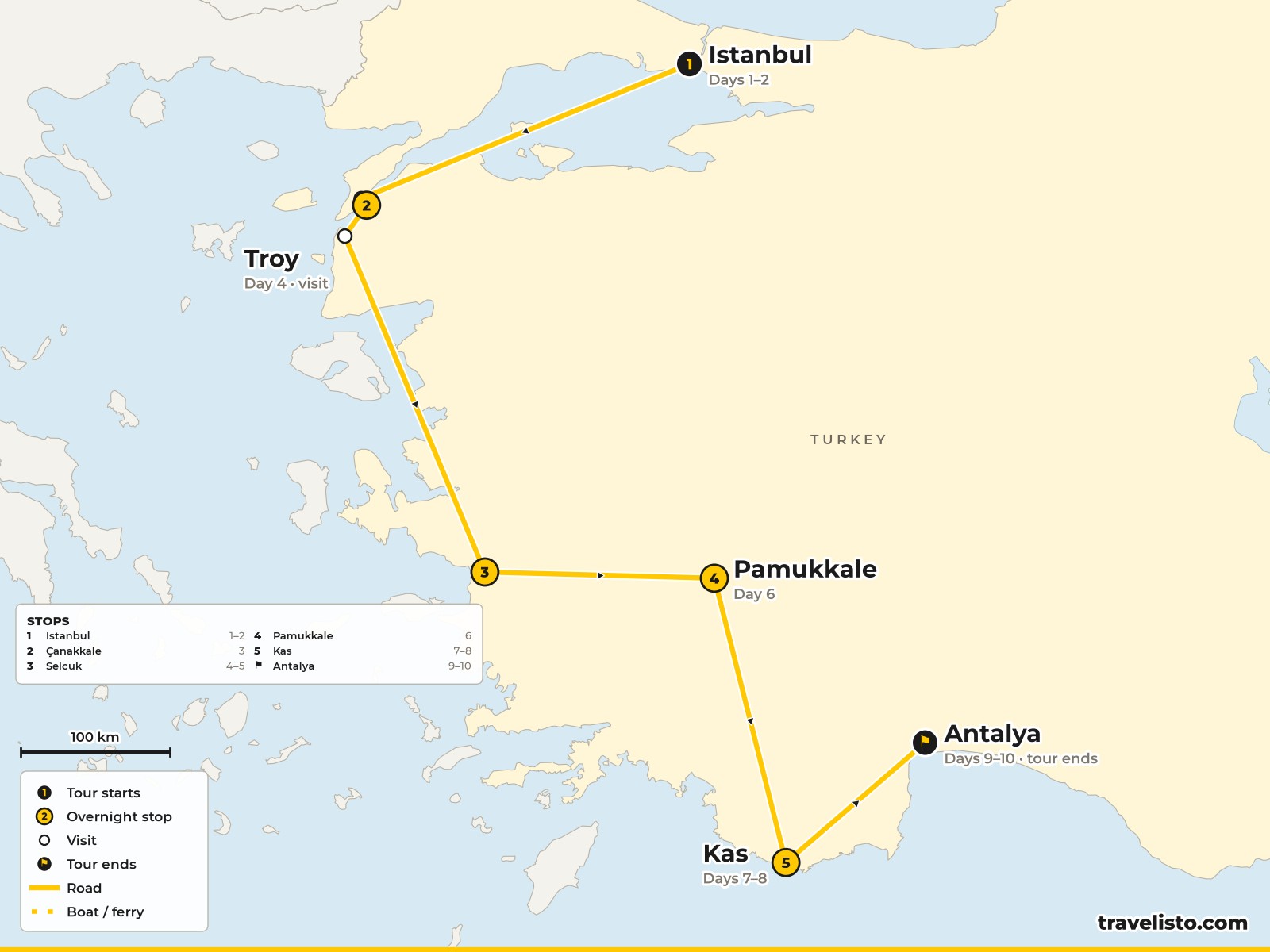
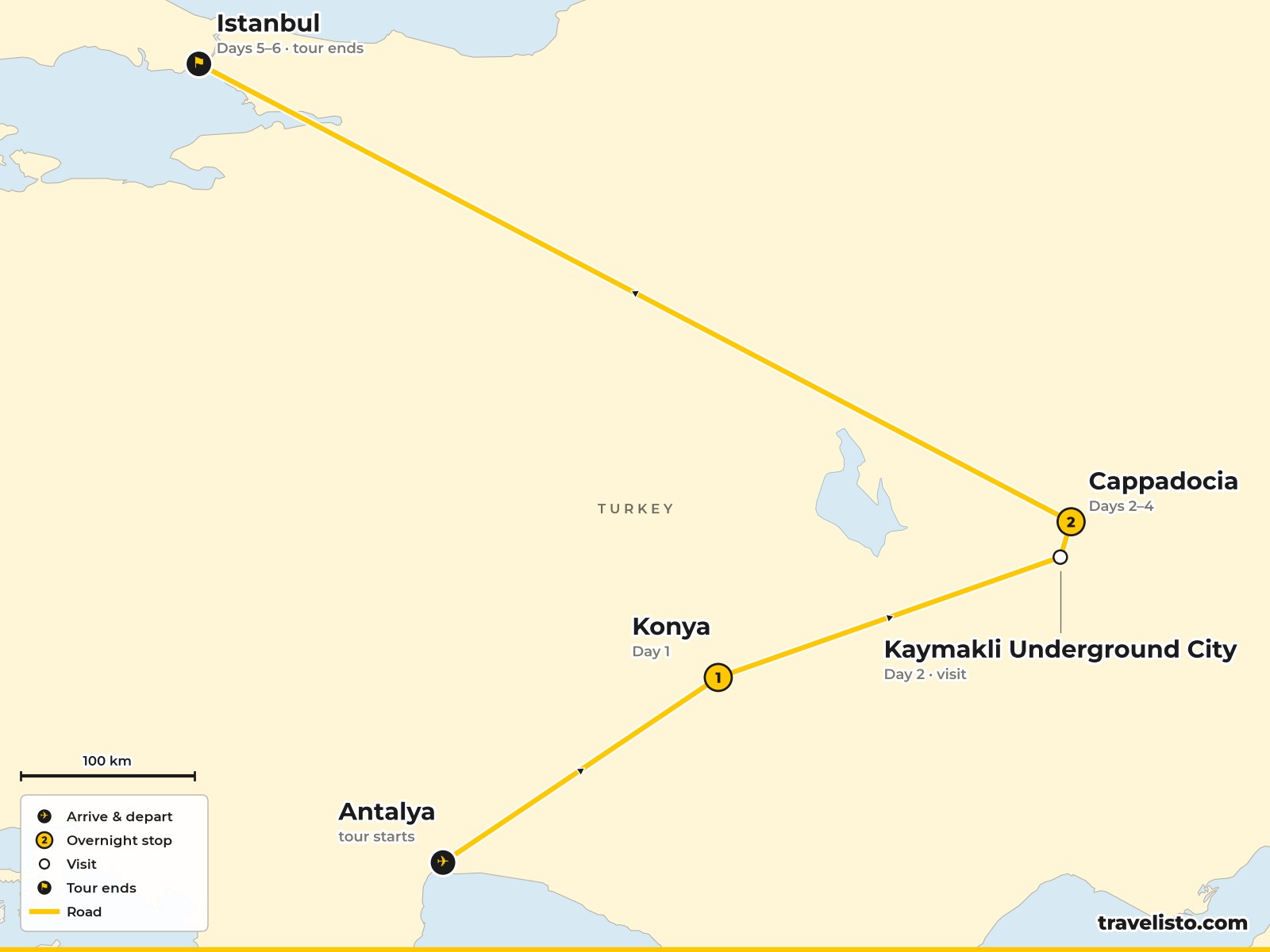
Prefer your own pace? A tailor-made Turkey holiday can combine Kaleiçi, Kaş or Kalkan with Istanbul or Cappadocia, with private transfers, a hire car or a driver-guide. Browse all our escorted tours of Turkey.
Practical tips
- Entry: British visitors don’t need a visa for stays of up to 90 days in any 180; your passport must be valid for at least 150 days after you arrive. Check the FCDO Turkey advice before you go.
- Safety: the Antalya coast is one of Turkey’s busiest holiday regions. Check the FCDO advice again shortly before you travel, as it can change.
- Heat: in July and August, visit ruins early in the morning, carry water and wear a hat. Most sites have little shade.
- Turtles: on nesting beaches such as Patara and Çıralı, keep away from marked nests and don’t use torches on the beach at night.
- Money: cards are widely accepted; carry some Turkish lira for village cafés, boat trips and tips.
- Kastellorizo: the ferry from Kaş takes you into Greece, so bring your passport.
- Mosques: cover shoulders and knees, and women should bring a scarf for their hair.
Frequently asked questions
What is there to do in Antalya?
Walk the old town of Kaleiçi, see Hadrian's Gate, the Yivli Minaret and Antalya Museum, visit the Düden waterfalls, and take day trips to Perge, Aspendos, Termessos and Side. The city also has two long beaches, Konyaaltı and Lara.
What is the best time to visit Antalya?
May, June, September and October, for hot sunny days, warm sea and fewer crowds. July and August are hottest, around 33°C; winter is mild but this is when nearly all the rain falls.
Is Kaş or Kalkan better?
Kaş is a lively, relaxed harbour town with boutique hotels, diving and boat trips to Kekova; Kalkan is quieter and more upmarket, with villas, rooftop restaurants and easier access from Dalaman airport. They are 30 minutes apart, so you can see both.
How far is Kaş from Antalya?
About 3.5 hours by road along the coast, via Kemer and Olympos. Dalaman airport is a little closer for Kaş and much closer for Kalkan.
What is the Lycian Way?
A waymarked long-distance footpath of around 500 km between Fethiye and Antalya, past ancient ruins and coastal villages. Most people walk a week-long section, ideally in spring or autumn.
Is Side worth visiting?
Yes. Its ancient Temple of Apollo stands beside the sea, with a Roman theatre and sandy beaches either side. It's about an hour east of Antalya, and lovely in the evening when day visitors leave.
Is Antalya safe to visit?
Yes. The FCDO's only advice against travel in Turkey covers the area within 10 km of the Syrian border, more than 450 km to the east. Check the latest FCDO advice before you travel.
Can you swim in Antalya in October?
Usually, yes. The sea stays warm through October, and days are typically in the mid-20s°C, although the first autumn rain tends to arrive towards the end of the month.
Keep planning
- Antalya holidays
- Turkey holidays
- Cappadocia guide
- Dalaman holidays
- Best luxury all-inclusive resorts in Antalya
- Best hotels in Kalkan, Kaş and Dalyan
- Escorted tours of Turkey
- Tailor-made holidays
Plan your Turquoise Coast holiday with a Travel Designer
Tell us when you’d like to go and we’ll plan Antalya, Kaş, Kalkan and the rest of Turkey, with the right hotels, transfers, boat trips and flights, in one ATOL-protected booking.
Make an enquiry Antalya holidays