Madrid gives you three of the world's great art museums within a 15-minute walk, a Habsburg old town of squares and taverns, the Retiro park and some of Europe's latest nights out. This guide has four self-guided walking routes, the places worth your time with links to book, and where to eat and drink, with each venue's website and Instagram so you can see it first.




Madrid map: sights, restaurants, bars and walks
Turn the layers on and off, or pick a walk to draw its route with numbered stops. Tap any pin for links.
Four Madrid walking routes
Central Madrid is compact and mostly flat, but summer afternoons are hot, so walk early or after 6pm from June to September. Distances are approximate and the times include short stops; add more if you go inside the sights.
Habsburg Madrid
About 1.2 km · 1 hour walking, half a day with the palace
From the Royal Palace and cathedral east through the oldest streets to Plaza de la Villa, the San Miguel market and Plaza Mayor, ending with chocolate and churros at San Ginés.
- Royal Palace of Madrid
- Almudena Cathedral
- Plaza de la Villa
- Mercado de San Miguel
- Plaza Mayor
- Chocolatería San Ginés
Barrio de las Letras and the Paseo del Arte
About 2.1 km · 45 minutes walking, a full day with museums
Through the literary quarter past Plaza de Santa Ana and Lope de Vega's house, then along the Paseo del Prado to the Thyssen, the Prado and the Reina Sofía.
- Plaza de Santa Ana
- Casa Museo Lope de Vega
- Museo Nacional Thyssen-Bornemisza
- Museo del Prado
- Museo Reina Sofía
Retiro and Salamanca
About 2.6 km · 1.5 hours walking, half a day with shopping
From the Palacio de Cristal and the boating lake out through the Puerta de Alcalá, then north into Salamanca for the archaeology museum, Calle Serrano's shops and lunch near the Mercado de la Paz.
- Palacio de Cristal (exterior, under restoration)
- Retiro Park boating lake
- Puerta de Alcalá
- Museo Arqueológico Nacional
- Calle de Serrano
- Mercado de la Paz
Gran Vía, Chueca and Malasaña
About 1.7 km · 1 hour walking, an evening with stops
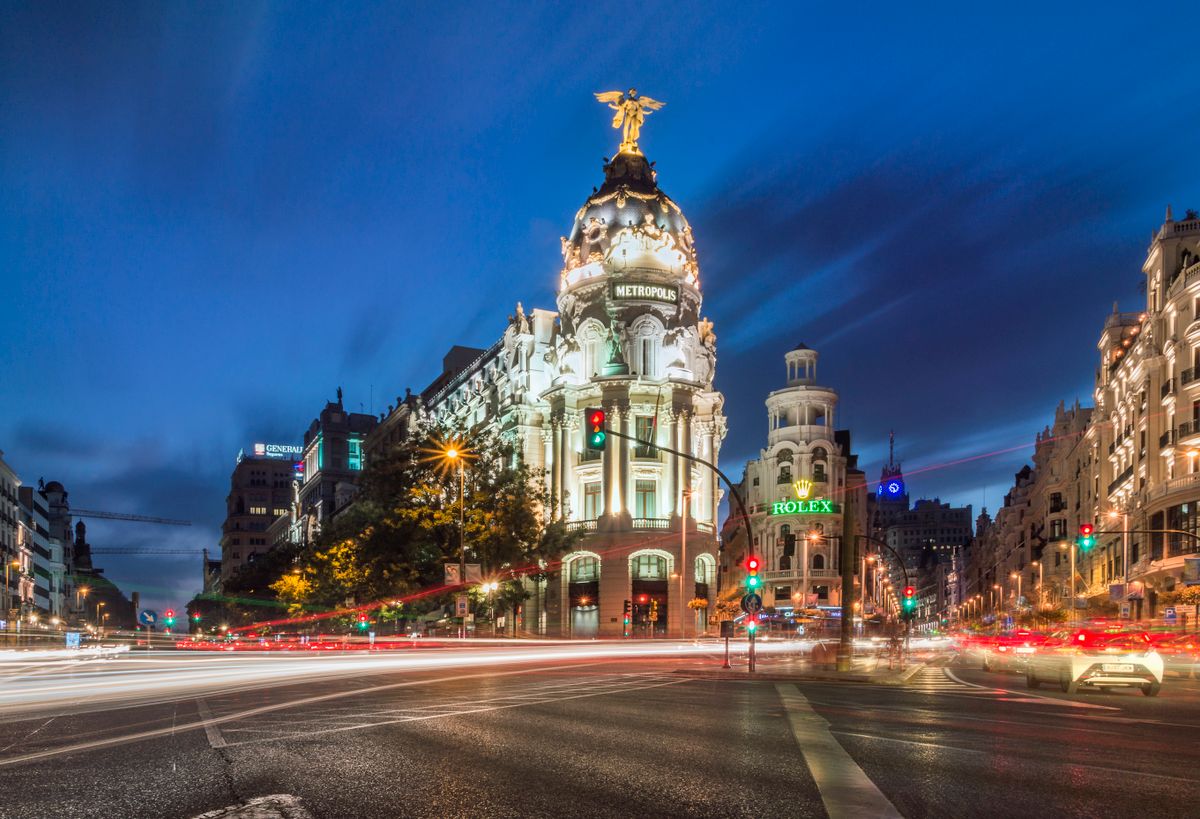
Start with sunset views from the Círculo de Bellas Artes rooftop, walk the eastern end of Gran Vía past the Metrópolis Building and Museo Chicote, then up through Chueca to finish in Malasaña's Plaza del Dos de Mayo.
- Círculo de Bellas Artes rooftop
- Metrópolis Building
- Museo Chicote
- Mercado de San Antón
- Plaza de Chueca
- Plaza del Dos de Mayo
Places to visit in Madrid
The 21 sights we would plan a first trip around, with the official site for opening times and tickets.

Museo del Prado
Spain's national art museum and one of the greatest collections of European painting, with masterpieces by Velázquez, Goya, El Greco, Titian and Hieronymus Bosch.
Tip: Book a timed ticket online and head first for Velázquez's Las Meninas and Goya's Black Paintings, then pick one or two other schools rather than trying to see everything.
Time needed: 2-3 hours
Museo Reina Sofía
Madrid's museum of modern and contemporary art, set in a former hospital with glass lift towers, home to Picasso's Guernica alongside works by Dalí and Miró.
Tip: The museum closes on Tuesdays. Guernica is on the second floor of the Sabatini Building, with Picasso's preparatory sketches in the surrounding rooms.
Time needed: 2 hours
Museo Nacional Thyssen-Bornemisza
A former private collection that runs from early Italian panels through Dutch masters and Impressionism to Hopper and Pop Art, filling gaps left by the Prado.
Tip: Work through the galleries from the top floor down to follow the collection roughly in date order.
Time needed: 2 hours

Royal Palace of Madrid
The vast 18th-century official residence of the Spanish royal family, now used for state ceremonies, with lavish state rooms, the Throne Room and the Royal Armoury.
Tip: Book ahead and arrive at opening. The ceremonial Changing of the Guard is usually held on the first Wednesday of most months in the Plaza de la Armería; check the Patrimonio Nacional calendar.
Time needed: 2 hours

Almudena Cathedral
Madrid's cathedral faces the Royal Palace across the Plaza de la Armería. Work started in the 1880s and it was only consecrated in 1993, so it combines a neoclassical exterior with a neo-Gothic nave and colourful modern ceilings.
Tip: Climb to the dome terrace via the cathedral museum for close-up views over the palace and the Casa de Campo.
Time needed: 45 minutes
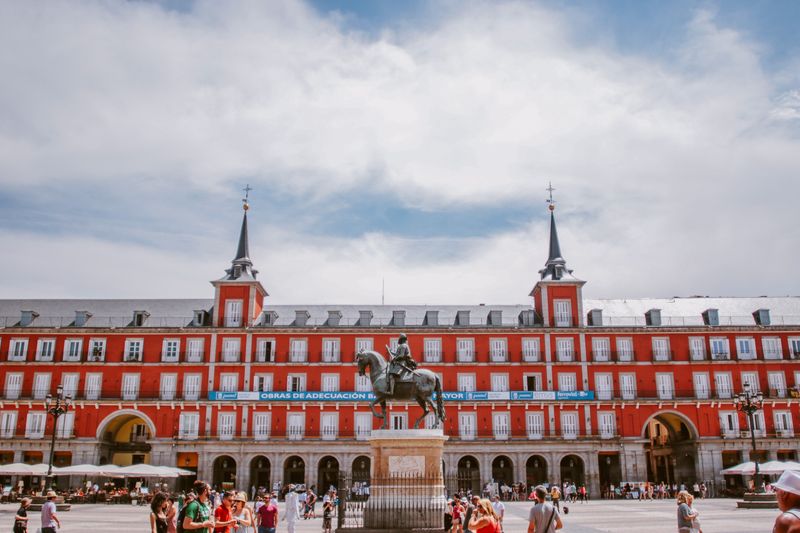
Plaza Mayor
The grand arcaded square completed in 1619 under Philip III, whose equestrian statue stands in the centre, and once the stage for markets, bullfights and royal celebrations.
Tip: Admire it from the middle, then eat in the side streets; a bocadillo de calamares from one of the bars on the lanes just off the square is a Madrid ritual.
Time needed: 30 minutes
Mercado de San Miguel
An early-20th-century iron-and-glass market hall beside Plaza Mayor, now given over to gourmet stalls for tapas, oysters, ham and vermouth.
Tip: Go mid-morning or mid-afternoon to avoid the evening crush, and graze rather than sit down.
Time needed: 45 minutes

Retiro Park
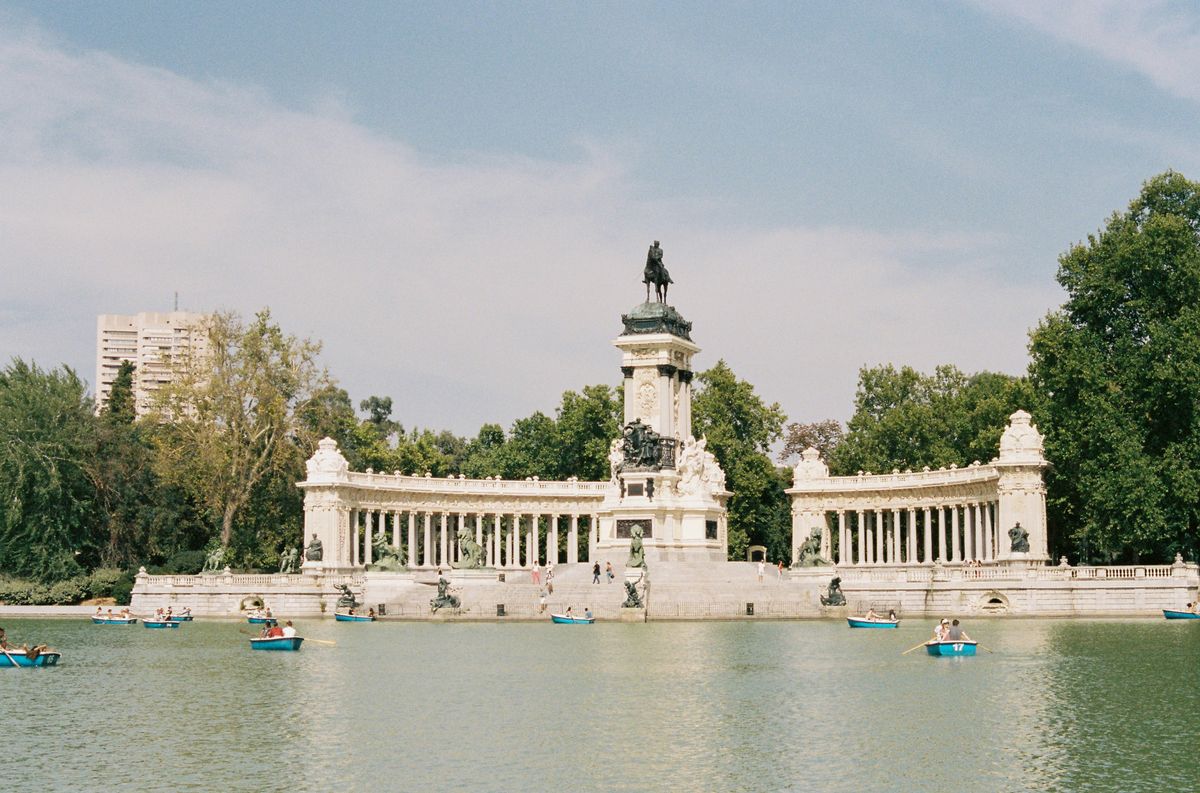
The former royal park at the heart of the UNESCO World Heritage Paseo del Prado and Buen Retiro landscape, with a boating lake beneath the Alfonso XII monument, formal gardens and the rose garden.
Tip: Hire a rowing boat on the Estanque Grande. The 1887 Palacio de Cristal glasshouse is closed for restoration until about 2027, but you can still see it from outside, currently wrapped in an artwork.
Time needed: 1.5-2 hours

Puerta de Alcalá
A neoclassical triumphal gate commissioned by Charles III and finished in 1778, standing in Plaza de la Independencia at the north-west corner of the Retiro.
Tip: It is floodlit after dark and makes an easy photo stop between Cibeles and the park gates.
Time needed: 15 minutes

Temple of Debod
A genuine ancient Egyptian temple from Nubia, given to Spain in thanks for helping to rescue monuments from the Aswan Dam floodwaters and rebuilt on a hill west of Plaza de España.
Tip: Come for sunset, when the temple and its reflecting pools face the sky over the Casa de Campo. The small interior is free but closed on Mondays.
Time needed: 30-45 minutes

Gran Vía
Madrid's grand boulevard, built in the early 20th century, lined with early skyscrapers, theatres staging big musicals, flagship shops and the domed Metrópolis Building at its eastern end.
Tip: Walk it from Plaza de España towards Cibeles in the late afternoon, looking up at the rooftop statues and the neon Schweppes sign at Callao.
Time needed: 1 hour
Círculo de Bellas Artes rooftop
The rooftop terrace of a historic arts centre on Calle de Alcalá, with sweeping views over the Metrópolis dome, Gran Vía and Cibeles.
Tip: Go up an hour before sunset, and take the lift from the main entrance on Calle de Alcalá.
Time needed: 1 hour
Plaza de la Villa
A quiet square off Calle Mayor framed by some of the city's oldest civic buildings, including the 15th-century Torre de los Lujanes and the old town hall, the Casa de la Villa.
Tip: It sits on the way between the Royal Palace and Plaza Mayor, so fold it into a walk through Habsburg Madrid.
Time needed: 15 minutes
El Rastro
Madrid's huge open-air flea market, spreading down the Ribera de Curtidores from Plaza de Cascorro every Sunday and public holiday morning.
Tip: Arrive early, keep valuables zipped away in the crowds, then finish with vermouth and tapas in La Latina.
Time needed: 2 hours
Mercado de San Antón
A modern market building in Chueca with fresh-food stalls on the ground floor, tapas counters above and a roof terrace bar.
Tip: Good for a casual lunch or an early-evening drink before heading into Chueca's bars.
Time needed: 45 minutes
Santiago Bernabéu Stadium tour
Real Madrid's redeveloped home stadium, where the self-guided tour takes in panoramic views of the pitch, the trophy rooms and immersive exhibits on the club's history.
Tip: Book a slot online and check the calendar, as the tour route is shortened on match days and during events.
Time needed: 1.5-2 hours
Madrid Río
A long linear park along the Manzanares river, created by burying a motorway, with walking and cycling paths, playgrounds and historic bridges such as the Puente de Segovia.
Tip: Combine it with the Royal Palace: walk down through the Campo del Moro side of the palace to reach the river.
Time needed: 1-2 hours

Plaza de Cibeles and CentroCentro
The Cibeles fountain sits at one of Madrid's grandest crossroads, overlooked by the Palacio de Cibeles, the city hall, whose CentroCentro cultural centre hosts free exhibitions and a viewpoint.
Tip: Book the CentroCentro viewpoint slot in advance for a view up Gran Vía and Calle de Alcalá.
Time needed: 1 hour
Chocolatería San Ginés
A tiled chocolatería tucked into a passageway off Calle Arenal, serving thick hot chocolate and churros since 1894.
Tip: It is a classic way to end a late night, but mid-afternoon is calmer if you want a table.
Time needed: 30 minutes
Teatro Real
Madrid's 19th-century opera house facing the Royal Palace across Plaza de Oriente, with a busy season of opera, ballet and concerts.
Tip: On non-performance days, a guided tour shows the auditorium and backstage areas; otherwise book a performance.
Time needed: 1 hour for a tour
Museo Arqueológico Nacional
Spain's national archaeology museum on Calle Serrano, spanning prehistory to the Middle Ages, with highlights such as the Lady of Elche bust and a replica of the Altamira cave paintings.
Tip: A good, often quieter alternative to the big art museums, and an easy stop on a Salamanca shopping day.
Time needed: 1.5-2 hours
Free things to do in Madrid
Madrid’s big three art museums all have free hours, most of the parks, churches and viewpoints are always free, and several smaller museums never charge. Free slots fill up, so arrive early or book the free ticket where it says so.
Museo del Prado
Paseo del PradoFree: Free entry to the permanent collection in the last two hours of each day: Monday to Saturday 18:00-20:00, Sundays and public holidays 17:00-19:00.
Spain's great national gallery, home to Velázquez, Goya, El Greco and Bosch, opens its permanent collection to everyone for free in the closing two hours of every day.
Tip: Join the queue by about 17:30 (16:30 on Sundays) and head straight for Las Meninas and Goya's Black Paintings; two hours is enough for a focused highlights visit.
Museo Reina Sofía
AtochaFree: Free Monday and Wednesday to Saturday 19:00-21:00, and Sunday 12:30-14:30. Closed Tuesdays. Also free all day on 18 April, 18 May, 22 May, 12 October and 6 December.
Madrid's modern art museum, home to Picasso's Guernica, is free every evening it opens and on Sunday lunchtimes.
Tip: Go straight to Guernica on the second floor of the Sabatini Building, then see the Dalí and Miró rooms nearby.
Museo Nacional Thyssen-Bornemisza
Paseo del PradoFree: Permanent collection free every Monday 12:00-16:00 (Mastercard Mondays). Also free on Saturday nights 21:00-23:00 (Thyssen Nights).
Seven centuries of Western art, from early Italian panels to Hopper and Pop Art, with free entry on Monday afternoons and late on Saturday evenings.
Tip: The museum says 14:00-16:00 is usually the quietest part of the free Monday slot.
Royal Palace of Madrid
Los AustriasFree: Free Monday to Thursday 16:00-18:00 (October to March) and 17:00-19:00 (April to September), but only for EU citizens, EU residents and work-permit holders, and Latin American citizens. UK passport holders do not qualify unless they are legally resident in the EU.
The official royal residence, with lavish state rooms and the Royal Armoury, opens free on weekday evenings for eligible visitors.
Tip: Bring your passport, national ID or residence permit as proof. Visitors from the UK should buy a timed ticket instead.
Museo Arqueológico Nacional
SalamancaFree: Free for everyone on Saturdays (not public holidays) from 14:00 until closing at 20:00, and on Sunday mornings (open 9:30-15:00). Also free on 18 April, 18 May, 12 October and 6 December. Closed Mondays.
Spain's national archaeology museum runs from prehistory to the Middle Ages and includes the famous Iberian bust known as the Lady of Elche.
Tip: Don't miss the full-size replica of the Altamira cave paintings in the garden.
Museo Cerralbo
Argüelles (near Plaza de España)Free: Free on Thursdays 17:00-19:00 (not public holidays) and all day on Sundays (10:00-15:00). Also free on 18 April, 23 May, 12 October and 6 December. Closed Mondays.
The Marquis of Cerralbo's 19th-century mansion is preserved with its paintings, armour, porcelain and a mirrored ballroom, as if the family had just stepped out.
Tip: The ballroom and the upstairs gallery of paintings are the highlights. Last entry is one hour before closing.
Museo de Historia de Madrid
Malasaña (Calle de Fuencarral)Free: Always free. Open Tuesday to Sunday 10:00-20:00 (10:00-19:00 from 15 June to 15 September). Closed Mondays.
The city's history museum, in a former hospice with a spectacular Baroque doorway, tells Madrid's story through maps, paintings and a huge 1830s scale model of the city.
Tip: Look for León Gil de Palacio's wooden model of Madrid, and Goya's allegory of the city.
Temple of Debod
Plaza de España (Parque del Oeste)Free: Always free. Interior open Tuesday to Sunday and public holidays 10:00-20:00, last entry 19:30 (closes 19:00 from 15 June to 15 September). Closed Mondays.
A genuine 2nd-century BC Egyptian temple, given to Spain in thanks for help saving monuments from the Aswan Dam, set above a reflecting pool on a hilltop park.
Tip: The gardens around it are one of Madrid's best sunset spots; arrive early for a place on the wall facing the Royal Palace.
Ermita de San Antonio de la Florida (Goya frescoes)
Príncipe PíoFree: Always free. Open Tuesday to Sunday 9:30-20:00. Closed Mondays.
A small 18th-century chapel whose dome Goya painted with a crowd of lively Madrileños watching a miracle of St Anthony; the artist is buried here too.
Tip: Use the mirrors provided to study the dome without straining your neck, then eat at Casa Mingo, the cider house next door.
Almudena Cathedral
Los AustriasFree: Free entry to the cathedral, with a small donation requested. Open daily 10:00-20:30 (to 21:00 in July and August), except during services. The museum and dome are ticketed.
Madrid's cathedral, finished only in 1993, faces the Royal Palace and pairs a neo-Gothic interior with colourful modern ceilings.
Tip: Walk round to the crypt entrance on Calle Mayor to see the older, neo-Romanesque church below.
Retiro Park
RetiroFree: Always free. Open 6:00-midnight (April to September) and 6:00-22:00 (October to March).
Madrid's grand former royal park, with a boating lake, the Velázquez Palace exhibition hall, rose garden and tree-lined avenues.
Tip: The Palacio de Velázquez shows free Reina Sofía exhibitions. The Palacio de Cristal is closed for restoration until about 2027.
Madrid Río
ArganzuelaFree: Always free and open.
A riverside park along the Manzanares, built over a buried motorway, with cycle paths, play areas, bridges old and new, and views back to the Royal Palace.
Tip: Walk or cycle south from Príncipe Pío to Matadero, the arts centre in the old slaughterhouse, whose open spaces are free to wander.
El Rastro
La LatinaFree: Free to browse. The street market runs on Sundays and public holidays, 9:00-15:00.
Madrid's centuries-old flea market fills Ribera de Curtidores and the streets around it with antiques, vintage clothes, crafts and bric-a-brac.
Tip: Go before 11:00 to beat the crowds, then join locals for vermouth and tapas in the bars of La Latina. Keep valuables safe in the crush.
CentroCentro (Palacio de Cibeles)
Paseo del Prado (Plaza de Cibeles)Free: Building and current exhibitions free, Tuesday to Sunday 10:00-20:00. Closed Mondays. The Mirador Madrid observation deck is ticketed.
The wedding-cake former post office on Plaza de Cibeles, now City Hall and a cultural centre, has free art shows and a vast glass-roofed atrium.
Tip: The atrium has free seating and wifi, which makes it a handy rest stop between the Prado and Gran Vía.
Free times checked on the official sites on 6 November 2026. They change, so check the link before you go.
Where to stay in Madrid
For a first visit, stay between Sol, the Barrio de las Letras and Gran Vía: the walks above all start within 15 minutes. Salamanca is quieter and smarter; Chueca and Malasaña suit nights out.
Sol and Los Austrias
The historic core around Puerta del Sol, Kilometre Zero of Spain's road network, running west through the narrow streets laid out under the Habsburg kings towards Plaza Mayor and the Royal Palace.
Best for: First-timers, sightseeing on foot and easy metro links
Barrio de las Letras (Huertas)
The old literary quarter between Sol and the Paseo del Prado, where Cervantes and Lope de Vega lived, now full of tapas bars, theatres and boutique hotels.
Best for: Staying close to the big three art museums, evening tapas and Plaza de Santa Ana
Chueca
A compact, lively barrio north of Gran Vía that is the heart of Madrid's LGBTQ+ scene, with design shops, food markets and busy terraces.
Best for: Nightlife, independent shopping on Calle Almirante and the Salesas streets, and a central base
Malasaña
A bohemian quarter of vintage shops, old tabernas and cafes centred on Plaza del Dos de Mayo, birthplace of the 1980s Movida cultural scene.
Best for: Relaxed bar-hopping, brunch and a younger, creative feel
Salamanca
A 19th-century grid of wide, elegant streets north of the Retiro, home to Madrid's luxury shopping on Calle Serrano and Calle Ortega y Gasset and many of its smartest restaurants.
Best for: Luxury hotels and shopping, fine dining and a quieter, residential feel
La Latina
One of the oldest parts of the city, south of Plaza Mayor, where Cava Baja and the surrounding lanes are packed with tapas bars and traditional taverns.
Best for: Tapas crawls, Sunday at El Rastro and old-Madrid atmosphere
Hotels for every budget. Each button opens our live search with that hotel at the top, so you can change the dates and nights.
Luxury hotels
Palaces, grand hotels and small five-star hideaways.

Four Seasons Hotel Madrid
Seven restored buildings between Sol and the Paseo del Arte, with a rooftop terrace, a big spa and the Galería Canalejas shops downstairs.

Mandarin Oriental Ritz, Madrid
The grande dame of Madrid hotels, reopened after a long restoration, a few steps from the Prado and the Retiro.

Gran Meliá Palacio de los Duques
A 19th-century palace by the Royal Palace and the opera house, with a rooftop pool and bar looking over the old town.

URSO Hotel & Spa
A boutique hotel in an early-1900s palace on the quiet edge of Chueca, with a Natura Bbissé spa and a small pool.

Hotel Único Madrid
A small, quiet hotel in a 19th-century mansion in the Salamanca shopping district, with a private garden.

The Principal Madrid
Rooms above the start of Gran Vía with one of the best rooftop terraces in the city, facing the Metrópolis building.
Boutique and mid-range hotels
Four-star and boutique hotels, several with rooftop bars or pools, all central.

Axel Hotel Madrid
An adults-only, gay-friendly hotel on Calle de Atocha in the Barrio de las Letras, with a rooftop pool and a busy terrace bar.

Iberostar Las Letras Gran Vía
A design hotel on Gran Vía, two minutes from Chueca and the Barrio de las Letras, with a rooftop bar.

Hotel Riu Plaza España
A big, modern four-star in the landmark Edificio España tower, with a pool and the 360º Rooftop Bar on floors 26–27, whose glass walkway hangs over the city.

Pestana Collection Plaza Mayor
Set in the historic Casa de la Carnicería on Plaza Mayor itself, with rooms that look onto the square and a small rooftop pool.
Only YOU Boutique Hotel Madrid
A 19th-century palace converted with warm, eclectic interiors by Lázaro Rosa-Violán, a bar-bookshop and consistently excellent reviews.
Dear Hotel Madrid
A smart boutique hotel at the top of Gran Vía with calm, pale rooms and a 14th-floor rooftop bar and pool with 360-degree views.
Good-value hotels
Clean, well-run hotels and private rooms in central spots, for when the room is just a base.
Motel One Madrid-Plaza de España
Stylish, compact rooms with comfortable beds and a design-led lounge bar, a few minutes' walk from the Temple of Debod and Gran Vía.
ibis Styles Madrid Prado
A cheerful, wine-themed hotel on a quiet street between Sol and the Prado, with breakfast included and a very walkable location.
Petit Palace Posada del Peine
Spain's oldest hotel, an inn since 1610, updated with modern rooms just off Plaza Mayor and useful family and quadruple rooms.
TOC Hostel & Suites Madrid
A smart, design-led hostel in a historic building near Puerta del Sol, with private double rooms as well as dorms.
Search every hotel in Madrid
Live prices for hundreds of Madrid hotels. Pick your dates and nights, or switch to Holidays to add flights from the UK.
Best restaurants in Madrid
From centuries-old taverns to three-Michelin-star tasting menus. Madrid eats late: lunch from 2pm and dinner from 9pm, so book the famous places ahead.
Sobrino de Botín
Traditional CastilianLos Austrias (Calle de Cuchilleros)
Founded in 1725 and recognised by Guinness as the world's oldest restaurant still operating, famous for suckling pig and lamb roasted in its original wood-fired oven.
Casa Lucio
Traditional MadridLa Latina (Cava Baja)
A Cava Baja institution beloved by politicians and royalty, best known for its huevos rotos, fried eggs broken over crisp chips.
Lhardy
Classic Madrid and FrenchSol (Carrera de San Jerónimo)
A 19th-century dining room and delicatessen near Sol, famous for its cocido madrileño and the consommé served from a silver samovar in the shop downstairs.
Taberna La Bola
Traditional MadridÓpera
A red-fronted family tavern near the opera house that has been slow-cooking cocido madrileño in individual earthenware pots over wood fires for generations.
Sala de Despiece
Modern SpanishChamberí (Calle de Ponzano)
A playful restaurant styled like a butcher's cutting room, serving inventive plates built around top-quality produce on Madrid's busiest dining street.
StreetXO
Global street foodSalamanca (Calle de Serrano)
Dabiz Muñoz's loud, open-kitchen counter on the top floor of El Corte Inglés on Serrano, serving wildly creative street-food-inspired dishes.
DiverXO
Avant-garde tasting menuChamartín (NH Collection Eurobuilding)
Dabiz Muñoz's three-Michelin-starred restaurant, a theatrical, globe-trotting tasting-menu experience and one of the hardest tables in Europe to book.
Coque
Creative Spanish tasting menuChamberí (Calle del Marqués de Riscal)
The Sandoval brothers' two-Michelin-starred restaurant, where the meal moves between rooms, from the cellar to the kitchen and the dining room.
La Barraca
Valencian rice dishesCentro (Calle de la Reina)
A paella specialist open since 1935, cooking Valencian rice dishes to order in a series of cosy, tiled dining rooms just off Gran Vía.
Corral de la Morería
Spanish, with flamencoLa Latina (Calle de la Morería)
A celebrated flamenco tablao since 1956, pairing nightly performances with dinner; its small gastronomic dining room holds a Michelin star.
Casa Dani
Spanish home cookingSalamanca (Mercado de la Paz)
A busy counter and dining room inside the Mercado de la Paz, widely held to serve one of the best tortillas de patatas in the city.
Taberna Pedraza
Traditional SpanishSalamanca (Calle de Recoletos)
A smart, much-loved tavern near the Retiro known for its tortilla, croquetas and classic Madrid dishes cooked with great care.
Best bars in Madrid
World-ranked cocktail bars, rooftop terraces and old vermouth taverns.
Salmon Guru
Cocktail barBarrio de las Letras
Diego Cabrera's colourful, theatrical cocktail bar, a regular on the World's 50 Best Bars list.
Museo Chicote
Historic cocktail barGran Vía
An art deco cocktail bar on Gran Vía that opened in 1931 and has hosted film stars and writers for decades.
1862 Dry Bar
Cocktail barMalasaña (Calle del Pez)
An elegant, low-lit bar with a 19th-century feel, focused on classic cocktails made with precision.
Azotea del Círculo
Rooftop bar and restaurantCentro (Calle de Alcalá)
The bar and restaurant on the Círculo de Bellas Artes roof, with one of the best-known panoramas in Madrid.
360º Rooftop Bar (Riu Plaza España)
Rooftop barPlaza de España (Riu Plaza España)
Spread over the 26th and 27th floors of the Edificio España, with 360-degree views and a glass walkway 100 metres above the street. Non-guests need an entry ticket, which covers all three spaces, and some time slots must be booked ahead.
Taberna de Ángel Sierra
Vermouth tabernaChueca (Plaza de Chueca)
A tiled corner tavern dating from the early 20th century, famous for vermouth drawn from the tap and served with a tapa.
Casa Alberto
Historic tabernaBarrio de las Letras (Calle de las Huertas)
A taberna founded in 1827 in a building where Cervantes once lived, with house vermouth at the zinc bar and Madrid classics in the dining room.
Bodega de la Ardosa
Traditional tabernaMalasaña (Calle de Colón)
An old-school bodega with a wooden bar and tiled facade, known for draught beer, vermouth and tortilla.
Bar Cock
Classic cocktail barCentro (Calle de la Reina)
A wood-panelled cocktail bar with a gentleman's-club feel, a favourite of Madrid's creative crowd for decades.
Macera Taller Bar
Cocktail barMalasaña (Calle de San Mateo)
A relaxed workshop-style bar that macerates its own spirits in-house to use in its cocktails.
Picalagartos Sky Bar
Rooftop bar and restaurantGran Vía (NH Collection Madrid Gran Vía)
A ninth-floor terrace bar above Gran Vía, with a restaurant on the floor below and views along the avenue and over the city's rooftops. Run by the group behind Azotea del Círculo.
Gay bars in Madrid
LL Bar
LGBTQ+ show barChueca (Calle de Pelayo)
A friendly, unpretentious Chueca bar with drag shows every night and a mixed-age crowd.
DLRO Live
LGBTQ+ bar and clubChueca (Calle de Pelayo)
The current home of the long-running Delirio brand, a late-night venue with drag, cabaret and DJs every night of the week.
LaKama Café
LGBTQ+ cafe and cocktail barChueca (Calle de Augusto Figueroa)
A cafe-bar on the site of a 1980s gay cafe, open from breakfast into the night, with cocktails and a lively terrace crowd.
Studio 54 Madrid
LGBTQ+ nightclubChueca (Calle de Barbieri)
A glamorous club inspired by the New York original, with chandeliers, pop and house music and themed parties from Wednesday to Sunday.
Fulanita de Tal
LGBTQ+ barChueca (Calle de Regueros)
A long-standing bar run for women and the wider LGBTQ+ community, with DJs and live performances.
All venues checked as trading on 6 November 2026. Opening hours change, so check Instagram before you go.
Madrid FAQ
When is the best time to visit Madrid?
Spring (April to early June) and autumn (late September to early November) bring warm, sunny days that are ideal for walking. July and August are very hot, often well above 35°C, and many locals leave the city in August. Winters are cool, dry and bright, with fewer crowds and a busy cultural calendar, and December brings Christmas lights and markets.
How many days do you need in Madrid?
Three days covers the essentials: the Royal Palace and Habsburg Madrid, the Prado and at least one of the other two big museums, the Retiro and an evening of tapas. Add a fourth or fifth day for Salamanca, the Bernabéu, El Rastro on a Sunday, or a day trip to Toledo or Segovia, both well under an hour by fast train.
How do I get from Madrid Barajas Airport to the city centre?
Metro Line 8 runs from the airport to Nuevos Ministerios, where you can change for the rest of the network. Cercanías commuter trains run from Terminal 4 to Nuevos Ministerios, Atocha and Chamartín, and the 24-hour Airport Express bus runs to Cibeles and, during the day, Atocha. Taxis charge a fixed flat fare to anywhere inside the M-30 ring road, and the journey takes around 25 to 40 minutes depending on traffic.
Is Madrid walkable?
Yes. The historic centre is compact, and you can walk from the Royal Palace to the Prado in about 30 minutes, passing Plaza Mayor and Sol on the way. The metro is fast, clean and easy to use for longer hops to Salamanca, the Bernabéu or the train stations.
Where is the best area to stay in Madrid?
Sol and Los Austrias put you closest to the main sights, while the Barrio de las Letras and the Paseo del Prado are ideal for the art museums and evening tapas. Salamanca is the choice for luxury shopping and a calmer, more elegant feel, and Chueca and Malasaña suit travellers who want to be in the middle of the nightlife.
When is Madrid Pride (MADO)?
Madrid Orgullo, known as MADO, is one of Europe's largest Pride celebrations. It is usually held over several days in late June and early July, centred on Chueca, with open-air concerts and a large State Pride march along the Paseo del Prado on the Saturday. Hotels fill up early, so book well in advance.
Is Madrid gay friendly?
Very. Spain legalised same-sex marriage in 2005, and Madrid is one of Europe's most welcoming cities for LGBTQ+ travellers. Chueca is the heart of the scene, with bars, cafes and shops, and same-sex couples will feel comfortable across the city.
When are Madrid's museums free to visit?
Several major museums offer free entry during set hours. The Prado and the Reina Sofía each have free evening slots on most days, and the Thyssen offers free access to its permanent collection on Monday afternoons. Times and queues vary, so check each museum's website before you go, and book a paid timed ticket if you want to avoid waiting.
What can you do for free in Madrid?
Plenty. The big three art museums all have free slots: the Prado is free Monday to Saturday 18:00-20:00 and on Sundays and holidays 17:00-19:00; the Reina Sofía is free Monday and Wednesday to Saturday 19:00-21:00 and Sunday 12:30-14:30; and the Thyssen's permanent collection is free on Mondays 12:00-16:00. The Museo de Historia, Goya's frescoes at San Antonio de la Florida and the Temple of Debod are always free (book Debod ahead), and the Archaeological Museum is free on Saturday afternoons and Sunday mornings. Outdoors, Retiro Park, Madrid Río and the Sunday Rastro market cost nothing. The Royal Palace's free weekday-evening slots are only for EU citizens and residents, so most UK visitors need a ticket.
Where should I stay in Madrid on a budget?
Stay central so you can walk everywhere. Sol and the streets around Plaza Mayor are the most convenient, with good-value options such as Petit Palace Posada del Peine and TOC Hostel's private rooms. The Barrio de las Letras, near the Prado, has ibis Styles Madrid Prado, while Motel One is a short walk from Gran Vía and Plaza de España. Chueca and Malasaña suit younger travellers and nightlife. Book early for weekends and big events.