Cappadocia in brief
- Balloon flights go up at sunrise, weather permitting: book your first morning so there’s time to rebook.
- Göreme Open-Air Museum, Derinkuyu and Kaymaklı, Uçhisar Castle and the valley walks.
- About 1 hour 20 minutes by air from Istanbul to Nevşehir or Kayseri. Stay 3 nights.
- Best from April to June and in September and October; cold and often snowy in winter.

Cappadocia is the strangest and most beautiful landscape in Turkey: a high plateau in the middle of Anatolia where wind and rain have carved soft volcanic rock into cones, pinnacles and “fairy chimneys”, and where people have been digging homes, churches and whole underground cities into that rock for well over a thousand years. Most people come for the hot air balloons at sunrise, and they are unforgettable, but the real joy is in the days around them: walking the valleys, finding painted cave churches, sleeping in a cave hotel and eating pottery kebab in a village restaurant. This guide covers the best things to do in Cappadocia, the balloon flights, the Göreme Open-Air Museum and the underground cities, the valleys to walk, how many days you need, the best time to go and how to get there from Istanbul and the UK.
Where is Cappadocia?

Cappadocia (Kapadokya in Turkish) is in the centre of Turkey, about 300 km south-east of Ankara and some 730 km from Istanbul. The heart of it, where you’ll spend most of your time, is a small triangle between the towns of Nevşehir, Avanos and Ürgüp, with the village of Göreme in the middle. It sits at around 1,000 to 1,200 m, which is why the nights are cool even in summer.
Millions of years ago, the volcanoes around the plateau buried it in thick layers of ash, which hardened into soft tuff capped in places by harder basalt. Erosion did the rest: where a hard cap protects the softer rock beneath, you get the mushroom-shaped fairy chimneys. The rock is easy to carve, so from the Byzantine period onwards, monks, farmers and villagers cut houses, dovecotes, chapels and monasteries straight into it.
The core area, Göreme National Park and the Rock Sites of Cappadocia, has been a UNESCO World Heritage Site since 1985.
Hot air balloon flights in Cappadocia

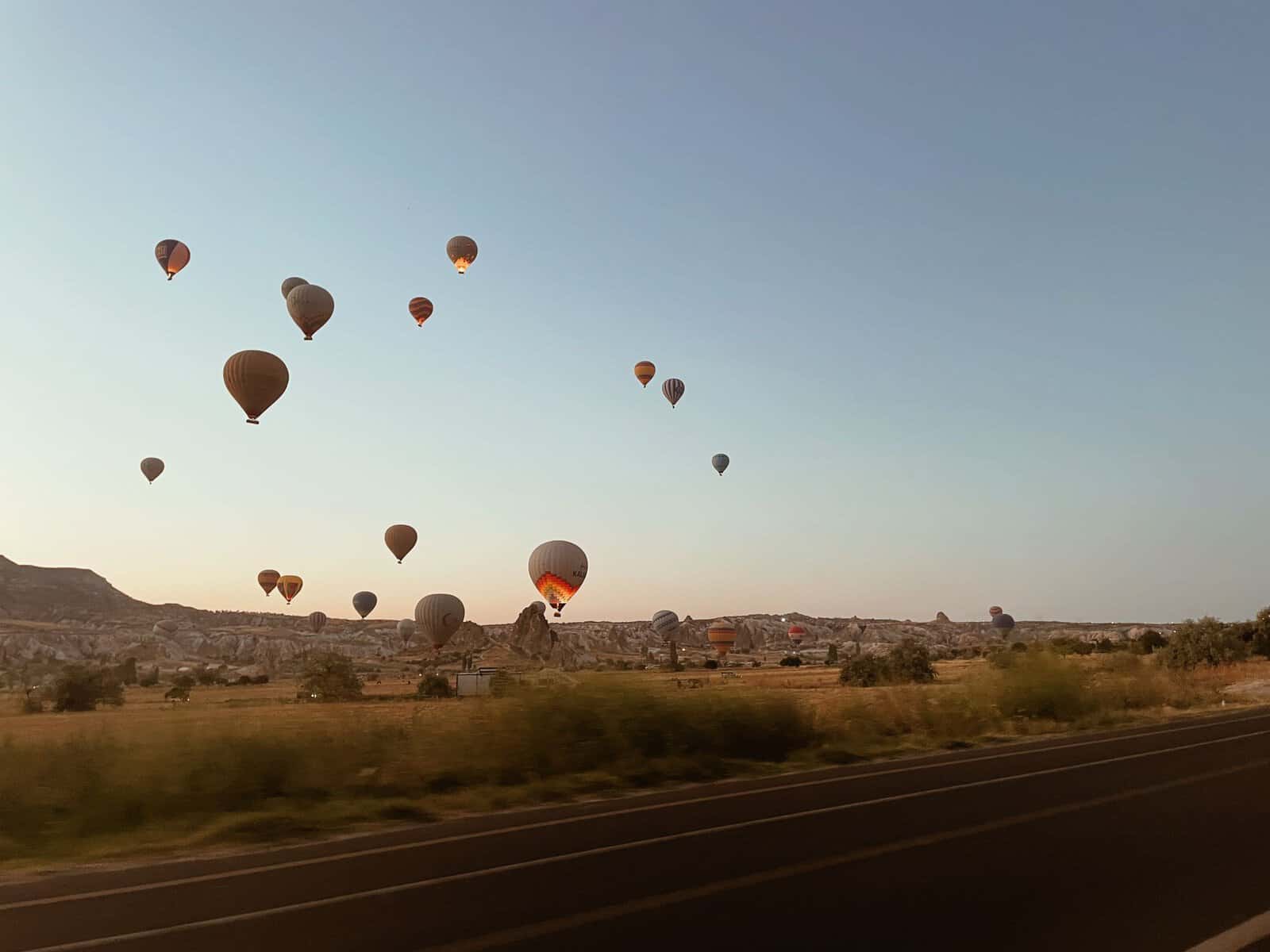
A balloon flight over Cappadocia is one of the great travel experiences, and on a calm morning there can be well over a hundred balloons in the sky at once. Here is how it works:
- Timing: flights go up at sunrise, when the air is calmest. You’re collected from your hotel in the dark, have tea and a light breakfast at the launch field while the balloons are inflated, and fly for about an hour, drifting over the valleys and fairy chimneys before a gentle landing and a celebratory toast.
- Weather: every morning, the civil aviation authorities decide whether conditions are safe to fly. Wind, rain, snow or low cloud can ground the balloons, sometimes for several days in a row, especially from November to March. Book your flight for your first morning, so there’s time to rebook if it’s cancelled.
- Standard or private: large shared baskets are divided into compartments; smaller “comfort” baskets and private baskets for two cost more but are far more relaxed, and a private flight is the one we recommend for a special occasion.
- Not flying? Watching is almost as good. Get up at dawn and watch from a viewpoint above Göreme, a cave-hotel terrace, or the fields near Çavuşin as the balloons inflate and rise around you.
- Who can fly: operators set a minimum age for children, usually around six or seven, and pregnant women can’t fly. Wear layers and flat shoes: it’s cold before dawn, even in summer.
Things to do in Cappadocia
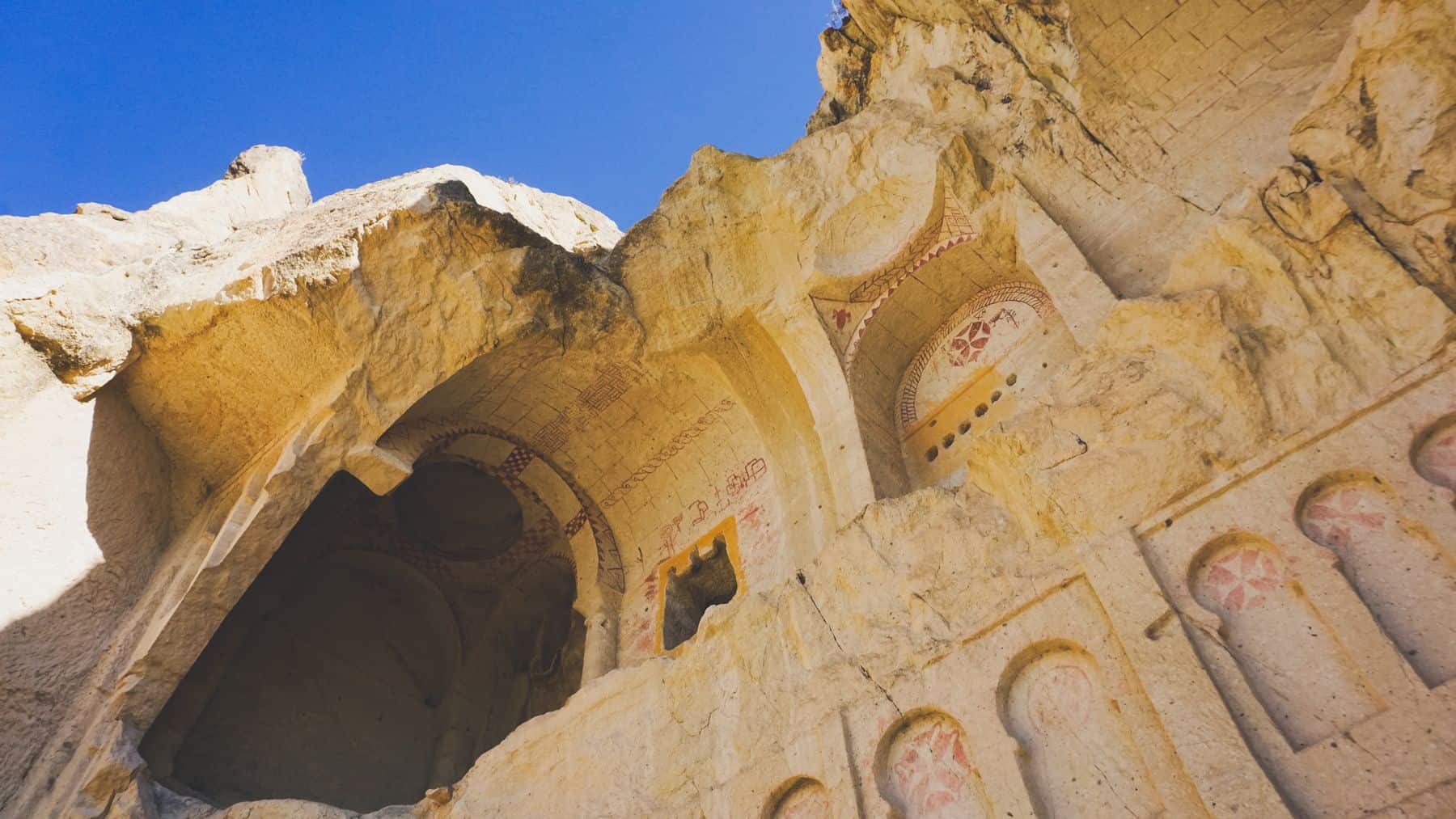
Göreme Open-Air Museum. A monastic settlement just outside Göreme village, where a cluster of rock-cut churches, chapels and refectories is decorated with Byzantine frescoes, most from the 10th to 12th centuries. The best-preserved paintings are in the Dark Church (Karanlık Kilise), which has its own small extra ticket and is worth every penny: with so little light getting in, its colours are still vivid. Don’t miss the Tokalı Church, just down the road and included in the ticket, with deep blue frescoes. Go at opening time or late in the afternoon to avoid the tour groups.
Zelve and Paşabağ. Zelve is an abandoned cave village spread over three valleys, lived in until the 1950s, when erosion made it unsafe. Nearby, Paşabağ (Monks Valley) has some of the most photographed fairy chimneys, several with two or three caps, one with a hermit’s cell carved into it.
Avanos. A riverside town on the Kızılırmak, Turkey’s longest river, famous for its pottery (see below), with cafés along the water.
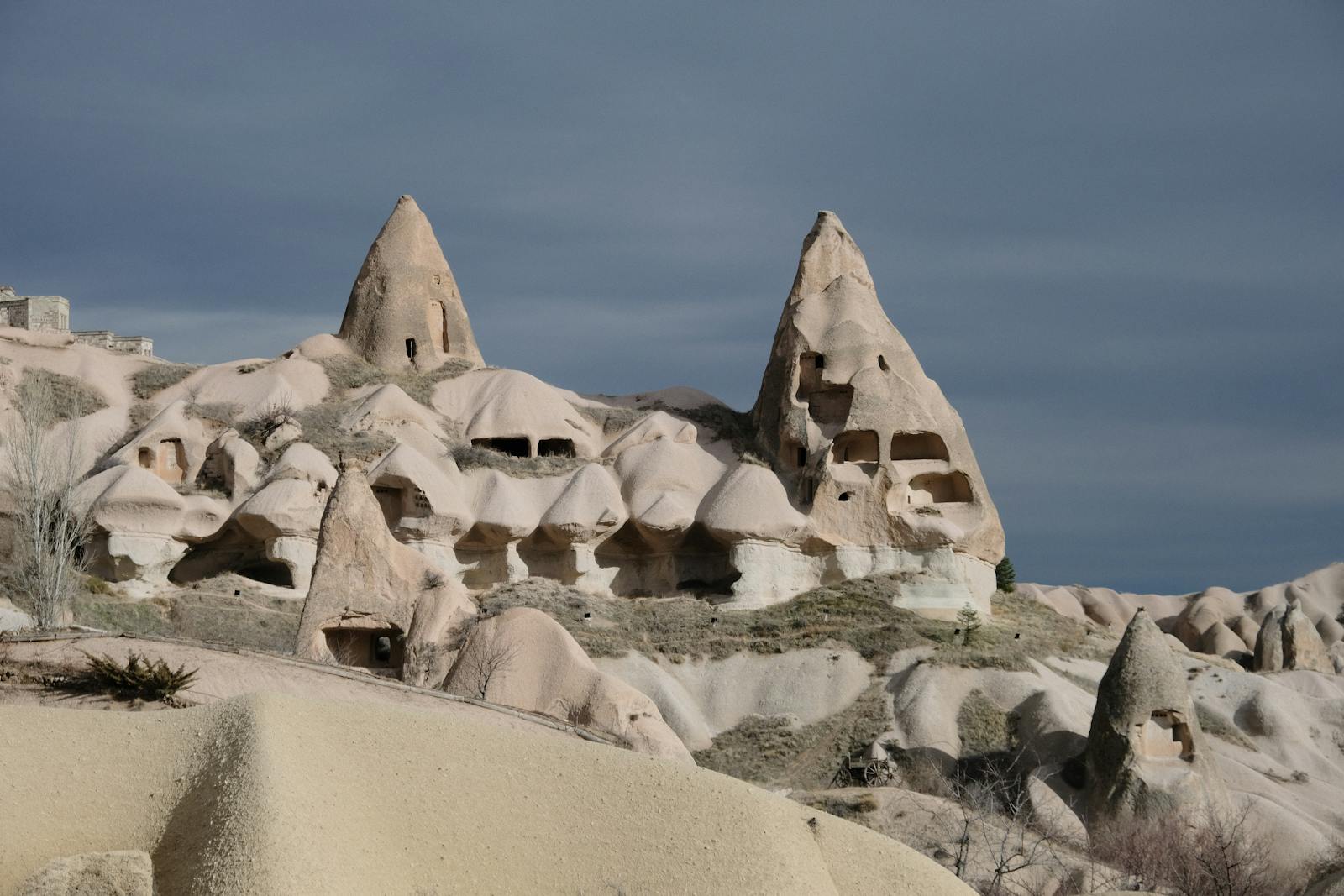
Çavuşin and Ortahisar. Two old villages with rock castles: Çavuşin has an abandoned cliff village and one of the region’s oldest churches, and Ortahisar a rock fortress above lanes still used to store lemons and potatoes in cool caves.
Mustafapaşa. A quiet village south of Ürgüp, once mainly Greek, with fine stone mansions, carved doorways and small churches. A lovely place to stay or to wander for an hour.
Wine. Cappadocia has made wine since antiquity, and the volcanic soil around Ürgüp suits the local white grape, Emir. Several wineries offer tastings.
Horse riding, quad bikes and jeep safaris. Cappadocia’s name is often said to mean “land of beautiful horses”, and a sunset ride through the valleys is a wonderful way to see them. Jeep and quad trips reach the viewpoints quickly, if more noisily.
The underground cities: Derinkuyu and Kaymaklı
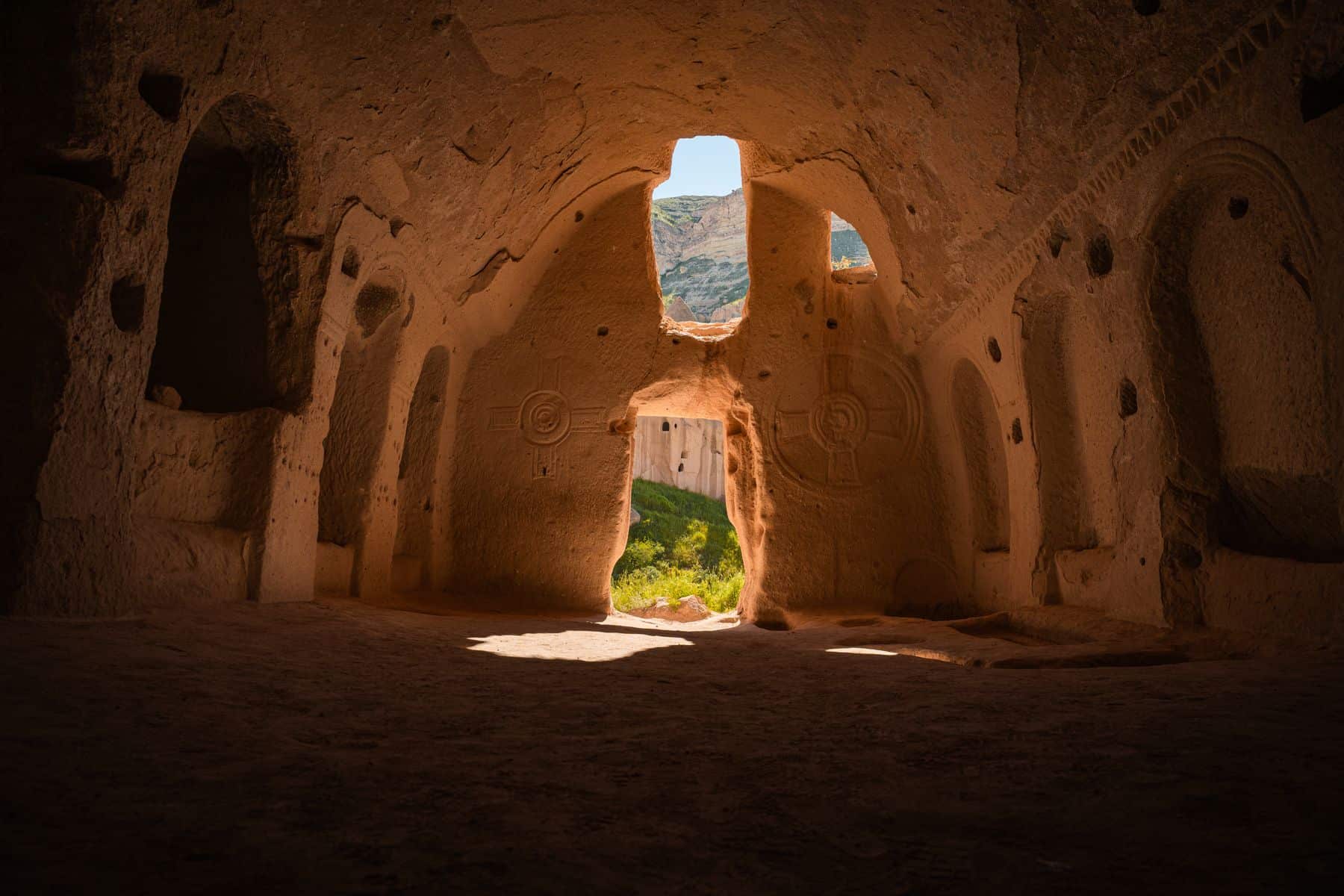
Beneath the villages of Cappadocia are dozens of underground cities, dug down through the soft rock, level after level, as places to hide from raiders. Their origins are ancient, but they were greatly expanded in the Byzantine period, when Christian communities sheltered in them with their animals and food for weeks at a time. Huge round stone doors could be rolled across the passages from inside, and ventilation shafts carried air to the deepest levels.
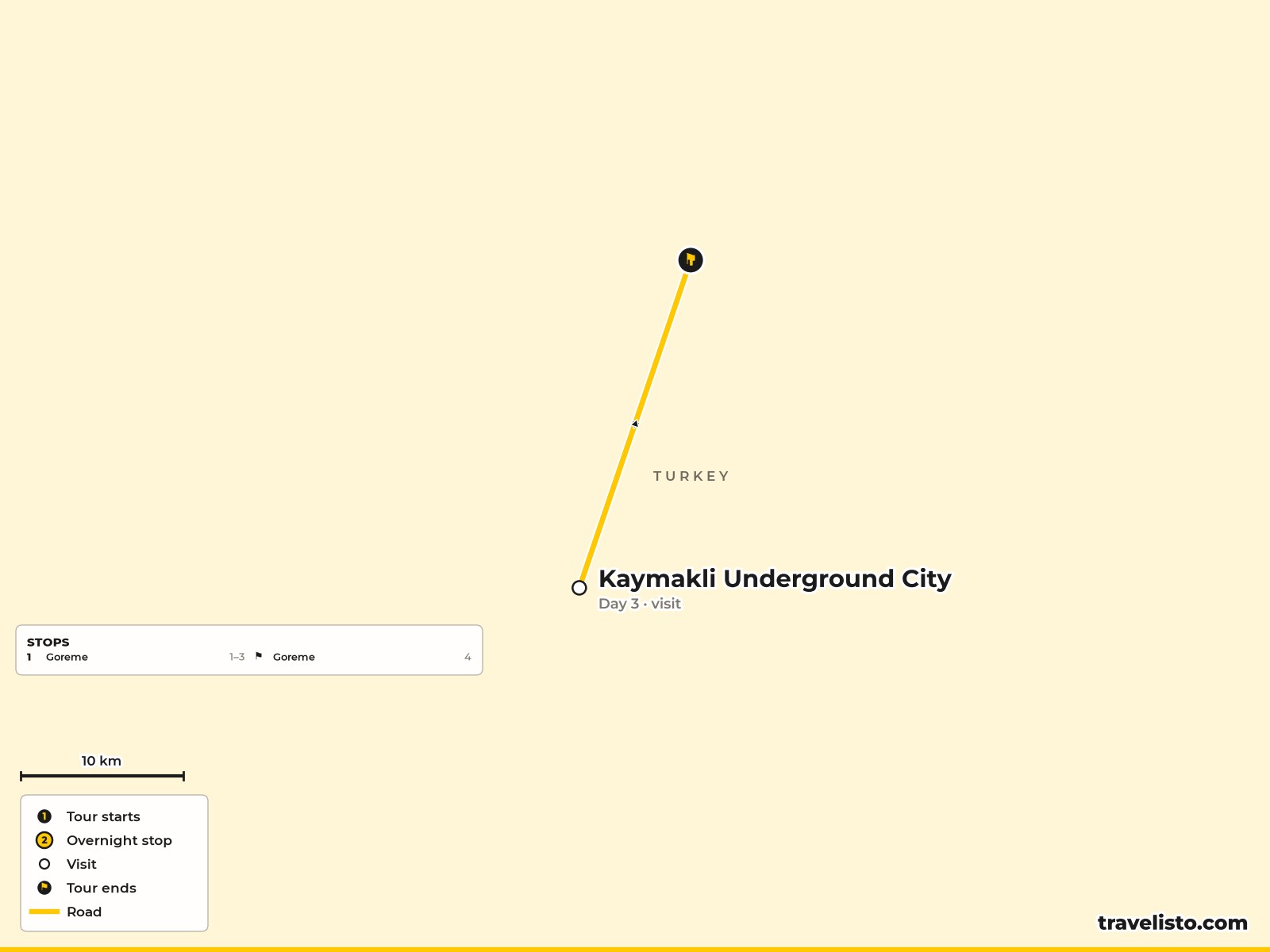
Derinkuyu is the deepest open to visitors: around eight levels are open, going down more than 50 m, past stables, wine presses, kitchens, wells, a chapel and a school. Kaymaklı, about 9 km to the north, is wider and has four levels open, with storerooms and narrow, steep tunnels. Most people visit one, and that’s enough.
Passages are low and narrow, so they’re not ideal for anyone claustrophobic or with knee or back problems. Go with a guide, who will bring the place to life and get you through the busiest sections quickly.
Uçhisar Castle

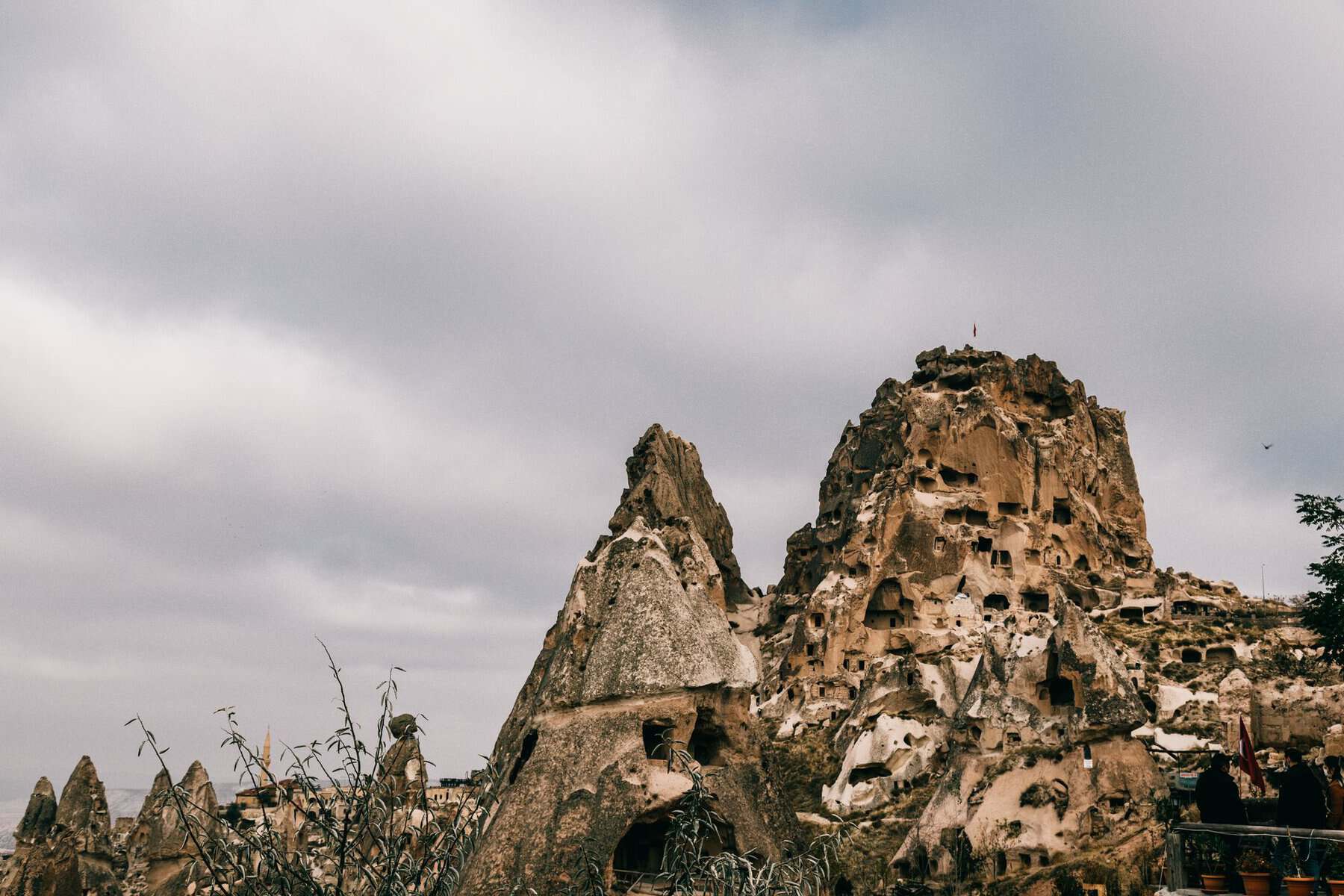
Uçhisar Castle is a great pinnacle of rock riddled with rooms and tunnels, the highest point in the area, rising above the village of the same name a few kilometres from Göreme. Climb the steps to the top for one of the best views in Cappadocia: Pigeon Valley, Göreme, the white cliffs of the valleys and, on a clear day, the snowy cone of Mount Erciyes far to the east.
The village around it is one of the most attractive places to stay, with restored stone and cave houses on the slopes below the castle and terraces looking out over the valleys. Sunset from Uçhisar is as good as sunrise from Göreme.
Walking the valleys
The best way to understand Cappadocia is on foot. The valleys around Göreme are criss-crossed with paths, many of them easy, through orchards, vineyards and pigeon-house cliffs, with cave churches tucked into the rock. Paths aren’t always clearly marked, so take a local guide or a good map app, carry water, and avoid the middle of the day in summer.
Rose and Red valleys
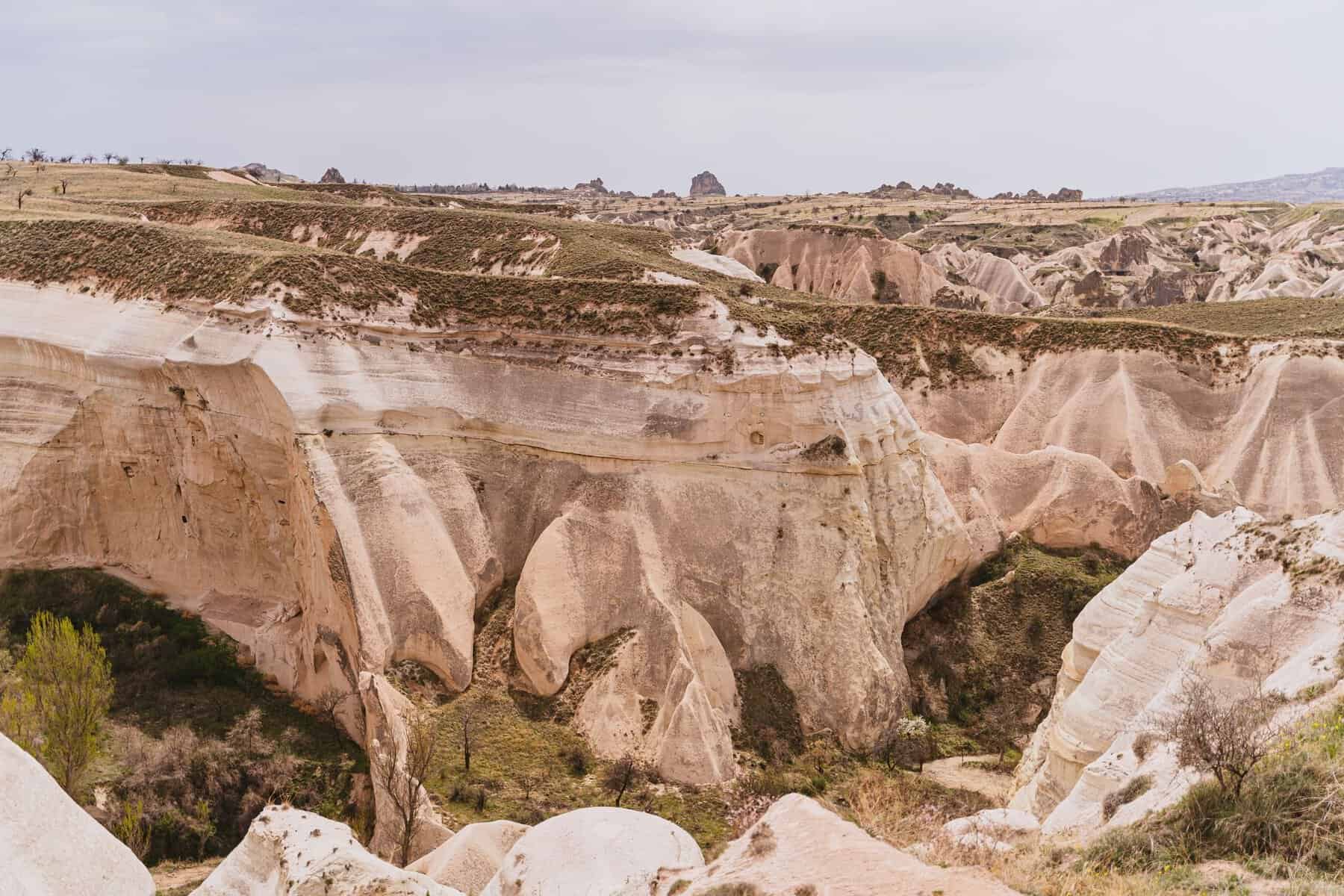
Linked valleys between Göreme and Çavuşin whose rock turns pink and rose at sunset. Several rock-cut churches line the route, including one with painted columns. End with the view from the ridge above as the light goes.
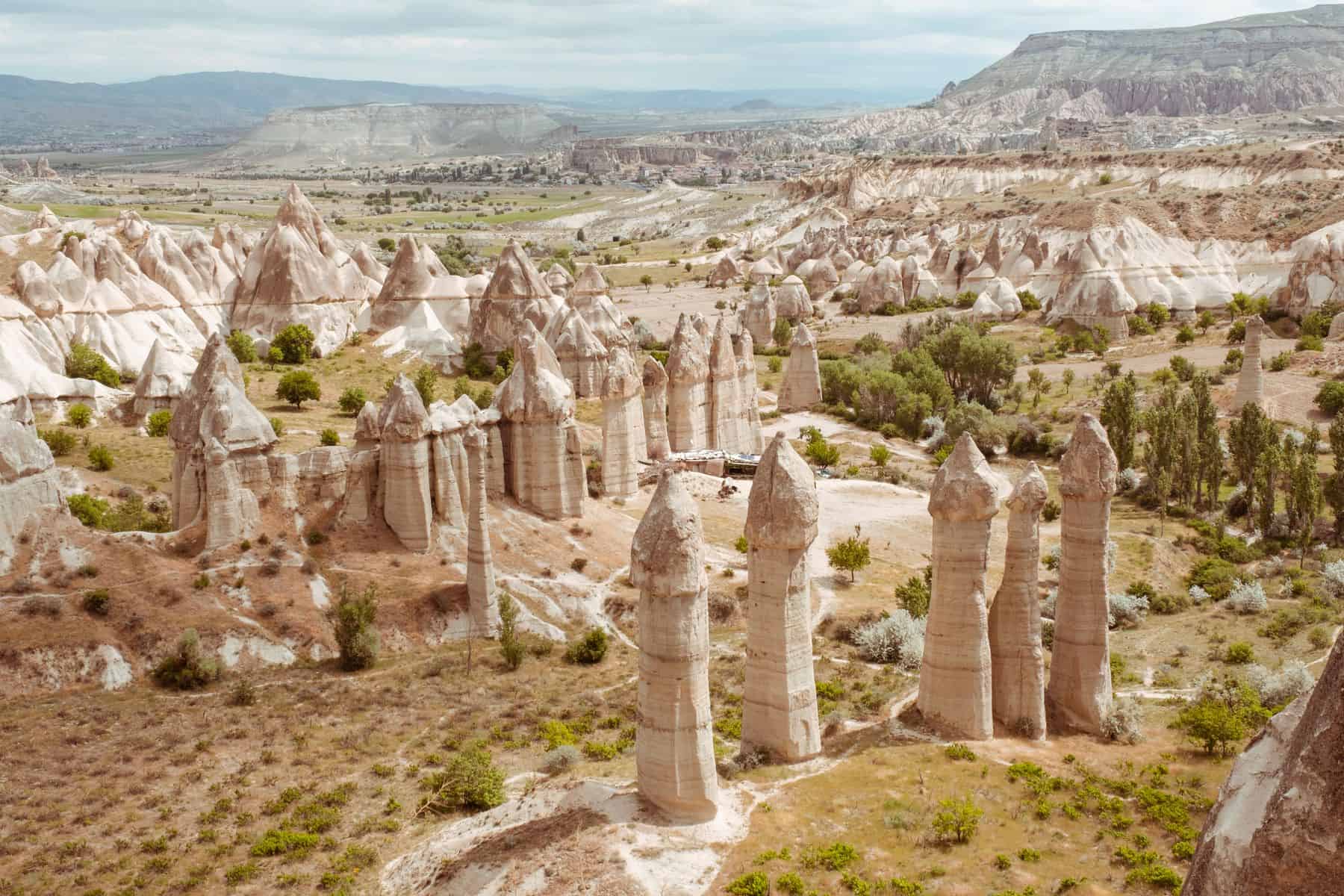
Love Valley
Famous for its tall, slender rock columns rising from a green valley floor. Walk down from the viewpoint above, or take it as part of a longer route to Uçhisar.
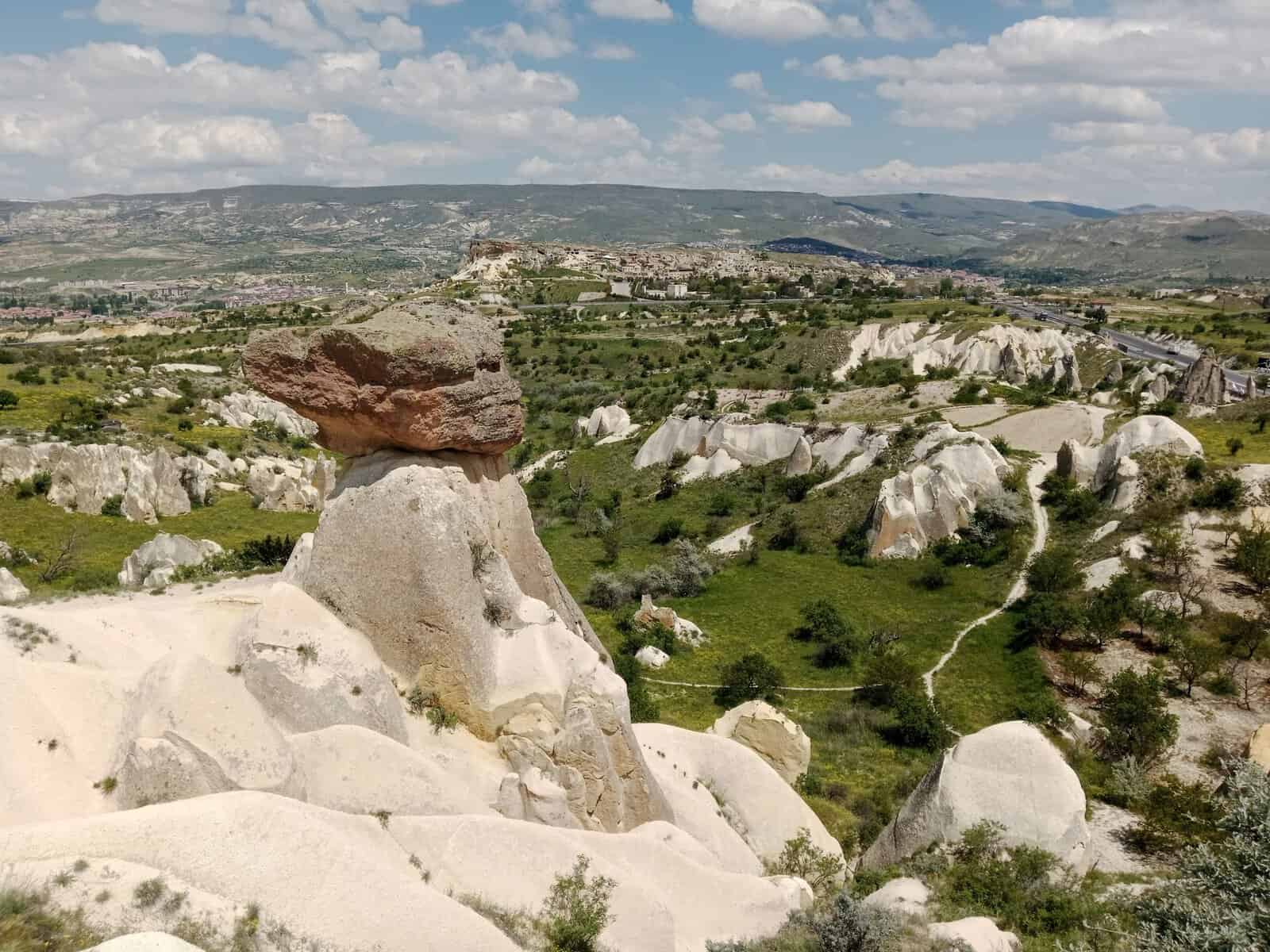
Pigeon Valley
An easy, mostly downhill walk if you start at Uçhisar, past cliffs dotted with old dovecotes: for centuries farmers collected the pigeon droppings to fertilise the vineyards and orchards.
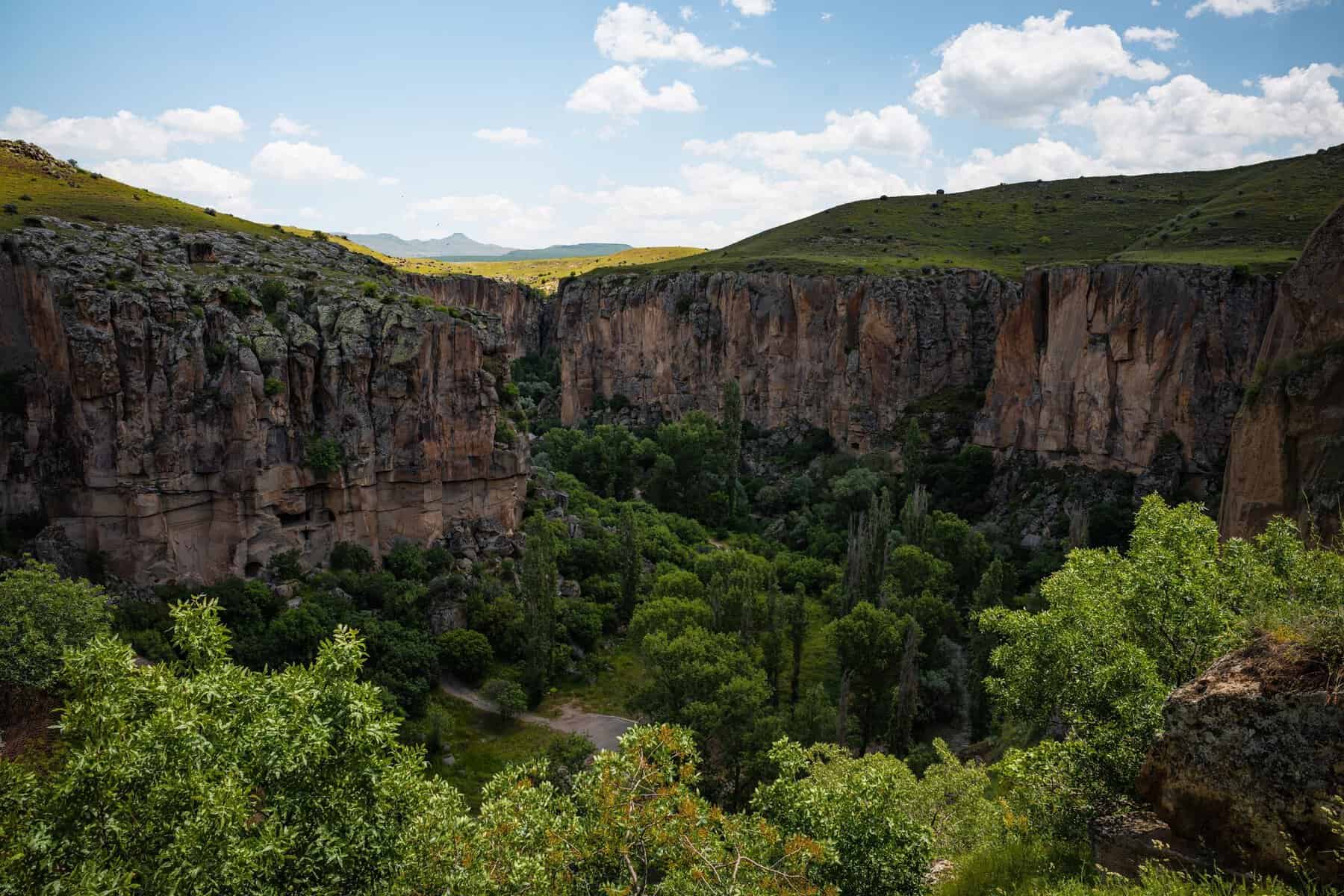
Ihlara Valley
A deep, green canyon cut by the Melendiz river south-west of the main area. A riverside path runs along the bottom past more than a dozen painted rock churches, finishing near the great rock-cut Selime Monastery. Easily combined with Derinkuyu on the way.
Food, wine and pottery
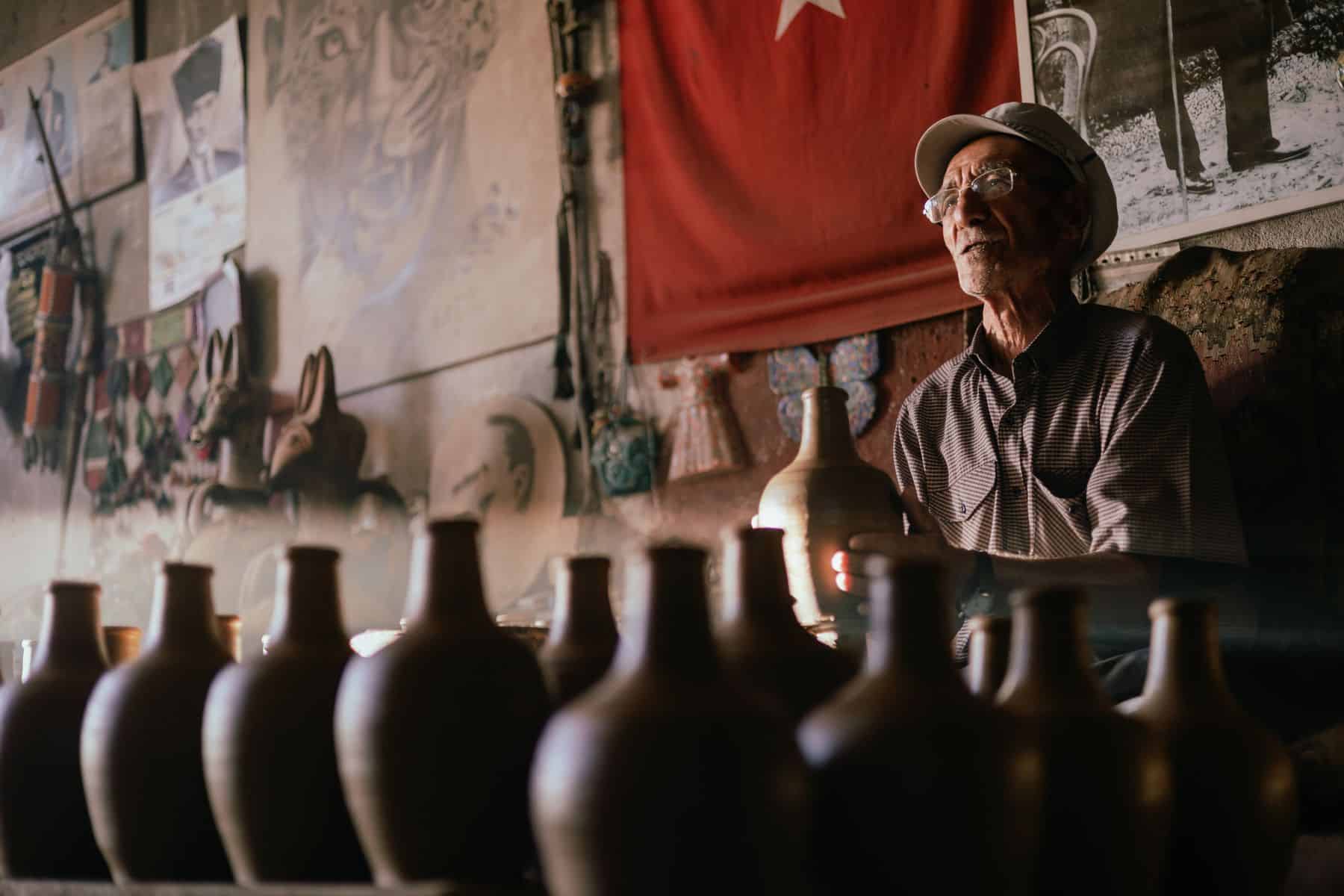
Testi kebab (pottery kebab) is the local speciality: meat and vegetables slow-cooked in a sealed clay pot, which is cracked open with a flourish at your table. Order it a few hours ahead in smaller restaurants.
From nearby Kayseri come mantı, tiny dumplings with yoghurt and chilli butter, and pastırma, air-dried spiced beef. Village restaurants serve gözleme, thin stuffed flatbreads cooked on a griddle, and big Turkish breakfasts of cheeses, olives, eggs, honey and fresh bread.
Try a glass of local wine with dinner. Vegetarians eat well, with plenty of mezze, lentil soup and stuffed vegetables.
Pottery to take home: the workshops of Avanos have been turning red river clay for generations. Watch a master potter at the wheel, try it yourself, or buy a hand-painted bowl.
Best time to visit Cappadocia
Cappadocia is high and inland, so it has hot, dry summers and cold winters. April to June is lovely, with wild flowers, green valleys and warm days around 17 to 25°C. July and August are hot and dry, with highs around 30°C, but the nights are cool and early mornings are perfect for balloons and walks. September and October are our favourite months: warm, settled and golden, with the grape harvest. November to March is cold, often below freezing at night, and snow is common from December to February. A snowy Cappadocia under balloons is magical, but more flights are cancelled, so allow an extra morning.
| Month | Average high | Average low | Rain |
|---|---|---|---|
| Jan | 5°C | -4°C | 50 mm |
| Feb | 7°C | -3°C | 40 mm |
| Mar | 11°C | 0°C | 70 mm |
| Apr | 17°C | 4°C | 35 mm |
| May | 21°C | 8°C | 55 mm |
| Jun | 25°C | 12°C | 40 mm |
| Jul | 30°C | 15°C | 0 mm |
| Aug | 31°C | 16°C | 5 mm |
| Sep | 26°C | 12°C | 10 mm |
| Oct | 20°C | 7°C | 15 mm |
| Nov | 13°C | 2°C | 30 mm |
| Dec | 8°C | -1°C | 45 mm |
Göreme area, average daily high and low and monthly rain or snow (as water), 10-year ERA5 data.
How to get to Cappadocia from Istanbul and the UK
By air from Istanbul: the easiest way. Domestic flights from both Istanbul airports take about 1 hour 20 minutes to Nevşehir Kapadokya airport, about 40 minutes’ drive from Göreme, or to Kayseri, about 1 hour 15 minutes away with more flights. We’ll arrange a private transfer to meet you.
From the UK: there are no regular direct flights, so most people fly to Istanbul (about 4 hours) and connect, or spend a few nights in Istanbul first. Istanbul and Cappadocia is the classic Turkey pairing.
By road: Istanbul to Cappadocia is about 730 km, a long day’s drive or an overnight bus of around 10 hours. From the Mediterranean coast at Antalya it’s around 8 hours, best broken in Konya, home of the Mevlana Museum and the whirling dervishes.
Cappadocia to Istanbul: the same flights in reverse, or continue by air to Izmir for Ephesus or to Antalya for the coast.
Getting around
The main villages are close together (Göreme to Ürgüp is about 15 minutes’ drive), but the sights are spread out, and public buses are infrequent. The easiest way to see Cappadocia is with a private driver and guide for a day or two, then explore the valleys on foot. Local day tours are often sold as the “red tour” (the northern sights, including the Open-Air Museum, Paşabağ and Avanos) and the “green tour” (Derinkuyu or Kaymaklı, Ihlara and Selime). If you’re confident on the roads, a hire car works well: driving is straightforward, though parking at the main sights fills up by mid-morning.
Where to stay in Cappadocia
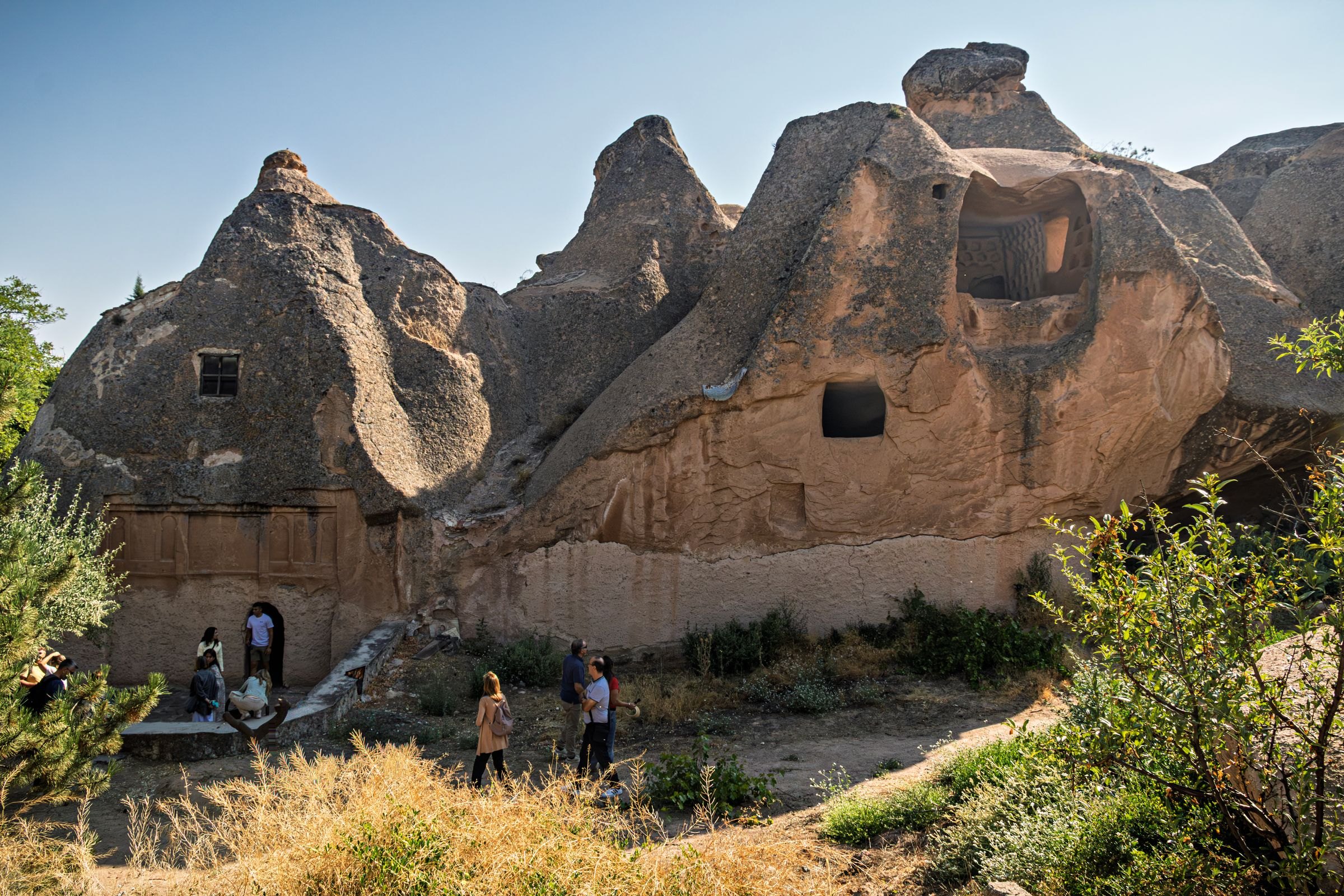
A cave hotel is part of the experience: rooms cut into the rock, cool in summer and cosy in winter, often with terraces for watching the balloons. Here’s how the bases compare:
Göreme is the heart of things, with the most choice and restaurants, the Open-Air Museum on the doorstep and balloons drifting right over the village. Lively, and busy with day visitors.
Uçhisar is quieter and more upmarket, with some of the most stylish cave hotels and the widest views. Ürgüp is a proper small town with good restaurants and wineries, and grand stone houses on the hill. Ortahisar and Mustafapaşa are peaceful villages with character, for a slower stay.
Tell us your style and we’ll match the right cave hotel; for balloon views, ask for a room with its own terrace.
How many days in Cappadocia? Sample routes
Three nights is right for most people: a morning for the balloons with a spare morning in case it’s cancelled, a day for the Open-Air Museum, Uçhisar and the valleys, and a day for an underground city and Ihlara. Two nights is the minimum; walkers and anyone who wants to slow down will happily stay four or five.
Cappadocia short break
- Fly Istanbul to Nevşehir or Kayseri
- Cappadocia cave hotel (3 nights)
- Fly back to Istanbul
Balloon flight on the first morning, then the valleys, the Open-Air Museum and an underground city.
Istanbul and Cappadocia
- Istanbul (4 nights)
- Cappadocia (3)
The classic first trip to Turkey: mosques, bazaars and the Bosphorus, then the fairy chimneys.
Istanbul, Cappadocia and the coast
- Istanbul (3 nights)
- Cappadocia (3)
- Antalya, Kaleiçi (2)
- Kaş or Kalkan (4)
Fly from Cappadocia to Antalya and finish on the Turquoise Coast.
Adding the coast? See our Antalya and Turquoise Coast guide for Kaleiçi, Side, Olympos, Kaş and the Lycian Way, and our Turkey holidays for more ideas.
Ways to see Cappadocia with us
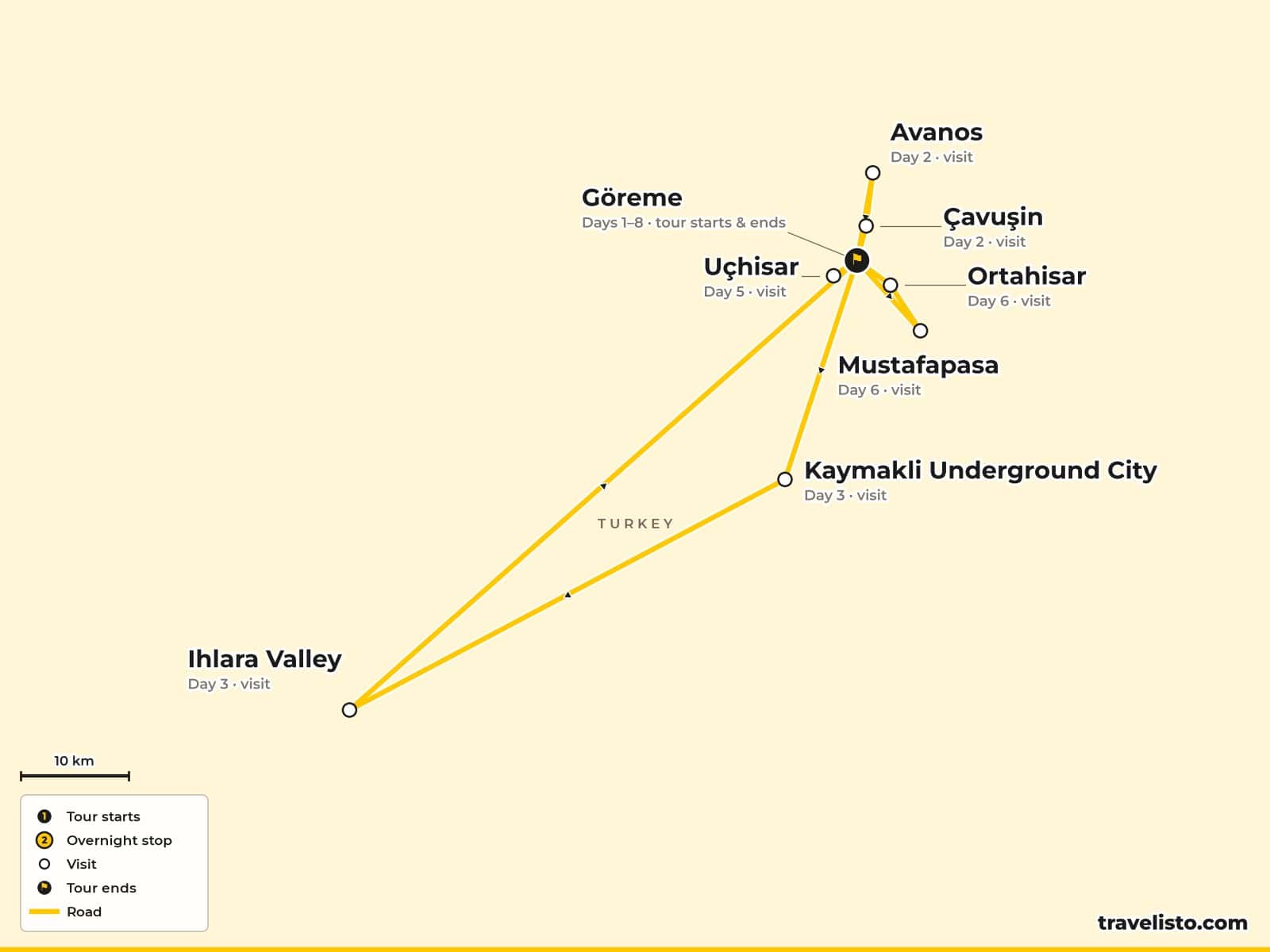
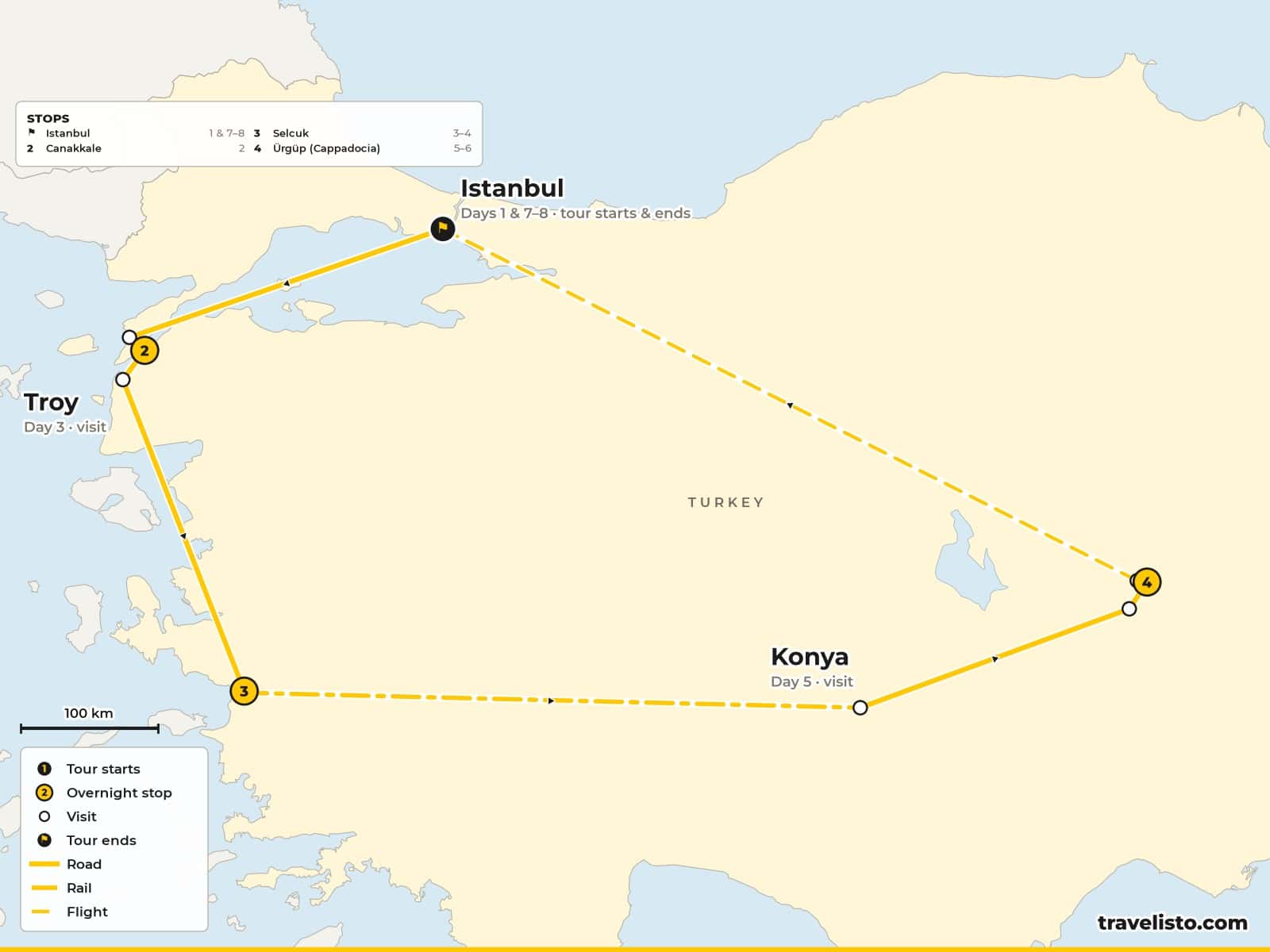
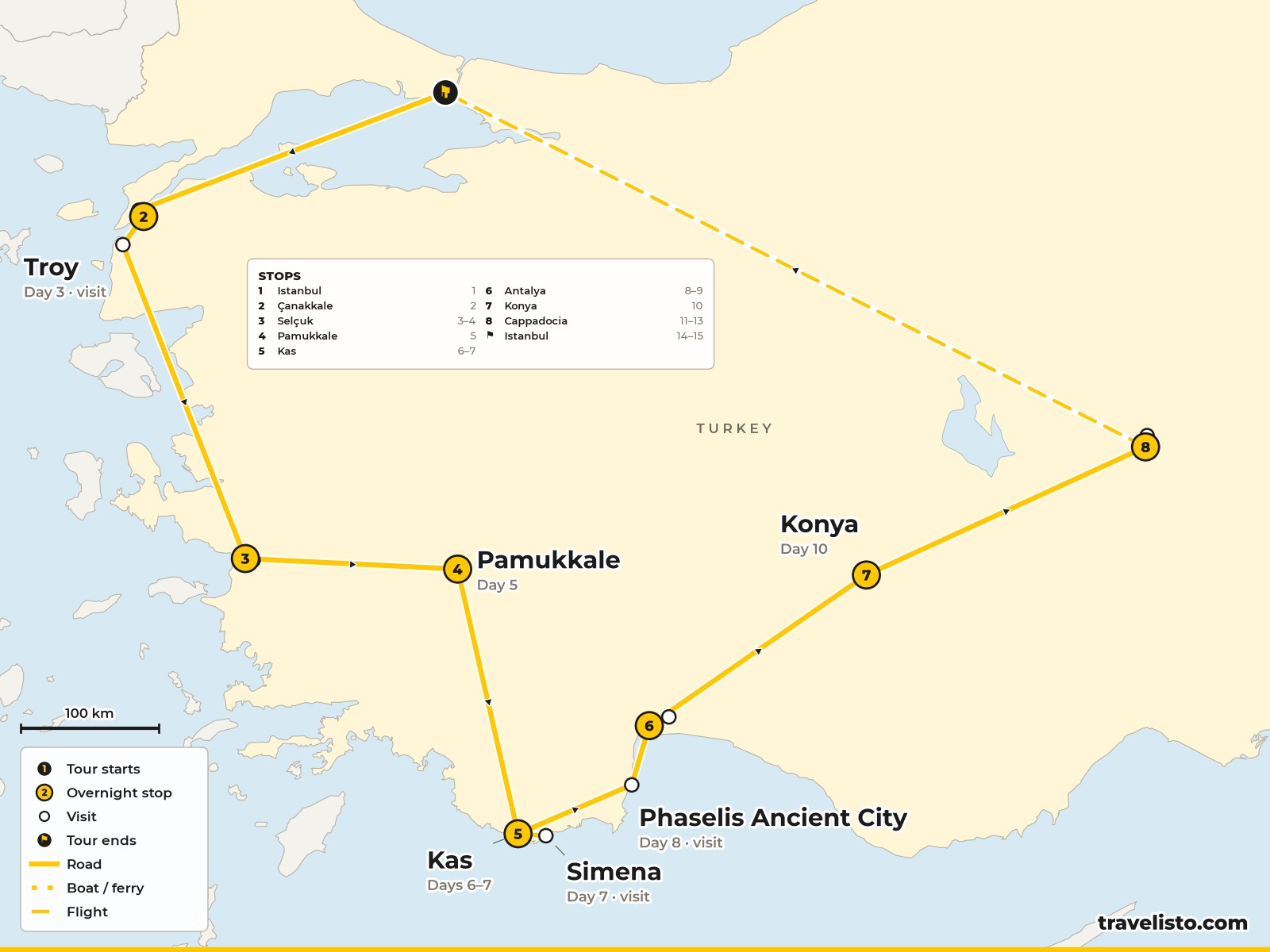
Prefer your own pace? A tailor-made Turkey holiday can pair Cappadocia with Istanbul, Ephesus or the coast, with private guides, a private balloon basket and the cave hotel to suit you. Browse all our escorted tours of Turkey.
Practical tips
- Entry: British visitors don’t need a visa for stays of up to 90 days in any 180; your passport must be valid for at least 150 days after you arrive. Check the FCDO Turkey advice before you go.
- Safety: read the current FCDO Turkey travel advice before you book and again before you travel.
- Balloon first: book the flight for your first morning and keep the others free in case it’s cancelled.
- Layers: even in summer, dawn is chilly; in winter, bring a warm coat, hat and boots with grip.
- Shoes: the valley paths are sandy and steep in places, and the underground cities are uneven. Bring proper walking shoes.
- Money: cards are widely taken, but carry some Turkish lira for village cafés and tips.
- Respect: cover shoulders and knees in mosques, and don’t touch the frescoes or use flash in the churches.
Frequently asked questions
How many days do you need in Cappadocia?
Three nights is ideal: a morning for the balloons with a spare in case of cancellation, a day for Göreme Open-Air Museum, Uçhisar and the valleys, and a day for an underground city and Ihlara Valley. Two nights is the minimum.
How do you get from Istanbul to Cappadocia?
Fly from either Istanbul airport to Nevşehir Kapadokya or Kayseri, about 1 hour 20 minutes. Nevşehir is about 40 minutes from Göreme and Kayseri about 1 hour 15 minutes. Overnight buses take around 10 hours.
What is the best time to visit Cappadocia?
April to June and September to October, for warm days, cool nights and the most settled weather for balloon flights. Summer is hot and dry; winter is cold and often snowy, with more flights cancelled.
Do hot air balloons fly every day in Cappadocia?
Only when the authorities judge conditions safe at sunrise. Wind, rain, snow or low cloud can ground them, most often from November to March, so book your first morning and keep spare mornings free.
Which underground city is best, Derinkuyu or Kaymaklı?
Derinkuyu is the deepest, with around eight levels open; Kaymaklı is wider, with four levels open and narrower tunnels. Both are impressive, and most people visit just one.
Where is the best place to stay in Cappadocia?
Göreme for the most choice and the balloons overhead, Uçhisar for quieter, upmarket cave hotels and views, and Ürgüp for a small town with good restaurants and wineries.
Is Cappadocia safe to visit?
Yes. The FCDO's only advice against travel in Turkey covers the area within 10 km of the Syrian border, roughly 300 km away in the far south-east. Check the latest FCDO advice before you travel.
Can you visit Cappadocia in winter?
Yes. It's cold and often snowy from December to February, which makes the fairy chimneys and balloons look magical, but balloon flights are cancelled more often, so allow extra mornings.
Keep planning
- Turkey holidays
- Escorted tours of Turkey
- Antalya and the Turquoise Coast guide
- Antalya holidays
- Best spa hotels in Turkey
- Georgia holiday guide
- Tailor-made holidays
- Escorted tours
Plan your Cappadocia holiday with a Travel Designer
Tell us when you’d like to go and we’ll plan Cappadocia with Istanbul or the coast, with a cave hotel, balloon flight, private guides and flights, in one ATOL-protected booking.
Make an enquiry Turkey holidays