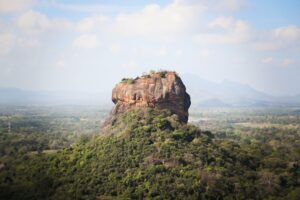
Dambulla Cave Temple is Sri Lanka’s Golden Rock masterpiece — an extraordinary religious complex hewn from living rock and adorned with over 2,100 m² of murals and more than 150 Buddha statues. Located in the heart of the Cultural Triangle, this still‑active monastery has been a pilgrimage site since the 1st century BC, making it both historically rich and spiritually compelling. The Dambulla Cave Temple is carved into a rock outcrop approximately 150–160 metres high. Its natural drip-lines, carved into the rock, protect the structure from rainfall and enhance its dramatic appearance. Visitors are rewarded with panoramic views of the surrounding plains and a distant sighting of Sigiriya. The gentle staircase ascent is manageable for most travellers. Practical Details: The site typically operates from early morning until evening (ticket office closes slightly earlier). Entrance fees are modest. Remember to dress respectfully (covering shoulders and legs) and remove your footwear before entering. Best Time to Visit: The period between December and March offers cooler, drier weather. Early mornings or late afternoons are ideal for comfort and softer lighting on the murals. Getting There: Dambulla Cave Temple is located just north of Dambulla town—easily reachable by short drive or tuk‑tuk, typically under 5 minutes. It pairs naturally with a full-day Cultural Triangle itinerary. Combine with Other Highlights: Popular options include starting at the Dambulla Cave Temple in the morning, then heading to Sigiriya, followed by wildlife watching in Minneriya or a visit to archaeological sites like Anuradhapura or Polonnaruwa.
Dambulla
Why Visit the Dambulla Cave Temple?
Visitor Experience: What to Expect
Nearby Attractions in the Cultural Triangle
Travel Tips & Practical Advice
Further Readings
Popular Sri Lanka Tours
Holidays in Sri Lanka. Destinations Guide, Dambulla
In this story
[postlist id=10295]