The best time to visit Spain for most trips is May, June or September: warm, sunny and dry almost everywhere, with the sea warm enough to swim on the Mediterranean coast and the cities not yet (or no longer) baking. For city breaks and touring Andalucía, March to May and October to November are better, because Seville and Madrid often pass 35°C in July and August. For a beach holiday in July and August, any coast works, and for winter sun the Canary Islands are warm all year, at about 20°C to 21°C by day even in January.
Spain is a big country with four quite different climates, so the right month depends on where you are going. This guide uses ten years of weather data for eleven places, from the Costa del Sol and the Balearics to the Canaries, Madrid, Seville and San Sebastián, to show what each month is really like, region by region. It also answers when Spain is hottest, where is still warm in October and in winter, and when the big festivals are. When you are ready, our Spain holidays page has the resorts, hotels and tours.
The quick answer
- Best overall: May, June and September, for warm, dry weather on the coasts and comfortable cities.
- Best for beaches: June to September on the mainland and the Balearics; the Canaries all year.
- Best for cities and Andalucía: March to May and October to November.
- Hottest: late July and August, when Seville averages 37°C and Madrid 33°C to 34°C.
- Winter sun: the Canary Islands (20°C to 21°C in January), or the Costa del Sol at about 16°C to 17°C.
- Wettest: the green north all year (San Sebastián about 1,700 mm a year); the Mediterranean coast in autumn storms.

Spain’s four climates, in one minute
- The Mediterranean coast and the Balearics (Costa Brava, Barcelona, Costa Blanca, Costa del Sol, Majorca, Menorca and Ibiza) have hot, dry summers and mild, fairly sunny winters. Most of the rain falls between September and April, often in short, heavy storms in autumn.
- The interior (Madrid, Seville, Córdoba, Granada) is the extreme one: very hot summers, cold winter nights and big swings between day and night. Seville is one of the hottest cities in Europe in summer; Madrid, at about 650 m, has frosty winter nights.
- The green north (the Basque Country, Cantabria, Asturias and Galicia) is Atlantic: mild, green and wet, with warm rather than hot summers. It is the one part of Spain where a summer holiday needs a raincoat.
- The Canary Islands, off the coast of Africa, are subtropical: about 20°C to 30°C by day all year, with very little rain in the southern resorts. That is why they are Britain’s favourite winter-sun destination.
Spain weather by region and month, at a glance
This is our verdict for each part of Spain, month by month, based on the weather figures below and our Travel Designers’ experience. “Mixed” on the mainland coasts in winter means mild and often sunny but too cool for most people to swim.
| Month | Costa del Sol | Costa Blanca | Balearics | Canary Islands | Barcelona and Costa Brava | Madrid | Seville and inland Andalucía | The north (San Sebastián, Bilbao) |
|---|---|---|---|---|---|---|---|---|
| January | Mixed | Mixed | Mixed | Good | Mixed | Mixed | Mixed | Wet |
| February | Mixed | Mixed | Mixed | Good | Mixed | Mixed | Good | Wet |
| March | Mixed | Mixed | Mixed | Good | Mixed | Mixed | Good | Wet |
| April | Good | Good | Mixed | Good | Mixed | Good | Good | Mixed |
| May | Good | Good | Good | Good | Good | Good | Good | Mixed |
| June | Good | Good | Good | Good | Good | Good | Very hot | Good |
| July | Good | Good | Good | Good | Good | Very hot | Very hot | Good |
| August | Good | Good | Good | Good | Good | Very hot | Very hot | Good |
| September | Good | Good | Good | Good | Good | Good | Good | Good |
| October | Good | Good | Good | Good | Mixed | Good | Good | Mixed |
| November | Mixed | Mixed | Mixed | Good | Mixed | Mixed | Good | Wet |
| December | Mixed | Mixed | Mixed | Good | Mixed | Mixed | Mixed | Wet |
Good warm and mostly dry Mixed cooler or changeable, still fine for sightseeing Wet the rainiest months there Very hot 33°C or more on average
Spain weather month by month
These are the average daily high and low temperatures and the average monthly rainfall for Málaga, the gateway to the Costa del Sol, with our verdict for Spain as a whole.
| Month | Avg high | Avg low | Rain | Our verdict |
|---|---|---|---|---|
| January | 16°C | 9°C | 50 mm | Mild and sunny on the coast, too cool for most to swim; the Canaries are warmest |
| February | 17°C | 10°C | 30 mm | Similar to January, with almond blossom inland; carnival in the Canaries |
| March | 19°C | 11°C | 70 mm | Spring arrives; can be showery. Las Fallas in Valencia. Good for cities |
| April | 20°C | 13°C | 45 mm | Warm and green; Easter week and the Seville Fair. Excellent for Andalucía |
| May | 24°C | 16°C | 25 mm | One of the best months: warm, dry and not yet crowded |
| June | 28°C | 20°C | 5 mm | Hot and sunny everywhere; the sea warms up. Our pick for a beach holiday |
| July | 31°C | 23°C | 0 mm | Hot, dry and busy; inland cities very hot. Peak beach season |
| August | 31°C | 23°C | 5 mm | The hottest and busiest month; many Spaniards are on holiday |
| September | 28°C | 20°C | 30 mm | Still hot, with the warmest sea of the year and thinner crowds |
| October | 24°C | 17°C | 50 mm | Warm on the coast and in Andalucía; storms more likely. Great for cities |
| November | 20°C | 13°C | 70 mm | Cooler and wetter on the mainland; the Canaries come into their own |
| December | 17°C | 11°C | 40 mm | Mild on the Costa del Sol; Christmas markets in the cities; Canaries for sun |
Source: ERA5 reanalysis via the Open-Meteo archive, daily data 2014 to 2023, averaged by month. Figures are modelled for a point rather than measured at one weather station, so they can differ slightly from airport records. Rainfall is rounded to the nearest 5 mm; individual years vary.
Weather by region: the costas, the islands, the cities and the north
This table compares the same ten years of data for eleven places: average high, average low and monthly rainfall.
| Month | Málaga (Costa del Sol) | Benidorm (Costa Blanca) | Palma (Majorca) | Costa Adeje (Tenerife) | Maspalomas (Gran Canaria) | Lanzarote | Barcelona | Madrid | Seville | Granada | San Sebastián |
|---|---|---|---|---|---|---|---|---|---|---|---|
| January | 16° / 9° · 50 mm | 15° / 8° · 50 mm | 14° / 9° · 45 mm | 20° / 15° · 15 mm | 21° / 15° · 20 mm | 20° / 15° · 5 mm | 13° / 5° · 45 mm | 10° / 1° · 35 mm | 16° / 6° · 35 mm | 13° / 3° · 50 mm | 12° / 6° · 220 mm |
| February | 17° / 10° · 30 mm | 16° / 9° · 20 mm | 15° / 8° · 45 mm | 20° / 14° · 15 mm | 21° / 15° · 25 mm | 20° / 15° · 20 mm | 14° / 6° · 35 mm | 13° / 2° · 30 mm | 18° / 8° · 30 mm | 14° / 4° · 50 mm | 13° / 6° · 165 mm |
| March | 19° / 11° · 70 mm | 17° / 10° · 65 mm | 17° / 10° · 40 mm | 21° / 15° · 10 mm | 22° / 16° · 20 mm | 21° / 15° · 5 mm | 16° / 8° · 40 mm | 16° / 4° · 50 mm | 21° / 9° · 65 mm | 17° / 5° · 100 mm | 15° / 8° · 155 mm |
| April | 20° / 13° · 45 mm | 19° / 12° · 40 mm | 20° / 12° · 45 mm | 21° / 15° · 10 mm | 22° / 16° · 25 mm | 22° / 16° · 5 mm | 18° / 10° · 60 mm | 19° / 7° · 60 mm | 23° / 12° · 55 mm | 20° / 8° · 70 mm | 17° / 9° · 120 mm |
| May | 24° / 16° · 25 mm | 22° / 15° · 30 mm | 23° / 15° · 40 mm | 22° / 16° · 5 mm | 24° / 18° · 10 mm | 23° / 18° · 0 mm | 21° / 14° · 50 mm | 24° / 11° · 30 mm | 29° / 16° · 30 mm | 25° / 12° · 35 mm | 19° / 12° · 120 mm |
| June | 28° / 20° · 5 mm | 27° / 19° · 15 mm | 28° / 20° · 25 mm | 23° / 18° · 10 mm | 26° / 19° · 5 mm | 25° / 19° · 0 mm | 26° / 18° · 30 mm | 29° / 16° · 15 mm | 33° / 19° · 10 mm | 30° / 16° · 20 mm | 22° / 15° · 105 mm |
| July | 31° / 23° · 0 mm | 30° / 22° · 5 mm | 32° / 23° · 5 mm | 25° / 19° · 0 mm | 29° / 22° · 0 mm | 26° / 21° · 0 mm | 28° / 21° · 30 mm | 34° / 20° · 10 mm | 37° / 22° · 0 mm | 35° / 21° · 5 mm | 24° / 17° · 75 mm |
| August | 31° / 23° · 5 mm | 30° / 23° · 20 mm | 31° / 23° · 20 mm | 27° / 21° · 0 mm | 30° / 23° · 0 mm | 28° / 21° · 0 mm | 28° / 21° · 55 mm | 33° / 19° · 10 mm | 37° / 22° · 0 mm | 34° / 20° · 5 mm | 24° / 17° · 100 mm |
| September | 28° / 20° · 30 mm | 27° / 20° · 50 mm | 28° / 21° · 70 mm | 26° / 20° · 15 mm | 28° / 22° · 10 mm | 27° / 21° · 5 mm | 25° / 18° · 90 mm | 27° / 15° · 50 mm | 31° / 19° · 30 mm | 29° / 16° · 25 mm | 23° / 16° · 110 mm |
| October | 24° / 17° · 50 mm | 23° / 17° · 40 mm | 24° / 17° · 60 mm | 25° / 20° · 15 mm | 27° / 21° · 20 mm | 26° / 20° · 15 mm | 22° / 15° · 95 mm | 22° / 11° · 65 mm | 27° / 16° · 60 mm | 24° / 12° · 45 mm | 20° / 14° · 120 mm |
| November | 20° / 13° · 70 mm | 19° / 12° · 45 mm | 19° / 13° · 60 mm | 23° / 18° · 15 mm | 24° / 18° · 20 mm | 23° / 18° · 15 mm | 17° / 9° · 60 mm | 14° / 6° · 55 mm | 20° / 11° · 65 mm | 17° / 7° · 75 mm | 16° / 10° · 230 mm |
| December | 17° / 11° · 40 mm | 16° / 9° · 30 mm | 16° / 10° · 30 mm | 22° / 16° · 15 mm | 22° / 16° · 15 mm | 21° / 16° · 5 mm | 15° / 6° · 25 mm | 11° / 3° · 45 mm | 17° / 8° · 60 mm | 14° / 4° · 65 mm | 14° / 8° · 175 mm |
Source: ERA5 reanalysis via the Open-Meteo archive, 2014 to 2023. Madrid is modelled at 667 m and Granada at 694 m. Airport and station averages: two places read differently from the official records. The Alicante weather station, near Benidorm, averages about 17°C in January and 31°C in August, with only 25 mm or so of rain a month in winter (AEMET, 1991 to 2020), so the Costa Blanca is a degree or two warmer and drier in winter than our Benidorm figures. Central Barcelona averages lows of about 8°C in January, not 5°C (AEMET, 1994 to 2020), because the reanalysis square takes in cooler ground inland. Island grid squares can also read a degree cooler than the beaches, so the Canaries are often 1°C to 2°C warmer in the sun than shown.
Costa del Sol
The Costa del Sol, from Málaga and Benalmádena to Marbella and Estepona, has the mildest winters on the Spanish mainland: about 16°C to 17°C by day from December to February in our data. The beach season runs from May to October, with highs of 24°C in May, 31°C in July and August and still 24°C in October. Summer is almost rainless, while March and November are the wettest months (about 70 mm). For somewhere to stay, our guide to where to stay on the Costa del Sol compares the resorts, and hotels such as Gran Meliá Don Pepe and Iberostar Selection Marbella Coral Beach are on the beach in Marbella.
Costa Blanca
The Costa Blanca, around Alicante, Benidorm, Altea and Calpe, is one of the driest and sunniest corners of Europe. Summers are hot (30°C in July and August) and winters mild, with Alicante averaging about 17°C in January at its official weather station. The best months for a beach holiday are June to September, and April, May and October are lovely for walking and touring the hill villages. The main risk is a short, heavy autumn storm, most often in September and October. See our best hotels on the Costa Blanca or stay at Meliá Benidorm or Estimar Calpe Suitopia.
Majorca, Menorca and Ibiza
The Balearic Islands are a little cooler than the southern costas in spring and winter (14°C to 17°C in Palma from December to March) but just as hot in summer: 31°C to 32°C in July and August. The beach season is May or June to early October. The best time to go to Majorca for warm weather without the peak crowds is June or September; May and October suit walking, cycling and the old towns. September is the wettest month in Palma in our data (about 70 mm), usually from short storms. Menorca is quieter and a little windier, and Ibiza‘s club season runs from about May to early October. Our guide to Majorca vs Menorca vs Ibiza helps you choose, and Palma works all year as a city break. On the north coast, Cap Vermell Grand Hotel is a quiet retreat, and Alcázar Hotel Sóller is a base for the Tramuntana mountains.
The Canary Islands
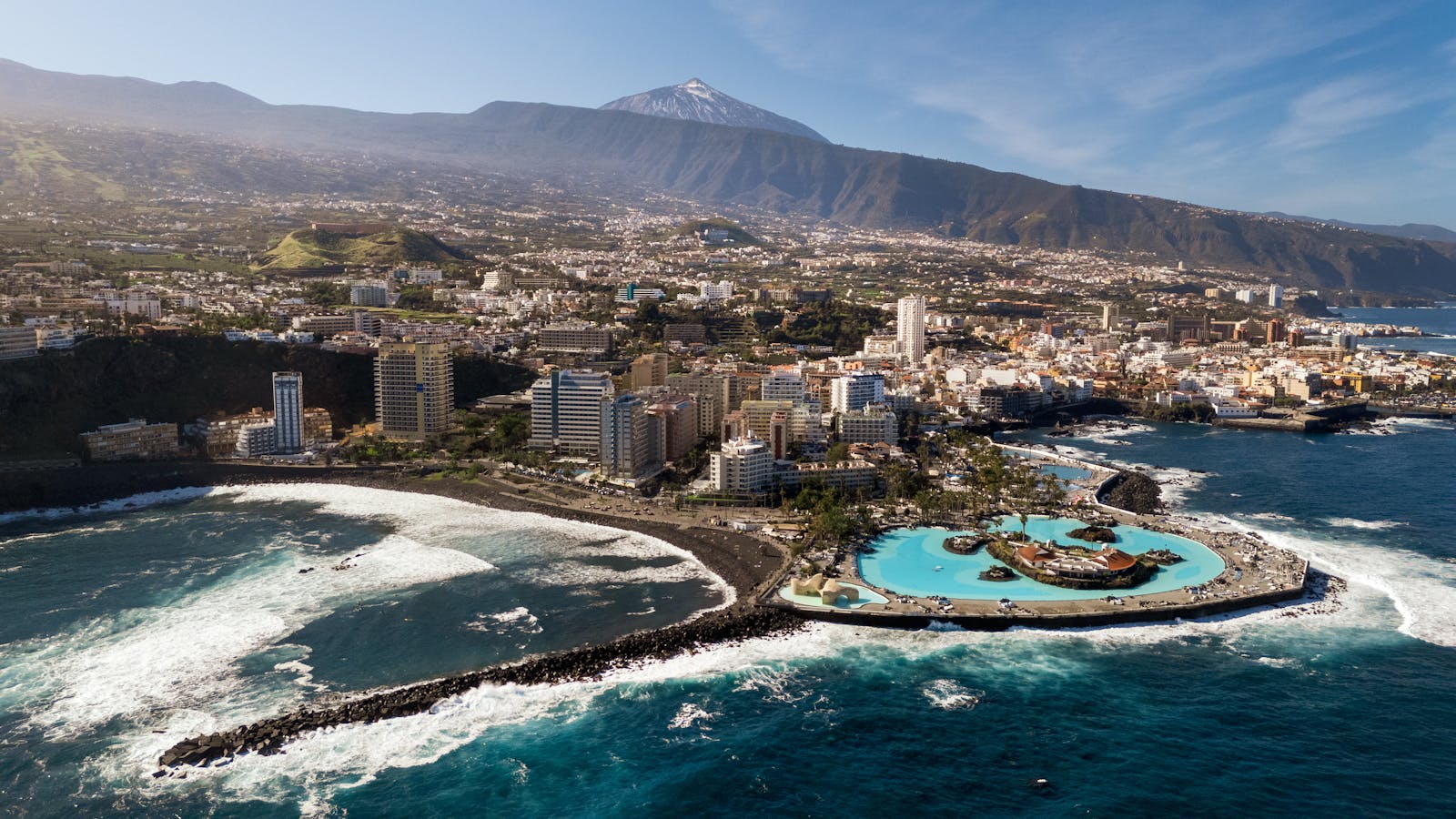
The Canary Islands are the answer to “where is hot in Spain in winter”. In our data the southern resorts of Tenerife, Gran Canaria and Lanzarote average 20°C to 22°C by day from December to March and 27°C to 30°C in August, with very little rain at any time of year. The sea is coolest from about February to April, so some people find it bracing in winter. Which island is warmest? The differences are small: in January our data has Maspalomas in southern Gran Canaria at 21°C and Costa Adeje and Lanzarote at 20°C, and the north of each island is cloudier and cooler than the south. Fuerteventura and Lanzarote are the windiest, which suits kitesurfers. Our guide to which Canary Island is best compares them, and Bahía del Duque in Tenerife, Lopesan Costa Meloneras in Gran Canaria and Princesa Yaiza in Lanzarote are three of our favourite winter-sun hotels.
Barcelona and the Costa Brava
Barcelona and the Costa Brava are the coolest part of the Mediterranean coast: about 13°C to 15°C by day in winter and 28°C in July and August. The beach season is June to September. Late spring and early autumn are ideal for the city, as long as you allow for rain: September and October are the wettest months (about 90 mm to 95 mm), often from heavy storms. The coves of the Costa Brava are at their best in June and September, when the water is warm and the car parks are not full; see our guide to the best Costa Brava coves. In Barcelona, try H10 Marina Barcelona near the beach, or on the coast, Golden Bahía de Tossa in Tossa de Mar.
Madrid
Madrid sits on a high plateau, so it has hot, dry summers (34°C in July in our data) and cold winters, with nights close to freezing from December to February. The best months for a city break are April to June and September to October, when days are 19°C to 29°C. August is very hot and many family-run bars and restaurants close while Madrileños go on holiday. Winter, with crisp, sunny days of 10°C to 13°C, is a good time for the museums and the Christmas lights. Our guide to things to do in Madrid has walking routes, food and bars, and our pick of luxury hotels in Madrid has somewhere to stay.
Seville and inland Andalucía
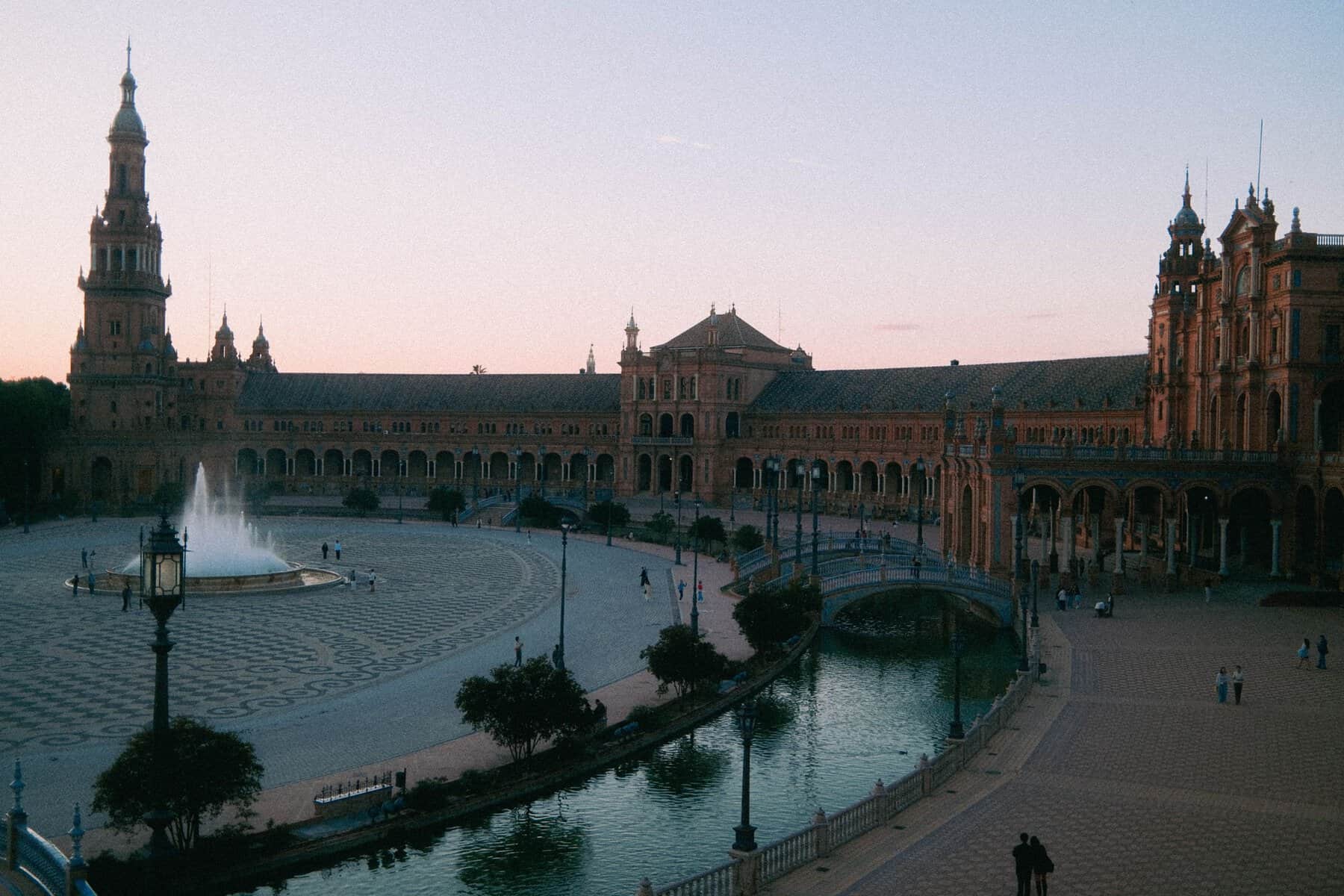
Seville, Córdoba and Granada are wonderful in spring and autumn and hard work in high summer. In our data Seville averages 37°C in July and August, with nights of 22°C, and Granada 35°C. The best time to go to Andalucía for touring is March to May, when the orange blossom is out and the days are 21°C to 29°C, or October and November (20°C to 27°C). Winter is mild by day (16°C to 18°C in Seville) but chilly at night, especially in Granada, where the Sierra Nevada is snow-capped. Join our Classical Spain tour of Seville, Córdoba and Granada or Highlights of Andalucía, or add a beach with Luxury Andalucía and Marbella Beach. For hotels, see the best hotels in Málaga and Seville, such as Hotel Sevilla Center.
San Sebastián, Bilbao and the green north
The north coast has a completely different climate. San Sebastián gets about 1,700 mm of rain a year in our data, more than twice as much as London, and even in July it has about 75 mm. Summers are warm rather than hot (24°C in July and August), which is exactly why many Spaniards head there. The best time to visit is June to September; May and October can be lovely but are less reliable, and November to February are wet. Our Northern Spain: Madrid, Santiago and San Sebastián and Historic Paradores of Northern Spain tours run in the warmer months, and walkers can try Hiking the Picos de Europa.
When is summer in Spain, and when is it hottest?
Summer in Spain runs from June to September, and the hottest weeks are usually from mid-July to mid-August. In our data July and August average 37°C in Seville, 33°C to 35°C in Granada and Madrid, 31°C to 32°C on the Costa del Sol and in Majorca, and 28°C in Barcelona. Heatwaves can push the interior above 40°C. The sea is warmest from August to early October, at roughly 23°C to 26°C on the Mediterranean.
Spain in August
August is the peak of the Spanish holiday season as well as the British one, so beaches, flights and hotels are at their busiest. It is a great month for a family beach holiday on the Costa Blanca, the Costa del Sol or the Balearics, or for the cooler north coast. It is the worst month for a city break in Seville, Córdoba or Madrid. If you have to travel in August, book early and look at our family hotels with waterparks.
Is Spain warm in October?
Yes, in the south and on the islands. In October our data has the Canaries at 25°C to 27°C, Seville at 27°C and the Costa del Sol and Majorca at 24°C, and the sea is still warm from the summer. October is often the best month of the year for Andalucía. The hottest part of Spain in October is the Canary Islands, followed by Seville and the Costa del Sol. Barcelona (22°C) and Madrid (22°C) are pleasantly mild, and the north is cooler and wetter. See also where is hot for October half-term.
Where is hottest in Spain in May and September?
In May the hottest part of the mainland is inland Andalucía: about 29°C in Seville and 25°C in Granada, against 21°C to 24°C on the coasts. The sea is still cool in May (about 17°C to 19°C). In September Seville still averages 31°C, and the Costa del Sol, Majorca and Ibiza are about 28°C, with the warmest sea of the year.
Where is warm in Spain in winter?
The Canary Islands are the only part of Spain that is reliably beach-warm from November to March. On the mainland, the Costa del Sol is the mildest, at about 16°C to 17°C by day in January, followed by the Costa Blanca. These are lovely for walking, golf and sightseeing, but few people swim. Seville and Málaga make good winter city breaks. Read our guides to where is hot in November and the best winter-sun hotels under five hours from the UK.
The best month for each experience
| Best month for | When | Where |
|---|---|---|
| A beach holiday on the mainland | June to September | Costa del Sol, Costa Blanca, Costa Brava |
| A beach holiday in the islands | June to September (Balearics); all year (Canaries) | Majorca, Menorca, Ibiza; Tenerife, Gran Canaria, Lanzarote |
| Winter sun | November to March | The Canary Islands; the Costa del Sol for mild walking weather |
| City breaks | March to May and October to November | Madrid, Seville, Barcelona, Granada, Valencia |
| Touring Andalucía | March to May and October | Seville, Córdoba, Granada, the white villages |
| Walking and hiking | April to June and September to October; June to September in the mountains of the north | Andalucía, Majorca’s Tramuntana, the Picos de Europa |
| Walking in the Canaries | October to May | Tenerife and La Gomera |
| Food and wine | September and October, the grape harvest | La Rioja, the Basque Country, Catalonia |
| Festivals | March to April (Fallas, Easter, the Seville Fair) and July (San Fermín) | Valencia, Seville, Pamplona |
| Value and fewer crowds | November to March on the mainland (outside Christmas and half-term); May and late September | Everywhere except ski and winter-sun hotspots |
Festivals and holidays in Spain
- Three Kings (5 and 6 January): parades on the evening of the 5th and presents on the 6th, a bigger day than Christmas for many Spanish families.
- Carnival (February or March): the biggest are in Santa Cruz de Tenerife, Las Palmas de Gran Canaria and Cádiz.
- Las Fallas, Valencia (15 to 19 March): giant satirical sculptures, fireworks and a final night of bonfires.
- Semana Santa (Easter week, March or April): solemn processions across Spain, most famously in Seville, Málaga and Granada. Hotels book up early.
- Feria de Abril, Seville (usually two weeks after Easter): a week of flamenco dresses, horses, music and casetas.
- San Fermín, Pamplona (6 to 14 July): the running of the bulls.
- La Tomatina, Buñol (last Wednesday of August): the tomato fight near Valencia.
- La Mercè, Barcelona (around 24 September): the city’s biggest street festival, with human towers and fire runs.
- Christmas (December): markets and lights in Madrid, Barcelona and Málaga. Read about Catalonia in winter.
Spain month by month
Spain in January
January is the coolest month on the mainland: about 16°C by day on the Costa del Sol in our data, 13°C in Barcelona and 10°C in Madrid, where nights are close to freezing. The Canaries are the warmest part of Spain, at 20°C to 21°C. It is a quiet, good-value month for city breaks and walking, and the Three Kings parades fill the streets on 5 January.
Spain in February
February is similar to January, a degree or so warmer, and often dry and sunny: Málaga averages about 30 mm of rain and Benidorm 20 mm. The almond trees blossom inland in Andalucía and Majorca. Carnival brings huge parties to Santa Cruz de Tenerife, Las Palmas and Cádiz. February half-term is a popular week for the Canaries.
Spain in March
March is the start of spring, with highs of about 16°C to 21°C on the mainland and some showers (about 70 mm in Málaga, the wettest month there with November). Seville reaches about 21°C, a lovely temperature for sightseeing. Las Fallas fills Valencia from 15 to 19 March, and Easter sometimes falls in late March.
Spain in April
April is warm and green: 20°C on the Costa del Sol, 23°C in Seville and 19°C in Madrid. It is one of the best months for Andalucía, though Easter week and the Seville Fair are busy and dearer. The sea is still cool for swimming, at about 14°C to 16°C, so for a beach holiday the Canaries are the safer bet. See where is hot at Easter.
Spain in May
May is one of the best months to visit Spain: warm (21°C to 24°C on the coasts, 29°C in Seville), mostly dry and not yet crowded. It is ideal for touring, walking and the first beach days, and long evenings make the cities lively. For families, see where is hot for May half-term.
Spain in June
June is our pick for a beach holiday: hot (27°C to 28°C on the Costa del Sol, Costa Blanca and in Majorca), dry and sunny, with the longest days and fewer crowds than July and August. The north coast warms up too (22°C in San Sebastián). Seville is already hot, at about 33°C. See where is hot in June.
Spain in July
July is hot and dry across Spain: 30°C to 32°C on the southern coasts and in the Balearics, 34°C in Madrid and 37°C in Seville. It is peak beach season and busy from the start of the UK school holidays. San Fermín runs in Pamplona from 6 to 14 July. For cities, go north to San Sebastián and Bilbao.
Spain in August
August is the hottest and busiest month. Seville and the interior regularly pass 35°C and can reach 40°C or more in a heatwave, and Spaniards take their own holidays, so beaches and coastal towns are full while some city restaurants close. The sea is very warm. La Tomatina is held in Buñol on the last Wednesday of the month.
Spain in September
September is one of the best months of all: the sea is at its warmest, the crowds thin out once schools go back, and it is still hot (28°C on the Costa del Sol and in Majorca, 31°C in Seville). It is also the start of the grape harvest. The one drawback is a higher chance of a heavy storm, especially in Barcelona, the Costa Blanca and the Balearics. See where is hot in September.
Spain in October
October is warm in the south and on the islands (24°C on the Costa del Sol and in Majorca, 27°C in Seville, 25°C to 27°C in the Canaries) and perfect for city breaks and Andalucía. It can be wet in Barcelona (about 95 mm in our data) and in the north. October half-term is a popular time for the Canaries.
Spain in November
November is cooler and one of the wettest months on the mainland coasts (about 70 mm in Málaga), though there are plenty of sunny days. The Canaries (23°C to 24°C) are the place for warmth. Seville and Málaga are pleasant for sightseeing at around 20°C, and it is a good-value month away from the islands.
Spain in December
December is mild on the Costa del Sol (17°C) and cold in Madrid (11°C by day, 3°C at night), where the Christmas lights and markets make it a festive city break. For winter sun, the Canaries average 22°C. Book Christmas and New Year early; it is one of the busiest weeks for the islands.
Holidays and tours that fit the season
Our Travel Designers plan Spain all year, matching the region to the month. These are good starting points; you can see all our small-group trips on our Spain tours page, and our guide to Spain escorted tours compared sets out who each one suits.
Spring and autumnWalking in Andalucía: Grazalema and the Caminito del Rey
SummerNorthern Spain: Madrid, Santiago and San Sebastián
Autumn to springWalking Tenerife and La Gomera
WinterSpain and Portugal in Winter: Madrid, Lisbon and Barcelona
Harvest timeSelf-Guided Cycling the Vineyards of La Rioja
Winter sunCanary Islands holidays
Summer beachBalearic Islands holidays
Planning tips from our Travel Designers
- Match the region to the month. Cities and Andalucía in spring and autumn, the coasts and islands in summer, the Canaries in winter.
- Book the school holidays early. Easter, the summer holidays and October half-term are the busiest weeks for families, and the best family rooms go first.
- Live like a local in summer. Sightsee in the morning, rest in the afternoon heat and eat late; dinner at 9pm is normal.
- Do not count on swimming in winter. The Mediterranean is about 13°C to 15°C from January to March. Choose a heated pool or the Canaries.
- Check the rules before you go. Look at the latest GOV.UK entry requirements for Spain, including passport validity and the EU’s new border checks, when you book.
Frequently asked questions
When is the best time to visit Spain?
For most trips, May, June and September, when it is warm and dry almost everywhere and less crowded than July and August. For city breaks and Andalucía, March to May and October to November are better. For winter sun, go to the Canary Islands, which are warm all year.
What is the best time to go to Spain for a beach holiday?
June to September on the mainland coasts and in the Balearics, when highs are about 25°C to 32°C and the sea is warm. June and September are less crowded than July and August. The Canary Islands are warm enough for the beach all year.
When is summer in Spain?
Summer in Spain runs from June to September. The hottest weeks are usually from mid-July to mid-August, when Seville averages 37°C and Madrid 33°C to 34°C. The north coast stays milder, at about 24°C.
What is the hottest month in Spain?
July and August are the hottest months, with very similar averages. Seville and Córdoba are the hottest cities, averaging about 37°C, and heatwaves can push the interior above 40°C. The sea is warmest from August to early October.
Is Spain warm in October?
Yes, in the south and on the islands. In October the Canaries average 25°C to 27°C, Seville 27°C and the Costa del Sol and Majorca 24°C, with the sea still warm. Barcelona and Madrid are milder, at about 22°C, and the north is cooler and wetter.
Where is the hottest place in Spain in winter?
The Canary Islands, at about 20°C to 22°C by day from December to February. In our data southern Gran Canaria is a fraction warmer than southern Tenerife and Lanzarote, but the differences are small. On the mainland, the Costa del Sol is mildest, at about 16°C to 17°C.
When is the best time to visit Andalucía?
March to May and October to November, when Seville, Córdoba and Granada are 20°C to 29°C by day. July and August are very hot inland, with Seville averaging 37°C, although the Costa del Sol is fine for the beach.
When is the best time to go to Majorca?
June and September for warm, sunny beach weather without the peak crowds; July and August for guaranteed heat (31°C to 32°C); and May or October for walking, cycling and the old towns. Winter is quiet and mild but too cool for the beach.
When is the best time to visit Madrid?
April to June and September to October, when days are about 19°C to 29°C. July and August are hot (around 34°C) and some local restaurants close in August. Winter days are crisp and sunny but cold at night.
When is the cheapest time to go to Spain?
Usually November to March on the mainland, outside Christmas, New Year and half-term, and late September once the schools go back. In the Canary Islands the winter is high season, so the summer can be better value. Ask a Travel Designer for current prices.
Plan your Spain holiday with us
Tell us when you can travel and what you want from your holiday, and our Travel Designers will match the right part of Spain to your dates, with the hotels, flights and tours to suit. Ask a Travel Designer for current prices. Our flight-inclusive holidays are ATOL protected.
Keep planning
- Spain holidays
- Canary Islands
- Balearic Islands
- Costa del Sol
- Costa Blanca
- Spain tours
- Which Canary Island is best?
- Where to stay in Majorca
- Where to stay in Tenerife
- Things to do in Madrid
- Best hotels in Barcelona
- Canary Islands offers
- Make an enquiry
Updated November 2026. Weather figures are 2014 to 2023 averages; festival dates and entry rules vary from year to year, and your Travel Designer will confirm everything for your dates.