Tuscany in brief
- Florence, Siena, Chianti and the Val d’Orcia are the essentials; Lucca, Pisa and San Gimignano are easy additions.
- About 2 hours’ flight from the UK to Pisa or Florence, and 1.5 hours from Rome by train.
- Best from April to June and in September and October; July and August are hot and busy.
- Allow 7 to 10 nights, split between Florence and one or two country bases.

Tuscany is the Italy most people picture before they go: Renaissance Florence, the medieval squares of Siena and San Gimignano, vineyards in Chianti, cypress-lined roads in the Val d’Orcia and walled towns on every hilltop. It’s a region you can see in a long weekend or slow down in for a fortnight, with superb food and wine, art on almost every corner and an easy two-hour flight from the UK. This guide covers the best places to visit in Tuscany, things to do, food and wine, the best time to go, how to get there and get around, where to stay by area and sample routes.
Where is Tuscany?
Tuscany (Toscana) lies in central Italy, on the west coast between Liguria and Lazio. Florence is its capital, about 1.5 hours from Rome and 2 hours from Venice or Milan by high-speed train.
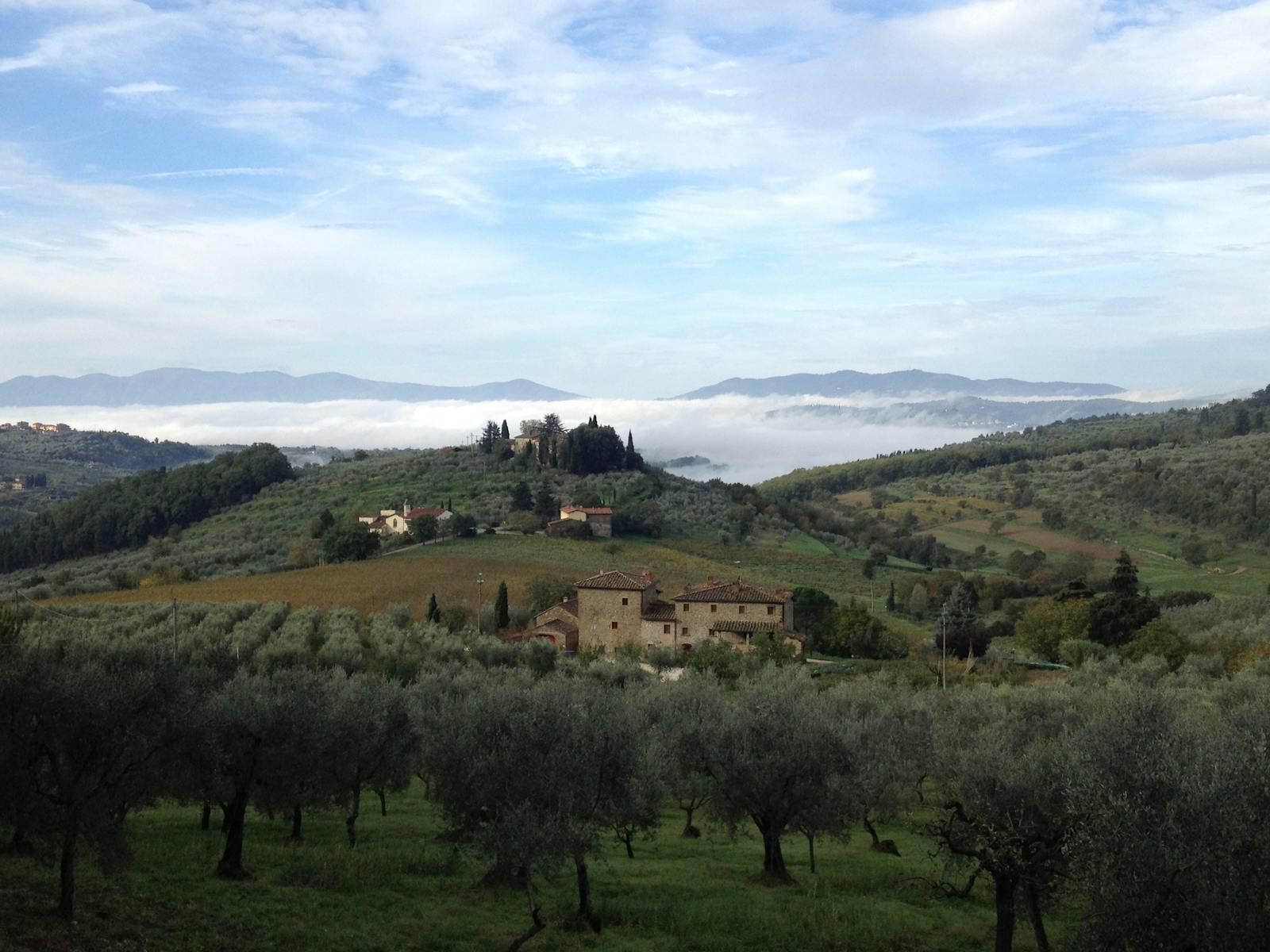
Most of the region is hills: olive groves, vineyards and woods, with the Apennine mountains along the north and east, and a long coast of beaches, pine forest and islands to the west. The classic countryside, the soft, bare hills you see on postcards, is in the south around Siena, Pienza and Montalcino.
Distances are short. Florence to Siena takes about 1.5 hours by road, and Siena to Pienza about an hour, so you can see a lot from one or two bases.
Best places to visit in Tuscany
Florence

The birthplace of the Renaissance packs more great art into a small walkable centre than almost anywhere in the world. See Brunelleschi’s dome on the cathedral (climbing it is by booked time slot), Michelangelo’s David in the Accademia, and Botticelli, Leonardo and Raphael in the Uffizi. Cross the Ponte Vecchio, lined with goldsmiths’ shops since the 1500s, to the Oltrarno, the artisans’ quarter, with the Pitti Palace and the Boboli Gardens.
At sunset, walk up to Piazzale Michelangelo or the quieter church of San Miniato al Monte for the view over the city. Allow at least two full days, and book the Uffizi, the Accademia and the dome ahead: queues without tickets can take hours. Both main galleries are closed on Mondays.

Siena

Florence’s old rival is a perfectly preserved Gothic city of red-brick palaces and steep lanes. Everything leads to the shell-shaped Piazza del Campo, one of the most beautiful squares in Italy, overlooked by the Palazzo Pubblico and the 102 m Torre del Mangia, which you can climb.
The striped marble cathedral has an inlaid marble floor and the frescoed Piccolomini Library. Twice a year, on 2 July and 16 August, the city’s districts race bareback horses round the Campo in the Palio: thrilling, packed and over in about 90 seconds. Siena is lovely in the evening, after the day visitors have left, so stay a night if you can.
Chianti

Between Florence and Siena, the Chianti hills are the heart of Tuscan wine country: vineyards, olive groves, oak woods and stone villages. Drive the winding SR222, the Chiantigiana, through Greve and its arcaded market square, Panzano, Castellina and Radda, or turn off to Gaiole and the castles in the hills.
Look for the black rooster on the bottle, the mark of Chianti Classico from this original zone. Many estates offer tastings and cellar tours, usually by appointment: we’ll arrange visits and a driver, so nobody has to stay sober for the hairpins.
The Val d’Orcia: Pienza, Montalcino and Montepulciano
South of Siena, the Val d’Orcia is the Tuscany of the postcards: smooth hills of wheat, lone farmhouses on ridges and roads lined with cypresses. The whole valley is a UNESCO World Heritage Site, protected as a landscape shaped by Renaissance farming. It’s best explored slowly, by car, bike or on foot, with lunch in a different hill town each day.
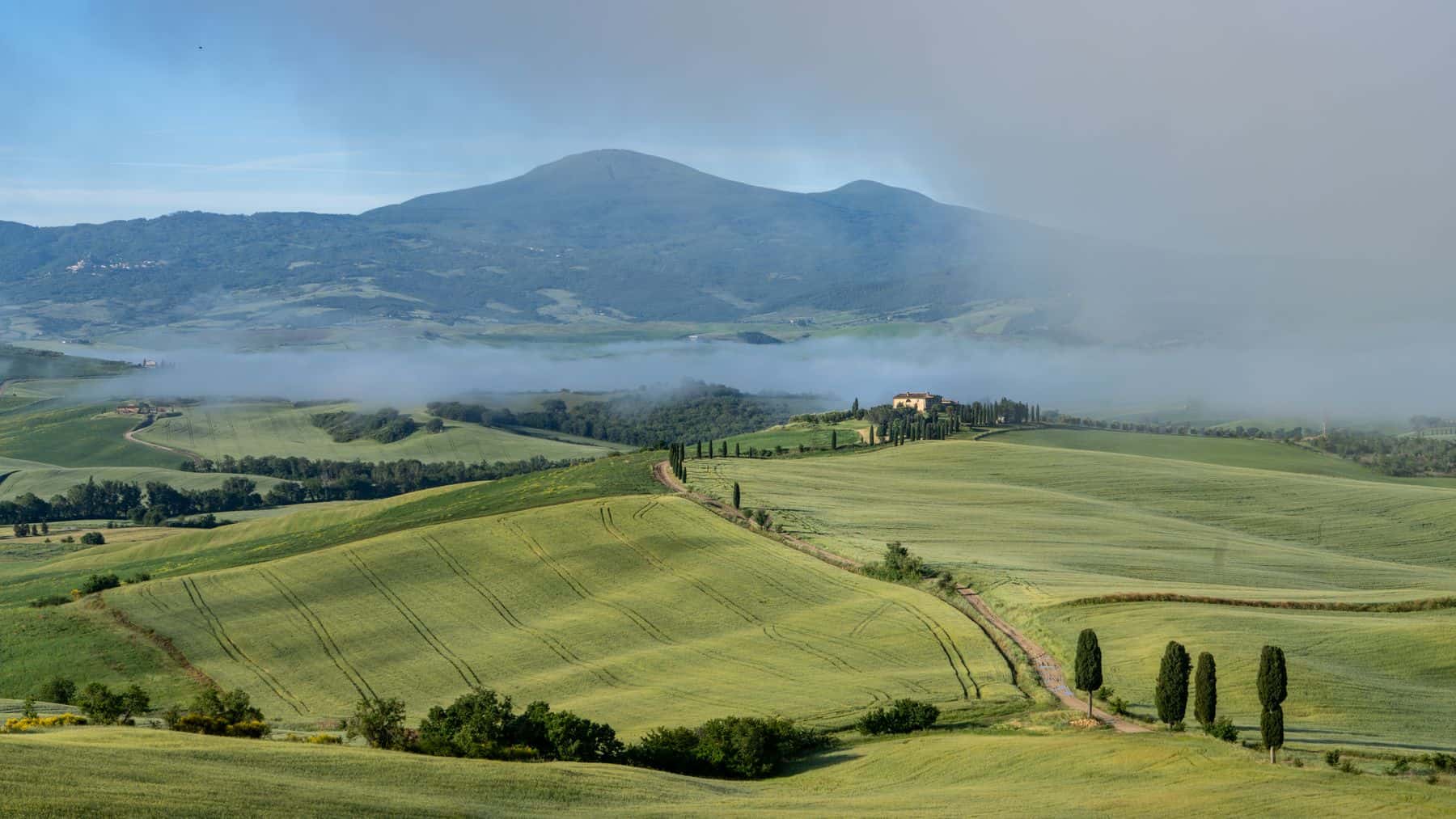
San Quirico d'Orcia
A quiet walled village in the middle of the valley, with a formal Renaissance garden. The famous cypress groves, winding farm tracks and hilltop farmhouses are all close by, and Monte Amiata, an old volcano, rises to the south.
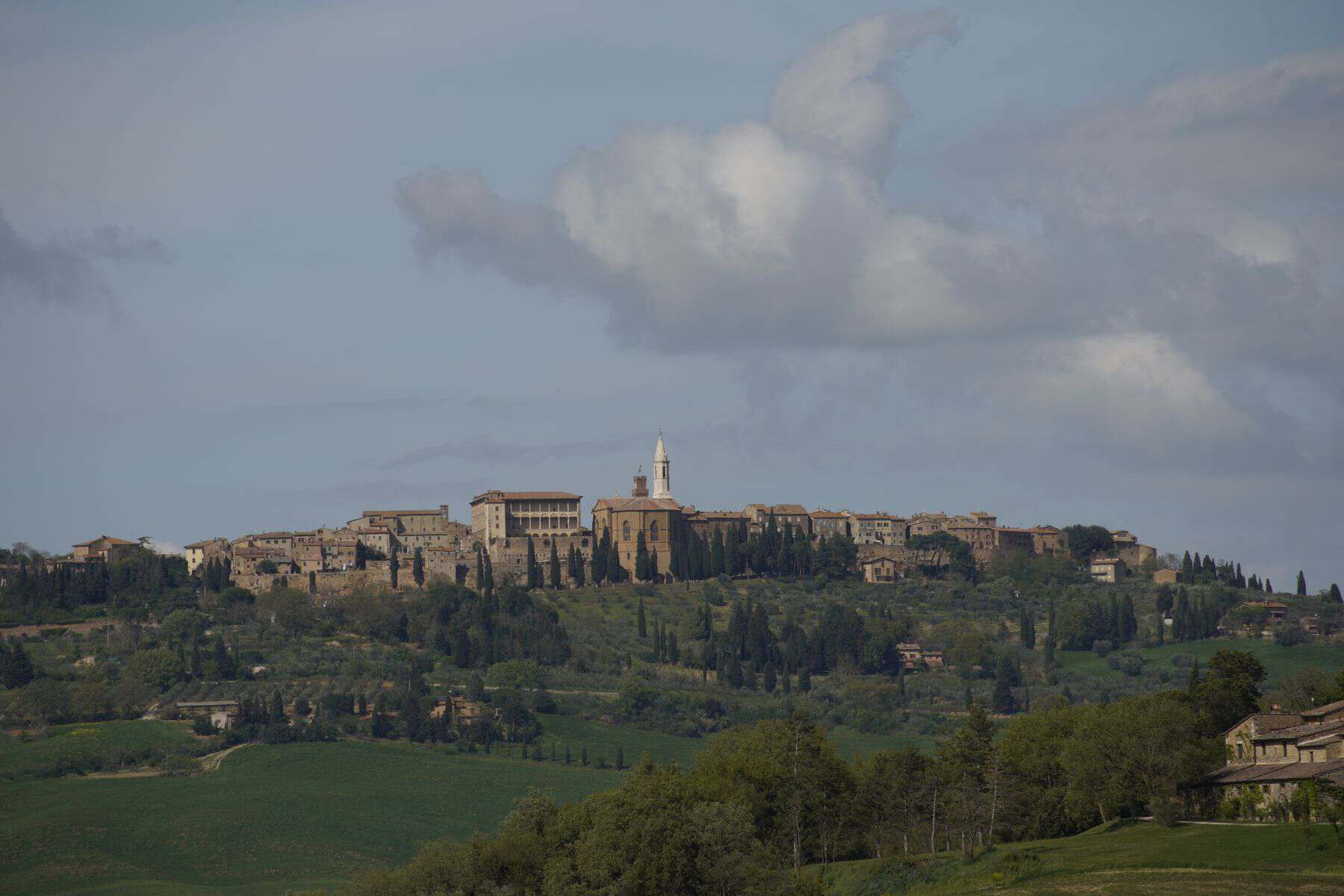
Pienza
A small town rebuilt in the 1460s by Pope Pius II as his ideal Renaissance city. Walk the walls for the view over the valley and taste the local pecorino, the sheep’s cheese sold in every other shop.
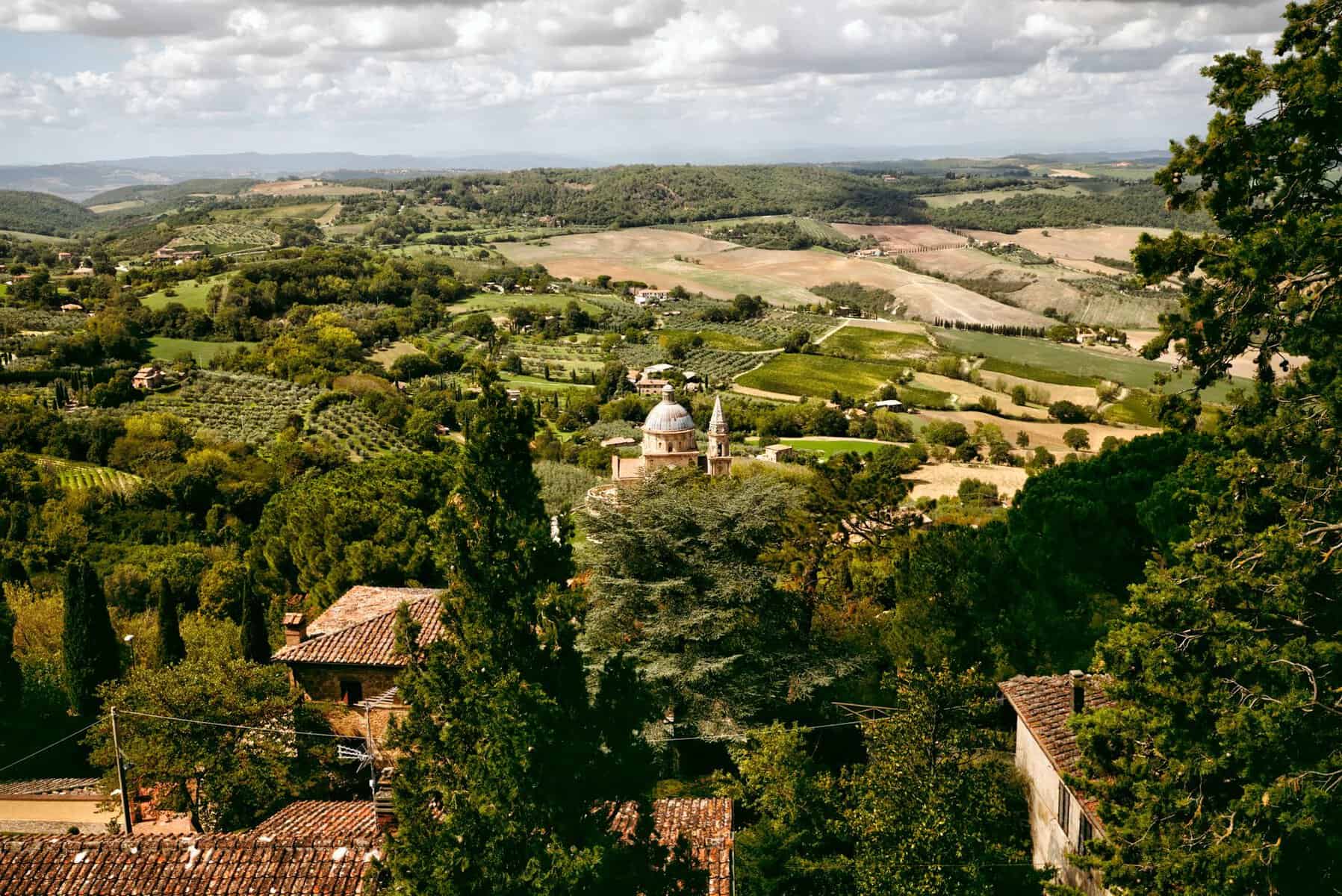
Montepulciano
A long, steep hill town of palaces and wine cellars, some cut deep into the rock. Home of Vino Nobile; the domed church of San Biagio sits in the fields below.

Montalcino and Bagno Vignoni
Montalcino, with its fortress, is the home of Brunello, one of Italy’s great red wines. In tiny Bagno Vignoni, the village square is a steaming thermal pool (look, don’t swim); spas nearby use the same springs.
Further east, Cortona climbs a steep hillside above the Val di Chiana, and Arezzo has Piero della Francesca’s great fresco cycle and a big monthly antiques fair. Both are easy to add from a base near Montepulciano.
San Gimignano and Volterra

San Gimignano, the “medieval Manhattan”, still has 14 of the tall stone towers its rich families built to outdo each other, around the Piazza della Cisterna with its old well. Its white wine, Vernaccia, is Tuscany’s best known. It’s crowded at midday, magical in the early morning and evening.
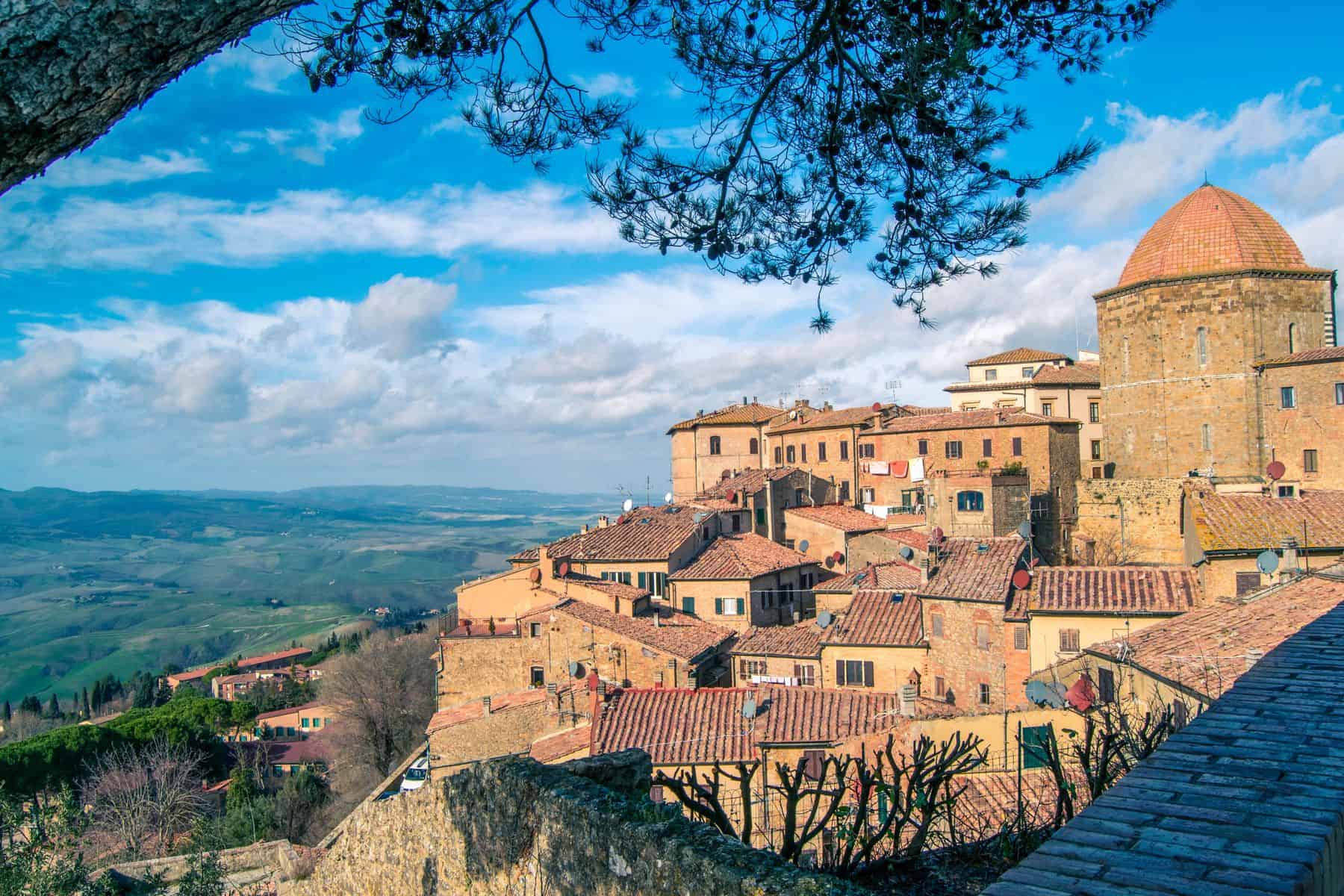
Volterra, half an hour away, is bigger, quieter and older: an Etruscan city on a high ridge, with a Roman theatre, a museum of Etruscan funerary urns and workshops carving the local alabaster.
Lucca and Pisa
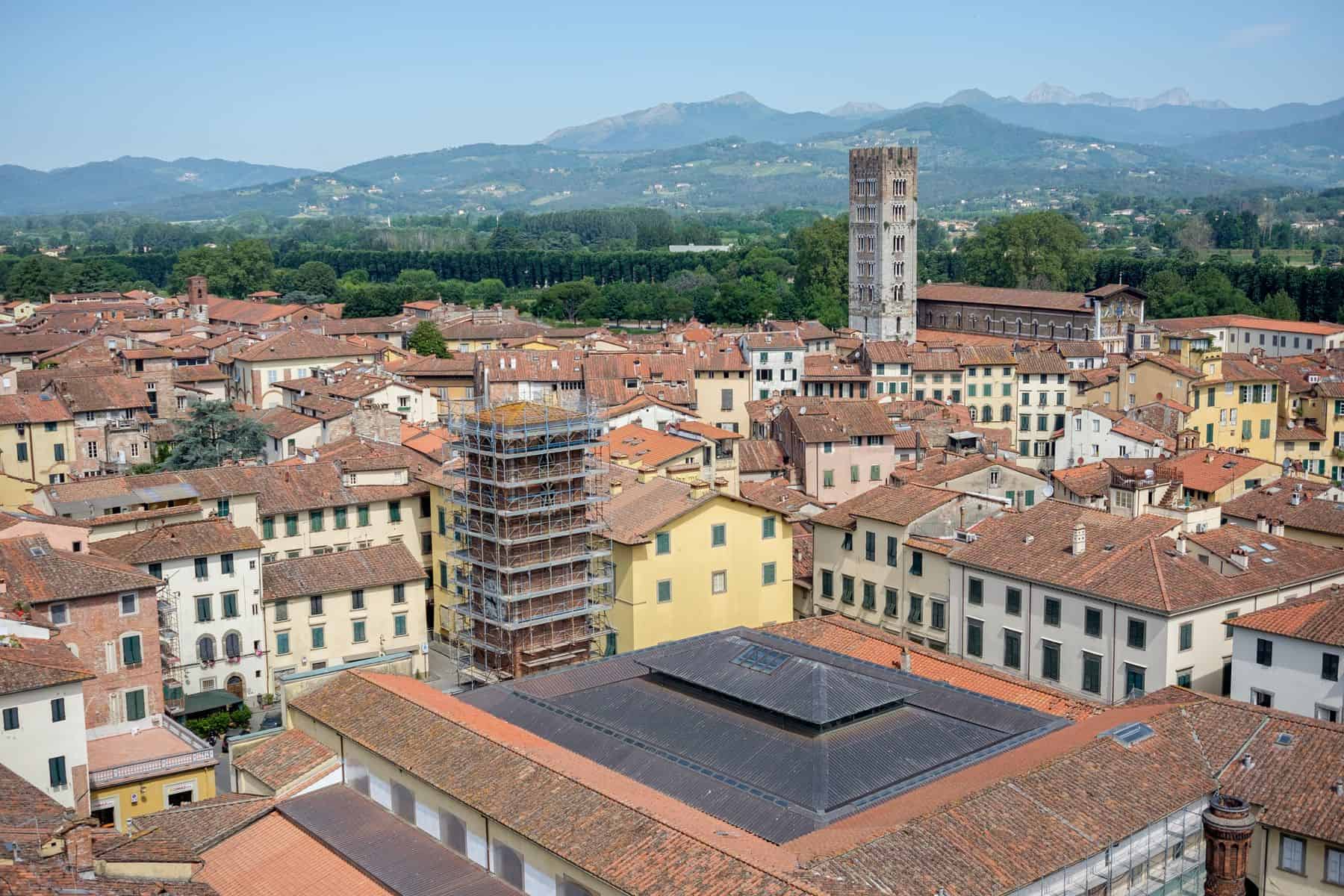
Lucca is many visitors’ favourite Tuscan town: flat, elegant and enclosed by complete Renaissance walls, with a tree-lined path along the top about 4 km round. Hire a bike and ride it, then explore the oval Piazza dell’Anfiteatro, built over a Roman arena, and climb the tower with oak trees on its roof.
Pisa is 30 minutes away by train. The Leaning Tower, cathedral and baptistery stand together on the lawns of the Piazza dei Miracoli; you can climb the tower with a timed ticket. Pisa makes an easy half day on your way to or from the airport.

The Tuscan coast and islands
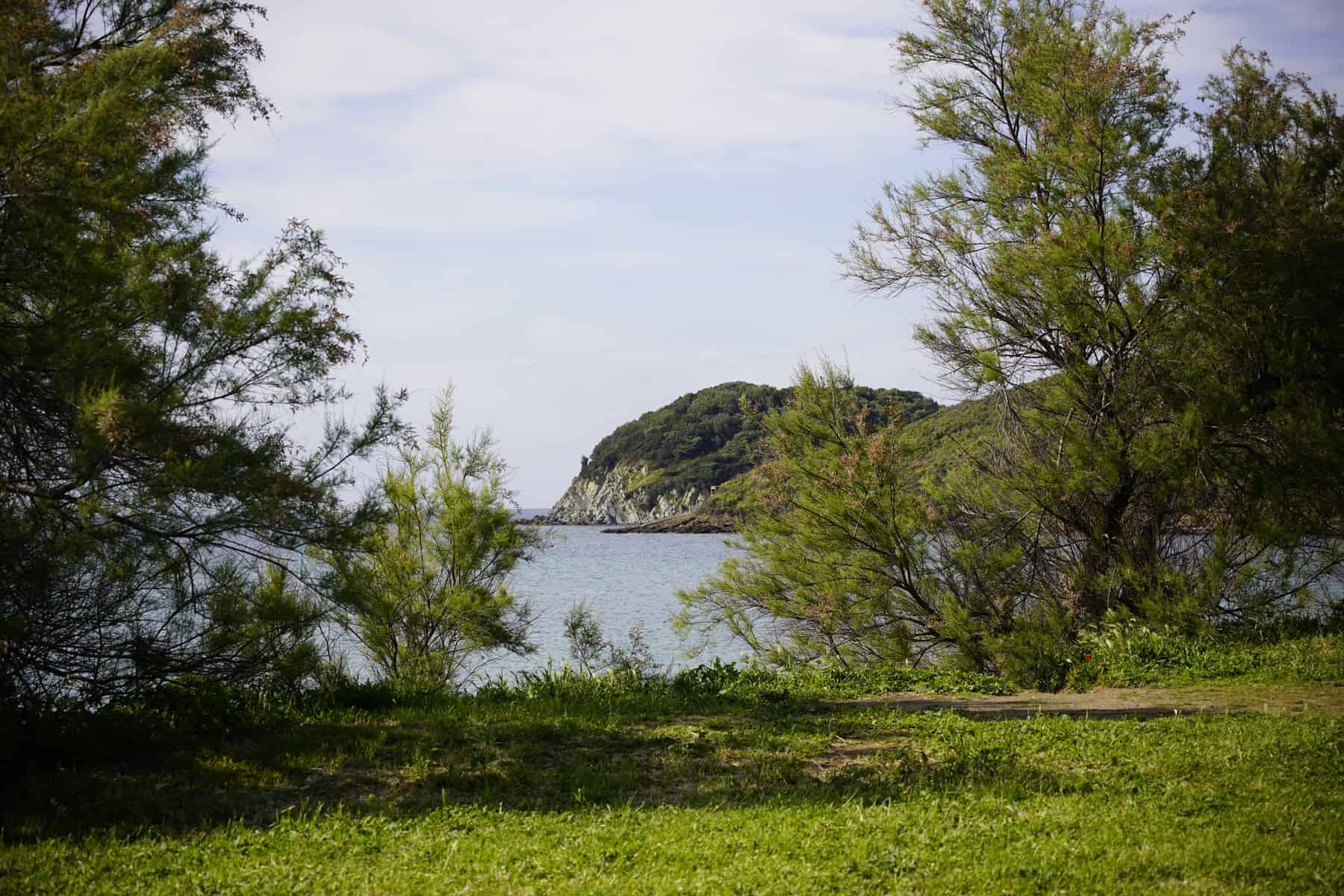
Tuscany’s coast is less famous than its hills but is where Italians spend their summers. In the north, the Versilia resorts around Forte dei Marmi and Viareggio have long sandy beaches with smart beach clubs. Further south, the Etruscan Coast has pine-backed beaches and the bay of Baratti, and the wild Maremma has a nature park, hill towns and the free hot-spring falls at Saturnia.
Ferries run from Piombino to the island of Elba in about an hour. See our Tuscany holidays page for places to stay in Florence, the hill towns and the coast.
Things to do in Tuscany
- Taste wine where it’s made: Chianti Classico, Brunello di Montalcino, Vino Nobile di Montepulciano and Vernaccia, with harvest from September to October.
- Take a cooking class in a farmhouse kitchen: fresh pasta, sauces and dessert, then lunch with the family’s own oil and wine.
- Walk or cycle between hill towns: the Val d’Orcia and Chianti have quiet lanes and white gravel roads, and Lucca’s walls and the flat country around them suit gentle cycling.
- Hunt truffles with a guide and dog in the autumn, when the hill towns hold truffle fairs.
- Soak in hot springs at Saturnia, Bagno Vignoni or one of the old spa towns.
- See a festival: the Palio in Siena (2 July and 16 August), Florence’s Scoppio del Carro on Easter Sunday, or Lucca’s summer concerts.
Tuscan food and wine
Tuscan cooking is simple, seasonal and built on bread, beans and olive oil. Try ribollita (bread and vegetable soup), pappa al pomodoro, hand-rolled pici pasta in the south, and bistecca alla fiorentina, a huge T-bone steak served rare and meant for sharing. Florence’s street food is lampredotto, tripe in a bun, for the brave.
Finish with cantucci, almond biscuits, dipped in sweet vin santo. Wine is part of every meal: Chianti Classico from the hills between Florence and Siena, Brunello from Montalcino, Vino Nobile from Montepulciano and Vernaccia from San Gimignano. New-season olive oil, green and peppery, appears in November. Lunch is the big meal in the countryside, and many village restaurants close one day a week, so check before you drive.
Best time to visit Tuscany
April to June is the best time for most people: green hills, wild flowers and poppies, long days and comfortable 19 to 28°C. September and October are just as good, with the grape harvest, mushrooms and truffles and warm, golden light. July and August are hot, around 31 to 32°C in Florence and Siena, and the cities are at their busiest; the coast and hills are pleasanter then. November to March is quiet, cool and sometimes wet, but Florence’s museums are far easier to enjoy, and new olive oil and winter food make up for the weather. Easter and Italian holiday weekends are busy everywhere.
| Month | Florence | Siena |
|---|---|---|
| Jan | 11°C / 2°C · 80 mm | 10°C / 2°C · 65 mm |
| Feb | 12°C / 3°C · 95 mm | 12°C / 2°C · 80 mm |
| Mar | 15°C / 5°C · 70 mm | 14°C / 4°C · 70 mm |
| Apr | 19°C / 7°C · 75 mm | 18°C / 7°C · 65 mm |
| May | 22°C / 12°C · 90 mm | 22°C / 11°C · 75 mm |
| Jun | 28°C / 16°C · 55 mm | 28°C / 16°C · 55 mm |
| Jul | 32°C / 19°C · 35 mm | 31°C / 18°C · 35 mm |
| Aug | 31°C / 19°C · 45 mm | 31°C / 18°C · 40 mm |
| Sep | 26°C / 15°C · 100 mm | 26°C / 14°C · 80 mm |
| Oct | 21°C / 11°C · 100 mm | 20°C / 11°C · 105 mm |
| Nov | 15°C / 7°C · 140 mm | 15°C / 7°C · 125 mm |
| Dec | 12°C / 4°C · 100 mm | 11°C / 3°C · 85 mm |
Average daily high / low and monthly rainfall, 10-year ERA5 data. Siena is on a hill at about 320 m, slightly cooler than Florence in the Arno valley.
Getting to Tuscany from the UK

By air: Pisa has the most direct flights from the UK, about 2 hours from London and from several regional airports. A shuttle train links Pisa airport to Pisa Centrale, and trains to Florence take about an hour. Florence airport is smaller but only 20 minutes from the city centre. Bologna, 35 minutes from Florence by high-speed train, is another good option.
By train: from London, take the Eurostar to Paris and connect via Milan or Turin to Florence, in a long day or with a night on the way. Florence is also easy to add to a trip from Rome (about 1.5 hours by high-speed train) or Venice (about 2 hours).
Getting around Tuscany
Trains connect Florence, Pisa, Lucca and Arezzo quickly and cheaply. Siena is better reached by express bus from Florence, about 1.5 hours. For the countryside, Chianti and the Val d’Orcia, you really need a car or a driver: buses to small hill towns are slow and infrequent. Two warnings for drivers: almost every historic centre is a ZTL (limited traffic zone) watched by cameras, and fines arrive by post months later, so park outside the walls; and the Tuscan roads are narrow and winding, so allow more time than the map suggests. We can arrange car hire with drop-off at a different airport, or private drivers for wine days and transfers.
Where to stay in Tuscany
- Florence: for art and restaurants on the doorstep. Stay near the Duomo or Santa Croce to walk everywhere, or in the Oltrarno for a more local feel. Hotels in the hills above the city mix countryside with an easy ride in.
- Chianti: a farmhouse or wine estate between Florence and Siena, ideal for touring both cities and the vineyards.
- Siena: a night or two inside the walls, then base yourself in the countryside nearby.
- The Val d’Orcia: a country house, a converted farm or a spa hotel near Pienza, Montepulciano or Bagno Vignoni, for the classic landscape.
- Lucca: a good base for Pisa and the coast, with trains to Florence.
- The coast: beach hotels in the Versilia or the Maremma for summer.
For our pick, see the best hotels in Tuscany and the best hotels in Florence. A Travel Designer will match the right farmhouse, villa or city hotel to your style.
How many days in Tuscany? Sample routes
A week is the minimum to see Florence and some of the countryside without rushing; ten nights lets you split the stay between a city and two country bases. Pick two or three bases and take day trips, rather than moving every night.
Florence and Chianti
- Florence (3 nights)
- Chianti farmhouse (4)
- Day trips to Siena and San Gimignano
The classic first trip: art and food in the city, then wine country.
The best of Tuscany
- Florence (3 nights)
- Chianti (3)
- Val d'Orcia (4)
- Day trips to Siena, Pienza and Montepulciano
City, vineyards and the postcard hills of the south.
Tuscany and Rome
- Lucca (2 nights)
- Florence (3)
- Val d'Orcia (4)
- Rome (3)
Fly into Pisa and out of Rome, with Pisa as a half-day stop.
Adding more of Italy? Our guides to Lake Como and the Dolomites cover the north, and Sicily and Sardinia the islands. For trains between cities, see our guide to European rail tours.
Tuscany tours with us
Prefer someone else to drive? These escorted and self-guided holidays include Tuscany:
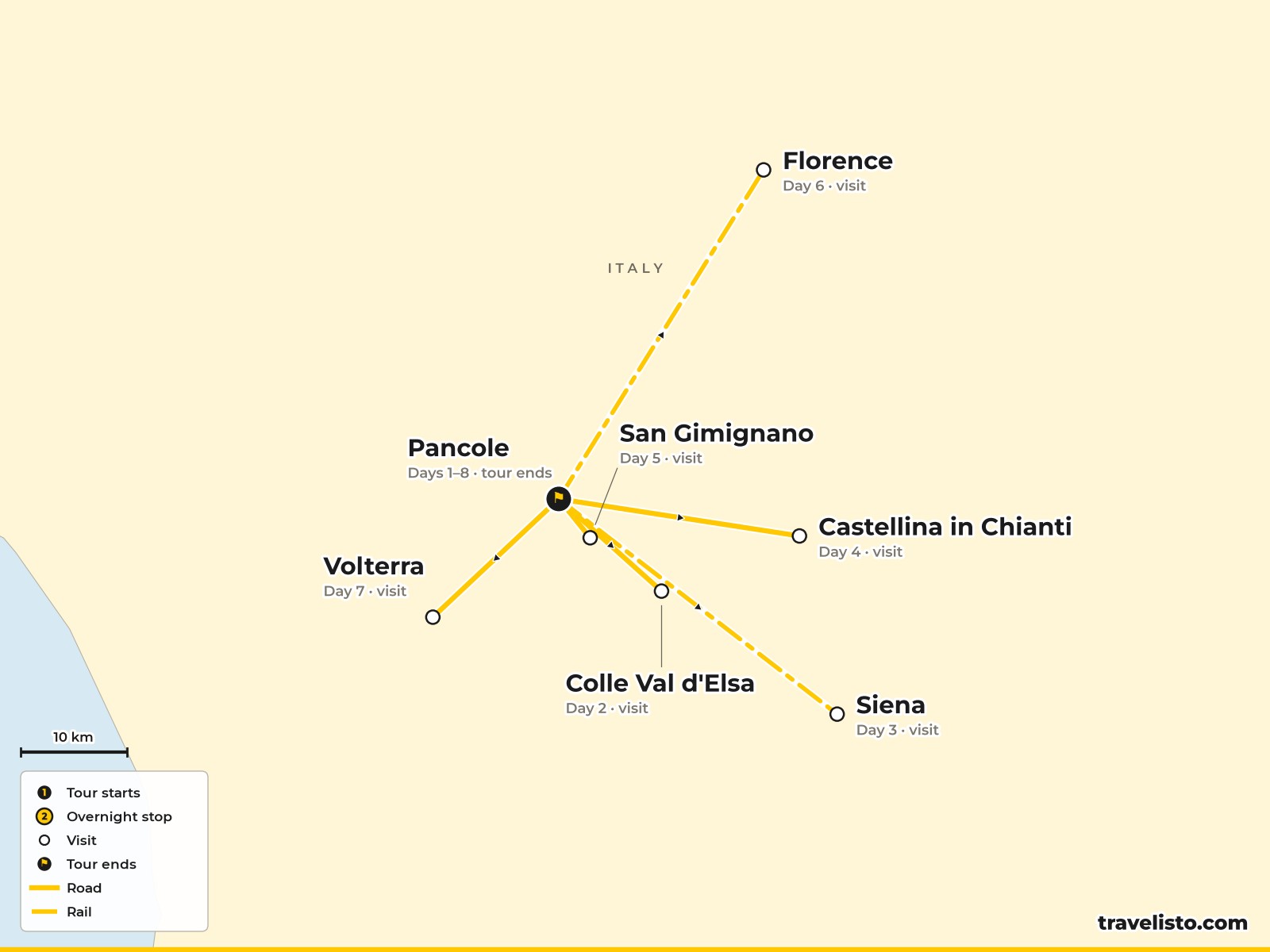
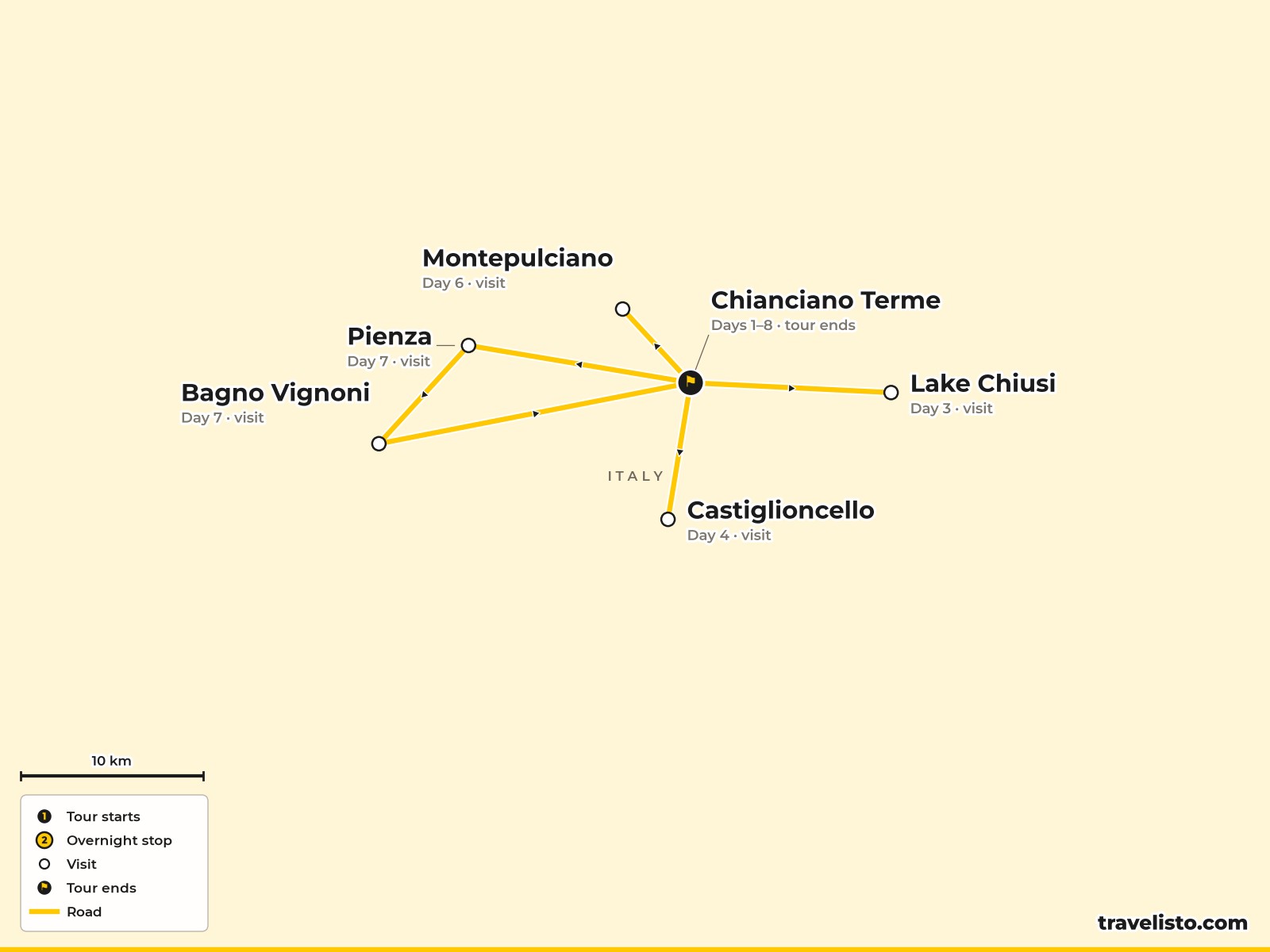
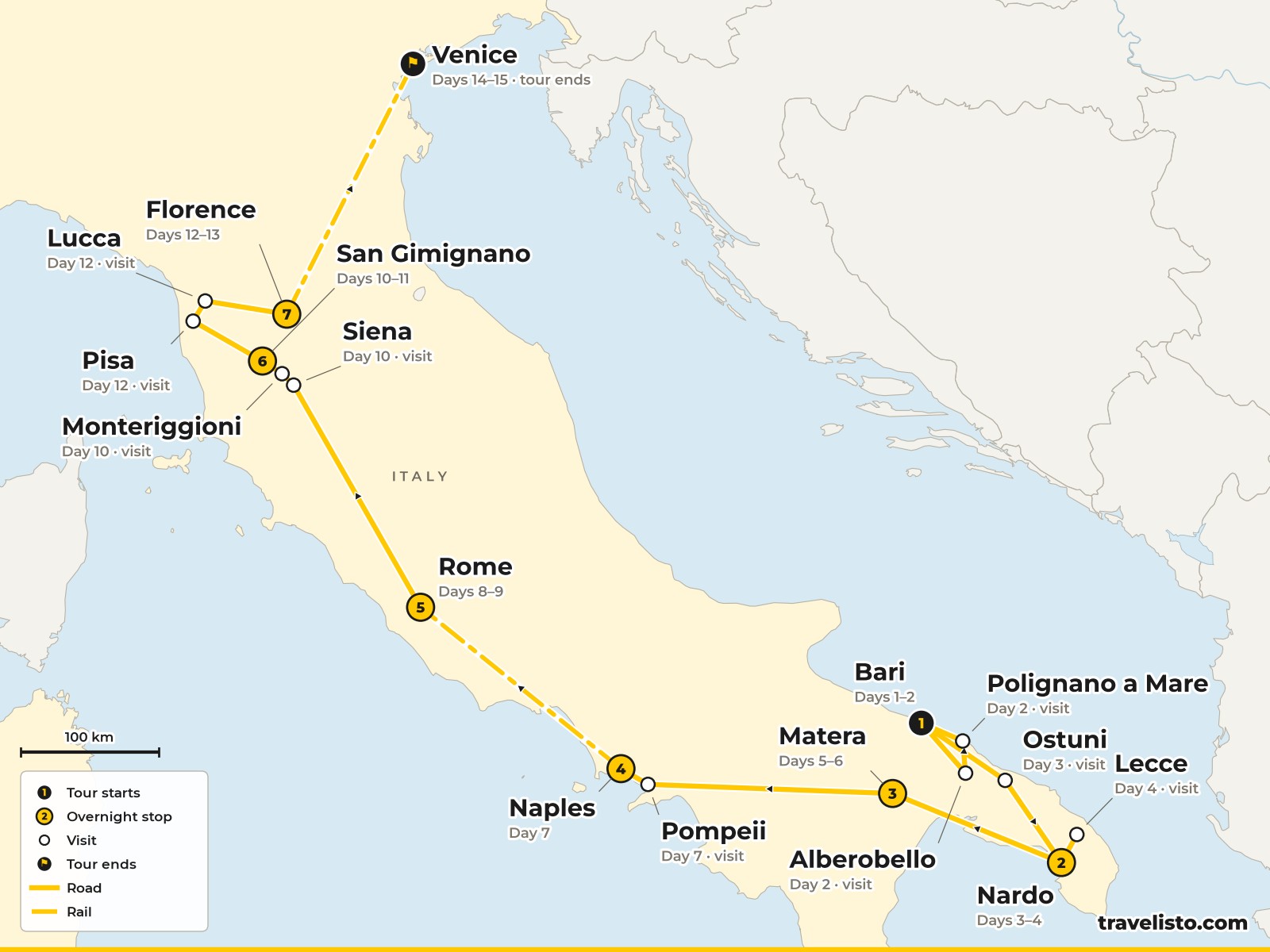
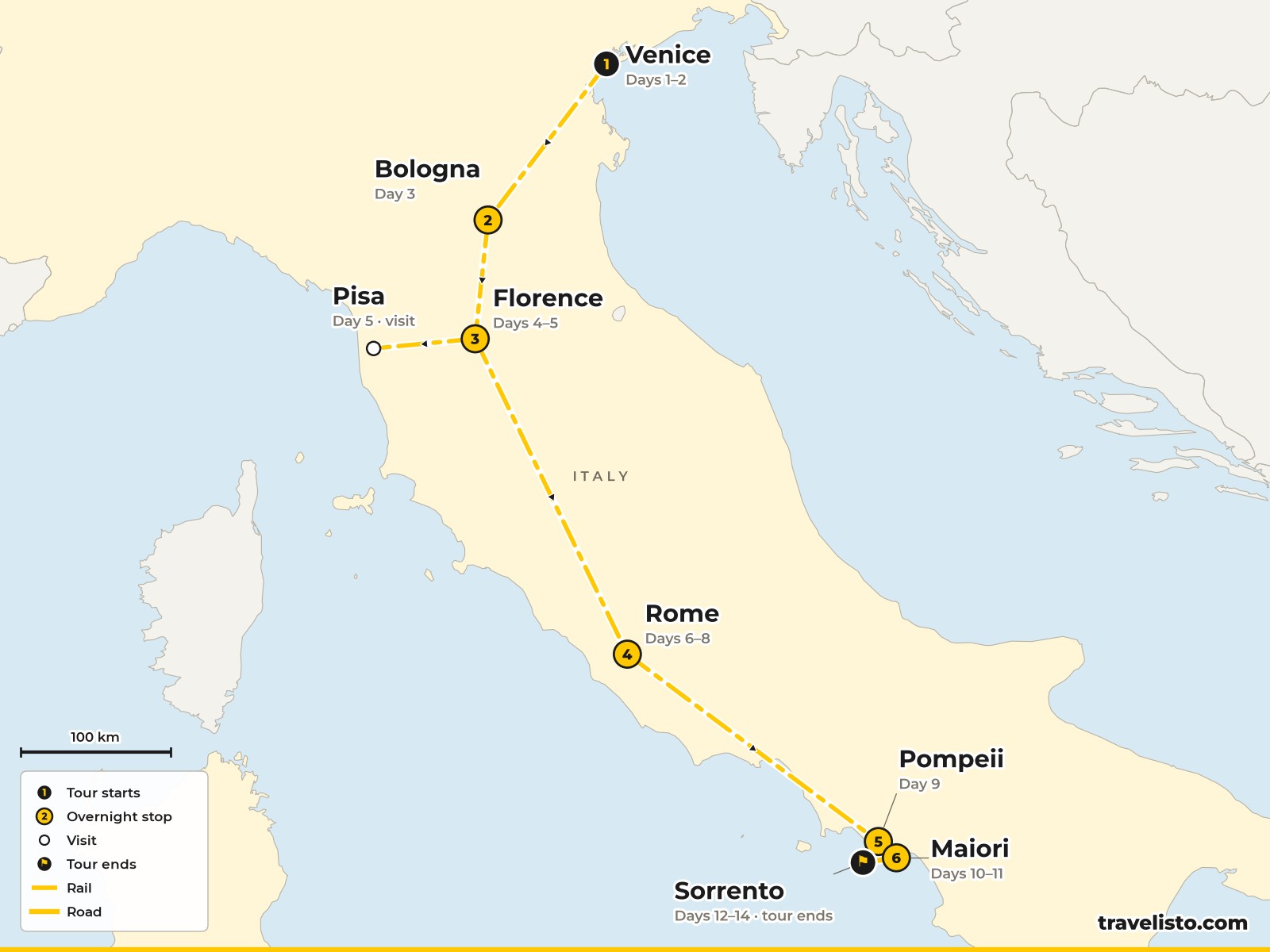
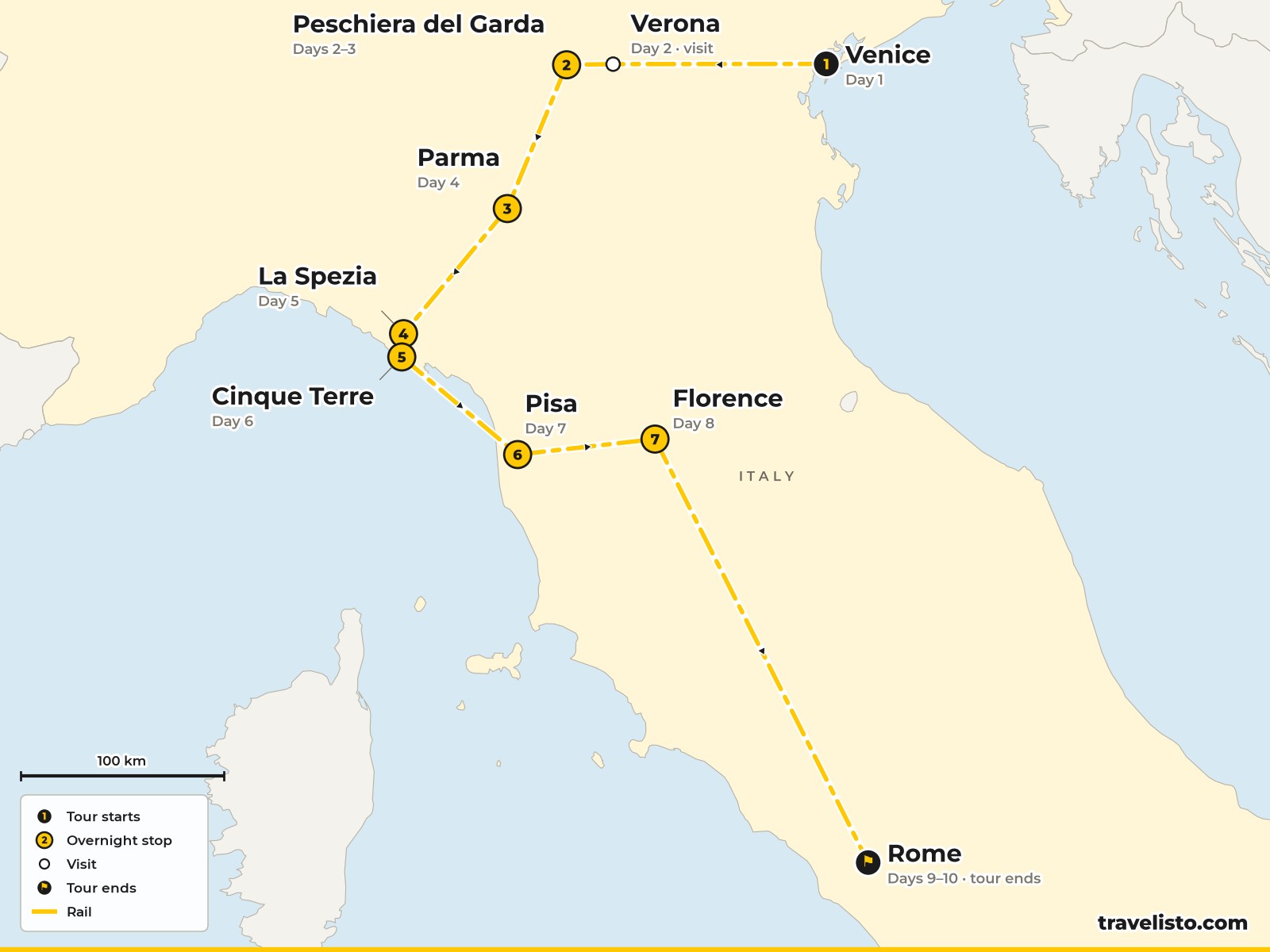
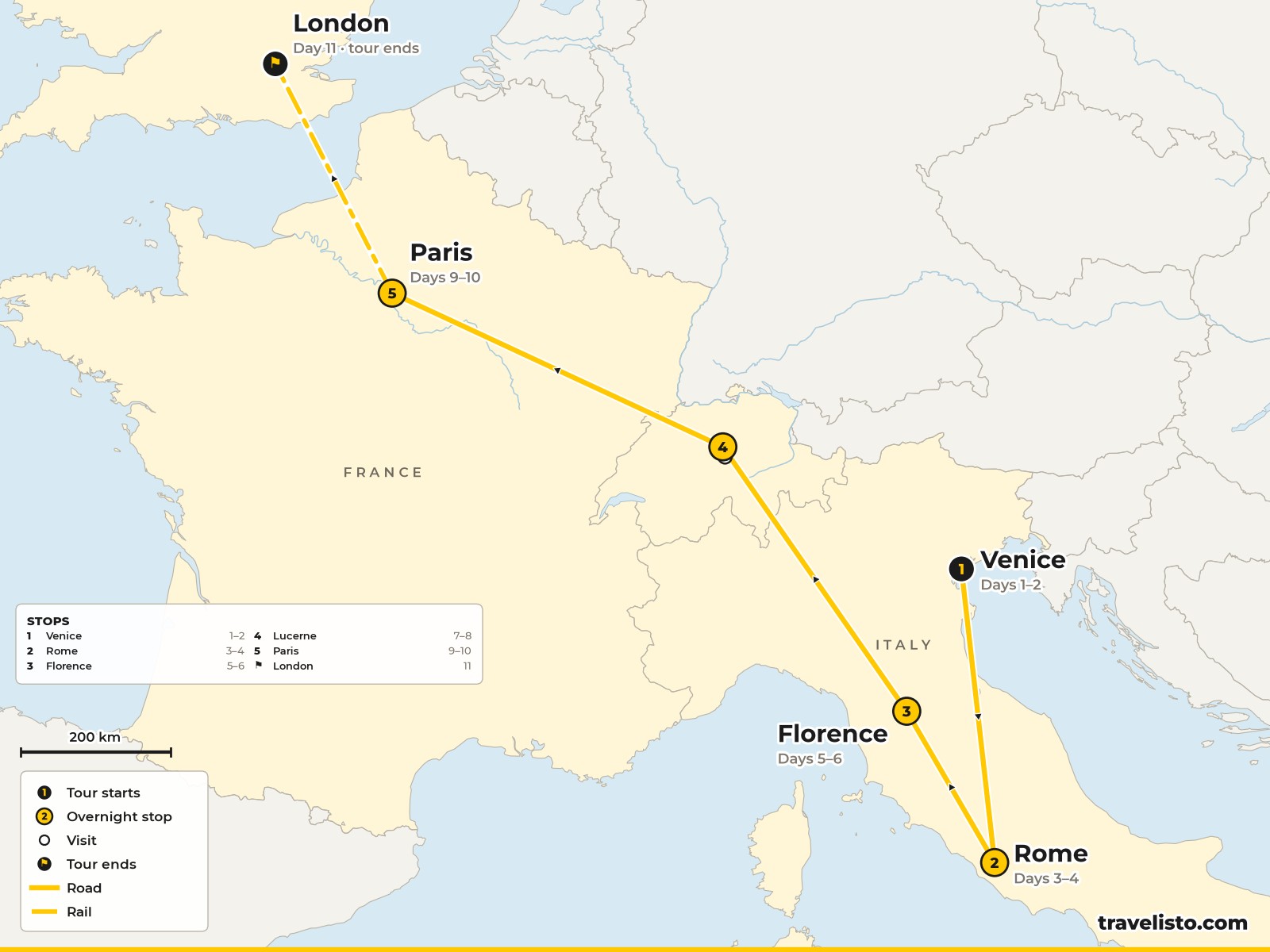
Prefer your own pace? A tailor-made Tuscany holiday can combine Florence with a farmhouse in Chianti, a spa in the Val d’Orcia and a few days by the sea, with car hire, drivers, tastings and cooking classes arranged. Walking is one of the best ways to see the hills: see our guide to self-guided walking holidays.
Practical tips
- Entry: Italy is in the Schengen area, so British visitors can stay up to 90 days in any 180 without a visa. Your passport must have been issued less than 10 years before you arrive and be valid for at least 3 months after you leave. Under the EU’s Entry/Exit System you may have your fingerprints and photo taken at the border. Check the FCDO Italy advice before you go; it notes recent demonstrations in some northern cities.
- Book ahead: the Uffizi, the Accademia, the Duomo climb and the Leaning Tower all sell timed tickets, and good rooms in Siena for the Palio go a year ahead.
- Driving: avoid the ZTL zones in historic centres, and park outside the walls.
- Churches: cover shoulders and knees, especially in the cathedrals of Florence and Siena.
- Opening hours: small towns close for a long lunch, roughly 1pm to 4pm, and many museums close on Mondays.
- Summer heat: sightsee early and late in July and August, and choose a base with a pool.
Frequently asked questions
What is the best time to visit Tuscany?
April to June and September to October, when it's warm but not hot, the countryside is at its best and the grape harvest runs from September. July and August are hot, around 31 to 32°C in Florence, and busy.
How many days do you need in Tuscany?
At least a week: three nights in Florence and four in the countryside. With ten nights you can add the Val d'Orcia, Lucca or the coast.
Where is the best place to stay in Tuscany?
Florence for art and restaurants; Chianti for wine and easy trips to Florence and Siena; the Val d'Orcia for the classic landscape. Most people combine a city with one or two country bases.
Do you need a car in Tuscany?
Not for Florence, Pisa and Lucca, which are linked by train, or Siena, linked by bus. For Chianti, the Val d'Orcia and the hill towns, a car or a private driver makes a big difference. Avoid driving into the ZTL zones in historic centres.
Which airport is best for Tuscany?
Pisa has the most direct flights from the UK and is an hour from Florence by train. Florence airport is closer to the city but smaller; Bologna is another good option.
Can you do Florence and Siena in one day?
You can visit Siena as a day trip from Florence, about 1.5 hours each way by bus, but both deserve more. Better to spend at least two days in Florence and a night in Siena or the countryside nearby.
Where is the Val d'Orcia?
In southern Tuscany, about an hour south of Siena, around Pienza, San Quirico d'Orcia, Montalcino and Bagno Vignoni. It is a UNESCO World Heritage landscape, famous for its rolling hills and cypress-lined roads.
Is Tuscany good for a honeymoon?
Yes. A countryside villa or farmhouse with a pool, wine tastings, cooking classes and a few nights in Florence or by the sea make a relaxed, romantic trip, and it combines easily with Rome, the Amalfi Coast or Venice.
Keep planning
- Tuscany holidays
- The best hotels in Tuscany
- The best hotels in Florence
- Italy holidays
- Escorted tours of Italy
- Lake Como guide
- Sicily guide
- Sardinia guide
- Dolomites guide
- Tailor-made holidays
Plan your Tuscany holiday with a Travel Designer
Tell us when you’d like to go and what you love, and we’ll plan Florence, the hill towns and the right farmhouse or villa, with flights, car hire or drivers, tastings and cooking classes, in one ATOL-protected booking.
Make an enquiry Tuscany holidays