Rome lets you walk from the Colosseum to the Pantheon to St Peter's in a morning, past 2,000 years of history, baroque fountains and some of the best simple cooking in Italy. This guide has four self-guided walking routes, the places worth your time with the current ticket rules and links to book, the best free things to do, and where to eat, drink and stay at every budget, with each venue's website and Instagram so you can see it first.




Rome map: sights, restaurants, bars and walks
Turn the layers on and off, or pick a walk to draw its route with numbered stops. Tap any pin for links.
Four Rome walking routes
The historic centre is compact but its streets are cobbled and some hills are steep, so wear comfortable shoes. Carry a bottle: the free nasoni fountains all over the city give cold drinking water. Distances are approximate and the times include short stops; add more if you go inside the sights.
Ancient Rome
About 2.4 km · 1 hour walking, a full day with visits
From the Colosseum past the Arch of Constantine and along Via dei Fori Imperiali to Trajan's Market, then round the Vittoriano and up Michelangelo's ramp to the Campidoglio, ending at the Theatre of Marcellus.
- Colosseum
- Arch of Constantine
- Trajan's Market
- Piazza Venezia and the Vittoriano
- Piazza del Campidoglio
- Theatre of Marcellus
Baroque Rome: Spanish Steps to Campo de' Fiori
About 2.5 km · 1 hour walking, half a day with stops
Down the Spanish Steps to the Trevi Fountain, past the columns of Hadrian's temple to the Pantheon, in to see the Caravaggios at San Luigi dei Francesi, then through Piazza Navona to the market at Campo de' Fiori.
- Spanish Steps
- Trevi Fountain
- Piazza di Pietra (Temple of Hadrian)
- Pantheon
- San Luigi dei Francesi
- Piazza Navona
- Campo de' Fiori
Trastevere and the Gianicolo
About 2.7 km · 1.5 hours walking, best ending at sunset
Across Tiber Island into the quiet eastern side of Trastevere, through the lanes to Santa Maria in Trastevere and Piazza Trilussa, then up the hill past the Acqua Paola fountain to the Garibaldi terrace on the Gianicolo.
- Tiber Island
- Santa Cecilia in Trastevere
- Santa Maria in Trastevere
- Piazza Trilussa
- Fontana dell'Acqua Paola
- Gianicolo terrace (Piazzale Garibaldi)
The Aventine and Testaccio
About 2.7 km · 1 hour walking, half a day with lunch
From the Circus Maximus up to the Orange Garden and Santa Sabina, along to the keyhole on Piazza dei Cavalieri di Malta, then down into Testaccio for lunch at the market, finishing at the Pyramid of Cestius.
- Circus Maximus
- Giardino degli Aranci
- Santa Sabina
- Aventine Keyhole
- Mercato di Testaccio
- Pyramid of Cestius
Places to visit in Rome
The 22 sights we would plan a first trip around, with the official site for opening times and tickets.

Colosseum
The largest amphitheatre the Romans ever built, opened in AD 80 for gladiator fights and animal hunts in front of tens of thousands of spectators.
Tip: Entry is by timed, named ticket only. Book on the official ticketing site (ticketing.colosseo.it) as soon as slots open, about 30 days ahead, carry the passport you booked with, and arrive in good time for your slot. The arena floor and underground need a Full Experience ticket. On free first Sundays tickets are handed out on the day and the upper levels, arena and underground stay closed.
Time needed: 1.5-2 hours
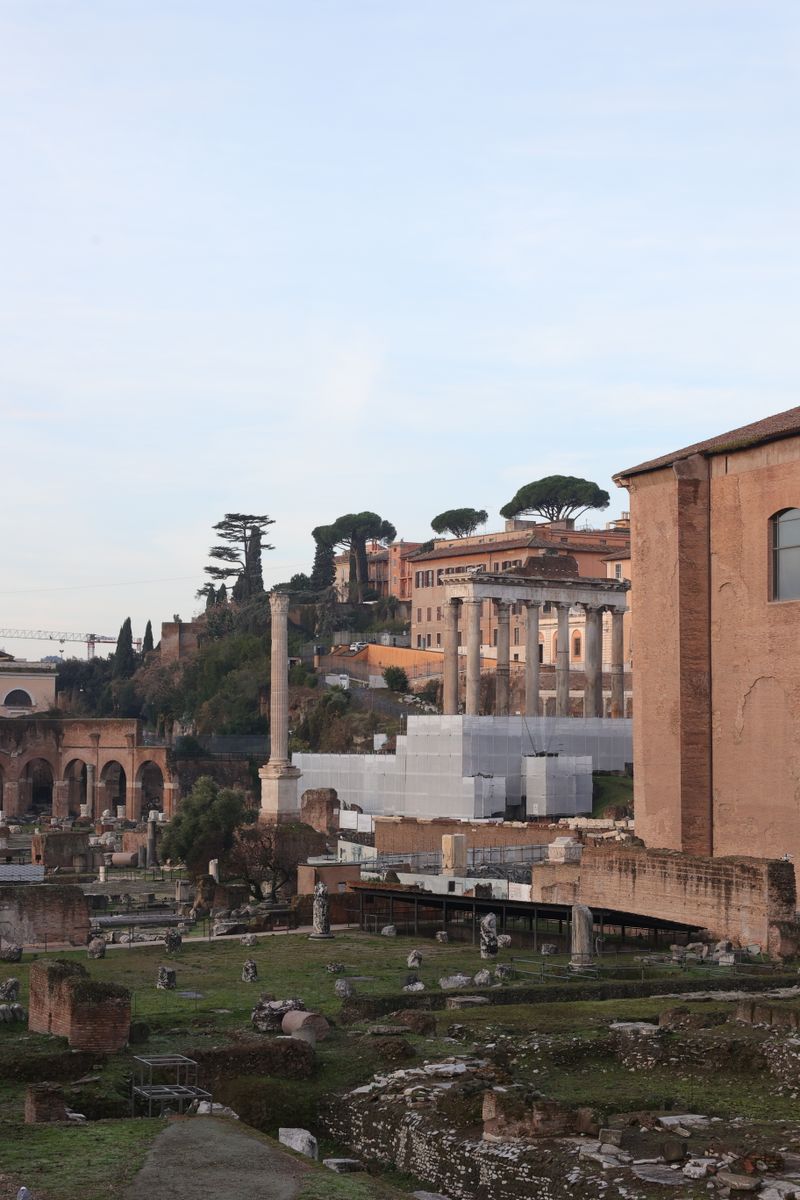
Roman Forum and Palatine Hill
The ruined civic centre of ancient Rome, with temples, triumphal arches and the Senate house, and the hill above it where the emperors built their palaces.
Tip: Your Colosseum ticket covers both. Go in at the Largo della Salara Vecchia entrance on Via dei Fori Imperiali rather than queueing by the Colosseum, and climb to the Farnese Gardens on the Palatine for the best view over the Forum. From late October to February the site closes at 4.30pm, with last entry at 3.30pm.
Time needed: 2-3 hours

Vatican Museums and Sistine Chapel
Miles of papal collections, from classical statues and the Raphael Rooms to the Gallery of Maps, ending at Michelangelo's ceiling and Last Judgement in the Sistine Chapel.
Tip: Book a timed ticket only on tickets.museivaticani.va, as lookalike sites resell at a mark-up. Shoulders and knees must be covered, the museums are closed on Sundays except the last Sunday of the month, and photos are not allowed in the Sistine Chapel. Monday to Saturday the last entry is 6pm; the first slot of the morning is the calmest.
Time needed: 3-4 hours
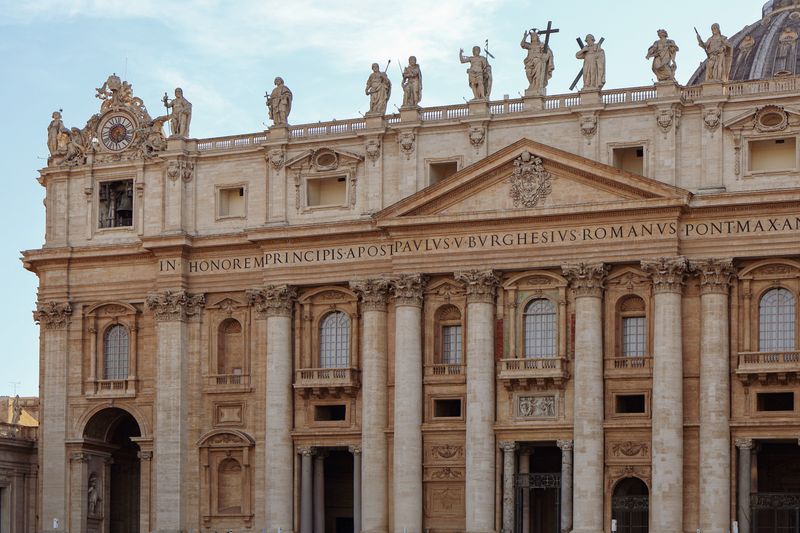
St Peter's Basilica
The mother church of the Catholic world, with Michelangelo's dome, his Pietà just inside the door and Bernini's bronze canopy over the papal altar.
Tip: Entry to the basilica is free, but expect a security queue on St Peter's Square that is shortest before 9am. From late October to March it is open 7am to 7pm and the dome 7.30am to 5pm. Climb the dome (lift part-way, then over 300 steps) for the view down Via della Conciliazione. Covered shoulders and knees are required, and the 2025 Jubilee Holy Door is sealed again.
Time needed: 1.5-2 hours
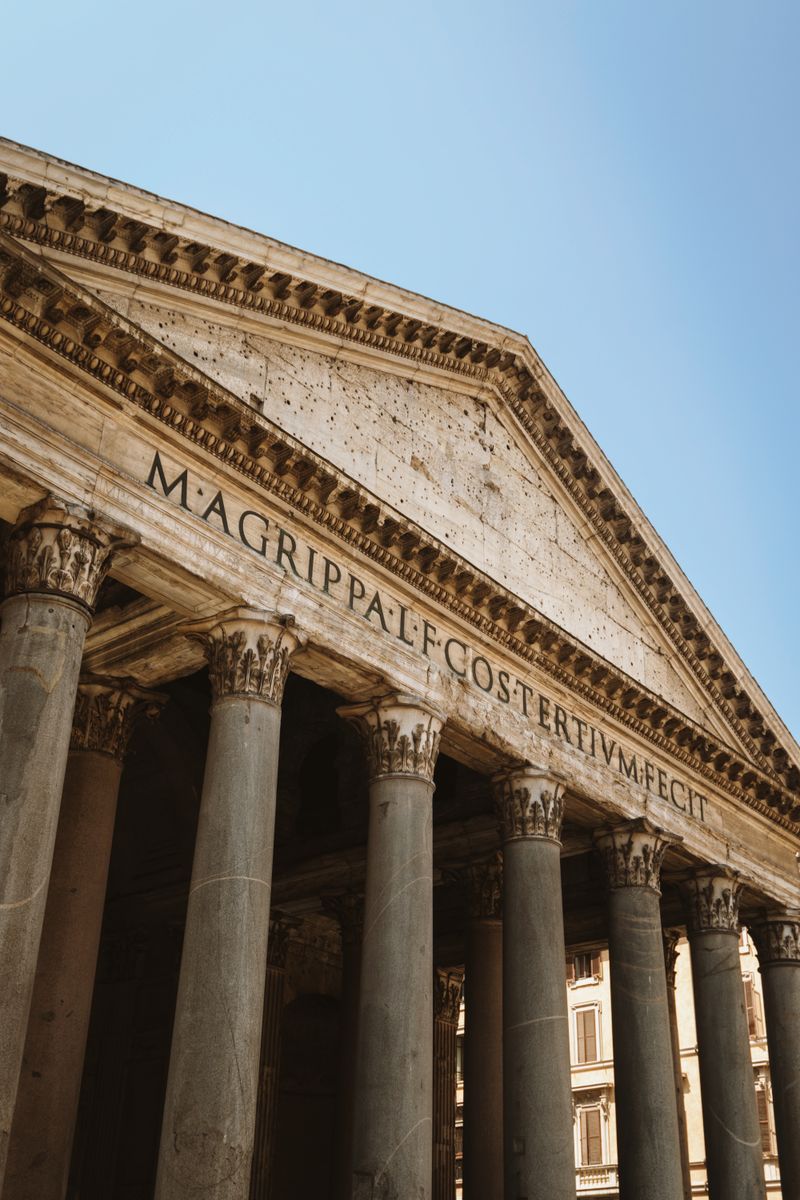
Pantheon
A 2,000-year-old Roman temple turned church, with the largest unreinforced concrete dome in the world and an open oculus at the top that lets in sky and rain.
Tip: A ticket is now needed to go inside: buy it on the official site before you go to skip the ticket queue. It is open daily 9am to 7pm (last entry 6.30pm). Entry is free on the first Sunday of the month, when you simply queue at the door. Tourist visits pause during Mass.
Time needed: 45 minutes
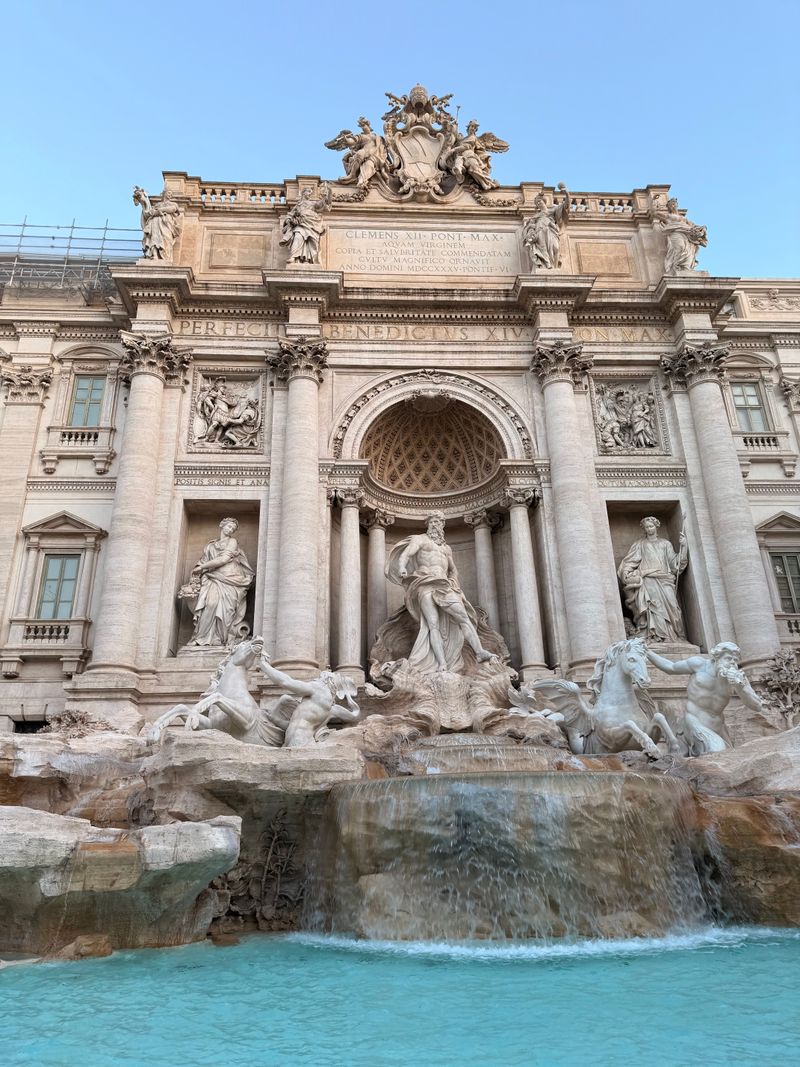
Trevi Fountain
Nicola Salvi's 18th-century baroque fountain, where Neptune rides out of a palace front over a cascade of carved travertine rocks.
Tip: Since February 2026 non-residents need a ticket to go down to the basin from 9am (11.30am on Mondays and Fridays) to 10pm, with last entry at 9pm. Enter from Via della Stamperia and buy online, at tourist info points or at the gate by card. Looking on from the rest of the square is still free, and it is quietest first thing in the morning.
Time needed: 30 minutes

Spanish Steps
A sweeping 18th-century staircase of 135 steps climbing from Piazza di Spagna and Bernini's boat-shaped fountain to the church of Trinità dei Monti.
Tip: Sitting, eating and drinking on the steps are banned and the municipal police do issue fines, so walk up for the view and rest in the square at the top instead. The Keats-Shelley House is at the foot of the steps on the right.
Time needed: 30 minutes

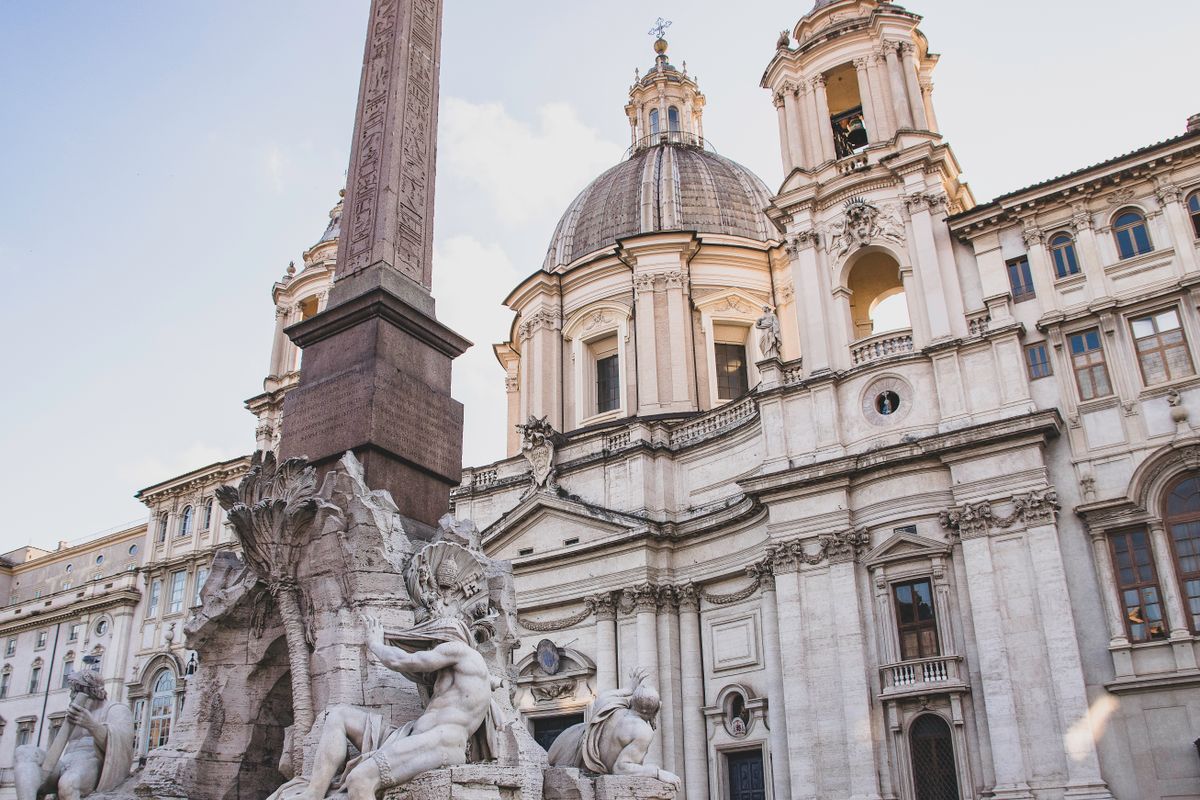
Piazza Navona
A long baroque square laid out on the track of Domitian's stadium, with Bernini's Fountain of the Four Rivers facing Borromini's church of Sant'Agnese in Agone.
Tip: Admire it, then eat and drink in the side streets: the café tables on the square are aimed squarely at visitors. In December it hosts Rome's best-known Christmas market.
Time needed: 30 minutes
Borghese Gallery
A cardinal's 17th-century villa filled with Bernini's most famous marble sculptures and paintings by Caravaggio, Raphael and Titian.
Tip: Booking is compulsory for every visit, including the free first Sunday, and entry is in two-hour slots, Tuesday to Sunday. Slots sell out well ahead in busy months, so book as soon as you know your dates and arrive 30 minutes early to leave bags.
Time needed: 2 hours

Villa Borghese and the Pincio
Rome's best-known park, with a lake and its little Temple of Aesculapius, shady avenues and rowing boats, ending at the Pincio terrace above Piazza del Popolo.
Tip: Hire a bike or a four-wheel pedal car near the Pincio to cover more ground, and time your walk to reach the terrace for sunset over the domes.
Time needed: 1-2 hours

Trastevere
Rome's most atmospheric neighbourhood, a tangle of lanes around the golden mosaics of Santa Maria in Trastevere, one of the oldest churches in the city.
Tip: Go in the late afternoon, look inside Santa Maria in Trastevere and Santa Cecilia, then stay on for dinner. The streets east of Viale di Trastevere feel more local than the area around Piazza Trilussa.
Time needed: Half a day

Castel Sant'Angelo
Hadrian's round mausoleum, later a papal fortress, prison and palace, linked to the Vatican by a raised escape corridor.
Tip: Open Tuesday to Sunday 9am to 7.30pm (last entry 6.30pm), plus a special afternoon opening on the first Monday of the month. Climb to the Terrace of the Angel for one of the best views of St Peter's, and book ahead at weekends.
Time needed: 1.5-2 hours

Capitoline Museums
The world's oldest public museums, in two palaces on Michelangelo's Piazza del Campidoglio, home to the bronze she-wolf and the original statue of Marcus Aurelius on horseback.
Tip: Use the underground passage between the two palaces to reach the Tabularium, whose arches frame the best view over the Roman Forum. The museums are free for everyone on the first Sunday of the month.
Time needed: 2 hours

Baths of Caracalla
The towering brick ruins of a 3rd-century bath complex that served thousands of bathers a day, with mosaic floors still in place and an open-air opera stage in summer.
Tip: Far quieter than the Forum and a short walk from Circo Massimo metro. Winter closing is 4.30pm, so go in the morning, and check the weekly closing day on the official site before you set off.
Time needed: 1.5 hours
Appian Way and the Catacombs of San Callisto
The great Roman road south, lined with tombs and umbrella pines, with miles of early Christian burial tunnels beneath it.
Tip: The catacombs can only be seen on a guided tour and San Callisto is closed on Wednesdays. Take bus 118 or hire a bike near the park's visitor centre; on Sundays the old road is largely closed to cars, which makes it a lovely ride.
Time needed: Half a day

Campo de' Fiori
A busy square with a morning food and flower market under the hooded statue of Giordano Bruno, burned here for heresy in 1600, that turns into a bar scene at night.
Tip: Come in the morning for the market, pick up pizza bianca from a bakery nearby and walk on to the calmer, elegant Piazza Farnese next door.
Time needed: 30 minutes
Trajan's Market and the Imperial Forums
A multi-level brick complex of 2nd-century shops and offices overlooking the forums of the emperors, now a museum with walkways above the ruins.
Tip: It is far less crowded than the Roman Forum and the upper terraces look straight across to Trajan's Column. As a city museum it is free on the first Sunday of the month.
Time needed: 1 hour
Vittoriano (Altare della Patria)
A vast white marble monument to Italy's first king, Victor Emmanuel II, holding the Tomb of the Unknown Soldier and a museum of Italian unification.
Tip: Walk up the front terraces for a free view over Piazza Venezia, or take the glass lift at the back of the building to the top terrace for a 360-degree panorama of the city.
Time needed: 1 hour
Galleria Doria Pamphilj
A princely family's palace on Via del Corso, still privately owned, with gilded galleries hung floor to ceiling with old masters, including Velázquez's portrait of Pope Innocent X.
Tip: The audio guide is narrated by a member of the family and brings the rooms to life. Look out for the early Caravaggios.
Time needed: 1.5 hours
Basilica di San Clemente
A 12th-century church built on top of a 4th-century church, which itself sits on a Roman house and a temple to the god Mithras.
Tip: The upper church is free; the excavations below have their own ticket. Go down two levels and listen for the underground stream still running beneath the city. Cover shoulders and knees.
Time needed: 1 hour
Aventine Hill
A quiet, green hill of villas and early churches, with the Orange Garden terrace and the famous keyhole view of St Peter's dome.
Tip: Combine the keyhole on Piazza dei Cavalieri di Malta, the Orange Garden and the bare 5th-century basilica of Santa Sabina, then walk down to Testaccio for lunch. The queue at the keyhole moves quickly.
Time needed: 1-1.5 hours
Jewish Quarter (Ghetto)
Home to one of the oldest Jewish communities in Europe, around the ruins of the Portico d'Ottavia and the great synagogue, and known for Roman-Jewish cooking.
Tip: Try carciofi alla giudia (deep-fried artichokes) in season, roughly November to April, and visit the Jewish Museum beneath the synagogue. Many shops and restaurants close on Saturdays for the Sabbath.
Time needed: 1-2 hours
Free things to do in Rome
Rome’s churches, piazzas, fountains and viewpoints are free every day, the state museums and the city’s own museums are free on the first Sunday of the month, and the Vatican Museums are free on the last Sunday morning. Free days are busy and some still need a booking, so check each entry before you go.
St Peter's Basilica
VaticanFree: Always free. Open daily, 7am to 7pm from late October to March (to 8pm in summer). The dome climb is charged.
Michelangelo's dome, his Pietà and Bernini's canopy, free to anyone who joins the security queue.
Tip: Be in the queue on the right-hand colonnade before 9am, and cover shoulders and knees.
Vatican Museums (last Sunday of the month)
VaticanFree: Free on the last Sunday of each month, 9am to 2pm (last entry 12.30pm), unless it falls on Easter, 29 June or 25, 26 or 31 December. No booking for free entry.
The Raphael Rooms, the Gallery of Maps and the Sistine Chapel without a ticket, once a month.
Tip: Queues build well before opening; arrive by 8am or be prepared to wait. Next free dates: 29 November and 27 December 2026.
Colosseum, Roman Forum and Palatine (first Sunday)
Ancient RomeFree: Free on the first Sunday of every month and on 25 April, 2 June and 4 November. Tickets cannot be booked: collect them on the day, first come, first served, at the Colosseum or Largo della Salara Vecchia ticket offices.
Ancient Rome's headline sites free once a month, though the upper levels, arena and underground stay closed.
Tip: Get there before opening at 8.30am and do the Forum and Palatine first, while the Colosseum queue is at its longest.
Pantheon (first Sunday)
Centro StoricoFree: Free on the first Sunday of the month, with no booking: queue at the entrance for a free ticket. Otherwise a paid ticket is needed. Open daily 9am to 7pm.
The best-preserved building of ancient Rome, with its open-eyed dome, free once a month.
Tip: Come early or late in the day, and avoid Sunday morning Mass when tourist visits pause.
Castel Sant'Angelo (first Sunday)
VaticanFree: Free on the first Sunday of the month, with no booking: free tickets are given out at the ticket office. Open 9am to 7.30pm, last entry 6.30pm.
Hadrian's tomb turned papal fortress, with rooftop views of St Peter's.
Tip: The single queue can be long by late morning; go at opening time.
Capitoline Museums and city museums (first Sunday)
Ancient RomeFree: Free for everyone on the first Sunday of the month at the Capitoline Museums, Trajan's Market and other Roma Capitale museums. Some temporary exhibitions may still be charged.
The she-wolf, Marcus Aurelius and the Forum view from the Tabularium at no cost.
Tip: Pair it with Trajan's Market, free on the same day and a short walk away.
Trevi Fountain from the square
Centro StoricoFree: Free to view from Piazza di Trevi at any time. A ticket is needed only for the area by the basin, 9am (11.30am Mondays and Fridays) to 10pm.
Rome's most famous fountain, which can still be admired from the square without paying.
Tip: Come before 9am or after 10pm, when the fountain is lit and the crowds have thinned.
Spanish Steps and Piazza di Spagna
TridenteFree: Always free and open, but sitting, eating and drinking on the steps are banned.
The baroque staircase up to Trinità dei Monti, with views down Via Condotti.
Tip: Walk up rather than sitting, and look into Trinità dei Monti at the top.
Piazza Navona
Centro StoricoFree: Always free and open.
Bernini's Fountain of the Four Rivers in a square shaped like the Roman stadium beneath it.
Tip: Visit early in the morning for photos without the crowds, or at night when the fountains are lit.
Giardino degli Aranci (Orange Garden)
AventineFree: Free; the park opens from early morning until dusk.
A small park of orange trees on the Aventine with a balcony view over the Tiber to St Peter's.
Tip: Come for sunset, then walk a minute along the street to the keyhole.
Aventine Keyhole
AventineFree: Free, at any time; it is the keyhole in the gate of the Knights of Malta's priory on Piazza dei Cavalieri di Malta.
Peek through the keyhole to see the dome of St Peter's perfectly framed by a hedge-lined avenue.
Tip: Expect a short queue in the late afternoon; it moves quickly.
Gianicolo terrace
TrastevereFree: Always free and open.
The hill above Trastevere with the widest panorama of Rome's domes and bell towers, where a cannon is fired at noon every day.
Tip: Be there just before midday for the cannon shot, or at sunset with something from a Trastevere bakery.
San Luigi dei Francesi
Centro StoricoFree: Free entry to the church. It closes at lunchtime and for services, so check the hours on the church website.
The French national church, holding Caravaggio's three paintings of the life of St Matthew.
Tip: The Caravaggios are in the last chapel on the left; a coin-operated light helps on dull days.
Santa Maria del Popolo
TridenteFree: Free entry to the church outside service times.
A Renaissance church on Piazza del Popolo with two Caravaggios in the Cerasi Chapel and Raphael's Chigi Chapel.
Tip: The Caravaggios are in the chapel to the left of the high altar; avoid Mass times.
Villa Borghese and the Pincio terrace
Villa BorgheseFree: Always free; the park is open from dawn to dusk. Only the Borghese Gallery and other museums inside are charged.
Rome's central park, with a lake, shady avenues and the Pincio terrace overlooking Piazza del Popolo.
Tip: Walk up from Piazza del Popolo to the Pincio for sunset over St Peter's.
Free times checked on the official sites on 6 November 2026. They change, so check the link before you go.
Where to stay in Rome
For a first visit, stay in the Centro Storico, around the Spanish Steps or in Monti: the walks above all start within a short walk. Trastevere suits evenings out, Prati is calm and close to the Vatican, and the streets near Termini give the best value.
Centro Storico (Pantheon and Piazza Navona)
The old heart of Rome inside the bend of the Tiber, a maze of cobbled lanes, baroque churches and piazzas between the Pantheon, Piazza Navona and Campo de' Fiori.
Best for: First-timers, evening strolls and walking to most of the big sights
Ancient Rome and Monti
The Colosseum, Roman Forum and Palatine Hill, with the village-like streets of Monti just behind them, full of wine bars, vintage shops and small trattorie.
Best for: History lovers and anyone wanting the Colosseum on the doorstep
Vatican and Prati
The Vatican Museums and St Peter's, with the orderly, residential streets of Prati next door, good for food markets, shopping on Via Cola di Rienzo and quieter hotels.
Best for: Early starts at the Vatican and a calmer base
Trastevere
A former working-class quarter across the river, with ivy-covered houses, medieval churches and lively streets of trattorie and bars that fill up after dark.
Best for: Food, nightlife and a village feel
Tridente and the Spanish Steps
The grid of streets between Piazza del Popolo and the Spanish Steps, home to designer shopping on Via Condotti, grand hotels and the Pincio gardens above.
Best for: Shopping, luxury hotels and romantic views
Testaccio and the Aventine
A down-to-earth district built around its covered market and old slaughterhouse, birthplace of many classic Roman dishes, below the leafy, peaceful Aventine Hill.
Best for: Traditional Roman cooking and a local feel
Hotels for every budget. Each button opens our live search with that hotel at the top, so you can change the dates and nights.
Luxury hotels
Grand hotels at the top of the Spanish Steps and on Via Veneto, and a resort on Monte Mario.

Aleph Rome Hotel, Curio Collection by Hilton
A dramatic five-star in a 1930s bank building just off Via Veneto, with a rooftop pool and terrace, a spa and dark, theatrical interiors.
Hotel de Russie
Rocco Forte's five-star between Piazza del Popolo and the Spanish Steps, with a terraced secret garden, a spa and the Stravinskij Bar.
Hassler Roma
A family-run grand hotel at the top of the Spanish Steps, with views over the city from many rooms and the Michelin-starred Imàgo restaurant on the sixth floor.
Hotel Eden
A Dorchester Collection five-star between the Spanish Steps and Villa Borghese, whose rooftop restaurant La Terrazza won a Michelin star in the 2026 guide.
Rome Cavalieri, A Waldorf Astoria Hotel
A resort-style five-star in parkland on Monte Mario, with outdoor pools, a large spa, an art collection and Heinz Beck's three-star La Pergola, plus a shuttle into town.
Boutique and mid-range hotels
Four-star and boutique hotels, several with rooftop pools or bars, walkable to the sights.

Room Mate Collection Filippo
A colourful four-star boutique hotel in a quiet street between the Trevi Fountain and Via Veneto, with a rooftop terrace and pool.

DoubleTree by Hilton Rome Monti
A modern four-star facing the apse of Santa Maria Maggiore, with a rooftop bar and terrace, a short walk from Termini and Monti's restaurants.

Leonardo Boutique Hotel Rome Monti
A stylish boutique hotel on a side street off Via Nazionale, between Termini and the Colosseum, handy for Repubblica metro.

Mama Shelter Roma
A playful design hotel in a residential corner of Prati, with a lively restaurant and a rooftop bar, a tram or metro ride from the Vatican.

Kolbe Hotel Rome
A four-star in a former convent on Via di San Teodoro, in a quiet spot between the Palatine Hill and the Circus Maximus, with an inner garden.
Good-value hotels
Comfortable, well-placed hotels near Monti and Termini, for when the room is just a base.

Rome Times Hotel
A good-value, modern hotel just off Via Nazionale, within walking distance of both Termini and the Trevi Fountain.

Leonardo Boutique Hotel Rome Termini
A smart, practical hotel a few minutes' walk from Termini station, easy for the Leonardo Express to and from Fiumicino.

Hotel Ariston
A long-established four-star near Termini with a roof terrace, good for travellers who want transport links on the doorstep.

Aparthotel Adagio Rome Vatican
Self-catering studios and apartments in a residential area beyond the Vatican, good for families and longer stays, with buses into the centre.

Rome Life Hotel
A small, friendly boutique hotel on a quiet street off Via Nazionale, a walk from the Colosseum, Trevi and Termini.
Search every hotel in Rome
Live prices for hundreds of Rome hotels. Pick your dates and nights, or switch to Holidays to add flights from the UK.
Best restaurants in Rome
From three-Michelin-star dining to the trattorie that define carbonara and cacio e pepe, pizza by the slice and historic gelaterie. Romans lunch from 1pm and dine from 8pm; book the famous trattorie ahead, as they fill fast.
La Pergola
Mediterranean fine diningMonte Mario (Rome Cavalieri)
Heinz Beck's restaurant on the top floor of the Rome Cavalieri, Rome's only three-Michelin-star table, with a panorama over the whole city and his famous fagottelli carbonara.
Pipero Roma
Modern Roman tasting menuCentro Storico (Corso Vittorio Emanuele II)
A one-Michelin-star restaurant opposite the Chiesa Nuova where chef Ciro Scamardella reworks Roman classics, with one of the most talked-about carbonaras in the city.
Armando al Pantheon
Classic Roman trattoriaCentro Storico (by the Pantheon)
A family trattoria run by the Gargioli family since 1961, a few steps from the Pantheon, serving textbook cacio e pepe, carbonara and offal dishes in a small, wood-panelled room.
Roscioli Salumeria con Cucina
Deli, wine bar and Roman pastaCentro Storico (near Campo de' Fiori)
A delicatessen with tables among the hams and cheeses, famous for its carbonara and cacio e pepe, burrata and a huge wine list.
Da Enzo al 29
Roman trattoriaTrastevere (Via dei Vascellari)
A tiny, much-loved trattoria on the quiet side of Trastevere, with a short menu of Roman pasta, Jewish-style artichokes in season and tiramisù.
Flavio al Velavevodetto
Roman trattoriaTestaccio (Monte Testaccio)
Built into the side of Monte Testaccio, the ancient hill of broken amphorae you can see through glass panels, serving hearty Testaccio classics like rigatoni con la pajata and tonnarelli cacio e pepe.
Trattoria Da Cesare al Casaletto
Roman trattoriaMonteverde (end of tram line 8)
A neighbourhood trattoria out in Monteverde that food-loving Romans cross the city for, known for its fried starters, cacio e pepe and good-value wine list.
Pizzarium Bonci
Pizza al taglioPrati (near the Vatican Museums)
Gabriele Bonci's slice shop near Cipro metro, where airy, slow-risen pizza is cut with scissors and sold by weight, with toppings that change through the day.
Antico Forno Roscioli
Bakery and pizza al taglioCentro Storico (Via dei Chiavari)
A bakery on the site of an oven dating back to 1824, good for pizza bianca, pizza rossa and Roman breakfast pastries on the way to Campo de' Fiori.
Emma Pizzeria
Roman pizzeriaCentro Storico (near Largo Argentina)
A large, bright pizzeria from the Roscioli family's circle, with thin, crisp Roman-style pizza, good fried starters and a wine list to match.
Mercato di Testaccio
Covered food market and street foodTestaccio
Testaccio's modern covered market, where locals do their shopping and stalls serve sandwiches, pasta and supplì to eat standing up at lunchtime.
Giolitti
Gelato and pastryCentro Storico (near the Pantheon)
Rome's best-known historic gelateria, open since the 1900s, with dozens of flavours served from a long marble counter in a belle époque room.
Gelateria del Teatro
Artisan gelatoCentro Storico (Via dei Coronari)
A small gelateria on the antiques street of Via dei Coronari where you can watch the gelato being made, with seasonal flavours such as sage and raspberry or white chocolate and basil.
Best bars in Rome
Cocktail bars ranked among the best in the world, aperitivo spots, wine bars and rooftops over the domes.
Drink Kong
Cocktail barMonti (Piazza di San Martino ai Monti)
Patrick Pistolesi's neon-lit cocktail bar inspired by Japanese film and design, a fixture on the World's 50 Best Bars rankings in recent years.
Freni e Frizioni
Cocktail barTrastevere (Via del Politeama)
A former garage near Piazza Trilussa that helped start Rome's cocktail scene, with a crowd spilling onto the steps outside and a generous aperitivo spread.
Jerry Thomas Speakeasy
Speakeasy cocktail barCentro Storico (Vicolo Cellini)
A members-style speakeasy behind an unmarked door near Via Giulia, named after the 19th-century father of American bartending and listed on the World's 50 Best Bars 51-100 in 2025.
Il Marchese
Amaro bar and osteriaTridente (Via di Ripetta)
Billed as Europe's first amaro bar, with hundreds of Italian bitters behind the counter, used neat or in cocktails, alongside a Roman osteria menu.
Stravinskij Bar
Hotel cocktail barTridente (Hotel de Russie)
The Hotel de Russie's elegant bar, set in a courtyard garden below the terraced Pincio slopes, a classic spot for an aperitivo near Piazza del Popolo.
The Court
Rooftop cocktail barMonti (Palazzo Manfredi)
A cocktail terrace at Palazzo Manfredi looking straight at the Colosseum and the ruins of the gladiators' training school, with a drinks list built around Italian amari.
Cielo Bar
Rooftop barTridente (Hotel de la Ville)
The rooftop bar of Hotel de la Ville at the top of the Spanish Steps, with views over the domes from Trinità dei Monti to St Peter's. It works on a first-come, first-served basis.
Zuma Rome Rooftop
Rooftop lounge barTridente (Palazzo Fendi)
The rooftop terrace and lounge bar above Zuma's Japanese restaurant in Palazzo Fendi, partly covered and heated in winter, looking towards the Spanish Steps.
Enoteca Cavour 313
Wine barMonti (Via Cavour)
A wood-panelled wine bar a short walk from the Forum, with a long list of Italian wines by the glass and plates of cheese and cured meats.
Il Sorpasso
Wine bar and bistroPrati (Via Properzio)
A buzzing Prati wine bar and kitchen near the Vatican, good for natural wines, cured meats and an evening aperitivo with locals.
Gay bars in Rome
Coming Out
LGBTQ+ bar and restaurantCelio (Via di San Giovanni in Laterano)
The anchor of Rome's 'Gay Street' since 2001, a bar-restaurant with tables outside in view of the Colosseum, busy from aperitivo until late, with karaoke and drag nights.
Muccassassina
LGBTQ+ club nightPortonaccio (Qube Disco)
Rome's longest-running gay club night, every Friday at Qube Disco, with themed parties, drag performers and several rooms of pop and house music until 5am.
Malo Glitter Bar
Queer cocktail barPigneto (Via Fanfulla da Lodi)
A cocktail bar and cultural space in Pigneto run as a home for the queer community, with drag shows, cabaret, karaoke and quiz nights.
Tuba
Feminist and lesbian bookshop-barPigneto (Via del Pigneto)
A women's bookshop and bar on Pigneto's pedestrian street, run since 2007 by a collective of feminists and lesbians, with book launches, events and drinks outside.
Company Club Roma
Gay bear clubEsquilino (Piazza Manfredo Fanti)
A basement club near Termini aimed at bears and their admirers, open Thursday to Sunday nights with karaoke, themed parties and a cruising area. An ARCO membership card is needed to enter.
All venues checked as trading on 6 November 2026. Opening hours change, so check Instagram before you go.
Rome FAQ
When is the best time to visit Rome?
April to early June and September to October bring warm, mostly dry weather and long days. July and August are hot and crowded, and some family-run restaurants close for part of August. November to February is cooler and wetter but much quieter, with Christmas markets and nativity scenes in December. Easter and the big Catholic holidays draw large crowds to the Vatican.
How many days do you need in Rome?
Three full days covers the essentials: one for ancient Rome (Colosseum, Forum and Palatine), one for the Vatican Museums and St Peter's, and one for the historic centre's piazzas, fountains and churches. With four or five days you can add the Borghese Gallery, Trastevere, the Appian Way and a day trip to Ostia Antica or Tivoli.
How do I get from Fiumicino and Ciampino airports into Rome?
From Fiumicino, the non-stop Leonardo Express train runs to Termini in about 32 minutes; the slower FL1 regional train stops at Trastevere, Ostiense and Tiburtina. Licensed white taxis charge a fixed fare to anywhere inside the Aurelian Walls. Ciampino has no direct train: take one of the shuttle buses to Termini, or a bus to Ciampino town station and then a train. Taxis from Ciampino also run on a fixed fare to the centre.
Do I need to book the Vatican Museums, and is there a dress code?
Yes, book a timed ticket in advance, and only through the official site tickets.museivaticani.va, as many lookalike sites resell tickets. The museums open Monday to Saturday (last entry 6pm) and are closed on Sundays except the last Sunday of the month, when entry is free from 9am to 2pm (last entry 12.30pm). Shoulders and knees must be covered in the museums, the Sistine Chapel and St Peter's, and hats should come off. St Peter's Basilica itself is free but has a security queue.
How do Colosseum tickets work?
Tickets are timed and named, and are released about 30 days ahead on the official site, ticketing.colosseo.it. The name must match your ID, which is checked at the gate, and you can change it only once, up to a week before the visit. A standard ticket covers the Colosseum plus the Roman Forum and Palatine Hill; the arena floor and underground need a Full Experience ticket. On the first Sunday of the month entry is free but tickets cannot be booked: they are handed out at the ticket offices on the day, and the upper levels, arena and underground are closed.
Is there a tourist tax, and what city rules should I know?
Yes. Rome charges a city tax per person per night for up to 10 nights, set by the type and star rating of your accommodation and usually paid at the hotel at the end of your stay. Children under 10 are exempt. Sitting, eating and drinking on the Spanish Steps are banned, as are paddling or climbing in fountains, and fines are enforced. Since February 2026 non-residents also need a ticket to get close to the Trevi Fountain basin during the day, and the Pantheon now charges for entry.
What can you do for free in Rome?
A lot. St Peter's Basilica and most churches are free, including San Luigi dei Francesi and Santa Maria del Popolo with their Caravaggios. State sites such as the Colosseum, Pantheon and Castel Sant'Angelo are free on the first Sunday of the month, as are city museums such as the Capitoline Museums. The Vatican Museums are free on the last Sunday of the month. The piazzas, Villa Borghese, the Orange Garden, the Aventine keyhole and the Gianicolo terrace cost nothing at any time.
Is Rome LGBTQ+ friendly?
Yes, increasingly so. Italy has recognised same-sex civil unions since 2016, and Rome has a visible scene, from the bars on Via di San Giovanni in Laterano by the Colosseum, nicknamed 'Gay Street', to the long-running Friday club night Muccassassina and the queer bars of Pigneto. Roma Pride takes place each June. Public displays of affection are generally fine in the centre, though attitudes can be more conservative in some outer areas and around the Vatican.