Switzerland in brief
- The main regions: Lucerne, the Jungfrau, Zermatt, Lake Geneva and Montreux, St Moritz and Ticino.
- The Glacier Express, Bernina Express and GoldenPass are some of the world’s great train rides.
- Best from June to September for walking and lakes; December to March for snow and Christmas markets.
- About 1.5 hours by air from the UK to Zurich or Geneva, or around seven hours by train via Paris.
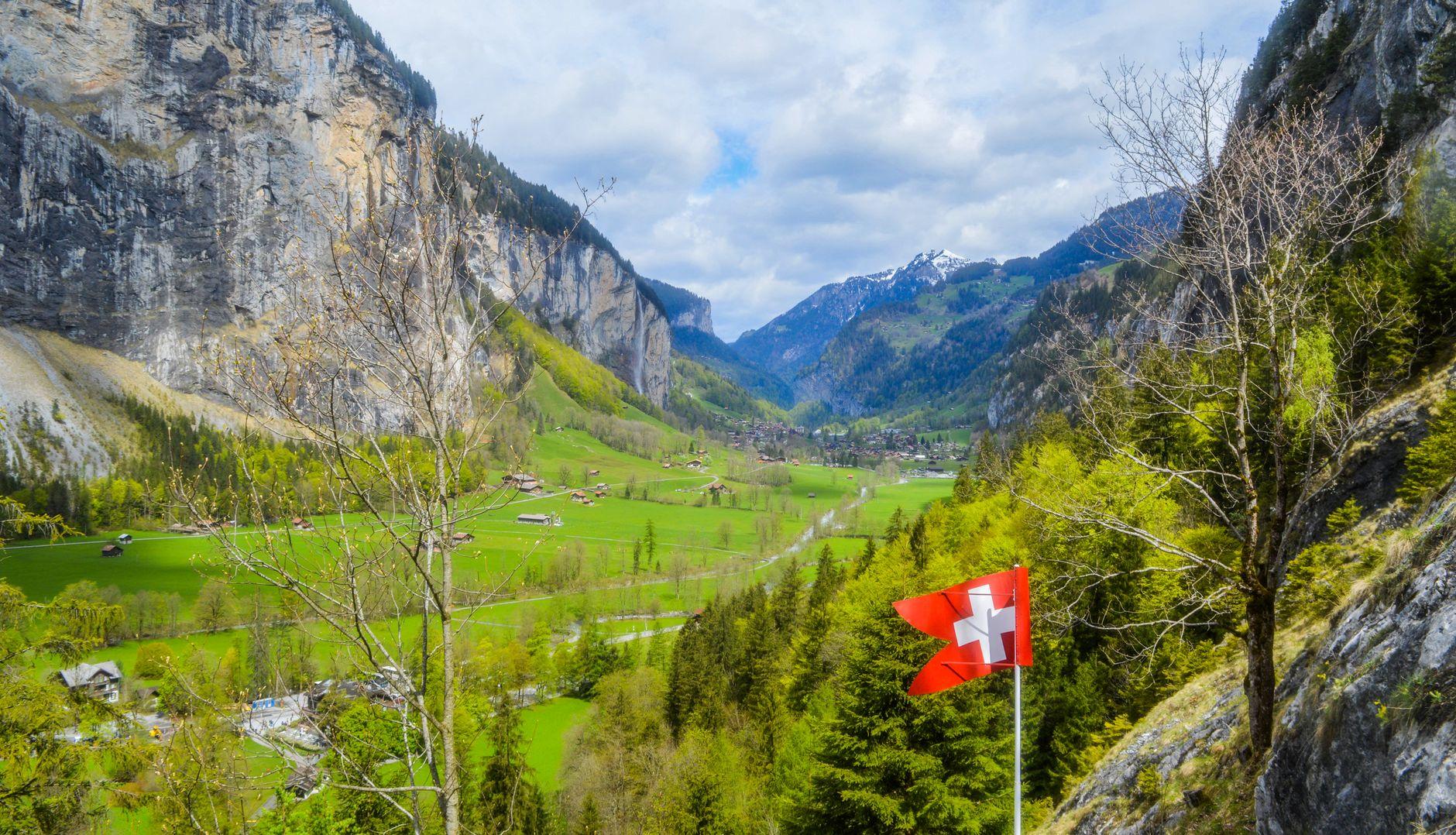
Switzerland packs more scenery into a small space than almost anywhere in Europe: the Matterhorn and the Eiger, glaciers and waterfalls, lakes the colour of glass, medieval towns and some of the most famous train journeys in the world. It is also very easy. Flights from the UK take about an hour and a half, the trains run like clockwork, and you can be in a mountain village by lunchtime. This guide covers where to go in Switzerland, the best things to do, Montreux and Lake Geneva, the Glacier Express and the other scenic trains, Swiss food, the best time to visit Switzerland month by month, getting there and around, where to stay and sample routes.
Where is Switzerland?
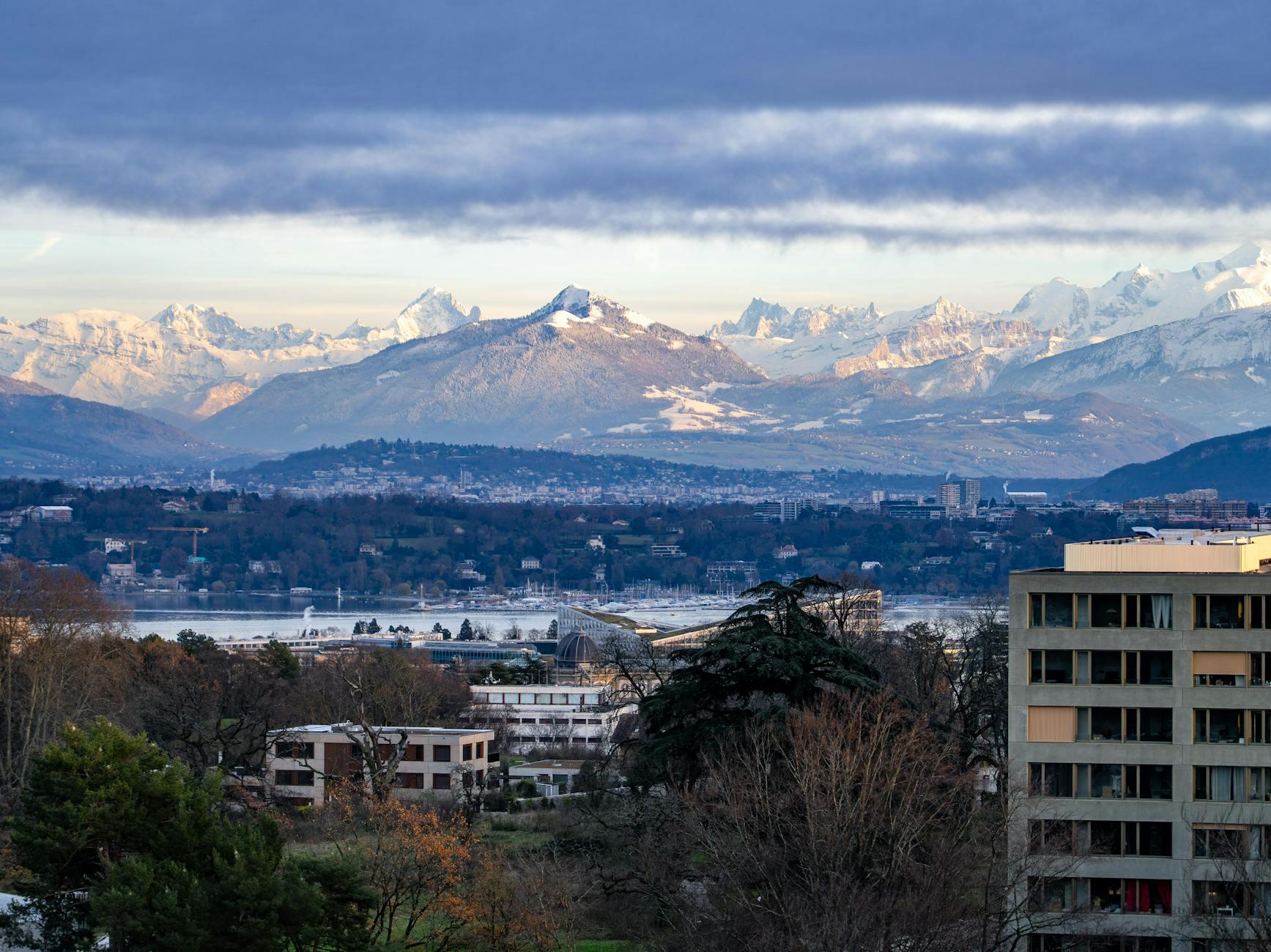
Switzerland is a small, landlocked country in the middle of western Europe, bordered by France, Germany, Austria, Liechtenstein and Italy. Roughly 60% of it is covered by the Alps, which run across the south; the north is a greener, rolling plateau with the big cities and lakes, and the Jura hills follow the French border in the north-west.
It has four national languages. German is spoken in the north and centre (Zurich, Lucerne, Bern, the Bernese Oberland), French in the west (Geneva, Lausanne, Montreux), Italian in Ticino in the south and Romansh in parts of Graubünden. English is widely spoken in the tourist areas.
Distances are short. Zurich to Lucerne takes under an hour by train, Lucerne to Interlaken about two hours, and Geneva to Zermatt about four, so a week covers a lot.
Where to go in Switzerland
Most first trips combine a lake city, one or two mountain bases and a famous train between them. These are the main regions:
Lucerne and Central Switzerland
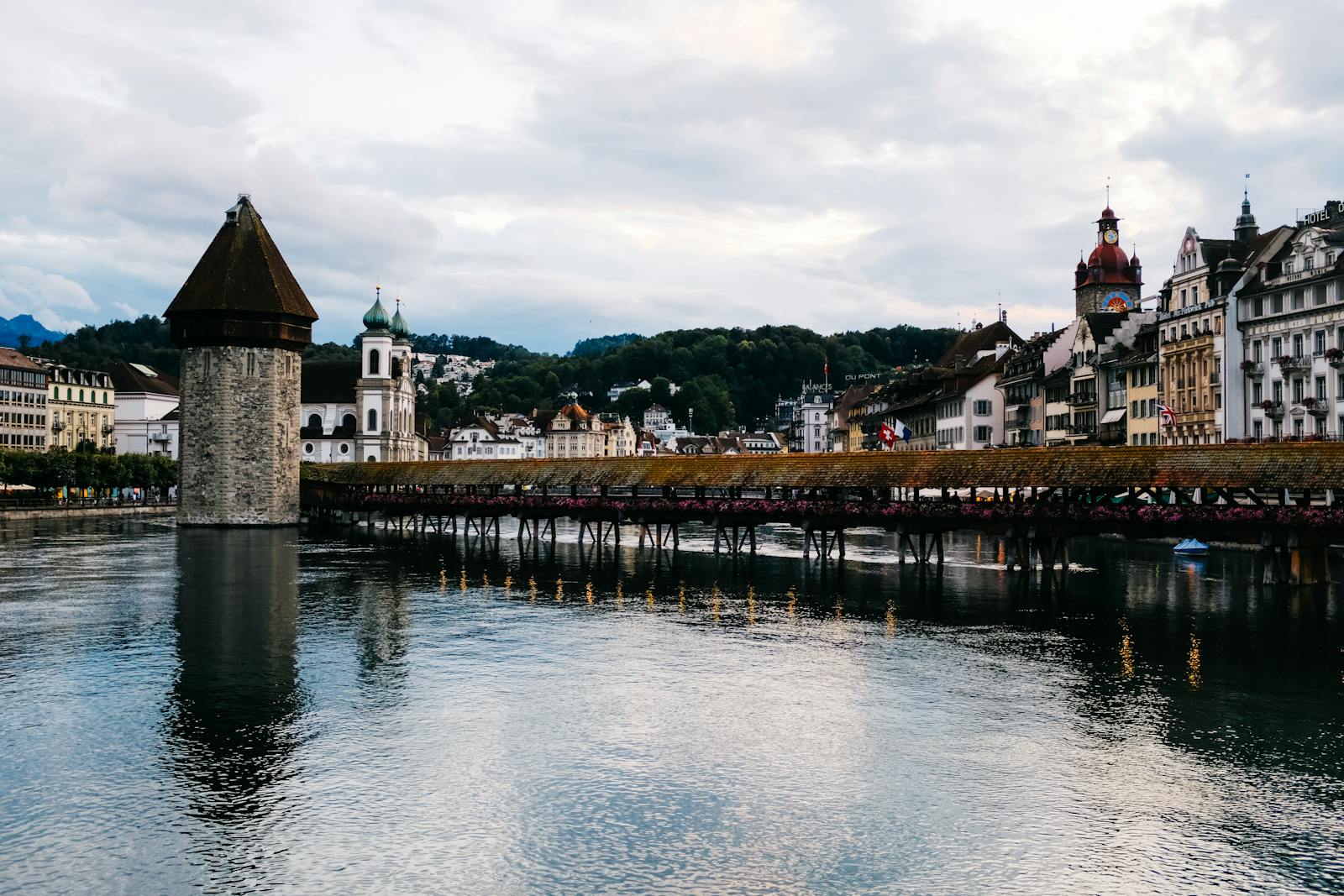
A handsome old town on Lake Lucerne, with the wooden Chapel Bridge, lake steamers and three classic mountains on the doorstep: Rigi, Pilatus and Titlis.

Interlaken and the Jungfrau region
The Bernese Oberland: Interlaken between two lakes, Grindelwald beneath the Eiger, the waterfall valley of Lauterbrunnen and the car-free villages of Wengen and Mürren.
Zermatt and the Valais
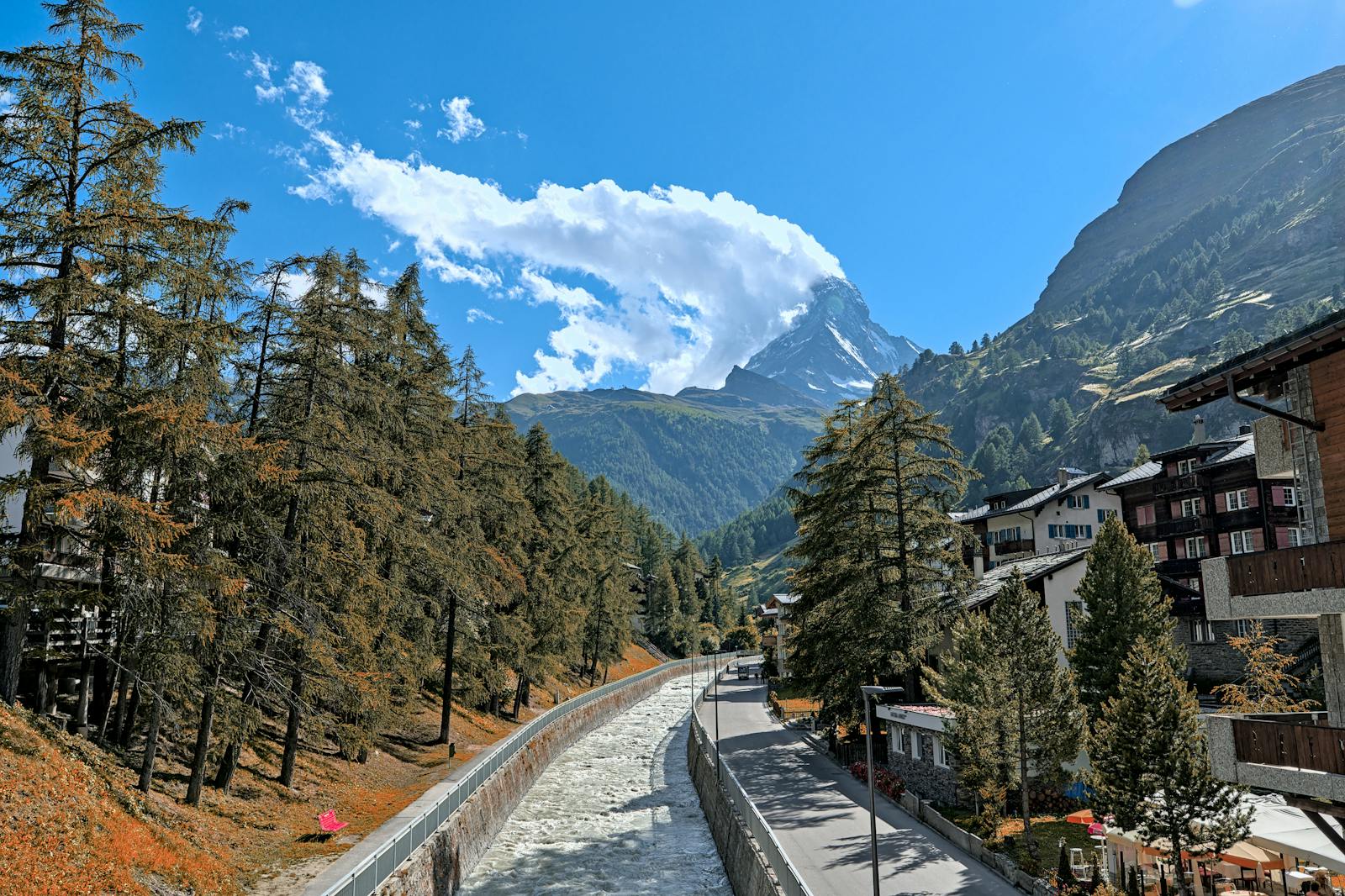
A car-free mountain village at the end of a long valley, under the Matterhorn. The Valais is also Switzerland’s sunniest, driest region, with vineyards along the Rhône.
Lake Geneva and Montreux
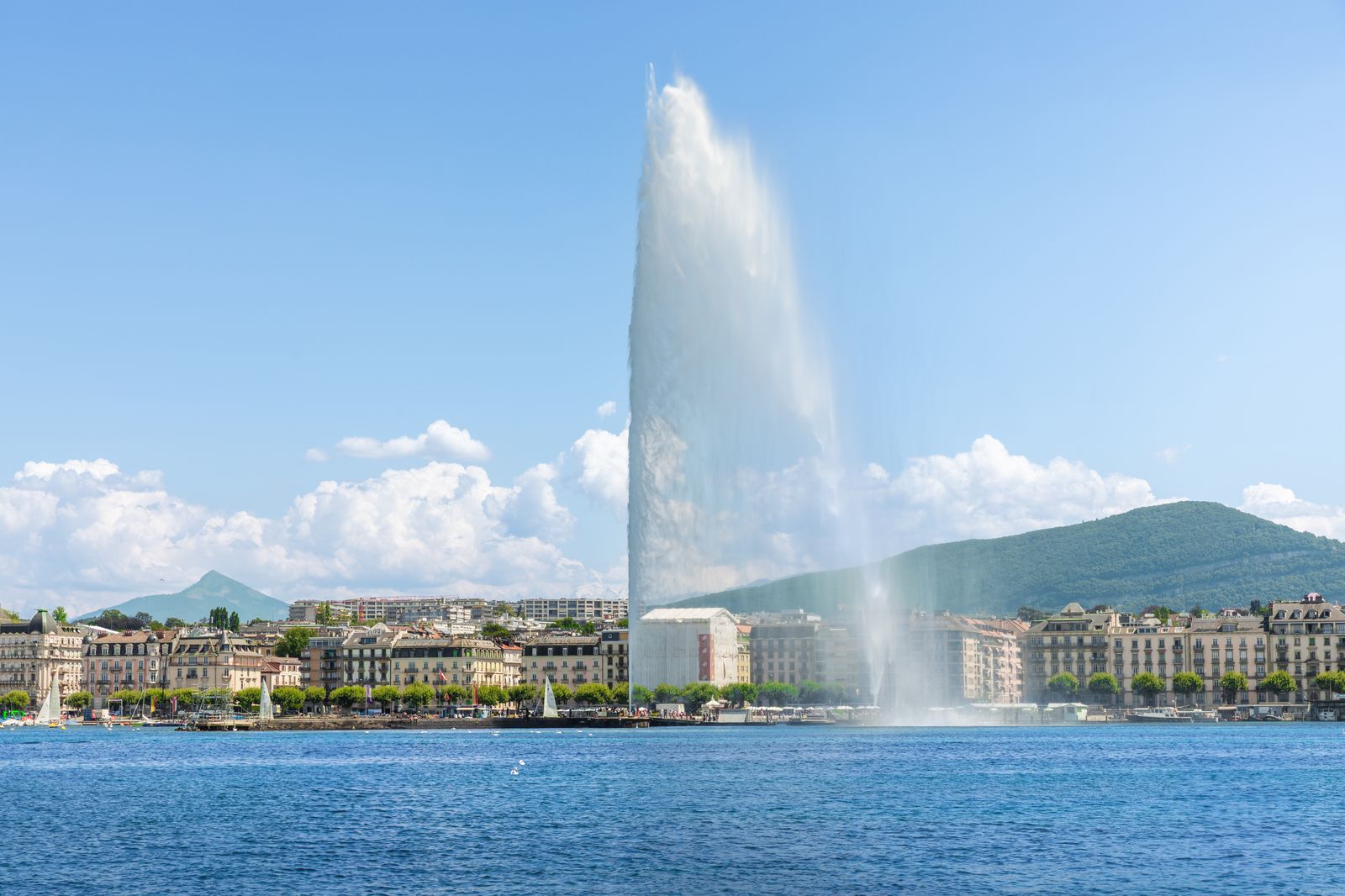
Geneva, Lausanne and the lakeside resort of Montreux, with Chillon Castle and the terraced vineyards of Lavaux between them. Mild, elegant and very French in feel.
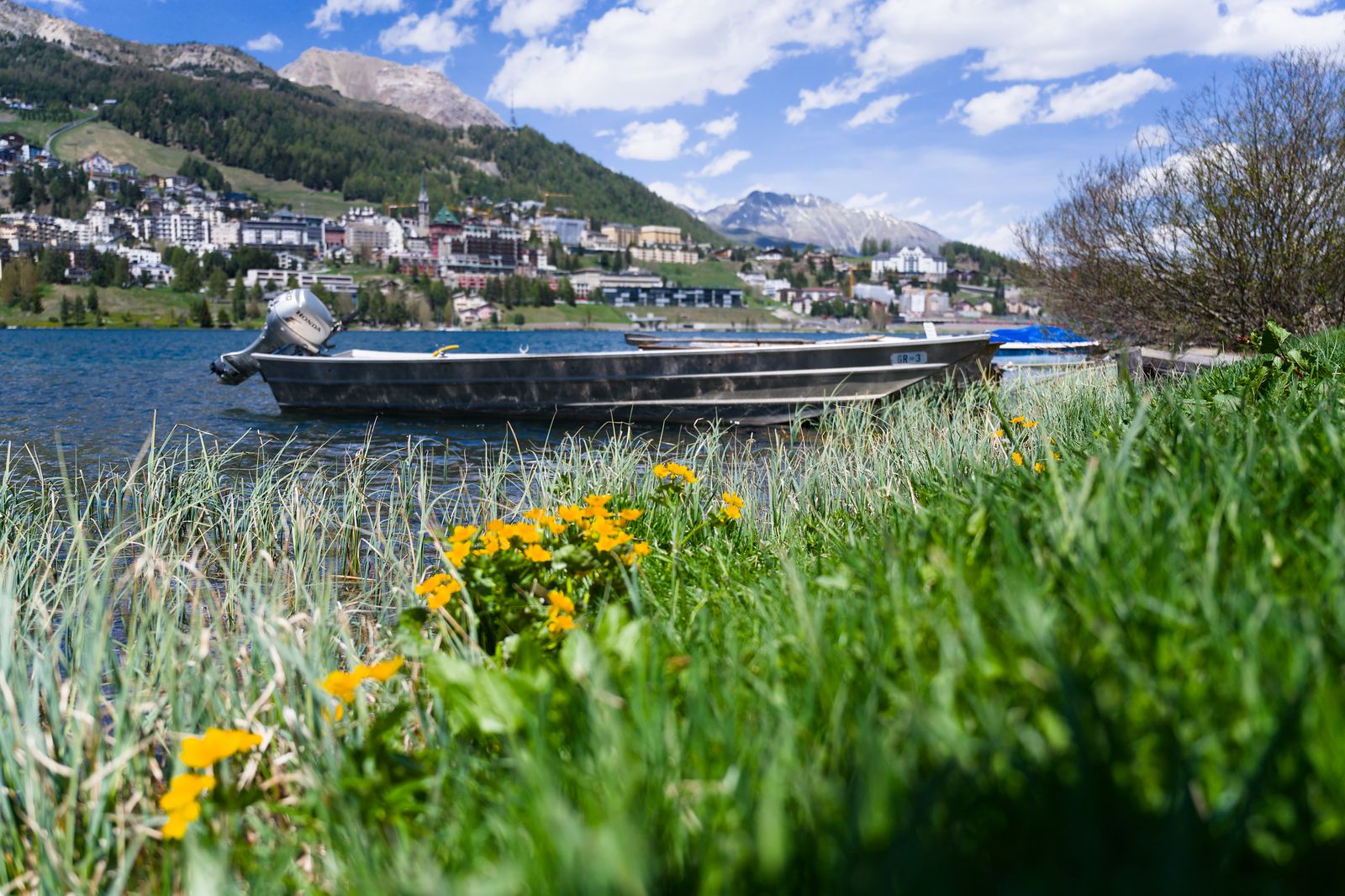
St Moritz and Graubünden
The largest canton, in the south-east: the high Engadine valley and its lakes, St Moritz, Davos, the Swiss National Park and the start of the Bernina line to Italy.
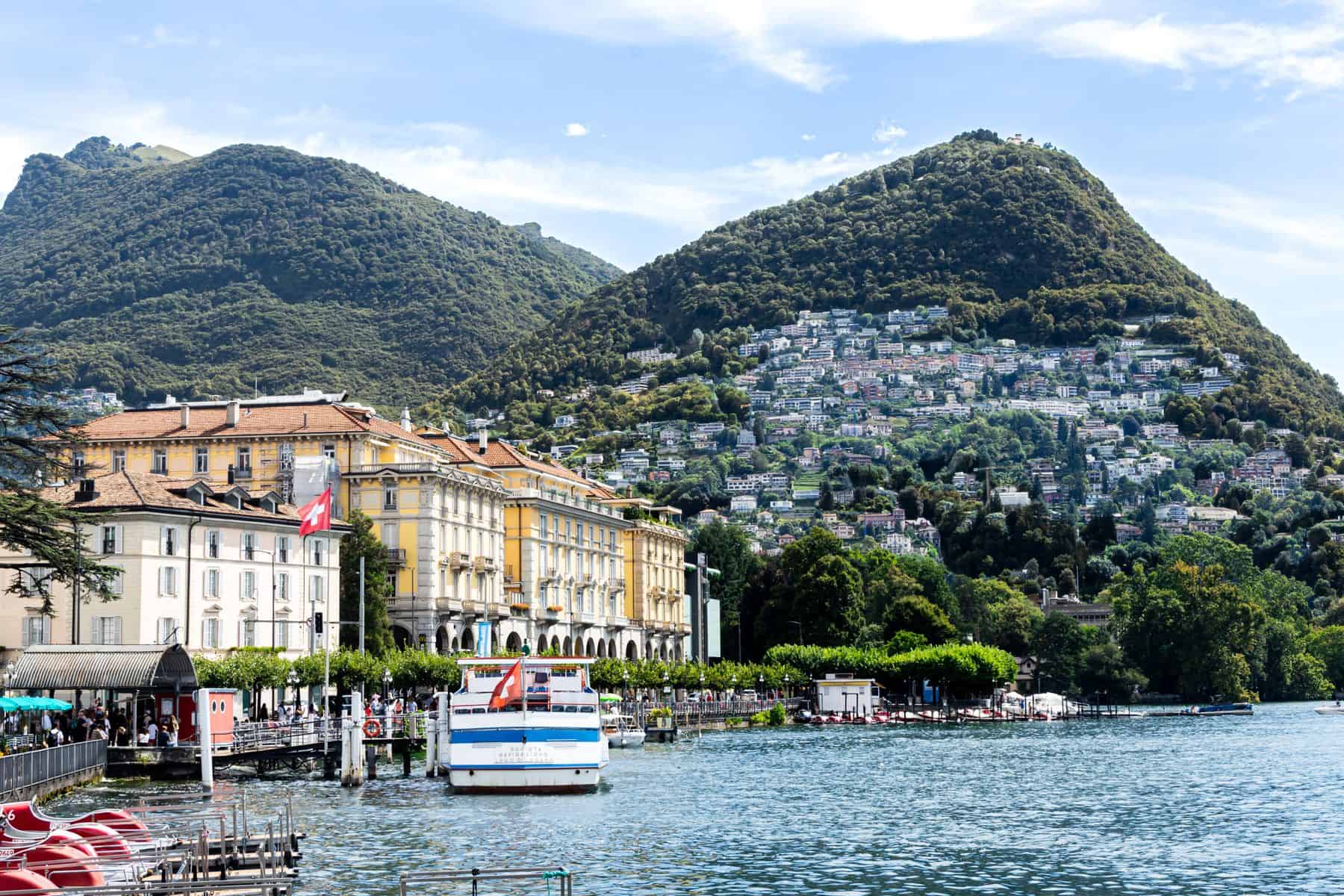
Lugano and Ticino
South of the Alps, Switzerland feels Italian: palm trees, piazzas and risotto in Lugano, Locarno and Ascona on Lakes Lugano and Maggiore. The warmest part of the country.
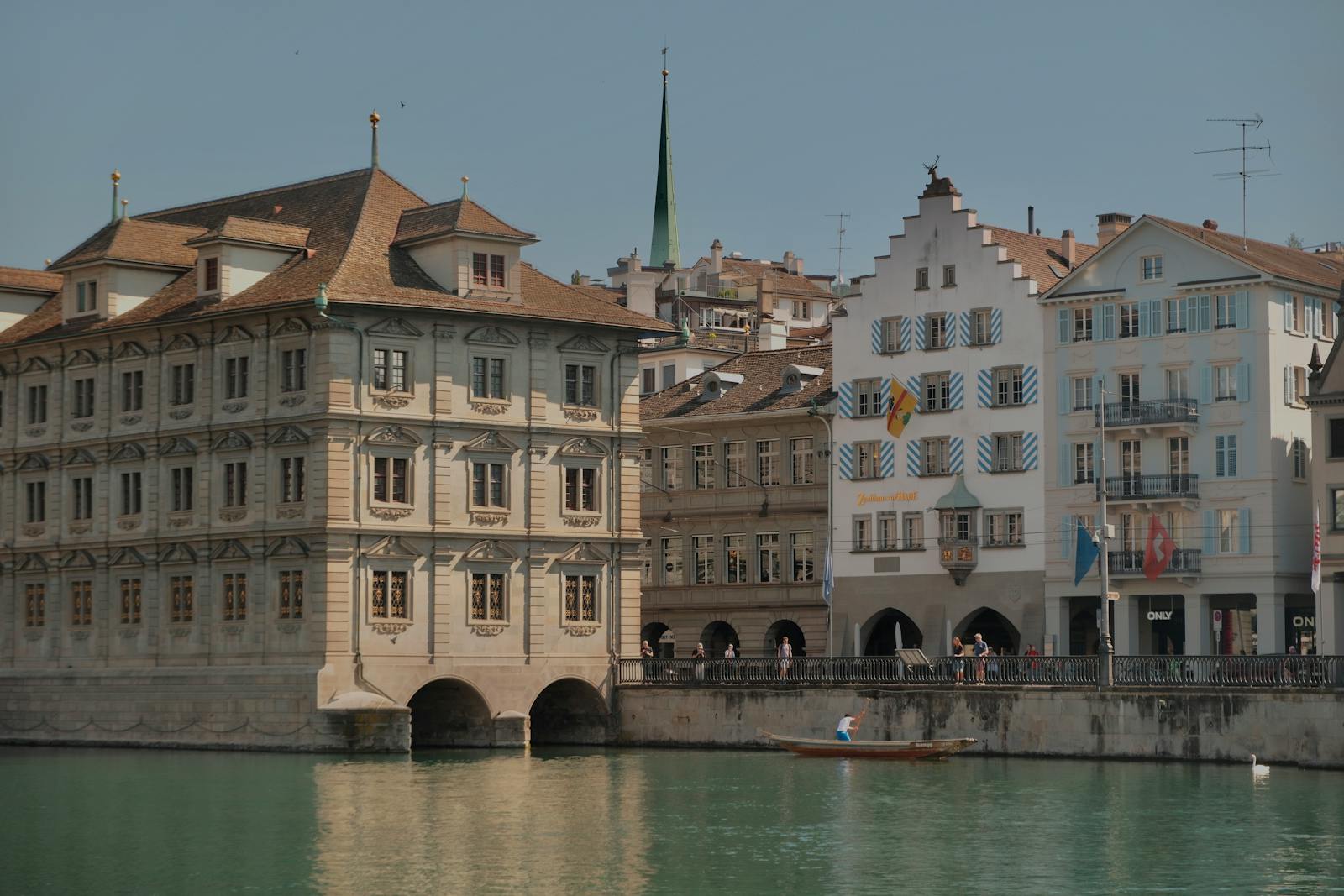
Zurich and Bern
Zurich, the largest city, has a lively old town on the River Limmat and a lake. Bern, the capital, has a UNESCO-listed medieval centre of arcaded streets above the River Aare.
Things to do in Switzerland
The Jungfrau region
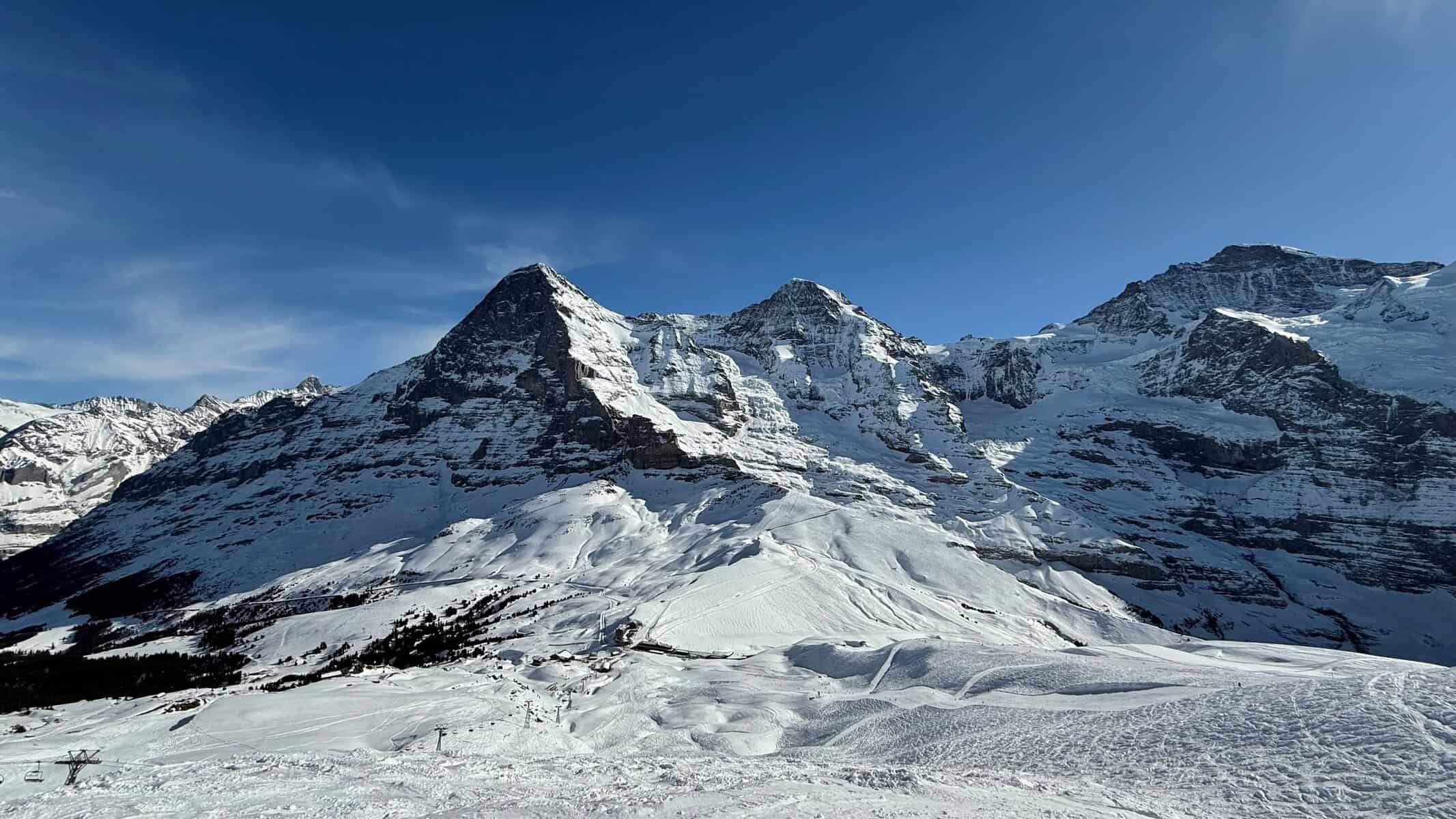
Jungfraujoch. A cogwheel railway climbs through a tunnel inside the Eiger to the highest railway station in Europe, at 3,454 m, with an ice palace, a snow plateau and views down the Aletsch Glacier. Go on a clear morning; there is no view in cloud.
Lauterbrunnen. A deep, flat-bottomed valley with sheer cliffs and dozens of waterfalls, including the Staubbach Falls, which drop almost 300 m beside the village, and the Trümmelbach Falls, which thunder through the inside of the mountain.
Grindelwald, Wengen and Mürren. Chalet villages with cable cars up to some of the best easy walking in the Alps. From Mürren, a cable car continues up the Schilthorn for a 360-degree view of more than 200 peaks.
Interlaken is the practical base, with fast trains and lake boats on Lakes Thun and Brienz, but the mountain villages are more beautiful places to stay.
Zermatt and the Matterhorn

At 4,478 m the Matterhorn is not the highest mountain in the Alps, but it is the most recognisable. Zermatt, at its foot, is car-free: you arrive by train and get around on foot or by small electric taxi.
Take the Gornergrat railway, a cogwheel line running since 1898, to 3,089 m for the classic view of the Matterhorn and a ring of glaciers. The Matterhorn Glacier Paradise cable car goes higher still, to the highest cable car station in Europe, at 3,883 m, with year-round snow. In summer, walk the Five Lakes trail above Sunnegga, where the Matterhorn reflects in the water on calm mornings.
Zermatt is also one of the best ski resorts in Europe, linked to Cervinia in Italy, with skiing on the glacier even in summer.
Lucerne and its lake
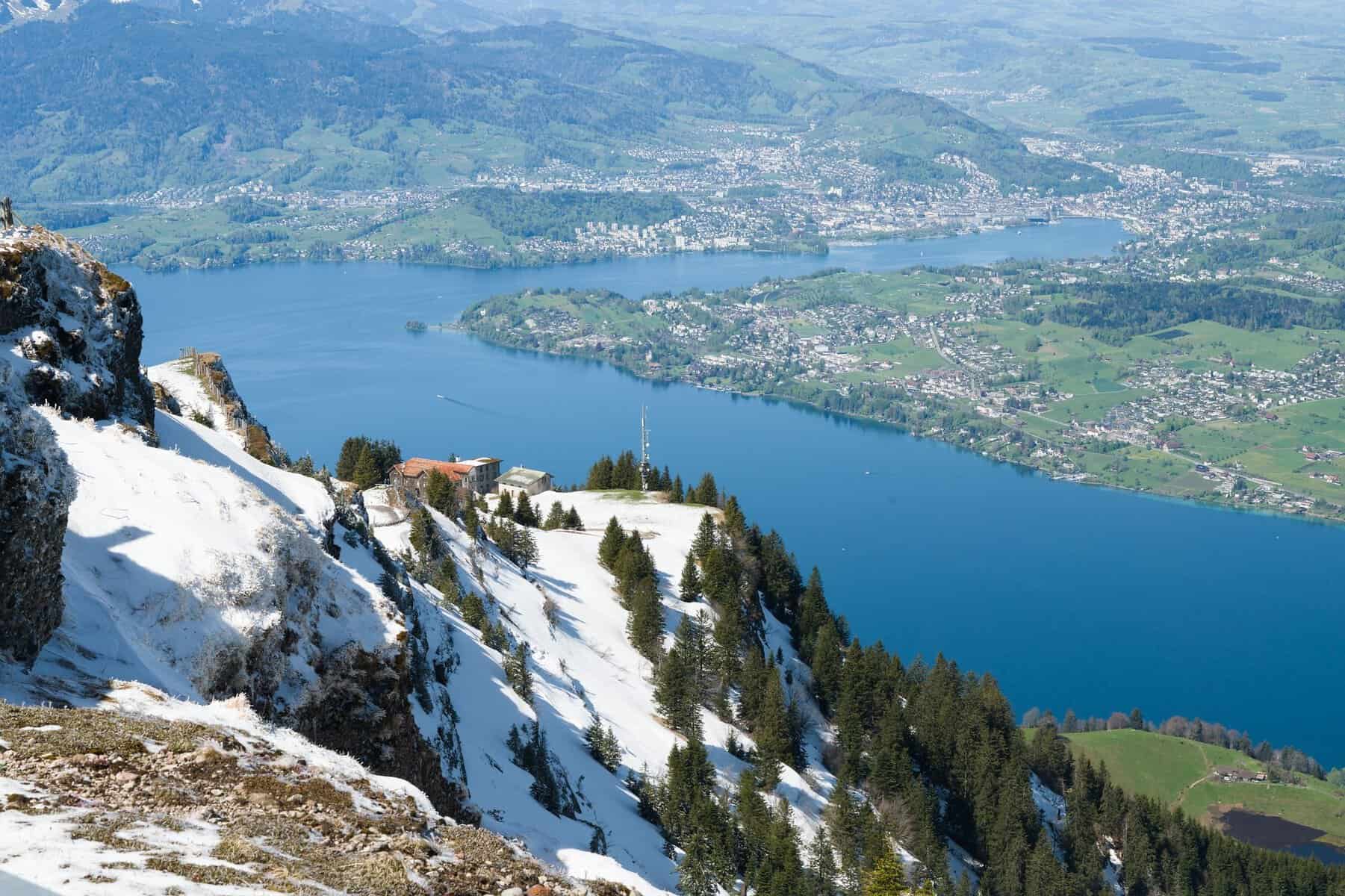
Lucerne is the easiest place to start a Swiss holiday: an hour from Zurich airport, with an old town of painted houses, the 14th-century Chapel Bridge and its Water Tower, the moving Lion Monument and a fine Swiss Museum of Transport.
Mount Rigi, the “queen of the mountains”, has had a cogwheel railway since 1871, the first mountain railway in Europe; go up by boat and train, come down by cable car. Pilatus has the steepest cogwheel railway in the world (open roughly May to November), and Titlis, above Engelberg, has a revolving cable car and snow all year.
Paddle steamers cross the lake all summer, and the boat to Flüelen links up with the Gotthard line south to Ticino.
Montreux and Lake Geneva

Montreux sits on the north-east shore of Lake Geneva, sheltered by mountains, with a flower-lined lakeside promenade and palm trees. It is best known for the Montreux Jazz Festival, held for two weeks every July, and for the bronze statue of Freddie Mercury looking out over the lake: Queen recorded here for years.
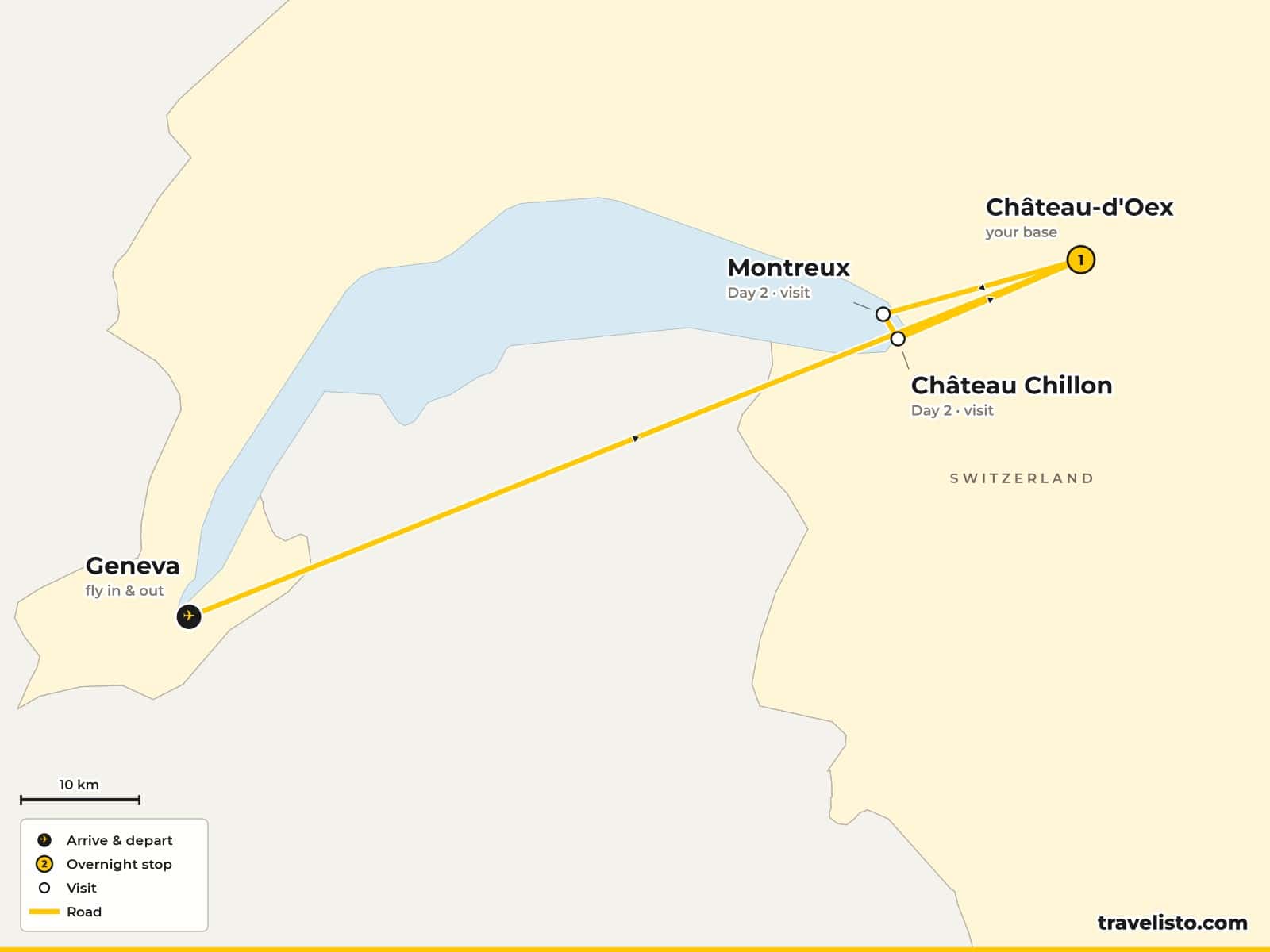
Chillon Castle, a short walk or bus ride along the shore, is one of the most visited historic sites in Switzerland: a medieval castle on a rock in the lake, with dungeons that inspired Byron’s poem The Prisoner of Chillon. A cogwheel train climbs from Montreux to Rochers-de-Naye for views over the whole lake to Mont Blanc.
West of Montreux, the Lavaux vineyards fall in steep terraces to the lake, a UNESCO World Heritage Site with walking paths and village wine cellars. Lausanne, with its cathedral and the Olympic Museum, and Geneva, with the Jet d’Eau and its old town, are both within an hour by train.
Montreux at Christmas: the Montreux Christmas market runs along the lakeside from late November until Christmas Eve, with wooden chalets, a Ferris wheel and Santa’s “flying” sleigh over the town. It is one of the best Christmas markets in Switzerland, and Gruyères and Château-d’Oex are easy to add. See our Christmas market tours.
The Glacier Express and Switzerland’s scenic trains
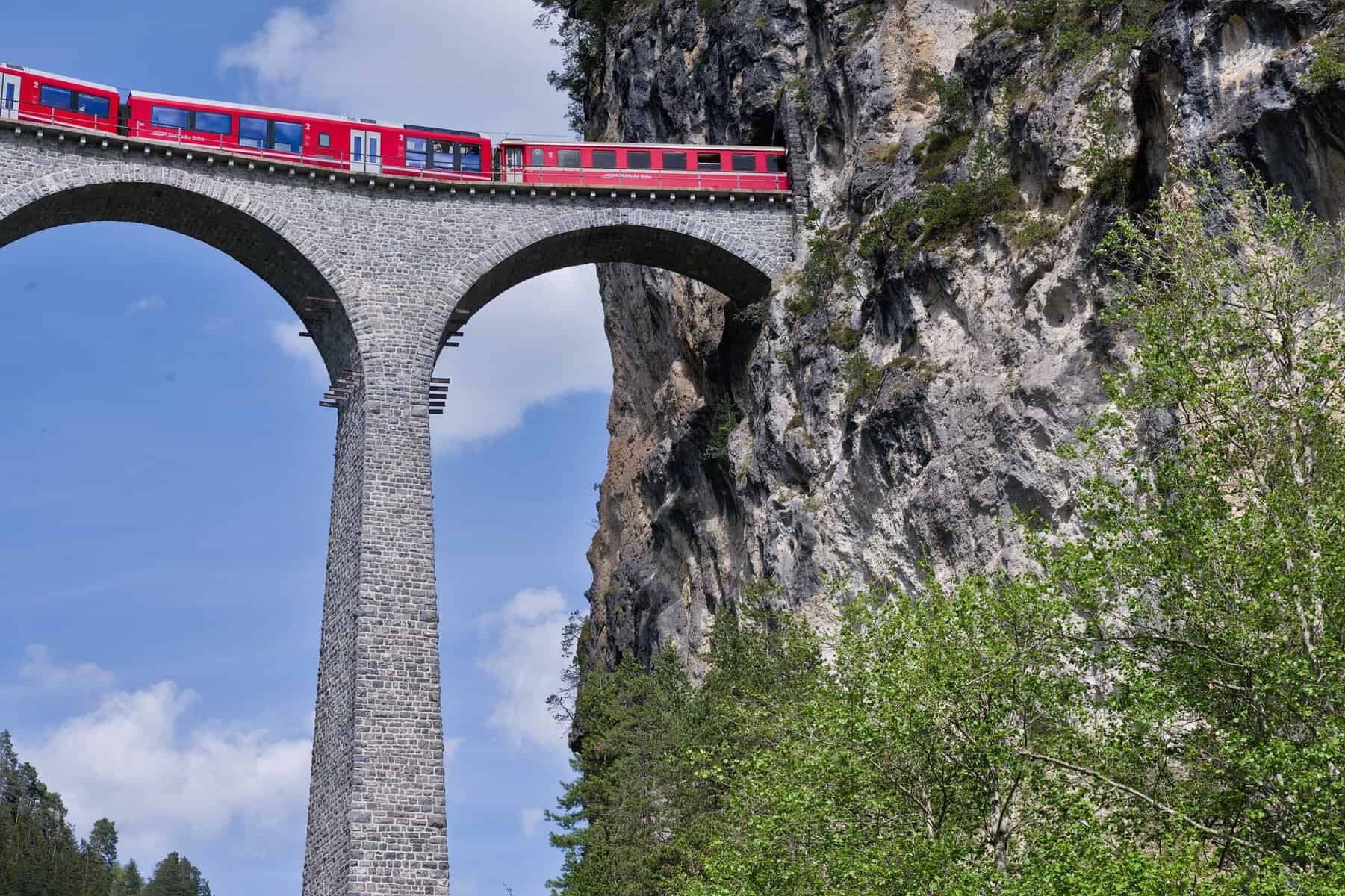
For many people the trains are the reason to go. The Glacier Express runs between Zermatt and St Moritz (or Davos) in about eight hours, crossing the Oberalp Pass at 2,033 m and hundreds of bridges, in panoramic carriages with lunch served at your seat. On the way it crosses the Landwasser Viaduct, the most photographed bridge in the Alps.
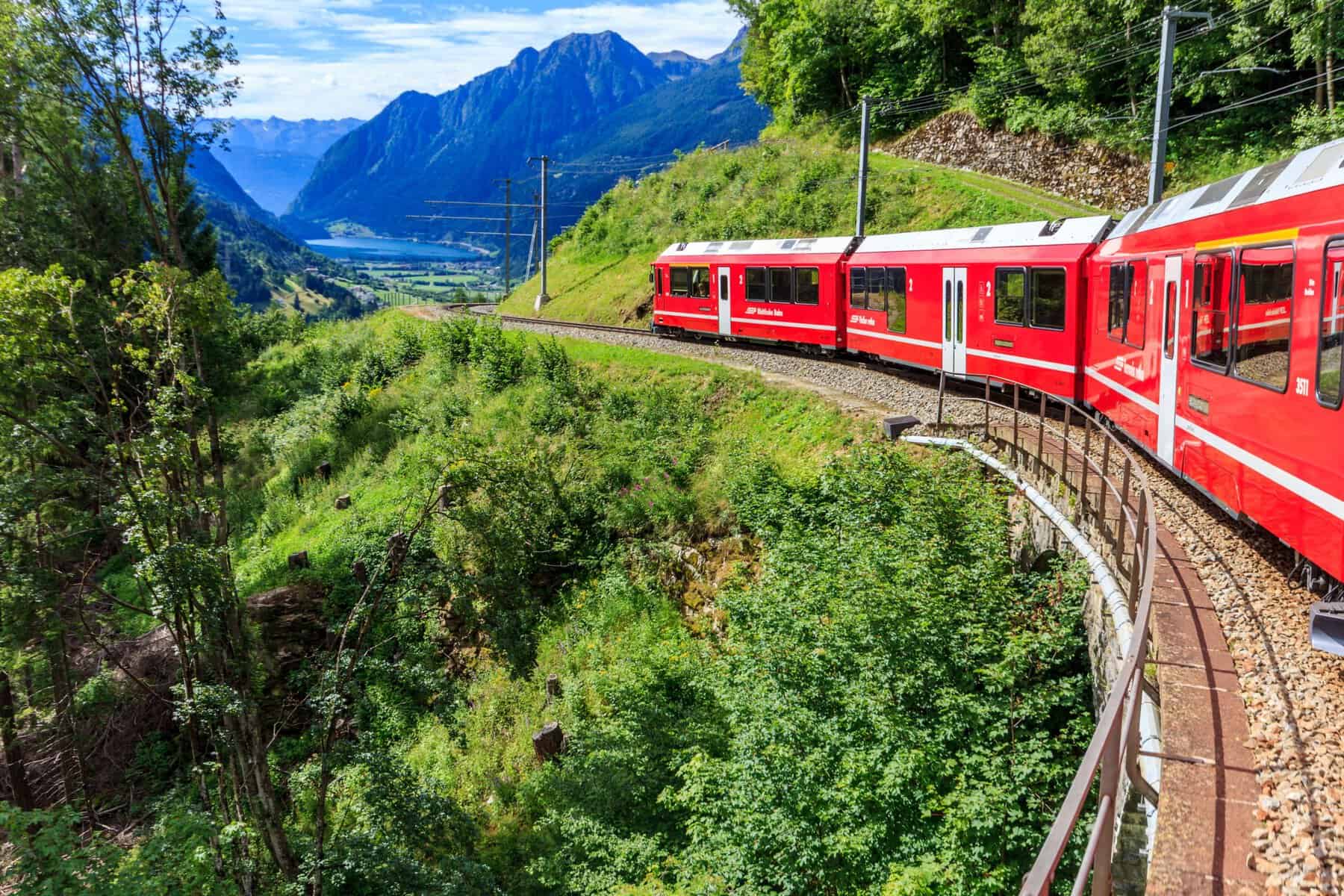
The Bernina Express runs from Chur or St Moritz over the Bernina Pass and down to Tirano in Italy, on a line that is a UNESCO World Heritage Site. The GoldenPass Express links Montreux and Interlaken, from the vineyards of Lake Geneva to the Bernese Oberland, and the Gotthard Panorama Express combines a Lake Lucerne steamer with a train to Lugano.
You need a seat reservation on all of them, and the Glacier and Bernina Express sell out in summer, so book early. Which train each of our tours uses, and how to choose, is in our guide to Switzerland rail tours.
Swiss food and drink
- Cheese. Fondue (melted Gruyère, often with Vacherin, eaten with bread on long forks) and raclette (melted cheese scraped over potatoes) are the mountain classics, best in winter. Visit the dairy and castle at Gruyères, or a show dairy in the Emmental.
- Rösti, crisp grated potato, comes with almost everything in German-speaking Switzerland; in Zurich try Zürcher Geschnetzeltes, veal in a cream and mushroom sauce. Älplermagronen, alpine macaroni with potato, cheese and apple sauce, is mountain hut food.
- Lake fish, especially perch fillets, around Lake Geneva and Lake Lucerne; air-dried beef from Graubünden; risotto and polenta in Ticino.
- Chocolate needs no introduction, and many towns run chocolate workshops. Swiss wine is excellent and rarely exported: try Chasselas from Lavaux and reds from the Valais.
Best time to visit Switzerland
June to September is the best time to visit Switzerland for walking, lakes and mountain views: the high passes and cable cars are open, the meadows are full of flowers in June and July, and the lakes are warm enough to swim. July and August are the busiest months; September is often the best of all, settled and quieter. December to March is ski season, and the snowy trains and villages are magical, with Christmas markets from late November. April, May and November are the in-between months: lake cities and Ticino are pleasant, but many mountain lifts close for maintenance and high trails are still under snow. In April, expect around 14°C in Lucerne and Lugano and snow still lying in the mountains.
| Month | Lucerne | Zermatt | Lugano |
|---|---|---|---|
| Jan | 5°C / -1°C · 115 mm | -1°C / -8°C · 115 mm | 8°C / 1°C · 75 mm |
| Feb | 7°C / 0°C · 90 mm | 1°C / -6°C · 85 mm | 10°C / 2°C · 85 mm |
| Mar | 11°C / 1°C · 95 mm | 3°C / -5°C · 95 mm | 13°C / 4°C · 90 mm |
| Apr | 15°C / 4°C · 135 mm | 6°C / -2°C · 105 mm | 17°C / 8°C · 130 mm |
| May | 18°C / 9°C · 175 mm | 10°C / 3°C · 125 mm | 20°C / 11°C · 170 mm |
| Jun | 23°C / 14°C · 155 mm | 16°C / 7°C · 80 mm | 25°C / 16°C · 185 mm |
| Jul | 24°C / 16°C · 200 mm | 19°C / 10°C · 90 mm | 28°C / 19°C · 175 mm |
| Aug | 24°C / 16°C · 180 mm | 19°C / 9°C · 85 mm | 27°C / 19°C · 215 mm |
| Sep | 20°C / 12°C · 125 mm | 15°C / 6°C · 65 mm | 23°C / 15°C · 140 mm |
| Oct | 16°C / 9°C · 120 mm | 10°C / 2°C · 125 mm | 18°C / 11°C · 215 mm |
| Nov | 10°C / 4°C · 120 mm | 4°C / -3°C · 160 mm | 13°C / 6°C · 195 mm |
| Dec | 6°C / 1°C · 115 mm | 2°C / -5°C · 105 mm | 9°C / 2°C · 80 mm |
Average daily high / low and monthly rain or snow (as water), 10-year ERA5 data. The Zermatt figures are for the surrounding mountains at about 1,600 m; the village itself is a little milder. Summer rain in the Alps usually falls in afternoon showers and thunderstorms.

Getting to Switzerland from the UK
By air: direct flights from London and many regional UK airports reach Zurich, Geneva and Basel in about 1 hour 30 minutes to 1 hour 45 minutes. Zurich suits Lucerne, the east and Graubünden; Geneva suits Lake Geneva, Montreux and Zermatt. Both airports have railway stations, so you can be on a train within minutes of landing. By rail: take the Eurostar to Paris and a high-speed train on to Geneva, Lausanne, Basel or Zurich; the whole journey takes roughly seven to eight hours, a good start to a rail holiday.
Getting around
Switzerland has the best public transport in Europe, and trains, post buses, lake boats and cable cars all connect. The Swiss Travel Pass covers most trains, buses and boats and gives discounts on many mountain railways and cable cars; scenic trains need a separate seat reservation. Bags can be sent ahead by rail between stations, so you can travel light. Driving is easy too, but Zermatt, Wengen and Mürren are car-free, and city parking is expensive. On our tailor-made holidays we arrange the passes, reservations and luggage transfers.
Where to stay in Switzerland
- Lucerne: a lakefront hotel on the promenade, or a smaller one in the old town.
- Jungfrau region: Grindelwald for the Eiger views, Wengen or Mürren for car-free peace, Interlaken for convenience.
- Zermatt: a hotel with a Matterhorn-facing balcony is worth paying for; ask for one high in the village.
- Lake Geneva: a grand lakeside hotel in Montreux, or a smaller one in the vineyards of Lavaux.
- Graubünden: St Moritz for glamour, or a quieter Engadine village such as Pontresina.
- Ticino: a hotel on the lake in Lugano or Ascona.
Tell us your style and budget and we’ll match the right hotel in each place, from grand lakeside palaces to family-run chalets.
Sample Switzerland routes
Lakes and the Jungfrau
- Lucerne (3 nights)
- Grindelwald or Wengen (3)
- Bern (1)
A first trip from Zurich: Rigi, the Jungfraujoch, Lauterbrunnen and the capital.
Montreux to the Matterhorn
- Montreux (2 nights)
- Zermatt (3)
- St Moritz (2)
- Lucerne (3)
Geneva in, Zurich out, with the Glacier Express from Zermatt to St Moritz and the Bernina line.
The grand tour
- Lucerne (3 nights)
- Grindelwald (3)
- Montreux (2)
- Zermatt (2)
- Lugano (2)
Every region by train: the GoldenPass, the Matterhorn and Italian Switzerland.
Our Switzerland tours
We have more than a dozen tours that include Switzerland. These are the best for a first visit:
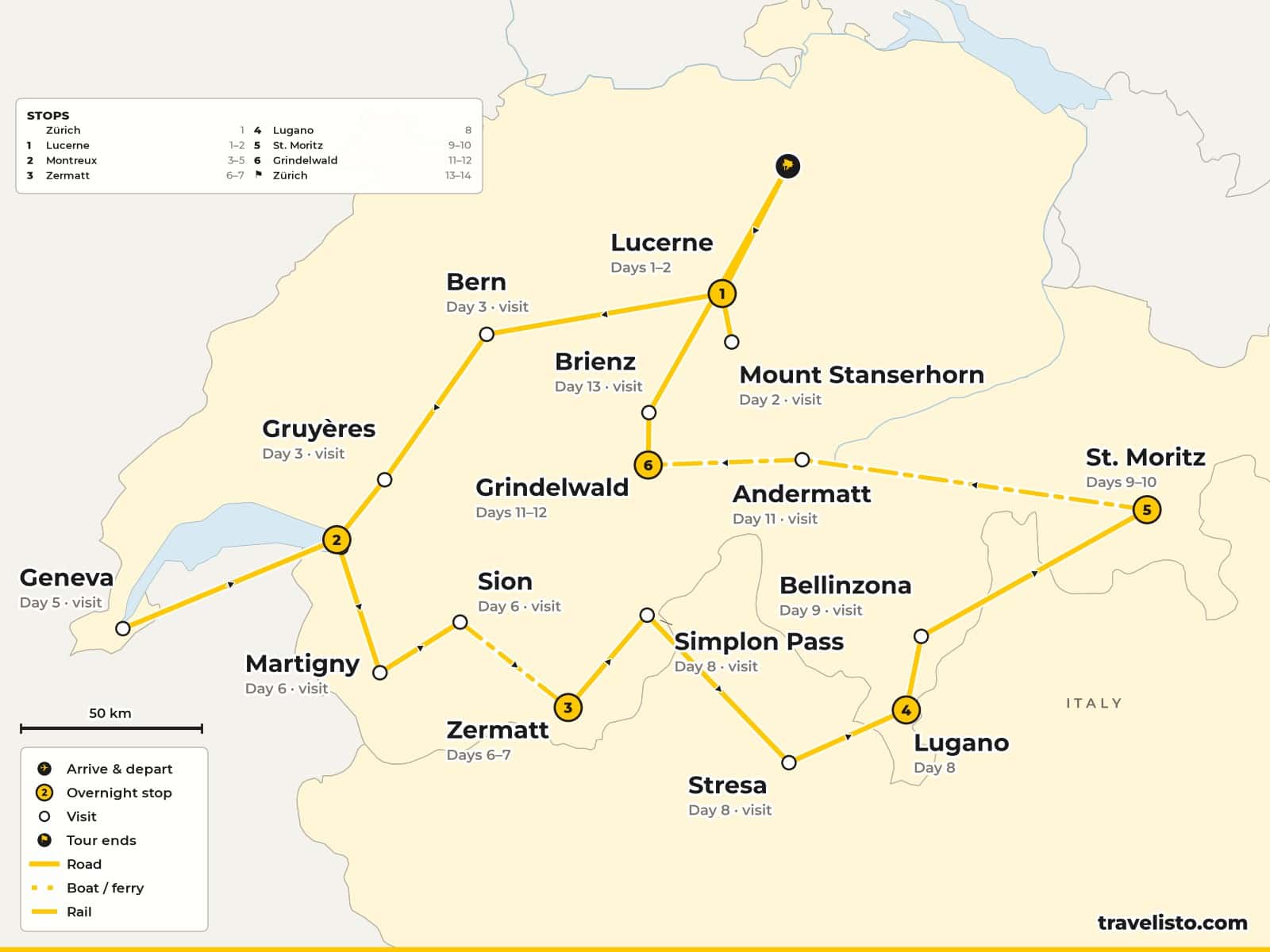
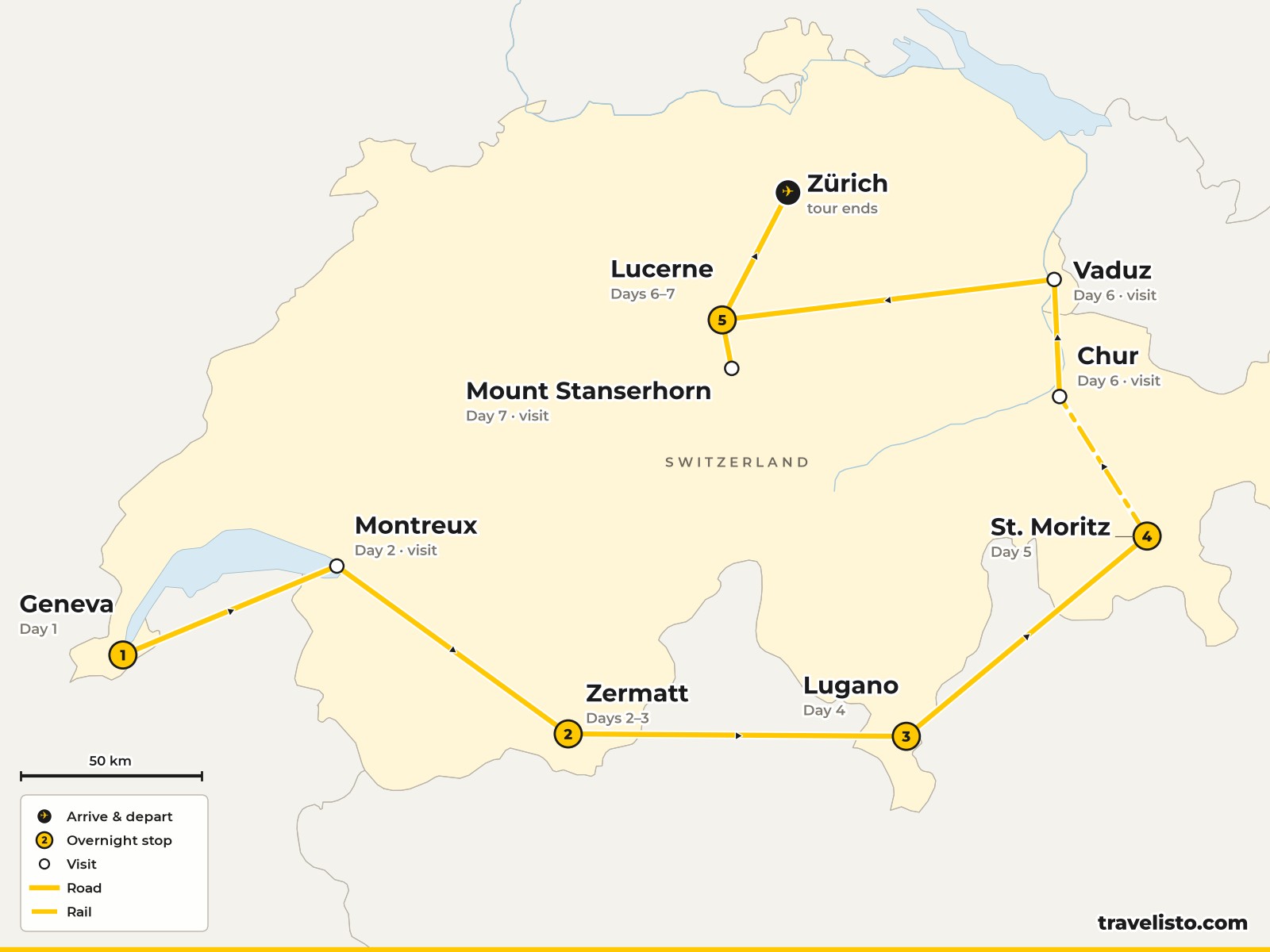
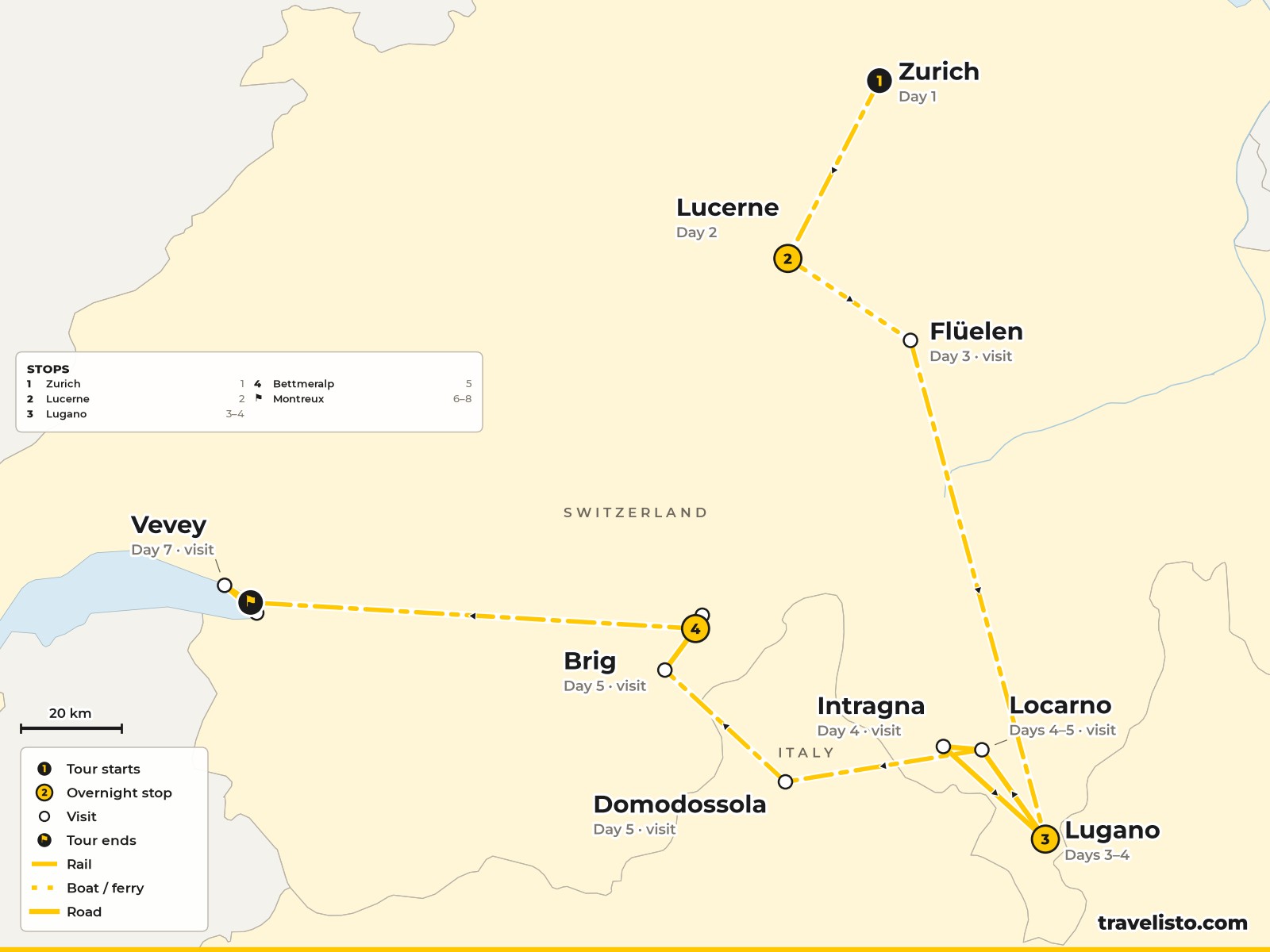
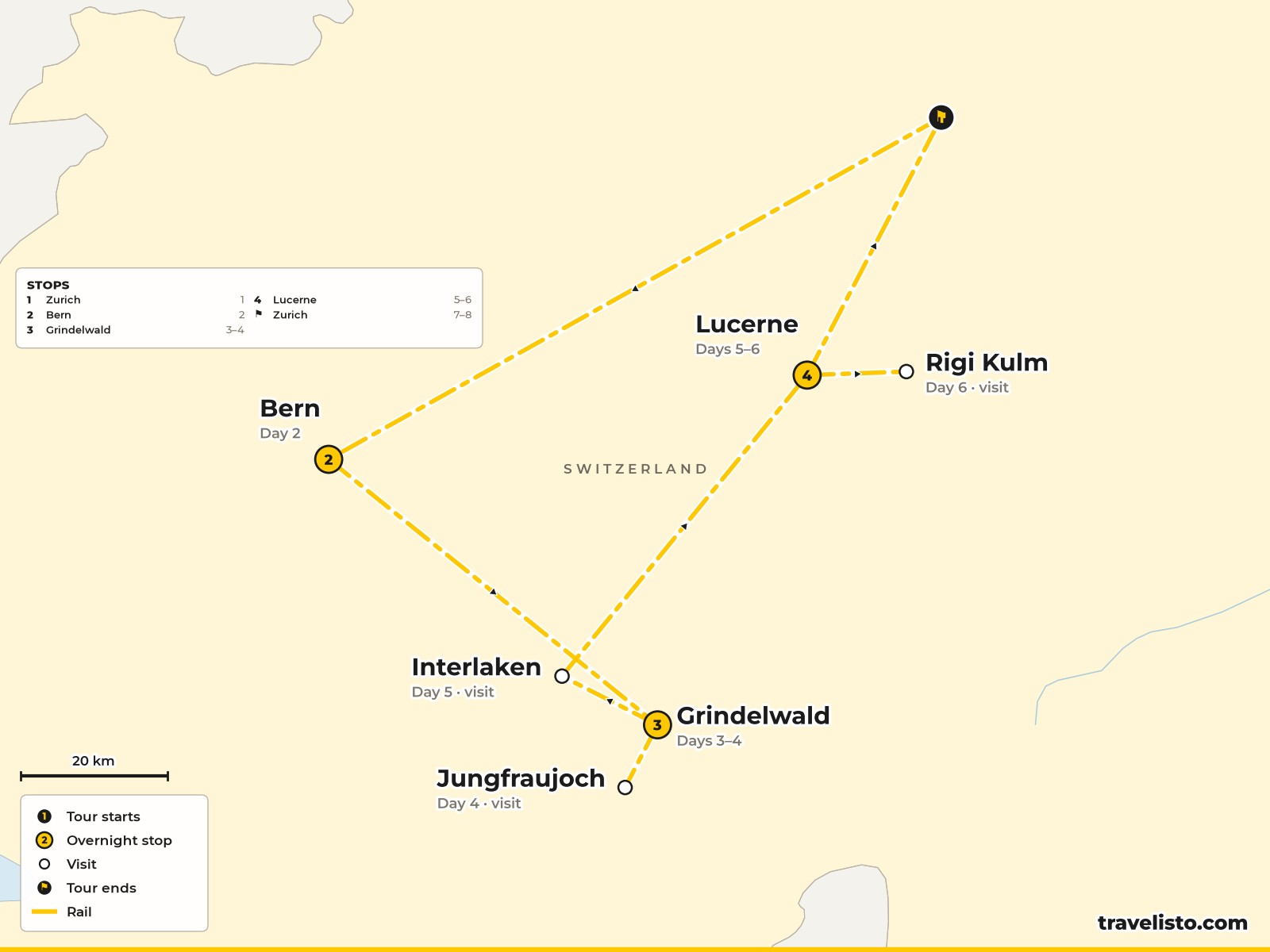
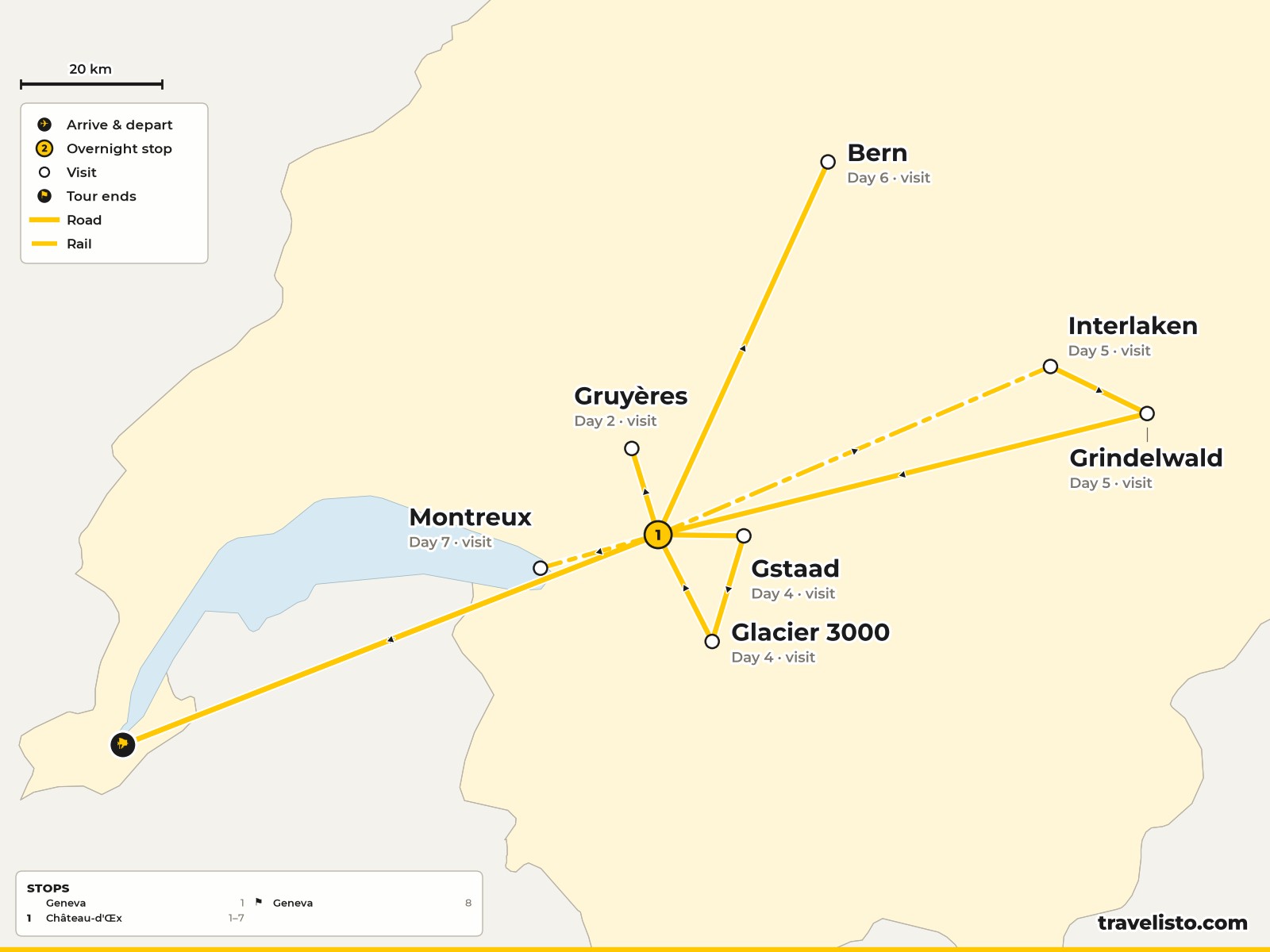
Prefer your own pace? A tailor-made Switzerland holiday can combine any of these places with the trains, passes and hotels you want. See all our Switzerland holidays.
Practical tips
- Entry: Switzerland is in the Schengen area. British visitors can stay up to 90 days in any 180 without a visa; your passport must have been issued less than 10 years before you arrive and be valid for at least 3 months after you leave. You may need to register your fingerprints and photo at the border under the EU Entry/Exit System. Check the FCDO Switzerland advice before you book and again before you travel.
- Money: Switzerland uses the Swiss franc, not the euro, and is expensive. Cards are taken almost everywhere. Service is included in prices, so tipping is just rounding up.
- In the mountains: check the weather and avalanche warnings, stay on marked paths, and make sure your insurance covers mountain rescue and helicopter costs. Weather changes fast, even in summer.
- Altitude: the Jungfraujoch and Matterhorn Glacier Paradise are above 3,400 m; take it slowly, and drink water.
- Book ahead: Glacier and Bernina Express seats, Zermatt and Jungfrau hotels in summer and at Christmas, and the Montreux Jazz Festival.
- Plugs: Swiss three-pin sockets (type J); bring an adaptor.
Frequently asked questions
What is the best time to visit Switzerland?
June to September for hiking, lakes and mountain views, with September often the best balance of weather and crowds. December to March is best for snow, ski resorts and Christmas markets. In April, May and November many mountain lifts close for maintenance.
Where should I go in Switzerland on a first visit?
Lucerne and its lake, the Jungfrau region (Grindelwald, Wengen or Lauterbrunnen) and Zermatt for the Matterhorn. Add Montreux and Lake Geneva or Lugano if you have ten days or more.
How long is the Glacier Express?
About eight hours between Zermatt and St Moritz, in panoramic carriages with lunch served at your seat. Seats must be reserved, and summer dates sell out early.
Is Montreux worth visiting?
Yes. It has a beautiful lakeside promenade, Chillon Castle, the Lavaux vineyards next door, the Montreux Jazz Festival in July and one of Switzerland's best Christmas markets. It is also the start of the GoldenPass train to Interlaken.
How many days do you need in Switzerland?
Seven nights covers Lucerne and the Jungfrau region. Ten to twelve nights lets you add Zermatt, Montreux, St Moritz or Lugano and a scenic train between them.
Do I need a visa for Switzerland?
Not for a holiday. British visitors can stay up to 90 days in any 180-day period in the Schengen area, including Switzerland. Check passport validity and the latest FCDO advice before you travel.
Is Switzerland expensive?
Yes, it is one of the most expensive countries in Europe. A Swiss Travel Pass and booking hotels and scenic trains early help, as does staying in villages rather than the big resorts.
What is the capital of Switzerland?
Bern, a small city with a UNESCO-listed medieval old town. Zurich is the largest city, and Geneva hosts many international organisations.
Keep planning
- Switzerland holidays
- Escorted tours of Switzerland
- Switzerland rail tours compared
- Christmas market tours
- European rail tours
- Rail holidays
- Austria holidays
- Tailor-made holidays
Plan your Switzerland holiday with a Travel Designer
Tell us when you’d like to go and we’ll plan the lakes, mountains and trains, with seat reservations, rail passes and hotels, in one ATOL-protected booking.
Make an enquiry Switzerland holidays