
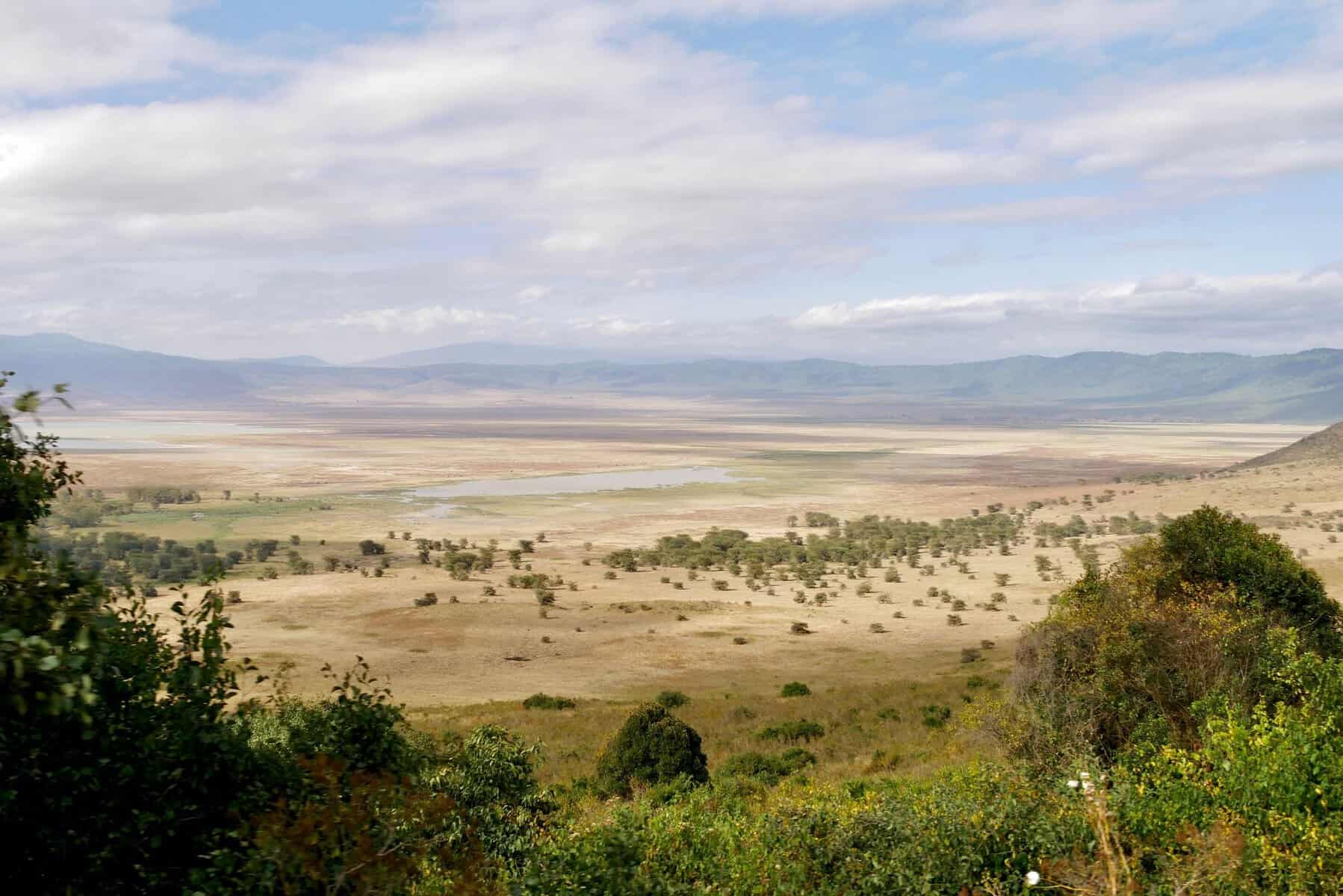
A Tanzania safari is the big one: the Serengeti’s endless plains, the Ngorongoro Crater, Tarangire’s elephants and the Great Migration, which spends most of the year inside Tanzania. Our Travel Designers plan every safari in Tanzania around your dates, and we also sell small-group escorted tours that run on set dates.
Most first trips follow the northern circuit from Arusha, by 4×4 or by light aircraft. Wilder, emptier Nyerere and Ruaha are in the south, and the white beaches of Zanzibar are a short flight from both.
This page is the practical bit: which parks, which months, which style of camp, and the trips we actually sell. For the wider country, including Kilimanjaro and the coast, see our Tanzania holidays page.
Where to go on a Tanzania safari: the northern circuit
Four parks in a loop west of Arusha, linked by roads through the Ngorongoro highlands. Between them they cover the Big Five, the migration herds and some of the best big-cat viewing in Africa.

Serengeti National Park
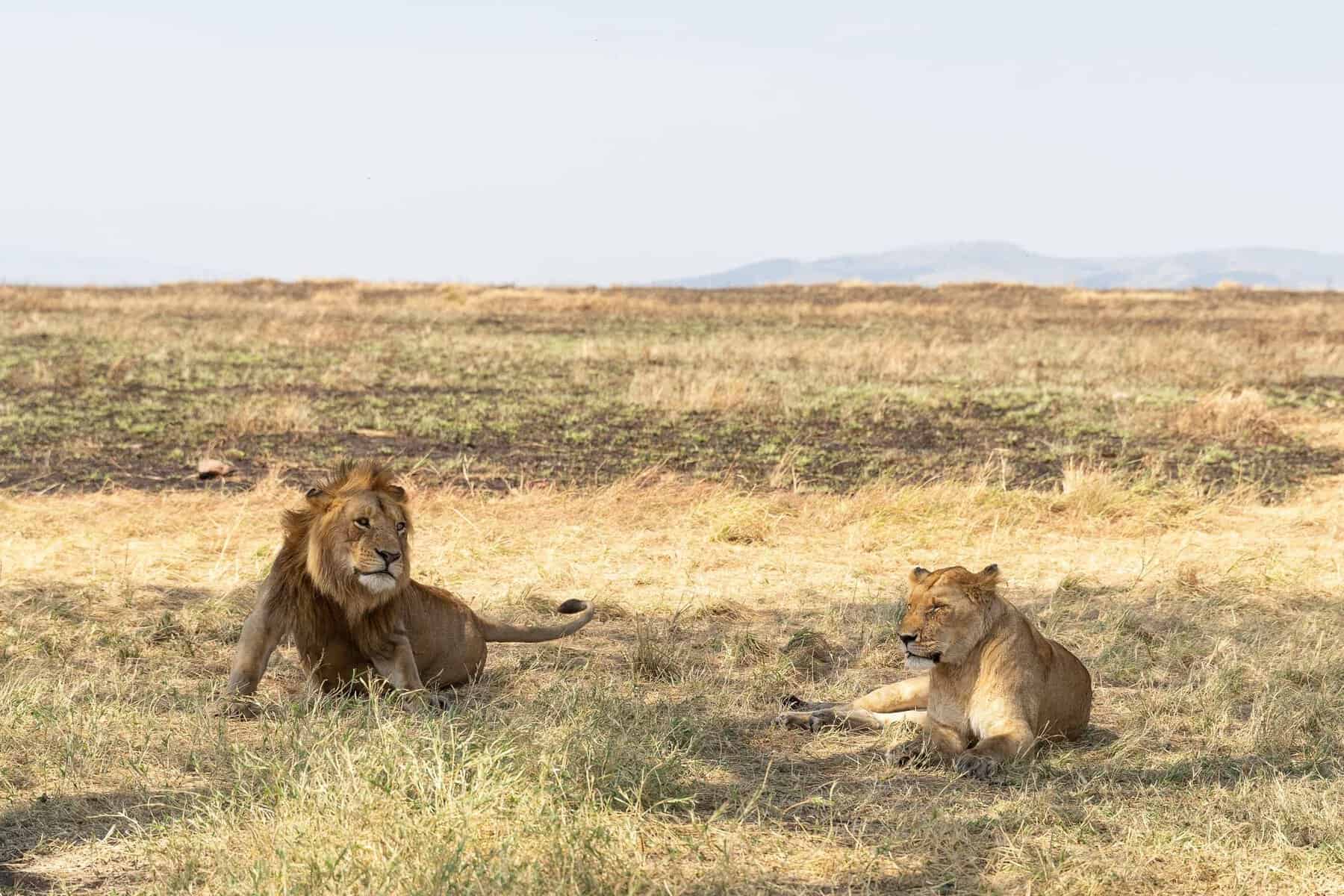
Vast, unfenced grassland with resident lion, leopard and cheetah in the central Seronera area all year. Where you stay in the park should follow the migration month.

Ngorongoro Crater
A collapsed volcano about 20 km across, with permanent water, lion, buffalo, flamingos and one of Tanzania's few black rhino populations. Busy, but unforgettable.

Tarangire National Park
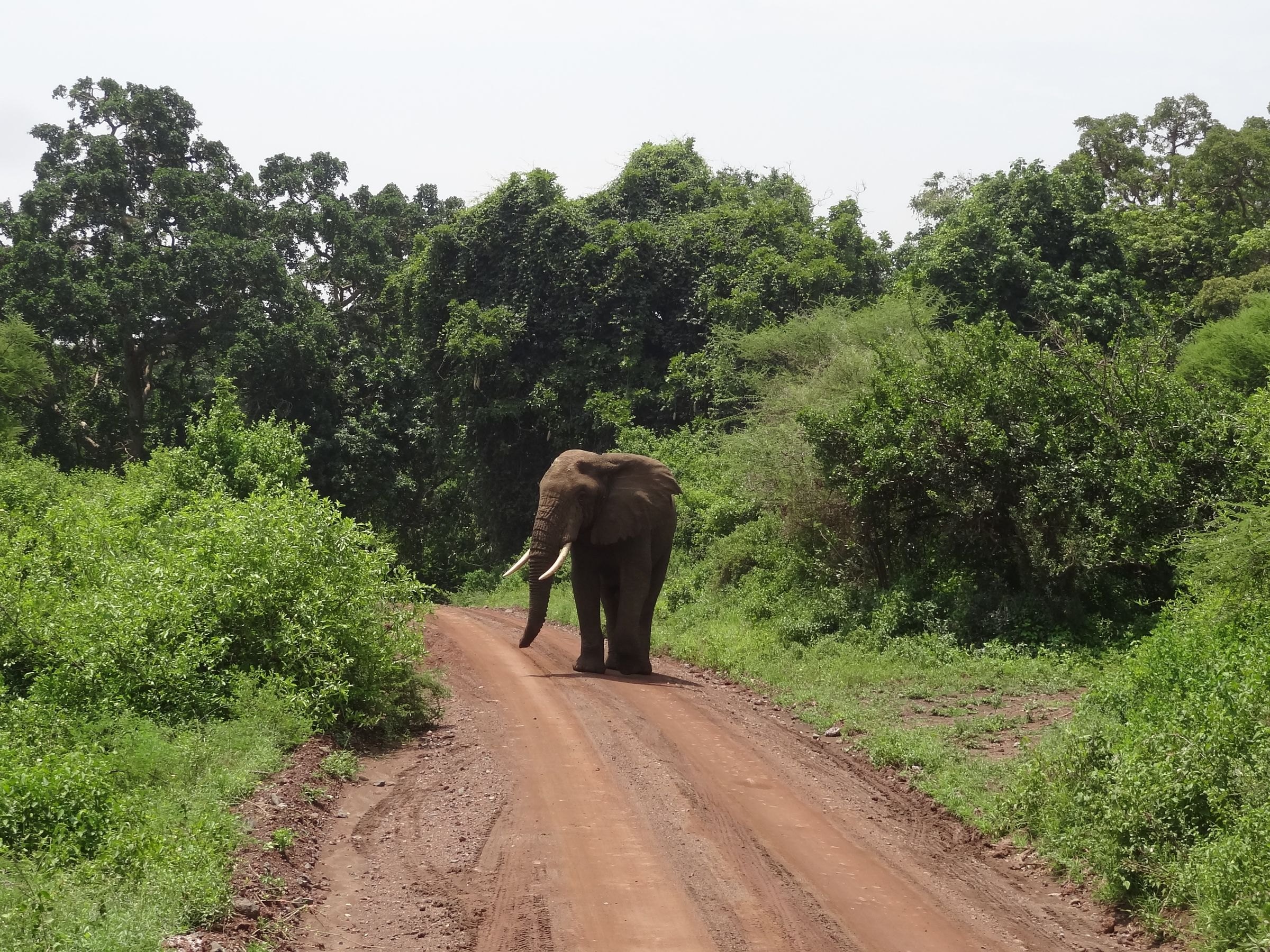
Huge elephant herds and ancient baobabs along the Tarangire River, which draws game in the dry season. Quieter than the Serengeti and a good first stop.
Lake Manyara National Park
A small park of groundwater forest and soda lake under the Rift Valley wall, known for baboons, elephants and its tree-climbing lions. Best as a half-day on the way in.
A classic northern circuit, night by night
Seven to nine days is the sweet spot. A typical route is one night in Arusha to recover from the flight, one or two in Tarangire, three in the Serengeti and one or two on the Ngorongoro rim, then home or on to Zanzibar. Three Serengeti nights matter more than anything else: the park is so big that a single night is mostly driving.
Shorter on time? A five-day trip with Tarangire, the crater and one Serengeti area works, but you will spend a lot of it in the vehicle. On the way you can add Lake Eyasi to meet the Hadzabe, one of Africa’s last hunter-gatherer peoples, or Olduvai Gorge, a key site for the study of human origins.
The Great Migration in Tanzania, month by month
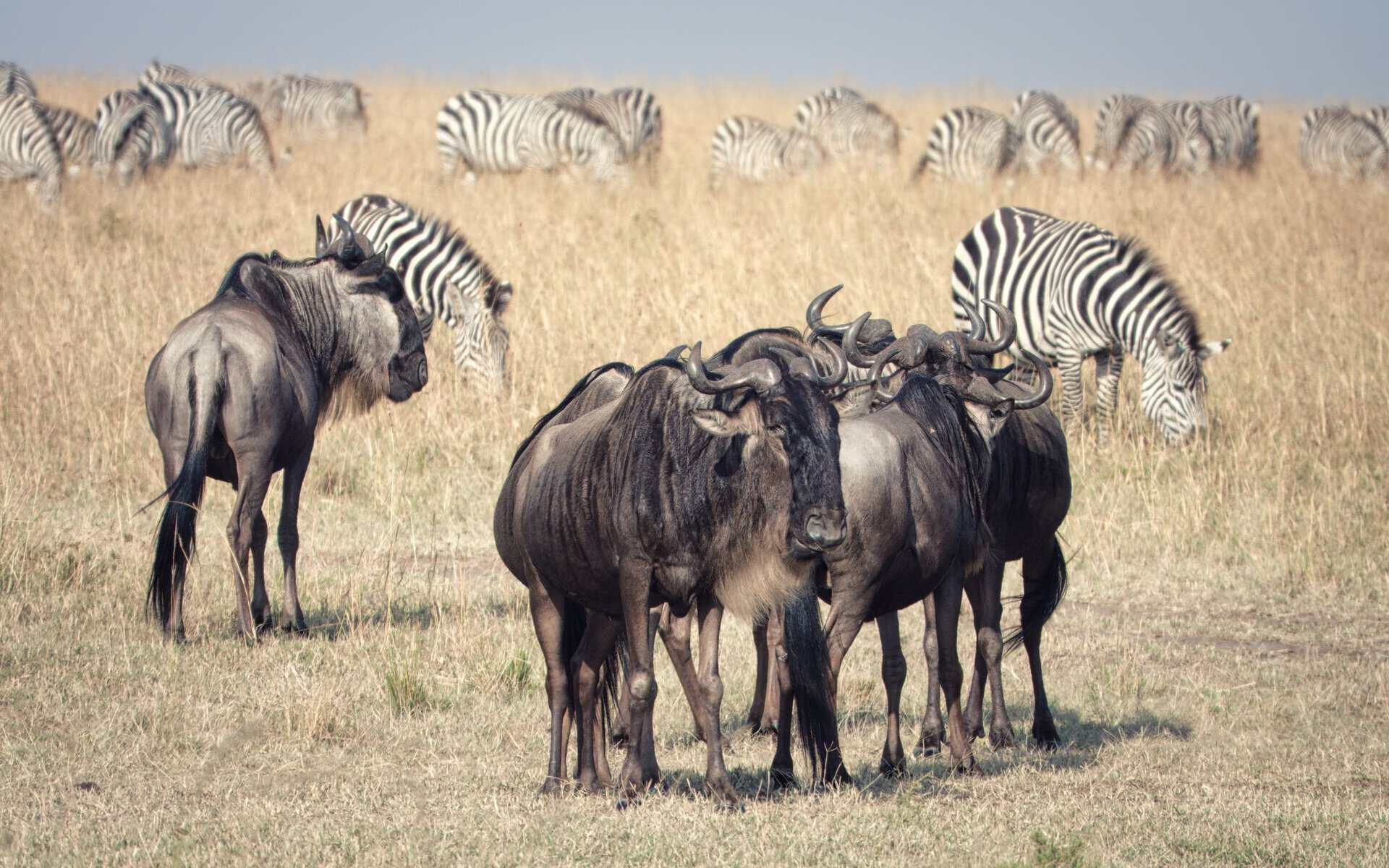
Huge herds of wildebeest (long put at about 1.3 million, though a 2025 satellite survey counted far fewer), with zebra and gazelle, circle between the Serengeti and Kenya’s Masai Mara following the rain. They are inside Tanzania for most of the year, so there is no single “migration season”, only a different place to be each month.
| Month | Where the herds usually are | Avg high / low (central) | Rain, central Serengeti | Rain, Ndutu (south) | Our verdict |
|---|---|---|---|---|---|
| Jan | Southern Serengeti and Ndutu short-grass plains; calving begins | 28°C / 16°C | 85 mm | 90 mm | Very good |
| Feb | Still on the southern plains; peak calving, with predators close by | 29°C / 17°C | 70 mm | 55 mm | Excellent |
| Mar | Southern plains, starting to drift west and north as the grass is eaten | 29°C / 17°C | 85 mm | 90 mm | Good |
| Apr | Long rains; herds spread across the central Serengeti | 27°C / 16°C | 135 mm | 100 mm | Low season |
| May | Long columns moving through the central and western Serengeti; the rut | 27°C / 16°C | 40 mm | 25 mm | Good |
| Jun | Western Corridor; Grumeti River crossings often start | 27°C / 16°C | 15 mm | 5 mm | Very good |
| Jul | Western Corridor, then the northern Serengeti; first Mara River crossings possible | 28°C / 15°C | 5 mm | 0 mm | Excellent |
| Aug | Northern Serengeti and the Masai Mara; Mara River crossings | 29°C / 16°C | 10 mm | 5 mm | Excellent |
| Sep | Northern Serengeti and the Masai Mara; crossings continue | 29°C / 16°C | 20 mm | 10 mm | Excellent |
| Oct | Still in the north; herds start to turn south late in the month | 30°C / 17°C | 45 mm | 30 mm | Very good |
| Nov | Short rains; herds stream south through the eastern Serengeti | 29°C / 16°C | 110 mm | 80 mm | Good |
| Dec | Back on the southern plains; the first calves arrive | 28°C / 16°C | 115 mm | 95 mm | Good |
Weather: 2014–2023 averages from ERA5 reanalysis (via Open-Meteo) for Seronera in the central Serengeti and for Ndutu on the southern plains, rounded. High and low are daytime and night-time temperatures; mornings on the crater rim are much colder. Herd positions are typical, not guaranteed: the rains move them, not the calendar.
Calving in the southern Serengeti (January to March)
The herds gather on the short-grass plains around Ndutu, where hundreds of thousands of calves are born over a few weeks, usually peaking in February. Lion, cheetah and hyena follow them, so this is the best time for predator action. It’s also green, with fewer vehicles than the northern crossings.
The Grumeti River (roughly June and July)
As the plains dry, the herds move into the Western Corridor and cross the Grumeti River, which has some very large crocodiles. Crossings here are less predictable and less crowded than on the Mara.
The Mara River crossings (roughly July to October)
In the northern Serengeti, around Kogatende and Lamai, the herds cross and recross the Mara River. This is the scene from the documentaries, and the busiest time in the north. A camp near the river and a patient guide matter more than the exact date: some days nothing crosses, and some days the herds cross several times. The same herds are in Kenya at this time too; see our Kenya safari page.
Southern Tanzania: Nyerere and Ruaha
Nyerere National Park (formerly the Selous)
One of Africa’s largest protected areas, carved out of the old Selous Game Reserve. The Rufiji River and its lakes mean boat safaris among hippos and crocodiles, walking safaris and a good chance of African wild dog. Camps are few and far apart.
Ruaha National Park
Big, dry and remote, with baobab-studded hills along the Great Ruaha River, large lion prides, elephants and both greater and lesser kudu. It feels like the Serengeti did decades ago: you may not see another vehicle all morning.
The honest trade-offs. The south is a fly-in safari: you reach it by light aircraft from Dar es Salaam, Zanzibar or Arusha, so it costs more to get to, and the flights add up if you combine both parks. It’s best in the dry season, roughly June to October, and many camps close for the long rains. There is no migration here and the game is more spread out, so it rewards a second safari, or a first one for people who hate crowds more than they love big herds.
None of our escorted tours go to Nyerere or Ruaha. We plan them as tailor-made safaris, often after a few days in the north or before a Zanzibar beach stay. Ask a Travel Designer which camps are open in your month.
Lodge, tented camp or mobile camp?
Where you sleep shapes the whole trip: how close you are to the animals, how far you drive each day and what you hear at night.
| Style | What it is | Best for | Trade-offs |
|---|---|---|---|
| Safari lodge | Solid-walled rooms, a restaurant and usually a pool, often on a ridge or crater rim with big views. | First safaris, families, anyone who likes walls and Wi-Fi. | Bigger and less intimate; can feel removed from the bush. |
| Permanent tented camp | Canvas rooms on raised platforms with proper beds and en-suite bathrooms. Usually 6 to 20 tents. | Most people. You hear the bush at night but sleep well. | Fewer facilities; you are escorted to your tent after dark. |
| Mobile (seasonal) camp | A lighter camp that moves with the migration, for example to Ndutu for calving and to the north for the crossings. | Migration timing, photographers, a second safari. | Simpler bathrooms (often bucket showers); fewer amenities; open only in season. |
| Luxury camp or lodge | Small, high-end camps with private decks, plunge pools and very experienced guides. | Honeymoons and special trips. | Books up early for July to October and for calving season. |
Fly-in or drive?
Driving the northern circuit in a 4×4 with a pop-up roof is the classic way, with the same driver-guide all week. The roads are rough and some legs are long: Tarangire to the central Serengeti is about six to seven hours with game driving on the way. You see the highlands and Maasai villages between parks, and it keeps the cost down.
Flying between airstrips in light aircraft turns those long drives into an hour, which matters if you want the far north of the Serengeti in crossing season, or the southern parks. You are then guided by each camp's own guides. Light aircraft have strict luggage limits, usually soft bags only. Many of our tailor-made safaris drive in and fly out.
Where our trips stay
Our Tanzania Safari & Zanzibar trip is priced with lodges such as Arusha Coffee Lodge, Tarangire Simba Lodge, Serengeti Serena Safari Lodge and Ngorongoro Serena Safari Lodge, or similar, and a Travel Designer can swap any of them for a smaller camp. Our escorted tours use a mix of lodges and permanent tented camps, including a luxury tented camp in the Serengeti on the 8-day luxury safari. For the top end, read our guide to luxury safari holidays.
Tanzania safari tours we sell
Small-group escorted safaris on set dates, with a leader or driver-guide and most meals on safari included. Every one visits the Serengeti and the Ngorongoro Crater.

Luxury Tanzania Safari: Tarangire, Serengeti & Ngorongoro – 8 Days
Two nights in a luxury tented camp in the unfenced Serengeti, Tarangire, the Ngorongoro Crater by open-top 4WD and a coffee farm in Karatu.

Serengeti Wildlife Experience – 8 Days
All four northern parks: Lake Manyara, Olduvai Gorge, two nights near Seronera, an early descent into the crater and Tarangire.
Tanzania Safari Adventure: Serengeti, Ngorongoro & Lake Eyasi – 8 Days
Wildlife plus people: time with the Hadzabe and Datoga at Lake Eyasi, a full day in the Serengeti and a morning on the crater floor.

East Africa Highlights: Maasai Mara to Ngorongoro – 10 Days
Nairobi to Arusha overland: the Maasai Mara, Lake Victoria, the Serengeti, the Ngorongoro Crater and Lake Eyasi.

East Africa Safari & Zanzibar: Maasai Mara to Nungwi – 13 Days
The same Mara-to-Ngorongoro safari, then a flight to Zanzibar for Stone Town and three days on the beaches of Nungwi.

Kilimanjaro Lemosho Trek & Safari – 13 Days
Climb Kilimanjaro by the Lemosho Route, then rest your legs on safari at Lake Manyara, the Ngorongoro Crater and Tarangire.
Gorillas & East Africa Safari: Bwindi, Mara & Serengeti – 18 Days
Four countries: a gorilla trek in Bwindi with the permit included, then the Maasai Mara, the Serengeti and the Ngorongoro Crater.
Longer, rougher and add-on trips also in Tanzania
See every trip in escorted tours in Tanzania. Prefer your own vehicle and guide? Almost all our Tanzania safaris are tailor-made around your dates.
Tanzania safari and Zanzibar
Our most-requested safari and beach pairing. A light aircraft from Arusha or the Serengeti reaches Zanzibar in about an hour and a half to two hours, so you can be on the sand the same afternoon.

Tanzania Safari & Zanzibar
Arusha, Tarangire, two nights in the Serengeti and a night on the crater rim with a private driver-guide, then seven nights on Zanzibar.
East Africa Safari & Zanzibar: Maasai Mara to Nungwi – 13 Days
The same Mara-to-Ngorongoro safari, then a flight to Zanzibar for Stone Town and three days on the beaches of Nungwi.
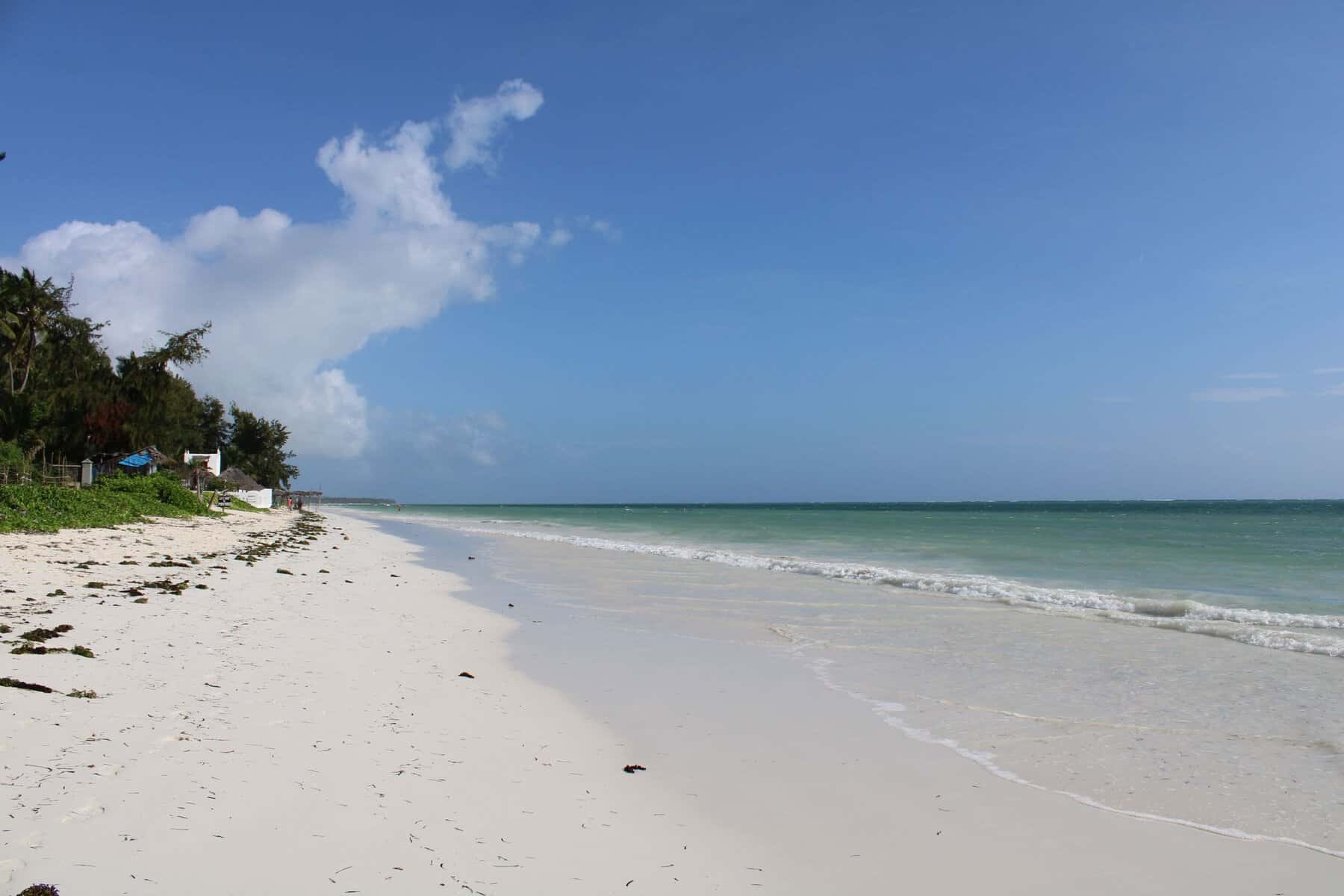
Zanzibar Short Break: Stone Town & the North Coast – 4 Days
A night in Stone Town, a spice farm tour and two nights on the north coast: the simplest way to add a beach to a group safari.
Pick your coast with care: the north (Nungwi and Kendwa) has the best swimming at all tides, the north-east is quieter, and the south-east has wide beaches and big tides. Give Stone Town at least one night. Zanzibar's wettest months are April and May, when it averages about 335 mm and 200 mm of rain in Stone Town, the same months as the mainland's long rains, so the two line up well for the rest of the year. More detail in our Zanzibar holidays guide, the best time to visit Zanzibar, our Zanzibar travel guide and safari and beach holidays compared. Planning the two together? Our safari and Zanzibar holidays guide covers the routes, how many nights to give each and the flights between them.
Who a Tanzania safari suits
Families
Tanzania works well for families with children of about eight and over, who can cope with long days in a vehicle. Many camps set a minimum age for game drives, often around six, and some don’t take young children at all, so choose the camp first. A private vehicle lets you stop when someone is bored or hungry, and a lodge with a pool helps. Fly-in sections cut the long drives. Finishing on Zanzibar gives everyone a rest. For older children, see our ideas for family adventure holidays with teenagers.
Honeymoons
Two or three nights in a small Serengeti camp, a balloon flight at dawn and a week on Zanzibar is a honeymoon classic. See our honeymoon packages.
Wildlife enthusiasts and photographers
Time your trip to the herds: Ndutu for calving in February, or the northern Serengeti for the river crossings. Mobile camps and a private vehicle make the biggest difference.
Adding gorillas or Kilimanjaro
Gorilla trekking in Rwanda or Uganda adds a short flight; read Uganda or Rwanda for gorillas. Kilimanjaro sits next to the safari airport, so a climb and a safari fit in one trip.
Who might prefer somewhere else
If you want malaria-free game viewing for small children, look at South Africa's Eastern Cape or Madikwe reserves instead; see our South Africa holidays. If you want the shortest flights, Kenya has direct flights from London.
Before you go: visas, health and flights
- Visa. British passport holders need a visa for Tanzania. Apply for an e-visa before you travel; single-entry visas are also available on arrival at the main entry points.
- Government travel insurance. All visitors to mainland Tanzania and Zanzibar must also buy the Tanzanian government's inbound travel insurance, even if you already have your own policy. You still need your own full travel insurance as well.
- Health. We don't give medical advice. Speak to your GP or a travel clinic at least eight weeks before you go about vaccinations and malaria tablets, and check whether you need a yellow fever certificate for your route.
- Flights. From 29 May to 31 October 2027, British Airways flies from London Gatwick to Kilimanjaro International Airport three times a week, continuing to Zanzibar, with a non-stop flight home from Zanzibar. It suits a safari with a beach stay at the end. Outside that season there are no non-stop flights from the UK, so you connect through a hub such as Amsterdam, Doha or Nairobi; your Travel Designer will find the best connection from your airport.
Rules change, so read the latest FCDO travel advice for Tanzania and its entry requirements before you book and again before you fly, and see TravelHealthPro for health information.
Tanzania safari FAQs
When is the best time for a Tanzania safari?
June to October is the best all-round time: it is the dry season, game gathers near water and the migration herds are in the western and northern Serengeti. January and February are the other peak, for calving on the southern plains. April and May bring the long rains, so it is quieter and some camps close.
How many days do I need for a Tanzania safari?
Allow seven to nine days for the northern circuit, with three nights in the Serengeti, plus Tarangire and the Ngorongoro Crater. Add four to seven nights if you want to finish on Zanzibar, and another four or five if you want to include Nyerere or Ruaha in the south.
Can I see the Great Migration in Tanzania all year?
The herds are in Tanzania for most of the year, but in different places. They are on the southern plains for calving from about January to March, in the Western Corridor around June and July, and at the Mara River in the north from about July to October. The rains set the timing, so it varies from year to year.
Is Tanzania or Kenya better for a safari?
Tanzania has the bigger parks, the Ngorongoro Crater, the migration for most of the year and an easy beach finish on Zanzibar. Kenya has direct flights from London, shorter transfers and private conservancies in the Masai Mara with fewer vehicles. For the river crossings both are excellent, and many people combine the two.
Is a Tanzania safari suitable for children?
Yes, especially for children of about eight and over. Many camps set a minimum age for game drives, often around six, so the choice of camp comes first. A private vehicle, a lodge with a pool and a few days on Zanzibar make it easier for families.
Do I need a visa for Tanzania?
Yes. British passport holders need a visa, and it is easiest to apply for an e-visa before you travel. All visitors must also buy the Tanzanian government inbound travel insurance. Check the latest FCDO advice before you book and before you fly.
What is the difference between a lodge and a tented camp?
A lodge has solid-walled rooms and often a pool. A tented camp has canvas rooms on raised platforms, usually with proper beds and en-suite bathrooms, and brings you closer to the sounds of the bush. A mobile camp is a lighter tented camp that moves with the migration.
Keep planning
Plan your Tanzania safari
Tell a Travel Designer when you want to go, who is travelling and what you most want to see. We will match the month to the right part of the Serengeti, suggest camps that fit and send live prices. Holidays with flights are ATOL protected.
Travel guides for Tanzania Safari
Our hand-picked guides to help you choose: compare the best hotels by style, budget and who you’re travelling with.
