The best time to visit Tanzania for most safaris is the long dry season, from late June to October, when the grass is short, animals gather at the rivers and the Great Migration is usually in the western and northern Serengeti. January and February are the other great window: warm and green, with the herds calving on the southern plains. The long rains, roughly late March to May, bring the quietest parks and the lowest rates, and the short rains in November are lighter. Because the migration herds spend most of the year inside Tanzania, there is a good place to be on safari in almost every month.
This guide uses ten years of weather data for eleven places, from the calving plains at Ndutu and the Mara River in the north to Ruaha, Kilimanjaro and Zanzibar, to show what each month is really like. It sets out the Great Migration month by month, the best time for each park, when to climb Kilimanjaro and how to time a safari with the beach. For the parks and camps themselves, see our Tanzania safaris page, and for the wider country our Tanzania holiday guide.
The quick answer
- Best overall: late June to October, and January to February.
- Great Migration river crossings: usually July to October in the northern Serengeti, often most frequent in August and September.
- Calving season: usually late January to March around Ndutu in the southern Serengeti, peaking in February.
- Rainy seasons: the long rains, roughly late March to May (wettest in April); the short rains, roughly November to early December.
- Best value: April, May and November, the green season.
- Kilimanjaro: January to early March, and late June to October.
- Safari plus Zanzibar: late June to October, or January to February.
Tanzania trips we plan
- Tanzania safari and Zanzibar: 12 nights, with a night in Arusha, one in Tarangire, two in the Serengeti and one on the Ngorongoro Crater rim, then seven all-inclusive on Zanzibar, with flights, from £4,329pp. Best from late June to October or January to February.
- Kenya safari and Zanzibar: 10 nights, with a night in Nairobi, four in the Masai Mara and five on Zanzibar’s south-east coast, with flights, from £3,995pp for April and May dates (from £4,325pp in October and November). Best from July to October for the Great Migration.
- Serengeti Wildlife Experience: an 8-day small-group safari to Lake Manyara, the Serengeti, Ngorongoro and Tarangire, from £4,325pp, tour only. Departures in May, July, September and October 2027.
- Tanzania safaris: the parks, the camps and every Tanzania trip we sell, by month.
- Tanzania tailor-made: we place you where the herds will be for your dates, choose the camps and add Zanzibar or Kilimanjaro. Make an enquiry.
Tanzania’s seasons and the rainy season, explained
Tanzania lies just south of the equator, so there is no real summer or winter. Temperature depends mostly on altitude: the Serengeti and Arusha sit at roughly 1,200 to 1,600 metres and are warm by day and cool at night, the Ngorongoro Crater rim is higher and colder, and the coast and Zanzibar are hot and humid all year. What shapes the seasons is the rain.
- The long rains (roughly late March to May) are the main wet season. April is the wettest month almost everywhere: about 275 mm in Arusha and 335 mm in Stone Town in our data. Rain often comes in heavy afternoon storms, with clear spells in between.
- The long dry season (roughly June to October) is the classic safari season: dry, dusty and cooler, with short grass and animals near water. In our data the central Serengeti gets 5 mm to 20 mm a month from July to September, and Ruaha almost none.
- The short rains (roughly November to early December) are lighter and less predictable, usually short showers in the afternoon. They turn the plains green and draw the herds south.
- The short dry spell (roughly January to February) is hot, green and drier in the north, with some showers. It is calving season in the southern Serengeti.
The southern parks, Nyerere and Ruaha, work differently: they have one long wet season, roughly November or December to April, and one long dry season, roughly May or June to October. That is why many camps there close for the long rains.
Tanzania weather by region and month, at a glance
This is our verdict for each region, month by month, based on the rainfall data below, where the herds usually are and our Travel Designers’ experience on the ground.
| Month | Southern Serengeti (Ndutu) | Central Serengeti | Western Corridor | Northern Serengeti | Ngorongoro and Tarangire | Nyerere and Ruaha | Kilimanjaro | Zanzibar |
|---|---|---|---|---|---|---|---|---|
| January | Good | Good | Mixed | Mixed | Good | Mixed | Good | Good |
| February | Good | Good | Mixed | Mixed | Good | Mixed | Good | Good |
| March | Good | Mixed | Mixed | Mixed | Mixed | Wet | Mixed | Mixed |
| April | Wet | Wet | Wet | Wet | Wet | Wet | Wet | Wet |
| May | Mixed | Mixed | Mixed | Mixed | Mixed | Mixed | Wet | Wet |
| June | Mixed | Good | Good | Mixed | Good | Good | Good | Good |
| July | Mixed | Good | Good | Good | Good | Good | Good | Good |
| August | Mixed | Good | Mixed | Good | Good | Good | Good | Good |
| September | Mixed | Good | Mixed | Good | Good | Good | Good | Good |
| October | Mixed | Good | Mixed | Good | Good | Good | Good | Good |
| November | Mixed | Mixed | Mixed | Mixed | Mixed | Mixed | Mixed | Mixed |
| December | Good | Mixed | Mixed | Mixed | Mixed | Mixed | Good | Good |
Good mostly dry, or the herds are there Mixed showers, or good weather without the herds Wet the rainy season there
Tanzania weather by month
These are the average daily highs and lows and the average monthly rainfall for Arusha, where almost every northern safari begins, with our verdict for Tanzania as a whole. The Serengeti follows the same pattern, a few degrees warmer by day and drier from May to October.
| Month | Avg high | Avg low | Rain | Our verdict |
|---|---|---|---|---|
| January | 27°C | 16°C | 100 mm | Hot, with showers; calving season in the south. Excellent for safari and Zanzibar |
| February | 28°C | 16°C | 105 mm | The short dry spell: peak calving at Ndutu, and one of the best months of the year |
| March | 27°C | 17°C | 175 mm | Still good in the south early on; the long rains usually build late in the month |
| April | 24°C | 17°C | 275 mm | The long rains: the wettest month, quiet and good value; many southern camps close |
| May | 22°C | 15°C | 125 mm | Rains ease through the month; green, quiet and good value |
| June | 21°C | 14°C | 30 mm | Dry season begins; cool mornings and herds in the Western Corridor |
| July | 21°C | 13°C | 35 mm | Dry and cool; crossings usually begin in the northern Serengeti |
| August | 23°C | 14°C | 25 mm | Peak season for the Mara River crossings; book well ahead |
| September | 25°C | 14°C | 25 mm | Dry and warm, with herds usually still in the north; one of the best months |
| October | 26°C | 16°C | 60 mm | Still dry and warmer; herds start to turn south; quieter than August |
| November | 26°C | 16°C | 135 mm | The short rains: brief showers, green and good value |
| December | 26°C | 16°C | 115 mm | Showers ease; herds back on the southern plains; busy at Christmas |
Source: ERA5 reanalysis via the Open-Meteo archive, daily data 2014 to 2023, averaged by month. Figures are modelled for a point rather than measured at one weather station, so they can differ slightly from airport records. Rainfall is rounded to the nearest 5 mm.
Where to go in Tanzania, and when
Each part of Tanzania has its own best months. This is how the main safari areas, Kilimanjaro and Zanzibar compare.
| Region | Best months | Why go then |
|---|---|---|
| Southern Serengeti and Ndutu | December to March; February for calving | Huge herds on the short-grass plains, newborn calves and the predators that follow them |
| Central Serengeti (Seronera) | All year outside April; best June to October | Resident lion, leopard and cheetah; the herds pass through around April to June and again in November |
| Western Corridor and Grumeti | Late May to July | The herds gather before crossing the Grumeti River, where large crocodiles wait |
| Northern Serengeti and the Mara River | July to October | Mara River crossings, often most frequent in August and September |
| Ngorongoro Crater | All year; driest June to October | Lion, buffalo, black rhino and flamingos on the crater floor; green and quieter in the rains |
| Tarangire | June to October | Big elephant herds and baobabs along the Tarangire River, which draws game through the dry season |
| Nyerere (Selous) and Ruaha | June to October | Wild, uncrowded parks with boat and walking safaris; very dry from June to October and many camps close in the long rains |
| Kilimanjaro (climbing) | January to early March; late June to October | The two dry seasons, with the clearest summit days |
| Zanzibar | Late June to October; December to February | Dry, sunny weather and calm seas; avoid April and May |
Weather in the Serengeti, Ngorongoro, Tarangire and beyond
The same ten years of data, for the four corners of the Serengeti, the crater rim and Tarangire: average high, average low and monthly rainfall.
| Month | Ndutu (south) | Seronera (central) | Grumeti (west) | Kogatende (north) | Ngorongoro rim | Tarangire |
|---|---|---|---|---|---|---|
| January | 27° / 16° · 90 mm | 28° / 16° · 85 mm | 30° / 17° · 80 mm | 29° / 16° · 55 mm | 25° / 14° · 335 mm | 30° / 19° · 90 mm |
| February | 28° / 16° · 55 mm | 29° / 17° · 70 mm | 31° / 18° · 70 mm | 31° / 17° · 45 mm | 25° / 14° · 140 mm | 30° / 19° · 75 mm |
| March | 28° / 16° · 90 mm | 29° / 17° · 85 mm | 31° / 18° · 110 mm | 30° / 17° · 80 mm | 25° / 14° · 210 mm | 30° / 19° · 135 mm |
| April | 26° / 15° · 100 mm | 27° / 16° · 135 mm | 29° / 17° · 135 mm | 29° / 16° · 110 mm | 22° / 15° · 265 mm | 27° / 19° · 220 mm |
| May | 26° / 15° · 25 mm | 27° / 16° · 40 mm | 30° / 17° · 50 mm | 28° / 16° · 55 mm | 21° / 14° · 100 mm | 26° / 17° · 60 mm |
| June | 26° / 14° · 5 mm | 27° / 16° · 15 mm | 30° / 18° · 15 mm | 28° / 16° · 40 mm | 20° / 12° · 35 mm | 26° / 15° · 5 mm |
| July | 26° / 13° · 0 mm | 28° / 15° · 5 mm | 31° / 17° · 5 mm | 29° / 15° · 15 mm | 20° / 11° · 35 mm | 26° / 15° · 5 mm |
| August | 27° / 14° · 5 mm | 29° / 16° · 10 mm | 31° / 18° · 20 mm | 29° / 16° · 20 mm | 21° / 11° · 30 mm | 28° / 16° · 5 mm |
| September | 28° / 15° · 10 mm | 29° / 16° · 20 mm | 32° / 18° · 25 mm | 30° / 16° · 30 mm | 23° / 12° · 30 mm | 30° / 17° · 5 mm |
| October | 29° / 16° · 30 mm | 30° / 17° · 45 mm | 32° / 18° · 65 mm | 31° / 17° · 50 mm | 24° / 13° · 90 mm | 31° / 18° · 40 mm |
| November | 27° / 16° · 80 mm | 29° / 16° · 110 mm | 30° / 18° · 140 mm | 29° / 16° · 105 mm | 24° / 14° · 195 mm | 29° / 19° · 130 mm |
| December | 27° / 16° · 95 mm | 28° / 16° · 115 mm | 29° / 17° · 120 mm | 29° / 16° · 75 mm | 24° / 14° · 360 mm | 29° / 19° · 140 mm |
And for Arusha, the foot of Kilimanjaro, the southern parks and Zanzibar:
| Month | Arusha | Moshi (Kilimanjaro) | Nyerere | Ruaha | Stone Town (Zanzibar) |
|---|---|---|---|---|---|
| January | 27° / 16° · 100 mm | 30° / 19° · 35 mm | 34° / 25° · 120 mm | 29° / 20° · 170 mm | 31° / 26° · 40 mm |
| February | 28° / 16° · 105 mm | 30° / 19° · 35 mm | 34° / 25° · 105 mm | 30° / 20° · 110 mm | 32° / 26° · 35 mm |
| March | 27° / 17° · 175 mm | 30° / 20° · 155 mm | 33° / 24° · 145 mm | 30° / 20° · 115 mm | 31° / 26° · 115 mm |
| April | 24° / 17° · 275 mm | 26° / 19° · 255 mm | 30° / 23° · 190 mm | 30° / 20° · 85 mm | 29° / 25° · 335 mm |
| May | 22° / 15° · 125 mm | 24° / 18° · 125 mm | 30° / 22° · 55 mm | 30° / 18° · 10 mm | 28° / 25° · 200 mm |
| June | 21° / 14° · 30 mm | 23° / 17° · 25 mm | 31° / 21° · 10 mm | 30° / 17° · 0 mm | 28° / 24° · 50 mm |
| July | 21° / 13° · 35 mm | 23° / 16° · 25 mm | 31° / 21° · 10 mm | 30° / 16° · 0 mm | 27° / 23° · 45 mm |
| August | 23° / 14° · 25 mm | 25° / 17° · 20 mm | 32° / 21° · 15 mm | 31° / 17° · 0 mm | 28° / 23° · 40 mm |
| September | 25° / 14° · 25 mm | 27° / 17° · 20 mm | 32° / 22° · 15 mm | 33° / 19° · 0 mm | 28° / 23° · 40 mm |
| October | 26° / 16° · 60 mm | 29° / 18° · 45 mm | 34° / 23° · 50 mm | 34° / 21° · 5 mm | 29° / 24° · 85 mm |
| November | 26° / 16° · 135 mm | 28° / 19° · 85 mm | 33° / 24° · 95 mm | 34° / 22° · 30 mm | 29° / 24° · 130 mm |
| December | 26° / 16° · 115 mm | 29° / 19° · 45 mm | 34° / 24° · 130 mm | 32° / 21° · 130 mm | 30° / 25° · 95 mm |
Source: ERA5 reanalysis via the Open-Meteo archive, 2014 to 2023. The Ngorongoro figures are for the forested highlands around the crater rim, which catch much more cloud and rain than the crater floor. Moshi is at the foot of Kilimanjaro, not on the mountain.
The Serengeti
The Serengeti is good all year, because its lions, leopards, cheetahs, hyenas and elephants do not migrate. What changes is where the migration herds are, so the best area to stay depends on the month. The south, around Ndutu, gets the most rain in the green season (about 90 mm in January and 95 mm in December in our data) but has a drier spell in February, with about 55 mm. The north, around Kogatende, is driest from July to September, at 15 mm to 30 mm a month. The central Serengeti around Seronera is the most reliable all-rounder. Three nights is the minimum to do the park justice, as our Tanzania safaris page explains.
The Ngorongoro Crater
The crater is a collapsed volcano about 20 km across, and its floor has permanent water, so the game stays all year: lion, buffalo, zebra, hippo, flamingos and one of Tanzania’s few populations of black rhino. It is busiest from June to October, when it is also driest. In the green season it is lush and quieter, though the roads up to the rim can be muddy. The lodges sit on the rim at around 2,300 metres, and in our data nights there average about 11°C to 12°C from June to September, so pack a warm layer for evenings and early starts.

Tarangire
Tarangire is at its best in the dry season, June to October, when the Tarangire River is the main source of water for miles around and elephants, zebra, wildebeest and buffalo come to it in large numbers. In our data it has just 5 mm of rain a month from June to September. In the wet months the animals spread out across a wider area and the grass grows tall, so game is harder to see. It makes a good first or last stop, a couple of hours by road from Arusha.
Nyerere and Ruaha
Tanzania’s southern parks are wilder and much less visited than the north. Nyerere, the former Selous, is known for boat safaris on the Rufiji River and walking safaris; Ruaha for big elephant herds and large lion prides along the Great Ruaha River. Both are best from June to October, when Ruaha has almost no rain in our data and the animals gather along the rivers. They get very hot by October and November, up to about 34°C, and many camps close for the long rains. Both are reached by light aircraft, so they pair well with Zanzibar.
Great Migration calendar: where the herds are, month by month
The Great Migration is a year-round loop of wildebeest, with zebra and gazelle, around the Serengeti and Kenya’s Masai Mara, following the rain and the fresh grass it brings. There is no single migration season in Tanzania, only a different place to be each month. The calendar below is the usual pattern, but the herds follow the rain, not the calendar: an early or late rainy season can move everything by several weeks, and the herds often split into groups that are in different places at the same time.
| Months | Where the herds usually are | Where to stay | What you may see |
|---|---|---|---|
| December to March | Short-grass plains of the southern Serengeti and Ndutu | Southern Serengeti, Ndutu | Calving, mostly in February; lion, cheetah and hyena hunting |
| April and May | Moving north and west through the central Serengeti in the long rains | Central Serengeti | Long columns of herds on the move; the wildebeest rut begins |
| June and July | The Western Corridor, gathering at the Grumeti River | Western Corridor, Grumeti | Grumeti River crossings and large crocodiles |
| July to October | The northern Serengeti and Kenya’s Masai Mara | Northern Serengeti, Kogatende and Lamai | Mara River crossings, often most frequent in August and September |
| November | Heading south through the eastern and central Serengeti as the short rains begin | Central Serengeti | Herds on the move on fresh green grass |
Calving season at Ndutu (about late January to March)
After the short rains, the herds settle on the short-grass plains of the southern Serengeti and around Lake Ndutu, partly inside the Ngorongoro Conservation Area. Most calves are born over a few weeks, usually peaking in February, and the plains fill with newborns. Lion, cheetah and hyena follow, so this is one of the best times of year for predator sightings. It is green and warm, with some showers, and there are far fewer vehicles than at the northern crossings.
On the move in the long rains (about April and May)
As the southern plains dry out and the long rains set in, the herds start to move north-west through the central Serengeti, often in long columns. This is the quietest time to be on safari, and some seasonal camps close or move. In our data Seronera gets about 135 mm of rain in April but just 40 mm in May, so late May can be an excellent, uncrowded time to see the herds pass through.
The Western Corridor and the Grumeti River (about June and July)
By June the herds are usually in the Western Corridor, the long arm of the park that reaches towards Lake Victoria. They gather on the south bank of the Grumeti River before crossing, and the river is known for its large crocodiles. Crossings here are smaller and less predictable than on the Mara, but the area is quieter. The dry season begins in earnest: about 15 mm of rain in June and 5 mm in July in our data.
Mara River crossings in the northern Serengeti (about July to October)
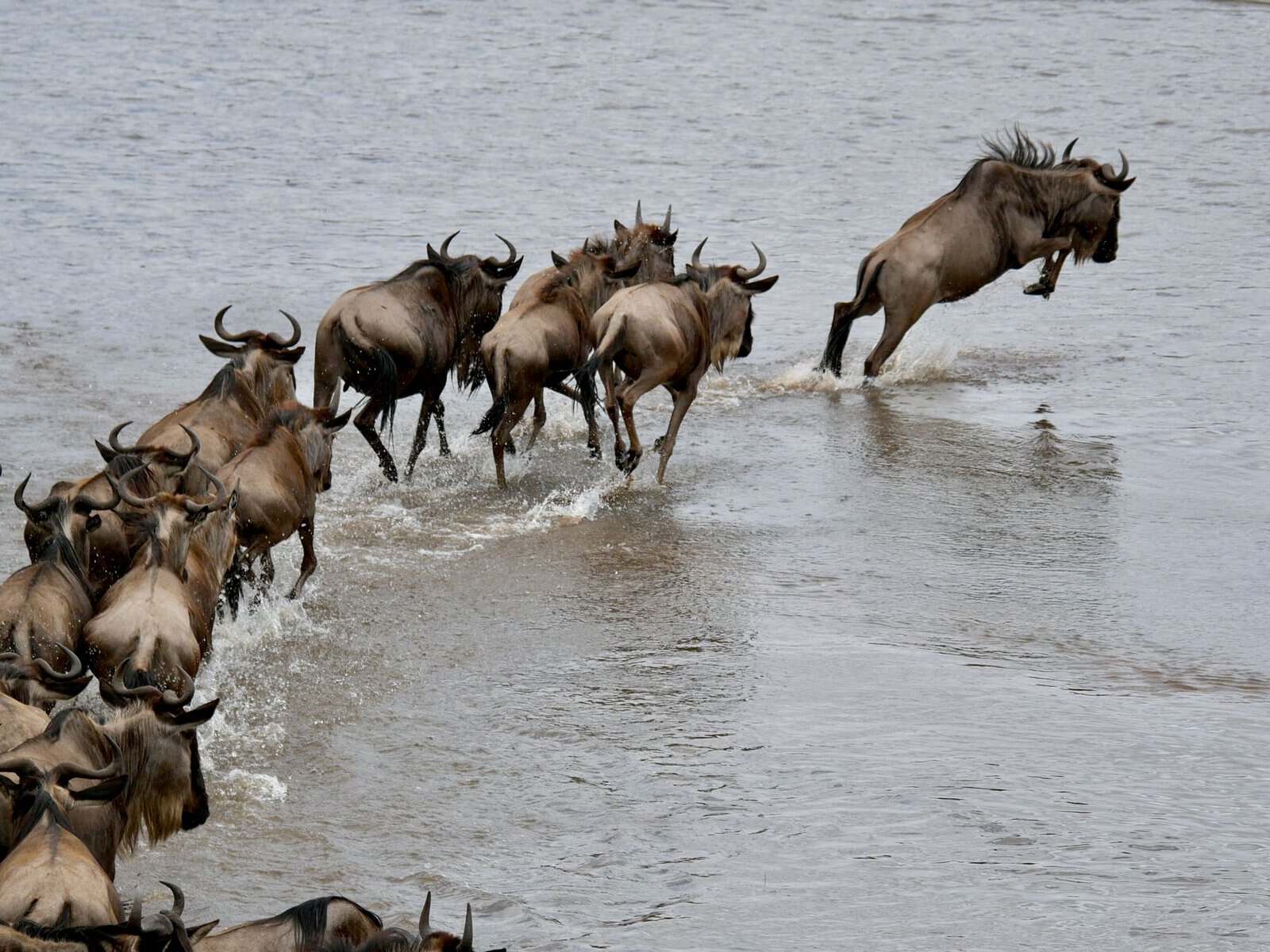
From about July the herds reach the northern Serengeti, where the Mara River runs between the Kogatende and Lamai areas, and many cross back and forth into Kenya’s Masai Mara. These crossings, with crocodiles waiting below the banks, are the moments most people come to see. They are often most frequent in August and September, but no one can promise one on a given day: a herd can gather on the bank for hours and then turn away. Staying three or four nights close to the river gives you the best chance. The north is remote, with fewer camps than the Mara, and it is usually reached by light aircraft.
The return south (about November and December)
When the short rains arrive, usually in November, the herds head south again through the eastern and central Serengeti towards the calving plains, arriving around Ndutu in December. It is green, showery and good value, and the year begins again.
Kenya or Tanzania for the Great Migration?
The two countries share the same ecosystem, and from about July to October the herds are split across the border. Which suits you depends on your dates and what else you want from the trip.
| Compare | Tanzania | Kenya |
|---|---|---|
| Herds there | Most of the year, in different parts of the Serengeti | Usually July to October, in the Masai Mara |
| Calving season | Yes, usually late January to March around Ndutu | No |
| River crossings | Mara River in the north, about July to October; Grumeti about June and July | Mara and Talek rivers, about July to October |
| Space | The Serengeti covers about 14,750 km², so it feels emptier | The Mara is much smaller; private conservancies limit vehicle numbers |
| Getting there | A connecting flight from the UK, then road or light aircraft | Direct flights from London to Nairobi, then light aircraft |
| Beach finish | Zanzibar, a short flight away | Diani or Zanzibar |
For Kenya’s side of the story, including Amboseli, Samburu and the coast, see our guide to the best time to visit Kenya. Our Kenya safari and Zanzibar trip spends four nights in the Mara and five on Zanzibar, and the escorted East Africa Highlights: Maasai Mara to Ngorongoro (10 days, from £2,224pp, tour only) crosses the border to cover the Mara, the Serengeti and the crater in one trip.
The green season: Tanzania’s best-value months
The rainy months, April, May and November, are the green season. It rarely rains all day: more often there is a heavy shower in the afternoon and clear, fresh mornings. The parks are lush and quiet, the light is good for photography, many birds are in breeding colours and migrant birds from Europe arrive from about November. Rates at many lodges and camps are lower, and you share sightings with far fewer vehicles.
- Pros: lower rates, fewer people, green landscapes and newborn animals from December to March.
- Cons: some roads become muddy, some camps close or move (especially in Nyerere and Ruaha in April and May), and Zanzibar is at its wettest in April and May.
- Best bets: late May in the central Serengeti, as the herds pass through, and November to mid-December, before the Christmas rush.
Our guide to how much a safari costs explains how season, camp style and flights change the price.
The best time to climb Kilimanjaro
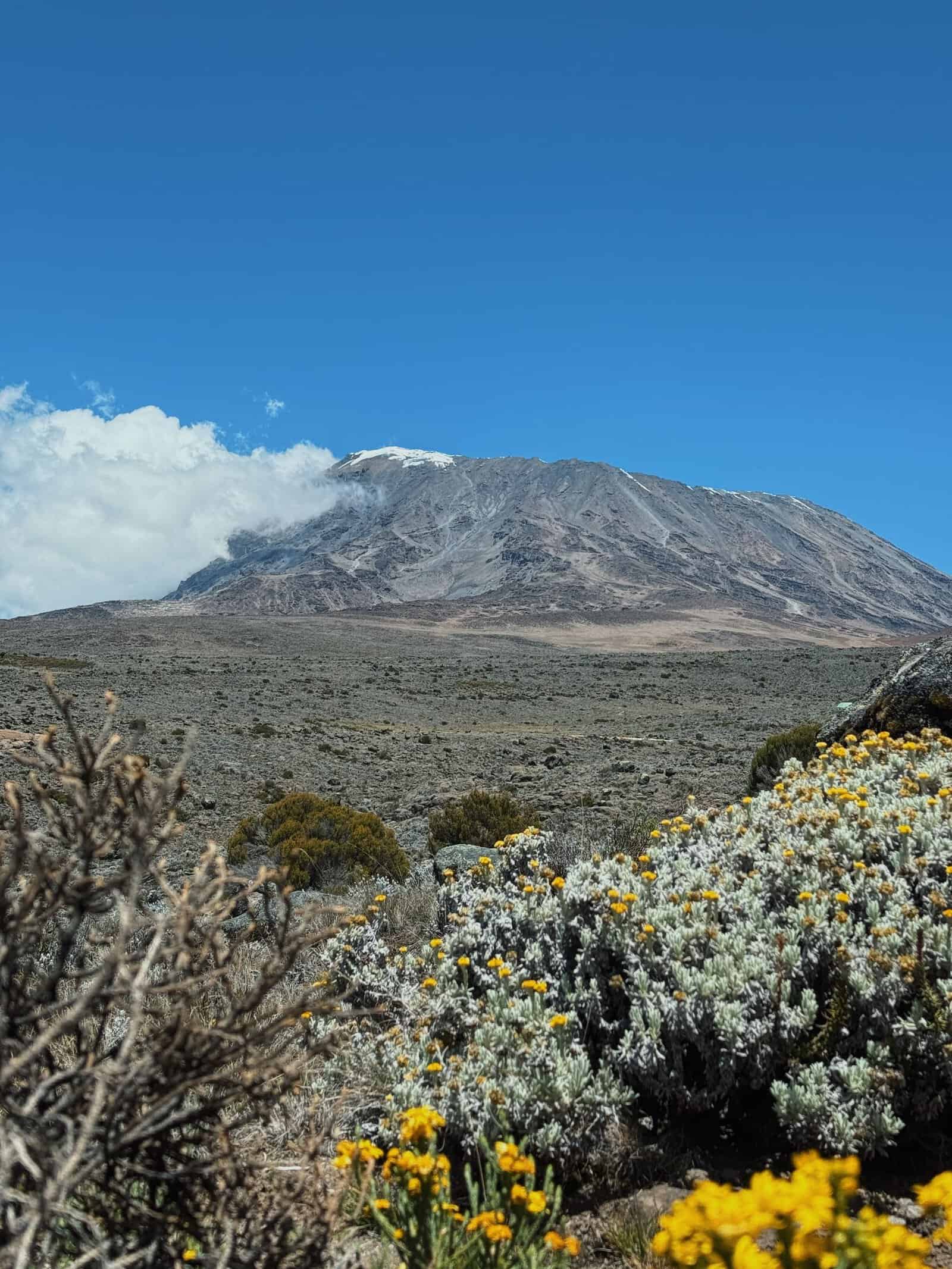
Kilimanjaro, at 5,895 metres the highest mountain in Africa, can be climbed all year, but the two dry seasons are best. January to early March is usually warmer, with clear mornings. Late June to October is cooler and drier, and the busiest time on the mountain, especially in July and August. April and May are the wettest months, with about 255 mm of rain in April at Moshi, at the foot of the mountain, in our data, and November brings the short rains. Whatever the month, summit night is well below freezing.
Our Kilimanjaro routes guide compares Lemosho, Machame, Rongai and Marangu. Three ways to do it with us:
- Kilimanjaro Climb: Lemosho Route: 10 days, with an acclimatisation day and full-service camping, from £3,895pp, tour only.
- Kilimanjaro Lemosho Trek and Safari: 13 days, the climb followed by Ngorongoro and Tarangire, from £4,265pp, tour only.
- Kilimanjaro, Serengeti and Zanzibar: 19 days, a six-day trek on the Machame route, a Serengeti and Ngorongoro safari, then Zanzibar, from £5,095pp.
The best time to visit Tanzania and Zanzibar together
Most of our clients finish a Tanzania safari on Zanzibar, and the seasons line up well: the island’s dry months are the same as the mainland’s, and so are its long rains. Flights from the northern parks or Arusha to Zanzibar take about an hour and a half to two hours.
| Months | On safari | On Zanzibar | Verdict |
|---|---|---|---|
| January and February | Calving in the southern Serengeti; green and warm | Hot, dry and calm (about 35 mm to 40 mm a month) | Excellent, and a superb winter-sun trip |
| March | Herds still in the south; rains building | Hot and humid; rain later in the month | Good in the first half |
| April and May | The long rains; some camps close | The wettest months (about 335 mm in April) | Avoid if you can |
| June | Dry season begins; herds in the west | Dry and breezy | Very good, and good value |
| July to October | Peak dry season; Mara River crossings in the north | Dry and sunny | The classic combination |
| November and December | The short rains; herds head south | Short showers, then sun | Good value; book Christmas early |
Our best time to visit Zanzibar guide has the island month by month, and our guide to where to stay in Zanzibar compares the beaches and how the tides work on each coast. For routes and flights between the parks and the island, see safari and Zanzibar holidays.
See Tanzania safari and Zanzibar Ask us to tailor this
The best month for each experience
| Best month for | When | Where |
|---|---|---|
| Mara River crossings | July to October; often most frequent in August and September | Northern Serengeti (Kogatende, Lamai) |
| Calving and predators | Late January to March, peaking in February | Southern Serengeti and Ndutu |
| Grumeti River crossings | June and July | Western Corridor |
| Big cats | All year, best in the dry months | Central Serengeti (Seronera) |
| Black rhino | All year; driest June to October | Ngorongoro Crater |
| Elephants | June to October | Tarangire, Ruaha |
| Walking and boat safaris | June to October | Nyerere, Ruaha |
| Climbing Kilimanjaro | January to early March; late June to October | Kilimanjaro |
| Safari and beach in one trip | Late June to October; January to February | Northern parks plus Zanzibar |
| Value and fewer vehicles | April, May and November | Central Serengeti, Ngorongoro, Tarangire |
| Birdwatching | November to April, when migrant birds arrive from Europe | Across the country |
| Family holidays | July and August (UK summer holidays), and February half-term | Northern circuit plus Zanzibar |
Tanzania month by month
Tanzania in January
January is hot and green, with the short rains easing into a drier spell. Arusha averages 27°C with about 100 mm of rain, mostly in short showers. The herds are usually on the southern plains around Ndutu, and the first calves are born late in the month. Zanzibar is hot and dry, with about 40 mm of rain, so it is an excellent month for safari and beach together.
Tanzania in February
February is the peak of the calving season, and one of the best months of the year. Ndutu has its driest spell of the green season, about 55 mm in our data, and the plains fill with newborn wildebeest and the predators that follow them. Zanzibar is at its hottest, around 32°C. February half-term fills the best camps, so book early.
Tanzania in March
March is still good in the south, with the herds usually on the plains and plenty of young animals. The long rains usually begin to build towards the end of the month, with about 175 mm in Arusha. Early March is also a good time to climb Kilimanjaro before the rains.
Tanzania in April
April is the heart of the long rains and the wettest month: about 275 mm in Arusha, 135 mm at Seronera and 335 mm on Zanzibar. Many camps in Nyerere and Ruaha close, and some seasonal Serengeti camps move or close. Those that stay open are quiet, green and good value, and the Ngorongoro Crater is still rewarding.
Tanzania in May
The rain eases through May, especially in the Serengeti, where Seronera averages about 40 mm. The herds are usually moving through the central and western Serengeti, and the wildebeest rut begins. It is one of the quietest and best-value months, though Zanzibar is still wet, with about 200 mm.
Tanzania in June
June is the start of the dry season. The parks are still green, mornings are cool (Arusha averages 14°C at night) and the herds usually gather in the Western Corridor, ready to cross the Grumeti. Rates are often lower than in July and August, and the southern parks reopen.
Tanzania in July
July is dry and cool, and the start of peak season. The herds are usually in the Western Corridor early in the month and reach the northern Serengeti later on, when the first Mara River crossings often happen. Seronera has about 5 mm of rain in our data. It is also the busiest month on Kilimanjaro, and the UK school holidays begin.
Tanzania in August
August is the classic month for the Mara River crossings, in the northern Serengeti and across the border in Kenya. It is dry and sunny, around 29°C in the north by day, with cold mornings on the crater rim. It is the busiest month for safari, so book the best camps near the river a year ahead.
Tanzania in September
September is one of our favourite months for Tanzania: dry, warm, the herds usually still in the north and slightly fewer visitors once the UK schools go back. Tarangire is at its best, with elephants crowding the river, and Ruaha and Nyerere are dry, with almost no rain in our data.
Tanzania in October
October is still dry and getting hotter, up to about 34°C in Ruaha. The herds often start to drift south late in the month, but crossings can continue in the north. Game viewing stays excellent and the parks are quieter than in August.
Tanzania in November
November brings the short rains, usually as brief afternoon showers: about 135 mm in Arusha and 110 mm at Seronera. The herds head south through the central Serengeti on fresh grass, migrant birds arrive and rates drop. Zanzibar is changeable, with about 130 mm.
Tanzania in December
The short rains ease through December, and the herds usually arrive back on the southern plains around Ndutu. Kilimanjaro has a short window of drier weather, and Zanzibar is hot and lively. Christmas and New Year are a peak period at the best camps and beach hotels, so book early for festive dates.
Tanzania trips and when they work best
Every trip below can be tailor-made around your dates. All of our small-group safaris are on our Tanzania tours page, and twin-centre trips with flights are on our multi-centre pages.
- Safari and beach, late June to October or January to February: Tanzania safari and Zanzibar, 12 nights with flights, from £4,329pp: Arusha, Tarangire, two nights in the Serengeti and the Ngorongoro Crater, then seven nights all-inclusive on Zanzibar.
- The migration in Kenya, July to October: Kenya safari and Zanzibar, 10 nights with flights, from £3,995pp in April and May, or Kenya safari and Diani Beach for a week on the Kenyan coast.
- A small-group northern circuit: Luxury Tanzania Safari: Tarangire, Serengeti and Ngorongoro, 8 days with two nights in a Serengeti tented camp, from £4,810pp, tour only, with departures most months; the Serengeti Wildlife Experience, 8 days, from £4,325pp, tour only; and Tanzania Safari Adventure: Serengeti, Ngorongoro and Lake Eyasi, 8 days with the Hadzabe of Lake Eyasi, from £5,293pp, tour only, with departures from January and June to October.
- Both countries and the beach: East Africa Safari and Zanzibar: Maasai Mara to Nungwi, 13 days, from £2,918pp, tour only.
- Gorillas as well: Gorillas and East Africa Safari, 18 days from Kigali, with a Bwindi gorilla trek, the Maasai Mara, the Serengeti and Ngorongoro, from £6,184pp, tour only. Gorilla treks are easiest in the drier months; our guide to Uganda or Rwanda for gorilla trekking explains the options.
Multi-centre prices are guide prices per person, two sharing, with flights from London. Escorted tour prices are per person, twin share, tour only. All were read from our trip pages on 22 November 2026 and change with dates and availability.
Planning tips from our Travel Designers
- Follow the herds, not the park. In the Serengeti, where you stay matters more than when you go. Tell us your dates and we will place you in the right area.
- Book migration season early. The best camps near the Mara River and at Ndutu in February are often full a year ahead.
- Pack for cold mornings. Early game drives in open vehicles and nights on the Ngorongoro rim can be chilly, even in the dry season; bring a fleece and a light waterproof.
- Keep luggage light. Light aircraft between the parks and Zanzibar have strict weight limits, usually with soft bags only.
- Entry and health. UK visitors need a visa for Tanzania, and Zanzibar has its own compulsory travel insurance. Ask your GP or a travel clinic about vaccinations and malaria tablets, and check the current FCDO Tanzania travel advice before you book and again before you travel.
Comparing countries? Our safari holidays page sets out where and when to go across Africa, and our guide to luxury safari holidays compares the camps and countries.
Frequently asked questions
When is the best time to visit Tanzania?
For most safaris, the long dry season from late June to October, when the parks are dry, game gathers near water and the Great Migration is usually in the western and northern Serengeti. January and February are the other great window: green, warm and the calving season on the southern plains. The long rains, roughly late March to May, are the quietest and best-value months.
When is the Great Migration in Tanzania?
The herds are in Tanzania for most of the year, but in different places. They are usually on the southern plains around Ndutu from about December to March, calving mostly in February; they move through the central and western Serengeti from about April to July; and they are usually in the northern Serengeti, crossing the Mara River, from about July to October. The rain sets the timing, so it shifts from year to year.
When is the rainy season in Tanzania?
Tanzania has two. The long rains fall roughly from late March to May and are heaviest in April, when many camps in the southern parks close. The short rains fall roughly in November and early December, usually as short afternoon showers. In the northern parks a drier spell in January and February separates the two.
What is the best month for a Serengeti safari?
It depends on where you stay. February is best for calving in the south around Ndutu, June for the Western Corridor and the Grumeti River, and August and September for the Mara River crossings in the north. The central Serengeti around Seronera has resident lion, leopard and cheetah all year, so it is good in any month outside the long rains.
What is the weather like in Tanzania in August?
Dry, sunny and pleasantly warm by day, with cool mornings. In our data Arusha averages about 23°C by day and 14°C at night with around 25 mm of rain for the month, and the northern Serengeti about 29°C with 20 mm. Nights on the Ngorongoro Crater rim are cold, so bring a warm layer. Zanzibar is dry and sunny, at around 28°C.
When is the best time to climb Kilimanjaro?
The two dry seasons: January to early March, which is warmer, and late June to October, which is cooler and busier. Avoid April and May, the wettest months on the mountain. Whatever the month, summit night is well below freezing, so you need proper cold-weather kit.
When is the best time to visit Tanzania and Zanzibar?
Late June to October and January to February, when both the safari parks and Zanzibar are at their driest. Both also share the same long rains, roughly April and May, so those months are best avoided on a safari and beach trip.
Is Kenya or Tanzania better for the Great Migration?
From about July to October the herds are split across the northern Serengeti and Kenya’s Masai Mara, and both see river crossings. Tanzania has the herds for most of the rest of the year too, including the calving season from about January to March, and the Serengeti is far bigger. Kenya has direct flights from London and private conservancies that limit vehicles. Many trips combine both.
Plan your Tanzania safari with us
Tell us when you can travel and what you most want to see, and our Travel Designers will place you where the herds are likely to be, choose the camps, add Zanzibar or Kilimanjaro and arrange every flight and transfer. Ask a Travel Designer for current prices. Our flight-inclusive holidays are ATOL protected.
Keep planning
- Tanzania safaris
- Tanzania holidays
- Tanzania holiday guide
- Tanzania safari and Zanzibar
- Kenya safari and Zanzibar
- Best time to visit Kenya
- Best time to visit Zanzibar
- Where to stay in Zanzibar
- Zanzibar holidays
- Kilimanjaro routes
- Tanzania tours
- Safari and beach holidays
- Make an enquiry
Updated November 2026. Weather figures are 2014 to 2023 averages; rains, migration timings and camp seasons vary from year to year, and your Travel Designer will confirm everything for your dates.