Colombia in brief
- Cartagena, the walled colonial city on the Caribbean, with islands an hour away by boat.
- The coffee region for fincas and the Cocora Valley’s wax palms; Medellín for the city of eternal spring.
- Tayrona for jungle beaches and the Lost City trek; Bogotá for the Gold Museum.
- Best from December to March, and July to August; direct flights from London to Bogotá.

Colombia has the Caribbean and the Andes, colonial cities and cloud forest, coffee farms and Amazon rainforest, all within short flights of each other. Most first trips combine three very different places: walled Cartagena on the Caribbean coast, the green hills and wax palms of the coffee region, and Medellín or Bogotá high in the mountains. Add the beaches of Tayrona, a colonial town such as Villa de Leyva, or the trek to the Lost City, and you have one of the most varied holidays in South America. This guide covers where Colombia and Cartagena are, the regions, the best places to visit, wildlife, food, the best time to visit, getting there from the UK and around safely, where to stay and itineraries.
Where is Colombia?
Colombia sits at the north-western corner of South America, the only country on the continent with both a Caribbean and a Pacific coast. Panama lies to the north-west, Venezuela and Brazil to the east, and Ecuador and Peru to the south. It is about five times the size of the UK. Three ranges of the Andes run down the middle, so the climate depends on altitude more than season: hot on the coasts and in the Amazon, spring-like in Medellín and the coffee region, and cool in Bogotá.
Where is Cartagena, Colombia?
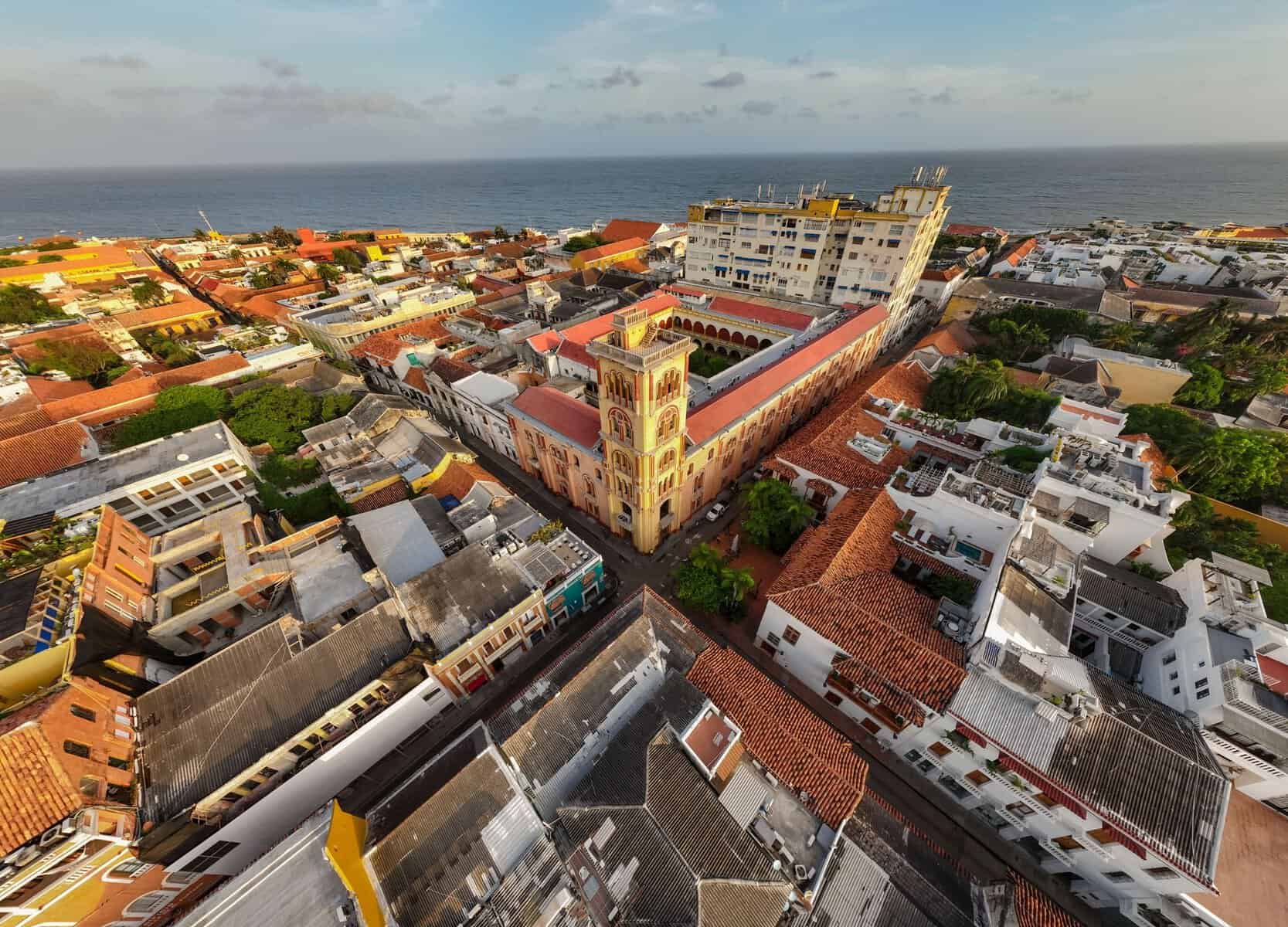
Cartagena (Cartagena de Indias) is on Colombia’s northern Caribbean coast, in the department of Bolívar. It’s about an hour and a half by air from Bogotá, about an hour from Medellín, and roughly four hours by road from Santa Marta and Tayrona.
Founded by the Spanish in 1533, it became the main port for shipping South American gold and silver to Spain, which is why it was ringed with walls and forts. The old town, the port and the fortifications have been a UNESCO World Heritage Site since 1984.
Regions and places to visit in Colombia
Cartagena and the Caribbean
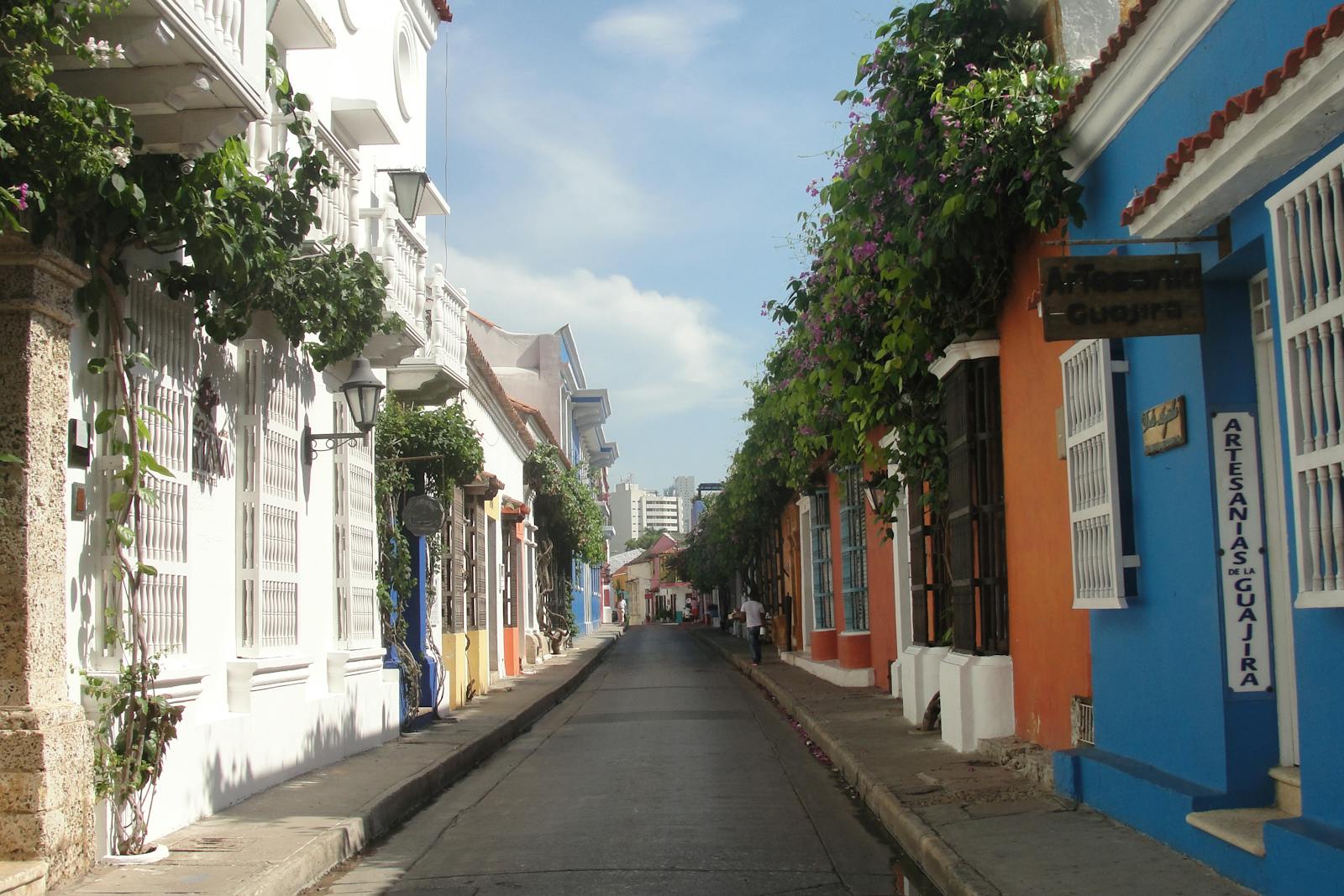
Colourful colonial streets, balconies heavy with bougainvillea, and the lively Getsemaní district outside the walls. Boats run out to the coral islands of the Rosario archipelago for beach days and snorkelling.

Santa Marta, Tayrona and Minca
Where the Sierra Nevada de Santa Marta, the world’s highest coastal mountains, drop into the Caribbean. Tayrona’s jungle-backed coves, the cool hill village of Minca among coffee and cacao farms, and the start of the Lost City trek.

The coffee region
Also called the coffee triangle (the Eje Cafetero), around Pereira, Armenia and Manizales. Steep green hills of coffee and plantain, brightly painted towns such as Salento and Filandia, and the Cocora Valley.
Medellín and Antioquia
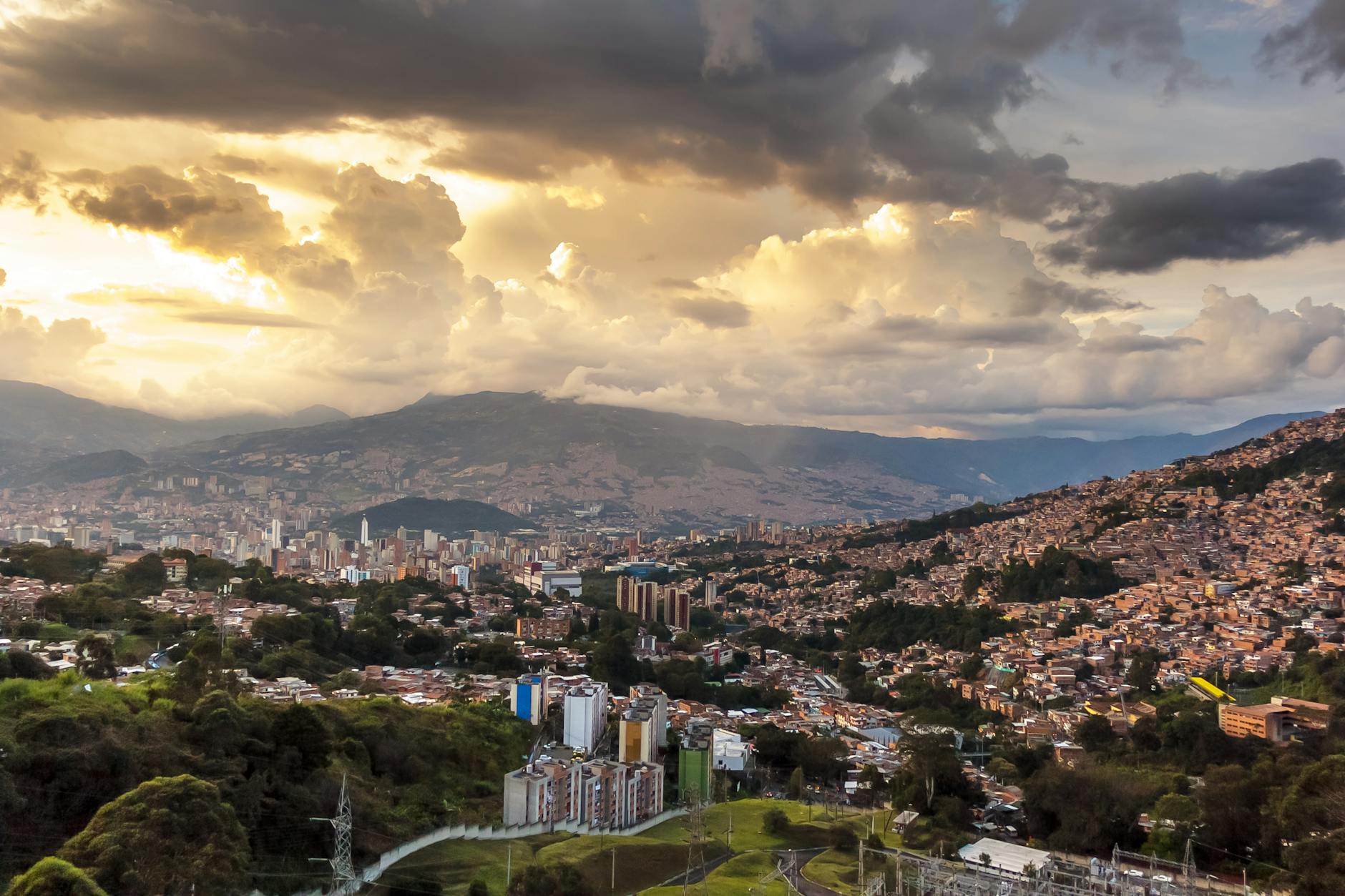
Colombia’s second city fills a long valley at about 1,500 m, with a mild climate all year, cable cars up the hillsides, art, food and nightlife. Day trips go to Guatapé and its huge granite rock, and colonial towns such as Jardín and Jericó.
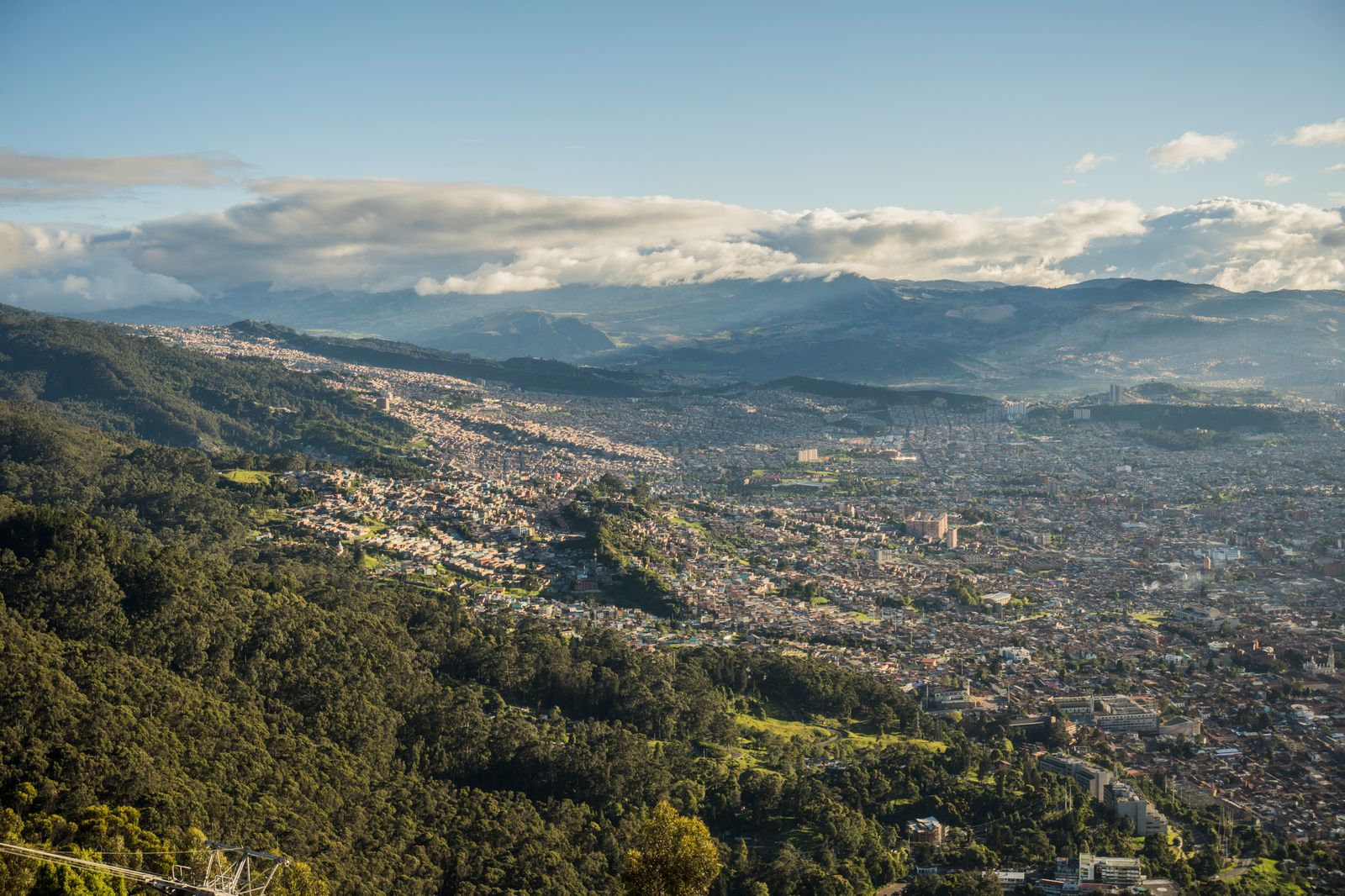
Bogotá and Boyacá
A big, cultured capital on a high plateau, with the colonial La Candelaria district, superb museums and the Monserrate viewpoint. North of the city are the salt cathedral of Zipaquirá and the whitewashed colonial town of Villa de Leyva.
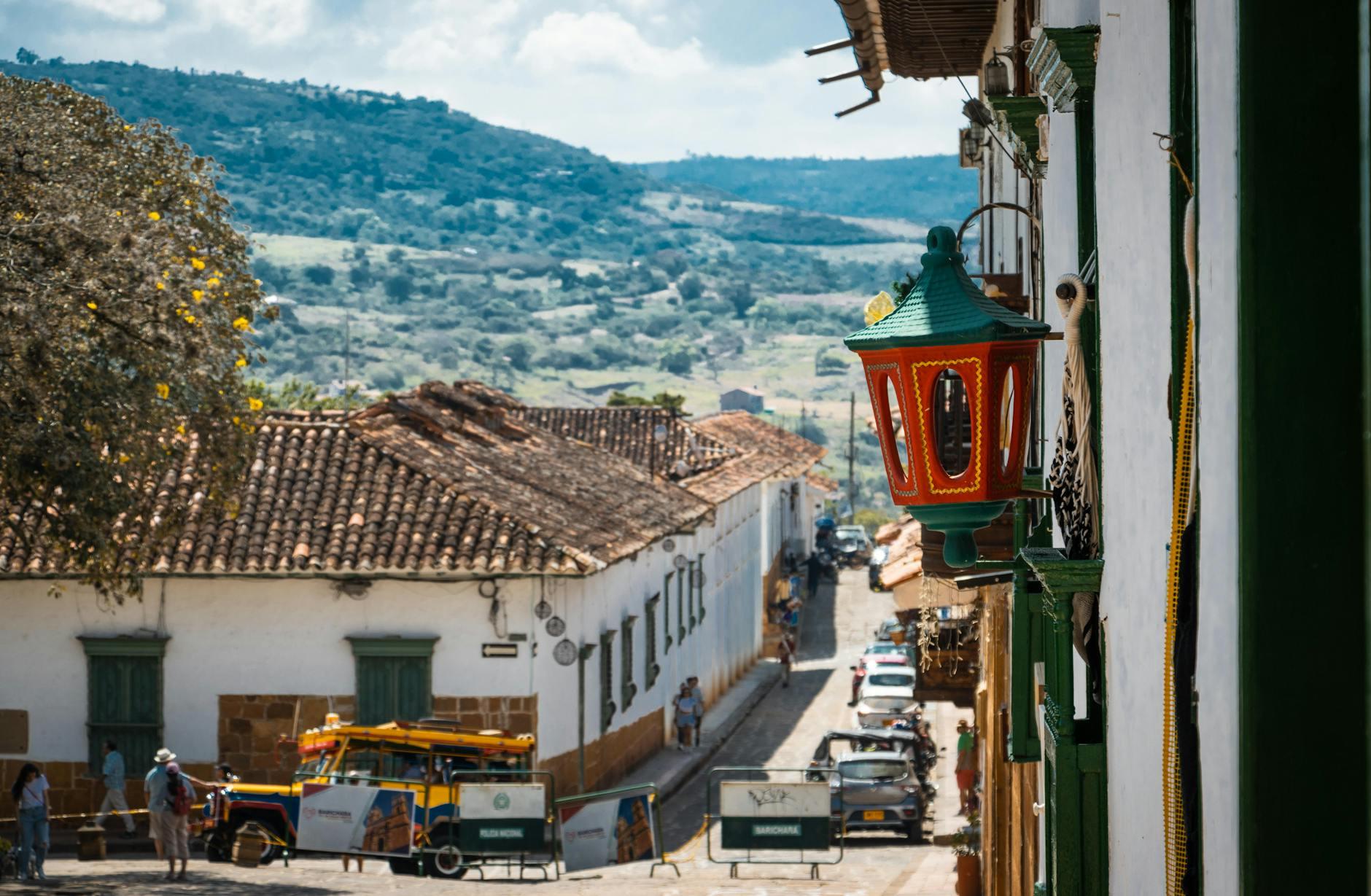
Santander and Barichara
Barichara is one of the prettiest colonial villages in Colombia, built of local stone above the Chicamocha canyon country. Santander is a separate department from Norte de Santander on the Venezuelan border.
Best things to do in Colombia
Cartagena
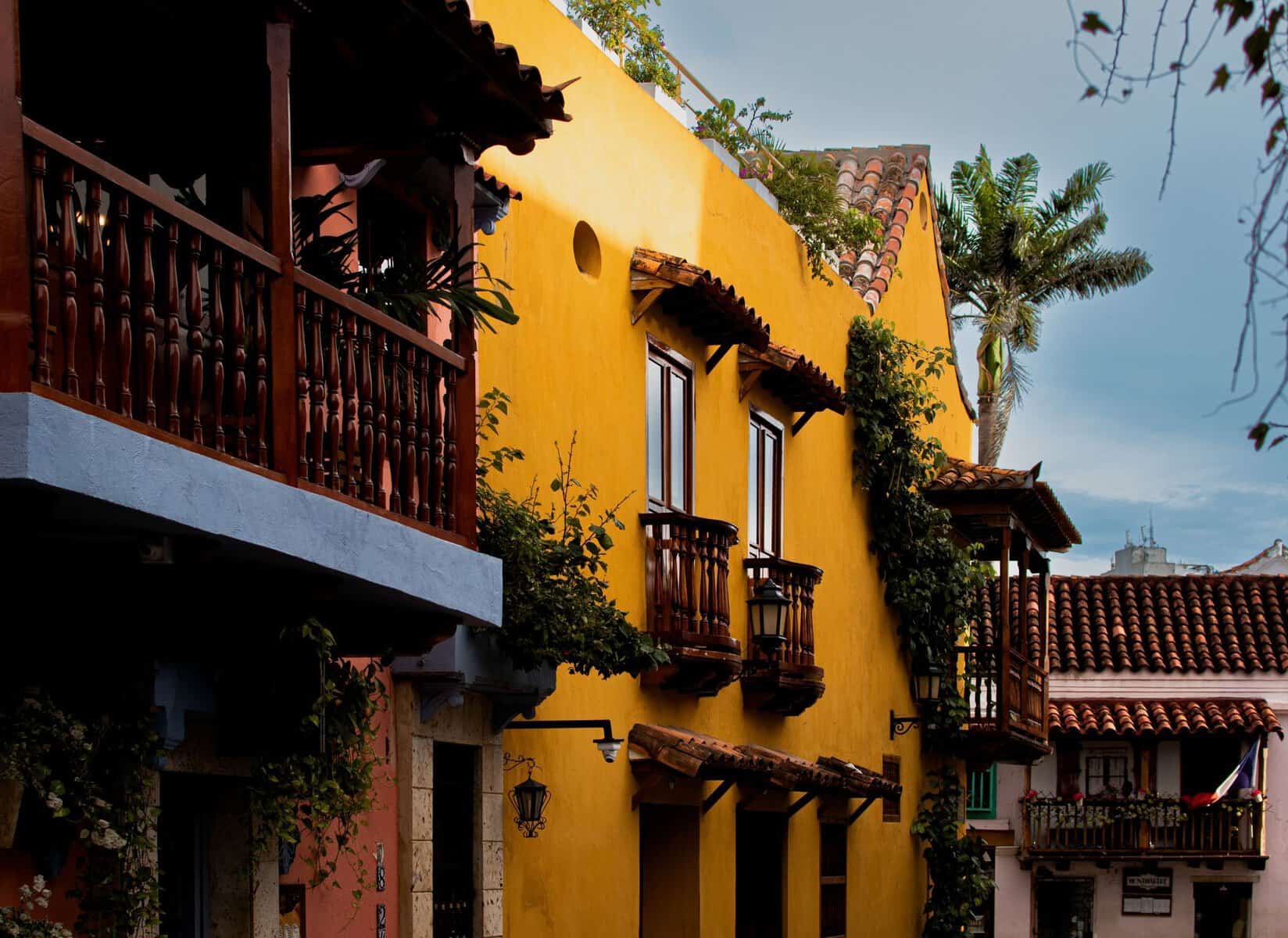
Walk the city walls at sunset, then lose yourself in the streets of the walled city, past the cathedral, the Plaza de Santo Domingo and the old Palace of the Inquisition. In the evening, Getsemaní is where locals and visitors spill into the squares, with street art and music.
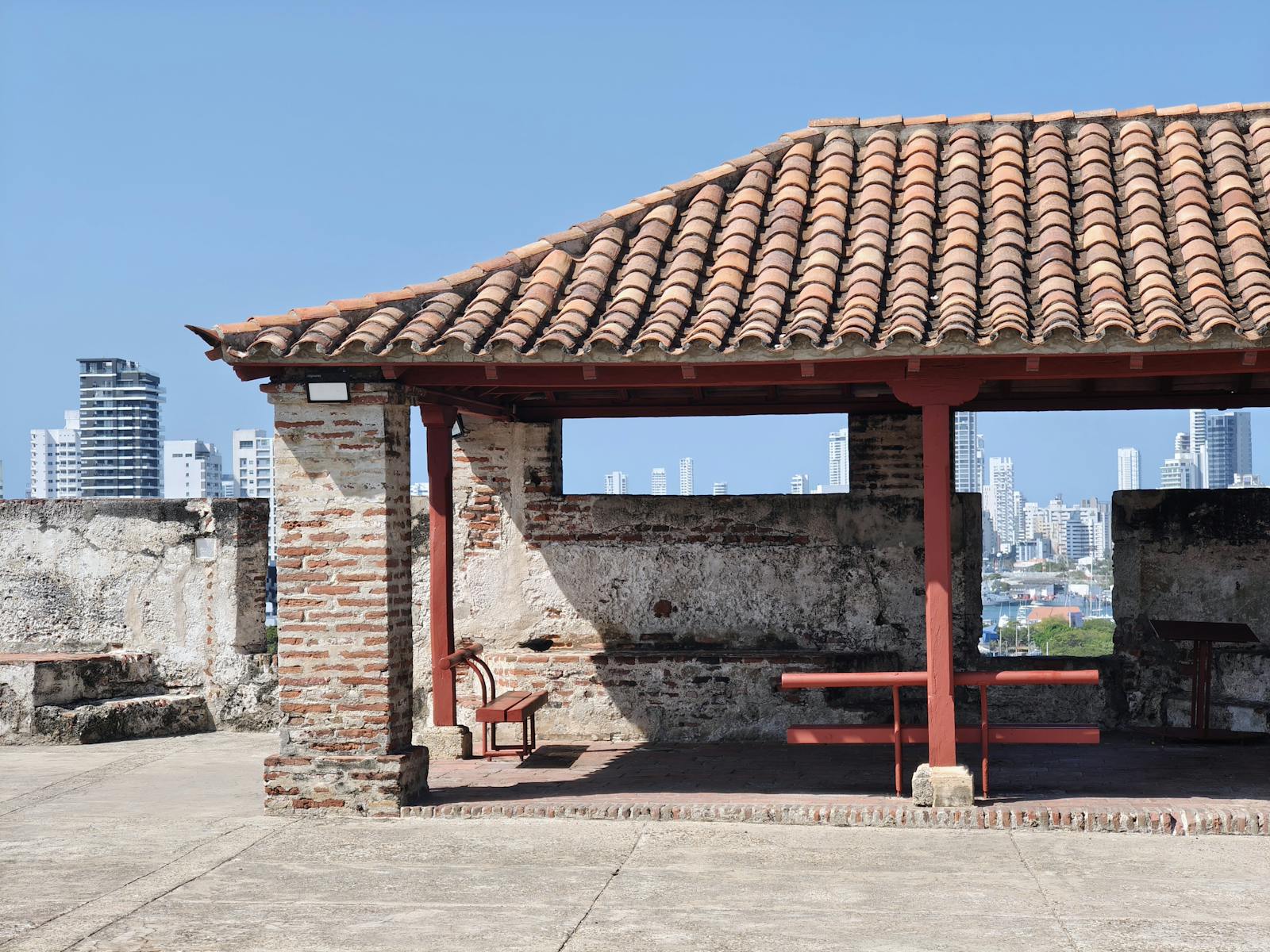
The Castillo de San Felipe de Barajas, on a hill just outside the old town, is the largest Spanish fort in the Americas, with tunnels you can explore. For the sea, take a boat to the Rosario Islands, about an hour away, or to the beaches of Barú.
Cartagena is hot and humid all year: explore early and late and rest in the middle of the day. Stay at least three nights.
Tayrona National Park and the Lost City
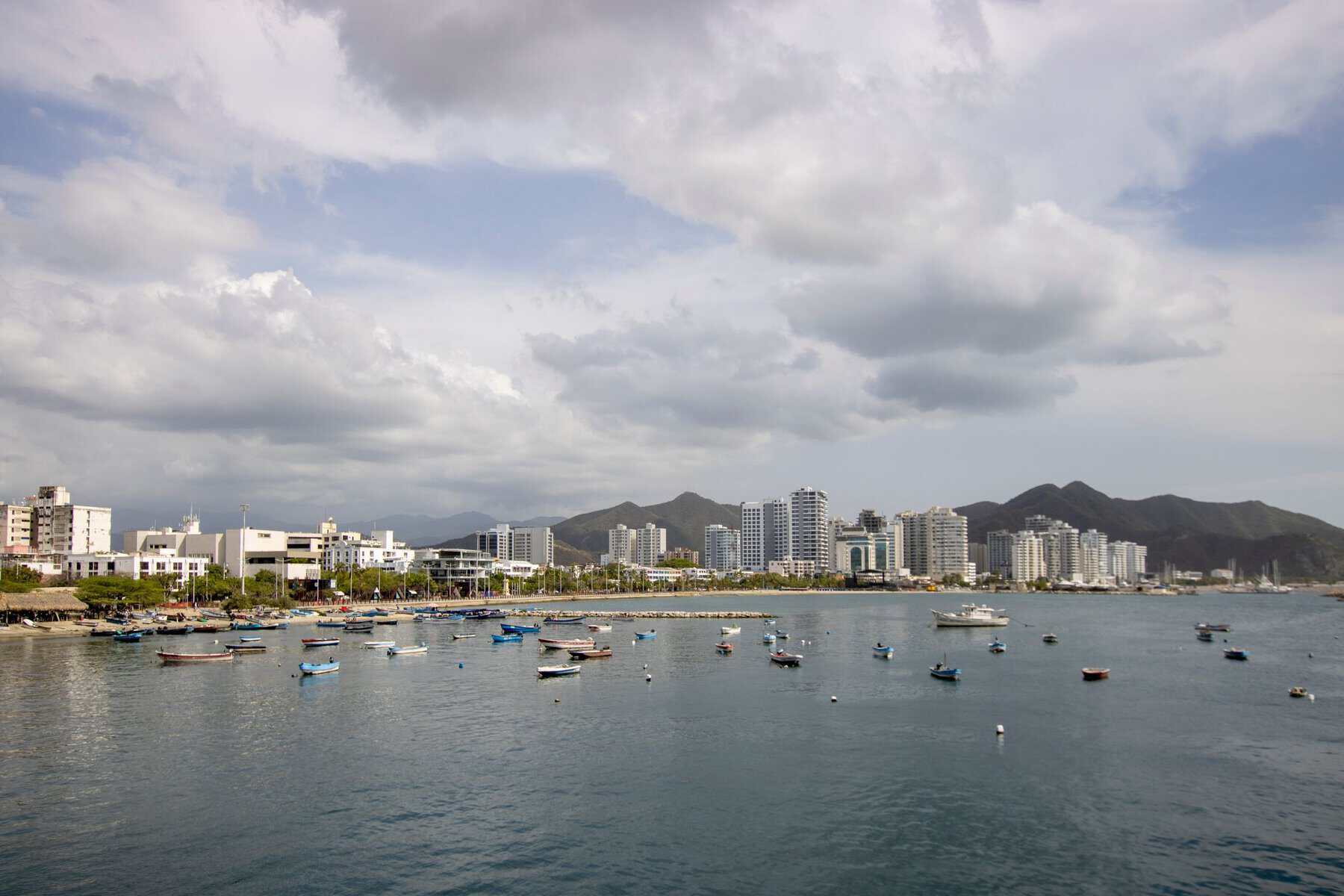
Tayrona National Park, about an hour east of Santa Marta, protects a string of coves backed by rainforest and giant granite boulders. You walk in (or ride a horse) through the forest to beaches such as Arrecifes, La Piscina and Cabo San Juan. Many beaches have strong currents, so swim only where it is signed as safe. The park closes for about two weeks several times a year to let the land recover and for the indigenous communities who consider it sacred, and has also closed at short notice; we check before you travel.
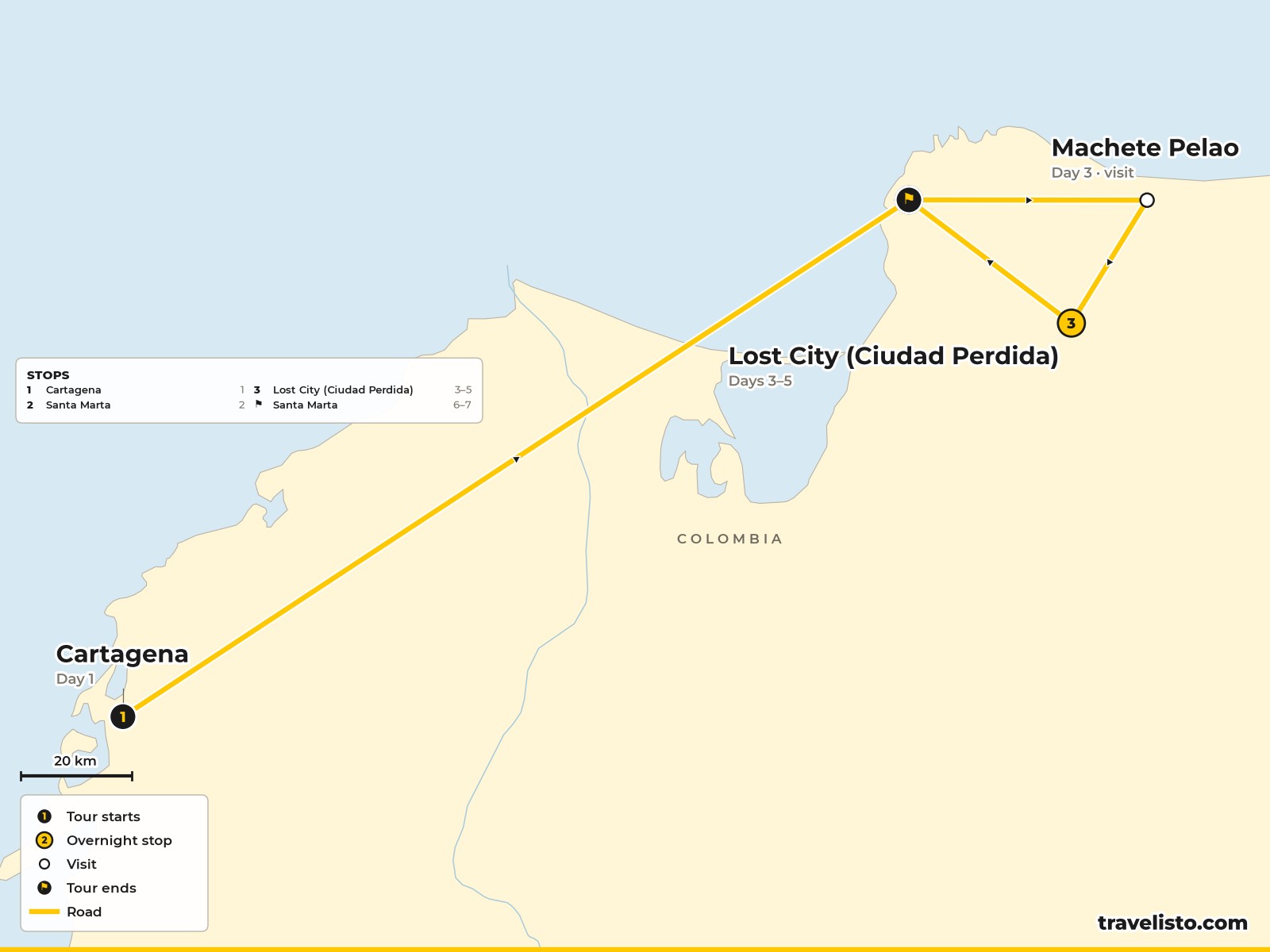
The trek to Ciudad Perdida, the Lost City, takes four to five days through the jungle of the Sierra Nevada to stone terraces built by the Tayrona people centuries before Machu Picchu. The FCDO advises going only on an organised tour, which is how we arrange it.
For something gentler, stay in Minca, a hill village among coffee farms, waterfalls and birdlife, half an hour above Santa Marta.
The coffee region
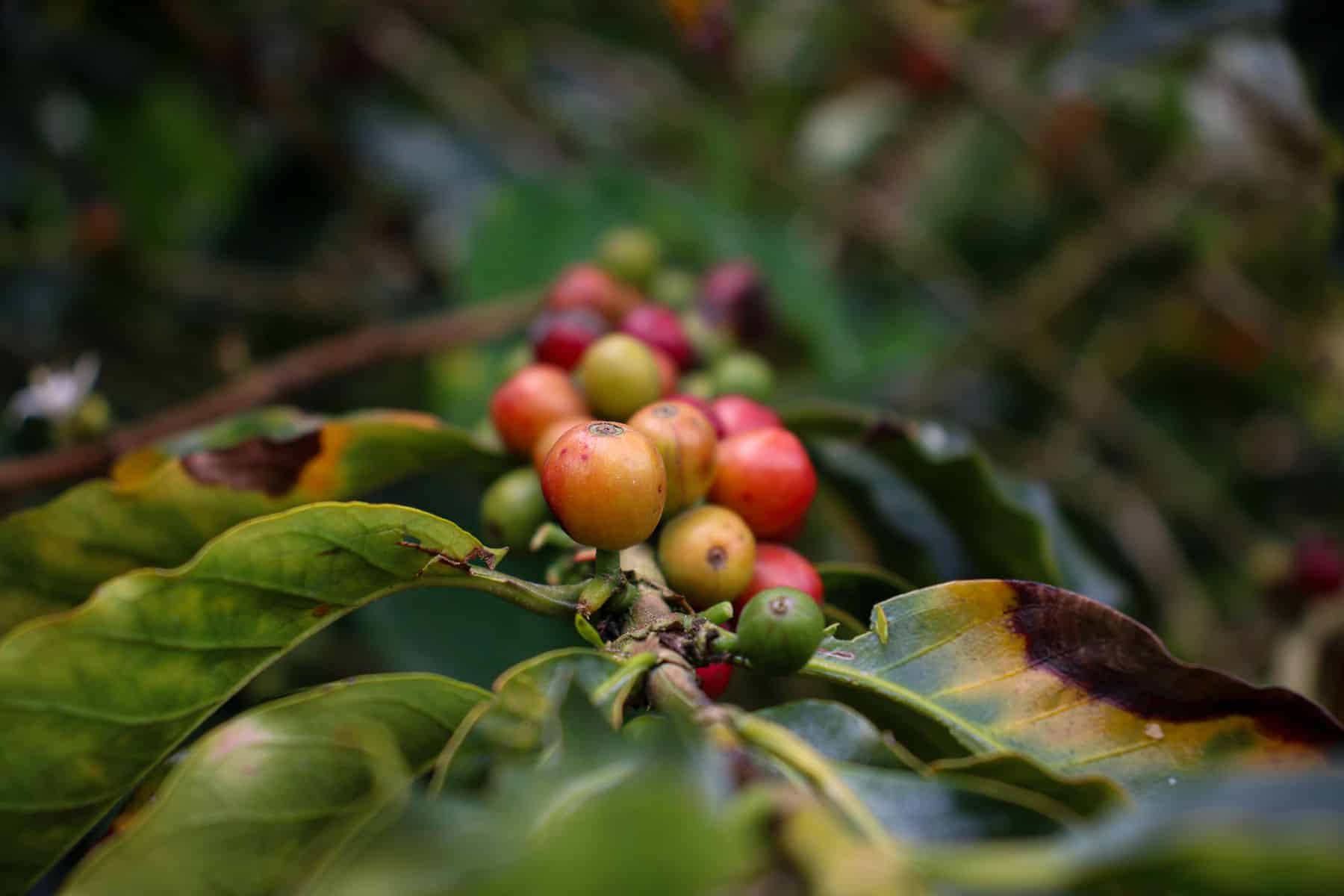
The coffee triangle is a UNESCO-listed landscape of steep hillsides planted with coffee, bananas and bamboo. Stay on a working coffee farm (finca), walk the rows with the grower, and follow the beans from picking to roasting and tasting.
Near Salento, jeeps run to the Cocora Valley, where Quindío wax palms, Colombia’s national tree and the tallest palms in the world, stand up to about 60 m above the pastures. A loop walk climbs through cloud forest past hummingbirds and back down through the palms.
Salento is about 20°C by day and 12°C at night all year, and it can rain in any month: bring a waterproof.
Medellín and Guatapé

Medellín has transformed itself in the last 30 years, and its story is told best on the ground. Ride the Metrocable cable cars up the hillsides, visit Comuna 13 with a local guide for its outdoor escalators and street art, and see the bronze figures of Fernando Botero in the Plaza Botero.
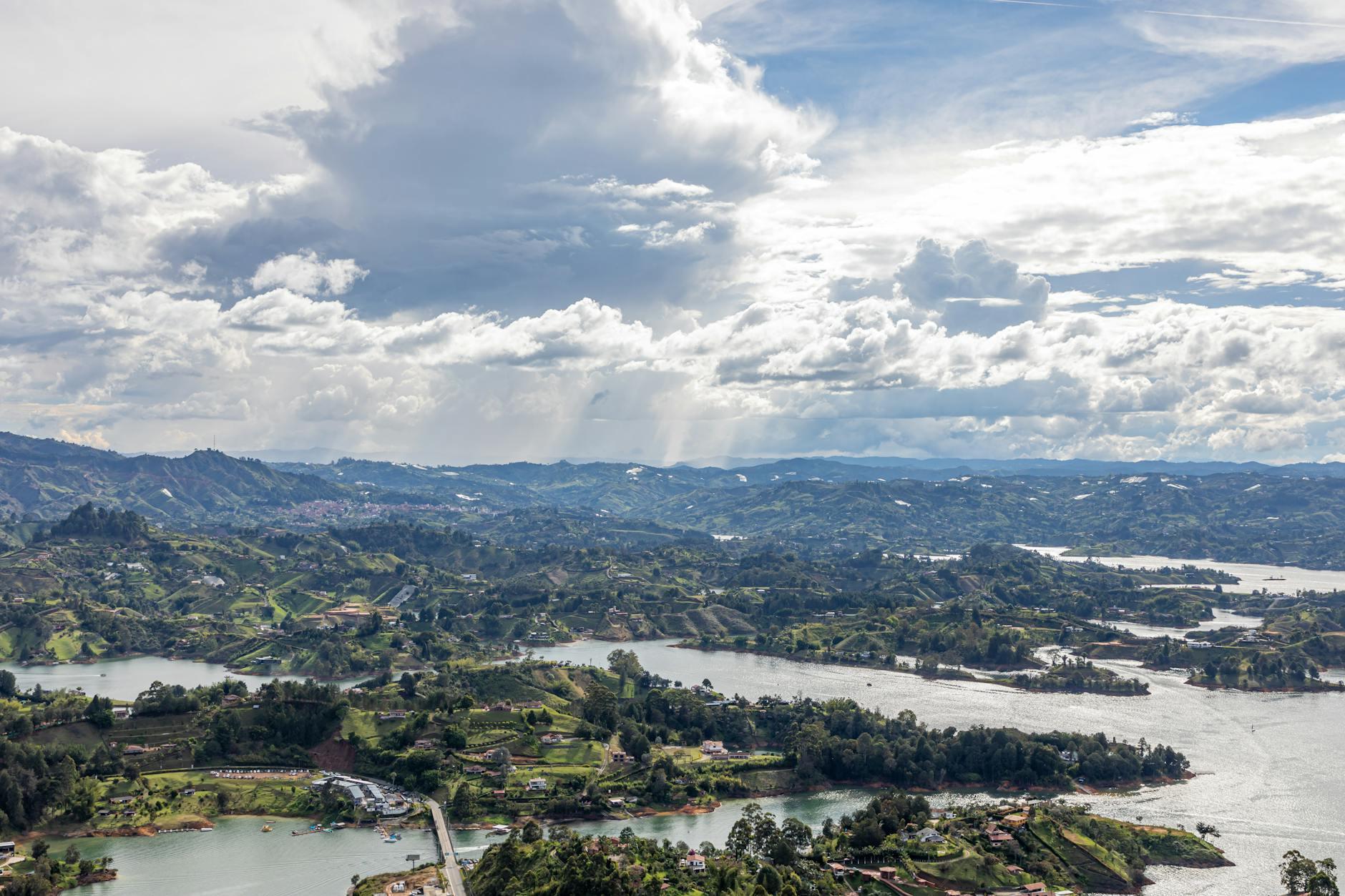
About two hours away, Guatapé is a brightly painted lakeside town; climb the 700-plus steps of El Peñol, a huge granite rock, for the view over the reservoir’s islands.
Bogotá and Villa de Leyva

Bogotá’s Gold Museum holds tens of thousands of pre-Hispanic gold objects and is one of the great museums of South America. Explore La Candelaria, the colonial centre, and the Botero collection, then take the cable car or funicular up Monserrate for the view.
North of the city, the Salt Cathedral of Zipaquirá is carved deep inside a salt mine. Further on, Villa de Leyva has one of the largest cobbled main squares in the Americas, whitewashed houses and fossils in the dry hills around it: two nights there makes a peaceful break.
Wildlife in Colombia
Colombia has more bird species than any other country, around 1,900, and is among the richest in the world for frogs, butterflies and orchids. Hummingbirds and tanagers are everywhere in the coffee region and around Minca. In the Amazon, reached by air to Leticia, you can look for pink river dolphins, monkeys and macaws. From about July to October, humpback whales come to the Pacific coast to breed. We suggest flying to the whale-watching towns of Nuquí and Bahía Solano, and our Pacific trips stay in those two towns; check the FCDO Colombia travel advice for the latest on the region.
Food in Colombia
Each region has its own food. Try arepas, maize cakes eaten all day; bandeja paisa in Medellín, a huge platter of beans, rice, pork, egg and plantain; ajiaco, Bogotá’s chicken and potato soup with capers and cream; and fried fish with coconut rice on the Caribbean coast. The tropical fruit is extraordinary, from lulo to guanábana, and best as fresh juice. And the coffee, finally, is worth the trip: the best beans have always been exported, but a new generation of cafés in the cities and on the farms now serves it at home.
Best time to visit Colombia
Colombia is close to the equator, so temperatures barely change through the year; what changes is the rain. The best time to visit Colombia is December to March, the main dry season in the Andes and on the Caribbean coast, with sunny days in Cartagena and clear mornings in the coffee region. July and August are a second, shorter drier spell in the mountains and a good time for the coffee region and Bogotá.
The wettest months are generally April to May and October to November, when afternoon downpours are common in the Andes. On the Caribbean coast, rain builds from May and peaks in October and November. In April, Cartagena is still hot and mostly dry at about 32°C, while the mountains turn wetter. Christmas, New Year and Easter are Colombian holiday time, so book well ahead.
| Month | Cartagena | Medellín | Bogotá |
|---|---|---|---|
| Jan | 31°C / 24°C · 10 mm | 26°C / 16°C · 105 mm | 18°C / 9°C · 60 mm |
| Feb | 32°C / 24°C · 5 mm | 26°C / 16°C · 130 mm | 19°C / 10°C · 70 mm |
| Mar | 32°C / 25°C · 15 mm | 26°C / 16°C · 240 mm | 18°C / 10°C · 125 mm |
| Apr | 32°C / 25°C · 60 mm | 26°C / 16°C · 265 mm | 18°C / 10°C · 110 mm |
| May | 31°C / 26°C · 140 mm | 26°C / 17°C · 255 mm | 17°C / 10°C · 95 mm |
| Jun | 30°C / 26°C · 145 mm | 26°C / 16°C · 170 mm | 17°C / 10°C · 70 mm |
| Jul | 31°C / 26°C · 125 mm | 27°C / 16°C · 130 mm | 17°C / 9°C · 70 mm |
| Aug | 30°C / 26°C · 145 mm | 27°C / 16°C · 145 mm | 18°C / 9°C · 35 mm |
| Sep | 30°C / 25°C · 135 mm | 27°C / 16°C · 190 mm | 19°C / 9°C · 30 mm |
| Oct | 29°C / 25°C · 195 mm | 25°C / 16°C · 270 mm | 18°C / 10°C · 70 mm |
| Nov | 29°C / 25°C · 180 mm | 25°C / 16°C · 235 mm | 18°C / 10°C · 100 mm |
| Dec | 31°C / 25°C · 30 mm | 26°C / 16°C · 115 mm | 18°C / 9°C · 55 mm |
Average daily high / low and monthly rainfall, 10-year ERA5 data for each city. Bogotá is at about 2,600 m, Medellín at 1,500 m and Cartagena at sea level.
How to get to Colombia from the UK
There are direct flights from London Heathrow to Bogotá, about 11 hours. Otherwise, connect via Madrid or another European hub, or via the US (which needs an ESTA). From Bogotá, domestic flights reach Cartagena in about an hour and a half, and Medellín, Pereira, Armenia and Santa Marta in about an hour. Many itineraries start in Bogotá and fly home from Cartagena via Bogotá. We suggest flying rather than crossing overland to Venezuela or Panama; check the FCDO Colombia travel advice for the latest on land borders.
Getting around Colombia
- Fly between regions: distances are big and mountain roads slow, so most trips use three or four short domestic flights.
- Private transfers and guides within each region: for example Pereira airport to a coffee farm, Medellín to Guatapé, or Santa Marta to Tayrona and Minca.
- Don’t drive at night or hail taxis in the street: the FCDO warns of armed robbery on roads and buses, and of express kidnappings in taxis picked up on the street. Use app-booked or hotel taxis, and our drivers.
Where to stay in Colombia
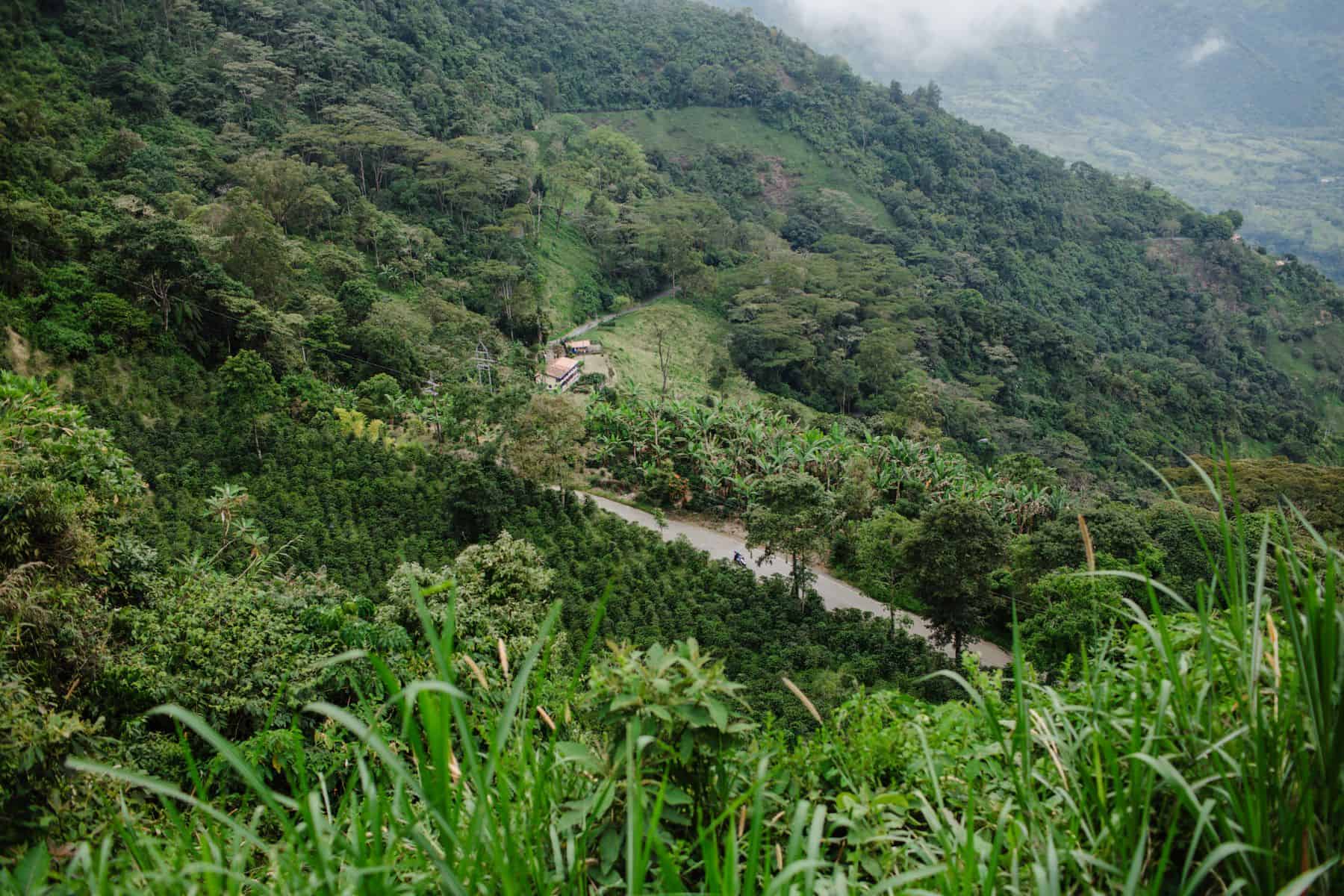
Cartagena: boutique hotels in restored colonial mansions inside the walls, with courtyards and plunge pools; livelier small hotels in Getsemaní; modern beach towers in Bocagrande.
Santa Marta and Tayrona: eco-lodges and beach hotels on the coast east of the park, or hilltop guesthouses in Minca.
Coffee region: a night or two on a working coffee finca or in a converted hacienda is the highlight.
Medellín: El Poblado and Laureles, leafy districts with good restaurants. Bogotá: the north of the city around Zona G and Usaquén, or a boutique hotel in La Candelaria.
Colombia itineraries
Colombia highlights
- Bogotá (2 nights)
- Coffee region (3)
- Medellín (2)
- Cartagena (3)
Capital, coffee farms and the Cocora Valley, then the Caribbean.
Andes and Caribbean
- Bogotá (2 nights)
- Villa de Leyva (2)
- Coffee region (3)
- Medellín (2)
- Santa Marta, Minca and Tayrona (2)
- Cartagena (3)
Adds a colonial town, the jungle coast and a night in the hills.
Colombia in depth
- Bogotá (2 nights)
- Amazon, Leticia (3)
- Coffee region (3)
- Medellín (2)
- Cartagena (3)
- Rosario Islands (3)
Rainforest, mountains and a few days on a Caribbean island to finish.
Combining countries? See our Peru holiday guide, our Ecuador and Galápagos guide and our Costa Rica guide; we connect them by air.
Colombia tours with us
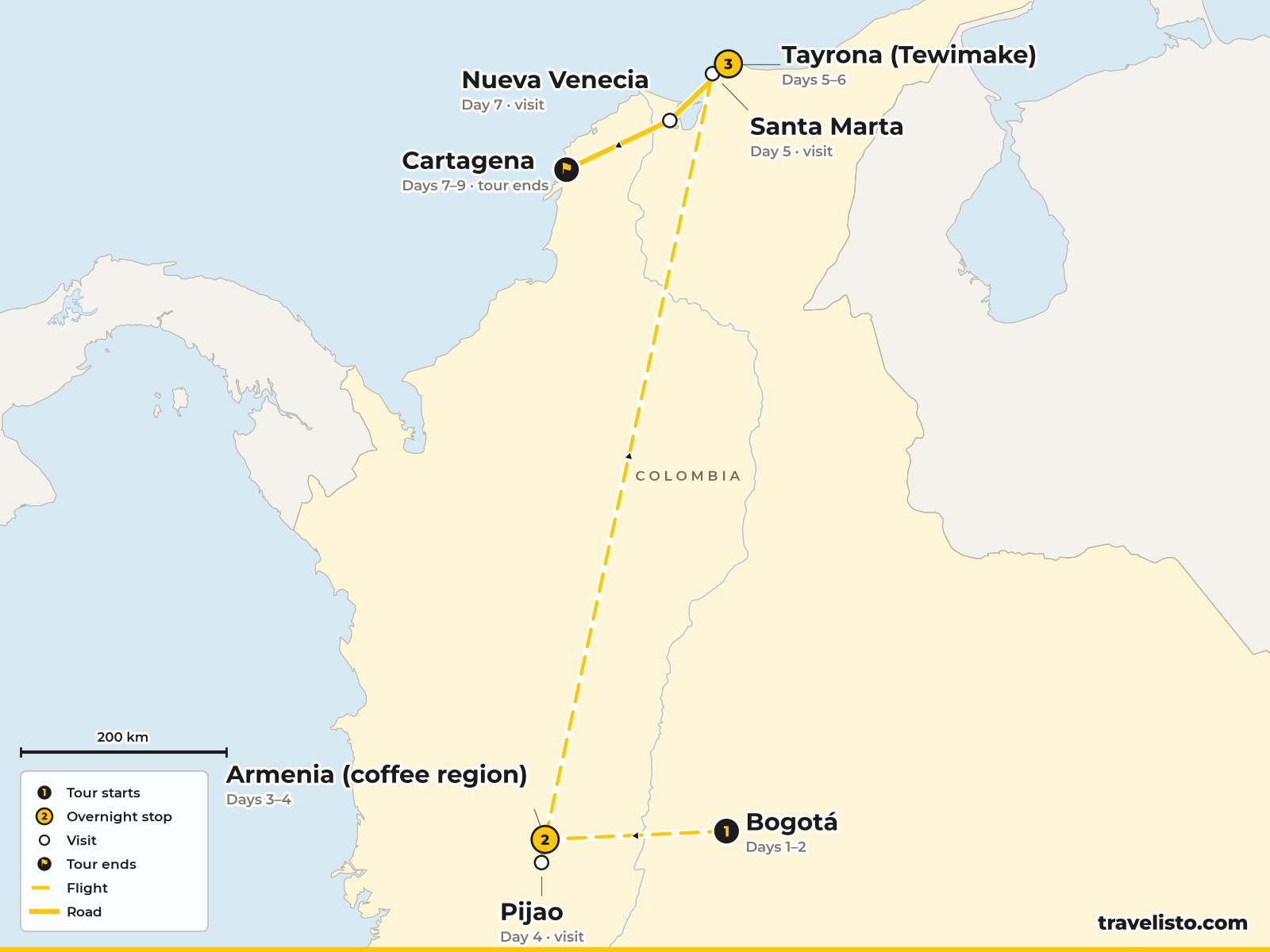
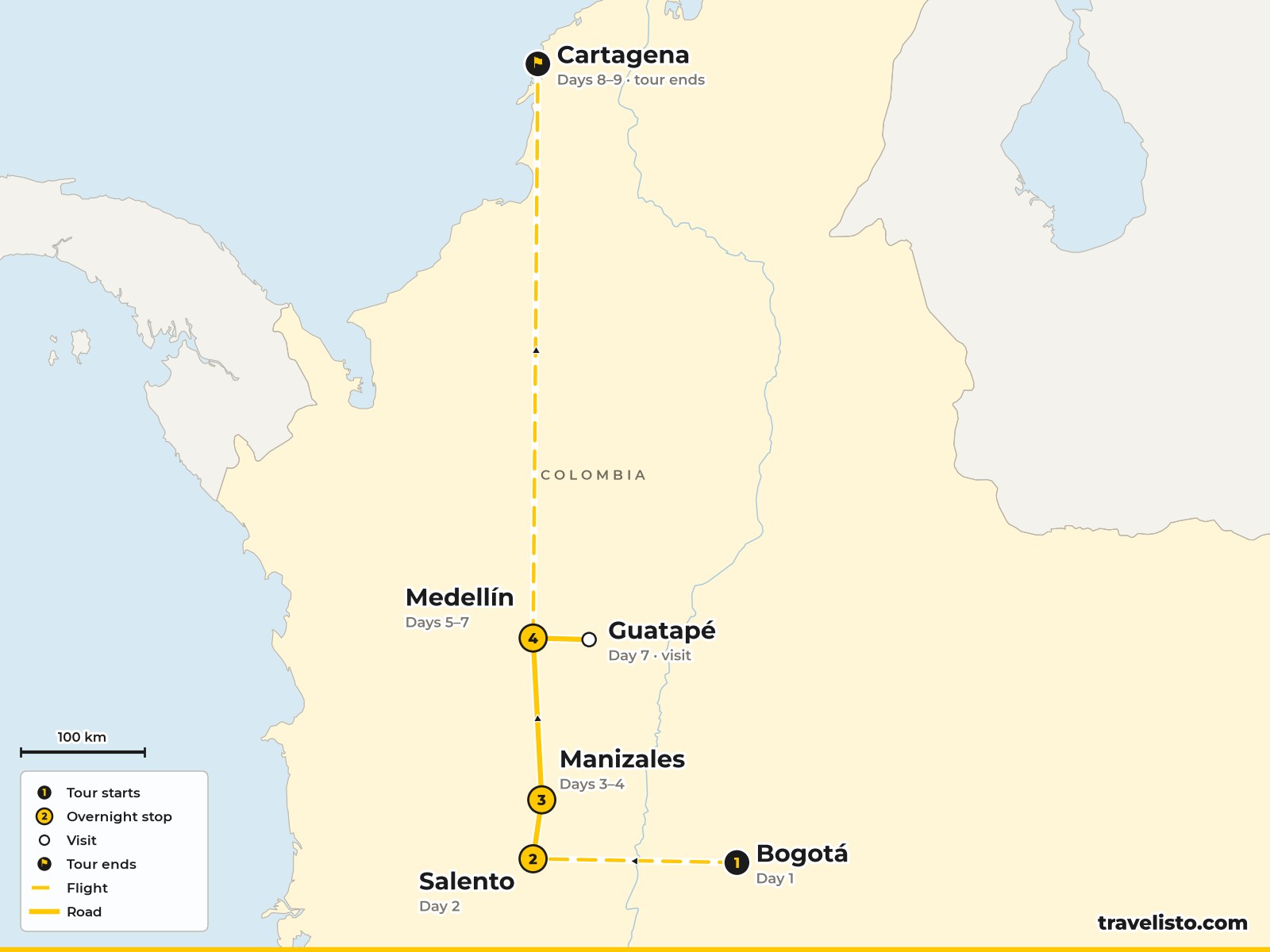
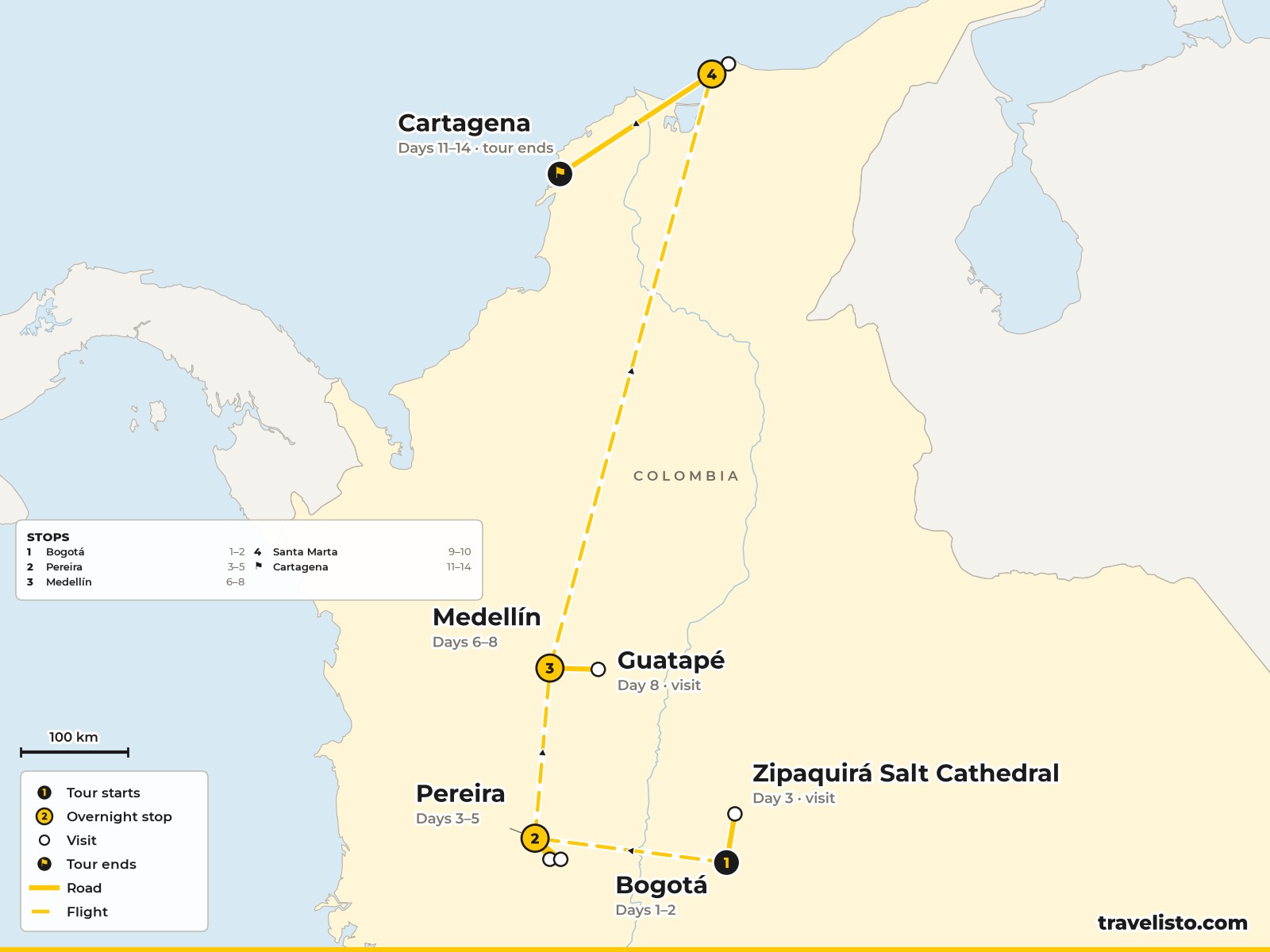
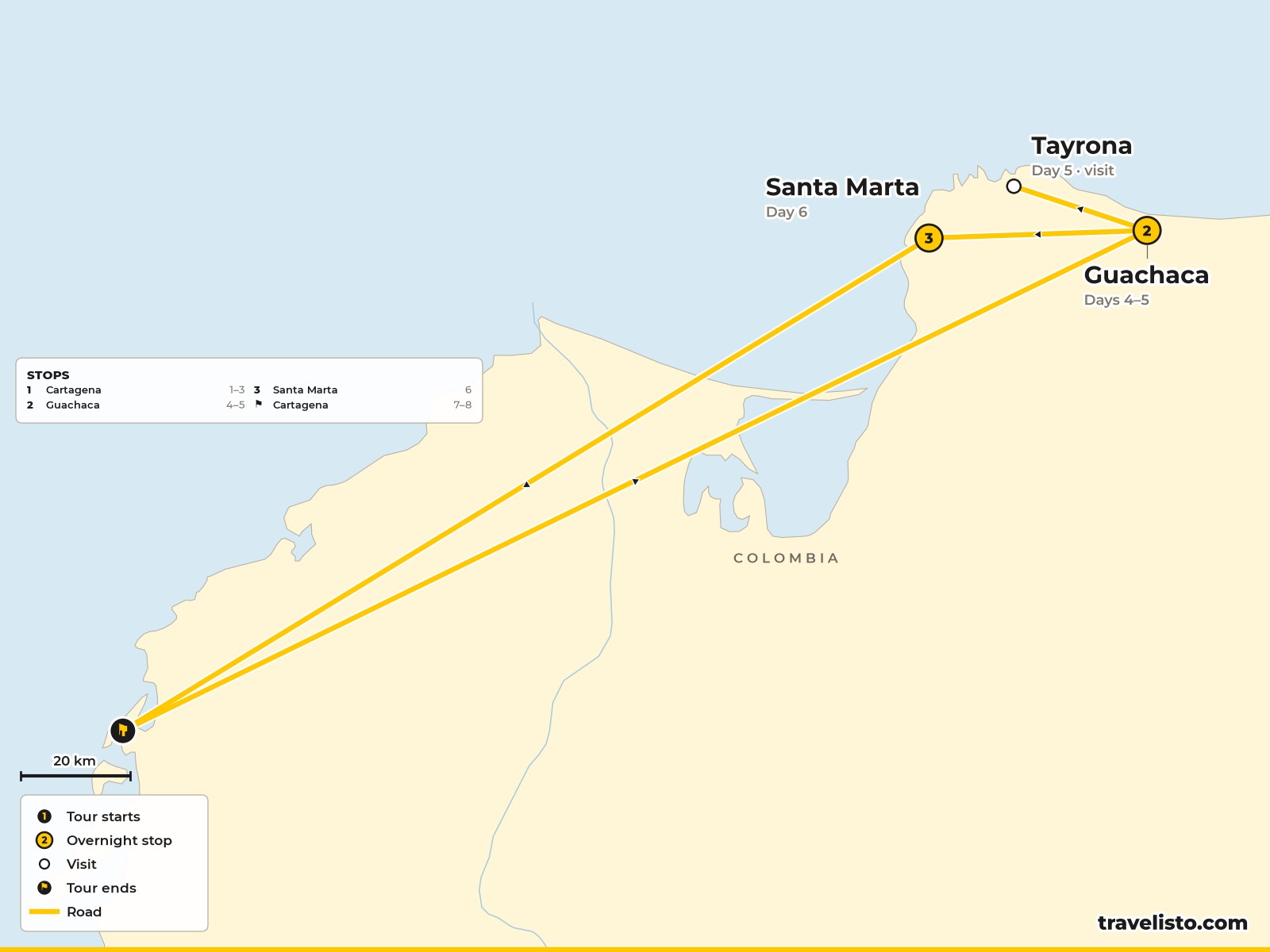
See all our escorted tours of Colombia, or ask about a tailor-made Colombia holiday with domestic flights, private guides and the hotels that suit you.
Practical tips and safety
- Entry: British visitors can stay up to 90 days without a visa, at the immigration officer’s discretion, and must be able to show an onward or return ticket. Completing the Check-Mig form online (between 72 hours and 1 hour before you fly) can speed up arrival. San Andrés island needs a tourist card, bought at the departure gate. Check the FCDO Colombia advice before you travel.
- Where we go: our itineraries stay in the regions in this guide. Read the current FCDO advice again shortly before you travel.
- In the cities: street crime is a problem in Bogotá (including La Candelaria), Medellín and on the Caribbean coast. Keep phones and jewellery out of sight, don’t accept drinks, food or invitations from strangers (criminals use drugs such as scopolamine, often after contact through dating apps), and use app-booked or hotel taxis.
- Altitude: Bogotá is at about 2,640 m. Take the first day slowly, or start in Cartagena or Medellín.
- Health: yellow fever vaccination is recommended for some areas of Colombia, including the Amazon. Check TravelHealthPro well before you go.
- Money: cards are widely accepted in cities; use ATMs inside banks or shopping centres, in daylight.
Frequently asked questions
What is the best time to visit Colombia?
December to March, the main dry season in the Andes and on the Caribbean coast. July and August are also good in the mountains. April to May and October to November are the wettest months, though temperatures stay much the same all year.
Where is Cartagena in Colombia?
On the northern Caribbean coast, in the department of Bolívar. It's about an hour and a half by air from Bogotá and an hour from Medellín, and about four hours by road from Santa Marta.
How long do you need in Colombia?
Ten nights covers Bogotá, the coffee region, Medellín and Cartagena. Two weeks or more lets you add Villa de Leyva, Tayrona and Minca, the Amazon or a few days on the islands.
Can you fly direct from the UK to Colombia?
Yes. There are direct flights from London Heathrow to Bogotá, taking about 11 hours. Domestic flights then connect to Cartagena, Medellín, the coffee region and Santa Marta.
Is Colombia safe for tourists?
The places in this guide are visited by many British travellers. The FCDO warns of street crime and drugging in cities, so take care, use booked taxis and travel with a reputable operator. Check the current FCDO Colombia travel advice before you book and again before you travel.
What is the coffee triangle in Colombia?
The coffee-growing region of the central Andes around Pereira, Armenia and Manizales, also called the Eje Cafetero. It's known for its coffee farms, colourful towns such as Salento and Filandia, and the wax palms of the Cocora Valley.
What animals can you see in Colombia?
Colombia has around 1,900 bird species, the most of any country, plus monkeys, sloths, pink river dolphins in the Amazon, and humpback whales off the Pacific coast from about July to October.
What is the weather like in Colombia in April?
Cartagena is hot and mostly dry, around 32°C. In the Andes April is one of the wetter months, with afternoon showers in Bogotá, Medellín and the coffee region.
Keep planning
- Colombia holidays
- Escorted tours of Colombia
- Peru holiday guide
- Ecuador and Galápagos guide
- Costa Rica holiday guide
- Brazil holiday guide
- Where to go in February
- Tailor-made holidays
- South America holiday guide
Plan your Colombia holiday with a Travel Designer
Tell us when you’d like to go and we’ll plan Cartagena, the coffee region, Medellín and the rest, with domestic flights, private guides and coffee-farm stays, in one ATOL-protected booking.
Make an enquiry Colombia holidays