Hong Kong in brief
- Hong Kong Island and Kowloon: the Peak, trams, the Star Ferry, temples and markets.
- Lantau’s Big Buddha, car-free islands and great hikes such as Dragon’s Back.
- Macau is an hour away; combine Hong Kong with China, Japan or a beach.
- Best from October to December; nonstop flights from London take about 12 to 13 hours.
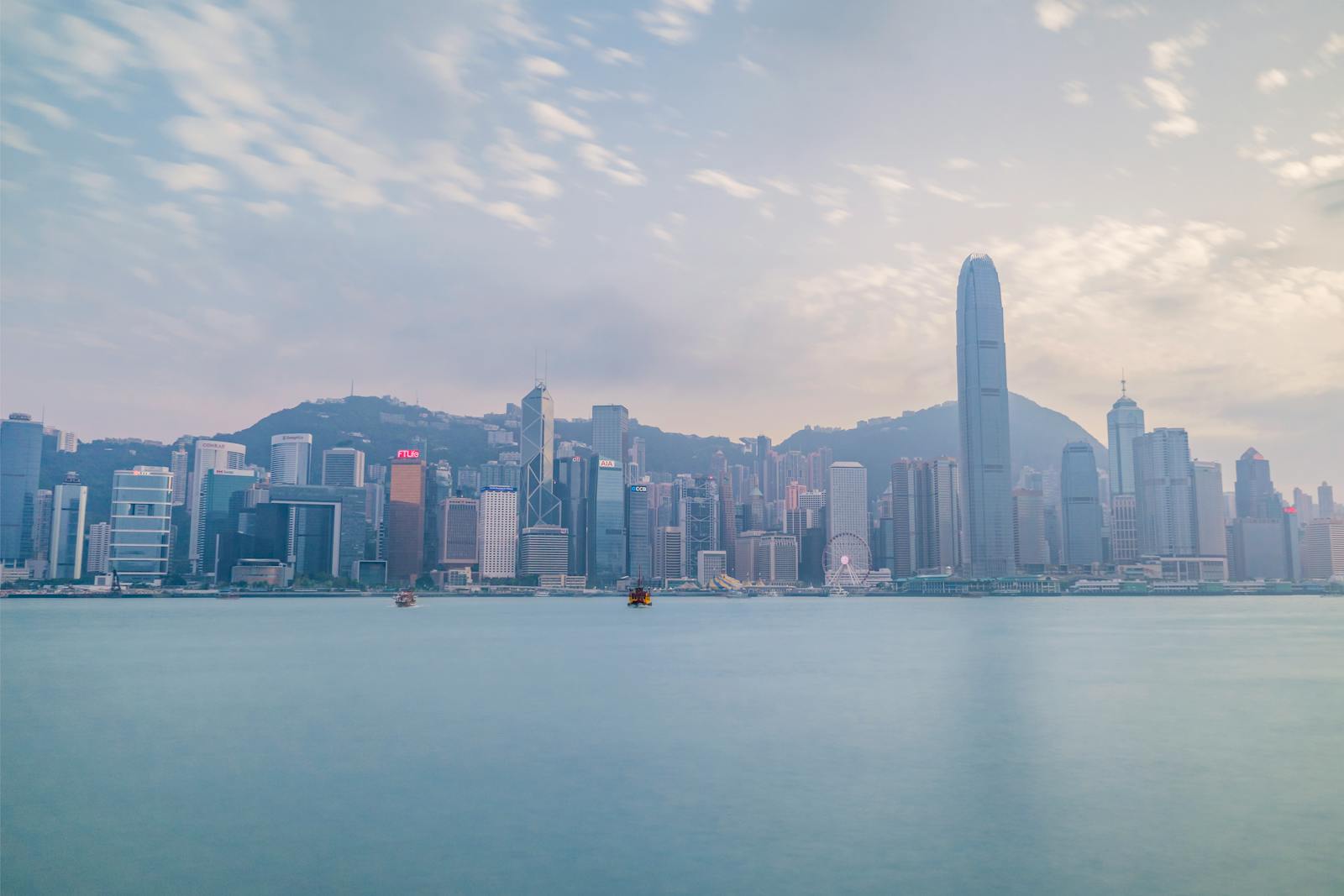
Hong Kong packs more into a small space than almost anywhere on earth. In a single day you can ride a century-old tram past towers of glass, eat dim sum in a steaming tea house, burn incense in a Taoist temple, cross the harbour on a ferry that has run since the 1880s and finish on a mountain trail above an empty beach. Three-quarters of the territory is countryside, much of it protected as country parks, and there are more than 200 outlying islands. This guide covers Hong Kong Island, Kowloon, Lantau and the outlying islands, the best hikes, what to eat, a day trip to Macau, the weather month by month, where to stay by area, and how to use Hong Kong as a stopover or combine it with China and the rest of Asia.
Where is Hong Kong?
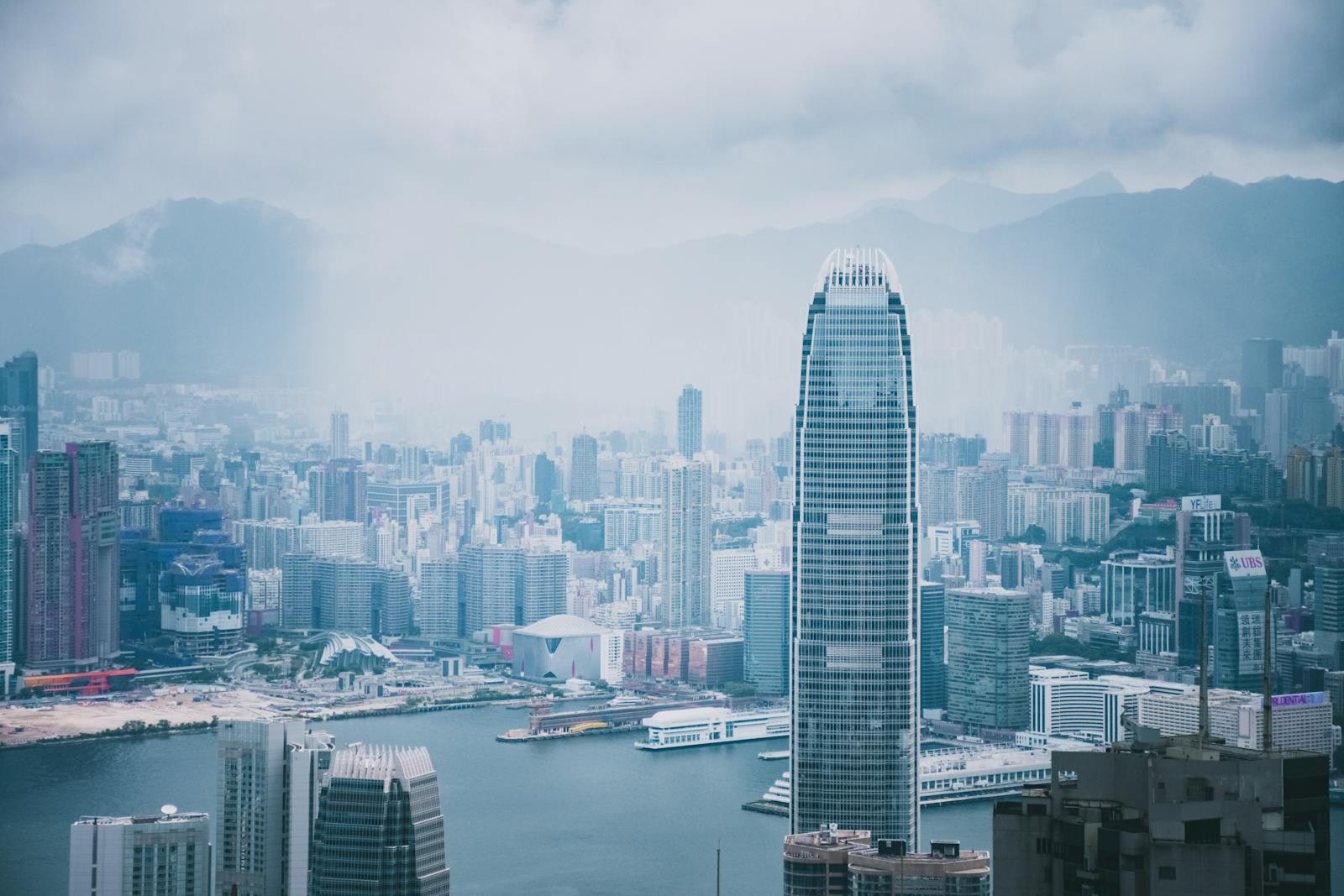
Hong Kong sits on the south coast of China, at the mouth of the Pearl River, about 60 km east of Macau and right next to the mainland city of Shenzhen. It was a British territory until 1997 and is now a Special Administrative Region of China, with its own currency, laws, border controls and entry rules.
It falls into four parts. Hong Kong Island is the old financial heart, with Central, the Peak and the south-side beaches. Kowloon faces it across Victoria Harbour, denser and more local. The New Territories stretch north to the border, with country parks, walled villages and the Sai Kung peninsula. And there are the outlying islands, the largest of which, Lantau, is bigger than Hong Kong Island and home to the airport and the Big Buddha.
English and Cantonese are both official languages, and signs on public transport are in both.
Hong Kong Island

Victoria Peak. The classic view: the towers of Central and the whole harbour from about 400 m up. Take the Peak Tram, a funicular running since 1888, and walk the flat circuit of Lugard Road and Harlech Road (about an hour) for the best views away from the viewing terraces. Go at dusk to see the city light up.
The trams. Hong Kong’s double-decker trams (“ding dings”) have run along the north shore of the island since 1904. Sit upstairs at the front and ride from Kennedy Town to Shau Kei Wan for the cheapest sightseeing tour in Asia.
Central and Sheung Wan. Ride the Central to Mid-Levels escalators, the longest outdoor covered escalator system in the world, then wander down through the antique shops of Hollywood Road to Man Mo Temple, with giant incense coils hanging from its ceiling, and the dried seafood and herbal medicine shops of Sheung Wan.
The south side. Buses wind over the hills to the beaches of Repulse Bay and Shek O and the waterfront market town of Stanley. They feel a world away from Central, 30 minutes from it.


Kowloon
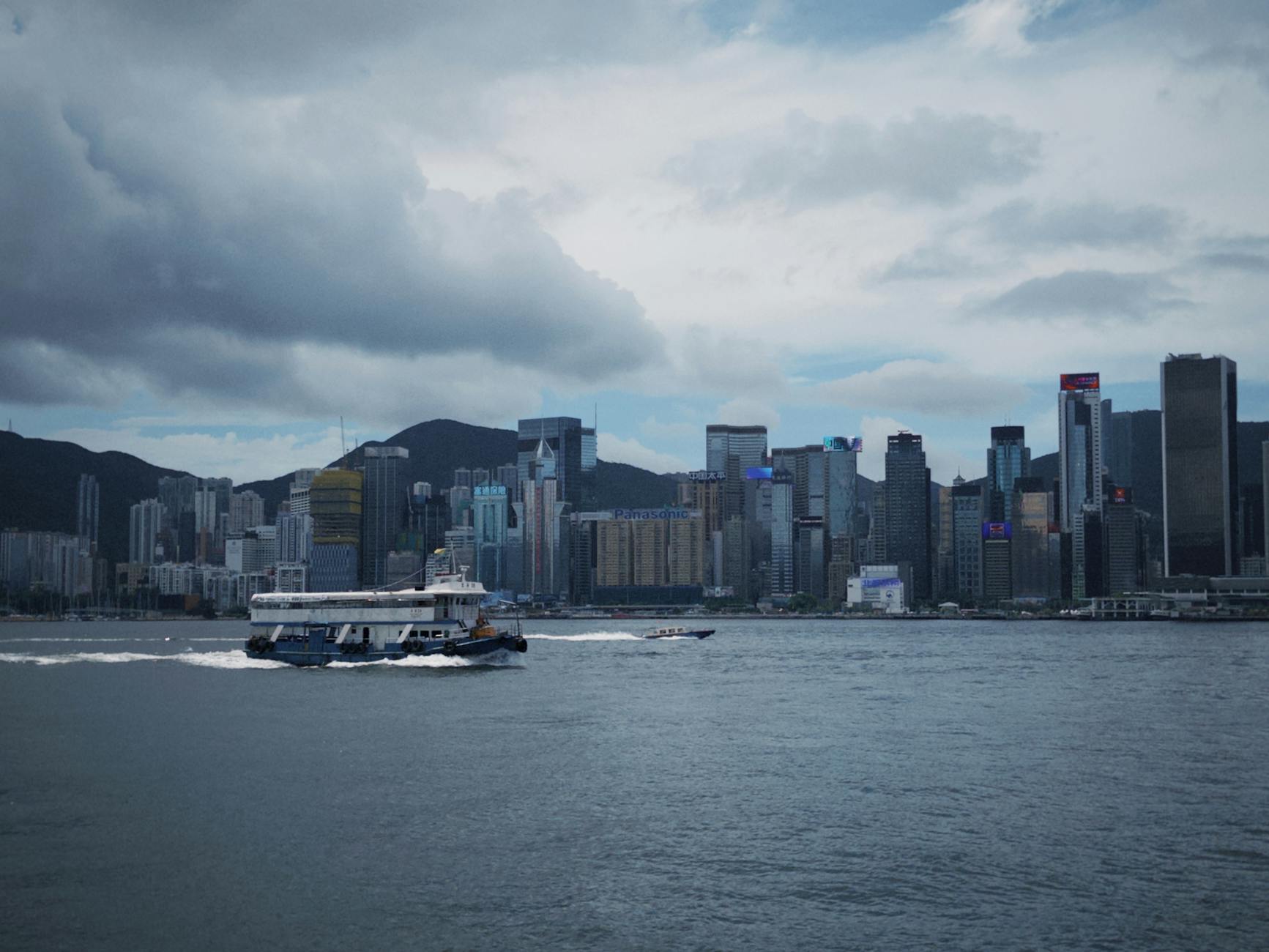
The Star Ferry. The ten-minute crossing from Central to Tsim Sha Tsui is one of the world’s great short journeys, and still costs very little. Walk the Tsim Sha Tsui promenade afterwards for the view back across the water; every evening at 8pm the skyline joins in a light and music show.
Museums. The West Kowloon Cultural District, a short walk from the ferry, has M+, Asia’s big museum of modern visual culture, and the Hong Kong Palace Museum, with treasures on loan from the Palace Museum in Beijing.
Markets. Mong Kok is said to be one of the most crowded places on earth, and its street markets are the reason to go: the Ladies’ Market for clothes and souvenirs, the goldfish market, the flower market and the bird garden. Temple Street night market in Yau Ma Tei comes alive after dark with stalls, fortune tellers and open-air food.
Wong Tai Sin Temple is Hong Kong’s busiest temple, where people shake bamboo fortune sticks and burn incense. Chi Lin Nunnery nearby is a calm wooden Tang-style complex built without nails, with a classical garden alongside. Sham Shui Po is the place for street food, fabric shops and old-style Hong Kong life.

Lantau Island and the Big Buddha

The Big Buddha. The Tian Tan Buddha, a seated bronze Buddha about 34 m high, sits on a hilltop at Ngong Ping, up 268 steps from Po Lin Monastery. The best way up is the Ngong Ping cable car from Tung Chung, about 25 minutes across the bay and the mountains, with glass-floored cabins if you want them. Queues are long at weekends and on holidays, so go early on a weekday.
The Wisdom Path, a short walk from the Buddha, is a figure-of-eight of tall wooden columns carved with the Heart Sutra. Fit walkers can climb Lantau Peak (934 m), Hong Kong’s second-highest summit, from here.
Tai O is a fishing village on the west coast, with houses on stilts over the tidal creeks, shrimp paste and dried fish for sale and boat trips out to look for the rare pink (Chinese white) dolphins. Buses link it with Ngong Ping in about 20 minutes, so you can do both in a day.

The outlying islands
Ferries from the Central piers reach the most popular islands in 30 to 60 minutes, and there are no cars on most of them. They’re a lovely change of pace after the city.
Lamma
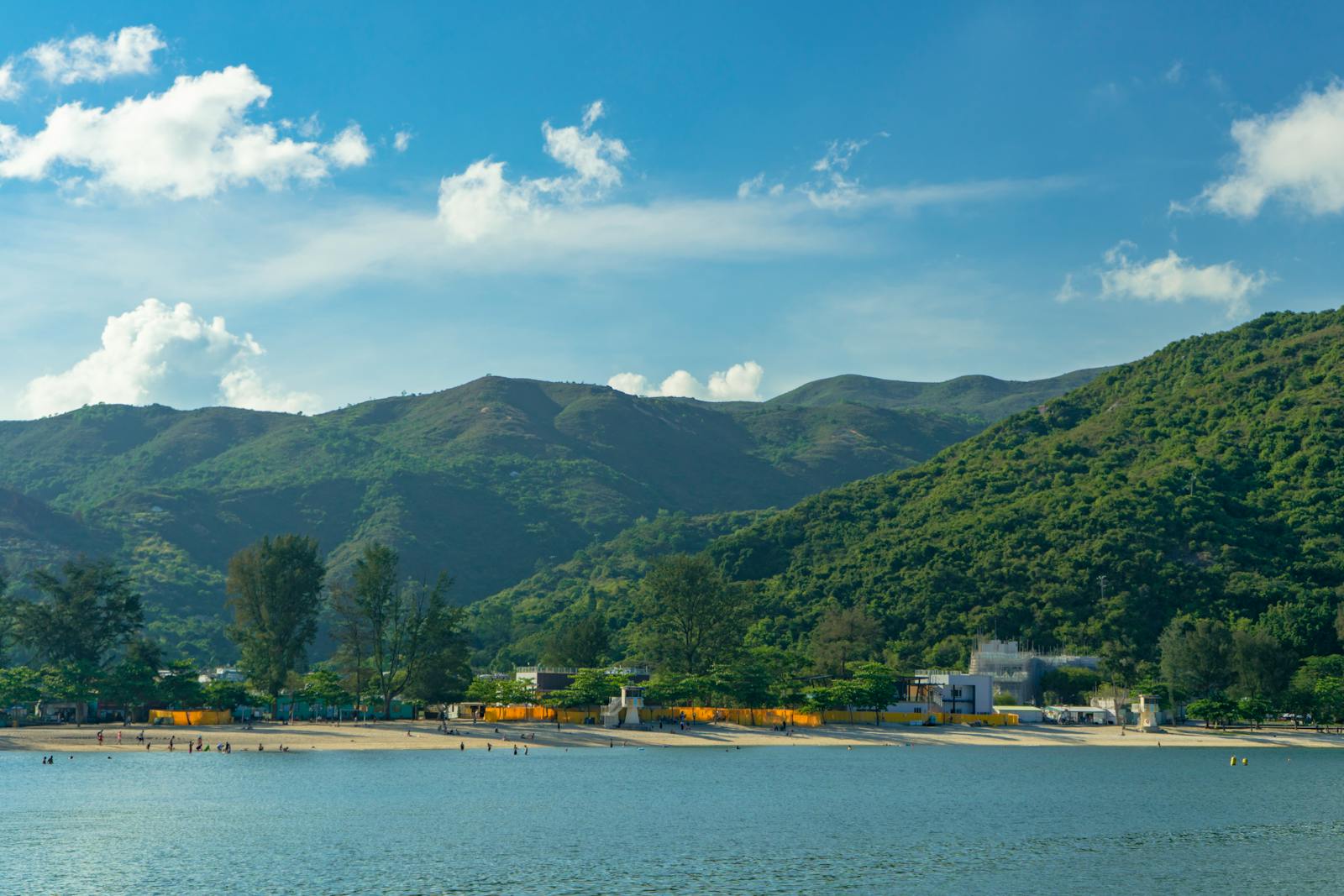
A relaxed, green island with no cars. Walk the paved family trail between Yung Shue Wan and Sok Kwu Wan (about 1.5 hours), past Hung Shing Yeh beach, then eat seafood by the water before the ferry back.
Cheung Chau
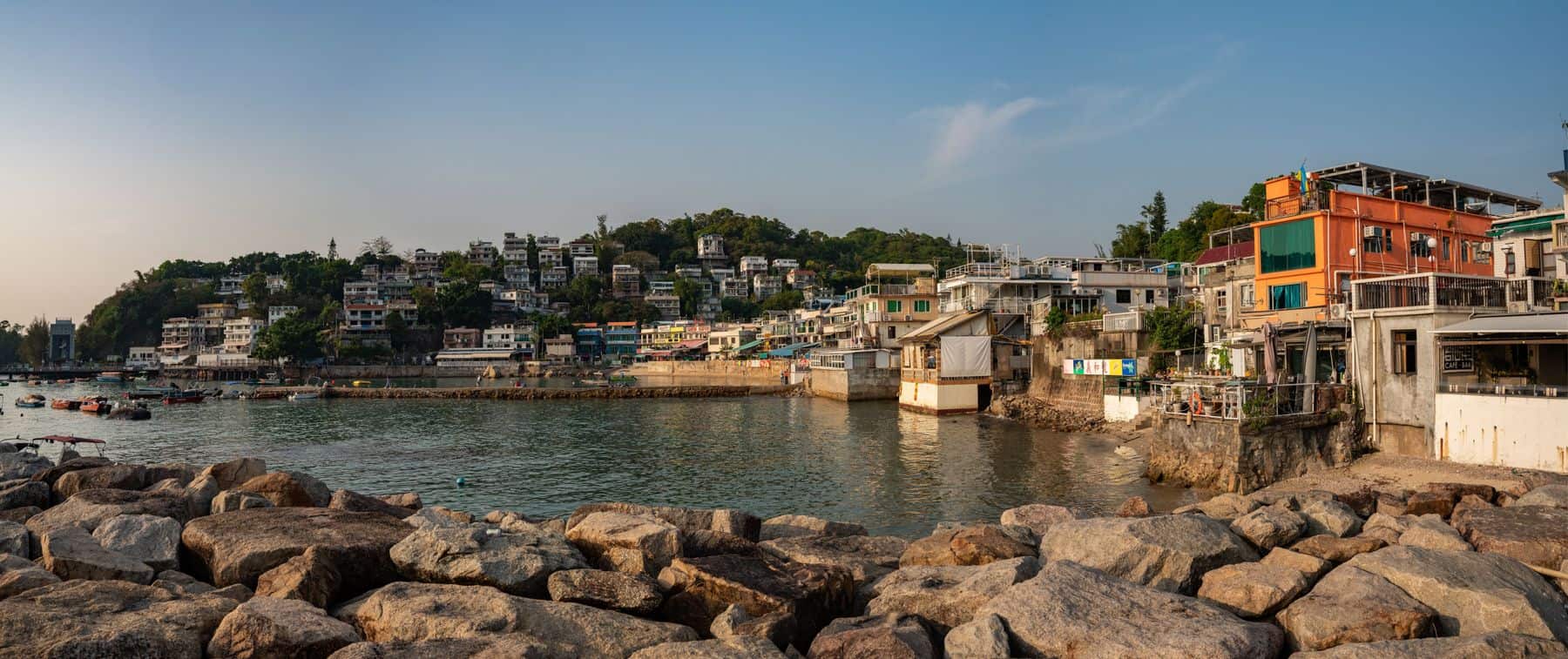
A busy fishing island with a harbour full of boats, temples, beaches and snack stalls. It’s famous for the Bun Festival in spring (around Buddha’s Birthday in April or May), with towers of buns and a children’s parade.
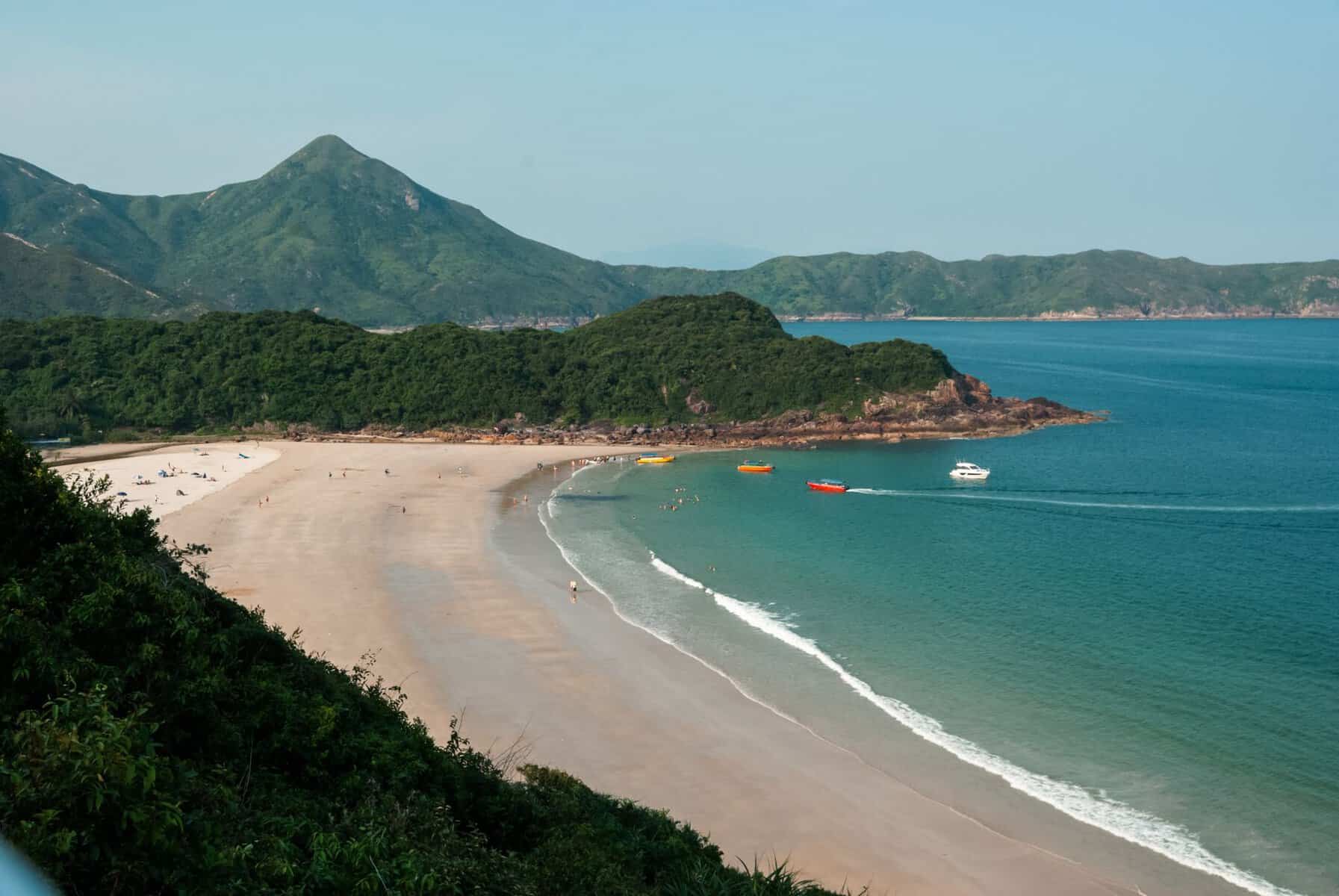
Sai Kung
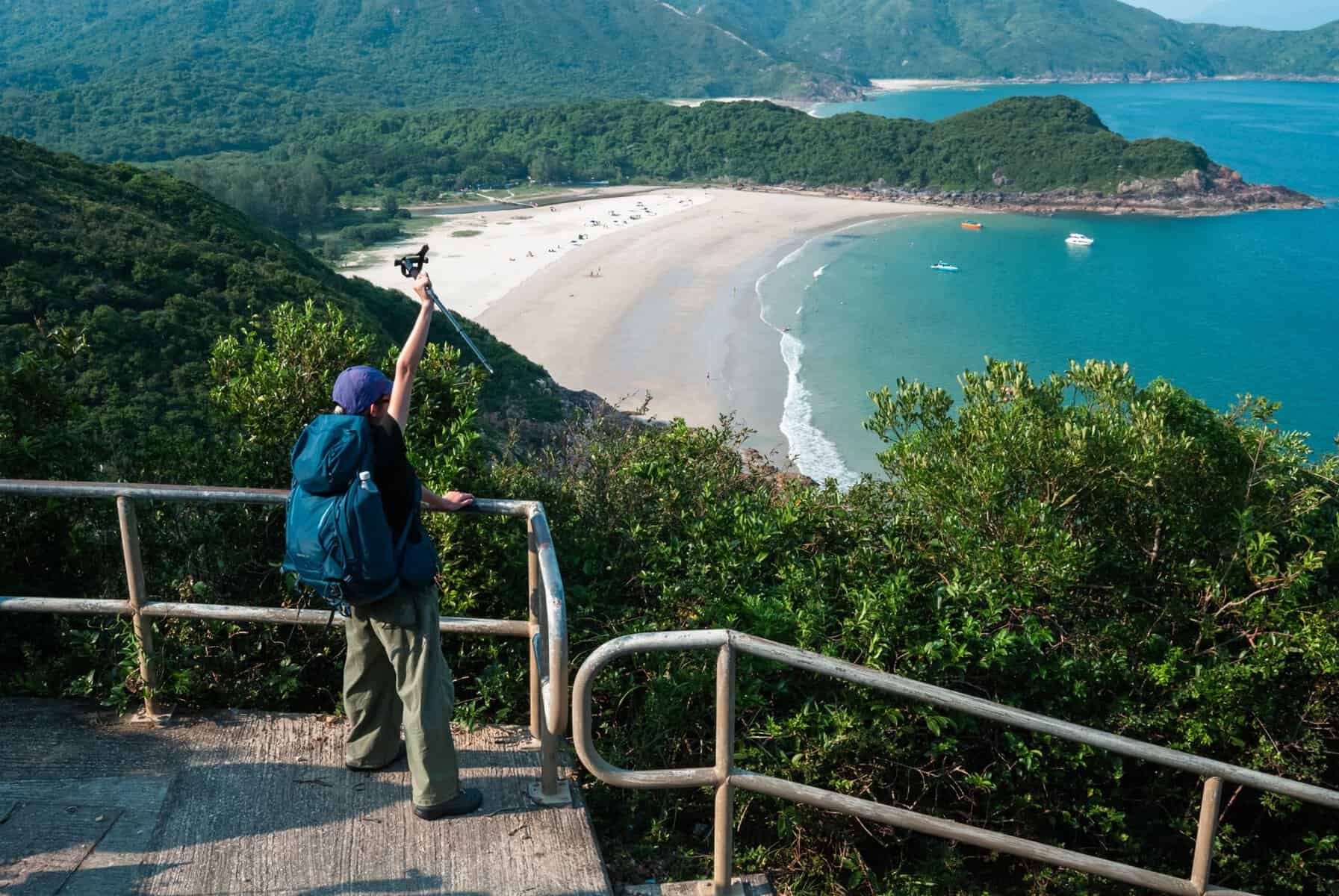
Not an island but the gateway to them: from Sai Kung town’s waterfront, boats run to quiet islands and the rock columns of the UNESCO Global Geopark. Further out, Tai Long Wan has some of Hong Kong’s finest beaches, reached on foot or by boat.
Peng Chau and Po Toi
Tiny Peng Chau, close to Lantau, is a step back in time with old workshops and a short hill walk. Remote Po Toi, in the far south, has wild rock formations and runs mainly at weekends.
Hiking in Hong Kong

Hong Kong has some of the best city hiking in the world, with well-marked trails, a public transport stop at almost every trailhead and views that switch between skyscrapers and open sea.
Dragon’s Back (about 8.5 km, 3 to 4 hours) follows an undulating ridge on the south-east of Hong Kong Island and drops down to the beach at Big Wave Bay. It’s the easiest great walk to reach from the city.
The MacLehose Trail runs 100 km across the New Territories in ten stages; stage 2, through Sai Kung to the beaches of Tai Long Wan, is the most beautiful. The Lantau Trail (70 km) crosses the island’s peaks, and sunrise on Lantau Peak or Sunset Peak is a Hong Kong classic. Lion Rock gives a famous view over Kowloon.
Walk between October and April if you can. In summer, start early, carry plenty of water and check the Hong Kong Observatory for heat, rainstorm and typhoon warnings. The FCDO advises staying on marked trails in the country parks.
What to eat in Hong Kong
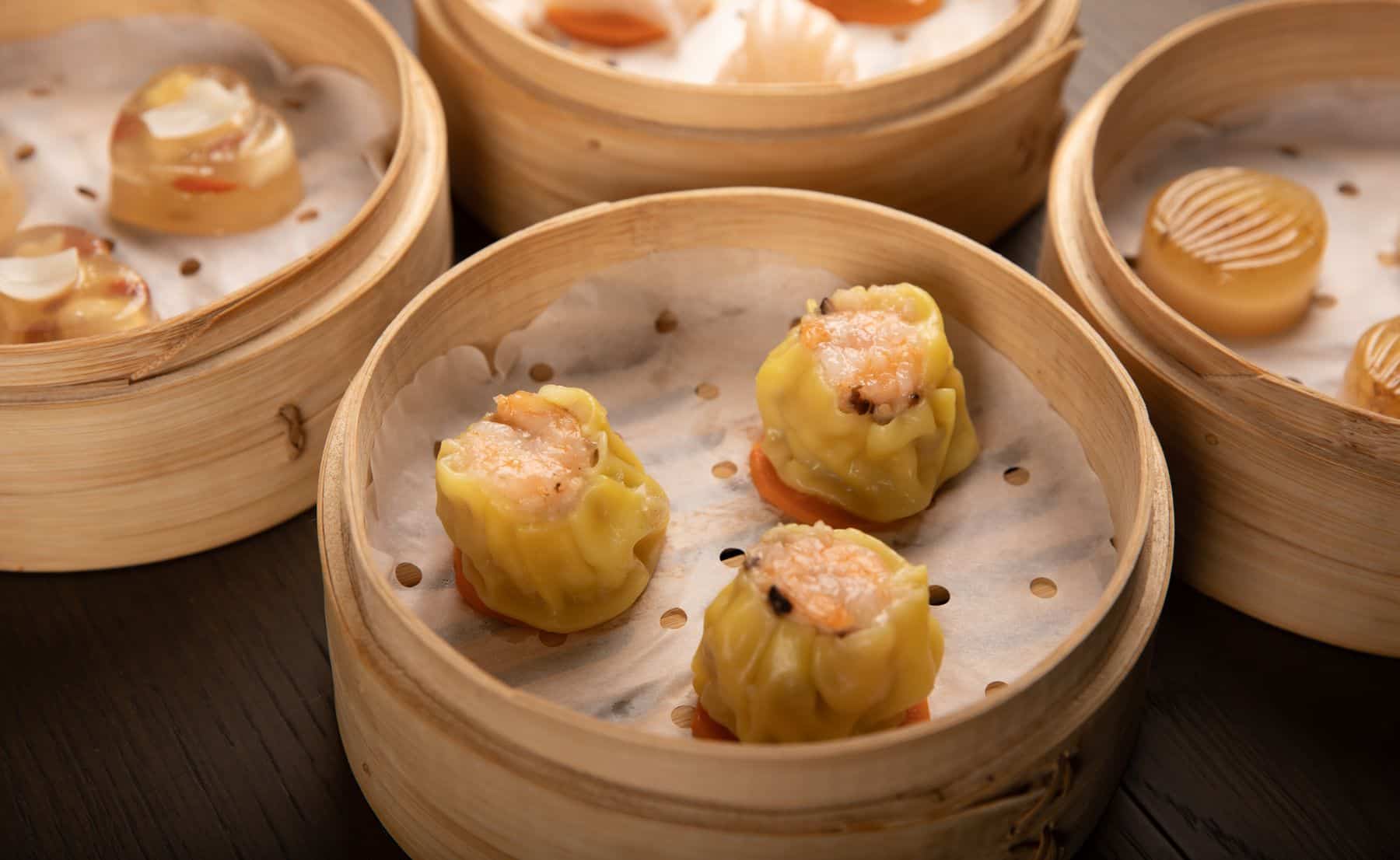
Dim sum is the defining meal, eaten from morning to mid-afternoon with pots of tea: har gow (shrimp dumplings), siu mai, char siu buns, rice rolls and custard tarts. You’ll find everything from noisy old tea houses to elegant hotel dining rooms, and some of the best is very cheap.
Cantonese roast meats hang in shop windows: char siu (barbecued pork), crispy pork belly and roast goose over rice. Wonton noodles in a clear broth are the classic quick lunch.
Cha chaan teng, the local diners, serve Hong Kong-style milk tea, pineapple buns with a slab of butter, French toast and macaroni soup. Look out too for egg waffles and curry fish balls on the street, and fresh seafood picked from tanks on Lamma, in Sai Kung and at Lei Yue Mun.
Hong Kong has hundreds of acclaimed restaurants. Tell us what you like to eat and we’ll suggest places by area, or arrange a food walk with a local guide.
A day trip to Macau

Macau, a Portuguese territory until 1999 and now, like Hong Kong, a Special Administrative Region of China, is about an hour away by fast ferry or by bus across the Hong Kong-Zhuhai-Macau Bridge. British citizens can visit for up to six months without a visa, but you do pass through immigration both ways, so take your passport.
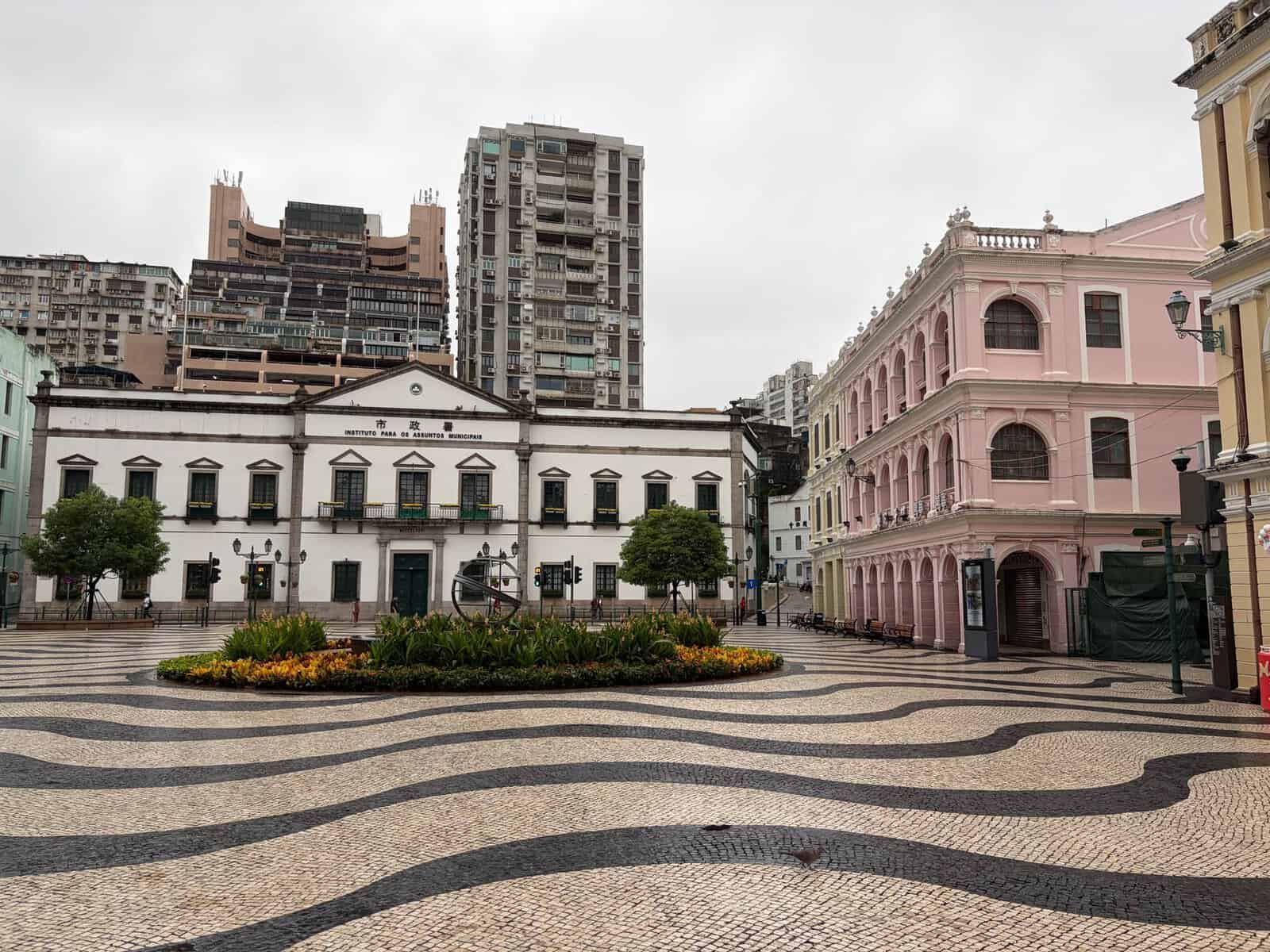
The Historic Centre of Macau is a UNESCO World Heritage Site: walk from the wave-patterned paving of Senado Square, lined with pastel colonial buildings, up to the Ruins of St Paul’s, the 17th-century stone facade of a church that burned down in 1835, and the Monte Fort above it. Then head to A-Ma Temple, which may have given Macau its name.
Across the bridges on Taipa, the old village has narrow lanes of Portuguese houses and food shops. Try Portuguese egg tarts, pork chop buns and Macanese cooking, a blend of Portuguese, Chinese, African and Indian flavours. Stay a night if you can: the old town is calmer once day visitors have left.
Best time to visit Hong Kong
Hong Kong is subtropical. October to December is the best time: dry, sunny and comfortable, around 20 to 27°C, with clear skies for views and hiking. January to March is cooler and often grey or misty, but good for walking, and Chinese New Year (late January or February) brings fireworks, flower markets and lion dances, though some small shops close for a few days. April and May warm up quickly and get more humid. June to September is hot, very humid and the wettest time of year, with heavy downpours. The FCDO notes that the typhoon season runs from May to November: when a Typhoon 8 signal is raised, public transport and offices shut down, so leave some slack in your plans and check the Hong Kong Observatory.
| Month | Hong Kong | Macau |
|---|---|---|
| Jan | 19°C / 13°C · 40 mm | 19°C / 14°C · 40 mm |
| Feb | 19°C / 14°C · 45 mm | 20°C / 14°C · 50 mm |
| Mar | 22°C / 17°C · 90 mm | 23°C / 18°C · 85 mm |
| Apr | 25°C / 20°C · 125 mm | 25°C / 21°C · 120 mm |
| May | 27°C / 24°C · 275 mm | 28°C / 25°C · 235 mm |
| Jun | 29°C / 26°C · 360 mm | 30°C / 27°C · 290 mm |
| Jul | 30°C / 26°C · 285 mm | 31°C / 27°C · 265 mm |
| Aug | 29°C / 26°C · 375 mm | 30°C / 27°C · 395 mm |
| Sep | 29°C / 25°C · 250 mm | 30°C / 26°C · 270 mm |
| Oct | 27°C / 22°C · 180 mm | 27°C / 23°C · 175 mm |
| Nov | 24°C / 19°C · 60 mm | 25°C / 20°C · 50 mm |
| Dec | 20°C / 13°C · 30 mm | 20°C / 14°C · 30 mm |
Average daily high / low and monthly rainfall, 10-year ERA5 data. Grid averages can understate the heaviest summer downpours.
Getting to Hong Kong from the UK
There are nonstop flights from London Heathrow to Hong Kong, taking about 12 to 13 hours outbound; or fly with one stop via the Gulf or Europe from regional UK airports. Hong Kong International Airport is on Lantau; the Airport Express train reaches Kowloon in about 20 minutes and Central in about 25. British citizens can visit for up to six months without a visa, and your passport must be valid for at least one month after you leave.
Onward travel: high-speed trains from West Kowloon station reach Shenzhen in under 20 minutes and Guangzhou in under an hour, with longer routes to Guilin, Shanghai and Beijing. Hong Kong is also one of Asia’s biggest air hubs, a few hours from Bangkok, Singapore, Bali, Vietnam, Japan and the Philippines, and a busy cruise port, with ships calling at Kai Tak Cruise Terminal.
Getting around
- Octopus card: a stored-value card for the MTR, buses, trams, ferries and even convenience stores. Contactless bank cards now work on much of the network too.
- MTR: fast, clean and frequent, with the Tung Chung line for the Big Buddha cable car and the East Rail line to the New Territories.
- Trams and the Star Ferry: slow, cheap and the most enjoyable way to get around Hong Kong Island and across the harbour.
- Ferries: from the Central piers to Lamma, Cheung Chau, Peng Chau and Mui Wo on Lantau.
- Taxis: red in the city, green in the New Territories and blue on Lantau. Have your destination written in Chinese.
Where to stay in Hong Kong
Hong Kong has some of the finest hotels in Asia, many with harbour views. Rather than a list of names, here’s how the areas compare; tell us your style and budget and we’ll match the right hotel.
| Area | Best for | Feel |
|---|---|---|
| Central and Admiralty | First visits, business, the Peak | Polished, close to everything, harbour views from the top floors |
| Tsim Sha Tsui | Harbour views, museums, the Star Ferry | The classic view of the Hong Kong Island skyline across the water |
| Wan Chai and Causeway Bay | Shopping, trams, local restaurants | Busy and lively, good value |
| Sheung Wan | Boutique stays, galleries, antiques | Older streets and independent cafés |
| West Kowloon | Museums and the high-speed train | New, spacious, with views back to the island |
| South side and Lantau | Beaches, families, a quieter end to a trip | Resort feel, 30 to 40 minutes from the centre |
Hong Kong as a stopover or two-centre holiday

With nonstop flights from London, Hong Kong is a natural stopover on the way to Australia, New Zealand or South East Asia: two or three nights is enough for the Peak, the harbour, a market or two and dim sum, and it breaks up the long flight. It also pairs well with:
- China: many China tours start or end here, linked by high-speed train to Guangzhou and Guilin. See our China holiday guide.
- Beaches: fly on to Thailand, Bali, Vietnam or the Philippines for a Hong Kong and beach holiday. See our Thailand, Bali, Vietnam and Philippines guides.
- Japan, Taiwan and Singapore: all a short flight away for a city-hopping trip. See our Japan holiday guide.
How many days in Hong Kong? Sample routes
Three nights covers the essentials; five lets you add Lantau, an island and a hike at a gentler pace, with a night in Macau.
Hong Kong stopover
- Day 1: Star Ferry, Tsim Sha Tsui, Temple Street
- Day 2: Tram, Central, Man Mo Temple, the Peak at dusk
- Day 3: Lantau, Big Buddha and Tai O
The highlights on the way to Australia or Asia.
Hong Kong and Macau
- Hong Kong Island (2 nights)
- Kowloon (2)
- Macau (1)
- Lantau or the south side (1)
City, islands, a hike such as Dragon’s Back and Macau’s old town.
Hong Kong and the beach
- Hong Kong (4 nights)
- Fly to Thailand, Bali or Vietnam (10)
A city break followed by beach time, with nonstop flights home from Hong Kong.
Tours that include Hong Kong
Our small-group China tours finish in Hong Kong, so you can travel through the mainland and end with a few days in the city.
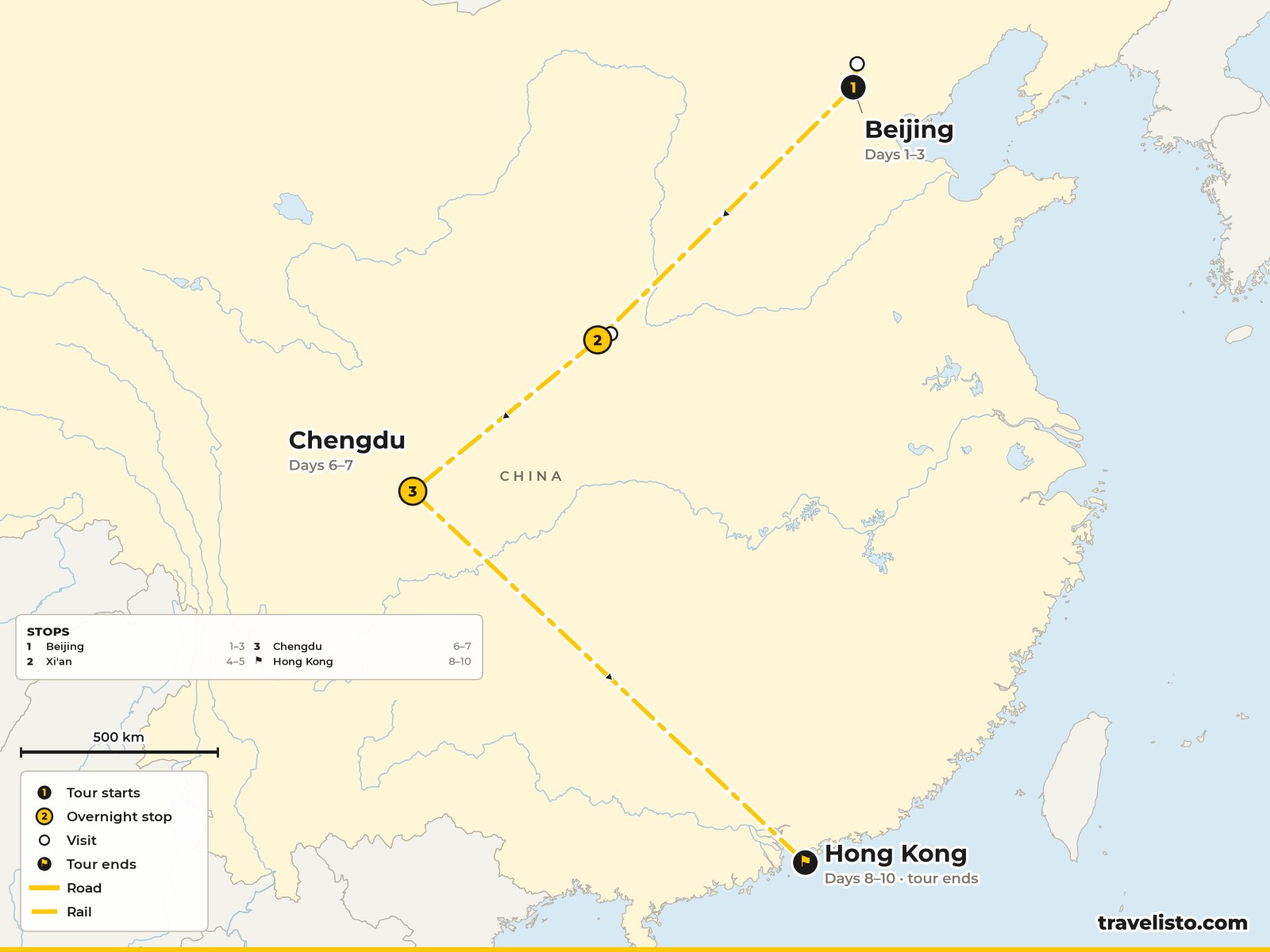
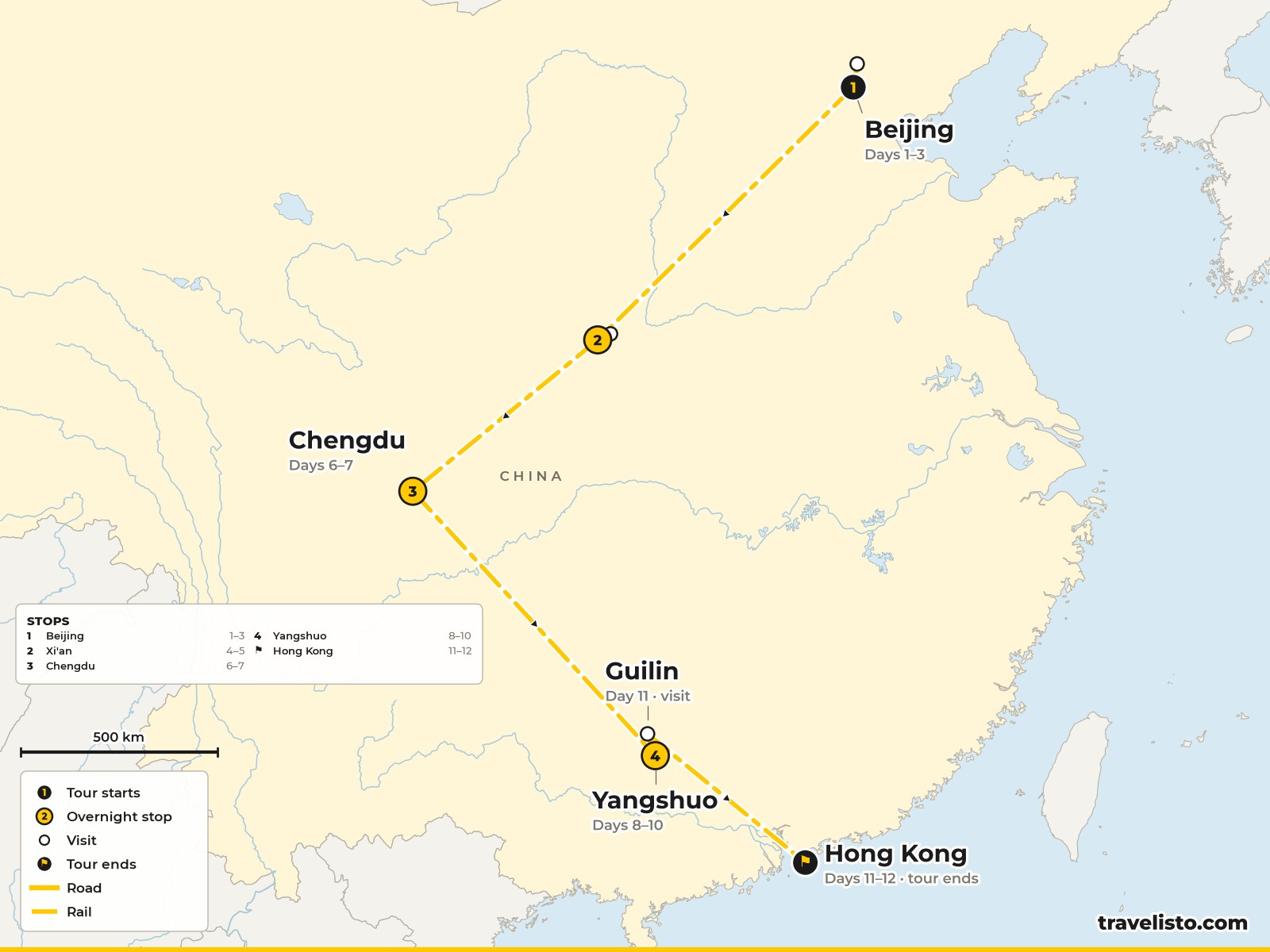
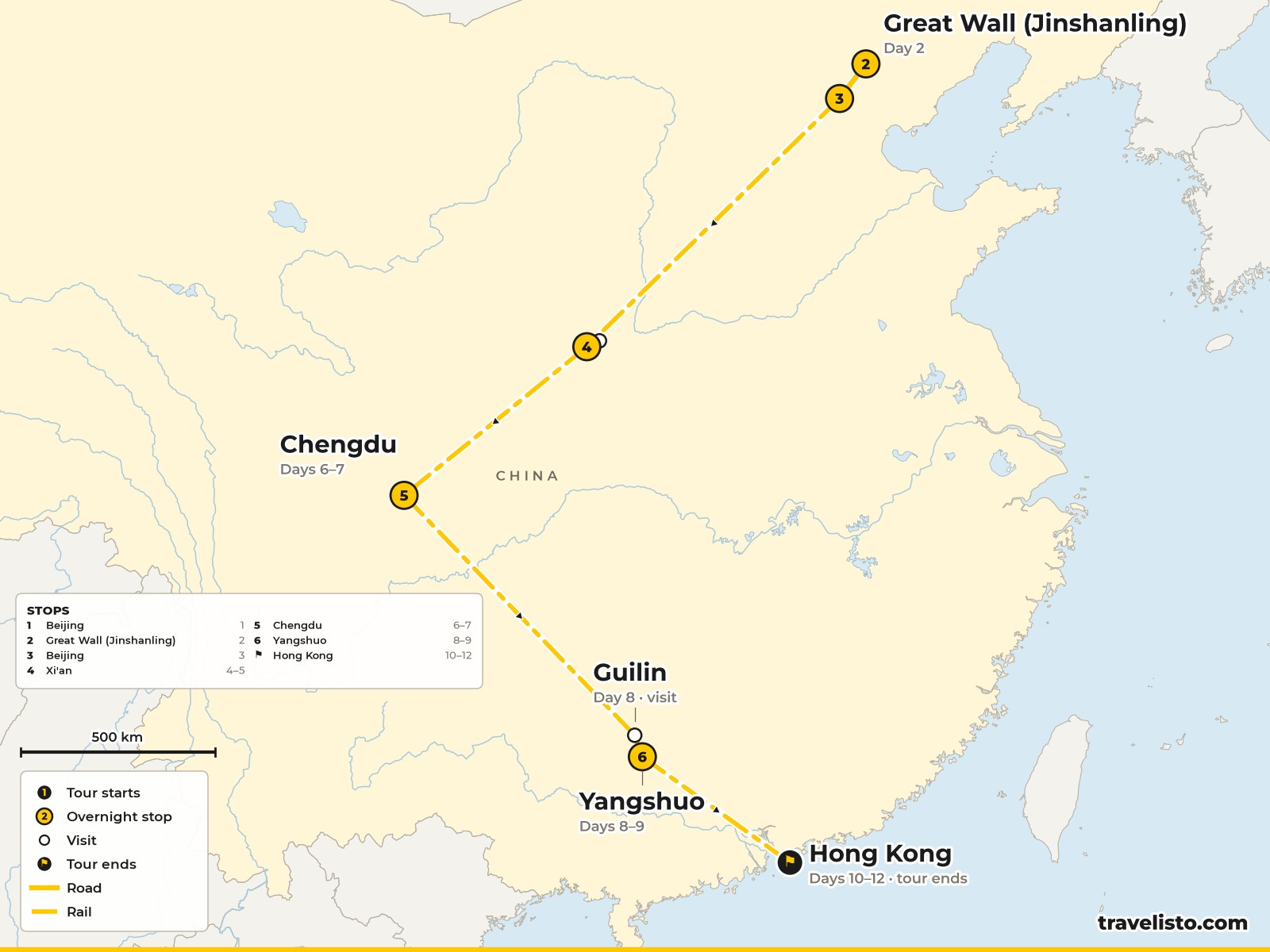
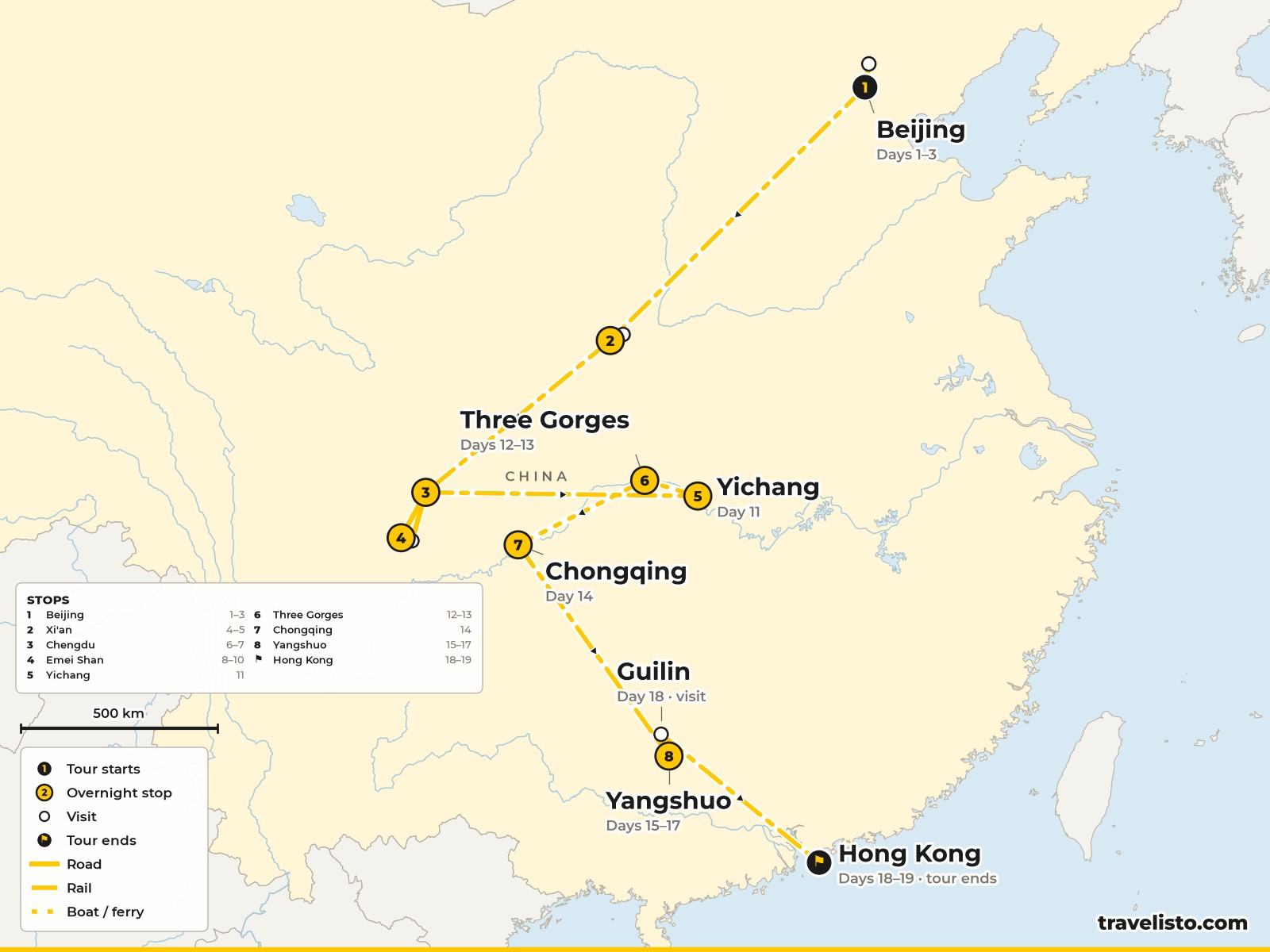
Prefer your own pace? A tailor-made holiday can add Hong Kong as a stopover or pair it with China, Macau or a beach, with hotels, transfers and guides arranged. See Hong Kong holidays for ideas.
Practical tips
- Entry: no visa for British citizens for up to six months; the same for Macau. Mainland China has separate entry rules, so check them if you’re continuing over the border. Read the FCDO Hong Kong advice before you go.
- Local laws: the FCDO points out that Hong Kong’s national security laws apply to everyone, including visitors, and can be interpreted broadly. Avoid any protests.
- Weather: follow typhoon and rainstorm warnings from the Hong Kong Observatory between May and November.
- Plugs: the same three-pin plugs as the UK.
- Money: cards are widely taken, but carry some cash for markets, small restaurants and minibuses.
- Tipping: most restaurants add a 10% service charge; rounding up taxi fares is usual.
- Quieter times: visit the Big Buddha, the Peak and the islands on weekdays; weekends are busy with locals.
Frequently asked questions
What is the best time to visit Hong Kong?
October to December, when it is dry, sunny and comfortable for sightseeing and hiking. June to September is hot, humid and wet, and the typhoon season runs from May to November.
How many days do you need in Hong Kong?
Three nights covers the Peak, the harbour, the markets and the Big Buddha. Five or six nights lets you add the islands, a hike and a night in Macau.
Do British citizens need a visa for Hong Kong?
No. British citizens can visit Hong Kong for up to six months without a visa. Your passport must be valid for at least one month after you leave. Macau also allows six months visa-free.
How do you get from Hong Kong to Macau?
By fast ferry from Hong Kong Island or Kowloon, or by bus across the Hong Kong-Zhuhai-Macau Bridge, about an hour either way. You pass through immigration, so take your passport.
How do you get to the Big Buddha?
Take the MTR to Tung Chung on Lantau, then the Ngong Ping cable car, about 25 minutes, or a bus. Go early on a weekday to avoid the queues.
Where is the best area to stay in Hong Kong?
Central or Tsim Sha Tsui for a first visit, for harbour views and easy transport. Wan Chai and Causeway Bay are livelier and good value; Sheung Wan is quieter and more boutique.
Is Hong Kong a good stopover?
Yes. There are nonstop flights from London, the airport train reaches the city in about 25 minutes, and two or three nights is enough to see the highlights on the way to Australia or Asia.
Is there good hiking in Hong Kong?
Excellent. Dragon's Back on Hong Kong Island, the MacLehose Trail in Sai Kung and the Lantau Trail are all easy to reach by public transport. Walk between October and April if you can.
Keep planning
- Hong Kong holidays
- China holiday guide
- Escorted tours of China
- Japan holiday guide
- Thailand holiday guide
- Vietnam holiday guide
- Taiwan holidays
- Tailor-made holidays
Plan your Hong Kong holiday with a Travel Designer
Tell us when you’d like to go and we’ll plan Hong Kong as a stopover or a full holiday, with the right hotel, Macau, the islands and onward flights to China or the beach, in one ATOL-protected booking.
Make an enquiry Hong Kong holidays