The Algarve in brief
- The wild west coast and Lagos; the cliffs and caves of Benagil and Carvoeiro; the lagoons and towns of Faro and Tavira.
- Inland: Silves castle, Loulé market and the Monchique hills.
- The Seven Hanging Valleys trail, golf and winter sun at about 16 to 17°C.
- Best in May, June, September and October; under three hours’ flight to Faro.

The Algarve is Portugal’s southern coast, and for British travellers one of the easiest beach holidays there is: under three hours’ flight to Faro, no time difference, and some of the most beautiful coastline in Europe. In the west, golden cliffs, sea caves and rock arches hide small coves; in the east, long sandy islands shelter the lagoons of the Ria Formosa. Between them are old fishing towns like Lagos and Tavira, the resorts of Albufeira and Vilamoura, dozens of golf courses, and an inland of cork-oak hills, Moorish castles and market towns. This guide goes along the coast from west to east, then covers inland, the best beaches, walking, golf, winter sun, food, the weather month by month, where to stay and how to get there.
The Algarve from west to east

Sagres and the Costa Vicentina
Europe’s south-western corner: cliffs, surf beaches and protected coast.
Sagres and the west coast →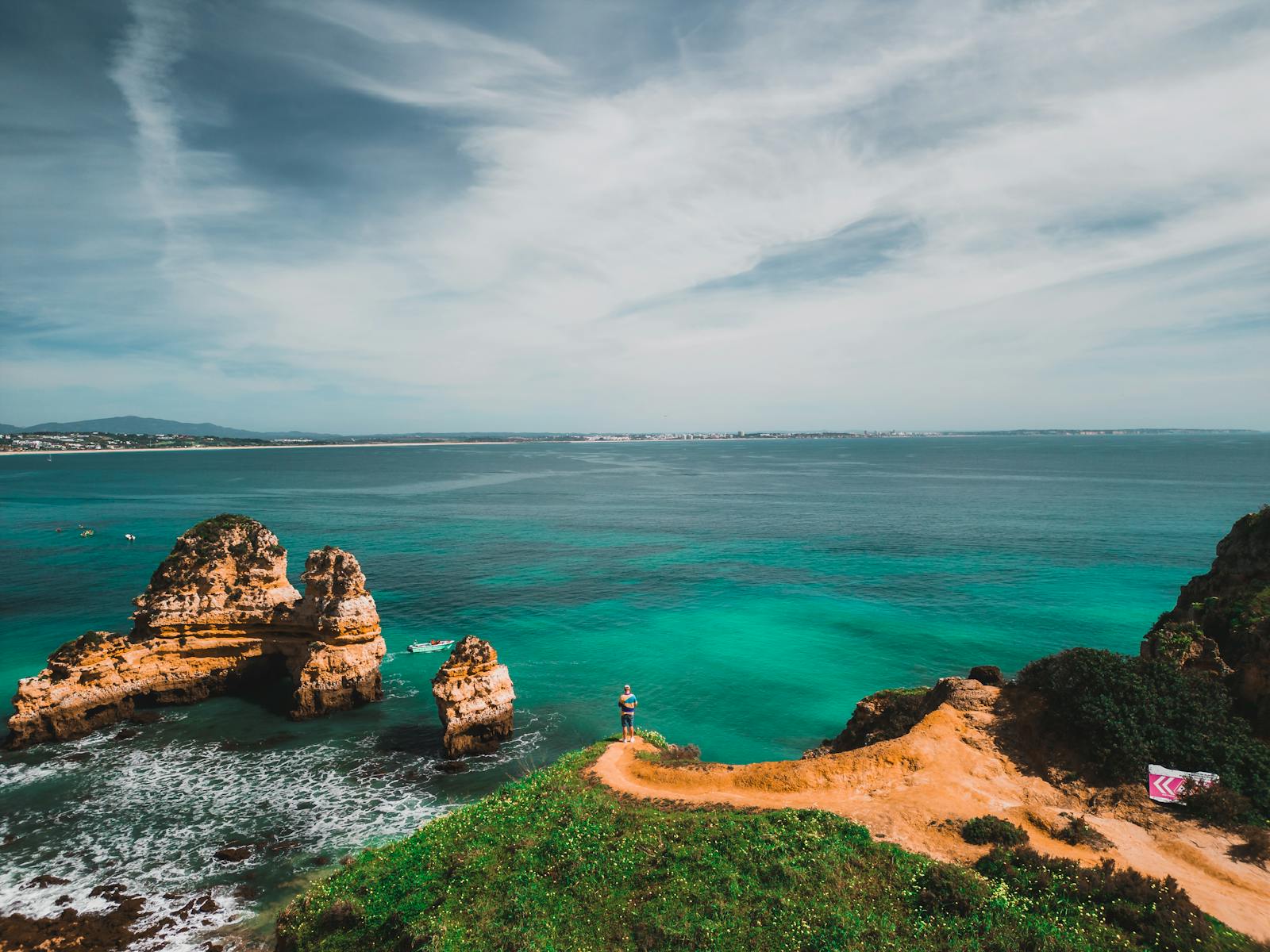

Carvoeiro and Benagil
The heart of the cliff coast, with Benagil cave and the Seven Hanging Valleys trail.
Benagil and Carvoeiro →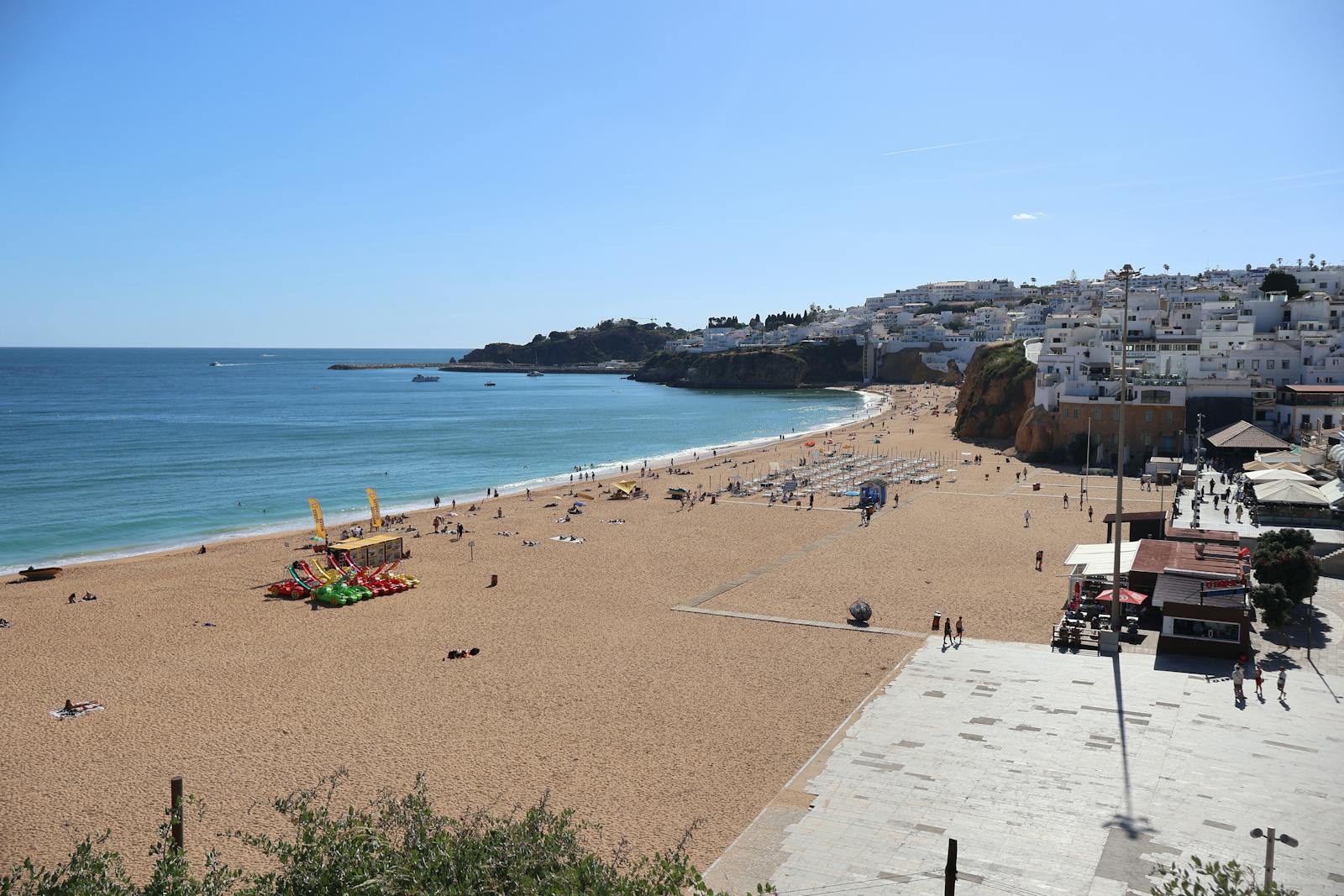
Albufeira and Vilamoura
The busy centre of the Algarve: big beaches, a marina and the smartest golf resorts.
Albufeira and Vilamoura →
Faro and the Ria Formosa
The regional capital, with a walled old town and boats to the lagoon islands.
Faro and the Ria Formosa →
Tavira and the Sotavento
Elegant Tavira, quiet villages and long island beaches towards Spain.
Tavira and the east →Sagres and the Costa Vicentina

Sagres sits on a windswept plateau at the south-western tip of Europe. Its fortress fills a flat headland above sheer cliffs, and nearby Cabo de São Vicente, with its lighthouse, was once thought to be the end of the world: go for sunset.
North of Cape St Vincent the coast turns to face the Atlantic. This is the Costa Vicentina, part of a natural park that protects one of Europe’s wildest shorelines: high cliffs, dunes and big surf beaches such as Arrifana, Amado, Bordeira and Odeceixe, on the border with the Alentejo. The villages are small and low-key, the sea is cooler and the waves are bigger, so it suits surfers, walkers and anyone escaping the resorts.
Lagos and Ponta da Piedade
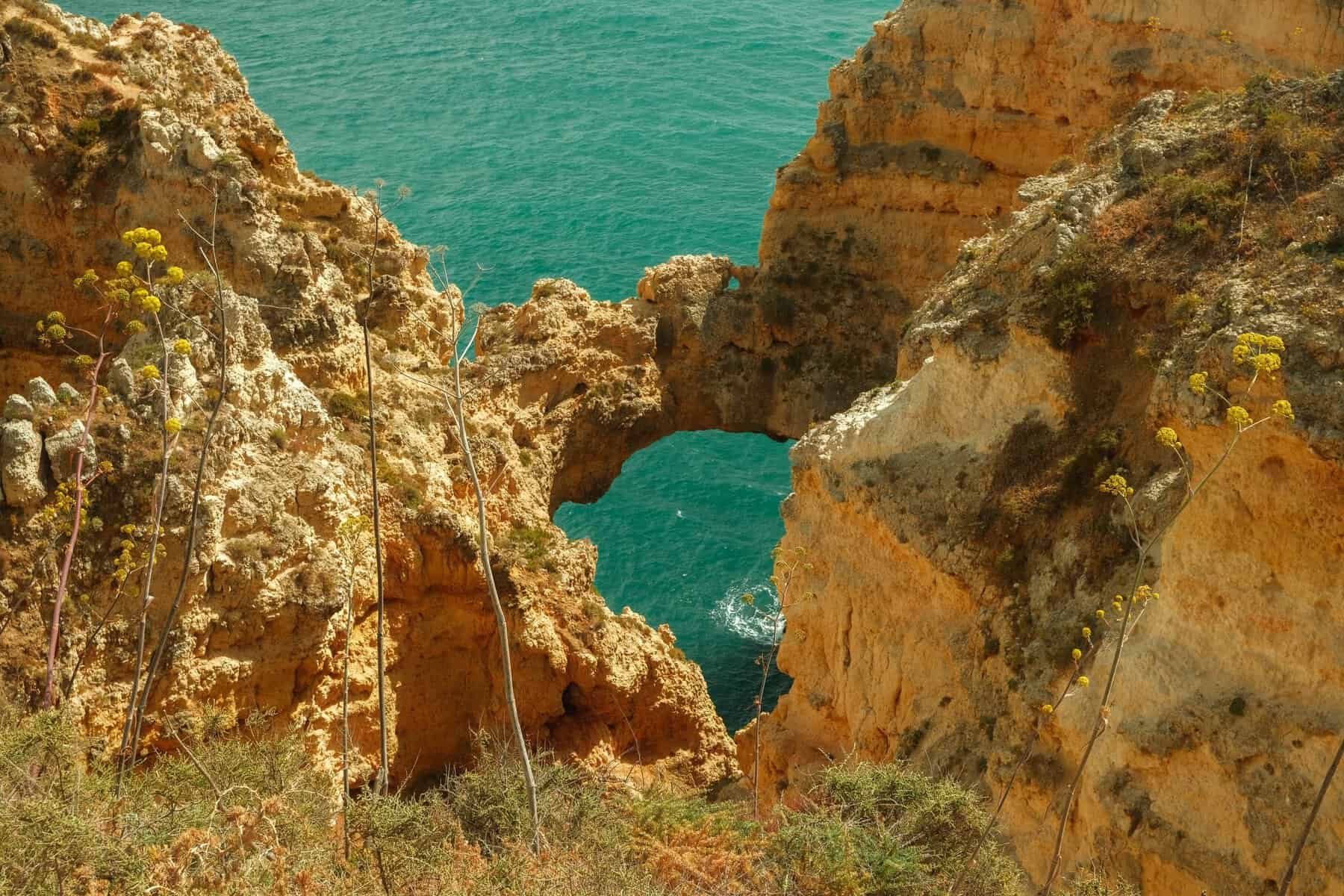
Lagos is the most appealing town in the western Algarve: a walled old town of cobbled lanes, tiled churches, cafés and lively bars, on a river mouth with a marina and a long sandy beach, Meia Praia, across the water.
South of town, a string of small coves sits between golden cliffs and sea stacks: Praia do Camilo, reached down a long wooden staircase, Dona Ana and Pinhão. At the end, Ponta da Piedade is a headland of arches, pillars and grottoes. Walk the clifftop path to the lighthouse, then see it from the water: small boats and guided kayaks leave the marina to nose into the grottoes.

Benagil cave, Carvoeiro and the cliff coast
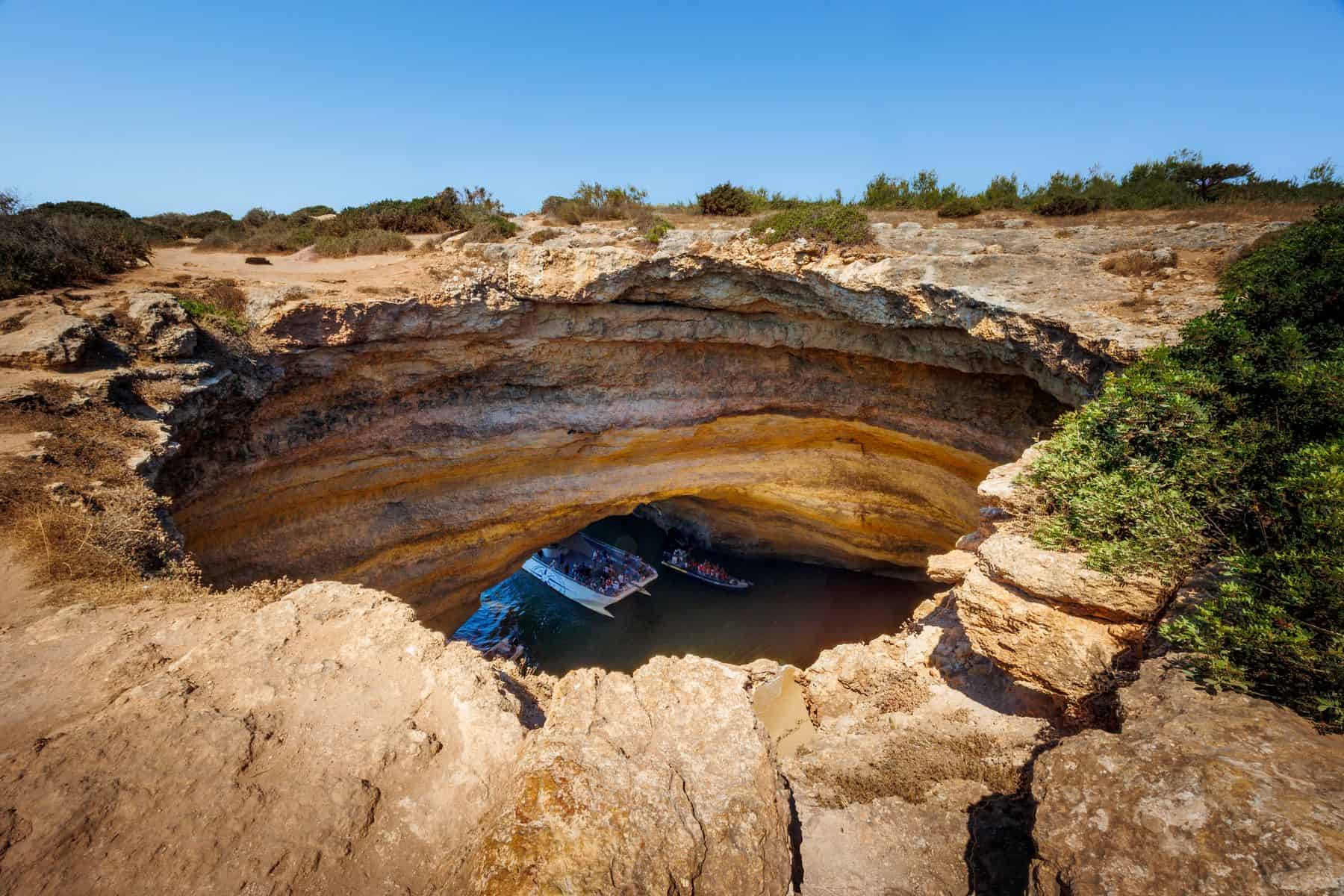
The stretch between Carvoeiro and Armação de Pêra is the Algarve of the postcards: honey-coloured cliffs riddled with caves, arches and hidden beaches. Its star is the Benagil cave, a vast sea cave with a round hole in its roof that lets a shaft of light onto the sand inside.
Visiting Benagil: since August 2024 the rules are strict. You can’t land on the beach inside the cave or swim in, and kayaks can only go in with a guide; the number of boats inside at once and the length of each visit are capped. Boat trips and guided kayak tours leave from Benagil beach, Carvoeiro, Portimão and Armação de Pêra, and are best early in the morning, before it gets busy. You can also look down into the cave through the opening from the clifftop path above.
Carvoeiro itself is a pretty village of white houses around a small beach, with a clifftop boardwalk to the eroded rocks of Algar Seco. Nearby Praia da Marinha, with its sea stacks, is often listed among Europe’s most beautiful beaches.
Albufeira, Vilamoura and the Golden Triangle
Albufeira is the Algarve’s biggest resort. Its old town is a maze of white lanes above the town beach and the fishermen’s beach, while the strip at Oura is all bars and nightlife. Just east, Praia da Falésia runs for several kilometres beneath red and ochre cliffs, one of the most striking beaches on the coast. Vilamoura is a modern resort built around a large marina, with restaurants, boat trips and several golf courses. East again, around Almancil, the villa resorts of Vale do Lobo and Quinta do Lago form the so-called Golden Triangle: pine woods, manicured golf, beach clubs and the edge of the Ria Formosa lagoon. This is the Algarve’s most upmarket area and a favourite with golfers and families.
Faro and the Ria Formosa

Most visitors only see Faro from the airport, but its Cidade Velha (old town) is worth half a day: enter through an 18th-century arch into a walled quarter of cobbled streets around the cathedral, whose tower has views over the lagoon. Don’t miss the eerie chapel of bones behind the Carmo church.
Faro looks out over the Ria Formosa, a natural park of lagoons, salt marshes and channels sheltered from the Atlantic by a chain of sandy barrier islands. It’s a haven for birds, including flamingos, spoonbills and storks, and for shellfish: much of Portugal’s clams and oysters come from here. Take a boat trip through the channels, or a ferry to the car-free islands of Culatra, Armona and Deserta for empty beaches and seafood lunches.
Just east of Faro, the fishing town of Olhão has two red-brick market halls on the waterfront, one for fish and one for fruit and vegetables, at their busiest on Saturday morning.
Tavira and the eastern Algarve
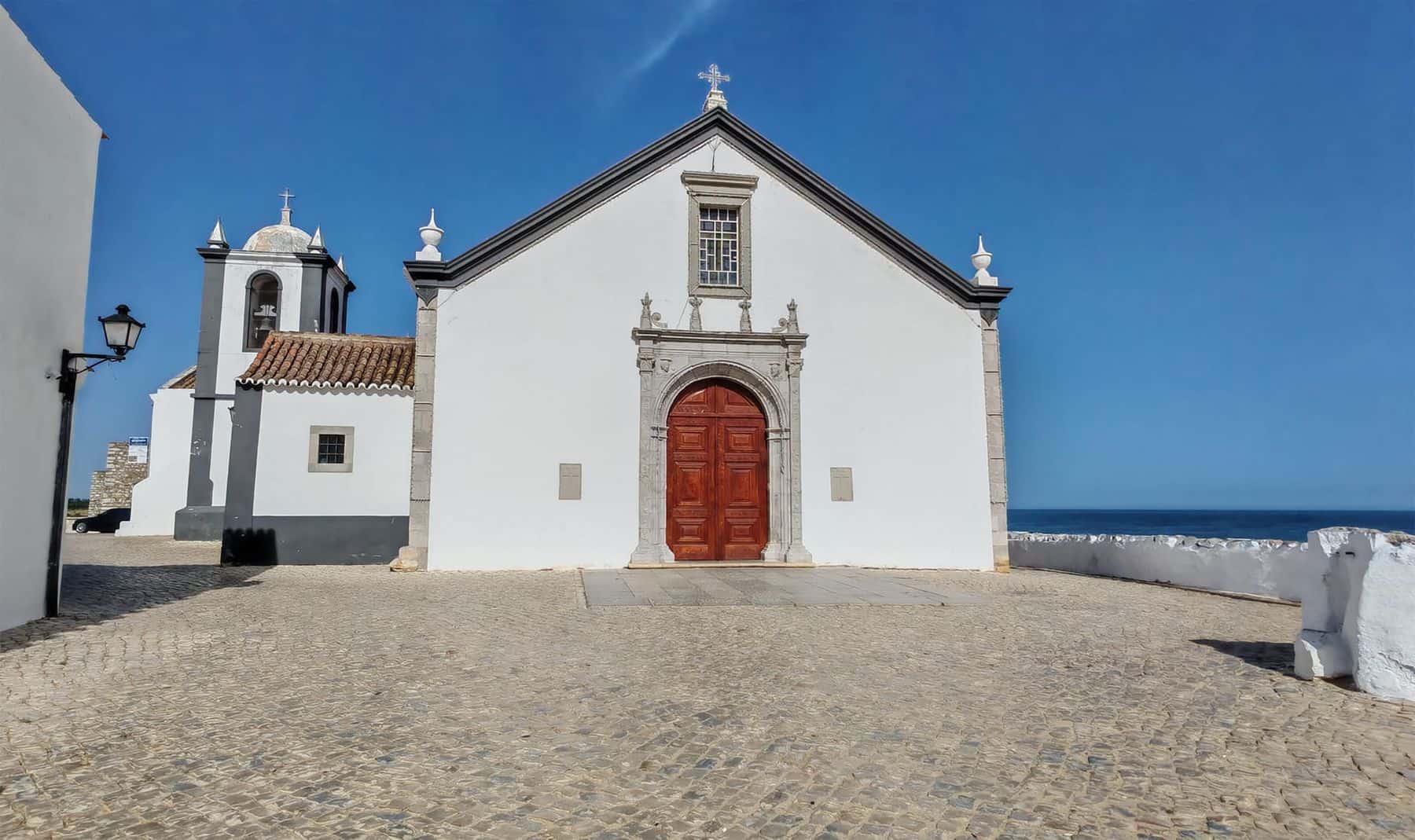
Tavira is the most elegant town in the Algarve: a low-rise place of whitewashed houses with hipped roofs, many churches and a ruined castle, on both banks of the river Gilão, linked by an old stone bridge. It has no beach in town; instead, a small ferry crosses to Ilha de Tavira, an island of dunes and sand stretching for kilometres. Further west, a little train runs across the marsh to Praia do Barril, where old tuna-fishing anchors lie in rows in the dunes.
East of Tavira, the hilltop village of Cacela Velha overlooks the end of the lagoon and one of the loveliest views on the coast. Beyond it, Manta Rota and Monte Gordo have wide, gently shelving beaches with the warmest sea in the Algarve, popular with families.
The border with Spain is the river Guadiana. From here, Seville is about two hours away by road.

Inland: Monchique, Silves and Loulé

Silves was the capital of the Moorish Algarve, and its castle of red sandstone, one of the best preserved in Portugal, still towers over the town and the orange groves around it. Walk the walls, then visit the Gothic cathedral just below.
Loulé is a busy market town with a domed, Moorish-style market hall, a Saturday market and narrow streets of craft workshops.
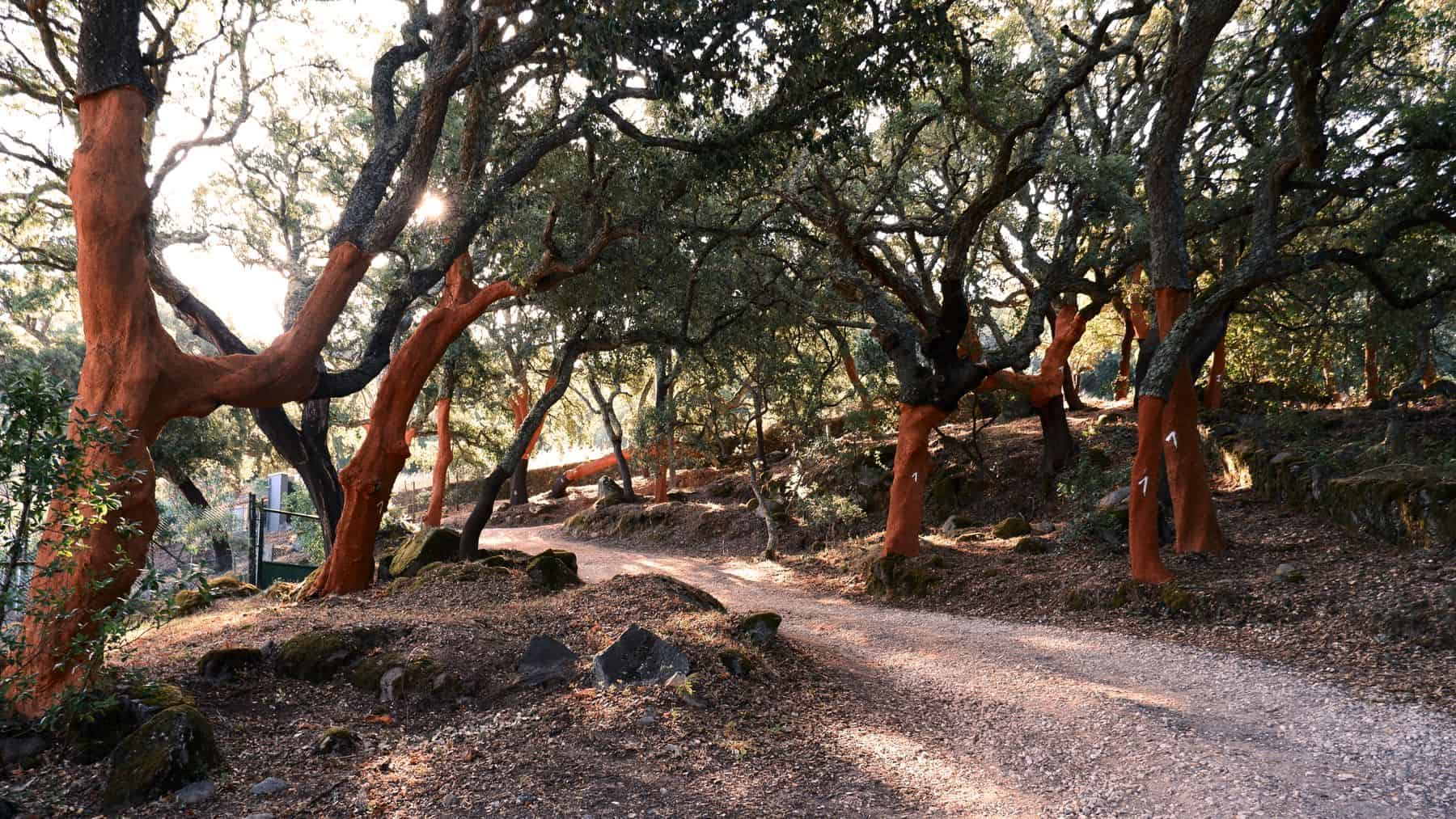
The hills of the Serra de Monchique, about half an hour inland from Portimão, are green and wooded, with cork oaks, chestnuts and eucalyptus. Drive up to Fóia, at 902 m the Algarve’s highest point, for views to the sea on a clear day, and visit the old spa village of Caldas de Monchique. Try medronho, a fierce spirit distilled from strawberry-tree fruit.
The best beaches in the Algarve
| Beach | Where | Why go |
|---|---|---|
| Praia da Marinha | Near Carvoeiro | Sea stacks, clear water, start of the clifftop trail |
| Praia do Camilo | Lagos | A tiny cove down a wooden staircase |
| Praia da Falésia | Between Albufeira and Vilamoura | Kilometres of sand under red cliffs |
| Praia da Rocha | Portimão | A big resort beach with dramatic rocks |
| Odeceixe and Arrifana | West coast | Surf, cliffs and wild scenery |
| Ilha Deserta and Culatra | Faro, by boat | Car-free islands in the Ria Formosa |
| Praia do Barril | Near Tavira | Dunes, the anchor cemetery and calm sea |
| Manta Rota and Monte Gordo | Eastern Algarve | Shallow, warmer water for families |
Walking, including the Seven Hanging Valleys trail

The Seven Hanging Valleys trail (Percurso dos Sete Vales Suspensos) is the Algarve’s most famous walk: about 5.7 km one way along the clifftops from Praia da Marinha to Praia do Vale Centeanes near Carvoeiro, passing above Benagil, sea arches, sinkholes and small coves. Allow two to three hours one way. The path is well marked but has some ups and downs and unfenced edges.
On the west coast, the Rota Vicentina has two long-distance routes: the Fishermen’s Trail, a sandy clifftop path along the Atlantic, and the Historical Way through villages and farmland inland. Both end at Cape St Vincent, and both can be walked in day sections.
When: spring (February to May) is best, with wild flowers and comfortable temperatures; autumn is good too. Avoid the midday heat in summer. Keep well back from cliff edges: the FCDO warns of falling rocks, particularly in the Algarve, and erosion signs must be obeyed.

Golf in the Algarve
The Algarve is one of Europe’s great golf destinations, with dozens of courses within an hour of Faro airport. The biggest concentration is around Vilamoura, Vale do Lobo and Quinta do Lago, where courses run through umbrella pines and alongside the Ria Formosa; there are more around Carvoeiro, Portimão and Lagos in the west, and a quieter cluster near Tavira and Castro Marim in the east. The best months are October to May, when it’s mild and sunny; spring and autumn are peak season for tee times. See our best golf resorts in Europe.
Winter sun in the Algarve
The Algarve is one of the closest reliable winter-sun destinations to the UK. From December to February days are usually bright and mild, with highs of about 16 to 17°C, though nights are cool (around 9 to 11°C) and there are rainy spells. It’s too cold for most people to swim, but perfect for walking, golf, cycling and long seafood lunches, and the towns are quiet and unhurried. In late January and February the almond trees blossom inland. March and November are often milder still. For more ideas see winter sun hotels under 5 hours and where is hot in November.
Food and drink
- Cataplana: a seafood stew of clams, fish or pork cooked and served in a hinged copper pan. Order it for two.
- Grilled sardines in summer, at their best in Portimão, plus grilled fish of the day everywhere on the coast.
- Shellfish from the Ria Formosa: clams (amêijoas), oysters and razor clams.
- Piri-piri chicken: the village of Guia, near Albufeira, is famous for it.
- Sweets made with almonds, figs and carob, including the little marzipan fruits and Dom Rodrigo, egg-yolk threads wrapped in foil.
Best time to visit the Algarve
The Algarve has hot, dry summers and mild, sunnier winters than almost anywhere else in mainland Europe. July and August are hot (around 29 to 30°C), virtually rainless and busy with families; book well ahead. June and September are the sweet spot for a beach holiday: warm, sunny, the sea at its warmest in September and fewer crowds. April, May and October are ideal for walking, golf and sightseeing, warm enough for the beach on many days. November to March is mild winter sun, with most of the year’s rain falling between October and March.
| Month | Faro (east and centre) | Lagos (west) |
|---|---|---|
| Jan | 16°C / 10°C · 30 mm | 16°C / 9°C · 40 mm |
| Feb | 16°C / 10°C · 40 mm | 17°C / 10°C · 40 mm |
| Mar | 18°C / 11°C · 60 mm | 18°C / 11°C · 60 mm |
| Apr | 20°C / 13°C · 45 mm | 20°C / 13°C · 45 mm |
| May | 23°C / 16°C · 30 mm | 24°C / 15°C · 25 mm |
| Jun | 25°C / 18°C · 5 mm | 26°C / 17°C · 10 mm |
| Jul | 29°C / 20°C · 0 mm | 29°C / 19°C · 0 mm |
| Aug | 29°C / 21°C · 0 mm | 30°C / 19°C · 0 mm |
| Sep | 26°C / 19°C · 15 mm | 27°C / 18°C · 20 mm |
| Oct | 23°C / 17°C · 65 mm | 24°C / 16°C · 60 mm |
| Nov | 19°C / 13°C · 65 mm | 19°C / 13°C · 70 mm |
| Dec | 17°C / 11°C · 55 mm | 17°C / 11°C · 60 mm |
Average daily high / low and monthly rainfall, 10-year ERA5 data.
Getting to the Algarve from the UK
Flights: Faro has direct flights from most UK airports, about 2 hours 45 minutes from London and a little longer from the north and Scotland. From Faro airport it’s about 30 minutes to Vilamoura or Tavira, 40 minutes to Albufeira and around an hour to Lagos. By train: direct trains from Lisbon reach the Algarve in about three hours, so you can easily combine Lisbon and the Algarve. From Spain: Seville is about two hours by road from the eastern Algarve, a popular combination. Entry: British visitors can stay in the Schengen area for up to 90 days in any 180; check the FCDO Portugal advice before you go, including passport validity rules.
Getting around
- By car: the easiest way to explore. The A22 motorway runs the length of the coast with electronic tolls, so ask your car hire company for a toll device; the old N125 road runs alongside it.
- By train: a regional line runs from Lagos to Vila Real de Santo António via Portimão, Silves, Albufeira (the station is inland), Loulé, Faro, Olhão and Tavira. It’s slow but scenic, and handy for Faro, Olhão and Tavira.
- By bus: regional buses link the towns, including the west coast villages.
Where to stay in the Algarve

Lagos for a lively town with restaurants, coves and boat trips; Luz, Burgau or Salema for quieter villages nearby; Sagres or the west coast for surf, walking and a wilder feel.
Carvoeiro and the clifftops around Lagoa and Porches for the cliffs, Benagil and the best coastal walking; Albufeira for nightlife and big beaches; Vilamoura, Vale do Lobo and Quinta do Lago for golf, family resorts and the most luxurious hotels.
Tavira for a characterful town and island beaches; Faro for a short stay or winter city break; Cacela, Manta Rota and Monte Gordo for warm sea and families; or a quinta (country house) inland for peace and quiet.
For hotels by area, see where to stay in the Algarve, the best luxury hotels in the Algarve and the best family hotels in the Algarve, or browse our Algarve holidays.
How many days? Sample routes
A week in one base is the classic Algarve holiday, but the coast is easy to split between west and east, or to combine with Lisbon or Seville.
West and east
- Lagos (4 nights)
- Tavira (3)
Coves, Ponta da Piedade, Sagres and Benagil from Lagos; the Ria Formosa, island beaches and Faro from Tavira.
Lisbon and the Algarve
- Lisbon (3 nights)
- Costa Vicentina (2)
- Carvoeiro (3)
- Tavira (2)
City, wild coast, cliffs and lagoons; train or drive south from Lisbon.
Seville and the Algarve
- Seville (3 nights)
- Tavira (3)
- Lagos (4)
Andalucía and the Algarve, about two hours apart by road. Lovely in spring and autumn.
Ways to see the Algarve with us
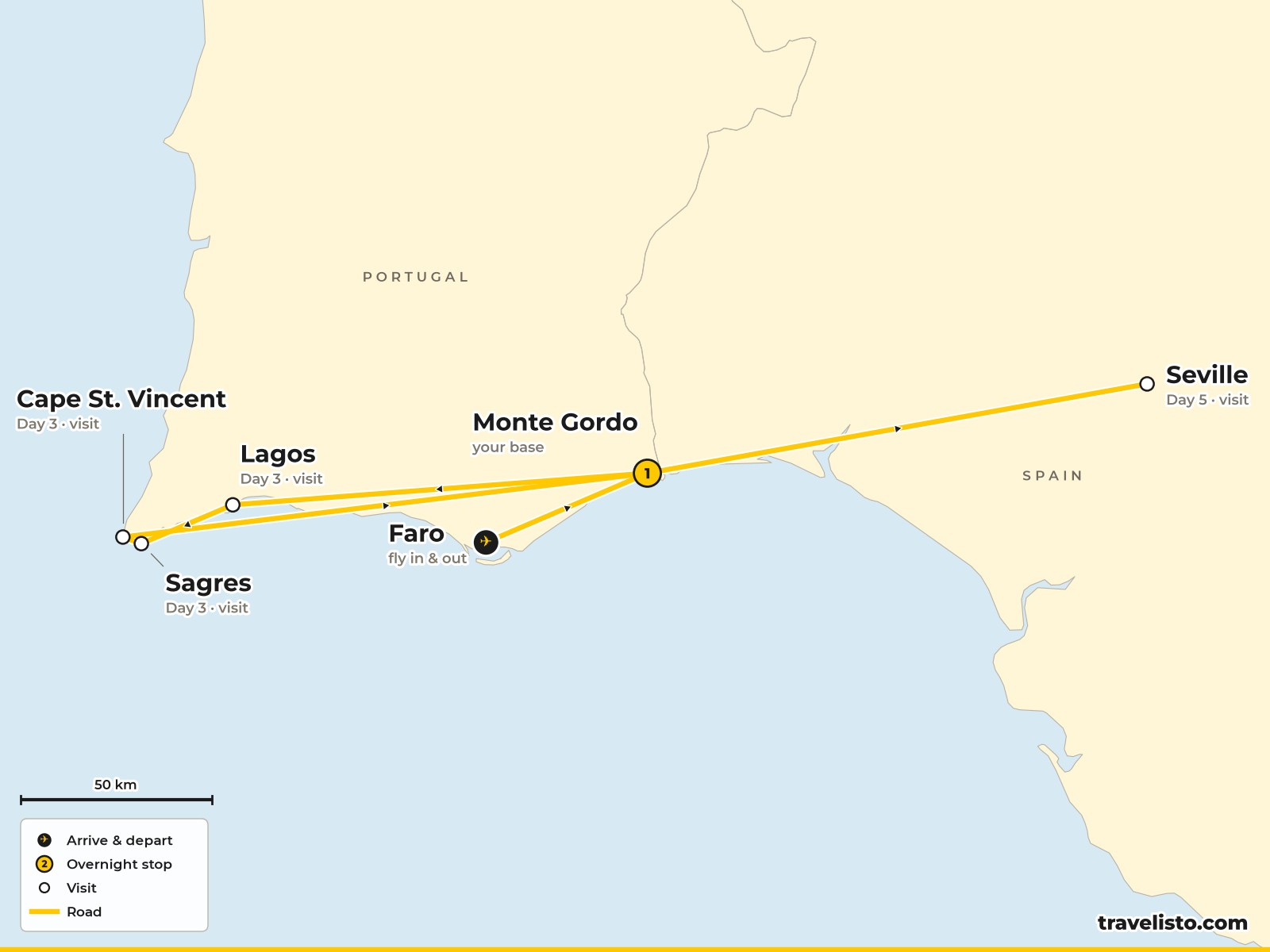
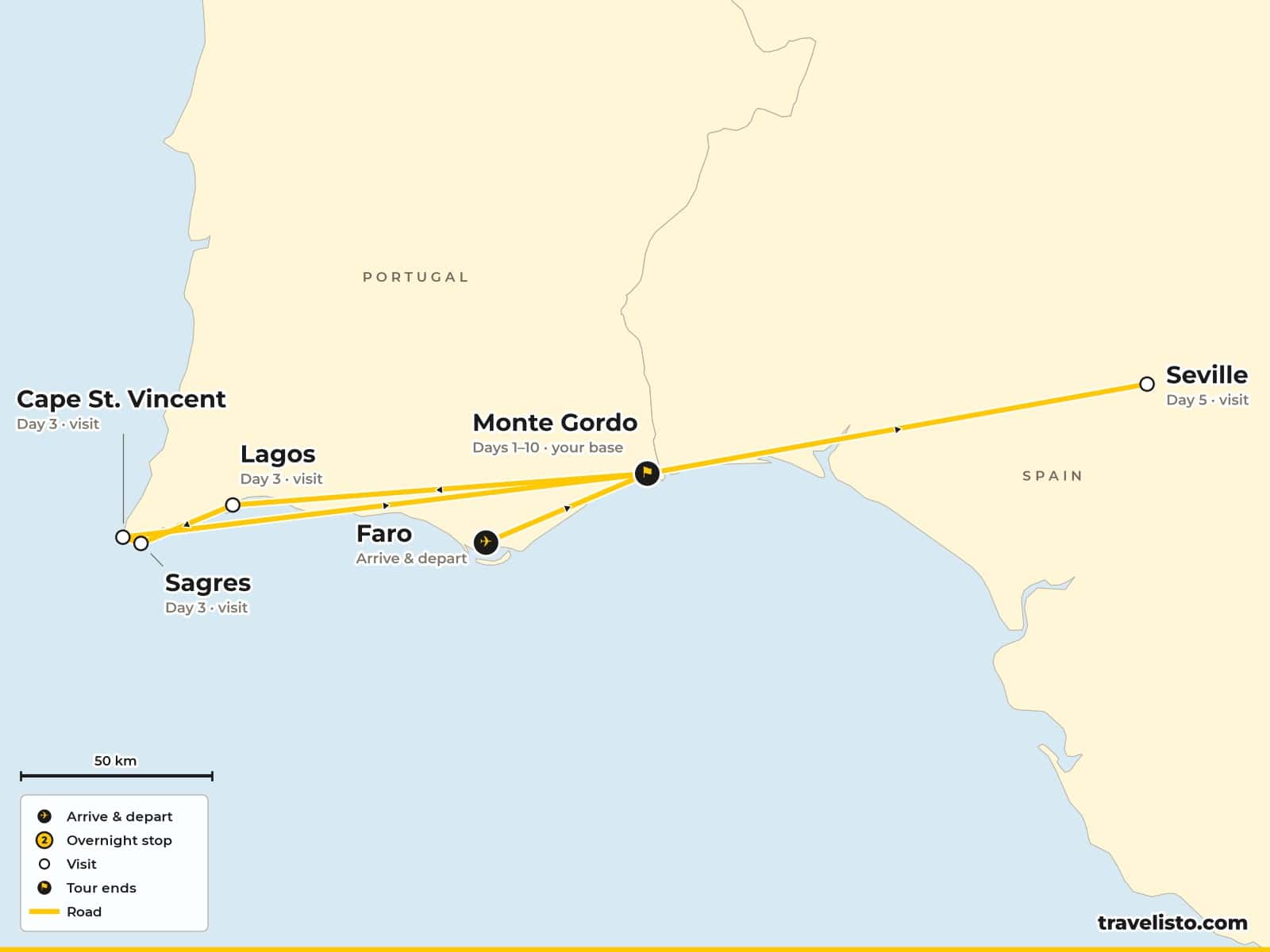
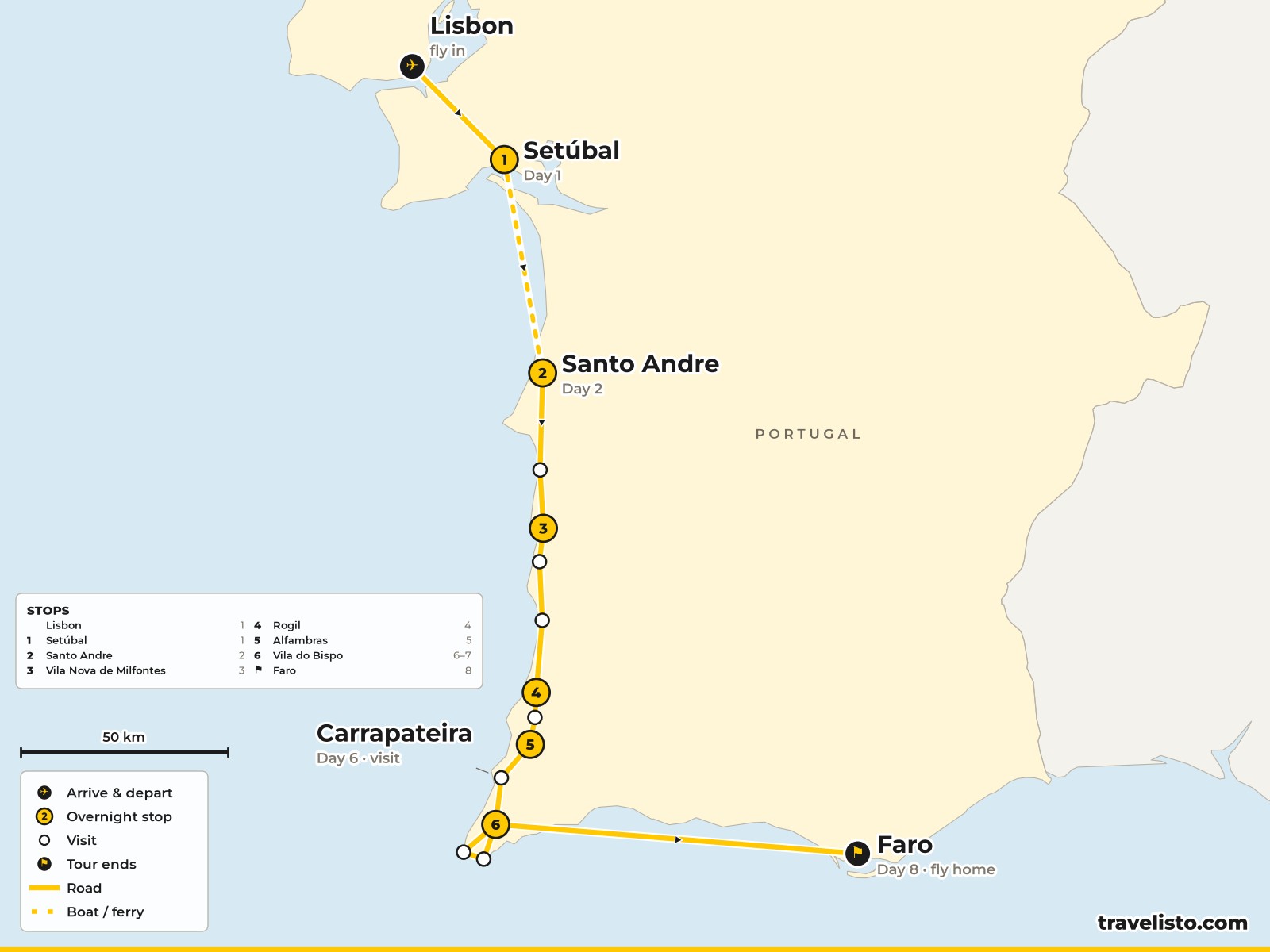
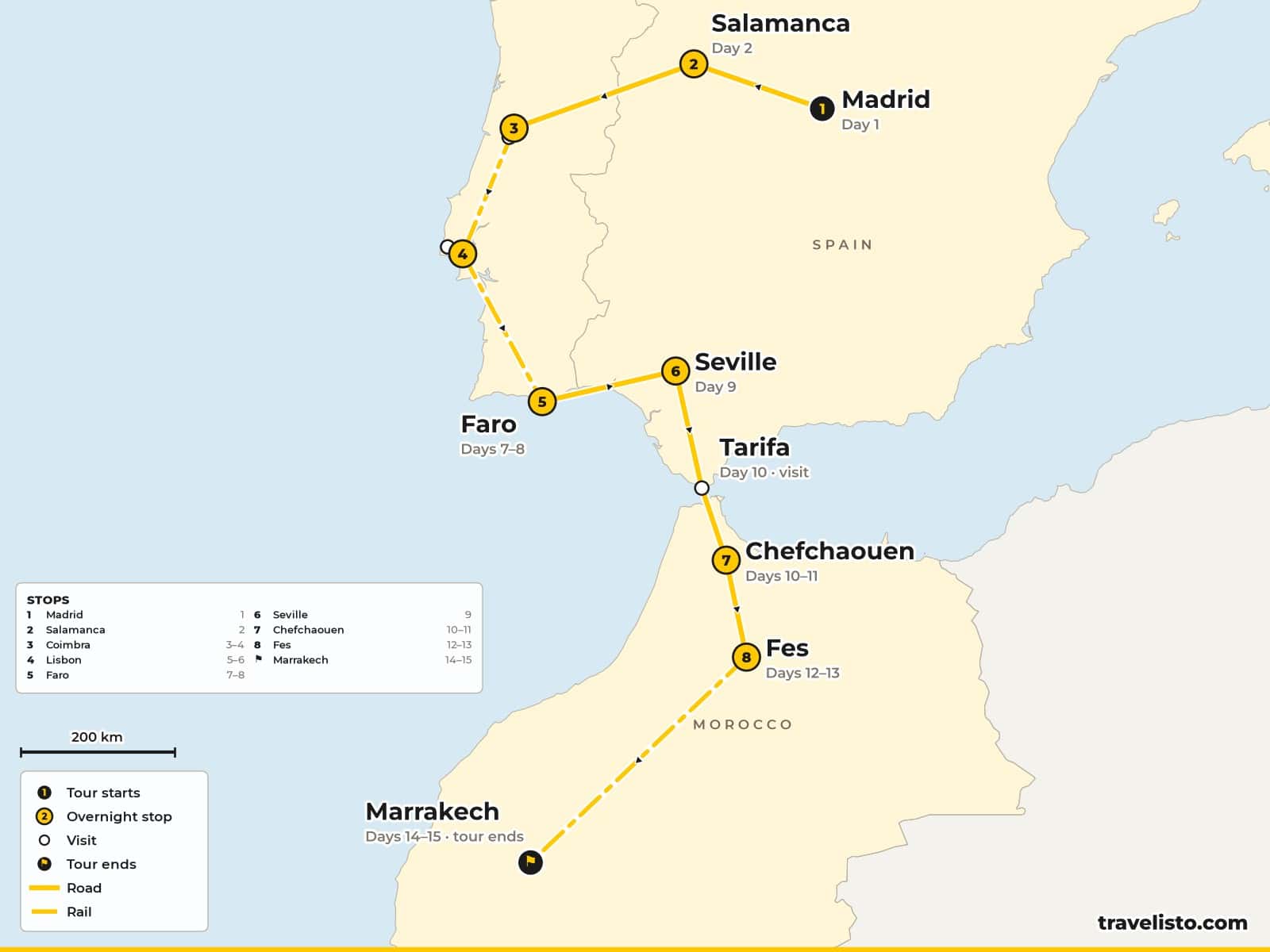
Our two Monte Gordo holidays include flights and a hotel by the beach in the eastern Algarve, with excursions to places like Tavira, Faro, Lagos and Sagres and a day in Seville; the 11-day version is timed for winter sun. The Rota Vicentina ride follows the wild west coast south to Sagres with your bags moved for you. Prefer to choose your own base? A tailor-made Algarve holiday can combine villas, golf, walking and Lisbon or Seville.
Practical tips
- Beach safety: follow the flags on supervised beaches (red means no swimming, yellow means paddling only), watch for rip currents and don’t sit directly under cliffs, where rocks fall.
- Wildfires: the risk is highest from April to October; follow local advice and road closures.
- Book ahead for July and August, Easter and the main golf seasons, and for Benagil boat trips in summer.
- Driving: sort out a toll device with your hire car, as the A22 has no toll booths.
Frequently asked questions
Which part of the Algarve is best?
For cliffs, coves and caves, choose the west and centre: Lagos, Carvoeiro and the coast around Benagil. For long sandy beaches, calmer, warmer sea and traditional towns, choose the east around Tavira. For golf and upmarket resorts, choose Vilamoura, Vale do Lobo and Quinta do Lago.
Can you go inside Benagil cave?
Only by boat or guided kayak. Since August 2024 you can't land on the beach inside or swim in, unguided kayak hire is banned in the caves area, and boat numbers and visit times are limited. You can also look down into it from the clifftop path.
How long is the Seven Hanging Valleys trail?
About 5.7 km one way, from Praia da Marinha to Praia do Vale Centeanes near Carvoeiro, or around 11.5 km there and back. Allow two to three hours each way.
Is the Algarve warm in winter?
Mild rather than hot: from December to February daytime highs are about 16 to 17°C, with plenty of sunshine but cool evenings and some rainy days. It's ideal for walking, golf and sightseeing, but too cool for most people to swim.
What is the best time to visit the Algarve?
May, June, September and October for warm weather without the summer crowds. July and August are hottest and busiest. November to March is mild winter sun.
How long is the flight from the UK to the Algarve?
About 2 hours 45 minutes from London to Faro, with direct flights from most UK airports. Portugal is on the same time as the UK.
Keep planning
- Algarve holidays
- Where to stay in the Algarve
- Best luxury hotels in the Algarve
- Best family hotels in the Algarve
- Portugal holiday guide
- Madeira guide
- Douro Valley guide
- Things to do in Seville
- Tours of Portugal
- Portugal holidays
Plan your Algarve holiday with a Travel Designer
Tell us when you’d like to go and we’ll match you with the right part of the coast and the right hotel or villa, with flights, transfers or car hire, golf or walking, in one ATOL-protected booking.
Make an enquiry Portugal holidays