Aruba in brief
- A dry, sunny Dutch Caribbean island off Venezuela, outside the main hurricane belt.
- Long white beaches on the calm west coast, led by Eagle Beach and Palm Beach.
- No direct UK flights: usually via Amsterdam. Complete the online ED card before you fly.
- Good all year: peak season January to April; showers October to December.
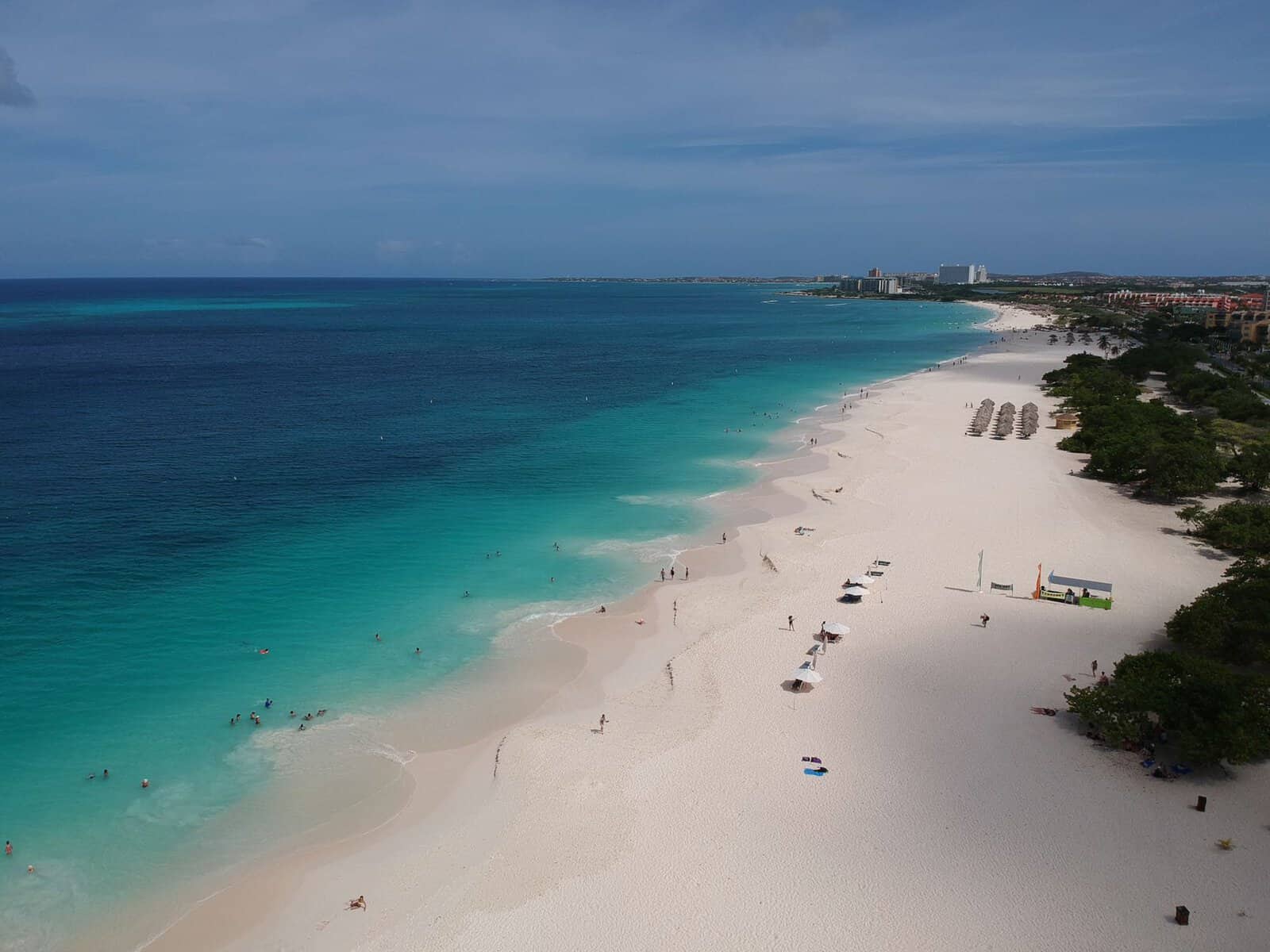
Aruba is a small, dry, sunny island in the southern Caribbean, just off the coast of Venezuela, and one of the most reliable winter-sun destinations in the region. It has long white beaches on a calm turquoise sea along one side, a wild, wave-battered desert coast of cactus and limestone on the other, and a steady trade wind that keeps the heat comfortable all year. It sits outside the main hurricane belt, it is part of the Kingdom of the Netherlands, and it is easy, safe and welcoming, which is why so many people go back. This guide covers where Aruba is, the best beaches from Eagle Beach to Baby Beach, the best things to do, food, the best time to visit, how to get there from the UK, where to stay by area, and how to add Curaçao for a two-island trip.
Where is Aruba?
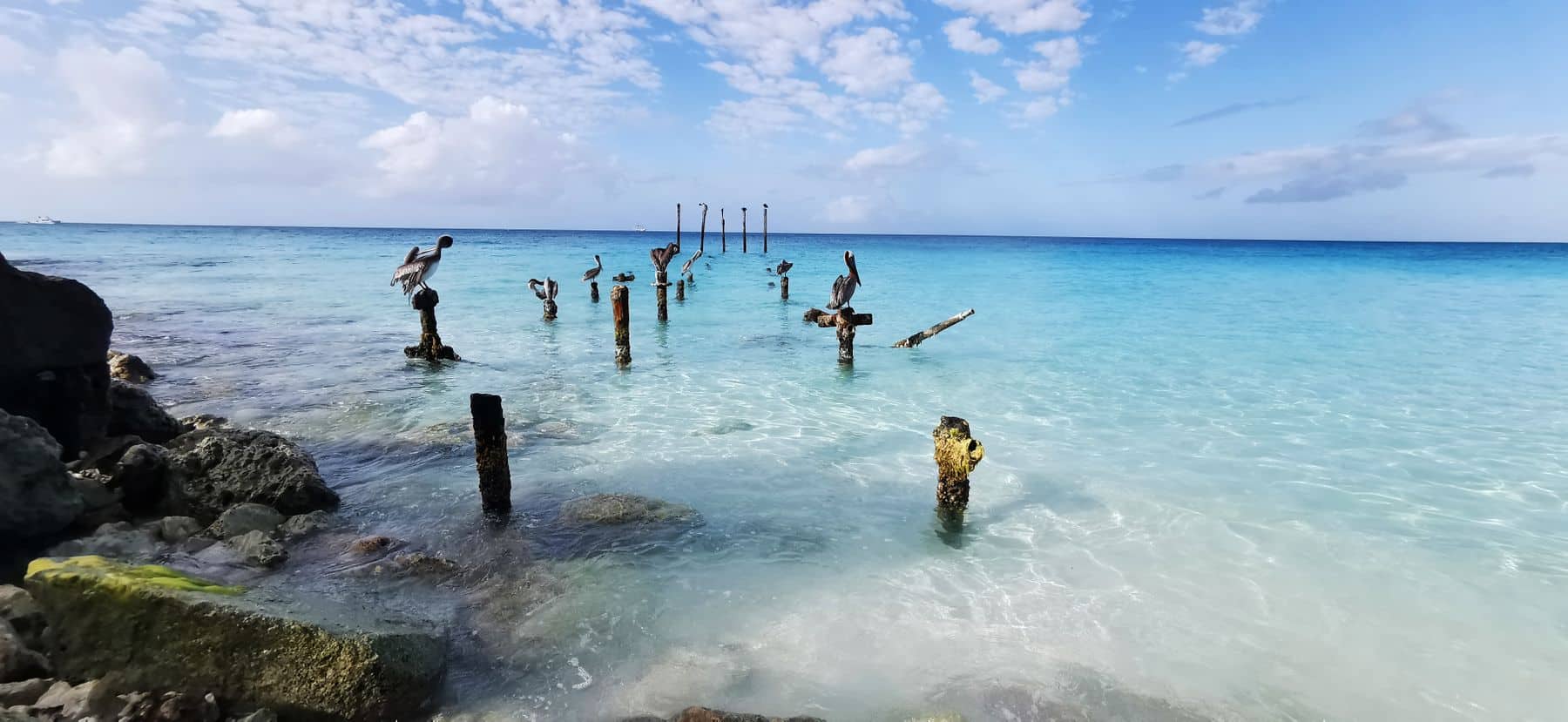
Aruba is the westernmost of the ABC islands (Aruba, Bonaire and Curaçao), in the far south of the Caribbean, about 29 km north of Venezuela’s Paraguaná peninsula. Curaçao is about 80 km to the east, a short flight away. It is a long way south of the main Caribbean island chain, and that is the key to its weather.
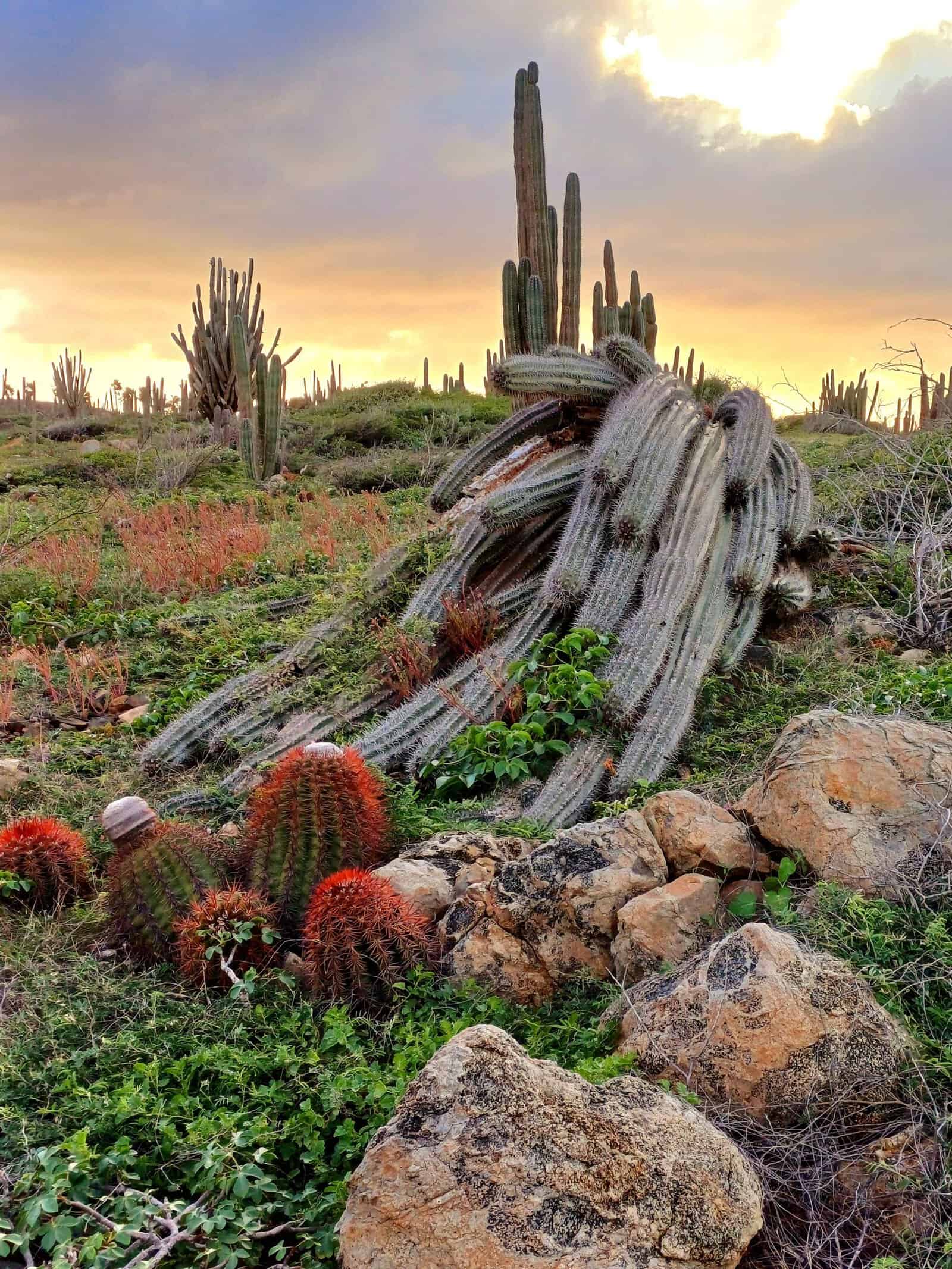
The island is small, about 30 km from end to end and less than 10 km wide, and it is flat and dry, with scrub, cactus, boulders and a few low hills rather than rainforest. The calm, sheltered west and south coasts have the beaches and almost all the hotels; the north-east coast, facing the trade winds, is rugged, rocky and largely empty.
Aruba is a constituent country of the Kingdom of the Netherlands, with its own government. The official languages are Papiamento and Dutch, but almost everyone speaks English and Spanish too. The capital is Oranjestad, on the south-west coast.
Outside the hurricane belt: Aruba lies south of the usual track of Atlantic hurricanes. The Caribbean hurricane season still runs from June to November, and the FCDO notes that occasional tropical storms do reach the island, but most hurricanes pass well to the north and there is no record of a recent major hurricane here. That makes Aruba one of the safest Caribbean choices for a late-summer or autumn holiday.
The best beaches in Aruba
All of Aruba’s beaches are public. The best swimming beaches line the sheltered west and south coasts, where the water is usually calm, clear and shallow. The north-east coast is beautiful but rough: enjoy it from the shore, not in the water.

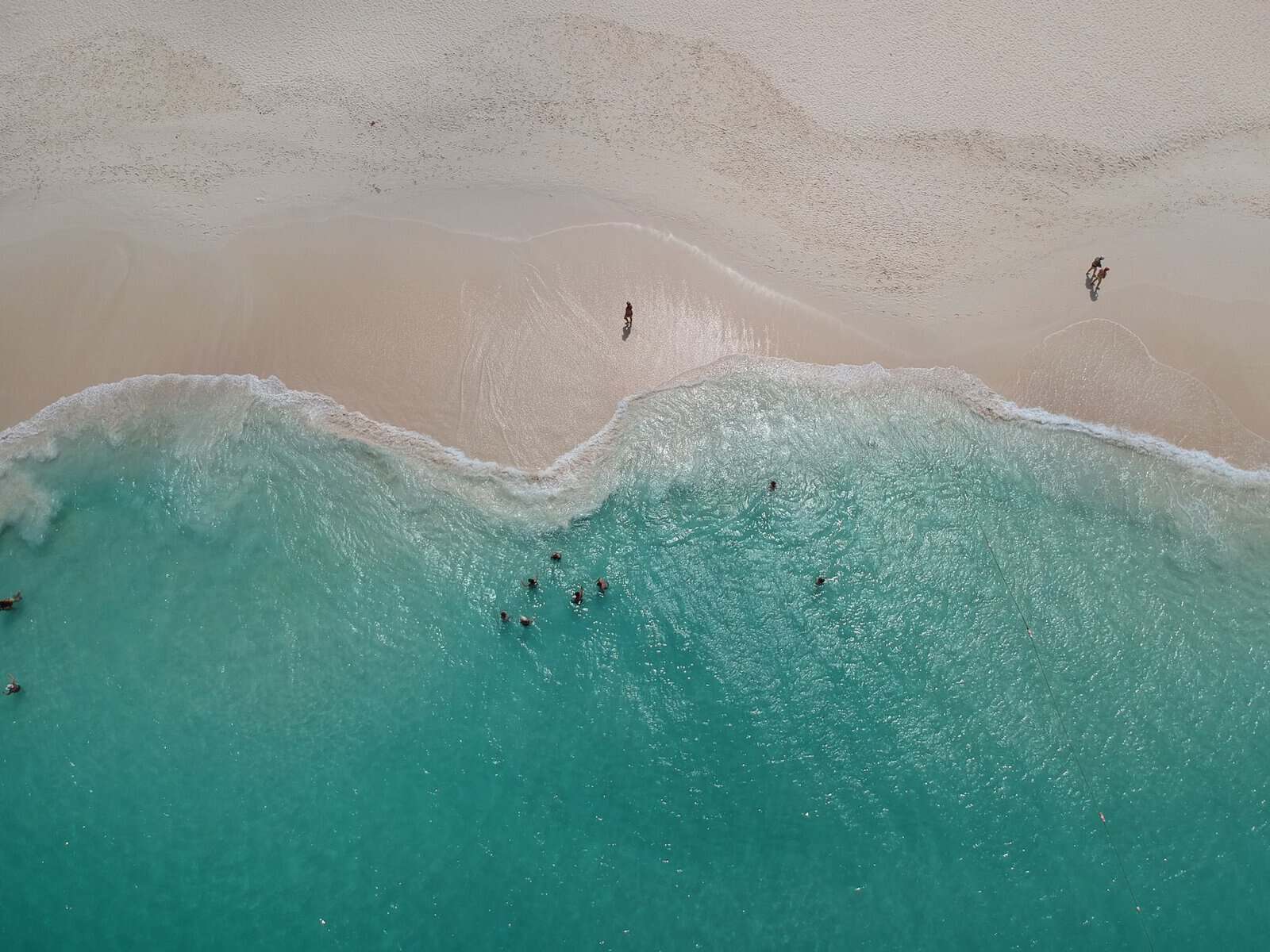
Eagle Beach is one of the widest, softest beaches in the Caribbean, regularly voted among the best in the world. It is backed by low-rise hotels set behind the road, so the sand feels open and uncrowded. Look for the famous wind-bent trees: the ones on the beach are mostly fofoti trees, while the true divi-divi, Aruba’s symbol, grows all over the island, always leaning south-west with the wind. Sea turtles nest here between about March and November.
Palm Beach, just to the north, is the busy one: a long strip of high-rise resorts, piers, beach bars and water sports, with calm water and plenty going on day and night.
Arashi, Malmok and Boca Catalina, towards the northern tip, are small, quieter beaches with rocky shallows and some of the best snorkelling straight from the shore.
| Beach | Where | Best for |
|---|---|---|
| Eagle Beach | West coast | Wide, soft sand; space; sunsets |
| Palm Beach | West coast | Water sports, beach bars, lively |
| Arashi and Malmok | North-west | Snorkelling, quiet |
| Boca Catalina | North-west | Snorkelling from the shore |
| Mangel Halto | South coast | Mangroves, snorkelling, kayaks |
| Baby Beach | South-east tip | Shallow, sheltered lagoon; families |
| Surfside and Druif | Near Oranjestad | Handy, local, calm |

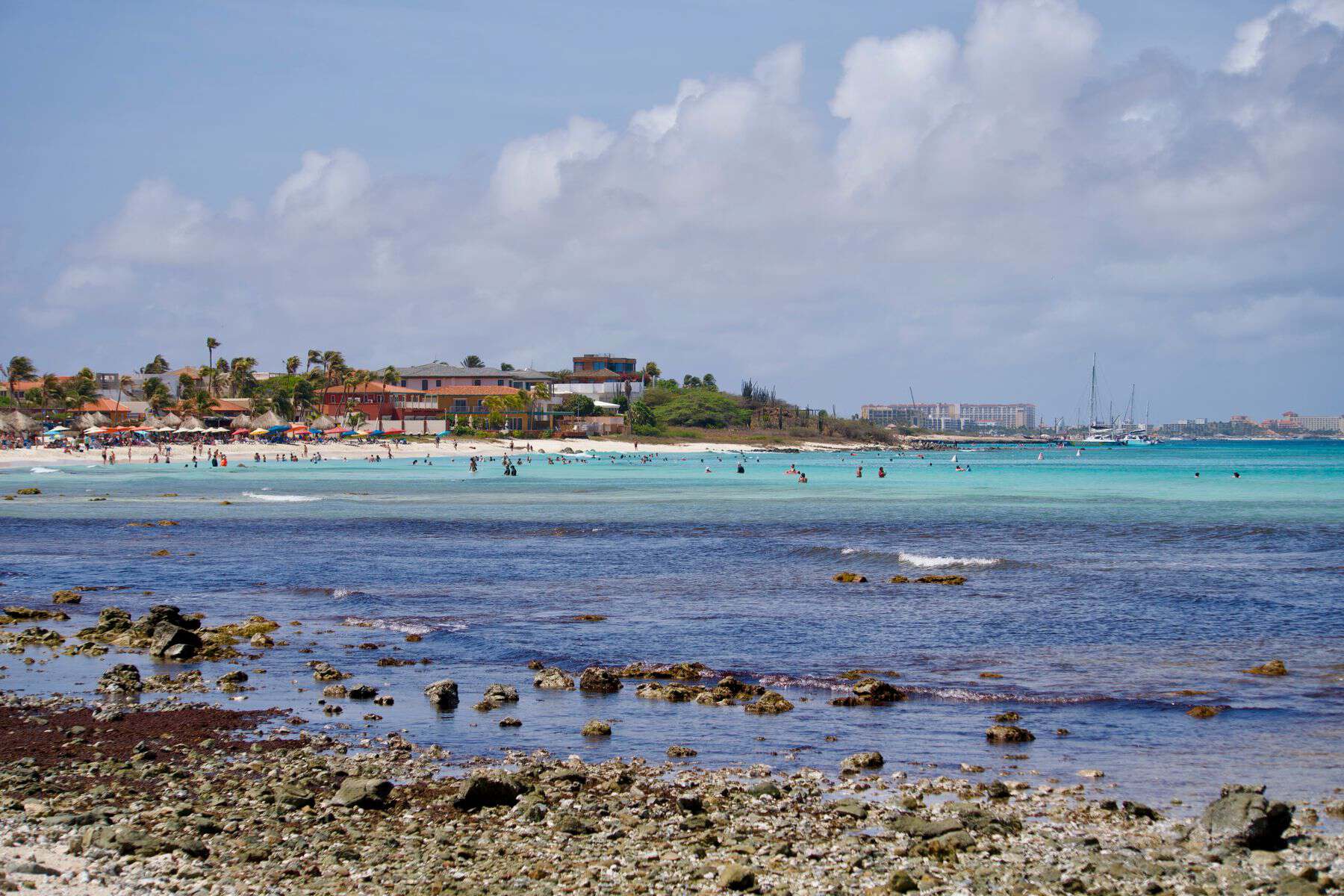
In the south: Mangel Halto is a small beach among mangroves near Pos Chiquito, with a reef close to shore for snorkelling and kayaking. Baby Beach, at the far south-eastern tip near San Nicolas, is a shallow, sheltered lagoon, ideal for young children; its neighbour Rodger’s Beach is quieter still. Bring water shoes for the rocky entries on the smaller beaches.
Things to do in Aruba

Arikok National Park
A protected wilderness of cactus, limestone hills and wild coves covering nearly a fifth of the island in the east. Walk or drive the trails, see Amerindian rock drawings in Fontein Cave and the light-filled chambers of Quadiriki Cave, and reach Conchi, the natural pool, a sheltered rock basin on the coast, by 4×4, on horseback or on foot. Go early, carry plenty of water and use proper shoes.

The north coast
Drive the windward coast past rock arches and blowholes to the ruins of the 19th-century Bushiribana gold mill. Aruba’s best-known Natural Bridge collapsed in 2005, but smaller arches remain. Further north is the little yellow Alto Vista Chapel, on the site of the island’s first Catholic church, and the California Lighthouse, named after a ship wrecked nearby, with views over the dunes and the western beaches.

Casibari and Ayo rock formations
Piles of huge, smooth boulders rise out of the scrub in the middle of the island. Paths and steps take you up through Casibari for views across Aruba; at Ayo the rocks hide more ancient drawings. Watch for the blue Aruban whiptail lizard, found only here, and climb Hooiberg, the island’s distinctive cone-shaped hill, if you have the legs.
Oranjestad
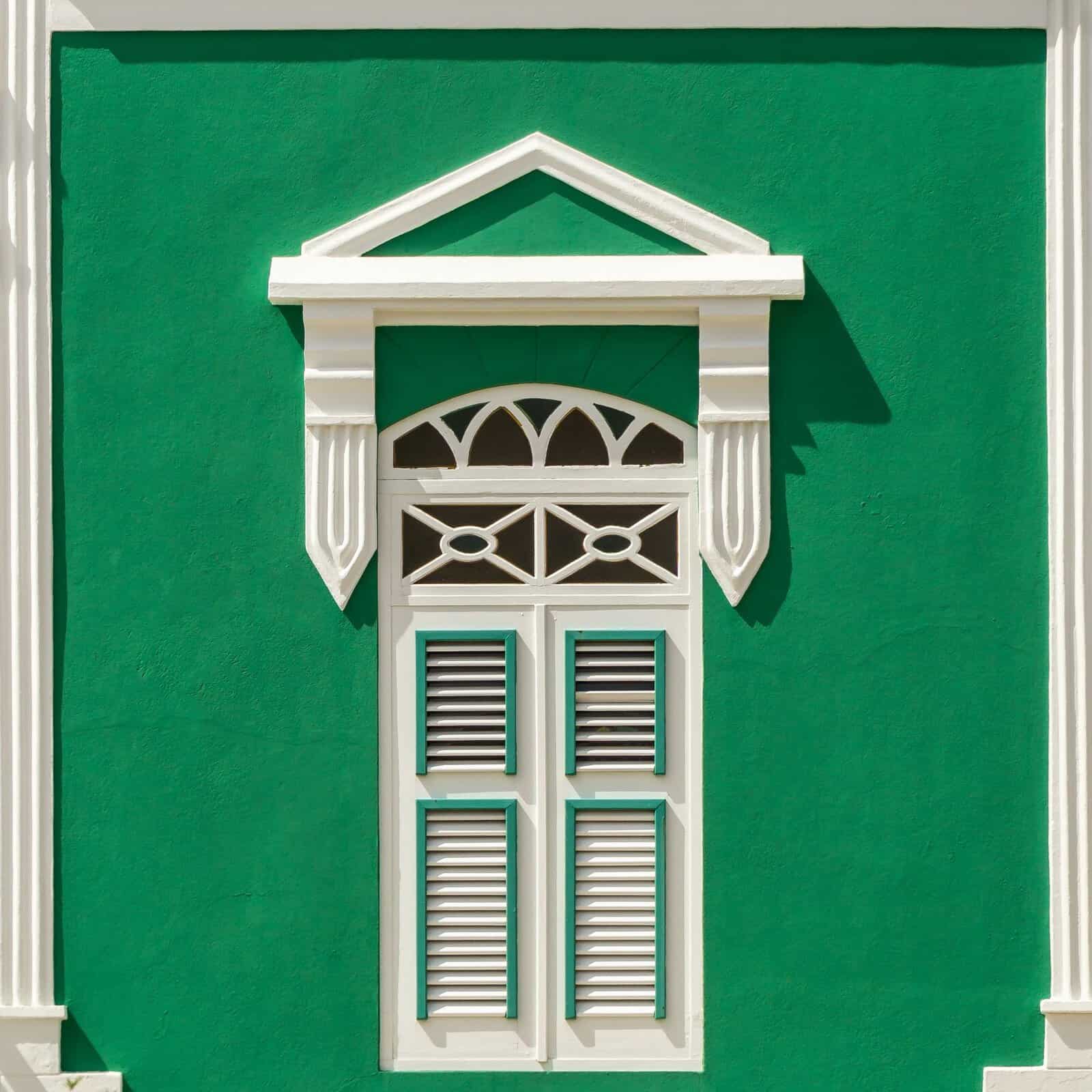
Aruba’s small capital has pastel Dutch colonial buildings, shopping streets and a busy waterfront marina. Visit Fort Zoutman, the island’s oldest building, with the Willem III tower and the historical museum, and the archaeological museum, which tells the story of the island’s first peoples.

The Dutch windmill
A real 19th-century windmill, shipped from the Netherlands and rebuilt near Palm Beach: one of the odder reminders of Aruba’s Dutch connection, and an easy stop on the way to the north coast.
San Nicolas, Aruba’s second town in the south-east, grew up around the old oil refinery and has reinvented itself as an open-air gallery, with huge murals by local and international artists on buildings all over the centre. Combine it with Baby Beach.
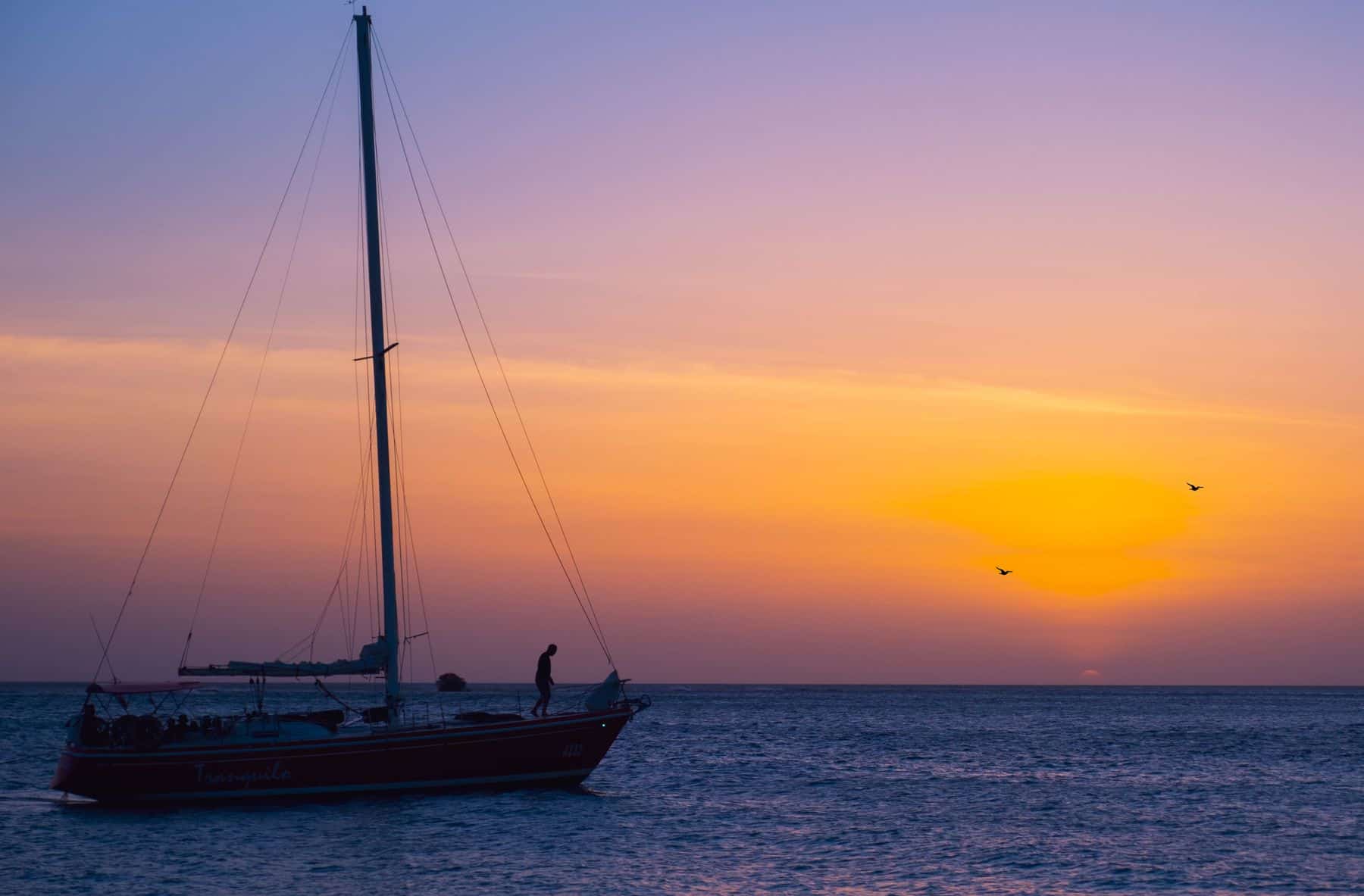
On the water: Aruba’s constant breeze makes it one of the Caribbean’s best places for windsurfing and kitesurfing, especially along the north-west beaches around Fisherman’s Huts. Divers and snorkellers head for the wreck of the Antilla, a German cargo ship scuttled in 1940 off Malmok and one of the largest wrecks in the Caribbean, plus reefs at Mangel Halto and Boca Catalina. Sunset sails, catamaran snorkelling trips and glass-bottom boats leave from the west-coast piers.
Festivals: Carnival is the year’s big celebration, with weeks of events in January and February leading up to the Grand Parade in Oranjestad before Lent. Aruba also marks its own flag and anthem day on 18 March.
Food and drink in Aruba
Aruban food mixes Dutch, Caribbean, South American and Indonesian influences. Try keshi yena, a round of cheese stuffed with spiced chicken or beef and baked; pastechi, crisp savoury pastries for breakfast; stoba, a slow-cooked stew of goat or beef; and fresh fish such as wahoo, mahi-mahi and red snapper, often with funchi (cornmeal) and pan bati, a slightly sweet pancake. There are excellent restaurants for a small island, from fine dining to fish shacks on the beach and local snack bars. The tap water is desalinated sea water and safe to drink.
Best time to visit Aruba
Aruba is good all year. Daytime highs stay around 28 to 31°C, the sea is about 26 to 29°C, and the island gets very little rain: it is one of the driest places in the Caribbean. January to April is the peak season, with dry, sunny, breezy weather when the UK is at its gloomiest; it is also the busiest and most expensive time, especially at Christmas, New Year, February half-term and Easter. May to September is hotter, still dry, and quieter, with the strongest trade winds in June and July, perfect for windsurfing. October to December is the short rainy season, but that means passing showers rather than days of rain. Because Aruba sits outside the main hurricane belt, the June to November hurricane season matters much less here than on most Caribbean islands.
| Month | Aruba | Curaçao |
|---|---|---|
| Jan | 28°C / 25°C · 35 mm | 28°C / 25°C · 35 mm |
| Feb | 28°C / 25°C · 25 mm | 28°C / 25°C · 30 mm |
| Mar | 28°C / 25°C · 25 mm | 29°C / 25°C · 30 mm |
| Apr | 29°C / 26°C · 15 mm | 29°C / 26°C · 15 mm |
| May | 30°C / 26°C · 15 mm | 30°C / 26°C · 25 mm |
| Jun | 30°C / 26°C · 25 mm | 30°C / 26°C · 35 mm |
| Jul | 30°C / 26°C · 30 mm | 30°C / 26°C · 40 mm |
| Aug | 30°C / 27°C · 30 mm | 31°C / 27°C · 35 mm |
| Sep | 31°C / 27°C · 40 mm | 31°C / 27°C · 45 mm |
| Oct | 30°C / 27°C · 65 mm | 30°C / 27°C · 65 mm |
| Nov | 29°C / 26°C · 110 mm | 29°C / 26°C · 115 mm |
| Dec | 29°C / 26°C · 55 mm | 29°C / 26°C · 60 mm |
Average daily high / low and monthly rainfall, 10-year ERA5 data for grid points by Oranjestad and Willemstad. The data smooths out the heat of the day, so beaches feel a degree or two warmer.

How to get to Aruba from the UK
There are no direct flights from the UK to Aruba. The usual route is via Amsterdam: a short hop from London or a regional UK airport, then a direct flight of about 10 hours to Aruba’s Queen Beatrix International Airport, just outside Oranjestad. Allow around 14 to 16 hours door to door, depending on your connection. You can also fly via the United States, which needs an ESTA even if you are only changing planes; or combine Aruba with Curaçao, which is a flight of about half an hour away. Aruba is also a popular stop on southern Caribbean cruises: see our guide to Caribbean cruises from the UK.
The ED card: every visitor must complete Aruba’s online embarkation/disembarkation (ED) card in the 7 days before arrival, and airlines ask for proof of approval before you board, so do it before you leave home. It is needed even if you are only transiting Aruba.
Getting around
Aruba is easy to explore. Hire a car for a few days: roads are good and you drive on the right. The FCDO says you need an international driving permit as well as your UK licence, and the permit can only be bought in the UK, so get it before you go. For Arikok and the north coast, a 4×4 or a guided jeep tour is the best way in. Public buses run regularly between Oranjestad, the hotel beaches and San Nicolas. Taxis have no meters, so agree the fare before you set off. Nowhere on the island is much more than 30 to 40 minutes’ drive away.
Where to stay in Aruba
Almost all of Aruba’s hotels are on the calm west coast, between Oranjestad and the California Lighthouse. Choose by the kind of beach and atmosphere you want:
- Palm Beach for high-rise resorts, all-inclusive options, a choice of restaurants, bars and casinos, and plenty of water sports. Lively and convenient.
- Eagle Beach for low-rise hotels and boutique resorts across the road from a huge, uncrowded beach. Quieter, and a favourite with couples.
- Malmok and the north-west for villas and small apartments near the snorkelling beaches and windsurf spots.
- Oranjestad for town hotels near the marina, shops and restaurants.
- The south coast around Savaneta and Pos Chiquito for a handful of small, peaceful hotels and guesthouses by the mangroves.

All-inclusive in Aruba: there are all-inclusive resorts on both Palm Beach and Eagle Beach, but Aruba is also one of the easiest Caribbean islands to eat out on, so half board or room only plus a hire car is a good alternative. Tell us how you like to holiday and we’ll match the right beach and hotel.
Aruba, Curaçao or Bonaire?
The three ABC islands share the same dry climate, Dutch links and position outside the hurricane belt, but they feel quite different:
| Aruba | Curaçao | Bonaire | |
|---|---|---|---|
| Feel | Polished beach resort island | Colourful capital, varied and local | Quiet, low-key, nature first |
| Beaches | Long, wide white-sand beaches | Small coves with cliffs | Few sandy beaches |
| Best for | Beach holidays, families, couples | Culture, food, snorkelling, coves | Diving and snorkelling |
| Hotels | Large resorts and boutique hotels | Boutique and mid-sized hotels, villas | Small hotels and dive lodges |
| From Aruba | – | About 30 minutes by air | A short flight, often via Curaçao |
For culture, food and coves, read our Curaçao holiday guide.
Sample trips
Aruba beach week
- Fly via Amsterdam
- Aruba (7 nights) on Eagle or Palm Beach
- A day in Arikok and on the north coast
A simple, sunny week, with a jeep day and a sunset sail.
Aruba and Curaçao
- Aruba (6 nights)
- Short flight to Curaçao
- Curaçao (4)
Big beaches first, then Willemstad’s colourful waterfront and the coves of the west.
Amsterdam and the ABC islands
- Amsterdam (2 nights)
- Aruba (6)
- Bonaire (4)
Break the journey in Amsterdam, then add Bonaire for world-class diving and snorkelling.
Weighing up other islands? See our Caribbean islands guide, or compare Aruba with the Cayman Islands, Barbados and Anguilla.
Practical tips
- Entry: British visitors can stay up to 3 months without a visa; your passport must be valid for your whole stay. Complete the online ED card within 7 days of arrival. Check the FCDO Aruba advice before you go.
- Safety: Aruba is generally safe and relaxed, but petty theft happens. Don’t leave valuables on the beach or in the car, and avoid remote areas at night.
- Money: the currency is the Aruban florin, but US dollars are accepted almost everywhere and cards are widely taken.
- Electricity: 110 to 127 volts with US-style plugs, so bring an adapter.
- Sun and wind: the breeze hides how strong the sun is. Use high-factor, reef-safe sun cream and reapply often.
- Driving: bring an international driving permit and your UK licence, and drive on the right.
- Book ahead: for Christmas, New Year, February half-term and Easter, the best rooms on Eagle Beach go months in advance.
Frequently asked questions
Where is Aruba?
In the southern Caribbean, about 29 km north of Venezuela. It is the westernmost of the ABC islands (Aruba, Bonaire and Curaçao) and a constituent country of the Kingdom of the Netherlands.
Can you fly direct from the UK to Aruba?
No. There are no direct flights from the UK. Most people fly via Amsterdam, with a direct flight of about 10 hours from there to Aruba. You can also connect via the United States, which needs an ESTA.
Do I need a visa or ED card for Aruba?
British visitors can stay up to 3 months without a visa. You must complete Aruba's online embarkation/disembarkation (ED) card in the 7 days before you arrive, and your airline will ask for proof of approval before you board.
Is Aruba in the hurricane belt?
No. Aruba lies south of the main hurricane belt. Hurricane season runs from June to November and occasional tropical storms do reach the island, but most hurricanes pass well to the north.
What is the best time to visit Aruba?
Aruba is good all year: dry, sunny and breezy, at around 28 to 31°C. January to April is peak season. October to December brings short showers. Summer is hot, quieter and very windy.
What is the best beach in Aruba?
Eagle Beach, a wide, soft and uncrowded white-sand beach on the west coast, is the most famous. Palm Beach is livelier, Arashi and Boca Catalina are best for snorkelling, and Baby Beach is best for young children.
Is Aruba good for an all-inclusive holiday?
Yes, there are all-inclusive resorts on Palm Beach and Eagle Beach. Aruba also has excellent restaurants and is safe and easy to explore, so many people prefer room only or half board with a hire car.
Aruba or Curaçao: which is better?
Aruba has the bigger, better beaches and more polished resorts. Curaçao has a colourful UNESCO-listed capital, more local culture and pretty coves. They are 30 minutes apart by air, so you can do both.
Keep planning
- Curaçao holiday guide
- Caribbean islands guide
- Cayman Islands holiday guide
- Barbados holiday guide
- Anguilla holiday guide
- Best Caribbean cruises from the UK
- Caribbean holiday offers
- Tailor-made holidays
Plan your Aruba holiday with a Travel Designer
Tell us when you’d like to go and we’ll match the right beach and hotel, arrange flights via Amsterdam and add Curaçao or Bonaire if you like, in one ATOL-protected booking.
Make an enquiry Tailor-made holidays