The Dolomites in brief
- The main bases: Cortina d’Ampezzo, Val Gardena (Ortisei), Alta Badia and the Alta Pusteria near the Tre Cime.
- Hiking: the Tre Cime loop, Seceda, the Alpe di Siusi and hut-to-hut routes, with cable cars to the high trails.
- Lakes: Lago di Braies, Carezza, Misurina, Federa and Sorapis.
- Best for walking from mid-June to September; larches in October; skiing from December to early April.

The Dolomites are the most spectacular mountains in Italy: pale, jagged towers of limestone rising straight out of green meadows and dark forest, glowing pink at sunset. They are a UNESCO World Heritage Site, and in summer one of the best places in Europe for walking, with cable cars that lift you to the high trails, mountain huts serving lunch on sunny terraces, and lakes of an almost unreal green. In winter they become one of the Alps’ great ski areas. This guide covers the main valleys and towns, the best hikes and lakes, cable cars and passes, food, the best time to visit, how to get there from the UK, where to stay and sample routes.
Where are the Dolomites?

The Dolomites are a range of the southern Alps in north-east Italy, spread across three regions: South Tyrol (Alto Adige) around Bolzano, Trentino around Trento, and the Veneto around Cortina d’Ampezzo and Belluno. The highest peak is the Marmolada, at 3,343 m.
The rock is what makes them different. They were formed from ancient coral reefs and seabed, which is why the peaks are pale grey and cream rather than dark granite, and why they rise as sheer towers and walls rather than snowy domes. In 2009 nine of the mountain groups became a UNESCO World Heritage Site.
This is also a border land. South Tyrol was part of Austria until 1919, so most villages there have German and Italian names (Ortisei is St. Ulrich), and in Val Gardena and Alta Badia many people speak Ladin, an old Alpine language. Cortina, in the Veneto, is more Italian in feel.
The main valleys and towns
The Dolomites are big, and driving between valleys over the passes takes time, so choose one or two bases. These are the best known:

Cortina d'Ampezzo
The most famous resort, in a wide bowl of peaks, with smart shops on the Corso Italia, cable cars up the Tofane and Faloria, and the Cinque Torri and Lagazuoi close by. It co-hosted the 2026 Winter Olympics. Best for Tre Cime, Lago di Braies and the lakes of the east.
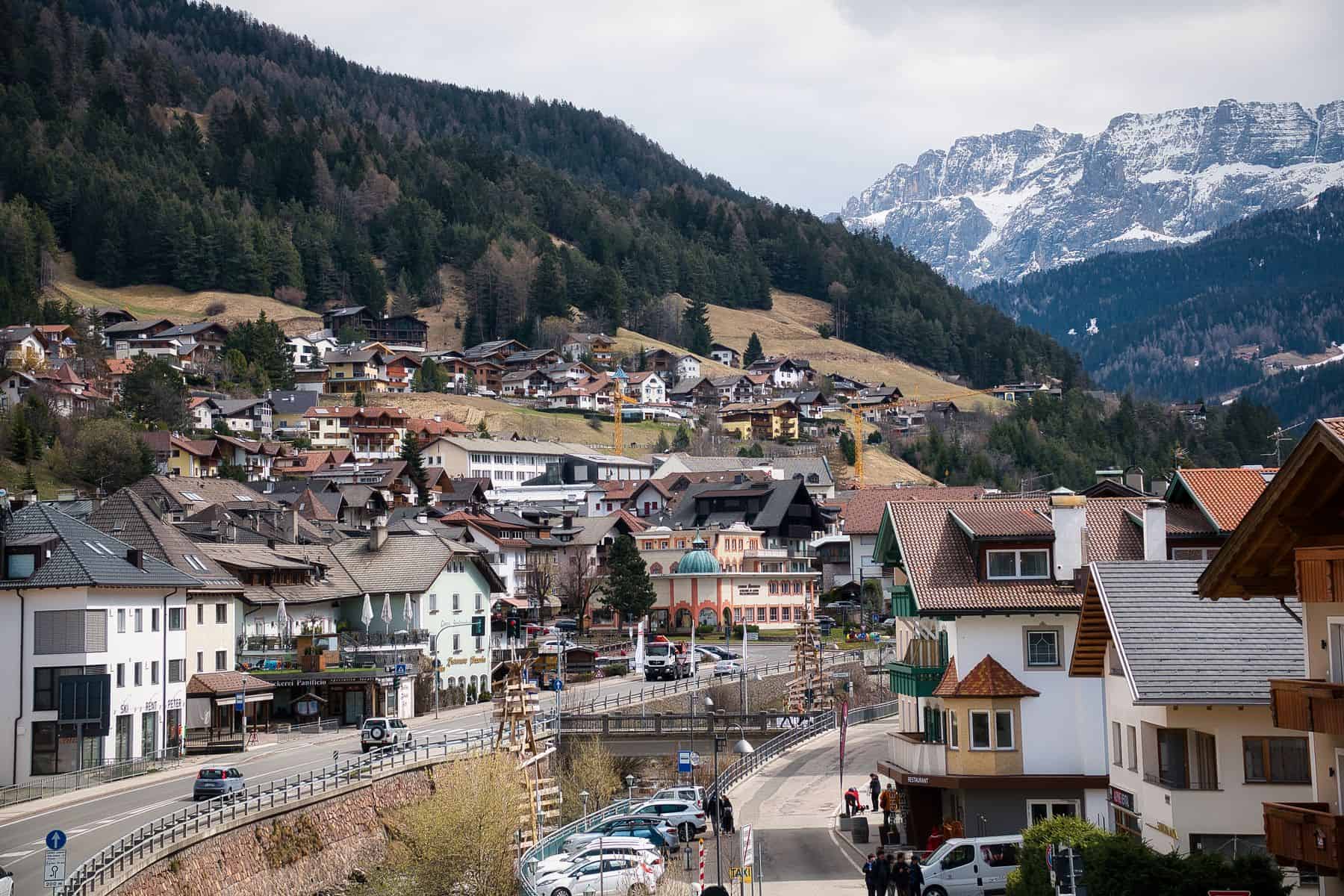
Val Gardena
A lively valley of three villages known for woodcarving. Ortisei is the main base, with cable cars to Seceda and the Alpe di Siusi; Selva sits below the Sella group and Sassolungo. Excellent for walkers who don’t want to drive.

Alpe di Siusi
A vast rolling plateau of meadows and hay huts at about 1,800 to 2,300 m, below the Sciliar and Sassolungo. Gentle walks, wildflowers in June and July, and easy family hiking. The road up is closed to most cars in the daytime in season, so take the cable car.

Alta Badia
Corvara, La Villa and San Cassiano sit in a quiet, high valley ringed by peaks, with a strong Ladin culture and some of the best cooking in the Alps. On the Sella Ronda ski circuit in winter, with gentle walking in summer.

Val di Funes
A peaceful valley of farms and meadows under the jagged Odle peaks, with the famous view of Santa Maddalena’s church. Great for a few quiet nights and walks to mountain huts, and close to Bressanone.

Alta Pusteria and Tre Cime
The Puster Valley near the Austrian border, with the villages of Dobbiaco, Villabassa and San Candido. The base for the Tre Cime, Lago di Braies and the Sesto Dolomites, and on the railway, so you can arrive by train.
Further west, Val di Fassa (Canazei) sits under the Marmolada and the Sella, and the Brenta Dolomites around Madonna di Campiglio in western Trentino are a separate group, closer to Lake Garda.
Hiking in the Dolomites

The Dolomites are made for walking. Cable cars and chairlifts take you straight to the high meadows, and trails are well marked, with numbered red-and-white signs. Mountain huts (rifugi) every few hours serve hot lunches, strudel and coffee, so you can walk light. You can choose easy lakeside strolls, high meadow walks, demanding passes, or hut-to-hut routes like the Alta Via 1.
Tre Cime di Lavaredo: the loop around the three towers, about 10 km and 3 to 4 hours from the car park at the foot of the south faces, is the classic walk. The toll road to the car park now needs an online booking; buses also run from Misurina in summer.
Seceda: ride the cable car from Ortisei to the ridge at about 2,500 m for the famous view of the Odle spires, then walk down through meadows to Val Gardena.
Alpe di Siusi: easy, mostly flat walking across the meadows, with the Sassolungo and Sciliar as a backdrop. Ideal for a gentle day or with children.


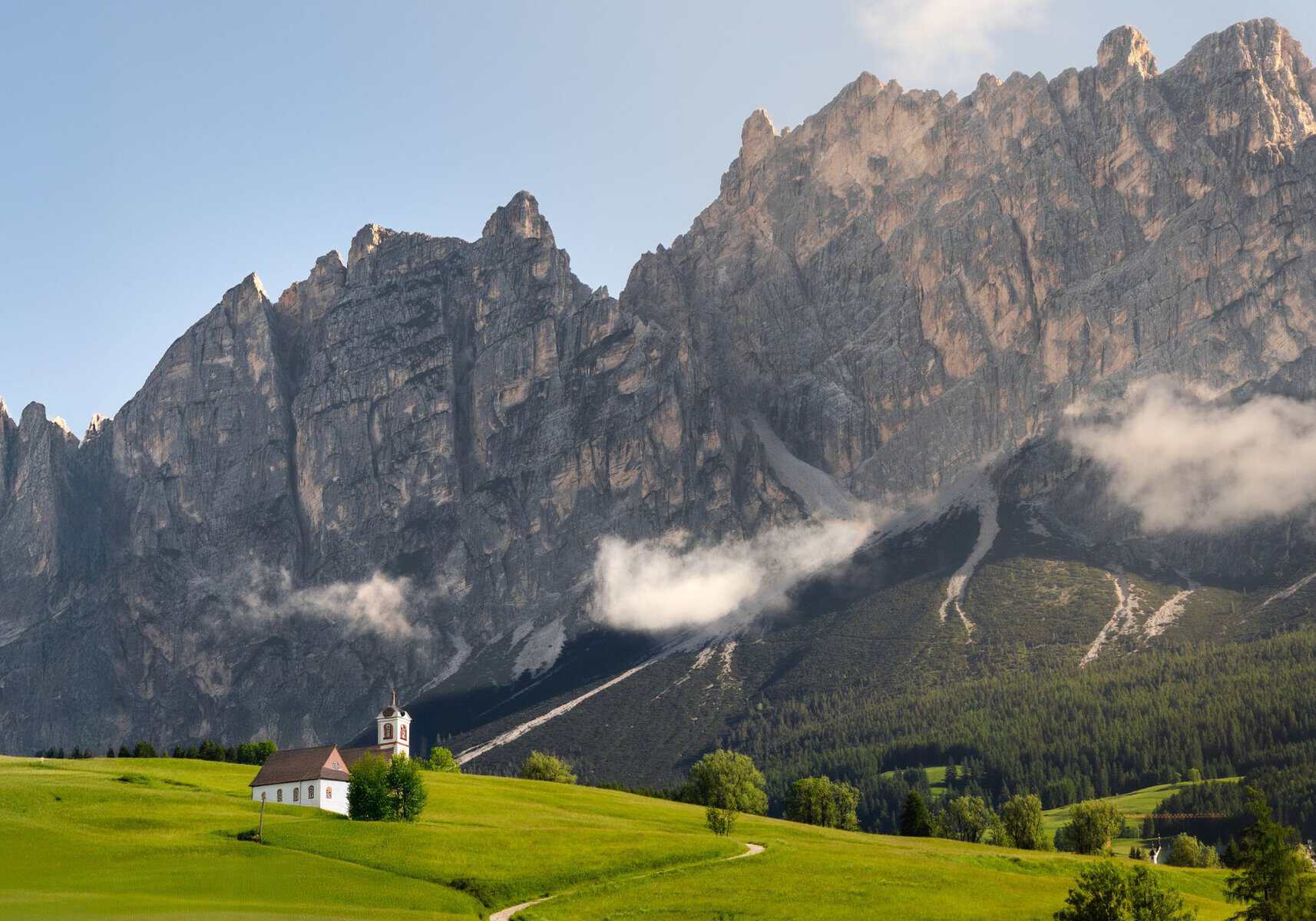
Other favourites include the Cinque Torri and the First World War tunnels and trenches of the Lagazuoi, now an open-air museum, the walk to Lago di Sorapis from Passo Tre Croci, and the Puez-Odle plateau above Val Gardena. Via ferrata routes, with fixed cables and ladders, began here as wartime paths; they need a helmet, harness and experience or a mountain guide.
Safety, in the FCDO’s words: “Hiking, mountaineering and other adventure sports have specific risks.” Make sure your insurance covers these activities, including mountain rescue services and helicopter costs. “Check weather forecasts and conditions and make sure you’re properly equipped for the worst-case scenario”, wear “appropriate footwear and clothing for the terrain and season”, and remember that “risks are greater if you undertake any activity alone.” “Plan your route beforehand and consider your limitations in distance and difficulty”, and “always leave copies of your itinerary and insurance with someone.” “If an accident happens or if you become lost, call 112 for the emergency services.” If you’re hiking in Trentino, the FCDO also advises reading what to do if you see a brown bear.
The Dolomites lakes
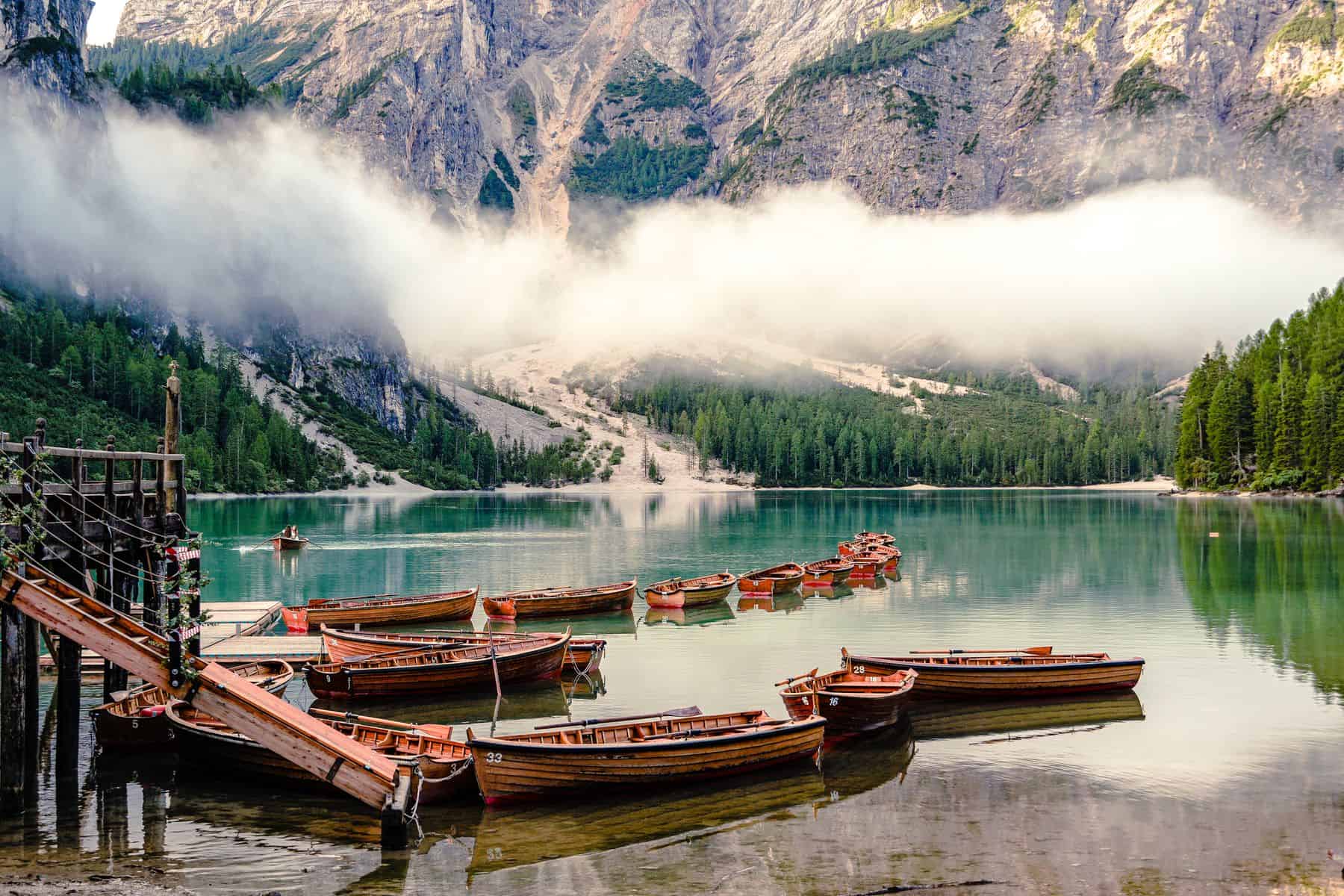
Lago di Braies (Pragser Wildsee) is the most famous: a green-blue lake below the cliffs of the Croda del Becco, with wooden rowing boats and an easy path around the shore (about an hour). In high summer, driving to the lake in the daytime needs an advance booking, so come early, late or by bus.
Lago di Carezza, a small, intensely coloured lake reflecting the Latemar peaks, is seen from a path around its shore. Lago di Misurina, near Cortina, has the Tre Cime and the Sorapis as a backdrop.
Lago Federa and Lago di Sorapis are hiking lakes, reached only on foot: Federa below the Becco di Mezzodì above Cortina, and Sorapis, milky turquoise under a wall of rock, about two hours from Passo Tre Croci.


Cable cars, passes and cycling

Most cable cars and chairlifts run from about mid-June to late September or early October, then close until the ski season. Highlights include the Seceda cable car from Ortisei, the Alpe di Siusi cable car from Siusi, the Lagazuoi cable car from Passo Falzarego and the cable cars up the Tofane from Cortina.
If you plan to use lifts most days, a regional lift pass such as the Dolomiti Supersummer card can work out simpler than single tickets; in winter the Dolomiti Superski pass covers twelve ski areas. Much of South Tyrol’s accommodation also gives guests a card for the regional buses and trains.
The great road passes, such as the Sella, Gardena, Pordoi, Campolongo, Falzarego and Giau, are famous with cyclists. Some are closed to cars on certain summer days for cycling events. Electric bikes are easy to hire in every valley.
Food and drink
- South Tyrolean dishes: canederli (bread dumplings with speck or cheese), schlutzkrapfen (half-moon ravioli with spinach), goulash and barley soup.
- Speck: the smoked, cured ham of South Tyrol, served with rye bread and mountain cheese.
- Hut lunches: polenta with mushrooms or venison stew, then Kaiserschmarrn (shredded pancake with fruit compote) or apple strudel on a sunny terrace.
- Cortina and the Veneto: casunziei, beetroot-filled pasta with poppy seeds and butter.
- Wine: South Tyrol makes excellent whites, plus Lagrein and Schiava reds; the Prosecco hills are close on the way to Venice.
Best time to visit the Dolomites
Mid-June to mid-July is wildflower season, with long days and the lifts just open; some high paths can still hold snow in June. Late July and August are the warmest and busiest months, with full huts and crowded car parks at Braies and the Tre Cime, and afternoon thunderstorms are common, so start walks early. September is the best month for many walkers: settled weather, clear air and fewer people. Late September and October bring golden larches, but lifts and huts start to close. November and May are quiet between seasons, when many hotels and lifts are shut. December to early April is ski season.
| Month | Cortina d'Ampezzo (1,224 m) | Ortisei, Val Gardena (1,236 m) |
|---|---|---|
| Jan | 2°C / -7°C · 75 mm | 2°C / -8°C · 50 mm |
| Feb | 4°C / -5°C · 90 mm | 4°C / -5°C · 60 mm |
| Mar | 6°C / -3°C · 80 mm | 7°C / -3°C · 50 mm |
| Apr | 9°C / 0°C · 115 mm | 10°C / 0°C · 80 mm |
| May | 14°C / 4°C · 170 mm | 15°C / 5°C · 135 mm |
| Jun | 20°C / 9°C · 180 mm | 21°C / 9°C · 120 mm |
| Jul | 21°C / 11°C · 200 mm | 22°C / 11°C · 115 mm |
| Aug | 21°C / 11°C · 185 mm | 22°C / 11°C · 120 mm |
| Sep | 17°C / 8°C · 115 mm | 18°C / 8°C · 65 mm |
| Oct | 13°C / 5°C · 135 mm | 13°C / 4°C · 95 mm |
| Nov | 7°C / -1°C · 150 mm | 7°C / -1°C · 90 mm |
| Dec | 4°C / -4°C · 95 mm | 4°C / -5°C · 55 mm |
Average daily high / low and monthly rain or snow (as water) in the valley towns, 10-year ERA5 data (2014 to 2023). Expect roughly 6°C to 8°C cooler at the 2,000 to 2,500 m of the high trails and lift stations. Summer rain mostly falls in afternoon storms.
The Dolomites in winter
From about December to early April the Dolomites are one of Europe’s best ski regions, with the Sella Ronda circuit linking Val Gardena, Alta Badia, Arabba and Val di Fassa around the Sella massif on skis. Cortina has long, scenic runs on the Tofane, and the meadows of the Alpe di Siusi are good for cross-country skiing and winter walks. Christmas markets fill Bolzano, Bressanone and Brunico in December. The FCDO advises getting “advice on weather and avalanche conditions before you travel”, notes that helmets are compulsory on the slopes and that third-party liability insurance is a legal requirement, and warns that “off-piste skiing is very dangerous”: “follow all safety instructions and go with a qualified guide.”
How to get to the Dolomites from the UK
- For Cortina and the east: fly to Venice (Marco Polo or Treviso), about 2 hours from London, then about 2 to 2.5 hours by road. Summer buses link Venice and Cortina.
- For Val Gardena, Alpe di Siusi and Alta Badia: fly to Verona or Innsbruck and drive about 2 hours. Bolzano has a small airport with limited flights.
- By train: the Brenner railway runs from Verona to Bolzano and Bressanone, and a branch line runs along the Puster Valley to Brunico, Dobbiaco and San Candido; buses continue into the valleys. See our guide to European rail tours.
- Combine with Venice: the Dolomites pair naturally with a few nights in Venice or on Lake Como, and Switzerland is a scenic drive or train ride west.
Getting around
A hire car gives you the most freedom to cross the passes and reach trailheads early, but roads are narrow with many hairpins, parking at the famous sights is limited and some roads are restricted in summer. Buses are good in summer, linking the valleys and passes. In Val Gardena and around the Alpe di Siusi you can manage very well with lifts, buses and your feet.
Where to stay in the Dolomites
- Cortina d’Ampezzo for a town with shops, restaurants and evening life, and for the eastern Dolomites, Tre Cime and the lakes.
- Ortisei in Val Gardena for car-free walking, with cable cars to Seceda and the Alpe di Siusi from the village.
- The Alpe di Siusi itself for quiet mountain hotels among the meadows, with walks from the door once the day visitors leave.
- Alta Badia (Corvara, San Cassiano) for food, spa hotels and a quieter, high valley feel.
- Dobbiaco, Villabassa or San Candido for Braies, the Tre Cime and train access.
- Val di Funes for farm stays and small family-run hotels in a peaceful valley.
The Dolomites have some of the best mountain hotels in Europe, from family-run South Tyrolean houses to spa hotels and design hotels, and you can also spend a night in a mountain hut. Many close in May and November. Tell us your style and we’ll match the right valley and hotel.
How long to spend: sample routes
A week with one base works well for walkers; two bases let you see both the east and the west of the range.
Val Gardena walking week
- Ortisei (7 nights)
Seceda, the Alpe di Siusi, Sassolungo and the Puez-Odle by cable car and on foot, with no driving.
Two sides of the Dolomites
- Val Gardena (4 nights)
- Cortina d'Ampezzo (4)
Seceda and Alpe di Siusi, then over the passes for the Tre Cime, Braies and the lakes.
Venice and the Dolomites
- Venice (3 nights)
- Cortina d'Ampezzo (4)
- Alta Badia or Val Gardena (4)
Canals, then mountains: fly into Venice and out of Verona or Innsbruck.
Walking and cycling holidays in the Dolomites
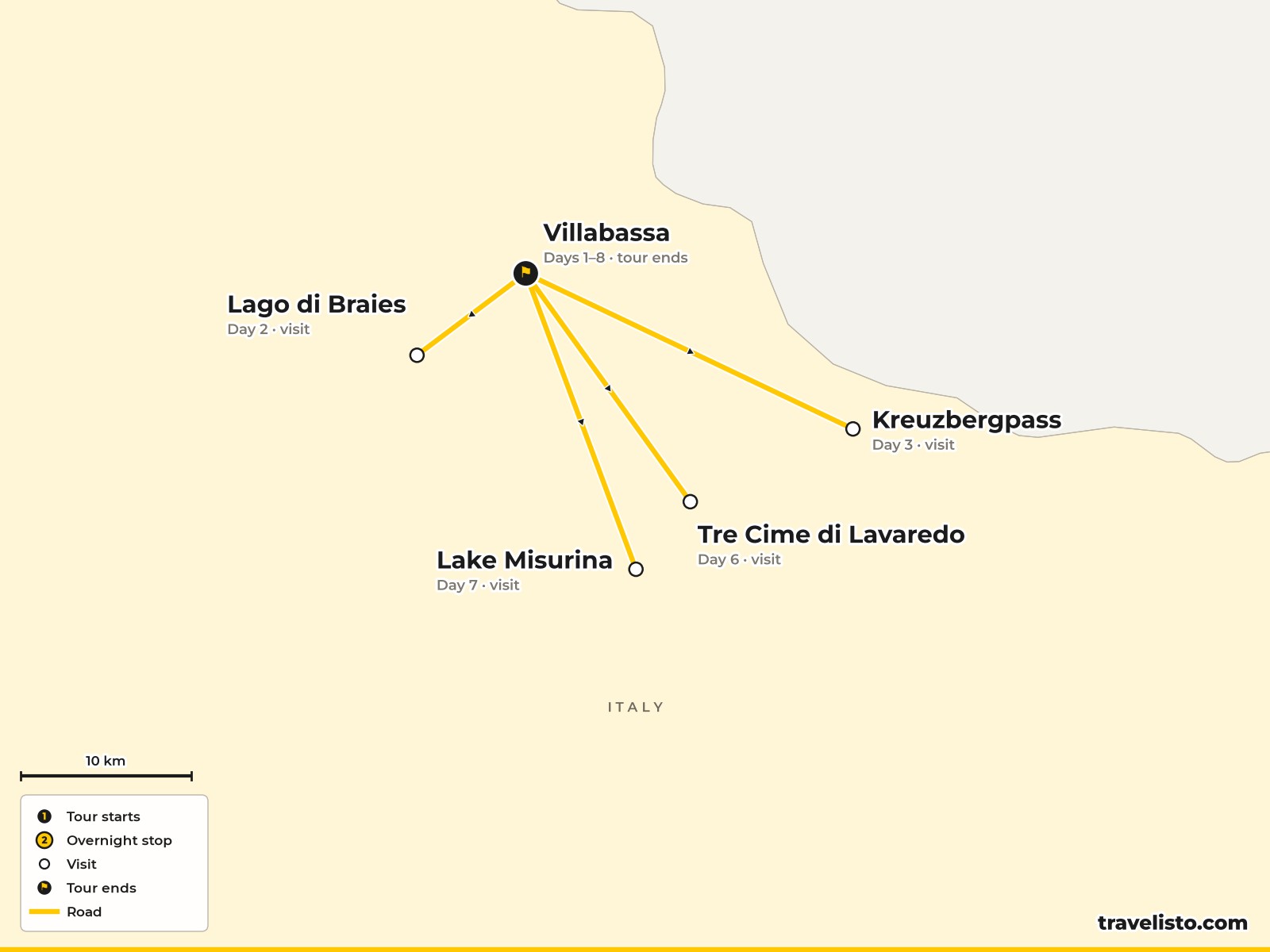
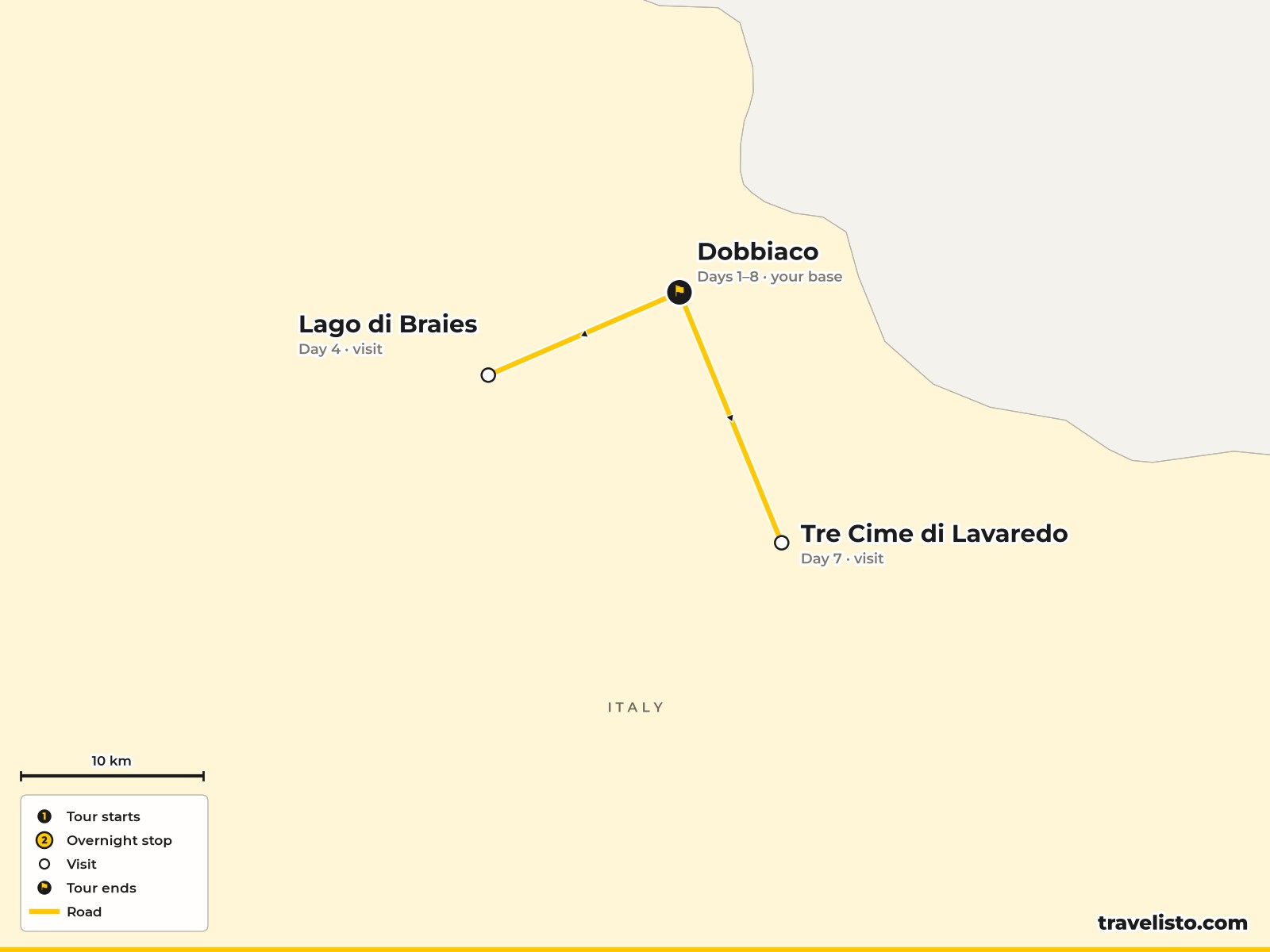
Prefer your own pace? A tailor-made Dolomites holiday can combine any valleys with Venice, Lake Como or Verona, with transfers, hotels and walking notes arranged. For more ideas see Italy holidays, our Switzerland holiday guide for more Alpine walking, and our guide to self-guided walking holidays.
Practical tips
- Entry: Italy is in the Schengen area, so British visitors can stay up to 90 days in any 180 without a visa. Your passport must have been issued less than 10 years before you arrive and be valid for at least 3 months after you leave. Under the EU’s Entry/Exit System you may have your fingerprints and photo taken at the border. Check the FCDO Italy advice before you book and again before you travel.
- Book ahead: hotels for July, August and the ski holidays; the Tre Cime toll road and parking at Braies in high summer.
- Start early: car parks at the famous sights fill by mid-morning, and summer storms usually build in the afternoon.
- Check lift dates: lifts and huts open and close on fixed dates each season, which vary by valley.
- Insurance: as the FCDO advises, make sure it covers hiking, mountain rescue and helicopter costs, and off-piste skiing if you plan to do it.
Frequently asked questions
What is the best time to visit the Dolomites?
For walking, mid-June to late September, when the lifts and mountain huts are open. September is often the best month, with settled weather and fewer people. October has golden larches but fewer lifts, and the ski season runs from about December to early April.
Where is the best place to stay in the Dolomites?
Cortina d'Ampezzo for a lively town and the eastern Dolomites, Ortisei in Val Gardena for walking without a car, Alta Badia for food and quiet, and Dobbiaco or San Candido for the Tre Cime and Lago di Braies. Two bases work well for a week or more.
How do you get to the Dolomites from the UK?
Fly to Venice for Cortina, or to Verona or Innsbruck for Val Gardena and Alta Badia, about 2 hours from London, then transfer by road for about 2 to 2.5 hours. Trains run to Bolzano, Bressanone and the Puster Valley.
Do you need a car in the Dolomites?
Not always. In Val Gardena and around the Alpe di Siusi, lifts, buses and walking are enough. A car gives more freedom to cross the passes, but parking at the famous sights is limited and some roads need advance booking in summer.
How many days do you need in the Dolomites?
A week with one base is a good walking holiday. Ten days to two weeks lets you see both Val Gardena and Cortina, or add Venice or Lake Como.
Is the Tre Cime di Lavaredo walk difficult?
The loop around the three towers is about 10 km and takes 3 to 4 hours on good paths, with some climbs, from the car park at the foot of the south faces. It's at around 2,300 to 2,450 m, so take warm layers and check the weather.
Do you need to book Lago di Braies?
In high summer, driving to the lake in the daytime needs an advance booking. You can arrive early or late, or come by bus, and walkers and cyclists can visit freely.
Is the Dolomites in Italy or Austria?
The Dolomites are in Italy, in South Tyrol, Trentino and the Veneto. South Tyrol belonged to Austria until 1919, so German is widely spoken and many places have two names.
Keep planning
- Italy holidays
- Escorted tours of Italy
- Lake Como guide
- Venice holidays
- Sicily guide
- Switzerland holiday guide
- Self-guided walking holidays
- Tailor-made holidays
Plan your Dolomites holiday with a Travel Designer
Tell us when you’d like to go and how you like to walk, and we’ll plan your valleys, hotels, transfers and walking or cycling in one ATOL-protected booking.
Make an enquiry Italy holidays