Bolivia in brief
- The Salar de Uyuni, the flamingo lagoons, La Paz, Lake Titicaca, Sucre and Potosí.
- Best in the dry season, May to October; the salt flat turns into a mirror after rain, roughly January to March.
- Much of Bolivia is above 3,500 m: plan to go up gradually and take it easy at first.
- Check the FCDO Bolivia travel advice before you book and again before you travel.

Bolivia is South America at its wildest and highest. It has the world’s largest salt flat, the Salar de Uyuni; red and green lagoons full of flamingos; La Paz, a city that spills down a canyon at 3,600 m with cable cars for buses; the Bolivian shore of Lake Titicaca; and the colonial cities of Sucre and Potosí. This guide covers where to go, the best things to do, the best time to visit Bolivia, altitude, getting there from the UK, where to stay by area, sample routes and the current FCDO advice.
Where is Bolivia?
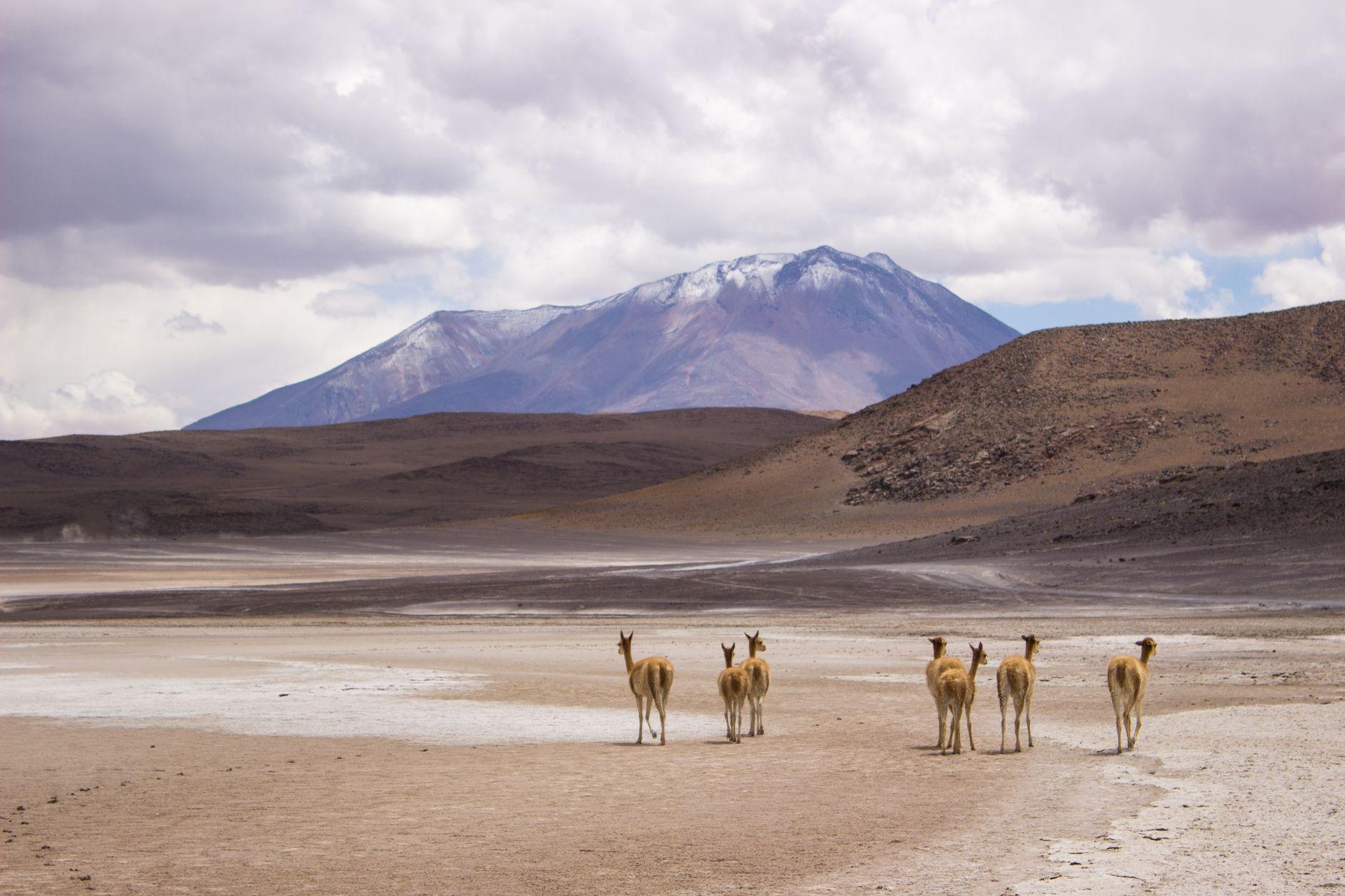
Bolivia is a landlocked country in the heart of South America, bordered by Peru, Chile, Argentina, Paraguay and Brazil. The west is the Altiplano, a high plateau at around 3,500 to 4,000 m between two ranges of the Andes, with Lake Titicaca in the north and the salt flats in the south.
East of the mountains, the land drops through the warm valleys of Cochabamba and Sucre to the Amazon rainforest and the plains around Santa Cruz, the country’s biggest city.
Bolivia has two capitals: Sucre is the constitutional capital, and La Paz is the seat of government. Most visitors combine it with southern Peru, or cross from the salt flats into Chile’s Atacama Desert.
Where to go in Bolivia
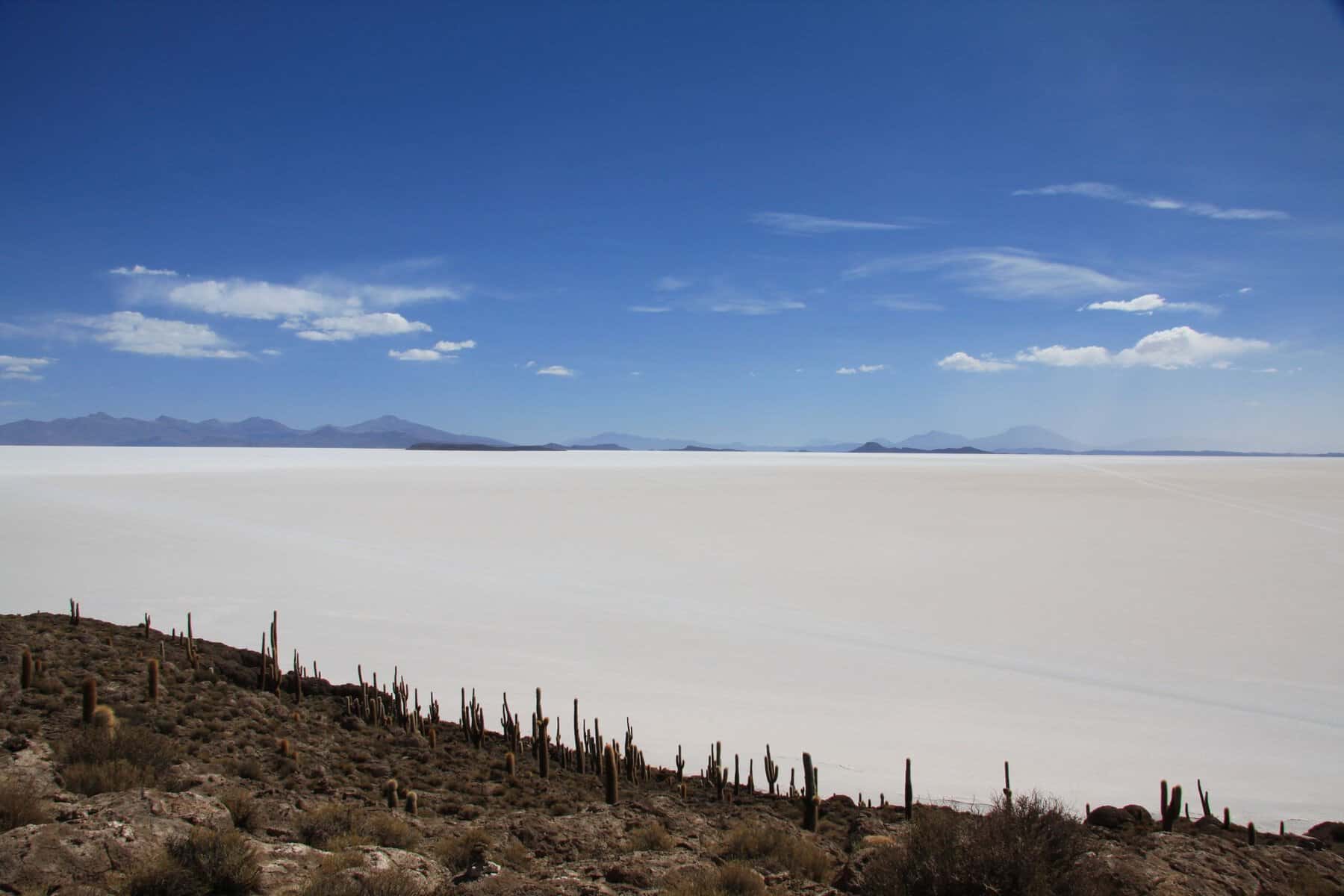
Salar de Uyuni
More than 10,000 square kilometres of white salt at about 3,650 m, the largest salt flat on earth. Blinding white in the dry season, a giant mirror after rain.
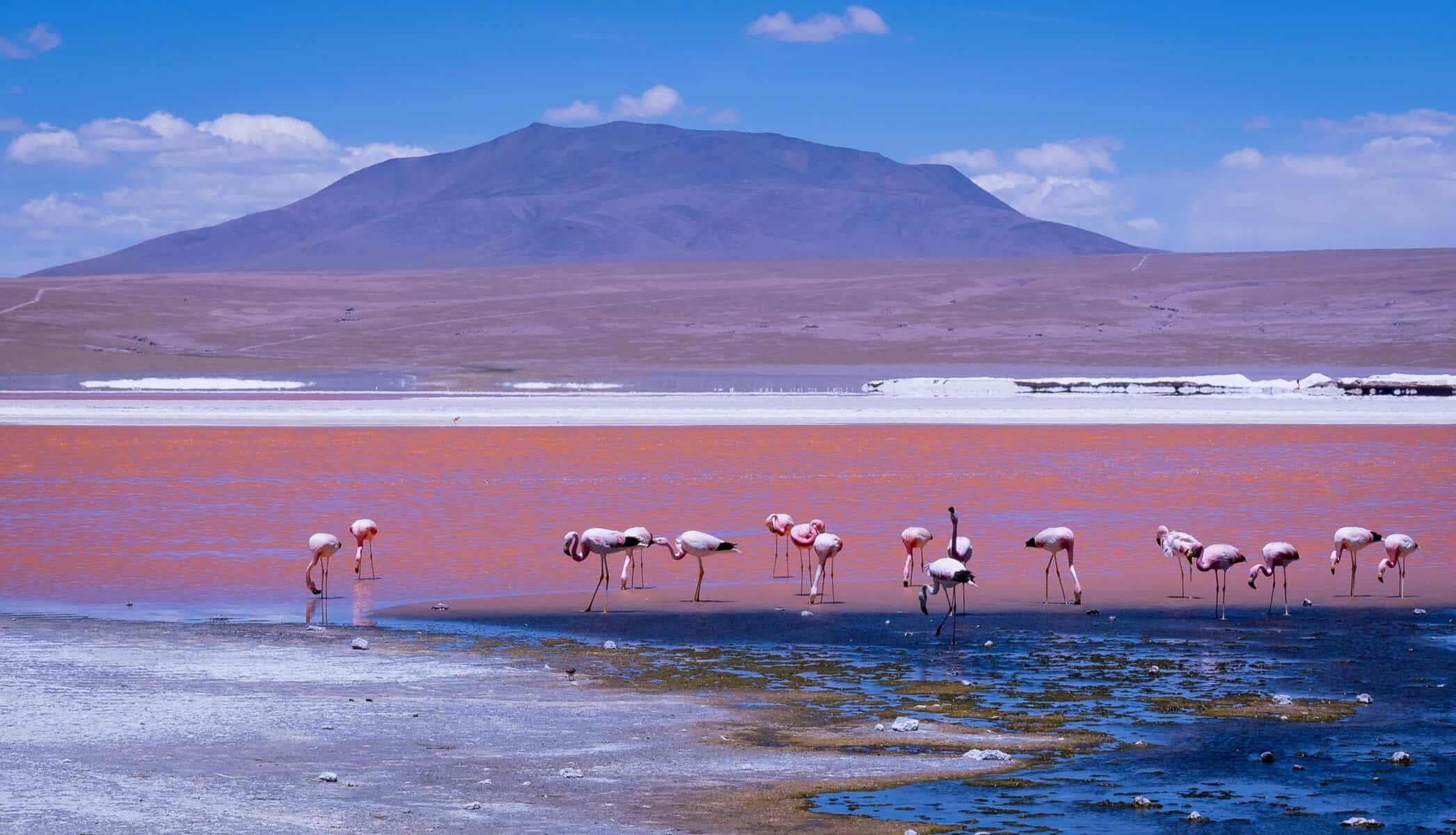
The south-west lagoons
The Eduardo Avaroa reserve, south of the salar: red Laguna Colorada, green Laguna Verde under the Licancabur volcano, geysers, hot springs and wind-carved rocks, on the way to Chile.

La Paz
A city in a deep canyon beneath snow-capped Illimani, with a network of cable cars, markets, museums and a lively food scene. The base for Tiwanaku and Lake Titicaca.
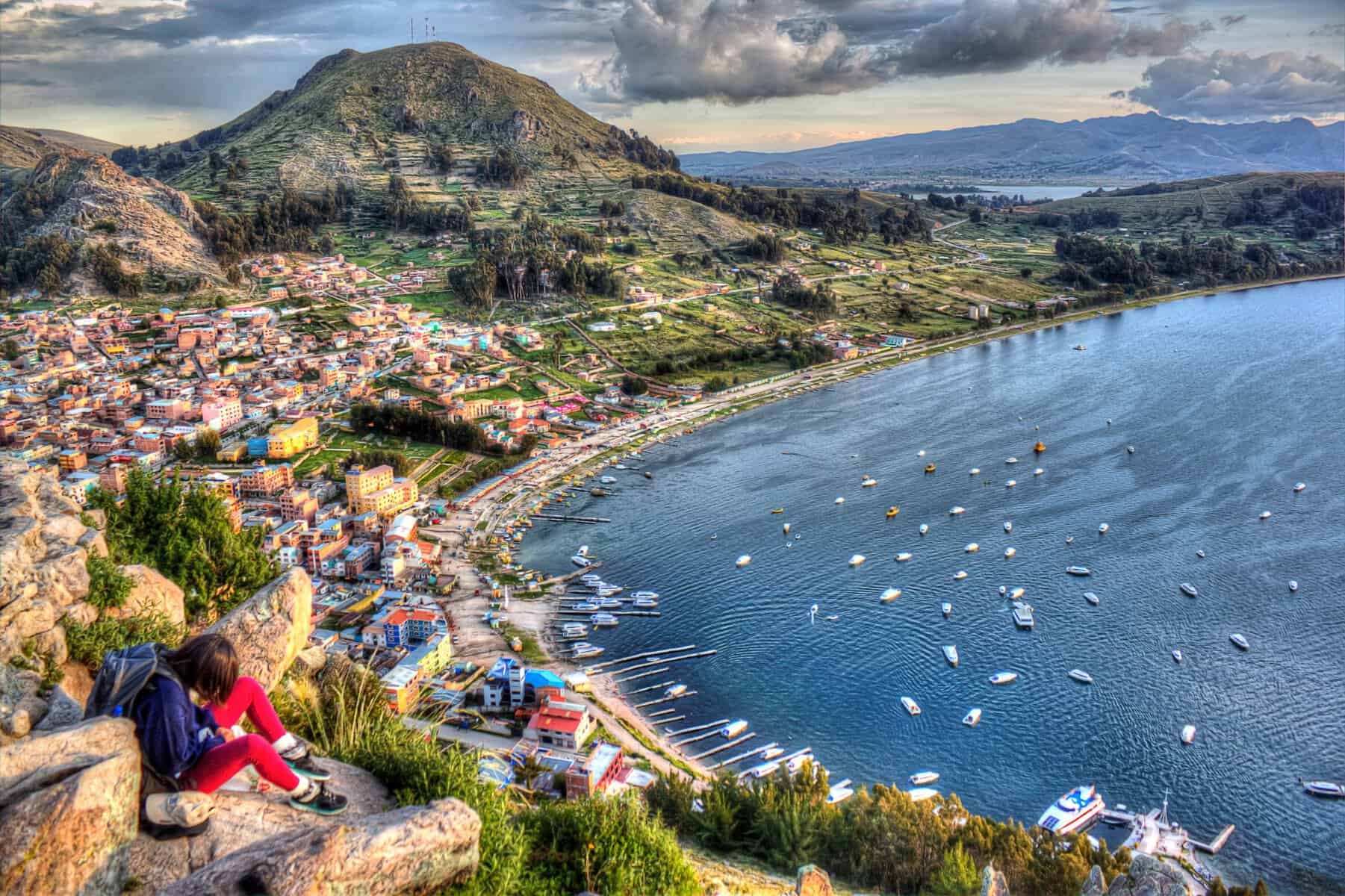
Lake Titicaca
The Bolivian side of the lake, about three and a half hours from La Paz: the pilgrimage town of Copacabana and the Isla del Sol, the legendary birthplace of the Inca sun god.
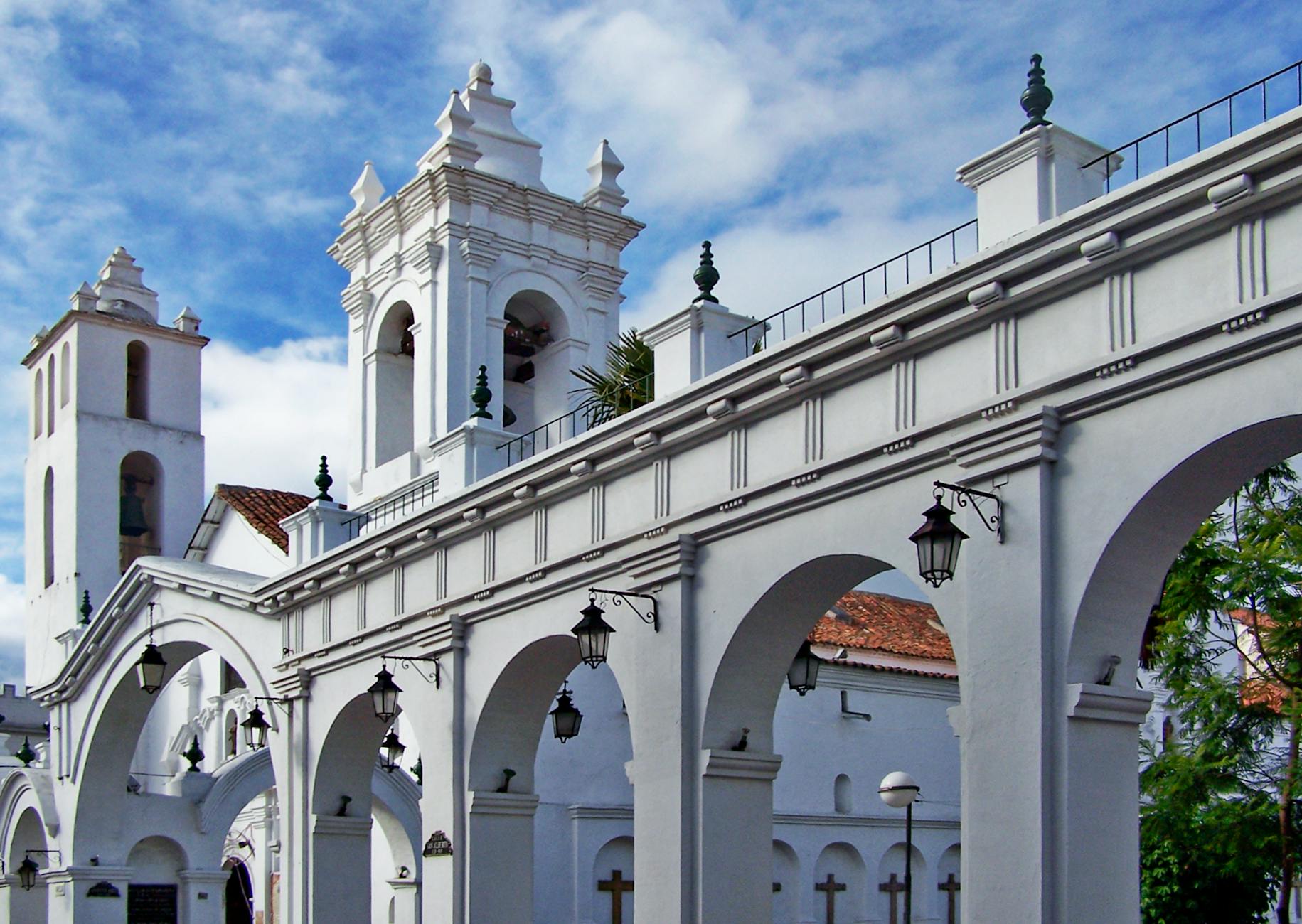
Sucre and Potosí
Sucre, the elegant “white city”, and Potosí, the silver city below the Cerro Rico mountain, are both UNESCO World Heritage Sites and about three hours apart by road.
For something completely different, fly from La Paz to Rurrenabaque for the rainforest of Madidi National Park and the wetlands of the Pampas, with river trips to see capybaras, caimans, pink river dolphins and hundreds of bird species.
Things to do in Bolivia
The Salar de Uyuni
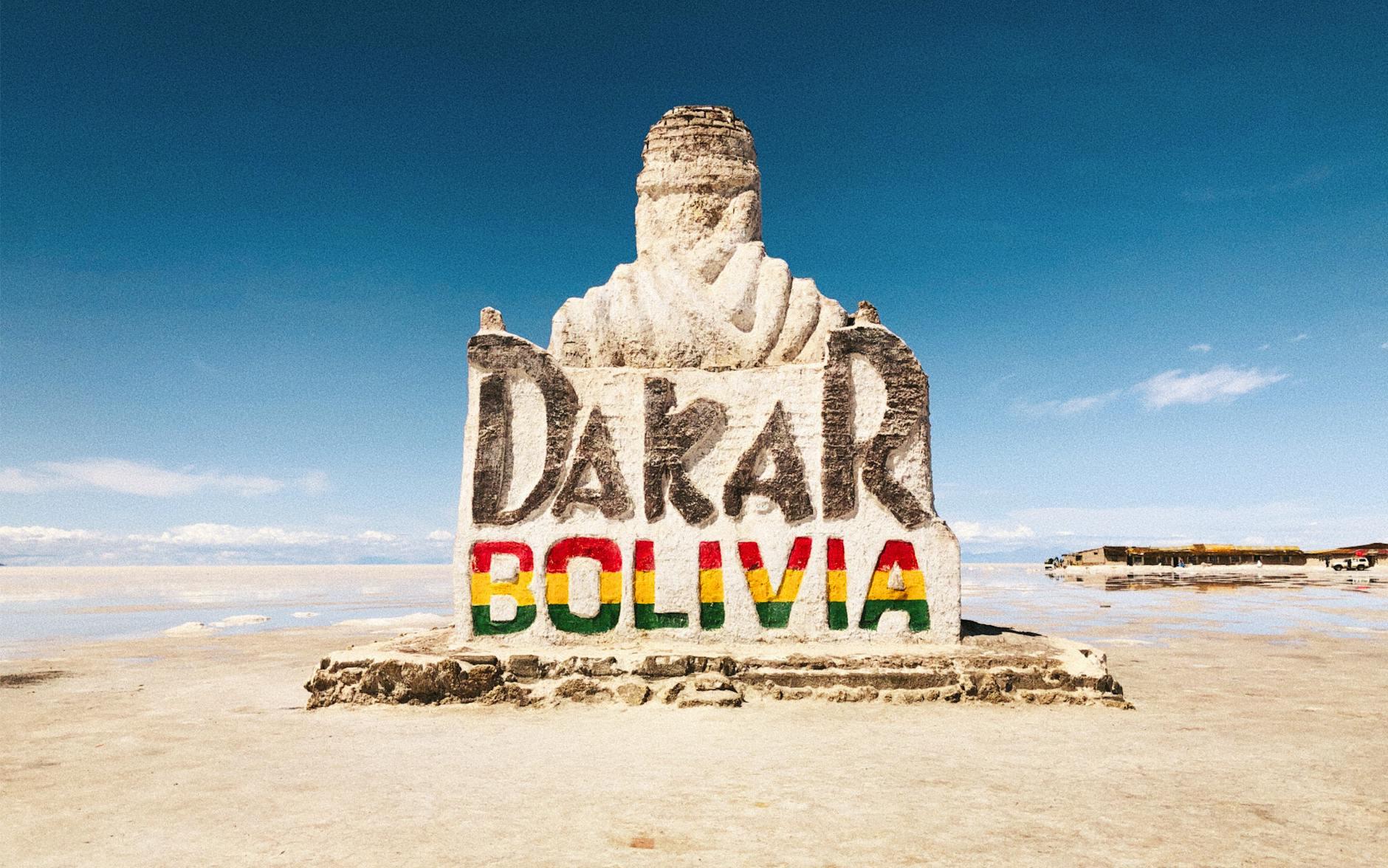
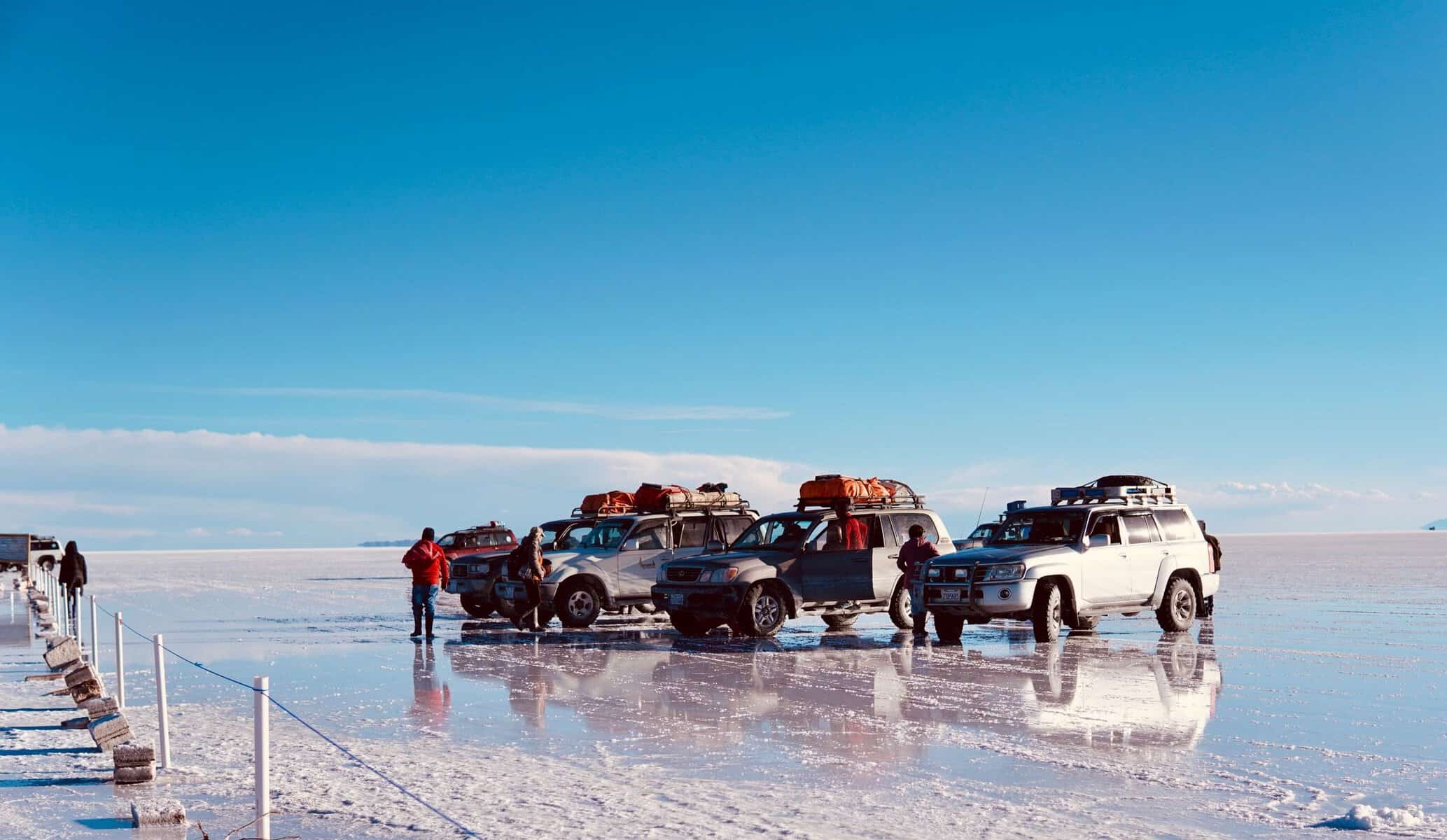
Drive out onto the salt. In the dry season the crust dries into a honeycomb of hexagons that runs to the horizon, perfect for the famous perspective photos. Stay out for sunset and the stars.
Isla Incahuasi. A rocky island in the middle of the salar covered in giant cacti, some of them many hundreds of years old, with a short trail to the top for the view.
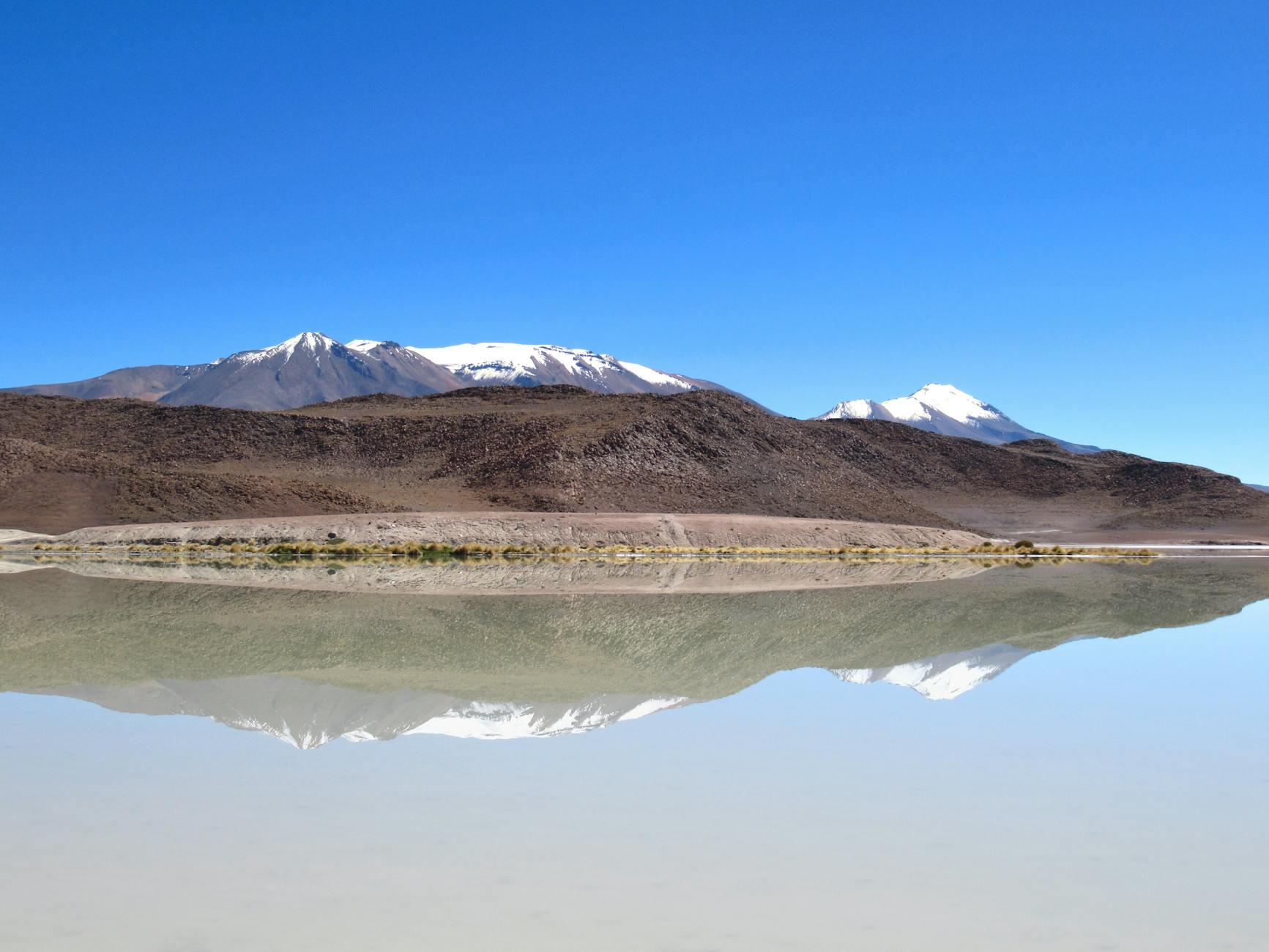
The mirror effect. After rain, usually between January and March, a thin layer of water turns the salar into a vast mirror of sky and cloud. Some areas are impassable when it is very wet, so routes change with the conditions.
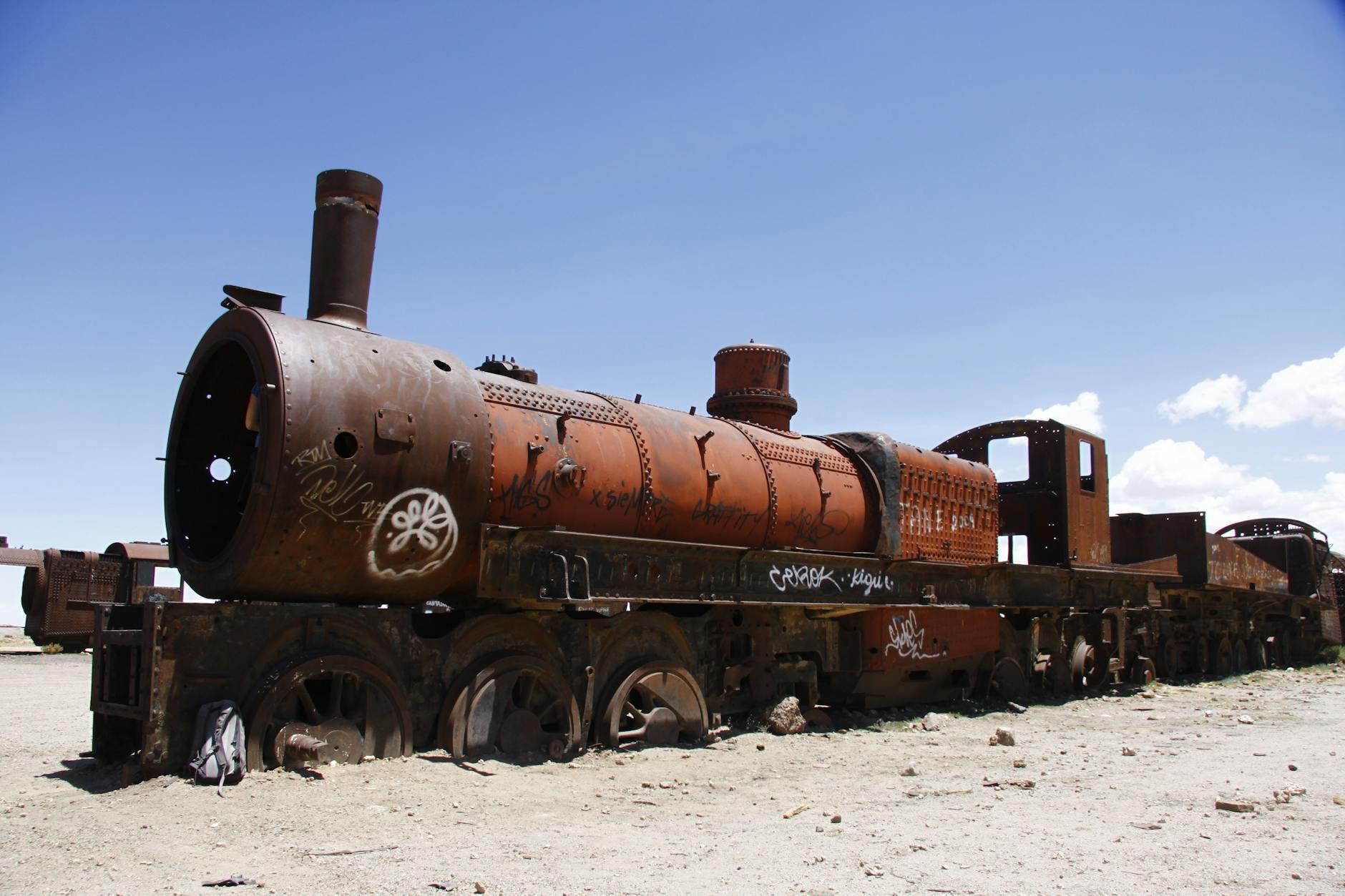
The train cemetery just outside Uyuni town, where steam locomotives from the old mining railways were left to rust in the desert.
The lagoons route to Chile
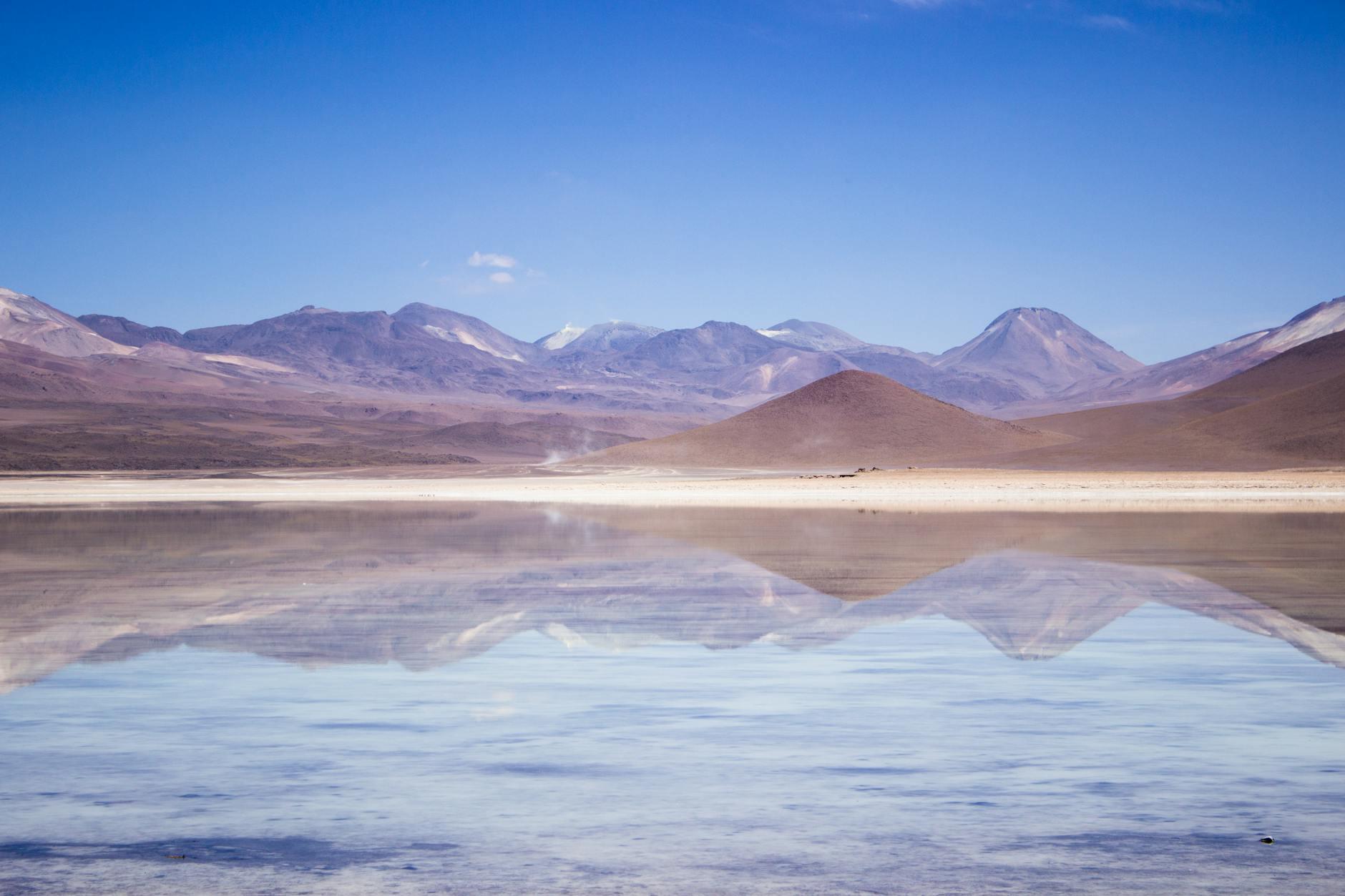
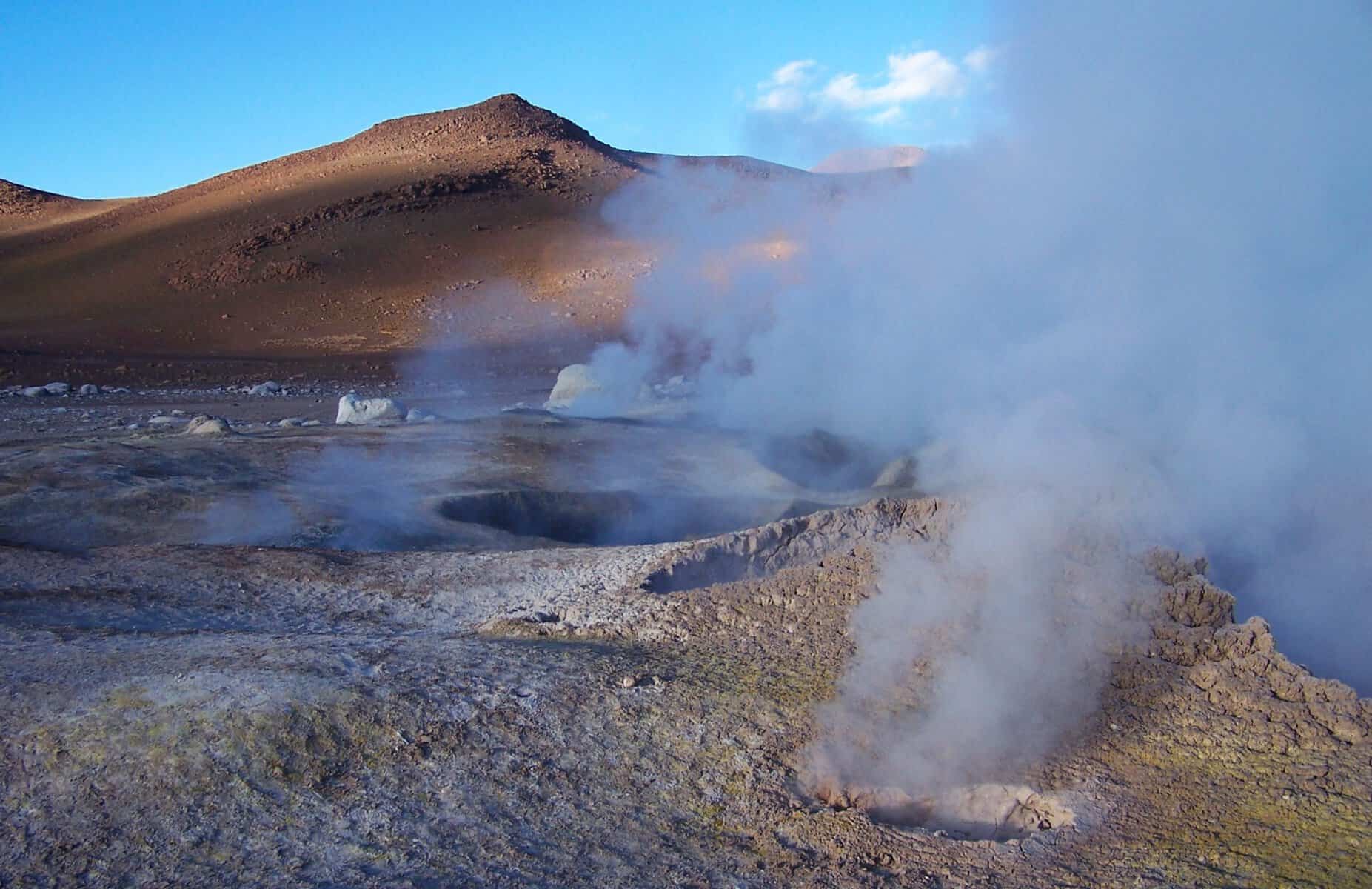
South of the salar, a two or three-day 4×4 journey crosses some of the strangest country in the Andes. Laguna Colorada is coloured red by algae and dotted with three species of flamingo; the Sol de Mañana geysers steam and bubble at about 4,900 m; the Salvador Dalí desert has rocks that look painted onto the sand; and Laguna Verde sits beneath the perfect cone of the Licancabur volcano.
You can finish at the Chilean border and continue to San Pedro de Atacama, a classic combination; see our Chile holiday guide. It is cold and remote, the accommodation is simple, and the altitude is high, so this is for travellers who have already spent a few days acclimatising.
La Paz and around
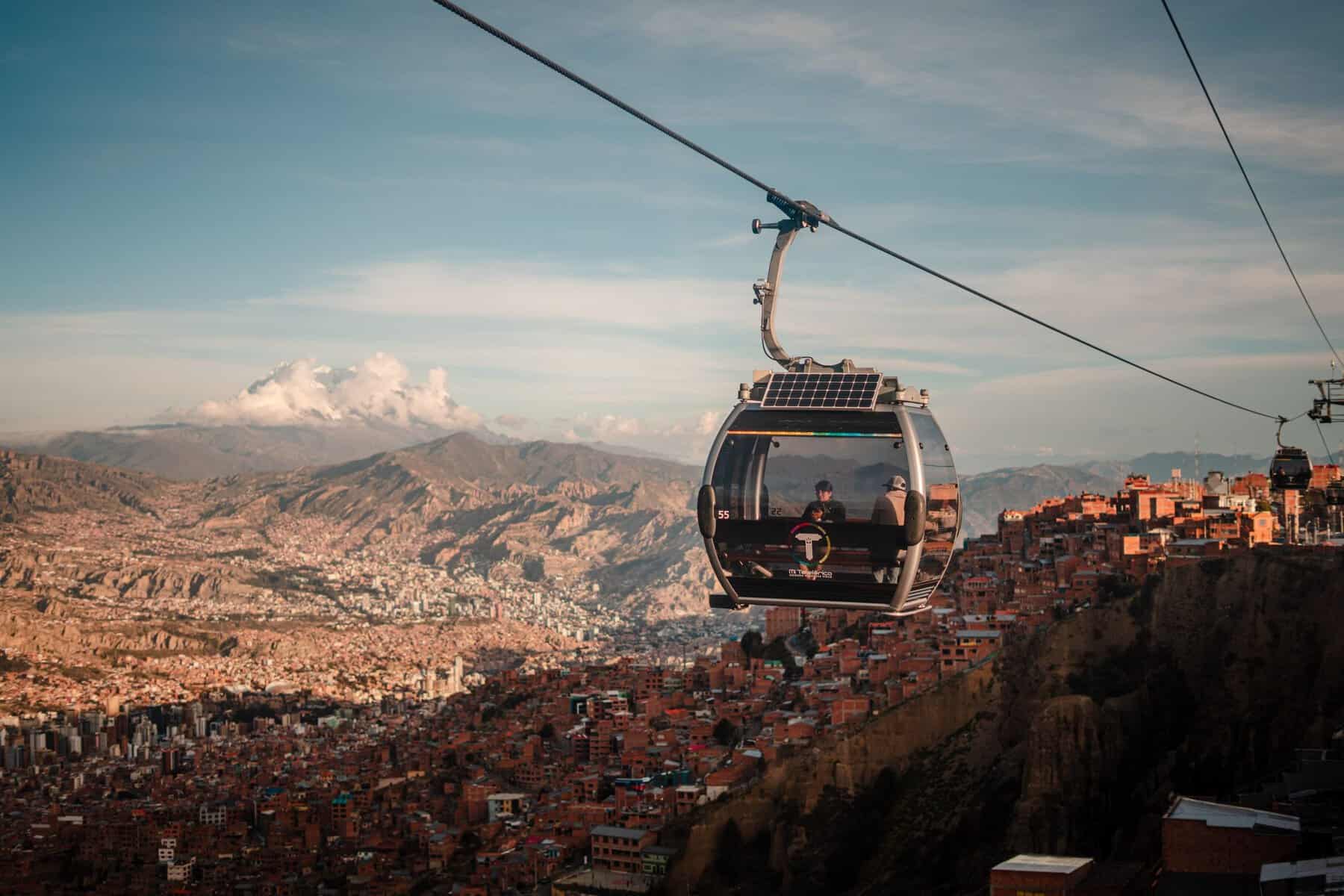
Ride the cable cars. La Paz and El Alto are linked by Mi Teleférico, a network of cable car lines used by locals every day. It is the best way to see the city, with huge views over the canyon to Illimani.
Markets and museums. Wander the steep streets around the San Francisco church and the Witches’ Market, with its herbal remedies and offerings to Pachamama and the colonial houses of Calle Jaén.
Valle de la Luna, a maze of eroded clay spires just south of the city, and the food: La Paz has some of the most inventive restaurants in South America, using Andean ingredients.
Tiwanaku, about 90 minutes away, is the UNESCO-listed capital of a civilisation that flourished long before the Incas, with the Gateway of the Sun and carved stone heads.
Lake Titicaca
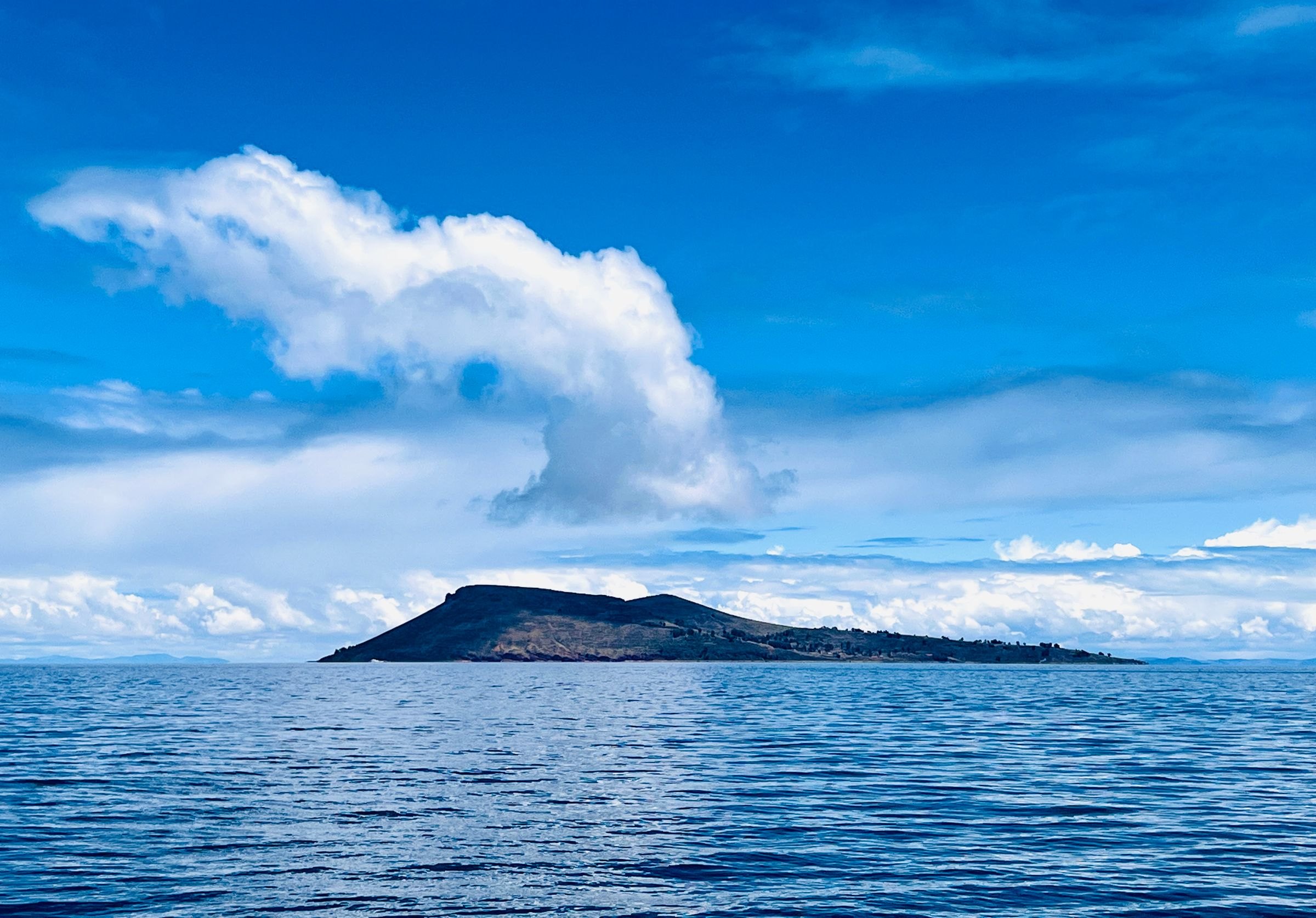
At about 3,810 m, Lake Titicaca is the highest navigable lake in the world, shared between Bolivia and Peru. On the Bolivian side, Copacabana is a small pilgrimage town with a white Moorish-style basilica and a hill of Stations of the Cross with views over the water.
From Copacabana, boats cross to the Isla del Sol, where, in Inca legend, the sun was born. There are no cars, just Inca stairways, terraces, ruins and walking trails between the villages. The south of the island, around Yumani, is reliably open to visitors; access to the north has been closed at times by disputes between communities, so we check before you go.
If you’re also visiting Peru, the Uros floating islands are on the Peruvian side near Puno; see our Peru holiday guide.

Sucre and Potosí
Sucre is Bolivia’s most beautiful city, a UNESCO World Heritage Site of whitewashed colonial buildings, churches and courtyards at a comfortable 2,800 m. Bolivia declared independence here in 1825, in the Casa de la Libertad. Walk up to the Recoleta viewpoint, visit the textile museum of the Jalq’a and Tarabuco weavers.
Potosí, at about 4,000 m one of the highest cities in the world, was once among the richest: its silver mountain, the Cerro Rico, financed the Spanish empire. The Casa de la Moneda, the old royal mint, is one of the finest museums in South America. Mine tours still run, but conditions inside are hard and dangerous; we prefer the museum and the city.
Food in Bolivia
Start the day like a local with a salteña, a baked pastry filled with juicy, slightly sweet stew, eaten mid-morning. Try api, a warm purple corn drink, with fried pastries on cold Altiplano mornings; sopa de maní, peanut soup; grilled anticuchos from street stalls; and trout from Lake Titicaca in Copacabana. Quinoa and dozens of kinds of potato come from the Altiplano, and llama meat is lean and widely served. Coca tea is offered everywhere at altitude.
Altitude
Much of Bolivia is very high: La Paz at around 3,600 m, El Alto airport above 4,000 m, Uyuni at 3,650 m and the lagoons route up to about 4,900 m. Almost everyone feels the altitude at first: breathlessness, headaches and poor sleep are common. Plan your route to go up gradually if you can, for example starting in Sucre (2,800 m) or arriving from Cusco or the Sacred Valley in Peru, and take the first day or two easy. Drink plenty of water and avoid alcohol at first. Talk to your GP or a travel clinic before you go, especially if you have heart or lung conditions, and ask about medication for altitude sickness. If symptoms get worse, go down.
Best time to visit Bolivia
The best time to visit Bolivia is the dry season, May to October. Skies are clear and blue, roads are open and the salar is white and firm. Days at altitude are sunny and mild, around 14°C to 18°C, but nights are cold, and on the Altiplano in June to August they fall well below freezing, to -15°C or colder in the south-west. November to April is the rainy season, wettest from December to March: afternoon storms, some roads and lowland areas cut off, and occasional flooding. It is also when the salar becomes a mirror, usually from about January to March, which is worth a trip in itself. April and November are good compromises. Bolivia’s best-known festival, the Carnaval de Oruro, is held each year in February or March, before Lent.
| Month | La Paz | Lake Titicaca | Uyuni | Sucre |
|---|---|---|---|---|
| Jan | 14°C / 5°C · 140 mm | 13°C / 7°C · 195 mm | 18°C / 5°C · 105 mm | 19°C / 10°C · 180 mm |
| Feb | 14°C / 5°C · 125 mm | 13°C / 7°C · 190 mm | 18°C / 5°C · 85 mm | 18°C / 10°C · 150 mm |
| Mar | 14°C / 5°C · 105 mm | 13°C / 7°C · 150 mm | 18°C / 4°C · 35 mm | 18°C / 10°C · 140 mm |
| Apr | 15°C / 4°C · 45 mm | 13°C / 6°C · 80 mm | 17°C / 1°C · 5 mm | 18°C / 9°C · 75 mm |
| May | 15°C / 2°C · 25 mm | 12°C / 5°C · 35 mm | 13°C / -3°C · 0 mm | 18°C / 7°C · 20 mm |
| Jun | 14°C / 0°C · 10 mm | 12°C / 4°C · 10 mm | 11°C / -4°C · 0 mm | 19°C / 5°C · 10 mm |
| Jul | 14°C / 0°C · 10 mm | 12°C / 4°C · 15 mm | 12°C / -4°C · 5 mm | 19°C / 5°C · 10 mm |
| Aug | 15°C / 1°C · 20 mm | 12°C / 5°C · 15 mm | 13°C / -4°C · 0 mm | 20°C / 6°C · 20 mm |
| Sep | 16°C / 3°C · 40 mm | 13°C / 6°C · 35 mm | 16°C / -1°C · 5 mm | 22°C / 8°C · 35 mm |
| Oct | 16°C / 4°C · 55 mm | 14°C / 7°C · 70 mm | 18°C / 0°C · 5 mm | 22°C / 10°C · 65 mm |
| Nov | 17°C / 5°C · 55 mm | 15°C / 8°C · 90 mm | 19°C / 2°C · 10 mm | 21°C / 10°C · 85 mm |
| Dec | 15°C / 6°C · 110 mm | 13°C / 8°C · 185 mm | 20°C / 5°C · 50 mm | 20°C / 11°C · 145 mm |
Average daily high / low and monthly rainfall, 10-year ERA5 data. The model smooths out mountain extremes: clear winter nights on the salar and the lagoons are much colder than the averages shown.
Getting to Bolivia from the UK
There are no direct flights from the UK. The usual routes are via Madrid, which has direct flights to Santa Cruz, or via Lima, Bogotá or São Paulo to La Paz or Santa Cruz, about 16 to 20 hours in total. If you’re also visiting Peru, the easiest way is to fly into Lima, see Cusco and Machu Picchu, then cross into Bolivia by Lake Titicaca or fly Cusco or Lima to La Paz. From the salt flats you can cross by land to San Pedro de Atacama in Chile and fly home from Santiago.
Getting around
- Domestic flights link La Paz with Uyuni, Sucre, Santa Cruz and Rurrenabaque in about an hour, saving long road journeys.
- Private 4×4 with a driver and guide is how we arrange the salar and the lagoons, with time to stop where you like.
- Roads are improving but distances are long. Between Cochabamba and Santa Cruz, we suggest flying rather than driving; see the safety section below for the latest FCDO advice on road travel.
- Roadblocks: protests and road blockades are common in Bolivia and can close roads without warning. We build in flexibility and reroute if needed.
Where to stay in Bolivia
- La Paz: boutique hotels in the historic centre near the San Francisco church, or the quieter, lower (and slightly warmer) southern neighbourhoods such as Sopocachi and the Zona Sur, with their restaurants.
- Salar de Uyuni: hotels built of salt blocks on the edge of the salar, a step up from the simple hotels in Uyuni town, and a few private camps and domes out on the flats for the stars.
- The lagoons: simple lodges and refuges at altitude, with shared facilities in some places; warm sleeping bags are worth bringing.
- Lake Titicaca: lakeside hotels in Copacabana, or an eco-lodge or guesthouse on the Isla del Sol for the sunset and the quiet.
- Sucre: colonial mansions converted into hotels around the main square.
Tell us your style and budget and we’ll match the right place at every stop.
How many days in Bolivia? Sample routes
Ten days covers La Paz, the lake and the salt flats; two weeks adds Sucre and Potosí. Many people spend a week in Bolivia as part of a longer trip with Peru or Chile.
La Paz, Titicaca and the salar
- La Paz (2 nights)
- Lake Titicaca and Isla del Sol (2)
- La Paz (1)
- Fly to Uyuni (3)
The highlights, with a lake stay before the salt flats to help with the altitude.
Bolivia in depth
- Sucre (3 nights)
- Potosí (1)
- Uyuni and the salar (2)
- The lagoons by 4×4 (2)
- La Paz (2)
- Lake Titicaca (2)
Starts low in Sucre and climbs gradually. Best from May to October.
Peru, Bolivia and the Atacama
- Cusco and Machu Picchu (5 nights)
- Lake Titicaca (2)
- La Paz (2)
- Uyuni and the lagoons (3)
- San Pedro de Atacama (3)
- Santiago (1)
The great Andes overland journey, crossing into Chile from the salt flats.
Ways to see Bolivia with us
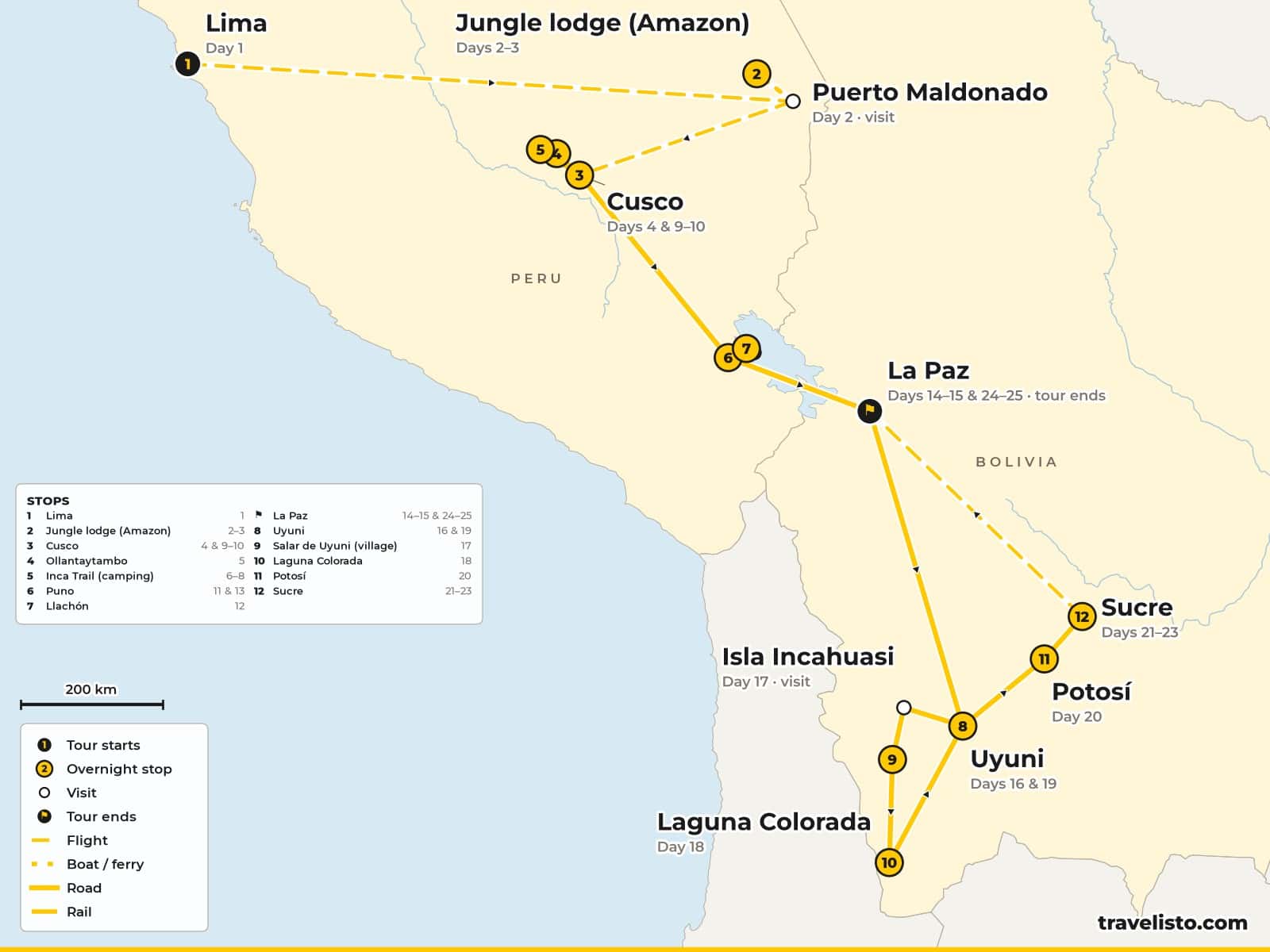
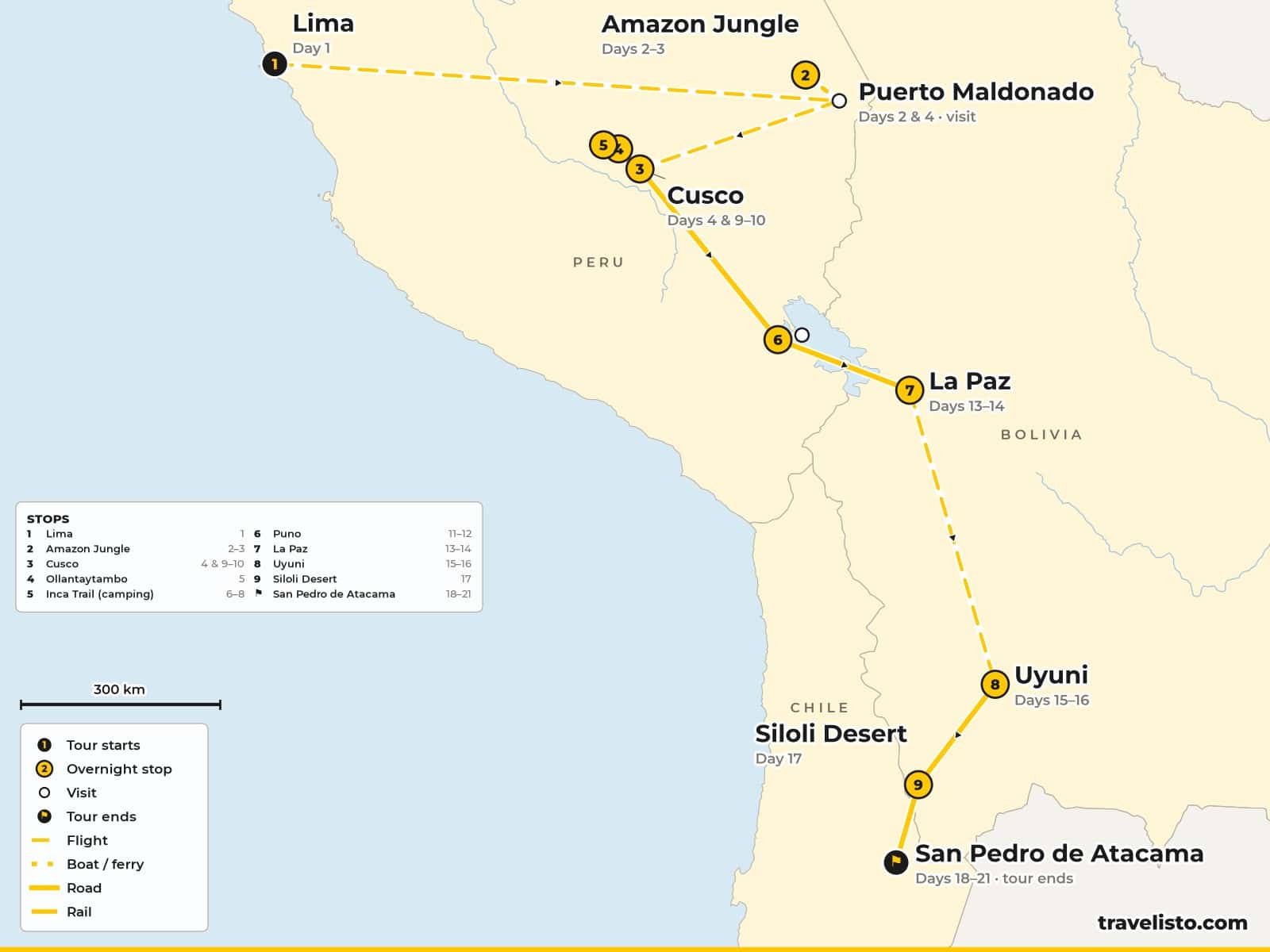
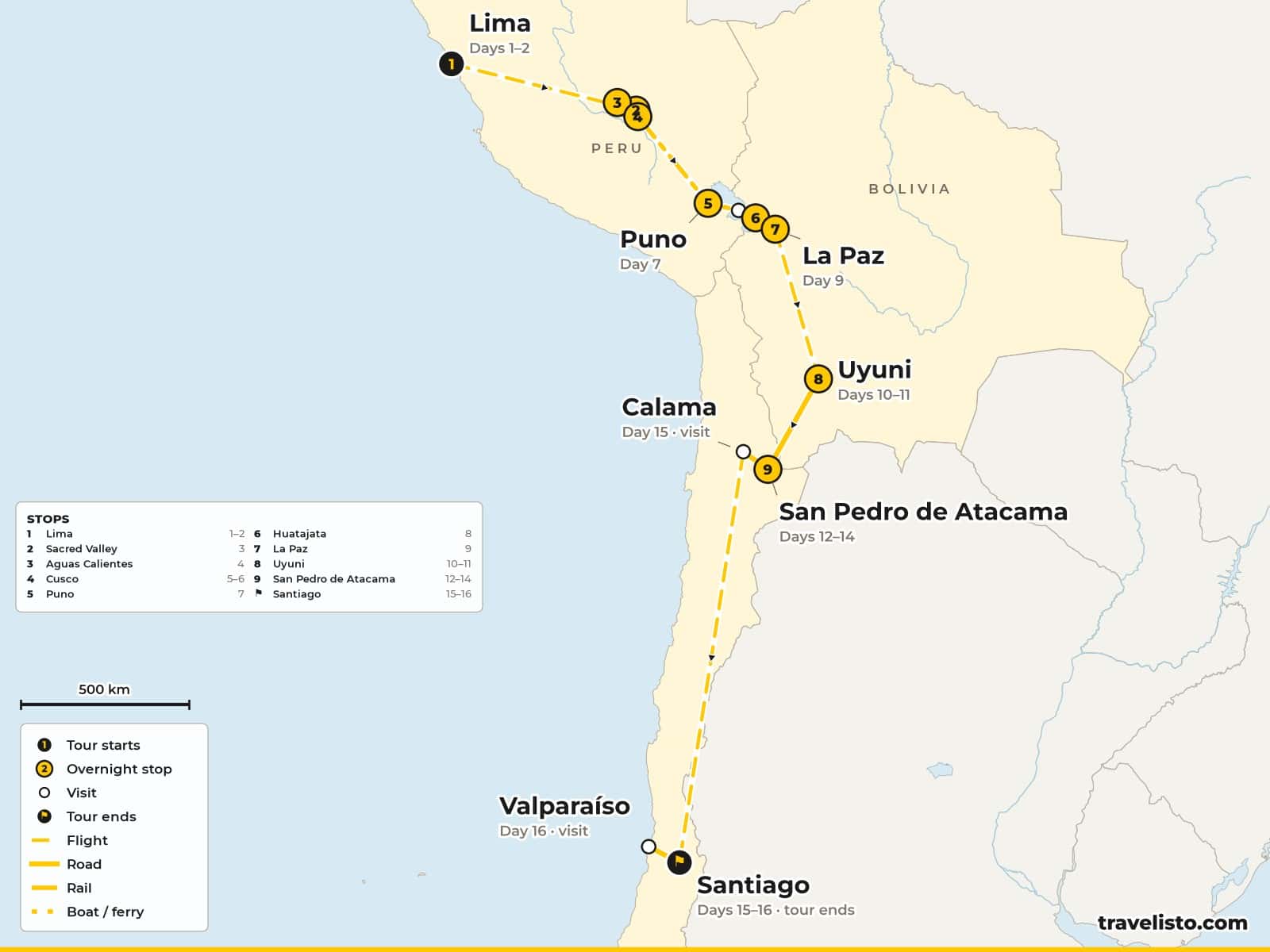
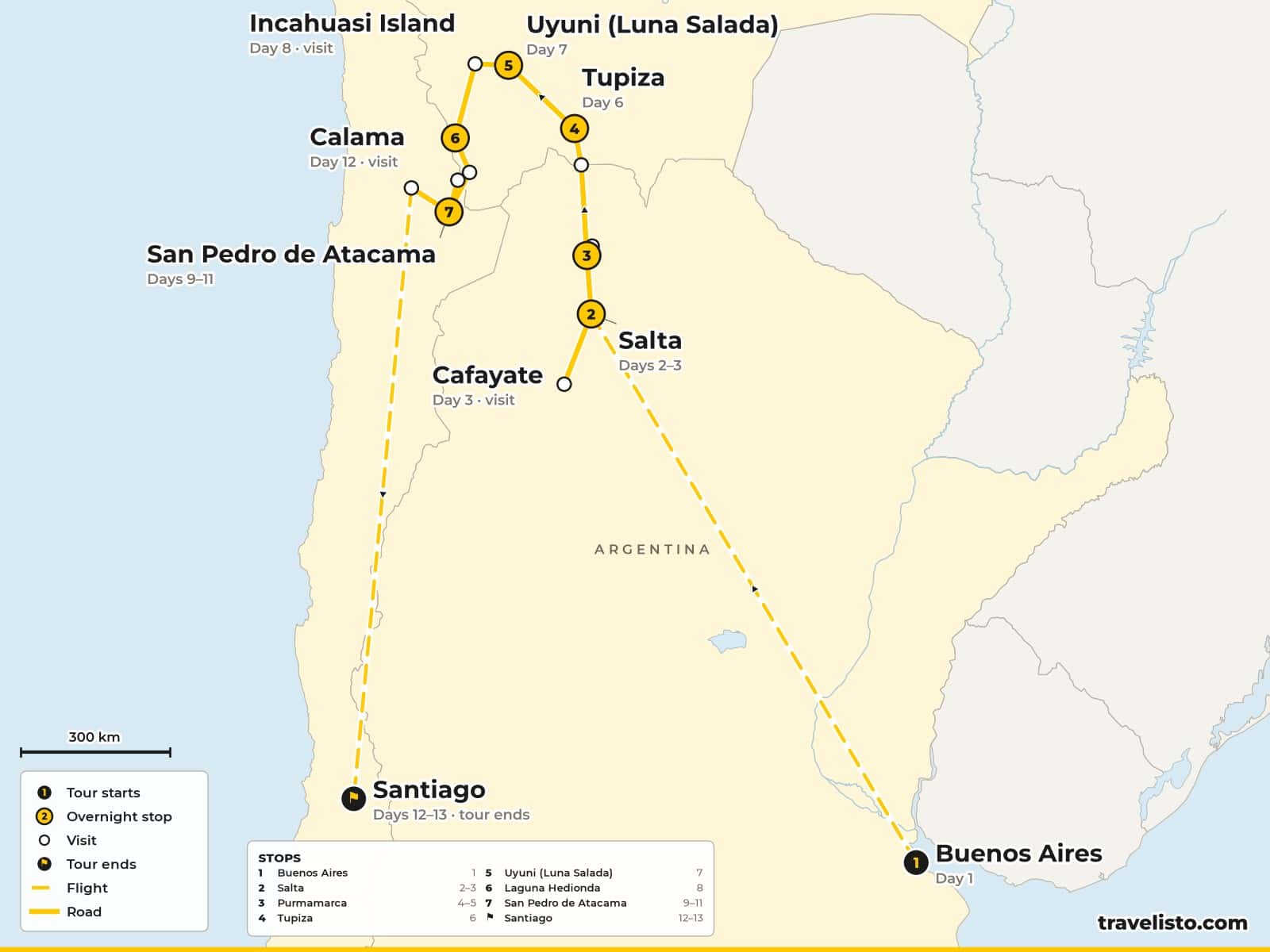
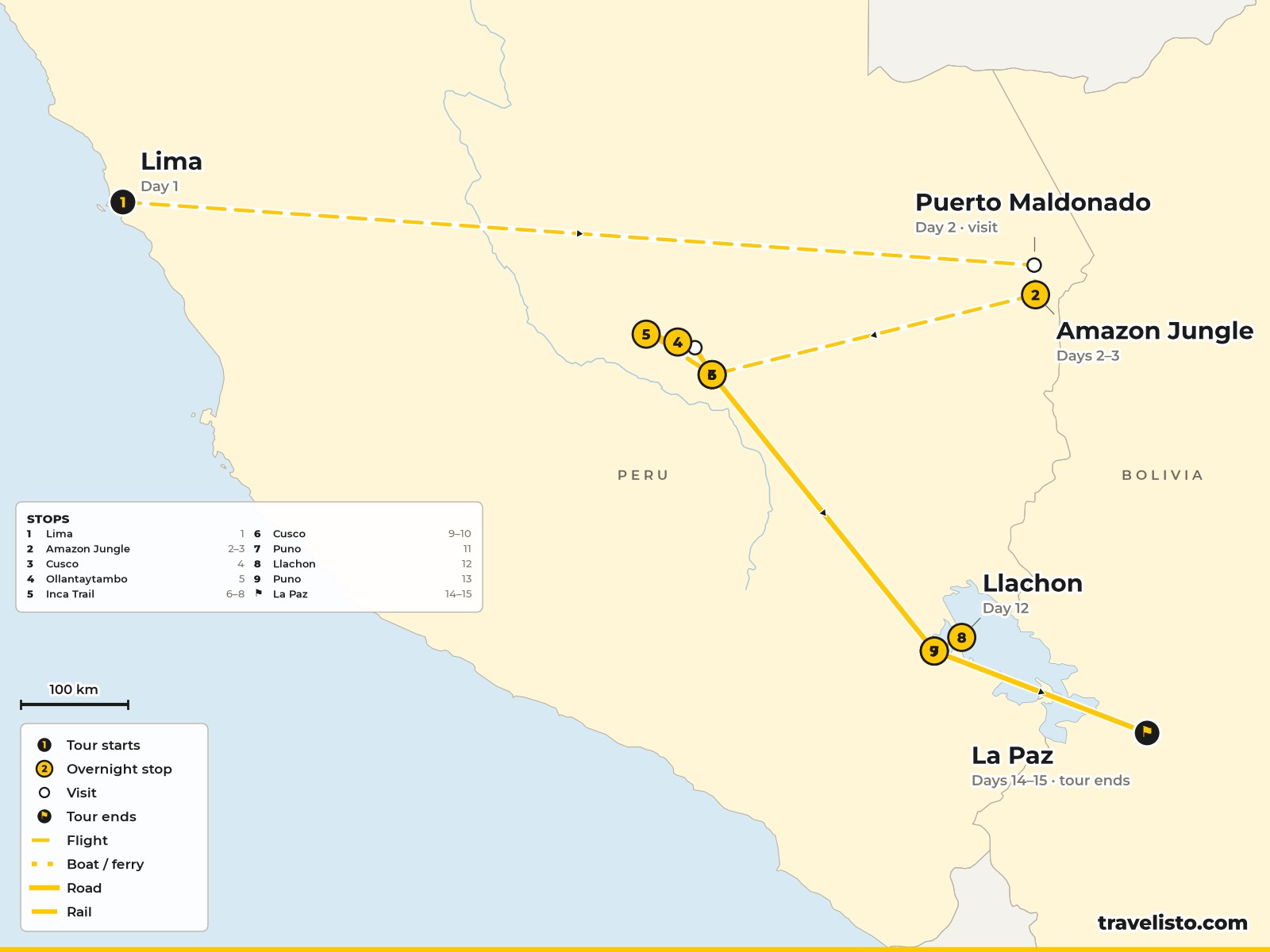
Prefer your own pace? A tailor-made Bolivia holiday can combine the salt flats with Peru, Chile or Argentina, with private guides and 4x4s and a route planned around the altitude. Comparing options? See South America tours compared and all our escorted tours of Bolivia.
Is Bolivia safe to visit? FCDO advice
Before you travel, read the current FCDO Bolivia travel advice. We suggest flying between Cochabamba and Santa Cruz rather than driving; check the FCDO advice for the latest on road travel.
The FCDO also warns that protests and roadblocks are frequent and can start without warning, and that a state of emergency gives the police and armed forces extra powers. Don’t try to cross a roadblock, stay away from demonstrations and allow extra time for road journeys. Check the advice before you book and again before you travel.
Practical tips
- Entry: British tourists don’t need a visa for up to 90 days in a year; you’ll often get a 30-day stamp, but can stay the full 90. Your passport should be valid for six months from arrival with two blank pages. You need a yellow fever certificate if you arrive from a country with a risk of yellow fever.
- Health: ask your GP or a travel clinic about vaccinations, including yellow fever if you’re going to the Amazon, and about altitude.
- Cash: cards work in the cities and better hotels, but carry bolivianos for markets, park fees, Isla del Sol village fees and remote areas, where cash machines are scarce.
- Layers: bring a warm down jacket, hat and gloves for the Altiplano nights, plus strong sunscreen, sunglasses and a sun hat: the sun is fierce at altitude.
- Street safety: watch your belongings in busy areas of La Paz and at bus stations, and use registered taxis.
Frequently asked questions
What is the best time to visit Bolivia?
The dry season, May to October, for clear skies, open roads and a white, firm salt flat. Nights on the Altiplano are very cold from June to August. The rainy season runs from November to April; the salt flat mirror effect is usually best from January to March.
When is the Salar de Uyuni a mirror?
After rain, usually between January and March, when a thin layer of water covers parts of the salt flat. Some areas can be too wet to drive on, so routes change with the conditions.
How many days do you need in Bolivia?
About 8 to 10 days covers La Paz, Lake Titicaca and the Salar de Uyuni. Allow two weeks to add Sucre, Potosí and the lagoons route, or combine a week in Bolivia with Peru or Chile.
Is Bolivia safe to visit?
The main issue is protests and roadblocks, which can close roads without warning. Stay away from demonstrations, don't try to cross roadblocks and check the latest advice before you travel.
Do I need a visa for Bolivia?
No. British tourists can visit for up to 90 days in a year without a visa. Your passport should be valid for six months from arrival with two blank pages.
How do you cope with the altitude in Bolivia?
Go up gradually if you can, for example starting in Sucre or arriving from Cusco, take the first days slowly, drink plenty of water and avoid alcohol at first. Ask your GP about altitude medication before you go, and go down if symptoms get worse.
Can you combine Bolivia with Peru?
Yes, it is the most popular combination. Travel from Cusco to Lake Titicaca and cross into Bolivia to Copacabana and La Paz, or fly between Lima or Cusco and La Paz, then continue to the salt flats.
Keep planning
- Bolivia holidays
- Escorted tours of Bolivia
- Peru holiday guide
- Chile holiday guide
- Argentina holiday guide
- Machu Picchu tours
- South America tours compared
- Peru holidays
- Tailor-made holidays
- South America holiday guide
Plan your Bolivia holiday with a Travel Designer
Tell us when you’d like to go and we’ll plan the salt flats, La Paz and Lake Titicaca, paced for the altitude and combined with Peru or Chile if you like, in one ATOL-protected booking.
Make an enquiry Bolivia holidays