Malta in brief
- Valletta, Mdina, the 5,000-year-old temples, Marsaxlokk and the Blue Grotto on the main island.
- Gozo is 25 minutes by ferry and worth a night or more; Comino’s Blue Lagoon is best early or late.
- About 3 hours’ flight from the UK; English spoken, euro, driving on the left.
- Best from April to June and in September and October; mild in winter, hot in July and August.
Malta is a small island nation in the middle of the Mediterranean, about three hours’ flight from the UK, with more history per square mile than almost anywhere in Europe. There are temples older than the pyramids, a capital built by the Knights of St John, a silent walled city on a hill, Caravaggio in a cathedral, and clear blue water around coves and cliffs. English is an official language, the plugs are the same as ours, and they drive on the left. This guide covers the best things to do in Malta, Gozo and Comino, Valletta and Mdina, the food, the best time to visit (including Malta in winter), how to get there and around, where to stay by area, and sample routes.
Where is Malta?

Malta lies about 90 km south of Sicily and roughly 300 km from the coast of North Africa. The country is an archipelago of three inhabited islands: Malta itself, by far the largest and busiest; Gozo, greener and slower, a short ferry ride to the north-west; and tiny Comino in between, famous for the Blue Lagoon.
The whole country is smaller than the Isle of Wight, so nothing is far: from the airport it’s about 20 minutes to Valletta and under an hour to the Gozo ferry. Its position made it a prize for every Mediterranean power: Phoenicians, Romans, Arabs, Normans, the Knights of St John, the French and, from 1800 to independence in 1964, the British. You see all of them in the place names, the food and the buildings.
Things to do in Malta
Valletta

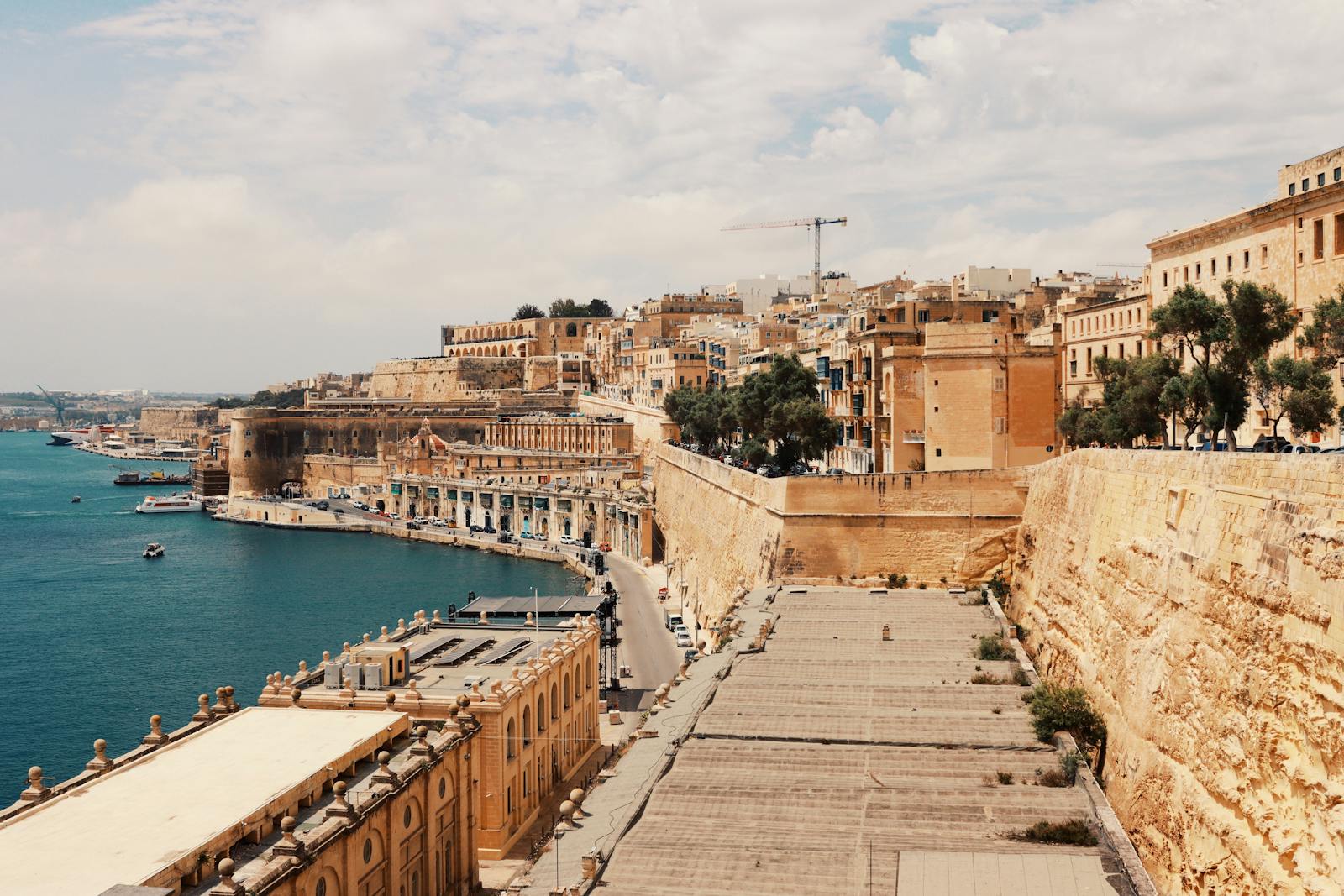
The capital was built by the Knights of St John after the Great Siege of 1565, on a grid of straight streets running down to the sea on both sides. The whole city is a UNESCO World Heritage Site, and it’s small enough to walk end to end in 15 minutes. Look up for the enclosed wooden balconies (gallariji) painted green, blue and red.
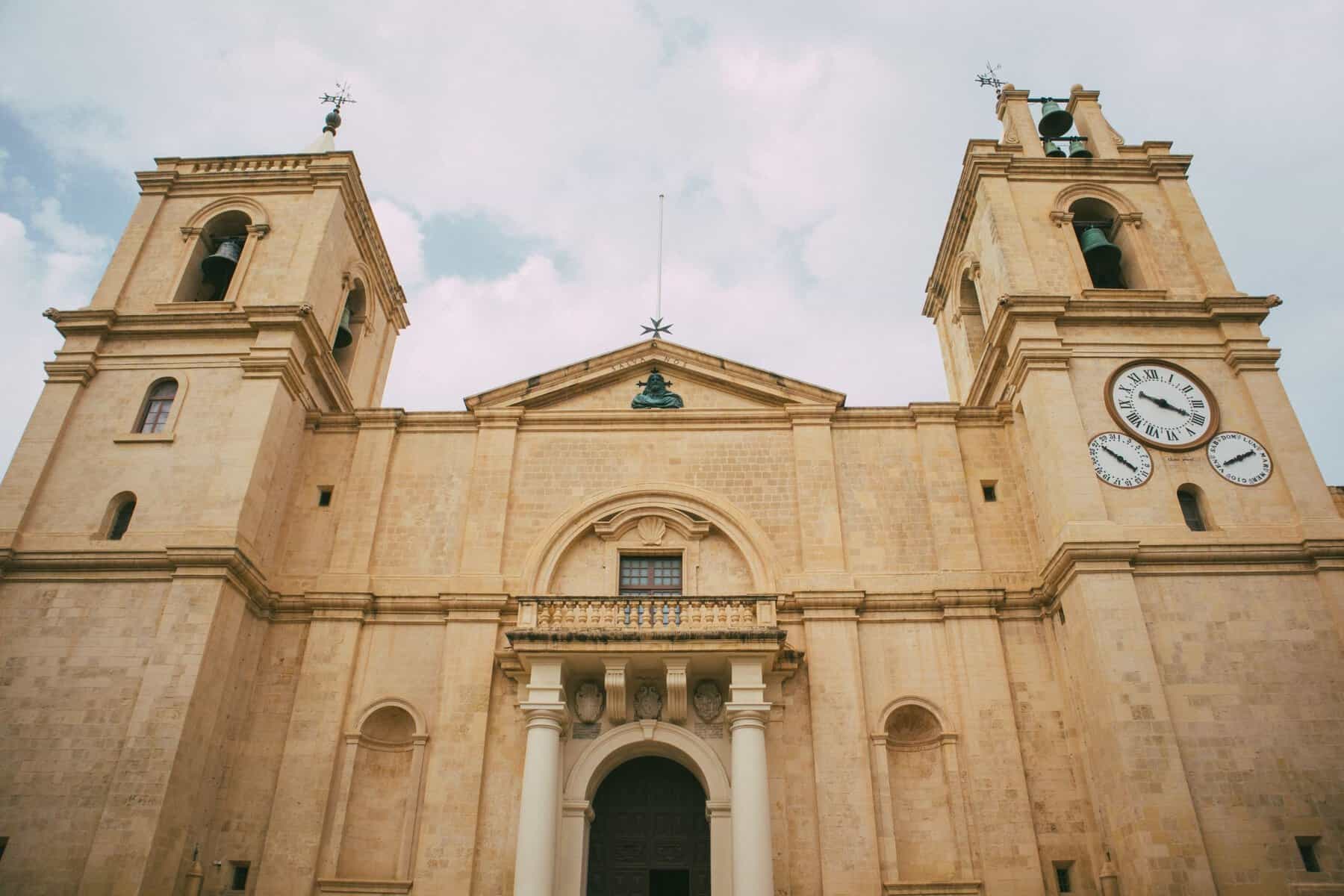
St John’s Co-Cathedral is plain outside and astonishing within: gilded walls, a floor of marble tombstones of the Knights, and Caravaggio’s The Beheading of St John the Baptist, his largest painting and the only one he signed.
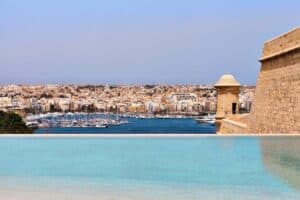
The Upper Barrakka Gardens look straight across the Grand Harbour to the Three Cities; the Saluting Battery below fires a cannon at noon. Also worth your time: the Grand Master’s Palace, the National War Museum at Fort St Elmo and the Lascaris War Rooms, the underground headquarters used in the Second World War.

The Three Cities (Birgu, Senglea and Cospicua) across the harbour were the Knights’ first base and are quieter than Valletta. Cross by the traditional dgħajsa water taxi or the ferry from below the Upper Barrakka, and walk the waterfront to Fort St Angelo.
Mdina and Rabat

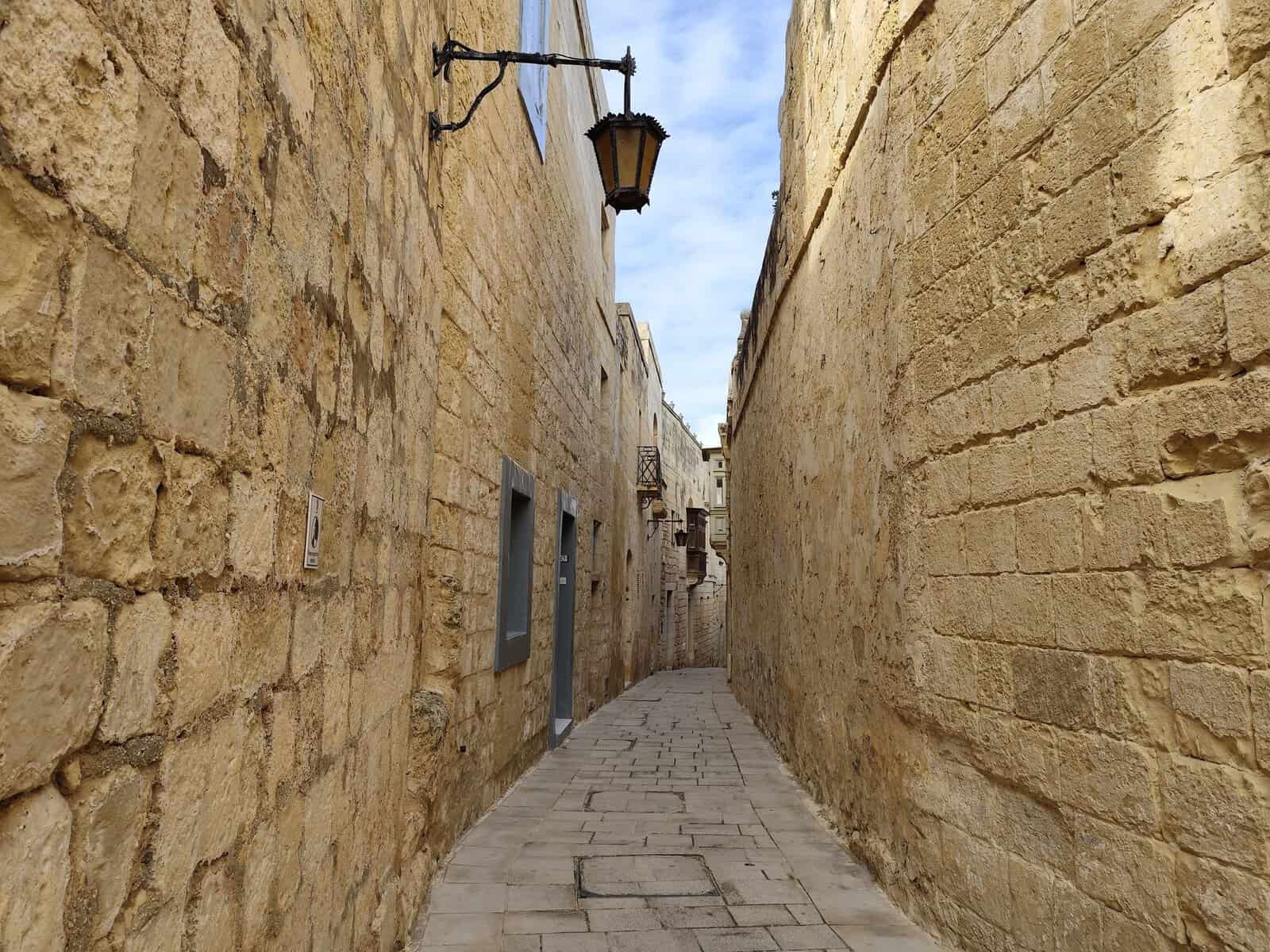
Mdina was Malta’s capital before Valletta, a walled city on a ridge in the middle of the island. Fewer than 300 people live inside the walls and cars are restricted, which is why it’s called the Silent City. Walk in through the main gate, wander the narrow lanes of palaces and convents, see St Paul’s Cathedral and finish on the bastions, which look out over most of the island.
Go early in the morning or in the evening, when the day trips have left and the lamps come on. Next door, Rabat has the catacombs of St Paul and St Agatha, early Christian burial tunnels cut into the rock, and the grotto where St Paul is said to have sheltered after his shipwreck in AD 60.
The prehistoric temples
Malta’s megalithic temples are among the oldest free-standing stone buildings in the world, built from around 3600 BC, before Stonehenge or the pyramids of Giza. Seven are on the UNESCO list. On Malta, Ħaġar Qim and Mnajdra stand together on the south coast above the sea, and Tarxien is near the Three Cities. The Ħal Saflieni Hypogeum in Paola is an underground burial complex carved out of the rock; visitor numbers are strictly limited, so tickets sell out weeks ahead. On Gozo, Ġgantija is the oldest of them all.
The south: Marsaxlokk and the Blue Grotto

Marsaxlokk is a fishing village where the harbour is full of luzzu boats, painted blue, yellow and red with the Eye of Osiris on the bow. The Sunday fish market along the waterfront is the liveliest morning of the week; come for lunch of the day’s catch.
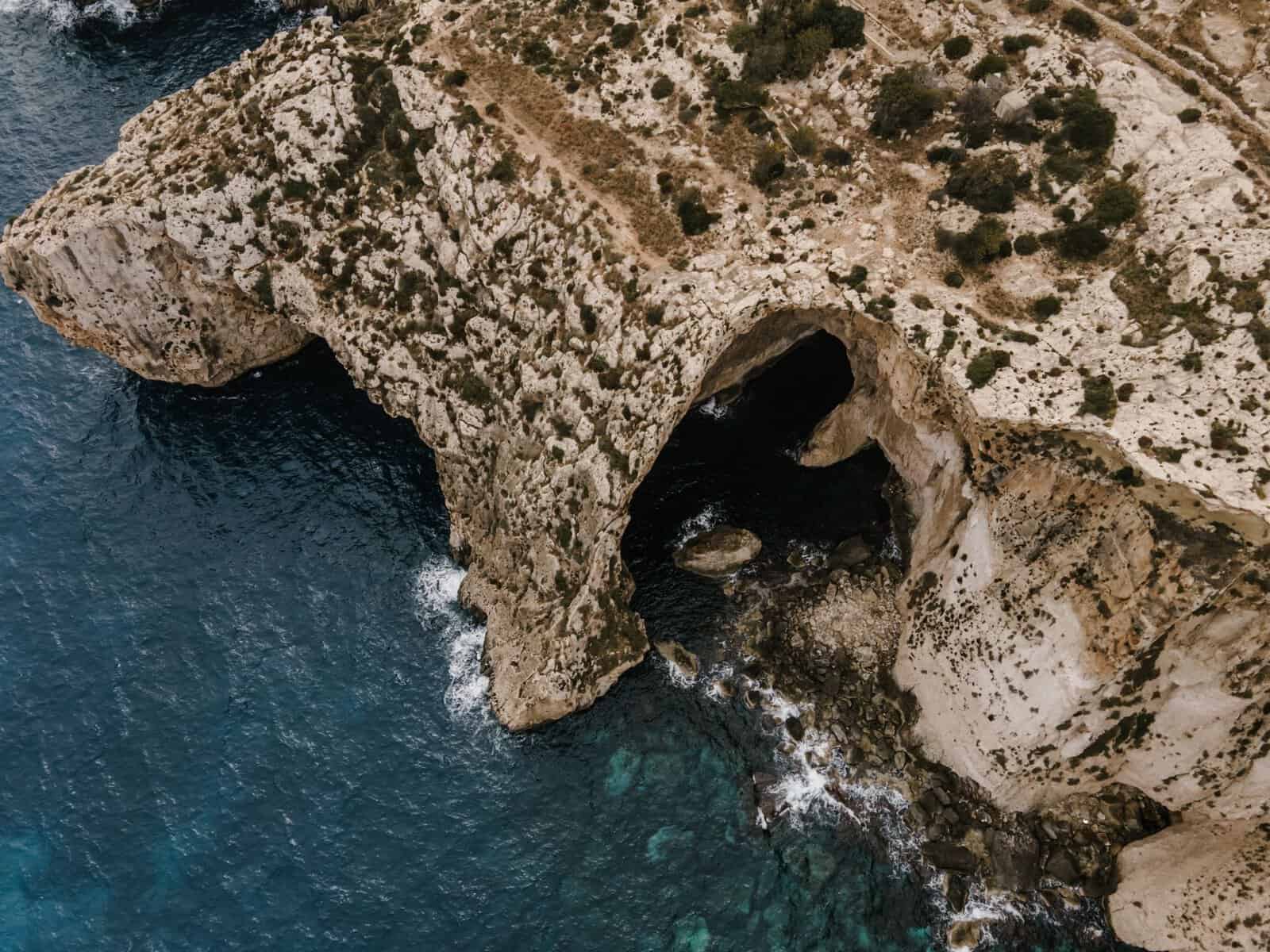
Further west, small boats leave from Wied iż-Żurrieq for the Blue Grotto, a sea arch and a string of caves where the water glows blue in the morning light. The trip takes about 25 minutes and only runs in calm seas. Ħaġar Qim and Mnajdra are a few minutes away, so the three fit easily into one morning.
The north and the coast

The north of Malta has the island’s best sandy beaches: Golden Bay, Għajn Tuffieħa below its watchtower, and long, shallow Mellieħa Bay, which is good for children. Popeye Village in Anchor Bay is the film set built for the 1980 musical, now a small family attraction.
For walking, the Dingli Cliffs on the west coast rise more than 200 m above the sea, with paths along the top and a lovely sunset. Malta’s diving is some of the best in the Mediterranean: clear water, caves and wrecks around Malta, Gozo and Comino.
Gozo

Gozo is what Malta was like a generation ago: farmland in terraces, small villages each with a huge church, and quiet roads. It’s about 14 km long, and the ferry from Ċirkewwa at the northern tip of Malta takes about 25 minutes; a fast ferry also runs from Valletta.
In the middle of the island, the capital Victoria (also called Rabat) is crowned by the Citadel, a fortified town with a cathedral and views across the whole of Gozo. Nearby, the Ġgantija temples are older than any of the temples on Malta.
Gozo deserves at least one night. Day trips cover the sights, but the island is at its best in the evening and early morning, and it suits walkers and divers especially well.

Dwejra
Dramatic cliffs, Fungus Rock and the Inland Sea, a lagoon joined to the open sea by a tunnel through the rock that small boats pass through. The famous Azure Window arch collapsed in a storm in 2017, but this is still one of the islands’ best dive sites.

Xlendi
A small resort at the end of a narrow bay, with swimming from the rocks, seafood on the waterfront and cliff-top walks.
Ta' Pinu
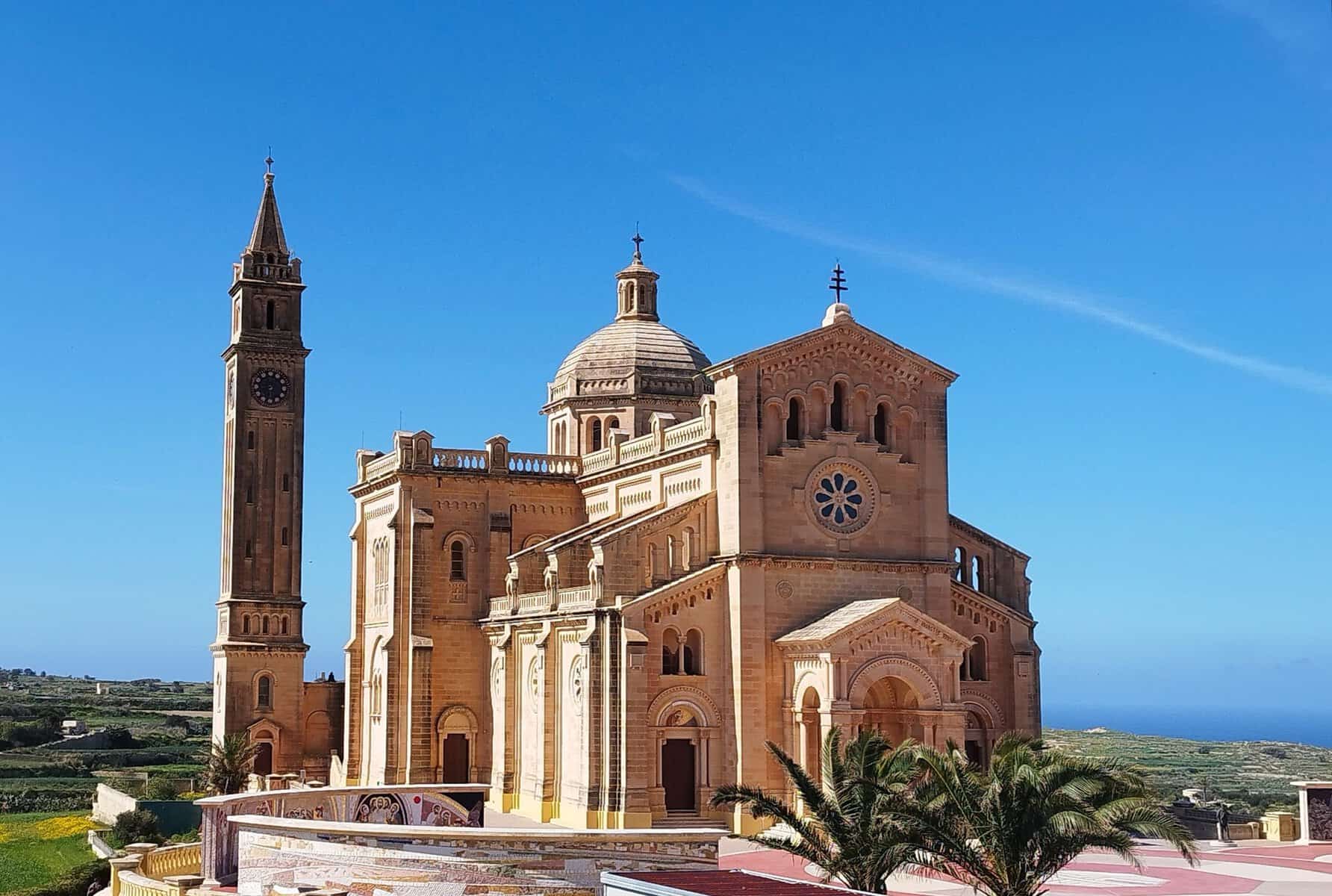
A large neo-Romanesque basilica standing on its own in open fields, Malta’s national shrine to the Virgin Mary.
The north coast
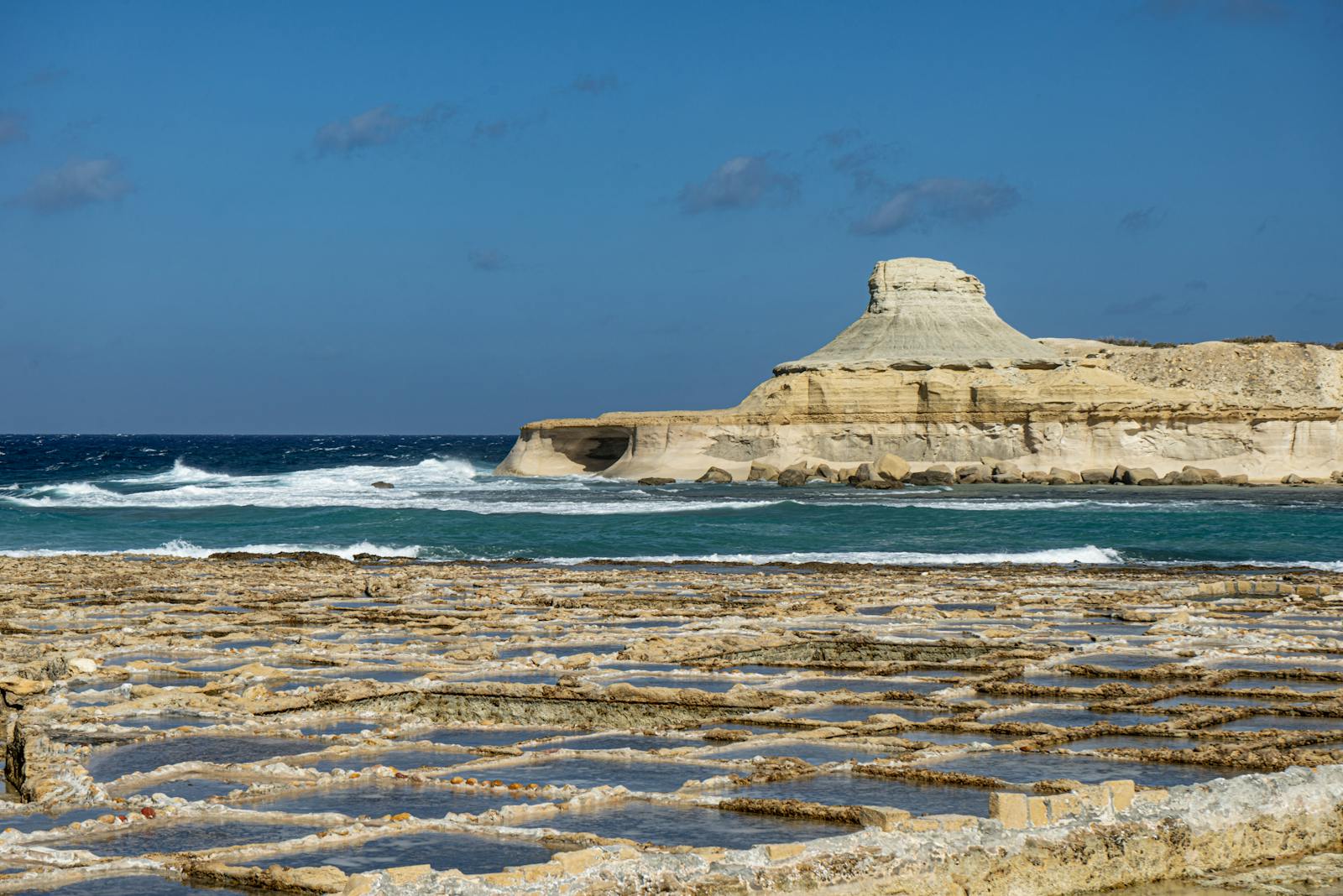
Salt pans cut into the rocks, still worked in summer, and red-sand Ramla Bay, Gozo’s best beach.
Comino and the Blue Lagoon
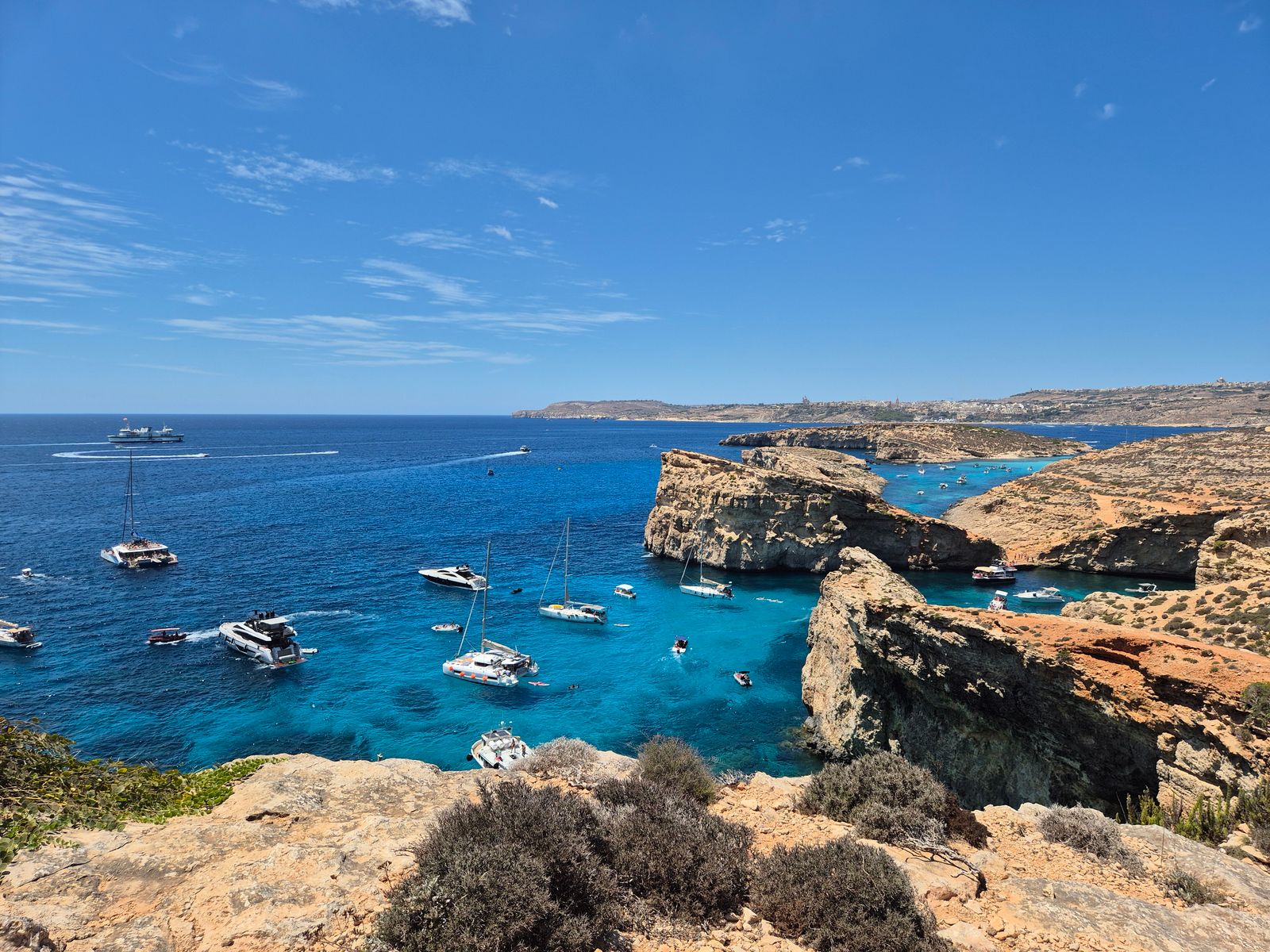
Comino lies between Malta and Gozo and has almost no permanent residents and no cars. The Blue Lagoon is a channel of shallow, startlingly clear water between Comino and the islet of Cominotto, and it’s one of the most photographed places in the Mediterranean. Boats run from Ċirkewwa, Mġarr on Gozo and the resorts of the north. In July and August it gets very crowded by late morning, so go early, or late in the afternoon, or in May, June or September. Malta has been working to limit visitor numbers here (a booking system was introduced in 2025 and has been challenged in the courts), so check the current rules before you go; we’ll tell you if you need to book. Away from the lagoon, a walk around Comino’s paths to the old watchtower takes a couple of hours, with almost nobody about.
What to eat in Malta
Maltese food mixes Sicilian, Arab and British habits. Try pastizzi, flaky pastries filled with ricotta or mushy peas, eaten hot from street kiosks; ftira, a ring-shaped bread with tuna, tomato, capers and olives (the Gozo version is more like a pizza); and stuffat tal-fenek, rabbit stewed in wine and garlic, which is the national dish. In autumn the fishing boats bring in lampuki (dorado), often baked in a pie. Finish with imqaret, date pastries fried and sold warm, and try the local wines, sheep’s cheese (ġbejna) from Gozo and a bottle of Kinnie, the bitter-orange soft drink.
Best time to visit Malta
Malta has hot, dry summers and mild, short winters. April to June and September to October are the best months for most people: warm enough for the beach, without the heat and crowds of high summer, and the sea is warmest in late summer and early autumn. July and August are hot (around 30°C by day and often humid), almost rain-free and the busiest time, with village festas every weekend: processions, brass bands and fireworks. November is still mild, though it’s one of the wetter months. The weather in July is reliably hot and sunny; in March it’s spring-like, around 16°C, not beach weather.
| Month | Average high | Average low | Rain |
|---|---|---|---|
| Jan | 15°C | 12°C | 40 mm |
| Feb | 15°C | 12°C | 50 mm |
| Mar | 16°C | 12°C | 35 mm |
| Apr | 18°C | 14°C | 10 mm |
| May | 22°C | 17°C | 15 mm |
| Jun | 26°C | 21°C | 5 mm |
| Jul | 30°C | 24°C | 0 mm |
| Aug | 30°C | 25°C | 5 mm |
| Sep | 27°C | 23°C | 30 mm |
| Oct | 24°C | 20°C | 60 mm |
| Nov | 21°C | 17°C | 75 mm |
| Dec | 17°C | 14°C | 45 mm |
Valletta: average daily high and low and monthly rainfall, 10-year ERA5 data. Gozo is very similar.
Malta in winter

From December to February Malta averages about 15 to 17°C by day and rarely drops below 10°C at night, with sunny days between showers. It’s too cool for most people to swim, but it’s ideal for sightseeing, walking on Gozo and Comino, and city breaks in Valletta, with no queues at the temples or the cathedral.
Malta does Christmas well: lights in the streets of Valletta, nativity cribs (presepji) in churches and homes, and midnight Mass. Carnival in February fills Valletta and Nadur on Gozo with floats and costumes. Some boat trips, including to the Blue Lagoon, run less often in winter and depend on the sea.
Weighing Malta against Cyprus for winter sun? See Malta vs Cyprus for winter sun.
Getting to Malta from the UK
Direct flights to Malta International Airport at Luqa leave from London and many regional UK airports, taking about 3 hours; there are more routes in summer. The airport is in the south-east of the island, about 20 minutes from Valletta and 40 to 50 minutes from the northern resorts. There is no airport on Gozo: you continue by road to the Ċirkewwa ferry, by fast ferry from Valletta, or by private transfer all the way. Several big cruise ships also call at Valletta’s Grand Harbour, one of the most beautiful arrivals in the Mediterranean.
Getting around
- Car hire: they drive on the left, as at home, but the roads are busy, narrow in the villages, and parking in Valletta is difficult. A car is most useful on Gozo.
- Buses cover the whole of Malta and Gozo cheaply, but they can be slow and crowded in summer.
- Ferries: the car ferry from Ċirkewwa to Mġarr on Gozo takes about 25 minutes; the fast passenger ferry from Valletta takes about 45 minutes. Small ferries cross the harbours to Sliema and the Three Cities.
- Private drivers and guides make the most of a short stay: we arrange transfers, day tours to the temples, Mdina and Gozo, and boat trips.
Best places to stay in Malta

| Area | Best for | Good to know |
|---|---|---|
| Valletta | History, restaurants, a city break | Boutique stays in old palazzos; no beach, but swimming from the rocks nearby |
| Sliema and St Julian’s | Choice, nightlife, shopping | Rocky lidos rather than sand; ferry to Valletta in minutes |
| Mellieħa and the north | Sandy beaches, families | Closest to the Gozo and Comino ferries |
| St Paul’s Bay, Qawra, Buġibba | Good-value resort hotels | Busy in summer; sea-front promenade |
| Mdina and the centre | Quiet, romance, history | Very peaceful at night; you need transport for the beach |
| Gozo | Slow pace, walking, diving | Farmhouses with pools and small resorts; best for 3 nights or more |
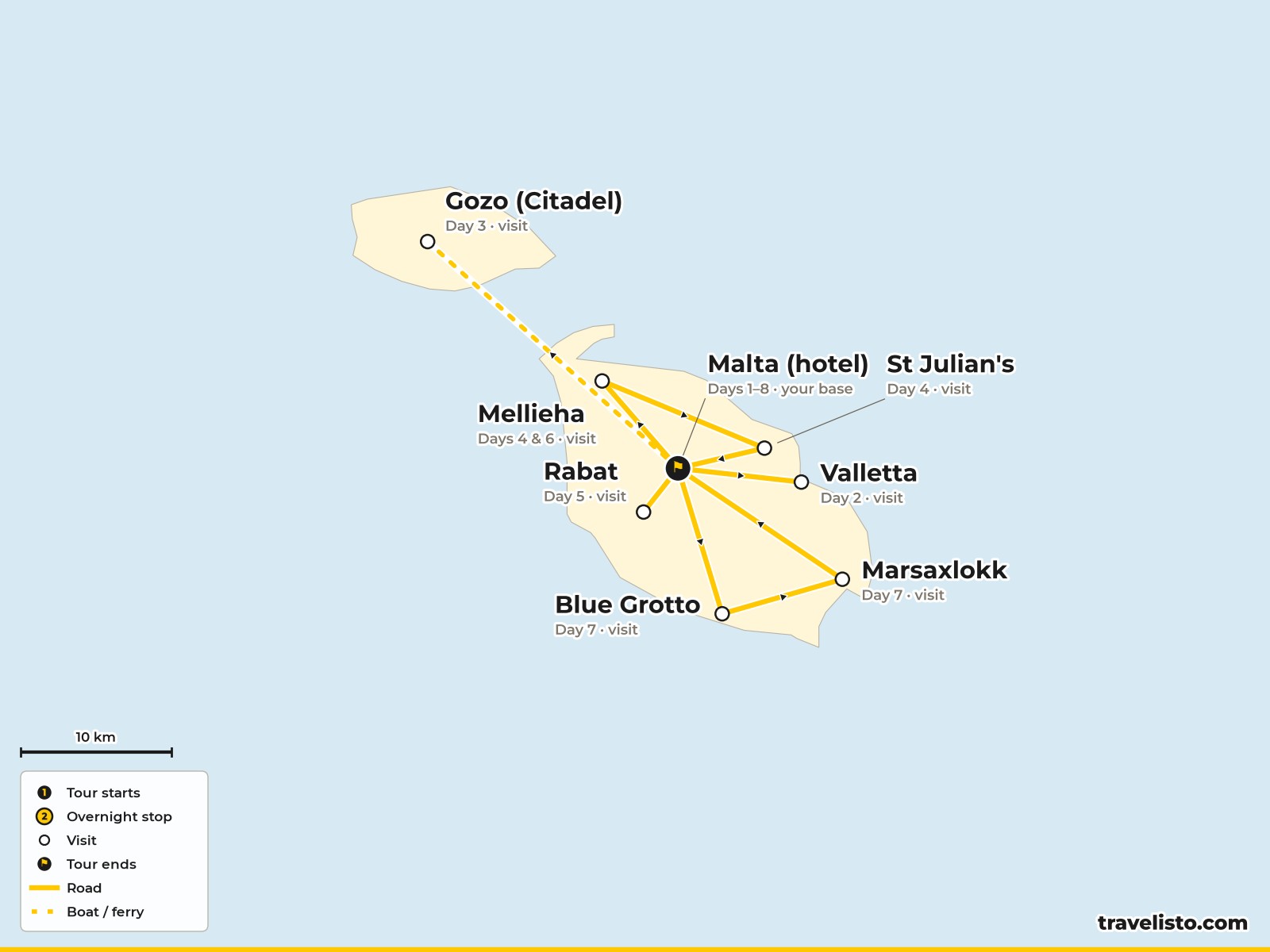
Many people split a week: four nights in or near Valletta, three on Gozo. For our pick of hotels by style, see the best hotels in Malta, or browse all our Malta holidays.
How many days in Malta? Sample routes
A long weekend covers Valletta and Mdina. A week lets you add Gozo, Comino and the south coast without rushing.
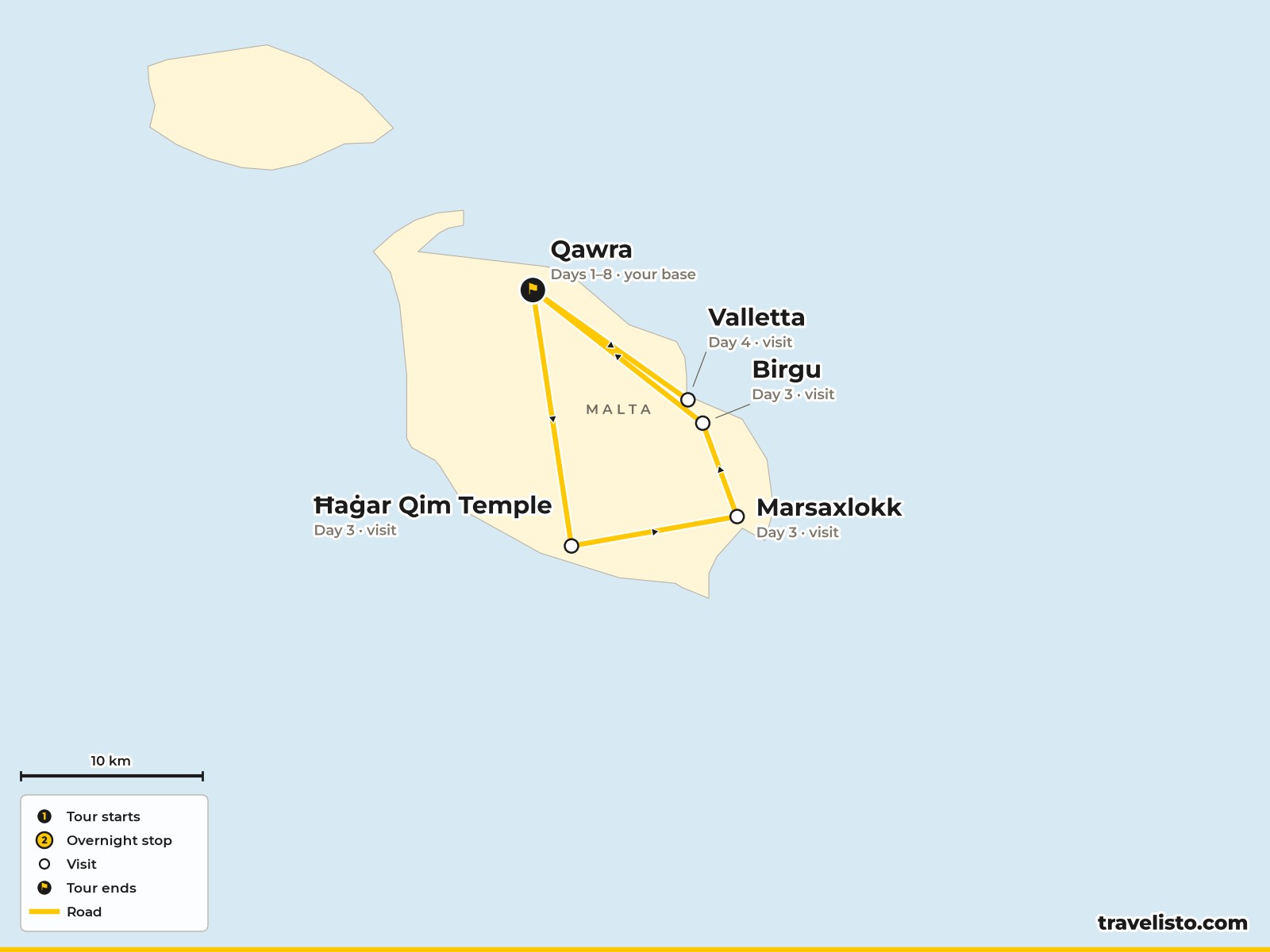
Valletta city break
- Valletta (4 nights)
- Day out to Mdina and Rabat
- Morning in Marsaxlokk and the Blue Grotto
Ideal from October to April, when the city is at its most comfortable.
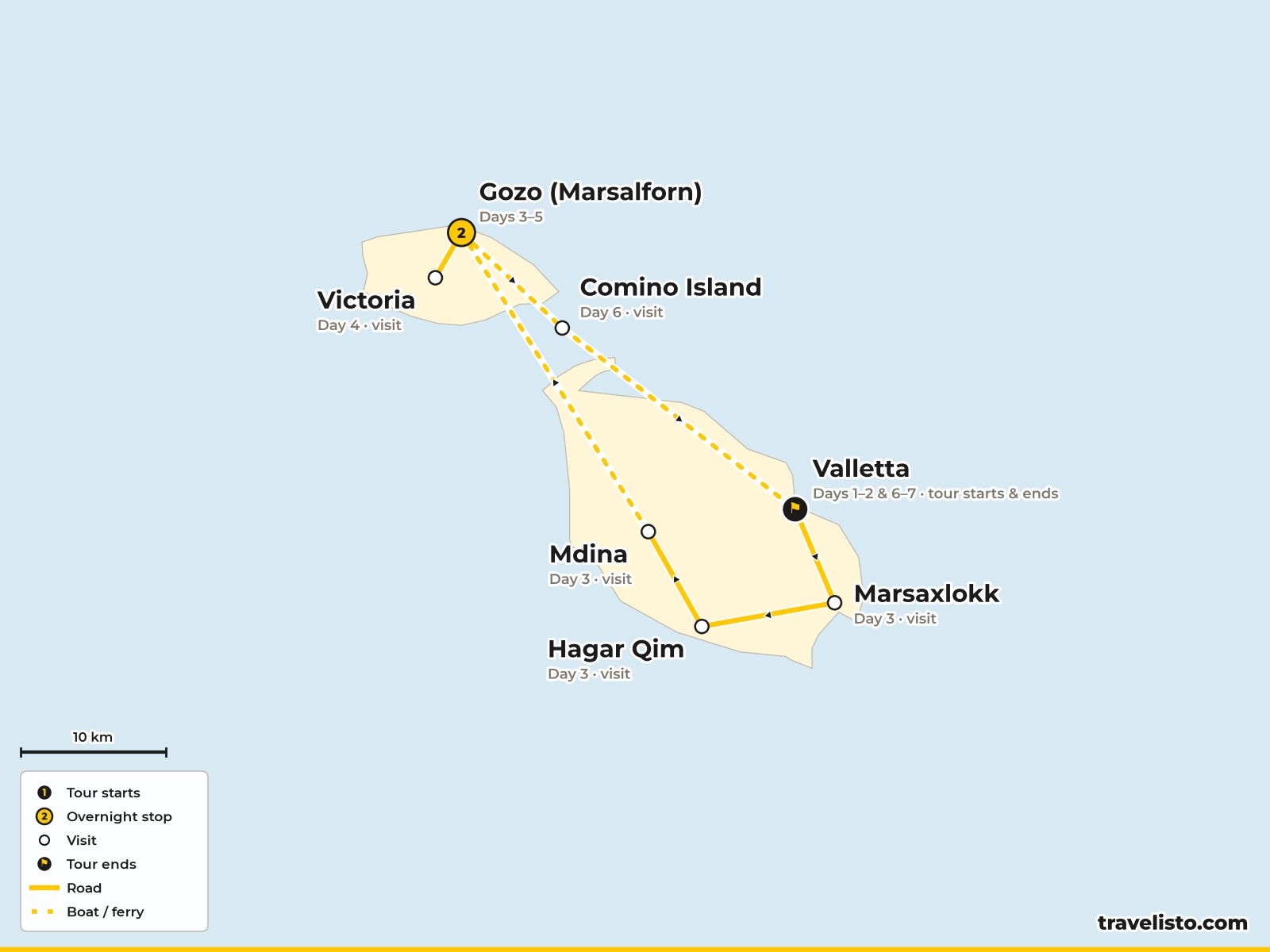
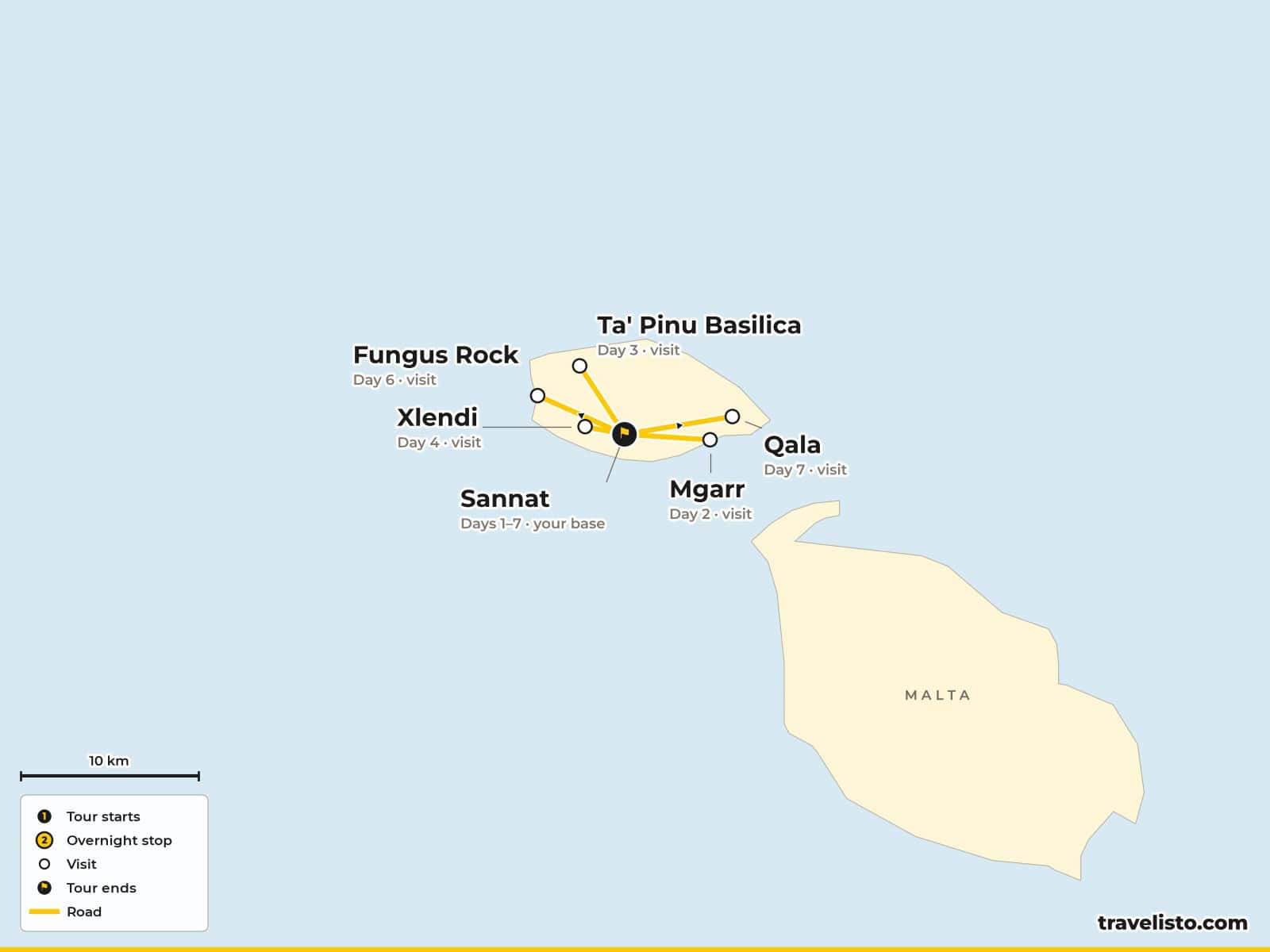
Malta and Gozo
- Valletta or Sliema (4 nights)
- Gozo (3)
The temples, Mdina, the Three Cities, then Gozo’s Citadel, Dwejra and a boat to Comino.
Malta, Gozo and Sicily
- Valletta (3 nights)
- Gozo (3)
- Ferry to Sicily: Syracuse and Taormina (4)
A fast catamaran links Valletta with Pozzallo in Sicily in under two hours.
Ways to see Malta with us
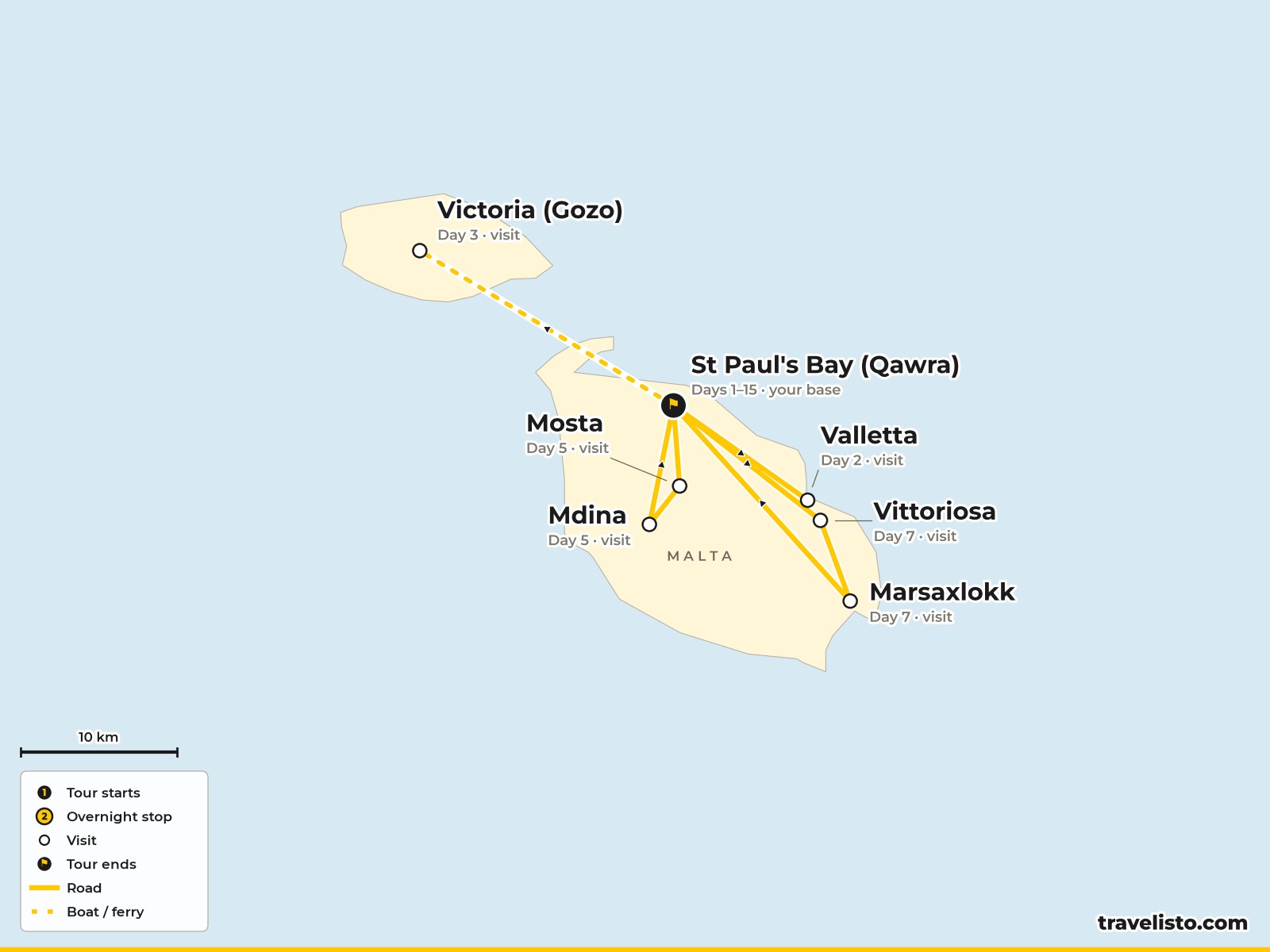
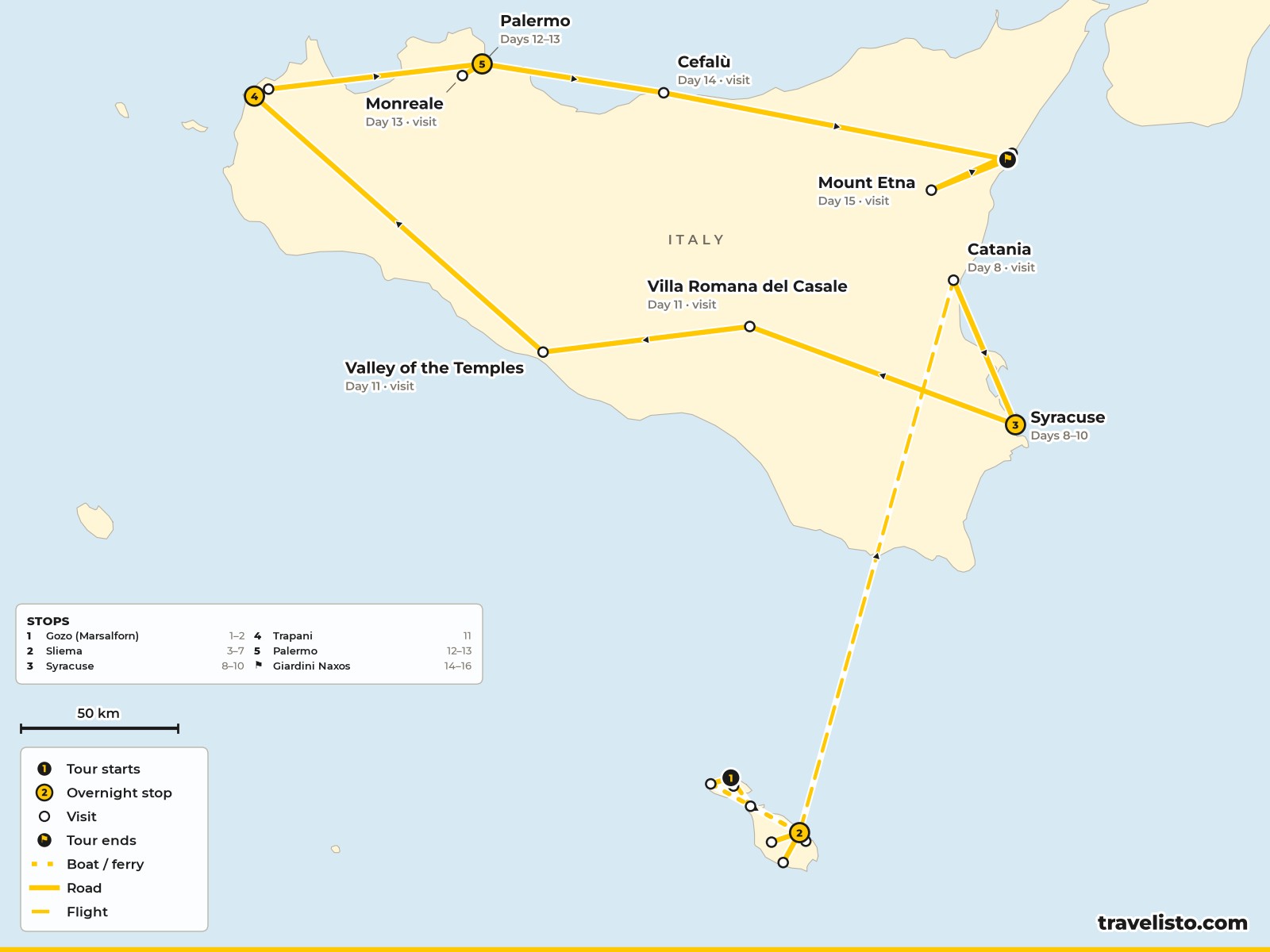
Prefer your own pace? A tailor-made Malta holiday can combine a Valletta stay with Gozo, private guides for the temples and Mdina, and a boat day to Comino. Comparing tours? See Malta tours compared, and all our escorted tours of Malta.
Practical tips
- Entry: Malta is in the Schengen area: British visitors can stay up to 90 days in any 180 without a visa. Your passport must have been issued less than 10 years before you arrive and be valid for at least 3 months after you leave. The EU’s Entry/Exit System (EES) is being introduced, so expect to register fingerprints and a photo at the border. Check the FCDO Malta advice before you go.
- Money: the euro. Cards are widely accepted; keep some cash for kiosks, buses and boat trips.
- Plugs and driving: UK-style three-pin plugs, and driving on the left.
- Churches: cover shoulders and knees to visit St John’s Co-Cathedral and other churches.
- Sun: from June to September the sun is strong and there is little shade at the temples and on Comino; carry water.
- Book ahead: the Hypogeum (weeks ahead), Gozo stays in July and August, and Christmas and Carnival dates.
- Beaches: many are rocky, with ladders into the sea; bring water shoes.
Frequently asked questions
Is Malta a good holiday destination?
Yes, especially if you like history as much as the sea. It has prehistoric temples, the Knights' capital Valletta, the walled city of Mdina, clear water around Gozo and Comino, and it's only three hours from the UK, with English widely spoken.
What is the best time to visit Malta?
April to June and September to October, when it's warm but not too hot. July and August are hot, dry and busy; winter is mild, around 15 to 17°C by day, and good for sightseeing.
Is Malta hot in March?
Not beach-hot. Days in March are usually around 16°C with some rain, which is pleasant for walking and sightseeing. It warms up through April and May.
How many days do you need in Malta?
Four nights covers Valletta, Mdina and the south coast. A week lets you add three nights on Gozo and a boat trip to Comino.
How do you get to Gozo?
By car ferry from Ċirkewwa in the north of Malta, about 25 minutes, or by fast passenger ferry from Valletta in about 45 minutes. There is no airport on Gozo.
Where is the best place to stay in Malta?
Valletta for history and restaurants, Sliema and St Julian's for choice and nightlife, Mellieħa for sandy beaches and families, and Gozo for peace. Many people split their stay between Valletta and Gozo.
Is Malta good in winter?
Yes, for sightseeing. Winter days are mild and often sunny, there are no queues, and Christmas and Carnival are lively. It's usually too cool to swim, and some boat trips run less often.
Do I need a visa for Malta?
British visitors don't need a visa for stays of up to 90 days in any 180. Malta is in the Schengen area, so check your passport dates and the latest FCDO advice before you travel.
Keep planning
- Malta holidays
- Escorted tours of Malta
- Malta tours compared
- Best hotels in Malta
- Malta vs Cyprus for winter sun
- Cyprus holiday guide
- Best hotels in Sicily
- Where to go in December
- Tailor-made holidays
Plan your Malta holiday with a Travel Designer
Tell us when you’d like to go and we’ll plan Valletta, Gozo and Comino, with flights, transfers, guides and boat trips, in one ATOL-protected booking.
Make an enquiry Malta holidays