
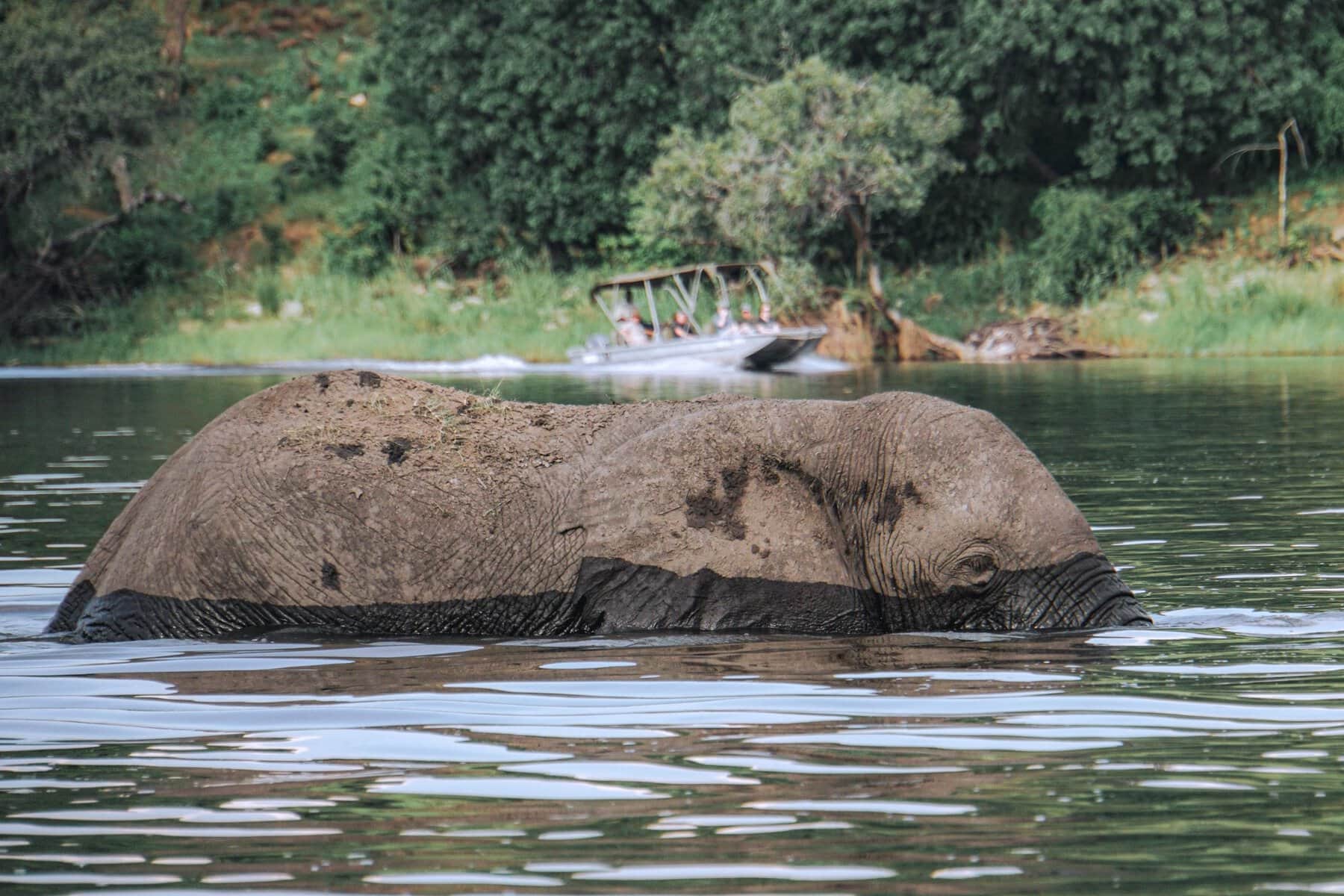
A Botswana safari is about wilderness and space: the channels and islands of the Okavango Delta, the elephant herds of the Chobe River, the predators of Linyanti and Savute, and the salt pans of the Makgadikgadi. Much of the best country is in private concessions with only a few small camps, so you see far more animals than vehicles.
Most people fly between camps in light aircraft from Maun or Kasane, spending two or three nights in each. A classic first trip pairs a water camp in the Delta, for mokoro and boat trips, with a land camp for game drives, then adds Chobe or Victoria Falls, which is about an hour and a half by road from Kasane.
This page is our overview of Botswana safari holidays: where to go, when, and how a trip fits together. Our Travel Designers tailor-make fly-in safaris around your dates, and if you would rather join a group, we line up every tour we sell in Botswana safari tours compared. For the country as a whole, see our Botswana holidays page.
Comparing group tours? Compare Botswana safari tours side by side, with days, group sizes, physical ratings and the honest drawback of each.
Where to go on a Botswana safari
Six areas, each with a different character. Most fly-in safaris combine two or three of them, and the best mix depends on the month you travel.
Okavango Delta
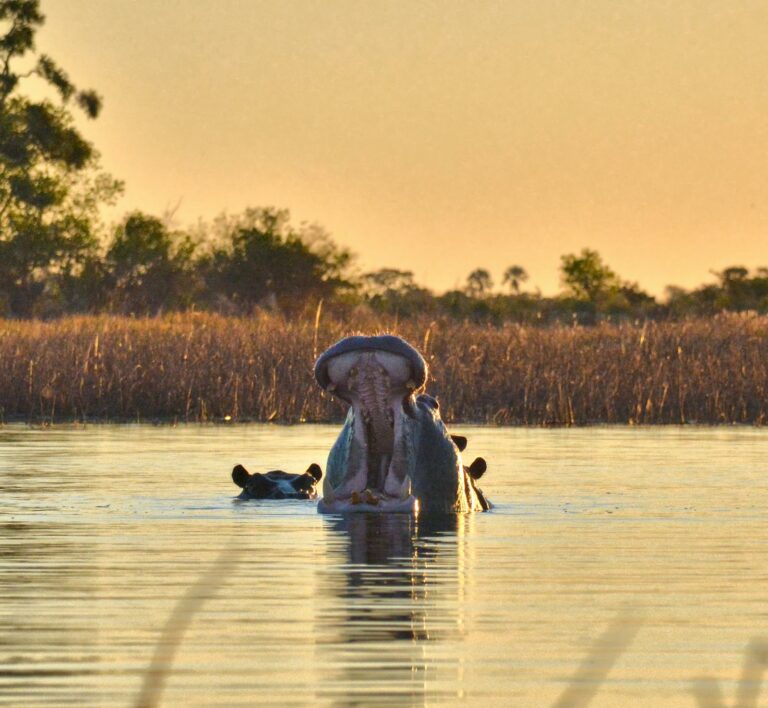
A huge inland delta of channels, lagoons and palm islands, and a UNESCO World Heritage Site. Explore by mokoro, motorboat and on foot, with game drives on the larger islands and drier edges.
Moremi Game Reserve
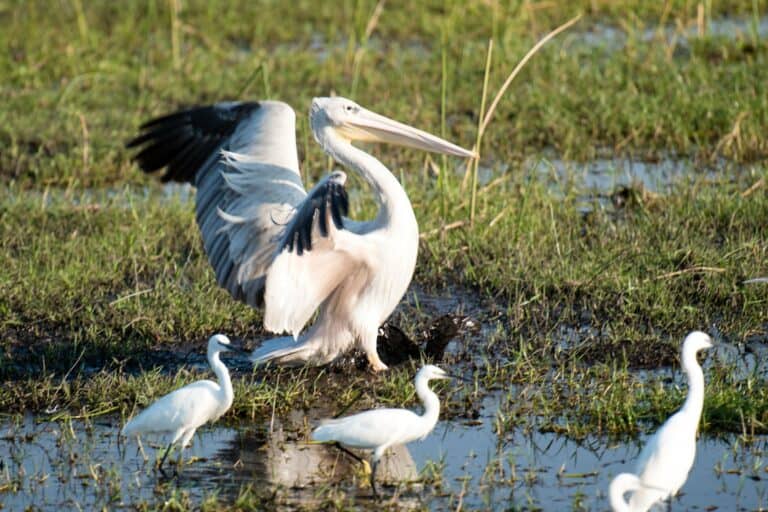
The national reserve on the eastern side of the Delta, where land and water meet. Excellent for big cats and wild dogs, but busier than the private concessions around it.
Chobe riverfront
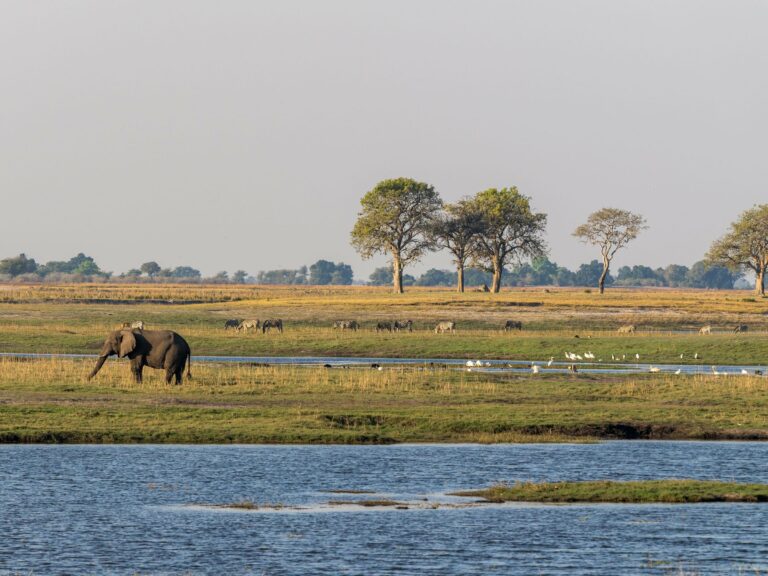
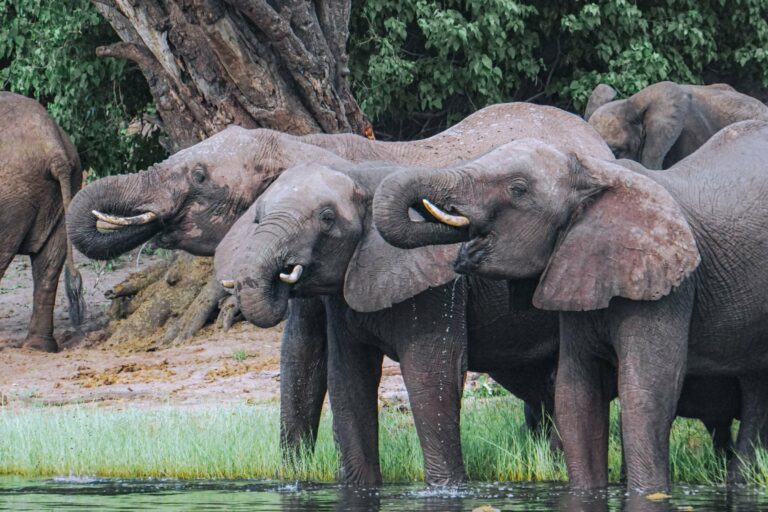
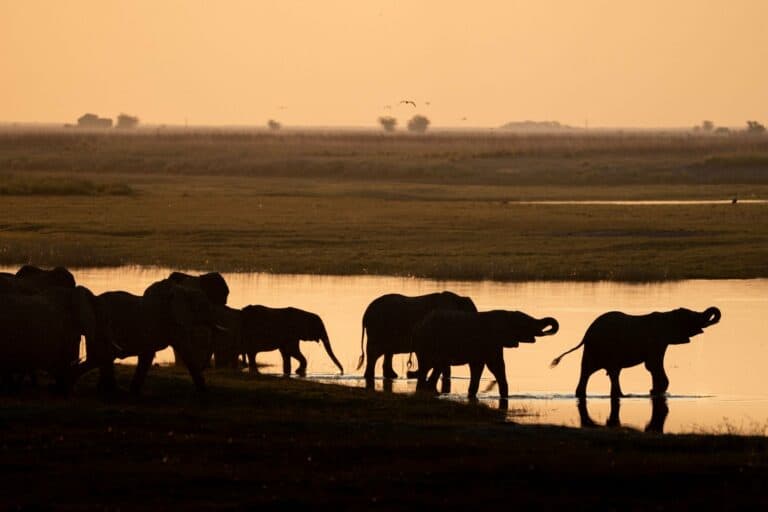
In the dry season, thousands of elephants and buffalo come down to the Chobe River to drink. A boat safari here puts you at water level with elephants, hippos and crocodiles.
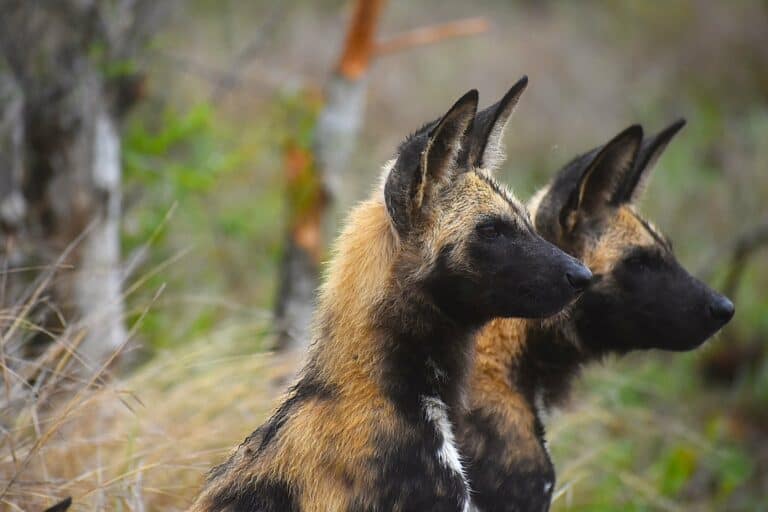
Linyanti and Savute
Remote country between the Delta and Chobe. The private Linyanti concessions are known for wild dogs and elephants, with night drives and off-road driving. Savute is known for its lions.
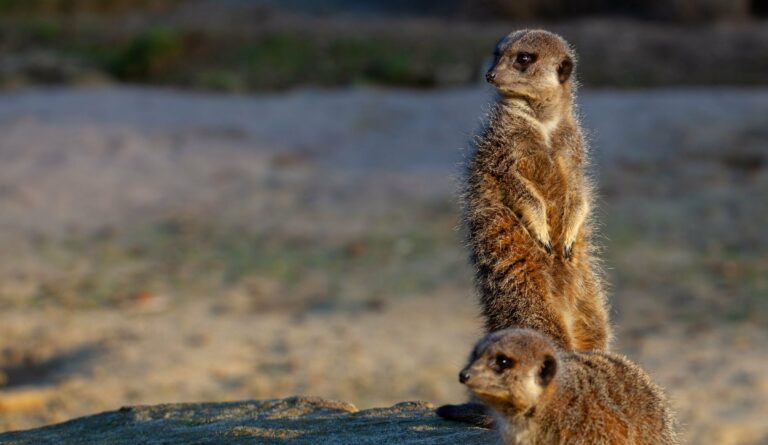
Makgadikgadi and Nxai Pans
Vast salt pans with habituated meerkats, ancient baobabs and, in the green season, thousands of zebra on migration. In the dry season you can sleep out on the pans under the stars.
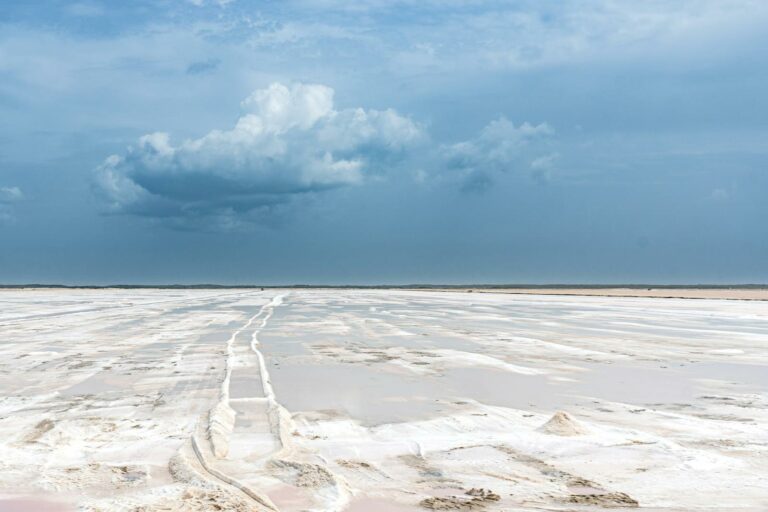
Central Kalahari
One of the largest game reserves in Africa, with open grassland pans, black-maned Kalahari lions and walks with San guides at some camps. At its best after the rains.
Okavango Delta safari: water camps, land camps and the flood
The Delta runs on an unusual calendar. Its water comes from rain that falls in the highlands of Angola from about November to March. The flood takes months to travel down the Okavango River, so it reaches the Panhandle in the north-west first and spreads across the Delta from around May, usually peaking from about June to August, in the middle of the dry season. The most water arrives just when the rest of Botswana is at its driest, and animals crowd onto the islands and floodplains. Flood levels vary a lot from year to year.
The mokoro
A mokoro is a dugout canoe, these days usually made of fibreglass, poled by a local guide standing at the back. You glide at water level through reeds and papyrus, past water lilies, reed frogs and kingfishers, and sometimes an elephant wading across a channel. It is about birds, small things and silence rather than the Big Five. Camps on permanent channels run mokoro trips all year; seasonal camps can only run them when the flood is in.
| Camp type | Activities | Best for | Trade-off |
|---|---|---|---|
| Water camp | Mokoro, motorboat and walks on the islands | Birdlife, scenery and peace | Few or no game drives, so fewer big game sightings |
| Land camp | Day and night game drives and walks | Big cats, wild dogs and photography | May have no water activities when the flood is low |
| Mixed camp | Game drives, plus mokoro or boat trips when water levels allow | A shorter stay that covers both | Water activities depend on the flood that year |
We usually suggest two or three nights in a water or mixed camp and two or three in a land camp, ideally in a private concession, where night drives, walks and off-road driving are allowed. In Moremi and the national parks, drives stay on the tracks and end at dusk. In the Panhandle, in the north-west, houseboats are a good-value way to see the Delta’s waterways, and two of our escorted tours include them.
When to go on safari in Botswana
The dry season, from May to October, is the best time for game viewing and for the Delta’s flood. The green season, from November to April, brings the zebra migration, newborn animals, migrant birds and lower rates.
| Month | Avg high | Avg low | Rain | Verdict |
|---|---|---|---|---|
| January | 31°C | 20°C | 135 mm | Green season. Hot and humid with afternoon storms. Zebra gather on the Makgadikgadi and Nxai Pans, and the bush is full of young animals. |
| February | 30°C | 20°C | 110 mm | Green season. The wettest weeks, though storms rarely last all day. Good for the pans, the Kalahari and birdwatching, at lower rates. |
| March | 30°C | 19°C | 80 mm | Rains easing. Still good for the pans and the Kalahari, with very few visitors and lush scenery. |
| April | 29°C | 17°C | 25 mm | Shoulder month. Drying out, comfortable temperatures and quiet camps: a good-value time for the Delta and Chobe. |
| May | 28°C | 13°C | 0 mm | The dry season begins. Cooler nights, the flood arriving in the Delta and game starting to gather at water. |
| June | 25°C | 10°C | 0 mm | Excellent. Clear skies, cold early mornings and the flood spreading across the Delta. Peak season starts. |
| July | 25°C | 9°C | 0 mm | Peak season. The Delta is usually at its fullest and mokoro trips are at their best. Near freezing before dawn, so bring warm layers. |
| August | 29°C | 12°C | 0 mm | Peak season. Dry, sunny days, high water in the Delta and big elephant herds on the Chobe River. Book camps well ahead. |
| September | 33°C | 16°C | 0 mm | Superb game viewing as water dries up away from the rivers. Warmer days and still high demand. |
| October | 36°C | 20°C | 5 mm | The hottest month. Game is very concentrated at water, which is great for Chobe and Linyanti, but midday heat is tiring. |
| November | 35°C | 21°C | 20 mm | The first rains arrive. Antelope give birth, migrant birds return and rates start to fall, but it can be very hot until the rain comes. |
| December | 33°C | 21°C | 90 mm | Green season. Hot with afternoon storms, lush and green, and the zebra start moving to the pans. Quieter outside Christmas. |
Averages for Maun, the gateway to the Okavango Delta, 2014 to 2023 (ERA5 reanalysis). Early mornings in the Delta are often colder than Maun’s average low in June and July.
Airport station average: Maun’s weather station records cooler dry-season nights than the reanalysis figures above, with average lows of about 15°C in April, 10°C in May, 6°C in June and July, 9°C in August and 14°C in September. Highs and the rainy months are similar. (Source: Deutscher Wetterdienst station climate table for Maun, 1961 to 1990 baseline.)
How Botswana safaris work: low volume, high value
Botswana chose long ago to limit safari tourism to protect its wilderness. Much of the Delta and Linyanti is divided into large private concessions, leased to safari companies that run only a handful of small camps in each. That keeps vehicle numbers very low and allows what you cannot do in the national parks: off-road driving to follow animals, night drives and guided walks.
The flip side is cost. Botswana is one of the most expensive safari countries in Africa, because a few guests share the costs of remote camps that are supplied by air. Ask a Travel Designer for current prices: the green season and the shoulder months are noticeably better value, and a mix of a private concession with a lodge on the Chobe River keeps the trip in proportion. For the most exclusive camps, see our guide to luxury safari holidays.
Fly-in safaris
Camps are linked by small aircraft from Maun and Kasane, usually in short hops. Luggage is normally limited to around 20 kg each in a soft bag, including hand luggage and camera gear, so pack light. The flights are a highlight in themselves: from the air you see the channels of the Delta and the animals crossing them.
Mobile and overland safaris
For a more adventurous and more affordable trip, guided mobile camping safaris move through Moremi, Savute and Chobe by 4×4, and overland group tours link the Delta, the pans and Chobe by road. You see the same country, with more time on the road and simpler camps.
Sample Botswana safari itineraries
Starting points for a tailor-made trip. A Travel Designer will adjust the camps and nights to the month you travel.
| Trip | Length | Route | Suits |
|---|---|---|---|
| Classic fly-in | 7 to 8 nights | Okavango water or mixed camp (3), Delta land camp (2 to 3), Linyanti or Chobe (2) | A first Botswana safari with the full range of activities |
| Delta and the Falls | 9 to 10 nights | Victoria Falls (2), Chobe riverfront (2), two Okavango camps (5) | Adding the Falls without long drives |
| Green season pans | 8 to 10 nights | Okavango Delta (4 to 5), Makgadikgadi or Nxai Pan (3), Central Kalahari (2, optional) | The zebra migration, meerkats and value |
| Botswana and South Africa | 12 to 14 nights | Cape Town (3 to 4), a private reserve next to Kruger (3), the Delta and Chobe (5 to 6) | City, Big Five and the Delta in one trip: see our South Africa safari page |
| Safari honeymoon | 10 to 12 nights | Two Delta camps (5 to 6), then a beach in Mauritius via Johannesburg (5 to 6) | Couples: see our honeymoons and Mauritius holidays |
Add Victoria Falls to a Botswana safari
Kasane, the gateway to Chobe, is about 80 km from Victoria Falls, so the Falls fit naturally at the start or end of a trip. Two nights is enough to walk the rainforest paths opposite the Falls, take a sunset cruise on the Zambezi and, if you like, a helicopter flight over the gorge. You can stay on the Zimbabwe side or in Livingstone in Zambia.
The Falls are fullest from about March to May, when the spray can hide parts of the view, and lowest around October and November, when parts of the Zambian side can run almost dry. See our Zimbabwe holidays and Zambia holidays pages for more. Namibia’s Caprivi Strip borders Chobe too, and our Namibia tours compared guide covers trips that link the two.
Botswana safari tours and holidays
These escorted tours run on set dates. To see them side by side, with group sizes, physical ratings and who each one suits, compare Botswana safari tours in our guide. Ask a Travel Designer for current prices and availability.
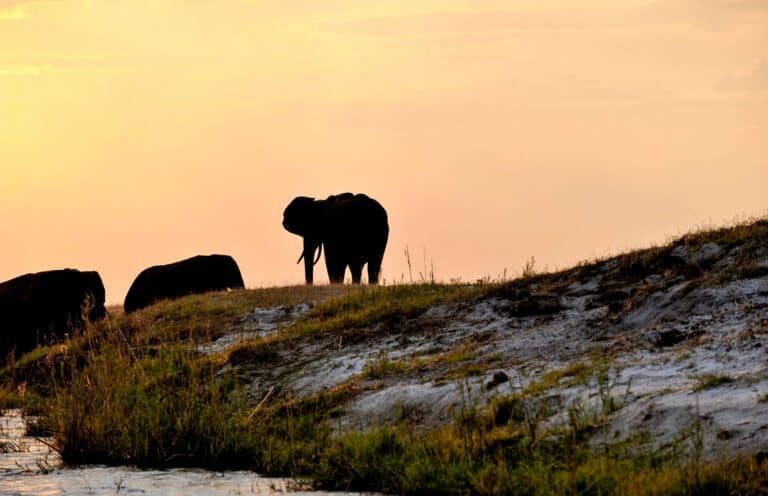
Botswana Highlights: Okavango Delta & Chobe Safari – 9 Days
A lodge-based loop from Victoria Falls, with a mokoro trip and bush walk in the Delta, a river cruise in the Caprivi Strip and a dawn drive in Chobe.
Botswana Adventure: Okavango Houseboat to Victoria Falls – 10 Days
Windhoek to Victoria Falls through the Kalahari, with two nights on an Okavango houseboat, a baobab dinner by the pans and Chobe.
Luxury Botswana Safari: Moremi, Okavango Houseboat & Chobe – 12 Days
Game drives in a private concession on the edge of Moremi, a private houseboat in the Panhandle, the Tsodilo Hills, Chobe and the Falls.
Chobe Safari Holiday with Flights: Botswana & Victoria Falls – 10 Days
Seven nights at one lodge on the Chobe River, with five game drives, river cruises and a day at Victoria Falls.
Family Botswana Safari: Victoria Falls, Chobe & Okavango – 8 Days
Victoria Falls at sunrise, a Chobe drive and cruise, meerkats on the Makgadikgadi and a full day by mokoro in the Delta.
Essential Botswana: Okavango, Chobe & Victoria Falls – 9 Days
Overland camping from Johannesburg: a rhino drive at Khama, two nights in the Delta with a mokoro trip, the Makgadikgadi and Chobe.
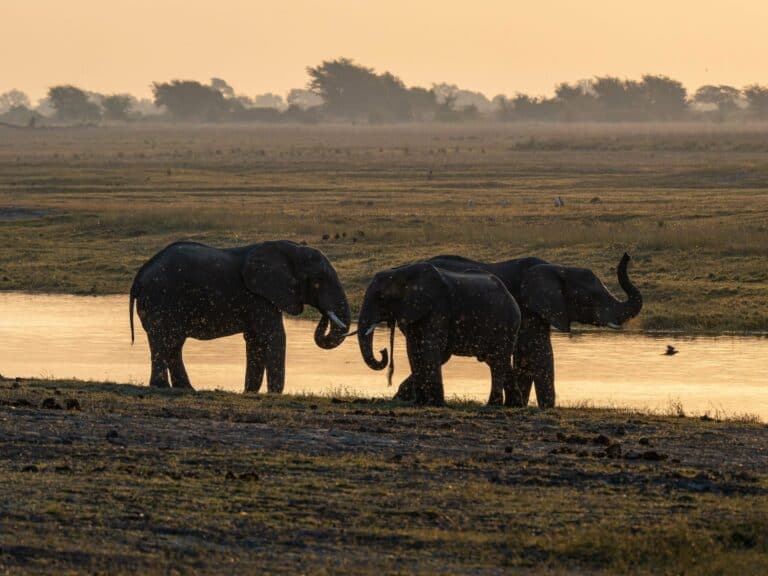
Botswana & Zimbabwe Safari with Flights: Chobe to Matobo – 14 Days
Chobe, three nights at Victoria Falls, a private concession near Hwange with underground hides, and the Matobo Hills.
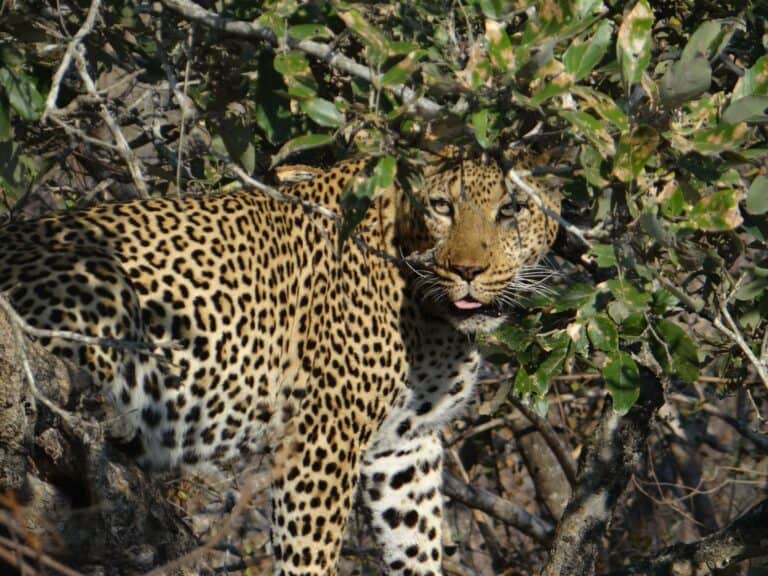
Luxury Southern Africa Safari: Kruger to the Okavango – 14 Days
Kruger, Victoria Falls, three nights on the Chobe River, the Makgadikgadi meerkats and a mokoro day in the Delta.
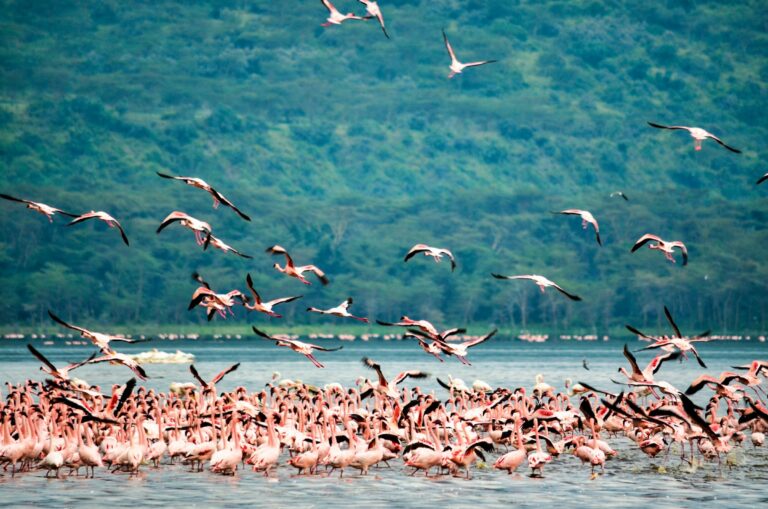
Luxury Kenya & Southern Africa: Maasai Mara to Chobe – 15 Days
The Maasai Mara and Lake Nakuru, then Kruger, Victoria Falls and the Chobe River in one trip.
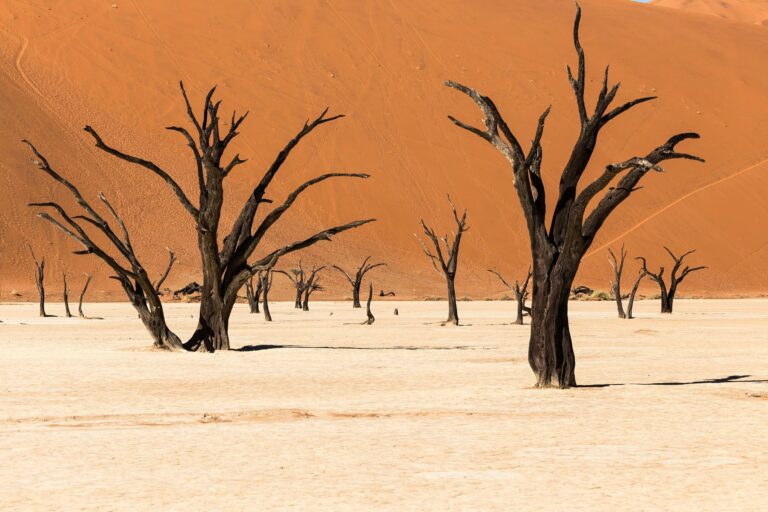
Amazing Southern Africa: Cape Town to Victoria Falls – 23 Days
Overland from Cape Town through Namibia, then an Okavango houseboat, the Makgadikgadi Pans, Chobe and Victoria Falls.
See all our Botswana escorted tours, or ask a Travel Designer about a tailor-made fly-in safari.
Botswana safari FAQs
When is the best time for an Okavango Delta safari?
From about June to August, when the annual flood is usually at its peak and mokoro trips are at their best. May to October is the dry season and the best time for game viewing across Botswana. November to April is the green season, with the zebra migration on the pans and lower rates.
Why is a Botswana safari more expensive than other safari countries?
Botswana limits tourist numbers to protect its wilderness, so most of the Delta and Linyanti is in private concessions with a few small camps, supplied and reached by light aircraft. You are paying for space: very few vehicles, plus off-road driving, night drives and walks. The green season and the shoulder months are better value.
Is a mokoro trip safe?
Yes, with a trained poler from your camp. Polers know the channels, read the water and keep a safe distance from hippos and elephants. You sit low in the boat and keep your hands inside. Mokoro trips depend on water levels, so not every camp can run them all year.
Do I need malaria tablets for Botswana?
The Okavango Delta, Chobe and the north of Botswana are malaria areas, with the highest risk in the rainy season from about November to April. Ask your GP or a travel clinic about antimalarials before you go. For a malaria-free safari, look at Madikwe or the Eastern Cape in South Africa.
Can children go on safari in Botswana?
Yes, but choose camps carefully. Many camps take children from six, some only from 12, and mokoro trips and walks often have higher minimum ages. Families often book a private vehicle or a family tent. Our Family Botswana Safari is for children aged six and over.
How do you get to the Okavango Delta from the UK?
There are no direct flights from the UK to Botswana. Most people fly overnight to Johannesburg, then on to Maun, Kasane or Victoria Falls, and reach the camps by light aircraft. Allow a full day of travel each way.
Is Botswana or South Africa better for a first safari?
South Africa is easier and usually better value, with Big Five game drives in the private reserves next to Kruger and Cape Town close by. Botswana is wilder and more remote, with water safaris in the Okavango Delta and far fewer vehicles. Many people combine the two on one trip.
Can I combine Botswana with Victoria Falls?
Yes. Kasane, the gateway to Chobe, is about 80 km from Victoria Falls, roughly an hour and a half by road including the border. Two nights at the Falls fit easily at the start or end of a Botswana safari.
Keep planning
Plan your Botswana safari
Tell a Travelisto Travel Designer when you want to travel, who is going and what you most want to see. We will come back with honest camp recommendations, the right mix of water and land, and live prices, and your holiday is ATOL protected.