Lofoten in brief
- Four main islands joined by one road: Svolvær and Henningsvær in the north, Reine, Hamnøy and Å in the south.
- Hikes like Reinebringen and Ryten, and white-sand beaches at Haukland, Uttakleiv and Kvalvika.
- Midnight sun from late May to mid-July; northern lights from late August to mid-April.
- Fly via Oslo and Bodø to Leknes or Svolvær, or to Evenes; hire a car and allow 4 to 7 nights.

The Lofoten Islands are a chain of granite peaks rising straight out of the Norwegian Sea, well north of the Arctic Circle. Red fishermen’s cabins stand on stilts over the water, cod hangs drying on wooden racks, and between the mountains are white-sand beaches with water that looks tropical and feels anything but. In summer the sun never sets; in winter the northern lights dance over the fishing villages. This guide covers the four main islands, the best villages, hikes and beaches, when to go for the midnight sun or the northern lights, how to get to Lofoten from the UK, driving and winter roads, where to stay and how many days you need.
Where are the Lofoten Islands?
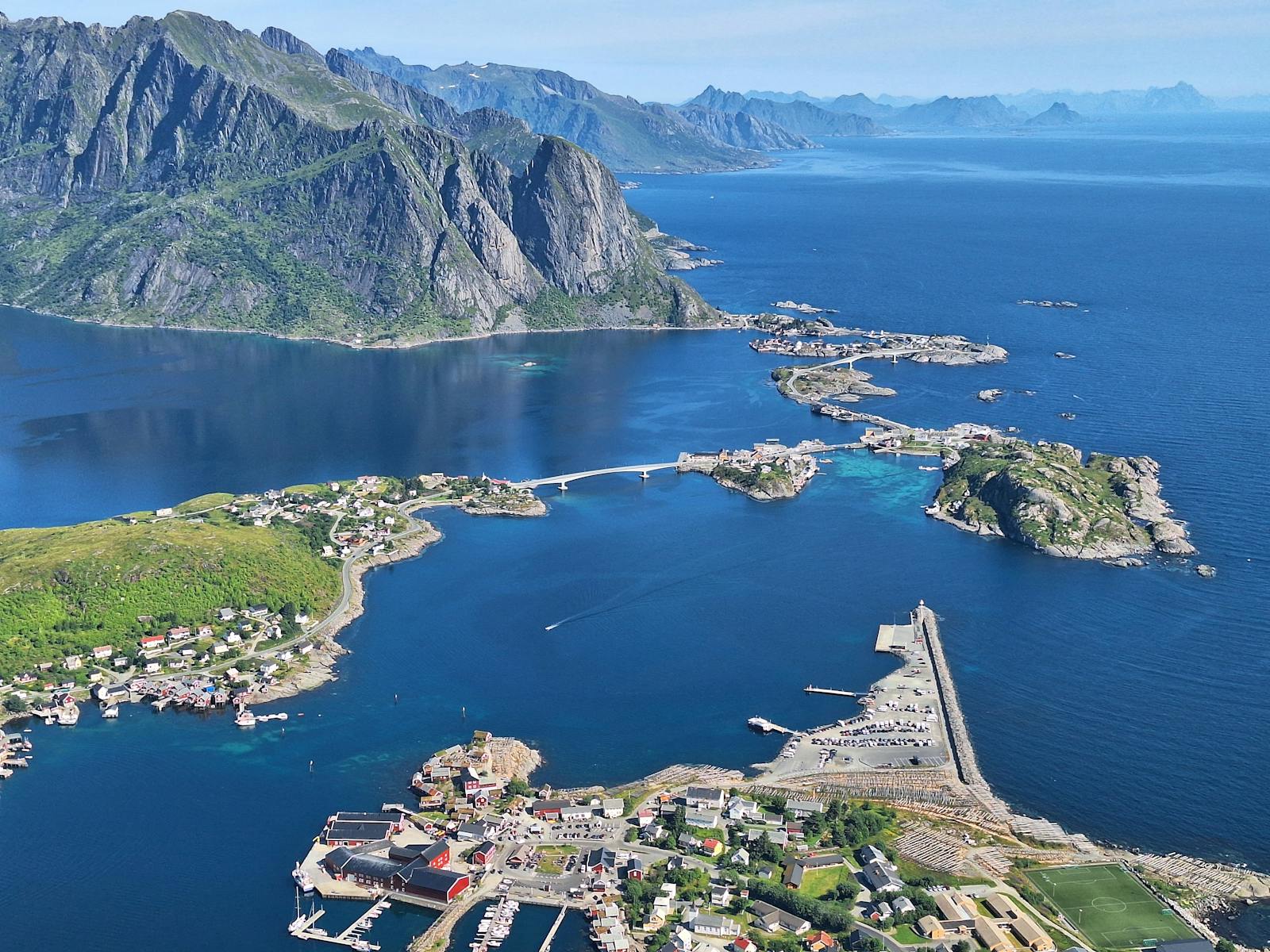
Lofoten lies off the coast of Nordland in northern Norway, roughly 100 to 300 km north of the Arctic Circle, across the wide Vestfjord from the mainland town of Bodø. The islands run for well over 100 km from north-east to south-west, like a wall of mountains in the sea.
The main islands are linked by bridges and tunnels along a single road, the E10, which starts on the mainland and ends at the tiny village of Å at the southern tip. You can drive the whole length in an afternoon, but you’ll want several days.
Thanks to the Gulf Stream, winters are mild for the latitude, around freezing on the coast, and for centuries Lofoten has been the centre of Norway’s winter cod fishery.
The islands at a glance
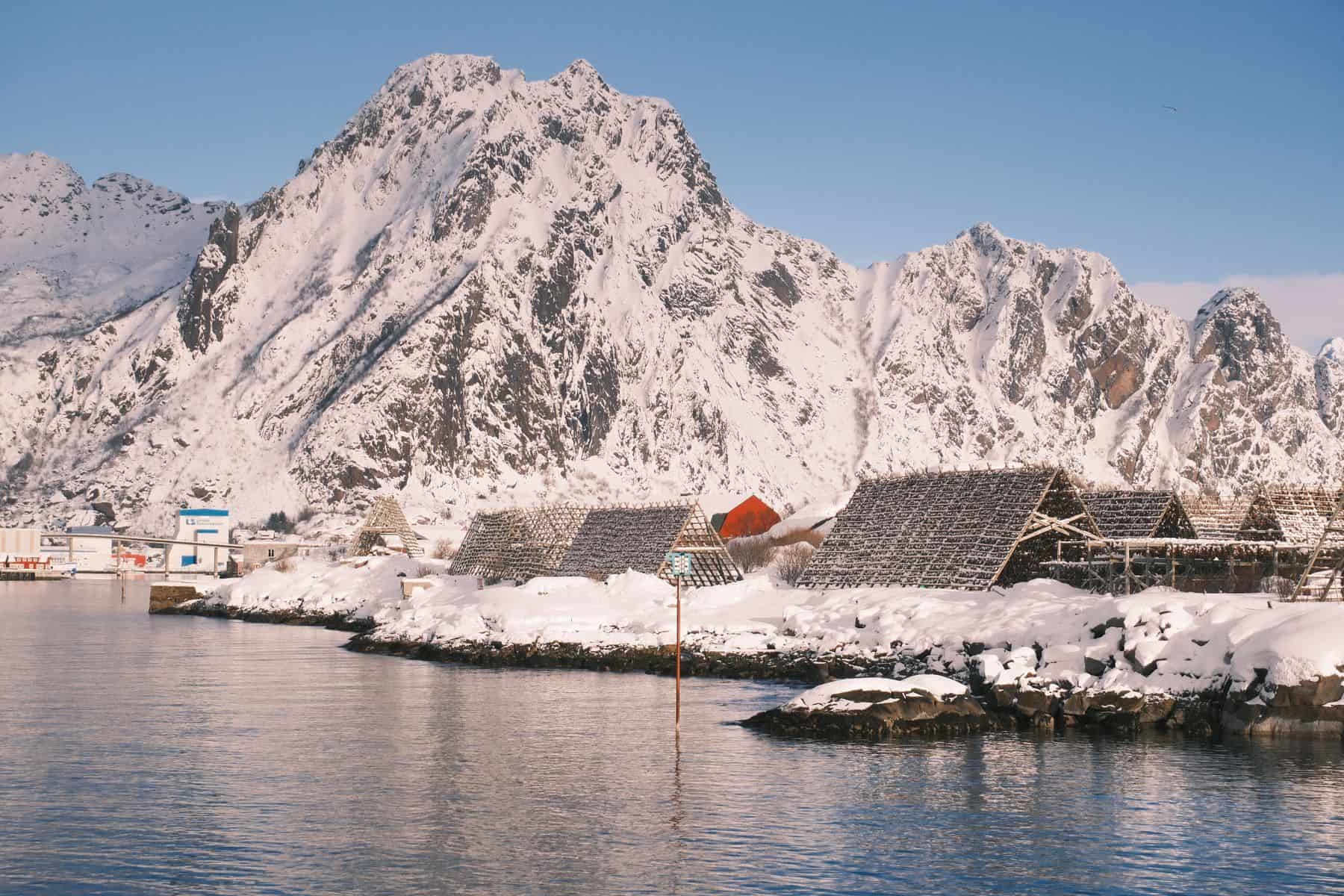
Austvågøy
The largest and most northerly island, home to Svolvær, Lofoten’s main town, with its airport, harbour and most of the services. Boat trips leave here for the narrow Trollfjord and sea eagle safaris, and the old trading post of Kabelvåg is just along the coast. Henningsvær, built across a scatter of small islands, is a short drive south.

Vestvågøy
The greenest, most farmed island, with the small airport town of Leknes and the harbour of Stamsund. Its north coast has the beaches of Haukland, Vik and Uttakleiv, and the surfing bay of Unstad. At Borg a museum has rebuilt the huge longhouse of a Viking chieftain, found on the hill there.

Flakstadøy
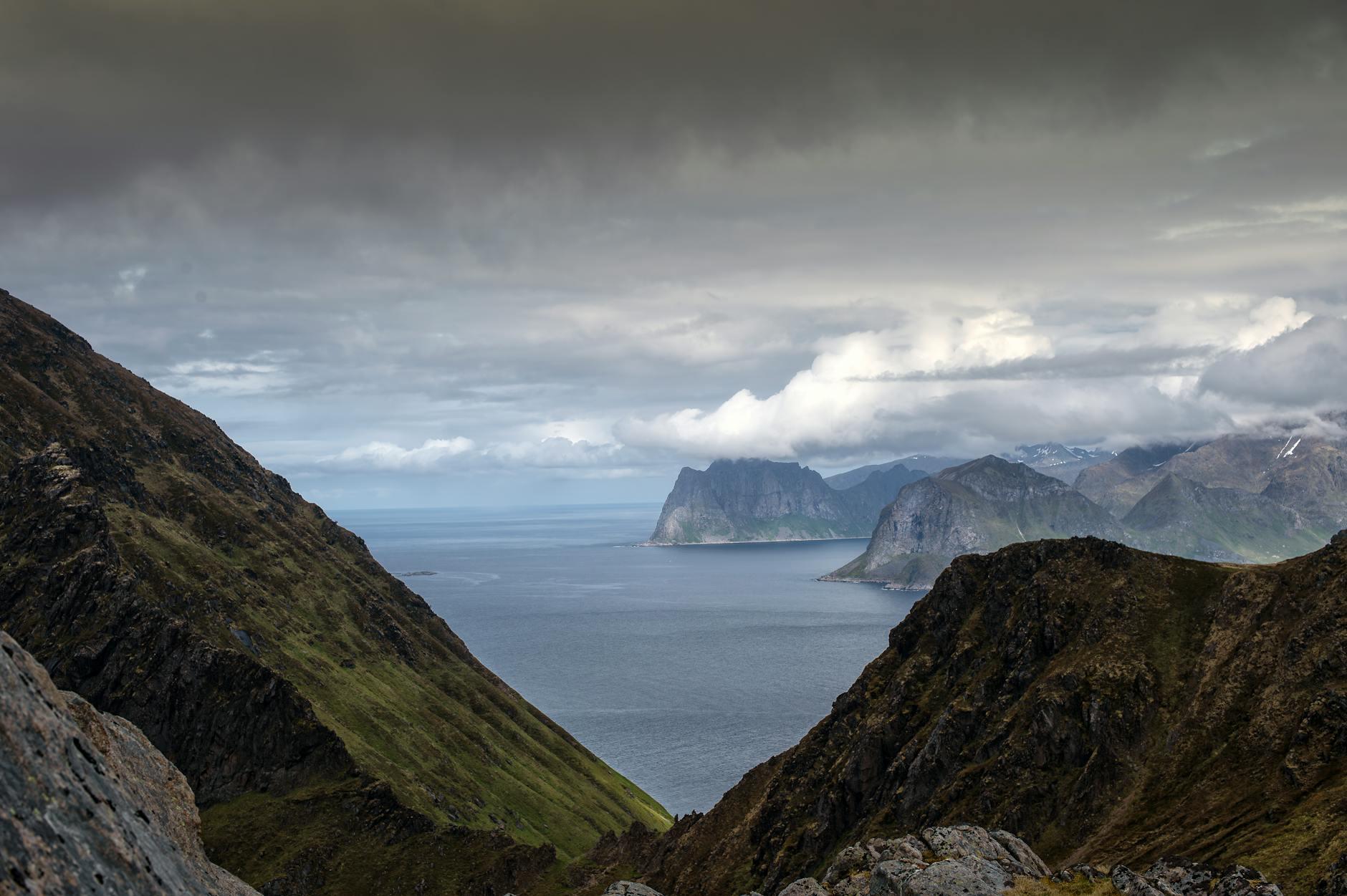
A smaller, quieter island with long sandy beaches at Ramberg and Flakstad, and on its south coast Nusfjord, one of the oldest and best-preserved fishing villages in Norway, tucked into a narrow inlet. The bridges at Fredvang lead north to the trail for Ryten and Kvalvika.

Moskenesøy
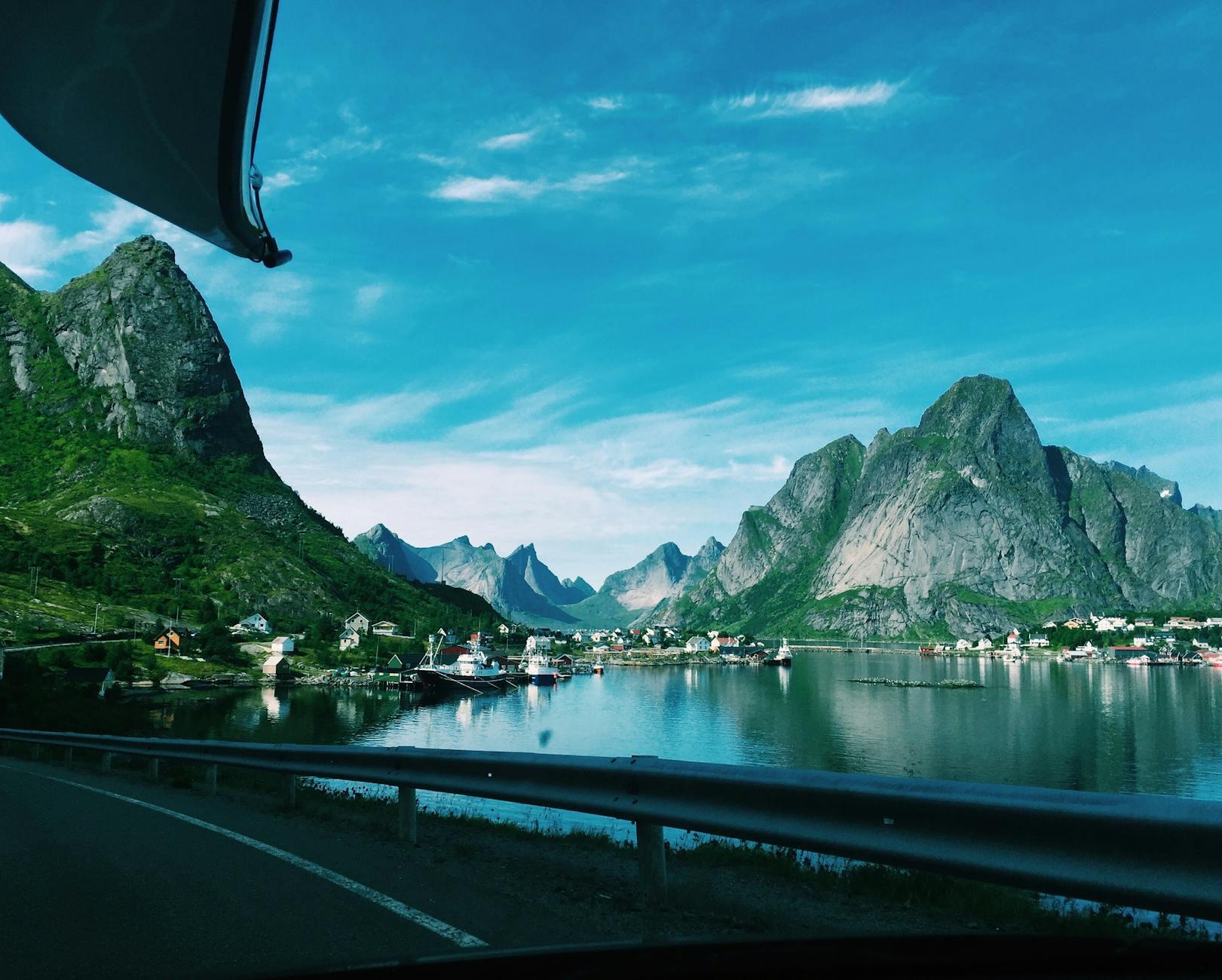
The most dramatic island and the one on the postcards: Hamnøy, Sakrisøy and Reine sit on tiny islands below sheer peaks, joined by bridges. The ferry from Bodø lands at Moskenes, and the road ends at Å. Many of Lofoten’s best hikes start here.
The best fishing villages
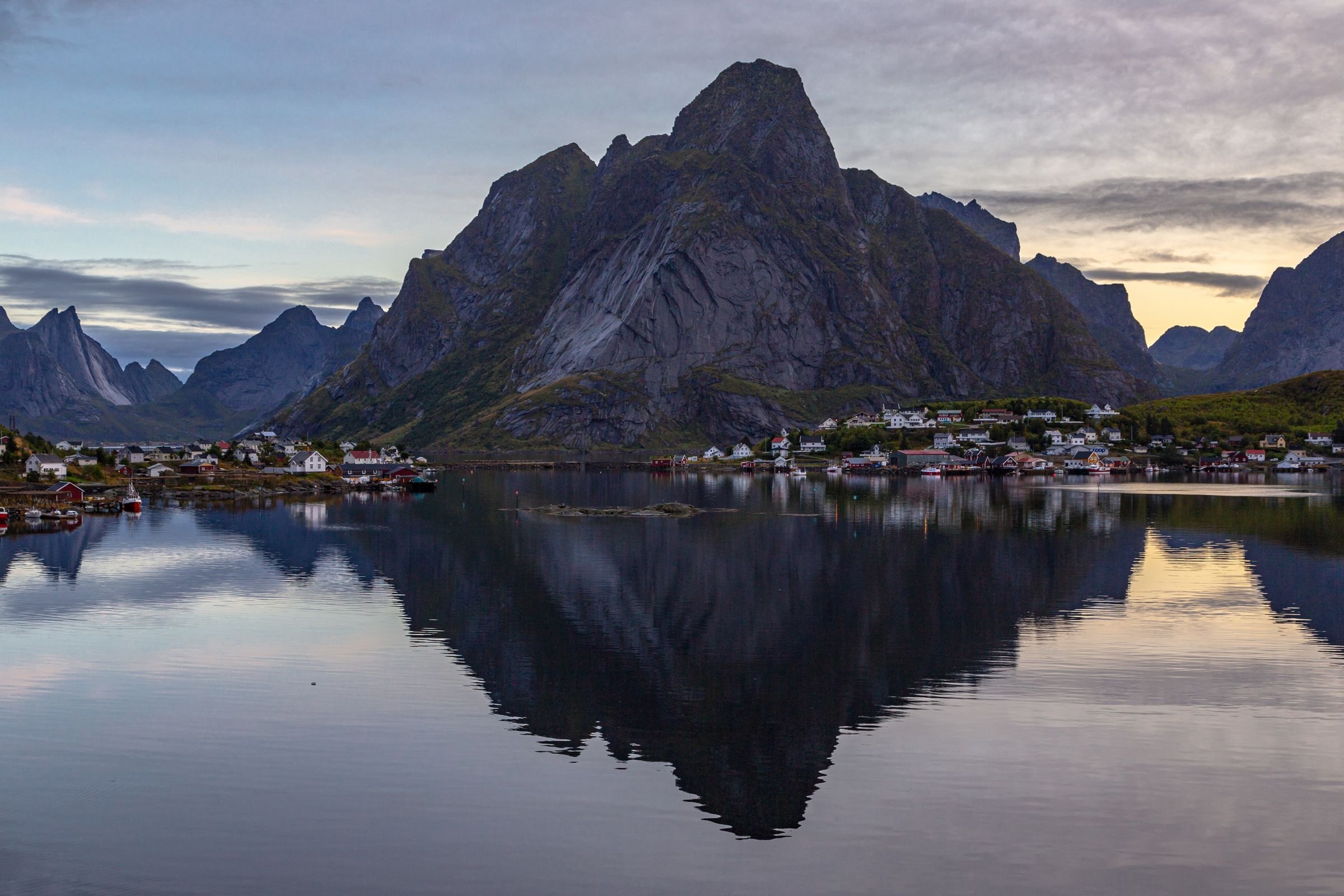
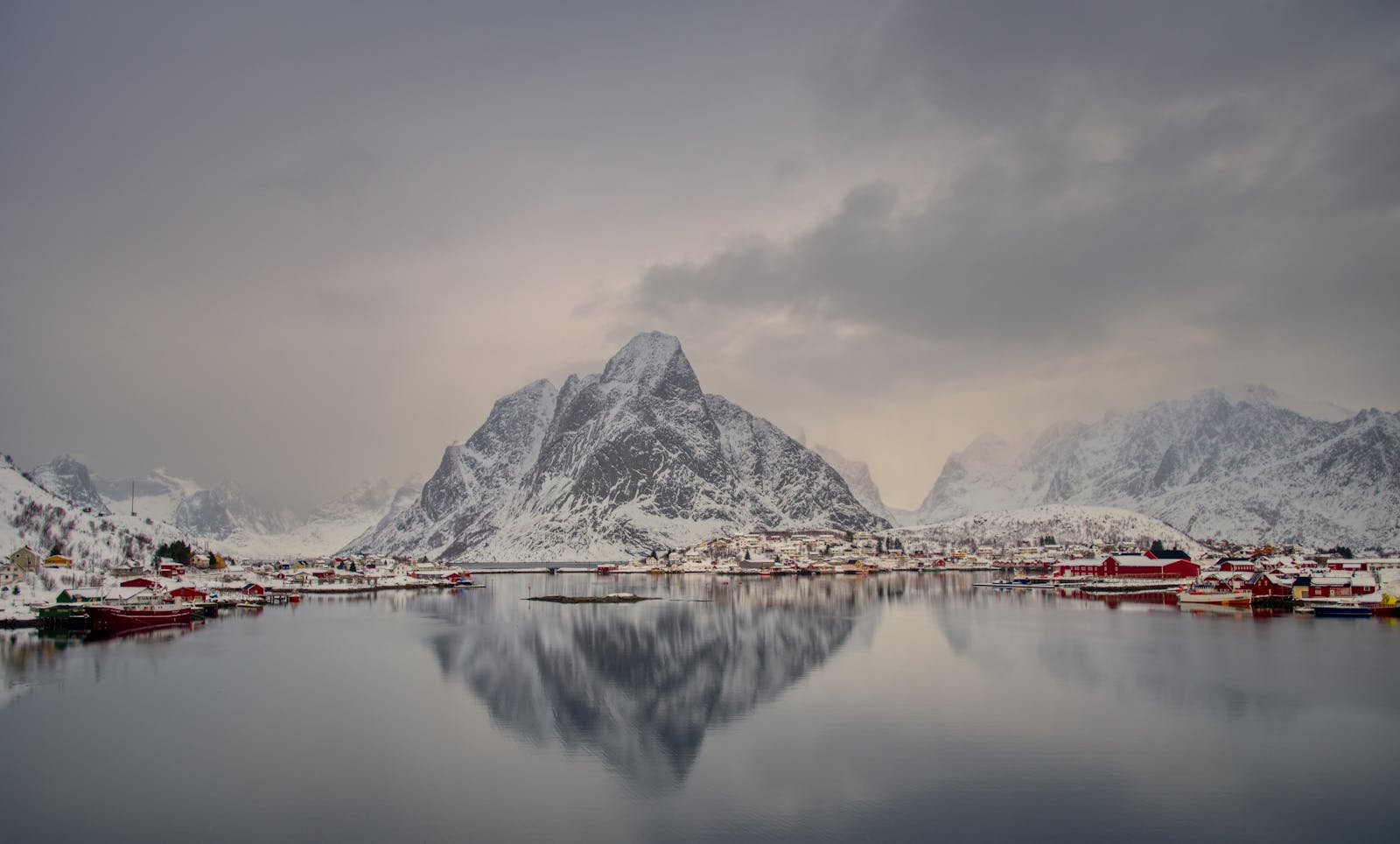
Reine. Lofoten’s best-known village, a cluster of red and white houses on islets in a fjord ringed by peaks. Walk the bridges at sunset, take the small boat up the Reinefjord to Vindstad for the walk to Bunes beach, or climb Reinebringen for the view over it all.
Hamnøy and Sakrisøy. Just north of Reine, with the most photographed red cabins in Norway, especially lovely under winter snow.
Å. The last village on the E10, with old boathouses and fish-drying racks now kept as museums of the fishing life.
Nusfjord. A protected village of red cabins and an old general store, off the main road and very quiet in the evening.
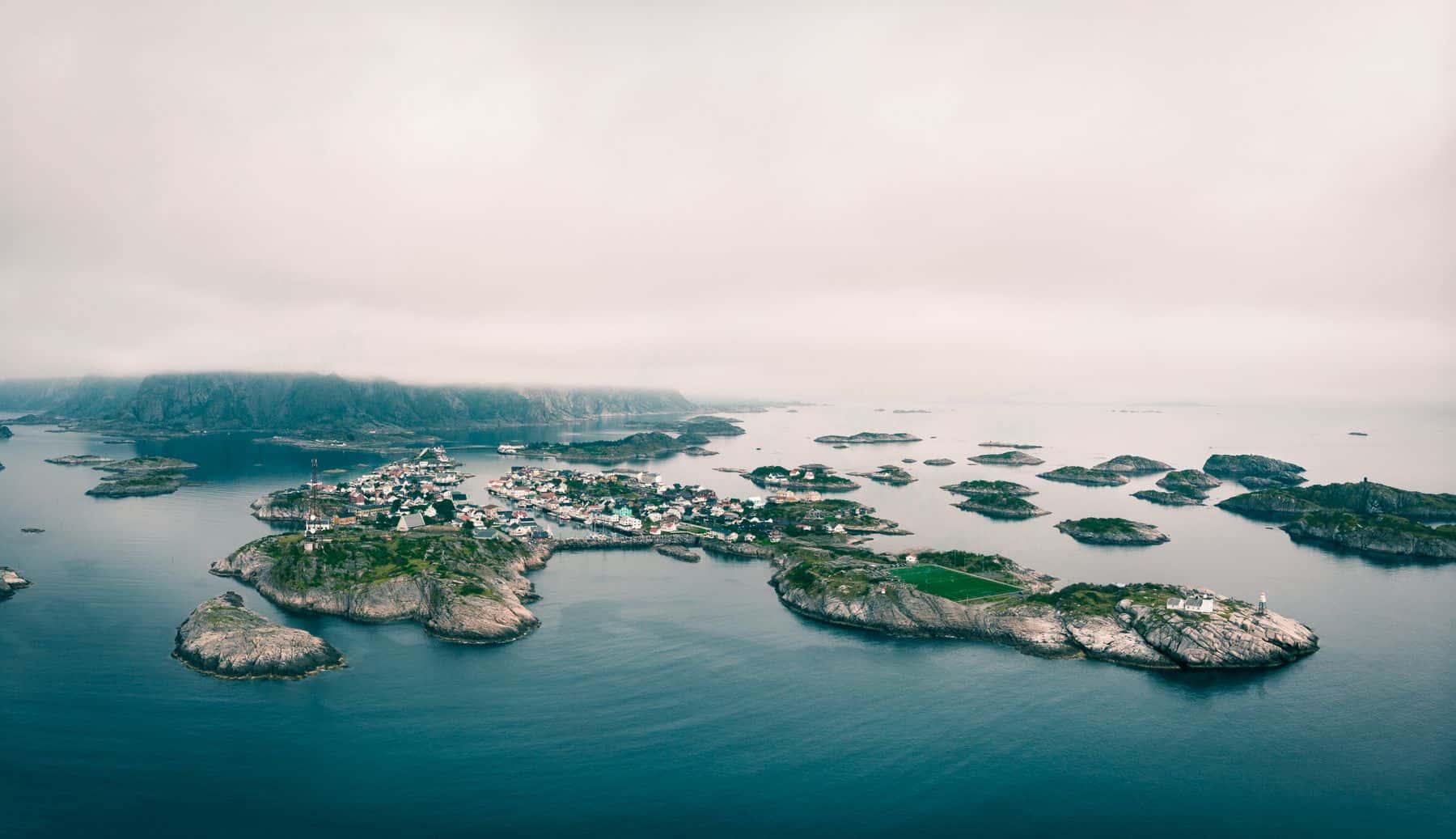
Henningsvær, on Austvågøy, is a busy fishing village spread over small islands joined by bridges, with galleries, cafés and climbing guides. Svolvær is a working town rather than a postcard village, but it’s the best base for boat trips.
Things to do in Lofoten

Drive the E10. From Svolvær to Å is about 140 km, but stop at every viewpoint and village and it fills two or three days. The stretch from Fredvang to Å is the most spectacular.
Boat trips and wildlife. From Svolvær, boats sail into the narrow Trollfjord and out to see sea eagles; in neighbouring Vesterålen, whale-watching trips sail from Andenes.
Kayaking and fishing. Paddle between the islands with a guide, or go out on a small boat for cod: from about January to April the waters are full of spawning skrei.
Surfing. Unstad is one of the world’s northernmost surf spots, with lessons and wetsuits for the cold water all year.
Viking history. At Borg on Vestvågøy, a rebuilt Viking chieftain’s longhouse and a replica ship tell the story of the island’s Viking-age rulers.
The best hikes in Lofoten

The mountains rarely top 1,000 m, but they rise straight from the sea, so even short walks are steep. Trails are rough paths over rock and bog: wear boots and carry a waterproof, as the weather changes fast on exposed tops. Hiking season is roughly June to September; in snow and ice the steep trails are for equipped mountaineers only.
| Hike | Where | What to expect |
|---|---|---|
| Reinebringen (448 m) | Reine, Moskenesøy | Nearly 2,000 stone steps laid by Nepalese Sherpas, then a short ridge to the classic view over Reine. Steep; allow 2 to 3 hours return. |
| Ryten and Kvalvika (543 m) | Fredvang, Moskenesøy | A moderate walk over the hills to a cliff-top viewpoint above Kvalvika beach, with a detour down to the sand. Allow 4 to 5 hours. |
| Mannen (about 400 m) | Haukland, Vestvågøy | A short, fairly easy climb between Haukland and Uttakleiv beaches, with views both ways. Allow 2 to 3 hours. |
| Festvågtind (541 m) | Henningsvær, Austvågøy | A steep climb straight above Henningsvær, with a view down on the village and its football pitch. Allow 3 to 4 hours. |
| Bunes beach | Vindstad, by boat from Reine | An easy walk across the island to a wild beach under steep cliffs. Allow 2 hours, plus the boat. |
| Hoven | Gimsøy | A short, easy hill on a flat island; a favourite for the midnight sun, which isn’t blocked by mountains here. |
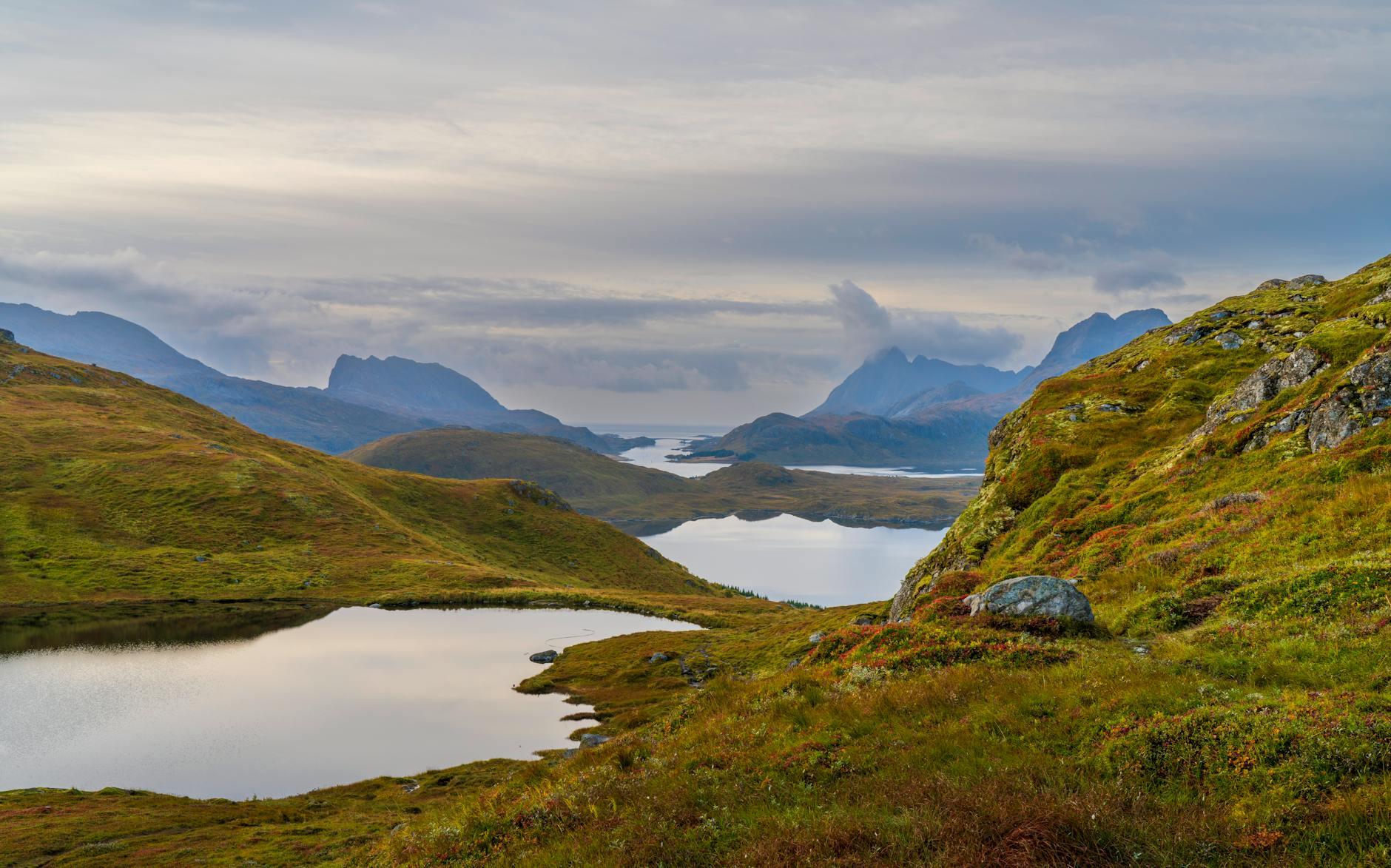
Lofoten’s beaches

Lofoten’s beaches are a surprise: pale sand and turquoise water between the mountains. The sea is cold even in summer, but on a sunny day people do swim.
Haukland and Vik on Vestvågøy are by the road and sheltered. Uttakleiv, over the hill, faces the open sea: one of the best places for the midnight sun and the northern lights.
Kvalvika has no road: it’s about an hour’s walk over the ridge from near Fredvang. Bunes is reached by boat from Reine; Ramberg and Skagsanden are long beaches right by the E10.
What to eat in Lofoten
Lofoten lives on cod. Stockfish (tørrfisk) is cod dried for months on the wooden racks you’ll see everywhere from late winter, a tradition going back to the Viking age; much of it goes to Italy and Portugal, and locally it’s soaked and served as a stew or in bacalao. In the winter fishing season look for fresh skrei with its liver and roe, and the local speciality of fried cod tongues, traditionally cut by the village children. Outside July and August many restaurants keep short hours, so book dinner.
Best time to visit Lofoten: midnight sun or northern lights?
| Summer (June to August) | Winter (late September to March) | |
|---|---|---|
| Light | Midnight sun from about 28 May to 14 July; long, light evenings either side | Long nights; polar night from about 7 December to 5 January, with blue twilight at midday |
| Highlights | Hiking, beaches, kayaking, boat trips, all villages open | Northern lights, snowy peaks, the cod fishery, fish drying on the racks |
| Weather | Highs about 13 to 17°C; changeable | Around 0°C on the coast; windy, with snow and rain |
| Roads | Busy, with many camper vans | Quiet but icy; winter tyres required |
| Crowds | Busiest in July; book well ahead | Quieter, except the photography season in February and March |
June has the midnight sun with fewer people than July; September brings autumn colour and the first northern lights; late January to March combines the aurora with returning daylight and the cod fishery. April and May are overlooked: long days, snow on the peaks and fish on the racks. October to early December is darker and often stormy.
| Month | Svolvær | Reine |
|---|---|---|
| Jan | 0°C / -4°C · 115 mm | 2°C / -2°C · 100 mm |
| Feb | 1°C / -4°C · 120 mm | 2°C / -2°C · 90 mm |
| Mar | 1°C / -4°C · 120 mm | 2°C / -2°C · 95 mm |
| Apr | 5°C / 0°C · 75 mm | 4°C / 1°C · 60 mm |
| May | 9°C / 4°C · 95 mm | 7°C / 4°C · 65 mm |
| Jun | 13°C / 8°C · 70 mm | 11°C / 7°C · 55 mm |
| Jul | 17°C / 11°C · 75 mm | 14°C / 10°C · 60 mm |
| Aug | 15°C / 10°C · 120 mm | 14°C / 10°C · 90 mm |
| Sep | 12°C / 8°C · 135 mm | 11°C / 8°C · 95 mm |
| Oct | 7°C / 3°C · 125 mm | 7°C / 4°C · 105 mm |
| Nov | 4°C / 0°C · 135 mm | 5°C / 2°C · 120 mm |
| Dec | 2°C / -2°C · 145 mm | 3°C / 0°C · 120 mm |
Average daily high / low and monthly rain or snow (as water), 10-year ERA5 data for the nearest sea-level grid cells.
The northern lights in Lofoten
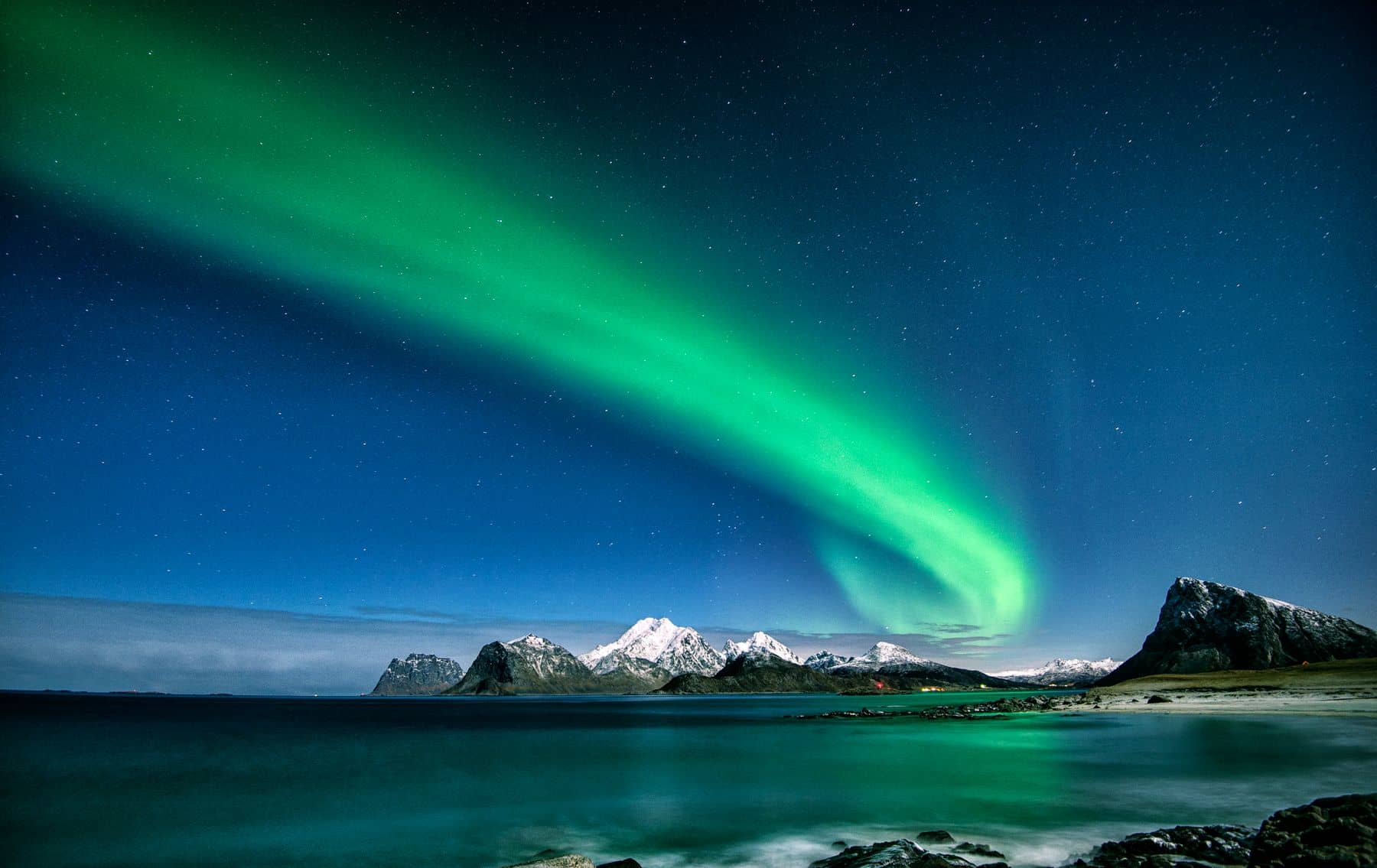
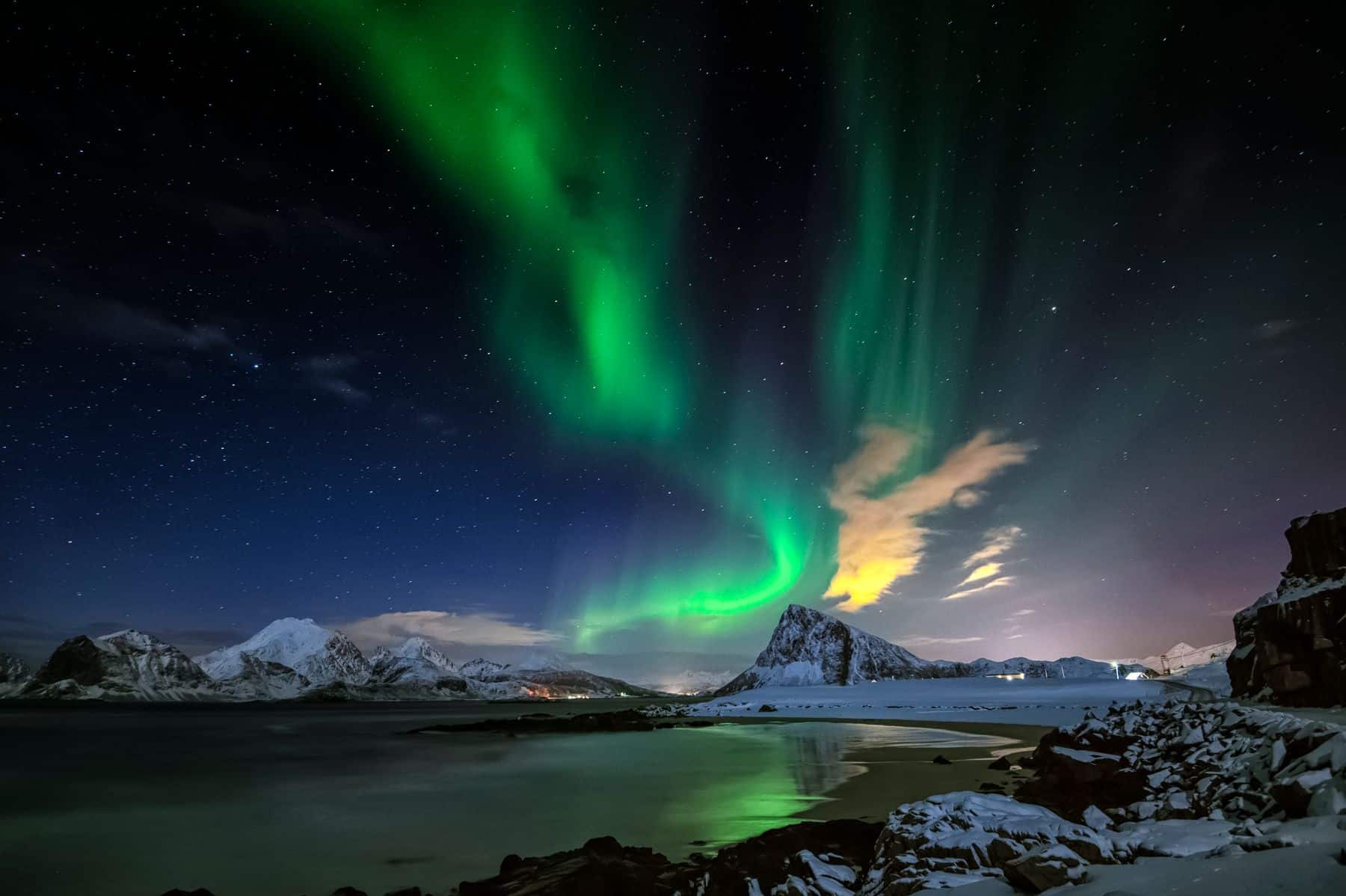
Lofoten sits under the auroral oval, so on a clear, dark night the chances of seeing the northern lights are good from about late August to mid-April. The catch is the weather: the islands are often cloudy, so stay at least four or five nights and be ready to go out on any clear evening. The north-facing beaches, Uttakleiv, Haukland, Skagsanden and Eggum, are the classic places to watch, and guides will drive you to wherever the sky is clearest. No trip can guarantee the lights; for a drier, more reliable inland alternative, see our Abisko northern lights guide.
How to get to Lofoten from the UK
Fly via Oslo and Bodø. There are no direct flights from the UK. Fly to Oslo (about 2 hours from London), on to Bodø, then take a short hop across the Vestfjord to Leknes or Svolvær, with hire cars at both.
Fly to Harstad/Narvik (Evenes). The larger mainland airport has more flights from Oslo; from there it’s about 3 hours’ drive to Svolvær along the E10.
The Bodø to Moskenes ferry. A car ferry crosses to Moskenes, next to Reine, in about 3 to 3.5 hours: arrive in the south by sea and leave from Svolvær or Evenes in the north. Book your car on it in summer.
By coastal ship. The coastal express ships between Bergen and Kirkenes call daily at Stamsund and Svolvær, for example from Bodø or on to Tromsø. See our Norwegian coastal voyages guide.
Getting around: driving in Lofoten
- Hire a car. Buses on the E10 are infrequent, especially in winter, so a car is the best way to see the islands and chase clear skies for the northern lights.
- Allow time. Roads are narrow and winding, with low speed limits, single-lane bridges and tunnels. Svolvær to Reine is about two hours without stops. In July, use marked lay-bys for photos, never the road.
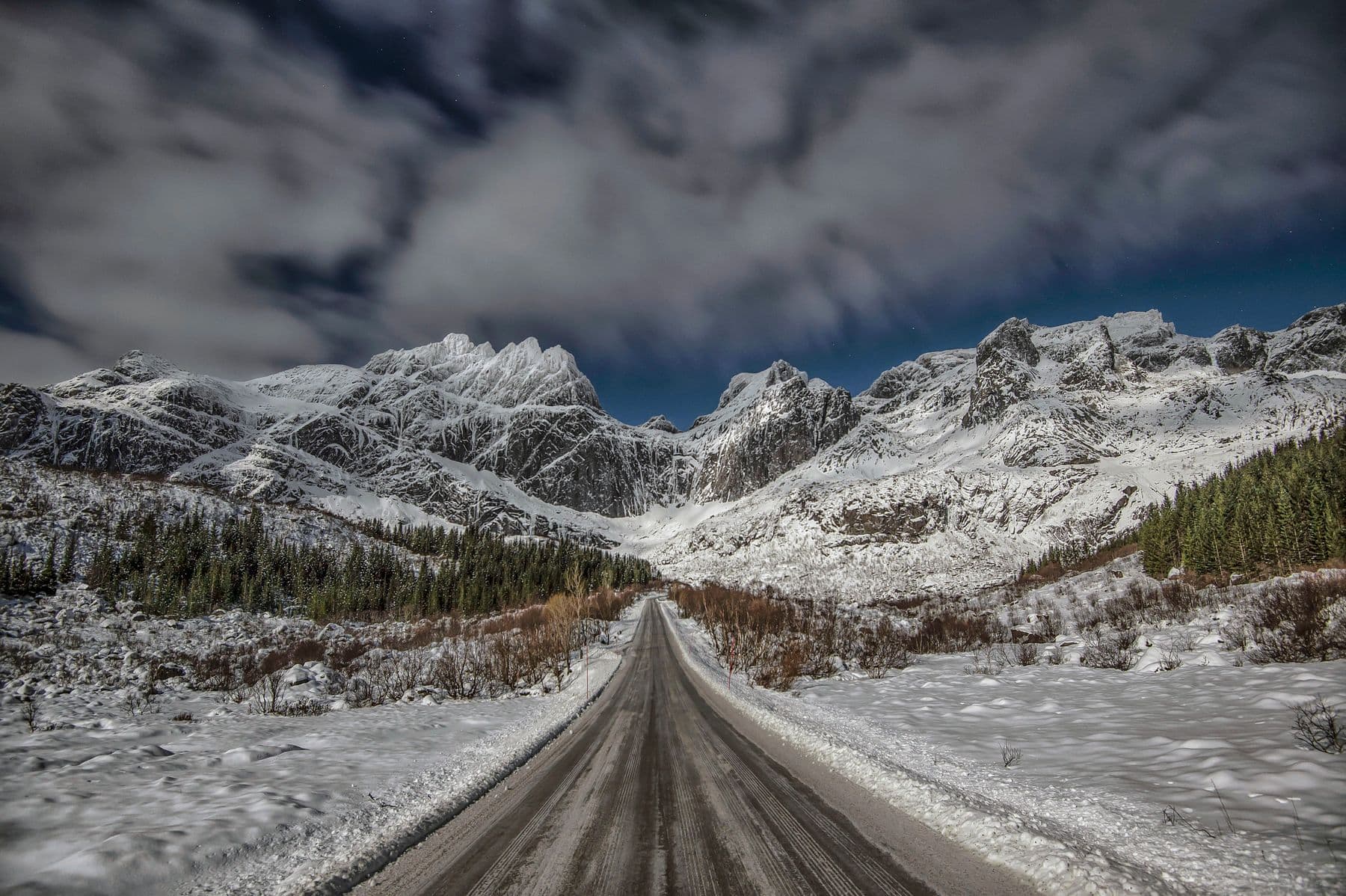
- Winter driving. The E10 is open all year, but expect snow, ice and strong winds from about November to April. Winter tyres are required by law when there is snow or ice on the road, and winter hire cars come fitted with them. Drive slowly, keep dipped headlights on (required all year) and check road and weather forecasts before longer drives.
- Fuel and daylight. Petrol stations are mainly in Svolvær, Leknes and Reine, and around midwinter there are only a few hours of usable light, so plan drives for the middle of the day.
Where to stay in Lofoten
The classic Lofoten stay is a rorbu, a fishermen’s cabin on stilts over the water, from rustic to stylish. Split your stay between two bases:
- Reine, Hamnøy and Sakrisøy: for the classic views and the best hikes; book early for summer.
- Nusfjord: for a quiet, historic village with restored cabins and good food.
- Vestvågøy (Leknes, Stamsund, Ballstad, Unstad): central, near the beaches and the north-facing coast for the midnight sun and northern lights.
- Henningsvær: for atmosphere, galleries and climbing, in a lively small village.
- Svolvær: for hotels, restaurants, boat trips and the airport; the most practical base in winter.
Tell us your style and budget and we’ll find the right cabins and hotels; we book stays across the islands.
How many days in Lofoten? Sample routes
Four nights is the minimum to see both ends of the islands; five to seven lets you hike, take a boat trip and wait out bad weather. In winter, allow at least four nights for a good chance of the northern lights.
Lofoten highlights
- Fly to Bodø, ferry to Moskenes
- Reine or Hamnøy (2 nights)
- Nusfjord or Vestvågøy (1)
- Henningsvær or Svolvær (1)
- Fly home from Svolvær or Evenes
Drive the length of the islands south to north, with the best villages and a short hike or two.
Hike and explore
- Reine (3 nights)
- Vestvågøy beaches (2)
- Henningsvær (2)
Time for Reinebringen, Ryten and Kvalvika, a boat to Bunes, a day at the beach and a Trollfjord trip. June to September.
Arctic Norway in winter
- Tromsø (2 nights)
- Drive or fly to Lofoten
- Svolvær (2)
- Vestvågøy (2)
- Reine (3)
Northern lights in both places, snowy villages and the cod fishery. Best from late January to March, as the light returns.
Combining Lofoten with the fjords? See our Norwegian fjords guide for Bergen, Geiranger, the Flåm Railway and Tromsø, and how to link them with a few nights on a coastal ship. Going further north? Our Svalbard guide covers polar bears and expedition cruises.
Ways to see Lofoten with us
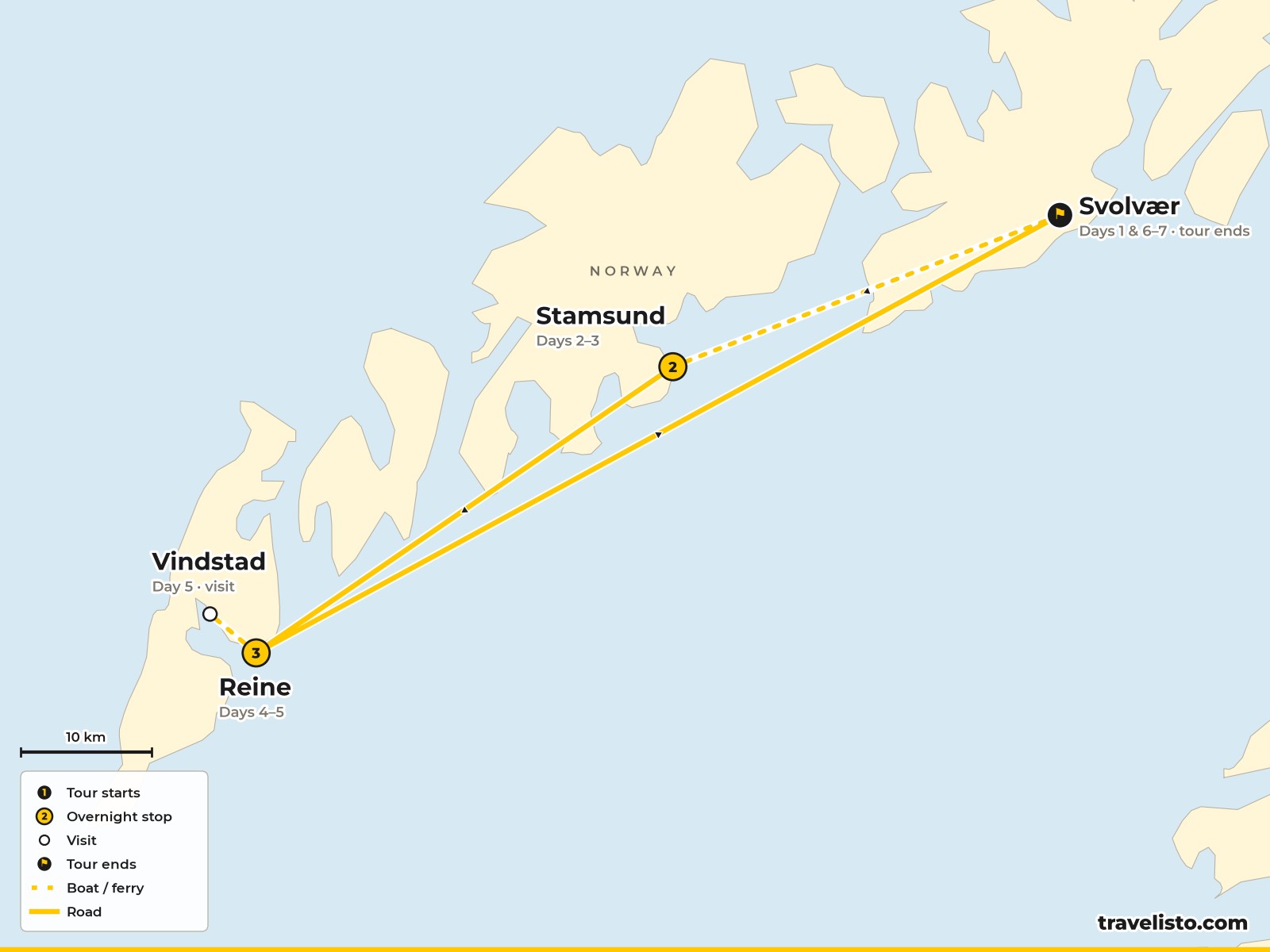
Prefer your own pace? A tailor-made Lofoten holiday can include flights, the ferry, a hire car, cabins in two villages and boat trips.
Practical tips
- Entry: Norway is in the Schengen area: British visitors can stay up to 90 days in any 180 without a visa. Your passport must have been issued less than 10 years before you arrive and be valid for at least 3 months after you leave, and you’ll register fingerprints and a photo under the EU Entry/Exit System. Check the FCDO Norway advice before you book and again before you travel.
- Book early: cabins in Reine and Hamnøy, hire cars and the Bodø ferry sell out for June to August, and for February and March.
- Layers: even in July, bring a warm fleece, a waterproof and a hat. In winter add thermal layers, insulated boots and ice grips for your shoes.
- Respect the villages: people live and work here. Don’t walk onto private jetties or fish racks, and camp or park only where it’s allowed.
- Safety outdoors: check the mountain weather and, in winter, avalanche warnings on varsom.no before hiking, and tell someone your route.
Frequently asked questions
Where are the Lofoten Islands?
In northern Norway, off the coast of Nordland, roughly 100 to 300 km north of the Arctic Circle and across the Vestfjord from Bodø. The main islands are linked by bridges and tunnels along a single road, the E10.
How do you get to Lofoten from the UK?
There are no direct flights. Fly via Oslo to Bodø and take a short flight to Leknes or Svolvær, or the car ferry from Bodø to Moskenes (about 3 to 3.5 hours). Alternatively, fly via Oslo to Harstad/Narvik (Evenes) and drive about 3 hours to Svolvær.
How many days do you need in Lofoten?
At least four nights to see both ends of the islands; five to seven to add hikes, boat trips and a margin for bad weather. In winter, four or more nights give you a better chance of a clear night for the northern lights.
When is the best time to visit Lofoten?
June to August for the midnight sun, hiking and beaches, with June quieter than July. Late January to March for the northern lights, snowy villages and the cod fishery. September is a good compromise, with autumn colour and the first auroras.
Can you see the northern lights in Lofoten?
Yes. Lofoten lies under the auroral oval, and from about late August to mid-April the lights are often visible on clear, dark nights. Cloud is the main obstacle, so stay several nights. No trip can guarantee them.
When is the midnight sun in Lofoten?
From about 28 May to 14 July, a little longer on the north-west coast at places like Uttakleiv. Svolvær and Leknes sit behind mountains, so go to the outer coast to see the sun itself at midnight.
Is it safe to drive in Lofoten in winter?
Yes, with care. The E10 is open all year, but roads are often icy and windy from about November to April. Winter tyres are required when there is snow or ice, and hire cars come with them. Drive slowly and plan journeys for the short daylight hours.
Do you need a car in Lofoten?
It is by far the easiest way to get around. Buses run along the main road but are infrequent, especially in winter and at weekends, and a car lets you move to wherever the sky is clear for the northern lights.
Keep planning
- Norwegian fjords guide
- Norway holidays
- Escorted tours of Norway
- Norwegian coastal voyages compared
- Norwegian fjords cruises
- Svalbard guide
- Abisko northern lights guide
- Iceland holiday guide
- Tailor-made holidays
Plan your Lofoten holiday with a Travel Designer
Tell us when you’d like to go and we’ll plan Lofoten for the midnight sun or the northern lights, with flights, the ferry, a hire car and the right cabins, in one ATOL-protected booking.
Make an enquiry Norway holidays