Puglia in brief
- Alberobello’s trulli, the Valle d’Itria, Ostuni, Polignano a Mare and baroque Lecce are the highlights.
- Matera is in neighbouring Basilicata, about an hour from Bari: worth a day or a night.
- Best in May, June and September; July and August are hot and busy.
- About 3 hours’ flight from the UK to Bari or Brindisi; a car is the best way to get around.
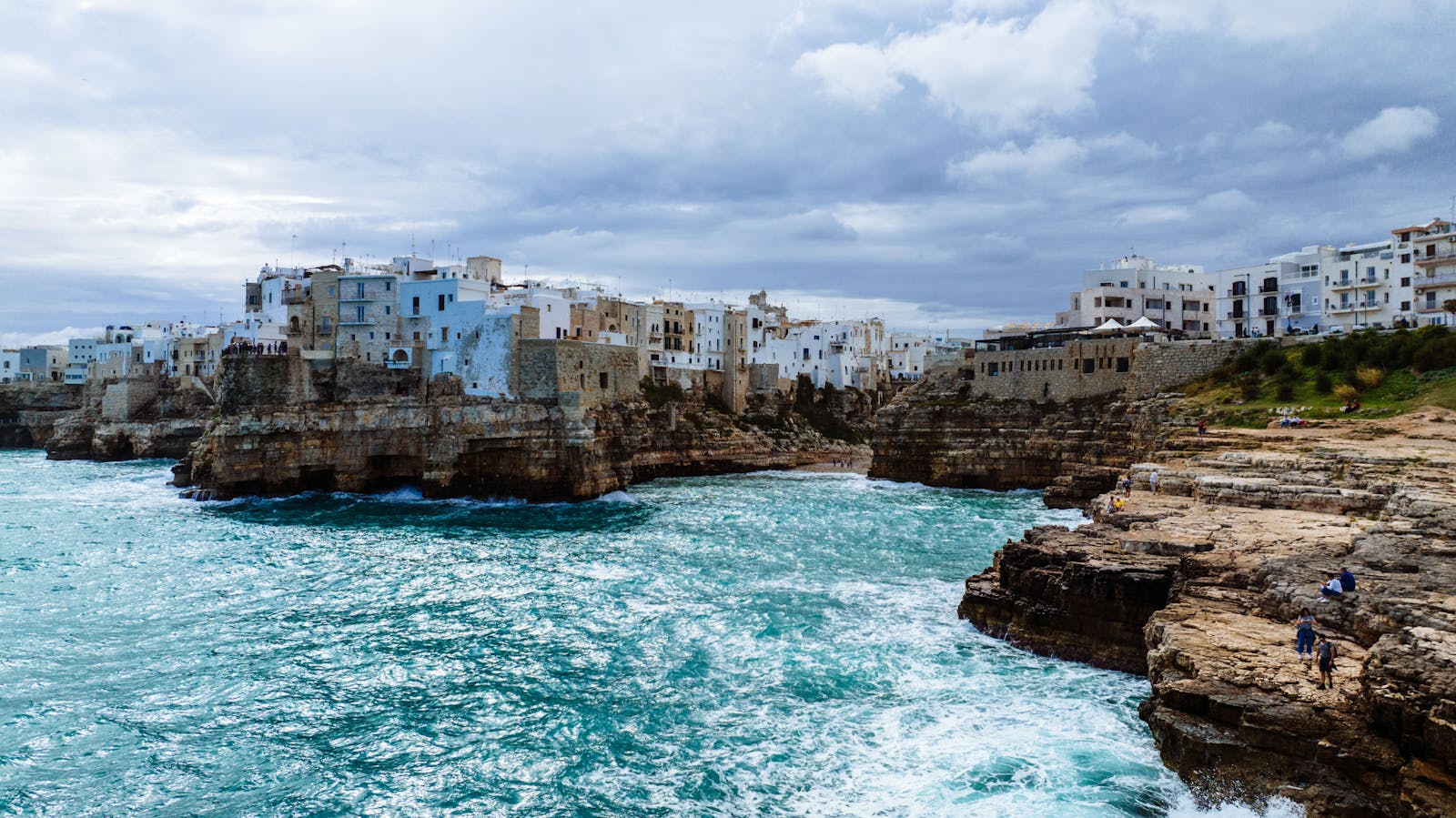
Puglia (Apulia in English) is the heel of Italy’s boot: a long, sunny region of olive groves, whitewashed hill towns and clear sea on two coasts. It’s home to the cone-roofed trulli of Alberobello, the baroque city of Lecce, the white town of Ostuni, the cliff-top village of Polignano a Mare, and some of the simplest, best food in Italy. It feels slower and less crowded than Tuscany or the Amalfi Coast, and it’s only three hours’ flight from the UK. This guide covers where to go in Puglia, things to do, the food, the best time to visit, getting there and around, where to stay by area, Matera, and sample routes.
Where is Puglia?

Puglia runs for about 400 km down the south-east of Italy, from the Gargano promontory, the spur of the boot, to Santa Maria di Leuca at the tip of the heel. The Adriatic is on one side, and the Ionian Sea on the other in the south.
It’s mostly flat or gently rolling, covered with ancient olive trees and dry-stone walls, and the region produces more olive oil than any other in Italy. The main city is Bari, and most visitors split their time between the Valle d’Itria in the middle, the coast between Bari and Brindisi, and the Salento peninsula in the south around Lecce.
Distances are manageable: Bari to Alberobello is about an hour by car, and Bari to Lecce about two.
Best places to visit in Puglia
Alberobello and the trulli

Alberobello is the capital of the trulli: round, whitewashed stone houses with conical roofs of dry-laid grey stone, many topped with a carved pinnacle and painted with symbols. The town has around 1,500 of them, and its two trulli quarters, Rione Monti and Aia Piccola, have been a UNESCO World Heritage Site since 1996.
Rione Monti, on the hillside, is lined with shops and busy by day; Aia Piccola is quieter and still lived in. Go inside the two-storey Trullo Sovrano, see the trullo church of Sant’Antonio, and come back at dusk when the coaches have gone. Staying a night in a restored trullo is one of the great Puglia experiences.


The Valle d’Itria: Locorotondo, Cisternino and Martina Franca
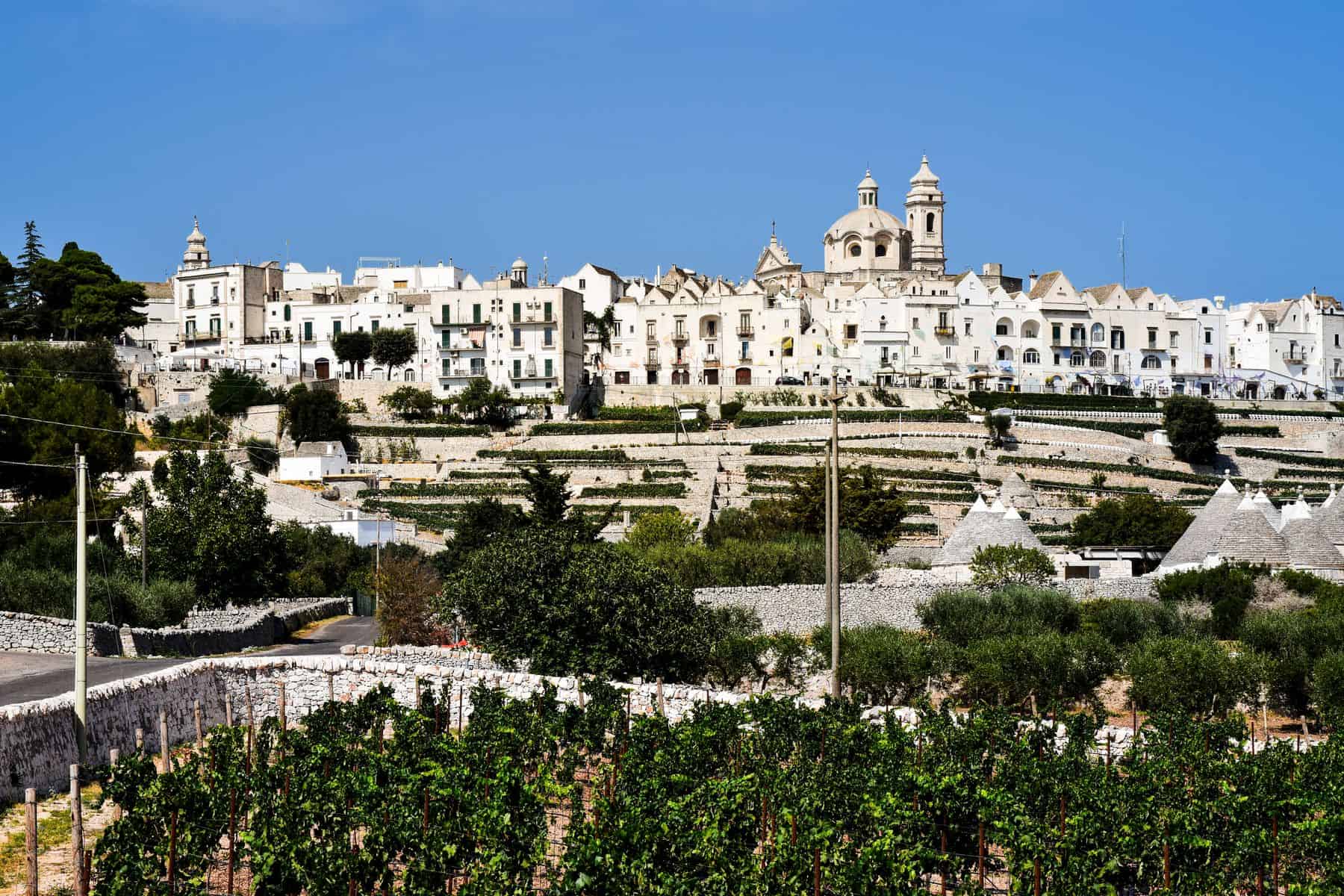
Alberobello is the gateway to the Valle d’Itria, a green upland of vineyards, olive groves and trulli farmhouses, with a handful of white towns on its hills, all within 15 to 20 minutes’ drive of each other. Locorotondo, “the round place”, is a circle of white lanes and pointed roofs with views over the valley, and gives its name to a crisp white wine. Tiny Cisternino is famous for its butchers’ grills, where you choose your meat at the counter and they cook it for you. Martina Franca, the largest, has baroque palaces and churches and a summer opera festival in July and August. This is the best area to base yourself for a first visit.
Ostuni
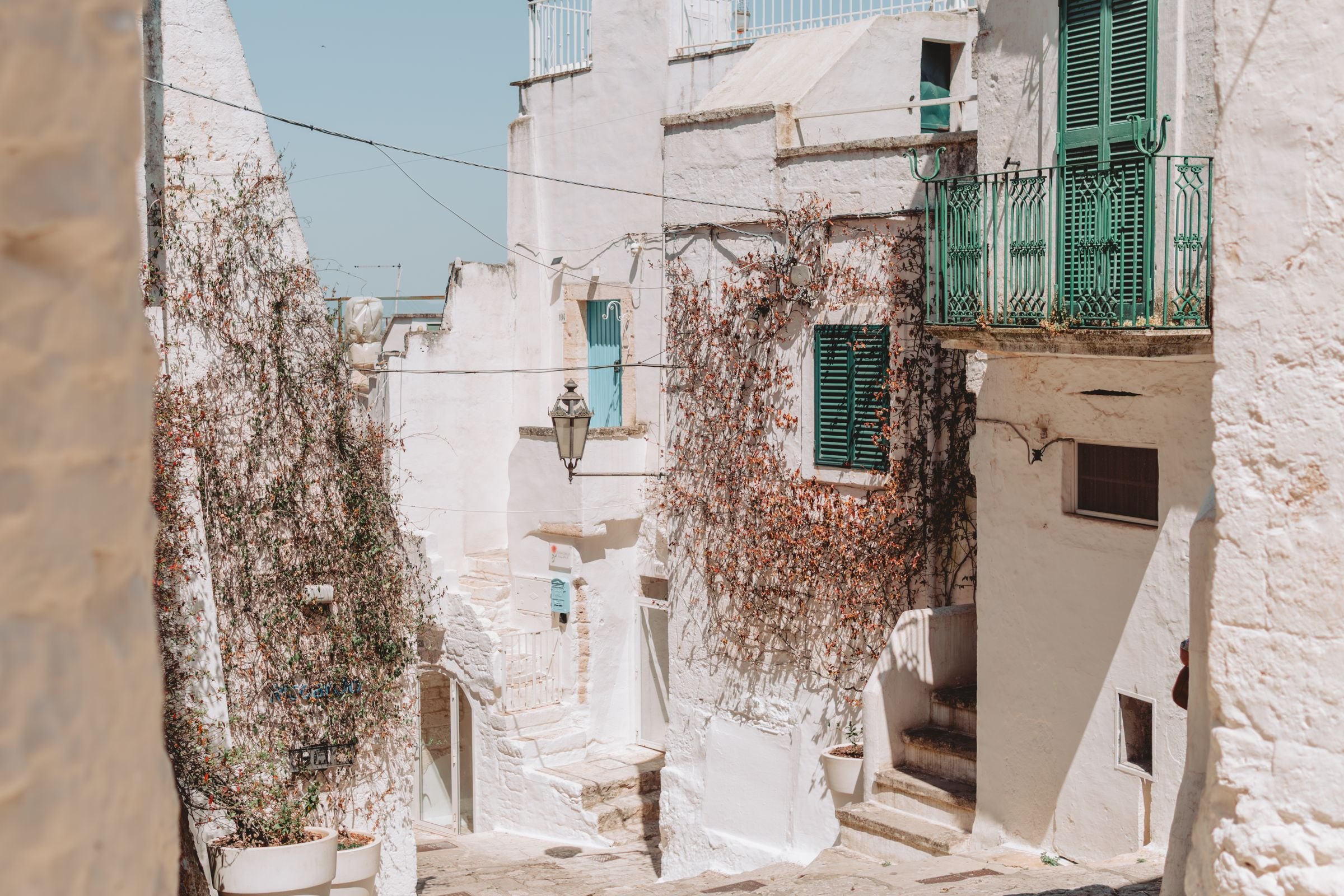
Ostuni, “the white city”, is piled up on a hill a few kilometres from the sea, its old town a maze of whitewashed lanes, stairways and arches around a Gothic cathedral. Come in the late afternoon, wander without a map, and stay for dinner and the view over the olive groves to the Adriatic.
The coast below Ostuni has some of the best beaches between Bari and Brindisi, and the countryside around it is full of old fortified farmhouses, masserie, now converted into country hotels.
Polignano a Mare and Monopoli
Polignano a Mare, 35 km south of Bari, is built right on the edge of limestone cliffs riddled with sea caves. Its famous view is the little pebble beach of Lama Monachile, squeezed into a gorge between the cliffs. It’s small, so go early or late, and see it from the sea on a boat trip into the caves.
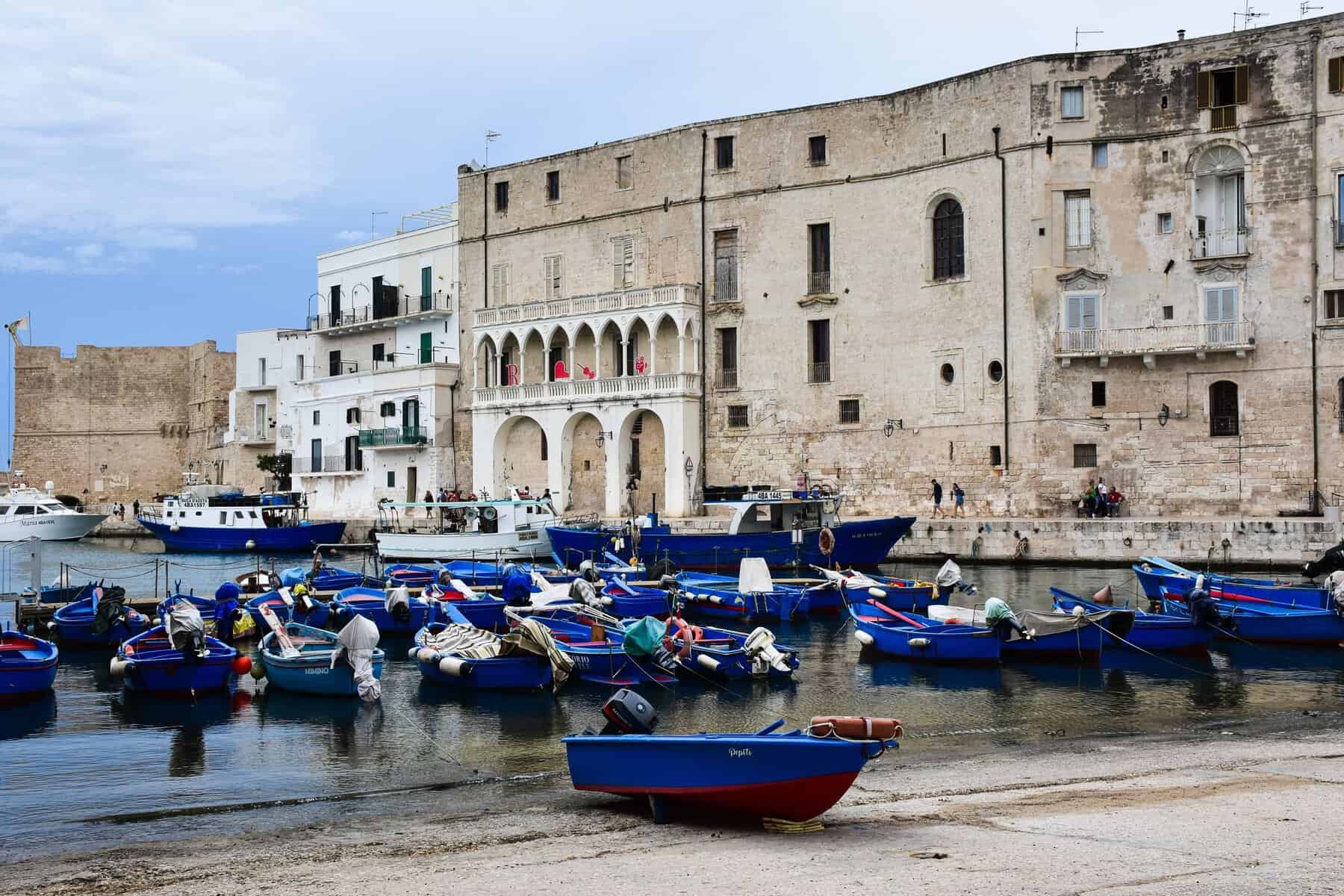
Monopoli, ten minutes further on, is a bigger, more lived-in port town with an old harbour full of blue fishing boats, a seafront castle, a baroque cathedral and small rocky coves and beaches just outside town. Both make good bases with the Valle d’Itria close by.
Bari
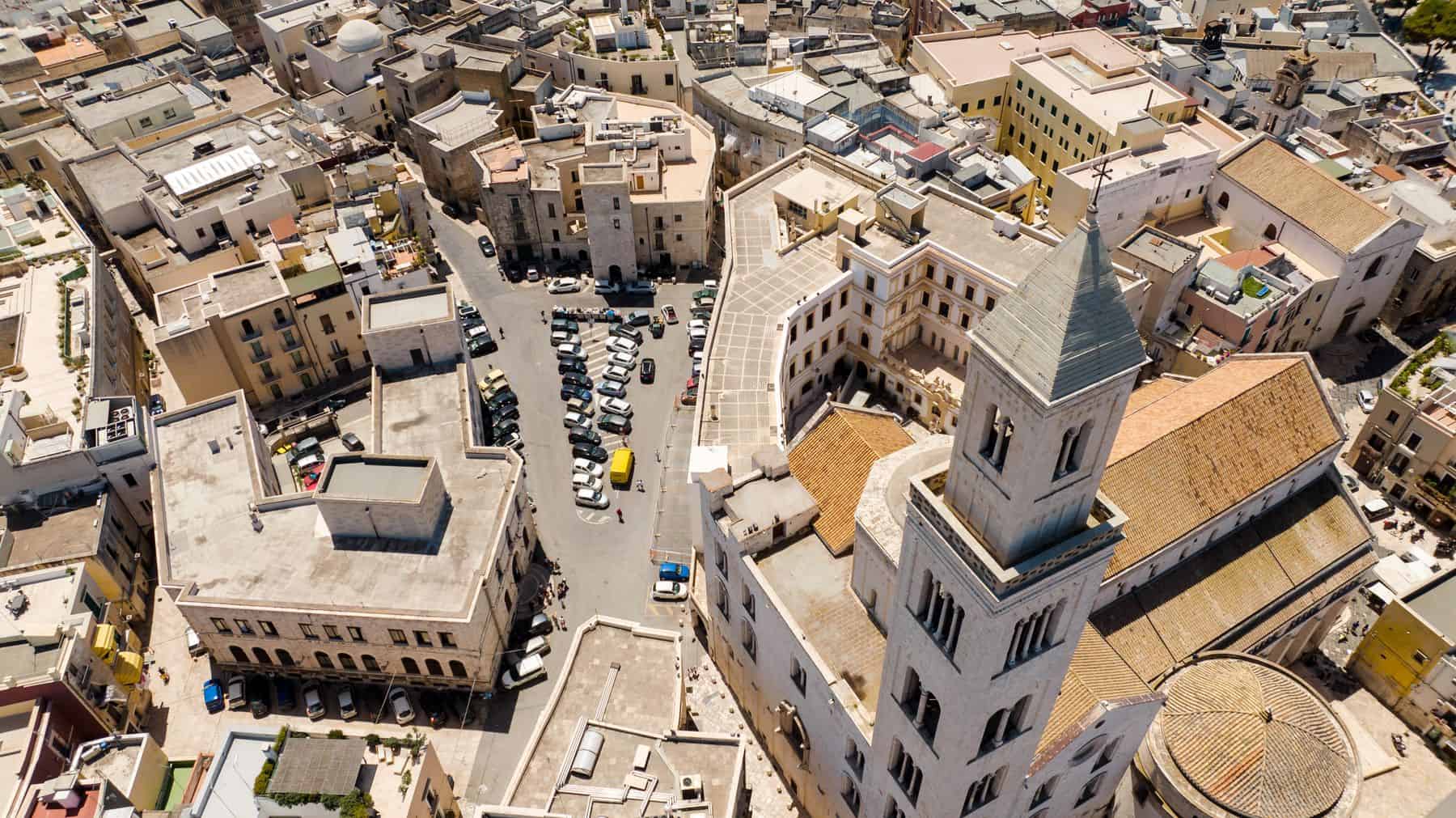
Puglia’s capital is a working port city, but its old town, Bari Vecchia, is a lively tangle of lanes around two great Romanesque churches. The Basilica of San Nicola holds the relics of St Nicholas, the original Santa Claus, and draws pilgrims from across the Orthodox world.
In the lanes near the castle, women still make orecchiette by hand at tables outside their doors. Walk the seafront promenade, try raw seafood at the fish market by the harbour, and eat focaccia barese with tomatoes and olives. Half a day to a day is enough for most people.
Lecce

Lecce is called the Florence of the South for its extraordinary baroque architecture, carved in the soft, honey-coloured local limestone. The facade of the Basilica di Santa Croce, crowded with saints, animals, fruit and grotesques, is the masterpiece; the Piazza del Duomo is one of Italy’s most beautiful squares, and a Roman amphitheatre lies half-uncovered in the main square, Piazza Sant’Oronzo.
It’s a lively university town with good restaurants, and the evening passeggiata is a joy. Look for workshops making cartapesta, papier-mâché saints, and try a pasticciotto, a custard pastry, for breakfast. Give it two nights and use it as your base for the Salento.
The Salento: Otranto, Gallipoli and Leuca

Otranto and the Adriatic coast
A walled town on a harbour of clear water, with a castle and a cathedral whose whole floor is a 12th-century mosaic of the tree of life. North of town, sea stacks and the natural pool of the Grotta della Poesia; south, a cliff road to the tip of the heel.
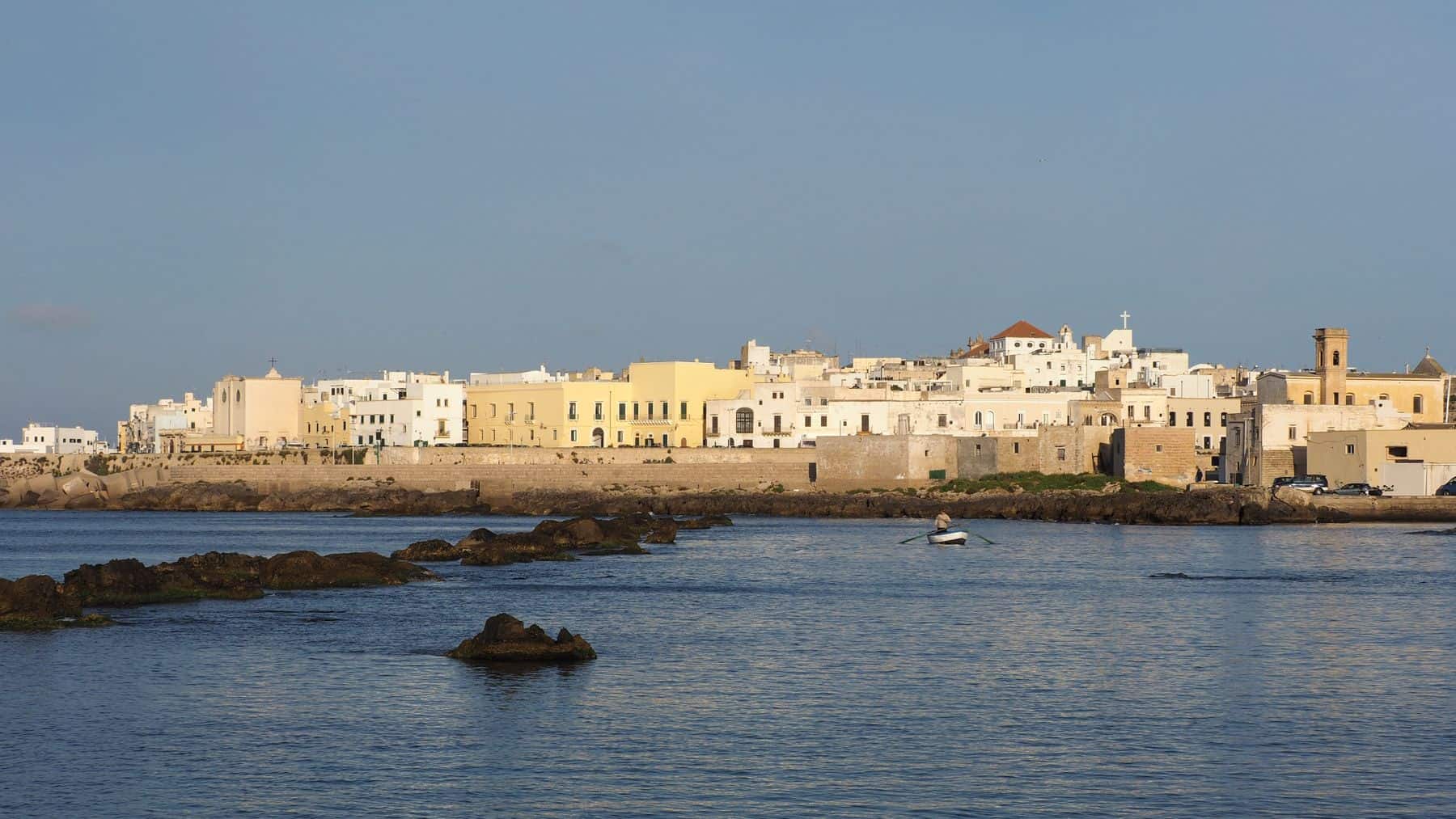
Gallipoli and the Ionian coast
An old fishing town on an island joined to the mainland by a bridge, with sea walls, baroque churches and a lively fish market. The Ionian coast either side has long, shallow sandy beaches and sunsets over the sea.
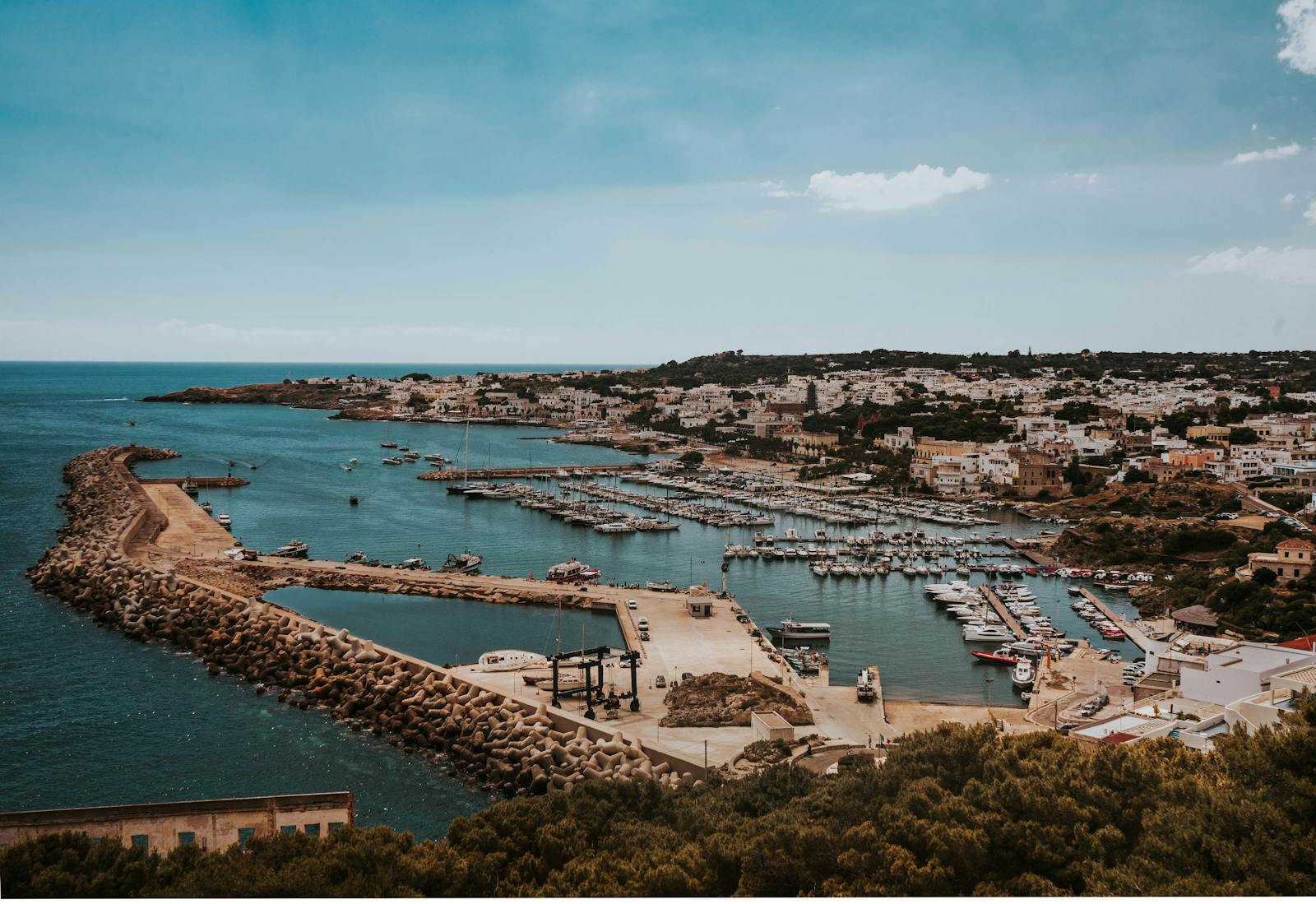
Santa Maria di Leuca
The southern tip of Italy’s heel, with a lighthouse, a sanctuary and old seaside villas, traditionally where the Adriatic meets the Ionian. Boats leave the harbour to visit the sea caves along the cliffs.
The Gargano, far to the north, is the spur of the boot: a national park of beech forest, white cliffs and beaches, with the resort towns of Vieste and Peschici. On the way from Bari, stop at the octagonal hilltop Castel del Monte, built for the emperor Frederick II and a UNESCO site, and at Trani, whose pale Romanesque cathedral stands right beside the sea.
Matera: in Basilicata, but worth the trip
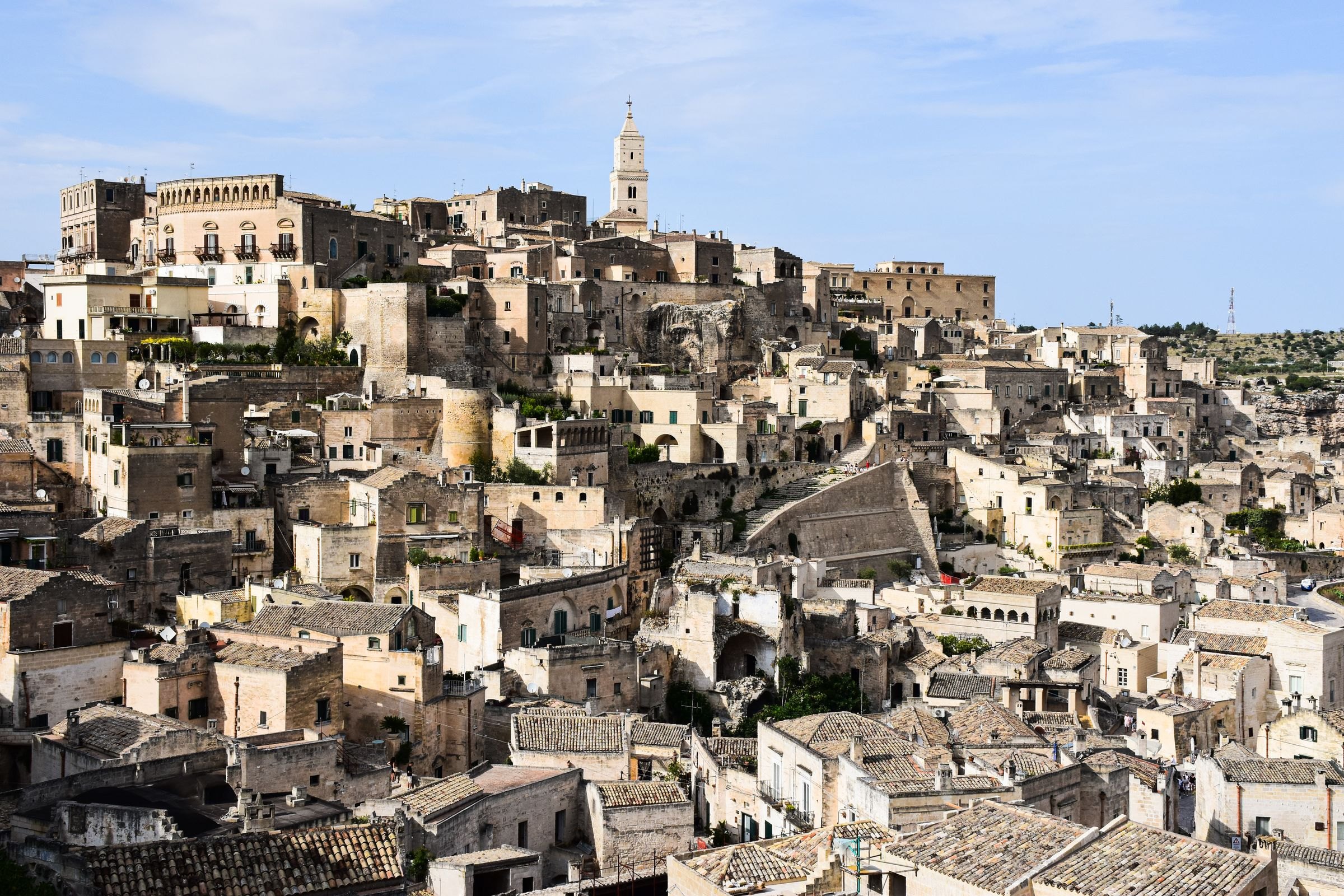
Matera is not in Puglia: it’s just over the border in the neighbouring region of Basilicata, about an hour’s drive from Bari or Alberobello. But it’s close enough, and remarkable enough, that almost every Puglia trip includes it.
Its two old quarters, the Sassi, are a city of cave houses, churches and stairways cut into the side of a ravine, lived in for thousands of years. They were abandoned in the 1950s as a symbol of poverty, then restored, made a UNESCO World Heritage Site in 1993 and European Capital of Culture in 2019. See the rock churches with their old frescoes, a furnished cave house, and the view from the far side of the ravine.
A day trip works, but a night in a cave hotel in the Sassi, with the city lit up after dark, is better.
Things to do in Puglia
- Swim from the rocks: the Adriatic coast has rocky coves and clear water; the Ionian side has long sandy beaches.
- Take a boat trip into the sea caves at Polignano or Santa Maria di Leuca.
- Learn to make orecchiette in a cookery class, often in a farmhouse kitchen.
- Visit an olive oil mill and taste the new oil, especially in the autumn harvest.
- Explore the Castellana Caves, a huge cave system between Bari and Alberobello.
- Cycle the quiet lanes of the Valle d’Itria and the Salento, flat or gently rolling and lined with dry-stone walls.
- Go to a summer festival: village feasts with light displays and brass bands, the Valle d’Itria opera festival, and the pizzica, the Salento’s frenetic folk dance, at the end of summer.
Food and wine in Puglia

Puglian cooking is cucina povera: peasant food made from superb vegetables, olive oil, durum wheat and seafood. The signature dish is orecchiette con cime di rapa, ear-shaped pasta with turnip tops, garlic and chilli. Try creamy burrata, which comes from Puglia, raw seafood in Bari, panzerotti (fried pastries), friselle (rusks topped with tomato), taralli with your aperitivo and bombette, little grilled rolls of pork, in the Valle d’Itria. In Lecce, finish with a pasticciotto and an iced coffee with almond milk.
The wines are big, sunny reds: Primitivo from around Manduria and Negroamaro from the Salento, plus rosé, which Puglia has made for generations, and crisp whites from Locorotondo. Many of the ancient olive groves of the Salento have been lost to a plant disease, Xylella, since 2013, and you’ll see replanting as you drive.
Best time to visit Puglia
May, June and September are the best months: warm and sunny, with the sea warm enough to swim from June. July and August are hot, often above 30°C inland, and the beaches and towns are packed with Italian families, especially around the mid-August holiday of Ferragosto; book early. October is still warm and good for touring, with the olive harvest from late October. November to March is mild but grey and wet at times, many beach places close and the sea is too cool for most, but the towns are quiet and Lecce and Matera are lovely. Easter brings processions to every town.
| Month | Bari | Lecce |
|---|---|---|
| Jan | 13°C / 7°C · 65 mm | 13°C / 6°C · 60 mm |
| Feb | 14°C / 7°C · 50 mm | 14°C / 7°C · 60 mm |
| Mar | 16°C / 8°C · 75 mm | 16°C / 8°C · 70 mm |
| Apr | 19°C / 11°C · 55 mm | 19°C / 10°C · 55 mm |
| May | 23°C / 15°C · 55 mm | 23°C / 14°C · 65 mm |
| Jun | 28°C / 19°C · 50 mm | 29°C / 19°C · 30 mm |
| Jul | 31°C / 22°C · 20 mm | 32°C / 22°C · 15 mm |
| Aug | 31°C / 22°C · 30 mm | 32°C / 22°C · 20 mm |
| Sep | 27°C / 19°C · 50 mm | 27°C / 19°C · 60 mm |
| Oct | 22°C / 15°C · 60 mm | 23°C / 15°C · 75 mm |
| Nov | 18°C / 12°C · 80 mm | 19°C / 12°C · 110 mm |
| Dec | 14°C / 8°C · 45 mm | 15°C / 8°C · 45 mm |
Average daily high / low and monthly rainfall, 10-year ERA5 data. Inland towns such as Alberobello, at about 400 m, are a little cooler than the coast. For more sunny ideas, see where is warm in Europe, month by month.
Getting to Puglia from the UK
Puglia has two airports with direct flights from the UK, about 3 hours from London, with more routes from regional airports in summer. Bari is best for Polignano, Monopoli, the Valle d’Itria and Matera; Brindisi for Ostuni, Lecce and the Salento. Flying into one and out of the other saves driving back. You can also take the high-speed train down the Adriatic coast from Bologna or Rome to Bari and Lecce, a long but scenic way to arrive, or combine Puglia with Rome or the Amalfi Coast.
Getting around Puglia
A car is by far the best way to see Puglia: the best places are spread across the countryside and the coast, and roads are straight, quiet and easy outside the cities. As in all of Italy, historic centres are ZTL limited-traffic zones with cameras, so park outside the walls. Trains run along the coast between Bari, Polignano, Monopoli, Ostuni, Brindisi and Lecce (Bari to Lecce takes about 1.5 hours), and slower local lines reach Alberobello, Locorotondo, Martina Franca and Gallipoli. If you’d rather not drive, we can arrange private transfers between bases and drivers for day trips, including Matera.
Where to stay in Puglia
- The Valle d’Itria: a restored trullo or a farmhouse among the olive groves near Alberobello, Locorotondo, Cisternino or Martina Franca. The best base for a first trip, with the coast 20 to 30 minutes away.
- A masseria near the coast: the old fortified farms between Fasano, Ostuni and Monopoli are now some of Puglia’s most beautiful country hotels, many with pools and beach clubs nearby.
- Polignano a Mare or Monopoli: for a town by the sea, with restaurants and evening walks on the doorstep.
- Lecce: a townhouse or boutique hotel in the old centre, as a base for the Salento.
- The Salento coast: beach hotels and villas near Otranto on the Adriatic side, or Gallipoli on the sandy Ionian side.
- Matera: one night in a cave hotel in the Sassi.
Tell us your style and a Travel Designer will match the right trullo, masseria or town house: we book stays across Puglia and Matera.
How many days in Puglia? Sample routes
A week is enough for the Valle d’Itria, the coast and Matera; with ten nights or more you can add Lecce and the Salento. Two bases work better than moving every night.
Trulli, white towns and Matera
- Valle d'Itria trullo or masseria (5 nights)
- Matera (1)
- Polignano or Monopoli (1)
Fly in and out of Bari. Day trips to Alberobello, Ostuni, Locorotondo and the coast.
Bari to Lecce
- Monopoli or Polignano (2 nights)
- Valle d'Itria (3)
- Matera (1)
- Lecce (2)
- Otranto coast (2)
Fly into Bari and out of Brindisi, with the Salento at the end.
Southern Italy
- Rome (3 nights)
- Amalfi Coast (3)
- Matera (1)
- Valle d'Itria (4)
- Lecce (3)
Train to Naples, then drive east: Matera links the Amalfi Coast to Puglia.
For an older, shorter introduction, see our article Puglia, Italy’s beautiful south. More of Italy: our Tuscany guide, the Sicily guide for another southern island, and Sardinia for beaches.
Puglia tours with us
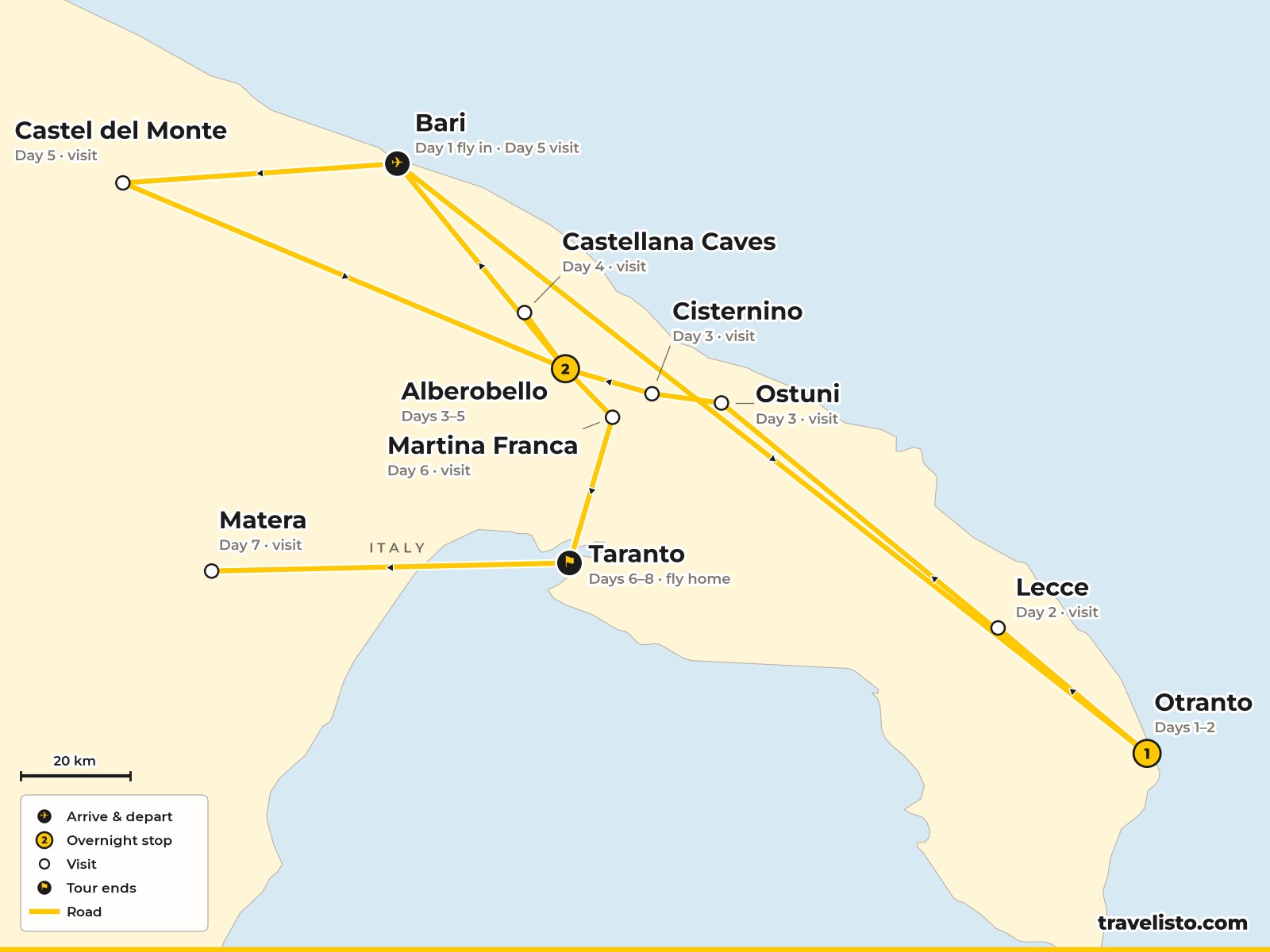
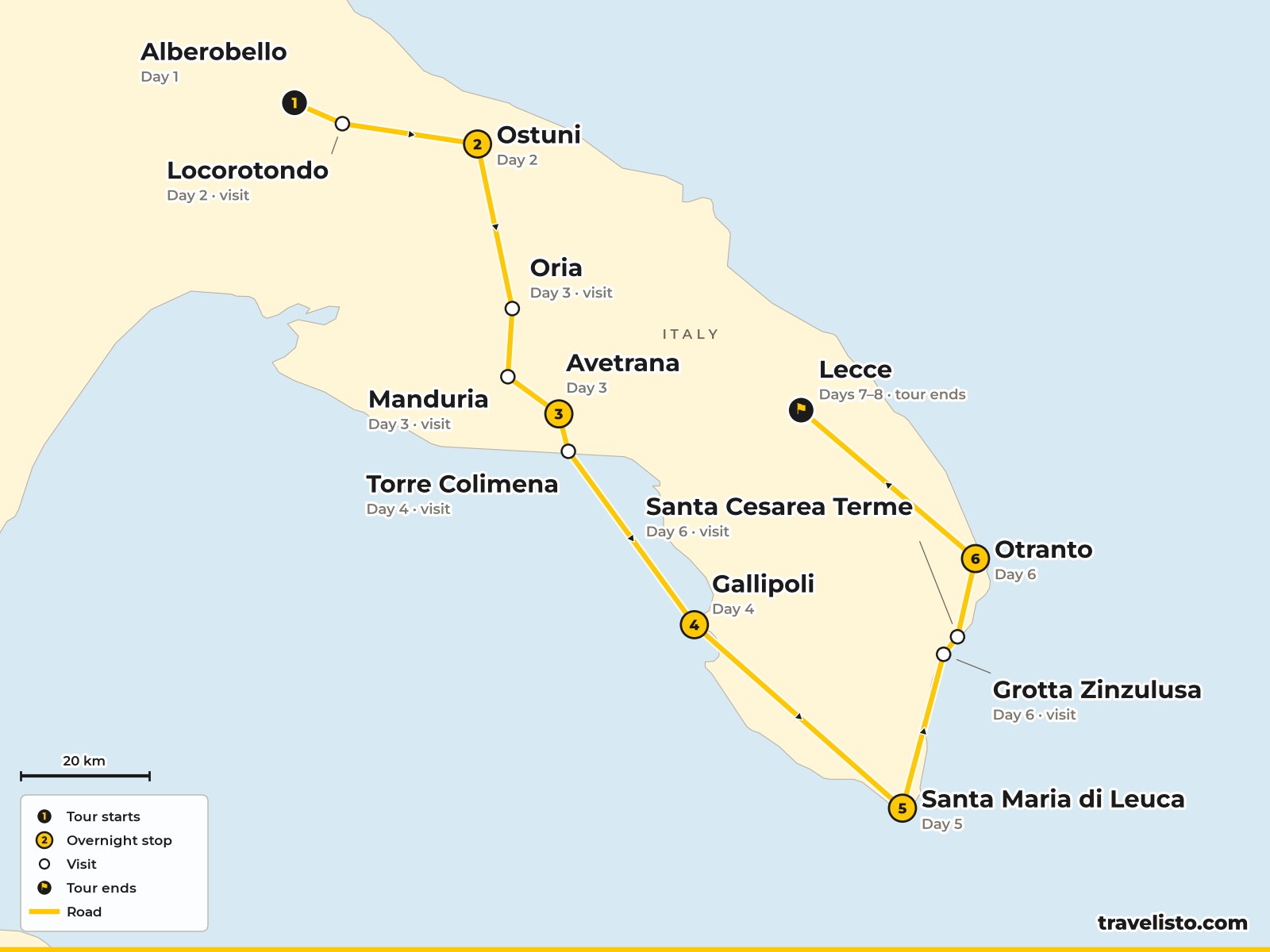
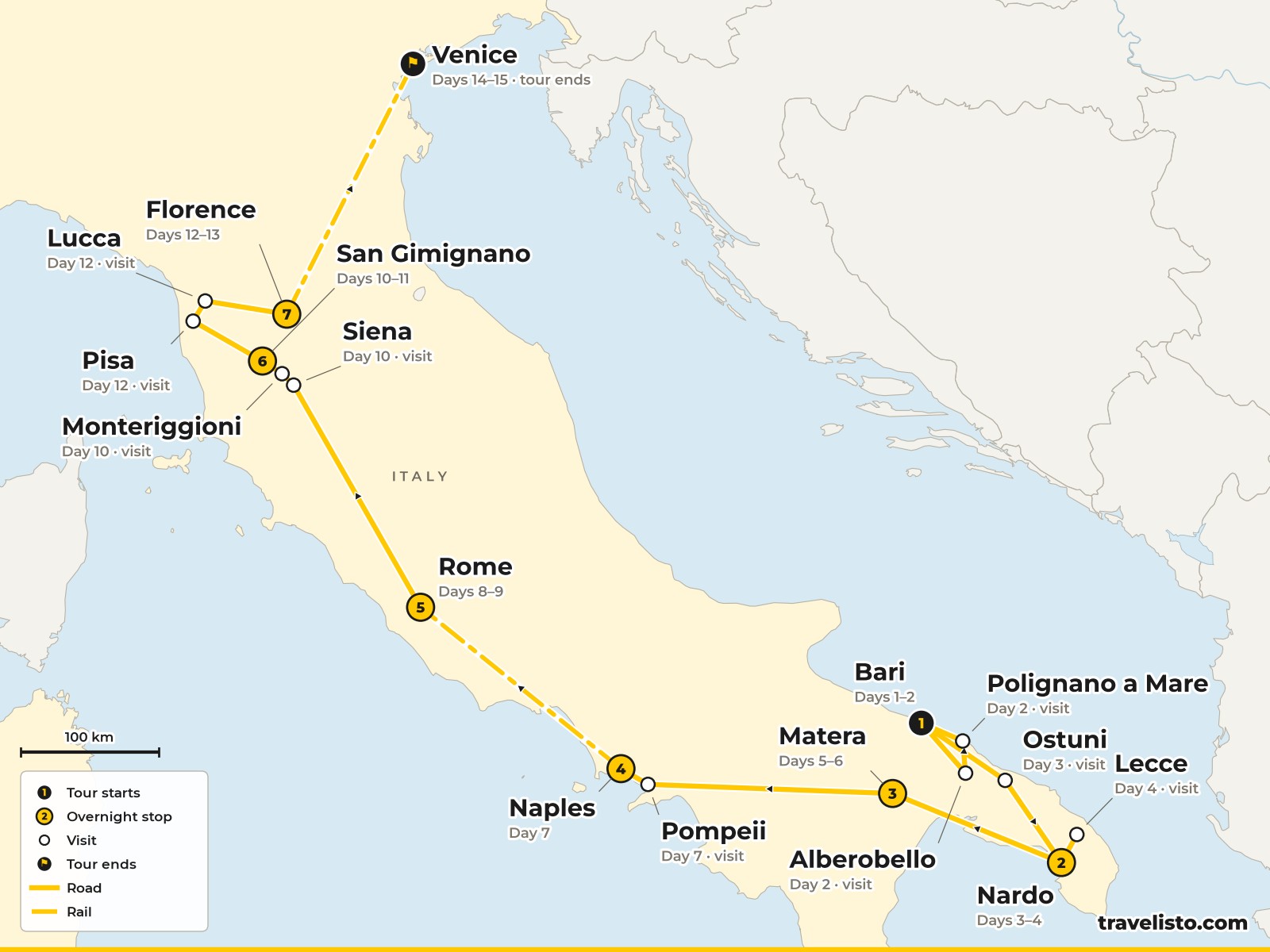
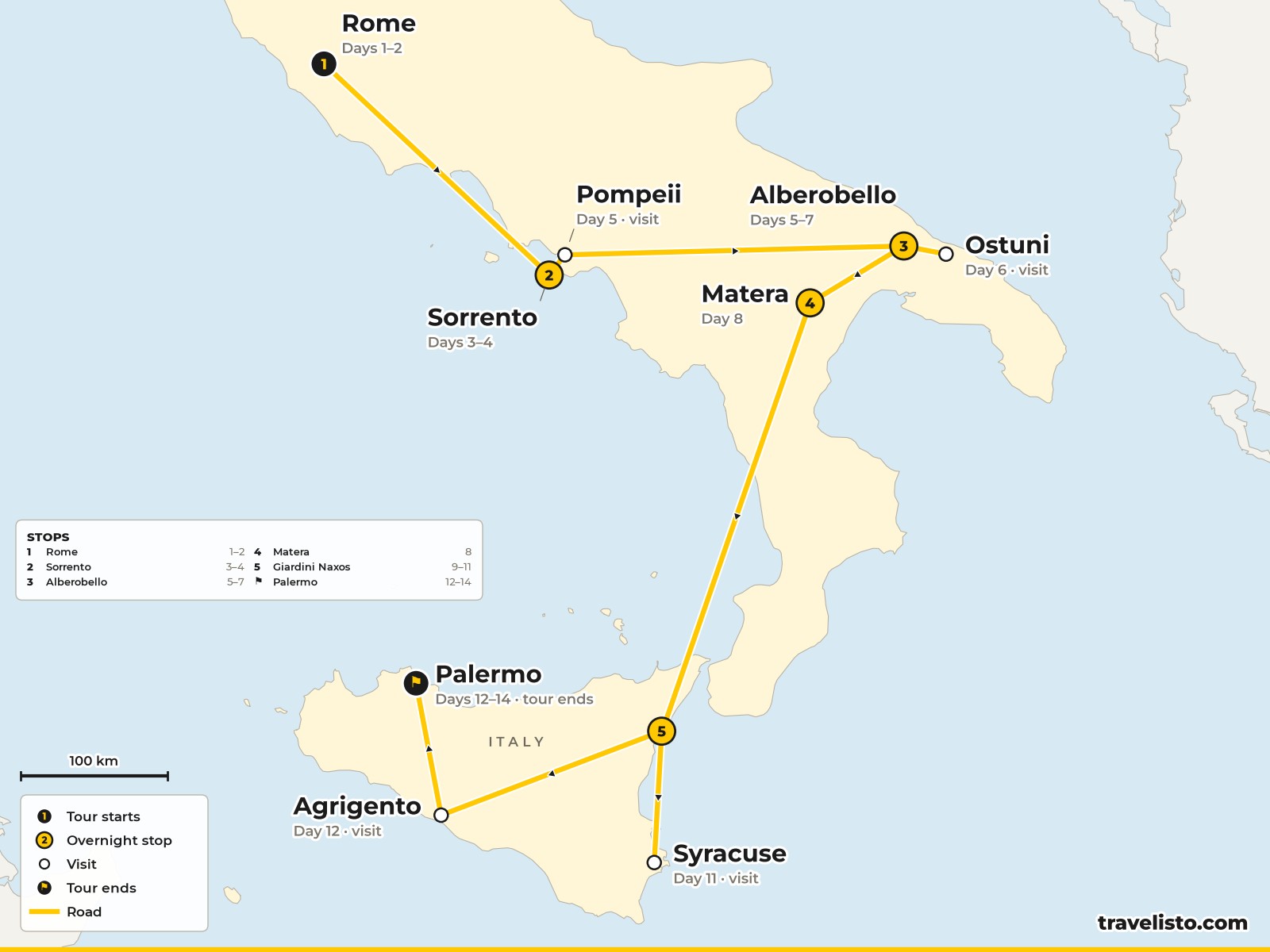
Prefer your own pace? A tailor-made Puglia holiday can combine a trullo in the Valle d’Itria, a masseria by the sea, Lecce and a night in Matera, with car hire or drivers, cookery classes and boat trips arranged.
Practical tips
- Entry: Italy is in the Schengen area, so British visitors can stay up to 90 days in any 180 without a visa. Your passport must have been issued less than 10 years before you arrive and be valid for at least 3 months after you leave. Under the EU’s Entry/Exit System you may have your fingerprints and photo taken at the border. Check the FCDO Italy advice before you go.
- August: book rooms and cars months ahead, and reserve beach-club sunbeds.
- Siesta: shops and churches in small towns close from about 1pm to 4.30pm; evenings start late.
- Beaches: many are run as lidi with sunbeds and umbrellas to hire, with free public stretches in between.
- Cash: cards are widely taken, but carry some euros for markets, small bars and parking.
- Matera: wear good shoes: the Sassi are all steps and uneven stone.
Frequently asked questions
What is the best time to visit Puglia?
May, June and September, when it's warm and sunny, the sea is good for swimming from June and the crowds are smaller. July and August are hot and very busy; October is still pleasant for touring.
How many days do you need in Puglia?
A week covers Alberobello, the Valle d'Itria, the coast around Polignano and Monopoli, and Matera. Allow ten nights or more to add Lecce and the Salento.
Where is the best place to stay in Puglia?
The Valle d'Itria, near Alberobello, Locorotondo or Martina Franca, is the best base for a first visit; add a few nights in Lecce for the Salento. Polignano and Monopoli suit those who want a town by the sea.
Is Matera in Puglia?
No. Matera is in Basilicata, the region next door, about an hour's drive from Bari or Alberobello. It's an easy and very popular day trip or overnight stop from Puglia.
Which airport is best for Puglia?
Bari for Polignano, Monopoli, the Valle d'Itria and Matera; Brindisi for Ostuni, Lecce and the Salento. Both have direct flights from the UK, and flying into one and out of the other saves time.
Do you need a car in Puglia?
It's strongly recommended. Trains link the coastal towns and Lecce, but the trulli country, the masserie and the beaches are much easier by car. We can also arrange private drivers.
What is Puglia famous for?
The trulli of Alberobello, whitewashed hill towns, baroque Lecce, clear sea on two coasts, olive oil, and simple food such as orecchiette, burrata and fresh seafood.
Is Puglia good for families?
Yes. Short distances, sandy beaches on the Ionian coast, trulli and farmhouse stays with pools, and easy food make it very family-friendly, especially in June and September.
Keep planning
- Puglia, Italy's beautiful south
- Italy holidays
- Escorted tours of Italy
- Tuscany guide
- Sicily guide
- Sardinia guide
- Lake Como guide
- Dolomites guide
- Where is warm in Europe
- Tailor-made holidays
Plan your Puglia holiday with a Travel Designer
Tell us when you’d like to go and we’ll plan your trullo, masseria or seaside town, Lecce and a night in Matera, with flights, car hire or drivers and cookery classes, in one ATOL-protected booking.
Make an enquiry Italy holidays