Uganda in brief
- Gorilla trekking in Bwindi is the highlight: about half the world’s mountain gorillas live there.
- Add chimps in Kibale, tree-climbing lions in Queen Elizabeth and Murchison Falls.
- Best June to August and December to February; treks run all year.
- No direct flights from the UK; British visitors need an e-visa; check the FCDO advice before you go.
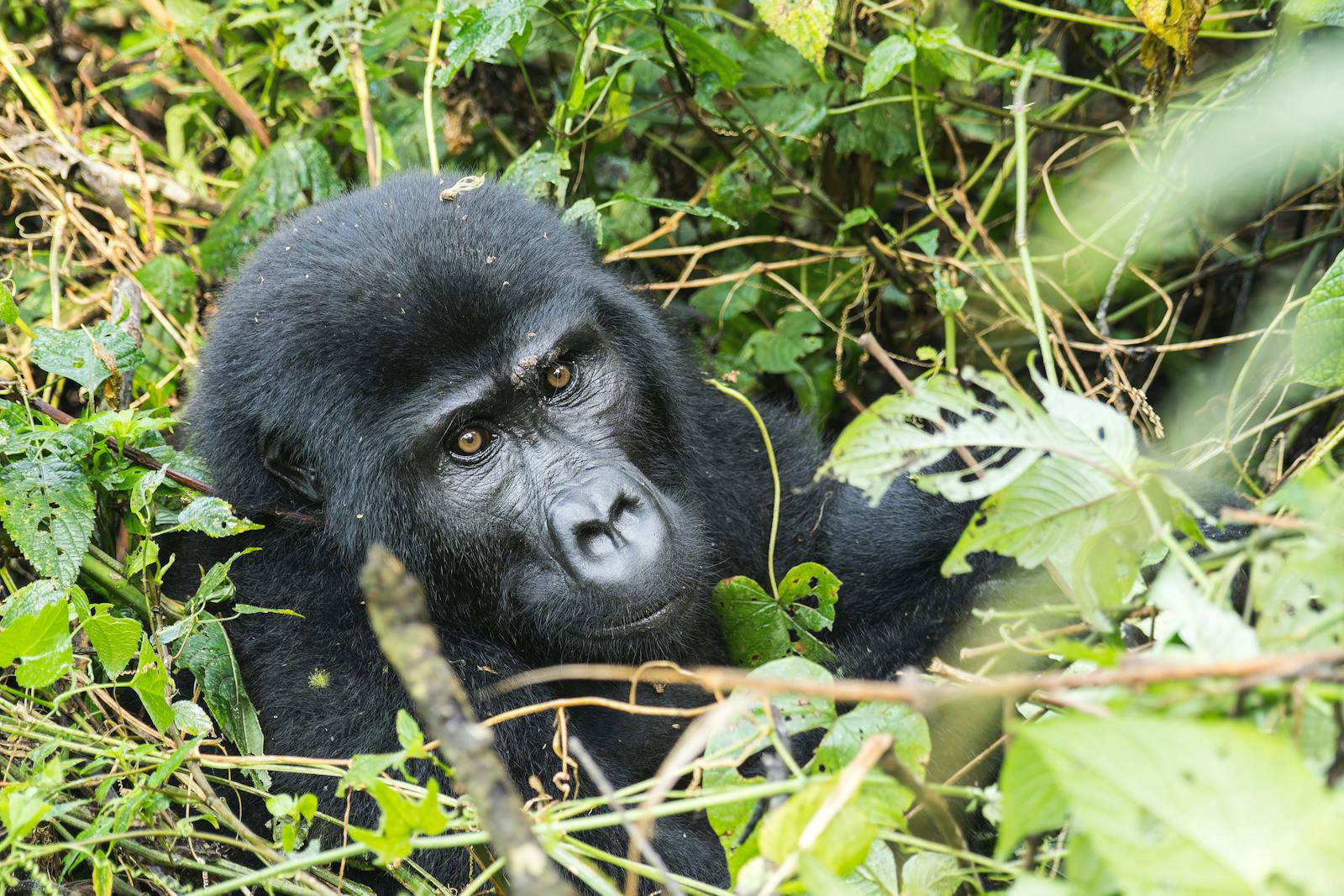
Uganda is where you go to look a mountain gorilla in the eye. About half of the world’s remaining mountain gorillas live in its south-western forests, and a trek through Bwindi Impenetrable National Park to sit with a gorilla family for an hour is one of the great wildlife experiences anywhere. But Uganda is far more than gorillas. In one trip you can track chimpanzees in Kibale Forest, watch lions resting in fig trees in Queen Elizabeth National Park, take a boat to the foot of Murchison Falls, raft the White Nile at Jinja and paddle a dugout canoe on Lake Bunyonyi. This guide covers the parks, gorilla trekking, the best time to visit Uganda, getting there from the UK, sample safari routes, our tours and what you need to know before you travel.
Why visit Uganda?
- Gorillas and chimps in one country: Bwindi and Mgahinga for mountain gorillas, Kibale for some of the most reliable chimpanzee tracking in Africa.
- Classic safari too: elephants, buffalo, Uganda kob, hippos and tree-climbing lions in Queen Elizabeth; giraffes and the thundering falls in Murchison.
- Few crowds: parks are quiet compared with the big Kenyan and Tanzanian reserves, and you rarely share a sighting with more than a vehicle or two.
- Lakes, rivers and mountains: Lake Victoria, the source of the Nile, crater lakes around Fort Portal and the snow-capped Rwenzori, the “Mountains of the Moon”.
Where is Uganda?
Uganda is a landlocked country in East Africa, straddling the equator. Kenya lies to the east, Tanzania and Rwanda to the south, the Democratic Republic of Congo (DRC) to the west and South Sudan to the north. Lake Victoria, Africa’s largest lake, fills much of the southern border.
Most of the country is a high, green plateau at around 1,000 to 1,500 m, which keeps temperatures pleasant despite the equator. The west is the most dramatic: the Albertine Rift, a chain of lakes, forests and volcanoes along the DRC border, holds almost all the gorilla and chimpanzee parks. International flights land at Entebbe, on the shore of Lake Victoria, about an hour from the capital, Kampala.
Gorilla trekking in Uganda
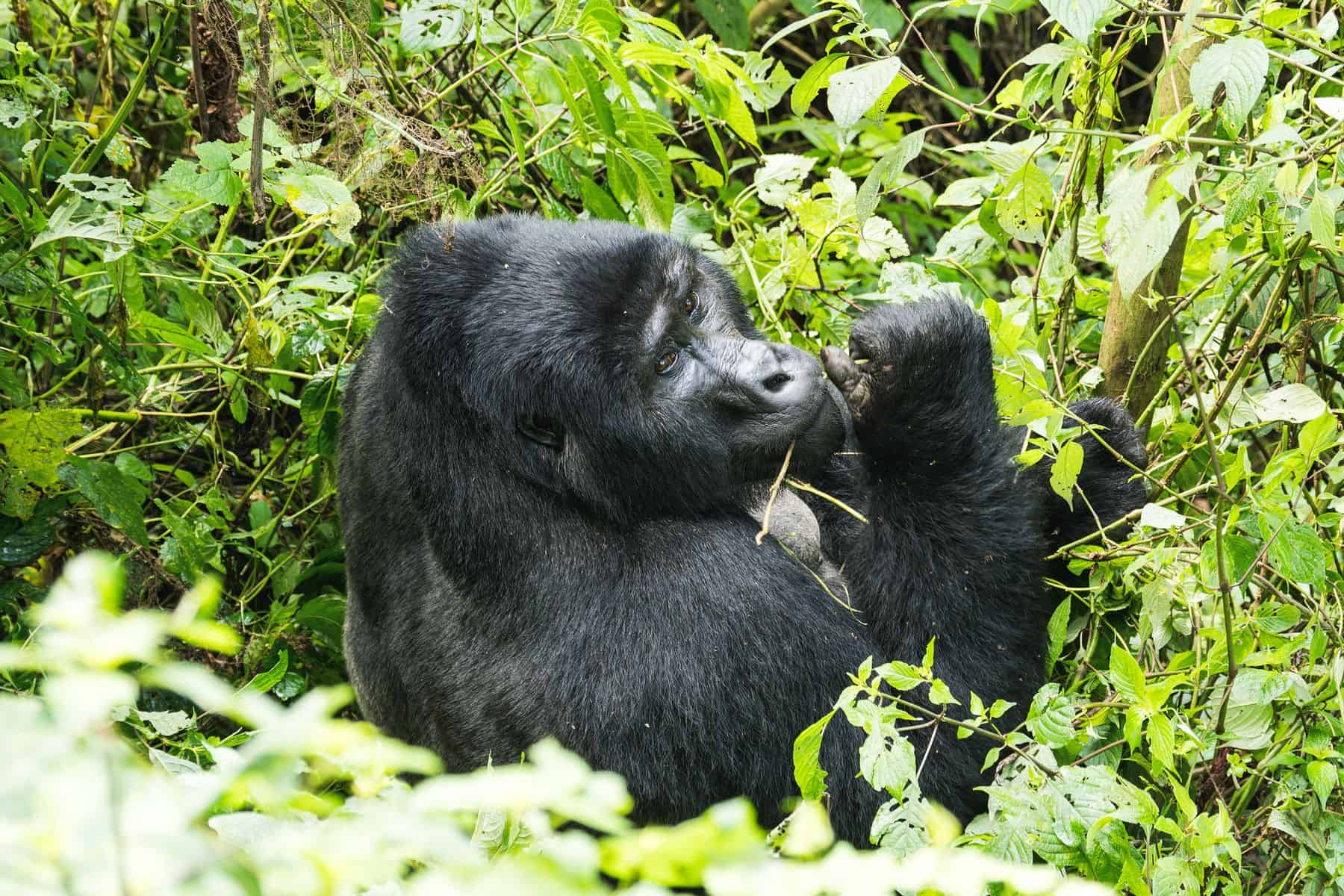
Where: almost all gorilla trekking in Uganda is in Bwindi Impenetrable National Park, a UNESCO World Heritage Site in the far south-west, where habituated families are tracked from four trailheads: Buhoma in the north, Ruhija in the east, and Rushaga and Nkuringo in the south. Your permit is for one sector, so where you stay depends on it. Small Mgahinga Gorilla National Park, on the slopes of the Virunga volcanoes, has a single habituated family.
The day: you meet the rangers at dawn for a briefing, are put in a group of up to eight people, and set off with trackers who have gone ahead to find the family. Walks can take from under an hour to most of the day, on steep, muddy, often slippery slopes. Once you reach the gorillas you have one hour with them, keeping your distance, watching the silverback, mothers and young feed, groom and play.
Permits: numbers are strictly limited, so book well ahead, especially for June to September and December to February. A standard permit costs US$800 under the Uganda Wildlife Authority tariff currently published; a new tariff is due from January 2027, so ask us for the rate for your dates. We secure permits as part of your trip. For more on costs, see how much does a safari cost?
Habituation experience: in the Rushaga sector a small number of visitors can spend around four hours with a gorilla family that is still being habituated to people, alongside the researchers. It needs its own permit and is limited to a handful of people a day. Minimum age for all gorilla trekking is 15. Porters can be hired at the trailhead to carry your bag and give you a hand on the steep sections; it’s good local income and well worth it.

Uganda or Rwanda for gorillas? Rwanda’s Volcanoes National Park is a short drive from Kigali and the permit costs more; Uganda takes longer to reach but costs less, has more gorilla families and adds chimps and savannah parks. Many people do both. We compare them in detail in gorilla trekking: Uganda or Rwanda? and our Rwanda holiday guide.
Uganda’s national parks and highlights
Uganda has ten national parks. Most safari routes link the western parks in a loop from Entebbe, with Murchison Falls as a separate trip to the north.

Bwindi Impenetrable National Park
Ancient montane rainforest on steep ridges, home to around half the world’s mountain gorillas. Besides the trek, there are waterfall walks, community visits in the villages around Buhoma and excellent birding, including many species found only in the Albertine Rift.

Kibale National Park
The best place in Uganda to track chimpanzees, with habituated communities that are found on most morning walks. Walk the Bigodi wetland next door for birds and monkeys. Stay among the crater lakes and tea estates near Fort Portal.
Queen Elizabeth National Park
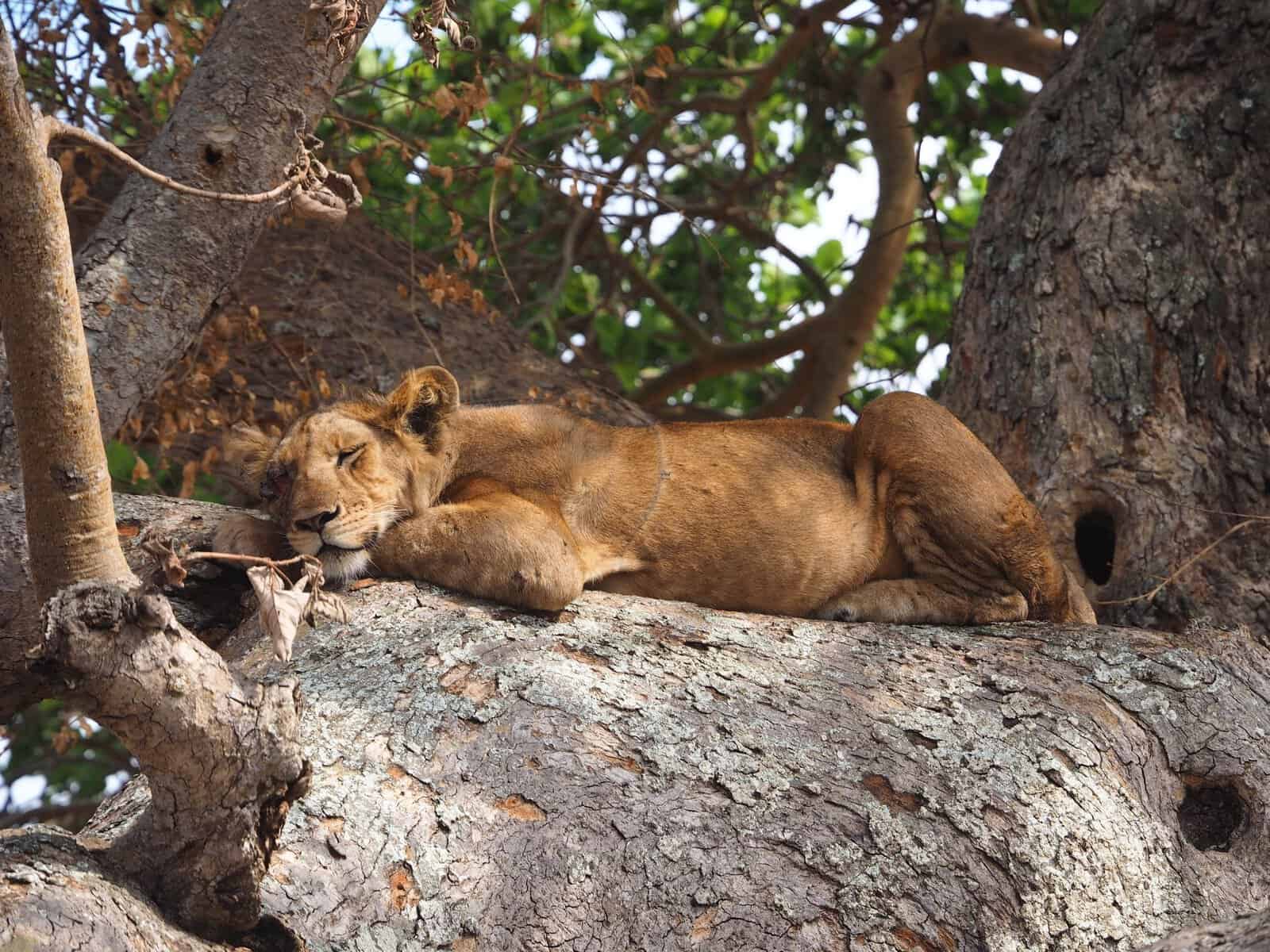
Savannah, crater lakes and the Kazinga Channel, where a boat trip passes huge numbers of hippos, buffalo, elephants and waterbirds. Game drives on the Kasenyi plains find lions and Uganda kob, and in the southern Ishasha sector lions famously rest in fig trees. Chimps live in the Kyambura Gorge.

Murchison Falls National Park
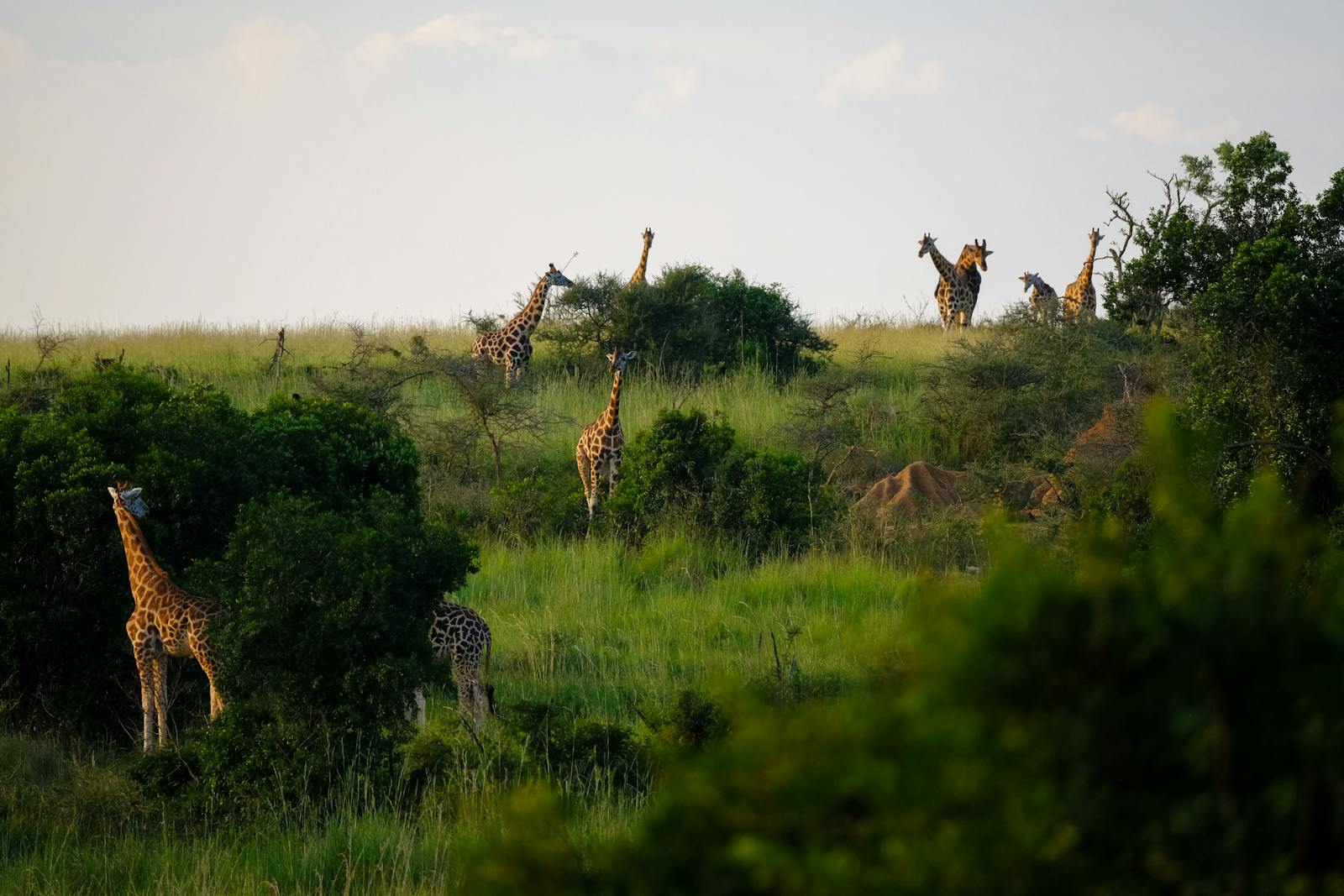
Uganda’s largest park, where the whole Nile forces itself through a gap in the rock about 7 m wide. Take a launch upriver to the foot of the falls past hippos and crocodiles, then hike to the top. North of the river, game drives find Rothschild’s giraffes, elephants, buffalo and lions. The rhino sanctuary at Ziwa is a stop on the way from Kampala.


More places to add
- Lake Mburo National Park: a small park between Kampala and Bwindi with zebras, eland, impala and topi, and the chance to walk, cycle or ride among them. The perfect overnight break on the long drive west.
- Lake Bunyonyi: a deep, island-dotted lake in the terraced hills near Kabale, close to Bwindi’s southern sectors. Canoe between the islands and simply rest after trekking.
- Mgahinga: track golden monkeys in the bamboo forest below the volcanoes.
- The Rwenzori Mountains: a UNESCO-listed range with glaciers near the equator and Africa’s third-highest peak, Margherita, at 5,109 m. Day walks in the foothills, or a full trek for the very fit.
Jinja, Entebbe and Kampala

Jinja, two hours east of Kampala, sits where the White Nile leaves Lake Victoria. Take a boat to the source of the Nile, and below the town go white-water rafting, kayaking, tubing or simply watch the rapids from the bank. It’s the adventure capital of East Africa.
Entebbe is calm and green, with botanical gardens on the lakeshore. Most trips start or end here, and it’s the base for a canoe trip into the Mabamba swamp to look for the shoebill.
Kampala is big, busy and lively. A day is enough for most visitors: the Kasubi royal tombs, the Uganda Museum, the craft markets and a growing restaurant scene.
Food and drink
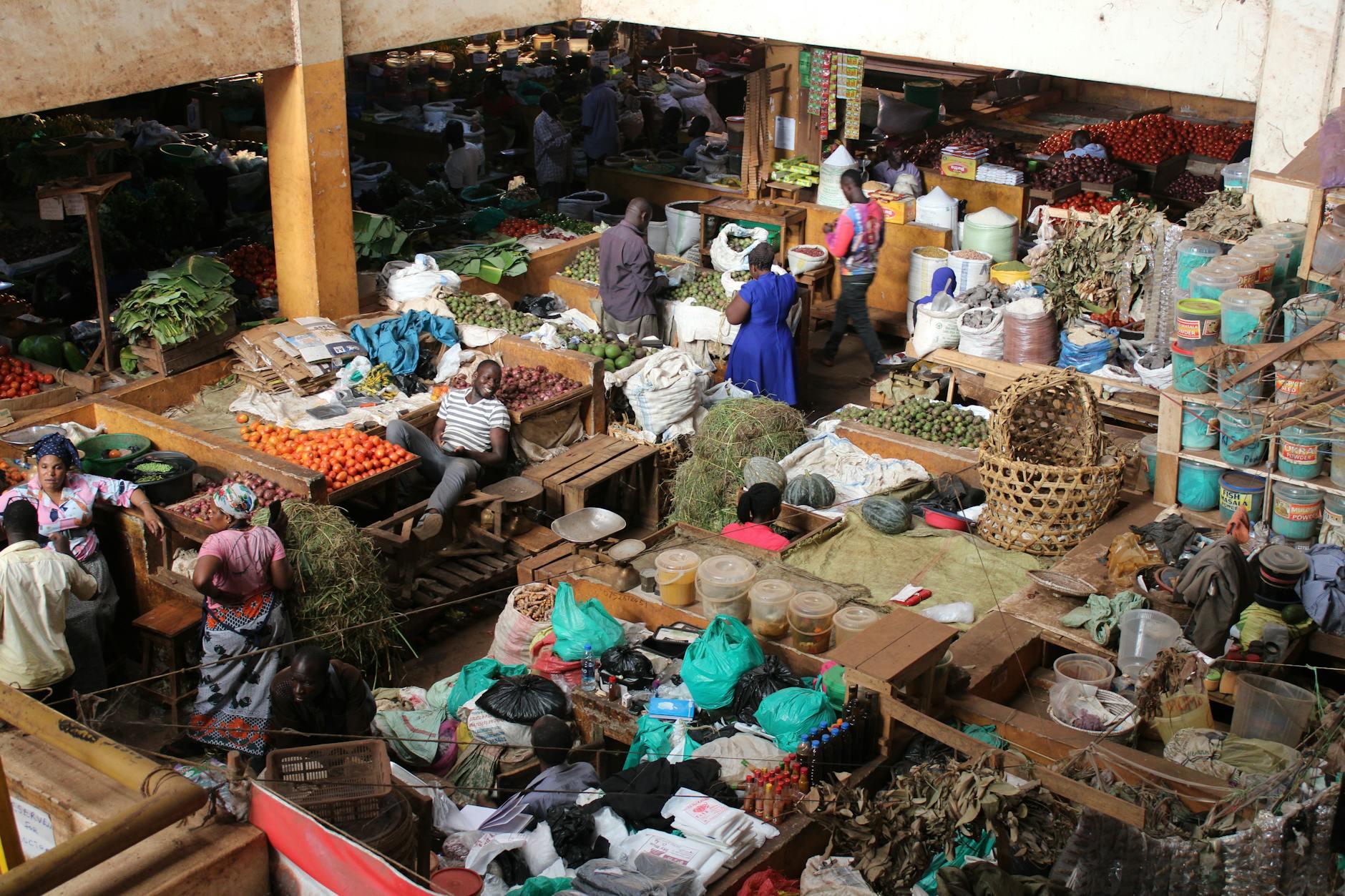
Ugandan food is hearty and simple. Matooke, steamed and mashed green bananas, is the national staple, served with groundnut (peanut) sauce, beans or stew. Try luwombo, chicken or beef slow-cooked in banana leaves, fresh tilapia and Nile perch from the lakes, and the famous street snack, the rolex: an omelette rolled up in a chapati. Uganda grows excellent coffee on the slopes of Mount Elgon and the Rwenzori, and tea around Fort Portal and Bwindi.
Best time to visit Uganda
Uganda is on the equator, so it’s warm all year and there’s no real winter: what matters is rain. The best time to visit Uganda is in the two drier seasons, June to August (into early September) and December to February, when trails are firmer, roads are easier and game gathers near water. These are also the busiest months for gorilla permits. The long rains fall from about March to May, and the short rains from about September to November, when Bwindi is at its wettest. Gorilla trekking and chimp tracking run all year, and the green season has quieter parks and easier permits; you just need good waterproofs. Bwindi, at around 1,500 m and higher, is cool in the mornings, often 15°C at dawn, while Murchison Falls, much lower, can top 34°C in January and February.
| Month | Entebbe | Bwindi (Buhoma) | Murchison Falls |
|---|---|---|---|
| Jan | 26°C / 19°C · 70 mm | 25°C / 16°C · 55 mm | 34°C / 21°C · 10 mm |
| Feb | 26°C / 20°C · 75 mm | 26°C / 16°C · 65 mm | 36°C / 22°C · 10 mm |
| Mar | 25°C / 20°C · 145 mm | 25°C / 16°C · 180 mm | 34°C / 22°C · 80 mm |
| Apr | 24°C / 20°C · 230 mm | 24°C / 16°C · 270 mm | 30°C / 21°C · 170 mm |
| May | 24°C / 19°C · 175 mm | 24°C / 16°C · 180 mm | 29°C / 21°C · 135 mm |
| Jun | 24°C / 19°C · 85 mm | 24°C / 15°C · 100 mm | 29°C / 20°C · 85 mm |
| Jul | 24°C / 19°C · 60 mm | 25°C / 15°C · 60 mm | 29°C / 20°C · 80 mm |
| Aug | 24°C / 18°C · 90 mm | 24°C / 15°C · 160 mm | 29°C / 20°C · 120 mm |
| Sep | 25°C / 19°C · 105 mm | 24°C / 15°C · 270 mm | 30°C / 20°C · 145 mm |
| Oct | 25°C / 19°C · 120 mm | 24°C / 15°C · 325 mm | 30°C / 20°C · 200 mm |
| Nov | 24°C / 19°C · 175 mm | 23°C / 15°C · 310 mm | 30°C / 20°C · 135 mm |
| Dec | 25°C / 19°C · 115 mm | 24°C / 15°C · 185 mm | 32°C / 20°C · 35 mm |
Average daily high / low and monthly rainfall, 10-year ERA5 data. Bwindi is measured at about 1,550 m; the higher Ruhija sector is cooler.
Best time to see gorillas in Uganda: June to August and December to February for the driest trails, but the gorillas don’t move away in the rain, so any month works. Best for chimps: the dry months, when the chimps are easier to follow on the forest floor. Best for birds: November to April, when migrants from Europe are here.
Getting there and getting around

Flights from the UK: there are no direct flights from the UK to Uganda. The usual routes connect through a Gulf or European hub, Istanbul, Nairobi or Addis Ababa, taking about 11 to 14 hours in total to Entebbe International Airport.
By road: most safaris are by 4×4 or safari vehicle with a private driver-guide. Distances are long and roads mixed: Entebbe to Bwindi is a full day’s drive, broken by a night at Lake Mburo. We plan routes to avoid driving after dark, which the FCDO also advises.
By air: scheduled and charter light aircraft fly from Entebbe and a smaller airfield near Kampala to airstrips for Bwindi, Queen Elizabeth, Kibale and Murchison Falls. Flying in and driving out is a good way to save days.
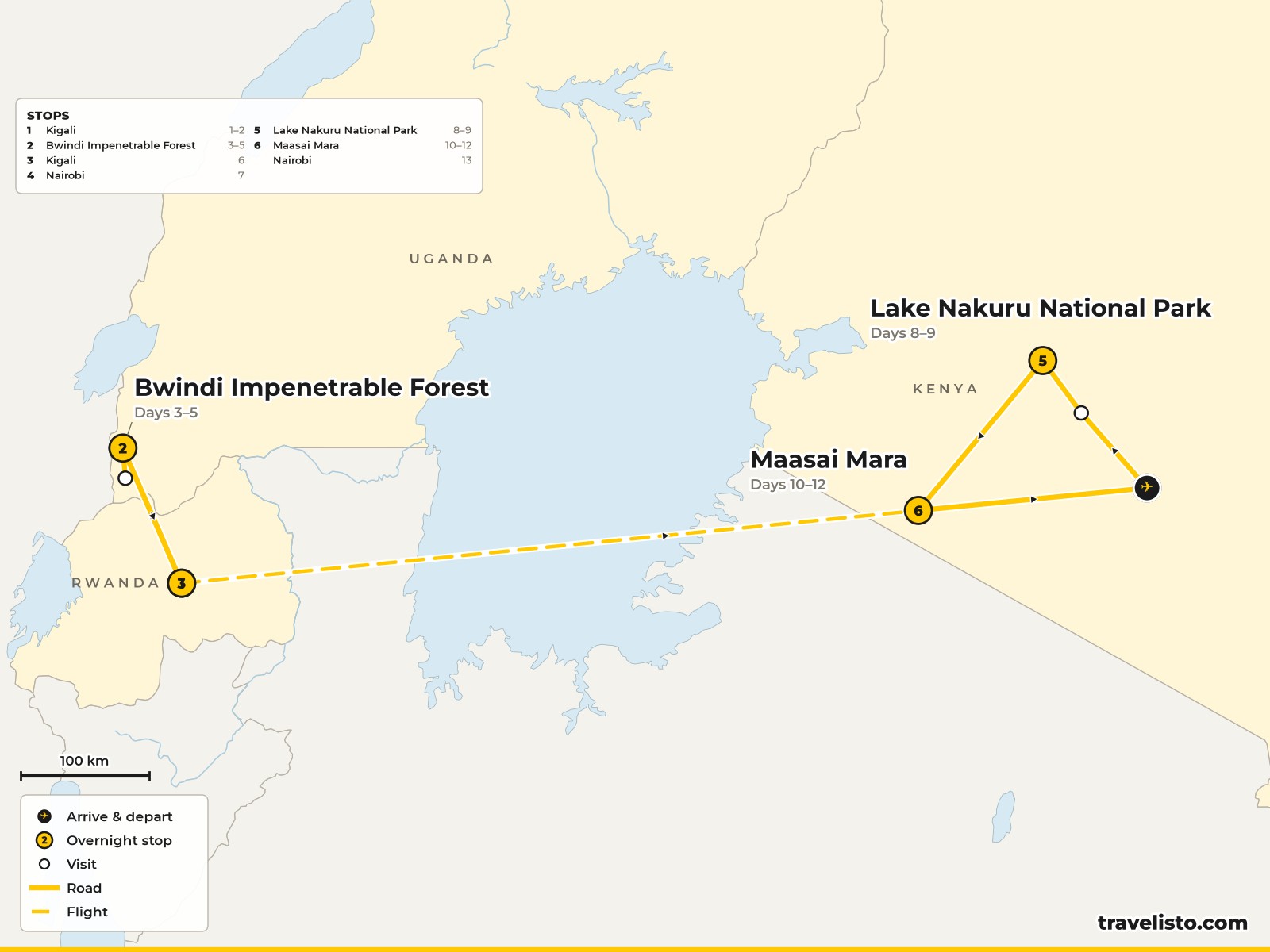
Combining countries: Bwindi’s southern sectors are close to the Rwandan border, so many trips fly into Kigali instead and drive across. The East Africa Tourist Visa covers Uganda, Rwanda and Kenya.
Where to stay in Uganda
- Bwindi: stay in the sector your permit is for. Choose from comfortable lodges and tented camps on the forest edge to small community-run guesthouses; a few top lodges look straight into the trees.
- Kibale and Fort Portal: lodges on the forest edge for early chimp walks, or cottages above the crater lakes with views of the Rwenzori.
- Queen Elizabeth: lodges on the Mweya peninsula overlooking the Kazinga Channel, tented camps near Ishasha, and properties on the crater rim.
- Murchison Falls: lodges on the Nile banks or in the savannah north of the river.
- Entebbe: guesthouses and hotels close to the airport and the lake for arrival and departure nights.
Tell us your style and we’ll match the right lodge in each park.
Uganda safari routes
Gorilla short break
- Kampala or Entebbe (1 night)
- Lake Mburo (1)
- Bwindi (2)
One gorilla trek, for those short of time or adding Uganda to another trip.
Primates and safari
- Entebbe (1 night)
- Kibale (2)
- Queen Elizabeth (2)
- Bwindi (3)
- Lake Mburo (1)
- Entebbe (1)
The classic loop: chimps, boat safari, tree-climbing lions and gorillas.
Uganda in depth
- Entebbe (1 night)
- Murchison Falls (3)
- Kibale (2)
- Queen Elizabeth (3)
- Bwindi (3)
- Lake Bunyonyi (2)
Add the falls and the giraffes in the north, then end with a lake.
Uganda also combines well with Kenya and Tanzania: gorillas first, then the Maasai Mara or the Serengeti. See our Kenya holiday guide and Tanzania holiday guide.
Uganda tours with us
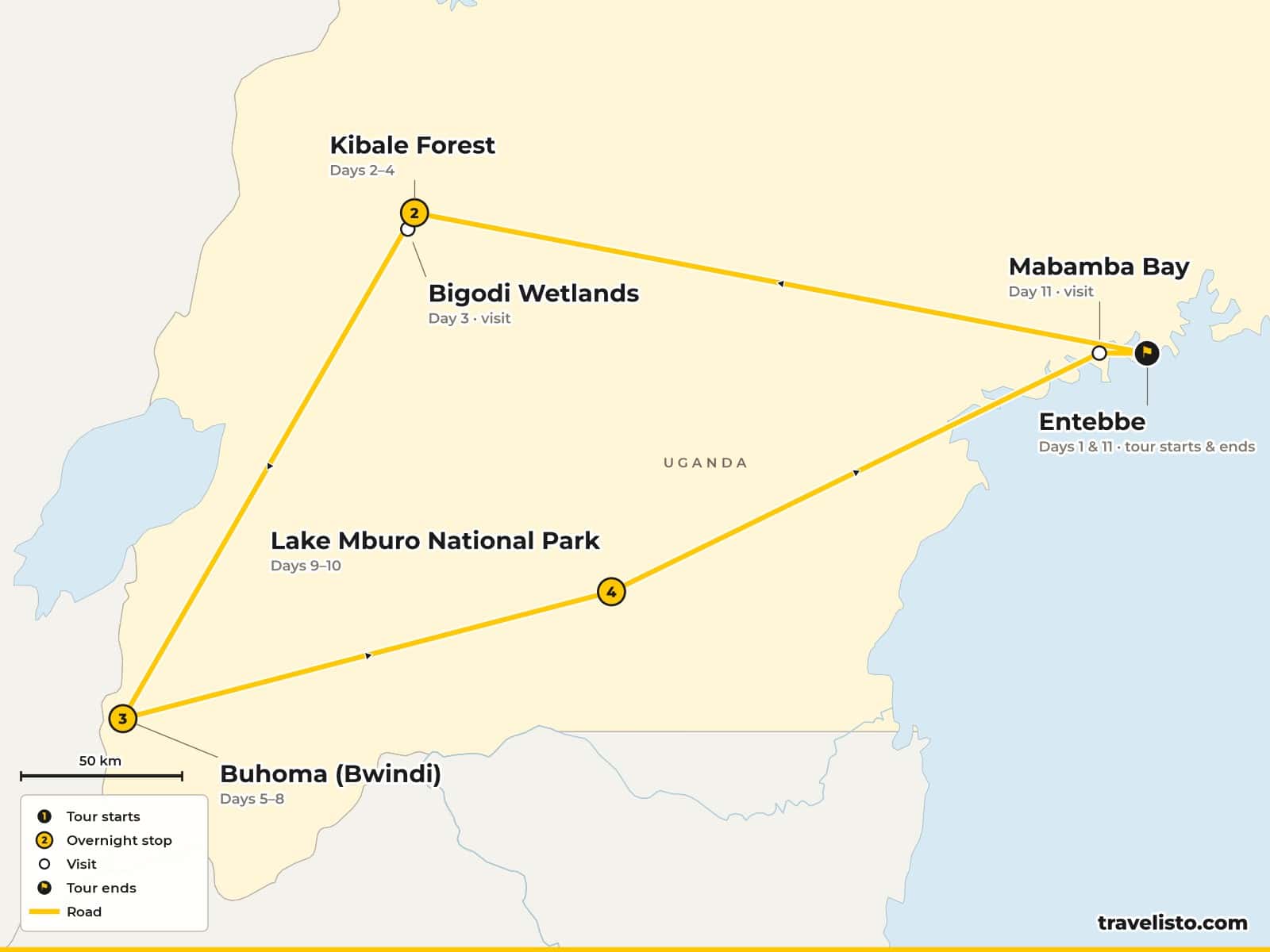
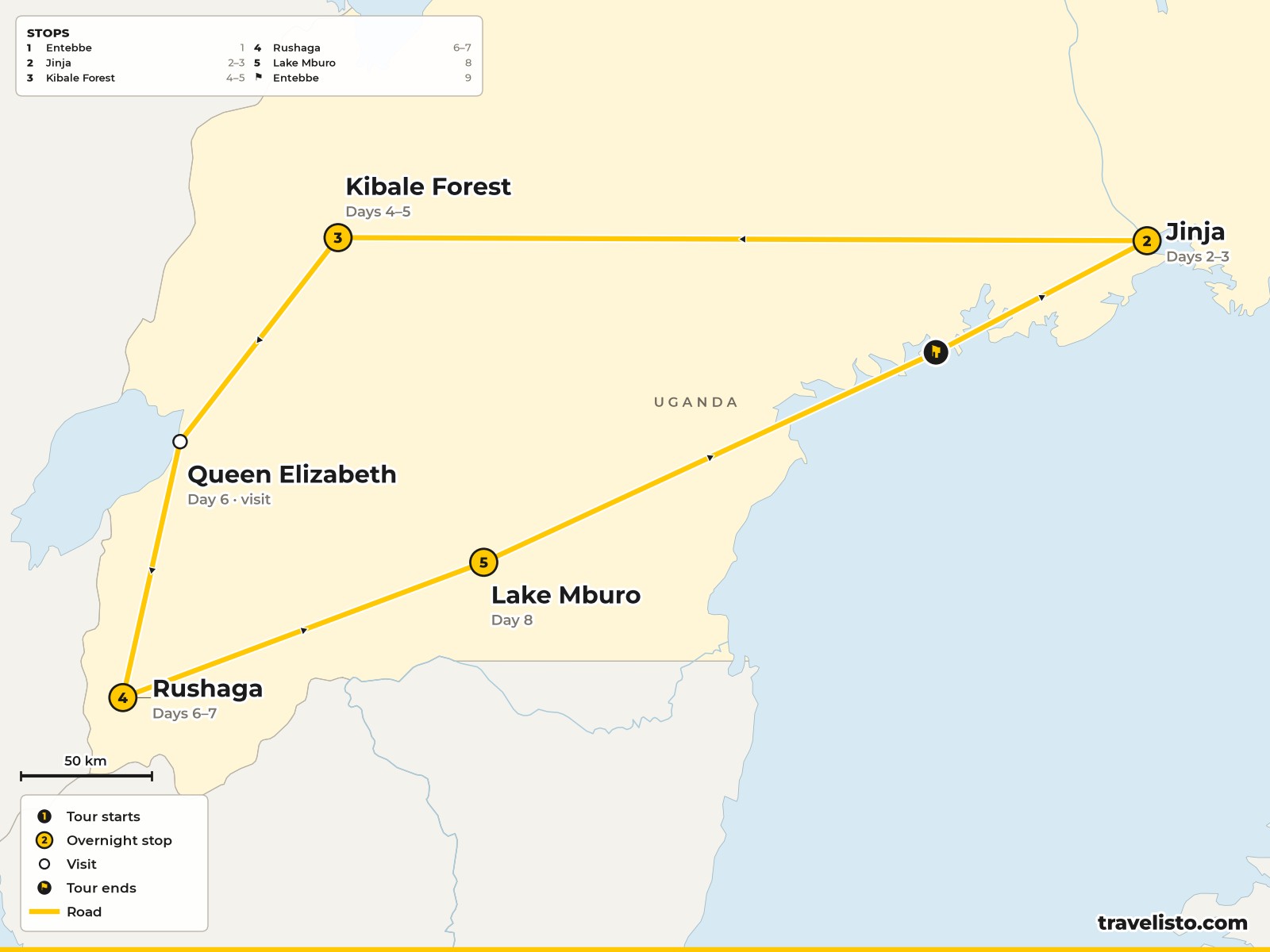
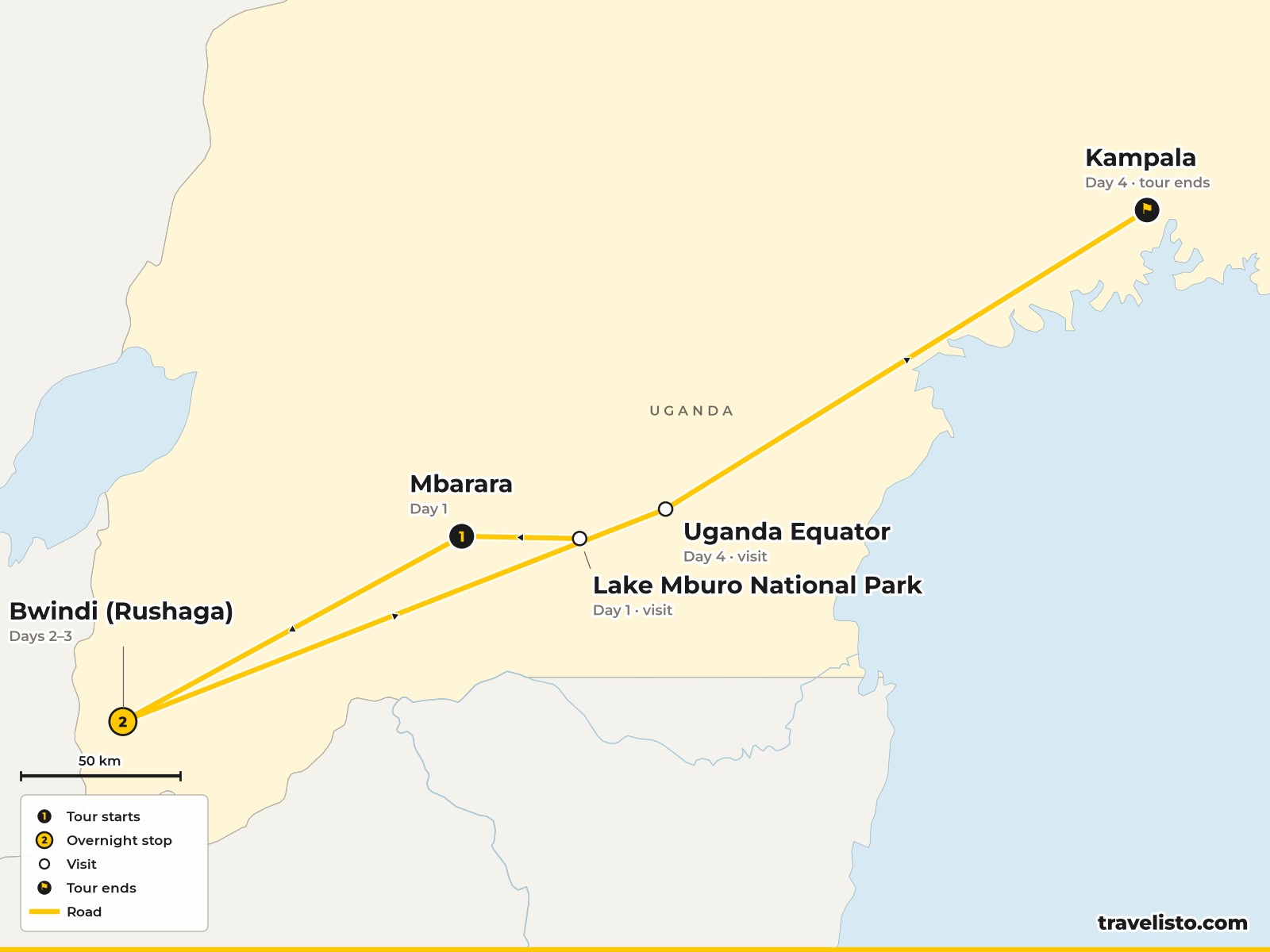
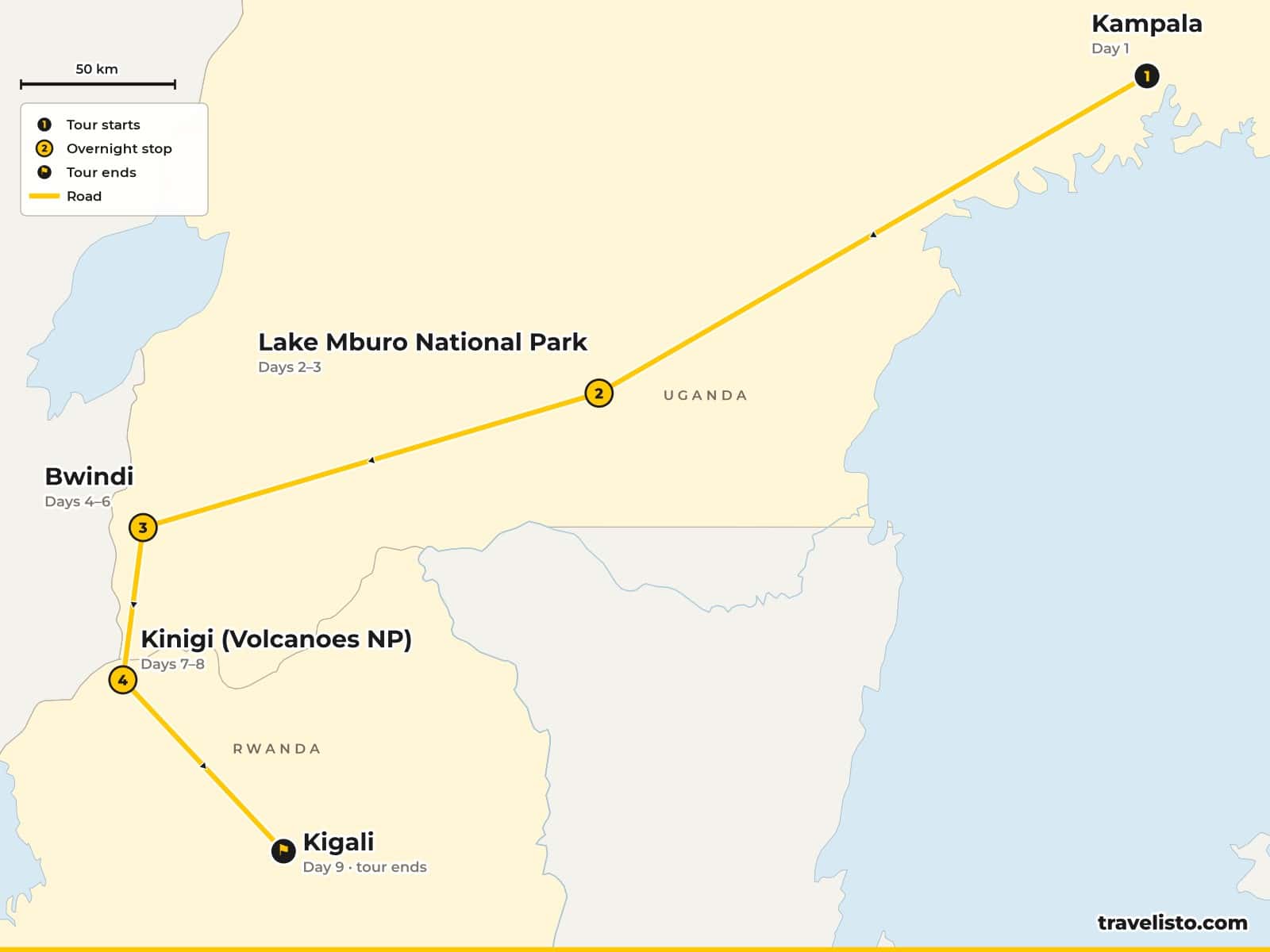
Want your own dates and pace? A tailor-made Uganda safari lets you choose the parks, the lodges and how many treks, with permits arranged. See all our escorted tours of Uganda.
Practical tips and travel advice
- Visa: British visitors need a visa, applied for online before you travel; you print the approval letter and the visa is issued on arrival. If you’re also visiting Rwanda or Kenya, the East Africa Tourist Visa covers all three. Your passport must be valid for at least six months after you arrive.
- FCDO advice: the FCDO warns that terrorist attacks are very likely, including in national parks, and that there have been attacks in western Uganda near the DRC border, including one in Queen Elizabeth National Park in October 2023. We follow the latest advice, use experienced local guides and avoid road travel after dark. Read the FCDO Uganda advice before you book and before you go.
- Health: the World Health Organization declared Uganda’s Ebola outbreak over on 27 August 2026, but an outbreak continues in neighbouring DRC, so expect health screening at Entebbe. You’ll need a yellow fever vaccination certificate, and malaria is present: see your GP or a travel clinic and check TravelHealthPro six to eight weeks before you go.
- Fitness: gorilla treks can be long, steep and muddy at altitude. Regular walking beforehand helps.
- What to pack: waterproof jacket, long trousers, long sleeves, sturdy broken-in boots, gaiters, gardening gloves for grabbing vines, and a small rucksack. Neutral colours for chimp and gorilla walks.
- Money: the Ugandan shilling is the local currency; US dollars are widely used for park fees and tips. Bring clean, undamaged, recent dollar notes, as older or torn notes are often refused. Cards work in larger hotels and in Kampala.
- Laws: same-sex relations are illegal in Uganda, and the 2023 Anti-Homosexuality Act sets severe penalties, including for “promoting” homosexuality. LGBT+ travellers should read the FCDO guidance carefully.
Frequently asked questions
Is Uganda worth visiting?
Yes. It's one of only three countries where you can trek to mountain gorillas, and the best place to combine them with chimpanzees, a boat safari, tree-climbing lions and Murchison Falls in one trip, with far fewer crowds than the big East African reserves.
When is the best time to visit Uganda?
June to August and December to February, the drier seasons, when forest trails are firmer and roads easier. Gorilla treks run all year; the rainy months of March to May and September to November are quieter, greener and wetter.
How much is a gorilla permit in Uganda?
US$800 per person under the Uganda Wildlife Authority tariff currently published. A new tariff is due from January 2027, so ask us for the rate for your dates. Permits are limited, so book months ahead for the dry seasons.
Where do you see gorillas in Uganda?
In Bwindi Impenetrable National Park, from the Buhoma, Ruhija, Rushaga and Nkuringo sectors, and in Mgahinga Gorilla National Park on the Rwandan border. Your permit is for a specific sector.
Is Uganda safe for tourists?
The FCDO warns of a high terrorism threat, including in national parks. Avoid travel outside main towns after dark, travel with an experienced guide and check the latest FCDO advice before you go.
Do British citizens need a visa for Uganda?
Yes. Apply online before you travel; the visa is issued on arrival with your approval letter. The East Africa Tourist Visa covers Uganda, Rwanda and Kenya. Your passport needs six months' validity.
How many days do you need in Uganda?
Four days is enough for a single gorilla trek. Ten to fourteen days lets you add chimps in Kibale, Queen Elizabeth National Park, Lake Mburo or Lake Bunyonyi, and Murchison Falls.
Can you combine Uganda with Rwanda or Kenya?
Yes. Bwindi is close to the Rwandan border, so many trips fly into Kigali and trek in both countries. Uganda also pairs well with a Maasai Mara or Serengeti safari after the gorillas.
Keep planning
- Uganda holidays
- Escorted tours of Uganda
- Gorilla trekking: Uganda or Rwanda?
- Rwanda holiday guide
- How much does a safari cost?
- Kenya holiday guide
- Tanzania holiday guide
- Tailor-made holidays
Plan your Uganda safari with a Travel Designer
Tell us your dates and we’ll secure your gorilla permits, plan the parks and lodges, and arrange flights, guides and transfers in one ATOL-protected booking.
Make an enquiry Uganda holidays