South Korea in brief
- Seoul for palaces, hanok lanes and markets, with a DMZ day trip to the border.
- Gyeongju, Busan and Jeju are the classic trio beyond the capital, linked by bullet train and short flights.
- Best in April to May and late September to November, for cherry blossom and autumn colours.
- Visa-free for UK visitors for up to 90 days; direct flights from London take about 14 hours.
South Korea packs a lot into a small, easy country. Seoul is one of Asia’s great cities, with royal palaces, hanok lanes, night markets and granite mountains you can hike from the metro. A little over two hours south by bullet train, Gyeongju was the capital of the Silla kingdom for almost a thousand years, and Busan is a lively port city of beaches, fish markets and hillside temples. Off the south coast, the volcanic island of Jeju has lava coasts, tangerine groves and the country’s highest peak. This guide covers where to go, the food, the best time to visit (cherry blossom and autumn colours included), getting there from the UK, entry rules and sample routes.
Where is South Korea?
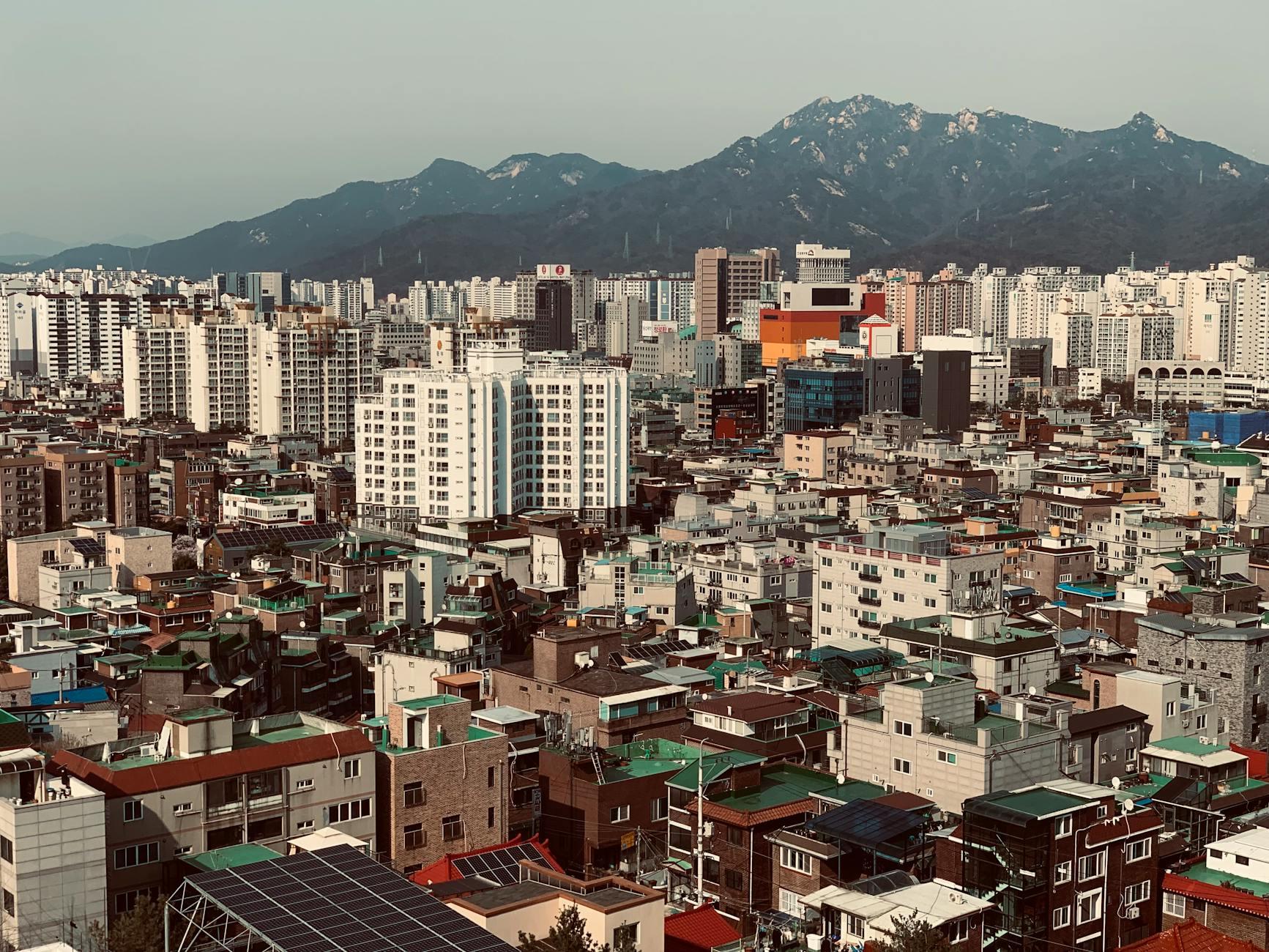
South Korea covers the southern half of the Korean peninsula in north-east Asia, between China to the west and Japan to the east. It’s about the size of England, and around 70% of it is mountainous, which is why even Seoul has peaks on its skyline.
The DMZ (Demilitarised Zone) separates it from North Korea, about an hour north of Seoul. The east coast faces the East Sea, the west and south coasts break up into thousands of islands, and Jeju sits on its own about 90 km off the southern tip, a one-hour flight from Seoul.
Distances are short and the trains are excellent: from Seoul, the KTX reaches Gyeongju in about two hours and Busan in two and a half.
Seoul: palaces, markets and mountains

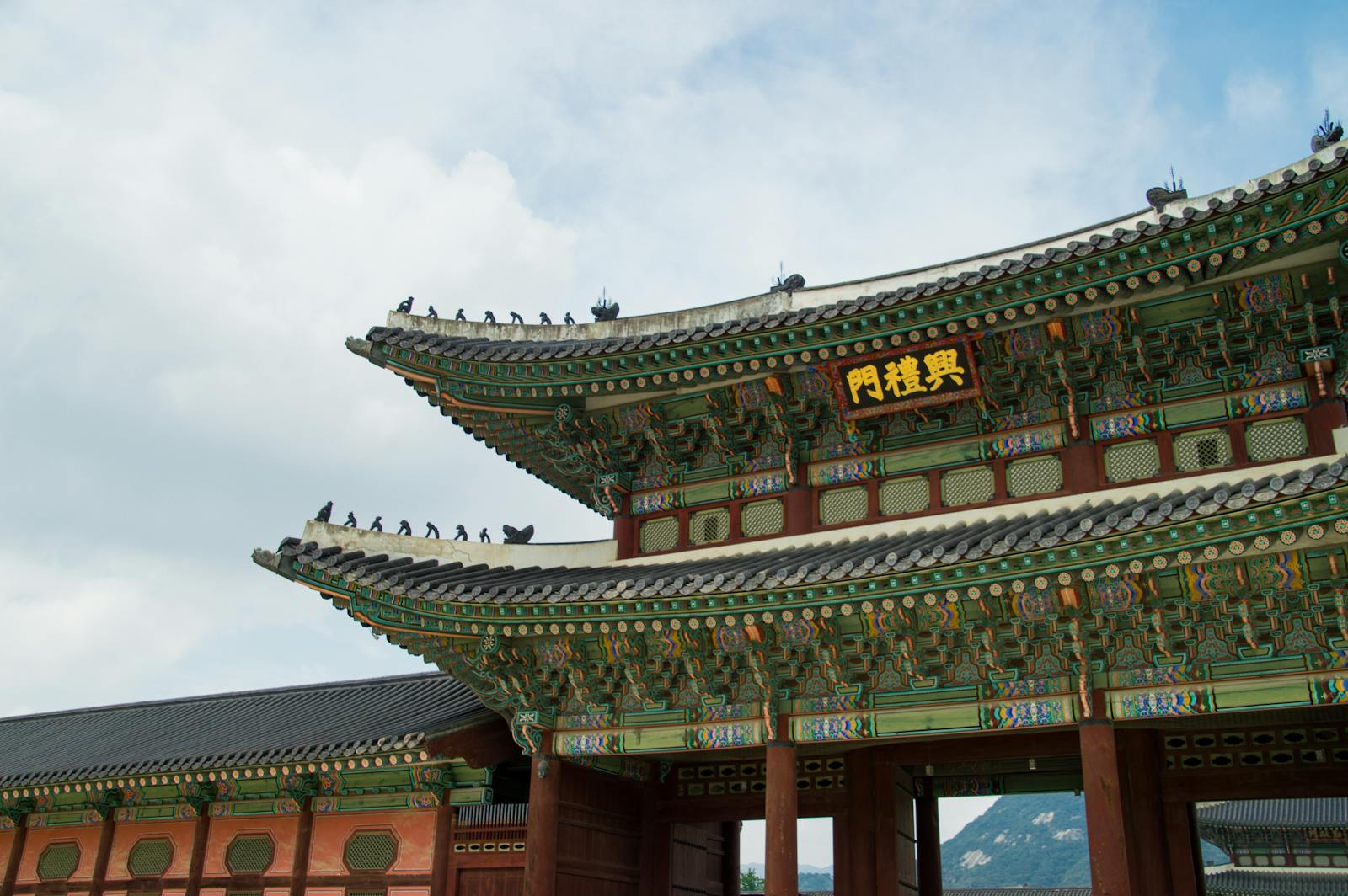
Seoul is a city of 10 million people where 600-year-old palaces sit between glass towers. Start at Gyeongbokgung, the largest of the five Joseon-dynasty palaces, ideally for the changing of the guard at Gwanghwamun Gate. Changdeokgung, a UNESCO World Heritage Site, is smaller and more beautiful, with a Secret Garden of pavilions and ponds (visited on a timed tour).
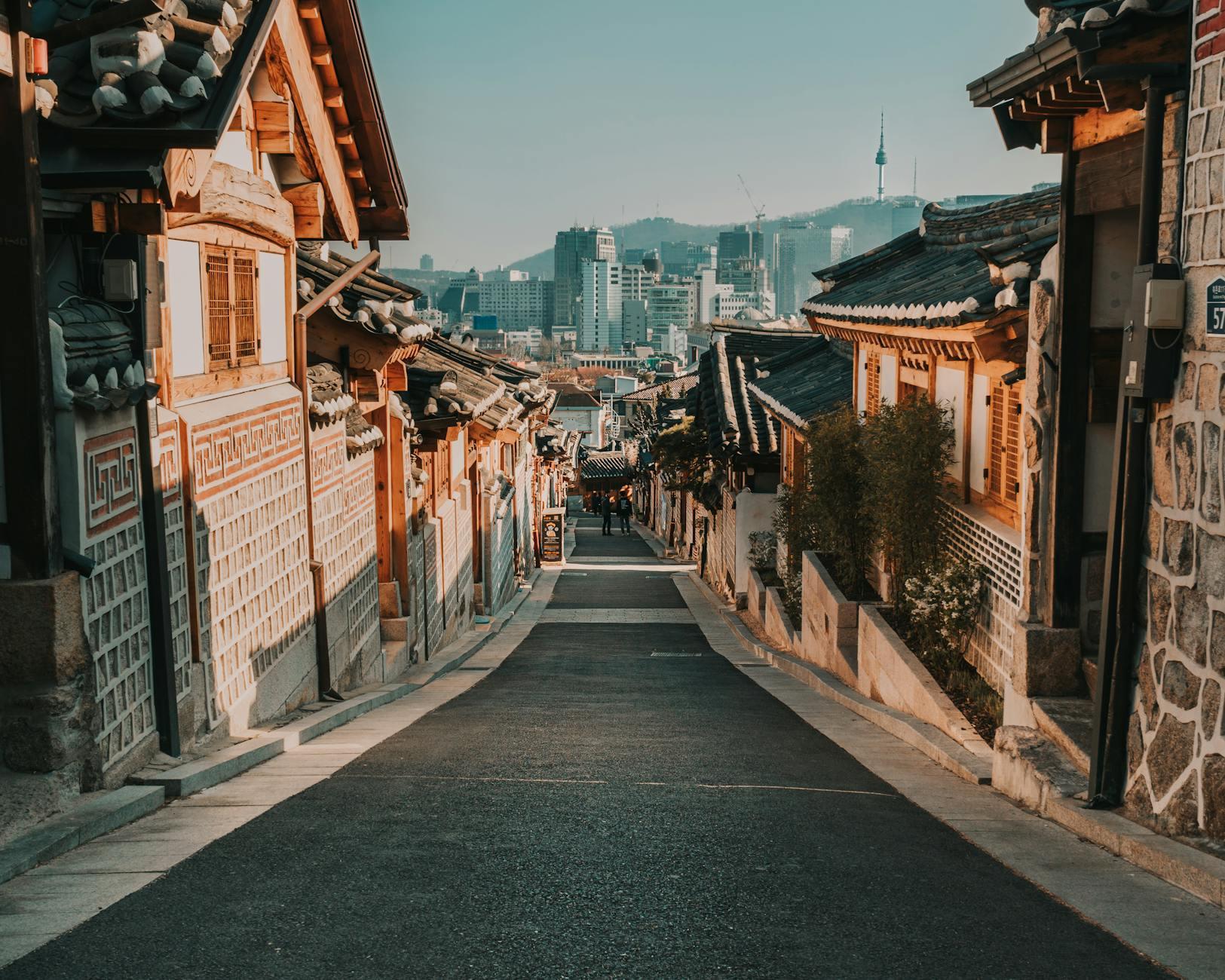
Walk on through Bukchon, a hillside of traditional tiled hanok houses where people still live (go quietly, and before 5pm), and down to Insadong for tea houses, galleries and craft shops. Wear a rented hanbok and palace entry is free.
Eat and shop: Gwangjang Market for mung-bean pancakes and noodles, Myeongdong for street food and skincare, Ikseon-dong’s tiny hanok cafés, and Hongdae for the young, music-filled side of the city.
Views and walks: take the cable car up Namsan to N Seoul Tower, stroll the Cheonggyecheon stream, walk the Seoul City Wall, or hike Bukhansan National Park, whose granite summits are a bus ride from the centre.


Visiting the DMZ from Seoul
The DMZ is a 4 km-wide strip along the border with North Korea, and a guided day trip from Seoul is one of the most thought-provoking things you can do here. Tours usually visit Imjingak park and its Freedom Bridge, the Third Infiltration Tunnel dug from the north, and the Dora Observatory, which looks across into North Korea. You can only go on an organised tour, and you must carry your passport.
The Joint Security Area at Panmunjom, where the two sides face each other, has been closed or open only intermittently in recent years, and any DMZ site can close at short notice. The FCDO advice is to take care in the area and follow the instructions of the local authorities. We only book recognised tours, and we’ll tell you what’s open when you travel.
Where to go beyond Seoul
Gyeongju
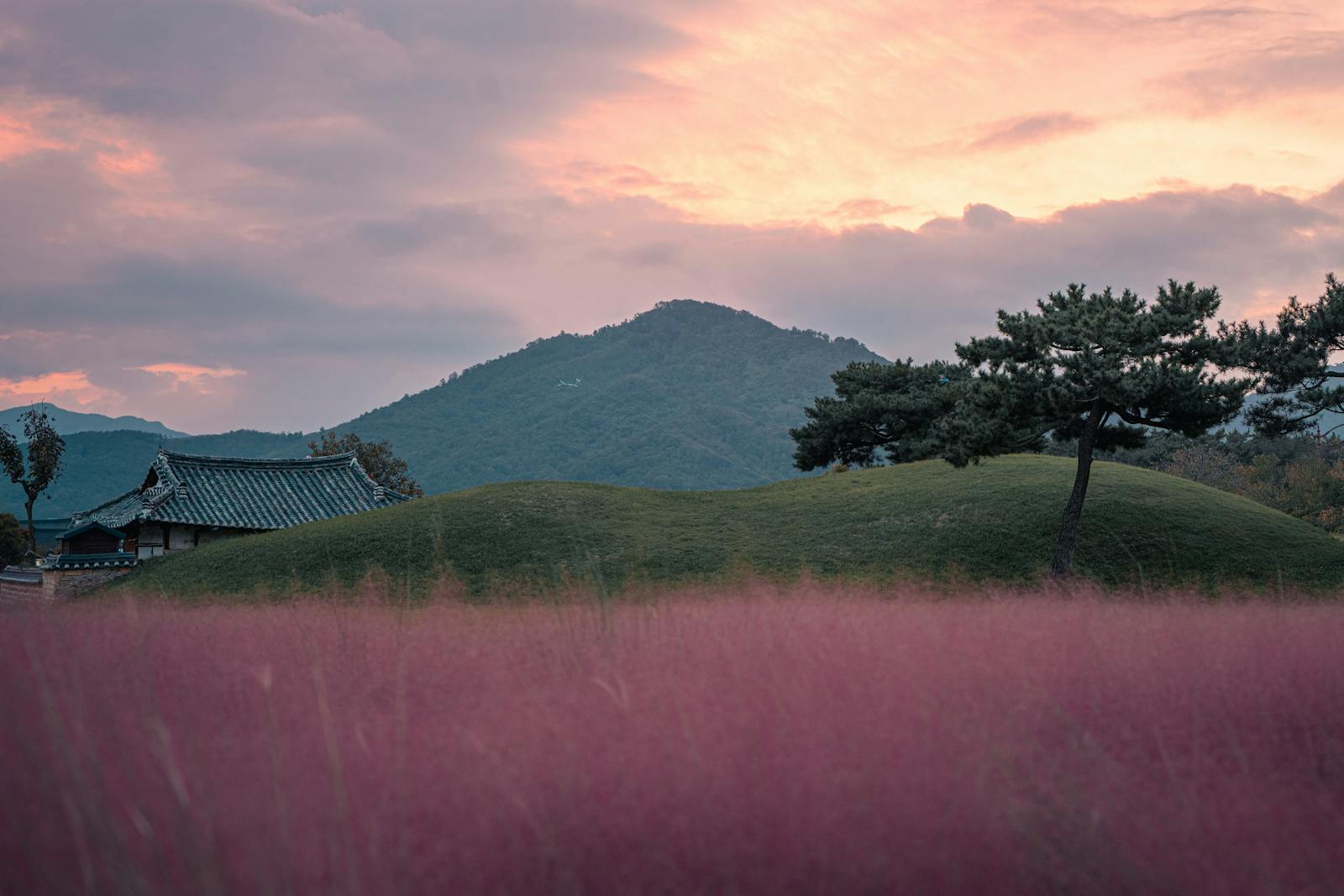
The Silla capital is often called a museum without walls. Grassy royal tombs rise between houses at Daereungwon, where you can enter the Cheonmachong tomb. Nearby are the Cheomseongdae observatory, one of the oldest in Asia, and Donggung Palace and Wolji Pond, lit up after dark. In the hills, Bulguksa Temple and the Seokguram grotto Buddha are UNESCO-listed. Rent a bike: it’s flat and easy.

Busan
Korea’s second city is built around beaches and hills. Swim or stroll at Haeundae and Gwangalli, wander the painted lanes of Gamcheon Culture Village, eat raw fish upstairs at Jagalchi fish market, and visit Haedong Yonggungsa, a temple on rocks above the sea. The coastal Igidae trail has some of the best views in the city.

Jeju Island
A UNESCO-listed volcanic island with black lava coasts, waterfalls and the tallest mountain in South Korea, Hallasan (1,947 m). Climb Seongsan Ilchulbong (Sunrise Peak) at dawn, walk through the Manjanggul lava tube, follow sections of the Olle coastal trails, and watch the haenyeo, women free-divers who still harvest the sea.

Seoraksan and the east coast
Jagged granite peaks above the seaside town of Sokcho, with a cable car, temples and some of Korea’s most famous hikes. It’s the first place the autumn colours arrive, usually in mid-October, so book well ahead for that season.
Andong and Hahoe village
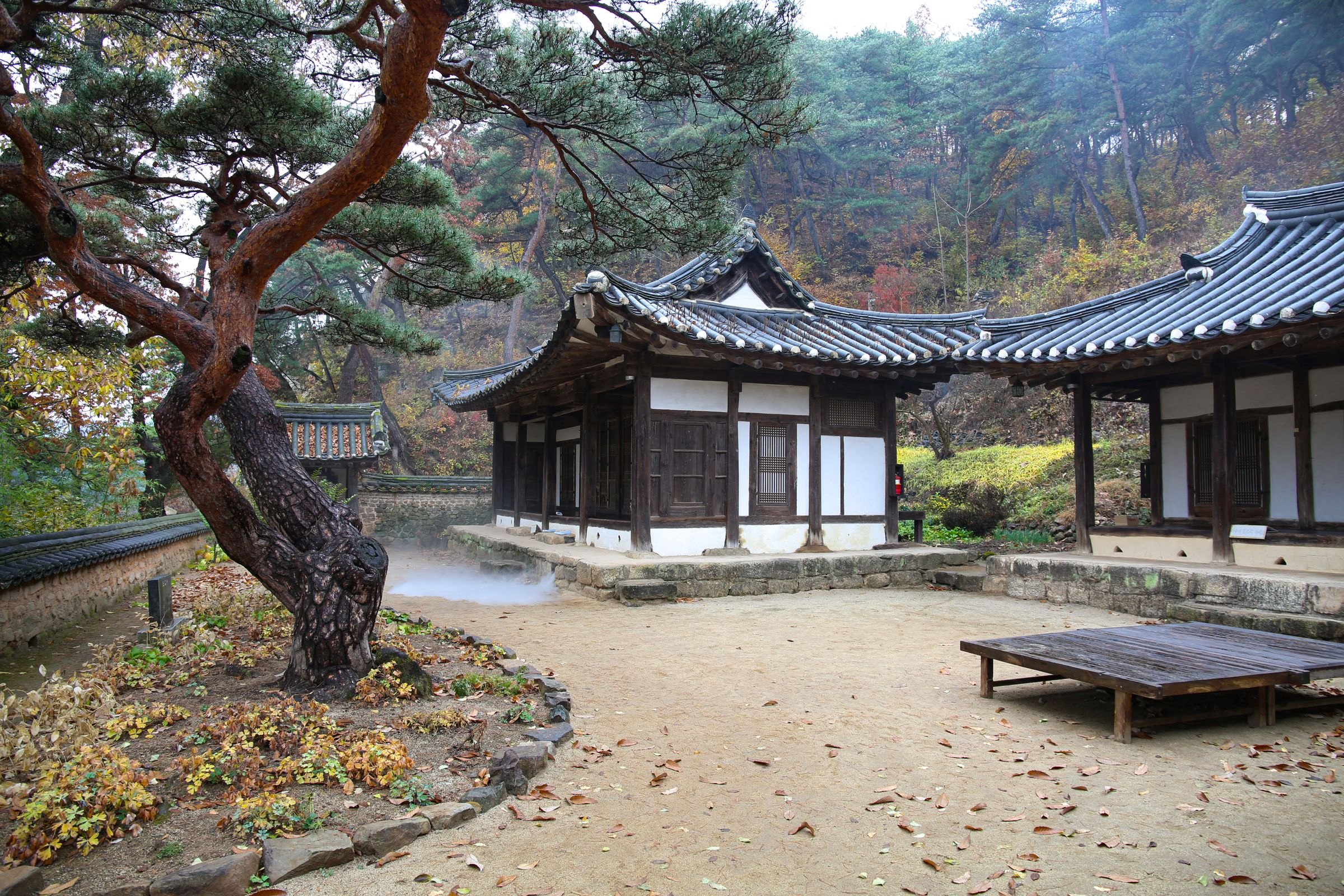
Hahoe Folk Village, a UNESCO site on a loop of river, is a living village of thatched and tiled houses, and the home of the masked dance drama. Andong is also known for its mackerel, its strong soju and its Confucian academies.
Jeonju and the south-west
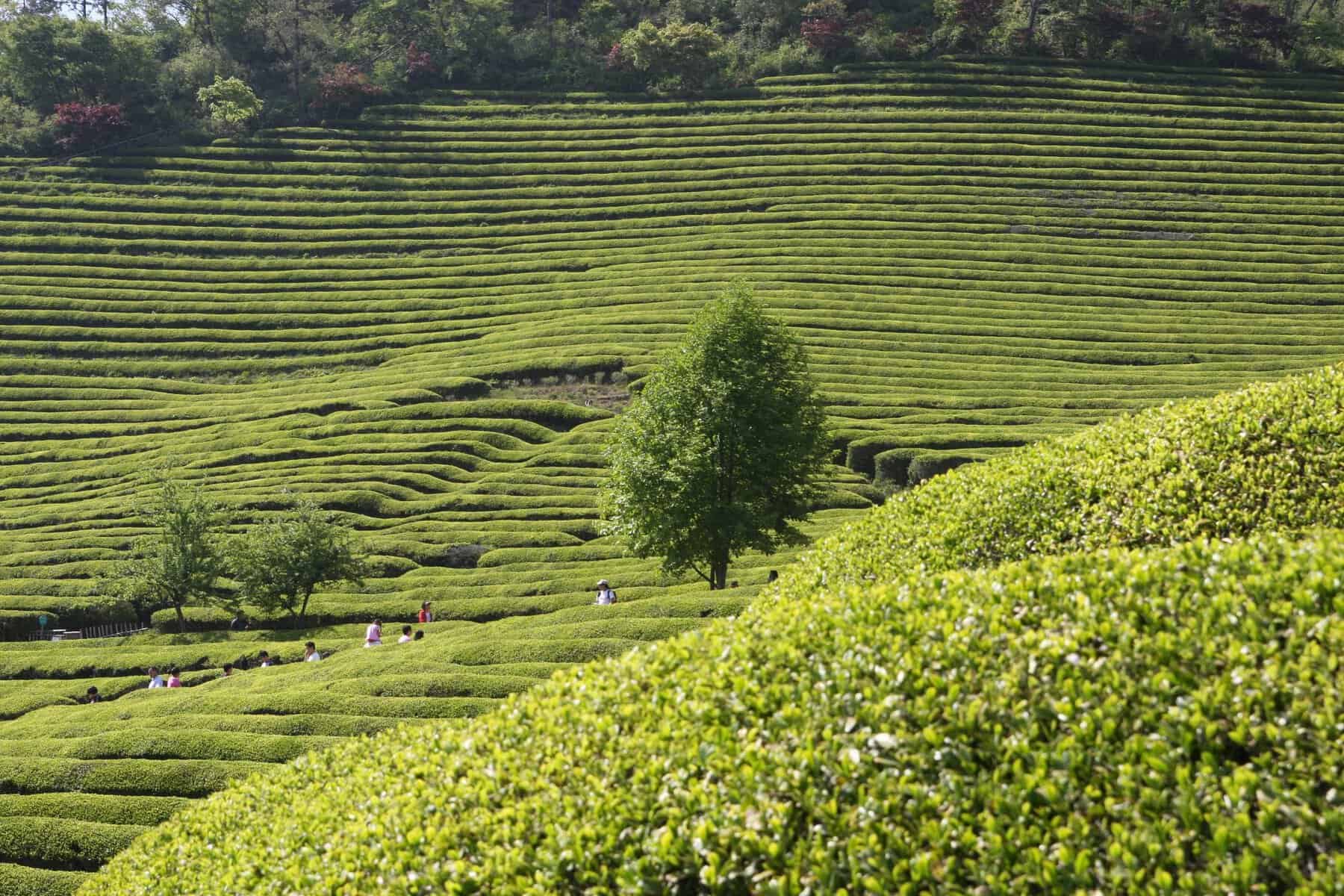
Jeonju has a hanok village of more than 700 traditional houses and claims to be the home of bibimbap. Further south, the rounded tea terraces of Boseong are beautiful in May, and the coast around Yeosu and Suncheon’s reed wetlands is quiet and scenic.
Temples and a temple stay

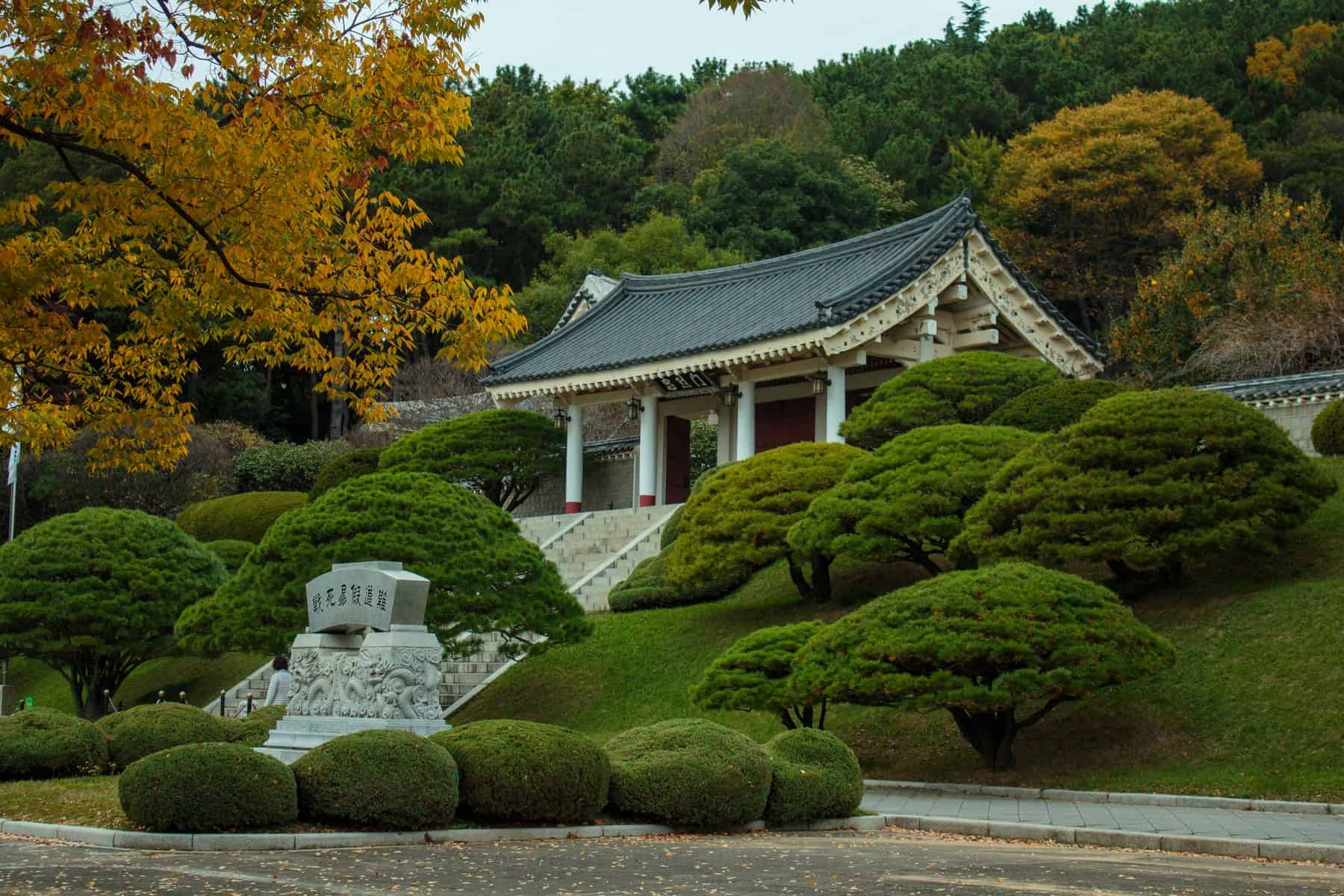
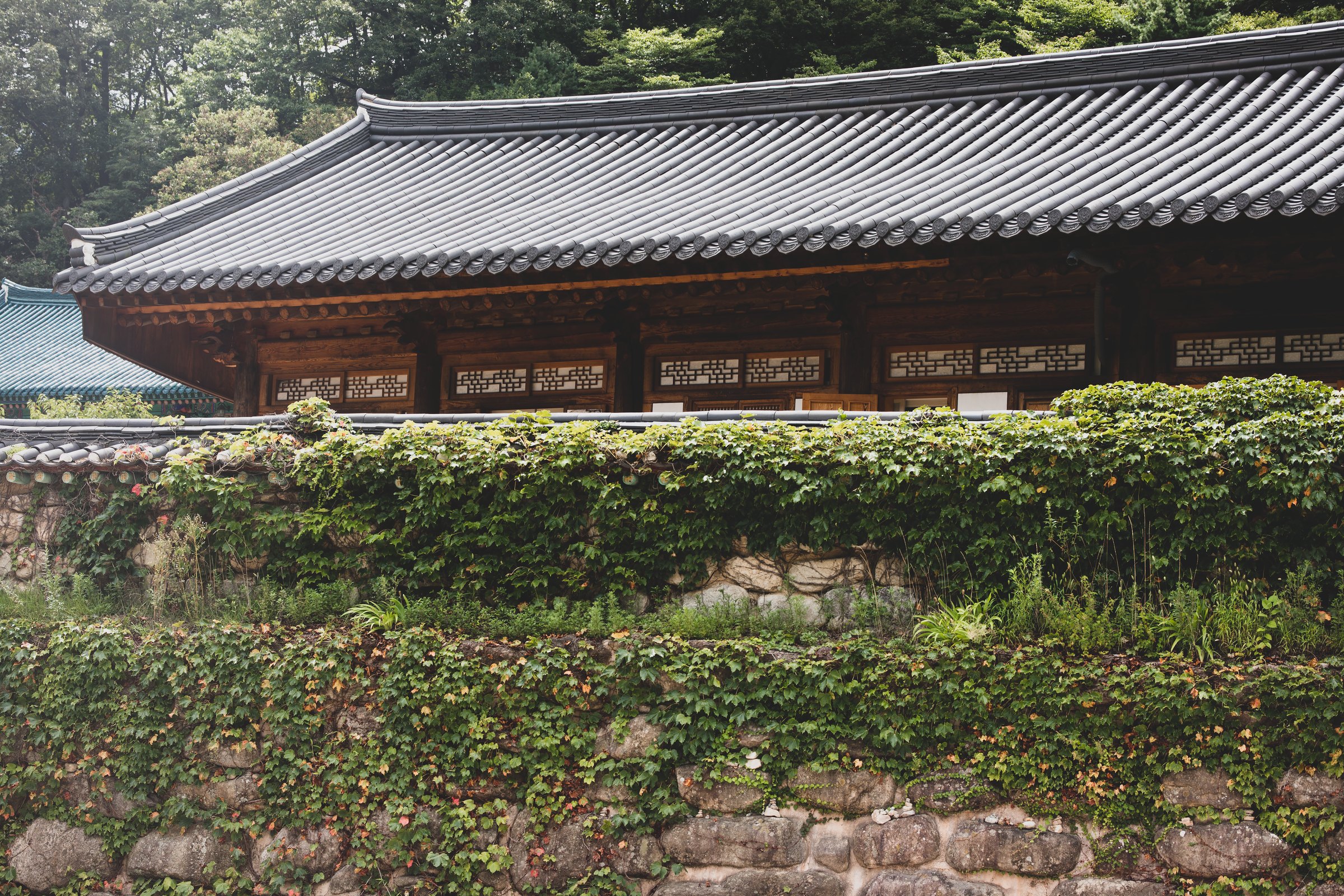
Korea’s Buddhist temples are mostly in the mountains, reached through forest on foot. Haeinsa, which keeps the 13th-century Tripitaka Koreana woodblocks, and Tongdosa are among the most important, and seven mountain monasteries are listed together by UNESCO.
A temple stay is a night in a working monastery: an early-evening service with drums and bells, a vegetarian temple meal eaten in silence, meditation and a 4am wake-up. Rooms are simple, with mats on heated floors. It’s one of the most memorable nights of a trip, and many of our itineraries include one.
Korean food: what to eat
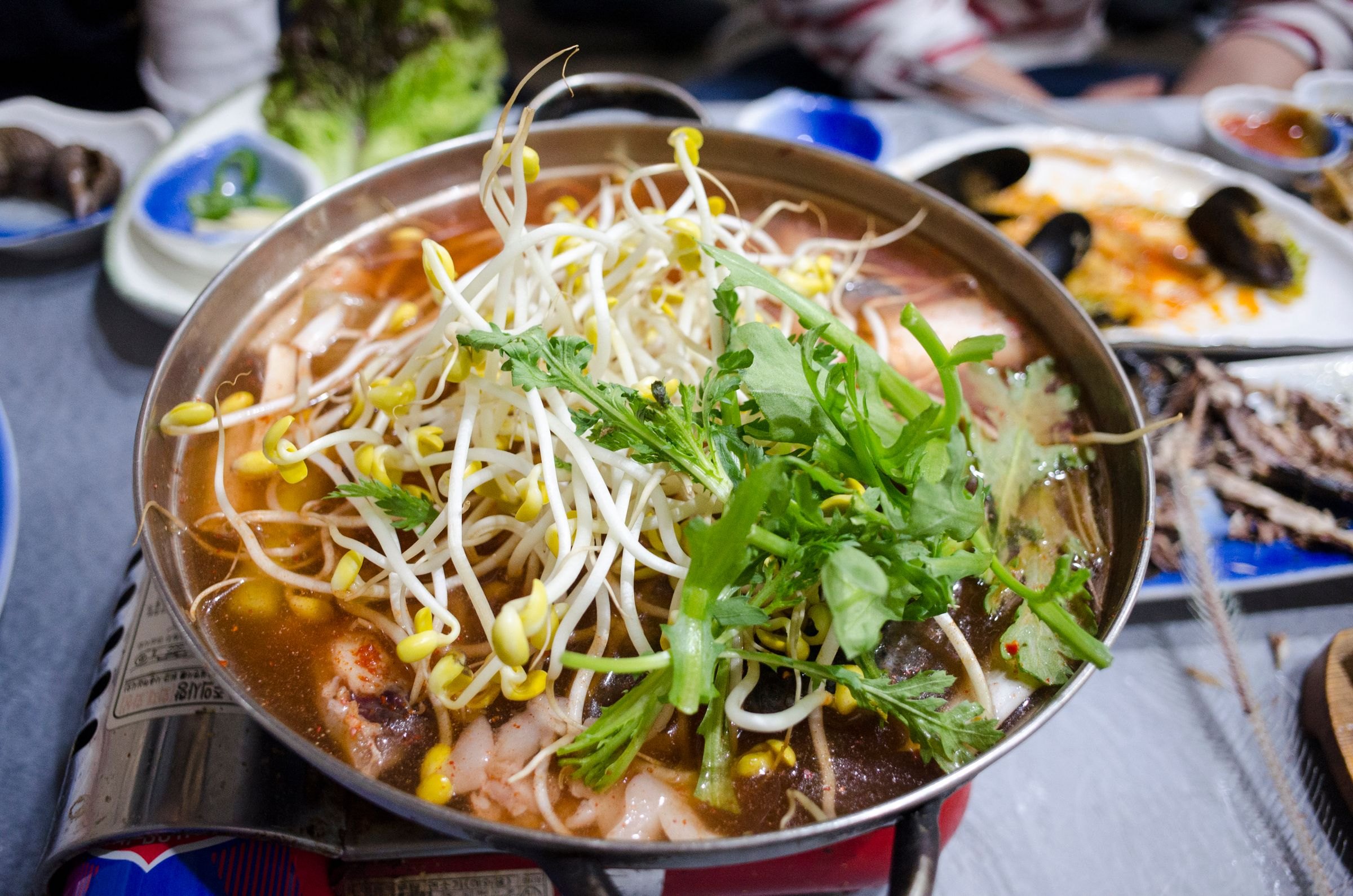
Korean food is generous, spicy and built for sharing. Every meal comes with free banchan, little side dishes of kimchi and vegetables that are refilled as you go.
Try: bibimbap (rice with vegetables, egg and chilli paste, at its best in Jeonju); Korean barbecue, pork belly or marinated beef grilled at the table and wrapped in lettuce; bubbling stews (jjigae) and hot pots; tteokbokki, chewy rice cakes in red sauce; naengmyeon, cold buckwheat noodles for summer; and Korean fried chicken with beer, known as chimaek.
Regional specialities: raw fish and pork soup in Busan, black pork and abalone on Jeju, and Andong’s braised chicken. To drink: soju, cloudy rice wine (makgeolli) and endless barley tea. Vegetarians should ask: many soups use fish or meat stock, though temple food is fully plant-based.
Best time to visit South Korea
South Korea has four distinct seasons. The best times to go are spring (April to May) and autumn (late September to mid-November), with dry, sunny days of 18°C to 25°C. Summer (June to August) is hot and humid, with the monsoon rains, jangma, from late June to late July, and typhoons possible from June to November. Winter (December to February) is cold, dry and clear: Seoul often drops below freezing, but it’s the season for skiing, hot street food and quiet palaces. Avoid the big holidays if you can: Seollal (Lunar New Year) and Chuseok (harvest festival, September or October) fill trains and close some shops for a few days.
| Season | When | What to expect |
|---|---|---|
| Cherry blossom | Late March (Jeju, Busan) to early April (Seoul) | About a week of full bloom; Gyeongju and Jinhae are famous for it |
| Late spring | May | Warm and green; tea harvest in Boseong |
| Rainy season | Late June to late July | Heavy showers, humid; good deals and green mountains |
| Autumn colours | Mid-October (Seoraksan) to early November (Seoul) | Red maples and golden ginkgo trees; the busiest season for hiking |
| Winter | December to February | Cold and clear; snow in the mountains |

| Month | Seoul | Busan | Jeju |
|---|---|---|---|
| Jan | 2°C · 20 mm | 7°C · 40 mm | 8°C · 90 mm |
| Feb | 5°C · 25 mm | 9°C · 45 mm | 8°C · 75 mm |
| Mar | 12°C · 35 mm | 13°C · 95 mm | 13°C · 110 mm |
| Apr | 18°C · 65 mm | 17°C · 125 mm | 17°C · 130 mm |
| May | 23°C · 100 mm | 22°C · 110 mm | 22°C · 145 mm |
| Jun | 27°C · 115 mm | 25°C · 180 mm | 24°C · 205 mm |
| Jul | 29°C · 270 mm | 28°C · 280 mm | 28°C · 255 mm |
| Aug | 29°C · 270 mm | 29°C · 245 mm | 29°C · 270 mm |
| Sep | 25°C · 115 mm | 25°C · 240 mm | 25°C · 360 mm |
| Oct | 18°C · 75 mm | 20°C · 70 mm | 20°C · 150 mm |
| Nov | 11°C · 55 mm | 15°C · 50 mm | 16°C · 90 mm |
| Dec | 3°C · 30 mm | 8°C · 40 mm | 10°C · 85 mm |
Average daily high and monthly rainfall, 10-year ERA5 data for each area. Seoul’s January nights average about -7°C.
Getting there and getting around
From the UK: there are direct flights from London Heathrow to Seoul Incheon, taking about 14 hours (routes avoid Russian airspace), or one-stop options via the Gulf, Europe or other Asian hubs. Incheon is about an hour from central Seoul by airport railway or limousine bus. Seoul is also an easy add-on to Japan: Busan to Fukuoka is a short flight or a few hours by ferry, and Seoul to Tokyo or Osaka takes about two hours by air (see South Korea vs Japan).
Getting around: the KTX high-speed train links Seoul with Gyeongju (Singyeongju station, about two hours) and Busan (about 2 hours 30 minutes), and slower trains and express buses reach almost everywhere else. For Jeju, fly from Seoul Gimpo or Busan in about an hour; flights run all day. City metros are clean, cheap and signed in English, and a rechargeable transport card works on trains, buses and in taxis. We usually add a private driver-guide for temples, the DMZ and Jeju, where public transport is thinner.
Where to stay in South Korea
- Seoul, Jongno and Bukchon for palaces and hanok guesthouses within walking distance of each other.
- Seoul, Myeongdong and Jung-gu for shopping, transport links and big international hotels.
- Seoul, Gangnam for modern design hotels south of the river (further from the sights).
- Gyeongju: a hanok stay near the tombs, or a resort by Bomun Lake.
- Busan: Haeundae for beach views, or Nampo for markets and the old port.
- Jeju: Seogwipo and the Jungmun resort area on the warmer south coast, or the east coast near Seongsan for sunrise.
- A temple for one memorable night in the mountains.
How long do you need? Sample routes
Seoul, Gyeongju and Busan
- Seoul (4 nights)
- KTX to Gyeongju (2)
- Busan (2)
The classic first trip, with a DMZ day from Seoul and the bullet train south.
Korea in depth
- Seoul (4 nights)
- Seoraksan (1)
- Andong (1)
- Gyeongju (2)
- Temple stay (1)
- Busan (3)
Mountains, a folk village and a night in a monastery on the way south.
Mainland and Jeju
- Seoul (4 nights)
- Jeonju (1)
- Gyeongju (2)
- Busan (3)
- Jeju (4)
Finish on the volcanic island, flying home via Seoul.
Combining Korea with its neighbours? Busan to Fukuoka makes South Korea and Japan an easy two-country trip; see our Japan holiday guide.
Ways to see South Korea with us
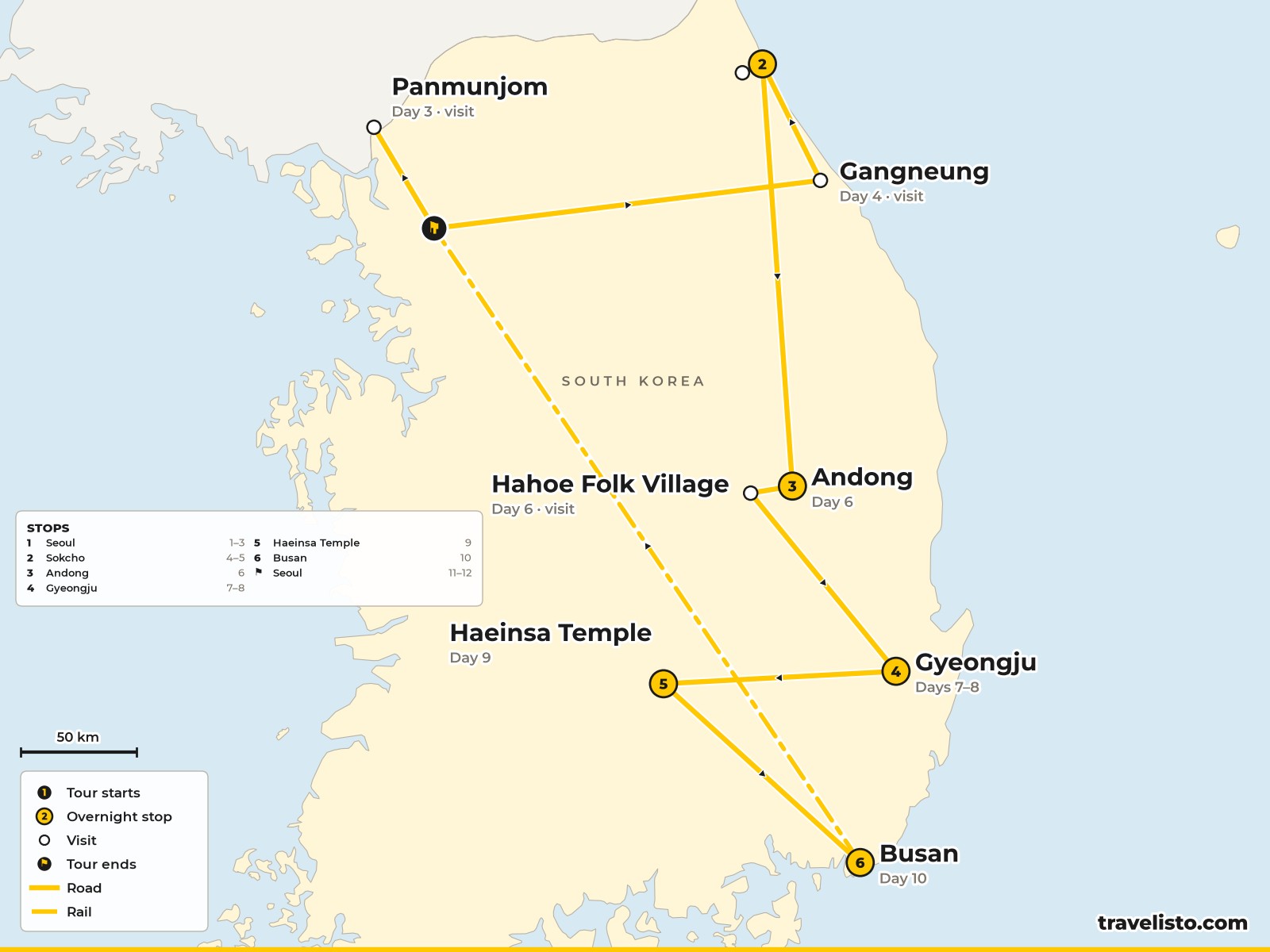
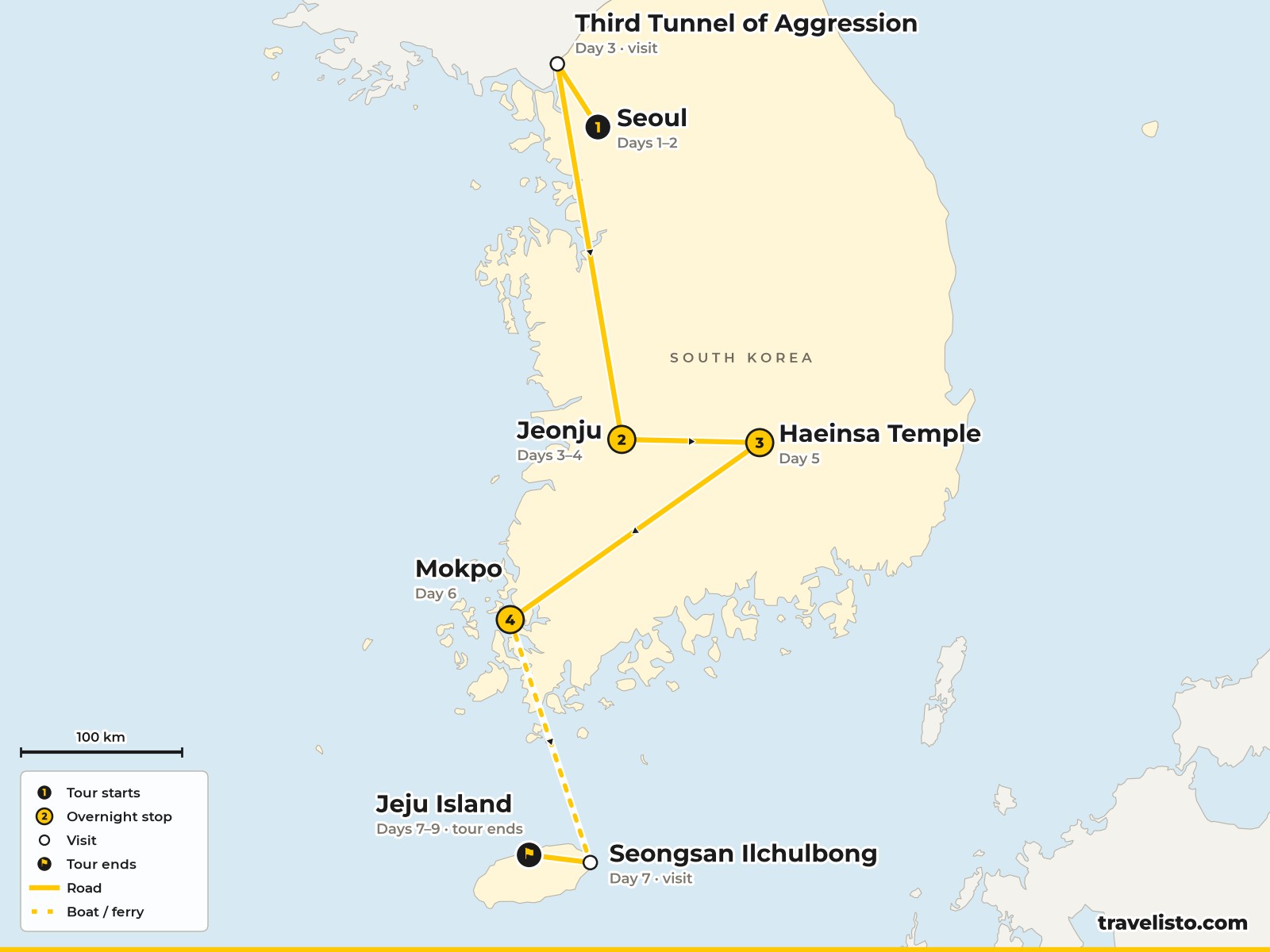
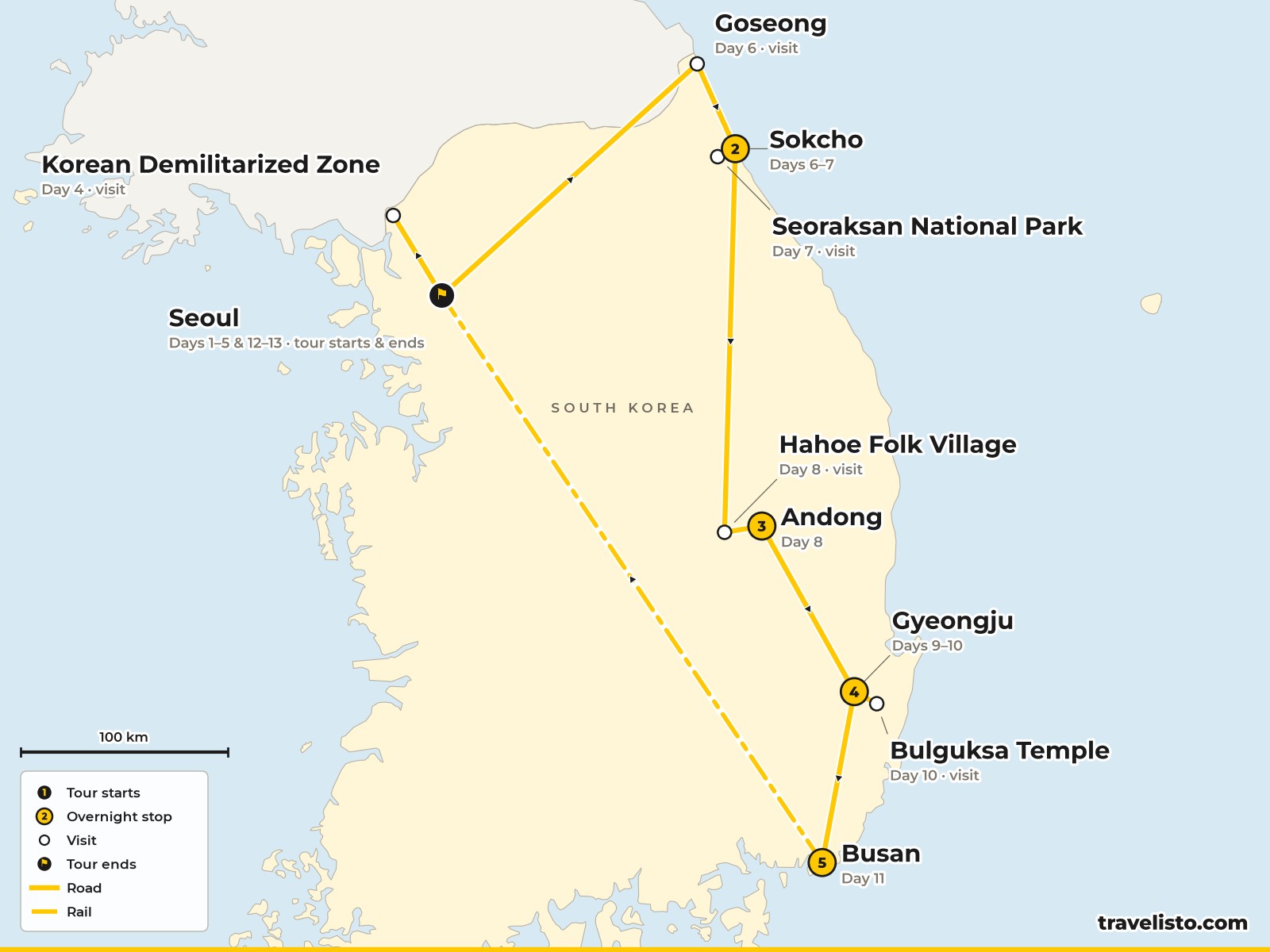
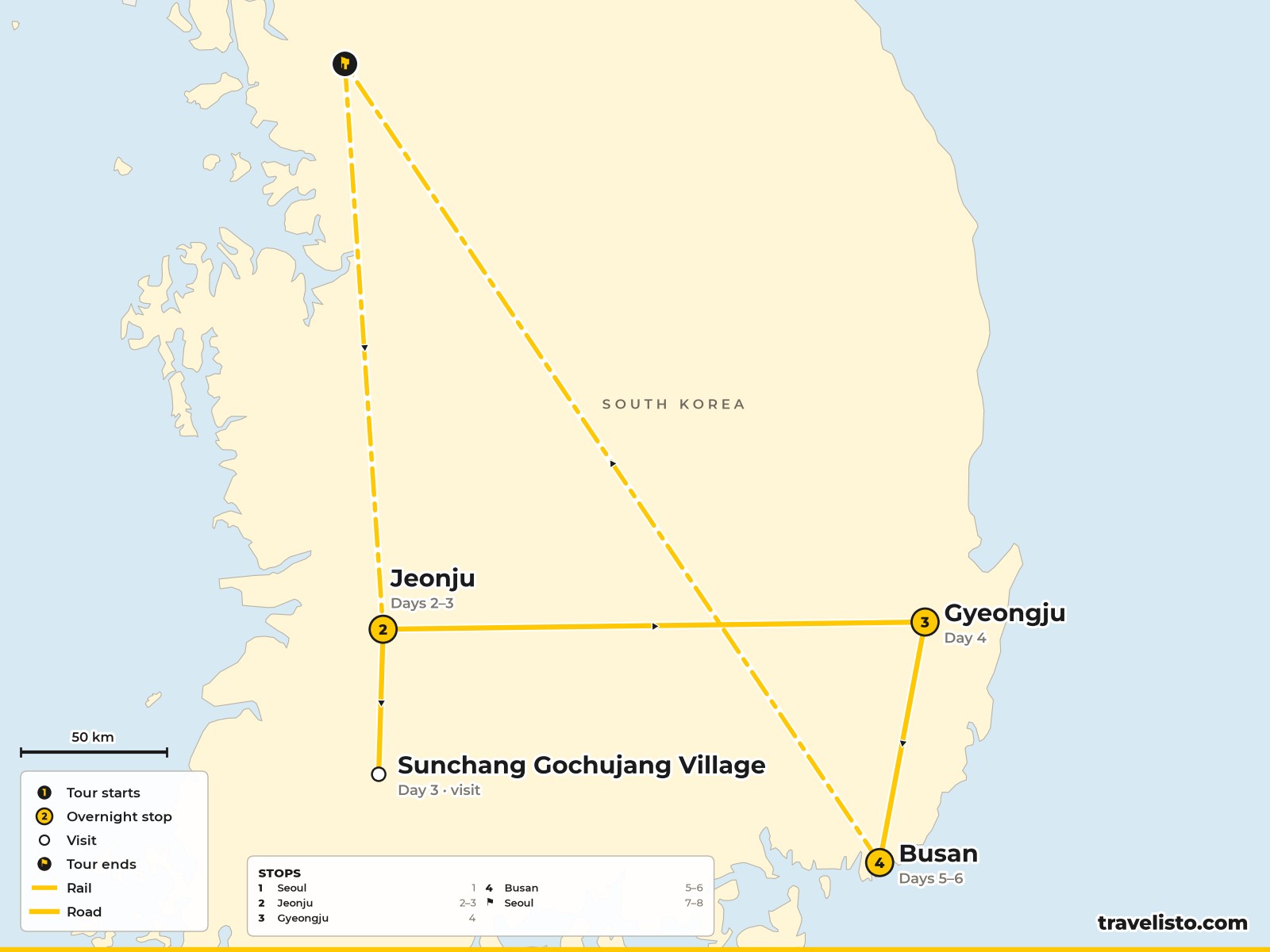
Prefer your own pace? A tailor-made South Korea holiday can add private guides, a temple stay, a hanok night and extra time on Jeju.
Practical tips
- Entry: British passport holders can visit for up to 90 days without a visa and are exempt from the K-ETA (electronic travel authorisation) until 31 December 2026; check whether it applies again for later trips. You can fill in the free e-Arrival card online within 72 hours before landing. Your passport must be valid for the whole stay. Check the FCDO entry requirements before you book.
- Safety: South Korea is one of the safest countries in Asia. The FCDO notes that tension on the peninsula can rise with little notice, for example after missile tests; follow local news and official advice.
- Money: cards are accepted almost everywhere, even at market stalls, but carry some won for small places. Tipping isn’t expected.
- Navigation: international map apps work poorly in Korea; download a Korean map app before you go.
- Connectivity: Wi-Fi is fast and free almost everywhere; pick up an eSIM or SIM at Incheon.
- Power: 220V with two round pins (types C and F), the same as most of Europe.
- Etiquette: take your shoes off in homes, temples and some restaurants, use two hands to give and receive, and keep your voice down on the metro.
Frequently asked questions
Is South Korea worth visiting?
Yes. It combines a world-class city in Seoul with ancient royal capitals, mountain temples, beaches and the volcanic island of Jeju, all linked by fast trains. It's safe, efficient and the food is outstanding.
How many days do you need in South Korea?
Eight nights covers Seoul, Gyeongju and Busan. With 12 to 14 nights you can add Jeju, a temple stay, the mountains of Seoraksan or a folk village such as Hahoe.
What is the best time to visit South Korea?
April to May and late September to mid-November, when it's dry and mild. Cherry blossom peaks in early April in Seoul and the autumn colours from mid-October to early November. Summer is hot and rainy; winter is cold but clear.
Do UK citizens need a visa for South Korea?
No. British passport holders can stay up to 90 days visa-free and are exempt from the K-ETA until 31 December 2026. Check the latest FCDO entry requirements before you travel.
Where is Jeju Island?
Jeju is a volcanic island about 90 km off the southern tip of the Korean peninsula, around an hour's flight from Seoul or Busan. It's a UNESCO World Natural Heritage Site with Korea's highest mountain, Hallasan.
Can you visit the DMZ?
Yes, on an organised day tour from Seoul, usually to Imjingak, the Third Infiltration Tunnel and the Dora Observatory. Bring your passport. Access, especially to the Joint Security Area at Panmunjom, can change or close at short notice.
How do you get from Seoul to Busan?
By KTX high-speed train in about 2 hours 30 minutes from Seoul Station, with trains throughout the day. You can stop at Gyeongju (Singyeongju station) on the way.
Can you combine South Korea and Japan?
Easily. Busan is a short flight or a few hours by ferry from Fukuoka, and Seoul is about two hours by air from Tokyo or Osaka, so a two-country trip of two to three weeks works well.
Keep planning
- South Korea holidays
- Escorted tours of South Korea
- South Korea vs Japan
- Japan holiday guide
- China holiday guide
- Japan cherry blossom tours
- Tailor-made holidays
- Escorted tours
Plan your South Korea holiday with a Travel Designer
Tell us when you’d like to go and we’ll plan Seoul, the bullet train south, a temple stay and Jeju, with flights and guides, in one ATOL-protected booking.
Make an enquiry South Korea holidays