Romania in brief
- Transylvania: Brașov, Bran and Peleș castles, Sighișoara, Sibiu and the Saxon fortified churches.
- Bucharest to Transylvania takes about 2.5 to 3 hours by road or train; Bucharest is 3 hours’ flight from the UK.
- Bucovina’s painted monasteries, Maramureș villages and the Danube Delta for a longer trip.
- Best in May, June and September; hot in July and August, cold and snowy from December to February.
Romania is one of Europe’s most rewarding and least crowded holidays: medieval Saxon towns and fortified churches, castles in the Carpathian forests, painted monasteries, wooden villages where horse-drawn carts still share the road, brown bears, and the vast wetland of the Danube Delta. Most people come for Transylvania, and it lives up to the legend. This guide covers how to get from Bucharest to Transylvania, the best of Brașov, Bran Castle, Sibiu and Sighișoara, the painted monasteries of Bucovina, Maramureș and the Danube Delta, plus the weather month by month, the best time to visit, where to stay and sample routes.
Where is Romania?

Romania lies in south-eastern Europe, between Hungary and Serbia to the west, Ukraine and Moldova to the north and east, and Bulgaria across the Danube to the south, with a short Black Sea coast. It’s a big country, roughly the size of the UK.
The Carpathian Mountains curve through the middle like a fish-hook. Inside that curve is Transylvania, a high plateau of rolling hills, forests and old towns. Outside it are the plains of Wallachia, with Bucharest; Moldavia and Bucovina in the north-east; Maramureș in the far north; and the Danube Delta where the river meets the Black Sea.
Romania is in the EU and, since January 2025, fully in the Schengen area. The currency is the leu (plural lei), not the euro.
Transylvania
Transylvania (“the land beyond the forest”) was for centuries a frontier between Hungary, the Ottoman Empire and Austria, and it shows. German-speaking Saxons, invited in the 12th century to guard the passes, built walled towns and fortified churches; Hungarians and Romanians built their own villages, churches and castles alongside. The result is a landscape of medieval old towns, hay meadows and hilltop citadels, ringed by the forested Carpathians. Bram Stoker never visited, but his Count Dracula came from here, and so did the real Vlad III (“Vlad the Impaler”), born in Sighișoara.
Brașov
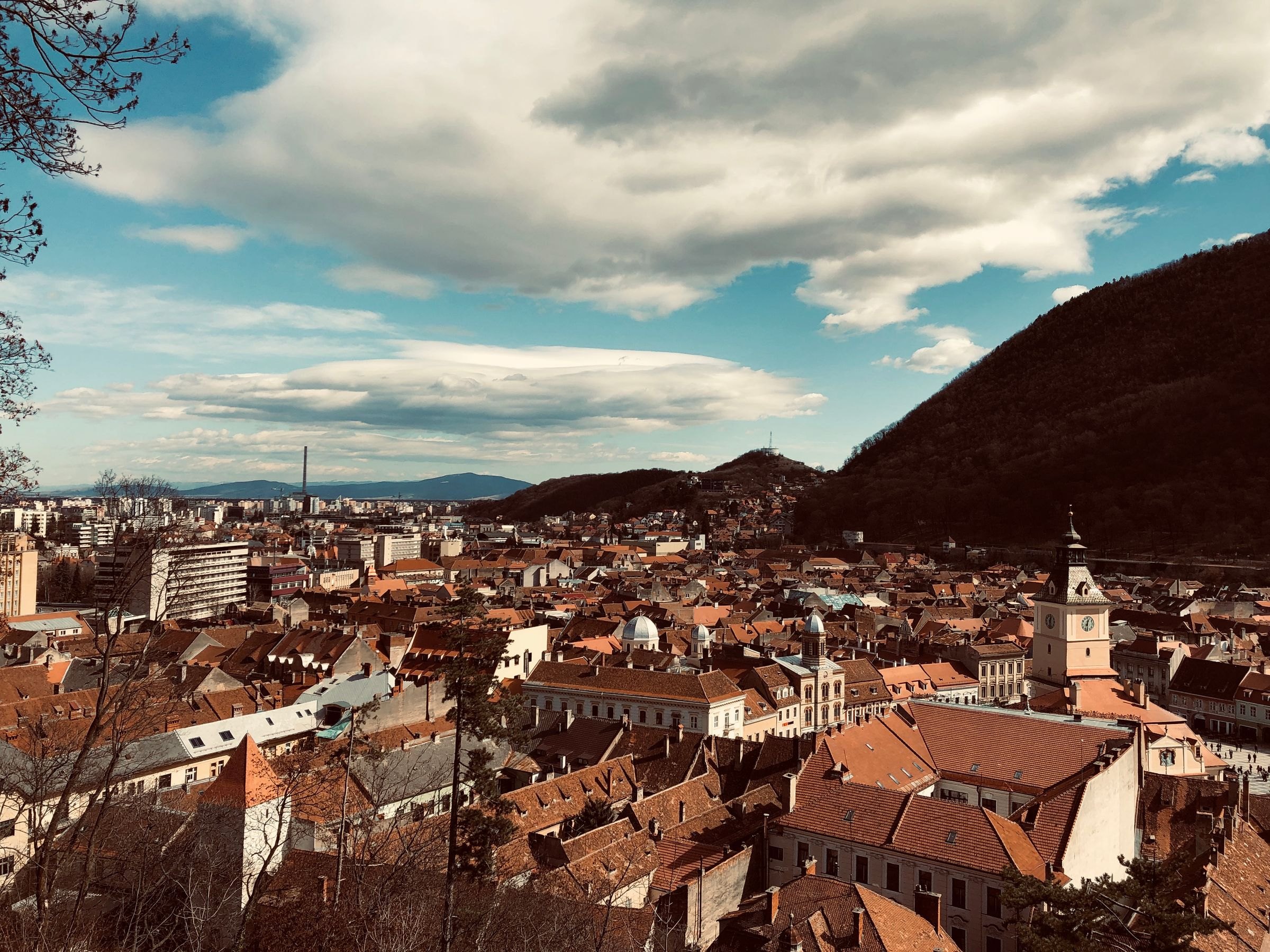
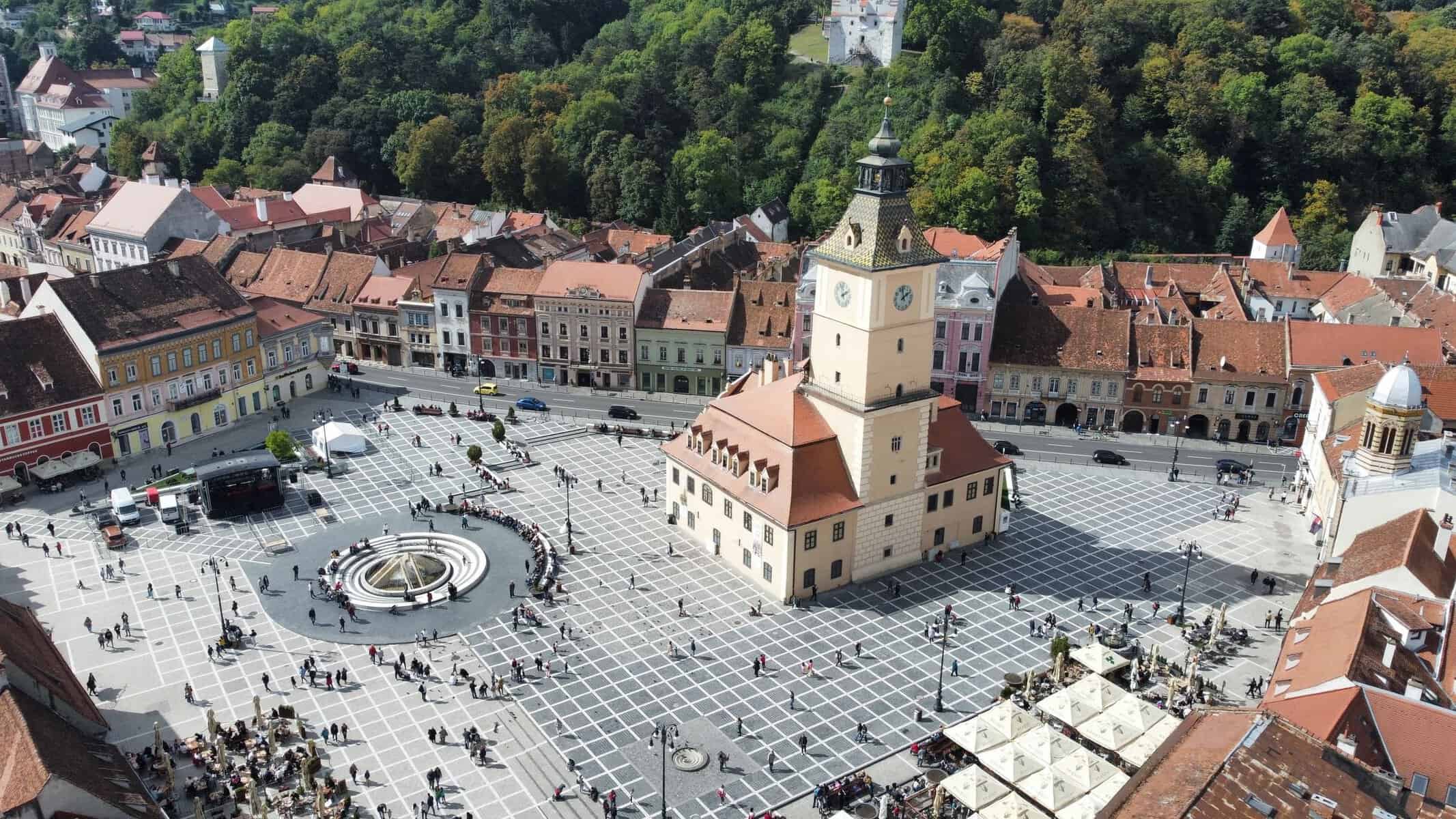
Brașov is the most popular base in Transylvania: a handsome old town of pastel merchant houses below the wooded slopes of Mount Tâmpa, with good restaurants and easy day trips. It’s about 2.5 to 3 hours from Bucharest by road or train.
Start in Council Square (Piața Sfatului), then visit the Black Church, the largest Gothic church in the region, named after a fire in 1689 blackened its walls. Squeeze down Rope Street, one of the narrowest streets in Europe, walk the old town walls and bastions, and take the cable car (or walk) up Tâmpa for the view over the rooftops.
Nearby are the fortified church of Prejmer, the hilltop citadel of Râșnov, and Bran Castle, all within about 40 minutes.
Bran Castle and Peleș Castle

Bran Castle, about 30 minutes from Brașov, is sold as “Dracula’s Castle”. It is a 14th-century fortress on a rock above a mountain pass, all towers, turrets and narrow staircases, and it looks the part. The truth is that Vlad III probably had little to do with it; its real story is as the much-loved home of Queen Marie of Romania in the 1920s and 1930s. Go first thing in the morning or late afternoon, as it’s very busy in summer and at weekends.
Peleș Castle in Sinaia, on the road between Bucharest and Brașov, is far grander: a fairy-tale neo-Renaissance palace built for King Carol I in the late 19th century, with carved wood, stained glass and armouries. Check opening days and times before you go, as it is not open every day.

Sighișoara
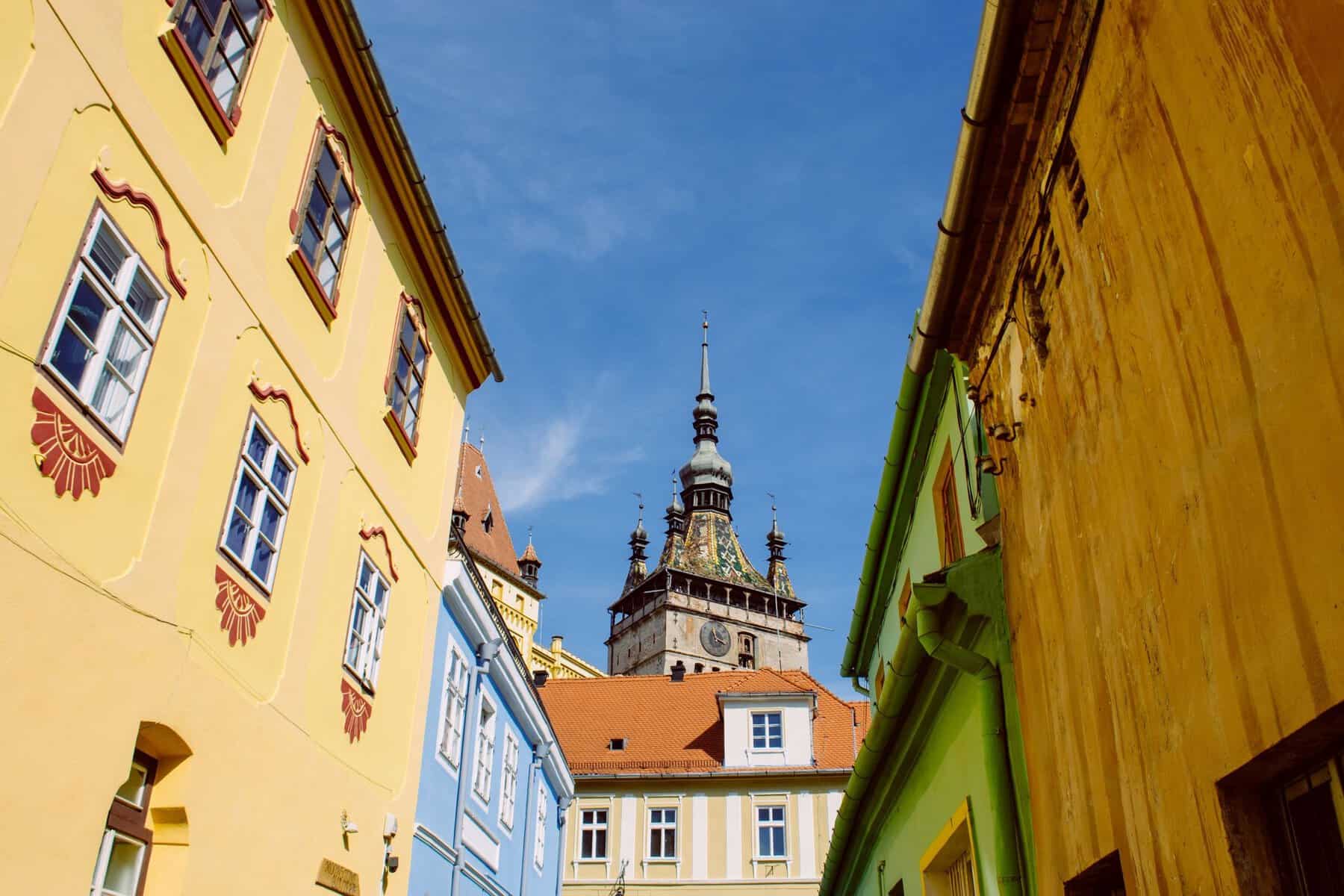
Sighișoara, about 2 hours north-west of Brașov, is one of the best-preserved inhabited medieval citadels in Europe and a UNESCO World Heritage Site. Inside its walls are cobbled lanes of brightly painted houses, guild towers and the 14th-century Clock Tower, with a museum and views from the top.
Climb the covered Scholars’ Stairs to the Church on the Hill and its hillside cemetery, and find the house where Vlad III is said to have been born. The citadel is small enough to see in half a day, but it’s magical after the day visitors leave, so stay the night. In late July, a medieval festival fills the streets.
The Saxon villages and fortified churches
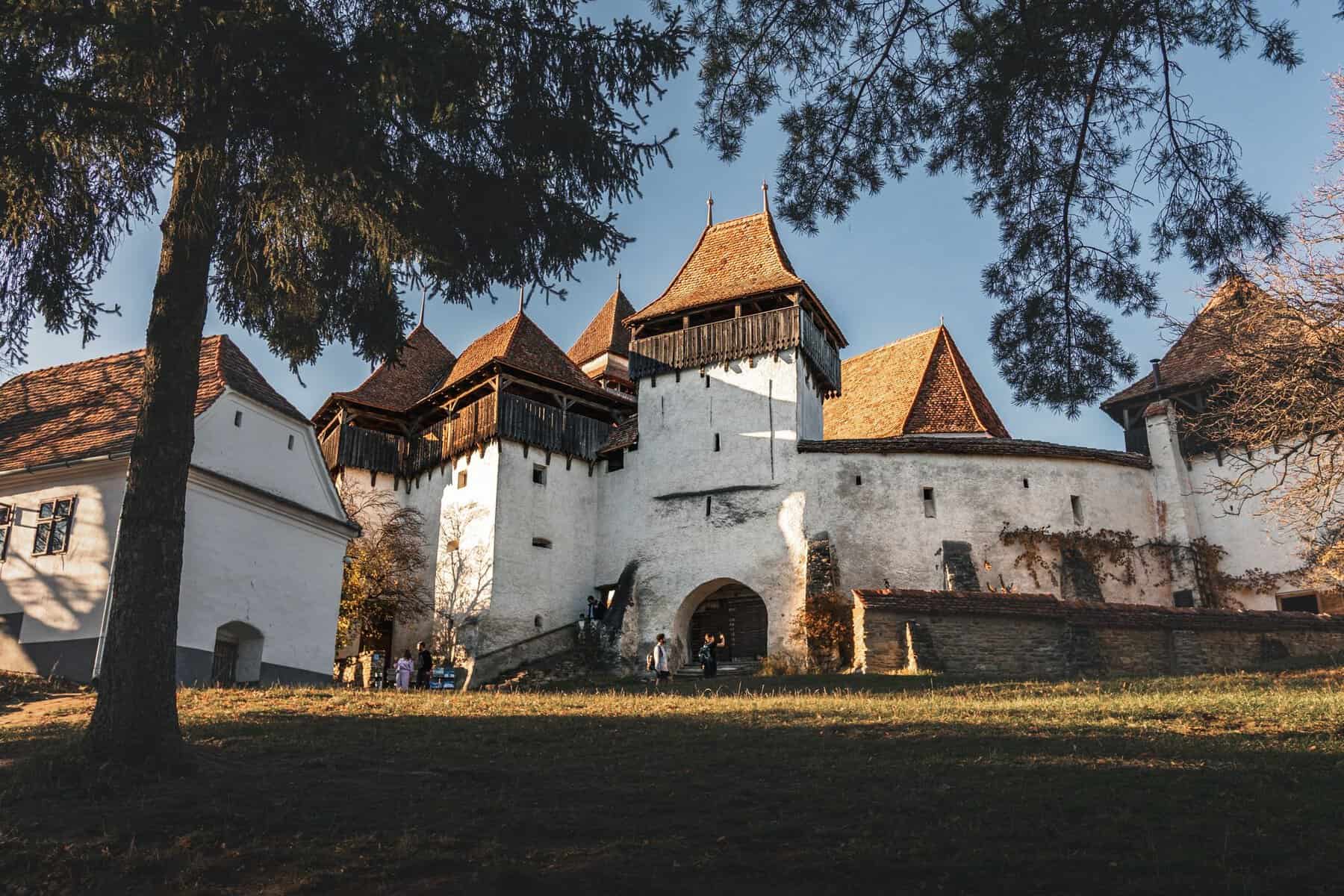
Between Brașov, Sighișoara and Sibiu are dozens of Saxon villages, each built around a fortified church: a church inside thick walls and towers where villagers could shelter, with food stores for long sieges. Seven of them, including Biertan, Viscri, Prejmer and Câlnic, are UNESCO-listed.
This is Transylvania at its gentlest: long village streets of pastel houses, horse-drawn carts, hay meadows full of wild flowers in early summer, and very little traffic. Stay a night or two in a restored village house and explore on foot or by bike.

Sibiu

Sibiu is the most elegant city in Transylvania, with three linked squares, the Great Square, the Small Square and Huet Square, and the famous attic windows on the roofs that look like half-closed eyes watching you. It was a European Capital of Culture in 2007.
Cross the cast-iron Bridge of Lies, climb the Council Tower, and visit the Brukenthal Museum, one of the oldest in south-east Europe. Just outside town, the ASTRA open-air museum has hundreds of old houses, mills and churches in a forest park.
From Sibiu you can drive the Transfăgărășan, explore the shepherding villages of Mărginimea Sibiului, and reach the Saxon villages to the north.

The Carpathians, bears and the Transfăgărășan

The Transfăgărășan is one of Europe’s great mountain roads, climbing across the Făgăraș mountains to Bâlea Lake at over 2,000 m in a series of hairpins. The high section usually opens only from about July to October, depending on snow.
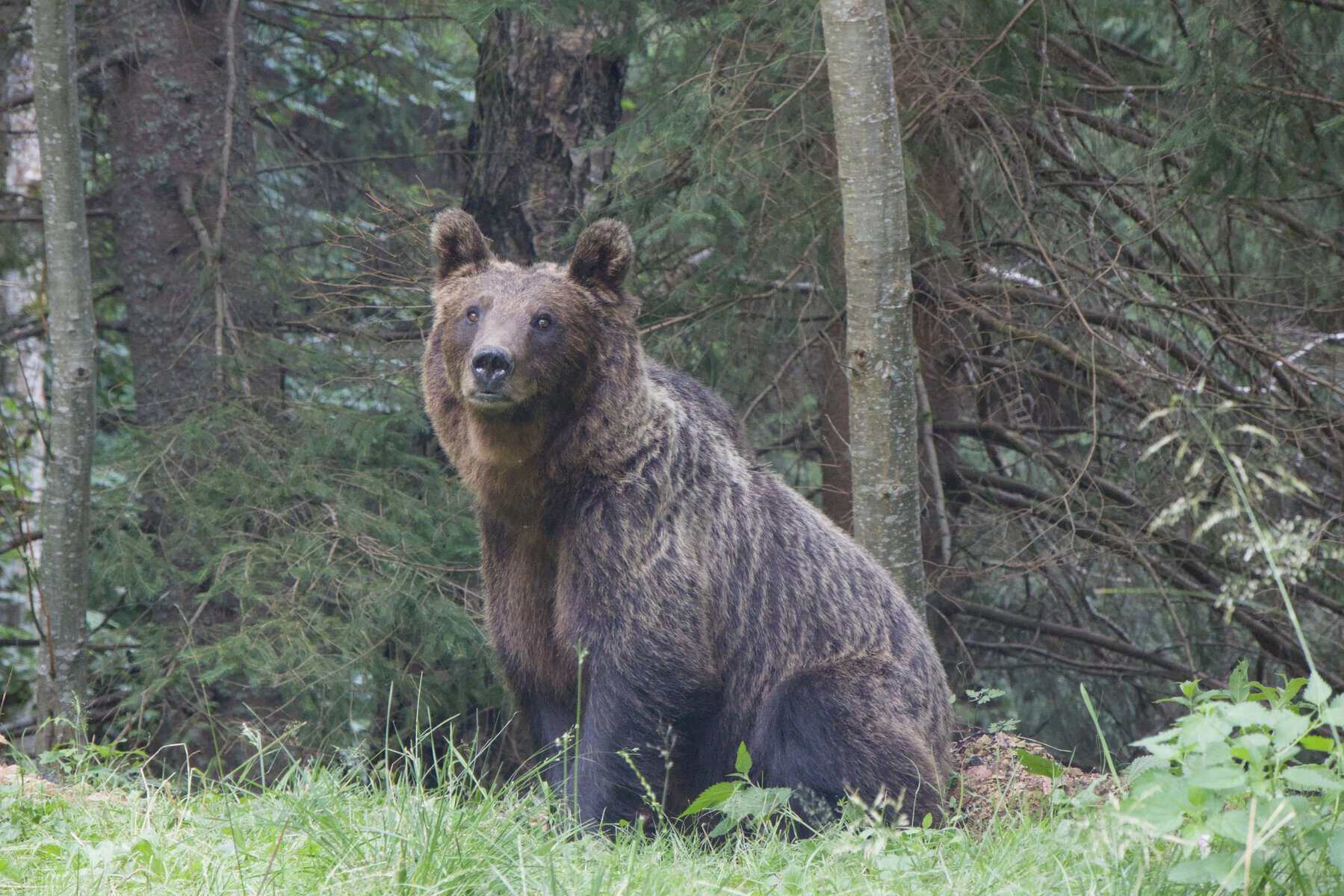
The Carpathians hold the largest population of brown bears in the European Union, along with wolves and lynx. You can watch bears safely from a forest hide with a local guide, usually in the evening from late spring to autumn. Never approach or feed bears.
For walking, the Piatra Craiului and Bucegi ranges near Brașov have well-marked trails, and the long-distance Via Transilvanica crosses the country through villages and forest.
Bucovina and Maramureș
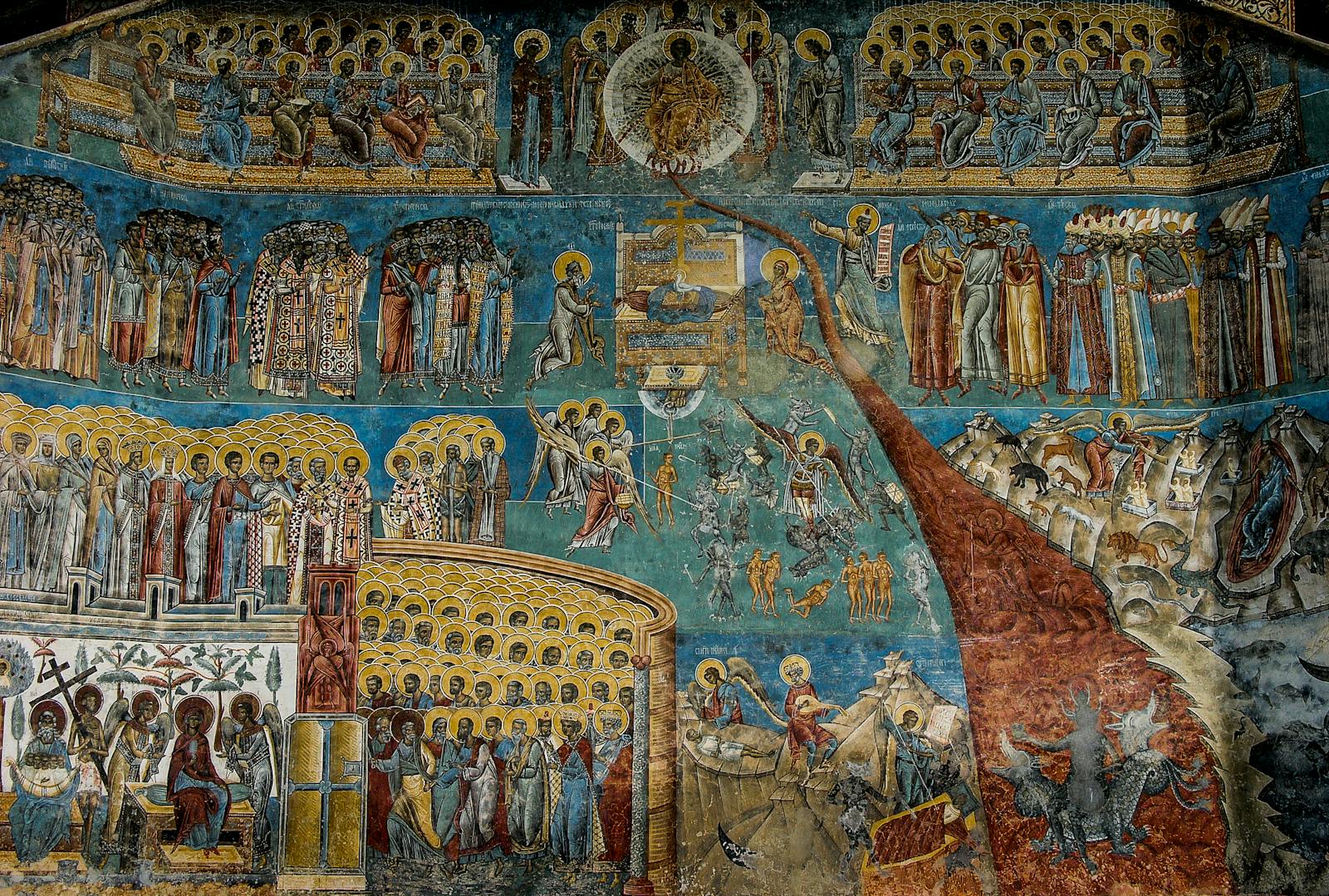
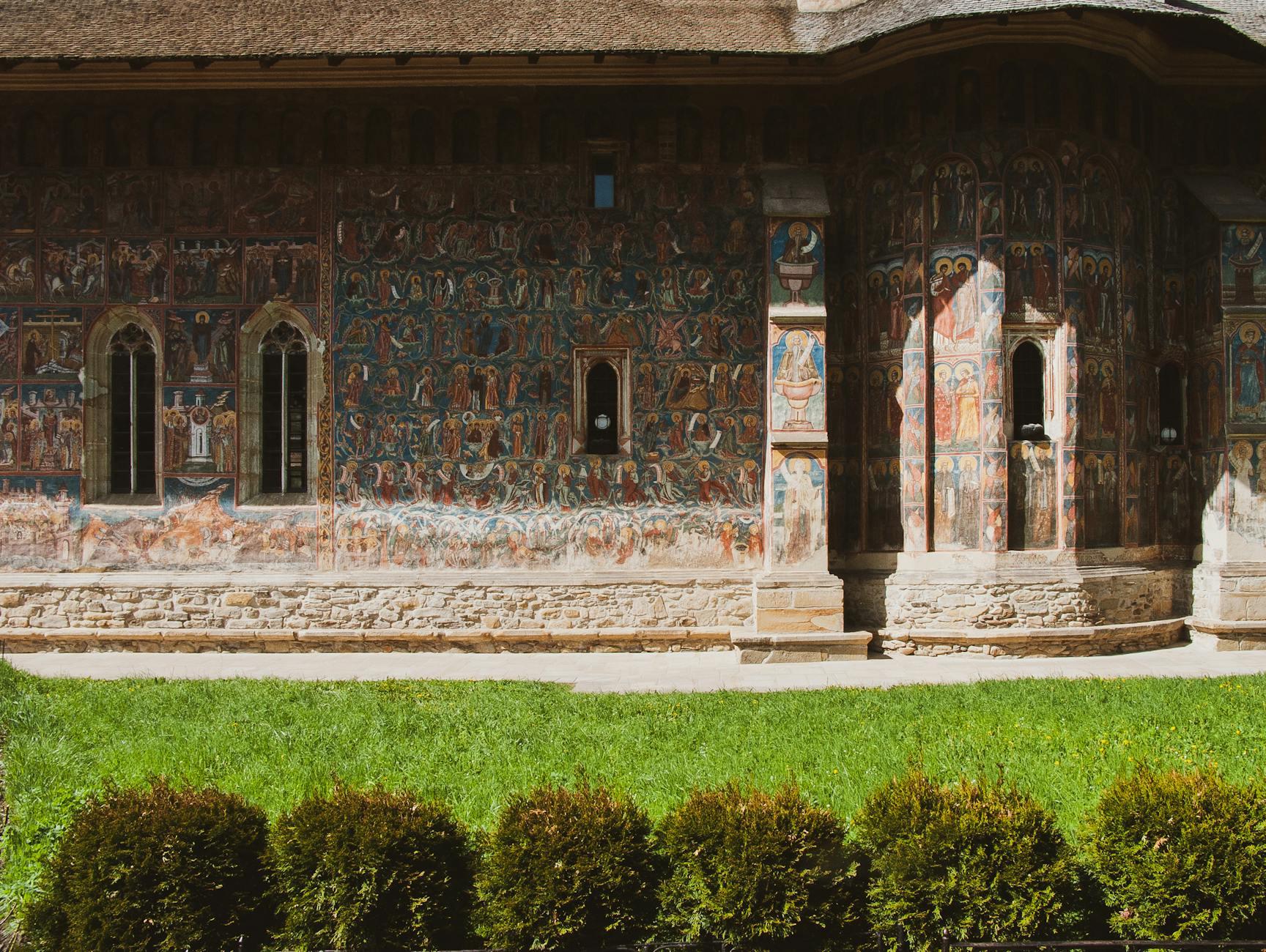
The painted monasteries of Bucovina, in the far north-east, are Romania’s great artistic treasure. In the 15th and 16th centuries, their outside walls were covered in frescoes of saints, battles and the Last Judgement, a picture Bible for villagers who couldn’t read. Eight churches are on UNESCO’s list.
Don’t miss Voroneț, famous for its intense blue, and Sucevița, with its huge Ladder of Virtues fresco, plus Moldovița and Humor. Most are still working convents: dress modestly (shoulders and knees covered).
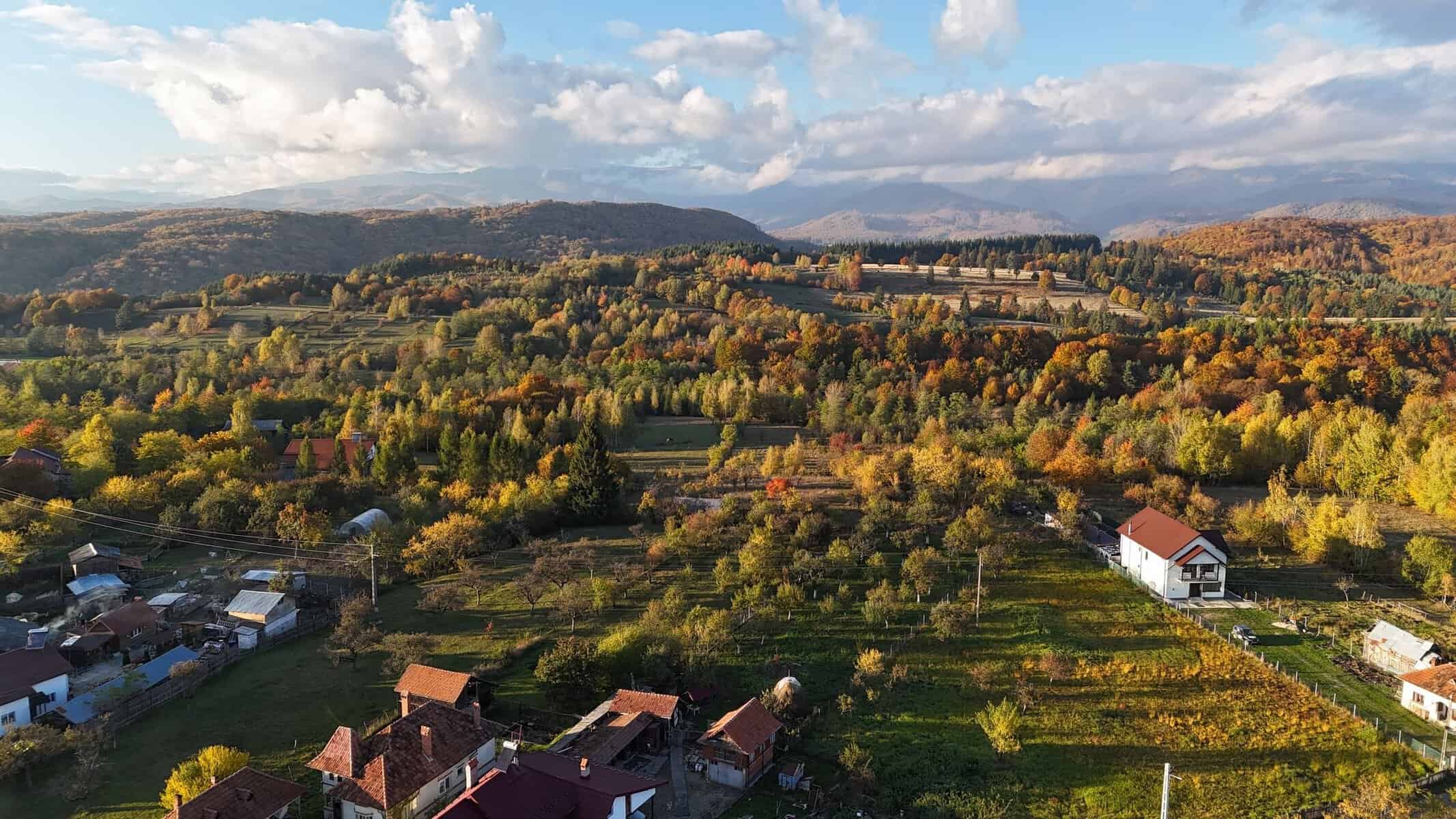
The rolling, wooded country around them is lovely, with painted Easter eggs and black pottery made in the villages.
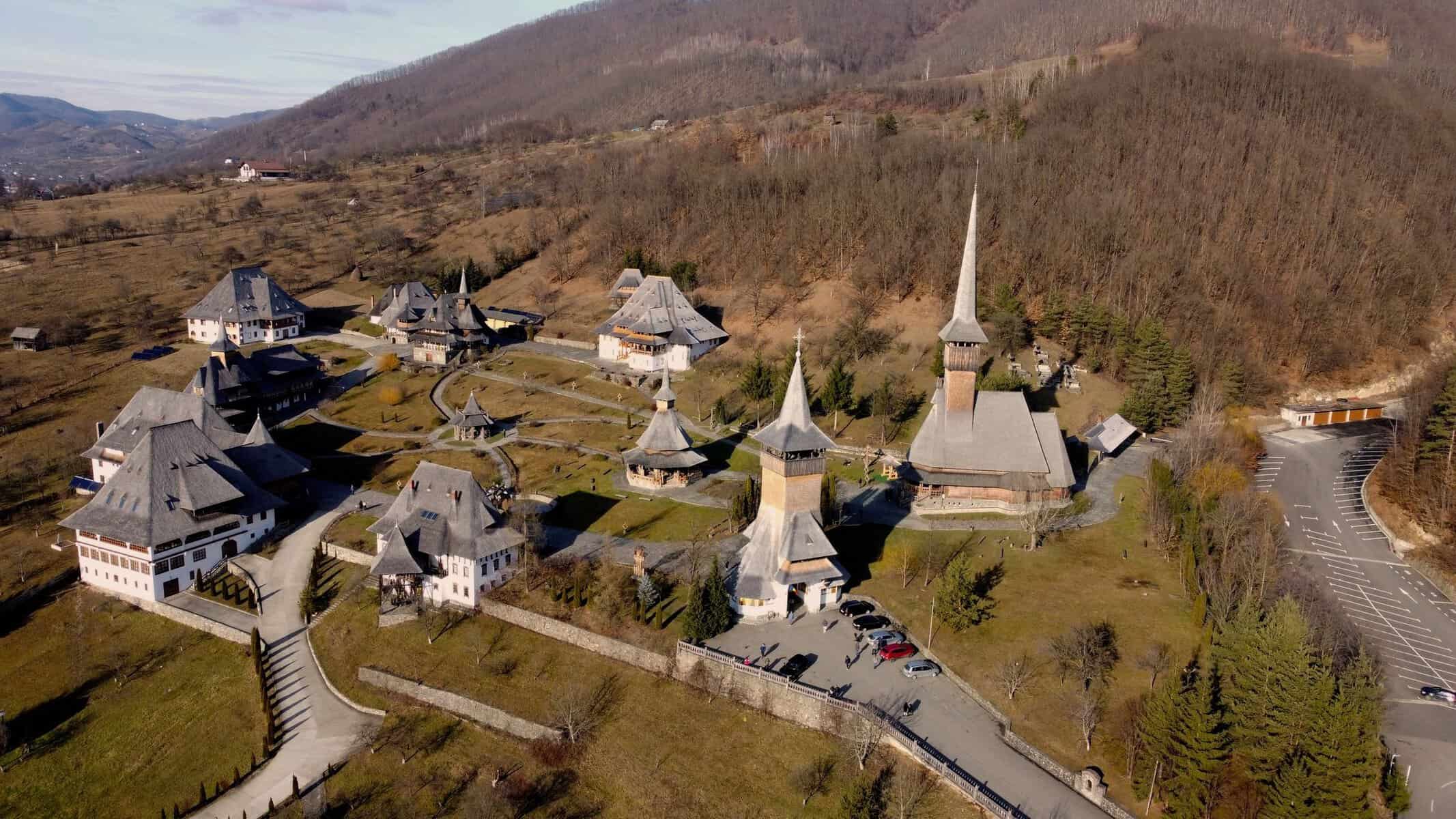
Maramureș, in the far north against the Ukrainian border, is Romania at its most traditional: hay ricks in the fields, carved wooden gates and villagers in folk dress on Sundays. Its wooden churches, with steep shingled roofs and needle-thin spires, are UNESCO-listed, and the modern wooden monastery at Bârsana is spectacular.
Visit the Merry Cemetery at Săpânța, where brightly painted wooden crosses tell the life stories of the people below with humour, and ride the Mocănița, a wood-fired steam train up the Vaser valley from Vișeu de Sus (seasonal).

Bucharest

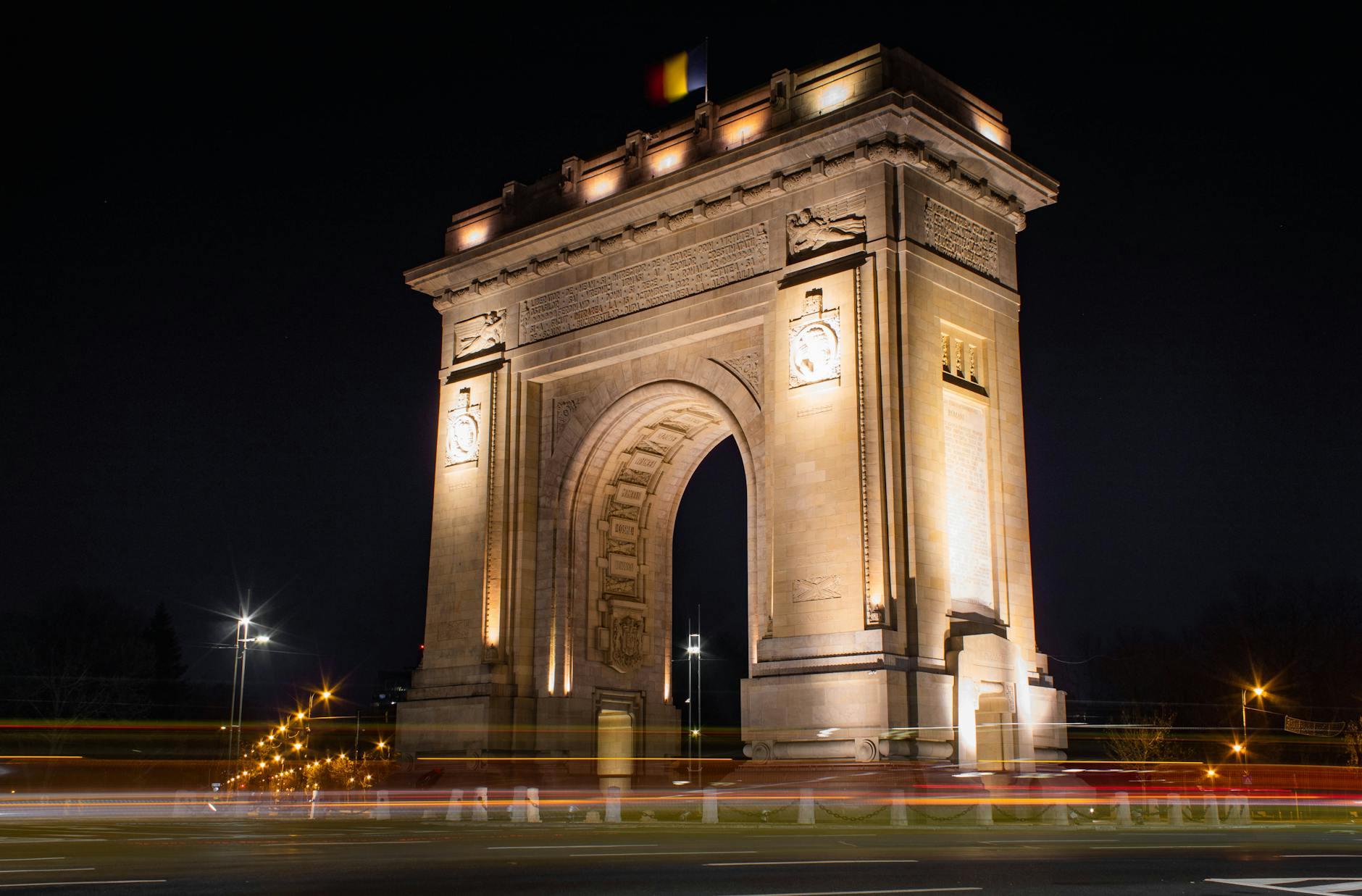
Most trips start in Bucharest, and it deserves a day or two. The Palace of the Parliament, Ceaușescu’s enormous project, is one of the largest buildings in the world; guided tours run inside (book ahead and take your passport).
Walk the old town (Lipscani) with its churches, old inns and bookshops, the grand boulevard of Calea Victoriei, and the Romanian Athenaeum concert hall. The Village Museum in Herăstrău park has farmhouses and churches brought from all over the country, a good introduction before heading out.
The Danube Delta
Where the Danube reaches the Black Sea it splits into three main channels and thousands of creeks, lakes and reed beds: the Danube Delta, a UNESCO World Heritage Site and one of Europe’s largest wetlands. It’s a paradise for birds, with more than 300 species, including great white and Dalmatian pelicans, herons, egrets and cormorants. The gateway is Tulcea, about 4.5 to 5 hours’ drive from Bucharest, and from there you explore by boat, staying in fishing villages or floating hotels. The best time is late April to June, for nesting birds, and September, for migration. The delta lies close to the Ukrainian border, so read the FCDO Romania travel advice, including its note on drones, before you go.
Food and drink in Romania
Romanian food is hearty country cooking. Try sarmale (cabbage leaves stuffed with pork and rice, with polenta and sour cream), ciorbă (sour soups, such as tripe or meatball), mici (grilled skinless sausages with mustard), mămăligă (polenta) and, for pudding, papanași: fried doughnuts with sour cream and jam. In Transylvania the cooking has Hungarian and Saxon influences; in the delta it’s fish soup and carp. Romania has a long wine-making history: look for Fetească Neagră reds and Tămâioasă and Grasă whites. Locals start a meal with țuică or pălincă, strong plum brandy.
Best time to visit Romania: weather by month
The best time to visit Romania is May, June and September, when the countryside is green or golden, days are warm (around 18 to 25°C in Transylvania) and it’s quieter than high summer. Late May and June bring hay meadows full of flowers and nesting birds in the Danube Delta. July and August are hot in Bucharest (around 30°C) but pleasant in the mountains, and the Transfăgărășan is open. October brings beautiful autumn colour, and Halloween in Transylvania has a following of its own. Winter is cold: in January and February daytime highs in Brașov are only around 2 to 5°C, with nights well below freezing and snow in the mountains. It’s good for skiing and Christmas markets in Brașov and Sibiu, but some roads and sights close.
| Month | Bucharest | Brașov (Transylvania) | Suceava (Bucovina) |
|---|---|---|---|
| Jan | 4°C / -4°C · 50 mm | 2°C / -6°C · 50 mm | 2°C / -5°C · 25 mm |
| Feb | 8°C / -2°C · 30 mm | 5°C / -4°C · 40 mm | 5°C / -4°C · 35 mm |
| Mar | 12°C / 2°C · 55 mm | 9°C / -1°C · 55 mm | 9°C / -1°C · 40 mm |
| Apr | 17°C / 6°C · 65 mm | 14°C / 2°C · 75 mm | 14°C / 3°C · 50 mm |
| May | 22°C / 12°C · 70 mm | 18°C / 8°C · 110 mm | 20°C / 9°C · 70 mm |
| Jun | 26°C / 16°C · 90 mm | 22°C / 12°C · 125 mm | 24°C / 14°C · 105 mm |
| Jul | 29°C / 18°C · 70 mm | 24°C / 14°C · 100 mm | 25°C / 15°C · 80 mm |
| Aug | 30°C / 19°C · 35 mm | 25°C / 14°C · 65 mm | 26°C / 15°C · 45 mm |
| Sep | 25°C / 14°C · 35 mm | 20°C / 10°C · 50 mm | 21°C / 11°C · 45 mm |
| Oct | 18°C / 8°C · 55 mm | 14°C / 5°C · 55 mm | 15°C / 5°C · 50 mm |
| Nov | 11°C / 4°C · 60 mm | 9°C / 1°C · 55 mm | 8°C / 1°C · 40 mm |
| Dec | 6°C / -1°C · 50 mm | 4°C / -3°C · 55 mm | 4°C / -3°C · 40 mm |
Average daily high / low and monthly rain (or snow, as water), 10-year ERA5 data. Brașov sits at about 570 m, so it is cooler than Bucharest all year. The wettest months are May to July, often as afternoon thunderstorms.
How to get to Romania, and from Bucharest to Transylvania
By air: direct flights from London and other UK airports take about three hours to Bucharest (Henri Coandă airport, at Otopeni north of the city). There are also flights from the UK to Cluj-Napoca and some other regional airports, handy for a route that starts in Transylvania and ends in Bucharest.
Bucharest to Transylvania: Brașov is about 170 km north of Bucharest, roughly 2.5 to 3 hours by car or train, crossing the Carpathians via the Prahova valley. Stop at Sinaia and Peleș Castle on the way. Trains run several times a day and are scenic, but slower than driving and don’t reach the villages. From Brașov, Sighișoara is about 2 hours and Sibiu about 2.5 hours. Bucovina is a long day’s drive from Brașov, so most routes break the journey or reach it via Maramureș or Cluj-Napoca.
Getting around Romania
Romania is big and the roads are improving but still slow, with lorries, horse-drawn carts and livestock on rural roads, so allow plenty of time. A private driver-guide is the most relaxed way to see the villages and monasteries; self-drive is possible for confident drivers (you need a rovinieta road vignette, and winter tyres in snow); trains link the main cities. Taxi drivers sometimes overcharge visitors, so use the ride-hailing apps or your hotel. Our European rail tours include Romania on longer routes through Hungary and the Balkans.
Where to stay in Romania
- Bucharest: a historic hotel near Calea Victoriei or a boutique stay near the old town.
- Brașov: a hotel or guesthouse in the old town, walking distance from Council Square, for day trips to Bran and Sinaia.
- Sighișoara: a small hotel inside the citadel walls, to enjoy it when the day visitors have gone.
- The Saxon villages: restored village houses and manor guesthouses around Viscri and Biertan, with home-grown food.
- Sibiu: hotels on or near the Great and Small Squares.
- Bucovina and Maramureș: family-run guesthouses with traditional rooms and home cooking.
- The Danube Delta: eco-lodges and guesthouses in the fishing villages, or a floating hotel.
Tell us your style and we’ll match the right stays across Romania, from city hotels to village guesthouses.
How many days in Romania? Sample routes
Four or five nights gives you Brașov, Bran and Sighișoara; a week covers Transylvania properly; ten to twelve days lets you add Bucovina, Maramureș or the Danube Delta.
Transylvania long weekend
- Bucharest (1 night)
- Brașov (3)
- Bucharest (1)
Sinaia and Peleș on the way, then Bran, Râșnov, Prejmer and a bear hide from Brașov.
Transylvania in depth
- Bucharest (1 night)
- Brașov (2)
- Saxon village (2)
- Sighișoara (1)
- Sibiu (2)
Castles, citadels, fortified churches and the Transfăgărășan (July to October). Fly home from Sibiu or Cluj-Napoca if flights suit, or drive back to Bucharest.
The best of Romania
- Bucharest (1 night)
- Brașov (2)
- Sighișoara (1)
- Sibiu (2)
- Maramureș (2)
- Bucovina (2)
- Danube Delta (2)
Every region, from Transylvania to the painted monasteries and the delta. May to September.
Ways to see Romania with us
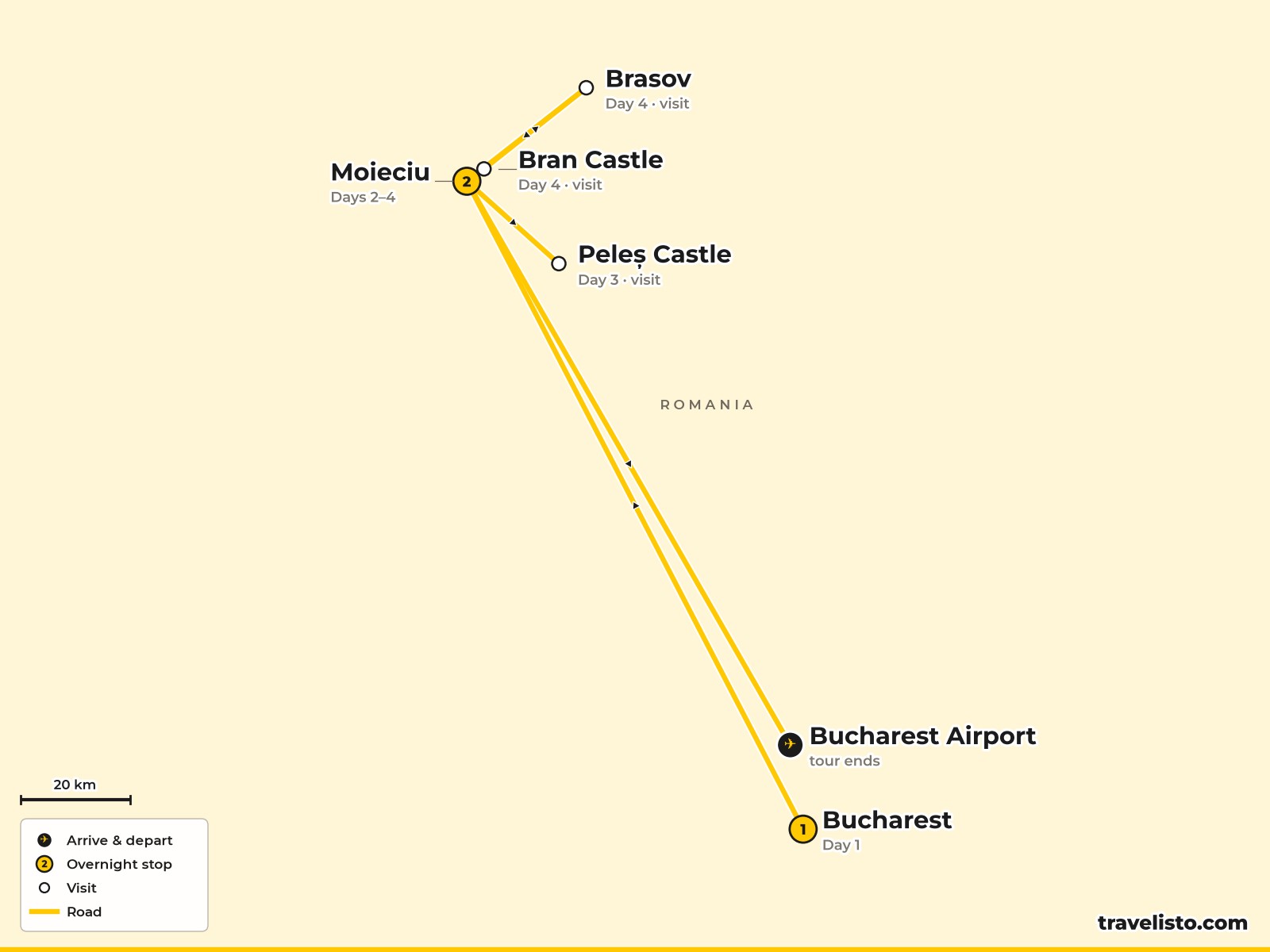
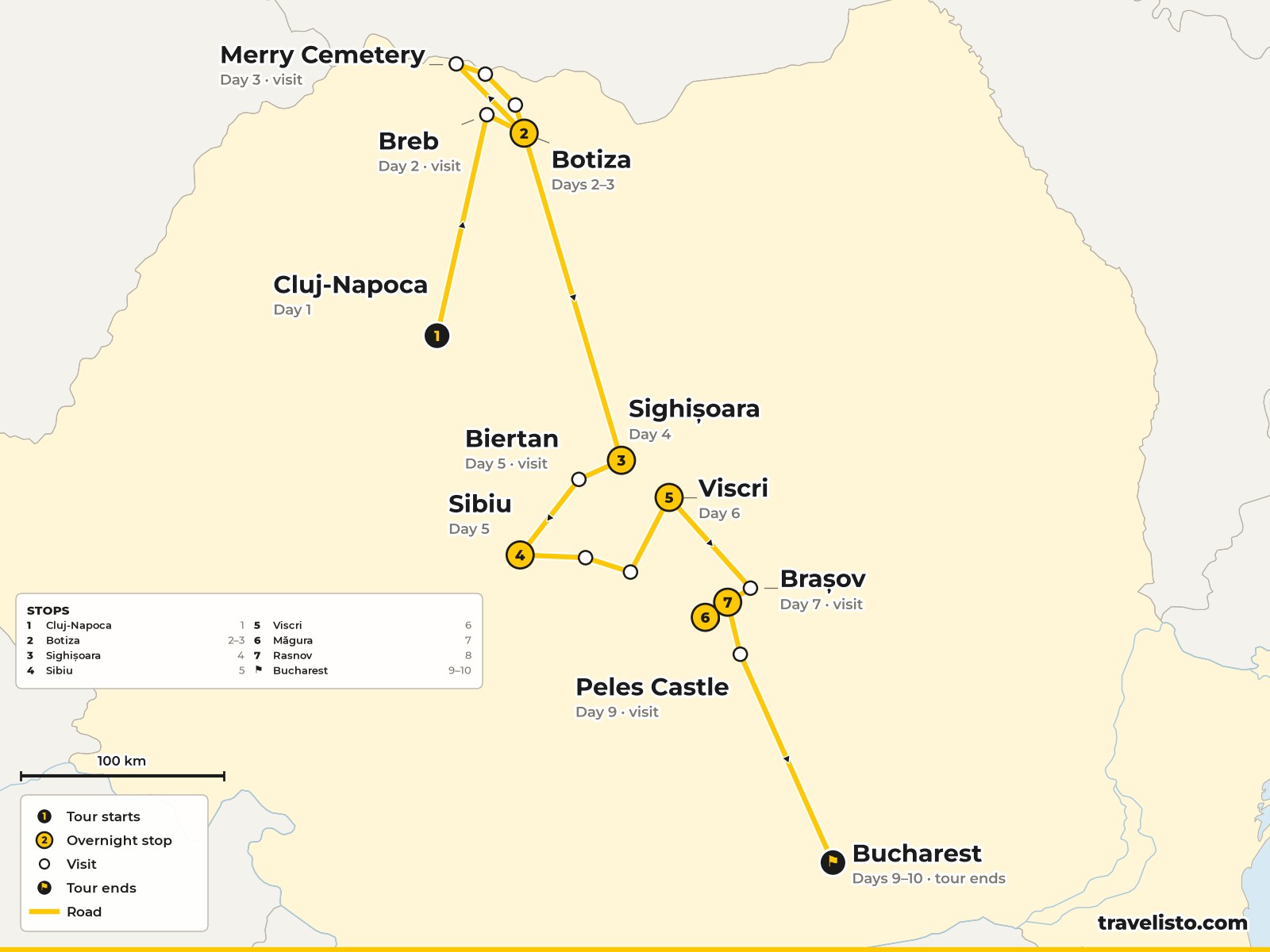
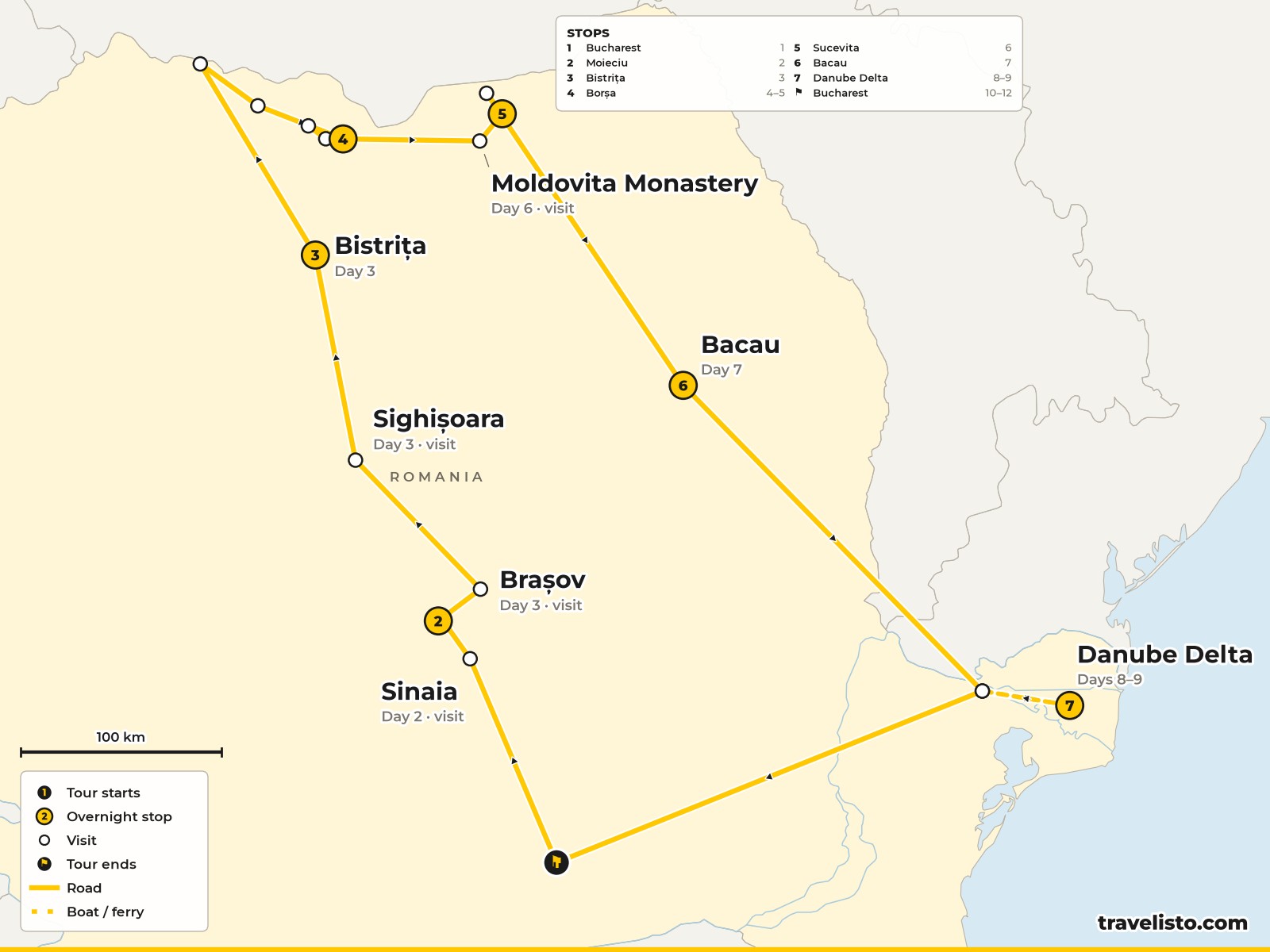
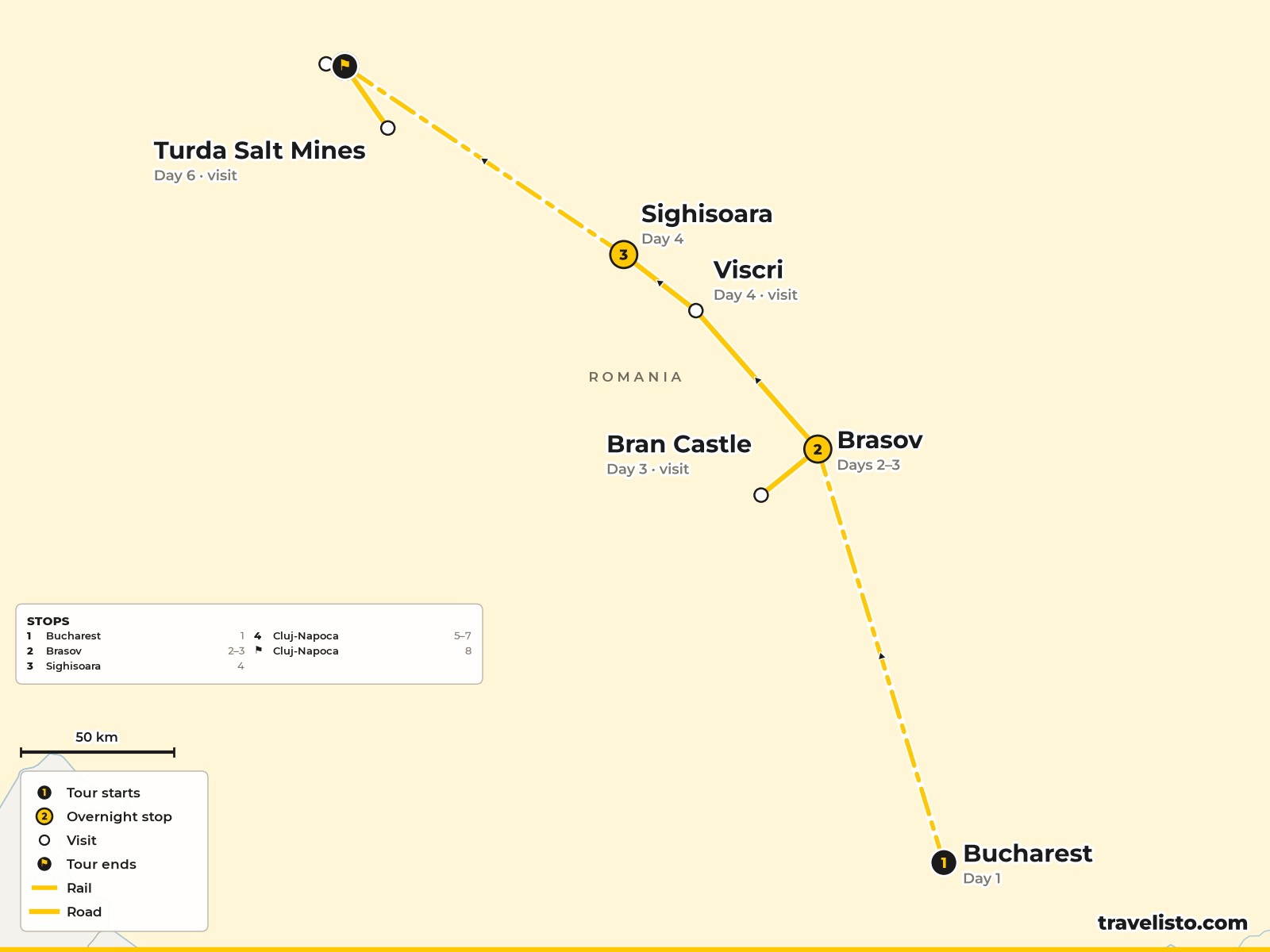
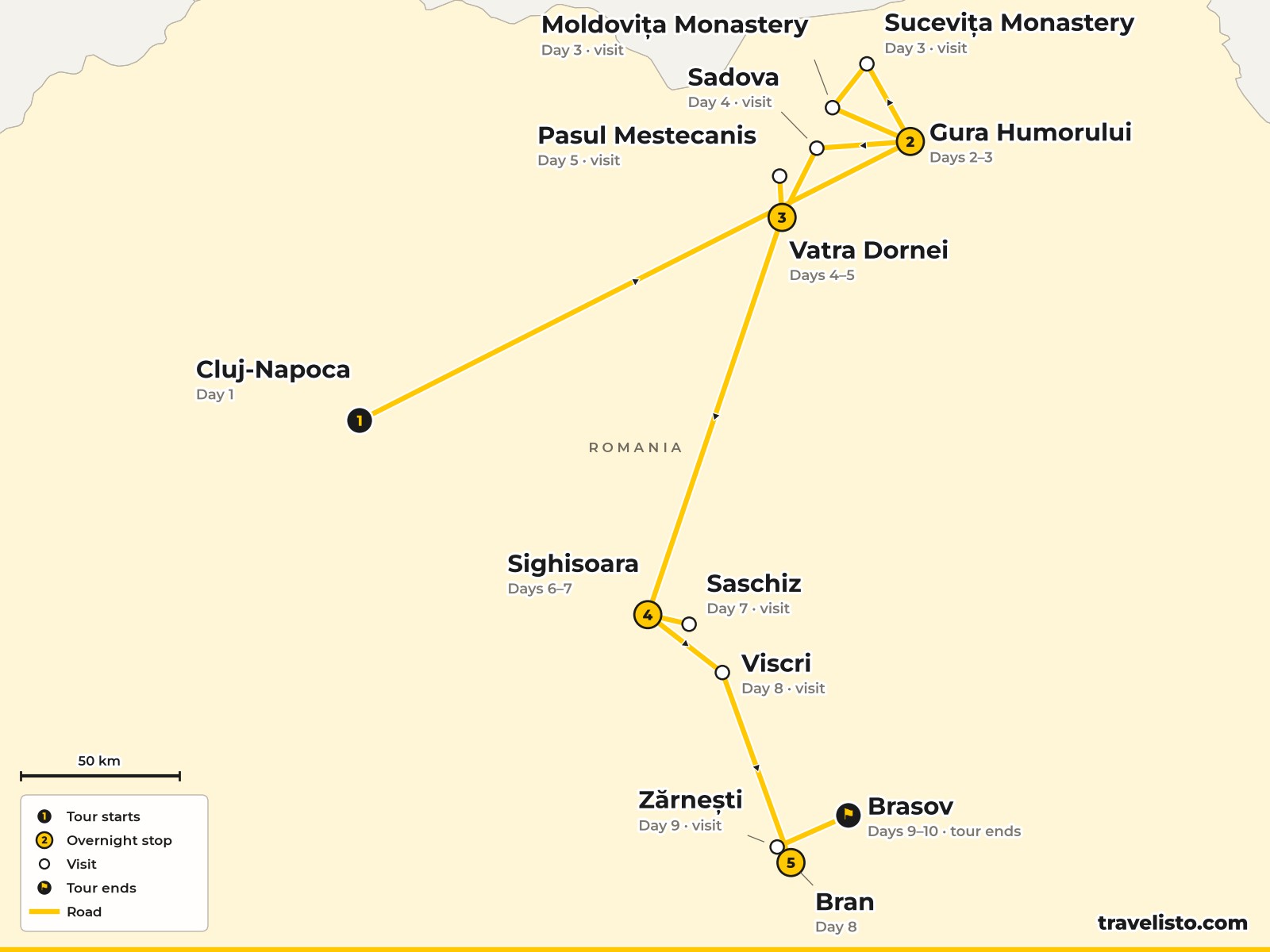
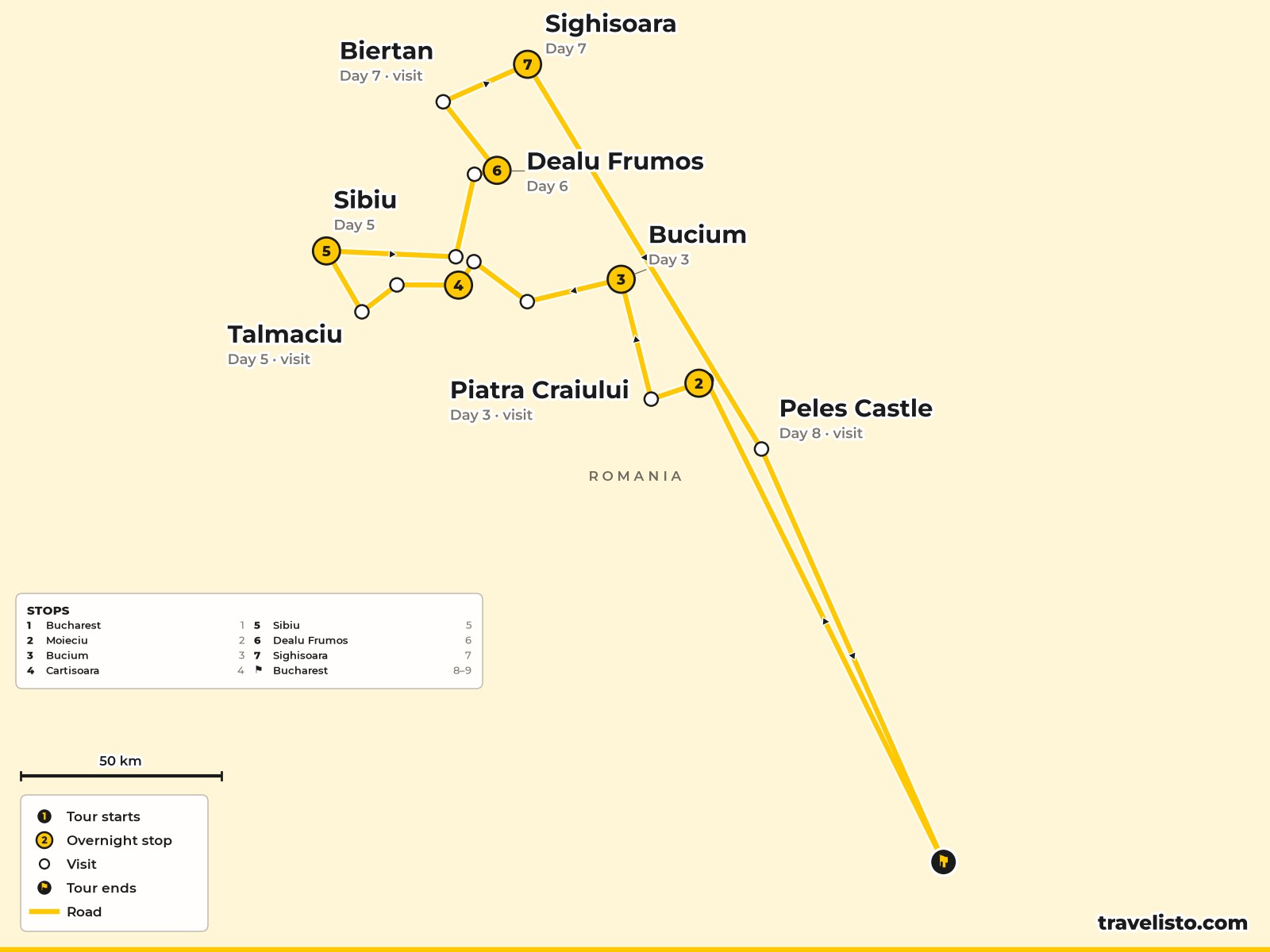
Prefer your own pace? A tailor-made Romania holiday gives you a private driver-guide, village guesthouses and bear watching at the right time of year. Longer journeys from Prague, Vienna and Budapest or through the Balkans can also include Transylvania.
Practical tips
- Entry: Romania is in the Schengen area. British visitors can stay up to 90 days in any 180 across Schengen without a visa. Your passport must have been issued less than 10 years before you arrive and be valid for at least 3 months after you leave the Schengen area. The EU’s Entry/Exit System (EES) is being introduced at borders. Check the FCDO Romania advice before you go.
- Money: cards are widely accepted in towns, but carry lei for villages, guesthouses, markets and monastery entry.
- Bears: don’t leave food out, keep to marked trails and never approach a bear. Watch them only from a guided hide.
- Churches and monasteries: cover shoulders and knees; women may be offered a wrap skirt at the door. Ask before taking photos inside.
- Language: Romanian is a Latin language, so some words look familiar. English is widely spoken by younger people and in hotels.
- Book ahead: Bran Castle in summer, Palace of the Parliament tours, and anything around Halloween in Transylvania.
Frequently asked questions
How do you get from Bucharest to Transylvania?
By car or train north through the Carpathians to Brașov, about 170 km and roughly 2.5 to 3 hours. Most people stop at Sinaia and Peleș Castle on the way.
What is the best time to visit Romania?
May, June and September, when it's warm but not hot and the countryside is at its best. July and August are hot in Bucharest; winter is cold, with snow in the mountains.
Is Bran Castle really Dracula's castle?
Only in legend. Bran is marketed as Dracula's Castle, but Vlad III, the prince who inspired the name, probably had little to do with it. It was later a home of Queen Marie of Romania.
What is the weather like in Romania in February?
Cold. Daytime highs are around 5°C in Brașov and 8°C in Bucharest, with nights below freezing and snow likely in the mountains.
What is the weather like in Romania in May?
Pleasant and green: around 18°C in Brașov and 22°C in Bucharest, with some showers and thunderstorms.
How many days do you need in Romania?
Five nights for Brașov, Bran and Sighișoara; a week or more for Transylvania in depth; ten to twelve days to add Bucovina, Maramureș or the Danube Delta.
Do I need a visa for Romania from the UK?
No. Romania is in the Schengen area, and British visitors can stay up to 90 days in any 180 without a visa. Check passport validity rules with the FCDO before you travel.
Is Romania safe to visit?
Yes. The FCDO notes that drones from the war in Ukraine have crossed into Romanian airspace near the border; follow local alerts if you travel in the east. Check the current FCDO Romania travel advice before you book and again before you travel.
Keep planning
- Romania holidays
- Escorted tours of Romania
- Balkans tours compared
- Prague, Vienna and Budapest tours
- European rail tours
- Self-guided walking holidays
- Guided cycling holidays
- Tailor-made holidays
Plan your Romania holiday with a Travel Designer
Tell us when you’d like to go and we’ll plan Transylvania, the painted monasteries and the delta, with flights, a private driver-guide and handpicked stays, in one ATOL-protected booking.
Make an enquiry Romania holidays