The Douro Valley in brief
- Where it is: northern Portugal, about 100 km east of Porto, from Régua and Pinhão to the Spanish border.
- From Porto: about 1.5 hours by car, 2 to 2.5 hours by the scenic Douro railway, or by boat.
- Best places: Pinhão, Régua, the Galafura viewpoint and Lamego, plus Mateus and the Côa Valley rock art.
- When to go: April to June, or September to October for the harvest; July and August are very hot.
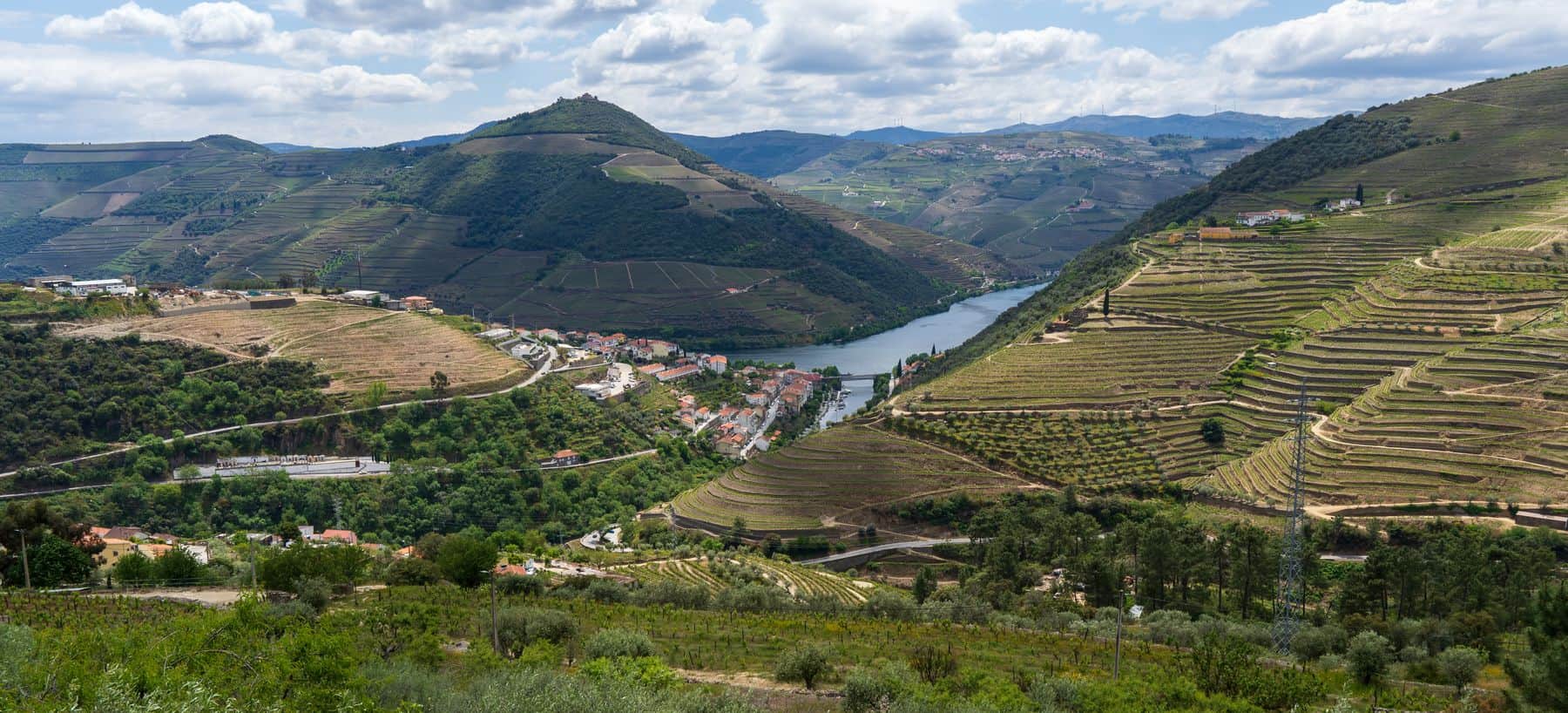
The Douro Valley is one of the most beautiful wine regions in the world: a deep, winding river valley in northern Portugal whose steep slopes have been carved into vineyard terraces by hand over centuries. It’s the home of port wine, a UNESCO World Heritage Site, and an easy trip from Porto by train, car or boat. This guide covers where the Douro Valley is, how to get there from Porto, the best places to visit, wine tasting, river cruises, when to go and how long to stay.
Where is the Douro Valley?
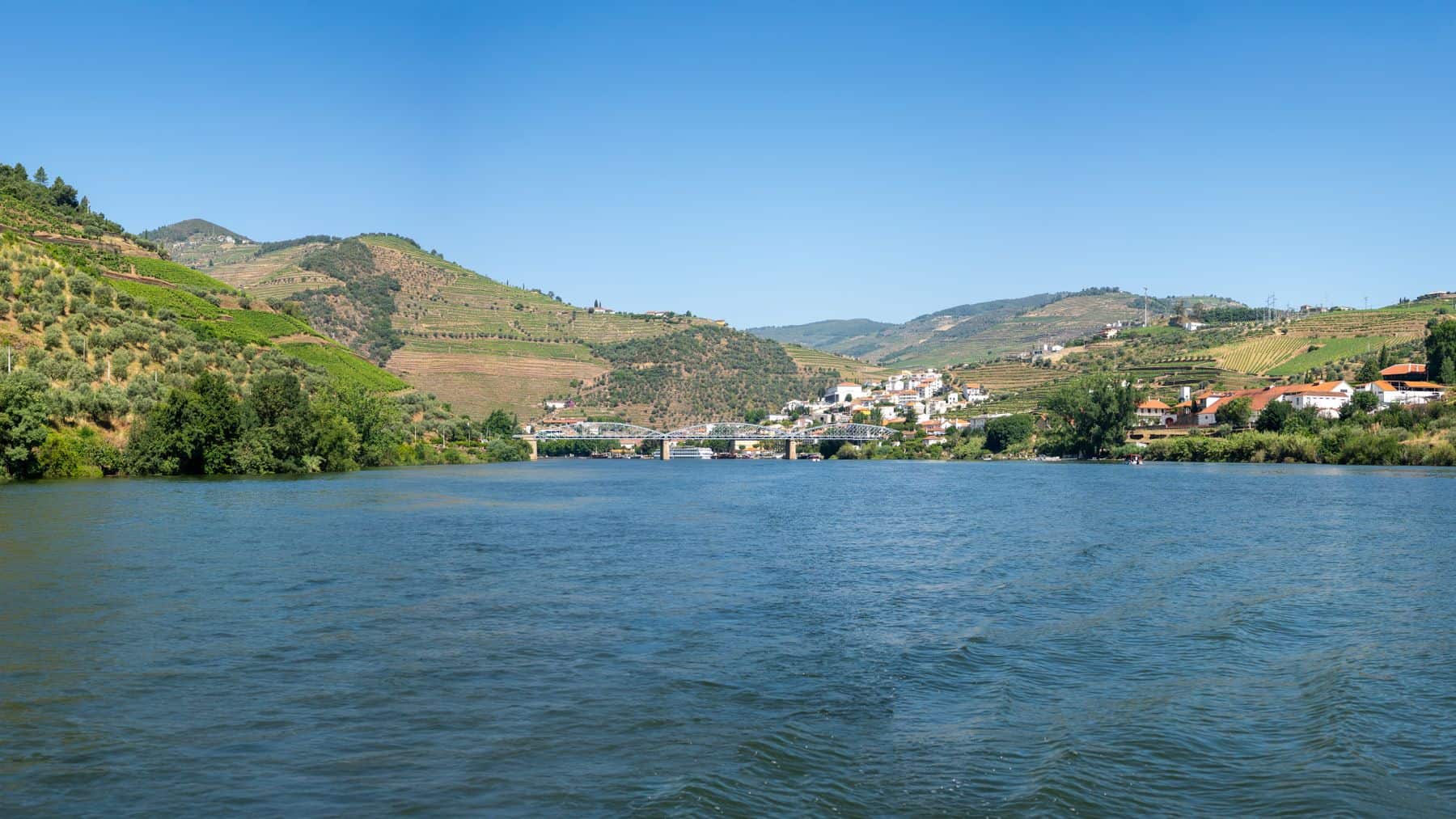
The Douro river rises in Spain and flows west across northern Portugal to the Atlantic at Porto. The wine valley starts about 100 km inland, around Peso da Régua, and runs east past Pinhão to the Spanish border.
Its three sub-regions get hotter and wilder as you head east: the Baixo Corgo around Régua, the Cima Corgo around Pinhão (the heart of port country), and the remote Douro Superior towards Spain.
Wine has been made here for around 2,000 years, and in 1756 it became one of the first wine regions in the world with official boundaries. The terraced landscape was listed by UNESCO in 2001.
Porto and the Douro Valley: how to get there
Most visitors combine Porto and the Douro Valley. You have four good options:
- By train: the Douro line from Porto’s São Bento station follows the river for much of the way, reaching Régua in about two hours and Pinhão in about two and a half. Sit on the right-hand side heading east for the river views, and look out for the blue-and-white tiles at Pinhão station.
- By car or with a driver: about an hour and a half to Régua or Pinhão by motorway. The riverside and mountain roads are winding but spectacular, and a driver means you can enjoy the tastings.
- By boat: day cruises run between Porto, Régua and Pinhão, often with a train one way. A full Douro river cruise takes a week, from Porto to the Spanish border and back.
- On a day tour: small-group tours from Porto visit two wine estates, a viewpoint and a short boat trip. It’s a long day, so staying overnight is better if you can.


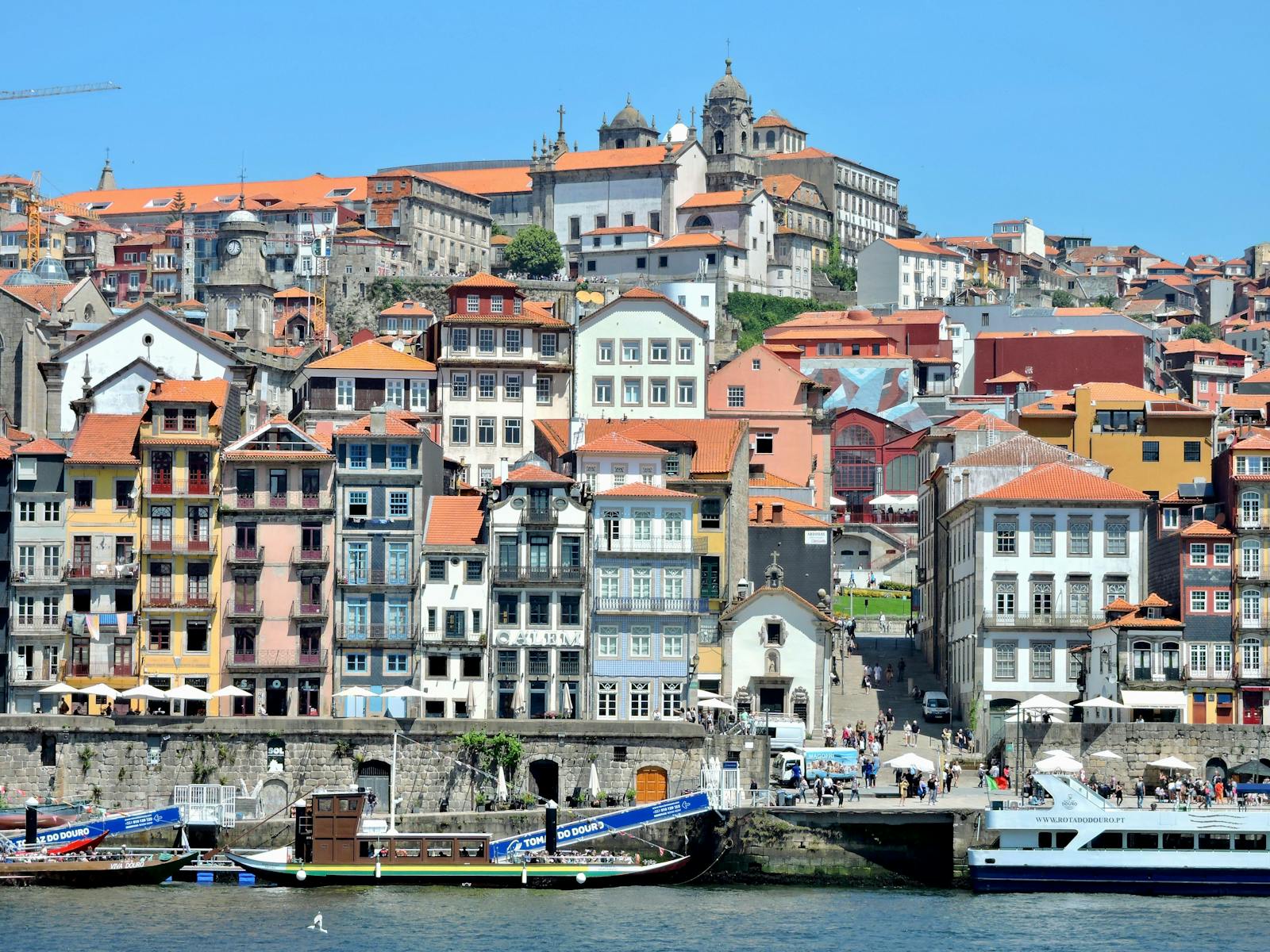
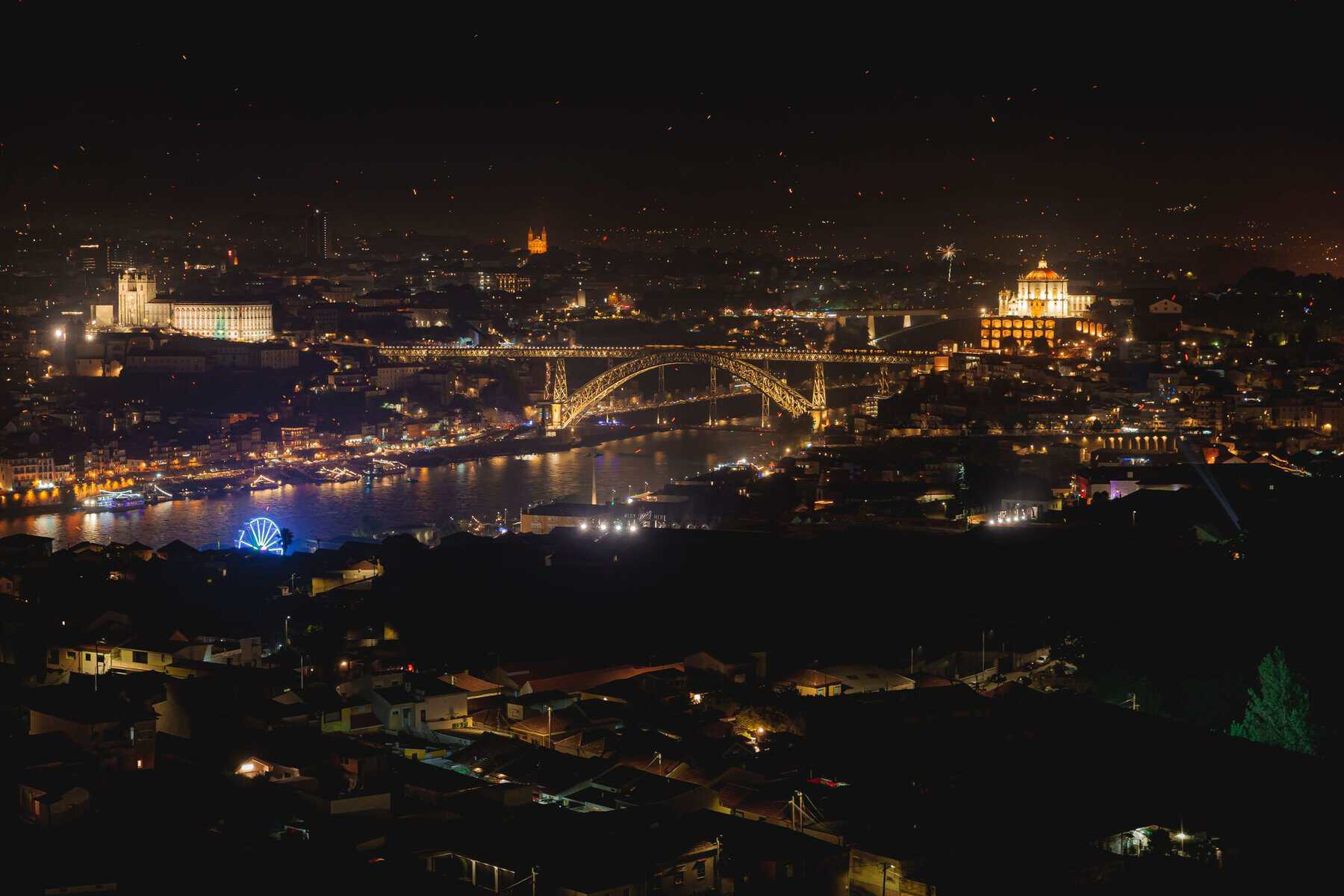
In Porto itself, cross the Dom Luís I bridge to Vila Nova de Gaia, where the port lodges age their wine in cool cellars. Until the railway came, the wine was carried downriver from the valley in flat-bottomed rabelo boats, and a few still sit on the river by the lodges.
Best places to visit in the Douro Valley
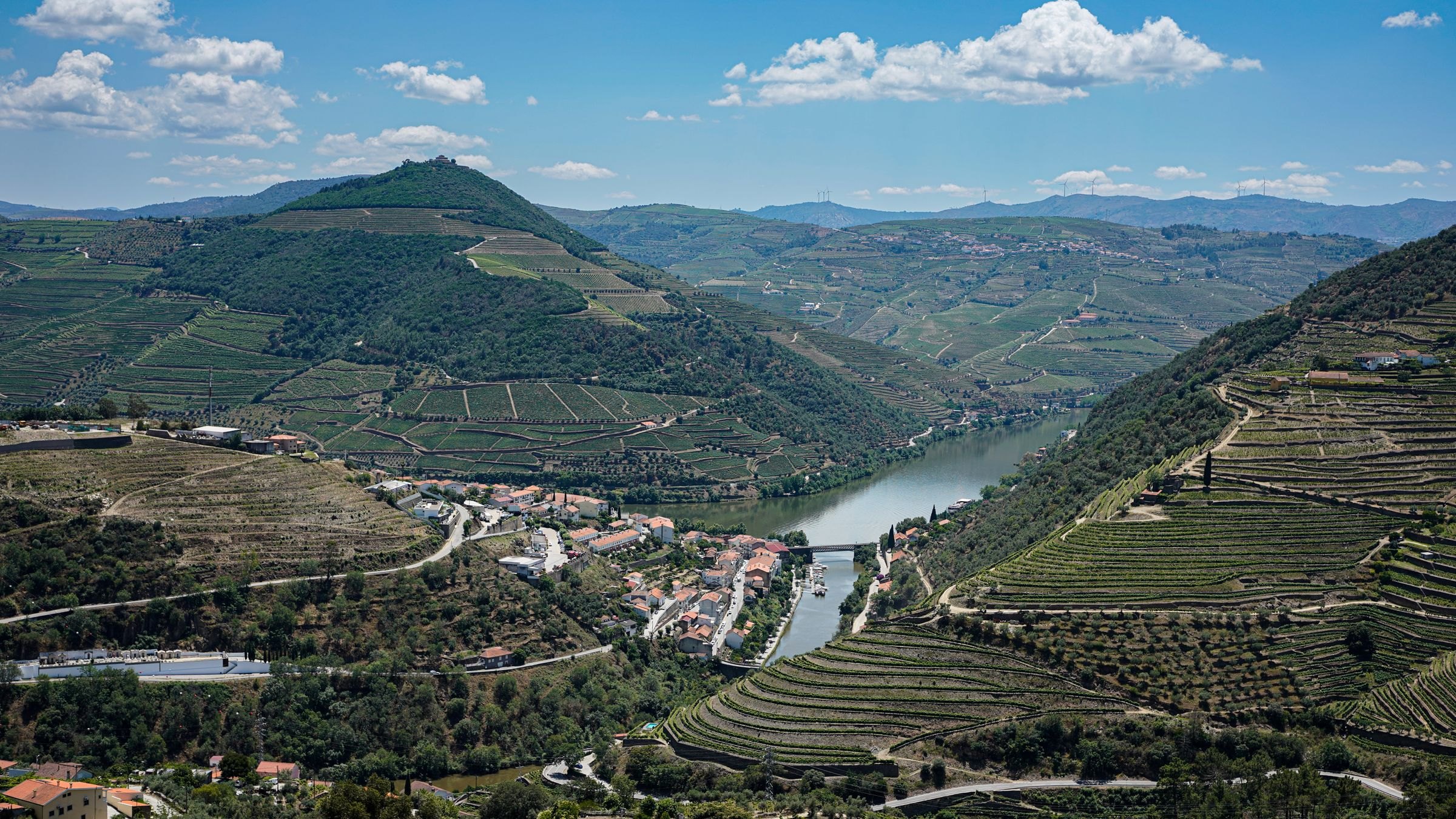
Pinhão
A small riverside village surrounded by famous port estates. Take a boat trip on the river, walk up through the vines, and drive up to the Casal de Loivos viewpoint above the bend in the river.

Peso da Régua
The valley’s main town and gateway, with the Douro Museum telling the story of the region and its wine, and boat trips along the river.
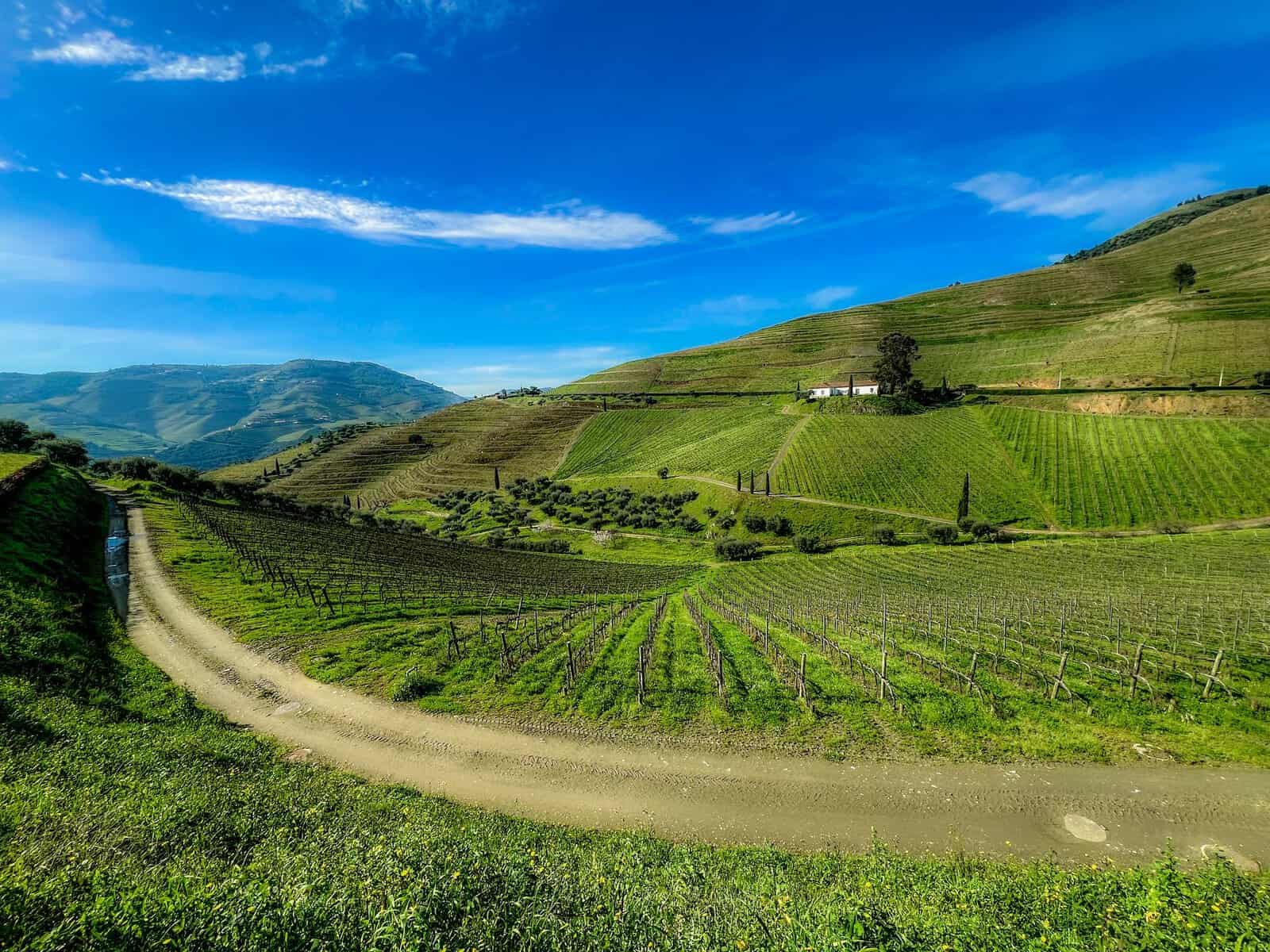
São Leonardo de Galafura
A hilltop viewpoint north of Régua with one of the widest views over the river and its terraces, especially lovely in the late afternoon.
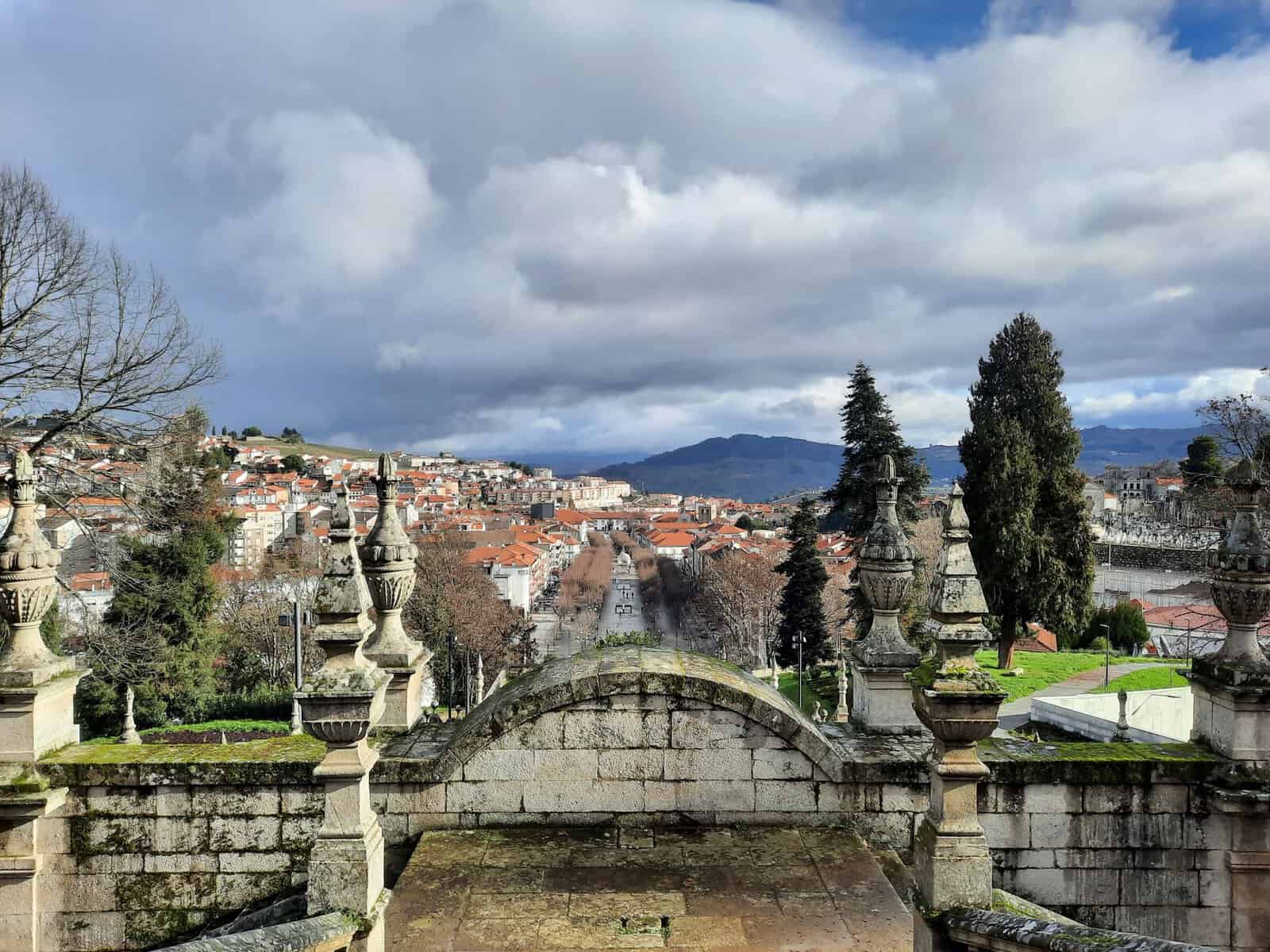
Lamego
A handsome town just south of Régua, famous for the Baroque staircase of nearly 700 steps, decorated with tiles, that climbs to the sanctuary of Nossa Senhora dos Remédios. The area also makes sparkling wine.
Further afield: near Vila Real, the Baroque Mateus Palace and its gardens are the house pictured on the famous rosé label. In the wild Douro Superior, near Vila Nova de Foz Côa, the Côa Valley protects thousands of open-air rock engravings up to 30,000 years old, a UNESCO site with a striking museum and guided visits.
Port and wine tasting

The Douro is best known for port, a fortified wine: grape brandy is added during fermentation, which keeps it sweet and strong. Ruby and vintage ports are deep red and fruity; tawny ports are aged in wood for years and turn amber and nutty; and white port with tonic is the local summer drink.
The valley now makes excellent dry red and white Douro wines too, from local grapes such as Touriga Nacional.
Visiting the estates: many wine estates (quintas) open for tours, tastings and lunch overlooking the vines, and some have rooms. Book visits ahead, especially at weekends, and use a driver or the train so nobody has to drive.
The harvest (vindima) runs from about mid-September to early October. It’s the most atmospheric time to visit, and some estates still tread grapes by foot in stone tanks called lagares.
Douro river cruises

A Douro river cruise is one of the most relaxing ways to see the valley. Most sail from Porto up to the Spanish border and back over about a week, passing through tall locks and stopping at Régua and Pinhão, with excursions to estates, Lamego, Mateus and often Salamanca in Spain.
Cruises run from about March to November. Compare the lines in our guide to Douro river cruises.
When to go
| Month | Porto | Pinhão (Douro Valley) |
|---|---|---|
| Mar | 16°C · 125 mm | 17°C · 65 mm |
| Apr | 18°C · 135 mm | 20°C · 85 mm |
| May | 20°C · 85 mm | 24°C · 50 mm |
| Jun | 22°C · 45 mm | 27°C · 35 mm |
| Jul | 25°C · 15 mm | 32°C · 5 mm |
| Aug | 25°C · 15 mm | 32°C · 5 mm |
| Sep | 24°C · 75 mm | 28°C · 40 mm |
| Oct | 21°C · 175 mm | 23°C · 100 mm |
| Nov | 16°C · 185 mm | 16°C · 100 mm |
Average daily high and monthly rainfall, 10-year ERA5 data.
- April to June: green vines, wildflowers and comfortable temperatures. One of the best times to visit.
- July and August: very hot in the valley (often well over 30°C, sometimes 40°C) though Porto stays mild. Start early and rest at midday.
- September and October: harvest time, with golden and red autumn colours by late October.
- November to February: quiet and cool, with bare vines; some estates and boats close for the season.
How long to stay, and routes
The Douro from Porto
- Train or drive to Pinhão
- Two estates
- River boat trip
A long but rewarding day; go midweek.
Porto and the Douro Valley
- Porto (2 nights)
- Pinhão (2)
- Lamego and Régua
Port lodges in Gaia, then vineyards, viewpoints and the river.
Northern Portugal and Lisbon
- Porto (3 nights)
- Douro Valley (2)
- Guimarães or Braga (1)
- Lisbon (3)
Add the north’s historic towns, then the capital by fast train.
Ways to see the Douro with us


Practical tips
- Entry: Portugal is in the Schengen area, so British visitors can stay up to 90 days in any 180 without a visa. Check the FCDO Portugal advice before you travel.
- Book ahead: estate tours, lunches and harvest weekends fill up, and so do the few hotels in the valley.
- Drinking and driving: tastings add up quickly, so use the train, a boat or a driver.
- Summer heat: carry water and sun protection, and follow local advice on wildfires.
- Shoes: vineyard paths and village streets are steep; bring comfortable walking shoes.
Frequently asked questions
Where is the Douro Valley?
In northern Portugal. The wine valley starts about 100 km east of Porto around Peso da Régua and follows the Douro river east past Pinhão to the Spanish border.
How do you get from Porto to the Douro Valley?
By train from São Bento station (about two hours to Régua, two and a half to Pinhão), by car or with a driver (about an hour and a half), by boat, or on a day tour.
Can you visit the Douro Valley as a day trip from Porto?
Yes, by train or on a guided tour, but it's a long day. Two or three nights in the valley lets you enjoy the estates, viewpoints and river at an easy pace.
What is the best time to visit the Douro Valley?
April to June for green vines and mild weather, or mid-September to October for the grape harvest. July and August are very hot in the valley.
What is the Douro Valley famous for?
Port wine, its hand-built terraced vineyards and river views. The Alto Douro Wine Region has been a UNESCO World Heritage Site since 2001.
Is the Douro Valley worth visiting?
Yes. It's one of the most beautiful wine regions in the world, and easy to combine with Porto, a river cruise or a wider trip to Portugal.
Where should I stay in the Douro Valley?
Pinhão is the best base for port estates and river views; Peso da Régua has more services and train and boat links. Many wine estates also have rooms.
How long is a Douro river cruise?
Most are about seven nights, sailing from Porto to the Spanish border and back, with an excursion to Salamanca. Day cruises are also available from Porto and Régua.
Keep planning
- Portugal holiday guide
- Portugal holidays
- Douro river cruises compared
- Douro river cruise 2027 news
- Escorted tours of Portugal
- Spain holidays
- Croatia holiday guide
- Tailor-made holidays
Plan your Porto and Douro Valley trip with a Travel Designer
Tell us when you’d like to go and we’ll plan Porto and the Douro, with estate visits, a river trip and the scenic train, as part of one ATOL-protected holiday.
Make an enquiry Portugal holidays