Gay Colombia in brief
- Is Colombia gay friendly? In law, yes: equal marriage since 2016, adoption and legal gender change since 2015; more conservative outside the cities.
- Our lead trip is private, with a gay-owned local team in Medellín: 7 to 14 days, priced to your dates.
- LGBTQ+ group tour: Bogotá to Cartagena, 19 to 28 February 2027, from £7,310 per person, land only.
- Where to go: Chapinero in Bogotá, El Poblado and Laureles in Medellín, the walled city and Getsemaní in Cartagena.
- Stay safe: dating-app robberies and drugging are a known risk in Medellín and Bogotá; meet in public and use app taxis.
Gay Colombia has changed faster than almost anywhere in Latin America. Same-sex couples can marry and adopt, Bogotá has one of the biggest LGBTQ+ scenes on the continent, Medellín has become a favourite with gay travellers for its spring-like climate and its nightlife, and Cartagena adds the Caribbean: a walled colonial city, island beaches and warm evenings. It is also a country where you need to travel smartly, because street crime and dating-app scams are a real risk in the big cities.
This guide answers whether Colombia is gay friendly, sets out the gay Colombia tours we sell, from a private trip with a gay-owned local team to a small LGBTQ+ group in February 2027, and walks through the scene city by city, the coffee region and the islands, Pride dates, how to stay safe and how to get there from the UK.
Is Colombia gay friendly?
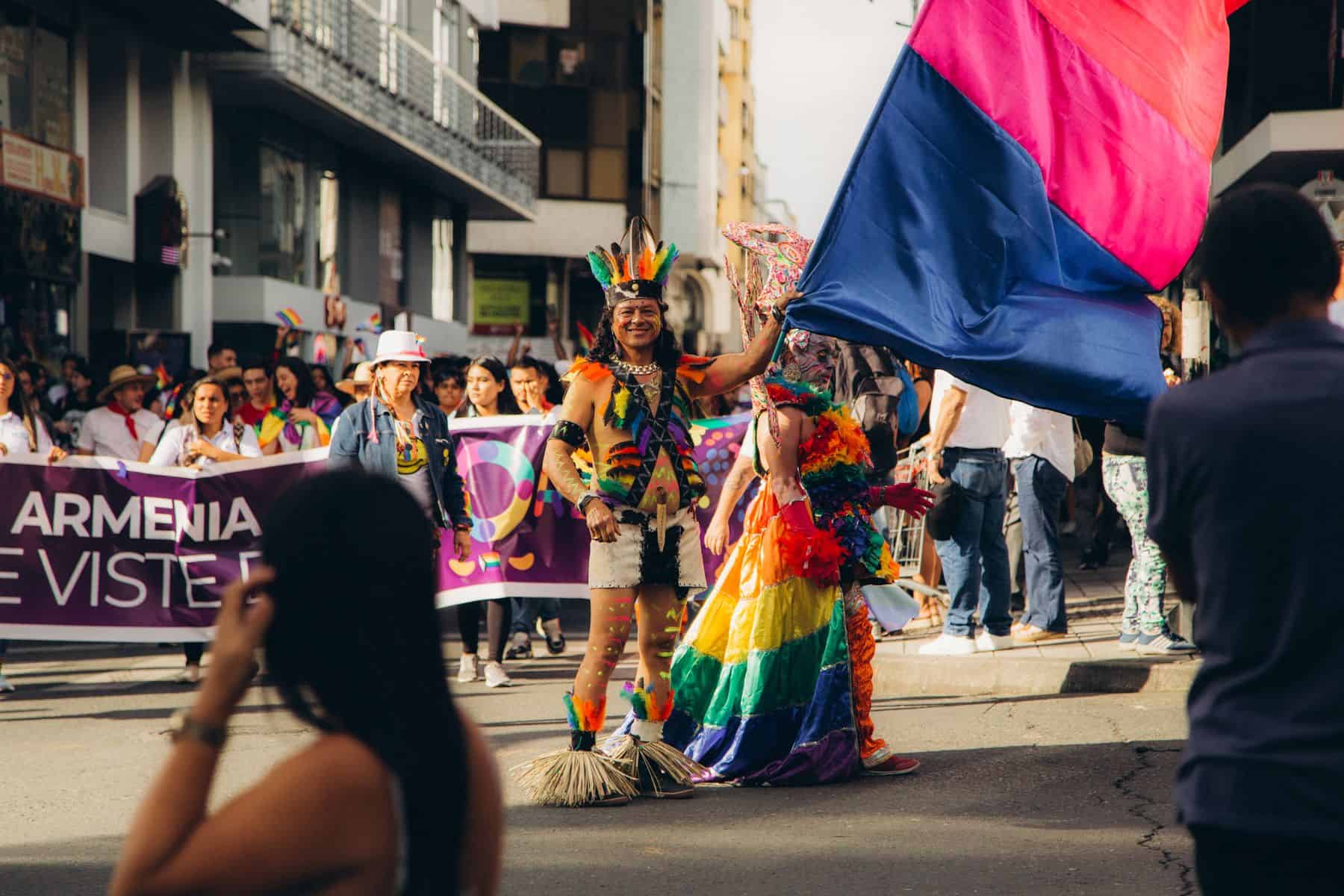
In law, Colombia is one of the most progressive countries in the Americas, and most of the change came through its Constitutional Court:
- Relationships: same-sex relationships are legal.
- Marriage: same-sex couples have been able to marry since the Constitutional Court’s ruling of 28 April 2016.
- Adoption: a Constitutional Court ruling of November 2015 opened adoption to same-sex couples.
- Gender identity: since a 2015 decree, trans people can change the sex on their civil register at a notary, with a sworn declaration and no medical evidence.
- Discrimination: since 2011 the Penal Code has made discrimination and harassment because of sexual orientation a crime.
Day to day, the picture depends on where you are. Bogotá, Medellín and Cartagena are used to gay travellers, and in neighbourhoods such as Chapinero in Bogotá or El Poblado in Medellín holding hands rarely draws a second look. Colombia is still a Catholic and fairly conservative country, though: small towns and the countryside are more traditional, and LGBTQ+ Colombians, trans people above all, still face discrimination and violence. Most couples we send are relaxed in hotels, restaurants and on tours, and a little more discreet in the street outside the big cities. Check the current FCDO Colombia travel advice before you book and again before you travel.
Our gay Colombia tours
We don’t run our own tours in Colombia. We resell trips from a gay-owned local specialist in Medellín and from LGBTQ+ tour companies we trust, and we book them for you with the rest of your holiday. Prices are per person sharing, for the tour on the ground, without international flights, converted from US dollars at a market rate (about $1.30 to the pound in November 2026), so the final sterling price can move a little with the exchange rate.

For most people the best way to see gay Colombia is a private trip. Our local partner is a gay-owned team in Medellín that has been creating LGBTQ+ trips in Colombia for about eight years. They pick hotels that welcome every couple, meet you at the airport, and introduce you to each city through LGBTQ+ local hosts, so you see the places locals go rather than guessing from an app.
Every trip is planned around your dates, pace and budget, and a local concierge is on call around the clock while you travel, which matters in a country where it pays to have someone to ring.
Private gay Colombia trip: Bogotá, Medellín, the coffee region and Cartagena
- Private, any dates
- Gay-owned local team
- 7 to 14 days
- Year round
Three shapes work well, and we adapt each one to you:
- 7 days, Medellín and Cartagena: a rooftop evening with LGBTQ+ locals, a private salsa class, a coffee farm in the hills above Medellín, then the walled city of Cartagena at golden hour, a cooking session with local chefs and a beach club to finish.
- 10 days, Bogotá, Medellín and Cartagena: adds Bogotá’s La Candelaria, the cable car up Monserrate and a coffee tasting; in Medellín the street art of Comuna 13 and a private boat trip on the Guatapé lakes; in Cartagena a private day out to the Rosario Islands.
- 14 days, with the coffee region: the full loop, adding the green hills, coffee farms and wax palms between Manizales and Salento.
Price: ask us. Priced to your dates, length and choice of hotels.
Included: hand-picked hotels with breakfast, private airport transfers and ground transport, private bilingual guides, domestic flights where the route needs them, the experiences in your plan with their entrance fees, some meals, 24-hour local support and Colombian travel insurance. Not included: international flights, alcohol and other meals, tips and personal spending. We add flights from the UK and quote the whole trip as one package.
Colombia LGBTQ+ small-group tour: Bogotá to Cartagena, 10 days
- All-LGBTQ+ group
- 19 to 28 February 2027
- 9 nights
- Limited availability
A comfortable, food-led group trip with hosts throughout: three nights in Bogotá, three in Medellín, a night by the lakes and painted streets of Guatapé, and two in Cartagena. Welcome dinner in Bogotá, internal flights between the cities, and most meals are included, with optional extras such as a night out in Bogotá and a salsa class in Medellín.
From £7,310 per person sharing, land only (single room from £8,850)
Included: airport transfers, 9 nights in upscale hotels, internal flights, breakfasts, most lunches and dinners, entrance and guide fees, hosts throughout and Colombian travel insurance. Not included: international flights, pre-paid tips of about £215 per person, optional extras, and your own cancellation insurance.
Group departures we can book
If you would rather travel with a group of like-minded people, these are the departures we can book with specialist LGBTQ+ operators, each with a tour leader or host throughout.
| Tour | For | Dates | Length | From (per person, land only) |
|---|---|---|---|---|
| Bogotá, Medellín, Guatapé and Cartagena | All-LGBTQ+ group | 19 to 28 February 2027 | 10 days | £7,310 |
| Adventure tour: Medellín, Guatapé and the Río Claro reserve | Gay men (lesbians and friends welcome) | 2027 dates to be announced | 8 days | Ask us |
Group-tour prices are converted from the operators’ US dollar prices and are subject to availability; single supplements apply. We confirm the latest price, what’s included and the room basis before you book. Prefer a mainstream small group? Our Colombia tours include the 9-day Café Colombia route through Bogotá, the coffee country, Medellín and Cartagena.
Gay Colombia city by city
| City | Best for | The scene | Good to know |
|---|---|---|---|
| Bogotá | Museums, food and the biggest nightlife | Chapinero, the city’s LGBTQ+ heart, with bars and some of the largest clubs in Latin America | At 2,600 m: cool evenings and altitude on day one; direct flights from London |
| Medellín | Spring-like weather, nightlife and day trips | El Poblado for bars and rooftops, Laureles for a more local evening | Home of our private-trip partner; Guatapé is a day out |
| Cartagena | Colonial streets, sea and islands | Small, mixed and relaxed, in the walled city and Getsemaní | Hot and humid all year; the base for the Rosario Islands |
| Coffee region | Green hills, coffee farms and wax palms | Very small; friendly rather than gay | Combine with Medellín by road or a short flight |
Bogotá: Chapinero

Bogotá is the capital of gay Colombia. Chapinero, north of the centre, is the city’s LGBTQ+ neighbourhood, with rainbow flags, cafés, bars, saunas and clubs, and weekend nights that go on very late. The streets around it, Zona G for restaurants and the Zona Rosa for smarter bars, are a short taxi ride away.
By day, the colonial lanes of La Candelaria and its street art, the gold and Botero museums and the view from Monserrate fill two or three days easily. Bogotá sits at about 2,600 m, so take the first day slowly, and bring a jacket: evenings are cool all year.
Medellín: El Poblado and Laureles

Medellín, the “city of eternal spring”, has a mild climate all year, a lively food scene and a big LGBTQ+ community. El Poblado is where most visitors stay: leafy streets, rooftop bars and the busiest nightlife, much of it mixed. Laureles, across the river, is calmer and more local, with tree-lined boulevards and a strip of bars and clubs that fills up at weekends. Medellín is also the place where the dating-app scams described below are most common, so read the safety section before a night out.

By day, take the outdoor escalators and street-art walks of Comuna 13, ride the cable cars over the hillside neighbourhoods, and visit a coffee farm in the hills outside the city.
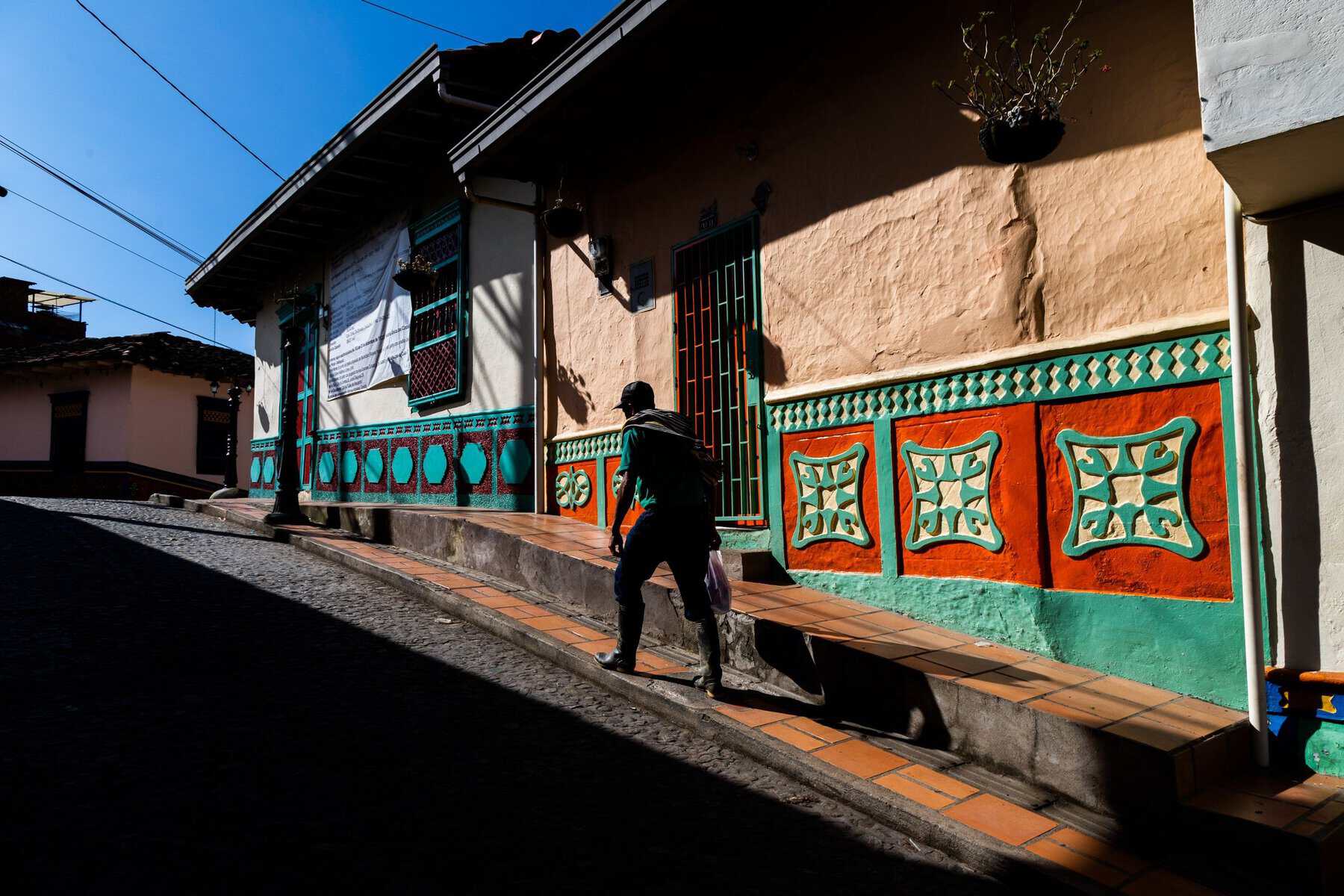
The classic day out is Guatapé, two hours east, where you can climb the great rock of El Peñol for the view over the lakes and wander streets of painted houses. Our 10-day private trip includes a private boat trip on the lakes.
Cartagena: the walled city and Getsemaní

Cartagena is about atmosphere rather than a big scene. Inside the walls, the walled city is a maze of balconied colonial houses, squares and boutique hotels, and an evening walk along the ramparts at sunset is the highlight of most trips.
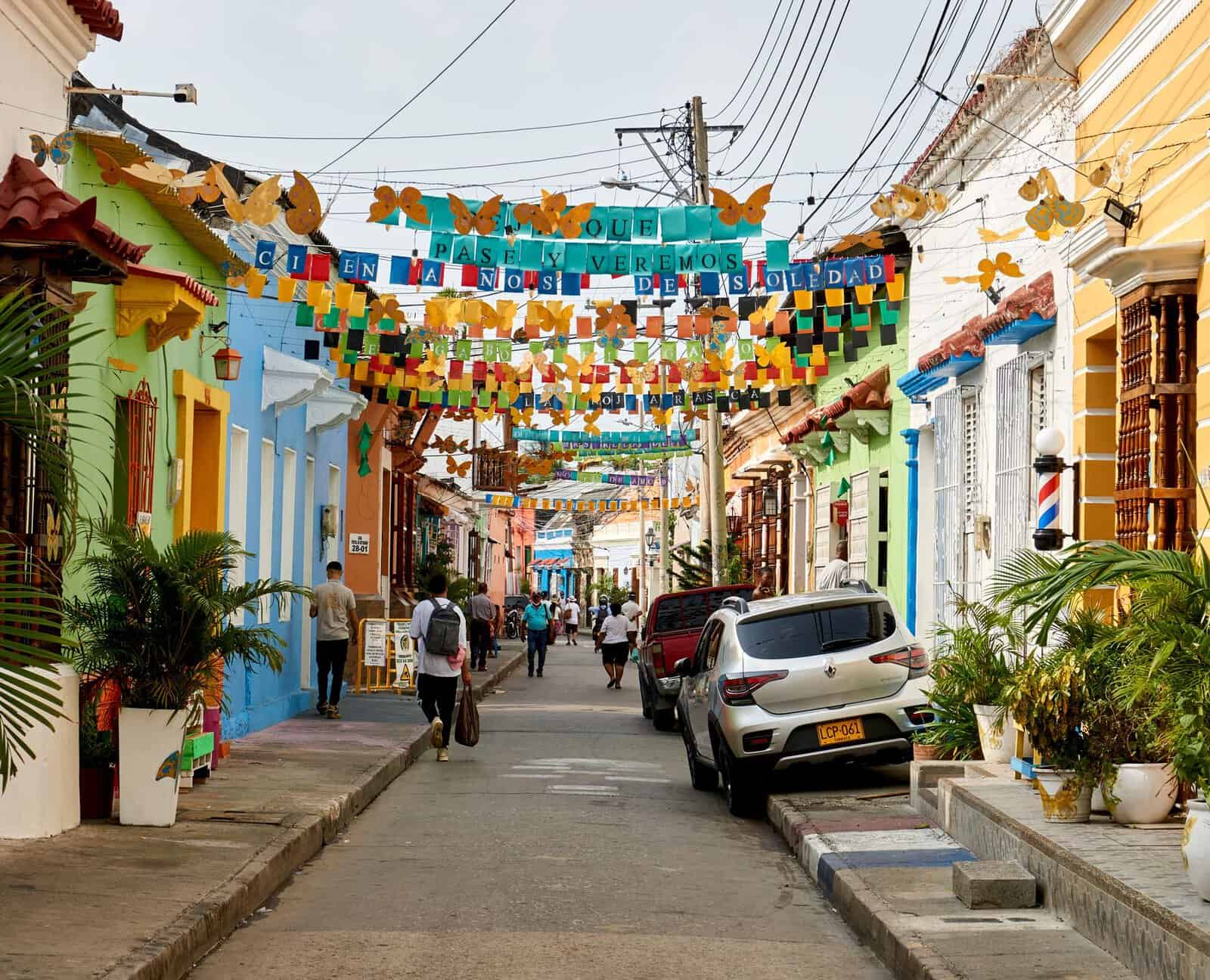
Getsemaní, just outside the walls, is younger and more bohemian, with murals, bunting, street food and lively squares at night. Gay and mixed bars come and go in both areas; your hosts will know which are good this season. It is hot and humid all year, so plan sightseeing for the morning and the evening.
The coffee region

Between Medellín and Bogotá, the coffee region (the “coffee triangle” of Caldas, Risaralda and Quindío) is the peaceful part of a gay Colombia trip: steep green hills, family coffee farms where you can pick and roast your own beans, hot springs, and the Cocora Valley, where wax palms up to 60 m tall rise out of cloud-forest pasture.
Base yourself in a farm stay near Salento or Manizales for two or three nights. The scene here is very small, but the region is used to visitors, Pride marches now take place in its cities, and a private guide makes it easy. Read more in our Colombia holiday guide.
The Caribbean islands
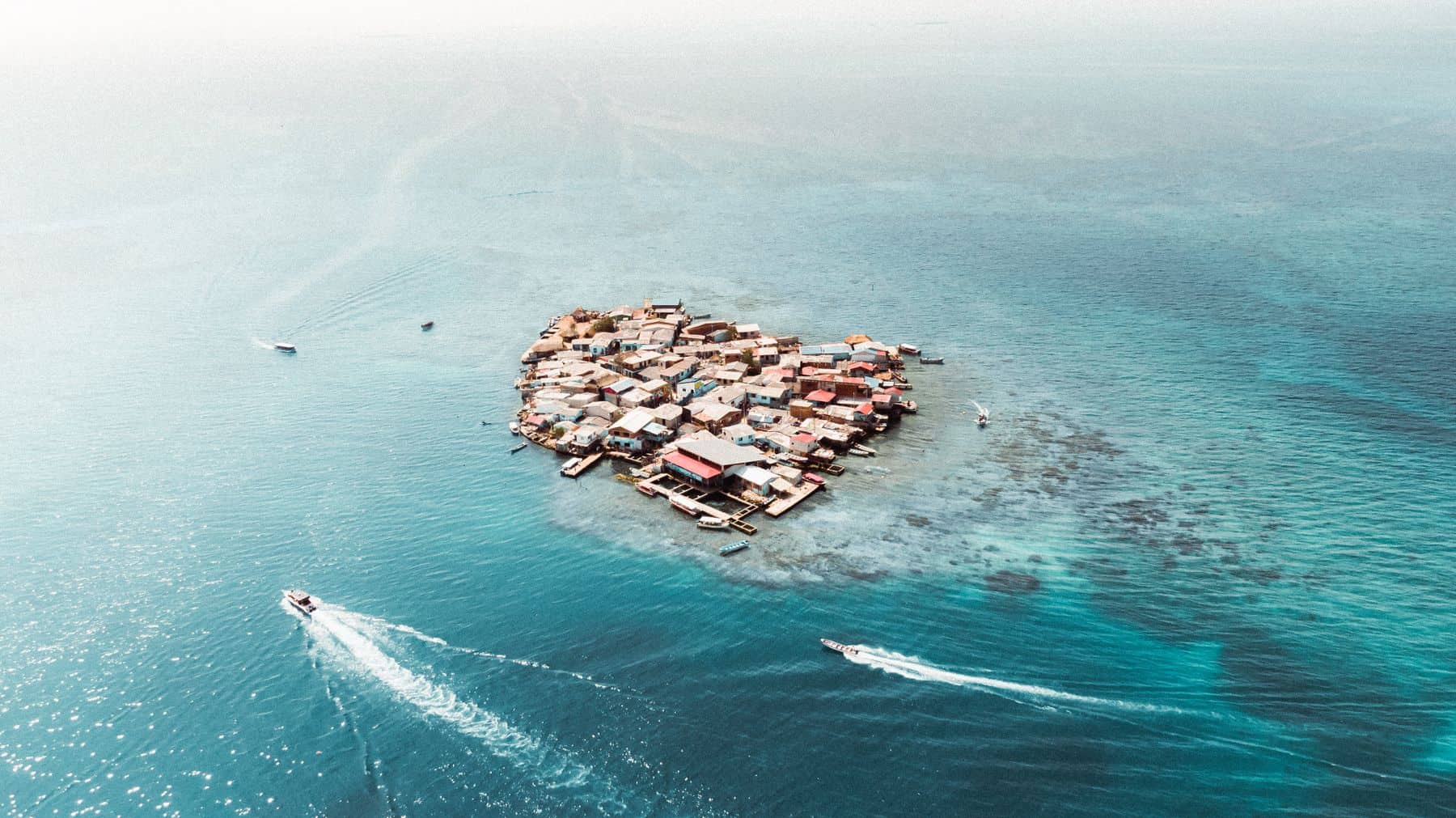
From Cartagena, fast boats run out to the Rosario Islands, a national park of small coral islands about an hour away, with clear water, snorkelling and simple beach clubs. A private boat is the best way to go: you choose the beaches, avoid the crowded day-trip stops and can add a night on an island. Further south, the San Bernardo islands are quieter still. Barú’s Playa Blanca is the nearest white-sand beach to the city, but it gets very busy.

When to go, and Pride dates
Colombia is close to the equator, so temperatures depend on altitude rather than season: Bogotá is cool, Medellín mild and Cartagena hot all year. The driest and most popular months are December to March, with a shorter dry spell in July and August. April to May and October to November are the wettest. February is a good month for the whole loop, which is when our 2027 group trip runs.
| Event | Where | When |
|---|---|---|
| Marcha del Orgullo (Pride) | Bogotá | Usually late June or early July; in 2026 the main march was on Sunday 28 June |
| Pride march and diversity festival | Medellín | Usually late June; in 2026 the march was in the last week of June |
| Feria de las Flores (flower festival) | Medellín | Early August |
| Carnival | Barranquilla, near Cartagena | February or March, before Lent |
Pride dates are set by the organisers and the city councils each year, and 2027 dates were not published when we checked; we confirm them for your trip.
Getting there from the UK
- To Bogotá: Colombia’s national airline flies direct from London Heathrow every day, in about 10 hours 30 minutes. Bogotá is the natural start for a loop of the country.
- To Medellín and Cartagena: short domestic flights from Bogotá, or one-stop flights from the UK through Madrid, other European hubs or the US.
- Getting around: fly between the big cities; distances by road are long and slow through the mountains.
- Entry: British passport holders don’t usually need a visa for a holiday. Check the current FCDO Colombia travel advice before you book and again before you travel.
- Our prices: the tours on this page are sold land only, so international flights are not included. We add them, with ATOL protection, when you book the whole trip with us.
Safety: dating apps, drugging and nights out
Colombia is far safer than its reputation from the 1990s, and thousands of gay travellers visit every year without trouble. But one risk is specific to LGBTQ+ visitors and worth taking seriously. Robbers use dating apps to set up meetings with foreigners, especially in Medellín and Bogotá, and some victims are drugged, most notoriously with scopolamine, a drug that leaves people confused and compliant, and then robbed of phones, cards and cash. A few cases have been much worse. Our advice:
- Meet in public first: meet app dates in a busy bar or café, not at your hotel or theirs, and tell a friend or your hotel where you are going.
- Don’t bring new people back: many hotels require guests to register visitors at the front desk, which is a good thing; use it.
- Watch your drink: never leave it unattended, and don’t accept drinks, cigarettes, gum or sweets from strangers.
- Taxis: use ride-hailing apps or taxis called by your hotel or the bar, not cabs hailed in the street, especially at night.
- Carry little: leave your passport, spare cards and most of your cash in the hotel safe, and keep your phone out of sight in the street.
- Go with a local: a night out with an LGBTQ+ local host, as on our private trips, is the easiest way to enjoy the scene safely.
- Health and insurance: take proper travel insurance, and check the rules for bringing PrEP or other medication. Check the current FCDO Colombia travel advice before you book and again before you travel.
Frequently asked questions
Is Colombia gay friendly?
In law, very much so: same-sex couples have been able to marry since 2016 and adopt since 2015, trans people can change their legal sex at a notary, and discrimination for sexual orientation is a crime. Bogotá, Medellín and Cartagena are used to gay travellers. The countryside is more conservative, and dating-app robberies are a real risk in the big cities, so travel smartly.
Is same-sex marriage legal in Colombia?
Yes. The Constitutional Court ruled on 28 April 2016 that same-sex couples can marry, and a 2015 ruling opened adoption to same-sex couples.
Where is the gay area in Bogotá?
Chapinero, north of the historic centre, is Bogotá's LGBTQ+ neighbourhood, with bars, cafés and some of the largest gay clubs in Latin America. It is a short taxi ride from La Candelaria and the Zona Rosa.
Is Medellín gay friendly?
Yes. Medellín has a big LGBTQ+ community, a Pride march every June and a lively scene in El Poblado and Laureles. It is also where dating-app robberies and drugging of foreigners are most common, so meet people in public places and use app taxis.
Is Cartagena gay friendly?
Cartagena is relaxed and welcoming for same-sex couples, especially in the walled city and Getsemaní, but its scene is small and mixed. Most gay travellers enjoy it for the colonial streets, the sunsets on the walls and the Rosario Islands.
Do you sell gay group tours to Colombia?
Yes. We resell an all-LGBTQ+ small-group tour from Bogotá to Cartagena on 19 to 28 February 2027, from £7,310 per person sharing, land only, and private trips with a gay-owned local team in Medellín on any dates.
When is Pride in Colombia?
Bogotá and Medellín both hold their main Pride marches in late June or early July; in 2026 both were at the end of June. Other cities, including Armenia in the coffee region, hold their own marches. Organisers set the dates each year.
Can I fly direct from the UK to Colombia?
Yes. There is a daily direct flight from London Heathrow to Bogotá, taking about 10 hours 30 minutes. Medellín and Cartagena are short domestic flights from Bogotá.
Keep planning
- Colombia holidays
- Colombia holiday guide
- Colombia tours
- Luxury Colombia: Bogotá, coffee country, Tayrona and Cartagena
- Gay Mexico tours
- Gay cruises
- South America holiday guide
- Gay holidays: LGBTQ+ friendly destinations
- Gay Peru tours 2027: LGBTQ+ Machu Picchu trips
- Gay Thailand tours and holidays
- LGBTQ+ friendly countries, and where being gay is illegal
- LGBTQ+ group tours 2027: every date and price
Plan your gay Colombia trip
Tell us when you want to go, whether you prefer a private trip or a group, and how much beach time you want, and our Travel Designers will put the trip together, from Bogotá and Medellín to the coffee region and the Caribbean.
Make an enquiry Tailor-made holidays