The best time to visit Zanzibar is from June to October, when the island is dry, sunny and a little cooler, with average highs of 27 to 29°C and only around 40 to 50 mm of rain a month from June to September. December to February is the second dry season: hotter (around 30 to 32°C), more humid and just as sunny, with calm seas for diving. The months to avoid are April and May, the long rains, when April alone averages about 335 mm. November brings the short rains, usually brief afternoon downpours rather than washed-out days.
This guide sets out Zanzibar weather by month, which coast suits which season (the tides matter more than most people expect), the best months for diving, kitesurfing and festivals, what Ramadan means for a holiday, and how to time Zanzibar with a Tanzania safari. For the island itself, its beaches and Stone Town, see our Zanzibar holidays page.
The quick answer
- Best overall: June to October, dry and sunny, and it lines up with the peak safari season.
- Best for heat and calm seas: late December to February.
- Avoid: April and May, the long rains.
- Best value: late May, early June and November, either side of the rains.
- Best for diving and snorkelling: October to March, when the sea is calmest and clearest.
- Best with a safari: July to October (Great Migration) or January to February (calving season).
Zanzibar’s seasons at a glance
Zanzibar sits just six degrees south of the equator, so it is warm all year and the sea rarely drops below the high twenties. What changes is the rain and the wind. Two monsoon winds shape the year: the kaskazi, blowing from the north-east from roughly December to March, and the stronger kusi, from the south-east from about June to September. Between them come the two rainy seasons.
- JanHot, dry
- FebHottest
- MarHumid
- AprLong rains
- MayRains ease
- JunDry starts
- JulDry, cooler
- AugDry, busy
- SepDry, quieter
- OctCalm seas
- NovShort rains
- DecFestive
Yellow: best months. Pale yellow: good. White: mixed. Grey: the long rains.
The long dry season: June to October
This is Zanzibar at its most comfortable. Days are sunny, humidity drops and evenings are pleasantly fresh, with average lows of around 23°C in July and August. The south-east trade wind keeps the east coast breezy, which kitesurfers love and which takes the edge off the heat. July and August are the busiest months, with European summer holidays, so book early for the best rooms. September and October are just as dry and noticeably quieter.
The short dry season: December to March
From mid-December to February Zanzibar is hot, humid and mostly dry, with highs of around 32°C. The north-east wind is lighter than the kusi, so the sea is often flat and clear, which makes this a lovely time for snorkelling and diving. Christmas and New Year are the peak of the year for prices and demand. By March the air feels heavy and the rains are on their way, but the first half of the month is usually still good.
The long rains: late March to May
The masika rains are the real wet season. April is the wettest month, with around 335 mm on average, and May is not far behind at about 200 mm. Rain often comes in heavy bursts with sunny spells between, but some days are grey from start to finish, and humidity is high. Some smaller beach hotels close for part of this period, and many safari camps on the mainland do too. If your dates are fixed to April, Zanzibar is still warm and green, prices are at their lowest and Stone Town is a good wet-weather base, but go knowing the risk.
The short rains: November
The vuli rains are lighter and less predictable. November averages around 130 mm, but it usually falls as short, heavy showers in the afternoon or overnight, followed by sunshine. The island is green, the beaches are quiet and it is a good-value month. October and early December catch the edges of these rains, with the odd shower.
Zanzibar weather by month
These are 2014 to 2023 averages for Stone Town on Zanzibar’s west coast, from ERA5 climate reanalysis data. Daytime highs barely change through the year; rain is what separates a great month from a poor one.
| Month | Avg high | Avg low | Rain | Verdict |
|---|---|---|---|---|
| January | 31°C | 26°C | 40 mm | Excellent. Hot, dry and sunny between the rains; good diving |
| February | 32°C | 26°C | 35 mm | Excellent. The hottest month; Sauti za Busara in Stone Town most years (19 to 21 March in 2027) |
| March | 31°C | 26°C | 115 mm | Good early on. Humid; the long rains usually arrive late in the month |
| April | 29°C | 25°C | 335 mm | Poor. The wettest month; heavy downpours and some hotels close |
| May | 28°C | 25°C | 200 mm | Mixed. Rains ease through the month; quiet and good value |
| June | 28°C | 24°C | 50 mm | Very good. The dry season starts; fresh breezes on the east coast |
| July | 27°C | 23°C | 45 mm | Excellent. Dry, sunny and the coolest month; busy in school holidays |
| August | 28°C | 23°C | 40 mm | Excellent. Dry and sunny; the busiest family month |
| September | 28°C | 23°C | 40 mm | Excellent. Dry, sunny and quieter once UK schools go back |
| October | 29°C | 24°C | 85 mm | Very good. Mostly dry with the odd shower; calm seas for diving |
| November | 29°C | 24°C | 130 mm | Mixed. The short rains: brief tropical downpours, then sun |
| December | 30°C | 25°C | 95 mm | Good. Showers fade; hot and lively over Christmas and New Year |
A few months people often ask about. Zanzibar in October is one of the best-kept secrets: dry for most of the month, warm (about 29°C), with calm seas and fewer visitors than August. Zanzibar in June is the start of the dry season and good value before the summer rush, though the first week or two can still catch late showers. Zanzibar in December starts with the tail of the short rains and ends in the busiest fortnight of the year. Zanzibar in March is hot and humid, and the later you go, the more rain you are likely to see.
Which coast when: tides, winds and swimming
Zanzibar is small, about 85 km from north to south, so the weather is broadly the same across the island. What differs is the sea. The tide on Zanzibar’s east coast can go out a very long way, and the wind affects the north-east and south-east coasts more than the sheltered north-west. Picking the right coast for the month, and for how you like to swim, matters more than picking the right month.
| Coast | Main beaches | Tides | Wind and season | Best for |
|---|---|---|---|---|
| North and north-west | Nungwi, Kendwa | The least tidal coast; you can swim at almost any state of the tide | Sheltered from the south-east trade wind, so calm from June to October | Swimming, sunsets, families who want an easy beach |
| North-east | Matemwe, Pwani Mchangani, Kiwengwa, Pongwe | Big tides; the lagoon empties at low water, especially at spring tides | Breezy from June to September; calmer from December to March | Quiet resorts, the reef and Mnemba Atoll |
| South-east | Paje, Jambiani, Bwejuu, Michamvi | The biggest tides; at low spring tide the sea can retreat around a kilometre or more | Windy in both monsoons, which is why the kitesurfers come | Kitesurfing, long beach walks, laid-back villages |
| West | Stone Town, Fumba | Sheltered; not a beach coast | Little affected by either wind | History, food, the Forodhani night market |
The east coast: Paje, Jambiani and Matemwe
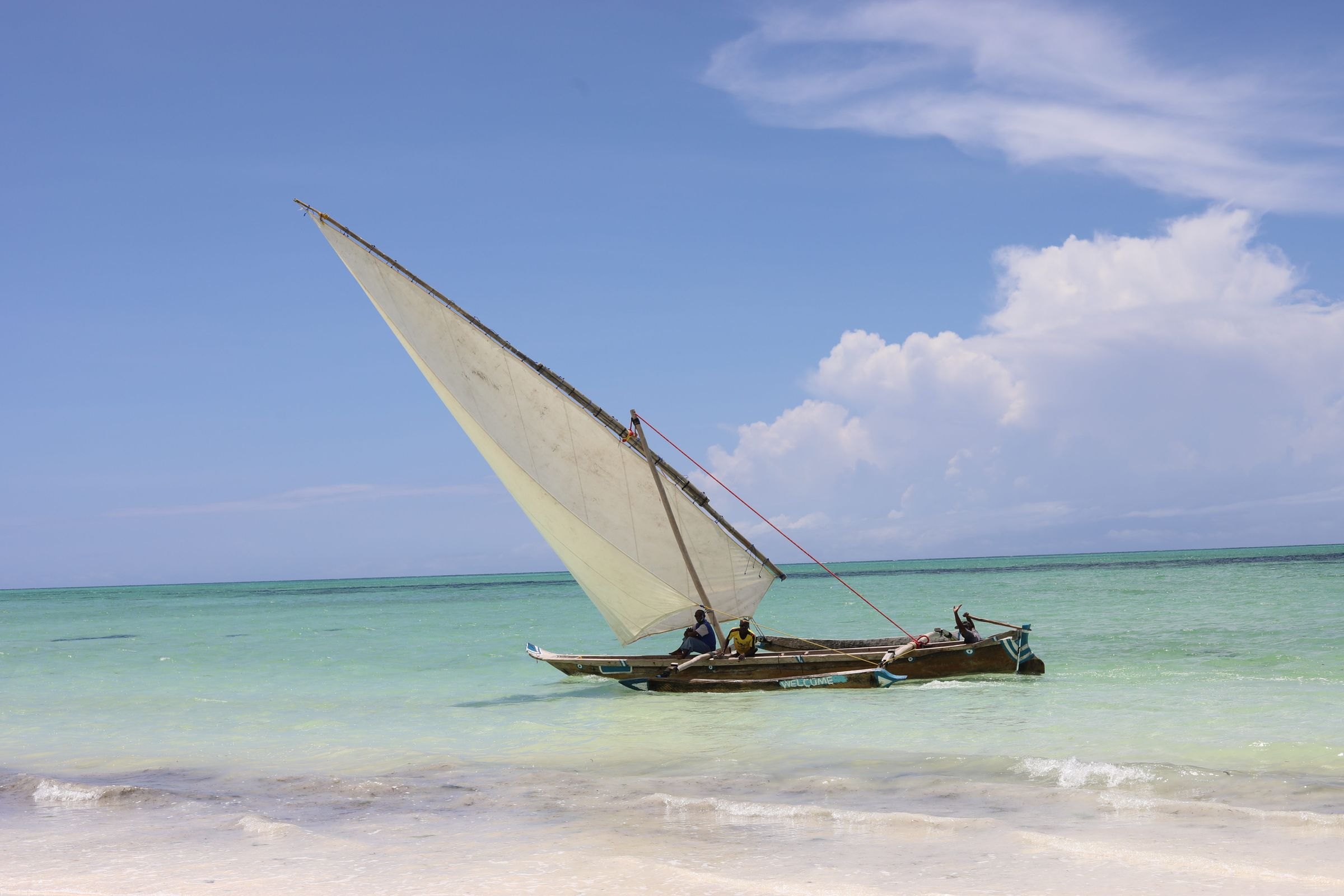
The east coast is where you find the classic picture of Zanzibar: wide white beaches and a turquoise lagoon protected by a reef. The catch is the tide. Twice a day the lagoon drains, exposing sand, seagrass and seaweed farms, and at low spring tide (around the full and new moon) you may have to walk a long way to find water deep enough to swim. At high tide it is idyllic. If you stay here, choose a hotel with a good pool, check the tide tables before planning a beach day and enjoy the low tides for what they are: wonderful walking, rock pools and the women who farm seaweed on the flats. The south-east, around Paje, is windy in both monsoons, so it is one of the best kitesurfing spots in East Africa, with the steadiest wind from about June to September and again from December to February.
The north: Nungwi and Kendwa
The northern tip has deeper water close to the shore, so it is the place to go if swimming whenever you like is your priority. Kendwa in particular is known for swimming at almost any state of the tide, and both beaches face west, so you get the sunsets. Because the north-west coast is sheltered from the south-east trade wind, it is calm during the June to October dry season, when the east coast is at its breeziest. It is also livelier, with more beach bars and restaurants, and Nungwi has a traditional dhow-building yard.
Our rule of thumb: for a first visit, or with young children, the north is the safer choice in any month. For space, character and quieter resorts, the east coast is lovely, as long as you are happy to plan around the tide.
The best month for each activity
| If you want | Best months | Why |
|---|---|---|
| Beach weather | June to October; mid-December to February | The two dry seasons, with the most sunshine and the least rain |
| Diving and snorkelling | October to March | Calmer seas and the best visibility, especially around Mnemba |
| Kitesurfing | June to September; December to February | The kusi and kaskazi trade winds, strongest on the south-east coast |
| Festivals | February or March; late June to July | Sauti za Busara music festival (usually February; 19 to 21 March in 2027) and the Zanzibar International Film Festival (usually late June or July) |
| Safari and beach | July to October; January to February | The Great Migration in the north, then calving in the southern Serengeti |
| Value and quiet | Late May, early June, November | Lower demand either side of the rains, with mostly decent weather |
| Honeymoons | June to October; January to February | Reliable sunshine; avoid the long rains |
Diving and snorkelling: Mnemba Atoll
Mnemba, a small private island surrounded by a protected atoll off the north-east coast, is Zanzibar’s best-known dive and snorkelling area, with coral gardens, turtles, reef fish and frequent dolphin sightings. Boats leave from Matemwe, Kiwengwa and Nungwi. Diving is possible all year, but conditions are usually best from about October to March, when the sea is calmer and visibility is at its clearest. From June to September the south-east trade wind can make the crossing choppy and visibility more variable. During the long rains, run-off can cloud the water nearer the shore. Pemba Island, a short flight north, has deeper walls and drift dives for experienced divers.
Festivals and events
Sauti za Busara (“sounds of wisdom”) is one of Africa’s best-loved music festivals, usually held over a long weekend in February in Stone Town, with musicians from across the continent. In 2027 it moves to 19 to 21 March, after Ramadan. It is a wonderful reason to spend two or three nights in Stone Town before heading to the beach, but rooms in town fill early that weekend. The Zanzibar International Film Festival usually takes place in Stone Town in late June or July. Check the dates with your Travel Designer before you book: both festivals set their dates each year.

Ramadan in Zanzibar
Zanzibar is almost entirely Muslim, and Ramadan, the month of fasting, is observed widely. Its dates move about 11 days earlier each year. In 2027 Ramadan is expected to run from around 8 February to 9 March, ending with the Eid al-Fitr celebrations, and in 2028 from around late January to late February. The exact dates depend on the sighting of the moon.
It is a perfectly good time to visit, and resorts carry on as normal, serving food and drinks throughout the day. The difference is in Stone Town and the villages, where many local restaurants and cafés close in daylight hours, and eating, drinking or smoking in public during the day is best avoided. Dressing modestly away from the beach, with shoulders and knees covered, is expected all year and matters more during Ramadan. After sunset the town comes alive as families break the fast, and the Forodhani food market is busy. If Stone Town is a big part of your trip, ask us whether your dates fall in Ramadan; if you are mainly on the beach, you will barely notice it.
Timing Zanzibar with a Tanzania safari
Most of our clients go to Zanzibar after a safari, and the good news is that the two seasons line up well. Northern Tanzania’s safari parks, Zanzibar’s beaches and the light-aircraft flights between them all work best in the same months, and you can be on the beach within a couple of hours of leaving the bush. See our guide to Tanzania safaris for the parks, and our safari and beach holidays guide for how Zanzibar compares with the Kenyan coast and Mozambique.
| Months | On safari | On Zanzibar | Verdict |
|---|---|---|---|
| January to February | Wildebeest calving in the southern Serengeti and Ndutu | Hot, dry and calm | Excellent, and a superb winter-sun trip |
| March | Calving herds still in the south; rains building | Hot and humid; rain later in the month | Good in the first half |
| April to May | The long rains; many camps close | The wettest months | Avoid if you can |
| June | Dry season begins; the herds move west and north | Dry and breezy | Very good, and good value |
| July to October | Peak dry season; river crossings in the northern Serengeti | Dry and sunny | The classic combination |
| November to December | The short rains; herds head south again | Short showers, then sun | Good value; book Christmas early |
Our Tanzania safari and Zanzibar trip covers Tarangire, the Serengeti and the Ngorongoro Crater before a week on the north-east coast, priced with Diamonds Mapenzi Beach, with Zuri Zanzibar in Kendwa or Baraza Resort and Spa on the south-east coast as upgrade ideas. If you prefer a small group, the East Africa safari and Zanzibar escorted tour runs from the Maasai Mara to Nungwi, and the Zanzibar short break pairs Stone Town with the north coast. Kenya and its own coast are the other classic pairing: see Kenya safari and coast.
A practical point: light aircraft on safari usually limit you to around 15 to 20 kg in total, depending on the airline, ideally in soft bags, so pack beachwear light. Your Travel Designer will confirm the allowance for your flights.
The best time to visit Zanzibar for you
Honeymooners
June to October and January to February give the most reliable weather. For a honeymoon we usually suggest a few nights on safari, a night or two in Stone Town and a week on a quiet stretch of the north-east coast, with a sunset dhow trip from the north.
Families
The July and August school holidays are dry and sunny, and October half-term is excellent too. Choose the north, or a hotel with a big pool on the east coast, so the tides never spoil a beach day. Christmas is popular with families but books up early. There is a malaria risk on Zanzibar, so talk to your GP or a travel clinic well before you go.
Divers and kitesurfers
Divers should aim for October to March for the calmest seas. Kitesurfers want the windy months, June to September or December to February, on the south-east coast around Paje.
Travellers on a budget
Late May, the first half of June and November offer the best value, with mostly good weather either side of the rains. Ask a Travel Designer for current prices: the difference between these shoulder weeks and the Christmas peak can be considerable.
Frequently asked questions
What is the best month to visit Zanzibar?
For most people, July, August or September, when Zanzibar is dry, sunny and slightly cooler. February is the best month if you want real heat and calm seas, and October is the best for a quieter, dry trip.
When is the rainy season in Zanzibar?
Zanzibar has two rainy seasons. The long rains fall from about late March to May, with April the wettest month. The short rains come in November and usually arrive as brief, heavy showers followed by sunshine.
Is April a bad time to visit Zanzibar?
April is the wettest month, averaging over 300 mm of rain, and some smaller hotels and many safari camps close. It is warm and quiet, with the lowest prices, but you should expect heavy rain on several days.
What is the weather like in Zanzibar in October?
October is warm and mostly dry, with highs of around 29°C, calm seas and fewer visitors than in July and August. A few showers can arrive towards the end of the month as the short rains approach.
Which side of Zanzibar is best for swimming?
The north, around Nungwi and Kendwa, where the water is deeper and you can swim at almost any state of the tide. On the east coast the tide can go out a long way, so swimming depends on the time of day.
When is the best time for diving in Zanzibar?
October to March usually brings the calmest seas and the best visibility, especially around Mnemba Atoll. Diving is possible all year, but the south-east trade wind can make conditions choppier from June to September.
Can I visit Zanzibar during Ramadan?
Yes. Resorts run as normal, but in Stone Town and the villages many local restaurants close during the day and you should avoid eating, drinking or smoking in public in daylight. In 2027 Ramadan is expected to run from around 8 February to 9 March.
When is the best time for a Tanzania safari and Zanzibar?
July to October, when the Great Migration is in the northern Serengeti and Zanzibar is dry, or January to February, for the calving season in the southern Serengeti and hot, calm weather on the island. Avoid April and May.
Plan your Zanzibar holiday with us
Our Travel Designers will match the right month, coast and hotel to the way you like to swim, dive or relax, and link it seamlessly with a safari. Every holiday we arrange with flights is ATOL protected. Tell us your dates and we will send you the best options.
Keep planning
- Zanzibar holidays
- Tanzania safari and Zanzibar
- Safari and beach holidays
- Safari holidays
- Tanzania safaris
- Tanzania holidays
- Tanzania escorted tours
- Best time to visit Kenya
- Make an enquiry
Updated November 2026. Climate figures are 2014 to 2023 monthly averages for Stone Town from ERA5 reanalysis data; individual years vary. Festival and Ramadan dates are set each year, and your Travel Designer will confirm everything for your dates.