The best time to visit Kenya for a safari is during the dry seasons: late June to October, when the Great Migration is usually in the Masai Mara, and January to February, when the parks and the coast are both hot and dry. Kenya has two rainy seasons, the long rains in April and May and the short rains in November, but even then there is plenty to see, and rates are at their lowest. The right month depends on whether you want the migration, the beach or the quietest camps.
This guide uses ten years of weather data for six places, from Nairobi and the Mara to Diani and Lamu, to show what each month is really like. It explains where the migration herds usually are through the year, the best time for Amboseli, Samburu and the coast, and how to combine a safari with a beach. For trip ideas, start with our Kenya holidays or our Kenya safari page.
The quick answer
- Best overall: late June to October, and January to February.
- Great Migration: usually in the Masai Mara from July to about October, with river crossings most often in August and September.
- Safari plus beach: January and February, when the Mara and the coast are both dry.
- Rainy seasons: the long rains, roughly April and May; the short rains, roughly November.
- Best value: April to early June and November, the green season.
- Coast: Diani, Watamu and Lamu are best from December to March.
Kenya’s seasons, explained
Kenya lies on the equator, so there is no real summer and winter. Temperatures depend mostly on altitude: Nairobi and the Masai Mara sit at roughly 1,500 to 1,800 metres and are warm by day and cool at night, while the coast is hot and humid all year. What shapes the seasons is rain.
- The long rains (roughly late March to May) are the main wet season. April is the wettest month inland and May on the coast. Rain often falls in heavy afternoon storms, with clear mornings.
- The long dry season (roughly late June to October) is the classic safari season: cooler, dry and dusty, with short grass and animals near water. July and August are the coolest months.
- The short rains (roughly November to early December) are lighter and less predictable, usually in short bursts.
- The short dry season (roughly mid-December to March) is hot and mostly dry, and the best time for the coast.
Kenya weather by region and month, at a glance
This is our verdict for each region, month by month, based on the rainfall data below and our Travel Designers’ experience on the ground.
| Month | Masai Mara | Amboseli and Tsavo | Samburu and Laikipia | South coast (Diani) | North coast (Watamu, Lamu) |
|---|---|---|---|---|---|
| January | Good | Good | Good | Good | Good |
| February | Good | Good | Good | Good | Good |
| March | Mixed | Mixed | Good | Good | Good |
| April | Wet | Wet | Mixed | Wet | Mixed |
| May | Mixed | Mixed | Good | Wet | Wet |
| June | Good | Good | Good | Mixed | Mixed |
| July | Good | Good | Good | Mixed | Good |
| August | Good | Good | Good | Mixed | Good |
| September | Good | Good | Good | Mixed | Good |
| October | Good | Good | Good | Mixed | Good |
| November | Mixed | Wet | Mixed | Mixed | Mixed |
| December | Mixed | Mixed | Good | Good | Good |
Good mostly dry and sunny Mixed showers or a changeable month Wet the rainy season there
Kenya weather month by month
These are the average daily highs and lows and the average monthly rainfall for Nairobi, where almost every safari begins, with our verdict for Kenya as a whole. The Mara has a very similar pattern, a little warmer by day.
| Month | Avg high | Avg low | Rain | Our verdict |
|---|---|---|---|---|
| January | 26°C | 14°C | 40 mm | Hot and dry: excellent for safari and the coast |
| February | 27°C | 15°C | 55 mm | Hot and dry; the driest month on the coast and one of the best for safari plus beach |
| March | 27°C | 15°C | 80 mm | Hot; the long rains start to build late in the month |
| April | 25°C | 16°C | 170 mm | The long rains: wettest month inland; some camps close |
| May | 24°C | 15°C | 100 mm | Long rains continue, heaviest on the coast; quietest and best value |
| June | 23°C | 13°C | 45 mm | Rains ease; green, quiet and good value |
| July | 23°C | 12°C | 15 mm | Dry season begins in earnest; the migration usually reaches the Mara |
| August | 23°C | 13°C | 30 mm | Peak migration and river crossings; the busiest month |
| September | 25°C | 13°C | 35 mm | Dry, with the herds still in the Mara: one of the best months |
| October | 26°C | 15°C | 90 mm | Still dry and good; herds start to leave the Mara |
| November | 24°C | 15°C | 135 mm | The short rains: green, quiet and good value |
| December | 25°C | 15°C | 80 mm | Short rains ease; Christmas and New Year are busy |
Source: ERA5 reanalysis via the Open-Meteo archive, daily data 2014 to 2023, averaged by month. Figures are modelled for a point rather than measured at one weather station, so they can differ slightly from airport records. Rainfall is rounded to the nearest 5 mm.
Weather by region: the Mara, Amboseli, Samburu and the coast
The same ten years of data for six places: average high, average low and monthly rainfall.
| Month | Nairobi | Masai Mara | Amboseli | Samburu | Diani (south coast) | Lamu (north coast) |
|---|---|---|---|---|---|---|
| January | 26° / 14° · 40 mm | 28° / 15° · 75 mm | 29° / 18° · 85 mm | 31° / 18° · 15 mm | 31° / 25° · 30 mm | 30° / 25° · 15 mm |
| February | 27° / 15° · 55 mm | 29° / 16° · 50 mm | 30° / 18° · 90 mm | 32° / 19° · 15 mm | 32° / 26° · 20 mm | 30° / 25° · 5 mm |
| March | 27° / 15° · 80 mm | 29° / 16° · 85 mm | 30° / 19° · 100 mm | 32° / 20° · 40 mm | 31° / 26° · 80 mm | 31° / 26° · 35 mm |
| April | 25° / 16° · 170 mm | 27° / 16° · 135 mm | 28° / 19° · 210 mm | 31° / 20° · 75 mm | 29° / 25° · 235 mm | 30° / 26° · 130 mm |
| May | 24° / 15° · 100 mm | 27° / 15° · 60 mm | 27° / 17° · 115 mm | 32° / 20° · 20 mm | 28° / 24° · 310 mm | 28° / 25° · 205 mm |
| June | 23° / 13° · 45 mm | 26° / 15° · 45 mm | 27° / 16° · 40 mm | 31° / 19° · 10 mm | 27° / 23° · 110 mm | 28° / 25° · 85 mm |
| July | 23° / 12° · 15 mm | 27° / 14° · 15 mm | 26° / 15° · 15 mm | 30° / 19° · 10 mm | 26° / 23° · 95 mm | 27° / 24° · 55 mm |
| August | 23° / 13° · 30 mm | 28° / 15° · 25 mm | 27° / 15° · 25 mm | 31° / 19° · 5 mm | 27° / 22° · 75 mm | 27° / 24° · 45 mm |
| September | 25° / 13° · 35 mm | 29° / 15° · 35 mm | 29° / 16° · 20 mm | 32° / 19° · 5 mm | 27° / 23° · 85 mm | 28° / 24° · 35 mm |
| October | 26° / 15° · 90 mm | 30° / 16° · 55 mm | 30° / 18° · 70 mm | 32° / 20° · 40 mm | 29° / 24° · 120 mm | 29° / 25° · 70 mm |
| November | 24° / 15° · 135 mm | 28° / 16° · 120 mm | 28° / 18° · 165 mm | 29° / 19° · 80 mm | 29° / 24° · 125 mm | 29° / 25° · 125 mm |
| December | 25° / 15° · 80 mm | 28° / 15° · 90 mm | 27° / 18° · 155 mm | 30° / 18° · 35 mm | 31° / 25° · 80 mm | 30° / 26° · 45 mm |
Masai Mara
The Mara is good all year, because the lions, cheetahs, leopards, elephants and plains game that live there do not migrate. The best months are late June to October, when the migration herds usually arrive from the Serengeti, and January to February, when it is hot, dry and much quieter. In our data the driest months are July and August (about 15 mm to 25 mm) and the wettest are April and November. The private conservancies that border the reserve, such as Olare Motorogi and Naboisho, limit vehicle numbers, which matters most in the busy migration months.
Amboseli and Tsavo
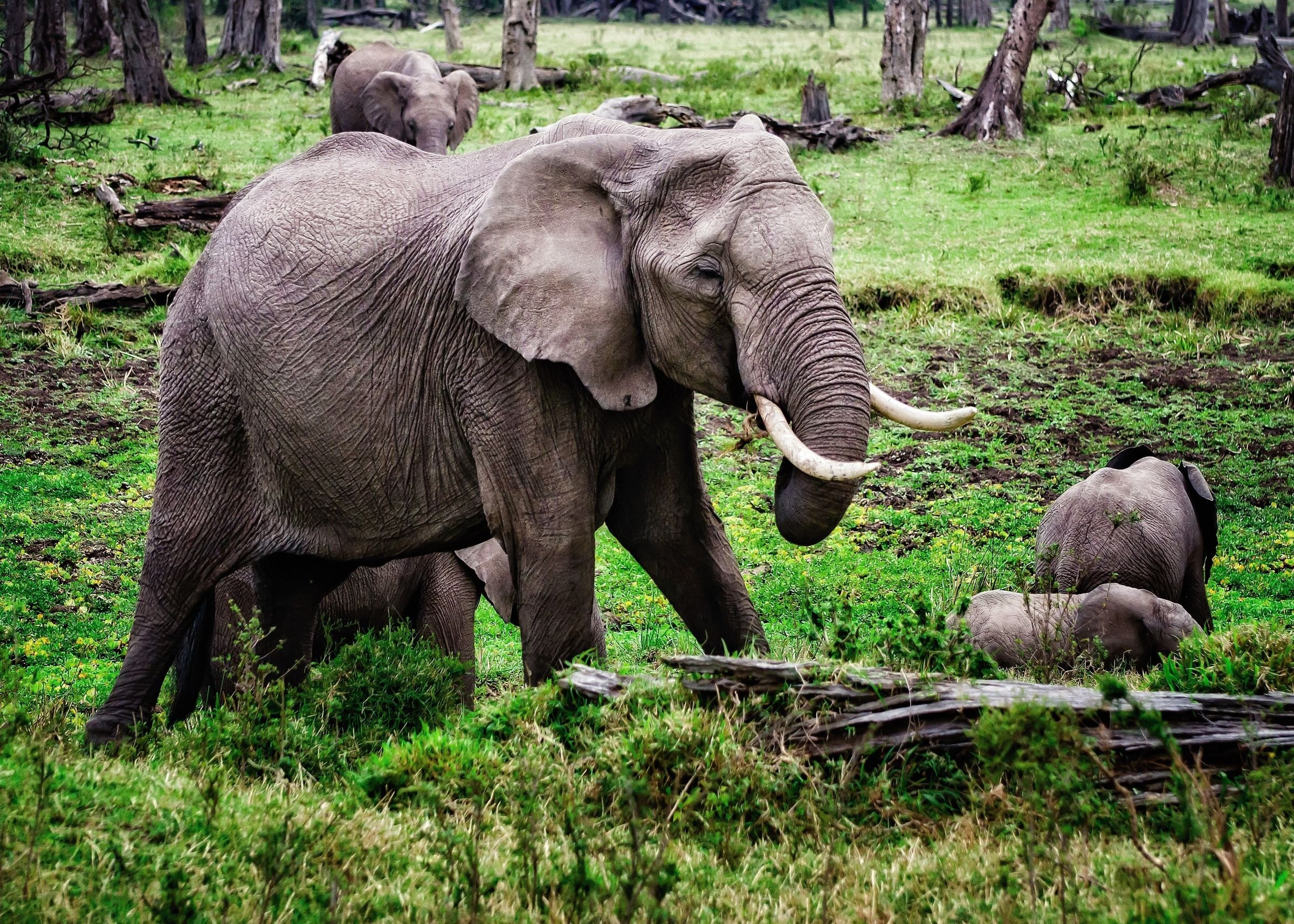
Amboseli is famous for its big-tusked elephants against the backdrop of Kilimanjaro, just across the border in Tanzania. It is drier and dustier than the Mara, and the best months are June to October and January to February. Kilimanjaro is most often clear early in the morning and late in the afternoon; by midday it is often hidden in cloud. Amboseli is wetter than the Mara in the short rains, with about 165 mm in November in our data.
Samburu and Laikipia
Northern Kenya is semi-arid, with far less rain than the Mara: in our data Samburu averages 10 mm or less a month from June to September. That makes Samburu, Buffalo Springs and the Laikipia conservancies good for most of the year, with species you will not see further south, such as Grevy’s zebra, reticulated giraffe, Beisa oryx and the long-necked gerenuk. Our Grand Tour of Kenya includes three nights in Buffalo Springs as well as three in the Mara.
The coast: Diani, Watamu and Lamu
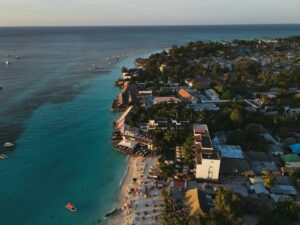
Kenya’s Indian Ocean coast is best from December to March, when the north-east monsoon brings hot, mostly dry weather, calmer seas and clear water for snorkelling; Diani has about 20 mm to 30 mm of rain a month in January and February in our data. April to June is the wet season on the coast, peaking in May. From July to September the south-east trade wind brings breezy, slightly cooler days, good for kitesurfing; it can push seaweed onto Diani’s beach at times. Watamu and Malindi, further north, have a marine park and good turtle beaches, and Lamu is a car-free Swahili island town with a more traditional feel.
When to see the Great Migration in Kenya
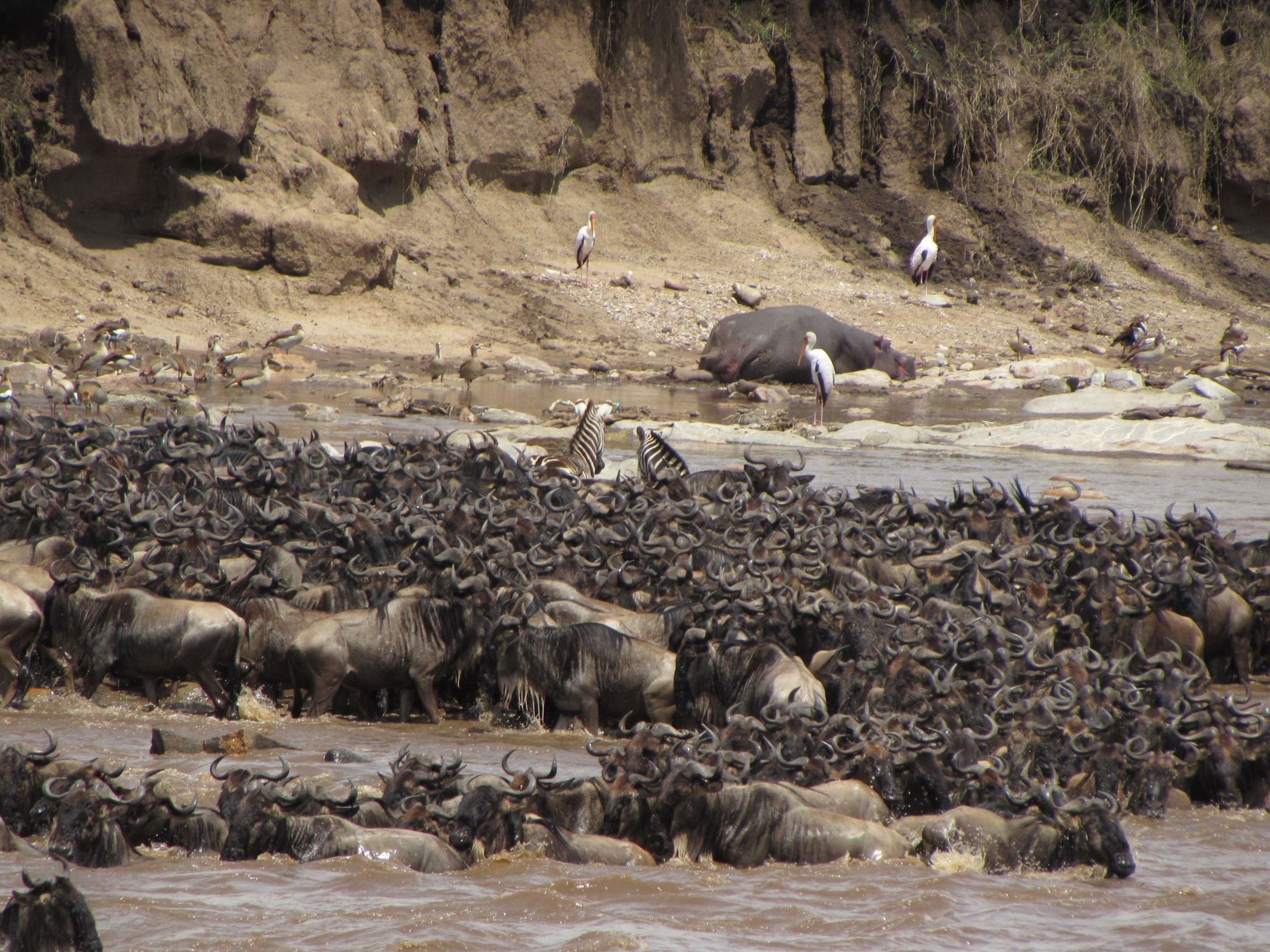
The Great Migration is a year-round circuit of wildebeest and zebra between Tanzania’s Serengeti and Kenya’s Masai Mara, following the rain and fresh grass. Kenya’s part of it is usually July to October. The herds have to cross the Mara River, and sometimes the Talek, and these crossings, with crocodiles waiting below the banks, are the moments most people come to see. They are often most frequent in August and September, but they depend on rain and the mood of the herds, and a group can gather on the bank for hours and then turn away. Staying three or four nights, close to the river, gives you the best chance.
| Months | Where the herds usually are | Country |
|---|---|---|
| January to March | Short-grass plains of the southern Serengeti and Ndutu, where the wildebeest calve (mostly in February) | Tanzania |
| April and May | Moving north and west through the central Serengeti during the long rains | Tanzania |
| June | The Western Corridor and the Grumeti River | Tanzania |
| July | The northern Serengeti; the first herds usually cross into the Masai Mara | Tanzania and Kenya |
| August and September | The Masai Mara and the northern Serengeti, with crossings of the Mara and Talek rivers | Kenya and Tanzania |
| October | Still in the Mara, starting to drift south late in the month | Kenya and Tanzania |
| November and December | Heading south through the eastern Serengeti towards the calving plains | Tanzania |
If your dates fall between December and March, the herds are in Tanzania’s southern Serengeti, where most calves are born around February, which can be just as dramatic, with predators following the newborns. Our page on Tanzania holidays explains the Serengeti, and our guide to luxury safari holidays compares the camps and countries.
The best month for each experience
| Best month for | When | Where |
|---|---|---|
| The Great Migration | July to October; river crossings are often most frequent in August and September | Masai Mara and its conservancies |
| Big cats | All year, best in the dry months (late June to October, January to February) | Masai Mara |
| Elephants with Kilimanjaro behind | June to October and January to February, early in the morning | Amboseli |
| Northern species (Grevy’s zebra, reticulated giraffe) | Most of the year; avoid April and November | Samburu, Buffalo Springs, Laikipia |
| Beach | December to March, then again late June to October | Diani, Watamu, Malindi, Lamu |
| Safari and beach in one trip | January to February | Masai Mara plus Diani or Watamu |
| Diving and snorkelling | Roughly October to March, when the sea is calmer and clearer | Kisite-Mpunguti, Watamu Marine Park |
| Birdwatching | November to March, when migrant birds arrive from Europe | Rift Valley lakes, the Mara, the coast |
| Value and fewer vehicles | April to early June and November (green season) | Mara conservancies, Amboseli, the coast |
| Family holidays | July and August (UK summer holidays), and February half-term | Mara, Laikipia and the coast |
Combining a Kenya safari with the beach
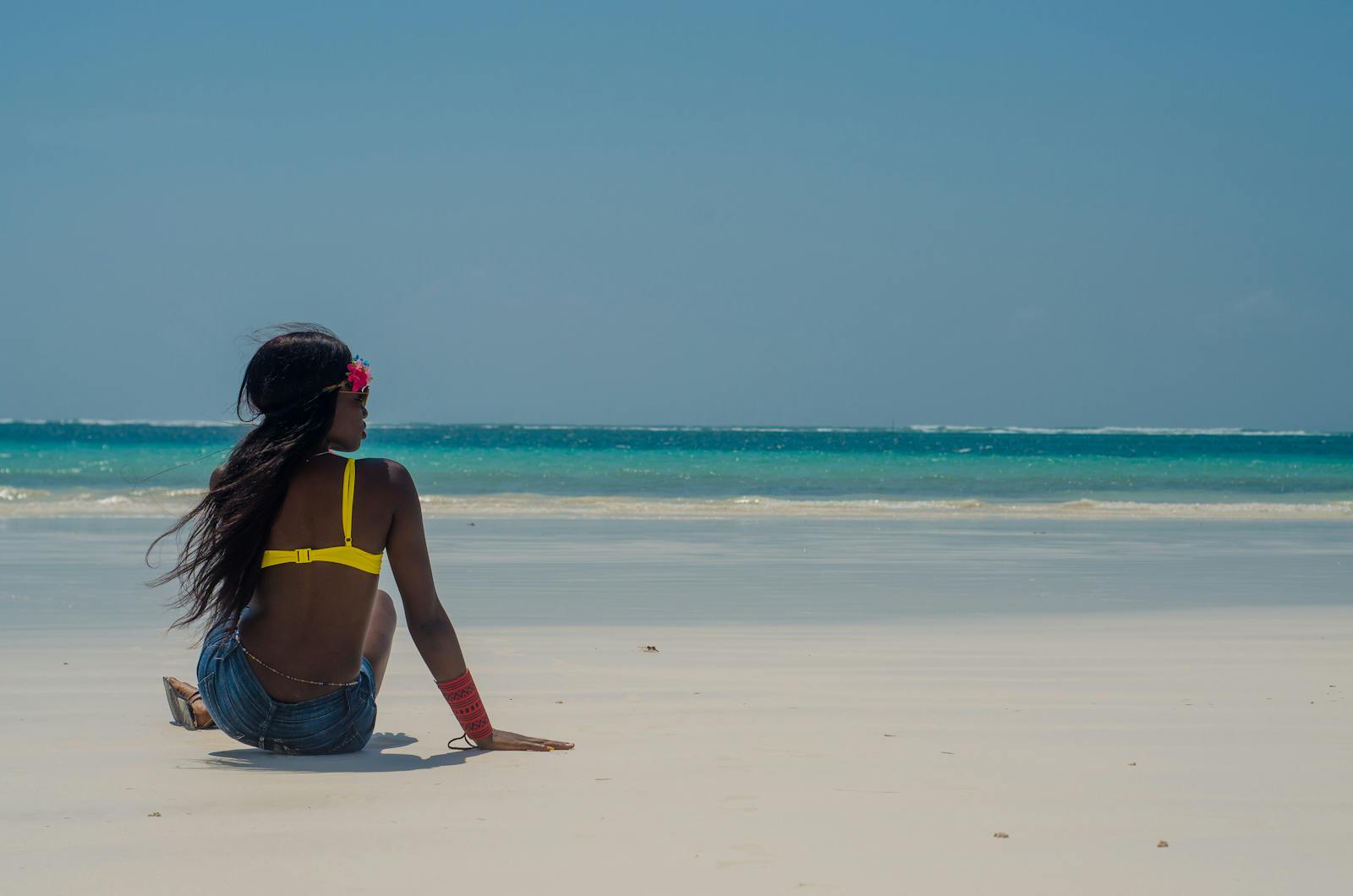
A few days by the Indian Ocean after early-morning game drives is one of the best ways to end a safari, and Kenya makes it easy: light aircraft link the Mara with the coast, usually connecting at Nairobi’s Wilson airport, so you can be on the beach by mid-afternoon. The sweet spot is January and February, when both are hot and dry. From late June to October the Mara is at its best and the coast is still good, if breezier.
- Kenya Safari and Diani Beach: four nights in the Mara and a week on Diani Beach, with light-aircraft flights. It is priced with Mara Serena Safari Lodge and Leopard Beach Resort and Spa, or similar.
- Kenya Grand Safari and 4-night Mombasa beach stay, or the 7-night version: the Aberdares, Samburu, Lake Nakuru and the Mara, then all-inclusive beach time near Mombasa.
- East Africa Safari and Zanzibar: the Mara, the Serengeti and Ngorongoro, then Stone Town and the beaches of Nungwi.
Our guide to safari and beach holidays compares Kenya’s coast with Zanzibar, Mozambique and Mauritius.
Kenya month by month
Kenya in January
January is hot, dry and one of the best months of the year in Kenya. Nairobi averages 26°C with about 40 mm of rain, the Mara is green after the short rains and full of resident game, and the coast is at its sunniest, with about 30 mm at Diani. It is an excellent month for safari and beach together. The migration herds are calving in Tanzania’s southern Serengeti, not in Kenya.
Kenya in February
February is usually the driest month on the coast: about 20 mm at Diani, 5 mm at Lamu and 50 mm in the Mara in our data. Days are hot on the coast (around 32°C) and warm in the parks. It is the best time for a safari followed by a beach week, and February half-term fills the family-friendly camps.
Kenya in March
March is still hot and largely dry, but the long rains usually begin to build towards the end of the month, especially around Amboseli (about 100 mm). Early March is a good, quieter alternative to February, with lower demand at the camps.
Kenya in April
April is the heart of the long rains and the wettest month inland: about 170 mm in Nairobi, 135 mm in the Mara and 210 mm in Amboseli. Some smaller camps, especially in the Mara conservancies, close for a few weeks. Those that stay open are quiet, green and good value, and game is still easy to see, though some tracks become muddy.
Kenya in May
In May the rain eases inland but peaks on the coast, where Diani averages about 310 mm and Lamu 205 mm, so May is not a beach month. It is the quietest month of the year for safari, with the lowest rates of the year and lush scenery.
Kenya in June
June is a turning point. The rains have passed, the parks are green and empty, and Nairobi is cool, with averages of 23°C by day and 13°C at night. Rates are still lower than in July. In good years the first migration herds approach the Mara at the end of the month, but they normally arrive in July.
Kenya in July
July is the start of the peak season. It is the driest month in the Mara (about 15 mm in our data), with cool mornings (around 14°C) that call for a fleece on early game drives. The migration usually reaches the Mara during the month. On the coast the south-east trade wind blows, which brings breezy days and, at times, seaweed to Diani’s beach.
Kenya in August
August is the classic migration month. The herds are usually spread across the Mara, and crossings of the Mara River are often most frequent in August and September, although no one can promise one on a given day. It is also the busiest month in the Mara, so book the best camps a year ahead.
Kenya in September
September is one of our favourite months for Kenya: dry (about 35 mm in the Mara), with the herds usually still in the Mara and slightly fewer visitors once the UK schools go back. Samburu is at its driest, with almost no rain in our data, and animals gather along the Ewaso Ng’iro river.
Kenya in October
October is still dry and warm, around 30°C in the Mara. The herds often start to drift back towards Tanzania during the month, but the resident lions, cheetahs and leopards stay, and so does good game viewing. Rates drop after the peak months.
Kenya in November
November brings the short rains: shorter, sharper showers, usually in the afternoon, with about 135 mm in Nairobi and 165 mm in Amboseli. It is green, quiet and good value, and migrant birds arrive from Europe. The coast is changeable, with about 125 mm at Diani.
Kenya in December
The short rains ease through December, and the coast becomes hot and sunny again (about 45 mm at Lamu). Christmas and New Year are a peak period at the best camps and beach hotels, so book early for festive dates.
Kenya tours and when they work best
All of our small-group safaris are on our Kenya tours page. A few to look at for each season:
- July to October: any trip with three nights in the Mara, such as the Grand Tour of Kenya or East Africa Highlights: Maasai Mara to Ngorongoro.
- Gorillas as well: Luxury Uganda, Rwanda and Kenya combines gorilla trekking in Bwindi with the Mara; gorilla treks are easiest in the drier months, June to September. Our guide to Uganda or Rwanda for gorilla trekking explains the differences.
- Two safari regions: Luxury Kenya and Southern Africa adds Kruger, Victoria Falls and Chobe, which share a similar dry season from about June to October.
Planning tips from our Travel Designers
- Book migration season early. The best camps near the Mara River are often full a year ahead for July to September.
- Pack for cold mornings. Early game drives in open vehicles can be chilly, even in summer; bring a fleece and a light waterproof.
- Use the green season. In April, May, June and November you can stay at better camps for the same budget, with fewer vehicles at sightings.
- Keep luggage light. Light aircraft between the parks and the coast have strict weight limits, usually with soft bags only.
- Health and entry. Ask your GP or a travel clinic about malaria and vaccinations, and check the latest Kenya entry requirements on GOV.UK before you travel.
Comparing countries? Our safari holidays page sets out where and when to go across Africa.
Frequently asked questions
When is the best time to visit Kenya?
For safari, the dry seasons: late June to October, when the Great Migration is usually in the Masai Mara, and January to February, which is also the best time to combine a safari with the beach. The long rains, roughly April and May, are the quietest and best-value months.
When is the Great Migration in the Masai Mara?
The wildebeest and zebra usually arrive in the Masai Mara in July and stay until about October. River crossings are often most frequent in August and September, but they depend on rainfall and are never guaranteed. From December to March the herds are in Tanzania’s southern Serengeti.
What is the weather like in Kenya in August?
Dry and pleasantly warm in the parks, with cool mornings. In our data, Nairobi averages about 23°C by day and 13°C at night with around 30 mm of rain, and the Masai Mara about 28°C with 25 mm. The coast is warm and breezy, with about 75 mm of rain at Diani.
When is the rainy season in Kenya?
Kenya has two. The long rains fall roughly from late March to May, and are heaviest in April inland and in May on the coast. The short rains fall roughly in November and early December. Outside those months most of the country is dry.
Is it worth going to Kenya in the rainy season?
It can be. The parks are green and quiet, rates are at their lowest and game is still plentiful, especially in the Mara. Expect some heavy showers and muddy tracks, and note that some smaller camps close for part of April and May.
When is the best time for a Kenya safari and beach holiday?
January and February are the best months, when both the parks and the coast are hot and dry. Late June to October also works well, with the migration in the Mara, though the coast is breezier and Diani can have seaweed at times.
How hot is Kenya?
Less hot than many people expect, because most safari areas are high up. The Masai Mara, at around 1,500 to 1,700 metres, averages highs of about 26°C to 30°C, with early mornings down to around 14°C to 16°C. The coast is hotter and humid, with highs of about 26°C to 32°C all year.
Plan your Kenya safari with us
Tell us when you can travel and what you most want to see, and our Travel Designers will match the right camps, season and beach to your dates, and handle every light-aircraft connection. Ask a Travel Designer for current prices. Our flight-inclusive holidays are ATOL protected.
Keep planning
- Kenya holidays
- Kenya safari
- Safari holidays
- Kenya tours
- Kenya safari and Diani Beach
- Safari and beach holidays
- Luxury safari holidays
- Tanzania safari and Zanzibar
- Make an enquiry
Updated November 2026. Weather figures are 2014 to 2023 averages; rains, migration timings and camp seasons vary from year to year, and your Travel Designer will confirm everything for your dates.