The Azores in brief
- Nine volcanic islands of Portugal in the mid-Atlantic; start on São Miguel and add Pico, Faial or São Jorge.
- São Miguel: Sete Cidades, Lagoa do Fogo, the hot springs of Furnas and tea plantations.
- Whale watching: sperm whales all year, blue whales in spring; dolphins on most trips.
- Best from May to October; mild all year but changeable. Seasonal direct flights from London, about 4 hours.

The Azores are nine volcanic islands in the middle of the Atlantic, a self-governing region of Portugal and one of the greenest places in Europe. Think crater lakes, steaming hot springs, hedgerows of blue hydrangeas, black lava-stone villages and fields of cows on cliff tops, with whales and dolphins offshore. It’s a place for walking, wildlife and slow island hopping rather than beaches and nightlife. This guide covers the islands one by one, the best things to do on São Miguel, whale watching, walking, food, the best time to go, getting there from the UK, island hopping, where to stay and sample routes.
Where are the Azores?

The Azores (Açores) sit roughly a third of the way from Portugal to North America, on the Mid-Atlantic Ridge where three tectonic plates meet. That’s why they are volcanic: the islands are the tops of huge underwater volcanoes, and there are still hot springs, fumaroles and, on Faial, a volcano that erupted in the 1950s.
The nine islands fall into three groups. The eastern group is São Miguel, the largest, and little Santa Maria. The central group is Terceira, Graciosa, São Jorge, Pico and Faial, close enough to see each other on a clear day. The western group is Flores and Corvo, far out on their own.
They are part of Portugal, so you use the euro and the same EU rules as the mainland, but the Azores have their own regional government, their own clock (an hour behind the UK) and a very different feel from Lisbon or the Algarve.
The Azores islands at a glance
Most first trips combine São Miguel with one or two of the central islands. Each island is different, so it’s worth choosing carefully:
São Miguel
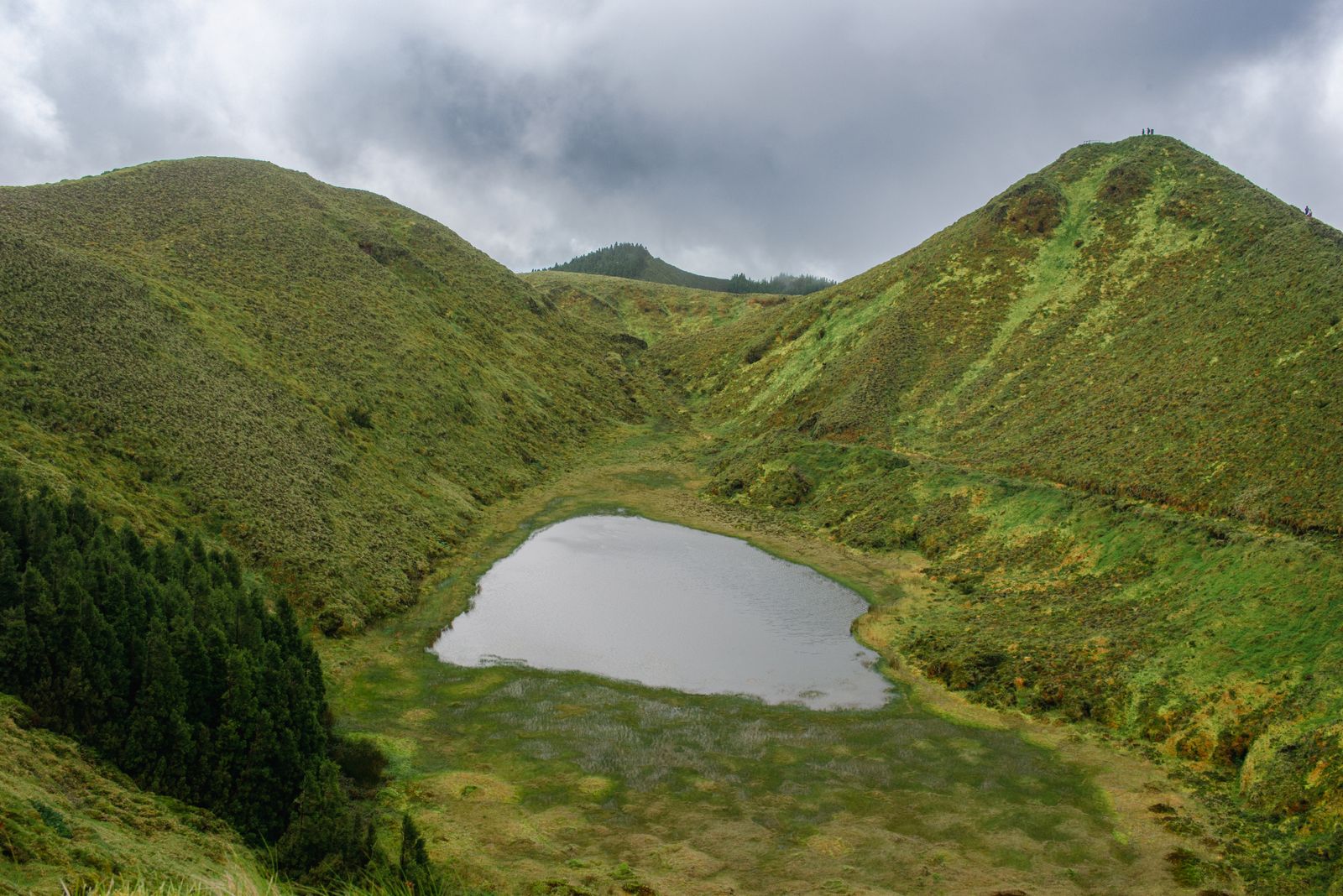
The biggest island and the main gateway, with the capital Ponta Delgada, the crater lakes of Sete Cidades and Lagoa do Fogo, the hot springs of Furnas, tea plantations and most whale-watching trips. Give it at least four nights.

Pico
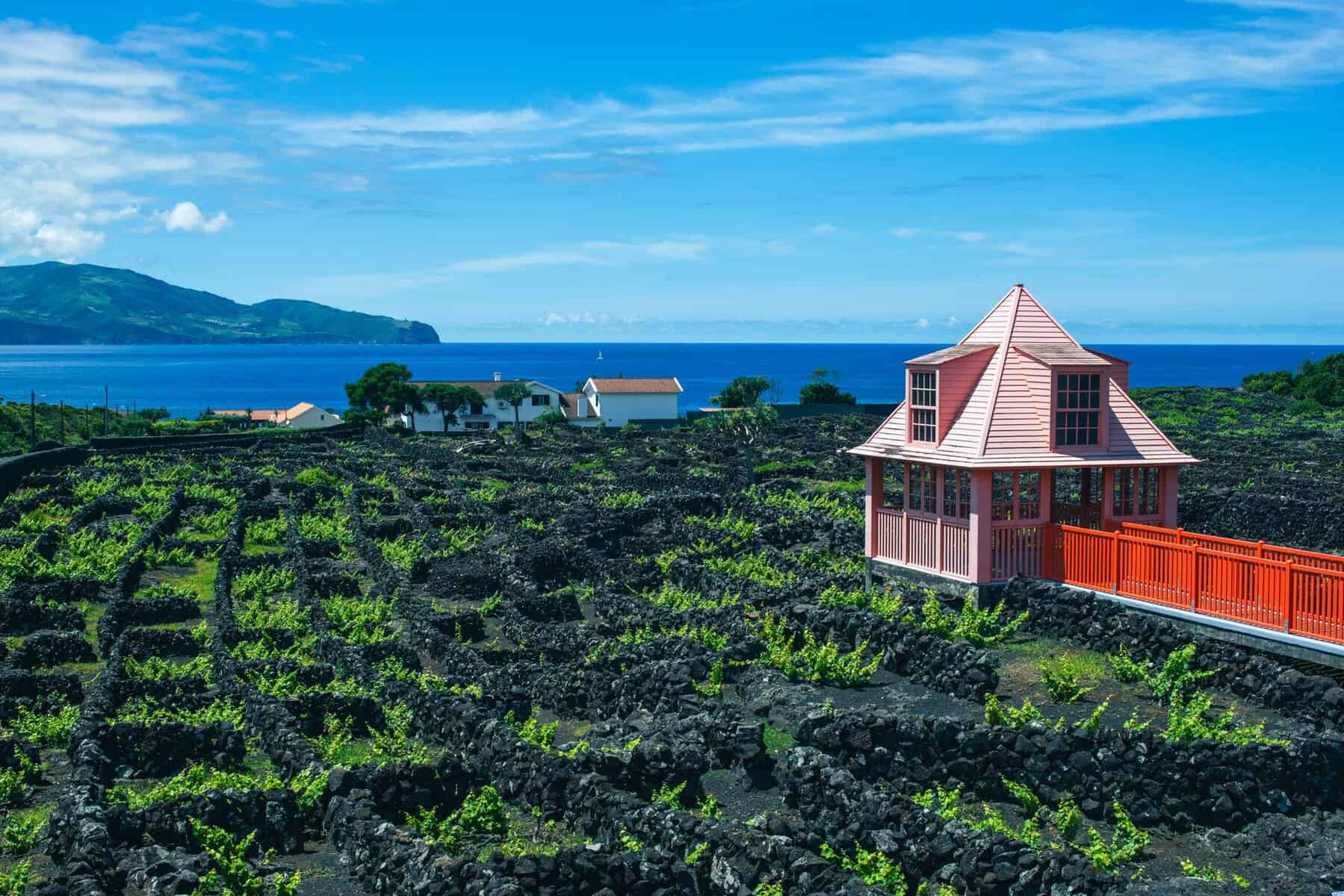
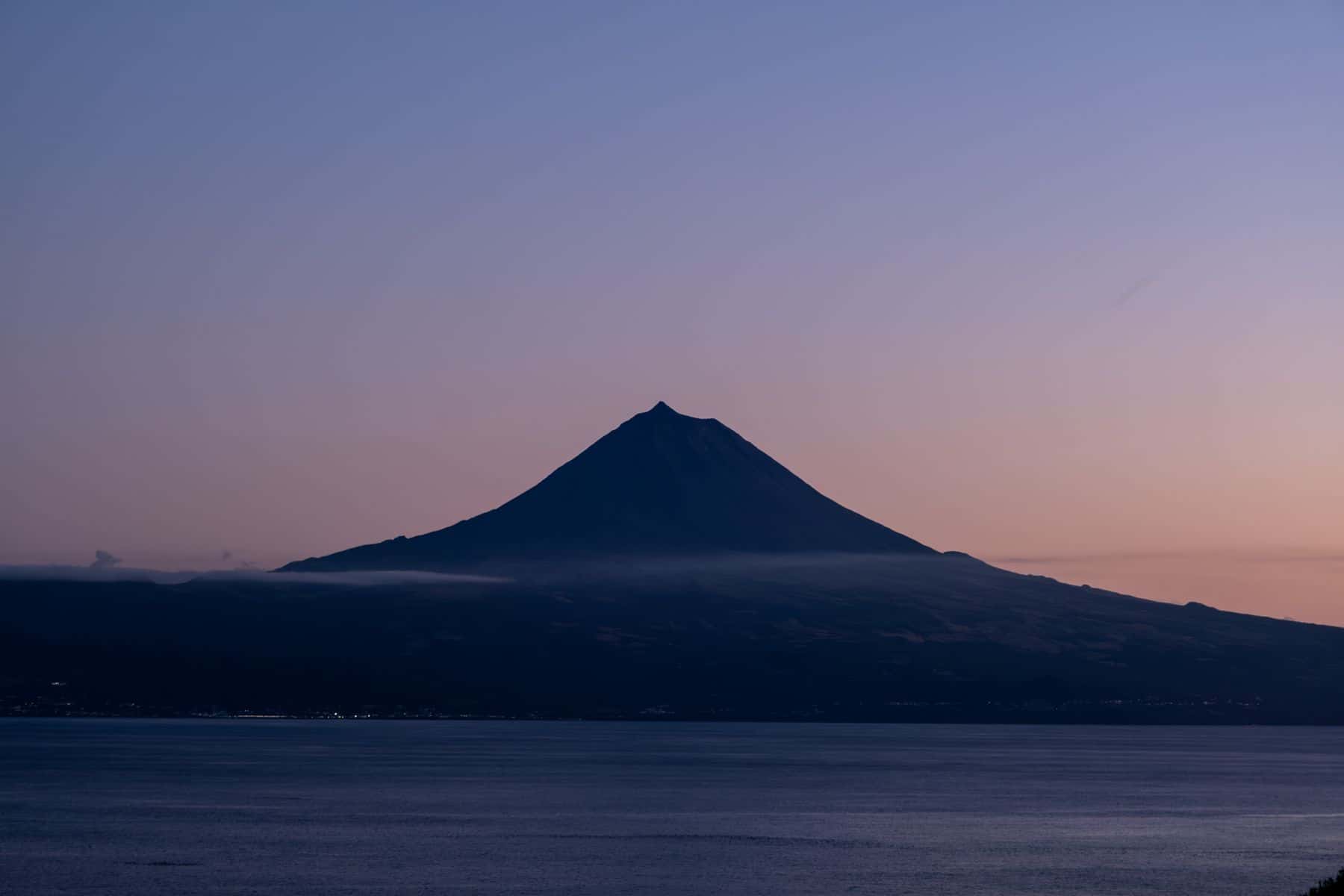
Dominated by Mount Pico (2,351 m), Portugal’s highest mountain. Its black lava vineyards are a UNESCO World Heritage Site, and Lajes do Pico, an old whaling village, is one of the best places for whale watching.

Faial
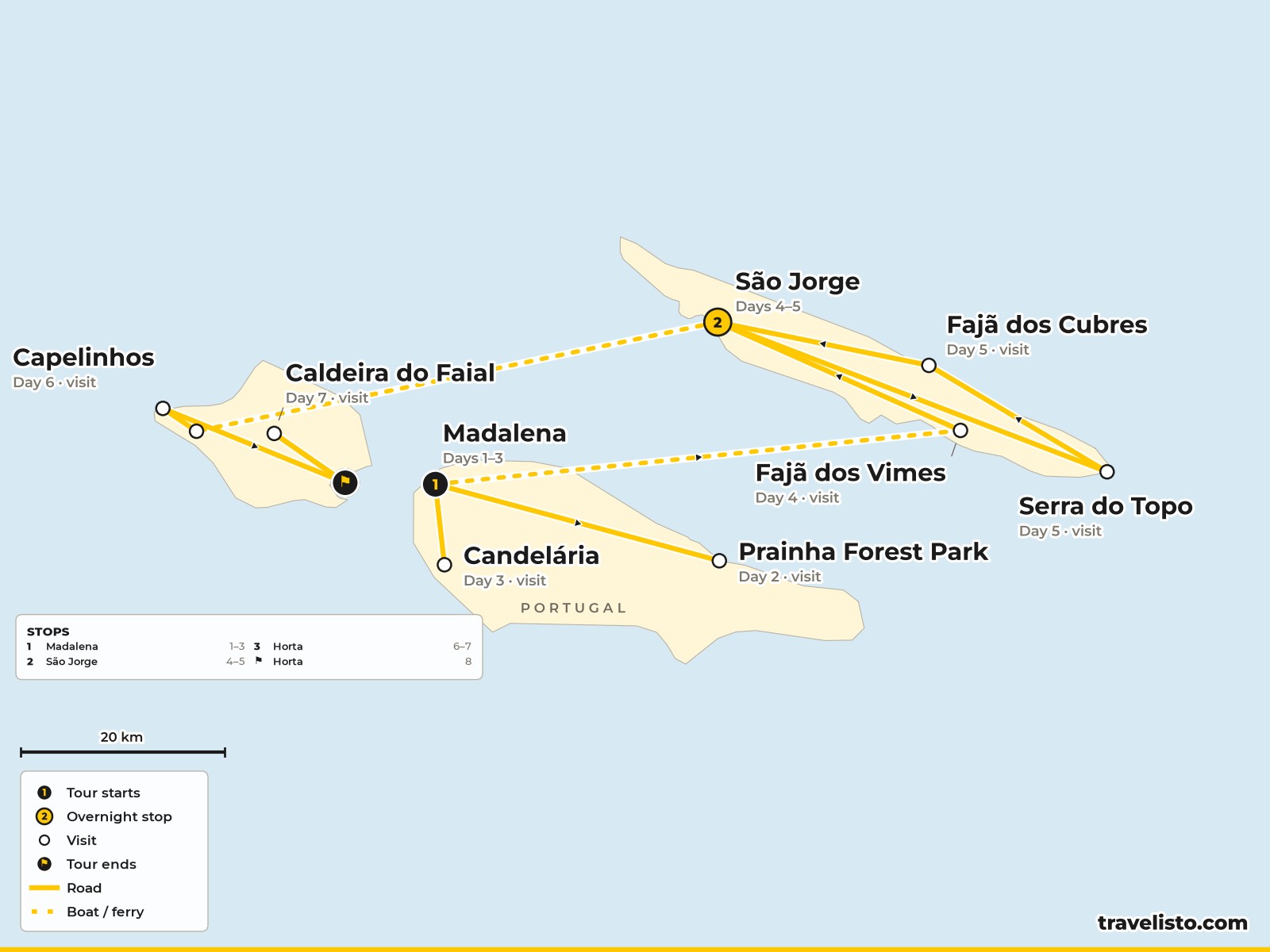
Horta’s marina is a stop for yachts crossing the Atlantic, and its harbour walls are covered in crews’ paintings. Walk around the rim of the Caldeira crater and see the moonscape left by the Capelinhos eruption of 1957 to 1958.
São Jorge
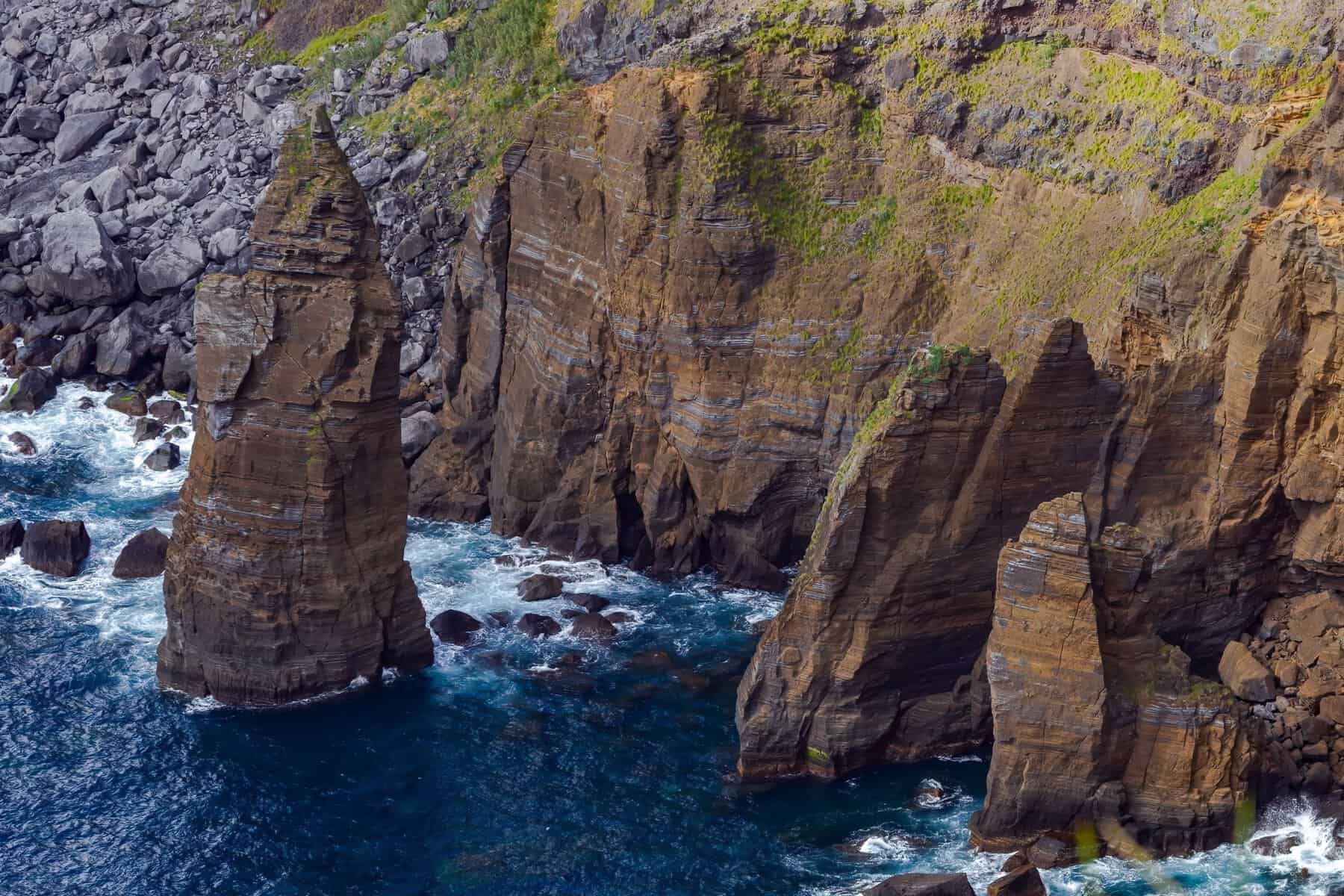
A long, steep ridge with flat fajãs, little coastal plains of lava and landslip, at the foot of its cliffs. Superb walking down to the fajãs, and famous for its strong, tangy cheese.

Terceira
Its capital, Angra do Heroísmo, is a UNESCO-listed Renaissance port of painted houses and churches. Climb down into Algar do Carvão, a rare open volcanic chimney, and catch a summer festival or a bull-running on a rope in the village streets.
Flores and Corvo
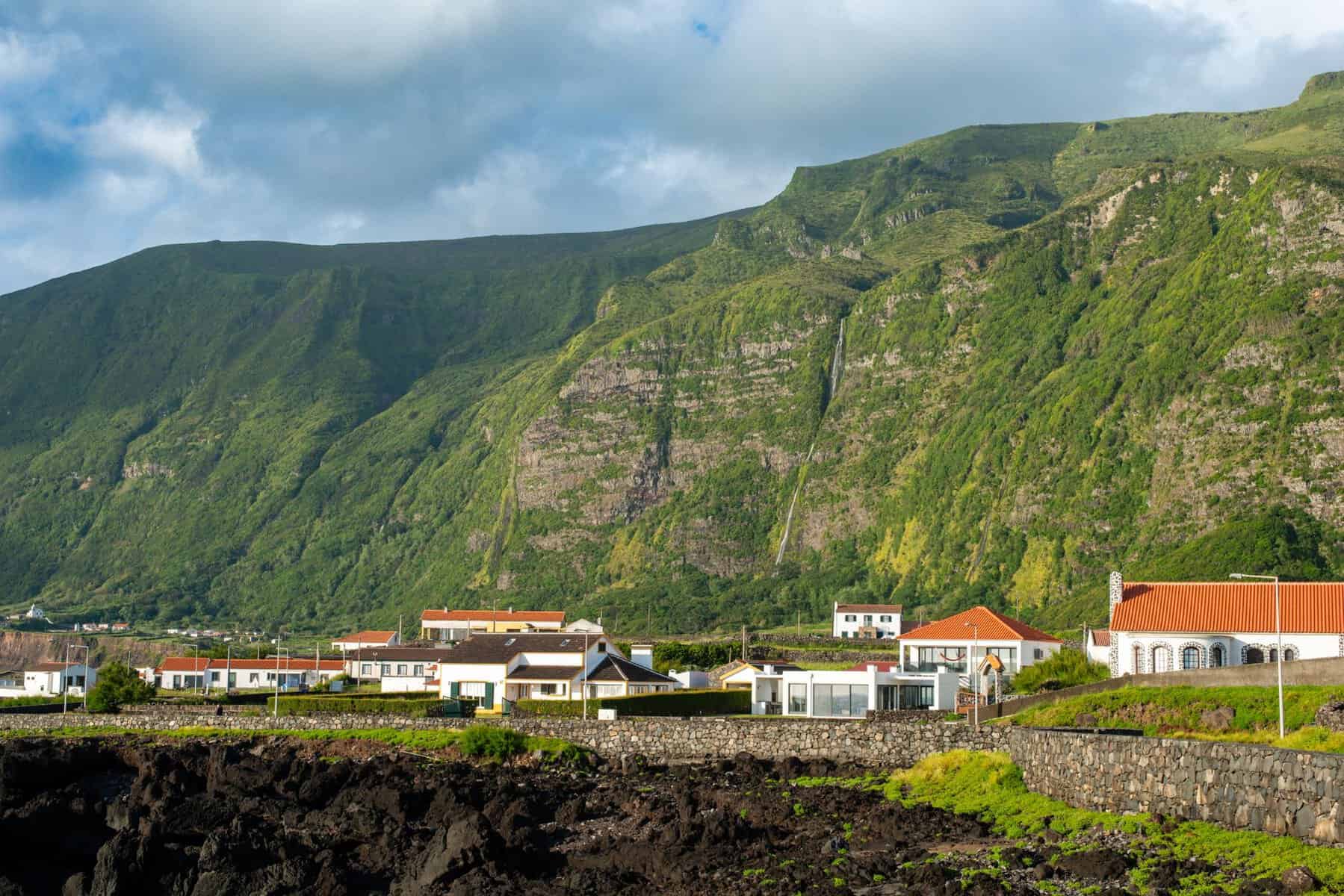
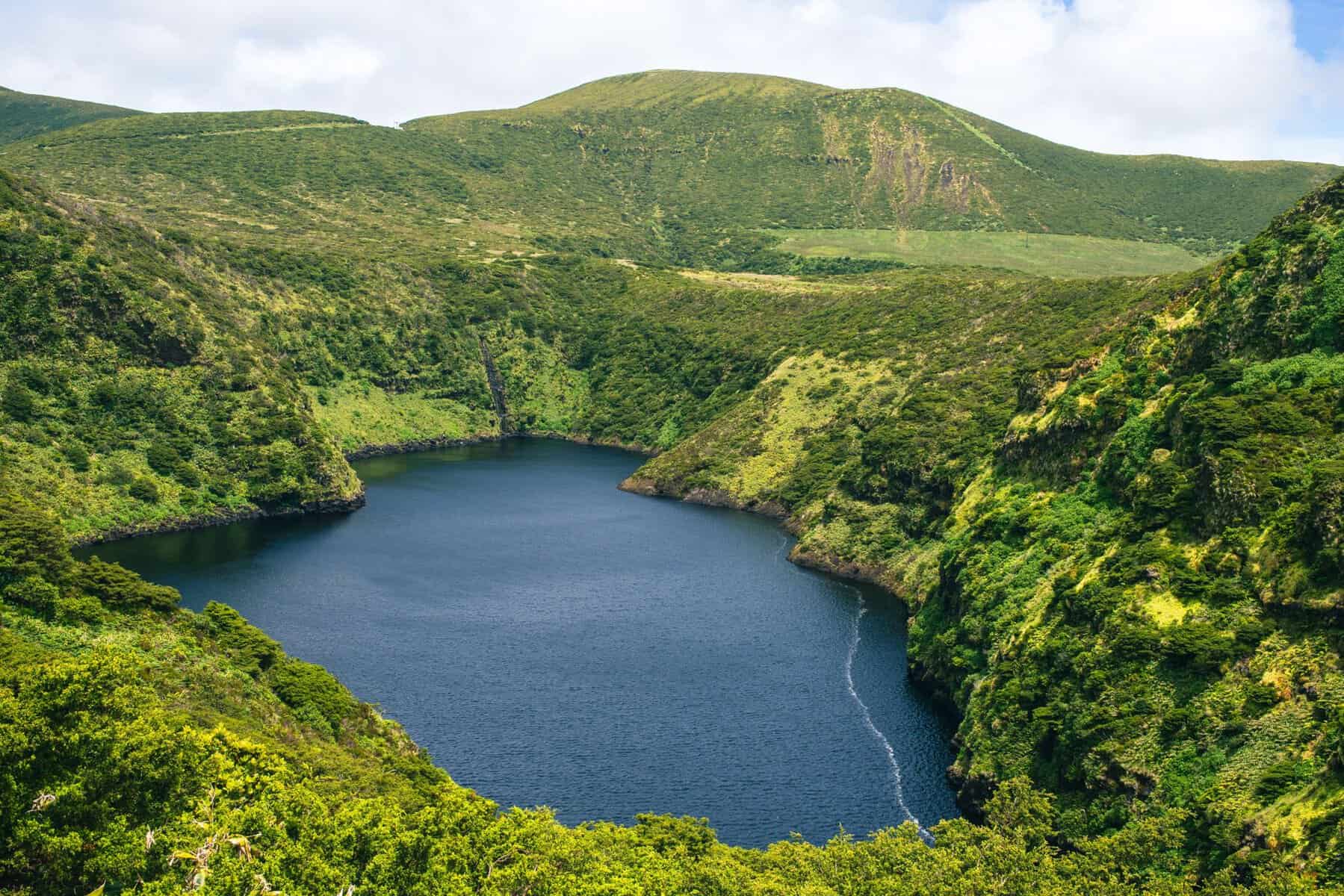
Flores is the most dramatic island of all: waterfalls pour down sheer cliffs, and seven crater lakes sit in the uplands. Tiny Corvo, a boat ride away, is one village and one huge crater. Allow for weather delays.
Santa Maria, the oldest and driest island, has the Azores’ best sandy beaches and white villages. Graciosa, a quiet UNESCO biosphere reserve, has windmills and a lake inside a lava cave.
Things to do on São Miguel
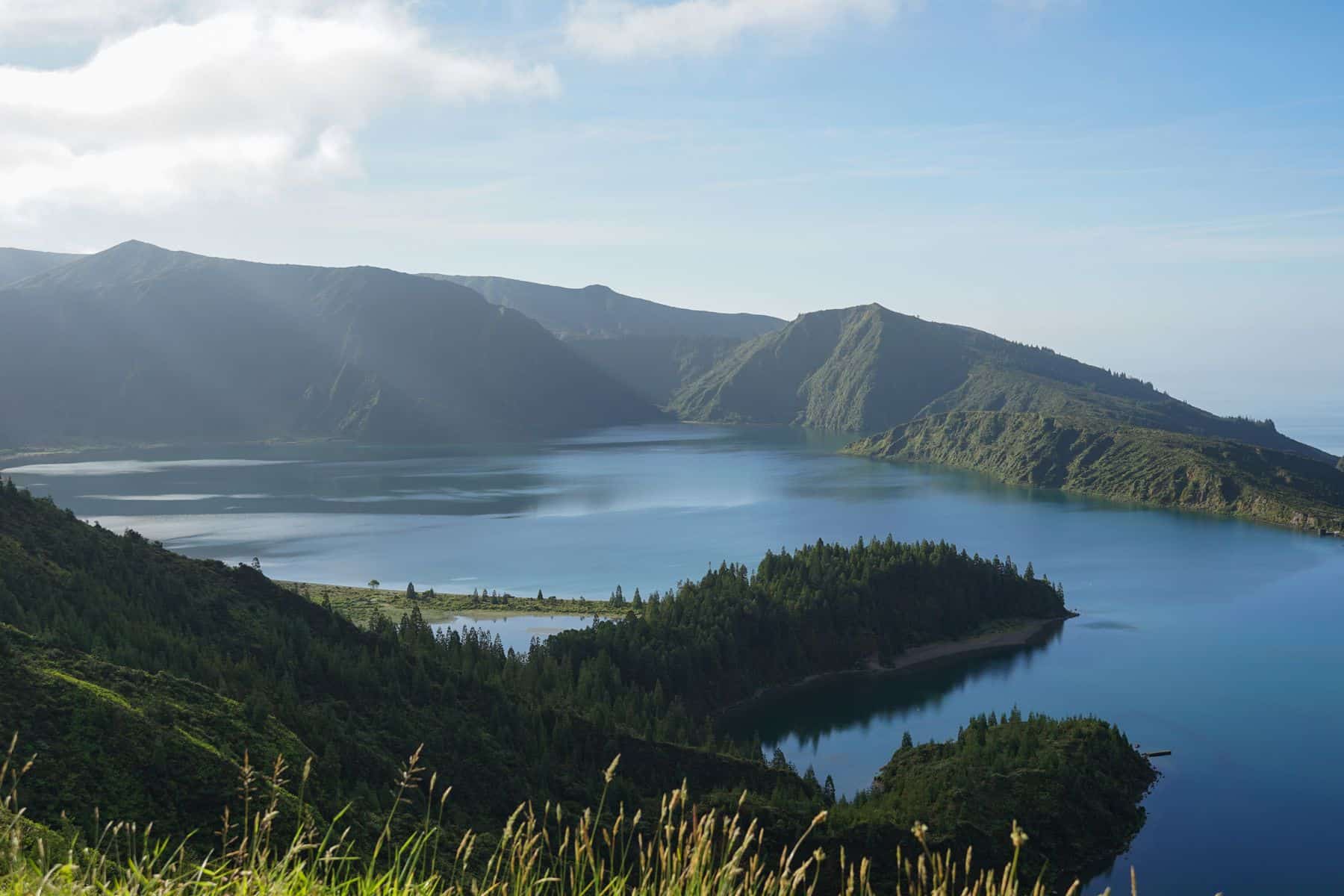
Sete Cidades. Twin lakes, one blue and one green, in a vast crater at the western end of the island. The classic view is from the Vista do Rei viewpoint; better still, walk part of the crater rim, lined with hydrangeas in summer.
Lagoa do Fogo. The “lake of fire” fills a crater in the middle of the island, with no roads or buildings around it. The viewpoint is on the road over the top; a steep path leads down to the shore.
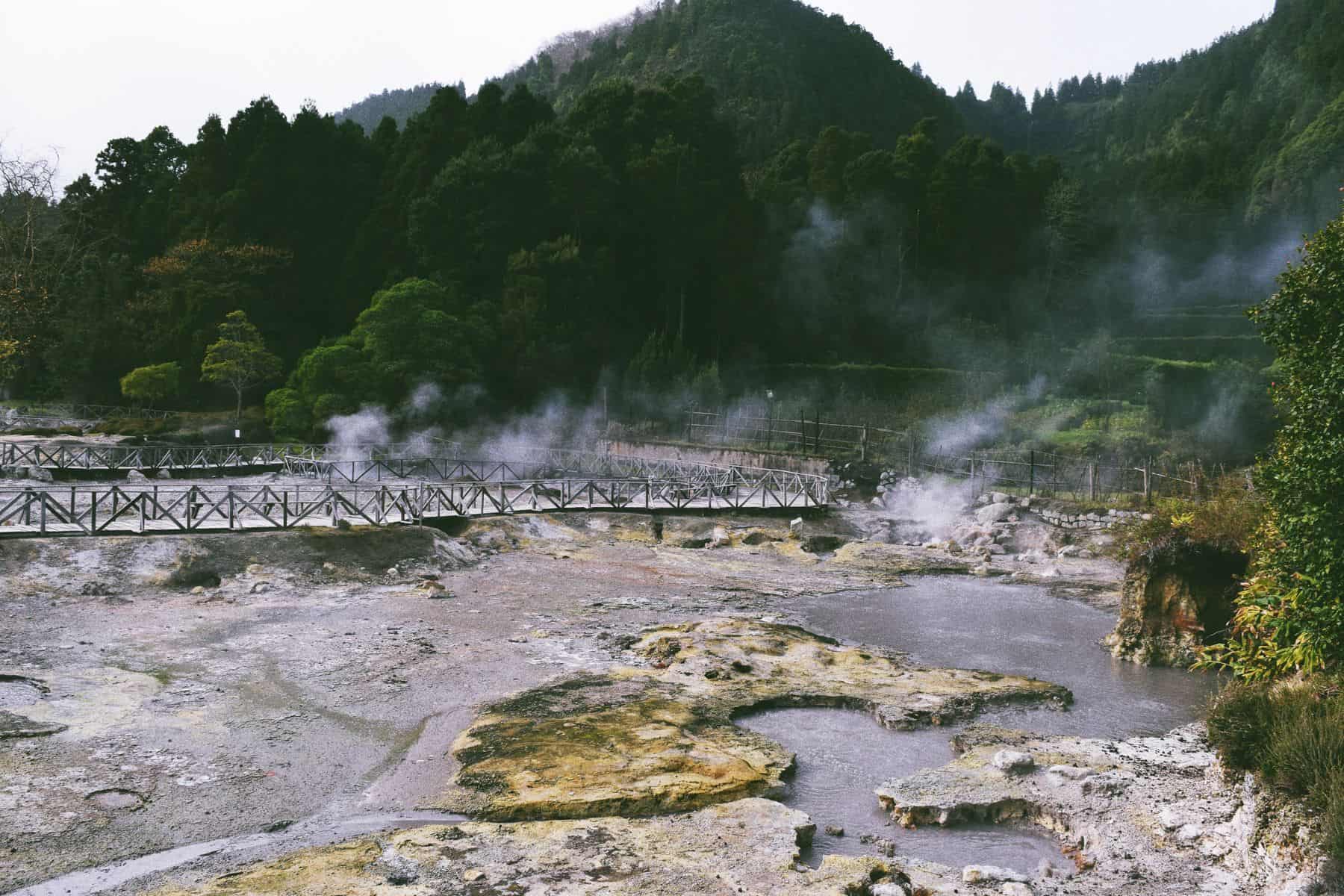
Furnas. A village in a volcanic valley, full of steaming fumaroles and bubbling mud pools. Bathe in iron-rich thermal pools, walk around Lagoa das Furnas and try cozido das Furnas, a stew cooked for hours in pots buried in the hot ground.
Ponta Delgada. The capital has black-and-white cobbled streets, the three-arched city gates, Baroque churches, a fish market and pineapples grown in old glasshouses on the edge of town.


On the north coast you can visit tea plantations, among the very few in Europe, and walk between the rows. Swim in the warm sea pool at Ponta da Ferraria, where a hot spring flows into the ocean, or at the natural park of Caldeira Velha, with warm pools under tree ferns. The east of the island, around Nordeste, is the least visited and has some of the best viewpoints.
Whale watching in the Azores

The Azores are one of the best places in the world to see whales. Around 25 species of whales and dolphins have been recorded here. Sperm whales live around the islands all year, and in spring blue, fin and sei whales pass through on migration, usually from about April to May.
The islanders hunted sperm whales from open boats until the 1980s. The clifftop vigias, the lookout huts used by the whalers, are still used today, but now spotters radio the whale-watching boats instead. Lajes do Pico has an excellent museum about the whaling years.
Where to go: trips leave from Ponta Delgada and Vila Franca do Campo on São Miguel, Lajes and Madalena on Pico and Horta on Faial. Trips run from about April to October; some boats go out in winter too, mostly for sperm whales. Common, bottlenose and Risso’s dolphins are seen on almost every trip, and licensed boats offer swimming with dolphins in summer.

Choose a boat that follows the regional code of conduct (distance limits and time limits with each animal), and go early in your stay in case a trip is cancelled because of the sea. See our guide to the best places to watch whales for how the Azores compare with other places worldwide.
Walking in the Azores
Every island has a network of waymarked trails, from easy lake walks to steep descents down cliffs to the sea. The most famous include the Sete Cidades crater rim and the path down to Lagoa do Fogo on São Miguel, the Caldeira rim on Faial, the vineyard paths on Pico and the trails down to the fajãs of São Jorge and Flores.
Climbing Mount Pico is a hard day: a steep, rocky climb of about 1,100 m from the trailhead, often in cloud. Every climber must register at the mountain house at the start, numbers are limited, and a local guide is a good idea.
The weather changes fast. The FCDO says: “Hiking in Madeira and the Azores can be challenging. Choose paths that suit your fitness and experience.” It also advises being prepared for narrow, uneven paths and heights, and taking extra care after rain, when the ground can be slippery and unstable.

If you’d like the walking organised for you, our walking holidays below link three or four islands with guides, ferries and bags moved for you. For other walking ideas, see our guide to self-guided walking holidays.
Food and drink
- Cozido das Furnas: meats and vegetables slow-cooked in the volcanic ground at Furnas. Ordered for lunch, and worth it once.
- Seafood: limpets grilled with garlic and butter (lapas), barnacles, octopus, tuna steaks and fresh grilled fish.
- Beef and dairy: the islands’ grass-fed cows give excellent steaks, butter and cheese, especially the sharp cheese of São Jorge.
- Pineapple: small, sweet Azores pineapples grown under glass on São Miguel, also made into liqueur.
- Wine and tea: mineral white wines from Pico’s lava vineyards, and green and black tea from São Miguel’s north coast.
- Sweets: queijadas (small cheesecakes) from Vila Franca do Campo and the cinnamon-scented massa sovada bread.
Best time to go to the Azores
The Azores are mild all year, rarely hot and never cold, but the weather is famously changeable: you can see sun, cloud and a shower in one morning, and the islands are green because it rains. May and June are fresh and green, with spring whales and fewer visitors. July to September is the warmest and driest time, with the sea at its warmest, hydrangeas in flower from about June to August, and the busiest flights and ferries. October is still mild and good for walking. November to March is wetter and windier, with more cancelled boats and closed viewpoints in cloud, but it’s quiet and still green, and sperm whales are around all year.
| Month | Ponta Delgada (São Miguel) | Horta (Faial) |
|---|---|---|
| Jan | 17°C / 14°C · 110 mm | 17°C / 14°C · 110 mm |
| Feb | 16°C / 13°C · 100 mm | 16°C / 13°C · 80 mm |
| Mar | 17°C / 13°C · 100 mm | 17°C / 13°C · 90 mm |
| Apr | 17°C / 14°C · 110 mm | 17°C / 14°C · 95 mm |
| May | 19°C / 15°C · 95 mm | 18°C / 15°C · 95 mm |
| Jun | 21°C / 17°C · 75 mm | 21°C / 17°C · 75 mm |
| Jul | 23°C / 19°C · 45 mm | 23°C / 20°C · 60 mm |
| Aug | 25°C / 21°C · 70 mm | 24°C / 21°C · 75 mm |
| Sep | 23°C / 20°C · 80 mm | 23°C / 20°C · 90 mm |
| Oct | 21°C / 18°C · 135 mm | 21°C / 18°C · 100 mm |
| Nov | 19°C / 16°C · 120 mm | 19°C / 16°C · 110 mm |
| Dec | 18°C / 15°C · 155 mm | 17°C / 15°C · 150 mm |
Average daily high / low and monthly rainfall at sea level, 10-year ERA5 data (2014 to 2023). It is cooler, cloudier and wetter in the hills and crater lakes.
How to get to the Azores from the UK
- Direct: there are seasonal direct flights from London to Ponta Delgada on São Miguel, mainly in summer, taking about 4 hours.
- Via Lisbon or Porto: all year, fly to Lisbon or Porto and connect to Ponta Delgada (about 2 hours 15 minutes from Lisbon). There are also flights from Lisbon to Terceira, Faial and Pico, so you can start in the central islands.
- Combine with Lisbon or Madeira: a few nights in Lisbon on the way is easy. Madeira is another Atlantic island group, but there are few direct links, so most people choose one or the other.
- By sea: some Atlantic cruises from Southampton call at Ponta Delgada or Horta, often with Madeira and the Canary Islands.
Getting around and island hopping
On each island, a hire car is by far the easiest way to get around. Roads are quiet and well kept, distances are short (São Miguel is about 65 km end to end) and buses are infrequent. Taxis can be hired for the day, and guides run jeep tours to the crater lakes.
Between islands, small turboprop planes link all nine islands. Ferries run all year between Pico, Faial and São Jorge in the central group (Horta to Madalena on Pico takes about 30 minutes), and in summer longer routes link more islands.
Leave slack in your plans. Wind, fog and rough seas sometimes delay flights and ferries, especially to Flores and Corvo and outside summer. Plan to be back on the island you fly home from the day before your flight.
Where to stay in the Azores
- Ponta Delgada is the most convenient base on São Miguel, with the best choice of hotels and restaurants, the whale-watching marina and an easy drive to Sete Cidades and Lagoa do Fogo.
- Furnas for a night or two among the hot springs, with thermal pools on the doorstep and the valley quiet after the day visitors go.
- The north coast of São Miguel for rural quinta stays, with farmland and tea fields running down to the sea.
- Horta on Faial for the marina, harbour cafés and views across to Pico; Madalena or the south coast of Pico for vineyards and whale watching.
- Angra do Heroísmo on Terceira for a historic town base.
- Restored stone cottages on Pico, São Jorge and Flores for a rural, self-catering feel.
The Azores have small boutique hotels, spa hotels, manor houses and rural stays rather than big resorts. Tell us what you like and we’ll match the right place on each island.
How long to spend: sample routes
A week is enough for São Miguel and one more island; two weeks lets you see four or five. Fly into São Miguel, then hop west.
São Miguel and Pico
- Ponta Delgada (3 nights)
- Furnas (1)
- Pico (3)
Crater lakes, hot springs and whale watching, then vineyards and the volcano.
Three islands
- São Miguel (4 nights)
- Faial (3)
- Pico (3)
Add Horta’s marina and the Caldeira, linked to Pico by a 30-minute ferry.
East to west
- São Miguel (4 nights)
- Terceira (2)
- São Jorge (2)
- Pico (3)
- Flores (3)
Five islands, from Angra’s old town to the waterfalls of Flores.
Walking holidays in the Azores
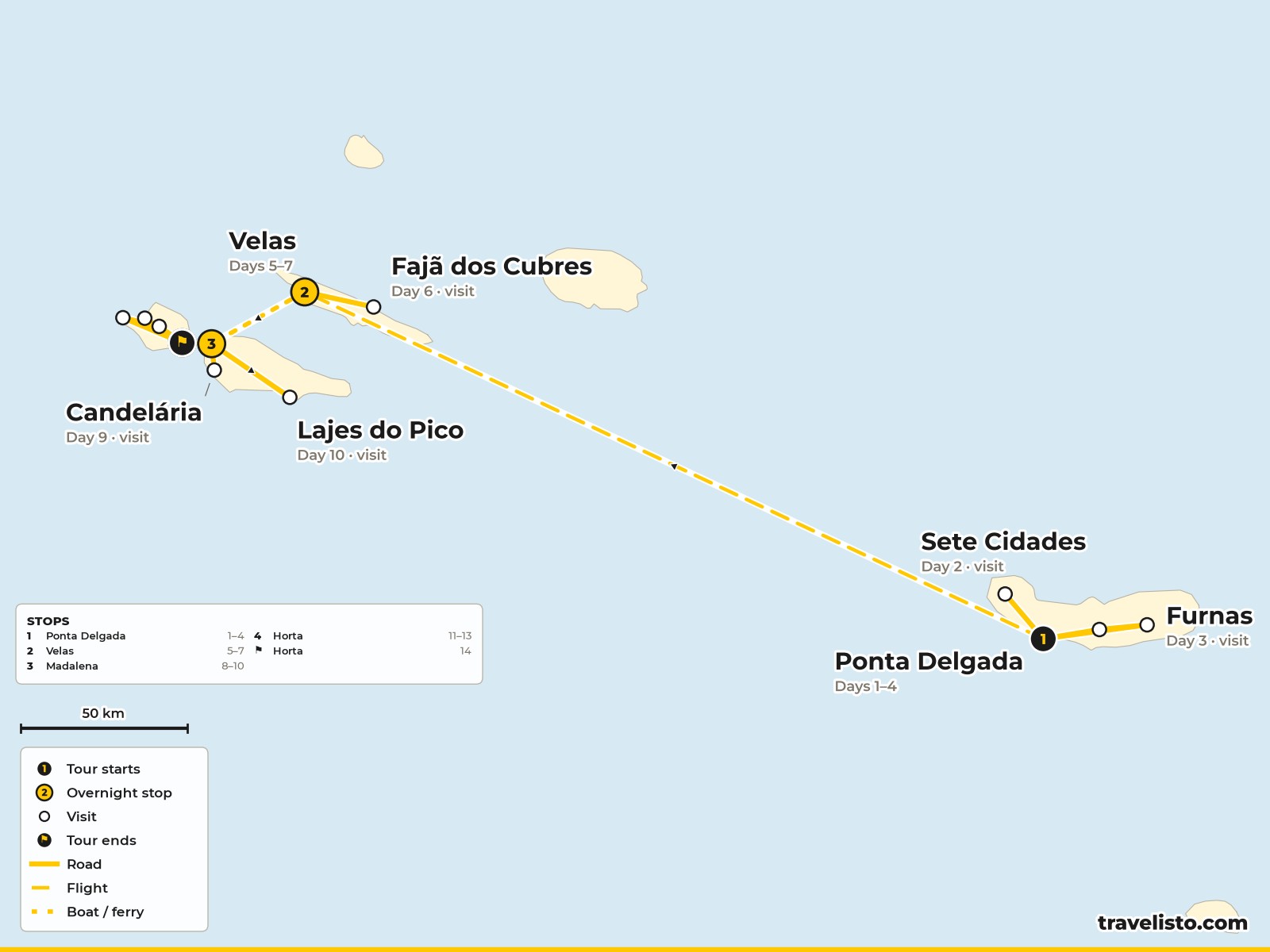
Prefer your own pace? A tailor-made Azores holiday can combine any islands, with flights, ferries, car hire and whale watching arranged, or add the Azores to a stay in Lisbon. For more ideas see Portugal holidays and our Portugal holiday guide.
Practical tips
- Entry: the Azores are part of Portugal and the Schengen area, so British visitors can stay up to 90 days in any 180 without a visa. Your passport must have been issued less than 10 years before you arrive and be valid for at least 3 months after you leave. The EU’s Entry/Exit System is being introduced, so you may have your fingerprints and photo taken at the border. Check the FCDO Portugal advice before you go; it doesn’t advise against travel to any part of Portugal, including the Azores.
- Layers and rain gear: pack a waterproof and a warm layer even in August, and good walking shoes.
- Viewpoints in cloud: the crater lakes are often hidden in the morning. Check the webcams and be ready to go when it clears.
- Swimming: the sea is best from July to October. Use the natural rock pools and lifeguarded beaches; the FCDO warns about rip tides.
- Earthquakes: small tremors are common; the FCDO notes that earthquakes are a risk in Portugal.
- Book ahead in summer: hire cars, inter-island flights and the best whale-watching boats sell out in July and August.
Frequently asked questions
Are the Azores part of Portugal?
Yes. The Azores are an autonomous region of Portugal, with their own regional government. They use the euro, are in the EU and Schengen area, and are an hour behind the UK all year.
What is the best time to go to the Azores?
May to October. July to September is the warmest and driest, with hydrangeas in flower in early summer. Spring is best for blue whales. Winter is mild but wetter and windier, with more boat cancellations.
Which Azores island is best?
São Miguel has the most to see: crater lakes, hot springs, tea fields and whale watching. Pico is best for its volcano, vineyards and whales, Faial for Horta and the Caldeira, and Flores for wild scenery. Most people combine São Miguel with one or two central islands.
When can you see whales in the Azores?
Sperm whales are seen all year. Blue, fin and sei whales pass through on spring migration, usually around April and May. Most trips run from about April to October, and dolphins are seen on most trips.
How long does it take to fly to the Azores from the UK?
Seasonal direct flights from London to Ponta Delgada take about 4 hours. Otherwise fly via Lisbon or Porto; the Lisbon to Ponta Delgada flight takes about 2 hours 15 minutes.
How many days do you need in the Azores?
A week covers São Miguel and one more island. Ten days to two weeks lets you see three to five islands at an easy pace, allowing for weather delays between islands.
Can you swim in the Azores?
Yes, from about July to October, when the sea is warmest. There are natural rock pools, a few sandy beaches (Santa Maria has the best) and warm thermal pools at Furnas and Caldeira Velha.
Is it easy to travel between the Azores islands?
Small planes link all nine islands, and ferries run all year between Pico, Faial and São Jorge, with more routes in summer. Weather can cause delays, so leave some slack.
Keep planning
- Portugal holidays
- Portugal holiday guide
- Escorted tours of Portugal
- Best places to watch whales
- Self-guided walking holidays
- Madeira holidays
- Douro Valley guide
- Tailor-made holidays
Plan your Azores holiday with a Travel Designer
Tell us which islands appeal and when you’d like to go, and we’ll plan flights, island hops, car hire, whale watching and walking in one ATOL-protected booking.
Make an enquiry Portugal holidays