Madeira in brief
- Funchal, Monte, Pico do Arieiro, the north coast and Cabo Girão are the highlights, with Porto Santo for a sandy beach.
- The levada walks through UNESCO-listed laurel forest are the main reason many people come; official trails now need booking.
- About 4 hours from London, on UK time; a driver or hire car is the easiest way round.
- Mild all year: around 18 to 20°C in winter and 25 to 27°C in summer in Funchal; April to October is best for walking.

Madeira is a green volcanic island in the Atlantic, Portuguese since the 15th century and one of the best places in Europe for winter sun, walking and gardens. It rises steeply from the sea to peaks of more than 1,800 m, with terraced hillsides, ancient laurel forest and hundreds of kilometres of levadas, the irrigation channels whose paths make some of the most beautiful walks anywhere. Its capital, Funchal, is an easy, elegant small city by the sea. This guide covers where Madeira is, the best things to do, the levada walks, Funchal and the rest of the island, Porto Santo, the food and wine, the weather month by month, getting there from the UK, and sample routes.
Where is Madeira?

Madeira is an autonomous region of Portugal in the North Atlantic, about 1,000 km south-west of Lisbon and roughly 500 km off the coast of Morocco, on much the same latitude as Casablanca. The archipelago is made up of Madeira itself, the much smaller, sandy island of Porto Santo to the north-east, and the uninhabited Desertas and Selvagens islands, which are nature reserves.
The main island is only about 57 km long and 22 km wide, but it is so mountainous that journeys take longer than you’d expect. Most people live along the sunnier south coast, around Funchal; the north is wetter, greener and wilder.
Portuguese sailors claimed the island in 1419, and its name means “wood”, after the forest that once covered it. Sugar and later wine made it rich, and from the 19th century British visitors came to spend the winter here.
Things to do in Madeira
Funchal
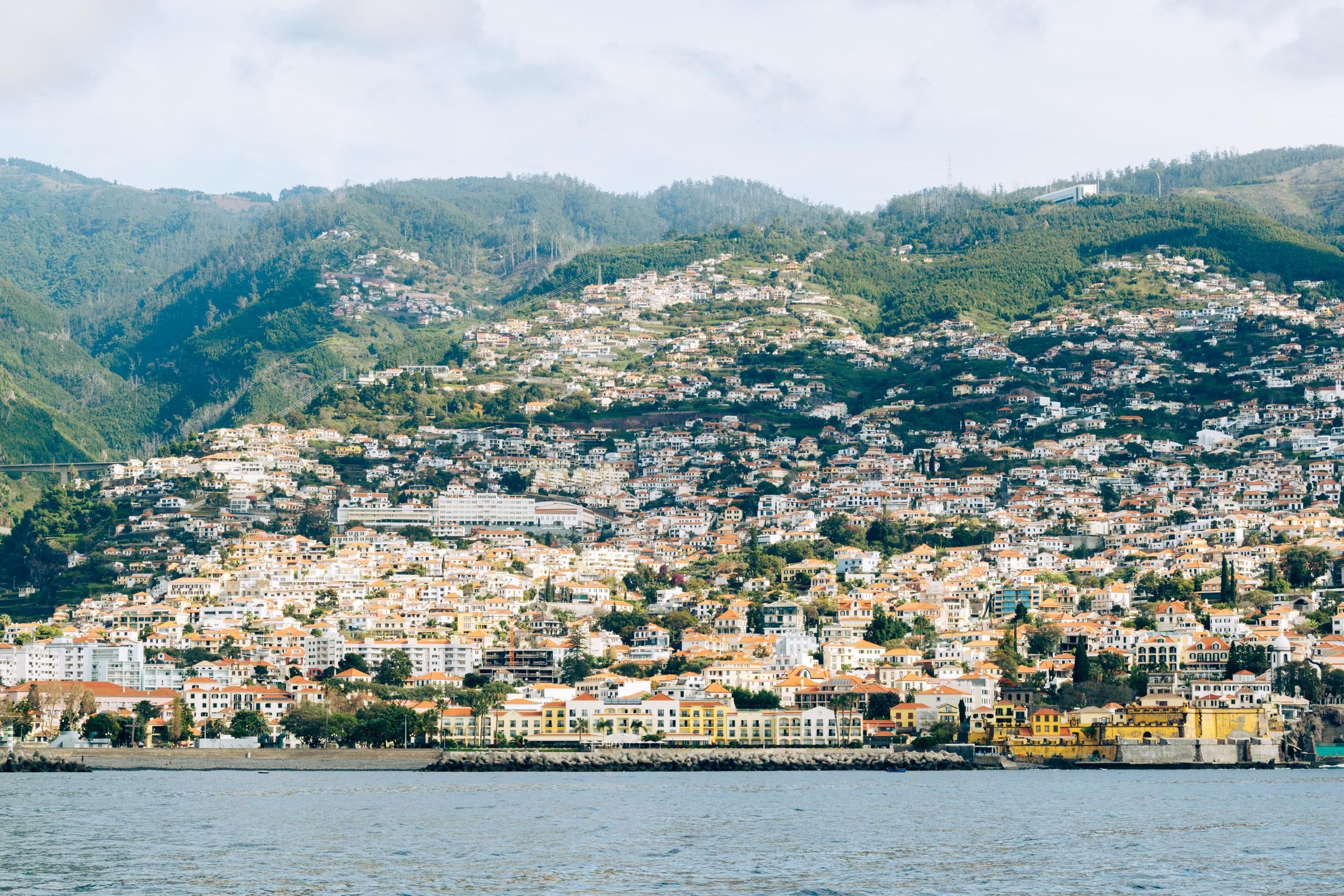
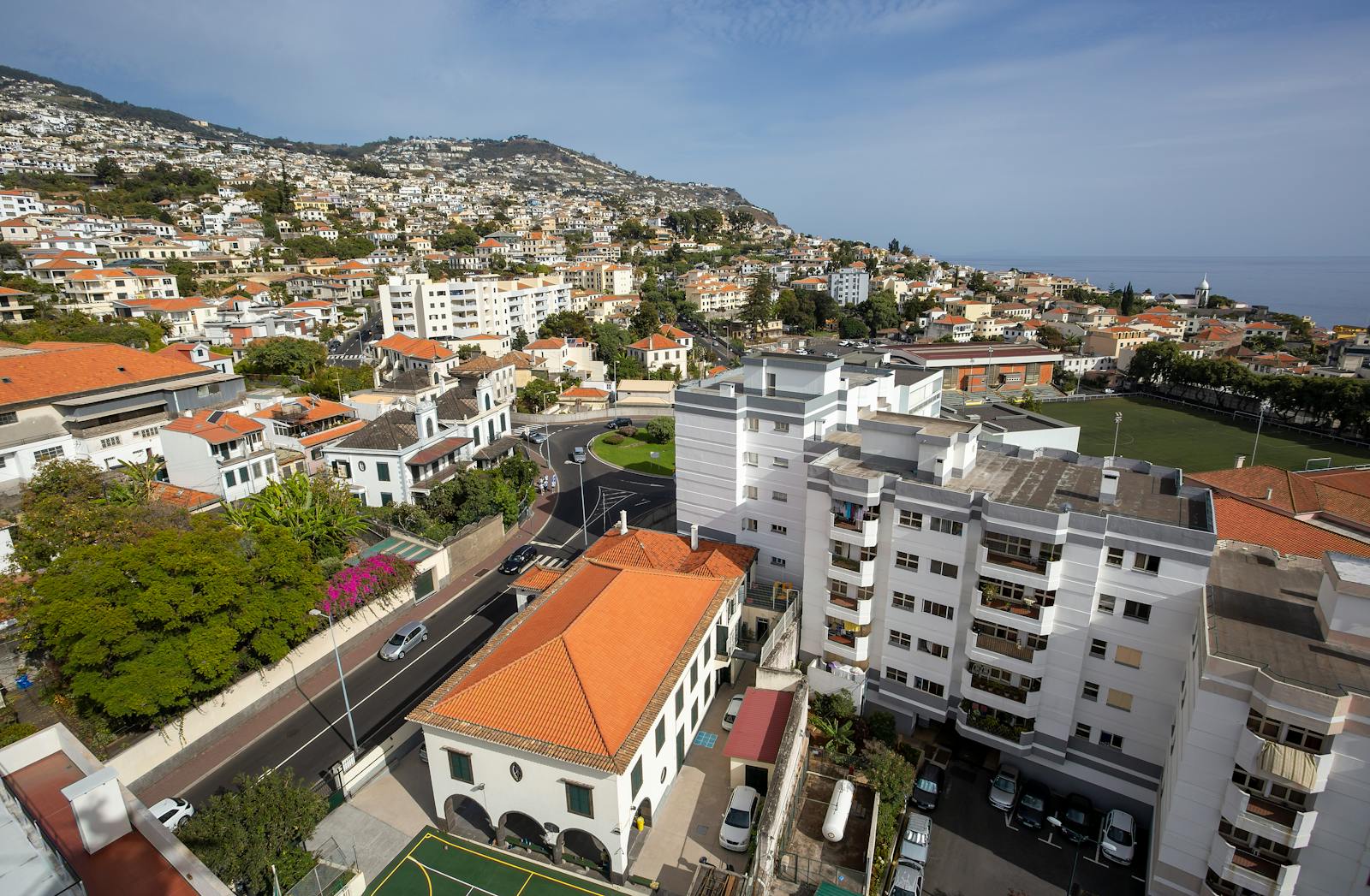
Madeira’s capital climbs from its harbour up a natural amphitheatre of hills. Wander the old town (Zona Velha), where the doors along Rua de Santa Maria are painted by local artists; browse fruit, flowers and fish at the Mercado dos Lavradores; visit the cathedral and the wine lodges where Madeira wine is aged; and see the Botanical Garden above the city.
Monte and the toboggans
A cable car rises from the seafront to the hill village of Monte, with its church, shady gardens and views. Come down the traditional way: in a wicker toboggan (carro de cesto) steered by two men in white with rubber-soled boots, sliding about 2 km down steep streets towards Funchal. They’ve been doing it since the 19th century.

Pico do Arieiro and Pico Ruivo
A road climbs to Pico do Arieiro (1,818 m), where you can watch the sun rise over a sea of cloud. The famous path from here to Pico Ruivo (1,862 m), the island’s highest point, follows a knife-edge ridge with tunnels and steps cut into the rock: about three hours one way, for fit walkers with a head for heights. Sections close for repairs and after storms, so check before you go.

The north coast
A dramatic drive of waterfalls, cliffs and terraced villages. At Porto Moniz in the far north-west, the sea fills natural swimming pools in black lava rock; Seixal has a small black-sand beach under green cliffs; and Santana is known for its little triangular thatched houses, painted red, white and blue.
Cabo Girão and Câmara de Lobos
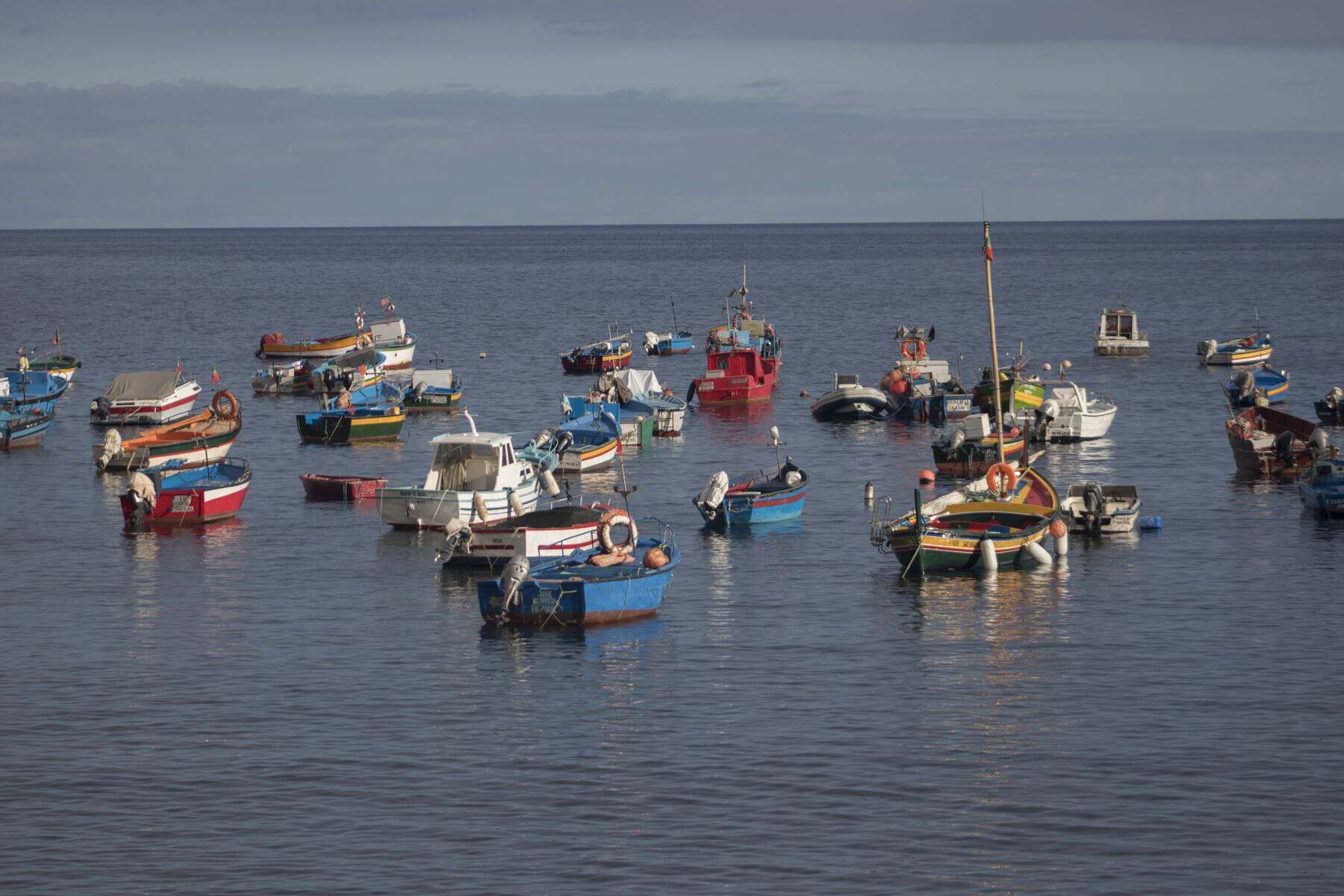
Câmara de Lobos is a fishing village of colourful boats where Winston Churchill came to paint. Just beyond, Cabo Girão is one of the highest sea cliffs in Europe, about 580 m, with a glass-floored platform hanging out over the drop and tiny terraced fields far below.

Ponta de São Lourenço
A long, bare peninsula of red, black and ochre volcanic rock, utterly unlike the green island behind it. A well-made path of about 4 km (one way) runs out along the cliffs to a viewpoint at the end, with the sea on both sides. Go early: there is no shade.


Also worth your time: whale and dolphin watching trips from Funchal and Calheta (several species live in these waters all year); the tropical gardens at Monte; the mountain village of Curral das Freiras (the Nuns’ Valley) deep in a crater-like valley; the plateau of Paul da Serra and the misty forest of Fanal, where ancient laurel trees stand in the fog; and the big events: the Flower Festival in spring, the Atlantic Festival fireworks in June, the Wine Festival in late summer and Funchal’s spectacular New Year’s Eve fireworks.
Levada walks
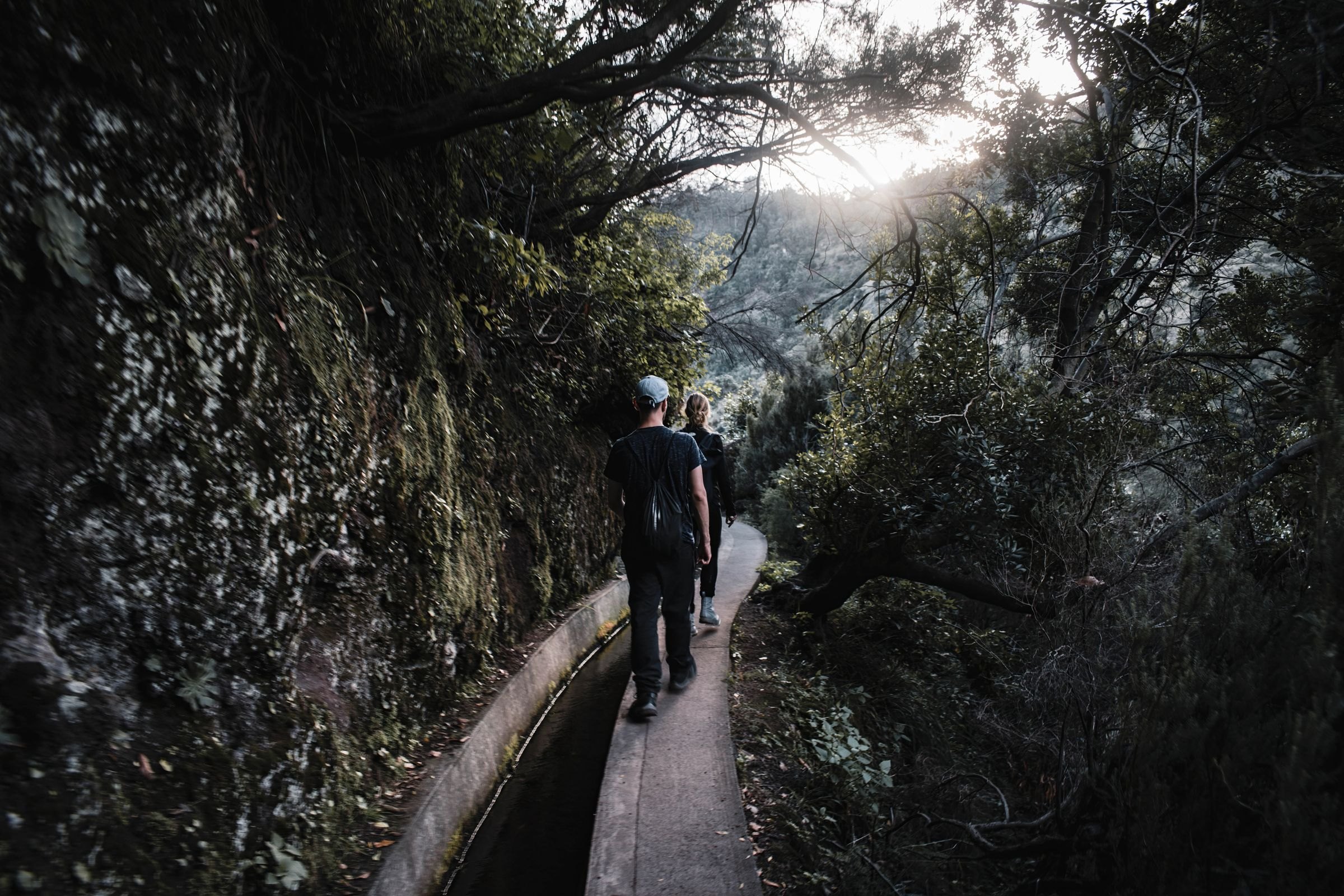
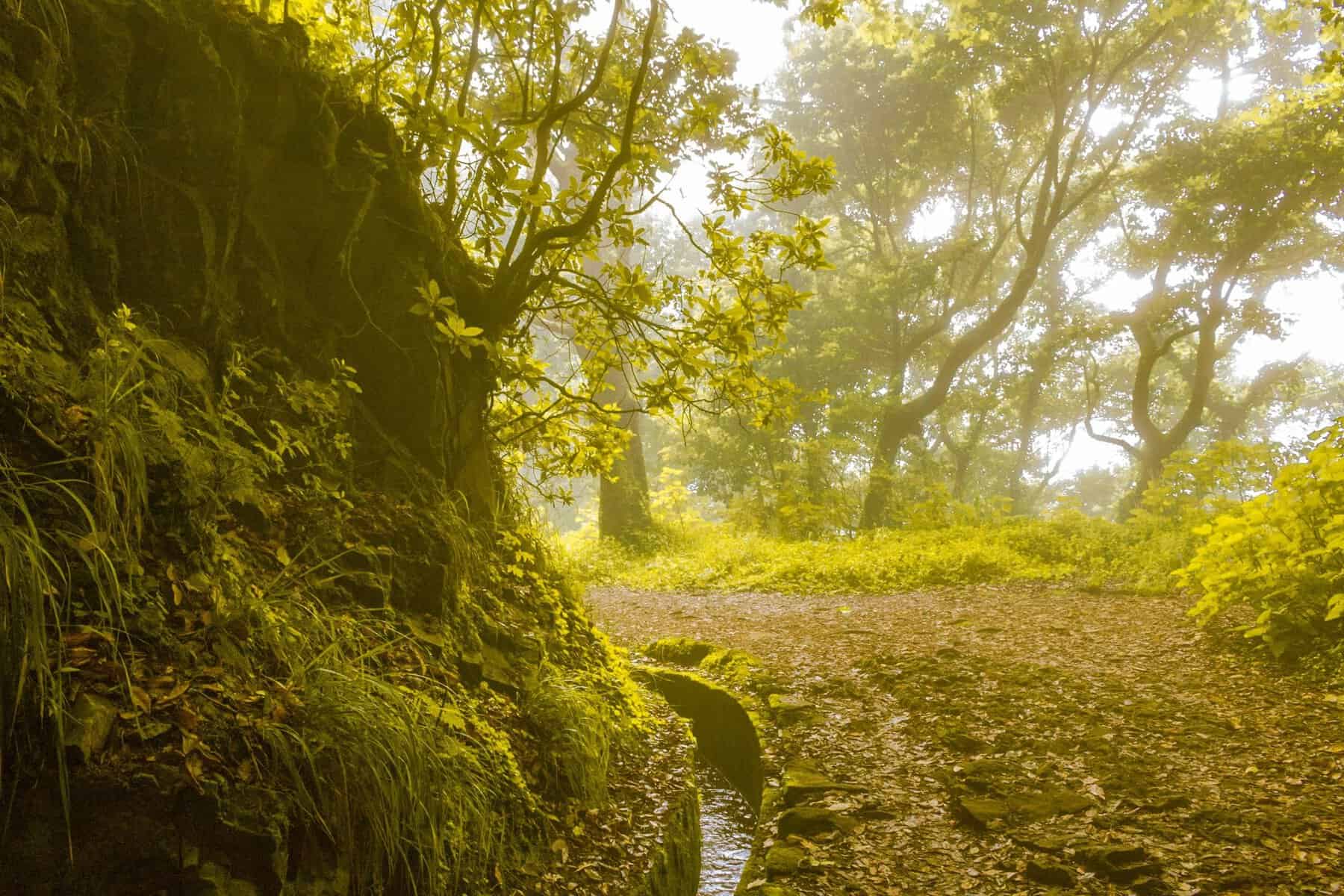
Madeira’s levadas are narrow channels, built from the 15th century onwards, that carry water from the wet north and the mountains to the farms of the south. There are more than 2,000 km of them, and the maintenance paths beside them make walks that are mostly level, following the contours through forest, along cliffs and through tunnels.
Much of the walking passes through the Laurisilva, a laurel forest that once covered southern Europe and survives in Madeira as the largest remnant in the world, a UNESCO World Heritage Site since 1999.
Classic walks: Levada das 25 Fontes and Levada do Risco from Rabaçal, to a pool fed by dozens of springs and a tall waterfall; Caldeirão Verde from Queimadas near Santana, through tunnels to a green cauldron of falls; Levada do Rei from Ribeiro Frio, an easy forest walk; the Balcões viewpoint, a short stroll from Ribeiro Frio; and Levada dos Tornos in the hills above Funchal.
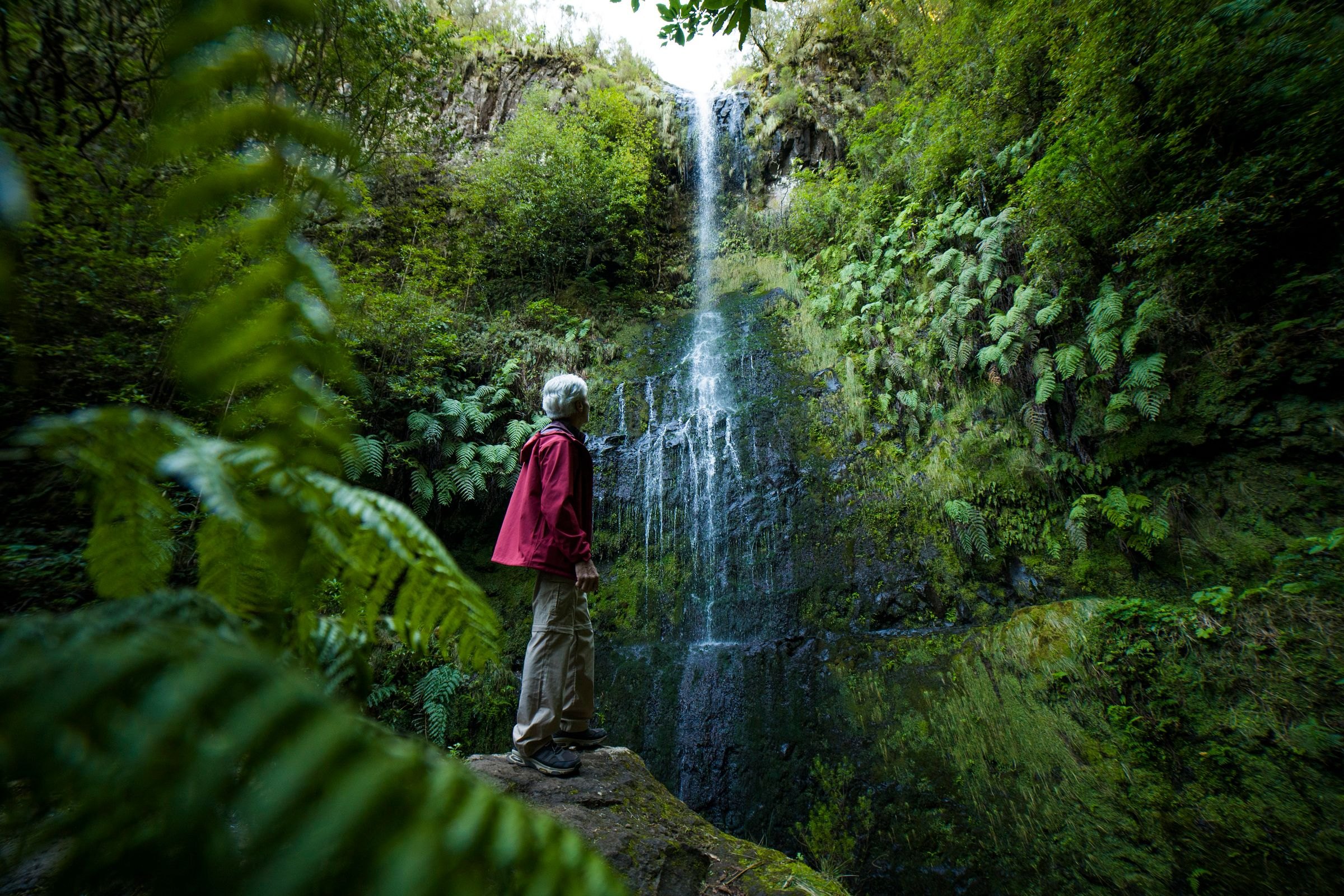
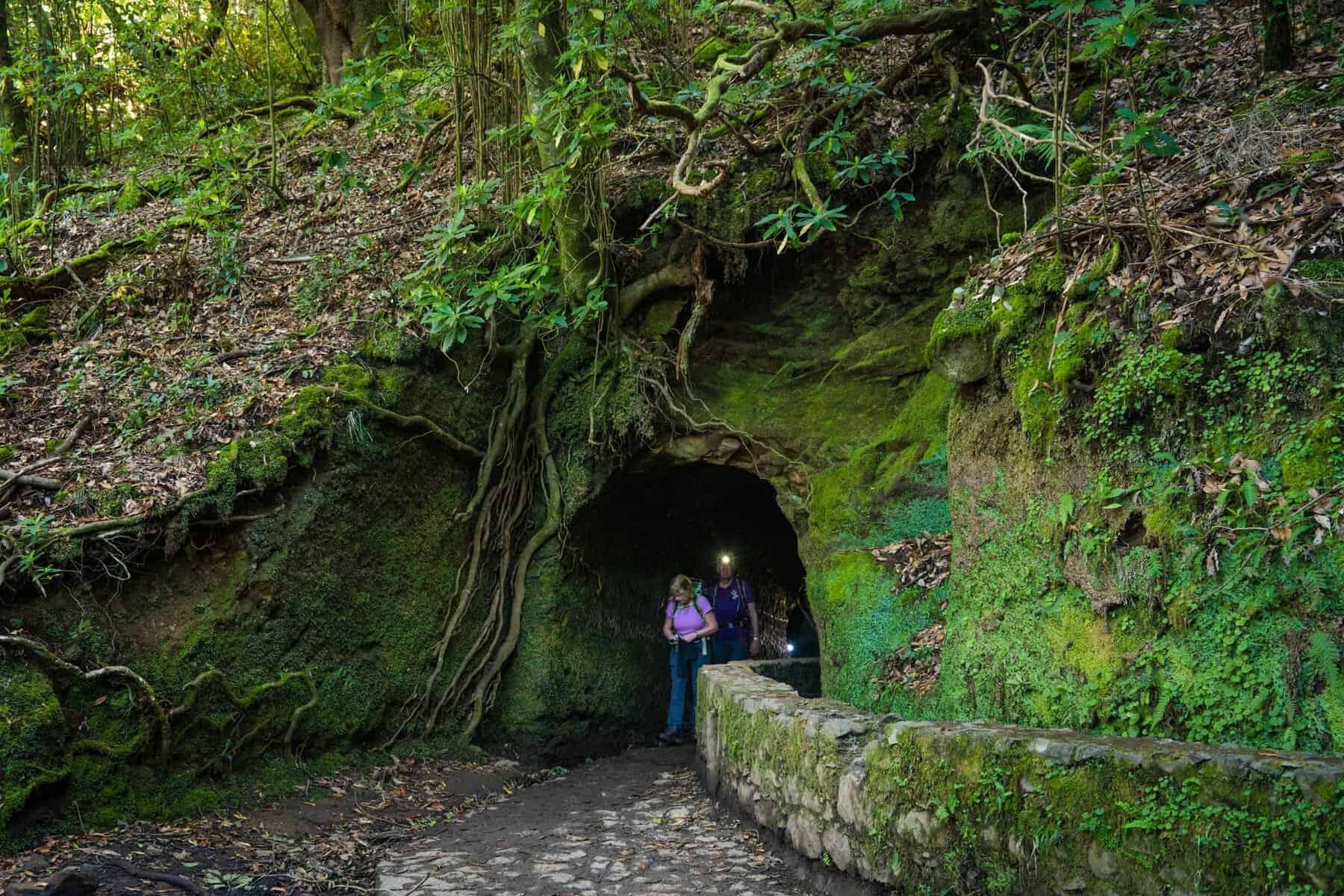
Booking trails: since 1 January 2026, all of Madeira’s official classified walking routes (marked PR) must be booked online in advance through the regional government’s SIMplifica portal, with 30-minute start slots and a small fee per trail for non-residents. Popular walks and early slots fill up, so book ahead, and check that your trail is open on the day: paths close after storms and for repairs. If you walk with us, we sort this out for you. Take a torch for the tunnels, waterproofs, water and good shoes, and stay on the path: some levadas run beside sheer drops.
Beaches and Porto Santo
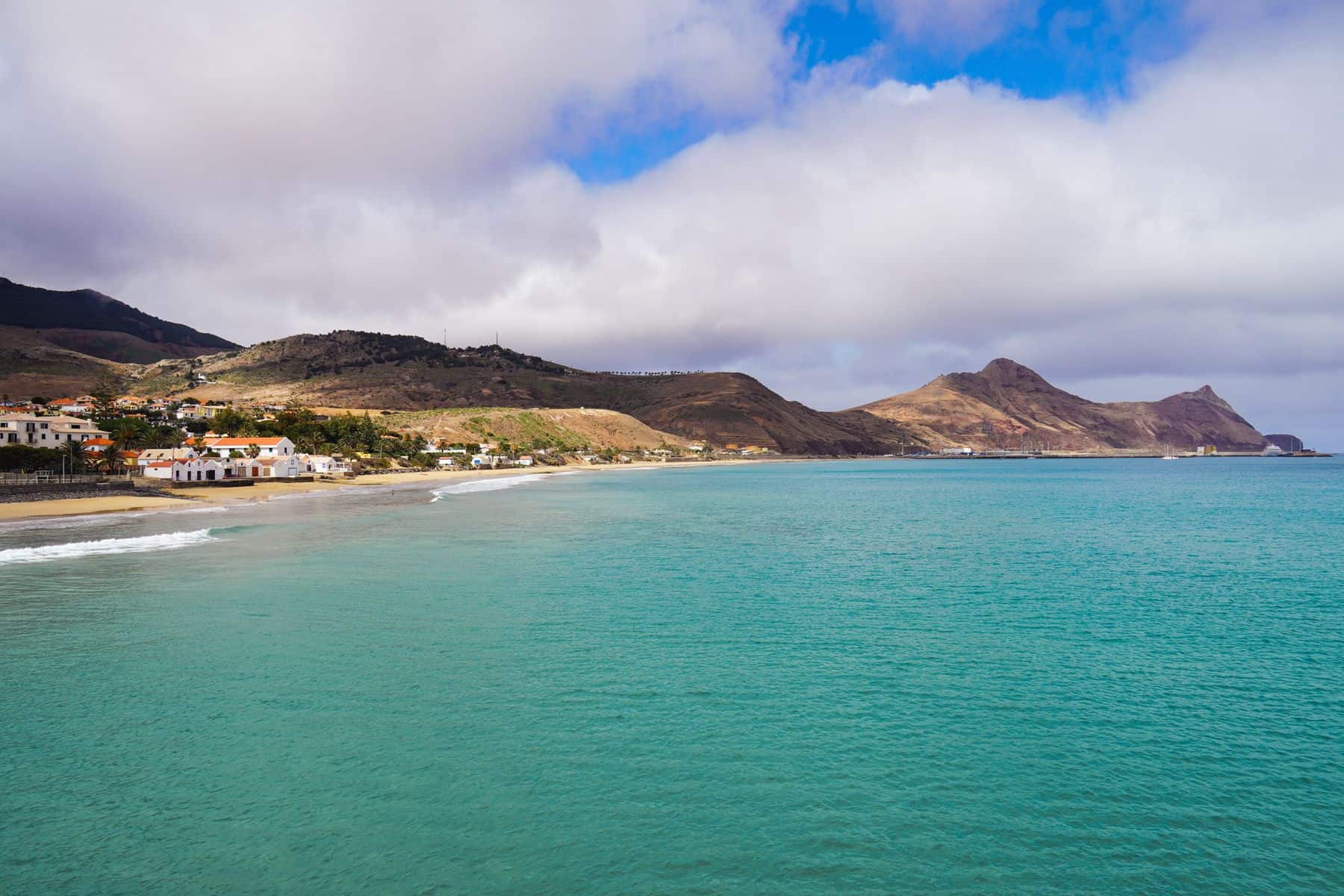
Madeira is not a classic beach island: most of its shore is cliff, and the beaches are mostly pebbles or black sand. Most hotels have pools and sea-water lidos instead. The natural lava pools at Porto Moniz and Seixal are a highlight, and Calheta and Machico have sheltered, man-made sandy beaches.
For a real beach, take the ferry (about 2.5 hours) or a short flight to Porto Santo, Madeira’s small sister island. It has about 9 km of golden sand along its south coast and calm, clear water, and the sand is said to have healing properties. A few nights there make a lovely end to a walking holiday; in summer it is popular with Madeirans, so book early.
Madeiran food and wine
Try espetada, beef rubbed with garlic and bay and grilled on a bay-wood skewer; espada, the black scabbard fish caught at great depth off the island, often served with banana; lapas, grilled limpets with garlic butter; and bolo do caco, a warm flatbread with garlic butter. Tropical fruit grows everywhere: look for passion fruit, custard apples and small Madeira bananas at the market. Bolo de mel, a dark spiced cake made with sugar-cane honey, keeps for months. To drink, there’s poncha, a punch of sugar-cane rum, honey and lemon, and of course Madeira wine, fortified and aged in warm lodges: dry Sercial and Verdelho as an aperitif, richer Bual and Malmsey with dessert. Visit a wine lodge in Funchal to taste them.
Best time to visit Madeira
Madeira is a year-round destination, often called the island of eternal spring. Winter (November to March) is mild, around 18 to 20°C by day in Funchal, with sunny spells and some heavy showers; it’s the season for winter sun, Christmas lights and the New Year fireworks, though the mountains can be cold, wet and closed by storms. Spring (April to June) brings flowers and the Flower Festival, and is ideal for walking. Summer (July to September) is the driest and warmest time, around 25 to 27°C, with the sea at its warmest, though the north and the mountains are often in cloud by midday. October is still warm, but the rains start to return. For levada walks, April to October gives the best chance of dry paths.
| Month | Funchal (south) | Porto Moniz (north) |
|---|---|---|
| Jan | 18°C / 14°C · 55 mm | 18°C / 14°C · 70 mm |
| Feb | 18°C / 14°C · 65 mm | 18°C / 14°C · 80 mm |
| Mar | 19°C / 14°C · 65 mm | 18°C / 14°C · 85 mm |
| Apr | 20°C / 15°C · 75 mm | 19°C / 15°C · 85 mm |
| May | 22°C / 16°C · 30 mm | 21°C / 16°C · 40 mm |
| Jun | 23°C / 18°C · 65 mm | 23°C / 18°C · 55 mm |
| Jul | 25°C / 20°C · 15 mm | 25°C / 20°C · 5 mm |
| Aug | 27°C / 21°C · 10 mm | 26°C / 21°C · 10 mm |
| Sep | 26°C / 20°C · 40 mm | 25°C / 20°C · 35 mm |
| Oct | 24°C / 19°C · 80 mm | 24°C / 19°C · 85 mm |
| Nov | 21°C / 17°C · 85 mm | 21°C / 17°C · 85 mm |
| Dec | 20°C / 15°C · 75 mm | 19°C / 16°C · 95 mm |
Average daily high / low and monthly rainfall at sea level, 10-year ERA5 data; a single storm can lift a month’s average. The mountains are much cooler and wetter, and can be close to freezing on winter nights.
How to get to Madeira from the UK
Flights to Funchal’s airport, on the east coast near Santa Cruz, take about 4 hours from London, with direct flights from the London airports and a number of regional UK airports. Madeira is on UK time, so there’s no jet lag. The airport is known for strong crosswinds: landings are occasionally diverted or delayed, so allow some slack on your last day. The airport is about 20 to 30 minutes by road from Funchal. Madeira is also a regular stop on cruises from Southampton and around the Atlantic islands, often with an overnight call for New Year’s Eve.
Getting around Madeira
A good network of expressways and tunnels links the south coast and cuts across the island, but the old mountain roads are steep and winding. A hire car gives freedom, especially for early starts on walks and sunrise on Pico do Arieiro; a private driver or guided day tours are easier if you don’t want to drive. Buses serve most of the island from Funchal, but they are slow for sightseeing. Many levada walks are one-way, so a driver or taxi to the start and finish helps.
| Journey | How | Time (approx.) |
|---|---|---|
| Airport to Funchal | Road | 20 to 30 minutes |
| Funchal to Câmara de Lobos | Road | 15 minutes |
| Funchal to Pico do Arieiro | Road | About 45 minutes |
| Funchal to Santana | Road | About 45 minutes |
| Funchal to Porto Moniz | Road | About 1 hour |
| Funchal to Porto Santo | Ferry / flight | About 2.5 hours / 15 minutes |
Where to stay in Madeira
Most visitors stay in or near Funchal, in the old town, by the Lido or in the gardens and quintas on the hills; Caniço to the east is quieter, with cliff-top hotels. The sunny south-west around Calheta and Ponta do Sol suits a relaxed stay, and the north is best for walkers. Our where to stay in Madeira guide compares the areas in detail, and our picks are in the best hotels in Madeira and the best hotels in Funchal.
How many days in Madeira? Sample routes
A week is right for a first visit: time for Funchal, a few levada walks and a day round the island. With ten days, split your stay between the south and the north, or add Porto Santo.
Madeira highlights
- Funchal (7 nights)
- Day trips: Monte, Cabo Girão, the north coast and Porto Moniz
- Two levada walks
- Sunrise on Pico do Arieiro
One base, with a driver or hire car for the days out.
Walking Madeira
- Santana or the north (3 nights)
- Ribeiro Frio or Santo da Serra (2)
- The south-west, for Rabaçal (2)
- Funchal (3)
Levadas, peaks and the coast path, moving hotels as you go. Best April to October.
Madeira and Porto Santo
- Funchal (7 nights)
- Ferry or flight to Porto Santo
- Porto Santo (3)
Sightseeing and walks, then a golden-sand beach to finish.
Ways to see Madeira with us
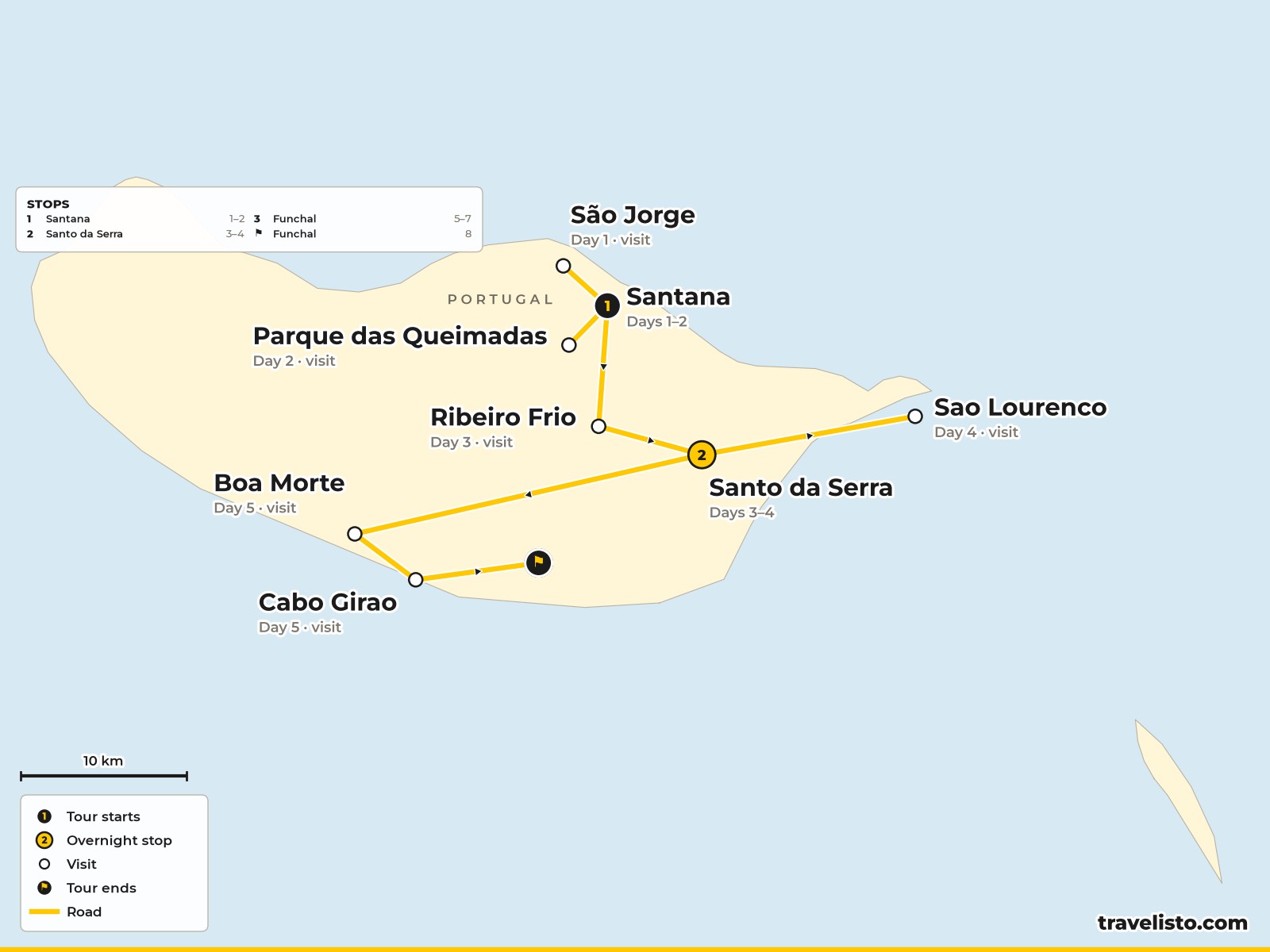
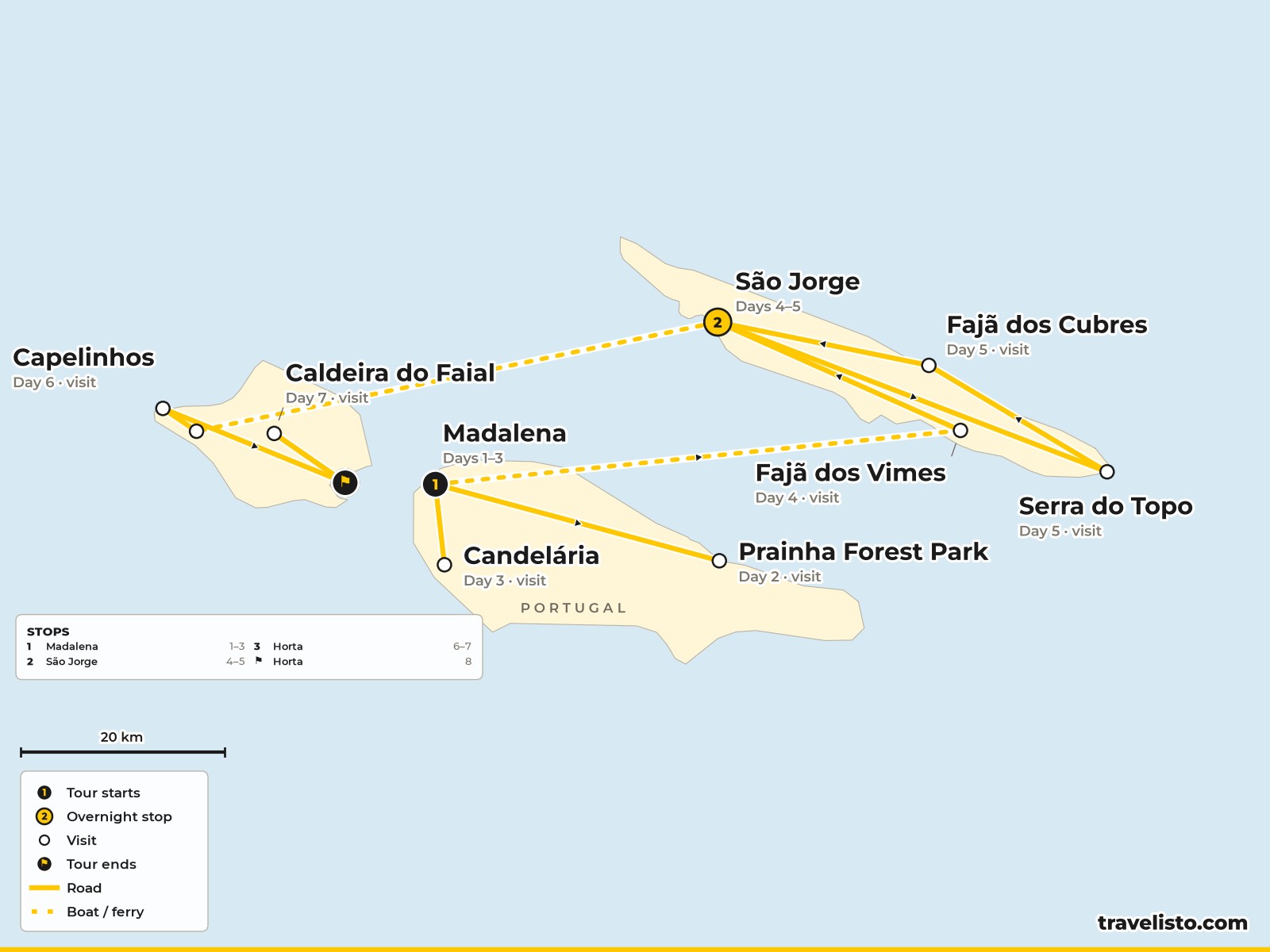
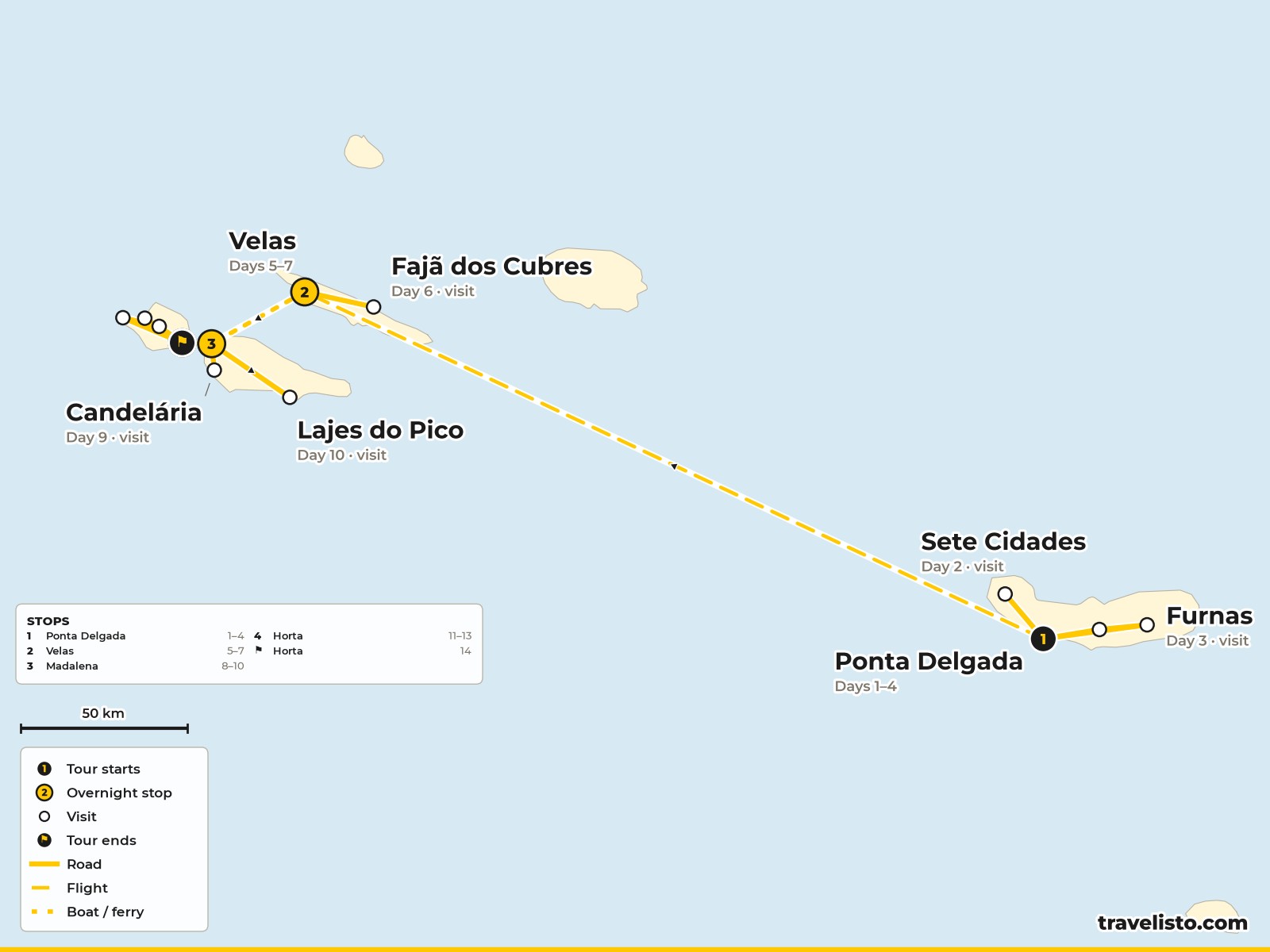
Our self-guided Madeira walk follows the coast path from Santana to São Jorge, the Caldeirão Verde levada, Ribeiro Frio, Ponta de São Lourenço and Cabo Girão, with route notes, transfers to the trailheads and your luggage moved between hotels, ending with two days in Funchal. The Azores walks explore Portugal’s other Atlantic islands. Prefer something gentler? A tailor-made Madeira holiday can combine a Funchal stay with guided walks, a driver for the day and a few nights on Porto Santo, or add Lisbon on the way. See all our tours of Portugal.
Practical tips
- Entry: Portugal is in the Schengen area, so British visitors can stay up to 90 days in any 180 without a visa. Your passport must have been issued less than 10 years before you arrive and be valid for at least 3 months after you leave. Under the EU’s Entry/Exit System you may have your fingerprints and photo taken at the border. Check the FCDO Portugal advice before you go; it doesn’t advise against travel to any part of Portugal, but does post severe-weather warnings for Madeira.
- Walking safety: choose walks that suit your fitness, check the trail is open, tell someone your route and turn back in heavy rain, when paths and tunnels can be dangerous. A local guide is a good idea for the harder routes.
- Layers: it can be warm and sunny in Funchal and cold and wet on the peaks on the same day. Bring a fleece and a waterproof whatever the season.
- Wildfires: from April to October, the fire risk can be high in the hills; never light fires outdoors.
- Swimming: the Atlantic can be rough, with strong currents. Use lidos and natural pools when the sea is up, and obey red flags.
- New Year: Funchal is very busy over New Year’s Eve, so book rooms with a view of the bay many months ahead.
Frequently asked questions
Is Madeira part of Portugal?
Yes. Madeira is an autonomous region of Portugal, in the Atlantic about 1,000 km south-west of Lisbon. It uses the euro and is in the Schengen area.
What is the best time to visit Madeira?
Any time of year. Winter is mild, around 18 to 20°C by day in Funchal, and popular for winter sun and New Year. April to October is best for walking, and July to September is the warmest and driest.
How long is the flight to Madeira from the UK?
About 4 hours from London, with direct flights from several UK airports. Madeira is on the same time as the UK.
Do you need to book levada walks in Madeira?
Yes, for the official classified trails. Since January 2026 they must be booked online in advance on the regional government's SIMplifica portal, with set start times and a fee per trail for visitors.
Does Madeira have beaches?
A few, mostly pebbles or black sand, plus natural lava pools at Porto Moniz and sandy man-made beaches at Calheta and Machico. For a long golden beach, go to Porto Santo, a ferry ride or short flight away.
How many days do you need in Madeira?
A week covers Funchal, a day round the island and a few levada walks. Ten days lets you add the north or Porto Santo, or walk more.
Do you need a car in Madeira?
It helps, especially for early starts on walks, but the mountain roads are steep. A private driver or guided day trips are an easy alternative, and buses link Funchal with most of the island.
Where is the best place to stay in Madeira?
Funchal for most people, with Caniço for something quieter, the sunny south-west around Calheta for a relaxed stay and the north for walkers. See our where to stay in Madeira guide for details.
Keep planning
- Madeira holidays
- Where to stay in Madeira
- Best hotels in Madeira
- Best hotels in Funchal
- Portugal holiday guide
- Douro Valley guide
- Which Canary Island is best?
- Where is hot in November?
- Tours of Portugal
- Tailor-made holidays
- Algarve guide
Plan your Madeira holiday with a Travel Designer
Tell us when you’d like to go and we’ll plan your Madeira holiday, with flights, the right hotel, levada walks booked with a guide or driver and a few nights on Porto Santo if you like, in one ATOL-protected booking.
Make an enquiry Madeira holidays