Sicily in brief
- Palermo, Taormina, Etna, Syracuse and Ortigia, the Baroque towns and the Valley of the Temples are the highlights.
- Some of Italy’s best food: street food in Palermo, pasta alla Norma, cannoli, granita and Etna wines.
- About 3 hours from the UK to Catania or Palermo; a hire car or driver is the easiest way round.
- Best from April to June and September to October; July and August are very hot, winter is mild.

Sicily is the largest island in the Mediterranean and one of the richest places to travel in Europe. In a single week you can see Greek temples as complete as any in Greece, Arab-Norman churches glittering with gold mosaics, Baroque hill towns, Europe’s highest active volcano and a coastline of clear, warm sea, and eat some of the best food in Italy along the way. This guide covers where to go in Sicily, from Palermo and Taormina to Mount Etna, Syracuse and Ortigia, Cefalù, the Valley of the Temples and the Aeolian Islands, plus the food, the best time to visit, how to get there from the UK, where to stay and sample routes.
Where is Sicily?

Yes, Sicily is part of Italy: it is one of the country’s 20 regions, with a special autonomous status. It sits just off the “toe” of the Italian mainland, separated from Calabria by the Strait of Messina, only about 3 km wide at its narrowest. Malta lies about 90 km to the south, and Tunisia is closer than Rome.
The island is roughly triangular, about 25,700 km², a little larger than Wales. Palermo, the capital, is on the north coast; Catania and Etna are on the east; the Baroque towns are in the south-east; and the west is the land of salt pans, Marsala wine and the Egadi islands.
Greeks, Romans, Arabs, Normans and Spanish all ruled here, and each left something behind. That layering of cultures is what makes Sicily so different from the rest of Italy.
Where to go in Sicily

Palermo and Monreale
A big, loud, wonderful city. Its Arab-Norman buildings are UNESCO-listed: the cathedral, the Palatine Chapel in the Norman Palace, lined with gold mosaics, and the red-domed church of San Giovanni degli Eremiti. Wander the street markets of Ballarò and the Capo, and drive up to Monreale, just above the city, whose cathedral has one of the greatest mosaic interiors in the world.

Cefalù
A seaside town beneath a huge rock (La Rocca), with a sandy beach right next to the old town and a twin-towered Norman cathedral with a mosaic of Christ in the apse. Climb the Rocca early in the morning for the view. It’s on the train line from Palermo, so it makes a relaxed base or day trip.

Taormina
Perched on a terrace above the sea, Taormina has been Sicily’s most fashionable resort for over a century. Its ancient theatre, built by the Greeks and rebuilt by the Romans, looks out over the coast to Etna, and summer concerts are still held there. Stroll the Corso Umberto, take the cable car down to the beaches at Mazzarò and the little island of Isola Bella, or climb to the village of Castelmola.

Mount Etna
Europe’s highest active volcano, about 3,300 m, dominates eastern Sicily. On the south side, a cable car rises from the Rifugio Sapienza area to about 2,500 m, with 4×4 vehicles and guided walks higher up; the summit craters can only be visited with an authorised guide, and access changes with the volcano’s activity. Lower down, walk through old lava flows and craters, and taste wines from vineyards on the volcanic slopes.

Syracuse and Ortigia
Once one of the greatest cities of the Greek world. The old town is on Ortigia, a small island joined to the mainland by bridges: a maze of honey-coloured lanes, the cathedral built into a Greek temple of Athena (its Doric columns are still in the walls), the freshwater Fountain of Arethusa and the castle on the point. On the mainland, the Neapolis archaeological park has a vast Greek theatre, where classical plays are staged in early summer, and the cave known as the Ear of Dionysius.
Noto, Modica and Ragusa
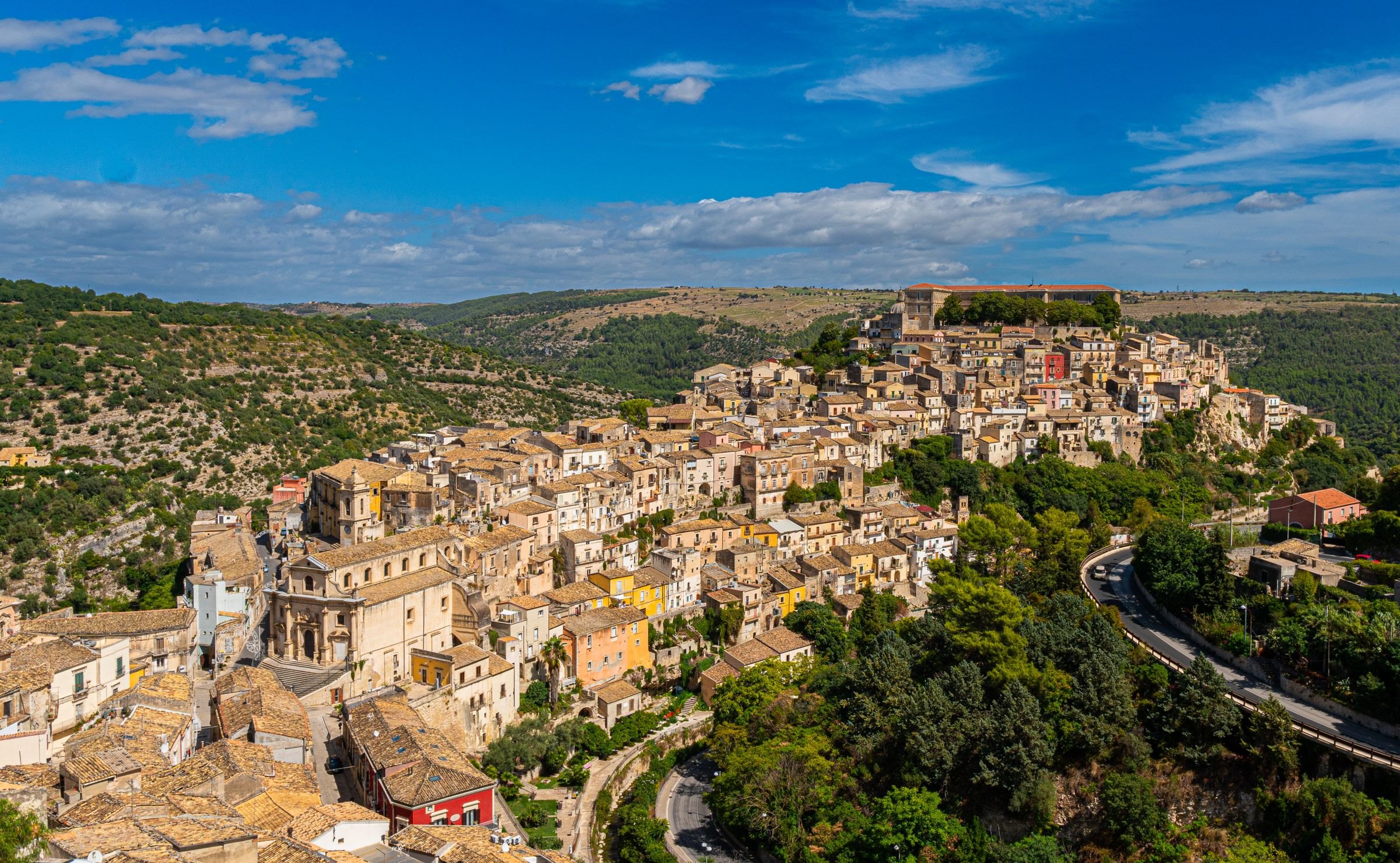
After an earthquake destroyed the south-east in 1693, its towns were rebuilt in an exuberant late Baroque style, and eight of them are UNESCO-listed together. Noto is a golden stage set of churches and palaces; Modica tumbles down a gorge and is known for its grainy chocolate; Ragusa Ibla sits on a ridge with its domed cathedral at the top.

Agrigento and the Valley of the Temples
A ridge of Greek temples from the 5th century BC above the sea, including the Temple of Concordia, one of the best-preserved Doric temples anywhere. Go early in the morning or late in the afternoon, when the stone turns gold. Nearby, the white cliffs of the Scala dei Turchi are best seen from the beaches either side.
The Aeolian Islands
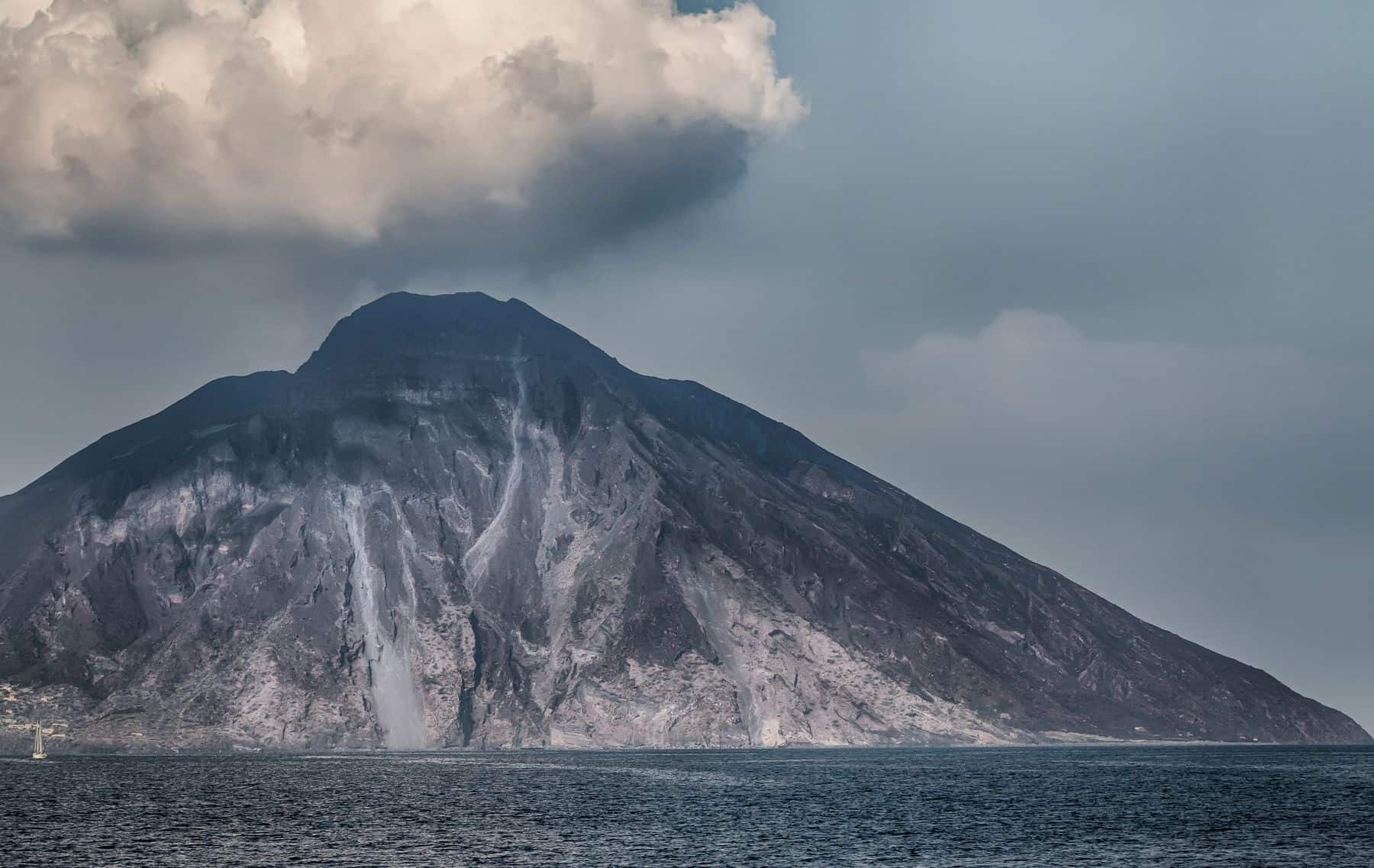
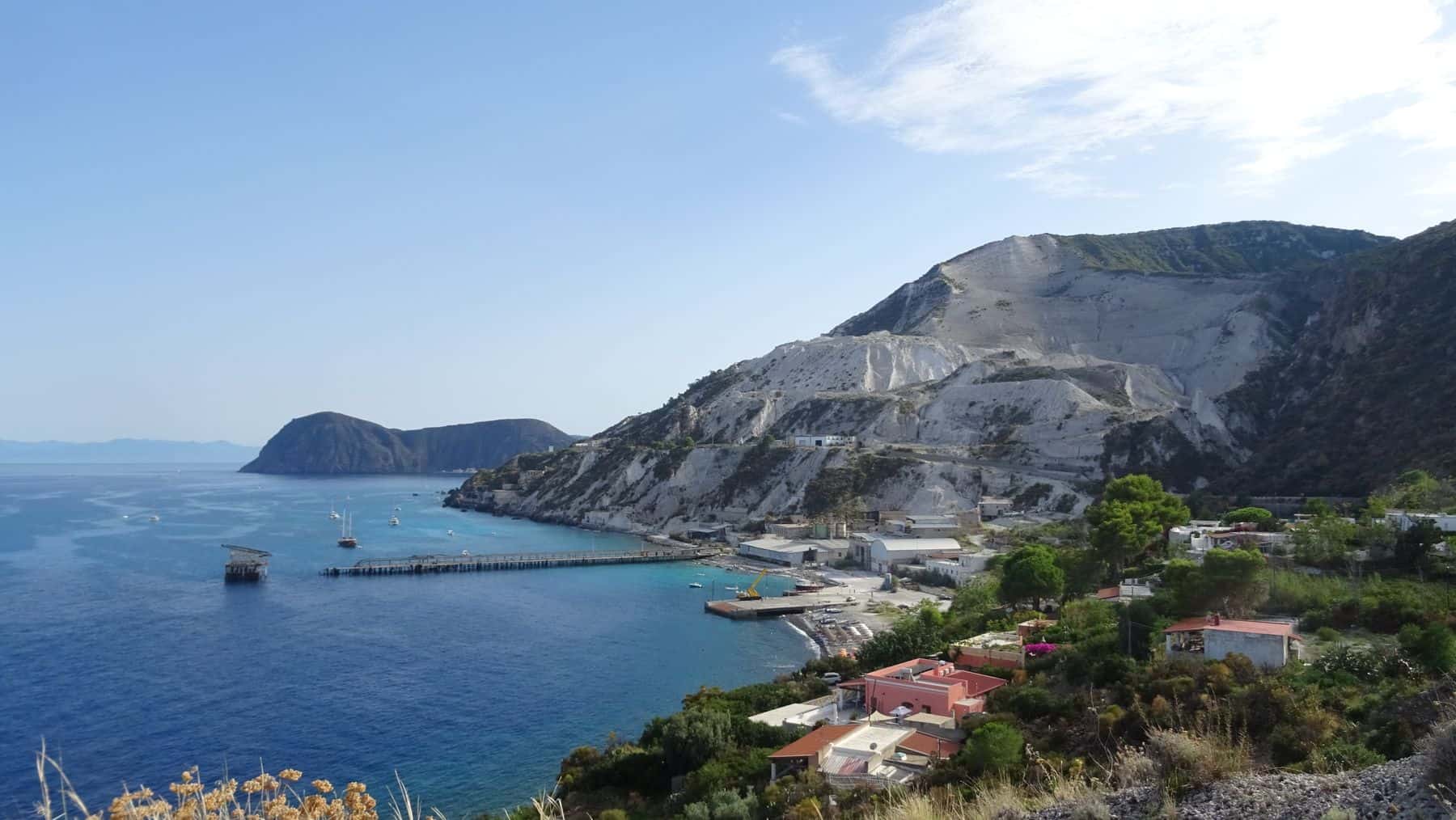
Seven volcanic islands off the north-east coast, reached by hydrofoil from Milazzo. Lipari is the largest and liveliest; Salina is green, with capers and sweet Malvasia wine; Panarea is small and chic; Vulcano smells of sulphur; Stromboli puts on small eruptions many times a day, best seen from a boat at night; Filicudi and Alicudi are remote and quiet. Walks on the volcanoes are guided and subject to local rules that change with activity.
The west deserves time too: the medieval hilltop town of Erice above Trapani, the salt pans and windmills between Trapani and Marsala, the lone Greek temple of Segesta, the coastal paths of the Zingaro nature reserve, the beach at San Vito lo Capo and the Egadi islands. In the centre of the island, the Villa Romana del Casale near Piazza Armerina has some of the finest Roman floor mosaics anywhere.
Things to do in Sicily


- See the Greek world: the temples of Agrigento and Segesta, the theatres of Syracuse and Taormina, and the ruins of Selinunte by the sea.
- Arab-Norman Palermo: the Palatine Chapel, Monreale and Cefalù cathedrals, the finest medieval mosaics outside Istanbul and Ravenna.
- Walk on Etna: with a guide, from the old craters of the south side to the higher slopes, or a gentler walk and a winery lunch on the north side.
- Island-hop the Aeolians: base yourself on Lipari or Salina and take boats to the others; watch Stromboli’s eruptions from the sea after dark.
- Baroque towns: Noto at sunset, chocolate in Modica, the stairways of Ragusa Ibla.
- Beaches: Cefalù, Mondello near Palermo, San Vito lo Capo, the coves below Taormina and the sandy south-east coast near Marzamemi.
- Easter: Holy Week processions are huge events across Sicily, especially in Trapani.
Sicilian food
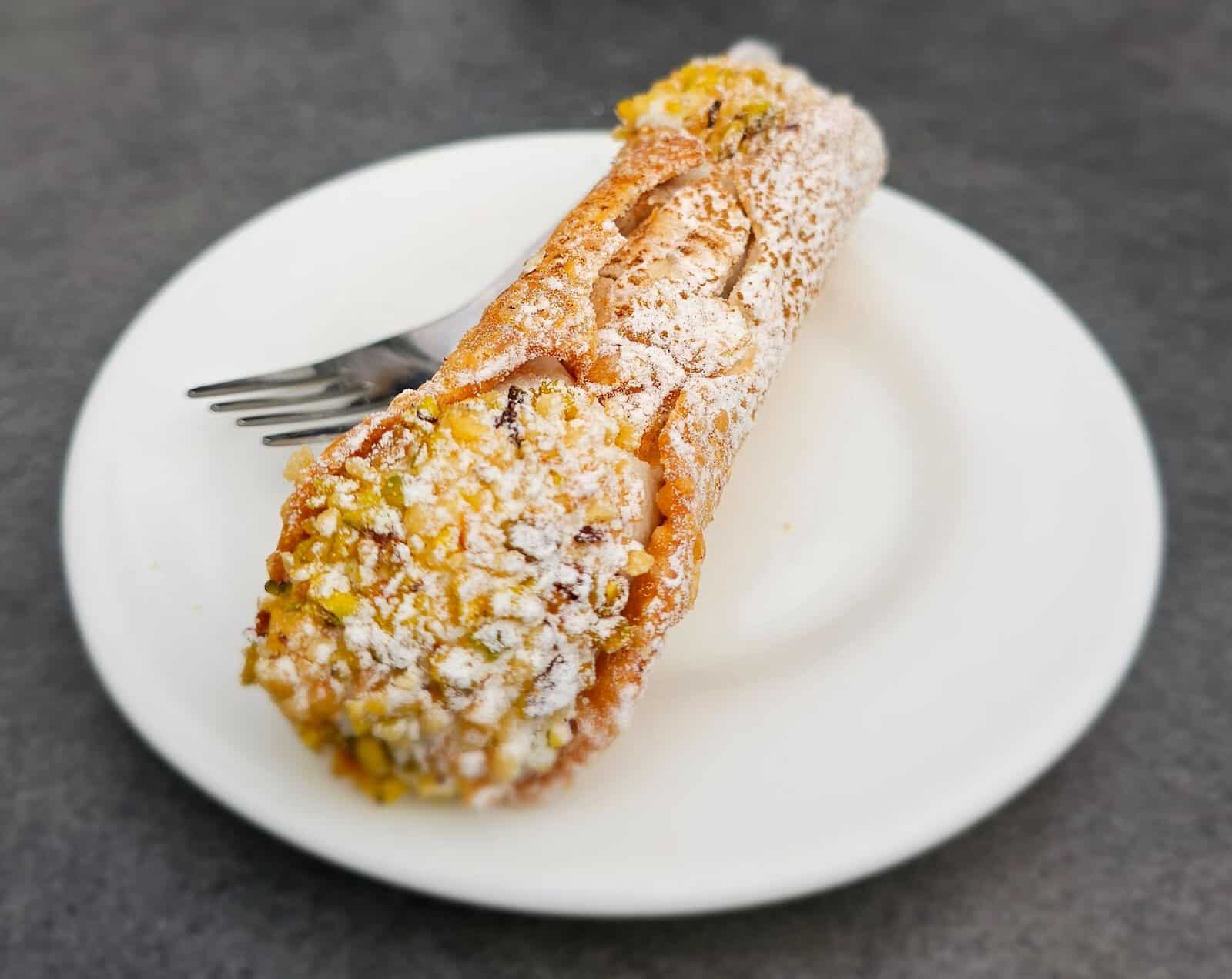
Sicilian cooking is a mix of everything that passed through: Arab spices, citrus, almonds and sugar, Spanish chocolate and Greek wine. Start with the street food: arancine (fried rice balls), panelle (chickpea fritters) and sfincione (thick Palermo pizza) from the markets.
Try pasta alla Norma in Catania, with aubergine, tomato and salted ricotta; pasta con le sarde with sardines, wild fennel, pine nuts and raisins in Palermo; caponata, a sweet-and-sour aubergine stew; fish couscous around Trapani; and swordfish everywhere.
For something sweet: cannoli filled with fresh ricotta, cassata, almond pastries, Bronte pistachios, Modica chocolate and, in summer, granita with a brioche for breakfast. Drink Nero d’Avola, the volcanic wines of Etna, Marsala and Malvasia from Salina.
Best time to visit Sicily
The best time to visit Sicily is from April to June and from September to October. Spring brings wild flowers and green hills, warm days in the low to mid-20s°C and Easter processions; the sea is warm enough for swimming from late May or June. July and August are hot, often above 30°C, with crowded beaches and Italian holidays in August; wildfires are a risk in the long dry summer. September and October are excellent: warm sea, the grape harvest and fewer crowds, though October can bring heavy downpours, especially on the east coast. Winter is mild for sightseeing, around 14 to 16°C by day, with snow on Etna; it’s a good time for Palermo, the temples and the Baroque towns, but many beach hotels and the Aeolian hydrofoils run a reduced service.
| Month | Palermo | Taormina | Syracuse |
|---|---|---|---|
| Jan | 14°C / 9°C · 85 mm | 13°C / 7°C · 80 mm | 15°C / 9°C · 40 mm |
| Feb | 15°C / 9°C · 85 mm | 14°C / 8°C · 95 mm | 16°C / 9°C · 70 mm |
| Mar | 16°C / 10°C · 100 mm | 15°C / 9°C · 95 mm | 17°C / 10°C · 60 mm |
| Apr | 19°C / 12°C · 45 mm | 17°C / 11°C · 50 mm | 19°C / 12°C · 25 mm |
| May | 22°C / 15°C · 55 mm | 21°C / 15°C · 60 mm | 23°C / 16°C · 20 mm |
| Jun | 27°C / 20°C · 20 mm | 27°C / 20°C · 25 mm | 28°C / 21°C · 15 mm |
| Jul | 30°C / 23°C · 10 mm | 30°C / 23°C · 10 mm | 32°C / 24°C · 10 mm |
| Aug | 30°C / 23°C · 25 mm | 30°C / 23°C · 30 mm | 31°C / 24°C · 10 mm |
| Sep | 27°C / 21°C · 65 mm | 26°C / 20°C · 75 mm | 28°C / 21°C · 55 mm |
| Oct | 24°C / 17°C · 90 mm | 22°C / 16°C · 165 mm | 24°C / 18°C · 125 mm |
| Nov | 20°C / 14°C · 105 mm | 18°C / 13°C · 170 mm | 20°C / 14°C · 85 mm |
| Dec | 16°C / 11°C · 75 mm | 15°C / 9°C · 85 mm | 17°C / 11°C · 45 mm |
Average daily high / low and monthly rainfall, 10-year ERA5 data. Higher up on Etna it is much colder, with snow in winter.
How to get to Sicily from the UK

Flights: direct flights from London and several other UK airports reach Catania (for Taormina, Etna, Syracuse and the south-east) and Palermo (for Palermo, Cefalù and the west) in about 3 hours. There are seasonal flights to Trapani and Comiso too. Flying into one and out of the other avoids doubling back.
By train: you can travel from Rome by overnight train; the carriages are carried across the Strait of Messina on a ferry, a rare experience. It’s slow, but a memorable way to arrive.
Transfers: Catania airport is about an hour by road from Taormina and Syracuse; Palermo airport about 40 minutes from the city and an hour and a half from Cefalù.
Getting around Sicily
The island is bigger than it looks, and public transport is patchy away from the main lines. A hire car gives the most freedom, but city driving in Palermo and Catania is chaotic and parking in hill towns is hard; many visitors pick up a car after the cities. Trains work well between Palermo and Cefalù and along the east coast between Messina, Taormina, Catania and Syracuse. Buses link most towns, including Catania with Taormina and Palermo with Agrigento. For the Aeolian Islands, take a hydrofoil or ferry from Milazzo. A private driver for a few days is the most relaxing option, and we can arrange one.
| Journey | How | Time (approx.) |
|---|---|---|
| Catania airport to Taormina | Road | About 1 hour |
| Catania to Syracuse | Train or road | About 1 to 1.5 hours |
| Palermo to Cefalù | Train | About 1 hour |
| Palermo to Agrigento | Road or bus | About 2 hours |
| Syracuse to Noto | Road | About 40 minutes |
| Milazzo to Lipari | Hydrofoil | About 1 hour |
Where to stay in Sicily
- Taormina for classic hotels with sea views, gardens and pools, and easy trips to Etna. Stay on the hill for atmosphere, or at Mazzarò and Giardini Naxos for beaches.
- Ortigia (Syracuse) for boutique stays in old palazzi, the best base for the south-east and the Baroque towns.
- Palermo for city stays in restored palaces in the old centre; two or three nights is enough.
- Cefalù for a seaside town with a beach on the doorstep.
- Countryside masserie and agriturismi (restored farm estates), especially around Noto and Ragusa and on Etna’s slopes, often with pools and home cooking.
- The Aeolian Islands for whitewashed island hotels; Salina and Panarea are the quietest and most stylish.
For our pick of places to stay, see the best hotels in Sicily, and if you’re still choosing an island, Sicily or Sardinia.
How many days in Sicily? Sample routes
A week is enough for one half of the island, either the east or the west. Ten days to two weeks lets you go all the way round, or add the Aeolian Islands.
Eastern Sicily
- Taormina (3 nights), with Etna
- Ortigia, Syracuse (3)
- Noto and Modica (1)
Fly in and out of Catania. Theatre, volcano, Greek Syracuse and the Baroque south-east.
Palermo to Catania
- Palermo (3 nights)
- Cefalù (1)
- Agrigento (1)
- Ortigia (3)
- Taormina (2)
The classic grand tour: mosaics, temples, Baroque and Etna. Fly into Palermo, home from Catania.
Sicily and the Aeolian Islands
- Palermo (3 nights)
- Cefalù (2)
- Lipari or Salina (4)
- Taormina (3)
- Ortigia (2)
A slower route with island time in the middle.
Ways to see Sicily with us
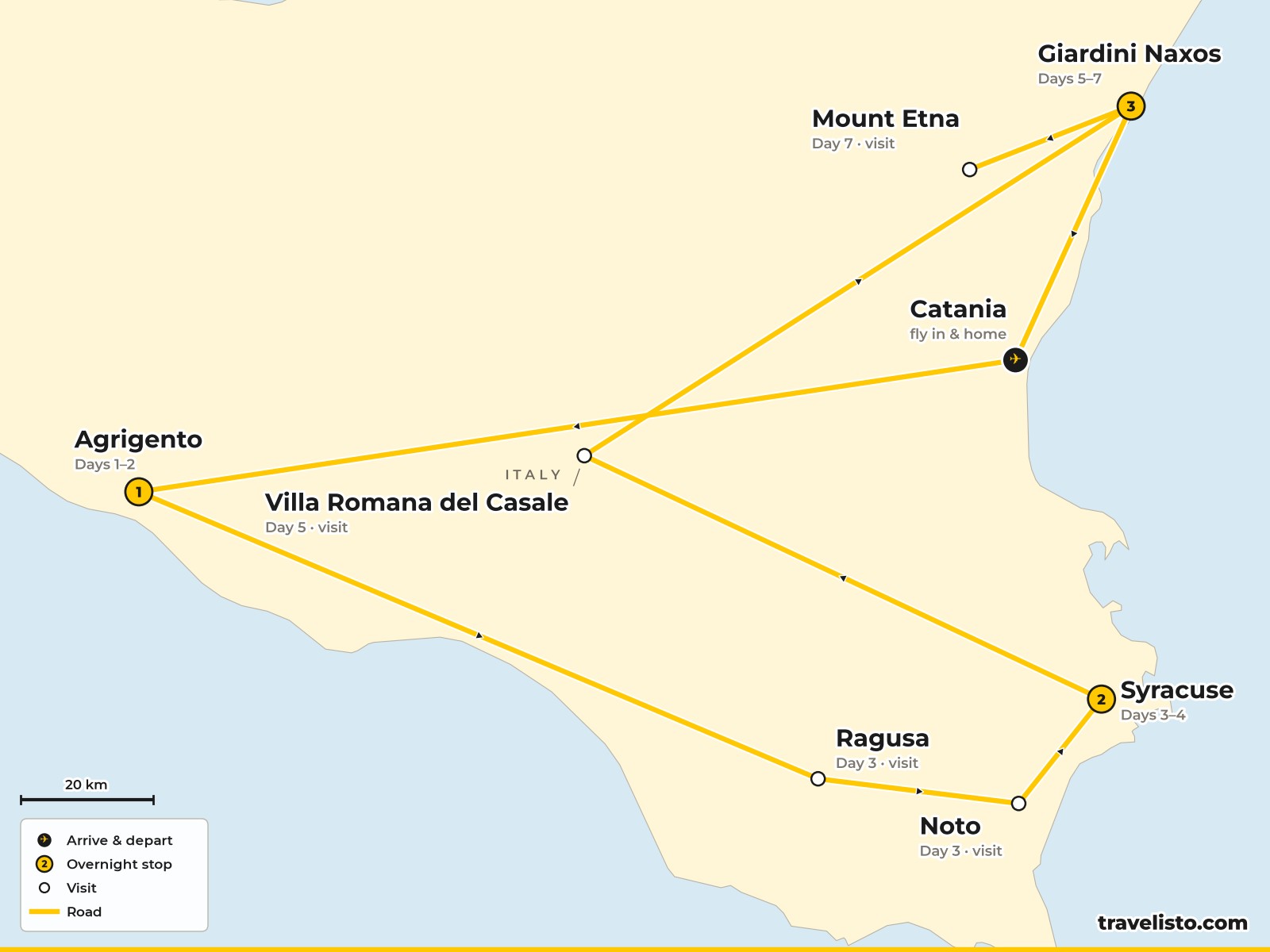
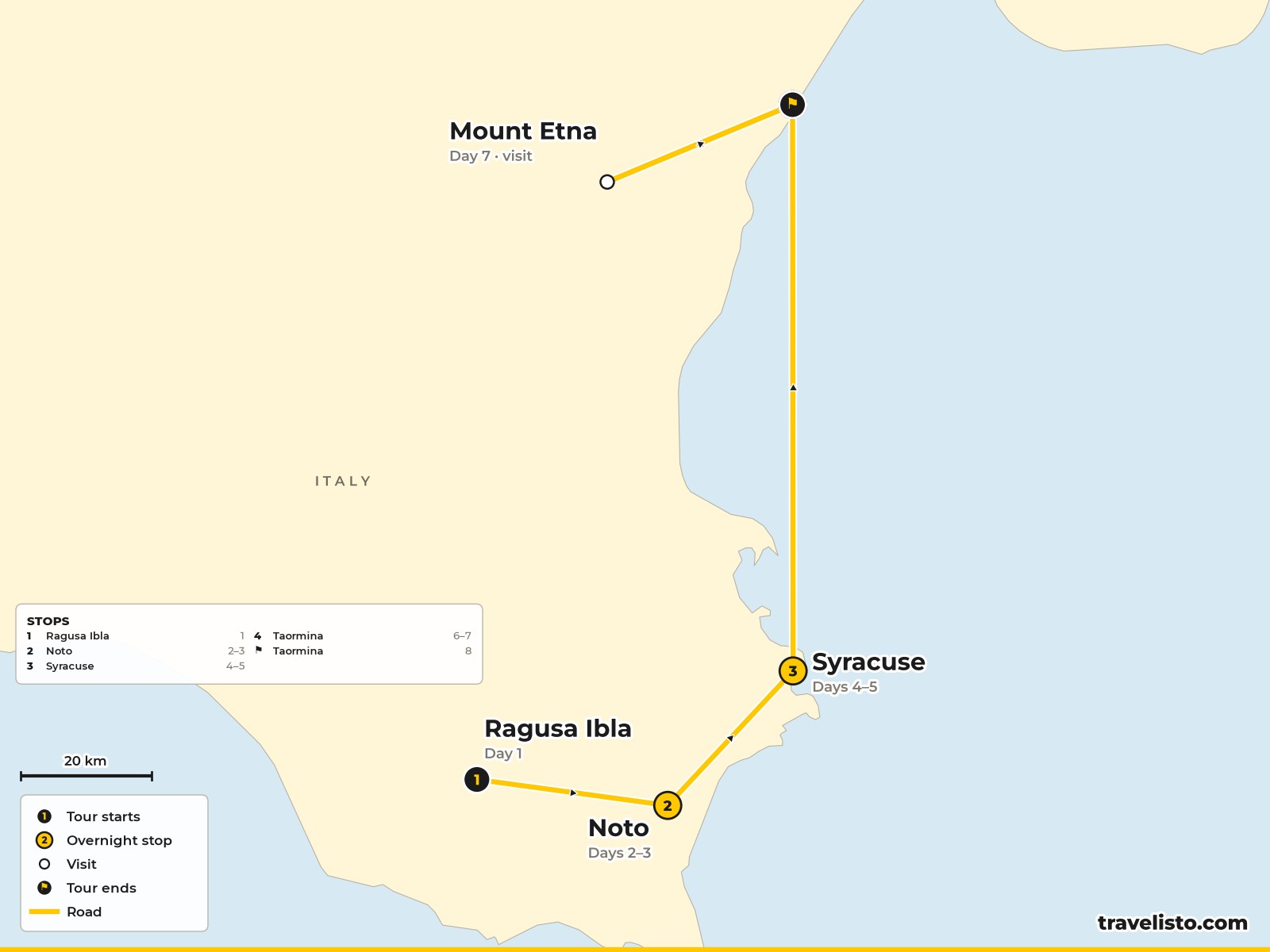
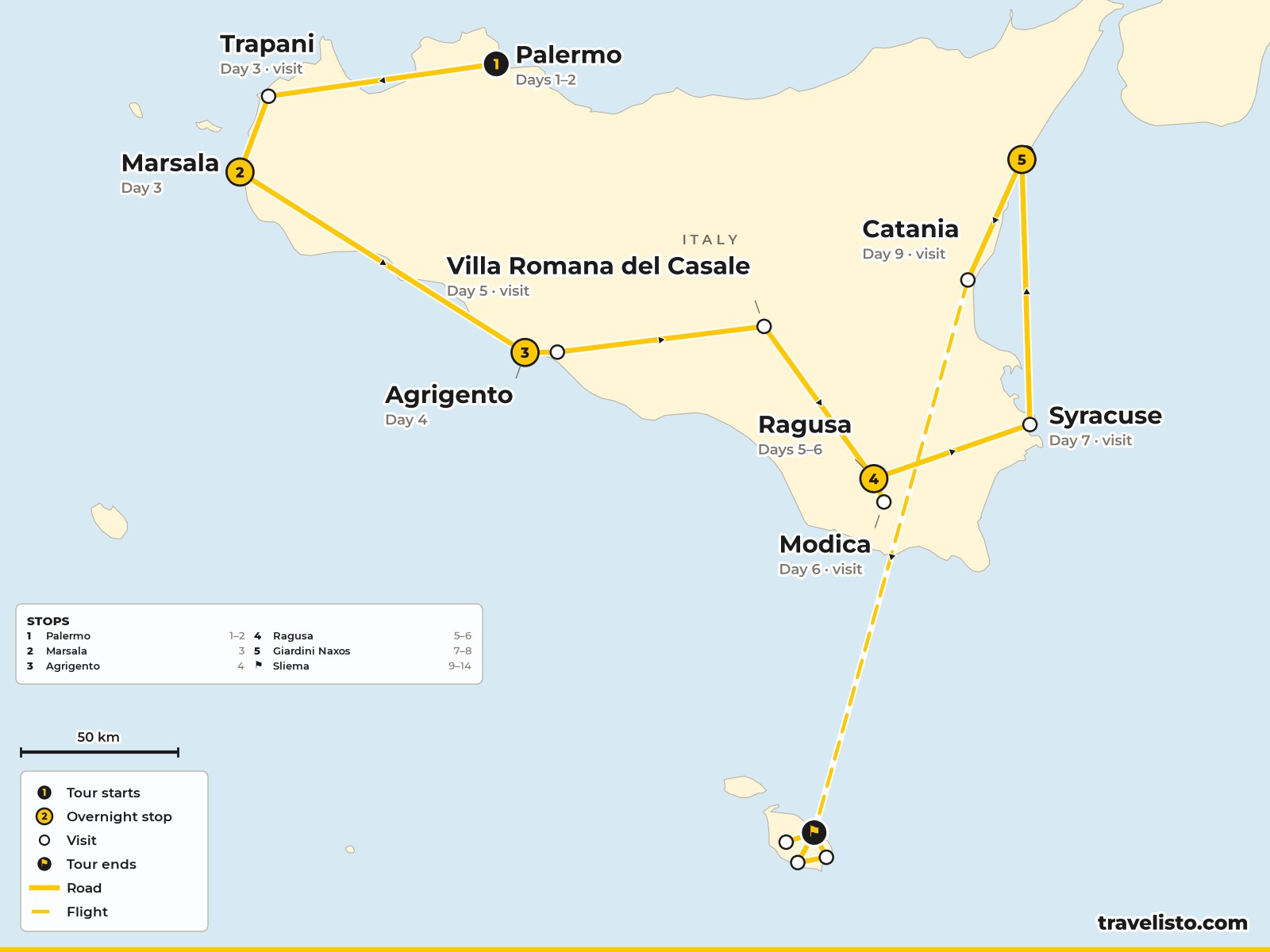
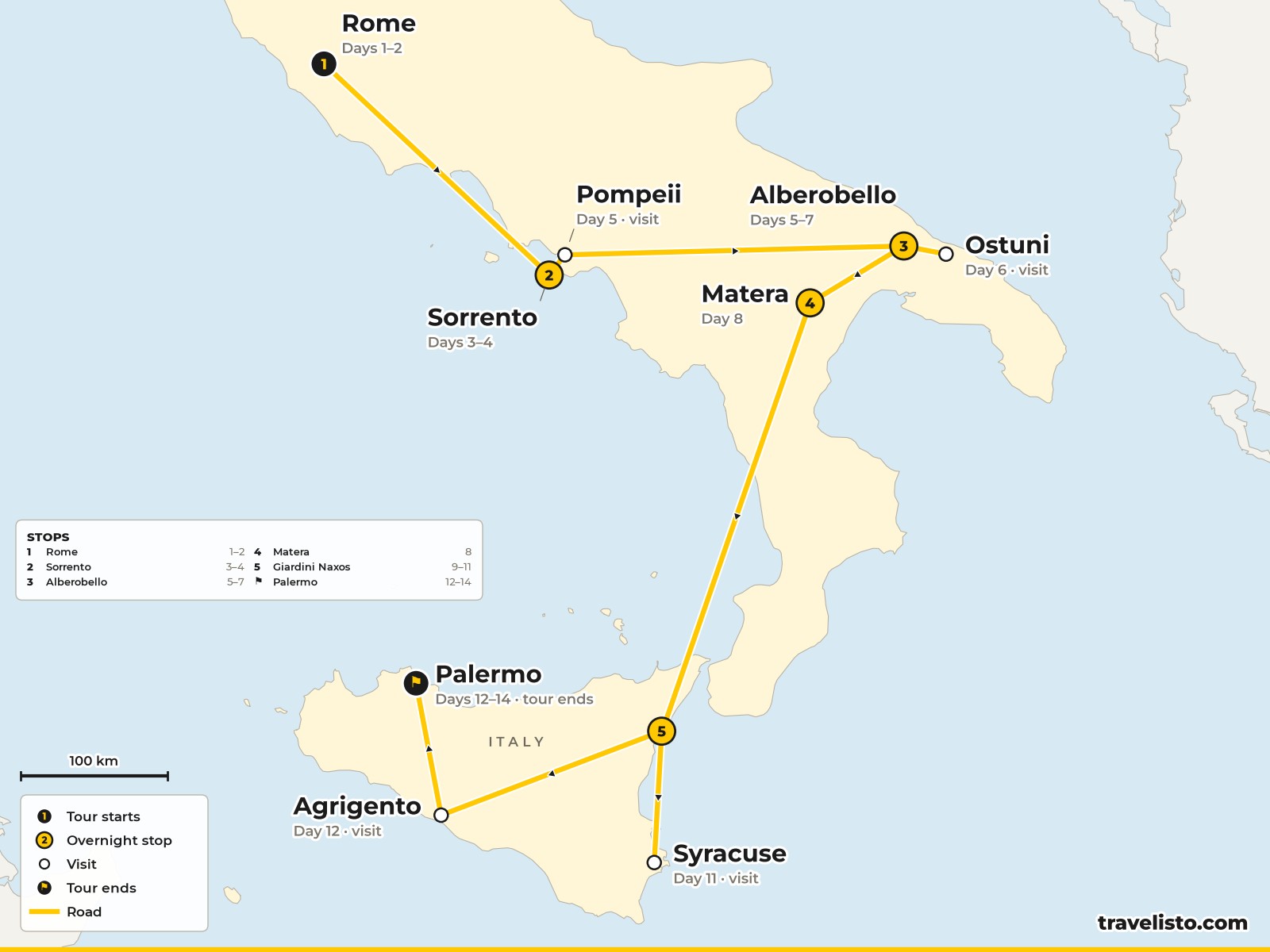
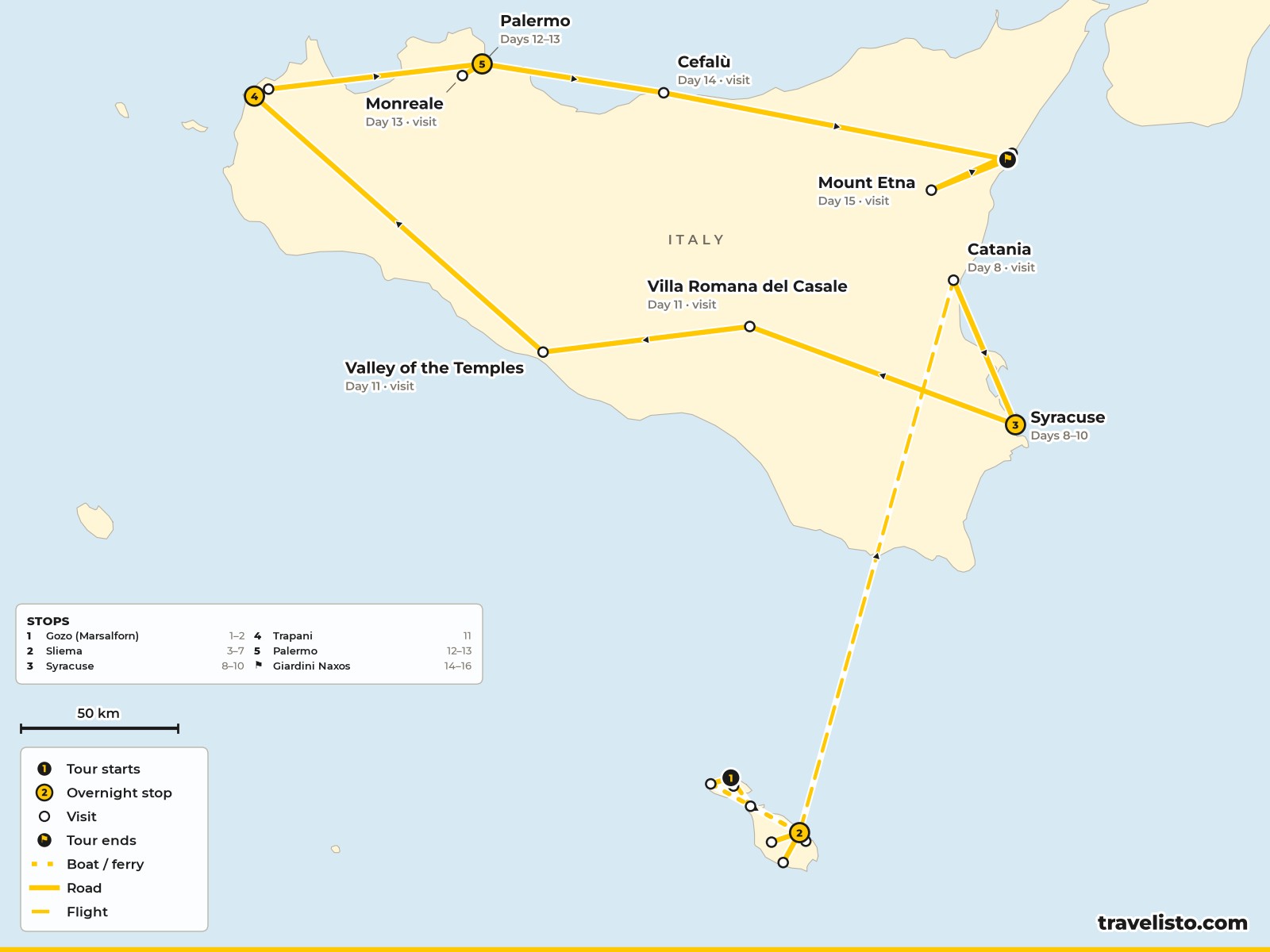
Prefer your own pace? A tailor-made Sicily holiday can combine the cities, Etna, the Baroque towns and an island stay, with a hire car or private driver. See Sicily holidays for hotel stays, or combine the island with Malta: see Malta tours compared.
Practical tips
- Entry: Italy is in the Schengen area, so British visitors can stay up to 90 days in any 180 without a visa. Your passport must have been issued less than 10 years before you arrive and be valid for at least 3 months after you leave. Under the EU’s Entry/Exit System you may have your fingerprints and photo taken at the border. Check the FCDO Italy advice before you go.
- Volcanoes: Etna and Stromboli are active. Eruptions can briefly close Catania airport, and access to the summits depends on activity: go with an authorised guide and follow local rules.
- Summer heat: sightsee early and late in July and August, carry water, and take care in the countryside, where wildfires are a risk.
- Driving: expect narrow lanes in old towns and limited traffic zones (ZTL) in city centres, which fine unauthorised cars automatically.
- Dress: cover shoulders and knees in churches, including Monreale and the Palatine Chapel.
- Siesta hours: many shops and some sites close in the early afternoon, and dinner starts late, around 8.30pm or later.
Frequently asked questions
Is Sicily in Italy?
Yes. Sicily is one of Italy's 20 regions, with special autonomous status. It lies just off the toe of the Italian mainland, across the Strait of Messina.
Where is the best place to go in Sicily?
For a first visit: Taormina and Mount Etna in the east, Syracuse and Ortigia with the Baroque towns in the south-east, Palermo and Cefalù in the north, and the Valley of the Temples at Agrigento.
How many days do you need in Sicily?
A week covers either the east or the west of the island. Ten days to two weeks lets you go all the way round or add the Aeolian Islands.
What is the best time to visit Sicily?
April to June and September to October, when it is warm but not too hot. July and August are often above 30°C and busy; winter is mild and good for sightseeing.
Which airport is best for Sicily?
Catania for Taormina, Etna, Syracuse and the south-east; Palermo for Palermo, Cefalù and the west. Flying into one and out of the other saves time.
Can you climb Mount Etna?
Yes. A cable car on the south side climbs to about 2,500 m, and guided walks and 4×4 trips go higher. The summit craters can only be visited with an authorised guide, and access depends on volcanic activity.
Do you need a car in Sicily?
It helps. Trains and buses link the main towns, but a car or private driver makes it far easier to reach the Baroque towns, the temples, Etna and the countryside.
How do you get to the Aeolian Islands?
By hydrofoil or ferry from Milazzo on the north-east coast, about an hour to Lipari. In summer there are also boats from Palermo and Naples.
Keep planning
- Sicily holidays
- Best hotels in Sicily
- Sicily or Sardinia?
- Italy holidays
- Escorted tours of Italy
- Malta holidays
- Malta tours compared
- Sorrento or the Amalfi Coast?
- Tailor-made holidays
Plan your Sicily holiday with a Travel Designer
Tell us when you’d like to go and we’ll plan your route around Sicily, with flights, the right hotels, a hire car or driver and guides for Etna and the temples, in one ATOL-protected booking.
Make an enquiry Sicily holidays