Montenegro in brief
- Kotor and Perast on the fjord-like Bay of Kotor, a UNESCO site, are the highlights.
- Add Budva and Sveti Stefan for beaches, Lake Skadar and Durmitor for nature.
- May, June and September are the best months; July and August are hot and busy.
- About 3 hours’ flight to Tivat or Podgorica, or fly to Dubrovnik. No visa needed; the currency is the euro.

Montenegro packs an extraordinary amount into a country smaller than Wales. In a morning you can drive from the fjord-like Bay of Kotor, with its Venetian towns and island churches, up hairpin bends to the black mountains that gave the country its name, and down again to sandy beaches on the Adriatic. Inland are Lake Skadar, the largest lake in the Balkans, the canyons and glacial lakes of Durmitor, and a monastery built into a cliff. It’s about three hours’ flight from the UK, uses the euro, and pairs easily with Dubrovnik or Albania. This guide covers the regions, things to do, beaches, food, the best time to go, getting there and where to stay.
Where is Montenegro?

Montenegro sits on the Adriatic between Croatia to the north-west and Albania to the south-east, with Bosnia and Herzegovina, Serbia and Kosovo inland. The coast is only about 300 km long, but the mountains rise almost straight out of the sea, which is why the views are so dramatic.
Its name, Crna Gora in Montenegrin, means “black mountain”, after the dark forested slopes of Mount Lovćen above Kotor. Independent since 2006, it has about 620,000 people. The capital is Podgorica, but the old royal capital, Cetinje, is far more interesting to visit.
Dubrovnik is about an hour’s drive from the border, so many people combine the two.
Montenegro’s regions

The Bay of Kotor
A winding, fjord-like bay of four basins, ringed by mountains up to about 1,700 m, with the walled town of Kotor at its head and the baroque village of Perast facing two island churches. The best base for a first visit.
The Budva Riviera
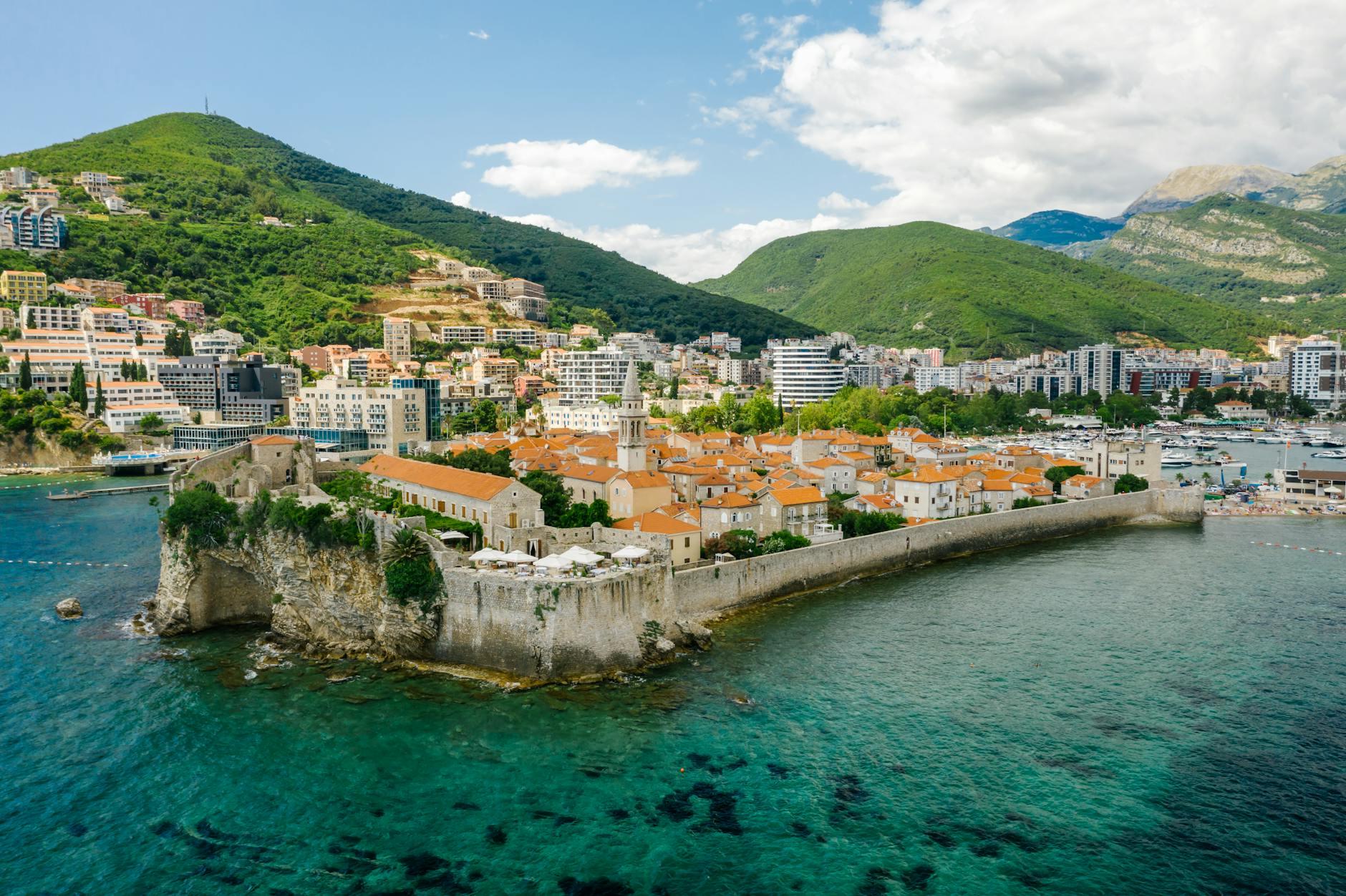
About 35 km of coast with Montenegro’s busiest beaches, the walled old town of Budva and the island village of Sveti Stefan. Lively in summer; quieter coves and villages lie a few kilometres either side.
Bar and Ulcinj
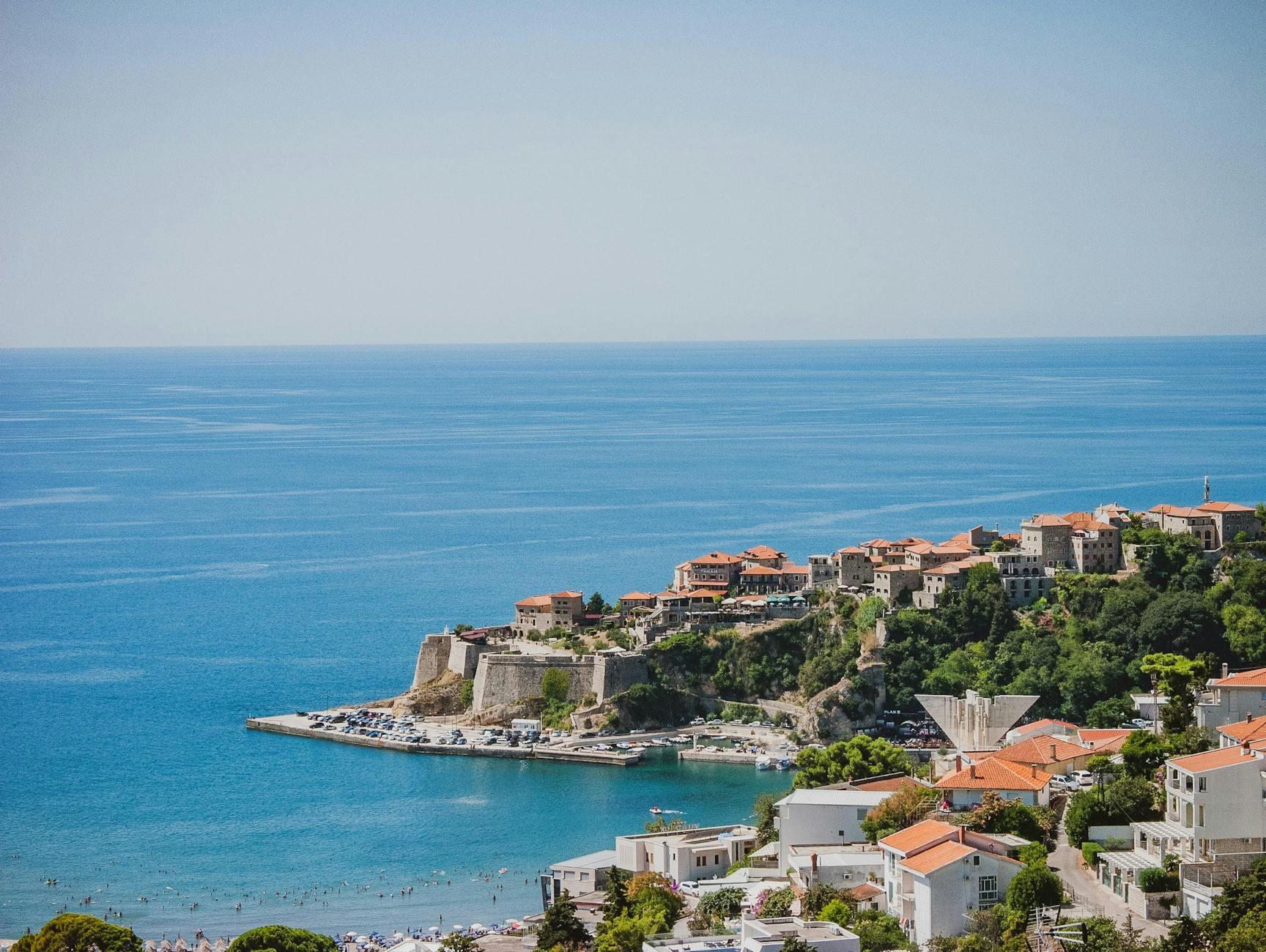
The far south feels closer to Albania: minarets, the hilltop ruins of Stari Bar, the old town of Ulcinj and Velika Plaža, about 12 km of sand. Good for families and kitesurfing.
Lovćen and Cetinje
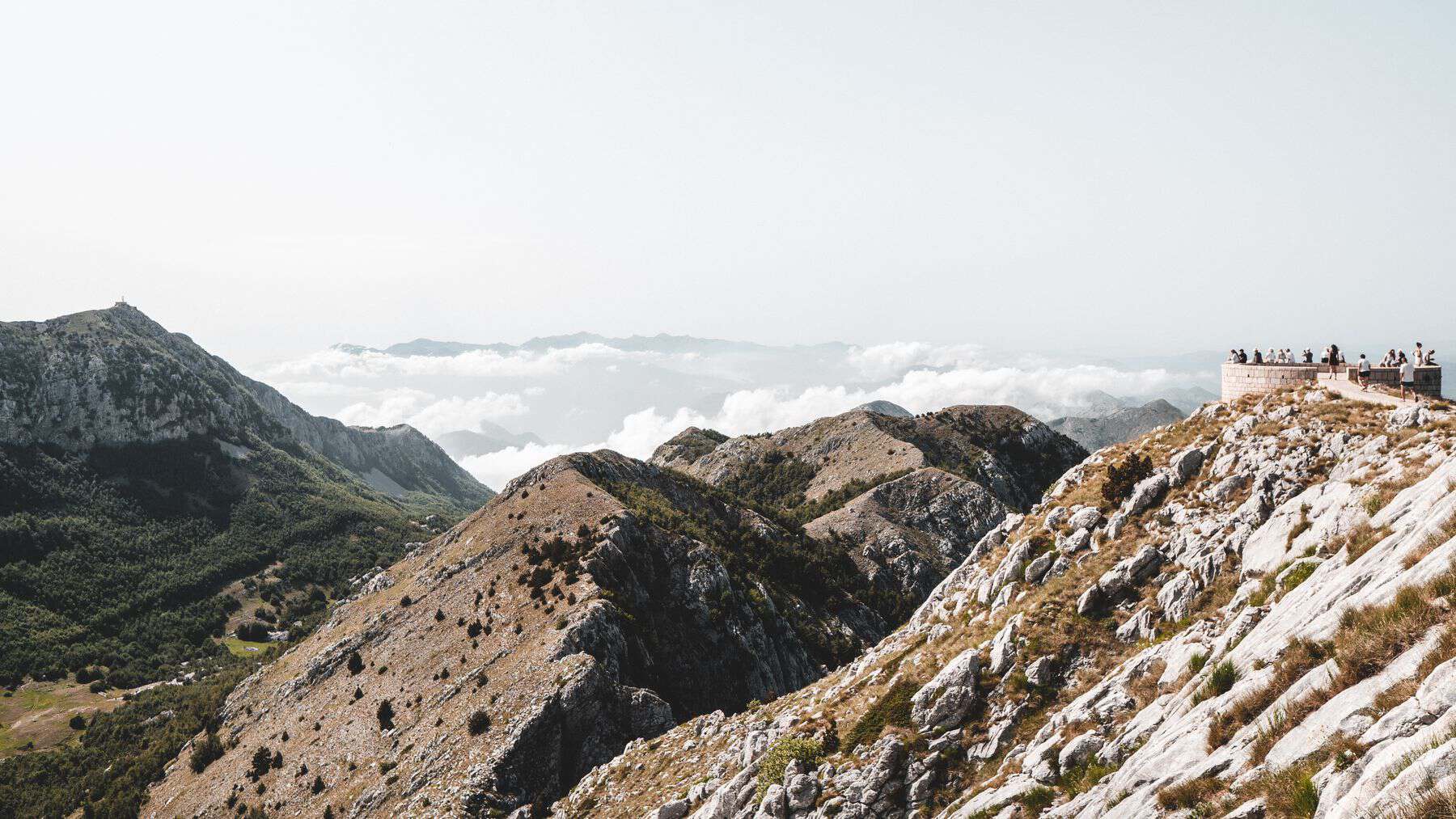
The mountain above Kotor, with the mausoleum of the poet-prince Njegoš on its summit, and the old royal capital of Cetinje on the plateau behind, with its palace, monastery and former embassies.

Lake Skadar
The largest lake in the Balkans, shared with Albania: reed beds, water lilies, island monasteries, fishing villages and the vineyards of the Crmnica valley, under an hour from the coast.
Durmitor and the north
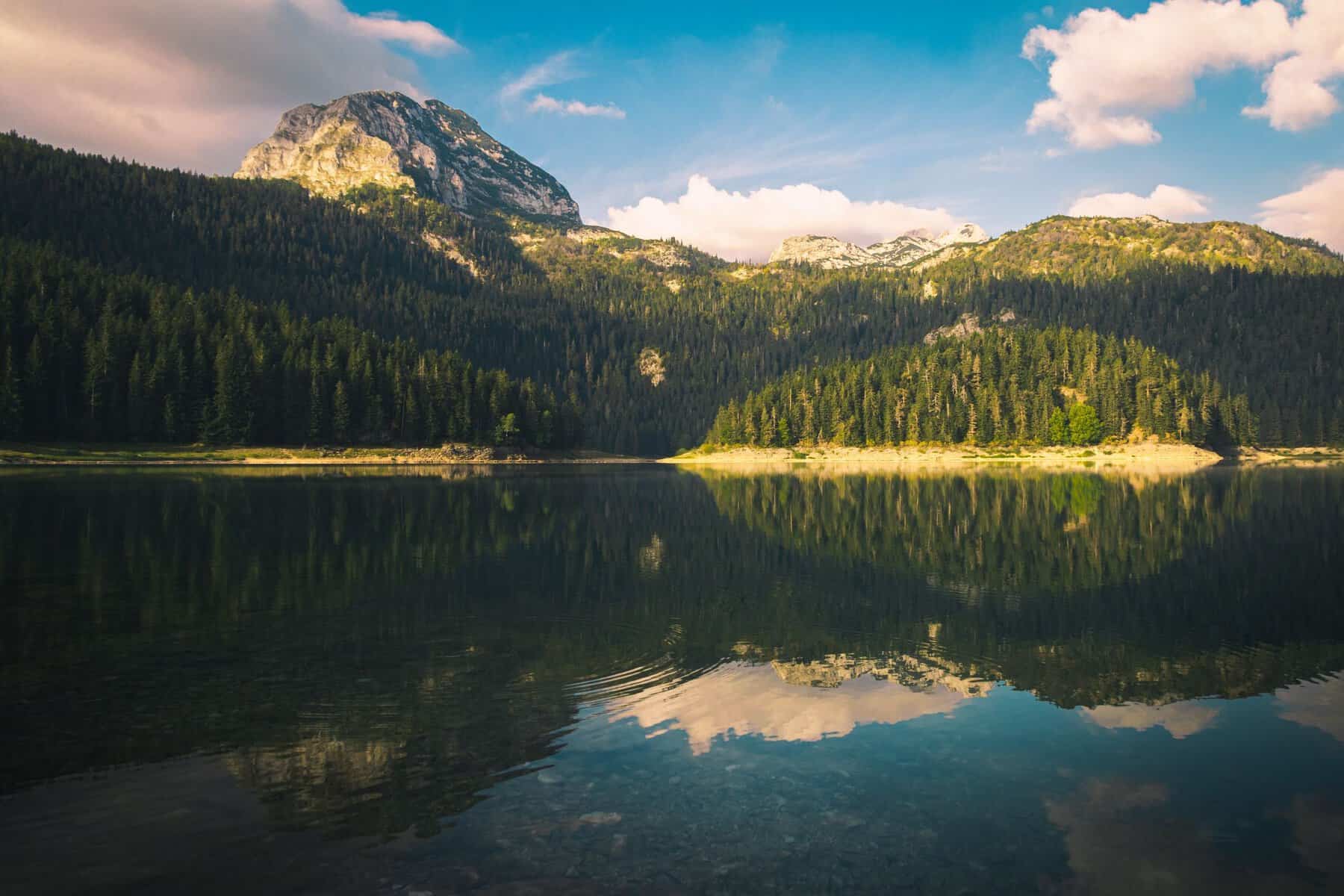
A high limestone massif around the mountain town of Žabljak, with glacial lakes, peaks over 2,500 m and the Tara canyon, the deepest in Europe. Cool in summer, snowy in winter.
Things to do in Montenegro
Kotor old town and its walls

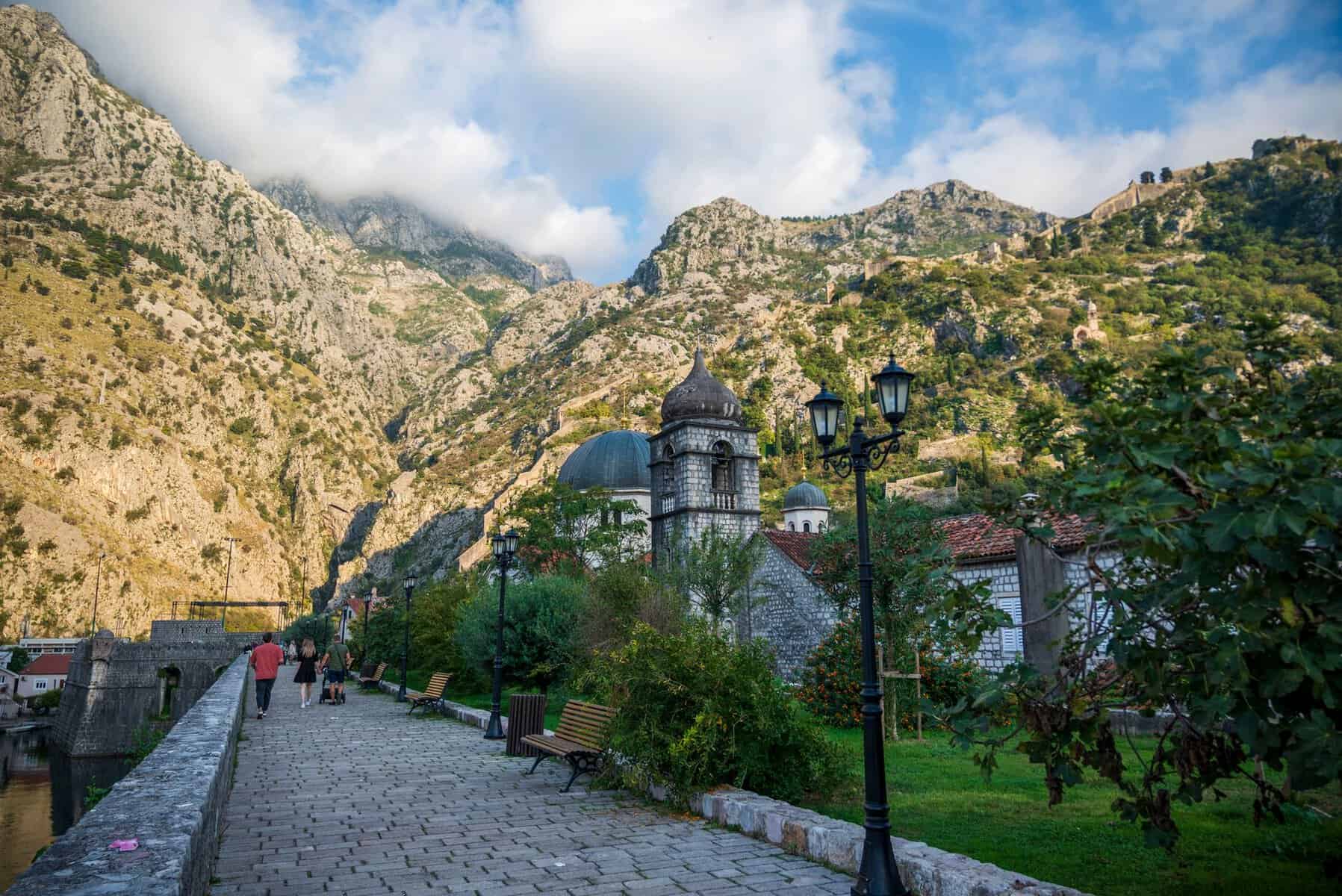
Kotor is a maze of marble-paved lanes, small squares, Romanesque churches and Venetian palaces, wrapped in walls that climb the mountain behind. With the bay, it has been a UNESCO World Heritage Site since 1979. Start at the Sea Gate, find St Tryphon’s Cathedral, consecrated in 1166, and get lost.
Climb the walls. A path of about 1,350 steps zigzags up past the little Church of Our Lady of Remedy to the St John’s fortress, about 260 m above the town. Go at first light or late afternoon, with water and good shoes, for the classic view over the rooftops and the bay.
Tip: Kotor is a major cruise port, and on busy days several thousand passengers come ashore between about 9am and 5pm. Staying in or near the town means you can enjoy it early and in the evening, when it’s yours.
Perast and Our Lady of the Rocks
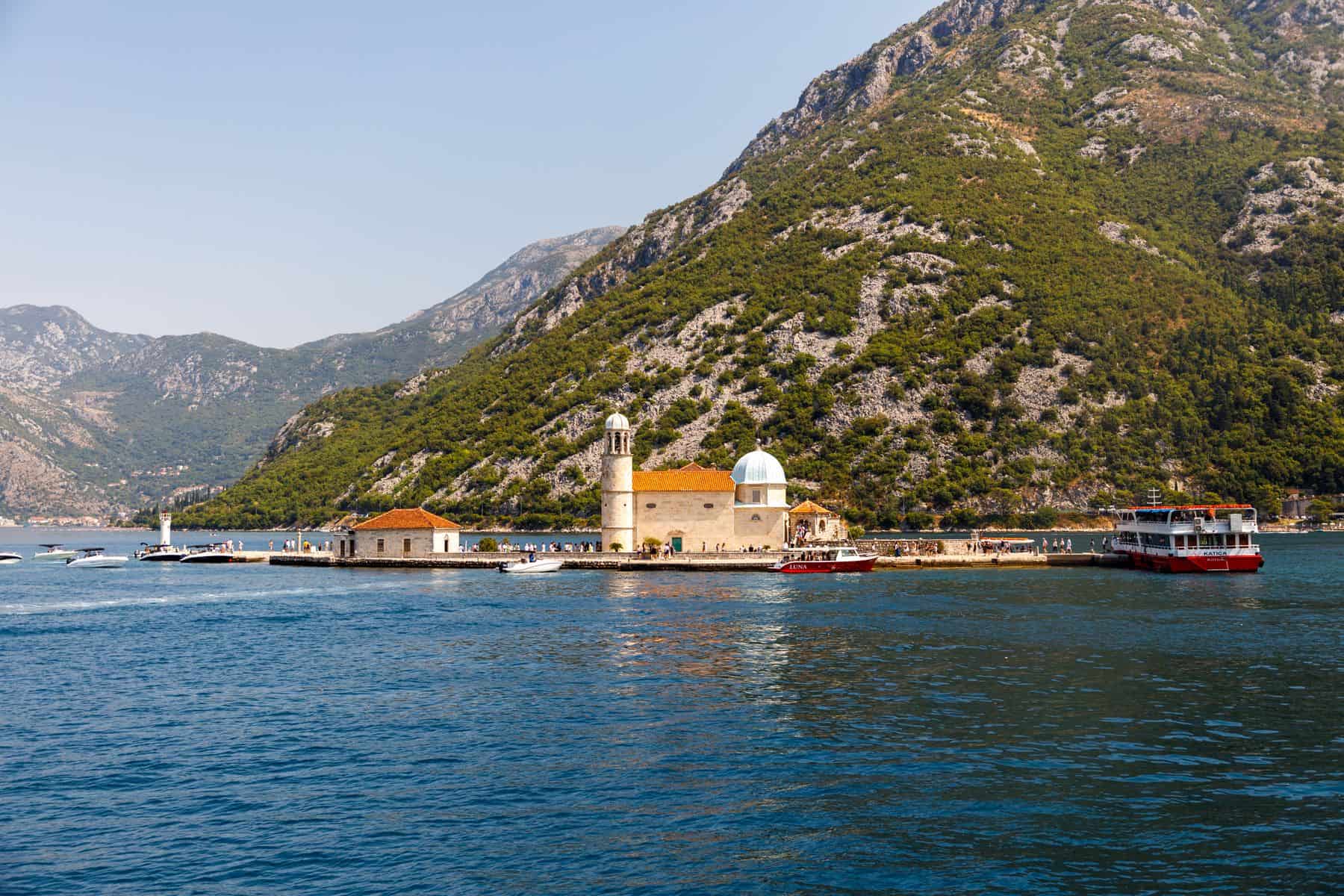
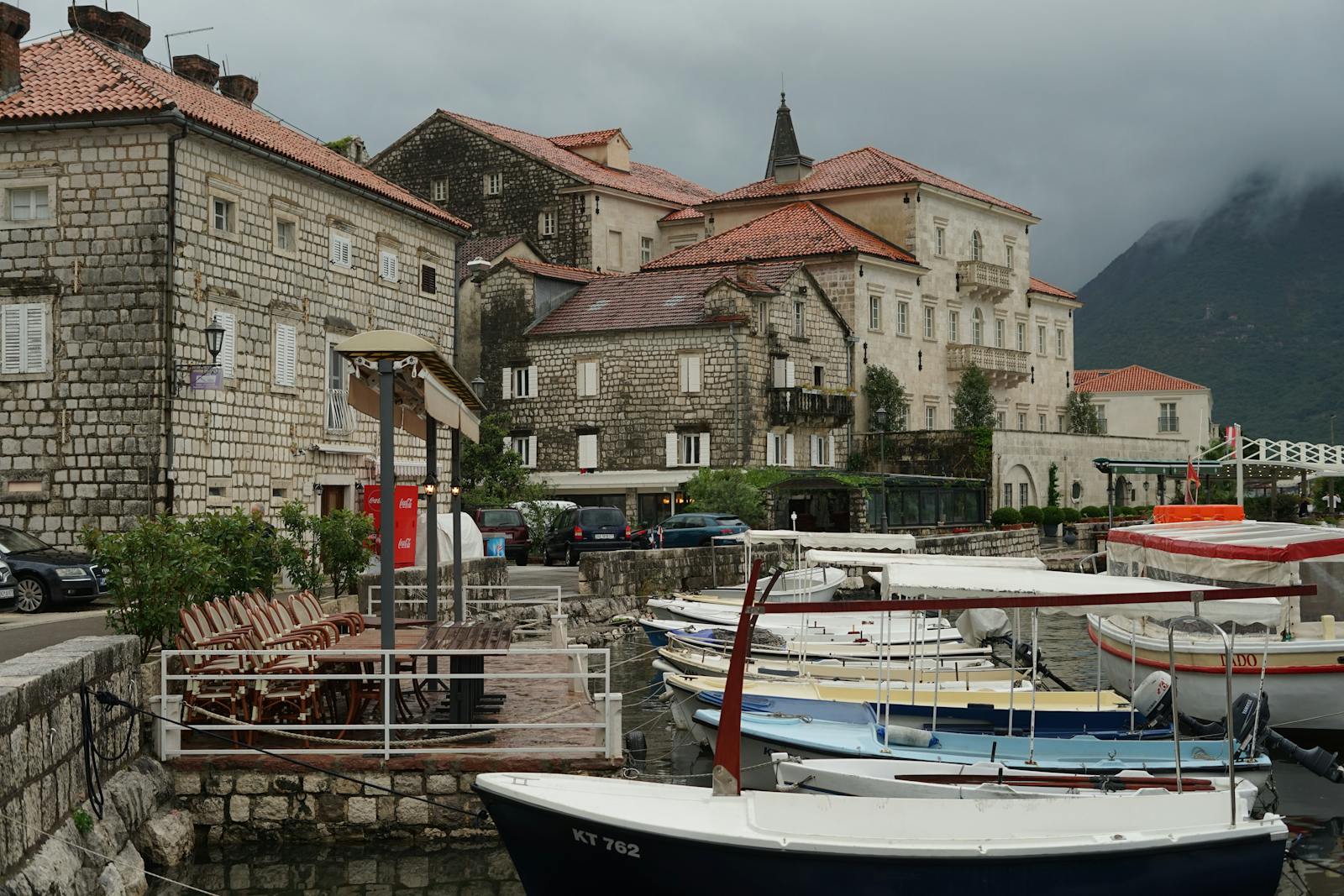
Perast, 15 minutes’ drive from Kotor, is a single waterfront of baroque stone palaces and churches built by sea captains in the 17th and 18th centuries, when it was a Venetian naval town. In the evening it’s one of the most beautiful places on the Adriatic.
Small boats take you out to Our Lady of the Rocks (Gospa od Škrpjela), an artificial islet built up over centuries by sailors dropping stones and sinking old ships, with a church full of votive paintings and silver plaques. Next to it, the cypress-covered islet of St George holds a Benedictine monastery that isn’t open to visitors.

More around the bay: drive or cycle the quiet shore road through the villages of Dobrota, Prčanj and Stoliv; take a boat to the sea caves and beaches of the Luštica peninsula at the mouth of the bay, including the Blue Cave; and visit Herceg Novi, a town of steep stairways and gardens near the Croatian border. The short car ferry between Kamenari and Lepetane, across the narrow Verige strait, saves the long drive around the bay.
Budva and Sveti Stefan
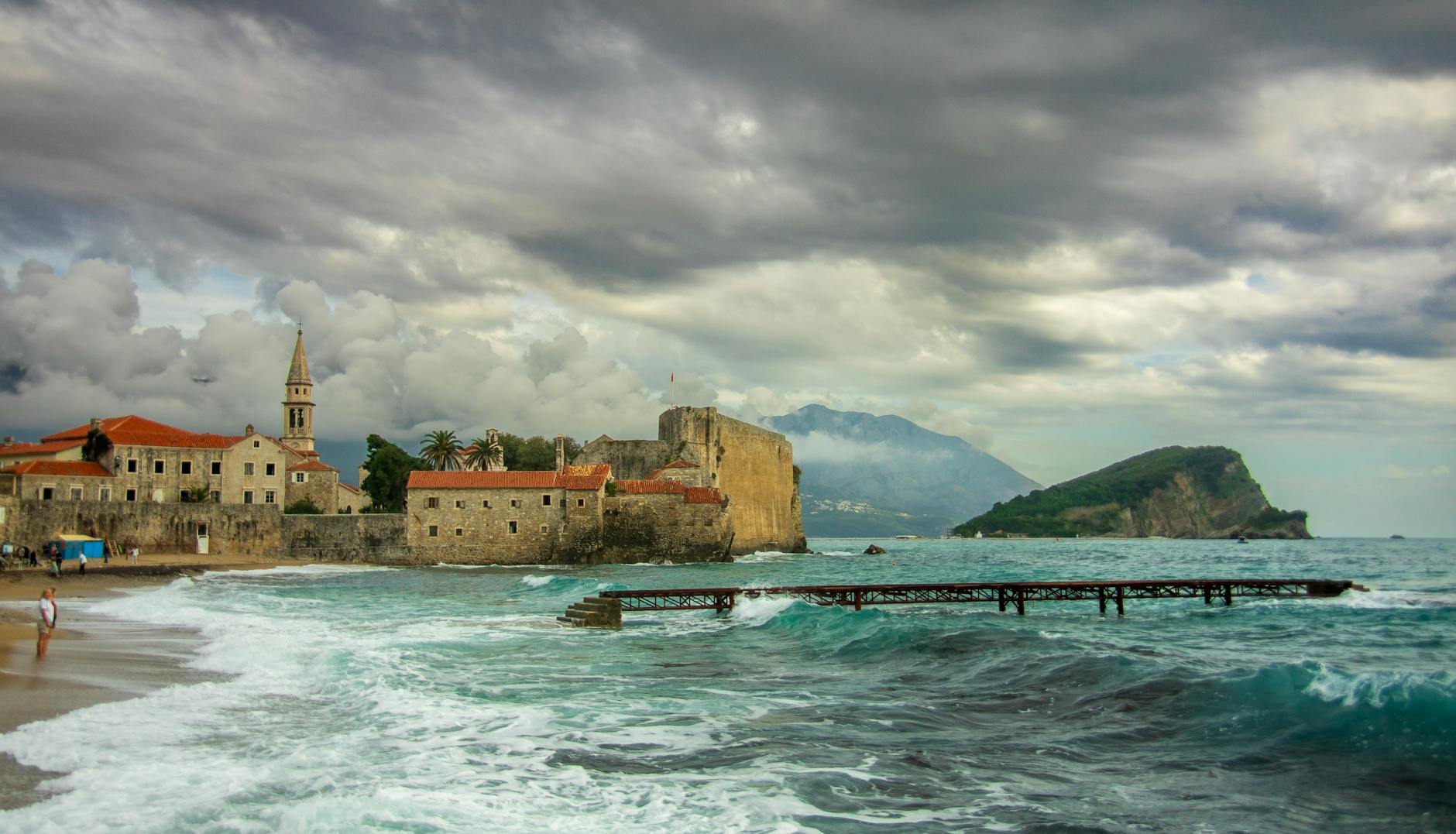
Budva is Montenegro’s beach capital: a compact walled old town on a headland, rebuilt after an earthquake in 1979, with a busy modern resort around it and beaches such as Mogren on the cliff path just beyond the walls.
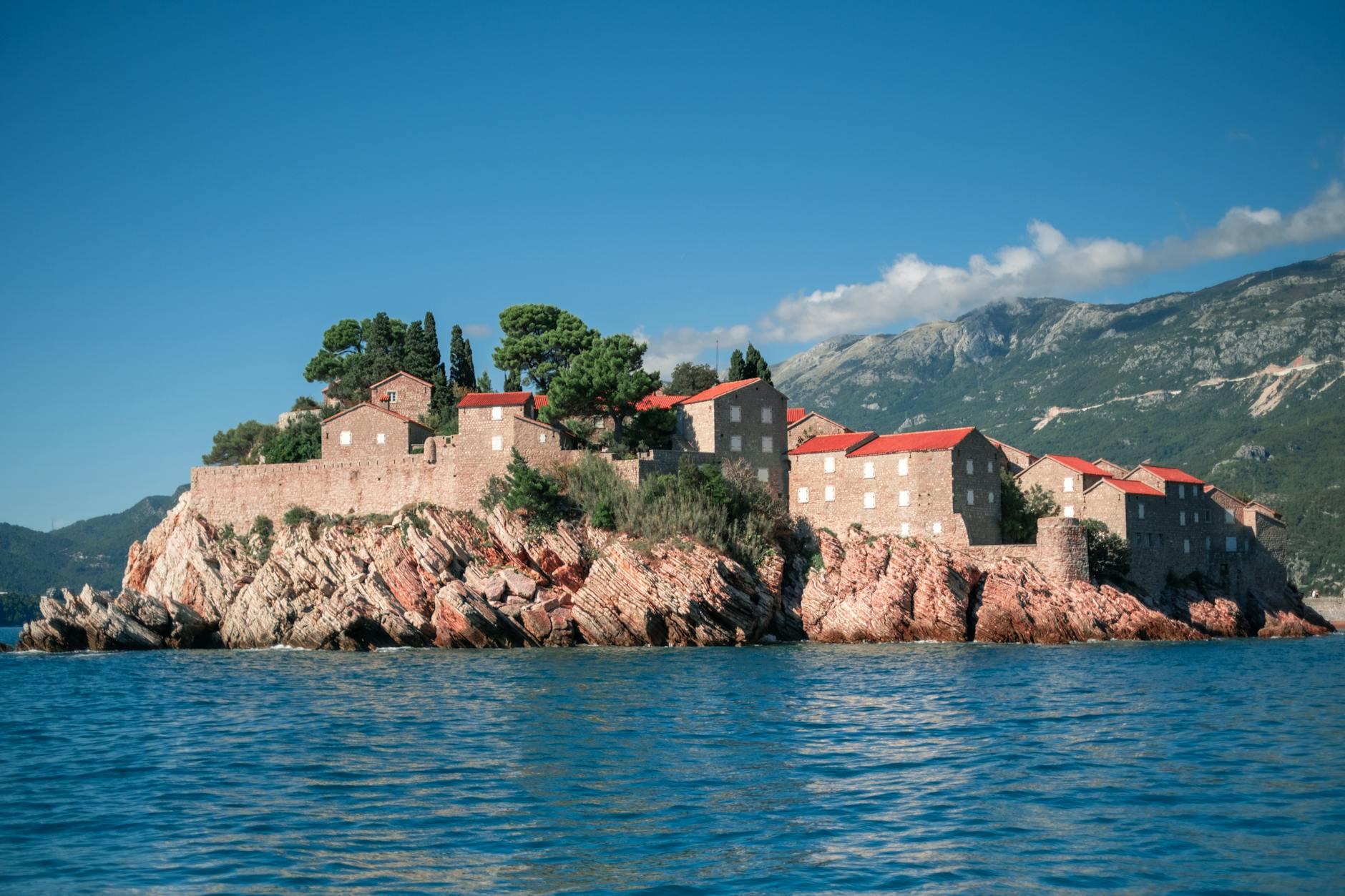
Sveti Stefan, 10 km south, is the image on every poster: a 15th-century fishing village on a tiny island, joined to the shore by a sandbar, its red-roofed stone houses turned into a private resort decades ago. Visitors can’t simply wander in, but you can see it from the road above, swim from the beaches on either side and walk the coastal path north to the little bay of Pržno and the old villas of Miločer.
Further south, Petrovac has a small, family-friendly bay with a Venetian fort and pine woods, and is more relaxed than Budva.
Mount Lovćen, Njeguši and Cetinje

The old road up from Kotor to Lovćen, the “Kotor serpentine”, climbs 25 hairpin bends with ever wider views over the bay. At the top, in Lovćen National Park, 461 steps lead through a tunnel to the Njegoš Mausoleum on the summit of Jezerski Vrh, about 1,660 m up.
On the way, stop in the village of Njeguši to try its air-dried ham (pršut) and cheese, then continue to Cetinje, the royal capital until 1918. It’s a small, slow town with King Nikola’s palace, the Cetinje Monastery and grand houses that were once foreign embassies.
Lake Skadar

Lake Skadar National Park is a world apart from the coast: a huge, shallow lake fringed with reeds and water lilies, dotted with island monasteries and ringed by limestone hills. It is one of Europe’s most important wetlands for birds, with hundreds of species including the rare Dalmatian pelican, which nests here.
Take a slow boat trip from the village of Virpazar or Rijeka Crnojevića, where an old stone bridge crosses the river; stop at the Pavlova Strana viewpoint above the river’s famous horseshoe bend; and finish with lunch of lake fish and a glass of local wine in a family winery in the Crmnica valley.
Durmitor and the Tara canyon
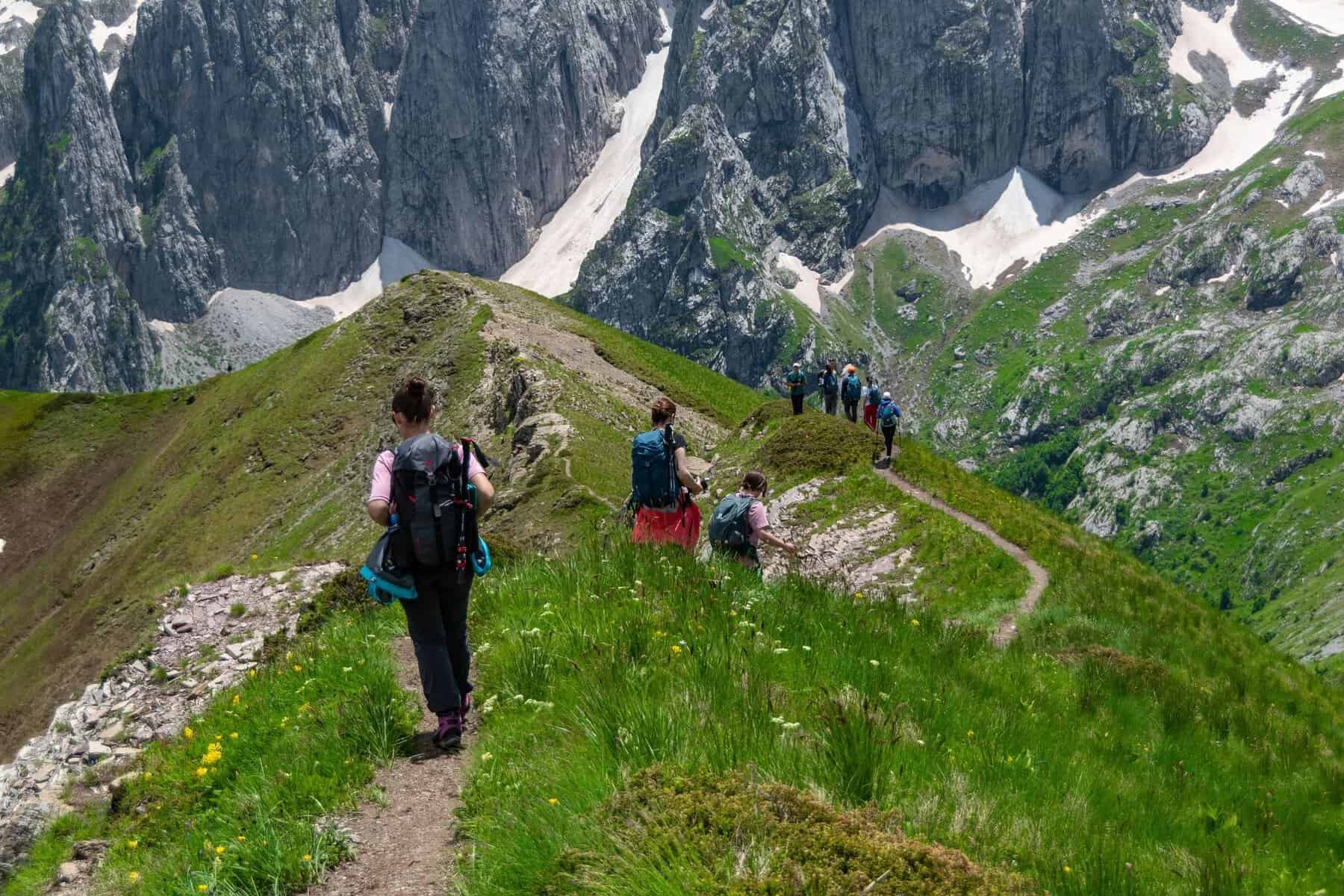
Durmitor National Park, a UNESCO site since 1980, is Montenegro’s great mountain wilderness: about 18 glacial lakes, pine forests and peaks rising to Bobotov Kuk, at 2,523 m. The easy walk around the Black Lake near Žabljak takes about an hour.
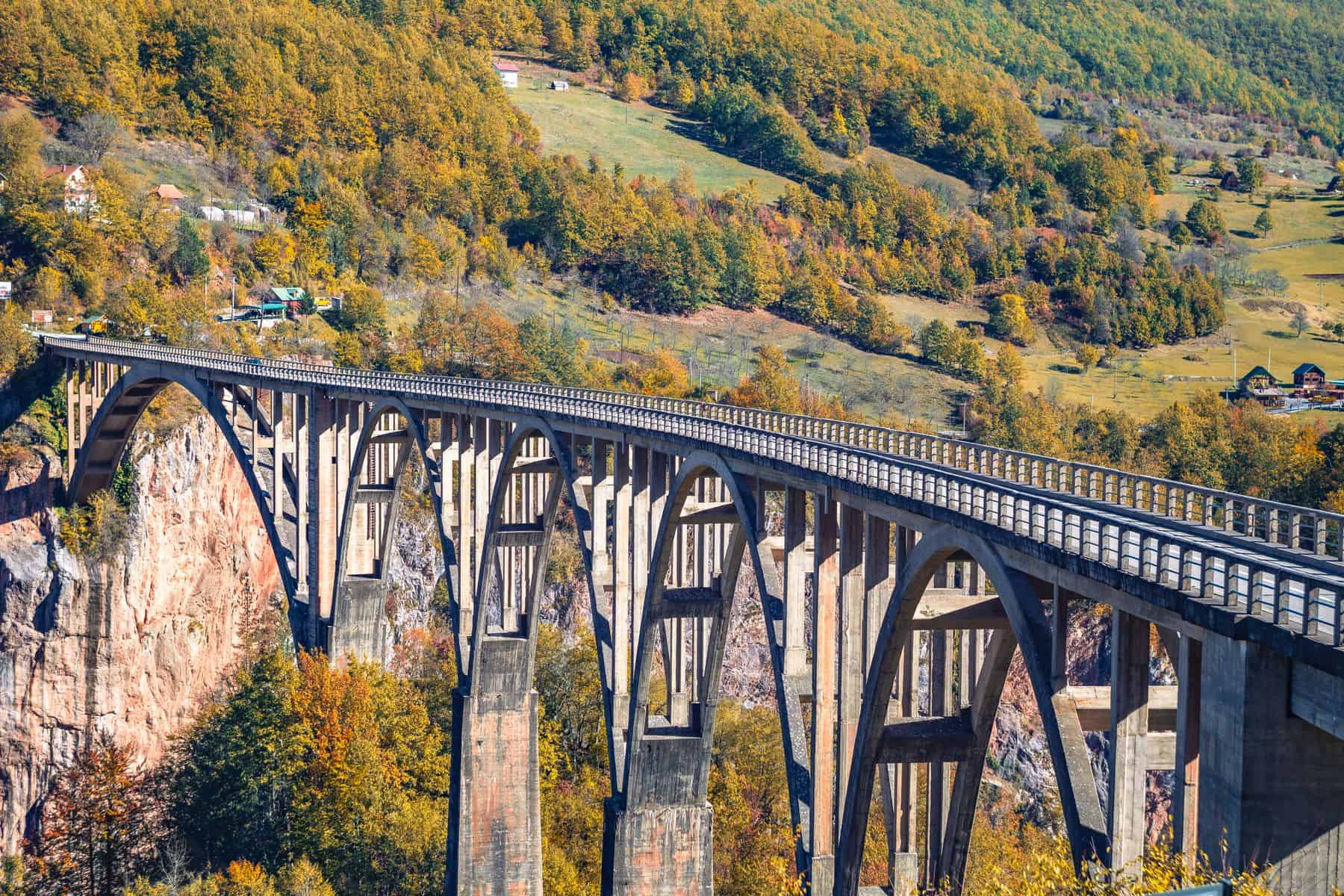
The Tara River has cut a canyon about 1,300 m deep, the deepest in Europe. You can cross it on the tall arched Đurđevića Tara bridge, built in 1940 (there is a zipline alongside), or raft through it, usually from May to October; the water is liveliest in May and June. The drive from the coast takes about three to four hours, so stay at least two nights.
On the way, stop at Ostrog Monastery (below), and if you have time add Biogradska Gora, one of the last primeval forests in Europe, around a lake near Kolašin.
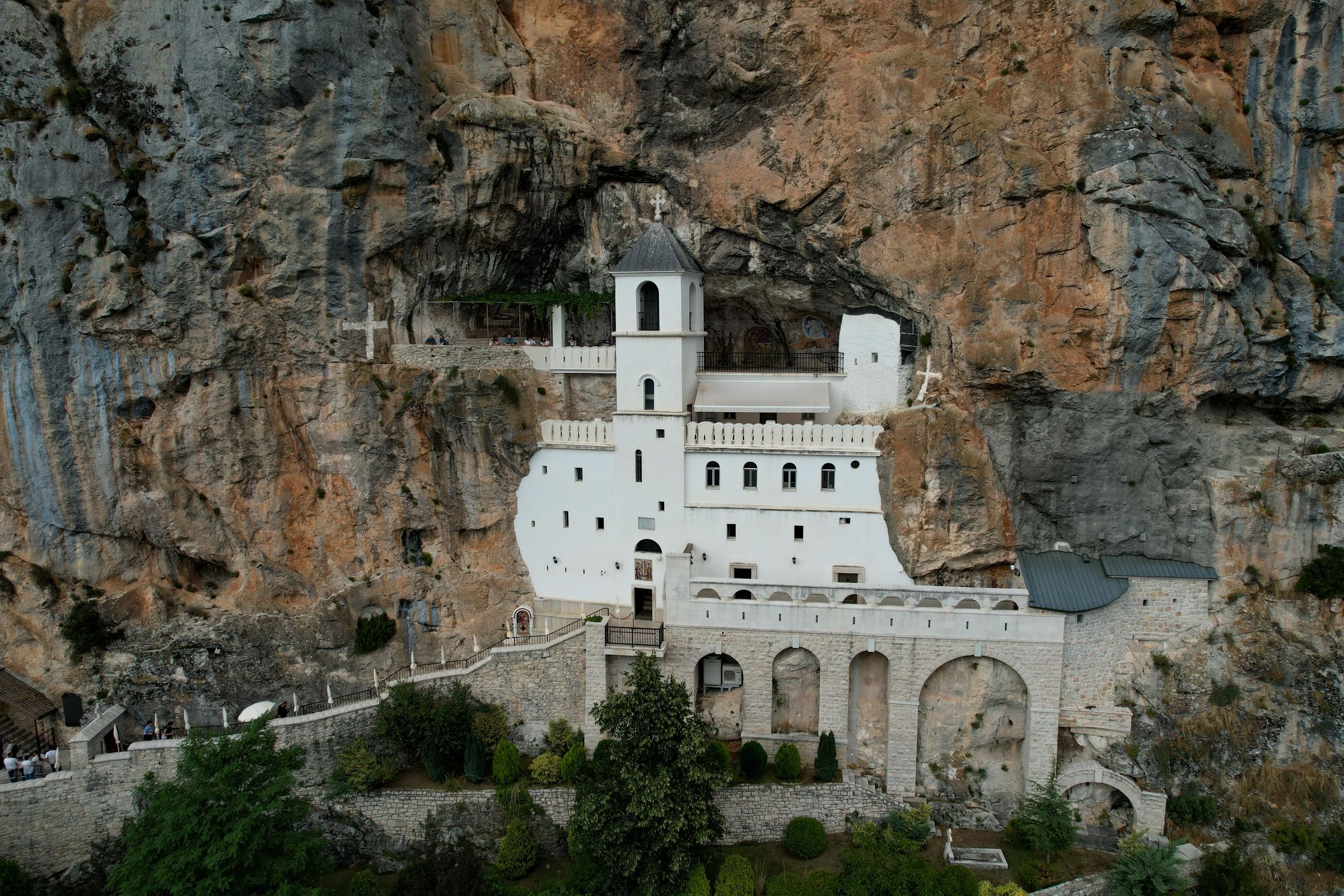
Ostrog Monastery, a white Serbian Orthodox monastery set into a vertical cliff at about 900 m, is the most visited pilgrimage site in Montenegro, about an hour from Podgorica. Pilgrims of all faiths come to the relics of St Basil of Ostrog.
Beaches in Montenegro
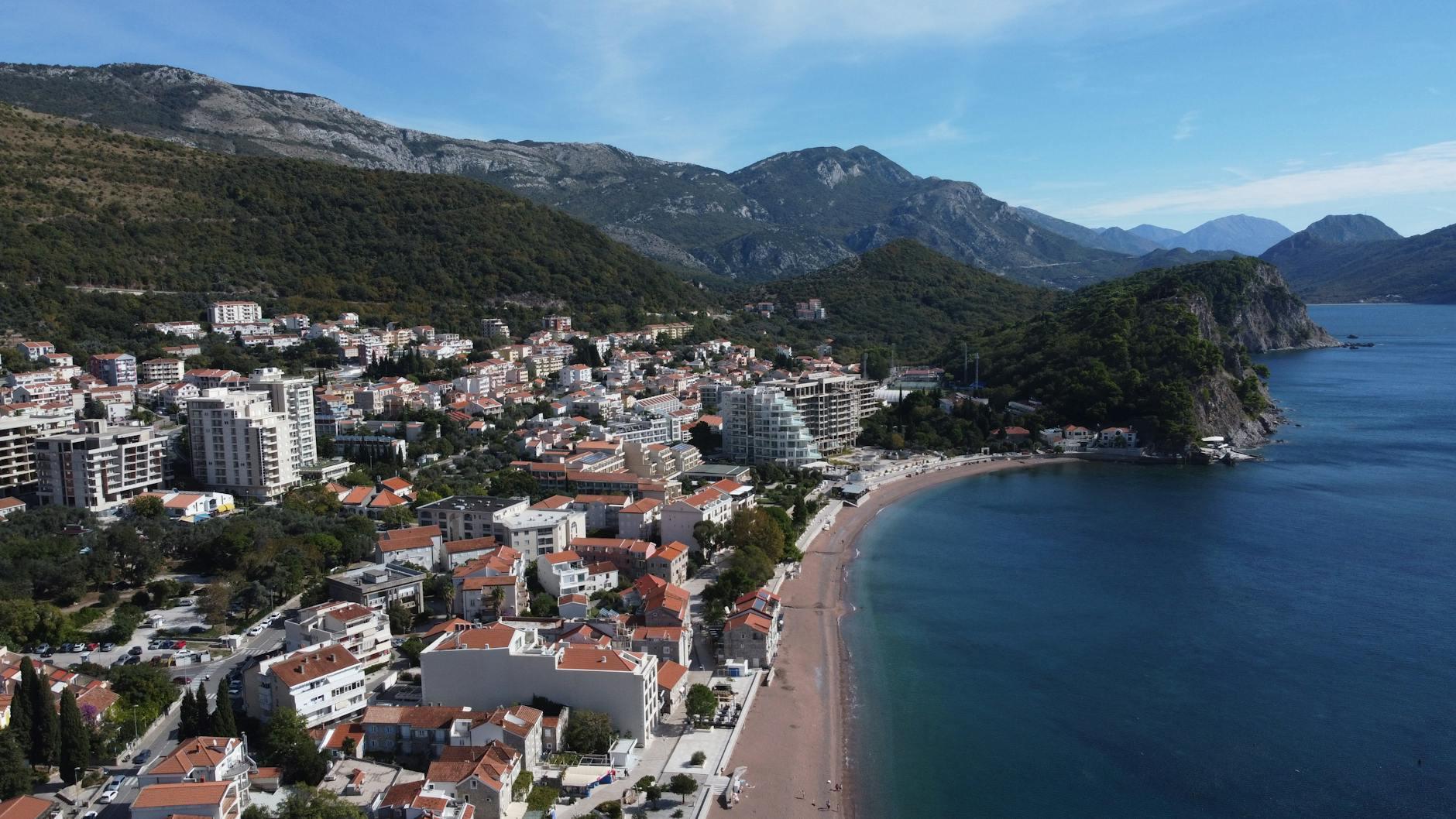
Most of Montenegro’s beaches are pebble or shingle in small coves, with very clear water; sand is rarer and found mostly in the south.
For swimming in the bay, use the jetties and platforms in Perast, Dobrota and Prčanj: the water is calm and often warm. On the Budva Riviera, Mogren, Pržno and the beaches beside Sveti Stefan are the prettiest. On the Luštica peninsula, coves are reached by boat or short walks. In the south, Velika Plaža near Ulcinj is long, sandy and shallow, good for children.
The sea is warmest from late June to early October.
Food and wine
On the coast, eat grilled fish and seafood, mussels from the Bay of Kotor, octopus salad and black risotto coloured with squid ink, as in neighbouring Croatia. Inland, food is heartier: Njeguški pršut (air-dried ham) and cheese, Njeguški steak rolled around ham and cheese, lamb slow-cooked under a metal bell (ispod sača), and kačamak, a rich cornmeal and potato dish with cheese.
Around Lake Skadar, try carp and small fried lake fish. Montenegro’s red grape is Vranac, deep and fruity, grown around the lake and Podgorica; the white is Krstač. Meals often start with a shot of rakija.
Best time to visit Montenegro
The best time to visit Montenegro is May, June and September, when it’s warm, sunny and the sea is swimmable without the crowds or the heat of high summer. July and August are hot, around 30°C, and very busy on the coast, with long queues at border crossings and on the roads; the mountains are the place to be. October is mild and quiet, though rain increases. From November to March the coast is green and peaceful but wet: the mountains above the Bay of Kotor are among the rainiest places in Europe, and Durmitor is under snow, with skiing at Žabljak and Kolašin. April brings spring flowers and walking weather.
| Month | Kotor | Budva | Žabljak (Durmitor) |
|---|---|---|---|
| Jan | 11°C / 5°C · 285 mm | 11°C / 5°C · 265 mm | -1°C / -7°C · 145 mm |
| Feb | 13°C / 6°C · 230 mm | 13°C / 7°C · 220 mm | 2°C / -5°C · 120 mm |
| Mar | 15°C / 8°C · 215 mm | 15°C / 8°C · 220 mm | 4°C / -4°C · 130 mm |
| Apr | 18°C / 11°C · 160 mm | 18°C / 11°C · 150 mm | 8°C / -1°C · 100 mm |
| May | 22°C / 15°C · 165 mm | 22°C / 15°C · 160 mm | 13°C / 4°C · 120 mm |
| Jun | 26°C / 20°C · 90 mm | 27°C / 20°C · 90 mm | 18°C / 9°C · 110 mm |
| Jul | 30°C / 22°C · 60 mm | 30°C / 23°C · 55 mm | 21°C / 11°C · 80 mm |
| Aug | 30°C / 23°C · 70 mm | 30°C / 23°C · 65 mm | 21°C / 11°C · 65 mm |
| Sep | 25°C / 19°C · 165 mm | 25°C / 19°C · 185 mm | 16°C / 7°C · 80 mm |
| Oct | 21°C / 15°C · 205 mm | 21°C / 15°C · 215 mm | 12°C / 3°C · 90 mm |
| Nov | 17°C / 11°C · 380 mm | 17°C / 12°C · 395 mm | 7°C / 0°C · 145 mm |
| Dec | 13°C / 7°C · 290 mm | 13°C / 7°C · 285 mm | 2°C / -4°C · 145 mm |
Average daily high / low and monthly rainfall, 10-year ERA5 data. Rain on the coast comes in heavy bursts: even in the wet months there are many dry, bright days.
How to get to Montenegro from the UK
Tivat airport is the most convenient, on the Bay of Kotor about 15 to 20 minutes from Kotor and 30 minutes from Budva. Direct flights from the UK take about three hours and run mainly from spring to autumn.
Podgorica airport, the main airport, is about an hour from Budva and Lake Skadar and has flights all year, some direct from the UK.
Dubrovnik airport in Croatia is often the easiest choice: there are many UK flights, and Herceg Novi is 30 to 40 minutes away, Kotor about 1.5 hours, depending on the border. Allow extra time in summer, as queues at the crossing can be long and the EU’s new Entry/Exit System may slow things further.
Getting around Montenegro
Distances are short but roads are slow: two lanes, many bends and heavy traffic on the coast in July and August. A private driver or self-drive is the best way to see the country; we can arrange either. Driving is on the right; speed limits are strictly enforced and the drink-drive limit is much lower than in the UK. The Morača canyon road north from Podgorica is spectacular but needs care in bad weather, and some mountain roads close in winter. In the bay, water taxis and boat trips are the most pleasant way to get between Kotor, Perast and Tivat.
Where to stay in Montenegro
- Kotor old town or Dobrota: for history on your doorstep; Dobrota, just north of the walls, has waterfront stone houses and quieter swimming.
- Perast and the inner bay: for peace, views of the island churches and the most romantic evenings.
- Tivat and the Luštica peninsula: modern resorts, a marina and newer hotels close to the airport.
- The Budva Riviera: for beaches and nightlife in Budva, or quieter luxury around Sveti Stefan, Pržno and Miločer.
- Petrovac: a small, relaxed bay, good for families.
- Lake Skadar and Žabljak: country guesthouses, wine estates and mountain lodges for a night or two inland.
For our pick of the best hotels and resorts in each area, see the best hotels in Montenegro, or browse Montenegro holidays.
Sample routes
A week covers the coast and one trip inland; ten days adds the mountains.
Bay of Kotor and the coast
- Kotor or Perast (4 nights)
- Budva Riviera (3)
With days out to Lovćen and Cetinje, Lake Skadar and a boat trip round the bay.
Coast, lake and mountains
- Bay of Kotor (3 nights)
- Lake Skadar (1)
- Durmitor (2)
- Budva Riviera (4)
Via Ostrog Monastery and the Tara canyon. Best from May to October.
Dubrovnik, Montenegro and Albania
- Dubrovnik (3 nights)
- Bay of Kotor (3)
- Budva Riviera (2)
- Shkodër or Tirana (1)
- Albanian Riviera (3)
Three countries along the Adriatic by private car.
Ways to see Montenegro with us
Prefer your own pace? A tailor-made Montenegro holiday can combine a waterfront stay in the bay with the beaches, the mountains or Dubrovnik, with a private driver throughout. Comparing group tours? See Balkans tours compared and Albania tours compared, or all our Montenegro tours.
Practical tips
- Entry: British visitors can stay up to 90 days in any 180 without a visa; time in Montenegro doesn’t count towards the Schengen limit. Your passport must have been issued less than 10 years before you arrive and be valid for at least 3 months after you leave. Check the FCDO Montenegro advice before you go.
- Registration: every visitor must be registered with the police or tourist office within 24 hours of arrival. Hotels do this for you; in a private rental, check that your host has done it.
- Money: the currency is the euro. Cards are widely taken in towns; carry cash for small cafés, boats and markets.
- Mountains: stay on marked paths, carry water and a charged phone, and check the weather; the emergency number is 112.
- Wildfires: common from April to October; never light fires or drop cigarettes in the countryside.
- Churches and monasteries: cover shoulders and knees.
Frequently asked questions
Is Montenegro worth visiting?
Yes. In a small area it has the Bay of Kotor with its Venetian towns, Adriatic beaches, the mountains of Lovćen and Durmitor, Europe's deepest canyon and the largest lake in the Balkans, all about three hours' flight from the UK.
What is the best time to visit Montenegro?
May, June and September, when it's warm and sunny and the sea is swimmable without the crowds and heat of July and August. Winter on the coast is mild but wet, and the mountains are snowy.
Which airport is best for Montenegro?
Tivat is closest to Kotor and Budva, Podgorica has flights all year, and Dubrovnik in Croatia has the most UK flights, about 1.5 hours from Kotor depending on the border.
Do I need a visa for Montenegro?
No. British visitors can stay up to 90 days in any 180 days. Your passport must have been issued less than 10 years ago and be valid for 3 months after you leave, and you must be registered within 24 hours of arrival, which hotels do for you.
What currency does Montenegro use?
The euro, although Montenegro is not in the EU.
Kotor or Budva: where should I stay?
Kotor and the Bay of Kotor for history, views and calm water; Budva for beaches and nightlife. Many people split their stay between the two, which are about 30 minutes apart.
Can you visit Sveti Stefan?
The island itself is a private resort, so you can't simply walk in, but you can see it from the road and the coastal path, and swim from the beaches either side.
How many days do you need in Montenegro?
Seven nights covers the Bay of Kotor and the coast with day trips to Lovćen, Cetinje and Lake Skadar. Ten nights lets you add Durmitor and the Tara canyon.
Keep planning
- Montenegro holidays
- Best hotels in Montenegro
- Escorted tours of Montenegro
- Balkans tours compared
- Albania tours compared
- Croatia holiday guide
- Best hotels in Dubrovnik
- Tailor-made holidays
Plan your Montenegro holiday with a Travel Designer
Tell us when you’d like to go and we’ll plan the Bay of Kotor, the coast and the mountains, with flights, transfers and a private driver, in one ATOL-protected booking.
Make an enquiry Montenegro holidays